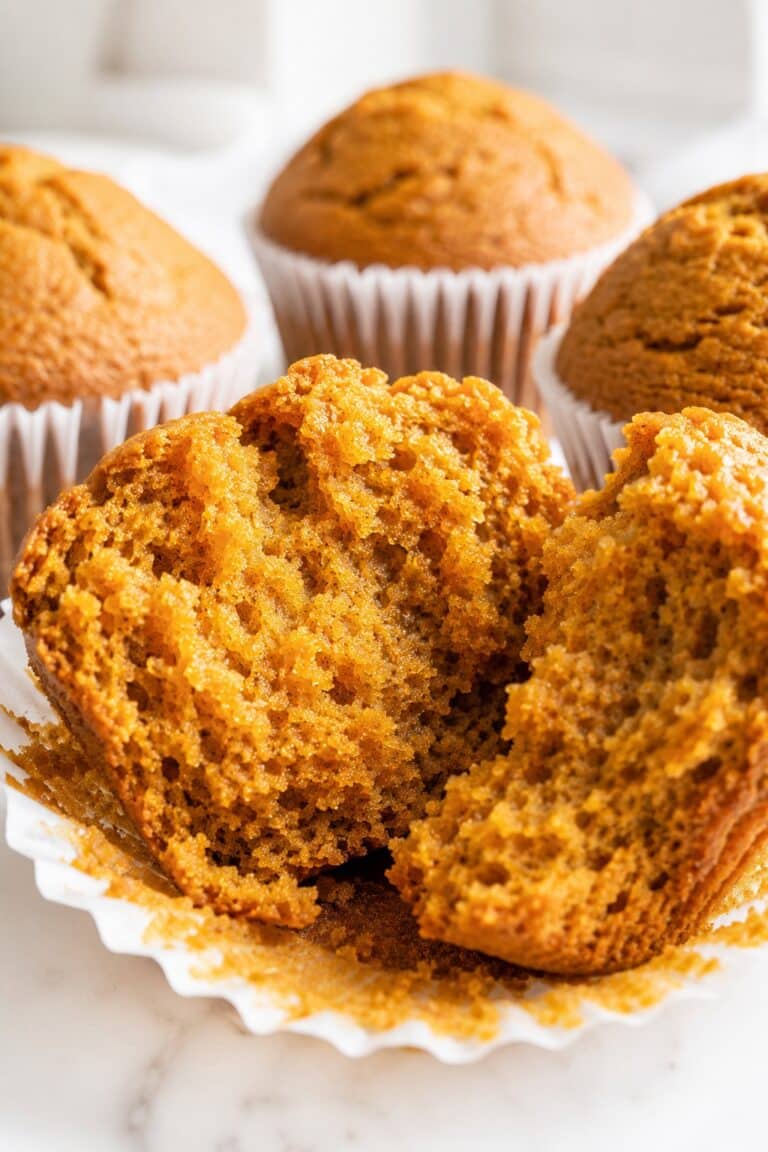
Apple Cupcakes with Cream Cheese Frosting
🎁 FREE E-BOOK: 12 Sweet Favorites — reader-loved desserts in one beautiful recipe book.
These apple cupcakes pair fresh grated apple with a soft cinnamon-spiced crumb and smooth cinnamon cream cheese frosting. Brown sugar adds warmth, while nutmeg stays quietly in the background.

One batch taught me why the apple needs a precise weight: I added too much grated apple, and the centers baked up heavy and wet. This recipe uses 150 grams after peeling and coring, giving the crumb enough fresh apple to taste distinct without carrying more moisture than it can hold.
The useful numbers do not stop with the fruit. Weighing 61–63 grams of batter into each liner and watching several doneness cues together make it easier to get twelve cupcakes that rise and bake at the same pace.
This twelve-cupcake dessert suits fall gatherings, birthdays, or a weekend bake, and its components can be prepared in stages.
Apple Cupcakes at a Glance
Here is the whole bake before you begin, including the texture, timing, and one measurement that matters most.
| Flavor | Fresh apple, cinnamon, brown sugar, vanilla, subtle nutmeg, and tangy cream cheese |
|---|---|
| Texture | Soft, moist cupcake crumb with finely dispersed grated apple |
| Yield | 12 standard cupcakes |
| Difficulty | Easy |
| Prep time | 30 minutes |
| Bake time | 18–22 minutes |
| Cooling time | 45 minutes |
| Total time | 1 hour 35 minutes |
| Pan | Light-colored metal 12-cup cupcake pan |
| Key control | 150 g apple after peeling and coring |
Why These Apple Cupcakes Work
Each important ratio or technique has a clear job, so moisture, lift, and frosting stability support one another instead of competing.
- Measured apple: Exactly 150 grams supplies flavor and moisture without overloading the crumb.
- Creamed butter and sugar: A full 2 1/2–3 minutes creates the aerated base of a softer cupcake crumb.
- Alternating additions: Adding dry ingredients in three parts and milk in two keeps the batter cohesive and limits mixing.
- Equal portions: Twelve 61–63 gram portions follow a similar path to doneness.
- Several doneness cues: Set surfaces, spring-back, moist crumbs, and golden edges reveal more than a clean toothpick alone.
- Butter-first frosting: Adding cold brick cream cheese last reduces the mixing that can loosen it.

Why You’ll Love These Fresh Apple Cupcakes
This batch has the cozy flavor people expect from apple baking while staying practical enough for an ordinary home kitchen.
- It makes exactly twelve cupcakes, so there is no second pan to manage.
- The ingredients are familiar and available in most grocery stores.
- Fresh apple runs through the crumb without requiring a cooked filling.
- The cinnamon cream cheese frosting works as a simple swoop or a piped finish.
- Both the unfrosted cupcakes and the frosting have useful make-ahead options.
- The compact recipe gives you exact visual cues without turning a familiar bake into a complicated project.
Ingredients for Tender Apple Cupcakes and Cinnamon Cream Cheese Frosting
The recipe uses two straightforward components: a creamed-butter apple batter and a butter-first cream cheese frosting. Keep the ingredients in the order shown because the mixing sequence matters.

For the Fresh Apple Cupcakes
These ingredients build the apple-cinnamon crumb; weigh the flour and prepared fruit when possible for the most consistent hydration.
- 1 1/2 cups (180 g) unbleached all-purpose flour
- 1 1/2 teaspoons (6 g) baking powder
- 1/4 teaspoon (1.5 g) baking soda
- 1/2 teaspoon (3 g) fine sea salt
- 1 1/2 teaspoons (4 g) ground cinnamon
- 1/4 teaspoon (about 0.5 g) ground nutmeg
- 1/2 cup (113 g) unsalted butter, softened to 65–68°F (18–20°C)
- 1/2 cup packed (107 g) light brown sugar
- 1/4 cup (50 g) granulated sugar
- 2 large eggs (about 100 g without shells), at 68–72°F (20–22°C)
- 2 teaspoons (10 ml) pure vanilla extract
- 1/4 cup (60 g) whole milk, at 68–72°F (20–22°C)
- 1 firm Granny Smith apple, peeled and cored to yield 150 g, grated on the large holes of a box grater with all juice retained
For the Cinnamon Cream Cheese Frosting
This frosting is intentionally made without milk or cream; softened butter creates the base, while cold brick cream cheese adds tang and body at the end.
- 2/3 cup (150 g) unsalted butter, softened to 65–68°F (18–20°C)
- 2 2/3 cups (300 g) confectioners’ sugar
- 1 teaspoon (5 ml) pure vanilla extract
- 1/2 teaspoon (about 1.5 g) ground cinnamon
- 1/8 teaspoon (about 0.75 g) fine sea salt
- 4 ounces (113 g) cold full-fat brick cream cheese, at 40–45°F (4–7°C), cut into 6–8 pieces
Ingredient Notes That Protect the Texture
A few ingredient details have an outsized effect on the crumb and frosting, so settle them before the mixer starts.
- All-purpose flour: Use 180 grams, or spoon the flour into the cup and level it without packing.
- Fresh apple: Granny Smith is the primary choice for its firm texture and tart flavor. Honeycrisp, Pink Lady, or Fuji can be used at the same 150 gram prepared weight.
- Apple preparation: Peel and core before weighing, grate on the large holes, retain the juice, and prepare the fruit close to folding time.
- Butter: Measure the cupcake butter and frosting butter separately. Both should feel pliable but still cool rather than glossy or partly melted.
- Eggs and milk: At 68–72°F, they blend into the creamed butter more smoothly.
- Cream cheese: Use a cold, full-fat brick. Tub, whipped, and low-fat products hold more moisture or less structure and are not direct equivalents here.
- Warm spices: Cinnamon leads in both components; the small amount of nutmeg rounds the cupcake without making the frosting taste muddled.
Five Tools That Make This Cupcake Batch Easier
You do not need specialized pastry equipment, but these five groups cover accurate measuring, controlled mixing, even baking, and a clean finish.
- Scale and prep tools: A digital scale, measuring spoons, peeler or paring knife, and a small bowl handle the flour, apple, and precise portions.
- Large-hole box grater: The larger holes create thin apple shreds that disperse through the batter without becoming puree.
- Mixer and bowls: Use an electric hand or stand mixer, two mixing bowls, a whisk, and a flexible spatula.
- Pan and portioning tools: Choose a light-colored metal 12-cup cupcake pan, twelve liners, and a scoop or two spoons.
- Cooling and finishing tools: Use a wire rack and either a piping bag and tip or an offset spatula; an instant-read thermometer is optional.
Before You Mix the Apple Cupcake Batter
A short setup keeps the batter moving once the apple is grated and gives the cupcakes enough time to cool before frosting.
- Place the oven rack in the center, preheat to 350°F (175°C), and line the pan.
- Bring the cupcake butter to 65–68°F and the eggs and milk to 68–72°F.
- Keep the frosting cream cheese refrigerated at 40–45°F until the butter base is ready.
- Measure the 113 grams of cupcake butter and 150 grams of frosting butter separately.
- Whisk the dry ingredients before peeling, coring, weighing, and grating the apple.
- Plan for 5 minutes of pan cooling and at least 40 minutes on a rack before frosting.
What to Expect from These Fresh Apple Cupcakes
Expect a soft dessert cupcake with fresh apple moisture throughout the crumb, warm cinnamon flavor, and a cool, tangy frosting, not a chunky apple center or a tall breakfast-muffin crown. If you want an unfrosted breakfast-style bake instead, try these apple muffins.
- The grated apple should appear as fine flecks rather than large pieces.
- The batter should be thick and scoopable, not pourable or dry.
- The baked tops should look set and gently rounded with lightly golden edges.
- The frosting should hold a soft swoop or piping ridge without feeling stiff.
- This is a frosted apple cupcake, not a filled apple-pie cupcake; there is no cooked filling or caramel center.
How to Make Apple Cupcakes with an Even, Tender Crumb
Work through the steps in order, paying particular attention to ingredient temperature, the final moments of mixing, portion weight, and cooling.
1. Preheat the Oven and Prepare the Pan
Heat a conventional oven to 350°F (175°C) with a rack in the center. Line every cup of a light-colored metal 12-cup pan before the batter is mixed.
What you should see: The rack is centered, the oven is fully preheated, and all twelve liners sit flat and open in the pan.
2. Prepare the Apple
Peel and core one firm apple, then weigh exactly 150 grams. Grate it on the large holes of a box grater and keep the juice with the fruit; do not squeeze or drain it.
What you should see: Moist, distinct apple shreds surrounded by a small amount of natural juice, not dry strands or applesauce.

3. Whisk the Dry Ingredients
Whisk the flour, baking powder, baking soda, salt, cinnamon, and nutmeg for about 30 seconds. Break apart any compacted spice so the leaveners and flavor are evenly dispersed.
What you should see: A uniform pale cinnamon-colored mixture with no visible pockets of baking soda, baking powder, or spice.
4. Cream the Butter and Sugars
Beat the 113 grams of softened butter on medium speed for about 30 seconds, then add the brown and granulated sugars and continue for 2 1/2–3 minutes. Stop once to scrape the bowl and beater so no dense butter remains at the bottom.
What you should see: A creamy mixture that is lighter in color and visibly aerated, with no greasy sheen or hard butter pieces.

5. Add the Eggs and Vanilla
Add the eggs one at a time on medium-low speed, mixing for about 20–30 seconds after each. Scrape the bowl after the second egg, then mix in the vanilla; if the mixture is cool and lightly curdled, warm the outside of the bowl briefly with your hands and mix on low rather than adding flour.
What you should see: A smooth, cohesive mixture that looks creamy rather than curdled or separated around the edges.
6. Alternate the Dry Ingredients and Milk
With the mixer on low, add the dry ingredients in three additions and the milk in two, beginning and ending with the dry mixture. Stop each addition when most streaks disappear, then use a flexible spatula to finish with 4–6 broad folds.
What you should see: Thick, cohesive batter with no dry flour pockets; a few soft streaks should disappear with the final spatula folds rather than extended beating.

7. Fold in the Grated Apple
Add the grated apple and all its juice. Fold for approximately 8–12 broad strokes, only until the strands are evenly distributed and no dry flour remains, then bake the finished batter without delay.
What you should see: Scoopable batter evenly flecked with apple; it should fall slowly from the spatula instead of running like pancake batter.

8. Portion the Batter
Divide the batter among the twelve liners, adding 61–63 grams to each; they should sit about two-thirds to three-quarters full. If one liner is heavy, redistribute the extra before the pan goes into the oven, and smooth only pronounced peaks.
What you should see: Twelve evenly filled liners with the batter sitting at a similar height from cup to cup.

9. Bake Until the Centers Are Set
Bake on the center rack for 18–22 minutes, avoiding an early door opening before 16 minutes unless your oven has a known severe hot spot. Begin checking near 18 minutes, but remove the pan only when the surface, touch, tester, and edge cues agree.
What you should see: Matte set centers that spring back gently, lightly golden edges, and a tester with moist crumbs but no wet batter.
10. Cool the Cupcakes Completely
Cool the cupcakes in the pan for 5 minutes, then lift them onto a wire rack for at least 40 minutes. Wait until the center of each cupcake is below about 75°F (24°C) before adding frosting.
What you should see: Set cupcakes with no trapped steam or residual warmth at the center and liners that remain neat rather than damp.

11. Make the Cinnamon Cream Cheese Frosting
Beat the 150 grams of softened butter on medium speed for 1–2 minutes. On low, add the confectioners’ sugar in three additions, followed by the vanilla, cinnamon, and salt; beat on medium for 60–90 seconds, then scrape the bowl. Add the cold cream cheese pieces on low in 3–4 additions and stop as soon as the frosting is smooth and holds a soft peak; chill for 15–20 minutes if it is too soft.
What you should see: Smooth frosting that keeps a clear spatula trail and holds a soft swoop or piping ridge without slumping.

12. Frost and Serve
Spread or pipe 44–46 grams of frosting onto each completely cooled cupcake. Refrigerate the finished batch as required, then let it stand at room temperature for 20–30 minutes before serving.
What you should see: Twelve evenly finished cupcakes with frosting that stays defined and a crumb that feels soft rather than refrigerator-firm.
How to Tell When Apple Cupcakes Are Fully Baked
Apple keeps the crumb moist, so a single toothpick test can be misleading. Check several signs of doneness and use the 18–22-minute bake time as a guide.
- Surface: The center looks matte and set, not glossy or wet.
- Touch: A gentle press springs back instead of leaving a deep indentation.
- Tester: A toothpick shows moist crumbs but no streak of raw batter.
- Edges: The outer rim is lightly golden and looks stable against the liner.
An instant-read thermometer can provide secondary confirmation at about 205–210°F (96–99°C) when inserted into crumb rather than an apple-rich pocket. Do not keep baking solely to reach a number if the visual and tactile cues already agree.

The Baking Science Behind Moist Apple Cupcakes
Four mechanisms explain how the recipe carries fresh fruit while keeping a cupcake-like crumb and stable frosting.
Prepared Apple Controls Hydration
Apple contributes water and fruit solids, so weighing 150 grams after peeling and coring controls more than flavor. Retain the included juice; extra fruit can leave the center heavier than the crumb can support.
Creaming Builds the Cupcake Base
Beating softened butter with both sugars traps air before the leaveners work in the oven. This aerated base helps the fruit-rich batter rise with a softer texture.
Gentle Flour Mixing Limits Toughness
Once flour meets liquid, continued agitation develops more gluten. Alternating additions and finishing with a spatula remove dry pockets while protecting tenderness.
Cold Cream Cheese Protects the Finish
Cream cheese loosens as it is beaten, especially when warm. Add cold brick cream cheese to the finished butter base only until smooth so the frosting holds a swoop.
Expert Tips for Better Apple Cupcakes
These details help with judgment at the moments when a timer or measuring cup cannot tell the whole story.
- Read the butter. It should dent under gentle pressure but hold its shape, remaining solid enough to aerate.
- Check the bowl’s base. Scrape up dense butter and sugar before adding the eggs so no heavy pockets remain.
- Correct portions by weight. Fill eleven liners, then use the remaining batter to bring each into the 61–63 gram range.
- Test beside the apple. Insert a toothpick or thermometer into crumb because a fruit strand can appear wetter and read cooler.
- Match the finish to the room. Choose a relaxed swoop in warmth and taller piping only when the frosting holds a ridge.
- Cover only when cool. Residual warmth creates condensation that softens the tops and dampens the liners.

Common Apple Cupcake Mistakes and How to Fix Them
Most problems trace back to moisture, mixing, temperature, or timing. Match the symptom to its likely cause before changing the ingredients or method.
| Mistake | What Happens | Why It Happens | How to Prevent or Fix It |
|---|---|---|---|
| Using more than 150 g apple | The centers stay heavy, wet, or sunken. | Extra fruit adds more water and solids than the batter can support. | Peel and core first, then weigh exactly 150 g. |
| Squeezing the grated apple | The crumb can feel drier and the apple flavor weaker. | The batter is designed to use the apple’s natural juice. | Keep the shreds and every drop of released juice together. |
| Packing flour into the cup | The cupcakes bake dense or dry. | A compacted cup can contain more flour than the intended 180 g. | Weigh the flour, or spoon it into the cup and level it. |
| Overmixing after adding flour | The crumb becomes tight, rubbery, or tunneled. | Extended agitation develops more gluten. | Mix on low only until nearly combined and finish with a spatula. |
| Eyeballing uneven portions | Some cupcakes overbake before others are set. | Different batter masses need different bake times. | Portion 61–63 g into every liner. |
| Removing the pan too early | The centers look gummy or sink as they cool. | The crumb structure has not set around the fruit moisture. | Wait for the surface, touch, tester, and edge cues to agree. |
| Frosting warm cupcakes | The frosting melts, slides, or loses definition. | Residual heat softens the butter and cream cheese. | Cool for 5 minutes in the pan and at least 40 minutes on a rack, below about 75°F. |
| Using tub or softened cream cheese | The frosting turns loose and difficult to pipe. | Different formats or warmer cheese bring less structure and more available moisture. | Use cold full-fat brick cream cheese and add it last. |
| Sealing warm cupcakes | Condensation forms and the liners feel damp. | Trapped steam collects inside the container. | Let the cupcakes cool completely before covering or storing. |

Beautiful Ways to Serve Apple Cupcakes
Keep the presentation bright and restrained so the apple crumb and cinnamon cream cheese frosting remain the focus.

A Simple Cinnamon Swoop
Spread the frosting with a small offset spatula and finish with one relaxed curve. A very light dusting of cinnamon at serving time adds definition without suggesting a topping that is not in the recipe.
An Autumn Dessert Table
Arrange the cupcakes on a white platter with coffee, black tea, chai, or cold milk nearby. Let refrigerated cupcakes stand for 20–30 minutes first so the crumb and frosting lose their refrigerator firmness.
A Neat Piped Finish
Pipe a modest spiral when the frosting holds a clear ridge, keeping the decoration low enough that the 44–46 gram portion feels balanced with the cake.
A Sliceable Apple Dessert Alongside
For a larger gathering, pair the cupcakes with this apple cake recipe. It offers the same cozy apple flavor in a larger dessert made for slicing and sharing.
Make Apple Cupcakes Ahead Without Losing Their Texture
Work backward from serving time and keep the cupcakes unfrosted for the longest hold. This protects the crumb while making the perishable frosting easier to manage safely.
| Start point | Best action | Why it matters | Hold or storage |
|---|---|---|---|
| Up to 2 months before serving | Bake and cool the cupcakes completely, then wrap and freeze them unfrosted. | Freezing without frosting protects the finish and makes wrapping easier. | Freeze airtight for up to 2 months. |
| Up to 1 month before serving | Prepare the frosting and freeze it separately. | Keeping the frosting separate makes it easier to thaw and briefly remix before frosting the cupcakes. | Freeze covered for up to 1 month. |
| The night before | Move frozen cupcakes and frosting to the refrigerator. | Slow thawing keeps condensation controlled and the dairy cold. | Thaw cupcakes wrapped and frosting covered overnight. |
| Serving day | Bring the frosting to a workable consistency, frost fully cooled cupcakes, and refrigerate. | Assembly is cleaner when the cake is cool and the frosting holds a ridge. | Keep at 40°F (4°C) or below until shortly before serving. |
| 20–30 minutes before serving | Set the refrigerated cupcakes out briefly. | The crumb softens and the frosting tastes creamier when it loses the hard chill. | Follow the refrigeration and serving limits explained below. |
How to Store, Freeze, and Thaw Apple Cupcakes
Once the cream cheese frosting is added, the cupcakes need refrigeration. Let every component cool completely before covering it.

Store Unfrosted Cupcakes at Room Temperature
Keep completely cooled, unfrosted cupcakes in an airtight container at room temperature for up to 1 day. If condensation appears inside the container, they were covered too warm and the tops may soften.
Refrigerate Cream Cheese Frosting Promptly
Refrigerate frosted cupcakes within 2 hours, or within 1 hour when the temperature is above 90°F (32°C). Keep them at 40°F (4°C) or below for up to 4 days, following general safe food-handling guidance.
Freeze the Components Separately
Freeze unfrosted cupcakes airtight for up to 2 months and frosting in a separate covered container for up to 1 month. This option protects the frosting’s shape and lets you assemble only what you need.
Thaw Slowly and Temper Before Serving
Thaw the cupcakes wrapped and the frosting covered overnight in the refrigerator. Bring the frosting to a workable consistency before assembling, then let finished cupcakes stand for 20–30 minutes before serving. Do not reheat frosted cupcakes, because the frosting will soften before the crumb improves.
Apple Cupcake Questions, Answered
Here are a few extra answers for serving the cupcakes more simply or adapting the baking format.
Can I Make Apple Cupcakes Without Cream Cheese Frosting?
Yes, the cupcakes can be served unfrosted, although the cinnamon cream cheese frosting is the intended finish. Cool them completely and keep them airtight at room temperature for up to 1 day, or freeze them for a longer hold.
Can I Replace the Grated Apple with Applesauce?
Applesauce is not a direct substitute in this recipe. Applesauce changes the distribution of water and fruit solids, while the 150 grams of large-hole grated apple provides distinct strands and the moisture balance used here.
Can I Bake This Batter as Mini Cupcakes or a Cake?
The yield and bake window here apply only to twelve standard cupcakes. Mini, jumbo, layer, or sheet formats change portion depth, heat flow, and timing. Use a recipe written specifically for the size or format you want to bake.
Choose Your Next Cozy Bake
If you enjoyed these cupcakes, try another cozy apple dessert, a different cupcake flavor, or one of these warm-spiced bakes.
Still in an Apple Mood?
Try another fresh apple dessert for breakfast, snacking, or sharing.
- Apple Muffins: Choose these for an unfrosted breakfast-style bake or snacking.
- Apple Cake Recipe: Bake this when you want a larger apple dessert designed to slice and share.
- Baked Apples Recipe: Try this simpler fruit-forward dessert when you want to serve apples warm.
- Apple Pie Cookies: Take apple-pie flavor into a portable cookie format.
Try Another Cupcake
For another cupcake recipe, choose the flavor and frosting combination that suits the occasion.
- Vanilla Cupcakes with Vanilla Buttercream: Use this classic vanilla combination when you want a simple, familiar cupcake flavor.
- Lemon Cupcakes with Lemon Buttercream: Switch to a brighter citrus cake with a matching frosting.
- Pumpkin Cupcakes: Stay with a moist seasonal cupcake while moving from apple to pumpkin.
- Carrot Cake Cupcakes: Follow the warm spices and cream cheese into a carrot cake format.
Keep the Warm Spices Going
Carry cinnamon and cozy spice into a bake with a completely different texture.
- Homemade Cinnamon Rolls: Make a yeast-raised cinnamon bake with a soft spiral crumb.
- Pumpkin Muffins: Choose an unfrosted, warmly spiced breakfast bake.
- Sopapilla Cheesecake: Pair creamy filling with cinnamon and crisp pastry layers.
- Pecan Pie Cobbler: Serve a spoonable fall dessert with a deeply caramelized texture.
Why These Apple Cupcakes Belong in Your Recipe Box
The precise apple weight, clear texture cues, and make-ahead options make this a dependable recipe to return to.
- Balanced Fresh Apple. A prepared weight protects fresh fruit flavor without burdening the crumb with excess moisture.
- Manageable Batch Size. Twelve standard cupcakes fit one pan and suit both small celebrations and everyday baking.
- Clear Texture Cues. Visual and tactile checkpoints make mixing, baking, cooling, and frosting easier to judge.
- Flexible Final Finish. The same frosting works for a relaxed swoop or a neat piped ridge.
- Easy Make-Ahead Options. Separate freezing windows for cupcakes and frosting make serving-day work lighter.
- Fresh Apple in Every Bite. Fresh grated fruit remains central without turning the dessert into a muffin or filled pie cupcake.
A Final Note Before You Bake
These apple cupcakes turn a familiar fall combination into a more deliberate bake: fresh fruit in the crumb, cinnamon used with restraint, and tangy frosting that supports rather than hides the apple.
Return to the recipe when you need one pan of cupcakes that can feel comfortable at a weekend table and polished enough for a celebration. The unfrosted cakes and frosting can wait separately, so the final assembly can fit the day.
The best guide through a fruit-rich batter is a combination of weight and observation: measure the apple, then let the batter, baked centers, and frosting show you when each stage is ready.

Apple Cupcakes
Fresh grated-apple cupcakes with a cinnamon-spiced crumb and smooth cinnamon cream cheese frosting. This recipe makes 12 standard cupcakes.
Ingredients
For the Apple Cupcakes
- 1 1/2 cups (180 g) unbleached all-purpose flour
- 1 1/2 teaspoons (6 g) baking powder
- 1/4 teaspoon (1.5 g) baking soda
- 1/2 teaspoon (3 g) fine sea salt
- 1 1/2 teaspoons (4 g) ground cinnamon
- 1/4 teaspoon (about 0.5 g) ground nutmeg
- 1/2 cup (113 g) unsalted butter, softened to 65–68°F (18–20°C)
- 1/2 cup packed (107 g) light brown sugar
- 1/4 cup (50 g) granulated sugar
- 2 large eggs (about 100 g without shells), at 68–72°F (20–22°C)
- 2 teaspoons (10 ml) pure vanilla extract
- 1/4 cup (60 g) whole milk, at 68–72°F (20–22°C)
- 1 firm Granny Smith apple, peeled and cored to yield 150 g, grated on the large holes of a box grater with all juice retained
For the Cinnamon Cream Cheese Frosting
- 2/3 cup (150 g) unsalted butter, softened to 65–68°F (18–20°C)
- 2 2/3 cups (300 g) confectioners' sugar
- 1 teaspoon (5 ml) pure vanilla extract
- 1/2 teaspoon (about 1.5 g) ground cinnamon
- 1/8 teaspoon (about 0.75 g) fine sea salt
- 4 ounces (113 g) cold full-fat brick cream cheese, at 40–45°F (4–7°C), cut into 6–8 pieces
Instructions
- Preheat the Oven and Prepare the Pan: Heat a conventional oven to 350°F (175°C) with a rack in the center. Line a light-colored metal 12-cup cupcake pan with 12 paper liners. What you should see: The rack is centered, the oven is fully preheated, and all 12 liners sit flat and open in the pan.
- Prepare the Apple: Peel and core the apple, then weigh 150 g. Grate it on the large holes of a box grater and keep all released juice. Cover it and use it promptly. What you should see: Moist, distinct apple shreds with a small amount of natural juice, not dry strands or applesauce.
- Whisk the Dry Ingredients: In a medium bowl, whisk the flour, baking powder, baking soda, salt, cinnamon, and nutmeg for about 30 seconds, breaking apart every visible leavener or spice lump. What you should see: A uniform pale cinnamon-colored mixture with no concentrated brown or white pockets.
- Cream the Butter and Sugars: In a large bowl, beat the 113 g softened butter on medium speed for about 30 seconds. Add the brown and granulated sugars and beat for 2 1/2–3 minutes, stopping once to scrape the bowl and beater. What you should see: A creamy mixture that is lighter in color and visibly aerated, with no greasy sheen or hard butter pieces.
- Add the Eggs and Vanilla: Add the eggs one at a time on medium-low speed, mixing for about 20–30 seconds after each. Scrape the bowl after the second egg, then mix in the vanilla. If the mixture is cool and lightly curdled, warm the outside of the bowl briefly with your hands and mix on low; do not add flour as a repair. What you should see: A cohesive, creamy mixture with no visible egg streaks or liquid pooling.
- Alternate the Dry Ingredients and Milk: On low speed, add the dry ingredients in three additions and the milk in two, beginning and ending with the dry ingredients. Mix each addition only until most streaks disappear, then remove the bowl from the mixer and finish with 4–6 broad spatula folds. What you should see: Thick, cohesive batter with only a few faint flour streaks remaining before the apple is added.
- Fold in the Grated Apple: Add the grated apple and all its juice, then fold for approximately 8–12 broad strokes, just until the apple is evenly distributed and no dry flour remains. Bake the finished batter without delay. What you should see: Scoopable batter that falls slowly from the spatula in a heavy ribbon, with apple shreds throughout and no watery layer.
- Portion the Batter: Divide the batter evenly among the 12 liners, adding 61–63 g to each so they sit about two-thirds to three-quarters full. Keep the portions within 2 g of one another and smooth only pronounced peaks. What you should see: Twelve evenly filled liners with the batter sitting at a similar height in every cup.
- Bake Until the Centers Are Set: Bake on the center rack for 18–22 minutes, avoiding an early door opening before 16 minutes unless the oven has a known severe hot spot. Remove the pan when the centers look matte and set, the tops spring back under a gentle touch, the edges are lightly golden, and a tester shows moist crumbs but no wet batter. An optional crumb temperature of 205–210°F (96–99°C) may support these cues but should not replace them. What you should see: Matte set centers, lightly golden edges, gentle spring-back, and moist crumbs without liquid batter.
- Cool the Cupcakes Completely: Cool the cupcakes in the pan for 5 minutes, then transfer them to a wire rack for at least 40 minutes. Wait until the centers are below about 75°F (24°C) before frosting. What you should see: Set cupcakes with no trapped steam or residual warmth at the center and liners that remain neat rather than damp.
- Make the Cinnamon Cream Cheese Frosting: Beat the 150 g softened butter on medium speed for 1–2 minutes. On low, add the confectioners' sugar in three additions, followed by the vanilla, cinnamon, and salt. Beat on medium for 60–90 seconds, then scrape the bowl. Add the cold cream cheese pieces on low in 3–4 additions and stop as soon as the frosting is smooth and holds a defined soft peak. If it is too soft, refrigerate it for 15–20 minutes instead of adding more confectioners’ sugar. What you should see: Smooth, thick frosting with clean ridges that do not slump within 1 minute.
- Frost and Serve: Spread or pipe 44–46 g frosting onto each completely cooled cupcake. Refrigerate the finished cupcakes as required, then let them stand at cool room temperature for 20–30 minutes before serving. What you should see: Twelve evenly finished cupcakes with defined frosting and a soft crumb.
Notes
- Prepare the apple precisely: Weigh 150 g after peeling and coring, grate it on the large holes, and retain all juice. Honeycrisp, Pink Lady, or Fuji may replace Granny Smith at the same prepared weight.
- Measure flour carefully: Weigh 180 g when possible, or spoon it into the cup and level it without packing.
- Control ingredient temperatures: Keep cupcake butter at 65–68°F (18–20°C), eggs and milk at 68–72°F (20–22°C), and brick cream cheese cold at 40–45°F (4–7°C).
- Portion and bake by several cues: Add 61–63 g batter to every liner, then look for a matte center, spring-back, moist crumbs without wet batter, and lightly golden edges.
- Cool completely: Leave the cupcakes for 5 minutes in the pan and at least 40 minutes on a rack, below about 75°F (24°C), before frosting.
- Use brick cream cheese: Add cold full-fat brick cream cheese last. Tub, whipped, and low-fat cream cheese are not direct substitutes.
Storage and Make-Ahead
- Keep completely cooled, unfrosted cupcakes airtight at room temperature for up to 1 day.
- Refrigerate frosted cupcakes within 2 hours, or within 1 hour when the temperature is above 90°F (32°C), and keep them at 40°F (4°C) or below for up to 4 days.
- Freeze unfrosted cupcakes airtight for up to 2 months and frosting in a separate covered container for up to 1 month.
- Thaw cupcakes wrapped and frosting covered overnight in the refrigerator, then bring the frosting to a workable consistency before assembling.
- Let refrigerated cupcakes stand at cool room temperature for 20–30 minutes before serving.
Nutrition Information:
Yield: 12 Serving Size: 1 frosted cupcakeAmount Per Serving: Calories: 418Total Fat: 22gSaturated Fat: 14gCholesterol: 88mgSodium: 259mgCarbohydrates: 52gFiber: 1gSugar: 39gProtein: 4g
Nutrition information is provided as an estimate only and may vary based on specific ingredients, brands, and portion sizes used. This information should not be considered medical or nutritional advice.
12 Sweet Favorites — Yours, Free 🍰
Tiramisù, no-bake cheesecake, the perfect chocolate chip cookie & 9 more reader-loved desserts — gathered into one beautiful free recipe book. From my kitchen to yours.
No spam, just sweet things. Unsubscribe anytime.