Blueberry Cheesecake (Ultra Creamy, Rich & Perfect Every Time)
🎁 FREE E-BOOK: 12 Sweet Favorites — reader-loved desserts in one beautiful recipe book.
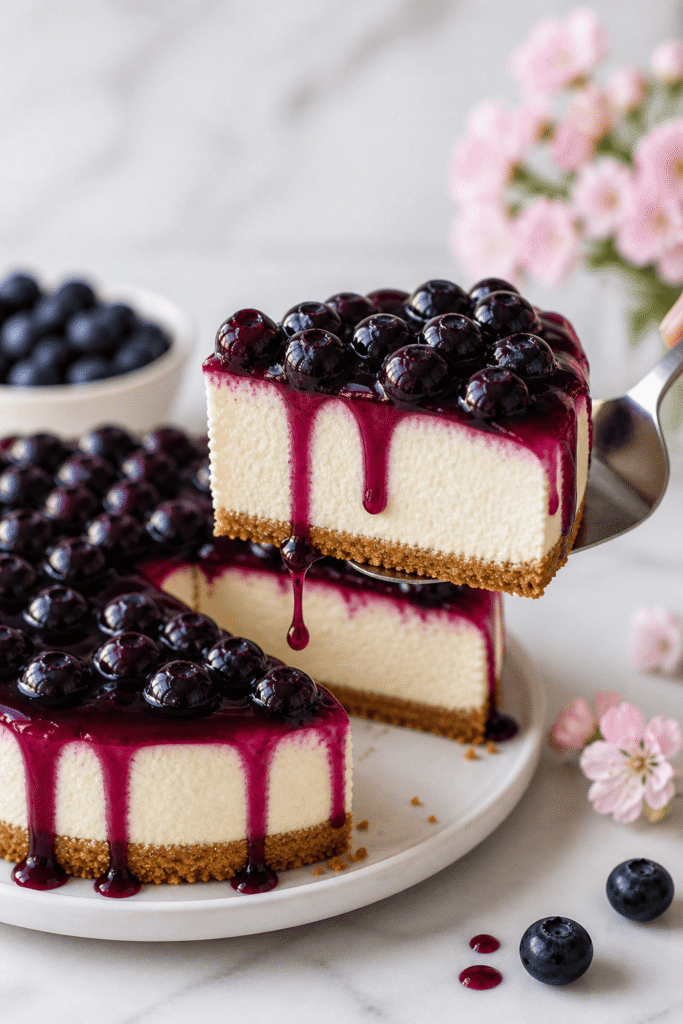
There’s something instantly calming about a Blueberry Cheesecake sitting on the table — smooth, creamy, perfectly set, with that deep glossy blueberry topping slowly cascading over the edges. It feels elegant, but also familiar. Like a dessert you make when you want everything to feel just a little more special.
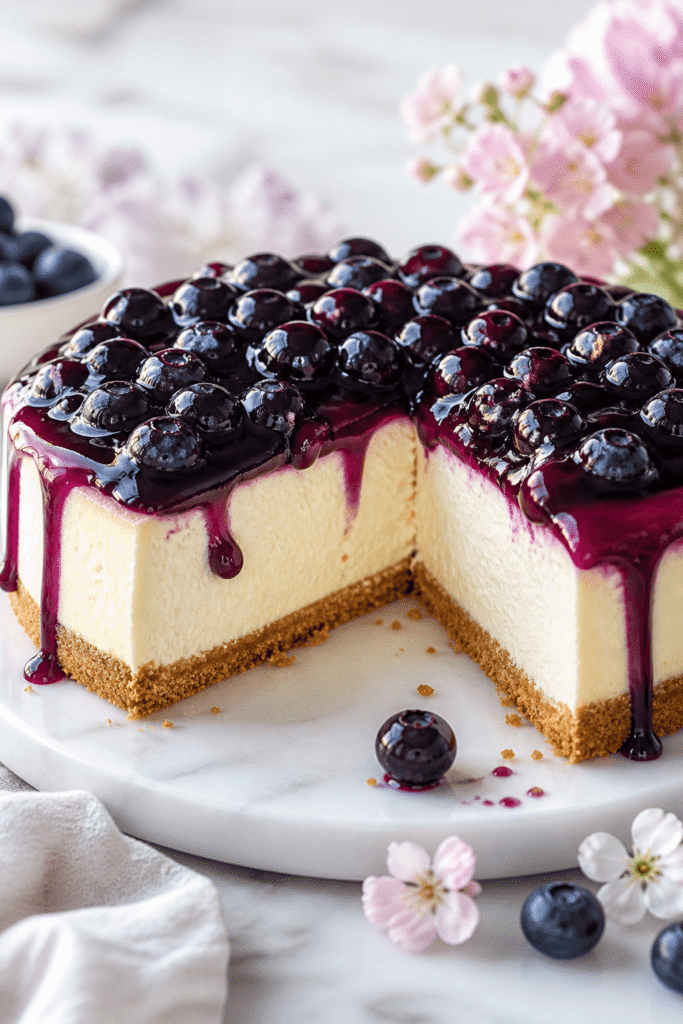
This blueberry cheesecake recipe brings together a rich, velvety baked cheesecake filling, a buttery crisp crust, and a vibrant blueberry topping that adds both brightness and contrast. The textures do the work for you — creamy meets slightly tangy, soft meets structured, smooth meets jammy.
And this is exactly why people save this recipe: it looks impressive, slices beautifully, and delivers that perfect bakery-style cheesecake texture at home without complicated steps.
It’s the kind of dessert you make once and then quietly becomes your go-to for gatherings, holidays, spring celebrations, or those moments when you just want something truly comforting.
What Is Blueberry Cheesecake?
Blueberry cheesecake is a baked cheesecake dessert made with a cream cheese-based filling set over a buttery cookie or graham cracker crust, then finished with a glossy blueberry topping or compote.
Structurally, it has three main layers: a firm buttery base, a smooth baked custard-like center, and a sweet-tart fruit topping that adds brightness, color, and contrast. A good blueberry cheesecake should taste rich and creamy, but not heavy, with enough blueberry flavor to make every slice feel fresh and balanced.
Quick Recipe Overview
| Texture | Creamy, smooth, slightly dense, with a soft set center |
|---|---|
| Flavor | Rich, lightly tangy, sweet, and balanced with blueberry brightness |
| Difficulty | Medium |
| Time | About 1 hour baking time, plus chilling |
| Servings | 8–10 slices |
| Method | Baked cheesecake |
| Best For | Holidays, spring desserts, celebrations, birthdays, make-ahead desserts |
In short: this is a creamy baked blueberry cheesecake with a buttery crust and glossy blueberry topping that feels elegant enough for celebrations, but familiar enough for any cozy homemade dessert table.
Why This Blueberry Cheesecake Recipe Works
This blueberry cheesecake works because it balances moisture, structure, fat, and gentle heat. Cheesecake is not a regular cake — it behaves more like a baked custard. That means the goal is not to make it rise, but to help it set slowly and evenly.
The cream cheese gives the cheesecake body and richness, while the eggs help the filling firm up as it bakes. Heavy cream softens the texture, giving the cheesecake that smooth, velvety mouthfeel instead of a dry or rubbery finish.
The blueberry topping adds the final balance. Its natural acidity cuts through the richness of the filling, while the thick glossy sauce creates that beautiful contrast between creamy and jammy.
Baking insight: most cheesecake problems come from temperature changes, not from the ingredient list. Sudden heat, overbaking, or cooling too quickly can cause cracks or a dry texture. Slow baking and slow cooling are what give this cheesecake its smooth finish.
Micro note: the center should still have a soft wobble when the cheesecake comes out of the oven. It may feel slightly underdone at first, but it continues setting as it cools and chills.
Why You’ll Love This Blueberry Cheesecake
- It has a rich, creamy, bakery-style texture.
- The blueberry topping is glossy, fresh, and naturally beautiful.
- It slices cleanly after chilling.
- It is perfect for making ahead.
- It feels elegant without being overly complicated.
- The sweet-tart blueberry layer keeps the cheesecake balanced.
- It works beautifully for spring, summer, holidays, and special occasions.
Save this recipe for the kind of dessert that looks impressive on the table but still feels deeply homemade.
Baking Science: Why Cheesecake Sets So Smoothly
Cheesecake sets because of a gentle transformation in the filling. The eggs slowly firm up as they bake, creating enough structure to hold the cream cheese mixture together. At the same time, the fat from the cream cheese and heavy cream keeps that structure soft and creamy.
When cheesecake bakes too hot, the proteins tighten too quickly. That can lead to cracks, a grainy texture, or a dry edge. When it bakes gently, the center sets slowly and stays smooth.
Sugar also plays an important role. It does more than sweeten the filling — it helps keep the texture tender by slowing down how quickly the eggs firm up. This is one reason cheesecake should never be rushed.
The best cheesecake texture usually happens when the edges look fully set, but the center still moves slightly when you gently nudge the pan. That wobble is a sign of creaminess, not failure.
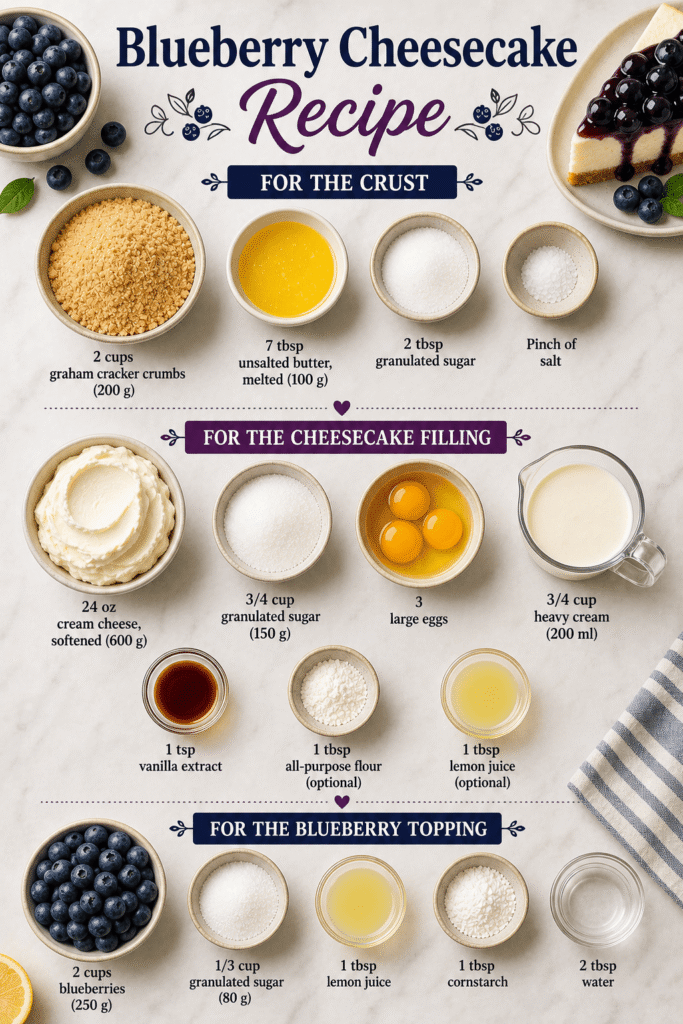
Ingredients
For the Crust
- 2 cups graham crackers or digestive biscuits, finely crushed
- 7 tablespoons unsalted butter, melted
- 2 tablespoons granulated sugar
- Pinch of salt
For the Cheesecake Filling
- 24 oz cream cheese, softened to room temperature
- 3/4 cup granulated sugar
- 3 large eggs, room temperature
- 3/4 cup heavy cream
- 1 teaspoon vanilla extract
- 1 tablespoon all-purpose flour, optional for extra stability
- 1 tablespoon lemon juice, optional for brightness
For the Blueberry Topping
- 2 cups blueberries, fresh or frozen
- 1/3 cup granulated sugar
- 1 tablespoon lemon juice
- 1 tablespoon cornstarch
- 2 tablespoons water
Ingredient Intelligence
Cream Cheese
Cream cheese is the foundation of this blueberry cheesecake. It gives the filling richness, structure, and that classic tangy flavor. For the smoothest batter, it should be fully softened before mixing. Cold cream cheese often creates small lumps that are difficult to remove later.
Substitution note: full-fat cream cheese gives the best texture. Low-fat cream cheese can make the cheesecake softer and less stable.
Eggs
Eggs help the cheesecake set. They create the structure that allows the filling to slice cleanly after chilling. Add them one at a time and mix gently after each addition.
Practical note: once the eggs go in, avoid high-speed mixing. Too much air can make the cheesecake rise in the oven and then collapse or crack as it cools.
Heavy Cream
Heavy cream softens the texture and gives the cheesecake a luxurious, velvety finish. It helps prevent the filling from feeling too dense.
Blueberries
Blueberries bring freshness, color, and a sweet-tart contrast. Frozen blueberries work well too, but they may release more liquid, so the topping may need an extra minute or two to thicken.
Cornstarch
Cornstarch thickens the blueberry topping and gives it that glossy, spoonable texture. Always mix it with water first before adding it to the hot fruit mixture to avoid clumps.
The blueberry topping should be thick enough to coat a spoon, but not so thick that it turns stiff. It will continue to firm slightly as it cools.
Equipment You’ll Need
- 9-inch springform pan
- Mixing bowls
- Hand mixer or stand mixer
- Rubber spatula
- Saucepan
- Measuring cups or kitchen scale
- Foil, if using a water bath or if your pan tends to leak
Useful note: a springform pan is the easiest way to release cheesecake cleanly. If your pan has ever leaked before, wrap the bottom with foil before baking. A little prevention here saves the crust from becoming soggy.
How to Make Blueberry Cheesecake
1. Prepare the pan
Preheat the oven to 180°C / 350°F for the crust. Line the bottom of a springform pan with parchment paper and lightly grease the sides.
Visual cue: the pan should be fully prepared before the filling is mixed so the batter can go in as soon as it is smooth.
2. Make the crust
Crush the graham crackers or digestive biscuits into fine crumbs. Mix them with melted butter, sugar, and a pinch of salt until the crumbs look evenly moistened.
Press the mixture firmly into the bottom of the pan, using the bottom of a glass or measuring cup to compact it.
Visual cue: the crust should look slightly glossy from the butter and feel firmly packed, not loose or sandy.
Baking tip: press a little more firmly around the edges. This helps create a stronger base for clean slices.
3. Bake the crust
Bake the crust for 8–10 minutes, until lightly golden and fragrant. Remove from the oven and let it cool slightly while you prepare the filling.
Visual cue: the edges should look just a little deeper in color, and the crust should smell buttery and toasted.
4. Lower the oven temperature
Reduce the oven temperature to 160°C / 320°F. Cheesecake needs gentler heat than the crust.
Micro insight: this temperature change matters. The crust benefits from higher heat, but the filling needs slow, even baking to stay creamy.
5. Beat the cream cheese and sugar
In a large bowl, beat the softened cream cheese and sugar on medium-low speed until smooth and creamy.
Visual cue: the mixture should look thick, silky, and free of visible lumps.
If you still see tiny lumps, pause and scrape the bowl well. It is better to fix the texture now than after the eggs are added.
6. Add the eggs
Add the eggs one at a time, mixing gently after each addition. Scrape down the sides of the bowl as needed.
Visual cue: the batter should become smoother and slightly looser, but not foamy.
Baking tip: keep the mixer speed low here. Incorporating too much air can create cracks later.
7. Add cream, vanilla, and optional flour
Add the heavy cream, vanilla extract, lemon juice if using, and flour if using. Mix just until combined.
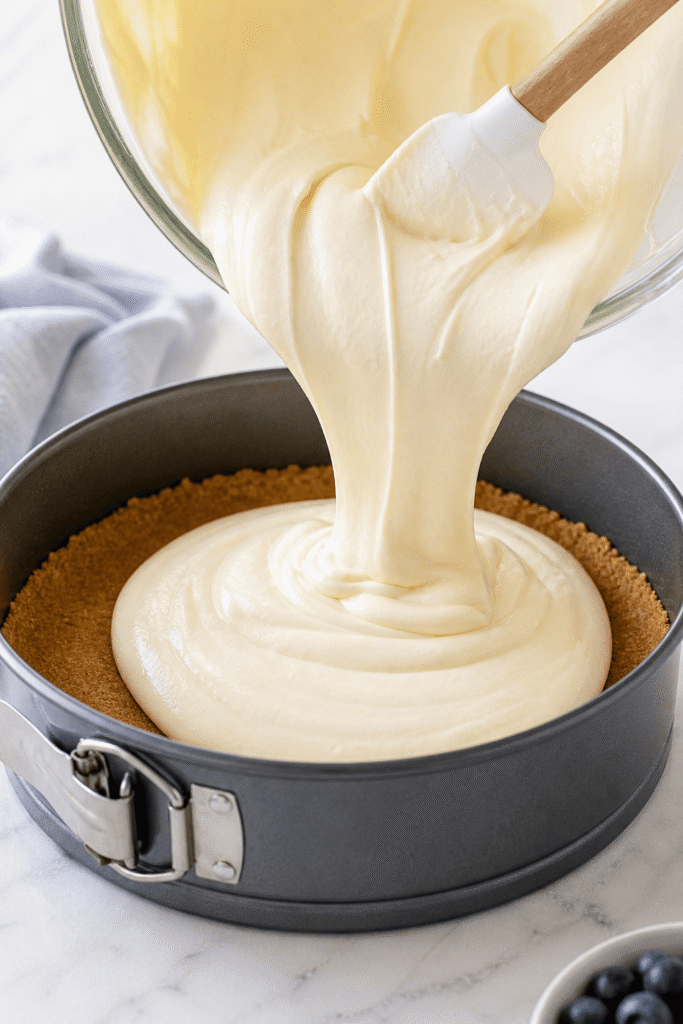
Visual cue: the final batter should be smooth, thick, and pourable, similar to a rich custard.
Texture note: if the batter looks airy or bubbly, let it sit for 2–3 minutes before pouring it into the pan.
8. Pour the filling over the crust
Pour the cheesecake filling over the cooled crust. Smooth the top gently with a spatula.
Tap the pan lightly on the counter to release trapped air bubbles.
Visual cue: small bubbles may rise to the surface. That is a good sign — it means the batter is settling.
9. Bake the cheesecake
Bake at 160°C / 320°F for 50–60 minutes, or until the edges are set and the center still has a gentle wobble.
Visual cue: the outer 2 inches should look firm, while the center should move slightly like soft gelatin when the pan is gently nudged.
Important: do not wait until the entire cheesecake looks completely firm in the oven. That usually means it is overbaked.
10. Cool slowly
Turn off the oven, crack the oven door slightly, and let the cheesecake cool inside for about 1 hour.
Visual cue: the cheesecake will slowly settle as it cools. A slight dip in the center is normal.
Cheesecake teaches patience. The slower it cools, the smoother the final texture usually becomes.
11. Chill the cheesecake
Transfer the cheesecake to the refrigerator and chill for at least 4 hours, preferably overnight.
Visual cue: once chilled, the cheesecake should feel firm to the touch and slice cleanly.
12. Make the blueberry topping
In a saucepan, combine the blueberries, sugar, and lemon juice. Cook over medium heat until the blueberries release their juices and begin to soften.
In a small bowl, stir together the cornstarch and water to create a slurry. Add it to the blueberry mixture and continue cooking until thickened and glossy.
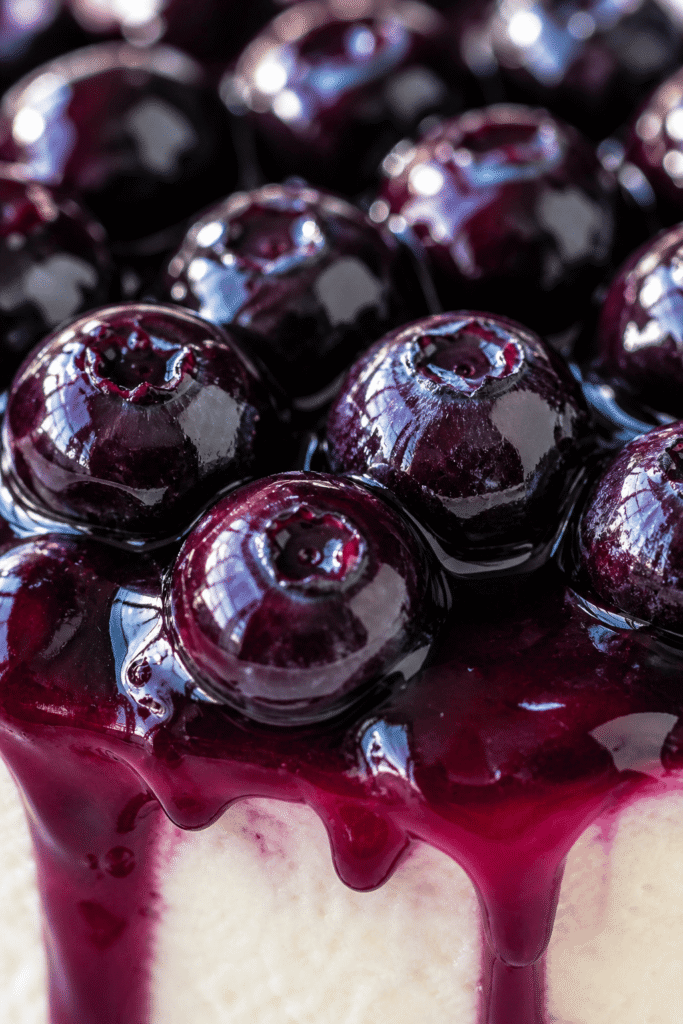
Visual cue: the topping should look shiny and syrupy, with some berries softened and some still holding their shape.
13. Cool the topping
Let the blueberry topping cool completely before adding it to the cheesecake.
Important cue: warm topping can soften the chilled cheesecake surface, so wait until it is fully cooled.
14. Assemble and serve
Spoon the cooled blueberry topping over the chilled cheesecake. Let it gently spread toward the edges, allowing some of the glossy sauce to drip naturally.
Serving cue: for clean slices, use a warm knife and wipe it between cuts.
Visual Doneness Cues
- The edges look set and slightly puffed.
- The center still has a soft, controlled wobble.
- The surface looks matte, not wet or liquid.
- The cheesecake is pale and creamy, not deeply browned.
- There may be a slight golden tone near the edges.
- After chilling, the cheesecake feels firm and slices cleanly.
Texture and Behavior Guide
| Stage | What You Should See | What It Means |
|---|---|---|
| Crust mixture | Moist crumbs that hold together when pressed | Enough butter for structure |
| Filling batter | Smooth, thick, pourable, not foamy | Properly mixed without too much air |
| During baking | Edges set, center still soft | Cheesecake is baking evenly |
| Finished bake | Gentle wobble in the middle | Perfect creamy doneness |
| After chilling | Firm, smooth slices | Fully set and ready to serve |
Expert Tips for the Best Blueberry Cheesecake
- Use room temperature ingredients for a smoother batter.
- Mix gently after adding eggs to avoid incorporating excess air.
- Bake at a lower temperature for a creamy, even texture.
- Let the cheesecake cool gradually to prevent cracks.
- Chill overnight for the cleanest slices and best flavor.
- Run a knife around the edges after baking to reduce tension as it cools.
- For ultra-smooth texture, bake the cheesecake in a water bath.
Cheesecake texture improves over time. The structure continues to stabilize in the fridge, which is why next-day cheesecake often tastes even better.
Common Mistakes (Cause → Effect)
- Overmixing after eggs → too much air, leading to cracks
- Baking at high temperature → dry edges and uneven texture
- Skipping chill time → soft, messy slices
- Cold ingredients → lumpy batter
- Rapid cooling → surface cracks
Comparison Guide
| Version | Texture | Effort | Result |
|---|---|---|---|
| This Blueberry Cheesecake | Creamy, smooth, balanced | Medium | Elegant, reliable, sliceable |
| No-Bake Cheesecake | Soft, mousse-like | Easy | Light but less structured |
| New York Cheesecake | Dense and firm | Medium | Richer, heavier texture |
How to Serve Blueberry Cheesecake
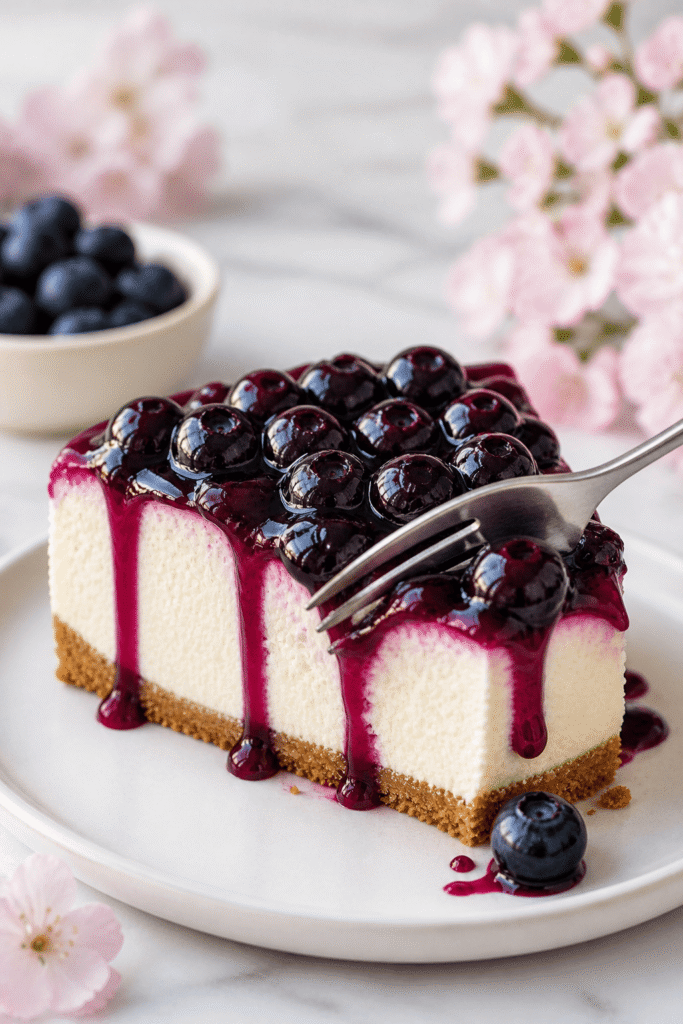
Serve the cheesecake fully chilled, with the blueberry topping gently cascading over each slice. The contrast between the cool, creamy filling and the glossy fruit topping is what makes every bite feel balanced and complete.
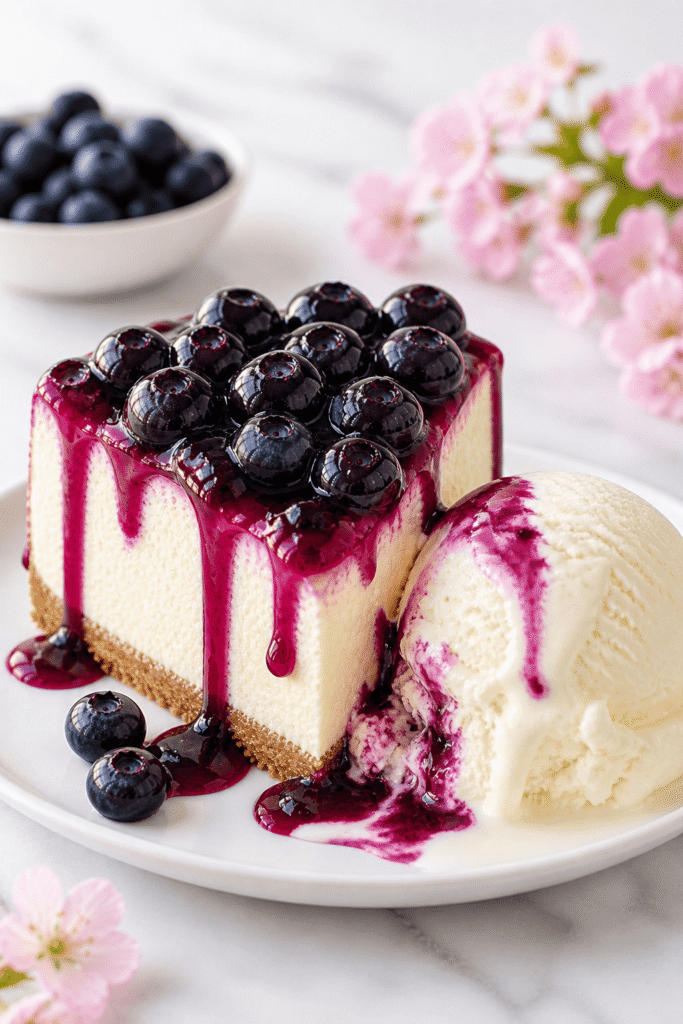
For an extra finishing touch, you can add a few fresh blueberries on top or a small spoonful of lightly whipped cream.
Save this for: spring gatherings, elegant dinner desserts, birthday tables, or any moment where you want something that feels both refined and comforting.
That moment when the fork slides cleanly through the slice and the topping slowly drips down the sides — that’s what makes this dessert unforgettable.
Storage & Make Ahead
- Store covered in the refrigerator for up to 4 days.
- Keep the cheesecake well wrapped to prevent it from drying out.
- Best made 1 day ahead — flavor improves overnight.
- Freeze without topping for up to 1 month.
- Thaw overnight in the refrigerator before serving.
Variations
Once you master the base, this recipe becomes incredibly versatile.
- Lemon Blueberry Cheesecake: Add lemon zest to the filling for extra brightness.
- Chocolate Swirl Cheesecake: Swirl melted chocolate into the batter before baking.
- Mixed Berry Cheesecake: Replace blueberries with a mix of berries.
- No-Bake Version: Skip baking and use gelatin or whipped cream for structure.
- Mini Cheesecakes: Bake in muffin tins for individual servings.
Frequently Asked Questions
Can I use frozen blueberries?
Yes, frozen blueberries work perfectly. There is no need to thaw them first.
Why did my cheesecake crack?
Cracks are usually caused by rapid temperature changes, overmixing, or overbaking.
Do I need a water bath?
No, but it helps create an even smoother texture and reduces the risk of cracks.
How long should I chill cheesecake?
At least 4 hours, but overnight chilling gives the best results.
Can I make this cheesecake ahead of time?
Yes, it is actually better when made one day in advance.
How do I get clean slices?
Use a sharp knife dipped in warm water and wipe it clean between each cut.
More Desserts You’ll Want to Make Next
If you love the creamy texture, berry topping, and elegant make-ahead feel of this blueberry cheesecake, these recipes are the most natural next bakes to try. They keep the same cozy dessert feeling while giving you more options for cheesecake, blueberry desserts, fruit desserts, and creamy no-fuss sweets.
- Strawberry Cheesecake — another classic baked cheesecake with a bright fruit topping and that same smooth, creamy texture.
- Cherry Cheesecake Recipe — perfect if you want the same rich cheesecake base with a glossy, sweet-tart cherry finish.
- New York Cheesecake Recipe — a richer, denser cheesecake option for readers who love a classic bakery-style slice.
- Blueberry Cream Cheese Bars Recipe — a great blueberry dessert if you want creamy filling and fruit flavor in an easier bar-style format.
- Blueberry Pie — ideal for anyone who loves juicy blueberry filling in a more traditional fruit dessert.
- Lemon Blueberry Cake — a bright, soft cake that pairs lemon freshness with juicy blueberries.
For an easy dessert table, pair this blueberry cheesecake with a fruit-forward recipe like Strawberry Shortcake or a creamy chilled dessert like No Bake Cheesecake.
Recipe Summary
This Blueberry Cheesecake recipe combines a buttery cookie crust, a rich and creamy baked cheesecake filling, and a glossy blueberry topping for the perfect balance of texture and flavor. It is elegant, reliable, and ideal for make-ahead desserts.
Final Thoughts
This is one of those recipes that quietly builds confidence in the kitchen. Once you understand how the texture forms, how gentle heat affects the filling, and how the cheesecake sets as it cools, the process becomes much more intuitive.
The first time you slice into it and see that perfectly smooth interior with the glossy blueberry topping on top, you realize it was never about complexity — it was about control, patience, and small details.
And that’s exactly why this blueberry cheesecake is worth making again and again.

Blueberry Cheesecake
A creamy baked blueberry cheesecake with a buttery graham cracker crust and a glossy homemade blueberry topping. Smooth, rich, and perfectly balanced, this elegant dessert slices beautifully and is ideal for make-ahead occasions.
Ingredients
For the Crust
- 2 cups graham cracker crumbs
- 7 tbsp unsalted butter, melted
- 2 tbsp granulated sugar
- Pinch of salt
For the Cheesecake Filling
- 24 oz cream cheese, softened
- 3/4 cup granulated sugar
- 3 large eggs
- 3/4 cup heavy cream
- 1 tsp vanilla extract
- 1 tbsp all-purpose flour (optional)
- 1 tbsp lemon juice (optional)
For the Blueberry Topping
- 2 cups blueberries
- 1/3 cup granulated sugar
- 1 tbsp lemon juice
- 1 tbsp cornstarch
- 2 tbsp water
Instructions
- Preheat the oven to 180°C (350°F). Line the bottom of a springform pan with parchment paper and lightly grease the sides.
- Make the crust by mixing the crushed graham crackers, melted butter, sugar, and salt until evenly combined.
- Press the mixture firmly into the bottom of the pan. Bake for 8–10 minutes until lightly golden, then let it cool slightly.
- Reduce the oven temperature to 160°C (320°F).
- In a large bowl, beat the softened cream cheese and sugar until smooth and creamy.
- Add the eggs one at a time, mixing gently after each addition until fully incorporated.
- Add the heavy cream, vanilla extract, lemon juice, and flour (if using). Mix just until smooth.
- Pour the filling over the crust and gently tap the pan to release air bubbles.
- Bake for 50–60 minutes, until the edges are set and the center is slightly jiggly.
- Turn off the oven, crack the door slightly, and let the cheesecake cool inside for 1 hour.
- Transfer to the refrigerator and chill for at least 4 hours, preferably overnight.
- Make the blueberry topping by cooking the blueberries, sugar, and lemon juice over medium heat until the berries release their juices.
- Mix the cornstarch and water to create a slurry, then stir it into the blueberry mixture. Cook until thickened and glossy.
- Let the topping cool completely.
- Spoon the blueberry topping over the chilled cheesecake before serving.
Notes
- Use room temperature cream cheese for a smooth, lump-free batter.
- Avoid overmixing after adding the eggs to prevent cracks.
- The cheesecake is done when the center still has a slight wobble.
- Cooling slowly helps prevent cracks on the surface.
- For extra smooth texture, you can bake the cheesecake in a water bath.
- Chill overnight for the best texture and clean slices.
Nutrition Information:
Yield: 10 slices Serving Size: 1 sliceAmount Per Serving: Calories: 420Total Fat: 30gCarbohydrates: 32gSugar: 24gProtein: 6g
Nutrition information is estimated and may vary based on ingredients and portion sizes.
12 Sweet Favorites — Yours, Free 🍰
Tiramisù, no-bake cheesecake, the perfect chocolate chip cookie & 9 more reader-loved desserts — gathered into one beautiful free recipe book. From my kitchen to yours.
No spam, just sweet things. Unsubscribe anytime.