Oatmeal Chocolate Chip Cookies (Soft & Chewy Recipe)
🎁 FREE E-BOOK: 12 Sweet Favorites — reader-loved desserts in one beautiful recipe book.
Oatmeal chocolate chip cookies are soft, chewy cookies made with a butter-based dough, rolled oats, and chocolate chips, baked until the edges are lightly golden and the centers stay tender. This easy cookie recipe creates cookies with a slightly hearty texture, crisp edges, and a soft, melt-in-your-mouth middle.
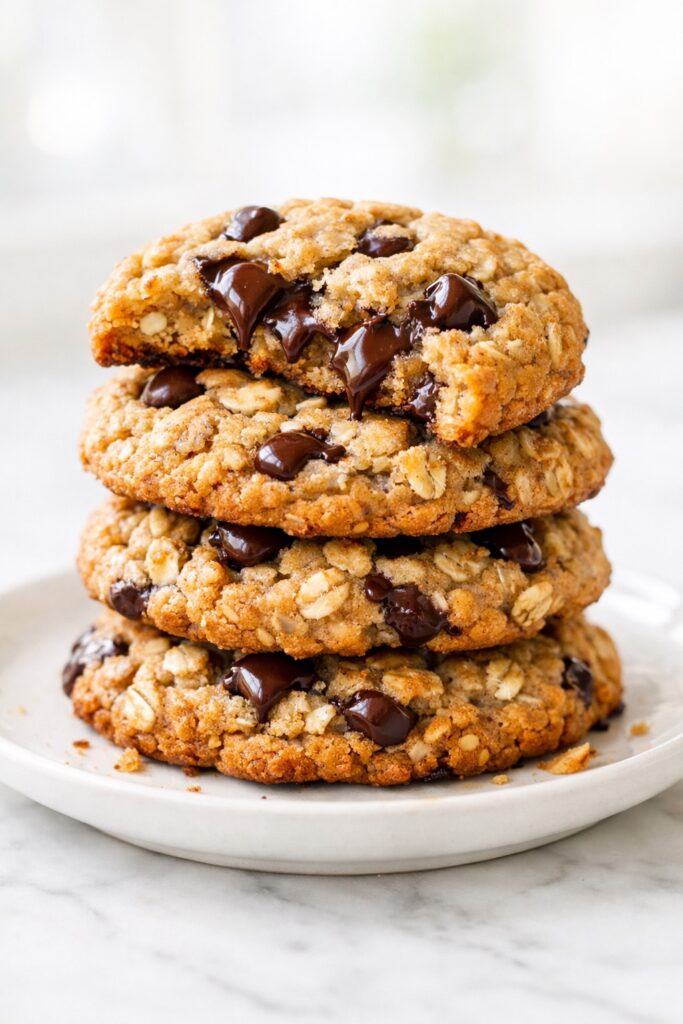
Sometimes the edges brown a little more than expected, and those slightly deeper, caramelized edges are often the ones people reach for first.
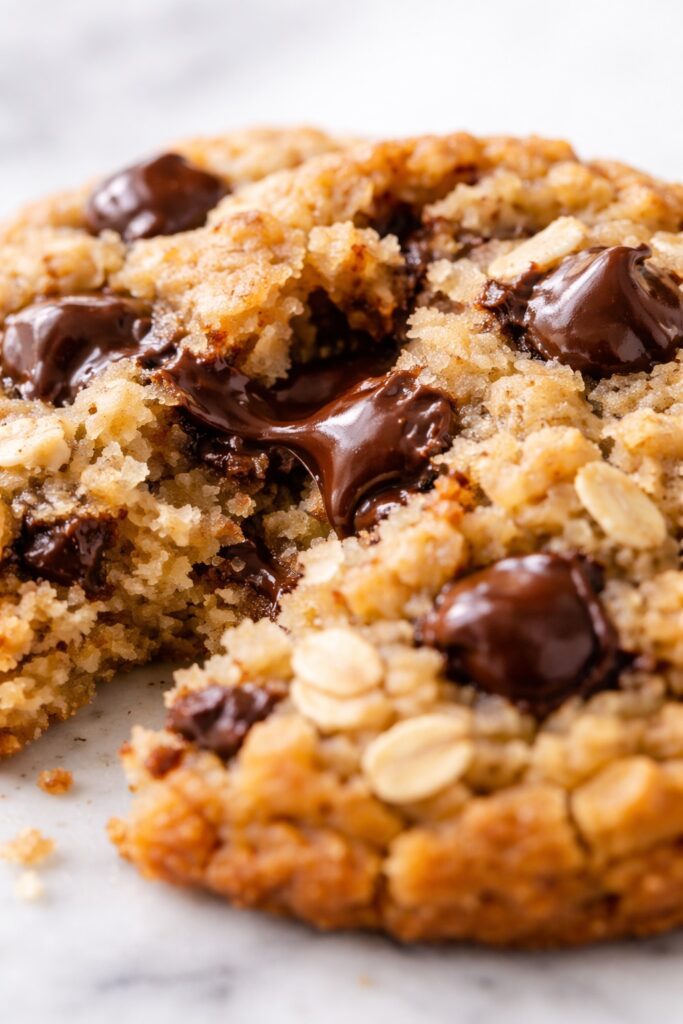
There’s something especially comforting about a batch of oatmeal chocolate chip cookies fresh from the oven: the edges lightly golden, the centers still soft, and the chocolate just melted enough to turn every bite into something warm and familiar. They have that cozy, homemade feel that makes the kitchen smell instantly better and the whole recipe feel worth repeating.
What makes these cookies stand out is the balance between structure and softness. The oats give them a slightly more substantial bite, while the chocolate keeps everything soft, rich, and just sweet enough. They feel a little more satisfying than classic chocolate chip cookies, without losing that familiar comfort.
They’re also the kind of cookies people come back to because they work for so many moments: afternoon coffee, lunchbox treats, casual gatherings, or those days when you just want something simple and homemade that always turns out right.
This recipe comes together quickly, requires no chilling, and bakes in under 30 minutes, making it one of those reliable, repeatable cookies you can make anytime.
Oatmeal chocolate chip cookies are soft and chewy cookies with lightly crisp edges, made with rolled oats and chocolate chips for a more textured and satisfying bite. They bake quickly without chilling and stay soft longer than classic cookies due to the way oats retain moisture.
What Are Oatmeal Chocolate Chip Cookies?
Oatmeal chocolate chip cookies are soft, chewy drop cookies made from a butter-based dough combined with rolled oats and chocolate chips. They are known for their lightly crisp edges, tender centers, and a slightly heartier texture compared to classic chocolate chip cookies.
At a basic level, they follow the same structure as traditional cookies, but the addition of oats changes both texture and moisture behavior. The oats absorb liquid during baking and continue to soften as the cookies rest, which is why oatmeal chocolate chip cookies often stay soft longer than standard cookies.
Because of this, they offer a more balanced texture, slightly structured from the oats, but still soft and rich from the butter and chocolate. The result is a cookie that feels both comforting and a little more substantial, without becoming dense or dry.
In practical terms, this means you get cookies that hold their shape well, stay chewy for longer, and develop that classic contrast between lightly crisp edges and a soft center.
Sometimes, they even taste better the next day, once the oats have softened slightly and the texture has fully settled.
Quick Recipe Overview
This oatmeal chocolate chip cookie recipe is designed to give you soft, chewy cookies with lightly crisp edges using simple ingredients and no chilling. Everything comes together quickly, making it ideal for both everyday baking and last-minute treats.
| Category | Details |
|---|---|
| Texture | Soft and chewy center with lightly crisp edges |
| Flavor | Buttery, lightly caramelized, rich chocolate |
| Difficulty | Easy, beginner-friendly |
| Time | 25–30 minutes total |
| Yield | About 24 cookies |
| Method | Oven-baked, no chilling required |
| Best For | Snacks, lunchboxes, cozy desserts, everyday baking |
In short: These oatmeal chocolate chip cookies are soft, chewy, and easy to make, with a rich buttery flavor and a satisfying texture from rolled oats and melted chocolate chips. They bake quickly, require no chilling, and stay soft long after they cool.
Why You’ll Love This Recipe
- Stays soft for hours (even the next day), thanks to oats that retain moisture naturally
- No chilling required, so you can bake immediately, making it easy to bake anytime
- Perfect balance of crisp edges and soft, chewy centers
- Simple ingredients with consistently reliable results
- The kind of cookie that works for both everyday baking and cozy moments
These are the kind of cookies you make once, then find yourself baking again a few days later without really planning to.
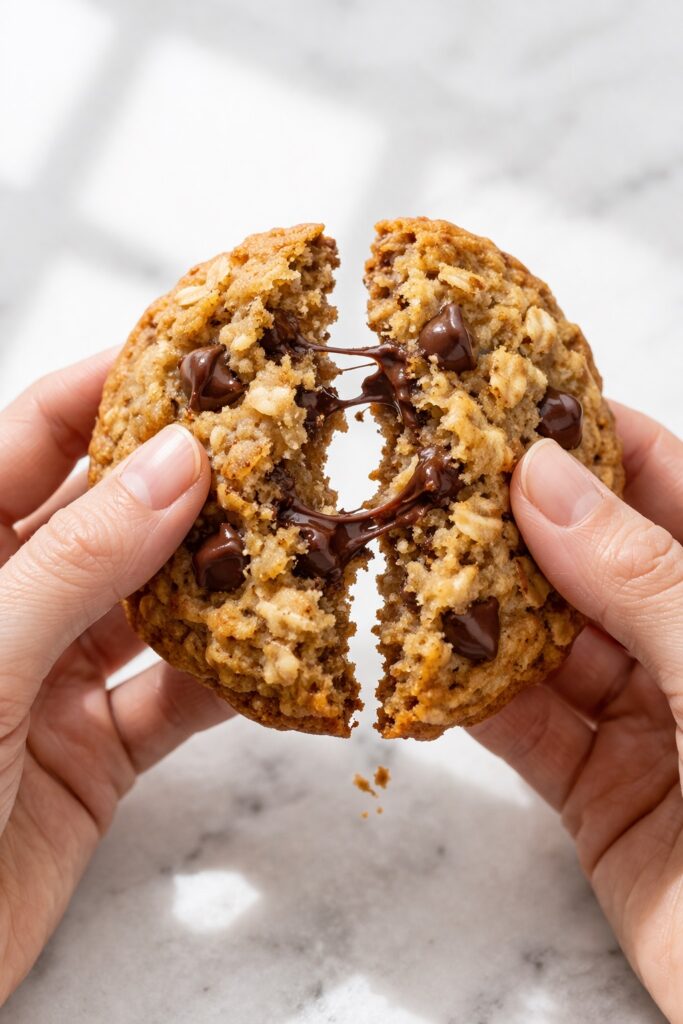
Why This Recipe Works
These oatmeal chocolate chip cookies work because each ingredient is balanced to control moisture, structure, and texture without needing extra steps like chilling. The result is a dough that bakes consistently soft and chewy every time.
Oats act as a natural moisture buffer.
As the cookies bake, rolled oats absorb part of the liquid in the dough and release it slowly. This helps the cookies stay soft for longer instead of drying out after a few hours.
The butter and sugar balance creates contrast.
Brown sugar adds moisture and chewiness, while granulated sugar helps the edges caramelize slightly. Together, they create cookies with lightly crisp edges and soft centers.
Eggs provide structure without heaviness.
They bind the dough and help it set just enough while baking, allowing the cookies to hold their shape without becoming dense or cakey.
Chocolate chips improve texture, not just flavor.
As they warm, they soften and melt into the dough, creating pockets of richness that also help prevent the cookies from feeling dry.
Slight underbaking is intentional.
Removing the cookies when the centers still look soft allows them to finish setting on the baking sheet. This is one of the simplest ways to guarantee a chewy texture.
Small baking insight: Oat-based cookies continue to improve in texture after baking. As they rest, the oats soften further, creating a more balanced chew a few hours later.
If you enjoy cookies with a soft center and crisp edges, you might also like these chocolate chip cookies, which follow a similar balance of texture and baking time.
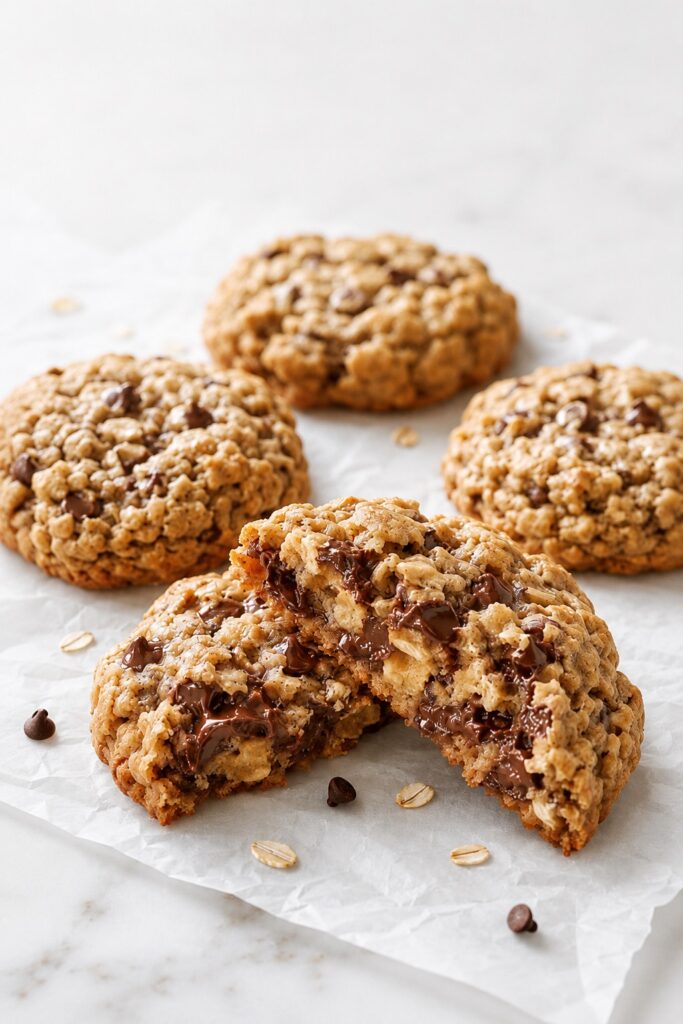
Baking Science Behind Oatmeal Chocolate Chip Cookies
Even though these oatmeal chocolate chip cookies are simple to make, several key reactions happen in the oven that shape their final texture and flavor.
Sugar caramelization creates flavor and color.
As the cookies bake, the sugars begin to caramelize, especially around the edges where heat is more direct. This is what gives the cookies their lightly golden edges and deeper, slightly toasty flavor.
Butter controls spread and texture.
As the butter melts early in baking, it allows the dough to spread just enough. As the structure sets, that spread stops, which is why timing plays such an important role in achieving soft centers without thin, flat cookies.
Oats regulate moisture differently than flour.
Unlike traditional cookies made mostly with flour, oats absorb and hold moisture more gradually. This helps the cookies stay soft for longer and gives them their signature chewy texture.
Heat sets the structure in stages.
The edges set first due to direct contact with heat, while the centers stay soft for longer. This contrast is what creates that classic chewy middle with lightly crisp edges.
Carryover cooking finishes the cookies.
Even after removing them from the oven, the cookies continue to set on the baking sheet. This is why taking them out while the centers still look slightly underbaked leads to a better final texture.
Small baking insight: The moment you remove oatmeal cookies from the oven affects their final texture more than the exact bake time. One extra minute can shift them from soft and chewy to noticeably drier.
In simple terms: oats help retain moisture for a soft center, while butter and sugar create those lightly crisp edges — the combination is what gives these cookies their signature texture.
Oatmeal Chocolate Chip Cookies vs Classic Chocolate Chip Cookies
| Feature | Oatmeal Chocolate Chip Cookies | Classic Chocolate Chip Cookies |
|---|---|---|
| Texture | Chewy, slightly hearty from oats | Softer or crisp depending on recipe |
| Moisture retention | Stays soft longer due to oats | Can dry out faster |
| Flavor profile | More complex, slightly nutty | Sweeter, more buttery |
| Structure | Thicker, more textured bite | Smoother dough, more uniform |
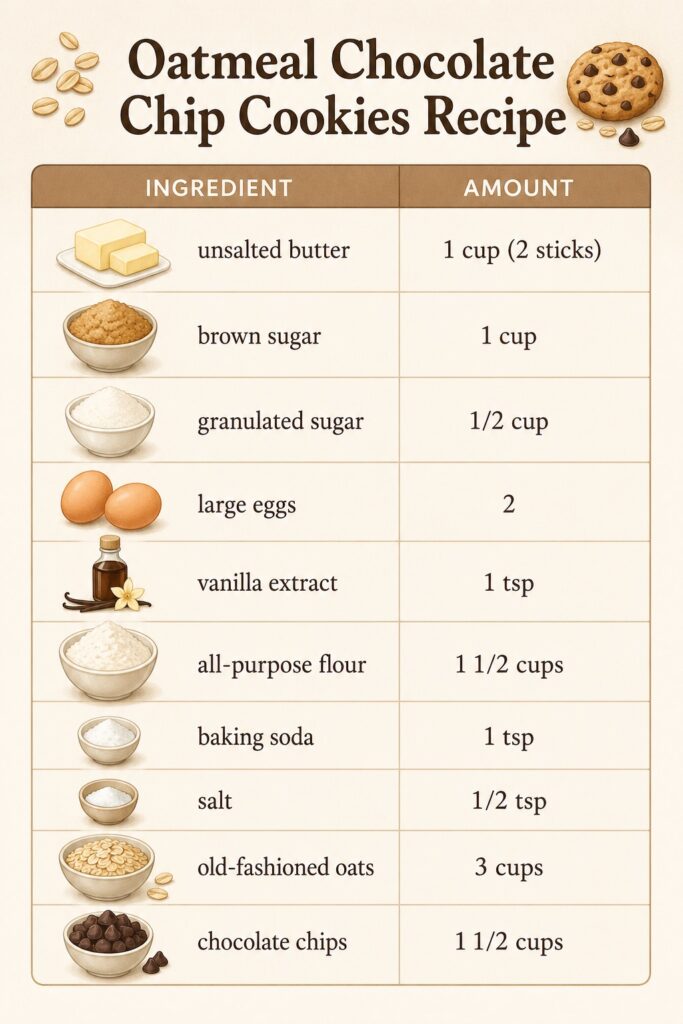
Ingredients
These oatmeal chocolate chip cookies use simple, pantry-friendly ingredients that come together to create a balanced, soft, and chewy texture.
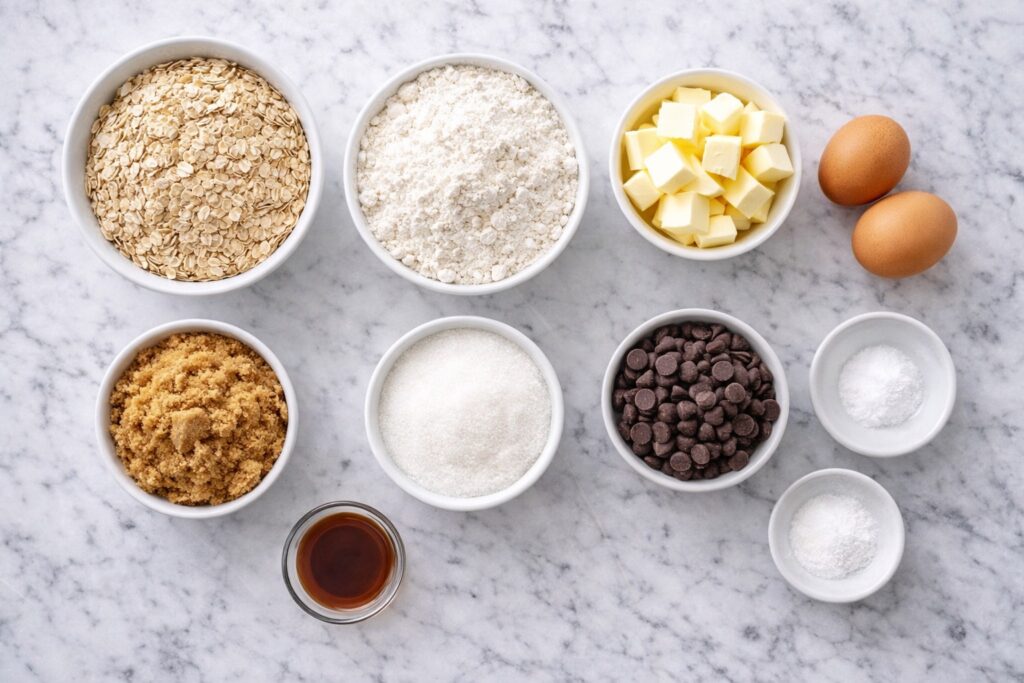
- 1 cup (2 sticks) unsalted butter, softened
- 1 cup brown sugar, packed
- ½ cup granulated sugar
- 2 large eggs
- 1 tsp vanilla extract
- 1 ½ cups all-purpose flour
- 1 tsp baking soda
- ½ tsp salt
- 3 cups old-fashioned oats
- 1 ½ cups chocolate chips
For best results, use old-fashioned rolled oats and full-fat butter for maximum flavor and chewiness. Rolled oats are ideal for this recipe because they add chewiness without drying out the cookies, similar to how oats are used in baked oatmeal recipes.
Using the right sugar ratio is important, just like in this guide on how to make brown sugar at home.
If you’re measuring in metric, use a kitchen scale for best accuracy. Baking by weight helps keep oatmeal chocolate chip cookies soft and consistent every time.
Ingredient Notes & Substitutions
Each ingredient in these oatmeal chocolate chip cookies plays a specific role in creating the perfect balance between soft centers and lightly crisp edges. Small changes in any of these can noticeably affect the final texture.
Rolled oats
Oats provide structure and that signature chewy texture. Unlike flour, they absorb moisture gradually, which helps the cookies stay soft for longer.
If the oats are too coarse or not blended slightly into the dough, the texture can feel rough instead of tender.
Butter
Butter controls both flavor and spread. As it melts during baking, it allows the cookies to spread and develop lightly crisp edges.
If the butter is too warm, the cookies may spread too much. If it is too cold, the dough may not cream properly.
Brown sugar
Brown sugar adds moisture and chewiness thanks to its molasses content. It is one of the main reasons these cookies stay soft even after cooling.
Using too little brown sugar can make the cookies drier and less tender.
Granulated sugar
Granulated sugar helps create structure and lightly crisp edges through caramelization during baking.
Without it, the cookies can feel too soft and lack contrast in texture.
Eggs
Eggs bind the dough and provide structure while keeping the cookies tender.
Room temperature eggs mix more evenly and help create a smoother, more consistent dough.
Flour
Flour provides the base structure of the cookies. The amount used directly affects thickness and softness.
Too much flour leads to dry, dense cookies, while too little can cause excessive spreading.
Chocolate chips
Chocolate chips add pockets of melted richness throughout the cookies. As they soften, they also help prevent the cookies from feeling dry.
Larger chunks create more pronounced texture and a more bakery-style feel.
Small baking insight: The balance between oats, sugar, and fat matters more than any single ingredient. Even small adjustments can noticeably change how soft, chewy, or crisp the cookies turn out.
Equipment You’ll Need
You don’t need anything complicated to make these cookies, but having the right basic tools will make the process smoother and more consistent.
- Mixing bowl + spatula
- Electric mixer (helpful, not required)
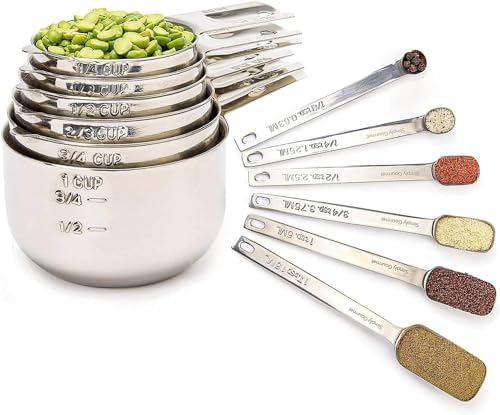
- Measuring cups/spoons
- Baking sheet + parchment paper
- Cooling rack




Optional but Helpful Tools
- Cookie Scoop (or Ice Cream Scoop)
- Sifter or Fine-Mesh Sieve
- Kitchen Scale
These extras are not essential, but they can make the dough easier to portion and help the cookies bake more evenly.
How to Make Oatmeal Chocolate Chip Cookies
1. Preheat the oven and prepare your baking sheets.
Preheat your oven to 350°F (175°C) and line two baking sheets with parchment paper. This helps prevent sticking and allows the cookies to bake evenly without over-browning on the bottom.
2. Cream the butter and sugars until light and fluffy.
In a mixing bowl, beat the softened butter, brown sugar, and granulated sugar for about 2 minutes. The mixture should look lighter in color and slightly fluffy, with a soft, creamy texture. This step helps create a tender cookie.
3. Add the eggs and vanilla.
Mix in the eggs and vanilla extract until fully combined. The mixture should look smooth and slightly glossy. If it looks a bit curdled at first, keep mixing — it will come together.
4. Incorporate the dry ingredients.
Add the flour, baking soda, and salt. Mix just until combined, stopping as soon as you no longer see dry streaks of flour. Overmixing at this stage can make the cookies denser.
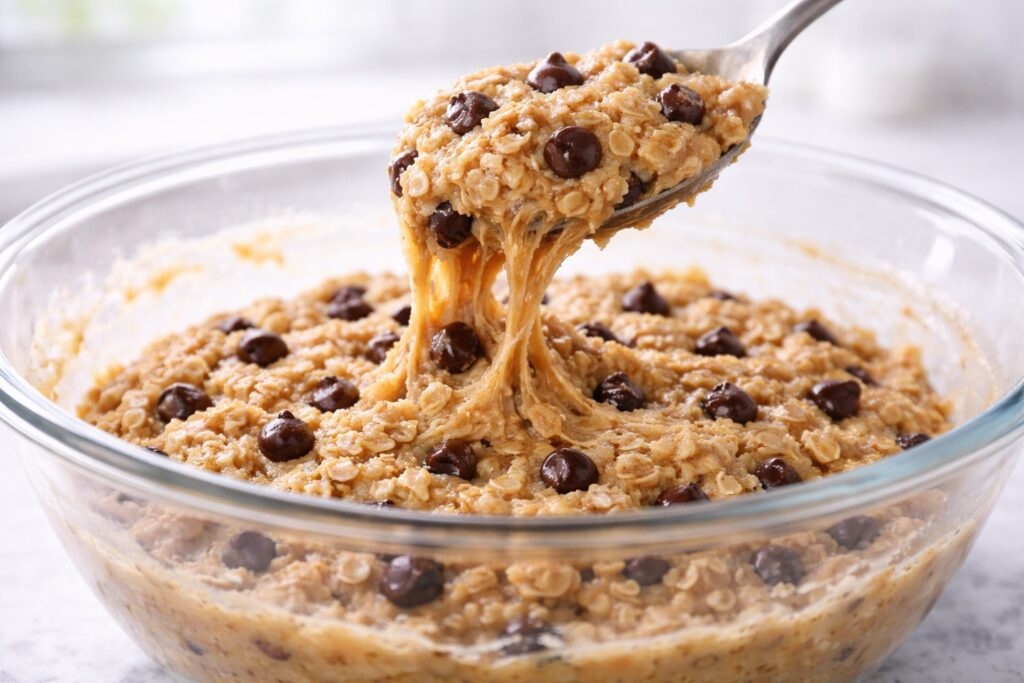
5. Fold in the oats and chocolate chips.
Stir in the rolled oats and chocolate chips until evenly distributed. The dough will be thick, slightly textured, and soft but scoopable.
6. Scoop and space the dough.
Scoop portions of dough and place them about 2 inches apart on the baking sheets.
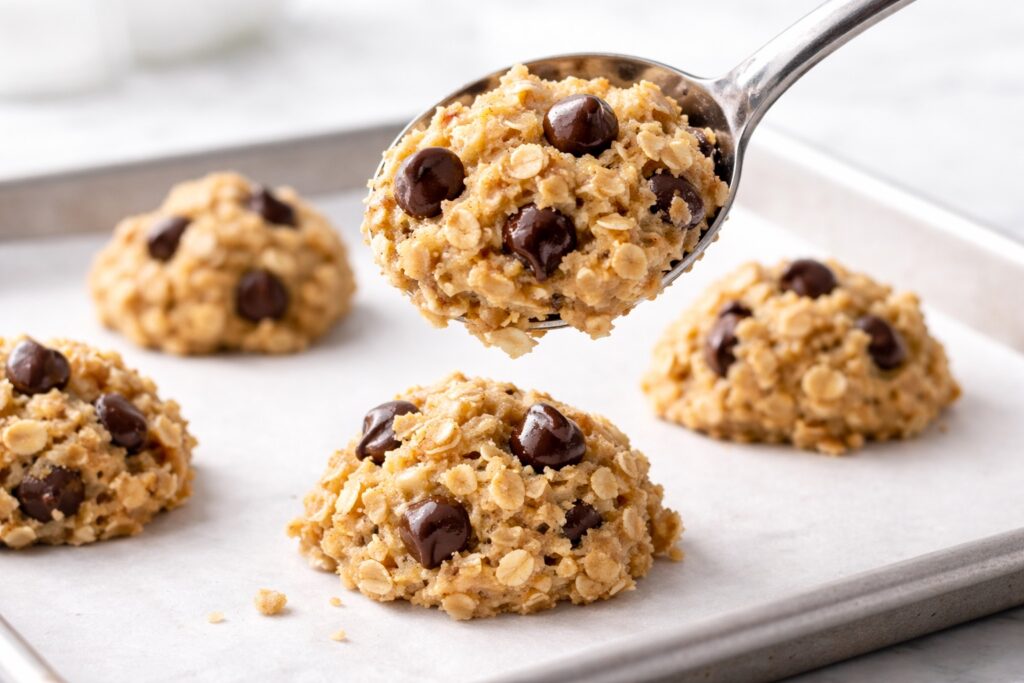
A 1.5-tablespoon cookie scoop works well for evenly sized cookies that bake consistently.
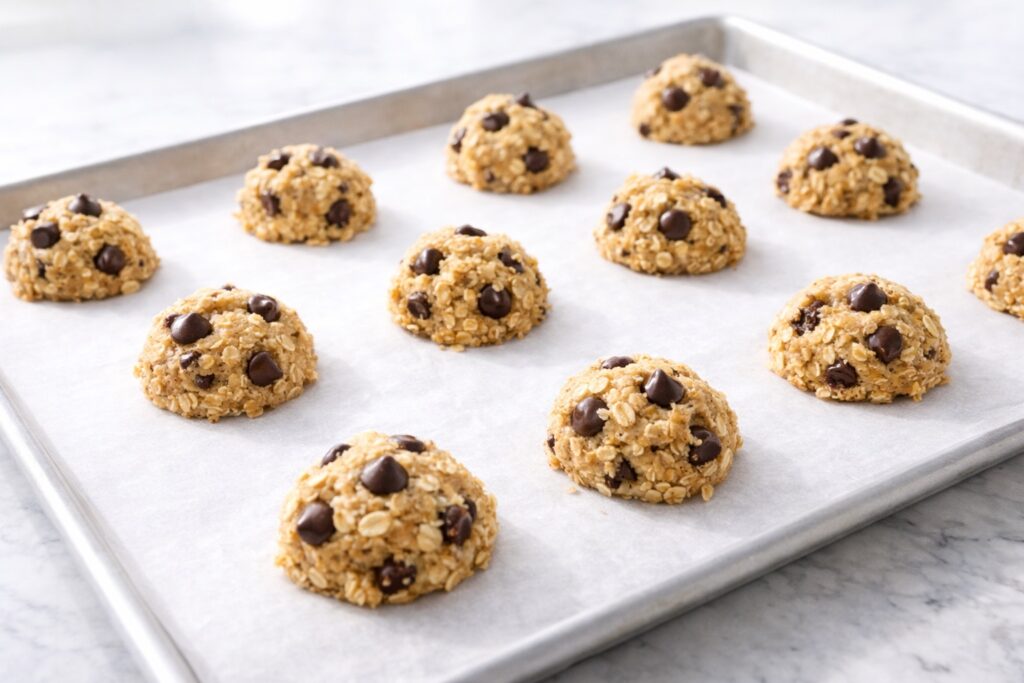
Tip: If your kitchen is very warm and the dough feels too soft, letting it rest for 10–15 minutes before baking can help the cookies hold their shape better.
7. Bake until the edges are set and lightly golden.
Bake for 10–12 minutes. The edges should look lightly golden and set, while the centers will still look slightly soft and underbaked — this is exactly what you want for a chewy texture.
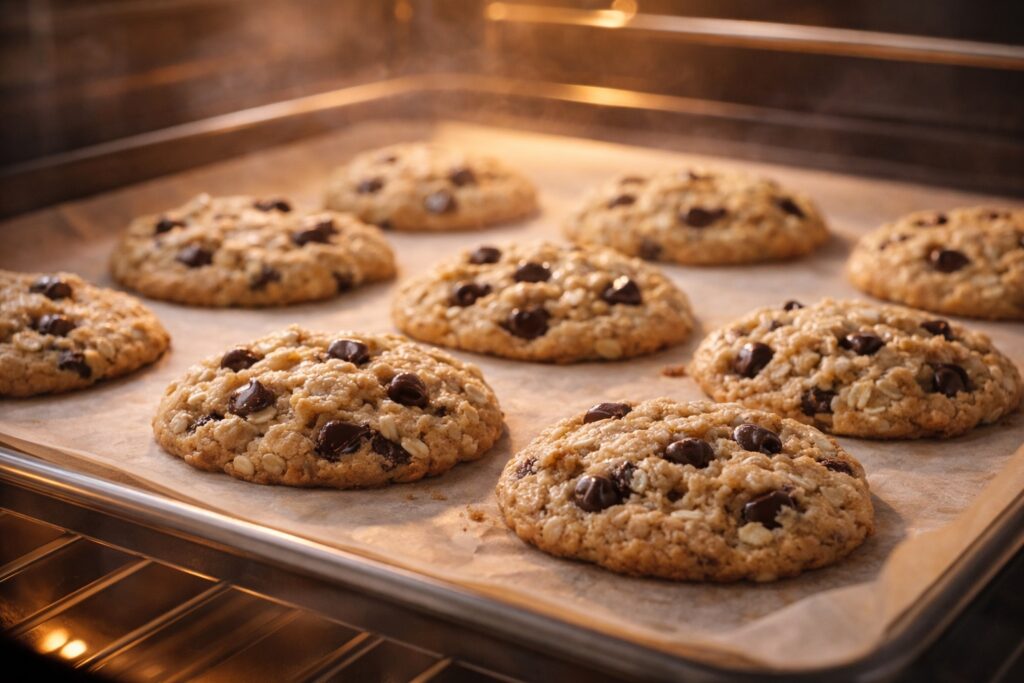
As the cookies bake, you’ll notice the edges set first while the centers remain soft. This contrast is what creates that classic chewy texture once they cool.
8. Let the cookies rest before moving them.
Allow the cookies to cool on the baking sheet for about 5 minutes. They will continue to set during this time. Then transfer them to a wire rack to cool completely.
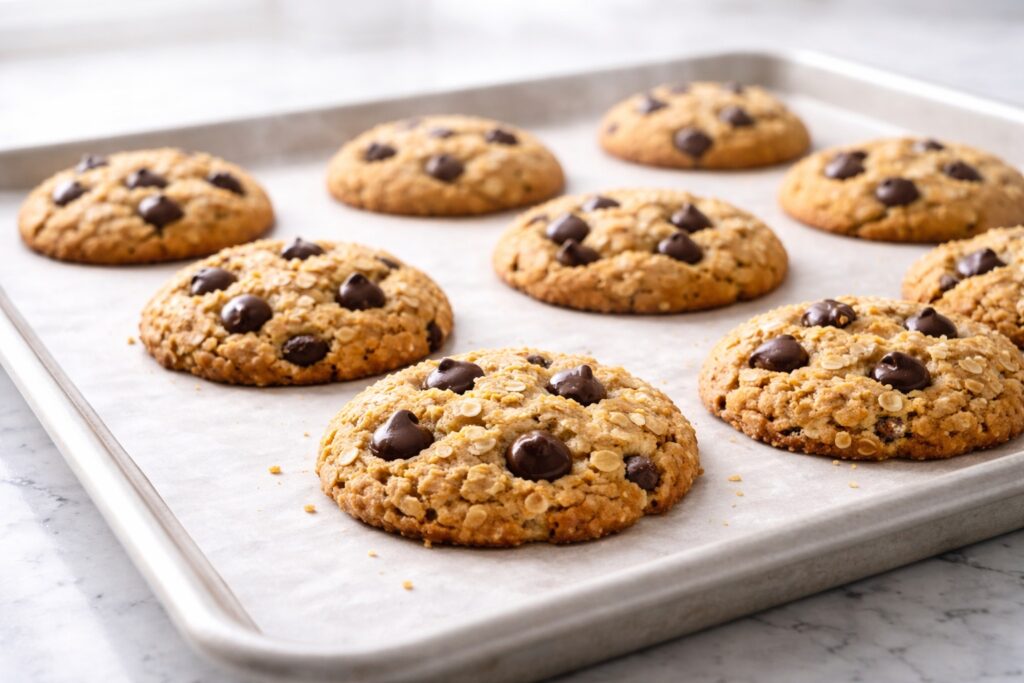
How to Tell When Oatmeal Chocolate Chip Cookies Are Done
- Edges look set and lightly golden: The outer edges should be firm and slightly darker than the center.
- Centers still look soft: The middle of the cookies may look slightly underbaked, but they will continue to set as they cool.
- Surface looks dry, not glossy: The top of the cookies should no longer look wet or shiny.
- Cookies hold their shape when gently nudged: If you lightly touch the edge, it should feel set, not liquid or overly soft.
- Bottom is lightly golden, not dark brown: This helps ensure the cookies are baked through without becoming dry.
It’s completely normal for oatmeal chocolate chip cookies to look slightly underbaked in the center when you take them out of the oven. This is what gives them their soft and chewy texture once they cool.
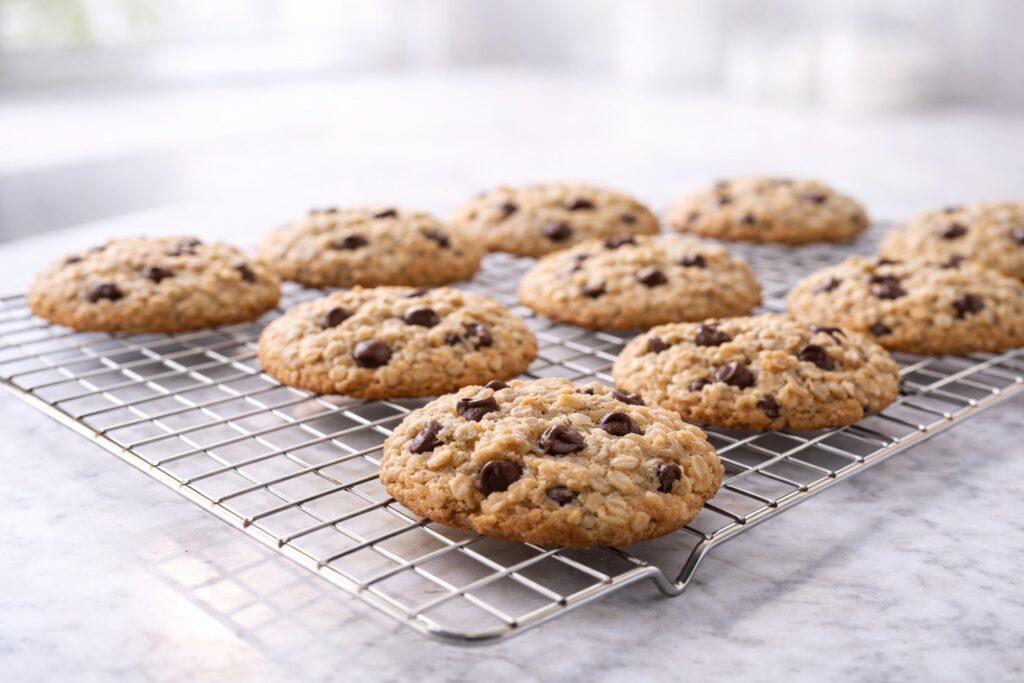
Texture and Dough Behavior Guide
| Stage | What You Should See |
|---|---|
| After mixing dough | Thick, slightly sticky, textured from oats, but easy to scoop |
| Before baking | Soft dough balls that hold their shape without spreading too much |
| Mid-bake | Cookies spreading slightly, edges beginning to set, centers still soft |
| Fresh out of oven | Edges set and lightly golden, centers soft and slightly underbaked |
| After cooling | Fully set structure with a soft, chewy center and lightly crisp edges |
If your cookies feel slightly too soft right out of the oven, don’t worry — this is exactly how they should be. The structure continues to set as they cool, which is what creates that perfect chewy texture.
Expert Tips for the Best Oatmeal Chocolate Chip Cookies
- The cookies continue to improve after baking. As they cool, the structure sets and the oats soften further, creating a more balanced, chewy texture after about 30–60 minutes.
- Do not overbake — even by a minute. The difference between soft and dry cookies often comes down to 1–2 minutes. Pull them when the centers still look slightly soft, not fully set.
- Use room temperature butter, not melted. Softened butter creates a better structure during creaming, while melted butter can cause excessive spreading and thinner cookies.
- Let the dough rest briefly before baking. Even a 10–15 minute rest allows the oats to start absorbing moisture, which improves the final texture.
- Bake one tray at a time if possible. This helps ensure even heat distribution and more consistent results, especially in home ovens that have hot spots.
- Watch the edges, not the center. The edges tell you when the cookies are ready. The centers should still look soft when you remove them from the oven.
- If your cookies spread too much, your butter may be too warm. Let the dough sit for a few minutes or chill it briefly before baking.
- If your kitchen is warm, you may notice the dough softens more quickly while mixing. Letting it rest for a few minutes before baking helps the cookies hold their shape better and bake more evenly.
Common Mistakes and How to Fix Them
- Cookies spread too much → This usually happens when the butter is too warm or the dough is too soft. Let the dough rest for 10–15 minutes or chill it briefly before baking.
- Cookies turn out dry → Overbaking is the most common cause. Remove the cookies when the edges are set but the centers still look slightly soft. They will continue to set as they cool.
- Cookies do not spread → Too much flour or overmixed dough can make cookies stay thick. Measure flour carefully and mix only until combined.
- Cookies bake unevenly → This can happen if your oven has hot spots. Rotate the baking sheet halfway through baking for more even results.
Variations You Can Try
- Oatmeal Raisin Version: Replace part or all of the chocolate chips with raisins for a more classic flavor.
- Nutty Oatmeal Cookies: Add chopped walnuts or pecans for extra crunch and depth.
- Dark Chocolate Upgrade: Use dark chocolate chunks instead of chips for a richer, less sweet flavor.
- Cinnamon Oatmeal Cookies: Add ½ teaspoon cinnamon to the dough for a warmer, slightly spiced profile.
- Extra Chewy Version: Increase brown sugar slightly and reduce granulated sugar for a softer, more chewy texture.
Storage and Make-Ahead Tips
These oatmeal chocolate chip cookies store very well and often taste even better after a few hours, once the texture has fully settled.
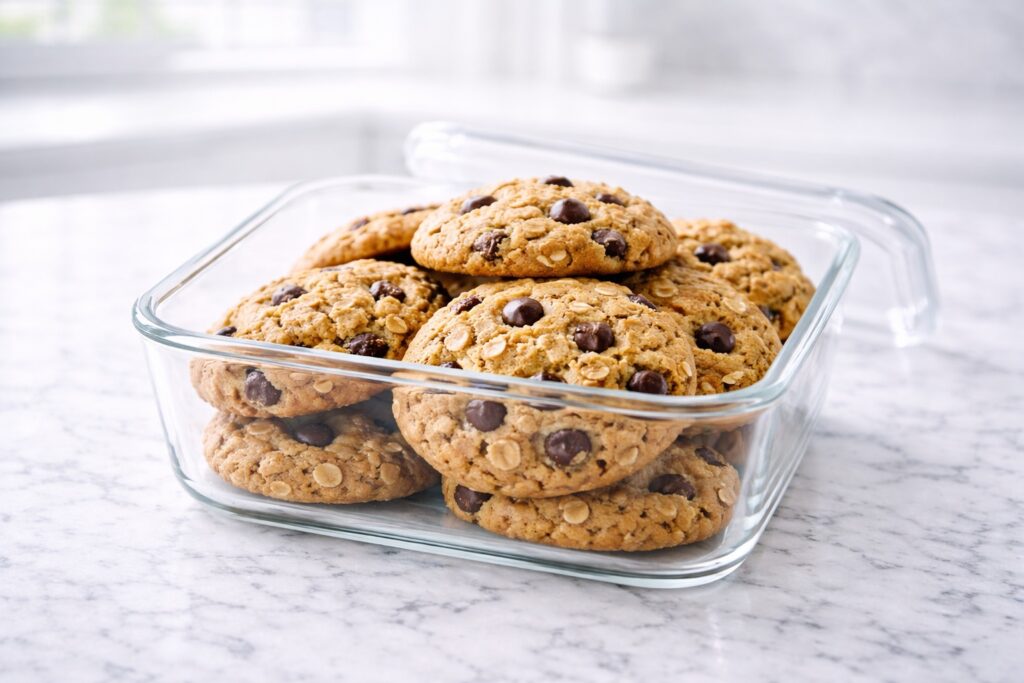
- At room temperature: Store the cookies in an airtight container for up to 4 days. To keep them soft, you can add a small piece of bread to the container — it helps maintain moisture.
- Freezing baked cookies: Let the cookies cool completely, then store them in a freezer-safe container for up to 2 months. Thaw at room temperature or warm slightly before serving.
- Freezing the dough: Scoop the dough into portions and freeze them on a tray until solid. Transfer to a freezer bag and store for up to 2 months. Bake directly from frozen, adding 1–2 extra minutes to the baking time.
Because the oats continue to absorb moisture over time, the cookies often become slightly softer the next day, which many people prefer.
Food safety note: Like all cookie dough made with flour and eggs, this dough should be baked before eating. If you want the official guidance, the CDC has a quick summary on why raw dough is not considered safe.

- Help Organize Your Kitchen and Pantry— Imagine every time walking to your kitchen or pantry, found everything is neatly …
- 4 Size Combinations Fit Your Needs — Our kitchen storage container set comes in 4 different sizes. Includes 6 Tall Conta…
- Airtight Containers Keep Food Fresh — The side-locking lids with silicone gasket make these storage containers airtight,…
How to Serve Oatmeal Chocolate Chip Cookies
These oatmeal chocolate chip cookies are best enjoyed slightly warm, when the centers are still soft and the chocolate is just melted enough to feel rich in every bite. The contrast between the lightly crisp edges and the soft, chewy middle is what makes them especially satisfying.
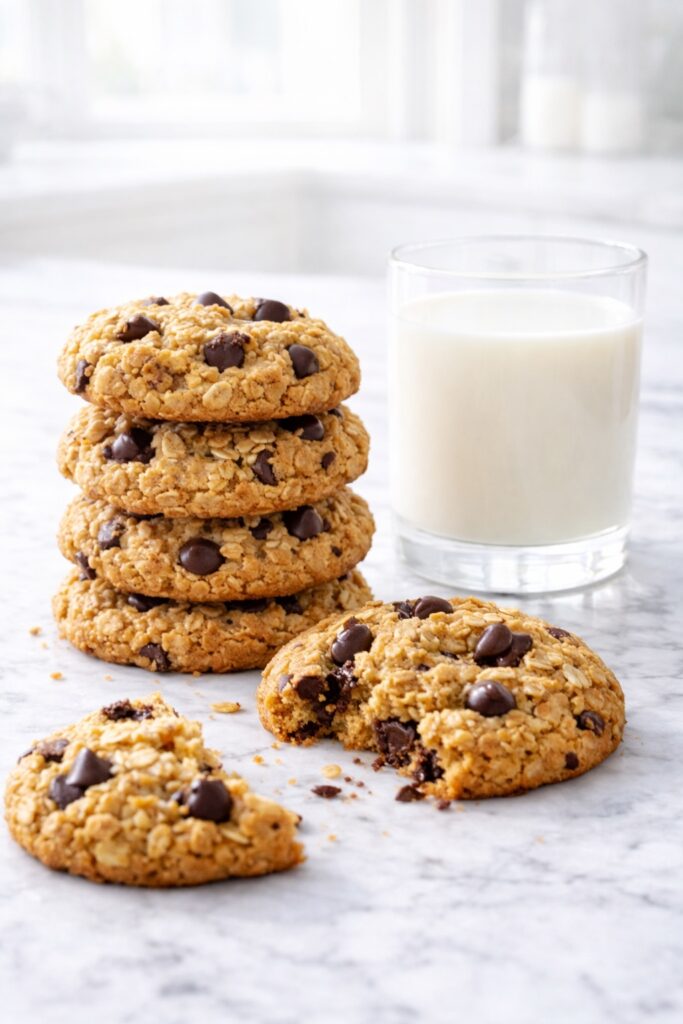
They pair beautifully with a glass of cold milk, a cup of coffee, or a warm tea, making them just as perfect for a slow afternoon as they are for a simple dessert after dinner.
If you want to turn them into something a little more indulgent, try sandwiching two cookies with a scoop of vanilla ice cream. The soft texture of the cookies works perfectly with the cold, creamy filling.
These are also the kind of cookies people naturally save for later — easy to make, easy to share, and perfect for everyday moments like lunchboxes, casual gatherings, or those evenings when you just want something homemade without too much effort.
For a slightly elevated presentation, you can serve them stacked on a simple plate or alongside fresh fruit for a more balanced dessert that still feels cozy and familiar.
Breaking one open while it’s still slightly warm, with the chocolate soft and the center just set, is usually the moment you realize how good they really are.
Frequently Asked Questions
Can I use quick oats instead of rolled oats?
Yes, but the cookies will be softer and less chewy. Rolled oats give the best texture and structure.
How do I keep oatmeal chocolate chip cookies soft?
Do not overbake them. Remove the cookies when the centers still look slightly soft, then store them in an airtight container once cooled.
Can I freeze oatmeal chocolate chip cookie dough?
Yes. Scoop the dough into portions, freeze for up to 2 months, and bake directly from frozen with 1–2 extra minutes added to the baking time.
Why did my cookies spread too much?
This usually happens when the butter is too warm or the dough is too soft. Let the dough rest or chill briefly before baking.
Can I make these cookies without chocolate chips?
Yes. You can replace them with raisins, nuts, or leave them plain for a more traditional oatmeal cookie.
More Cookie Recipes You’ll Love
Quick picks: If you want something closest in texture, try the chocolate chip cookies. For a softer, more classic oat texture, go for the oatmeal cookie recipe.
If you enjoy soft, chewy cookies like these oatmeal chocolate chip cookies, there are a few other favorites worth keeping in your baking rotation. Each one brings a slightly different texture, flavor, or level of richness, while still keeping that same cozy, homemade feel.
Classic & Chocolate Chip Variations
- Chocolate Chip Cookies – classic, soft centers with golden edges and gooey chocolate
- Brown Butter Chocolate Chip Cookies – deeper flavor with a rich, slightly nutty finish
- Sourdough Chocolate Chip Cookies – soft, complex flavor with a subtle tang
- White Chocolate Chip Cookies – softer, sweeter variation with a creamy finish
Oat-Based & Chewy Cookies
- Oatmeal Cookies – simple, soft cookies with a classic chewy texture
- Oatmeal Raisin Cookies – a more traditional version with a naturally sweet finish
- Pumpkin Oatmeal Cookies – soft, spiced cookies with extra moisture and richness
Classic Homemade Favorites
- Sugar Cookies – soft, buttery, and simple, perfect for everyday baking
- Peanut Butter Cookies – rich, tender cookies with a slightly crumbly bite
- Snickerdoodle Cookies – soft cookies with a light cinnamon sugar coating
- Thumbprint Cookies – soft cookies with a sweet jam center
Rich & Indulgent Cookie Variations
- Brownie Cookies – fudgy, chocolate-heavy cookies with a soft center
- Chocolate Crinkle Cookies – rich cookies with a soft interior and crackled top
- Hot Chocolate Cookies – soft cookies with a deep chocolate flavor
Each of these recipes follows the same idea: simple ingredients, reliable texture, and that familiar homemade feel that makes cookies easy to come back to again and again.
Recipe Summary
These oatmeal chocolate chip cookies are soft and chewy with lightly crisp edges, made with rolled oats, butter, and chocolate chips for a balanced and satisfying texture. The recipe comes together quickly, requires no chilling, and bakes in under 30 minutes, making it ideal for everyday baking.
With the right balance of moisture, structure, and baking time, these cookies stay soft, flavorful, and consistent every time you make them.
Final Thoughts
There’s a reason oatmeal chocolate chip cookies never go out of style. They bring together everything people love about homemade baking — warmth, texture, and that familiar balance between soft and crisp in every bite.
What makes this recipe especially reliable is how effortlessly it works. No complicated steps, no guesswork, just a dough that comes together easily and bakes into something comforting every single time.
Over time, this becomes one of those recipes you return to without thinking — the kind that always turns out right, and always feels worth making again.

Love this? There are twenty more like it.
128 pages, five chapters, 15 kitchen guides and 16 printable planning pages — in US Letter and A4.
Oatmeal Chocolate Chip Cookies
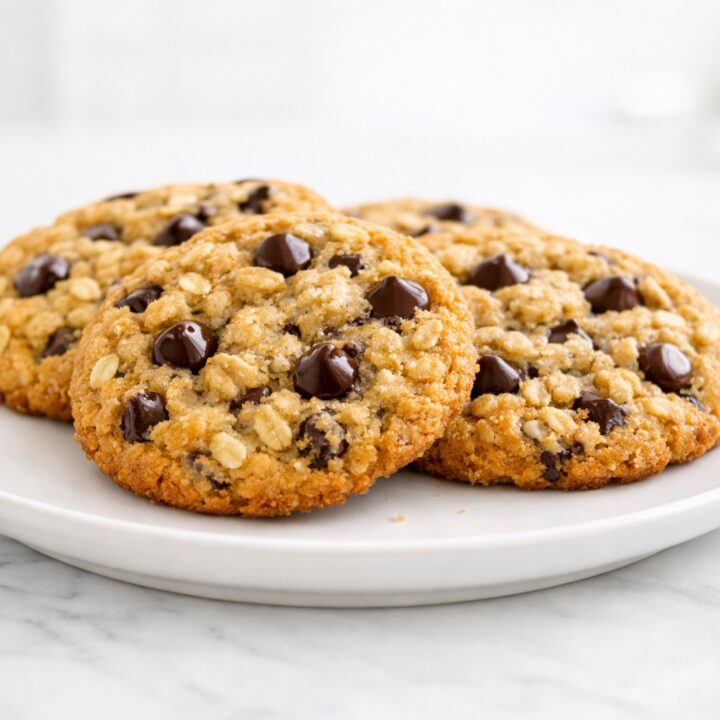
These oatmeal chocolate chip cookies bake up with crisp edges, soft chewy centers, and plenty of melted chocolate chips. A simple, classic cookie recipe made with rolled oats and pantry staples.
Ingredients
- 2 sticks unsalted butter, softened
- 1 cup brown sugar, packed
- 1/2 cup granulated sugar
- 2 large eggs, room temperature
- 1 teaspoon vanilla extract
- 1 1/2 cups all-purpose flour
- 1 teaspoon baking soda
- 1/2 teaspoon salt
- 3 cups old-fashioned rolled oats
- 1 1/2 cups chocolate chips
Instructions
- Preheat the oven to 350°F (175°C). Line two baking sheets with parchment paper.
- In a large bowl, cream the butter, brown sugar, and granulated sugar until light and fluffy (about 2 minutes).
- Add the eggs and vanilla extract and mix until smooth.
- Add the flour, baking soda, and salt and mix just until combined.
- Fold in the rolled oats and chocolate chips.
- Scoop the dough into portions and place them about 2 inches apart on the prepared baking sheets.
- Bake for 10–12 minutes, until the edges are set and lightly golden but the centers still look soft. The cookies will continue to set as they cool.
- Let the cookies cool on the baking sheet for 5 minutes, then transfer to a wire rack.
Notes
For best results, slightly underbake the cookies so the centers stay soft as they set. The oats will continue to absorb moisture after baking, which helps create a more balanced chewy texture.
Recommended Products
As an Amazon Associate and member of other affiliate programs, I earn from qualifying purchases.


Nutrition Information:
Yield: 24 cookies Serving Size: 1 CookieAmount Per Serving: Calories: 150Total Fat: 7gCarbohydrates: 20gSugar: 10gProtein: 2g
Nutrition information is provided as an estimate and may vary based on the specific ingredients, measurements, and preparation methods used.
12 Sweet Favourites — Yours, Free 🍰
Tiramisù, no-bake cheesecake, the perfect chocolate chip cookie & 9 more reader-loved desserts — gathered into one beautiful free recipe book. From my kitchen to yours.
No spam, just sweet things. Unsubscribe anytime.