Brown Butter Chocolate Chip Cookies
🎁 FREE E-BOOK: 12 Sweet Favorites — reader-loved desserts in one beautiful recipe book.
Brown butter chocolate chip cookies are homemade cookies made with browned butter, brown sugar, eggs, flour, and chocolate chips. Browning the butter creates deep nutty caramel flavors that make these cookies richer and more aromatic than classic chocolate chip cookies.
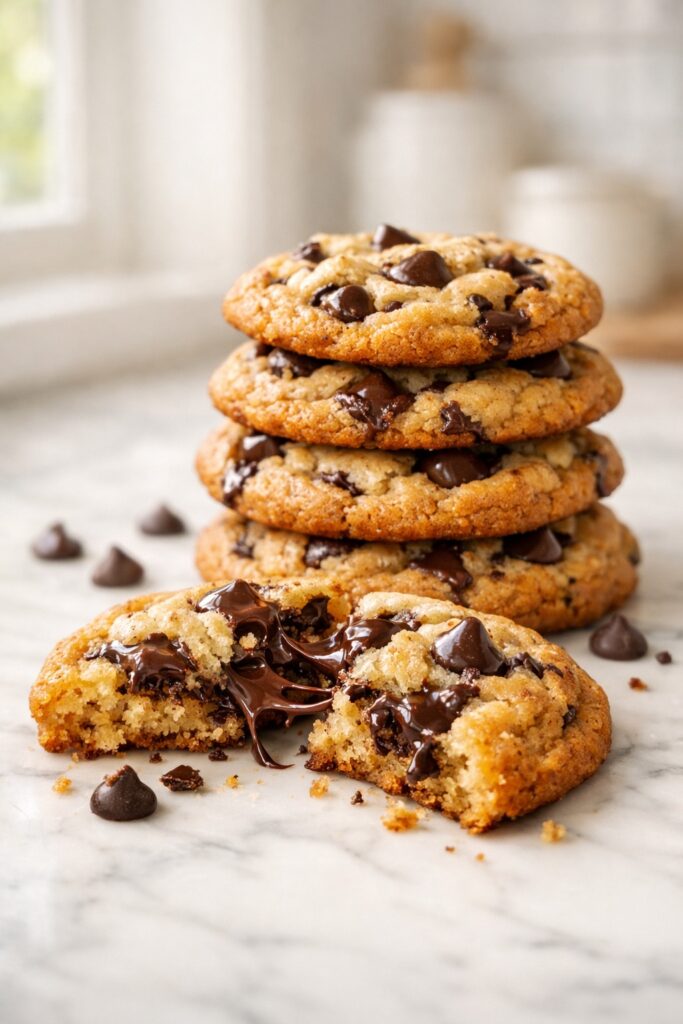
Few cookies feel as comforting as freshly baked chocolate chip cookies filling the kitchen with the warm aroma of butter, sugar, and melting chocolate.
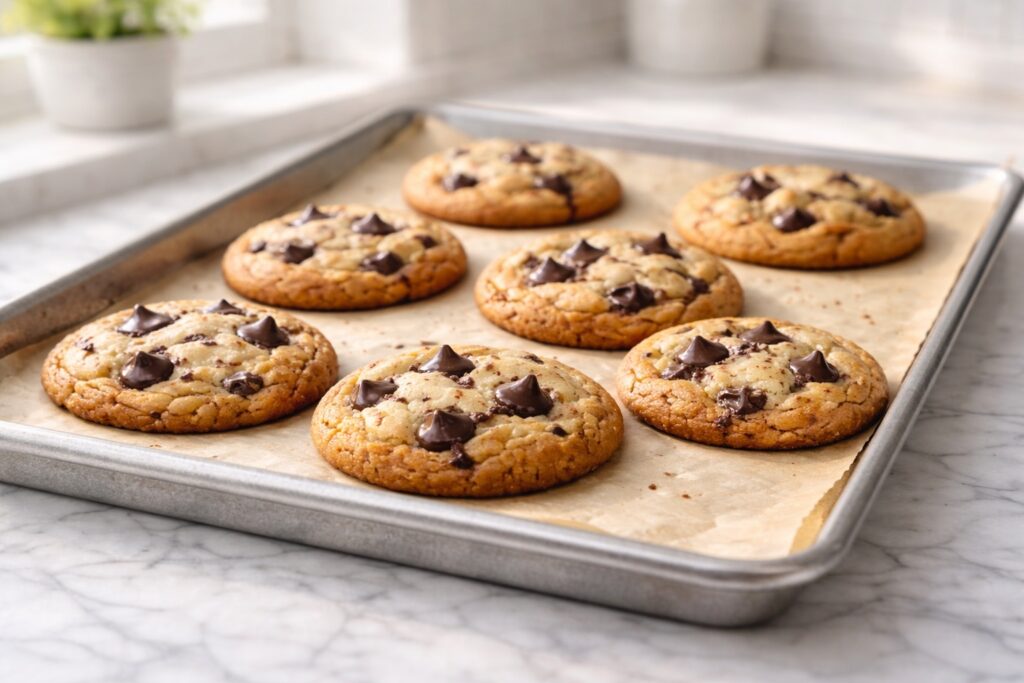
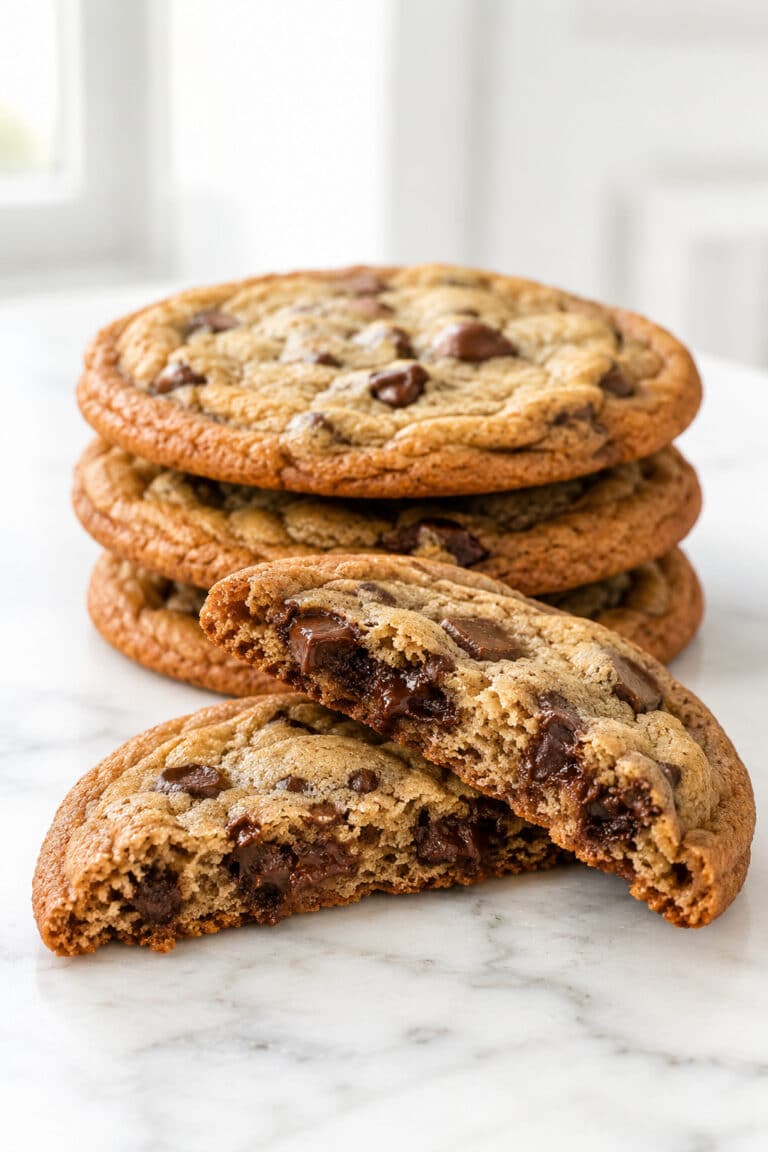
A plate of brown butter chocolate chip cookies reveals glossy pools of melted chocolate surrounded by golden edges and soft centers.
As the butter slowly browns in the pan, it releases a warm nutty aroma that fills the kitchen. The toasted milk solids in the butter create a deep caramel fragrance that blends beautifully with brown sugar and vanilla as the cookies bake. The result is a cookie that feels familiar and nostalgic but with a noticeably richer flavor.
The texture is what makes brown butter chocolate chip cookies truly special. The edges bake lightly crisp while the centers stay soft and chewy. Each bite delivers layers of flavor: toasted butter, caramelized sugar, and melted chocolate.
This recipe follows a simple but precise baking method that allows the brown butter flavor to shine while keeping the cookies tender and chewy. Once you try chocolate chip cookies made with browned butter, it becomes difficult to go back to the classic version of these Chocolate Chip Cookies.
Brown Butter Chocolate Chip Cookies – Quick Overview
Brown butter chocolate chip cookies are rich bakery-style cookies made by browning butter before mixing it into the dough. Browning the butter creates deep nutty caramel flavors that make these cookies more aromatic and flavorful than classic chocolate chip cookies.
These cookies bake with golden crisp edges, soft chewy centers, and pools of melted chocolate, making them a favorite homemade dessert for cookie lovers.
Recipe Snapshot
| Detail | Information |
|---|---|
| Prep Time | 15 minutes |
| Chill Time | 30 minutes |
| Bake Time | 10–12 minutes |
| Total Time | about 1 hour |
| Yield | about 20 cookies |
| Difficulty | Easy |
| Best For | homemade desserts, cookie trays, cozy baking |
Key Features
- deep nutty flavor from browned butter
- soft chewy centers with crisp edges
- rich melted chocolate throughout the cookies
- classic bakery-style cookie texture
Key Baking Takeaways
- Browning the butter develops the nutty caramel flavor that makes these cookies unique.
- Chilling the dough helps control spreading and creates thicker cookies.
- Slightly underbaking the cookies keeps the centers soft and chewy.
Perfect For
These brown butter chocolate chip cookies are perfect for weekend baking, holiday cookie trays, cozy desserts, or anytime you want a rich homemade cookie.
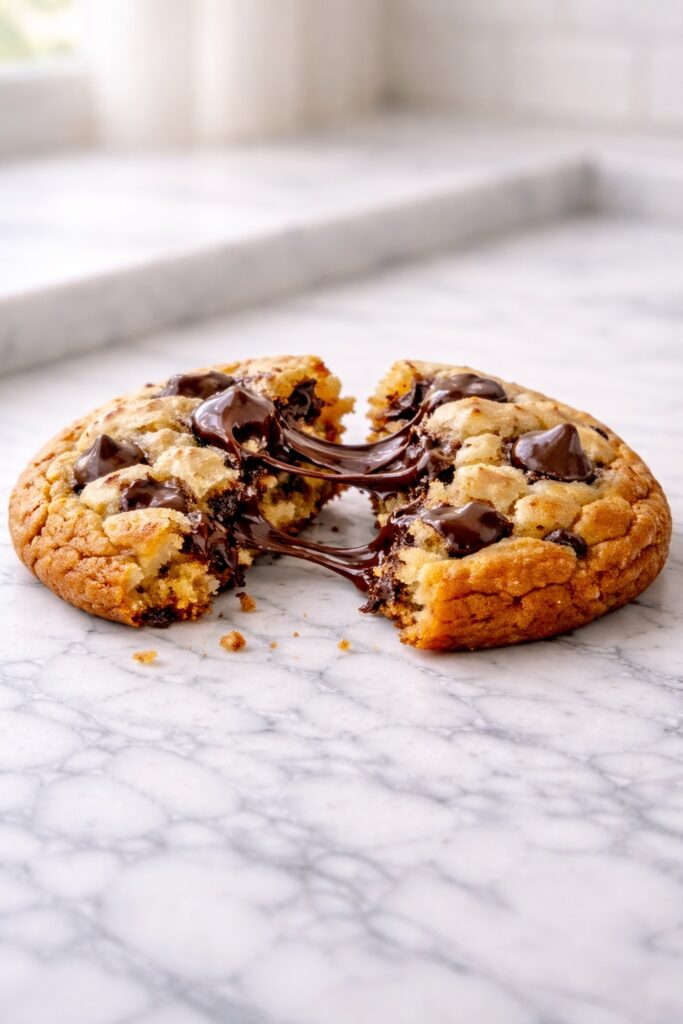
What Makes Brown Butter Chocolate Chip Cookies Special
Brown butter chocolate chip cookies stand out because of the unique flavor created when butter is gently browned before being added to the dough.
When butter melts and cooks for a few minutes, the milk solids in the butter begin to toast. This process creates nutty caramel aromas through the Maillard reaction, the same reaction responsible for the deep flavors in toasted bread, roasted nuts, and baked pastries.
The result is a butter with a rich amber color and tiny golden specks at the bottom of the pan. Those toasted milk solids are what give brown butter its signature nutty flavor.
In cookies, browned butter creates several improvements at once:
- deeper flavor with caramel and toasted notes
- richer aroma while baking
- slightly chewier cookie texture
- beautifully golden edges
This is also why many bakers say brown butter cookies taste better than regular chocolate chip cookies. Browning the butter adds toasted caramel notes that create a deeper, more complex flavor.
When the butter begins to brown, the kitchen fills with a warm nutty scent that instantly signals something special is baking.
Small baking insight:
When the butter turns amber and small brown specks appear at the bottom of the pan, that is the moment when the flavor is at its peak. Removing it from the heat at that stage prevents bitterness while preserving the nutty aroma.
Because browned butter contains slightly less water than regular butter, the dough also becomes a bit richer and slightly chewier once baked.
Best Brown Butter Chocolate Chip Cookie Texture Explained
Brown butter chocolate chip cookies are known for their balance of crisp edges and soft chewy centers. This texture comes from the interaction between browned butter, brown sugar, and the way the cookies bake in the oven.
Granulated sugar helps the edges caramelize and become lightly crisp, while brown sugar retains moisture that keeps the centers soft and chewy. The browned butter also contributes to a slightly richer dough because some of the water evaporates during the browning process.
Baking the cookies just until the edges turn golden while the centers remain slightly soft helps create the ideal texture. As the cookies cool, the centers finish setting while the edges stay lightly crisp.
This balance between caramelized edges and tender centers is what gives brown butter chocolate chip cookies their classic bakery-style texture.
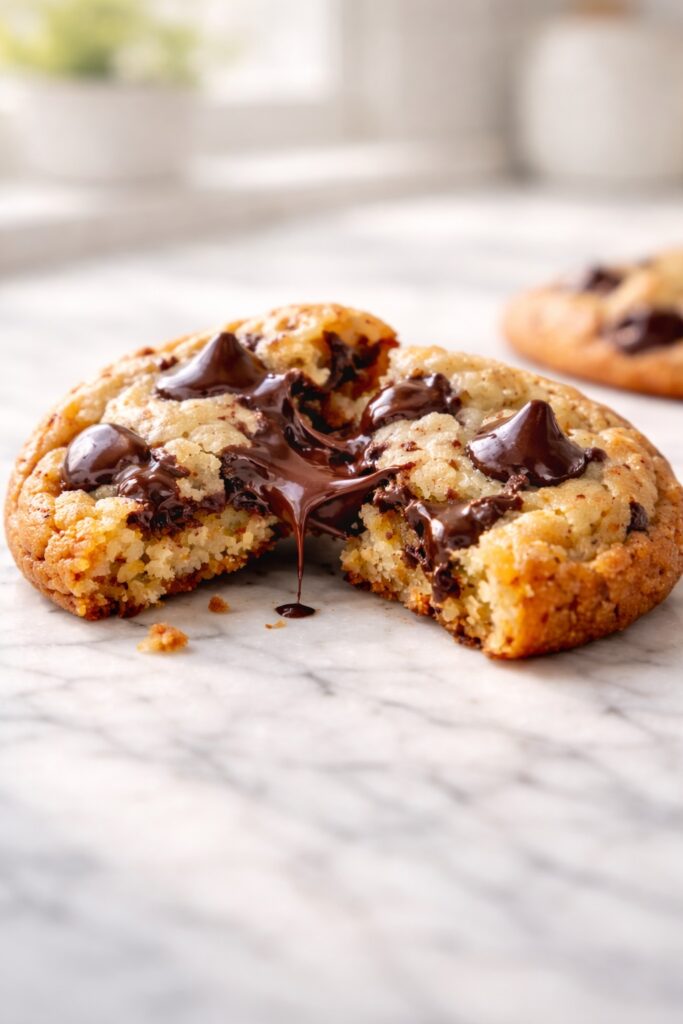
The Brown Butter Technique That Makes These Cookies Special
The defining step in this recipe is browning the butter before mixing it into the cookie dough. Instead of creaming softened butter with sugar, the butter is gently melted and cooked until the milk solids turn golden and aromatic.
This browned butter is then mixed with the sugars to create a rich base for the dough. Because the butter is already melted, the dough develops a slightly softer texture that contributes to chewy cookie centers.
Using browned butter changes the entire character of the cookies. The dough becomes more aromatic, the flavor deepens, and the cookies bake with beautifully caramelized edges and soft centers.
Baking Insight: Browning butter evaporates some of the water in the butter while toasting the milk solids. This creates a deeper flavor and slightly changes the cookie texture, producing richer cookies with crisp edges and soft centers.
How Brown Butter Changes Cookie Flavor
Brown butter changes both the flavor and the aroma of chocolate chip cookies. When butter is gently heated, the milk solids begin to toast and develop complex flavor compounds through the Maillard reaction.
These toasted milk solids create warm nutty and caramel-like notes that deepen the flavor of the cookie dough.
Browning the butter also slightly reduces its water content. This concentrates the butterfat and can contribute to a chewier cookie texture once baked.
Because of these changes, many bakers prefer brown butter for chocolate chip cookies when they want a deeper, more complex flavor without changing the core ingredients of the recipe.
Brown Butter Stages Explained
When browning butter, the transformation happens gradually as the milk solids toast. Recognizing each stage helps prevent burning and ensures the butter develops its signature nutty aroma.
| Stage | Appearance | Aroma |
|---|---|---|
| Melted butter | smooth yellow liquid | mild buttery smell |
| Foaming stage | white foam forms on the surface | neutral aroma |
| Golden stage | light amber color begins forming | nutty aroma starts |
| Brown butter | deep amber color with brown specks | rich nutty caramel aroma |
Baking insight:
The perfect moment to remove brown butter from the heat is when the color turns amber and small brown specks appear at the bottom of the pan. At that point the aroma becomes deeply nutty and fragrant.
Ingredients You’ll Need
Brown butter chocolate chip cookies use familiar pantry ingredients, but each ingredient contributes to the balance of flavor, texture, and structure in the cookies.
Butter
Butter is the most important ingredient in this recipe because it becomes the base of the brown butter flavor.
When butter browns, the milk solids toast and develop deep nutty aromas that transform the entire cookie dough.
Baking insight: Butter loses a small amount of moisture during browning, which concentrates its flavor and gives cookies a slightly chewier texture.
Butter Comparison Guide for Cookies
| Butter Type | Flavor | Cookie Texture |
|---|---|---|
| Cold creamed butter | mild buttery flavor | thicker cookies |
| Melted butter | richer flavor | chewier cookies |
| Brown butter | nutty caramel flavor | deep flavor and chewy texture |
Brown butter cookies develop the most complex flavor because the butter itself becomes toasted before entering the dough.
Brown Sugar
Brown sugar adds moisture and a gentle caramel flavor that pairs beautifully with browned butter.
It also helps create the soft, chewy center that defines bakery-style chocolate chip cookies.
Granulated Sugar
Granulated sugar helps the cookies develop lightly crisp edges and contributes to the golden color during baking.
Using both sugars creates the ideal texture balance.
Eggs
Eggs provide structure and help bind the dough together.
They also add richness and help create a tender crumb in the finished cookies.
Vanilla Extract
Vanilla enhances the toasted butter aroma and deepens the overall flavor of the cookies.
Even a small amount makes a noticeable difference.
All-Purpose Flour
Flour forms the structure of the cookie dough.
The right amount keeps the cookies tender while allowing them to spread slightly during baking.
Baking Soda
Baking soda helps the cookies spread just enough to create thin crisp edges while keeping the centers soft. Baking soda acts as a leavening agent that reacts with acidic ingredients to help baked goods rise and brown properly.
Salt
Salt balances the sweetness and intensifies the chocolate flavor.
A small pinch also enhances the nutty notes from the browned butter.
Chocolate Chips
Semi-sweet chocolate chips are the most classic choice for this recipe.
They create melted chocolate pockets throughout the cookies that contrast beautifully with the chewy dough.
Some bakers prefer using chocolate chunks because they create larger pools of melted chocolate, but both options work beautifully.
If you enjoy experimenting with different cookie textures and deeper flavor, these Sourdough Chocolate Chip Cookies are another delicious variation to try.
What Type of Chocolate Is Best for Chocolate Chip Cookies?
Different types of chocolate can noticeably change the flavor and appearance of chocolate chip cookies. Some hold their shape while others melt into larger pools of chocolate.
| Chocolate Type | Flavor Profile | Melt Behavior |
|---|---|---|
| Semi-sweet chocolate chips | balanced sweetness | holds shape while baking |
| Dark chocolate chunks | deeper cocoa flavor | melts into large pools |
| Milk chocolate chips | sweeter chocolate taste | softer melt |
| Chocolate wafers | rich cocoa flavor | smooth glossy melting |
Small baking insight: Using chopped chocolate instead of chips often creates bakery-style cookies with large melted chocolate pockets.
Exact Ingredients with Measurements
Here are the exact ingredients you need for brown butter chocolate chip cookies.
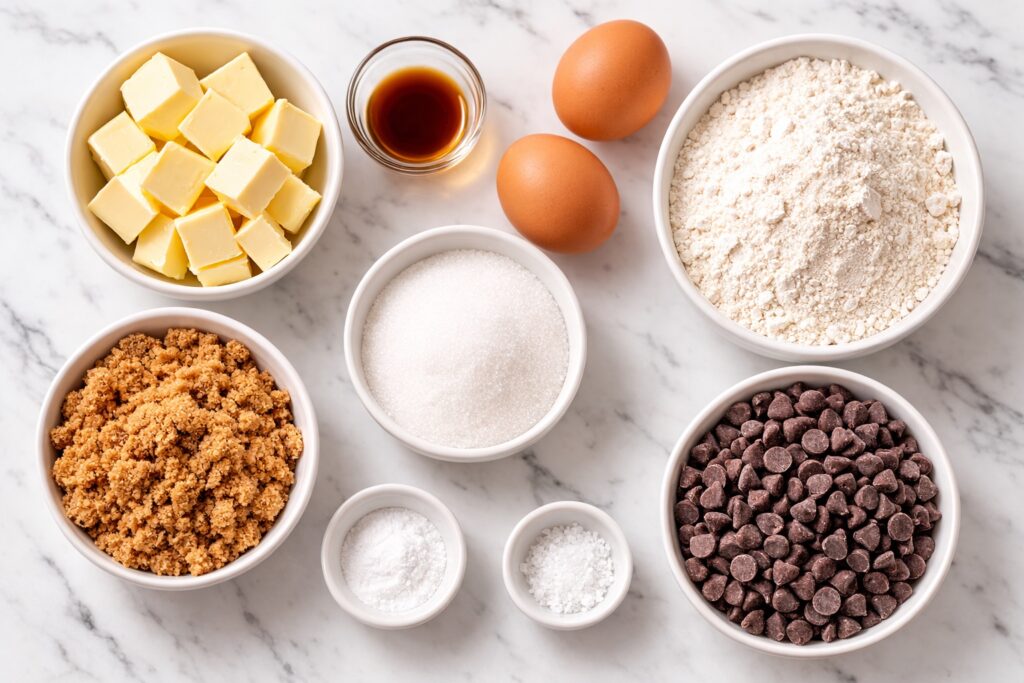
Wet Ingredients
- 1 cup unsalted butter
- 1 cup brown sugar
- 1/2 cup granulated sugar
- 2 large eggs
- 2 teaspoons vanilla extract
Dry Ingredients
- 2 1/4 cups all-purpose flour
- 1 teaspoon baking soda
- 1/2 teaspoon salt
Mix-In
- 1 1/2 cups semi-sweet chocolate chips
Helpful baking note: Measure the flour carefully using the spoon-and-level method to avoid dense cookies.
Kitchen Tools You’ll Need
A few basic baking tools make this recipe easier and help ensure consistent cookies.
- medium saucepan
- mixing bowl
- whisk
- rubber spatula
- cookie scoop
- baking sheet
- parchment paper
- cooling rack
A cookie scoop is especially helpful because it keeps each cookie the same size, allowing them to bake evenly.
How to Make Brown Butter Chocolate Chip Cookies
These cookies follow a simple baking process, but a few small techniques help develop their deep flavor and soft chewy texture.
1. Brown the Butter
Place the butter in a medium saucepan over medium heat and allow it to melt completely.
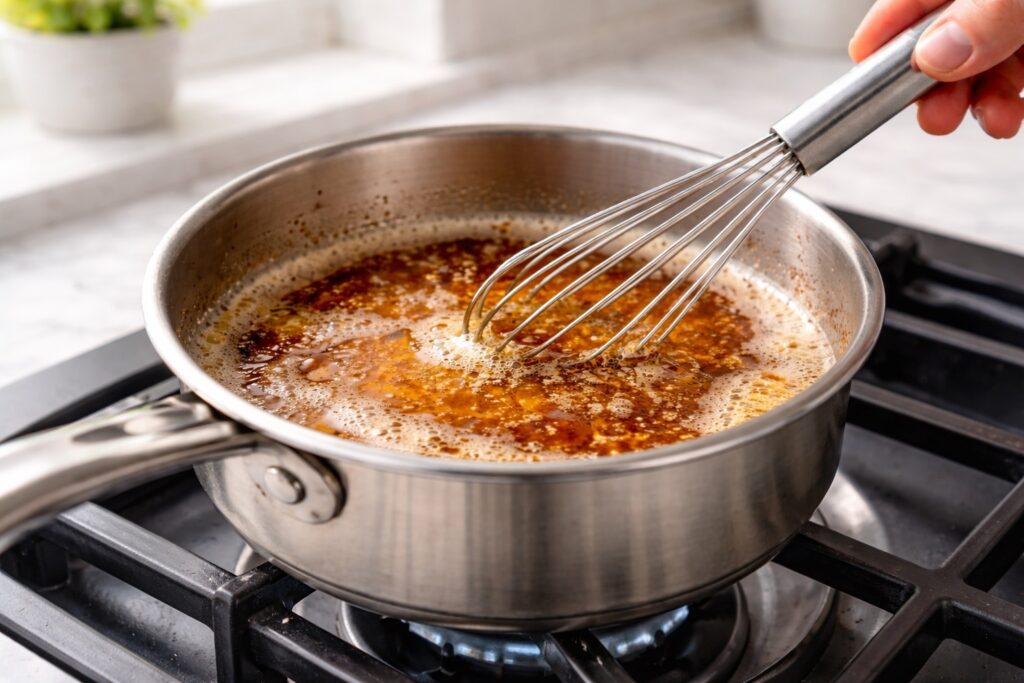
Continue cooking while stirring constantly. The butter will begin to foam, then slowly turn golden as the milk solids toast at the bottom of the pan.
After a few minutes, the butter will develop a warm amber color and tiny brown specks will appear.
At this stage the butter should smell deeply nutty and aromatic.
As the butter browns, the aroma changes quickly from simple melted butter to a warm toasted scent. That shift in smell is usually the clearest sign that the butter is ready.
Remove the pan from the heat immediately to prevent burning.
Small baking insight: Brown butter can go from perfectly nutty to burnt very quickly. Once the color turns deep golden and the aroma becomes intensely nutty, it is ready.
2. Cool the Butter Slightly
Pour the browned butter into a mixing bowl and allow it to cool for about 10 minutes.
This step prevents the hot butter from scrambling the eggs when the dough is mixed.
The butter should still be warm but no longer steaming.
3. Mix the Sugars
Add the brown sugar and granulated sugar to the warm browned butter.
Whisk until the mixture becomes smooth and glossy.
The sugars will begin dissolving into the butter, creating a rich caramel-colored base for the dough.
4. Add Eggs and Vanilla
Add the eggs one at a time, whisking well after each addition.
Stir in the vanilla extract.
The mixture should become smooth and slightly thickened.
This stage builds the structure of the cookie dough.
5. Combine the Dry Ingredients
In a separate bowl, whisk together:
- all-purpose flour
- baking soda
- salt
Gradually add the dry ingredients to the butter mixture.
Stir gently with a spatula until the dough just comes together.
Avoid overmixing, which can make cookies dense.
6. Add the Chocolate Chips
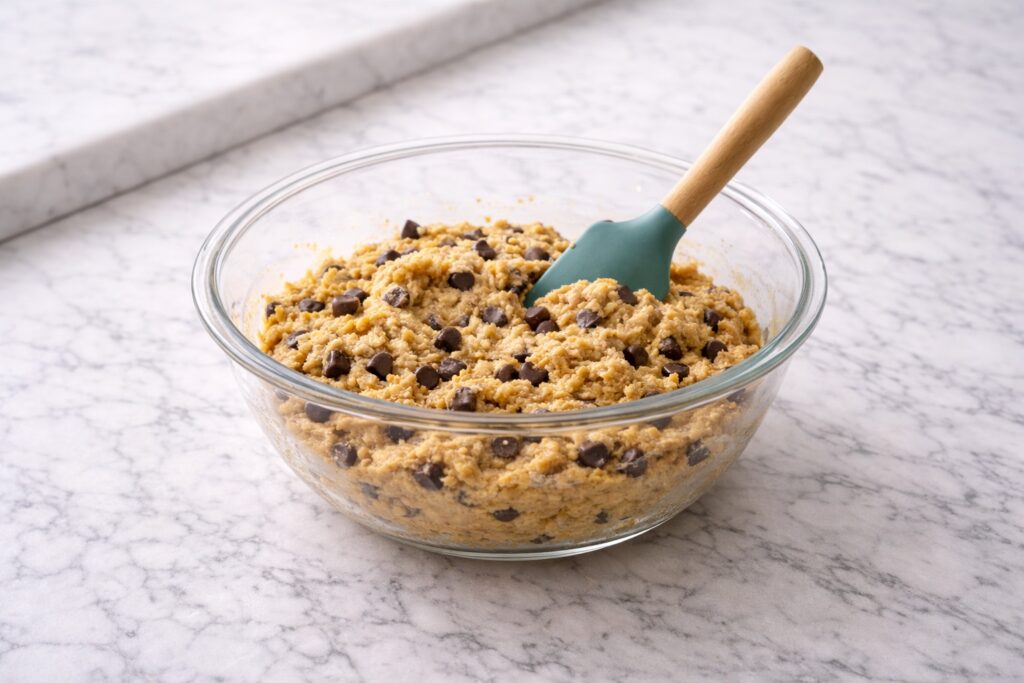
Fold the chocolate chips into the dough until evenly distributed.
The dough will appear soft and glossy.
Some bakers like to press a few extra chocolate chips onto the top of each dough ball before baking to create visible chocolate pools.
7. Chill the Dough
Cover the dough and refrigerate for at least 30 minutes.
Chilling helps the flour hydrate and allows the browned butter flavor to deepen.
It also prevents the cookies from spreading too thin while baking.
Micro baking note: Even a short chill dramatically improves the final texture of the cookies.
What Brown Butter Chocolate Chip Cookie Dough Should Look Like
After mixing, the dough for brown butter chocolate chip cookies should look soft, slightly glossy, and thick enough to hold its shape when scooped.
Because the butter is melted and browned before mixing, the dough may appear slightly softer than traditional creamed-butter cookie dough. This is normal and helps create the chewy texture once the cookies bake.
Chilling the dough allows the flour to fully absorb the moisture from the butter and eggs. After resting in the refrigerator, the dough should feel firmer and easier to scoop.
If the dough looks very loose or sticky, chilling it for an additional 15–30 minutes usually helps create thicker cookies with better structure.
What Controls Cookie Spread
Cookie spreading is influenced by several baking factors including dough temperature, butter consistency, and flour ratio.
| Factor | Effect on Cookies |
|---|---|
| Warm butter | cookies spread more |
| Chilled dough | cookies spread less |
| Higher sugar ratio | cookies spread wider |
| More flour | cookies stay thicker |
| Oven temperature too low | cookies spread too quickly |
| Properly preheated oven | cookies set evenly |
Helpful baking note: If cookies spread too much, chilling the dough for an additional 30 minutes usually solves the problem.
8. Scoop the Dough
Preheat the oven to 350°F (175°C).
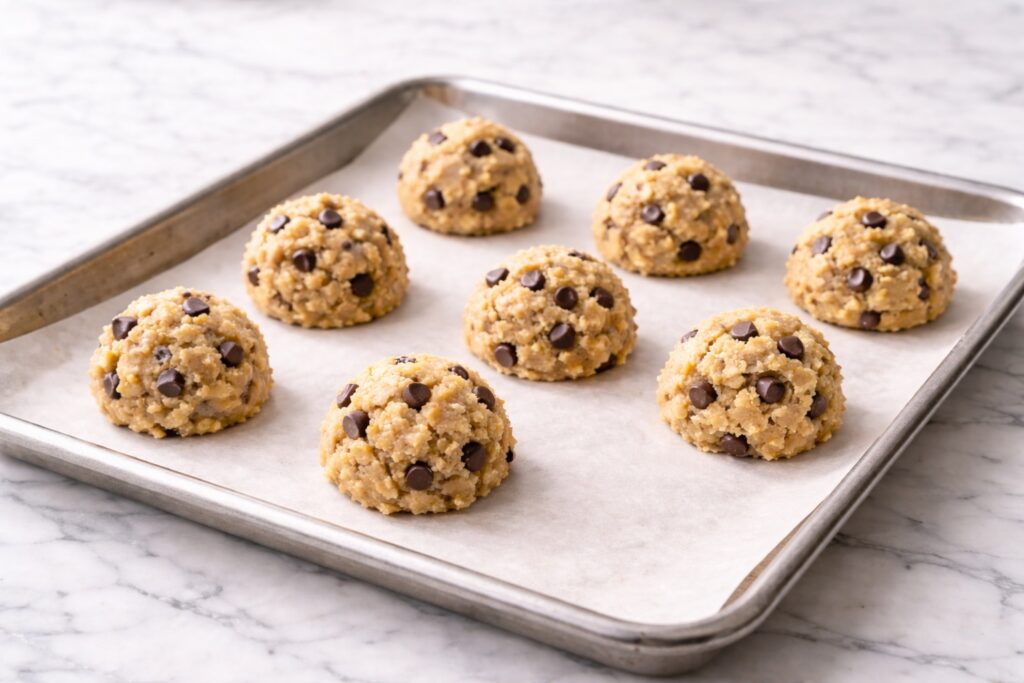
Use a cookie scoop or spoon to form dough balls and place them on a parchment-lined baking sheet.
Leave enough space between cookies to allow for spreading.
9. Bake the Cookies
Bake for 10–12 minutes until the edges are golden and the centers still look slightly soft.
The centers may look slightly underbaked when the cookies come out of the oven. This is normal and helps keep the cookies soft and chewy as they finish setting on the baking sheet.
The cookies will continue setting as they cool.
For soft bakery-style cookies, avoid overbaking.
10. Cool the Cookies
Allow the cookies to rest on the baking sheet for about 5 minutes before transferring them to a cooling rack.
This allows the centers to finish setting while keeping the interior soft.
Warm cookies will have melted chocolate and a rich brown butter aroma.
Baking Science Behind Brown Butter Cookies
Several baking principles make these cookies especially flavorful and chewy.
Brown Butter Flavor Development
When butter browns, the milk solids toast and develop hundreds of new flavor compounds through the Maillard reaction.
These compounds produce nutty, caramel-like aromas that deepen the flavor of the cookie dough. Because some of the butter’s water evaporates during browning, the remaining butterfat becomes slightly more concentrated, which can contribute to a richer dough and a chewier cookie texture once baked.
How Ingredients Affect Cookie Texture
Small adjustments in ingredients and technique can dramatically change cookie texture.
| Adjustment | Texture Result |
|---|---|
| More brown sugar | softer and chewier cookies |
| More granulated sugar | crispier edges |
| Extra egg yolk | richer soft centers |
| Chilled dough | thicker cookies |
| Bread flour | chewier structure |
| Longer bake time | crisp cookies |
Baking insight: The balance between brown sugar and granulated sugar is one of the biggest factors influencing whether cookies become soft, chewy, or crisp.
Why Chilling the Dough Helps
Chilling the dough allows the flour to absorb moisture from the butter and eggs.
This improves texture and prevents the cookies from spreading too quickly in the oven.
Rested dough also develops deeper flavor.
Why the Edges Become Crisp
The combination of granulated sugar and oven heat allows the cookie edges to caramelize slightly.
Meanwhile, the interior retains moisture from the brown sugar and eggs, keeping the center soft and chewy.
Pro Tips for Perfect Brown Butter Cookies
- Brown the butter slowly so the milk solids toast evenly without burning.
- Let the butter cool slightly before adding eggs.
- Use room temperature eggs for smoother mixing.
- Slightly underbake the cookies if you prefer soft centers.
- Sprinkle a small pinch of flaky sea salt on warm cookies for a bakery-style finish.
How to Recognize Perfectly Baked Cookies
Several visual cues help determine whether cookies are baked correctly.
| Visual Feature | What It Means |
|---|---|
| crinkled surface | sugar caramelized properly |
| golden edges | ideal baking time |
| glossy chocolate pools | chocolate melted correctly |
| slightly thick center | dough was properly chilled |
Cookies may appear slightly soft in the center when they come out of the oven, but they will continue setting as they cool on the baking sheet.
How to Serve Brown Butter Chocolate Chip Cookies
Brown butter chocolate chip cookies are best enjoyed slightly warm when the chocolate is still soft and melty.
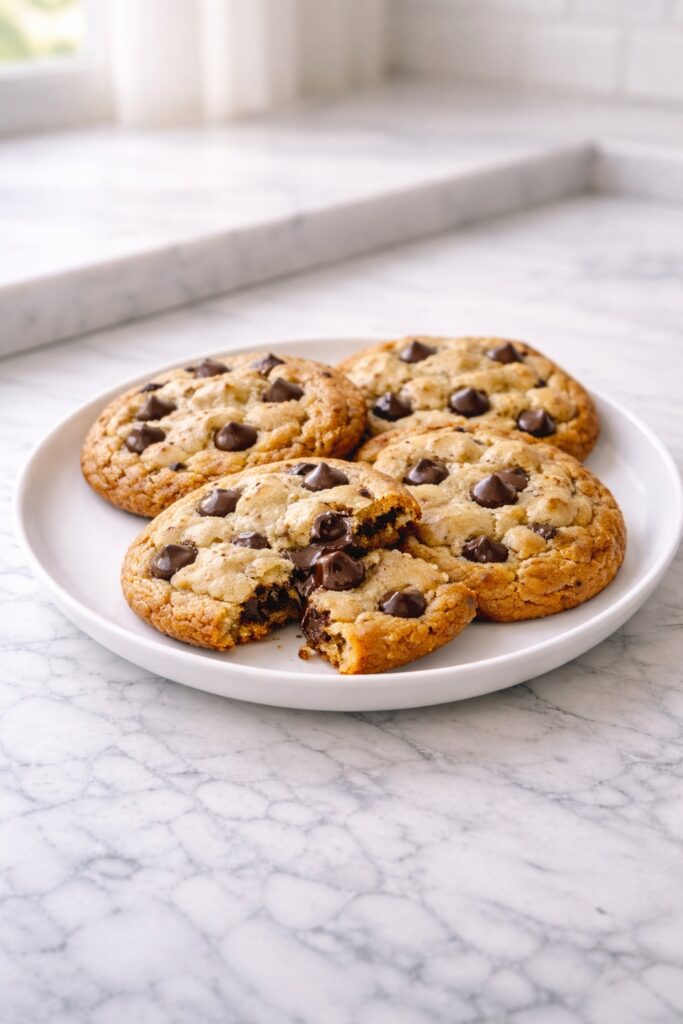
They pair beautifully with:
- cold milk
- hot coffee
- vanilla ice cream
- afternoon tea
Warm cookies served with a scoop of Vanilla Ice Cream create a simple dessert that feels almost like a bakery-style cookie skillet.
These cookies are also perfect for dessert platters, holiday cookie trays, or casual gatherings.
Storage
Proper storage helps keep the cookies soft and flavorful for several days.
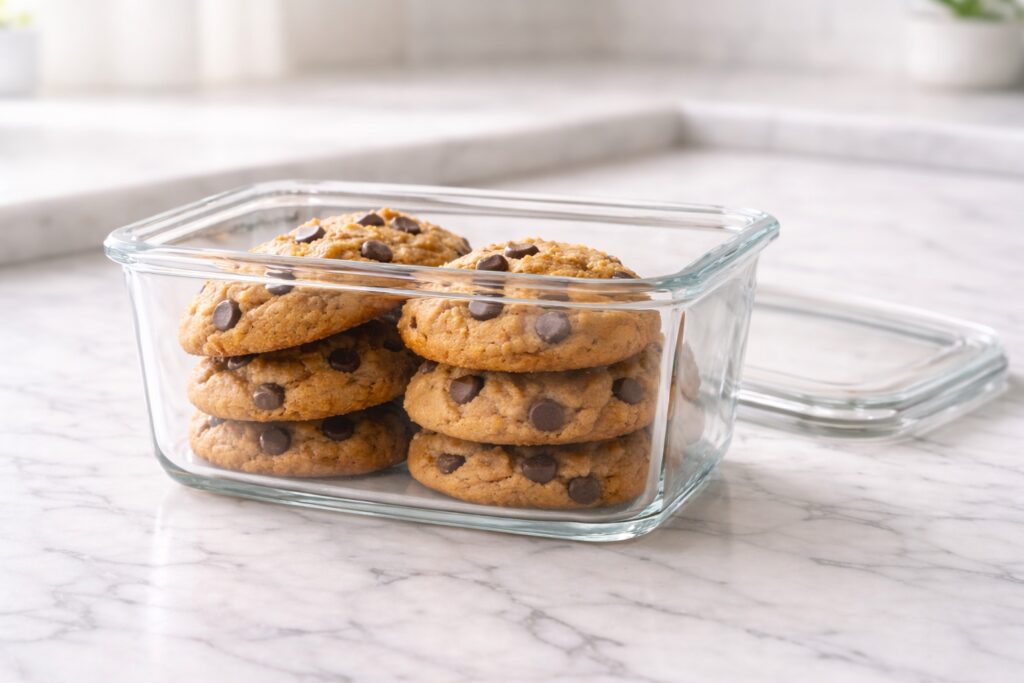
Room Temperature
Store cookies in an airtight container at room temperature for up to 4 days.
Placing a small slice of bread in the container can help maintain moisture.
Refrigeration
Refrigerating baked cookies is not usually necessary but can extend freshness up to one week.
Bring cookies to room temperature before serving.
Freezing
Brown butter chocolate chip cookies freeze very well.
You can freeze:
- baked cookies
- unbaked cookie dough balls
Frozen dough can be baked directly from the freezer by adding 1–2 extra minutes of baking time.
Variations to Try
This cookie dough works well with several flavor variations.
Sea Salt Brown Butter Cookies
Sprinkle flaky sea salt on the cookies immediately after baking.
The salt highlights the caramel notes of the brown butter.
Dark Chocolate Brown Butter Cookies
Replace semi-sweet chips with dark chocolate chunks for a deeper chocolate flavor.
Walnut Brown Butter Cookies
Add chopped toasted walnuts for extra texture and nutty flavor.
For another cozy homemade variation, these Oatmeal Chocolate Chip Cookies are a great option when you want a softer cookie with hearty texture.
Bakery-Style Thick Cookies
Use larger dough balls and chill the dough longer to create thicker cookies.
Frequently Asked Questions
Why do brown butter cookies taste better?
Brown butter cookies taste richer because browning the butter creates toasted milk solids that develop nutty, caramel-like flavors. This process produces deeper aroma and complexity compared to cookies made with regular melted butter.
Do brown butter cookies spread more than regular cookies?
Brown butter cookies may spread slightly more because browned butter contains less water than regular butter. Chilling the cookie dough before baking helps control spreading and creates thicker cookies with chewy centers.
Why use brown butter in cookies?
Brown butter adds a deep nutty caramel flavor that regular butter cannot provide.
Do brown butter cookies taste different?
Yes. Browning the butter creates toasted milk solids that give cookies a richer and more complex flavor.
Why chill cookie dough?
Chilling allows the flour to hydrate and improves both flavor and texture.
Can brown butter cookie dough be frozen?
Yes. Dough can be frozen for up to 3 months and baked directly from frozen.
Why are my brown butter chocolate chip cookies flat?
Brown butter chocolate chip cookies may turn out flat if the dough is too warm, the butter was still hot when mixed, or the dough was not chilled long enough. Chilling the dough allows the flour to absorb moisture and helps the cookies hold their shape while baking.
Using too little flour or placing the cookies into an oven that is not fully preheated can also cause cookies to spread too much.
Why do brown butter cookies taste nutty?
Brown butter cookies develop a nutty flavor because the milk solids in the butter toast as the butter cooks. This process creates new flavor compounds through the Maillard reaction, producing warm caramel-like and toasted aromas that give brown butter cookies their distinctive taste.
These toasted milk solids are what make brown butter cookies richer and more complex than cookies made with regular butter.
Ingredient Substitutions Guide
Brown butter chocolate chip cookies are quite flexible, and several ingredients can be adjusted depending on what you have available.
However, because brown butter is the defining flavor of this recipe, replacing it will slightly change the final taste.
Butter Alternatives
Brown butter is essential for the signature flavor, but if necessary you can substitute:
| Substitute | Result |
|---|---|
| Melted butter | milder flavor |
| Regular softened butter | classic cookie taste |
| Vegan butter | slightly different texture |
Baking note: Only real butter creates the nutty toasted flavor that defines brown butter cookies.
Flour Options
All-purpose flour works best because it creates the ideal balance of structure and tenderness.
Possible alternatives include:
| Flour | Result |
|---|---|
| Bread flour | slightly chewier cookies |
| Gluten-free flour blend | softer cookies |
| Whole wheat flour | deeper flavor but denser texture |
If using whole wheat flour, replacing only half the flour is usually best.
Chocolate Options
Chocolate chips can easily be replaced with different types of chocolate.
| Chocolate Type | Flavor |
|---|---|
| Semi-sweet chips | classic cookie flavor |
| Dark chocolate chunks | richer chocolate flavor |
| Milk chocolate chips | sweeter cookies |
| Chocolate wafers | large melted chocolate pools |
Chocolate chunks often create the most dramatic melted chocolate pockets.
Chocolate Chip Cookie Texture Guide
Several factors influence cookie texture.
| Technique | Result |
|---|---|
| More brown sugar | softer cookies |
| More white sugar | crispier cookies |
| Chilled dough | thicker cookies |
| Melted butter | chewier cookies |
| Longer bake time | crisp edges |
Understanding these variables makes it easier to adjust the recipe for personal preference.
Cookie Troubleshooting Guide
Even simple cookies can behave differently depending on ingredients and baking conditions.
Here are common issues and how to fix them.
Cookies Spread Too Much
Possible causes:
- butter was too hot
- dough was not chilled
- too little flour
Solution: Chill the dough longer and measure flour carefully.
Cookies Too Thick
Possible causes:
- too much flour
- dough over-chilled
Solution: Allow the dough to sit at room temperature for a few minutes before baking.
Cookies Too Dry
Possible causes:
- overbaking
- too little brown sugar
Solution: Bake slightly less time and ensure accurate ingredient measurements.
Cookies Too Pale
Possible causes:
- oven temperature too low
- too little sugar caramelization
Solution: Bake until edges turn golden brown.
Related Cookie Recipes
If you enjoy these brown butter chocolate chip cookies, you might also like these classic cookie recipes:
- Chocolate Chip Cookies
- Peanut Butter Cookies
- Oatmeal Chocolate Chip Cookies
- Shortbread Cookies
- Thumbprint Cookies
Each recipe explores a different baking technique and texture, from chewy cookies to delicate buttery classics.
Final Baking Note
Brown butter chocolate chip cookies show how a small baking technique can transform a classic recipe. By taking a few extra minutes to brown the butter, the cookies develop deeper caramel notes, a warm nutty aroma, and a richer flavor that makes them stand out from ordinary chocolate chip cookies.
The contrast between crisp golden edges and soft chewy centers makes these cookies especially satisfying when they are freshly baked.
Once you experience the toasted aroma of brown butter filling the kitchen, it quickly becomes clear why many bakers return to this technique again and again. What begins as a simple cookie recipe often becomes a favorite method used in many desserts, from cookies and brownies to cakes and frostings.
Few desserts feel as comforting as warm chocolate chip cookies fresh from the oven, with melted chocolate and the aroma of toasted butter filling the kitchen.
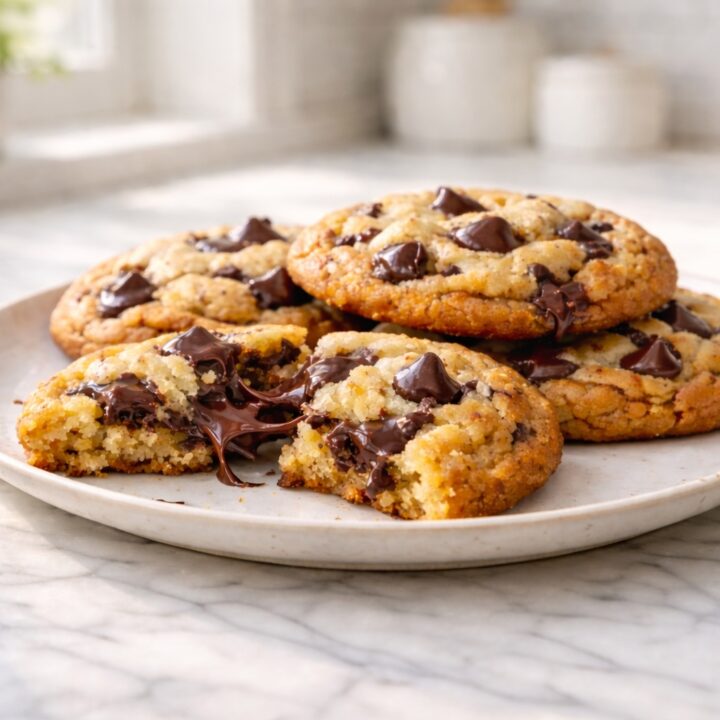
Brown Butter Chocolate Chip Cookies
Brown butter chocolate chip cookies are soft and chewy bakery-style cookies made by browning butter before mixing the dough. The browned butter adds a deep nutty caramel flavor that makes these cookies richer and more aromatic than classic chocolate chip cookies. The cookies bake with crisp golden edges, soft chewy centers, and melted chocolate throughout.
Ingredients
Wet Ingredients
- 1 cup unsalted butter
- 1 cup brown sugar
- 1/2 cup granulated sugar
- 2 large eggs
- 2 teaspoons vanilla extract
Dry Ingredients
- 2 1/4 cups all-purpose flour
- 1 teaspoon baking soda
- 1/2 teaspoon salt
Mix-In
- 1 1/2 cups semi-sweet chocolate chips
Instructions
- Brown the butter. Place the butter in a medium saucepan over medium heat. Cook while stirring constantly until the butter foams, turns golden, and develops brown specks at the bottom. The butter should smell warm and nutty. Remove from the heat immediately to prevent burning.
- Cool the butter. Pour the browned butter into a mixing bowl and let it cool for about 10 minutes. The butter should be warm but no longer steaming before adding the remaining ingredients.
- Mix the sugars. Add the brown sugar and granulated sugar to the warm browned butter. Whisk until the mixture becomes smooth and glossy.
- Add the eggs and vanilla. Add the eggs one at a time, whisking well after each addition. Stir in the vanilla extract until the mixture becomes smooth and slightly thickened.
- Combine the dry ingredients. In a separate bowl whisk together the flour, baking soda, and salt. Gradually add the dry ingredients to the butter mixture and mix gently with a spatula until the dough just comes together.
- Add the chocolate chips. Fold the chocolate chips into the cookie dough until evenly distributed.
- Chill the dough. Cover the dough and refrigerate for at least 30 minutes. Chilling improves flavor and helps prevent the cookies from spreading too much during baking.
- Scoop the dough. Preheat the oven to 350°F (175°C). Scoop portions of dough and place them on a parchment-lined baking sheet, leaving space between each dough ball.
- Bake the cookies. Bake for 10–12 minutes, until the edges are golden and the centers still look slightly soft.
- Cool the cookies. Let the cookies rest on the baking sheet for about 5 minutes, then transfer them to a cooling rack to cool completely.
Notes
- Brown Butter Tip: Watch the butter carefully while browning. Once it turns deep golden with brown specks and smells nutty, remove it from the heat immediately to prevent burning.
- Why Chill the Dough: Chilling the dough allows the flour to hydrate and helps control spreading, creating thicker cookies with soft chewy centers.
- For Soft Chewy Cookies: Remove the cookies from the oven when the centers still look slightly underbaked. They will continue setting as they cool.
- Bakery-Style Finish: For extra flavor, sprinkle a small pinch of flaky sea salt on the warm cookies right after baking.
- Measuring Flour Tip: Use the spoon-and-level method when measuring flour to avoid dense cookies.
Nutrition Information:
Yield: 20 cookies Serving Size: 1 cookieAmount Per Serving: Calories: 220Total Fat: 11gCarbohydrates: 28gFiber: 1gSugar: 17gProtein: 3g
Nutrition information is an estimate and may vary depending on ingredient brands and portion sizes.
12 Sweet Favorites — Yours, Free 🍰
Tiramisù, no-bake cheesecake, the perfect chocolate chip cookie & 9 more reader-loved desserts — gathered into one beautiful free recipe book. From my kitchen to yours.
No spam, just sweet things. Unsubscribe anytime.


One Comment
Comments are closed.