The Best Chocolate Chip Cookie Recipe + Delicious Variations
🎁 FREE E-BOOK: 12 Sweet Favorites — reader-loved desserts in one beautiful recipe book.
A chocolate chip cookie is a classic baked dessert made from a butter-based dough combined with sugar, eggs, flour, and chocolate chips, then baked until the edges are set and the center remains soft. The balance between fat, sugar, and flour determines whether the cookies turn out chewy, crisp, or soft.
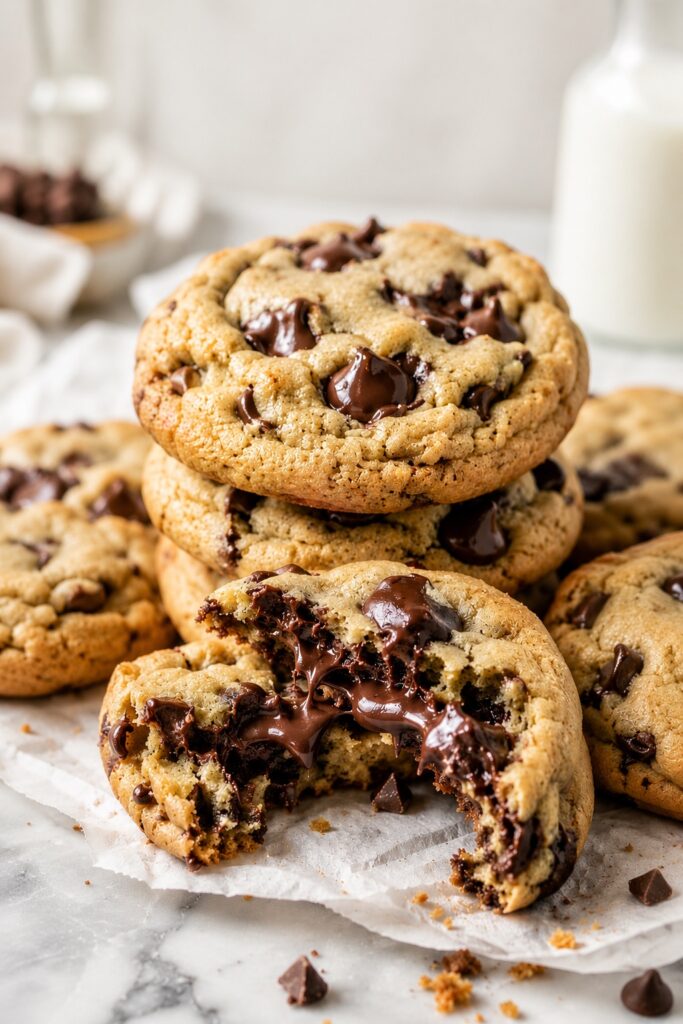
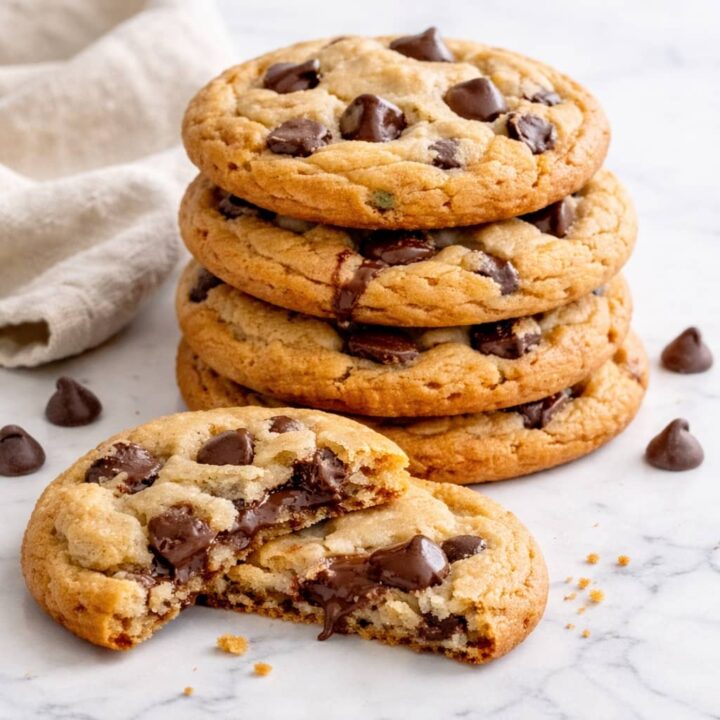
This chocolate chip cookie recipe makes soft, chewy cookies with crisp golden edges and gooey chocolate centers. The dough comes together in about 15 minutes and bakes in under 12 minutes, giving you classic cookie-shop texture at home.
The best chocolate chip cookies are usually remembered long before the last crumb disappears.
They are about the smell of butter and brown sugar filling the kitchen before the first tray even finishes baking. The soft centers that still feel slightly molten when you break one apart. The thin golden edges that barely crisp before melting into the warm middle.
Some cookies look perfect but feel forgettable. The truly great ones feel homemade in the best possible way — slightly uneven, deeply buttery, rich with melted chocolate, and almost impossible to stop reaching for.
With the right balance of brown sugar, butter, and chocolate chips, these cookies stay rich, tender, and deeply satisfying every time.
Small details like butter temperature, dough rest time, and baking length quietly shape everything, from how the cookies spread to how soft or crisp they feel once baked.
This homemade chocolate chip cookie recipe is the one you make once… and then keep forever.
If you love classic homemade cookies, you might also enjoy these peanut butter chocolate chip cookies for a richer, nuttier variation, or these oatmeal chocolate chip cookies if you prefer a heartier texture.
Table of Contents
What Are Chocolate Chip Cookies?
Chocolate chip cookies are made by creaming butter and sugar, then mixing in eggs, flour, and chocolate chips before baking until the edges are golden and the centers remain soft. The key to chewy cookies is a higher ratio of brown sugar and slightly underbaking the centers.
In its most loved form, a chocolate chip cookie has golden edges, a tender center, and melted pockets of chocolate that create contrast in both texture and flavor. Small variations in ingredient ratios and baking time can significantly change the final result, making this one of the most customizable classic desserts.
Bakery-Style Chocolate Chip Cookies at a Glance
| Texture | Soft centers with crisp golden edges |
|---|---|
| Flavor | Buttery, lightly caramelized, rich chocolate |
| Difficulty | Easy |
| Time | About 20 minutes total |
| Servings | About 24 cookies |
| Method | Creaming method + oven baking |
| Best For | Classic bakery-style chocolate chip cookies at home |
In short: This chocolate chip cookie recipe delivers soft, chewy cookies with crisp edges and gooey centers using simple ingredients and small technique details that make a big difference.
Quick Answers for Better Chocolate Chip Cookies
What makes chocolate chip cookies chewy?
Brown sugar, proper butter temperature, and slight underbaking help create soft and chewy chocolate chip cookies.
Should chocolate chip cookie dough be chilled?
Chilling is optional but highly recommended for thicker cookies, deeper flavor, and less spreading during baking.
Why are my chocolate chip cookies flat?
Cookies usually spread too much when the butter is overly soft, the dough is too warm, or the baking sheet is still hot.
How do bakeries make cookies thicker?
Bakery-style cookies are often made with chilled dough, larger scoops, and slightly underbaked centers.
What is the best chocolate for chocolate chip cookies?
Semi-sweet chocolate creates the most balanced flavor, while chopped dark chocolate produces richer melted chocolate pools.
How do you keep chocolate chip cookies soft?
Store cookies in an airtight container and avoid overbaking. Slightly underbaked cookies stay softer longer.
Can chocolate chip cookie dough be frozen?
Yes. Scoop the dough into portions and freeze for up to 2 months. Bake directly from frozen with 1–2 extra minutes of baking time.
The Real Difference Between Good Cookies and Bakery-Style Cookies
Why Chocolate Chip Cookies Change From Batch to Batch
Even when you follow the same chocolate chip cookie recipe, small changes in your kitchen can make each batch look slightly different. Cookie dough is sensitive to temperature, moisture, baking sheets, and even how soft the butter was when you started mixing.
- Butter temperature: Butter that is too soft or greasy can make cookies spread too quickly.
- Flour measuring: Too much flour can make cookies dense, while too little can make them thin.
- Kitchen temperature: Warm kitchens soften the dough faster and can increase spreading.
- Baking sheet color: Dark pans brown cookies faster, especially on the bottom.
- Oven accuracy: Some ovens run hotter or cooler than the temperature shown.
- Dough rest time: Dough that rests longer usually bakes thicker, richer, and more evenly.
This is why visual cues matter so much. The best chocolate chip cookies are not only about following the timer — they are about watching the dough, the edges, and the center as they bake.
Texture is everything in a great batch of chocolate chip cookies. The balance between crisp golden edges and a soft, chewy center depends on ingredient ratios, mixing method, and baking time.
Brown sugar adds moisture and chewiness, while white sugar helps create those lightly crisp edges. Properly creamed butter traps air, giving the cookies structure without making them cakey.
Baking time is just as important. Slightly underbaking ensures the centers stay soft as they continue setting on the hot baking sheet after removal from the oven.
Even small adjustments like chilling the dough or weighing the flour can transform good cookies into bakery-style chocolate chip cookies with a much more consistent texture.
The Science Behind Chewy Chocolate Chip Cookies
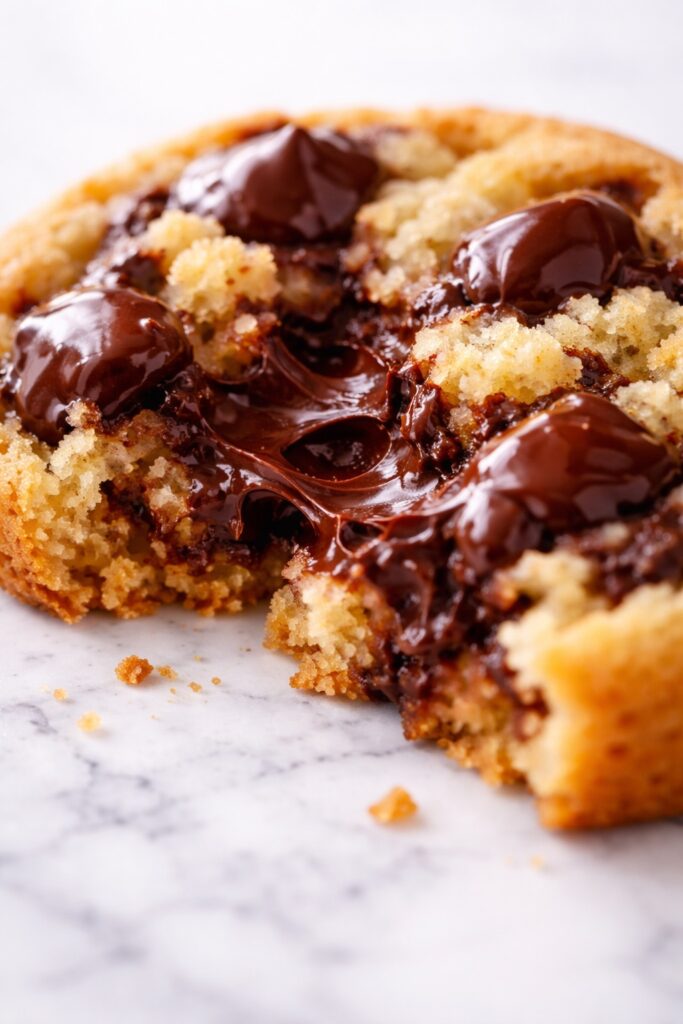
The chewy texture of a great chocolate chip cookie comes down to moisture retention, sugar balance, and baking time.
- Brown sugar contains molasses, which adds moisture and creates a softer texture.
- Higher moisture levels slow down gluten tightening, keeping the center tender.
- Slight underbaking allows residual heat to finish setting the cookie without drying it out.
During baking, the Maillard reaction is responsible for the golden color and complex flavor development in cookies, creating those slightly crisp edges and rich caramelized notes.
Measuring flour correctly is crucial – too much flour is one of the most common reasons cookies turn out dense instead of chewy. According to King Arthur Baking, properly measuring flour (ideally by weight) ensures consistent texture and structure in baked goods. If you love richer chocolate variation, you might also enjoy these brown butter chocolate chip cookies, which lean deeper, nuttier, and even more bakery-style in flavor.
Professional bakeries often rest cookie dough overnight because it allows the flour to fully hydrate and the flavors to deepen. While not required, this extra rest time produces richer, more complex chocolate chip cookies.
Humidity and kitchen temperature can also affect cookie dough. In warmer environments, chilling becomes even more important to prevent excessive spreading.
Chill vs No Chill: Does It Matter?
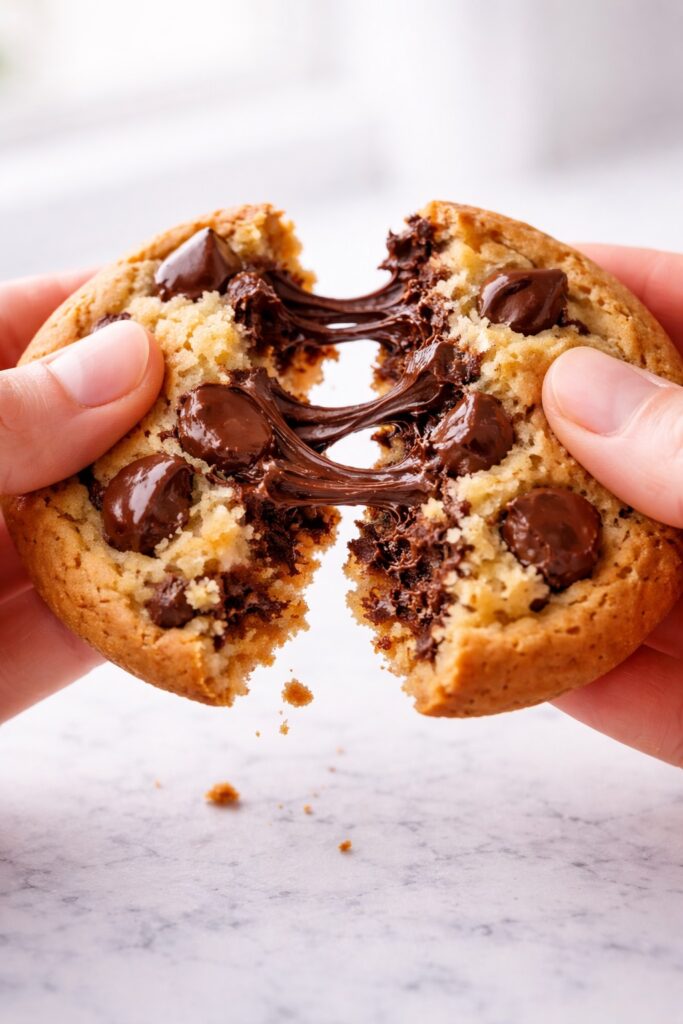
Chilling cookie dough changes both structure and flavor.
- As the dough rests, flour hydrates more fully, improving texture.
- Fat firms up, reducing excessive spread during baking.
- Flavor deepens as sugars and proteins interact over time.
Chilling is not mandatory for this recipe, but it can enhance structure and reduce spreading, especially in warm kitchens.
The Bakery-Level Details That Quietly Transform These Cookies
This chocolate chip cookie recipe works because each major ingredient contributes to texture in a very specific way. Brown sugar adds moisture and chewiness, while white sugar helps create crisp edges.
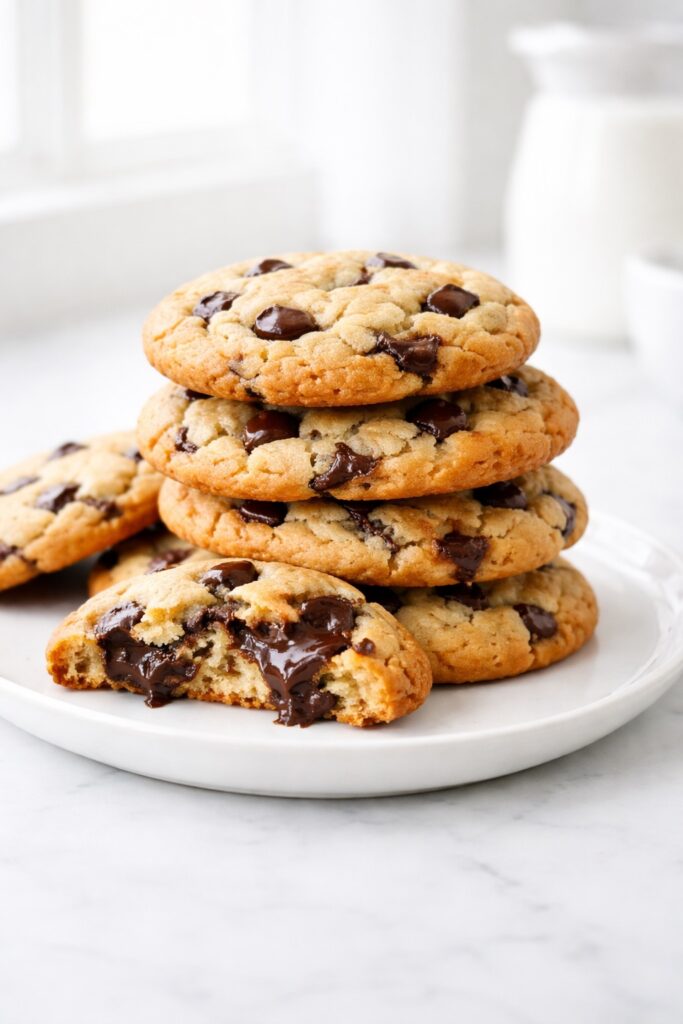
Room temperature butter creams more evenly with the sugars, giving the dough structure without making it greasy. Proper flour measurement keeps the cookies soft instead of dense, and slight underbaking allows the centers to finish setting on the hot baking sheet without drying out.
In simple terms, more brown sugar keeps cookies soft, while more white sugar makes them crisp.
Everything You Need for Classic Homemade Chocolate Chip Cookies
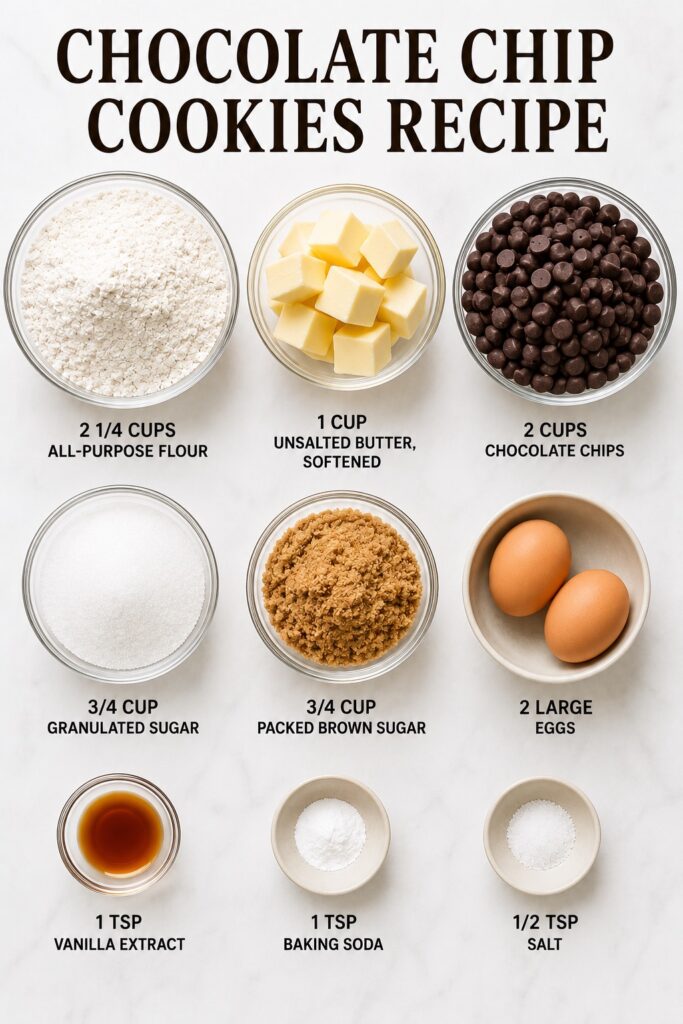
These simple pantry ingredients are carefully balanced to create soft centers, crisp edges, and rich chocolate flavor. Each one plays a specific role in texture, structure, and overall taste.
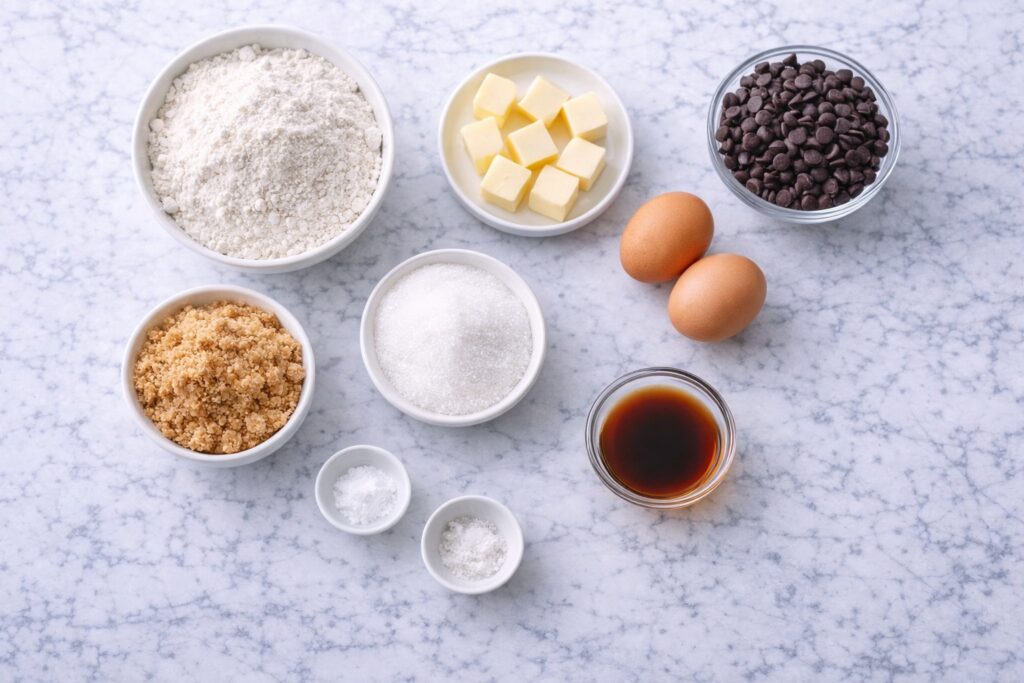
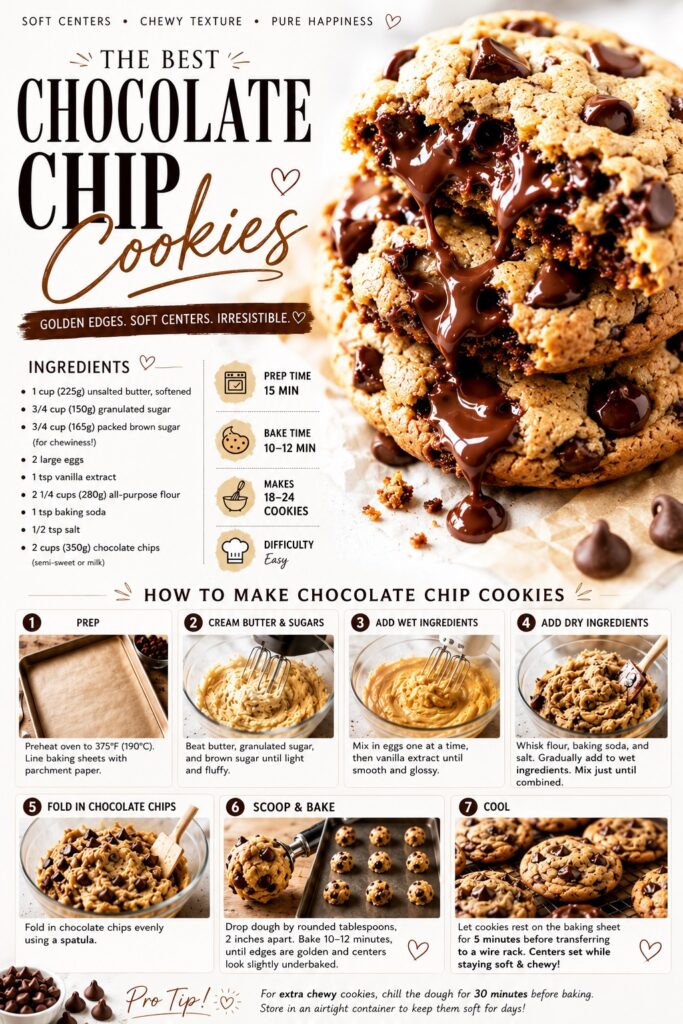
- 1 cup (225g) unsalted butter, softened
- ¾ cup (150g) granulated sugar
- ¾ cup (165g) packed brown sugar (for chewiness!)
- 2 large eggs
- 1 tsp vanilla extract
- 2 ¼ cups (280g) all-purpose flour
- 1 tsp baking soda
- ½ tsp salt
- 2 cups (350g) chocolate chips (semi-sweet or milk)
Unsalted butter gives you better control over salt balance, especially when aiming for bakery-style flavor.





- WHAT’S INSIDE: One 12-ounce bag of Milk Chocolate Baking Chips
- NEW LOOK: Your favorite Happy Belly products are now part of the Amazon Fresh family! Packaging may vary, but the produc…
- HIGH QUALITY, LOW PRICES: Amazon Fresh brand products are all about high-quality food that fits every budget, every day.
Why Ingredient Ratios Matter More Than Most People Think
Each ingredient in this chocolate chip cookie recipe plays a specific role in texture and structure.
- Brown sugar: adds moisture and chewiness because of its molasses content
- Butter: provides richness and helps create spread during baking
- Flour: controls structure — too much leads to dense cookies, too little leads to spreading
- Eggs: bind the dough and add softness
- Chocolate chips: create pockets of melted texture and sweetness
A small change in sugar ratio or flour amount can noticeably affect how the cookies spread and set in the oven.
Even a small difference in how you measure flour or soften butter can shift the final texture more than expected.
How to Adapt This Chocolate Chip Cookie Recipe
This chocolate chip cookie recipe is flexible and can be adapted depending on what you have available.
Butter substitutes
You can replace part of the butter with shortening for slightly thicker cookies, though flavor may be less rich.
Sugar adjustments
Increasing brown sugar slightly will produce softer cookies, while increasing white sugar results in crispier edges.
Chocolate swaps
Chocolate chunks create larger pockets of melted chocolate, while mini chips distribute more evenly throughout the dough.
Flour alternatives
All-purpose flour works best for classic texture, but a partial swap with bread flour can increase chewiness due to higher protein content.
The Best Chocolate for Chocolate Chip Cookies
The type of chocolate you use can completely change the texture, sweetness, and overall feel of a chocolate chip cookie. Some chocolates melt into soft pools, while others hold their shape and create more defined bites throughout the dough.
For classic bakery-style chocolate chip cookies, semi-sweet chocolate is usually the best balance. It adds richness without making the cookies overly sweet and creates deeper chocolate flavor as the cookies bake.
Semi-Sweet Chocolate Chips
This is the classic choice for traditional chocolate chip cookies. Semi-sweet chocolate gives balanced sweetness and holds its shape well during baking, creating distinct pockets of melted chocolate throughout the cookies.
Milk Chocolate Chips
Milk chocolate creates a sweeter, softer flavor with a creamier finish. The cookies feel slightly more nostalgic and dessert-like, especially when served warm.
Dark Chocolate Chunks
Dark chocolate chunks create larger melted pools and a richer flavor profile. Because chopped chocolate melts more irregularly than chips, the cookies often feel more bakery-style and luxurious.
Chocolate Chunks vs Chocolate Chips
Chocolate chips are designed to hold their shape during baking, while chopped chocolate melts more naturally into the dough. This is why bakery-style cookies often use chopped chocolate instead of standard chips.
Using a mix of both can create the best texture — defined chocolate pockets combined with melted ribbons throughout the cookie.
Why Some Chocolate Chips Melt Better Than Others
Higher-quality chocolate usually contains more cocoa butter, which helps it melt more smoothly inside the cookies. Lower-cost chocolate chips often contain stabilizers that help them keep their shape during baking.
If you want dramatic melted chocolate pools and a softer bakery-style appearance, chopped chocolate bars are often the better choice.
Kitchen Tools for Chocolate Chip Cookies
- Mixing bowls for the dough and dry ingredients
- Electric mixer or sturdy whisk for creaming butter and sugar
- Measuring cups and spoons for accuracy
- Rubber spatula for folding in the chocolate chips
- Baking sheets for even baking
- Parchment paper or a silicone mat to prevent sticking
- Wire cooling rack for even cooling
- Cookie scoop (optional) for evenly sized cookies


How to Make Chocolate Chip Cookies Step by Step
How to make chocolate chip cookies step by step with visual cues:
Step 1: Prep
Preheat oven to 375°F (190°C). Line baking sheets with parchment paper.
Step 2: Cream Butter & Sugars
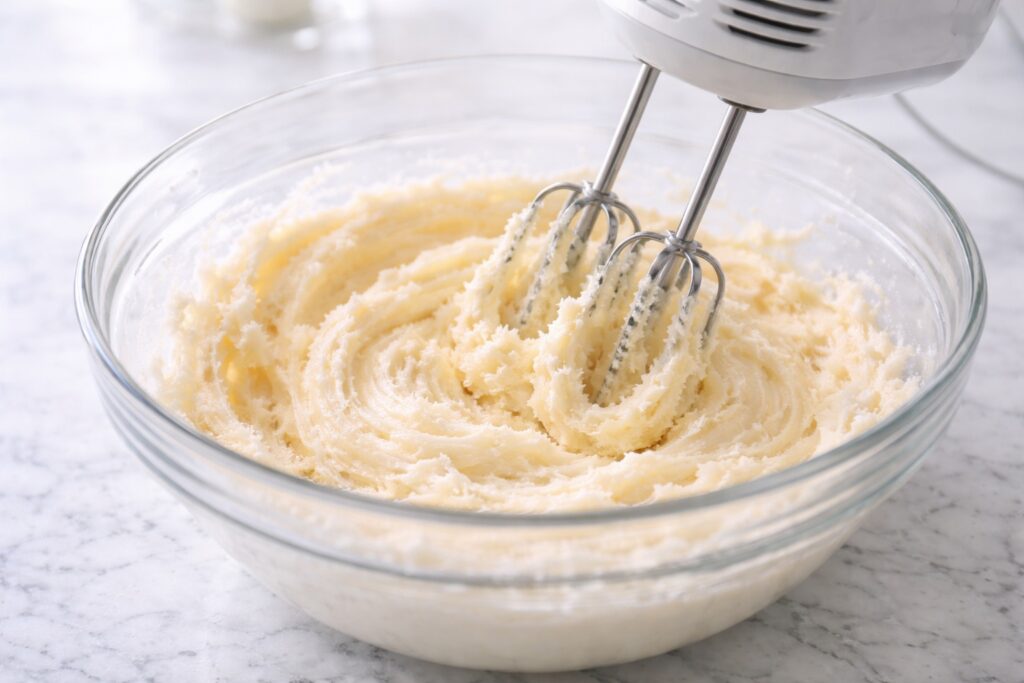
Beat butter, granulated sugar, and brown sugar until light and fluffy.
The mixture should look slightly pale and airy, not dense or oily. If it still looks heavy, keep mixing another 30–60 seconds.
Step 3: Add Wet Ingredients
Mix in eggs one at a time, then vanilla extract.
The dough will look smooth and slightly glossy, almost like a thick batter. If it looks curdled, it usually comes back together once flour is added.
Step 4: Add Dry Ingredients
Whisk flour, baking soda, and salt in a separate bowl. Gradually add to the wet ingredients.
Mix just until combined. The dough should look soft and slightly thick, not dry. Overmixing here is one of the fastest ways to lose that chewy texture.
Step 5: Fold in Chocolate Chips
Fold in chocolate chips evenly using a spatula.
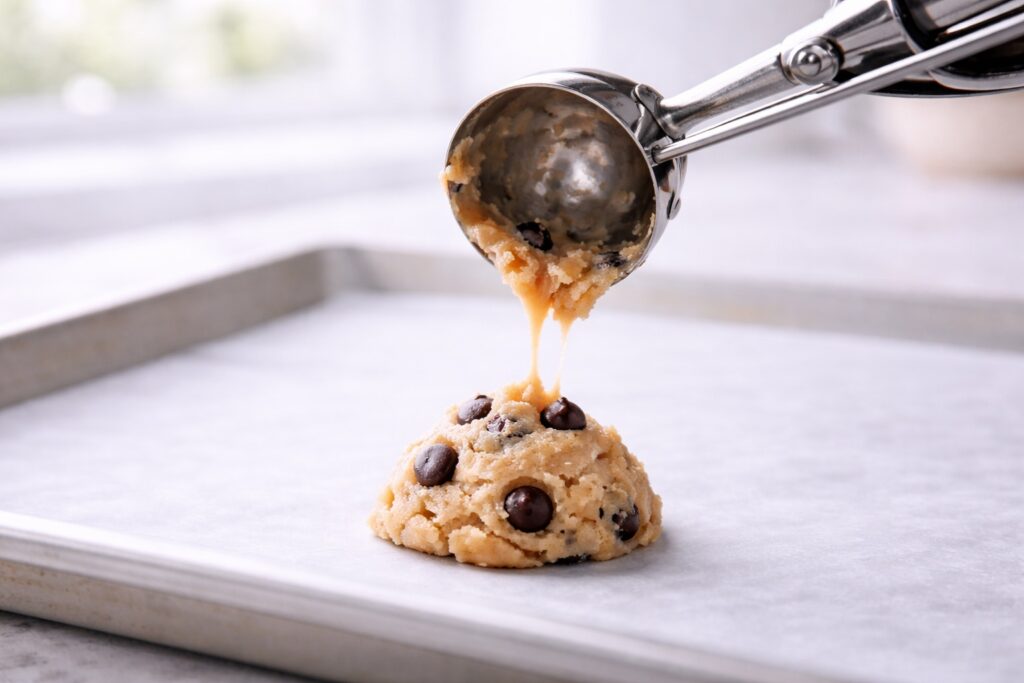
The dough should hold its shape when scooped but still feel soft to the touch. If it feels too loose, chilling will help control spreading.
Step 6: Scoop and Bake
Drop dough by rounded tablespoons onto baking sheets, about 2 inches apart.
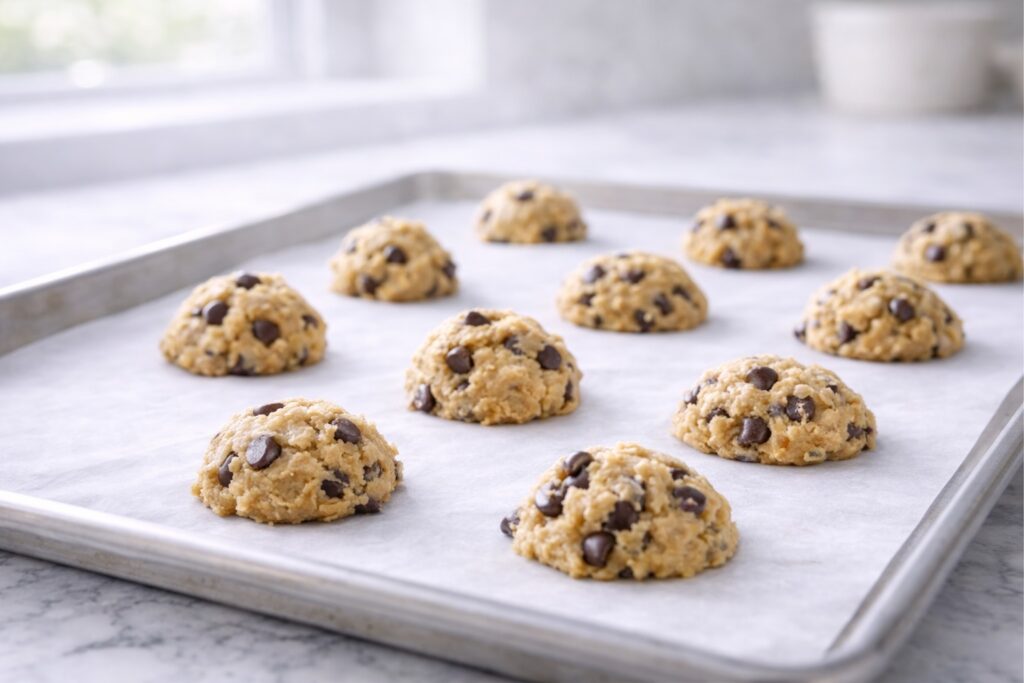
Bake for 10–12 minutes, until the edges are golden but the centers still look slightly underbaked.
You might notice that cookies at the edges of the tray brown faster – this is normal, and rotating the tray halfway helps even things out.
Step 7: Cool
Let cookies rest on the baking sheet for 5 minutes before transferring to a wire rack.
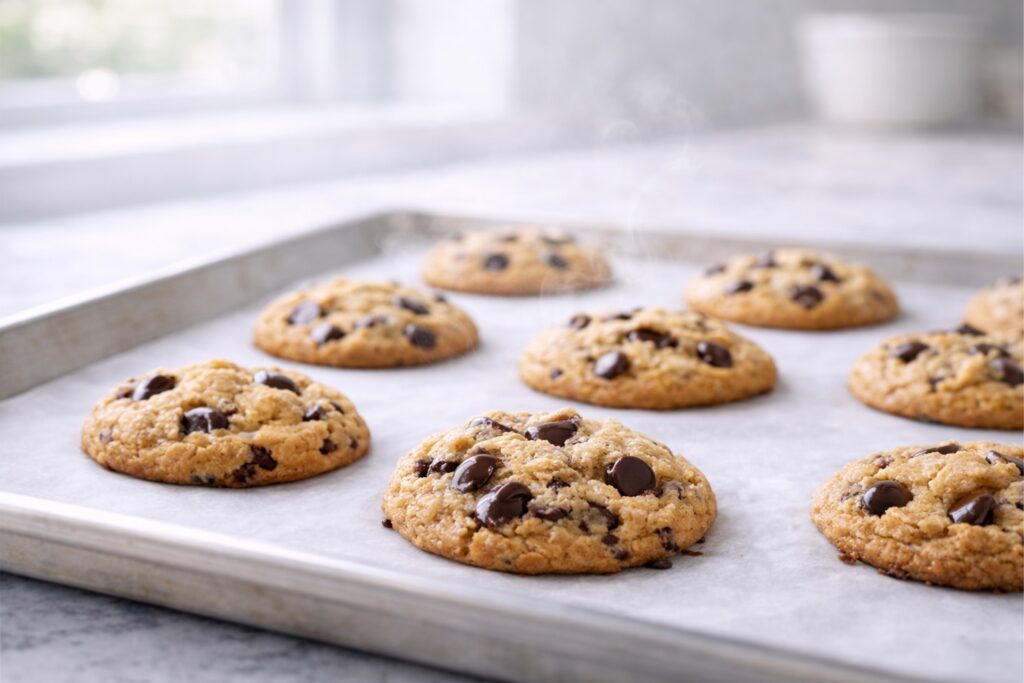
This is when the centers finish setting. They may look too soft at first, but they firm up just enough while staying chewy inside.
How to Tell When Chocolate Chip Cookies Are Perfectly Baked
- Edges are lightly golden brown but not dark
- Centers look slightly soft and underbaked
- Surface has small cracks forming
- Cookies look set around the edges but still soft in the middle
- Bottom is lightly golden, not overly browned
Cookies continue baking on the hot tray after removal from the oven, so pulling them out while the centers still look soft is key to achieving a chewy texture.
Well-baked cookies should have lightly golden edges, a pale soft center, and a slightly glossy surface where the chocolate has melted. If you enjoy cookies with that same soft-center appeal but a different flavor profile, snickerdoodle cookies are another classic worth trying.
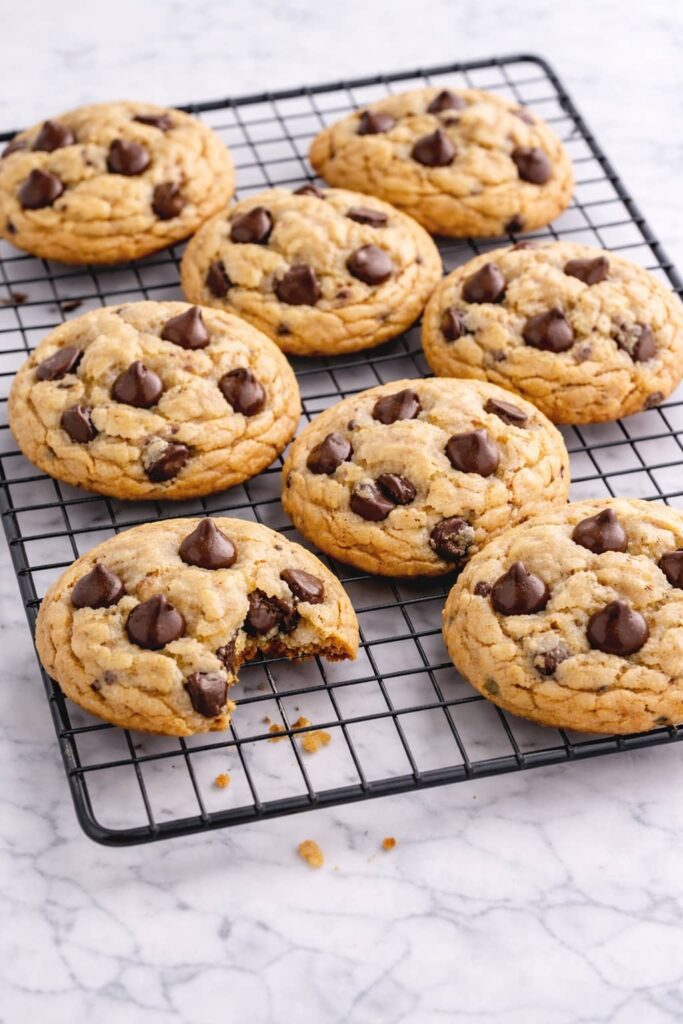
The Visual Texture Guide for Perfect Chocolate Chip Cookies
| Stage | What You Should See | What It Means |
|---|---|---|
| After creaming butter and sugars | Light, fluffy, and slightly pale mixture | Air has been incorporated properly for better structure |
| After adding dry ingredients | Soft dough that looks thick but not dry | The flour ratio is balanced and the cookies should bake chewy, not cakey |
| After folding in chocolate chips | Dough holds its shape but still feels soft | The dough is ready to scoop; if it feels too loose, chilling will help |
| Mid-bake | Edges begin to set while centers still look puffed and soft | The cookies are developing structure without drying out |
| Just baked | Golden edges, pale soft centers, slight surface cracks | This is the ideal point for chewy cookies |
| After cooling | Edges lightly crisp, centers soft and tender | The residual heat has finished setting the cookies properly |
This kind of visual reading matters more than most people expect. Cookie dough and baking time can shift slightly depending on your kitchen temperature, baking sheet, and even how warm the butter was when you started.
Once you start noticing these small visual cues, it becomes much easier to adjust the texture without changing the recipe itself.
Key Techniques Behind Bakery-Style Chocolate Chip Cookies
- Use room temperature butter, not melted
- Measure flour carefully (spoon and level or weigh)
- Slightly underbake for soft centers
- Chill dough if your kitchen is warm
- Let cookies rest on the baking sheet before transferring
Pro Tip: If your kitchen runs warm, chill the scooped cookie dough for 15–20 minutes before baking. Even a short chill helps create thicker cookies with better texture contrast and less spreading.
The Tiny Baking Adjustments That Improve Cookies Instantly
- Use softened butter, not melted – it should feel cool and slightly firm, but leave a soft indent when pressed. If it’s too soft, the cookies will spread too much.
- Let the dough rest for 5–10 minutes before baking – this simple step allows the flour to hydrate, improving texture instantly without needing a full chill.
- Bake one test cookie first – every oven behaves differently. A single test cookie helps you adjust baking time before committing the whole batch.
- Watch the edges, not the center – cookies are ready when the edges are set and lightly golden, even if the center still looks soft.
- Cool baking sheets between batches – warm trays cause the dough to spread faster, which can lead to thinner cookies.
- Use a light-colored baking sheet if possible – darker pans absorb more heat and can brown the bottoms too quickly.
- Press extra chocolate on top before baking – this creates that bakery-style look with visible melted chocolate on the surface.
Bakery Secrets for Better Chocolate Chip Cookies
Professional bakeries often rely on small technique details that quietly make chocolate chip cookies look richer, thicker, softer, and more visually irresistible. Most of these adjustments are simple, but together they create that thick, rich homemade cookie feel.
Reserve Extra Chocolate for the Tops
Press a few extra chocolate chips or chunks onto the tops of the dough balls before baking. This creates visible melted chocolate on the surface and gives the cookies a more professional bakery look.
Use Mixed Chocolate Sizes
Combining chocolate chips with chopped chocolate creates better texture contrast. Smaller chips distribute evenly while larger chunks melt into soft pools throughout the cookies.
Pull the Cookies Slightly Early
The centers should still look slightly soft when the cookies come out of the oven. Residual heat continues baking them on the tray, which keeps the centers soft and chewy instead of dry.
Let the Dough Rest Before Baking
Even a short 15–30 minute rest improves hydration and helps the flour absorb moisture more evenly. This often creates thicker cookies with deeper flavor.
Chill Dough for Thicker Bakery-Style Cookies
Cold dough spreads more slowly in the oven, which helps create thicker cookies with softer centers and more defined edges.
Use Larger Dough Scoops
Larger portions of dough create more contrast between the edges and center. Smaller cookies bake through too quickly, while larger cookies stay softer inside.
Sprinkle Flaky Sea Salt on Warm Cookies
A light sprinkle of flaky sea salt balances sweetness and makes the chocolate flavor feel deeper and more complex without making the cookies taste salty.
Bang the Baking Sheet Lightly
Some bakeries lightly tap the baking sheet against the oven rack once during baking. This helps create rippled edges and slightly denser centers for a more dramatic bakery-style texture.
Individually, these techniques seem small. Together, they create the kind of chocolate chip cookies people remember after the first bite.
Chewy vs Crispy vs Thick Chocolate Chip Cookies
Small ingredient and baking adjustments can completely change how chocolate chip cookies spread, bake, and feel once cooled. Understanding these differences makes it much easier to create your ideal cookie texture.
| Cookie Style | What Changes | Texture Result | Best Technique |
|---|---|---|---|
| Chewy Cookies | More brown sugar + slight underbaking | Soft centers with a moist, tender texture | Pull cookies while centers still look slightly soft |
| Crispy Cookies | More white sugar + longer baking time | Thin cookies with crisp edges and more crunch | Bake until edges deepen to a richer golden brown |
| Thick Bakery-Style Cookies | Chilled dough + larger dough portions | Soft centers with less spread and thicker structure | Chill dough thoroughly before baking |
| Gooey Cookies | Underbaking + chopped chocolate chunks | Melted chocolate pools and very soft centers | Use chopped chocolate instead of only chips |
| Extra Caramelized Cookies | Brown butter + slightly longer baking | Deeper flavor with richer golden edges | Cool brown butter before mixing into dough |
How to Serve Chocolate Chip Cookies
Chocolate chip cookies are at their best slightly warm, when the edges are lightly crisp, the centers stay soft, and the chocolate still melts into glossy pockets with each bite.
Fresh from the oven, the contrast between the golden edges and gooey center creates the kind of texture that makes homemade chocolate chip cookies feel instantly comforting and almost impossible to stop eating.
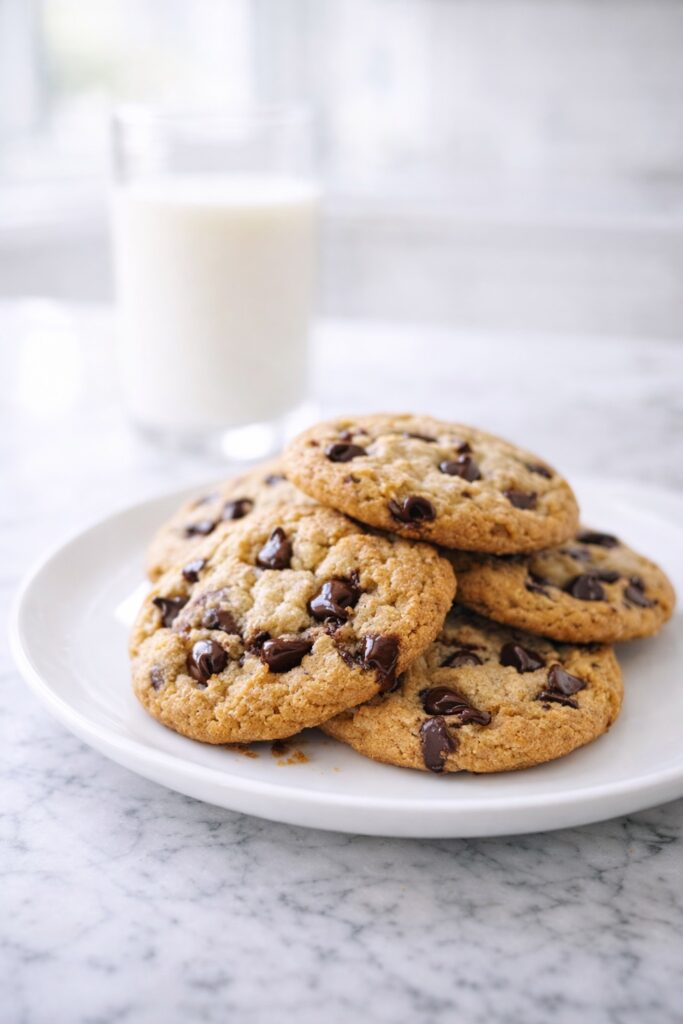
Classic Milk and Cookies
Serve warm cookies with a cold glass of milk for the classic contrast between rich buttery dough and cool creaminess. The soft centers become even more satisfying when the cookies are still slightly warm.
Warm Cookies with Ice Cream
For a richer dessert, pair chocolate chip cookies with vanilla ice cream while the cookies are still warm enough to gently melt the ice cream around the edges.
The contrast between warm chocolate and cold vanilla creates a warm classic dessert experience.
Chocolate Chip Cookies with Coffee
The caramelized notes from brown sugar and butter pair beautifully with coffee, espresso, or cappuccino. Slight bitterness from coffee balances the sweetness of the cookies especially well.
Serve Them Bakery-Style
Stack the cookies casually on parchment paper, a cooling rack, or a wooden serving board for a cozy homemade bakery feel. A few scattered chocolate chips or crumbs instantly make the presentation feel warmer and more natural.
Holiday and Gathering Presentation
Chocolate chip cookies work beautifully on dessert trays, holiday platters, and casual gathering tables because they feel familiar, nostalgic, and easy to share.
Served warm or cooled, these cookies bring the kind of homemade comfort that never really goes out of style.
Chocolate Chip Cookie Variations You’ll Want to Try
One of the reasons chocolate chip cookies have remained popular for generations is their incredible versatility. Once you understand the base dough, small ingredient adjustments can completely transform the texture, flavor, and overall baking experience. Whether you prefer thicker bakery-style cookies, deeper caramelized notes, or extra chocolate in every bite, these variations allow you to customize the recipe to your personal taste.
Double Chocolate Chip Cookies
If you love extra chocolate in every bite, this double chocolate chip cookie variation turns the classic dough into a rich, cocoa-based cookie with soft chewy centers, lightly crisp edges, and melted chocolate throughout. It is perfect when you want something deeper, darker, and more brownie-like than a classic chocolate chip cookie.
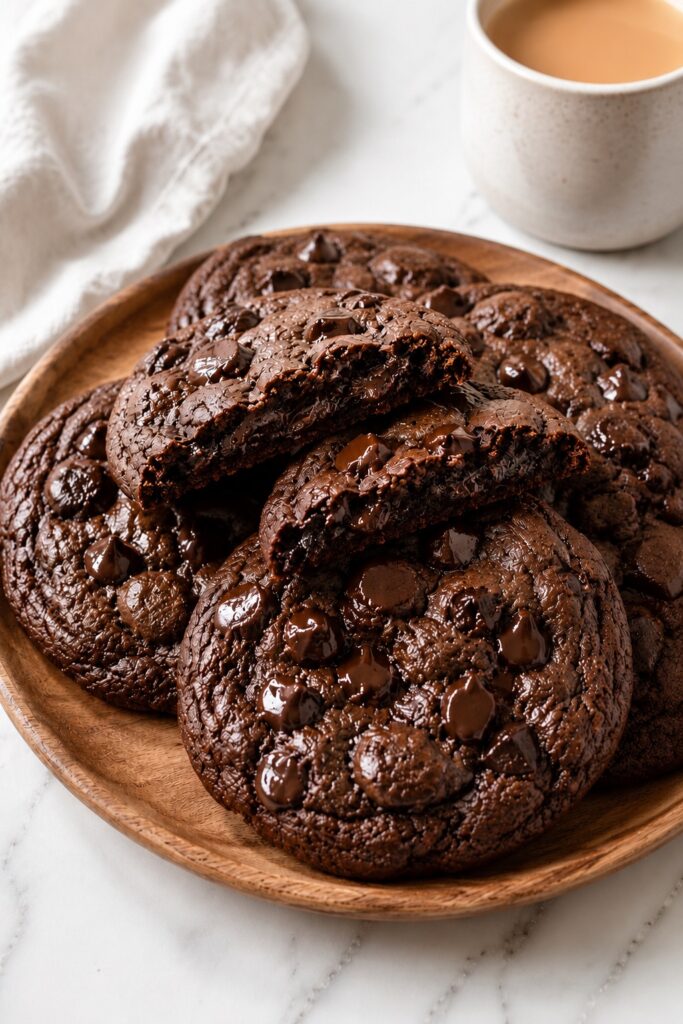
Why You’ll Love These Double Chocolate Chip Cookies
- Twice the chocolate flavor without making the cookies overly complicated.
- Soft, chewy centers with rich cocoa depth and gooey chocolate chips.
- Easy to make from the original recipe with one simple flour adjustment.
- Perfect for chocolate lovers, cookie trays, bake sales, and cozy homemade desserts.
Double Chocolate Chip Cookie Ingredients
- 1 cup unsalted butter, softened
- 3/4 cup granulated sugar
- 3/4 cup packed brown sugar
- 2 large eggs
- 1 teaspoon vanilla extract
- 2 cups all-purpose flour
- 1/4 cup unsweetened cocoa powder
- 1 teaspoon baking soda
- 1/2 teaspoon salt
- 2 cups semi-sweet chocolate chips or chocolate chunks
How to Make Double Chocolate Chip Cookies
- Preheat the oven to 375°F (190°C). Line baking sheets with parchment paper.
- Cream the softened butter, granulated sugar, and brown sugar together until light and fluffy.
- Mix in the eggs one at a time, then add the vanilla extract.
- In a separate bowl, whisk together the flour, cocoa powder, baking soda, and salt.
- Add the dry ingredients to the wet ingredients and mix just until combined. Do not overmix.
- Fold in the chocolate chips or chocolate chunks.
- Scoop the dough onto the prepared baking sheets, spacing the cookies about 2 inches apart.
- Bake for 10–12 minutes, until the edges look set and the centers still look slightly soft.
- Let the cookies cool on the baking sheet for 5 minutes before transferring them to a wire rack.
What Changes Compared to the Original Recipe?
This variation replaces 1/4 cup of the flour with 1/4 cup unsweetened cocoa powder. The cocoa powder gives the cookies a darker chocolate flavor and a slightly richer, brownie-like texture while keeping the centers soft and chewy.
Baking Science
Replacing part of the flour with cocoa powder adds concentrated chocolate flavor while slightly reducing gluten development. This helps create a softer, more tender texture with subtle brownie-like qualities. Because cocoa powder absorbs moisture differently than flour, the cookies often bake slightly thicker while maintaining soft, chewy centers.
Best Chocolate for Double Chocolate Chip Cookies
- Use semi-sweet chocolate chips for balanced sweetness.
- Use dark chocolate chunks for a more intense chocolate flavor.
- Use a mix of chips and chopped chocolate for bakery-style melted chocolate pools.
- Use milk chocolate chips if you prefer a sweeter, softer chocolate flavor.
When to Choose This Variation
Choose Double Chocolate Chip Cookies when you want a richer, more chocolate-forward cookie than the classic version. The added cocoa powder creates deeper flavor and a darker appearance, making these cookies ideal for chocolate lovers, holiday cookie trays, bake sales, and special occasions where you want a more indulgent dessert.
Texture: Soft and chewy centers, lightly crisp edges, and melted chocolate pockets throughout.
Flavor: Rich cocoa cookie flavor with brownie-like depth and extra chocolate intensity in every bite.
Pro Tip: For thicker double chocolate chip cookies, chill the scooped dough for 30–60 minutes before baking. This helps control spreading and creates a richer bakery-style texture.
Brown Butter Chocolate Chip Cookies
For a richer and more complex flavor, brown the butter before making the dough. As the milk solids caramelize, the butter develops deep nutty notes that pair beautifully with chocolate. This simple upgrade creates bakery-style chocolate chip cookies with a more sophisticated flavor profile and a slightly chewier texture.
Bakery-Style Jumbo Chocolate Chip Cookies
Use 3 to 4 tablespoons of dough per cookie and chill the dough for at least one hour before baking. Larger portions create a thicker cookie with more contrast between the crisp golden edges and the soft, gooey center. This variation closely resembles oversized cookie shop cookies.
Dark Chocolate Sea Salt Cookies
Swap semi-sweet chips for chopped dark chocolate and finish the warm cookies with flaky sea salt. The slight saltiness balances the sweetness while enhancing the chocolate flavor and creating a more gourmet bakery-style experience.
Chocolate Chunk Cookies
Replace standard chocolate chips with chopped chocolate bars. Unlike chocolate chips, chopped chocolate melts into irregular pools and ribbons throughout the cookie, creating the dramatic chocolate pockets often seen in professional bakeries.
Oatmeal Chocolate Chip Cookies
Add 1 cup old-fashioned rolled oats to create a heartier texture and extra chewiness. The oats add structure while still allowing the cookies to remain soft in the center.
Walnut Chocolate Chip Cookies
Fold ¾ to 1 cup chopped walnuts into the dough for added crunch and a lightly toasted flavor. Walnuts complement the caramel notes from the brown sugar particularly well.
Pecan Chocolate Chip Cookies
Toasted pecans add buttery richness and subtle Southern-inspired flavor. This variation works especially well when combined with brown butter.
Extra Chewy Chocolate Chip Cookies
Increase the brown sugar slightly while reducing the granulated sugar by the same amount. Chilling the dough overnight further enhances chewiness and develops a deeper flavor.
Crispy Chocolate Chip Cookies
For thinner, crispier cookies, increase the granulated sugar slightly and bake 1 to 2 minutes longer. The cookies develop more caramelization and a crunchier texture after cooling.
Stuffed Chocolate Chip Cookies
Wrap portions of cookie dough around caramel candies, chocolate truffles, peanut butter cups, or cookie butter centers before baking. The hidden filling creates a dramatic bakery-style surprise when the cookies are broken open.
Holiday Chocolate Chip Cookies
Add festive sprinkles, seasonal candies, white chocolate chips, or colored chocolate pieces to create cookies perfect for holiday trays, cookie exchanges, and celebrations throughout the year.
Espresso Chocolate Chip Cookies
Add 1 teaspoon espresso powder to the dough. The coffee flavor remains subtle but intensifies the chocolate and enhances the overall depth of flavor.
Peanut Butter Chocolate Chip Cookies
Replace ¼ cup of the butter with creamy peanut butter to create a richer, nuttier cookie with a soft center and deeper flavor complexity.
Extra Thick & Chunky
Use chocolate chunks instead of chips and chill the dough at least 1 hour. Slightly underbake for that gooey center.
For even thicker bakery-style cookies, use larger scoops and chill the dough longer before baking.
If you enjoy bakery-style cookies with a little more depth and complexity, these sourdough chocolate chip cookies are another delicious variation to try.
Nutty Classic
Add ½ cup chopped walnuts or pecans for crunch and a slightly toasted flavor.
These variations all start with the same reliable chocolate chip cookie base, making it easy to experiment and discover your personal favorite while maintaining the soft centers, golden edges, and bakery-style texture that make this recipe so popular.
How to Store Chocolate Chip Cookies Properly
Chocolate chip cookies store beautifully when handled properly.
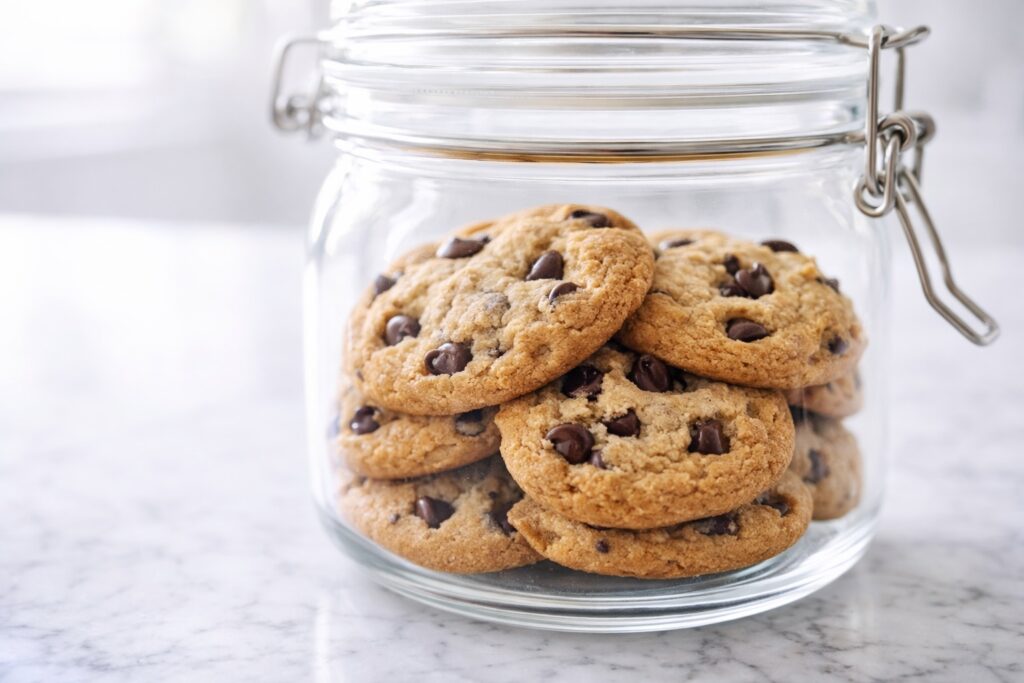
Room Temperature:
Keep baked cookies in an airtight container for up to 4 days. Add a slice of bread inside the container to help maintain softness.

- High-Grade Glass: Adodeen storage jars are made of thickened lead-free glass, which is BPA-free for peace of mind, stabl…
- Stackable Design: This stackable glass jar is designed for organizing your pantry or kitchen. Its unique recessed top de…
- Exquisite Cameo Craft: The sunflower embossing on the surface of the glass jar is exquisitely handcrafted and beautifull…
Refrigerator:
Store up to 1 week for longer freshness.
Freezing Baked Cookies:
Freeze in a sealed container for up to 2 months. Let thaw at room temperature.
Freezing Cookie Dough:
Scoop the dough into balls and freeze on a tray. Once solid, transfer to a freezer bag. Bake directly from frozen, adding 1–2 extra minutes to the baking time.
Having cookie dough ready in the freezer means warm, freshly baked chocolate chip cookies anytime. If you love sneaking a taste of the dough itself, this edible cookie dough recipe is a safe and fun option to keep in your dessert rotation.
Make Ahead Tips for Chocolate Chip Cookies
Chocolate chip cookie dough is one of the easiest dessert doughs to prepare ahead of time, and in many cases, the flavor actually improves after resting.
Make the Dough Ahead
The cookie dough can be made up to 72 hours in advance and stored covered in the refrigerator. As the dough rests, the flour hydrates more fully and the flavors deepen, creating richer, more bakery-style cookies.
Scoop Before Chilling
For easier baking later, scoop the dough into portions before refrigerating. Cold cookie dough becomes much firmer, so portioning first saves time and keeps the cookies more evenly sized.
Freeze Dough Balls for Fresh Cookies Anytime
Place scooped dough balls on a baking sheet and freeze until solid. Transfer them to a freezer-safe bag or container and bake directly from frozen whenever needed.
Frozen cookie dough usually needs only 1–2 extra minutes of baking time.
Refrigerated Dough Bakes Thicker
Cold dough spreads more slowly in the oven, which often creates thicker cookies with softer centers and better texture contrast.
Let Frozen Dough Sit Briefly Before Baking
If the dough is frozen very solid, letting it sit at room temperature for 10–15 minutes can help the cookies bake more evenly while still staying thick and chewy.
Keeping cookie dough ready in the refrigerator or freezer means warm homemade chocolate chip cookies are always only minutes away.
How to Reheat Chocolate Chip Cookies
Chocolate chip cookies are often at their best slightly warm, when the chocolate softens again and the centers become soft and gooey. Reheating properly helps bring back that fresh-from-the-oven texture without drying the cookies out.
Microwave Method
For a quick soft and warm cookie, microwave a chocolate chip cookie for about 8–10 seconds. The chocolate becomes glossy again while the center softens slightly.
If the cookie was refrigerated, it may need a few extra seconds.
Oven Method
For a more bakery-style texture, place cookies in a 300°F oven for about 3–5 minutes. This lightly refreshes the edges while warming the center evenly.
Reheating Frozen Cookies
Frozen baked cookies can be thawed at room temperature or warmed directly in the oven for a few minutes until heated through.
How to Bring Back Gooey Centers
Slight warming softens the butter and melted chocolate inside the cookies again, which helps recreate that soft bakery-style texture even a day or two after baking.
Chocolate Chip Cookie Troubleshooting Guide
Even reliable chocolate chip cookie recipes can behave differently depending on dough temperature, flour measurement, oven calibration, humidity, or baking sheet type. Small variables often create the biggest texture differences.
Most cookie problems are easier to fix than they seem once you understand what caused the texture shift.
Why Did My Cookies Spread Too Much?
Overly soft butter is one of the most common causes of thin cookies. Warm dough spreads quickly before the structure has time to set.
Chilling the dough for 30 minutes usually helps create thicker cookies with less spread.
Warm baking sheets can also cause excessive spreading, especially during later batches.
Why Are My Cookies Cakey Instead of Chewy?
Too much flour or overmixing after adding the dry ingredients can create a cakier texture.
For soft and chewy chocolate chip cookies, mix only until the flour disappears into the dough.
Measuring flour by weight instead of volume also improves consistency significantly.
Why Did My Cookies Turn Out Dry?
Overbaking is usually the reason cookies lose softness. Chocolate chip cookies should still look slightly soft in the center when removed from the oven.
The residual heat from the baking sheet continues setting the cookies after baking.
Why Are My Cookies Flat?
Flat cookies are often caused by butter that was too warm, skipping chill time, expired baking soda, or an oven that has not fully preheated.
If your kitchen is warm, chilling becomes even more important for controlling spread.
Why Did My Cookies Barely Spread?
Too much flour or dough that is too cold can prevent proper spreading. Over-chilled dough may need a few minutes at room temperature before baking.
Why Are My Cookies Browning Too Fast?
Dark baking sheets absorb more heat and can brown the bottoms too aggressively before the centers finish baking.
Light-colored aluminum baking sheets usually produce more even results.
Why Do My Cookies Taste Different Every Time?
Humidity, butter softness, chocolate type, flour measuring, oven temperature, and dough resting time all influence flavor and texture.
Even small environmental shifts can change how chocolate chip cookies bake from one batch to another.
Once you learn to recognize these small visual and texture cues, it becomes much easier to consistently bake bakery-style chocolate chip cookies with soft centers and golden edges.
Common Questions About Chocolate Chip Cookies
Can I chill the dough overnight?
Yes. Chilling overnight actually improves flavor and texture, giving you thicker, more flavorful cookies.
Can I freeze the dough?
Absolutely. Freeze portioned dough balls and bake straight from frozen when needed.
How do I make bakery-style large cookies?
Use a large cookie scoop (3 tablespoons of dough) and bake 1–2 minutes longer.
Why are my cookies flat?
Usually this happens from overly soft butter, skipping chill time, or an oven that hasn’t fully preheated.
How Many Calories in a Chocolate Chip Cookie?
Each cookie contains approximately 180 calories, as shown in the nutrition panel below.
This chocolate chip cookie recipe has been tested to ensure consistent spread, balanced sweetness, and soft centers in every batch.
Chocolate Chip Cookie Recipe Summary
This chocolate chip cookie recipe creates soft, chewy cookies with crisp golden edges and gooey chocolate centers. Using a balanced ratio of butter, brown sugar, and flour, combined with proper creaming and slight underbaking, the cookies develop a classic bakery-style texture that stays tender even after cooling.
The dough comes together quickly and can be adjusted easily depending on your preference, whether you want thicker cookies, more chewiness, or deeper flavor. Small details like dough temperature, baking time, and sugar balance make the biggest difference in the final result.
More Cozy Homemade Cookie Recipes to Try
If you love this chocolate chip cookie recipe, you might also enjoy exploring other homemade cookie favorites:
- If you love deep caramelized flavor, try these brown butter chocolate chip cookies for an even richer twist on the classic.
- For a heartier variation, these oatmeal chocolate chip cookies add chewiness and texture while keeping that classic chocolate flavor.
- Looking for something slightly softer and fruit-forward? These banana cookies offer a naturally sweet alternative.
- If you enjoy soft centers and lightly crisp edges, snickerdoodle cookies bring a cinnamon-sugar twist to your cookie rotation.
- For nutty richness and bold flavor, peanut butter cookies are another classic worth baking.
Each recipe brings a slightly different texture, flavor, or twist – perfect for building your own cookie collection.
Why This Chocolate Chip Cookie Recipe Becomes the One You Keep
There is something quietly perfect about a chocolate chip cookie done right. Not complicated, not overthought, just warm, familiar, and exactly what you hoped it would be.
Some batches spread a little more, some bake a little darker, and sometimes the chocolate melts in slightly different ways. That is part of what makes them feel real and homemade, not manufactured.
Once you understand how the dough behaves, how the edges set, how the centers stay soft, and how small changes affect the texture, this stops being just another cookie recipe.
It becomes your chocolate chip cookie recipe. The one you trust, the one you return to, and the one that simply works every time you need it.
Chocolate Chip Cookie Recipe
Soft and chewy chocolate chip cookies with golden crisp edges and rich melted chocolate chips. A classic bakery-style recipe that delivers consistent results every time.
Ingredients
- 1 cup (225g) unsalted butter, softened
- ¾ cup (150g) granulated sugar
- ¾ cup (165g) packed brown sugar (for chewiness!)
- 2 large eggs
- 1 tsp vanilla extract
- 2 ¼ cups (280g) all-purpose flour
- 1 tsp baking soda
- ½ tsp salt
- 2 cups (350g) chocolate chips (semi-sweet or milk)
Instructions
- Preheat oven to 375°F (190°C). Line baking sheets with parchment paper.
- Cream butter, granulated sugar, and brown sugar until light and fluffy.
- Add eggs one at a time, then mix in vanilla extract.
- In a separate bowl, whisk flour, baking soda, and salt. Gradually add to wet ingredients and mix just until combined.
- Fold in chocolate chips evenly.
- Scoop dough into tablespoon-sized portions and place 2 inches apart on prepared baking sheets. Bake 10–12 minutes until edges are golden and centers look slightly soft.
- Cool on baking sheet for 5 minutes, then transfer to a wire rack.
Notes
- For best results, use room temperature butter — soft but not melted. Proper creaming helps create light, chewy cookies with structure.
- If you prefer thicker cookies, chill the dough for at least 30 minutes before baking. Overnight chilling enhances flavor even more.
- Always measure flour carefully. Spoon and level or weigh your flour to avoid dense cookies.
- Remove cookies from the oven when the centers still look slightly soft. They will continue setting as they cool on the baking sheet.
- For bakery-style presentation, press a few extra chocolate chips on top of each dough ball before baking.
- For consistently perfect results, allow the baking sheet to cool completely between batches.
Recommended Products
As an Amazon Associate and member of other affiliate programs, I earn from qualifying purchases.


Nutrition Information:
Yield: 24 cookies Serving Size: 1 cookieAmount Per Serving: Calories: 180Total Fat: 9gCarbohydrates: 24gSugar: 15gProtein: 2g
Nutrition information is provided as an estimate only and may vary based on specific ingredients, brands, and portion sizes used. This information should not be considered medical or nutritional advice.
12 Sweet Favourites — Yours, Free 🍰
Tiramisù, no-bake cheesecake, the perfect chocolate chip cookie & 9 more reader-loved desserts — gathered into one beautiful free recipe book. From my kitchen to yours.
No spam, just sweet things. Unsubscribe anytime.




One Comment
Comments are closed.