Snickerdoodle Cookies (Soft, Chewy & Classic Cinnamon Sugar)
🎁 FREE E-BOOK: 12 Sweet Favorites — reader-loved desserts in one beautiful recipe book.
These snickerdoodle cookies are soft, chewy, and coated in cinnamon sugar, with crackled tops and a warm, classic flavor that makes them one of the most loved homemade cookie recipes.
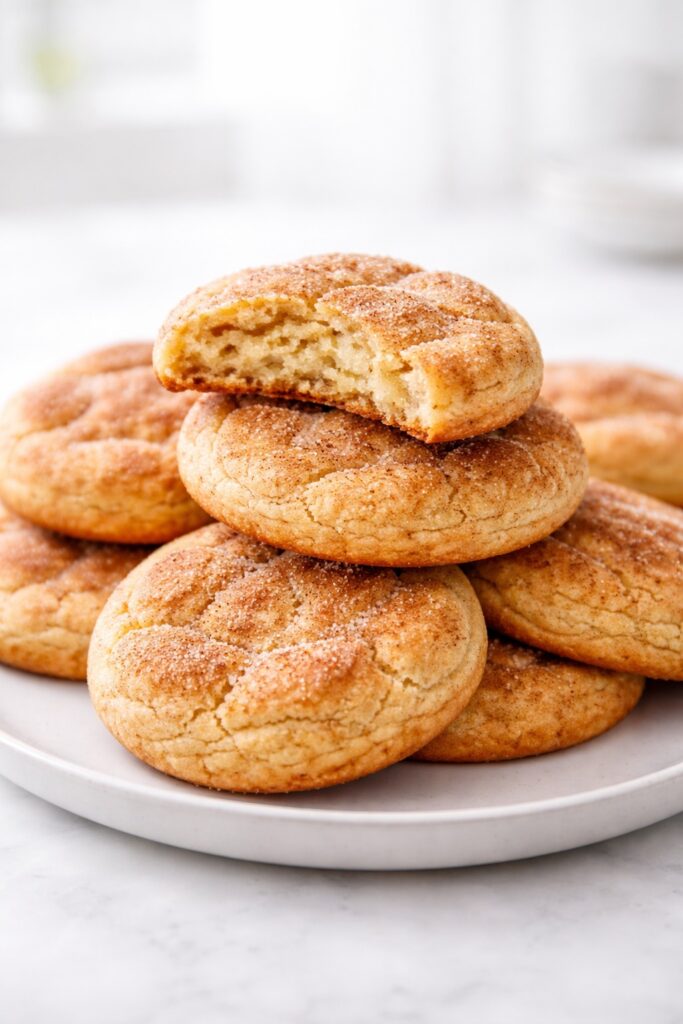
There’s something instantly comforting about the smell of snickerdoodle cookies baking in the oven. Warm cinnamon sugar drifts through the kitchen, the edges slowly turning golden while the centers stay soft and pillowy. It’s one of those scents that feels familiar before you even take the first bite.
Snickerdoodle cookies are the kind of classic you come back to again and again, much like chocolate chip cookies or oatmeal chocolate chip cookies. Soft, slightly chewy, coated in cinnamon sugar, and finished with that signature gentle crackle on top, they’re simple but deeply satisfying. No chocolate, no extras, just pure cozy flavor.
What makes people love and save this snickerdoodle cookie recipe is how reliable it is. The texture lands right between soft and lightly crisp, and the flavor feels nostalgic without ever being dull. It’s the kind of cookie that disappears quietly from the tray, one after another.
And once you make homemade snickerdoodle cookies from scratch, it’s hard to go back. Fresh from the oven, they have a softness, warmth, and cinnamon-sugar finish that store-bought versions never quite capture.
This is one of those recipes that becomes easy to repeat once you’ve made it once or twice.
In simple terms: Snickerdoodle cookies are soft cinnamon sugar cookies made with cream of tartar, which gives them their classic tangy flavor, tender texture, and signature crackled tops.
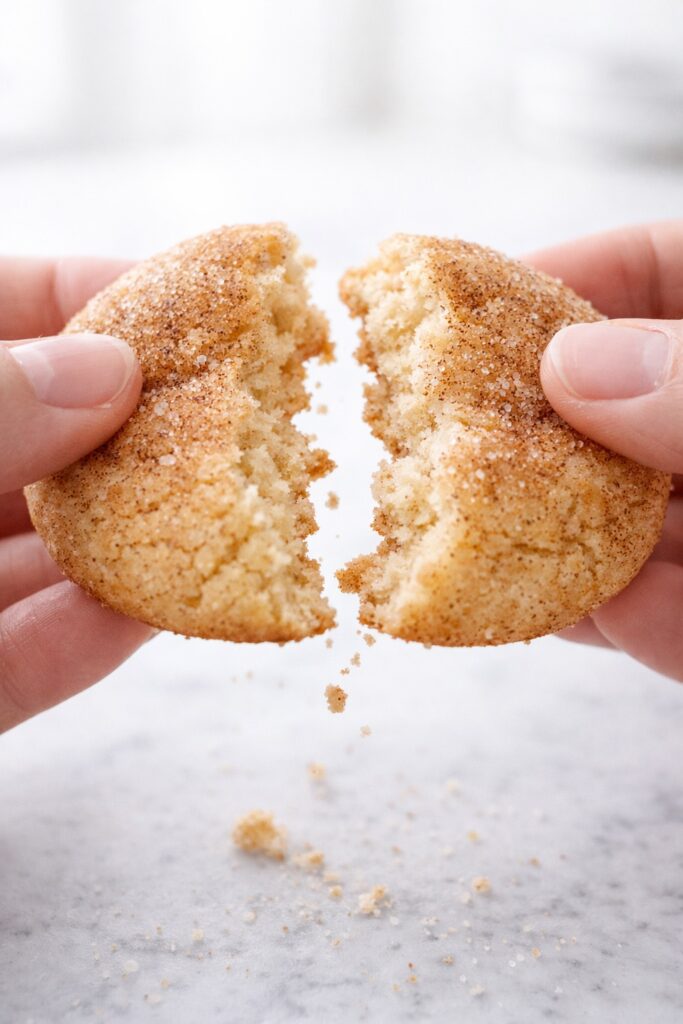
What Are Snickerdoodle Cookies?
Snickerdoodle cookies are a classic American cinnamon sugar cookie made with butter, sugar, flour, eggs, baking soda, and cream of tartar, then rolled in a cinnamon-sugar coating before baking. They are known for their soft centers, lightly crisp edges, signature crackled tops, and subtle tangy flavor from the cream of tartar.
Unlike standard sugar cookies, snickerdoodles have a slightly more complex flavor and a more tender, gently chewy texture. That combination of warmth, softness, and cinnamon sugar is what makes them such a lasting favorite.
Quick Recipe Overview
| Detail | Description |
|---|---|
| Texture | Soft centers, lightly crisp edges, tender crumb, delicate crackled top |
| Flavor | Sweet, buttery, warm cinnamon, subtle tang |
| Difficulty | Easy |
| Time | About 25 minutes total |
| Servings | 20 to 24 cookies |
| Method | Mix, roll in cinnamon sugar, and bake |
| Best For | Holiday baking, cookie trays, cozy weekends, everyday homemade treats |
In short: This snickerdoodle cookie recipe makes soft, cinnamon-sugar cookies with crackly tops, tender centers, and that classic slight tang that makes them taste unmistakably homemade.
Why This Recipe Works
Snickerdoodles are simple, but they rely on a very specific balance of moisture, structure, fat, and heat. That balance is what gives them their signature look and texture instead of turning them into plain sugar cookies with cinnamon on top.
Moisture comes from the butter and eggs, which keep the cookies soft and prevent them from baking up dry. The dough should feel soft and smooth, but not greasy. If it feels overly loose, the cookies will spread too quickly and lose that thicker, soft-centered shape.
Structure comes from the flour, along with the way the dough is mixed. Enough flour gives the cookies support so they can puff slightly before settling. That’s part of why snickerdoodles often have that lightly domed shape with gentle cracks across the top.
Fat matters here too. Butter gives the cookies richness and helps create those lightly crisp edges, but if the butter is too warm when you start, the dough becomes too soft and the cookies can flatten more than you want. One real-life baking detail that makes a difference: soft butter should still hold its shape when pressed, not look glossy or partially melted.
Heat finishes the job. Snickerdoodles spread early, puff in the center, and then gently settle as they cool. That’s why slightly underbaking them works so well. If the centers still look a little soft when you take them out, that is usually a good sign, not a mistake.
One of the reasons this recipe is so dependable is that the cinnamon sugar coating helps create contrast: a delicate outer finish with a soft interior. It is a small detail, but it is part of why these cookies feel more complete and more memorable than a plain sugar cookie.
That balance is what gives snickerdoodles their signature identity: soft but structured, sweet but slightly tangy, simple but never flat in flavor. It is also what makes them so satisfying in the same way as other classic homemade cookies like peanut butter cookies, where texture depends on getting the flour, fat, and bake time just right.
Cookie texture is largely influenced by the balance between fat, sugar, and flour. As explained by Serious Eats, small adjustments in these ratios can shift cookies from soft and chewy to crisp or cakey.
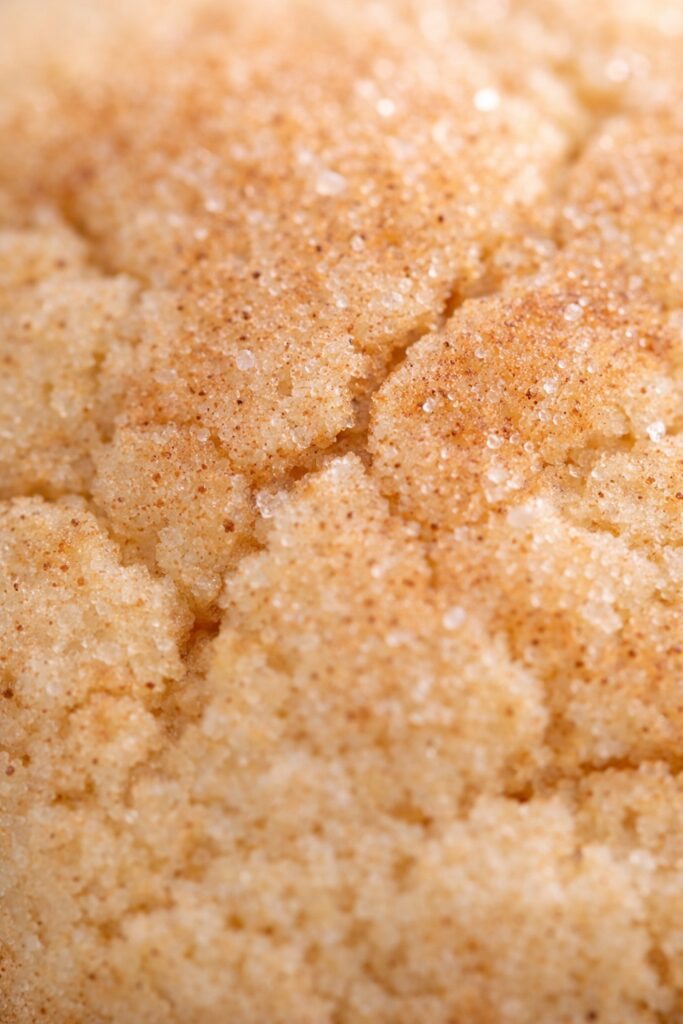
Baking Science
Cream of tartar is one of the ingredients that defines a true snickerdoodle. It adds the slight tang that gives the cookies their classic flavor, while also helping stabilize the dough and support a softer, more tender cookie structure. Combined with baking soda, it creates lift and contributes to the signature soft bite that snickerdoodles are known for.
The cinnamon sugar coating also does more than add flavor. As the cookies bake, the sugar on the outside begins to melt slightly and then set again as the cookies cool. That creates a delicate outer layer and helps emphasize the crackled surface.
Another small but useful baking detail is that these cookies continue to set after they come out of the oven. Residual heat firms up the centers just enough, which is why pulling them when the middle still looks slightly soft leads to a better final texture.
In simple terms: cream of tartar creates that slight tang and softness, while the cinnamon sugar coating gives snickerdoodles their signature crackled top and warm flavor.
Ingredients
These snickerdoodle cookies use simple pantry ingredients, but each one plays a specific role in creating that soft texture and signature flavor.
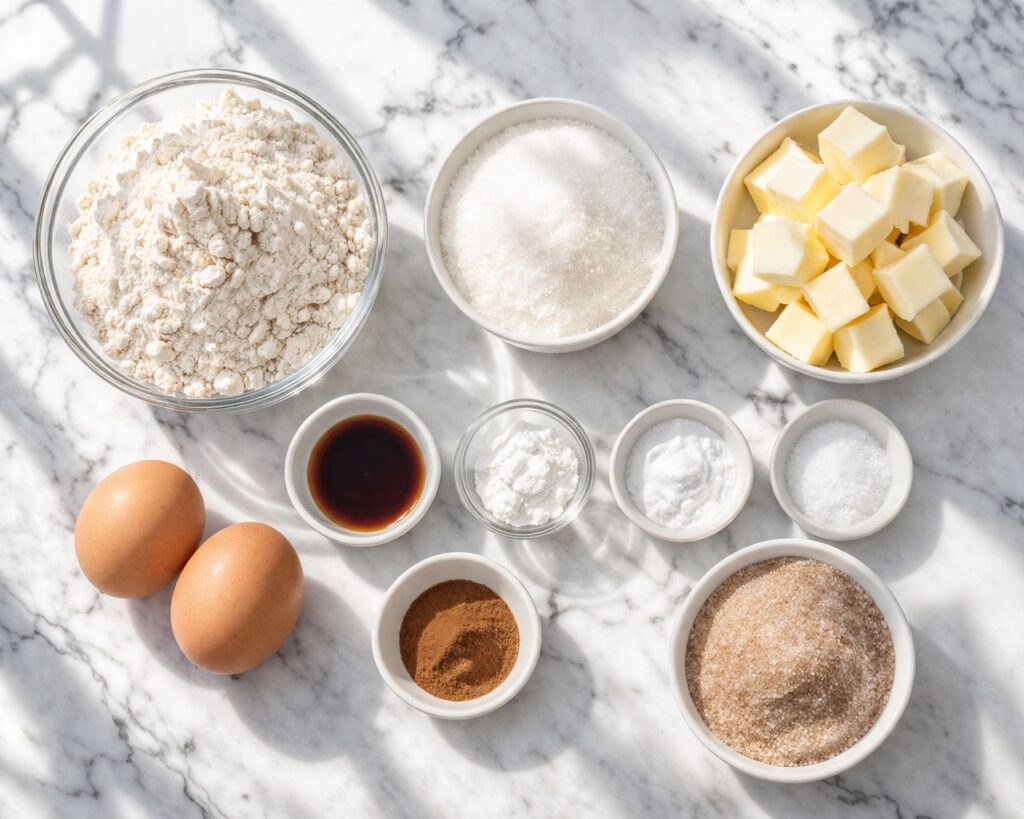
- 2 3/4 cups all-purpose flour
- 2 teaspoons cream of tartar
- 1 teaspoon baking soda
- 1/2 teaspoon salt
- 1 cup unsalted butter, softened
- 1 1/2 cups granulated sugar
- 2 large eggs
- 2 teaspoons vanilla extract
For the cinnamon sugar coating:
- 1/4 cup granulated sugar
- 1 1/2 tablespoons ground cinnamon
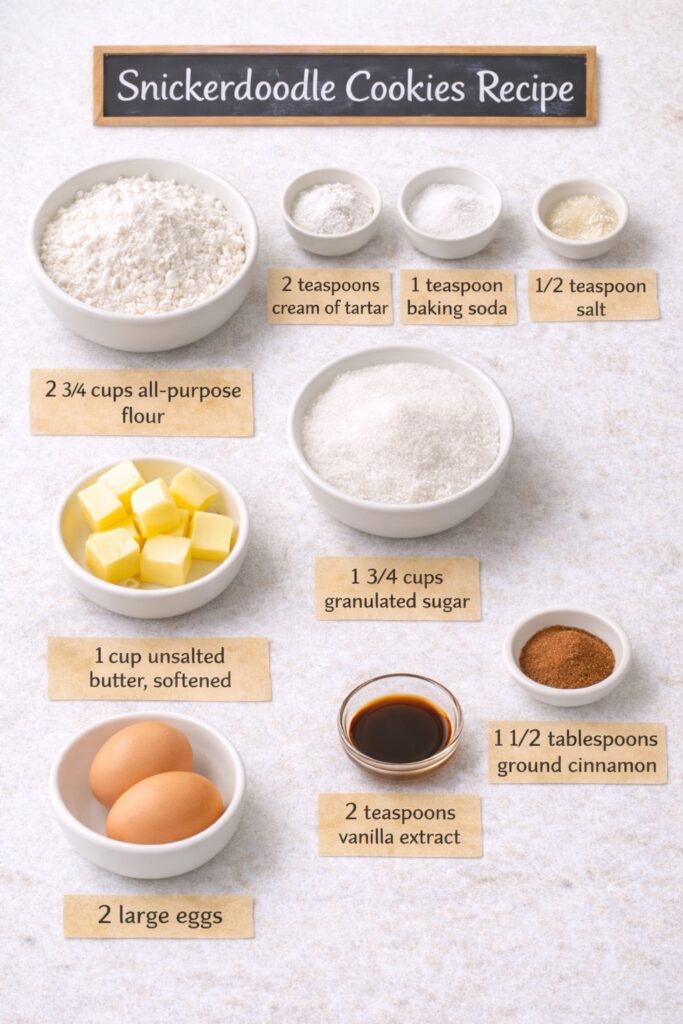
Ingredient Notes
A few ingredients do most of the heavy lifting in snickerdoodle cookies, so it helps to understand how they behave.
- Cream of tartar: This is what gives snickerdoodles their signature slight tang and helps create a softer, more tender texture. Without it, the cookies lose part of what makes them distinct.
- Butter: Butter provides richness, softness, and spread. Properly softened butter creams well with the sugar and helps create a lighter dough. If it is too warm, the dough becomes slack and the cookies spread too much.
- Sugar: Granulated sugar sweetens the dough, supports spread, and helps create that lightly crisp edge. During baking, it melts and then recrystallizes as the cookies cool, helping create that delicate outer layer and slightly crisp edge.
- Flour: Flour gives the cookies their structure. Too little and the cookies spread thin; too much and they become dry or dense.
Practical substitution note: If you do not have cream of tartar, you can use 2 teaspoons of baking powder and omit the baking soda, but the cookies will taste more like cinnamon sugar cookies than true snickerdoodles.
Original insight: Snickerdoodle dough should feel soft and supple, but it should never feel warm. If your kitchen is hot and the dough starts feeling almost fluffy and loose after mixing, letting it rest for 10 to 15 minutes can improve the final thickness and surface texture.
Ingredient takeaway: the combination of cream of tartar and baking soda is what gives snickerdoodles their signature tang, soft texture, and classic crackled finish — without it, they turn into simple cinnamon sugar cookies.
Equipment You’ll Need
- Mixing bowls
- Hand mixer or stand mixer
- Measuring cups and spoons
- Whisk
- Rubber spatula
- Baking sheets
- Parchment paper
- Cookie scoop or spoon
- Wire cooling rack
Practical note: A cookie scoop is especially helpful here because evenly sized dough balls bake more consistently. That matters with soft cookies, where even an extra minute in the oven can change the texture.
How to Make Snickerdoodle Cookies
1. Preheat the oven and prepare your pans.
Preheat the oven to 350°F (180°C). Line two baking sheets with parchment paper so the cookies bake evenly and lift off easily once set.
2. Whisk together the dry ingredients.
In a medium bowl, whisk together the flour, cream of tartar, baking soda, and salt. This helps distribute the leavening evenly so the cookies puff and crackle more uniformly.
3. Cream the butter and sugar.
In a large mixing bowl, beat the softened butter and 1 1/2 cups granulated sugar until light and fluffy, about 2 to 3 minutes.
Visual cue: The mixture should look paler, softer, and slightly airy rather than dense or greasy.
Baking tip: If it still looks heavy and pasty, keep mixing a little longer.
4. Add the eggs and vanilla.
Beat in the eggs one at a time, then mix in the vanilla extract. Scrape down the sides and bottom of the bowl so everything blends evenly.
Human moment: This is one of those steps where a little butter often hides at the bottom of the bowl. It happens. A quick scrape now prevents uneven dough later.
5. Add the dry ingredients to form the dough.
Gradually mix the dry ingredients into the wet mixture just until combined.
Baking tip: Stop mixing once the flour disappears. Overmixing can make the cookies slightly tougher.
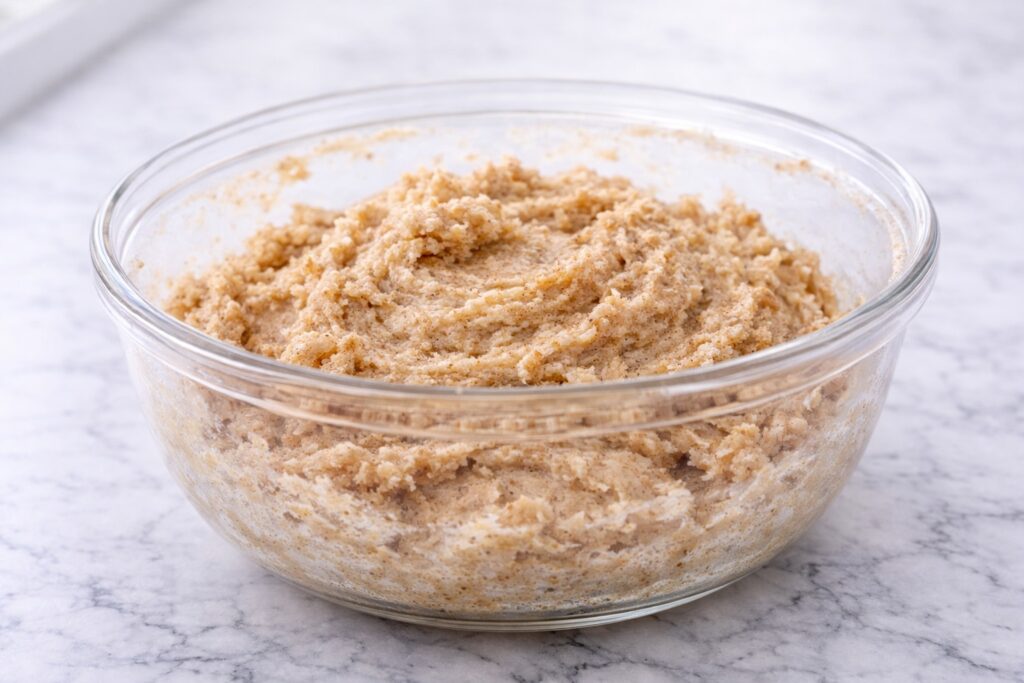
Texture cue: The dough should look soft, smooth, and thick enough to roll without sticking heavily to your hands. It should not look glossy or feel overly sticky.
6. Make the cinnamon sugar coating.
In a small bowl, stir together the 1/4 cup sugar and cinnamon until evenly combined.
7. Scoop and roll the dough.
Scoop the dough into balls, about 1 1/2 tablespoons each, then roll each one in the cinnamon sugar until fully coated.
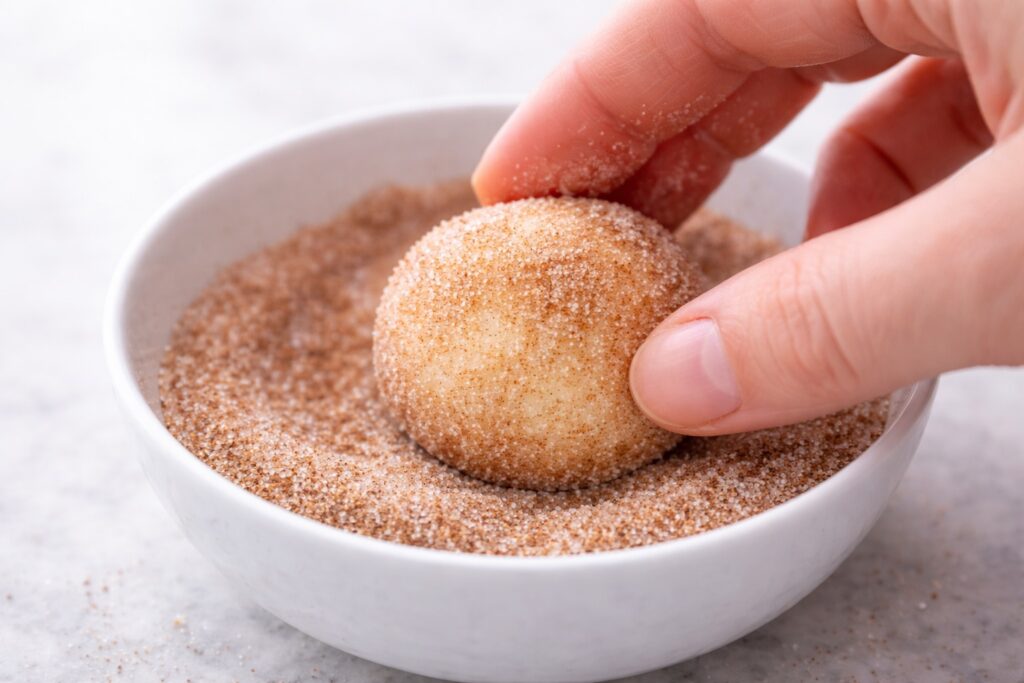
Each dough ball should have an even, sandy-looking coating all around.
A slightly uneven coating is not a problem at all. In fact, it often creates a prettier, more natural crackled finish after baking.
8. Arrange on the baking sheets.
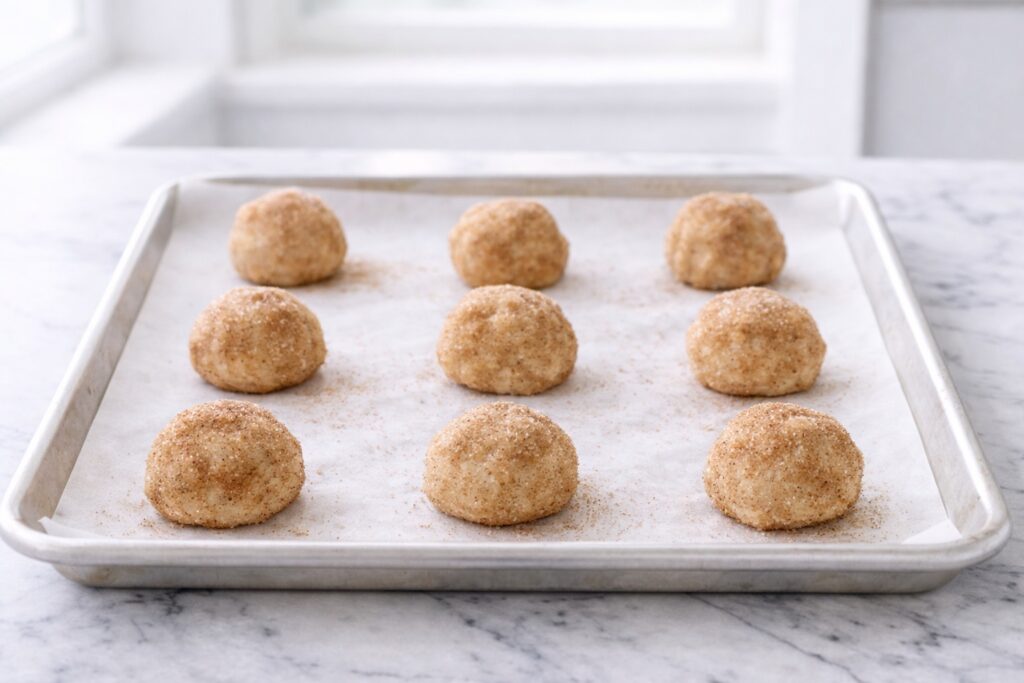
Place the coated dough balls on the prepared baking sheets, leaving about 2 inches between them to allow for spreading.
9. Bake until the edges are set and the centers are still soft.
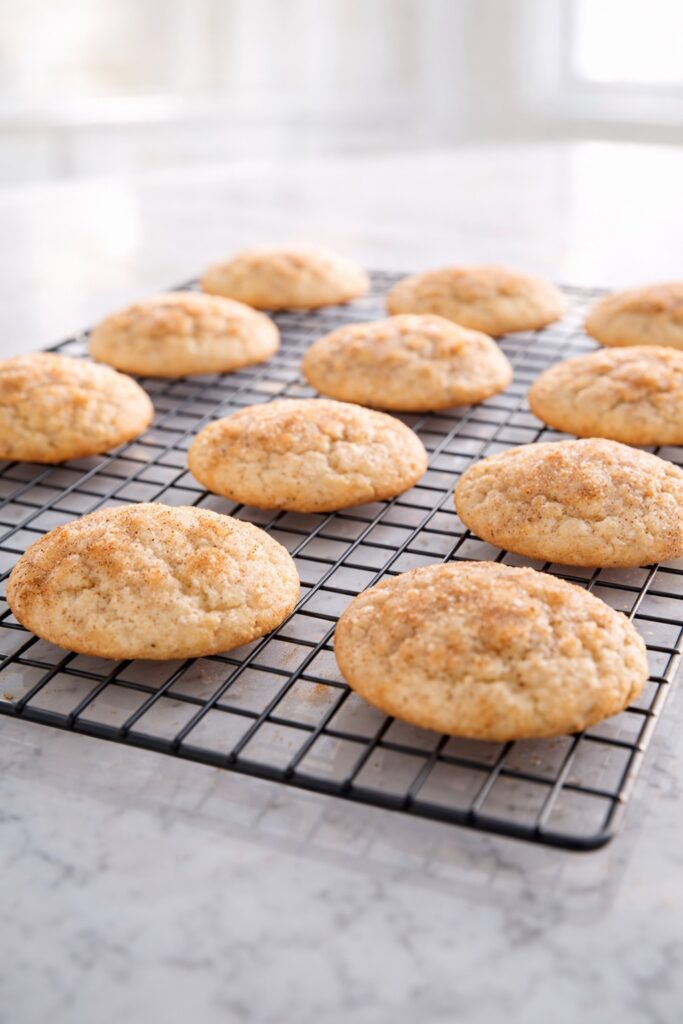
Bake for 9 to 11 minutes, or until the cookies are puffed, lightly crackled, and just beginning to turn golden at the edges.
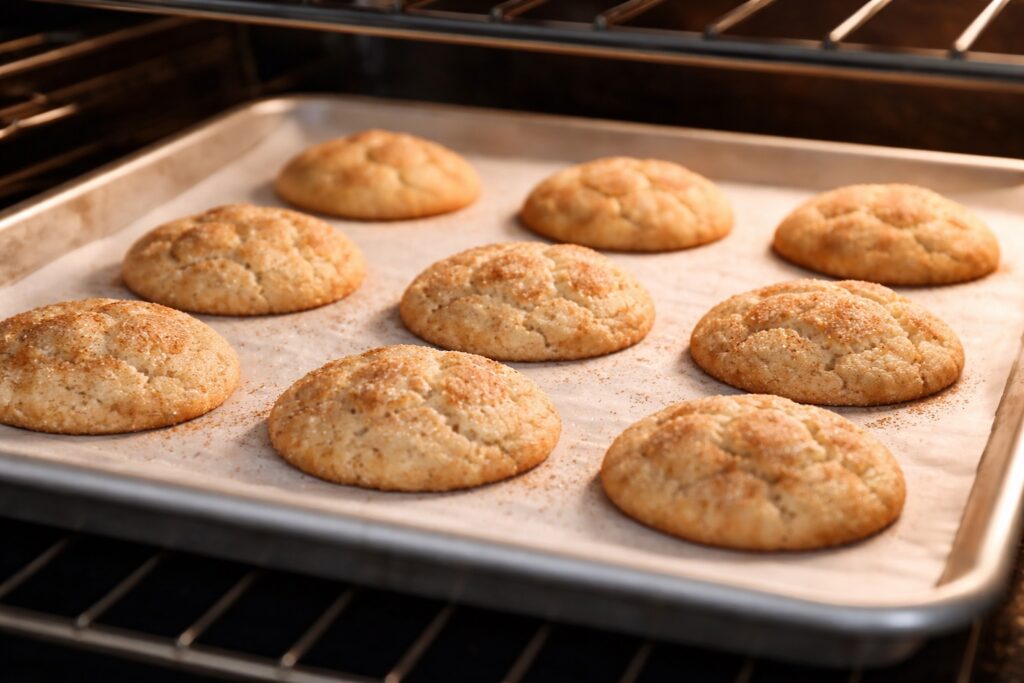
Visual cue: The centers should look set but still soft, not wet, and not fully firm.
Baking tip: Do not wait for deep color. Snickerdoodles are at their best when baked lightly.
Sometimes one batch cracks more beautifully than the other, even when everything is measured the same. Small oven differences or slightly uneven coating can do that, and it is completely normal.
10. Cool on the pan, then transfer.
Let the cookies rest on the baking sheet for 5 minutes before moving them to a wire rack.
Behavior note: They will deflate slightly and finish setting during this time, which helps create that soft center with lightly crisp edges.
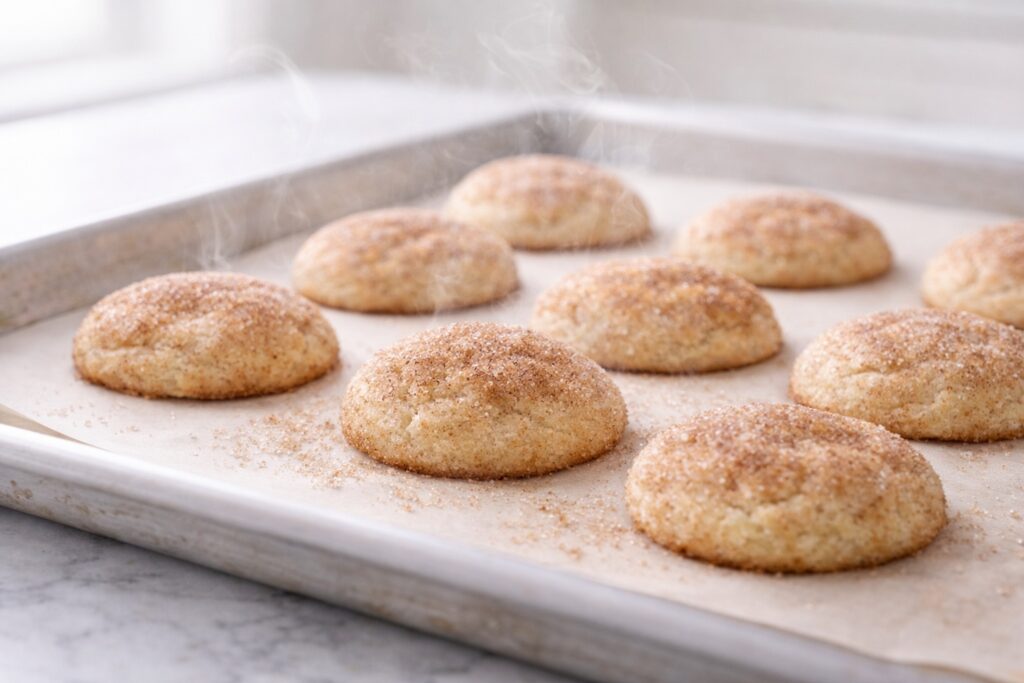
Sometimes one cookie spreads a little more or cracks differently, and that’s part of what makes homemade snickerdoodles feel real.
Visual Doneness Cues
- The edges look lightly set and just barely golden.
- The centers look soft but no longer glossy or wet.
- The tops have formed gentle cracks.
- The cookies puff slightly in the oven, then begin to settle as they cool.
- The cinnamon sugar coating looks dry on the surface, not melted into syrup.
- The bottoms should be pale golden, not deeply browned.
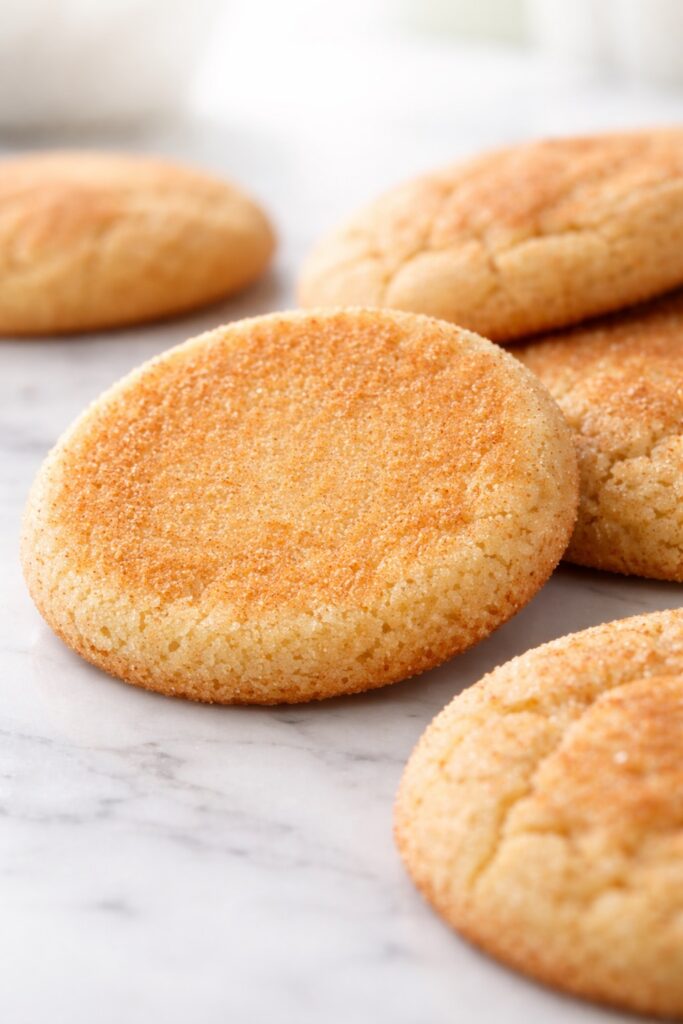
Texture / Behavior Guide
| Stage | What You Should See | What It Means |
|---|---|---|
| Dough | Soft, smooth, thick, easy to roll | The flour-to-fat balance is right |
| Before baking | Round dough balls fully coated in cinnamon sugar | The coating will help create the classic crackled finish |
| Mid-bake | Cookies spread slightly and puff in the center | The leavening is working and structure is forming |
| Done | Edges set, tops crackled, centers still soft | The cookies will finish setting after baking |
| Cooled | Tender center with a lightly crisp edge | Ideal snickerdoodle texture |
Ideal Result
A perfect snickerdoodle should have lightly golden edges, a soft center that gently yields when pressed, and a delicate crackled surface coated in cinnamon sugar. The inside should feel tender and slightly chewy, never dry or crumbly.
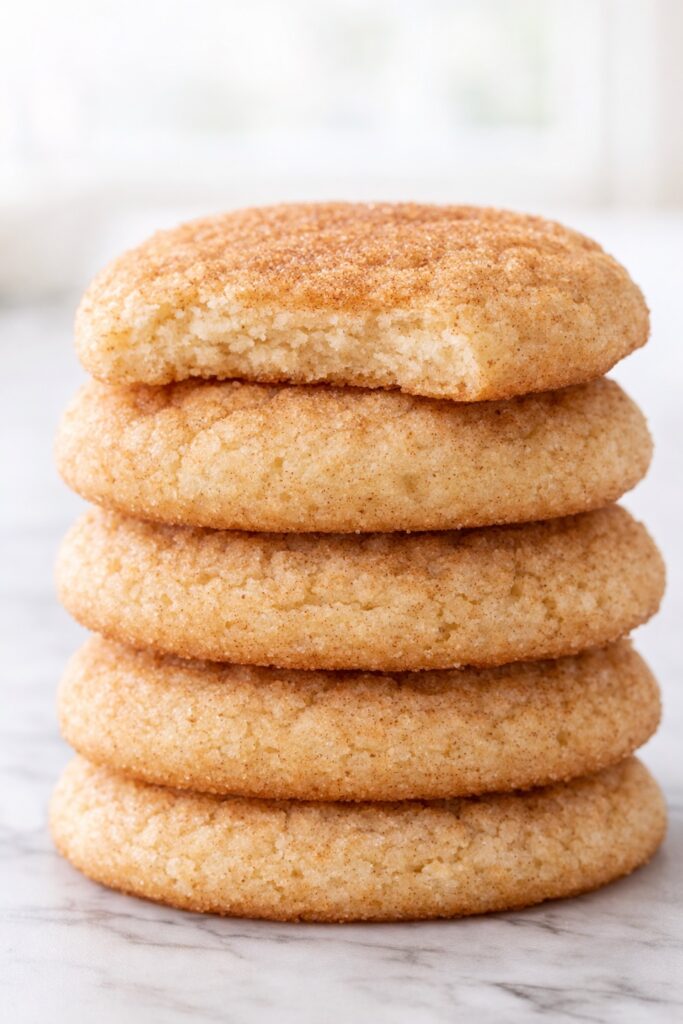
This is the point where the cookie has set just enough to hold its shape, while still staying soft and tender inside.
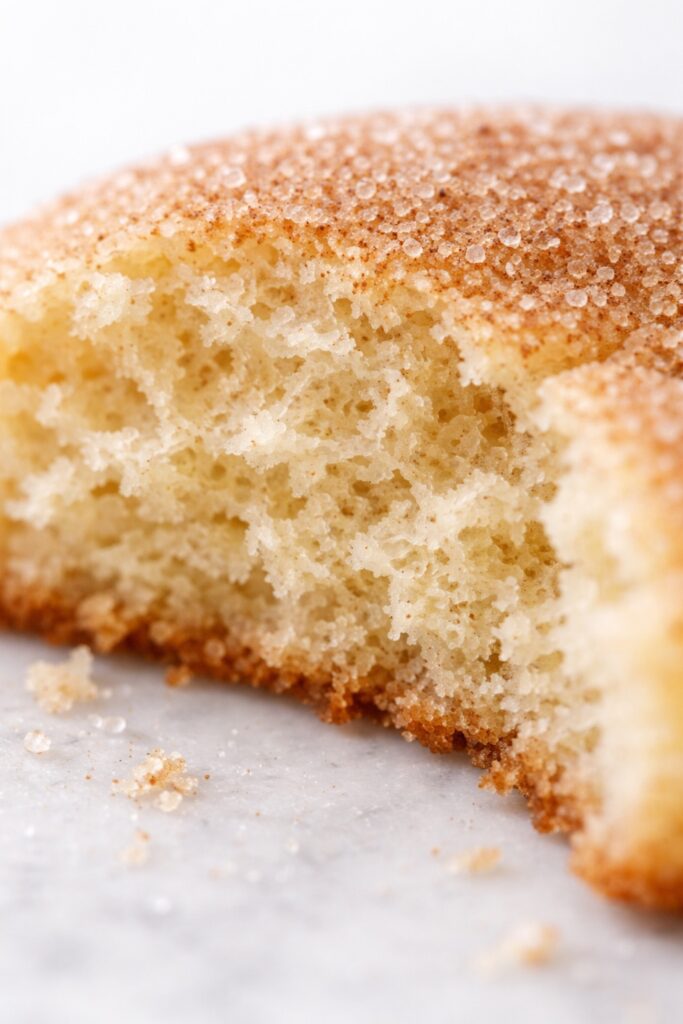
Expert Tips for Best Results
- Use properly softened butter, not melted butter. Soft butter creams with sugar and creates better structure. Melted butter makes the dough looser and the cookies flatter.
- Do not overbake. This is the biggest difference between soft snickerdoodles and dry ones. Pull them when the centers still look slightly soft.
- Measure flour carefully. Too much flour can make the cookies dense and less likely to spread. Spoon and level for best results.
- Roll generously in cinnamon sugar. A full coating creates better flavor, a more attractive finish, and stronger contrast between the outside and center.
- Bake one tray at a time if possible. More even airflow usually gives you more consistent puffing and coloring.
- If the dough feels too warm, let it rest briefly. Ten to fifteen minutes at room temperature or a short chill can help prevent overspreading, especially in a warm kitchen.
- Let the cookies cool on the pan before moving them. This is part of the baking process, not just cooling. The centers finish setting and the crumb becomes more tender.
Common Mistakes
- Using butter that is too warm → The dough becomes too soft, and the cookies spread thin.
Fix: Use softened butter that still feels cool and holds its shape. - Overbaking the cookies → The centers lose softness and the cookies become dry or crumbly.
Fix: Remove them when the edges are set and the centers still look a little soft. - Adding too much flour → The dough becomes stiff, and the cookies bake up thick and dense instead of soft and tender.
Fix: Spoon the flour into the measuring cup and level it instead of scooping directly. - Skipping cream of tartar → The cookies lose their slight tang and classic snickerdoodle identity.
Fix: Use cream of tartar for the most authentic flavor and texture. - Not coating the dough well enough → The finished cookies look plainer and lose some cinnamon-sugar impact.
Fix: Roll each ball thoroughly so the coating covers the whole surface. - Overmixing after adding flour → The cookies can become slightly tougher.
Fix: Mix just until the dough comes together.
Comparison Guide
| Cookie Type | Texture | Flavor | Main Difference |
|---|---|---|---|
| Snickerdoodle Cookies | Soft centers, lightly crisp edges, crackled top | Cinnamon sugar with slight tang | Uses cream of tartar and cinnamon sugar coating |
| Classic Sugar Cookies | Soft or crisp depending on style | Sweet, buttery, neutral | No tang, usually no cinnamon coating |
| Cinnamon Sugar Cookies | Often more straightforward and sweet | Cinnamon-forward | May taste similar, but lack the classic snickerdoodle tang and texture |
How to Serve
Snickerdoodle cookies are irresistible when freshly baked, when the centers are soft and the cinnamon sugar coating is still delicate and fragrant. The contrast between the soft middle and lightly crisp edge is part of what makes them so satisfying.
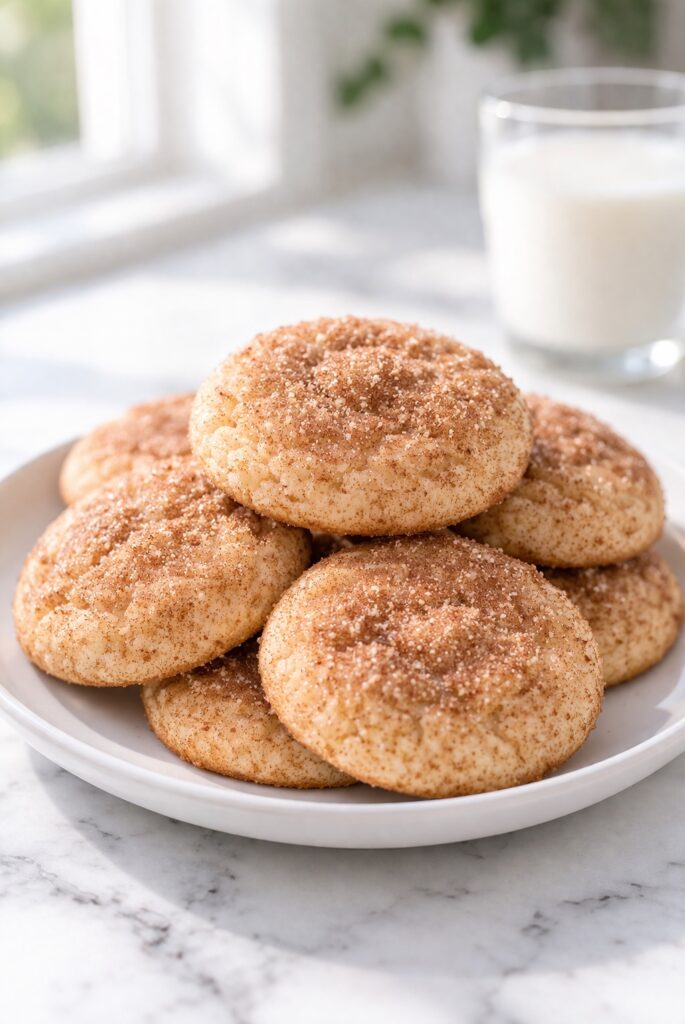
For a cozy everyday treat, serve them with coffee, tea, or a cold glass of milk. For a holiday tray, stack them beside buttery classics like sugar cookies or richer favorites like chocolate chip cookies for a soft, warm contrast. They also make a lovely afternoon bake when you want something simple that still feels nostalgic and special.
They look especially beautiful piled onto a simple plate, with their crackled tops and cinnamon sugar finish still visible from edge to edge.
Save this recipe for fall baking days, Christmas cookie trays, weekend baking with family, or any time you want a classic cookie that always feels warm, familiar, and worth making.
Storage & Make Ahead
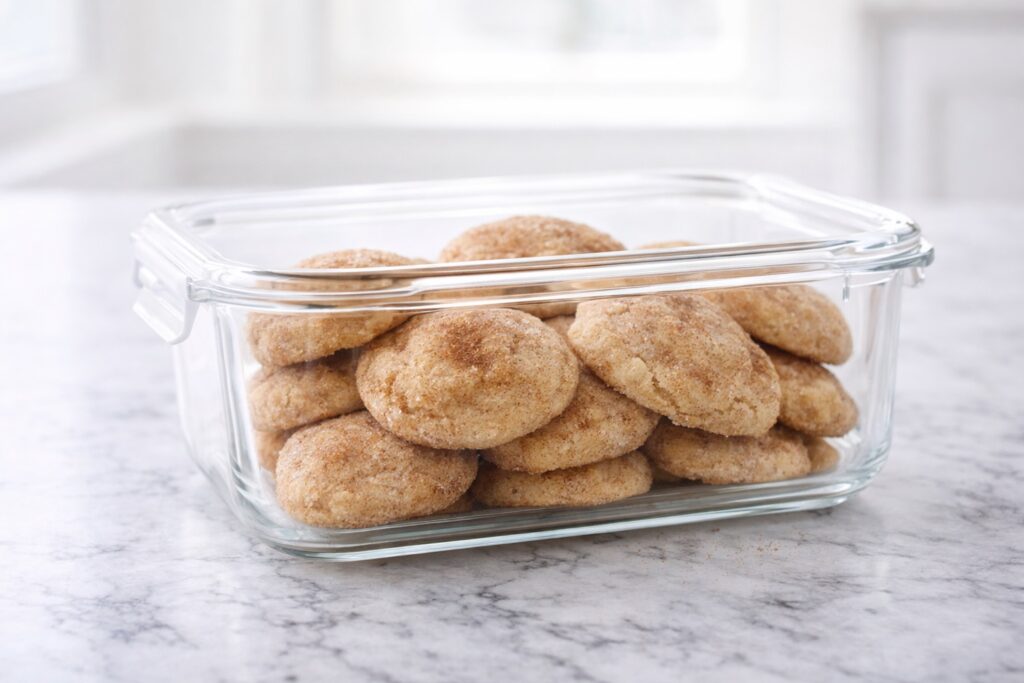
Store snickerdoodle cookies in an airtight container at room temperature for up to 4 days. They stay soft best when kept well sealed.
To make ahead, you can prepare the dough, cover it, and refrigerate it for up to 24 hours. Let it sit just long enough to become scoopable if it firms up too much in the fridge.
You can also freeze the dough balls before baking. Roll them in cinnamon sugar first, then freeze on a tray until firm and transfer to a freezer-safe container. Bake from frozen, adding 1 to 2 extra minutes if needed.
Baked cookies also freeze well for up to 2 months. Let them cool completely before storing.
Variations
- Brown Butter Snickerdoodles: Brown the butter first for a deeper, nuttier flavor. Let it cool before using so the dough does not become too loose.
- Pumpkin Snickerdoodles: Add a small amount of pumpkin puree for a softer, more autumn-inspired version with extra warmth, or try these Pumpkin Snickerdoodle Cookies for a full seasonal version.
- Maple Snickerdoodles: Add a little maple flavor for a cozy seasonal variation that pairs beautifully with cinnamon.
- Mini Snickerdoodles: Make smaller dough balls and reduce the baking time slightly for bite-sized cookies that are perfect for sharing.
- Extra-Spiced Snickerdoodles: Add a pinch of nutmeg or cardamom to the coating for a slightly more layered spice profile.
FAQ
Why are my snickerdoodle cookies flat?
The most common reason is butter that was too warm or dough that became too soft before baking. Too little flour can also cause excess spreading.
Do snickerdoodles need cream of tartar?
For classic snickerdoodle flavor and texture, yes. Cream of tartar gives them their slight tang and helps create the traditional soft, tender bite.
Can I make snickerdoodle cookies without chilling the dough?
Yes. This dough usually does not require chilling unless your kitchen is very warm or the dough feels overly soft after mixing.
How do I keep snickerdoodles soft?
Do not overbake them, and store them in an airtight container once fully cooled. Pulling them from the oven while the centers are still slightly soft helps a lot.
Why didn’t my cookies crack on top?
If the dough was too dry, overmixed, or not rolled well in cinnamon sugar, the crackled finish may be less visible. Slight puffing and proper spread help create those classic cracks.
Can I freeze snickerdoodle cookie dough?
Yes. Freeze the shaped dough balls and bake them straight from frozen when needed.
Are snickerdoodles supposed to be chewy or soft?
They are usually soft with lightly crisp edges and a tender, slightly chewy center. That balance is part of what makes them so appealing.
More Cookie Recipes You’ll Love
Quick picks: If you want something closest in cozy homemade feel, try the Sugar Cookie Recipe. For another soft cookie with warm spice and classic bakery-style comfort, go for Pumpkin Snickerdoodle Cookies.
If you enjoy soft, classic cookies like these snickerdoodle cookies, there are plenty of other homemade favorites worth keeping in your baking rotation. Some lean more buttery, some more chewy, and some bring a deeper spiced or chocolate-rich finish, but they all share that same cozy, familiar feel that makes homemade cookies so easy to come back to.
Classic Homemade Cookie Favorites
- Sugar Cookie Recipe – soft, buttery, simple cookies with a classic homemade flavor
- Shortbread Cookie Recipe – rich, tender cookies with a more delicate buttery crumb
- Peanut Butter Cookies – soft, rich cookies with a lightly crumbly bite
- Thumbprint Cookies – soft cookies with a sweet jam center and classic bakery charm
Soft & Chewy Cookie Recipes
- Chocolate Chip Cookie Recipe – classic cookies with soft centers, golden edges, and gooey chocolate
- Oatmeal Chocolate Chip Cookies – chewy, cozy cookies with hearty texture and melty chocolate
- Oatmeal Cookie Recipe – simple homemade cookies with a soft, classic oat texture
- Oatmeal Raisin Cookie Recipe – a more traditional chewy cookie with warm, old-fashioned flavor
Cinnamon, Spice & Holiday-Style Cookies
- Pumpkin Snickerdoodle Cookies – a softer, more autumn-inspired version with extra moisture and warm spice
- Molasses Cookies – soft, richly spiced cookies with a deeper flavor
- Gingerbread Cookie Recipe – classic holiday cookies with bold spice and a cozy finish
- Pumpkin Spice Cookies – soft seasonal cookies with a warm fall flavor profile
Rich & More Indulgent Cookie Variations
- Brownie Cookies – fudgy cookies with a rich chocolate center
- Chocolate Crinkle Cookies – soft chocolate cookies with crackled tops and a dramatic finish
- Hot Chocolate Cookies – rich, soft cookies with a deep cocoa flavor
- White Chocolate Chip Cookies – softer, sweeter cookies with a creamy finish
Each of these cookie recipes brings a slightly different texture, flavor, or level of richness, but they all follow the same idea: simple ingredients, reliable results, and that warm homemade feel that makes a good cookie recipe worth baking again and again.
This kind of variety is what makes a strong cookie rotation: a mix of textures, flavors, and styles that still feel familiar and easy to come back to.
Recipe Summary
Snickerdoodle cookies are soft, cinnamon-sugar-coated cookies with crackled tops, lightly crisp edges, and tender centers. What makes them special is the cream of tartar, which gives them their slight tang and helps create the classic snickerdoodle texture.
This recipe keeps everything simple while still giving you the details that matter: a soft but sturdy dough, balanced spread, warm cinnamon sugar flavor, and visual cues that help you know exactly when the cookies are done. The result is a dependable homemade snickerdoodle cookie recipe that feels timeless, comforting, and easy to make again and again.
Final Thoughts
Snickerdoodle cookies are one of those recipes that quietly earn their place in a kitchen for years. They are simple enough for everyday baking, but satisfying enough to feel special every single time.
What makes them so lasting is not just the cinnamon sugar or the soft center, but the way they deliver comfort so effortlessly. They smell warm before they taste warm. They look familiar before you even reach for one. And once you understand the little details, like when the center is just set or how the dough should feel in your hands, they become the kind of recipe you can trust.
Sometimes they spread a little more, sometimes they crack a little deeper, but that slightly imperfect look is part of what makes homemade snickerdoodles feel real and worth making again.
That is the beauty of a really good snickerdoodle. It does not need much to be memorable. It just needs the right balance, a little care, and the kind of warmth people always come back to.
Snickerdoodle Cookies Recipe (Soft & Chewy Cinnamon Sugar Cookies)
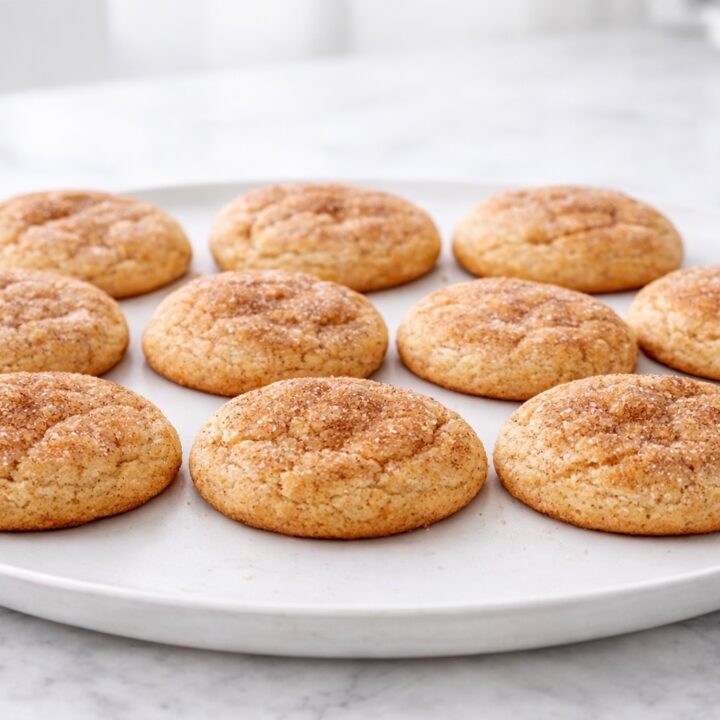
These snickerdoodle cookies are soft, chewy, and coated in cinnamon sugar with crackled tops and a warm, classic flavor. This easy homemade snickerdoodle recipe creates tender cookies with lightly crisp edges and soft centers, made with simple pantry ingredients and ready in about 25 minutes.
Ingredients
For the Cookies:
- 2 3/4 cups all-purpose flour
- 2 teaspoons cream of tartar
- 1 teaspoon baking soda
- 1/2 teaspoon salt
- 1 cup unsalted butter, softened
- 1 1/2 cups granulated sugar
- 2 large eggs
- 2 teaspoons vanilla extract
For the Cinnamon Sugar Coating:
- 1/4 cup granulated sugar
- 1 1/2 tablespoons ground cinnamon
Instructions
- Preheat the oven to 350°F (180°C) and line two baking sheets with parchment paper.
- In a medium bowl, whisk together the flour, cream of tartar, baking soda, and salt.
- In a large mixing bowl, beat the softened butter and 1 1/2 cups sugar until light and fluffy, about 2–3 minutes.
- Add the eggs one at a time, mixing well after each addition. Stir in the vanilla extract.
- Gradually add the dry ingredients to the wet mixture and mix just until combined. Do not overmix.
- In a small bowl, combine the cinnamon and 1/4 cup sugar.
- Scoop the dough into balls (about 1 1/2 tablespoons each) and roll each one in the cinnamon sugar mixture.
- Place the dough balls on the prepared baking sheets, leaving about 2 inches between them.
- Bake for 9–11 minutes, until the edges are set and lightly golden while the centers remain soft.
- Let the cookies cool on the baking sheet for 5 minutes, then transfer to a wire rack to cool completely.
Notes
- Use properly softened butter, not melted, for the best texture.
- Do not overbake — slightly soft centers create the perfect chewy texture.
- If the dough feels too soft, let it rest for 10–15 minutes before baking.
- Cream of tartar gives snickerdoodles their signature tang and soft texture.
Nutrition Information:
Yield: 24 cookies Serving Size: 1 cookieAmount Per Serving: Calories: 150Total Fat: 7gSaturated Fat: 4gSodium: 80mgCarbohydrates: 20gSugar: 12gProtein: 2g
Nutrition information is estimated and may vary depending on ingredient brands and portion sizes.
12 Sweet Favorites — Yours, Free 🍰
Tiramisù, no-bake cheesecake, the perfect chocolate chip cookie & 9 more reader-loved desserts — gathered into one beautiful free recipe book. From my kitchen to yours.
No spam, just sweet things. Unsubscribe anytime.