Shortbread Cookie Recipe
🎁 FREE E-BOOK: 12 Sweet Favorites — reader-loved desserts in one beautiful recipe book.
Shortbread cookies are classic buttery cookies made with a simple combination of butter, sugar, and flour. This classic shortbread cookie recipe creates tender, melt-in-your-mouth cookies with a delicate crumb and rich buttery flavor. Known for their simple ingredients and elegant texture, homemade shortbread cookies are one of the most timeless cookie recipes in traditional baking.
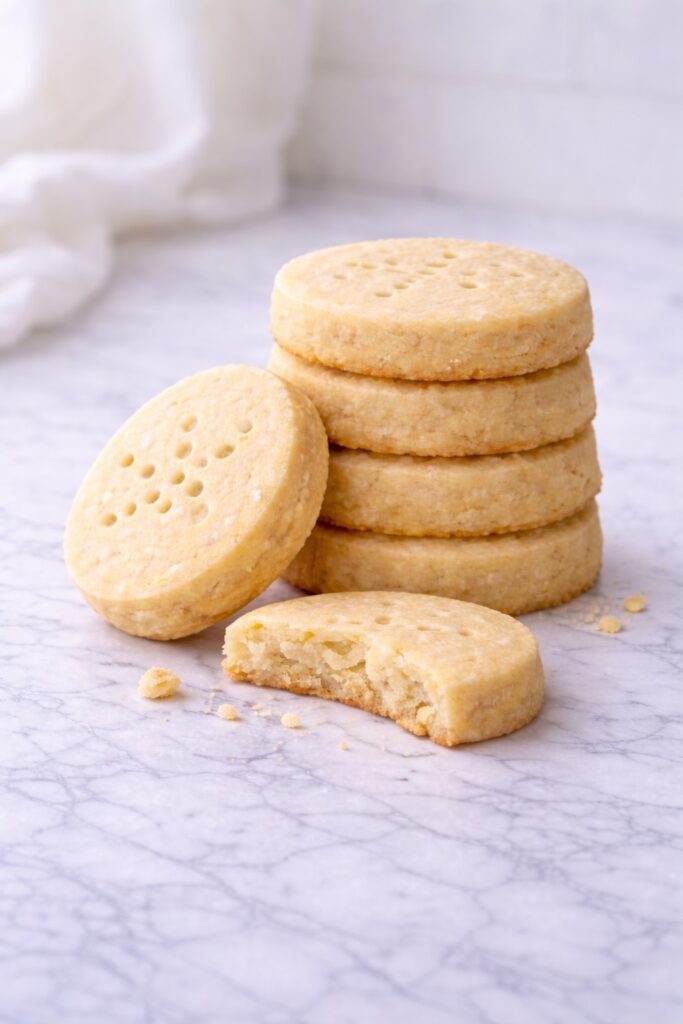
Few cookies capture the beauty of simple baking quite like classic shortbread. As the butter blends gently with sugar and flour, the dough forms a soft, delicate texture that feels almost silky. While the cookies bake, the kitchen slowly fills with the warm aroma of butter and toasted flour, creating that unmistakable cozy scent of homemade baking.
Shortbread cookies are a reminder that the most comforting desserts often come from the simplest ingredients. With just a few pantry staples and a little patience, you can create cookies that feel both elegant and nostalgic. Their delicate crumb and rich buttery flavor make them perfect for afternoon tea, holiday cookie trays, or quiet moments when you want something simple and homemade.
This easy homemade shortbread cookie recipe follows the traditional butter-forward method used in classic shortbread baking. By balancing butter, sugar, and flour, the cookies bake into delicate buttery bites with lightly crisp edges and soft, melt-in-your-mouth centers.
This easy shortbread cookie recipe is perfect for beginner bakers and anyone who loves classic buttery cookies.
If you enjoy classic buttery cookies, you may also love these Thumbprint Cookies, which feature a tender cookie base filled with sweet jam.
Quick Summary
Here is a quick overview of what makes this shortbread cookie recipe so simple and reliable.
- Texture: delicate crumb with lightly crisp edges
- Flavor: rich buttery flavor with subtle vanilla
- Difficulty: easy
- Prep Time: 15 minutes
- Chill Time: 30 minutes
- Bake Time: 12–15 minutes
- Total Time: about 1 hour
- Best For: holiday cookie trays, afternoon tea, everyday baking
Why You’ll Love This Shortbread Cookie Recipe
- Classic buttery flavor that never goes out of style
- Made with only a few simple baking ingredients
- Melt-in-your-mouth texture with delicate crumb
- Easy to customize with chocolate, citrus, or spices
- Perfect for holiday cookie trays, tea time, or everyday baking
Ingredients
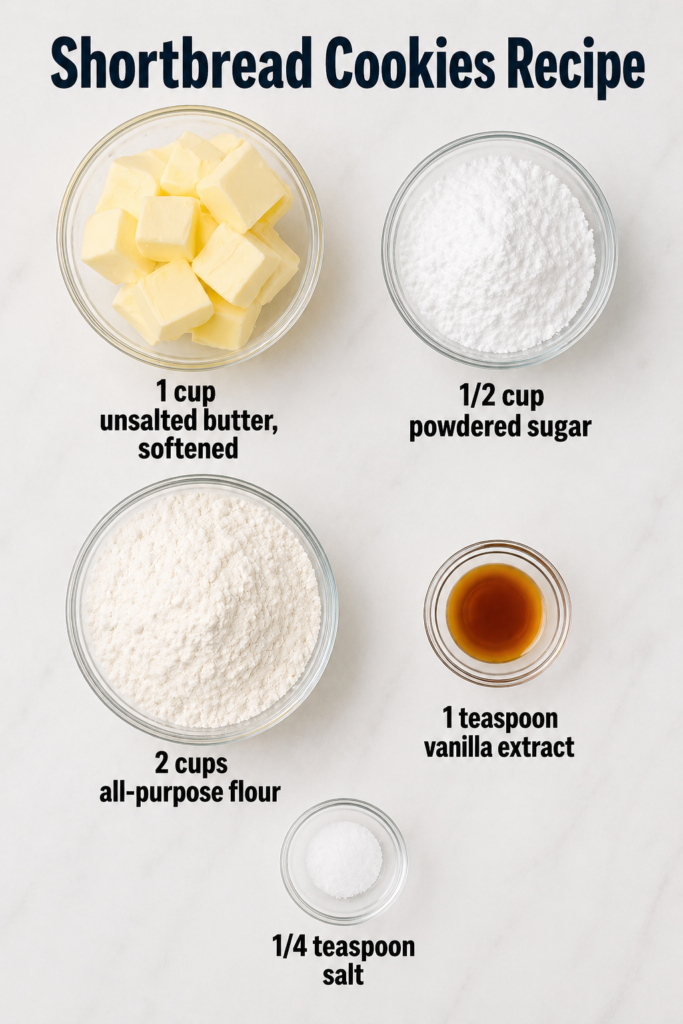
To make these classic shortbread cookies, you only need a few simple baking ingredients that come together to create their rich buttery flavor and delicate crumb.
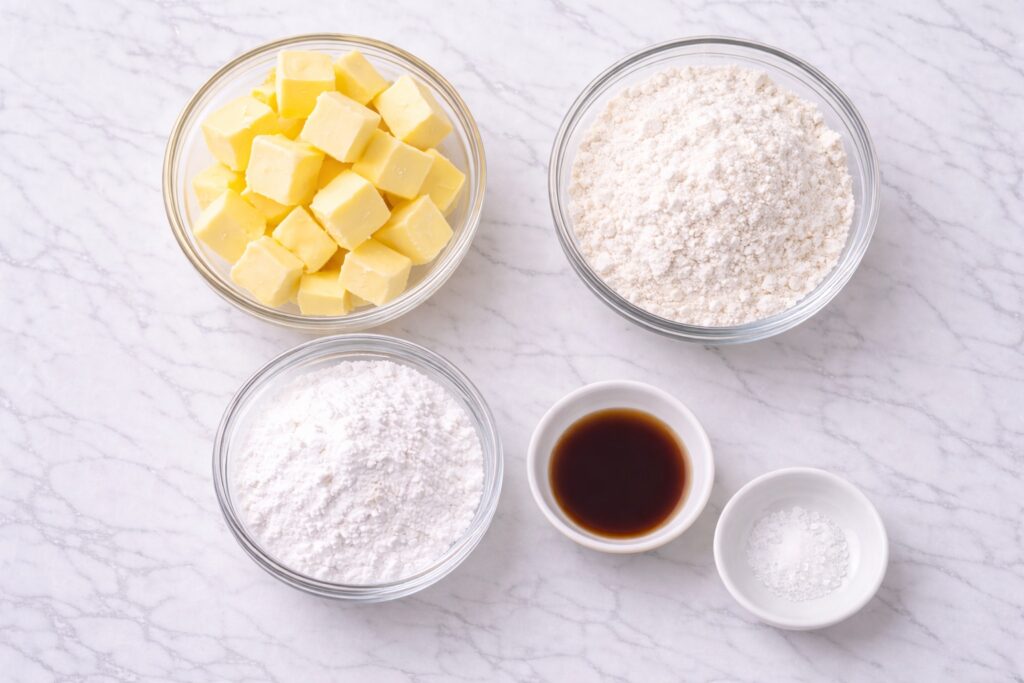
- 1 cup unsalted butter, softened
- ½ cup powdered sugar
- 2 cups all-purpose flour
- 1 teaspoon vanilla extract
- ¼ teaspoon salt
Ingredient Notes for Shortbread Cookies
Unsalted Butter
Butter is the most important ingredient in shortbread cookies. Because shortbread contains very few ingredients, the quality of the butter in baking has a significant impact on the final flavor.
Softened butter creams smoothly with the sugar and helps create the tender crumb that defines classic shortbread cookies.
Why Butter Quality Matters in Shortbread
Because shortbread cookies contain so few ingredients, butter plays a central role in the final flavor.
High-quality butter produces richer, more aromatic cookies with deeper flavor. European-style butter, which contains slightly more butterfat, can create an even more tender and flavorful shortbread.
Since butter is the primary flavor in this recipe, using good-quality butter can make a noticeable difference in the final cookies.
Powdered Sugar
Powdered sugar dissolves easily into the butter and creates a finer, more delicate crumb. This is one of the secrets behind the soft, melt-in-your-mouth texture that makes shortbread cookies so distinctive.
All-Purpose Flour
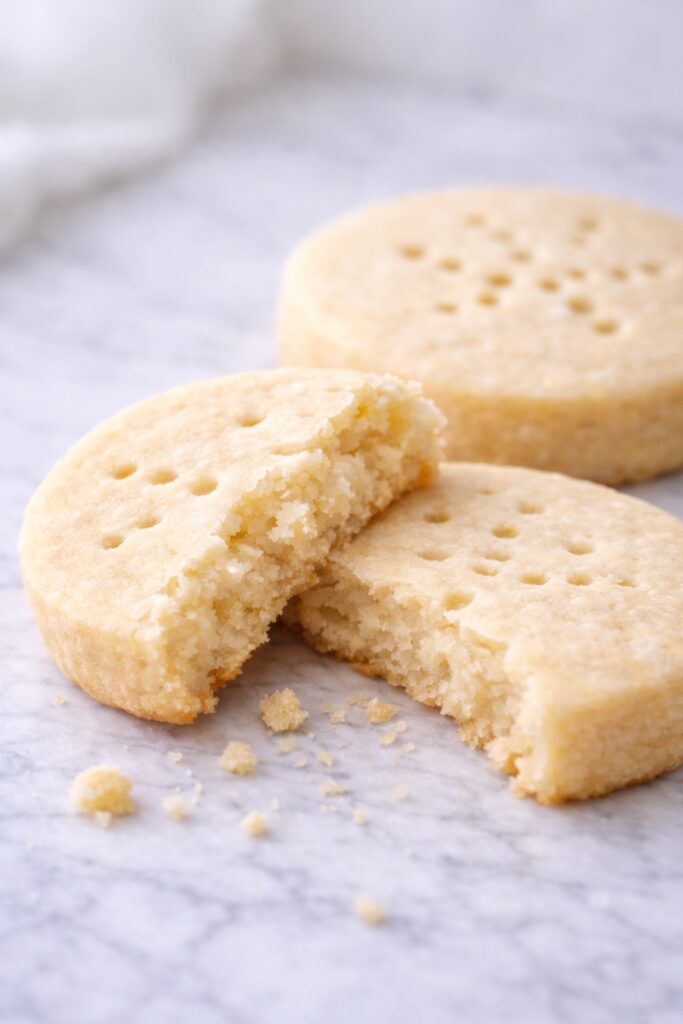
All-purpose flour provides the structure for the cookies while still keeping them tender. Because shortbread dough contains a high ratio of butter, gluten development remains limited, resulting in a soft and crumbly texture.
Vanilla Extract
Vanilla extract enhances the buttery flavor and adds warmth to the cookies. While traditional Scottish shortbread sometimes omits vanilla, many modern recipes include it for deeper flavor.
Salt
A small amount of salt balances the sweetness and enhances the rich butter flavor.
Ingredient Substitutions
Shortbread cookies are simple, but small ingredient adjustments can work well.
Butter
Unsalted butter is recommended so you can control the salt level. If using salted butter, reduce the added salt slightly.
Powdered Sugar
Powdered sugar creates the most delicate crumb. Granulated sugar can be used, but the cookies will have a slightly firmer texture.
Vanilla Extract
Vanilla adds warmth and depth to the flavor but can be omitted for a more traditional shortbread.
Flour
All-purpose flour works best for classic shortbread. Cake flour can create an even softer crumb but may make the dough slightly more delicate.
How the Shortbread Dough Should Look
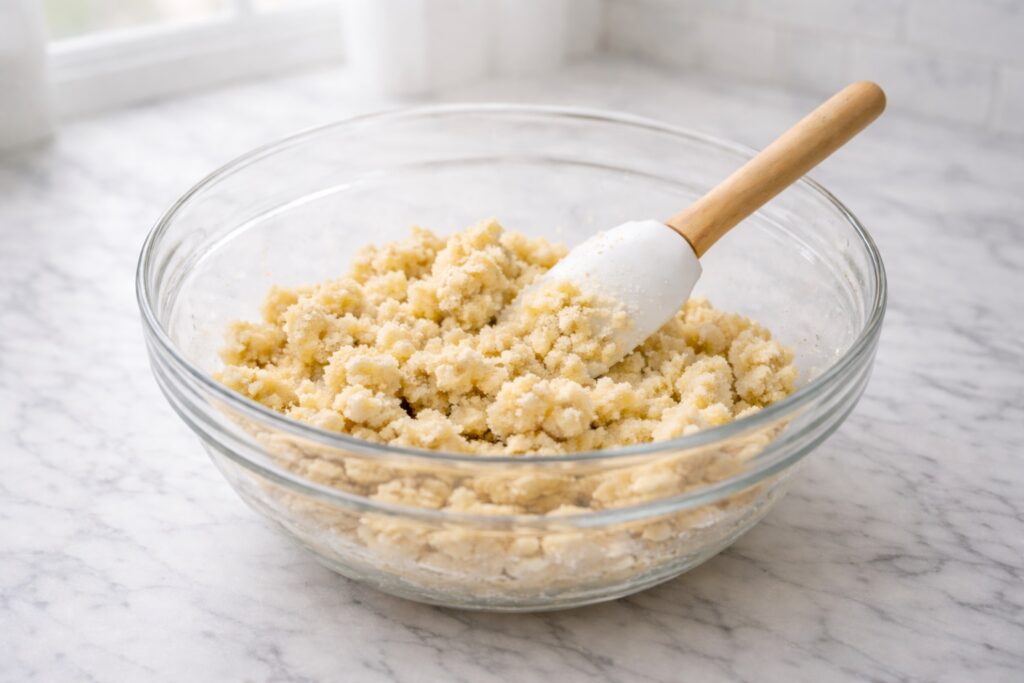
The shortbread dough should look soft, smooth, and slightly crumbly when properly mixed, which is the key texture for classic shortbread cookies.
After the butter and powdered sugar are creamed together, the mixture becomes light and creamy. Once the flour is added, the dough will begin to form a soft, buttery mixture that holds together when pressed.
The dough should not feel sticky or wet. Instead, it should feel soft and slightly sandy because of the high butter content.
When pressed gently between your fingers, the dough should hold its shape without cracking apart. This texture helps create shortbread cookies with their signature delicate crumb and tender, melt-in-your-mouth texture.
Kitchen Tools You’ll Need
You only need a few basic kitchen tools to prepare these classic shortbread cookies, making this recipe simple and accessible for any home baker.
Most of these kitchen tools are standard baking equipment that many home bakers already have in their kitchens.
- Mixing bowl
- Electric mixer or wooden spoon
- Rubber spatula
- Baking sheet
- Parchment paper
- Cookie cutter or knife
- Wire cooling rack
How to Make Shortbread Cookies
Making these classic shortbread cookies is simple and requires just a few easy steps. Follow the process below to create buttery cookies with a delicate crumb and rich flavor.
1. Cream the butter and sugar
In a mixing bowl, beat the softened butter and powdered sugar until smooth and creamy.
2. Add vanilla
Mix in the vanilla extract until fully incorporated.
3. Add dry ingredients
Add the flour and salt and mix until a soft dough forms.
4. Chill the dough
Shape the dough into a disk, wrap it, and chill for about 30 minutes.
5. Roll and cut the cookies
Roll the dough to about ¼-inch thickness and cut into cookies using a cookie cutter or knife.
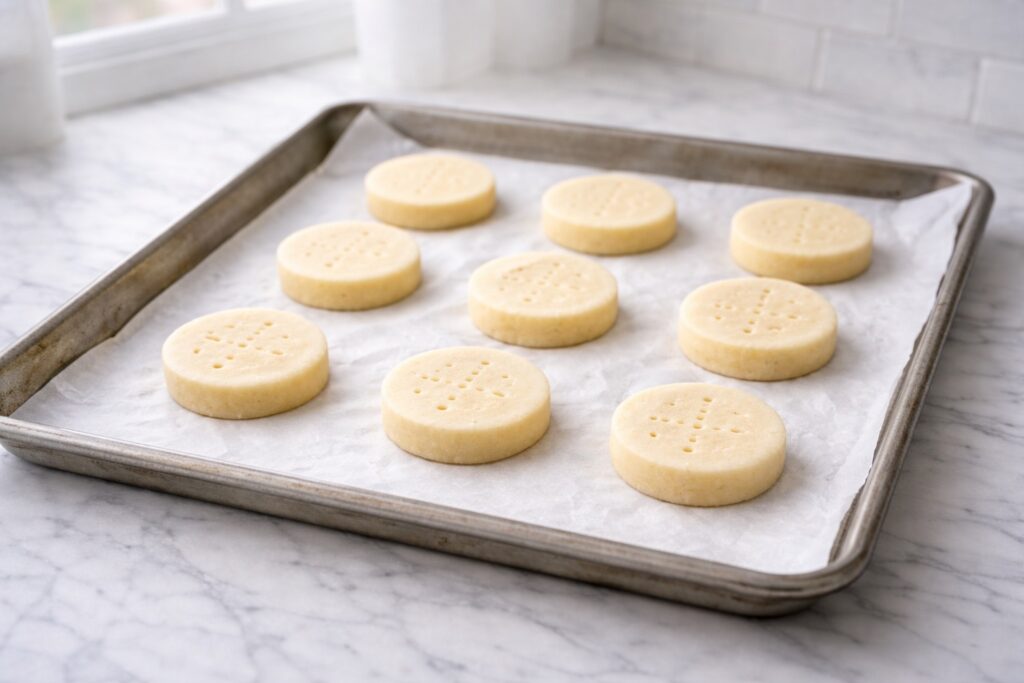
6. Prepare for baking
Place the cookies on a parchment-lined baking sheet.
7. Bake
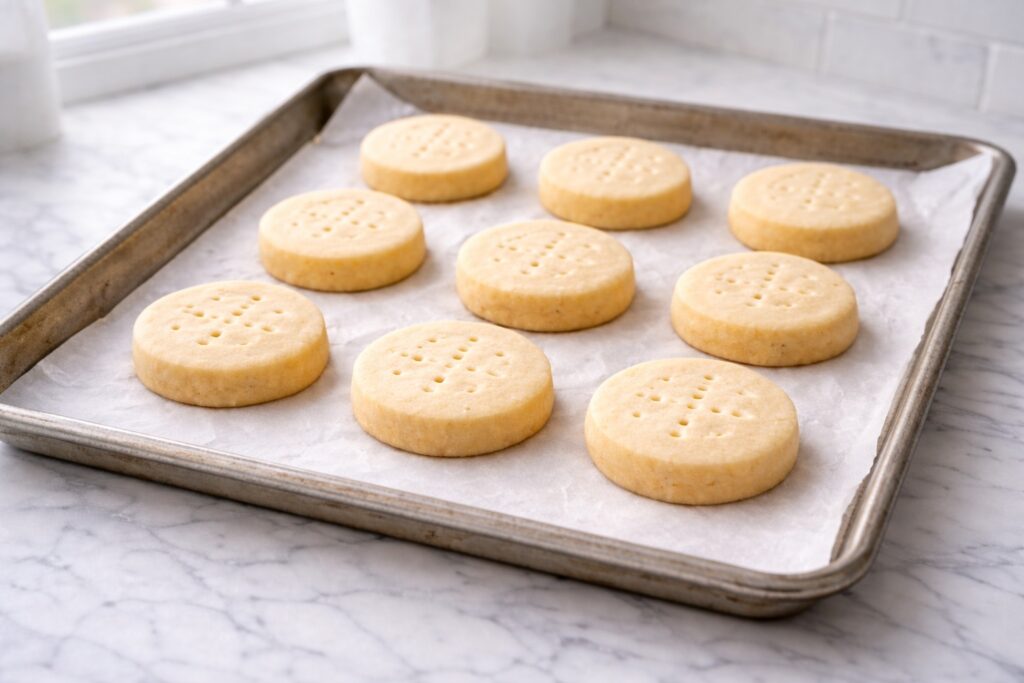
Bake at 325°F (160°C) for 12–15 minutes, until the edges are lightly golden.
8. Cool
Allow the cookies to cool on a wire rack before serving.
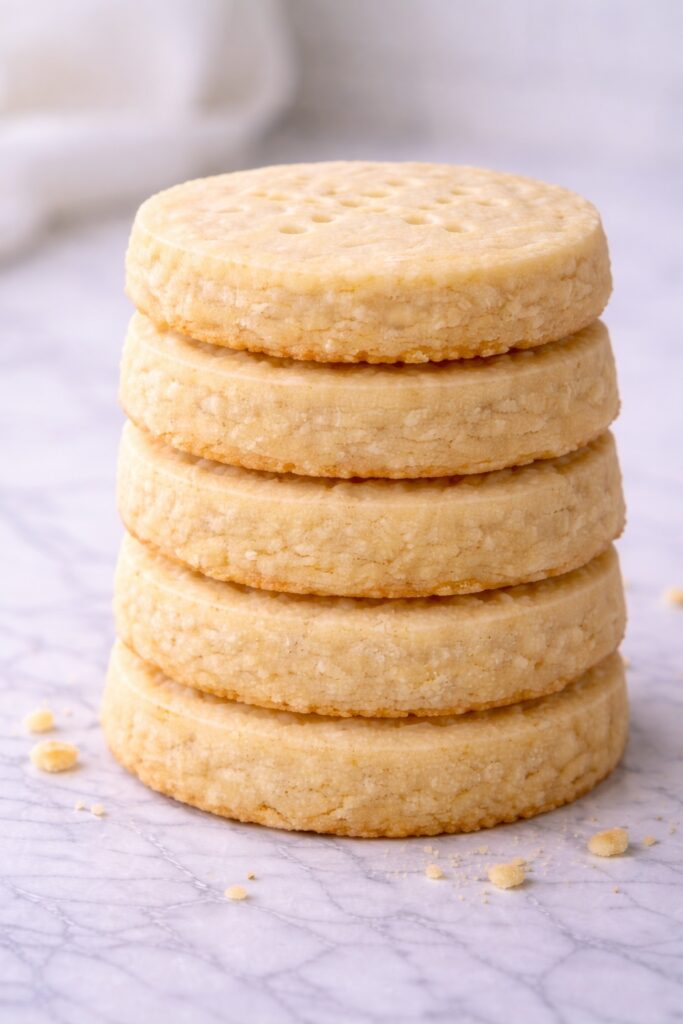
Once baked, these shortbread cookies should have lightly golden edges and a delicate buttery aroma. The simple baking process is part of what makes shortbread such a timeless and reliable cookie recipe.
Baking Science: Why Shortbread Cookies Are So Tender
Shortbread cookies rely on a unique balance of butter, sugar, and flour. Unlike many cookie recipes, traditional shortbread does not contain eggs or chemical leavening agents such as baking powder or baking soda.
The texture comes from the high butter ratio, which coats the flour particles and limits gluten development. When gluten formation is reduced, the cookies develop a tender, delicate crumb instead of a chewy structure.
Powdered sugar also contributes to the soft texture because it dissolves easily into the butter, helping create a smoother dough.
Baking the cookies at a slightly lower temperature allows the butter-rich dough to set gently. This helps maintain the pale color and delicate crumb that define classic shortbread.
Shortbread Texture Guide
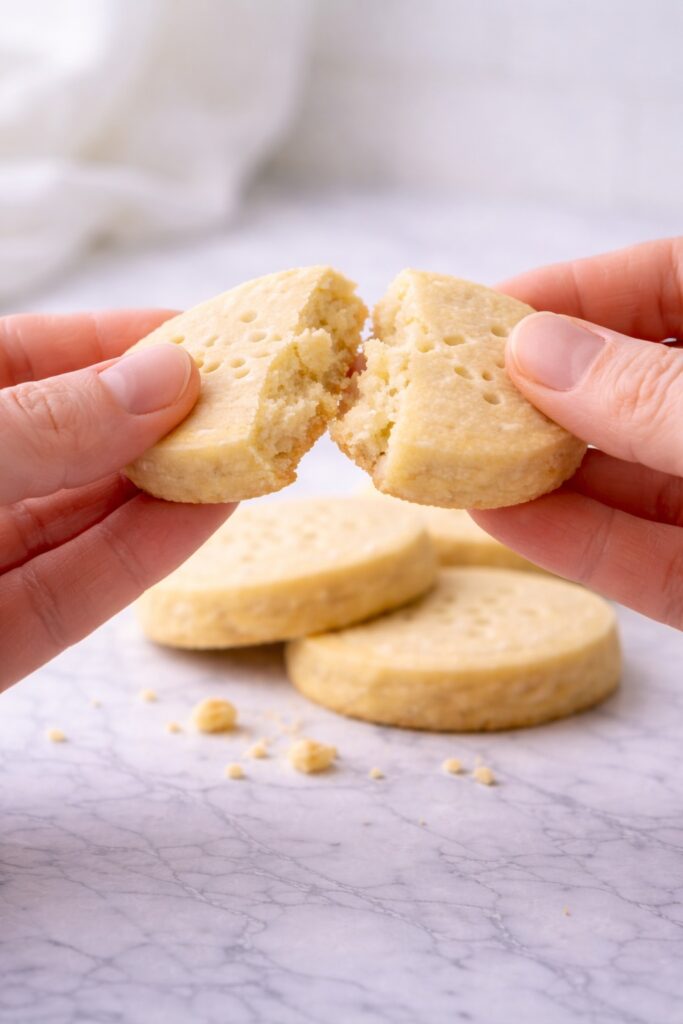
Classic shortbread cookies are known for their distinctive delicate texture. Depending on the ratio of butter, sugar, and flour, shortbread cookies can develop slightly different textures.
Traditional Shortbread
Traditional shortbread has a delicate crumb and a smooth buttery texture. The cookies are slightly crisp on the edges but soft and tender in the center.
Crisp Shortbread
Shortbread baked slightly longer develops a firmer texture with more crisp edges. This style is common in classic Scottish shortbread fingers.
Soft Shortbread
Shortbread made with powdered sugar tends to have a softer, melt-in-your-mouth texture because the sugar dissolves more easily into the butter.
This recipe produces a classic tender shortbread cookie with lightly crisp edges and a delicate buttery crumb.
Texture: What These Shortbread Cookies Taste Like
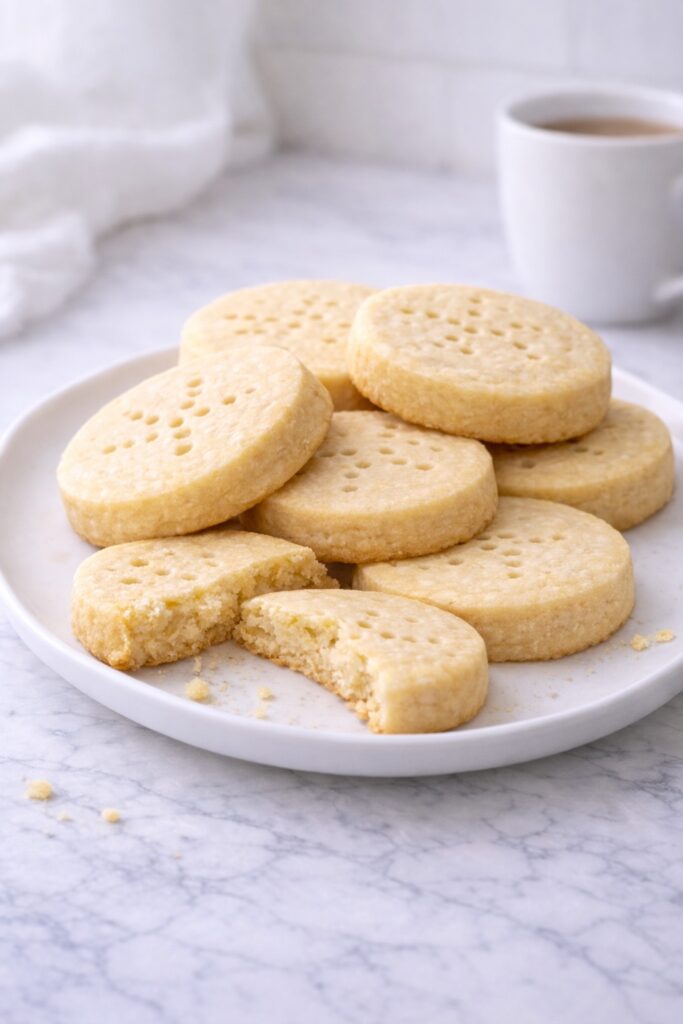
These shortbread cookies have a delicate crumb and a rich buttery flavor that melts in your mouth. The edges bake into a light golden crisp while the centers remain soft and tender.
Because the dough contains a high ratio of butter, the cookies develop their signature shortbread texture: slightly crumbly, smooth, and incredibly buttery without feeling heavy.
This balance between delicate crumb and buttery richness is what makes traditional shortbread cookies so timeless.
Each bite feels simple, balanced, and comforting, exactly the kind of cookie that pairs perfectly with tea, coffee, or a quiet moment of homemade baking.
Common Mistakes to Avoid When Making Shortbread
Using butter that is too soft
Butter should be softened but still slightly firm. If it becomes too soft or melted, the dough may become greasy and the cookies may spread too much.
Skipping the chilling step
Chilling the dough solidifies the butter and helps the cookies maintain their shape during baking.
Overmixing the dough
Once the flour is added, mix only until the dough comes together. Overmixing can develop gluten and make the cookies tougher.
Baking at too high a temperature
Shortbread benefits from a lower baking temperature, which helps preserve its delicate texture.
Expert Baking Tips for Perfect Shortbread
- Use high-quality butter for the best flavor.
- Measure flour carefully using the spoon-and-level method to avoid adding too much flour.
- If the dough becomes too soft while rolling, chill it briefly before continuing.
- For a traditional look, prick the cookies lightly with a fork before baking.
Flavor Variations
Shortbread is wonderfully adaptable, and a few simple additions can create new flavors while keeping the classic buttery texture.
Lemon Shortbread
Add 1 tablespoon lemon zest to the dough.
Chocolate Dipped Shortbread
Dip cooled cookies in melted chocolate.
Almond Shortbread
Add ½ teaspoon almond extract.
Holiday Shortbread
Sprinkle coarse sugar on top before baking.
How to Decorate Shortbread Cookies for Halloween
Buttery shortbread cookies make a beautiful base for bright orange jack-o’-lanterns, white ghosts, and little black bats. To recreate the designs shown here, use a thin layer of vanilla royal icing, leaving a narrow golden cookie border visible around each shape.
The pumpkins get their rounded ridges from icing separate sections in stages. The ghosts have smooth white bodies and raised black faces, while the bats are finished with tiny white eyes.

Halloween Decorating Ingredients and Tools
For the vanilla royal icing:
- 4 cups (approximately 450 g) powdered sugar, sifted
- 3 tablespoons meringue powder, measured according to the package
- 5 tablespoons (75 ml) warm water, plus additional water for adjusting consistency
- 1 teaspoon (5 ml) clear, non-oil-based vanilla flavoring
- Orange, black, and leaf-green gel food coloring
This makes approximately 3 cups of icing, enough for roughly 20–24 medium cookies, depending on their size and the thickness of the decoration.
You will also need:
- Completely cooled shortbread cookies
- Pumpkin and ghost cutters approximately 3 inches (7.5 cm) tall or wide
- A small bat cutter approximately 2–2½ inches (5–6 cm) wide
- A round cutter for the simpler jack-o’-lantern designs
- Small piping bags
- Small round piping tips, such as #1 or #2 for details and #3 for filling
- A cookie scribe or clean toothpicks
- A small offset spatula
Ingredient note: Although the shortbread dough contains no eggs, traditional meringue powder contains egg whites. Cookies decorated with this icing are therefore no longer egg-free.
Prepare the Cookies and Royal Icing
- Cut clean, even shapes. Prepare the shortbread dough as directed and roll it to ¼-inch thickness. Cut pumpkins, ghosts, bats, and a few rounds. Leave the tops smooth rather than adding fork marks.
- Chill the cutouts. Arrange the cookies on parchment-lined baking sheets and refrigerate for 15–20 minutes before baking. This additional chill helps preserve the pumpkin stems, ghost arms, and pointed bat wings.
- Bake and cool completely. Bake as directed in the main recipe, checking small bats before larger cookies. Look for set centers and lightly golden edges. Let the cookies cool fully before decorating, and gently brush away loose crumbs.
- Mix the royal icing. Using a clean, grease-free bowl and paddle attachment, combine the powdered sugar, meringue powder, water, and vanilla. Mix on low speed until thick, smooth, and able to hold peaks, approximately 7–10 minutes with a stand mixer.
- Divide and color. Set aside approximately 45% of the icing for orange, 30% for white, 20% for black, and 5% for green. Add concentrated gel coloring gradually. Keep unused icing covered so it does not crust.
Prepare three working consistencies:
- Smooth flood icing: Thin portions of the white, orange, and black icing until a ribbon dropped into the bowl disappears in approximately 15–20 seconds. Use this for ghost bodies, bat bodies, and smooth orange surfaces.
- Detail icing: Keep some black and white icing thicker so dots and lines hold their shape with only a little settling.
- Stiff green icing: Keep the green icing firm enough to retain ridges and short upright curls.
Add water a few drops at a time, stirring gently. If a portion becomes too runny, mix in a little sifted powdered sugar. Check consistency again after adding food coloring.
Decorate the Halloween Designs
Ridged orange pumpkin cookies
The plump pumpkin sections are the key detail in this design. Create them individually rather than covering the entire cookie in one continuous layer.
- Mark five sections. Use a toothpick to lightly mark five curved vertical sections on the bare cookie. Make the center section broad and the outer sections narrower, following the pumpkin’s curved silhouette.
- Fill alternating sections. Using orange icing at the thicker end of flood consistency, outline and fill sections one, three, and five. Leave a 2–3 mm cookie border around the outside. Guide the icing into place with a scribe and pop visible bubbles immediately.
- Let a surface skin form. Wait approximately 20–30 minutes, or until these sections have a set surface. Humid conditions may require longer.
- Fill the remaining sections. Outline and fill sections two and four, bringing the icing neatly against the set sections. The separate applications create the rounded ridges and shallow dividing lines.
- Dry before adding faces. Let the orange icing dry thoroughly, preferably overnight, before piping black details.
- Pipe the jack-o’-lantern face. With black detail icing and a #2 round tip, outline and fill two small triangular eyes and a smaller triangular nose. Pipe a thick, wavy smile beneath them, keeping the features slightly raised.
- Add the green top. Pipe a short green stem, followed by several tight loops or short folded strokes around its base. Keep the green icing stiff so these details remain defined.
White ghost cookies
- Outline each ghost with white icing, keeping a narrow border of shortbread visible.
- Immediately fill the center with white flood icing. Use a scribe to guide it into the arms and curved tail without pushing it over the edge.
- Allow the white base to dry thoroughly before adding the face.
- Pipe two rounded black eyes and one slightly longer oval mouth using black detail icing. Hold the bag just above the surface, squeeze gently, stop pressure, and lift away. Smooth any pointed tips with a barely damp food-safe brush.
Keep the face high on the rounded head, leaving most of the white body undecorated.
Black bat cookies
- Outline and fill each bat with black icing, carefully following the pointed ears and scalloped wings.
- Use a toothpick to guide icing into narrow corners. Keep the layer thin enough to preserve the silhouette.
- Once the black base is thoroughly dry, pipe two tiny white eye dots near the head.
- Let the white dots set, then add smaller black pupils with a fine piping tip or toothpick.
Simple round jack-o’-lanterns
For the textured orange rounds in the photograph, spread a thin layer of thicker orange icing over each cookie with a small offset spatula. Leave gentle spatula strokes visible instead of smoothing the surface completely. Let dry, then pipe black triangular eyes, a nose, a wavy mouth, and a short black stem.
For the plain shortbread version, leave the cookie uncovered and pipe the black face directly onto the cooled surface.
To make the round pumpkin with cookie-colored eye centers, spread and dry the orange base first. Pipe two small black triangular outlines, leaving their centers open, then add tiny dots of very stiff, uncolored icing inside them. Finish with raised black eyebrows and a curved smile.
Drying, Make-Ahead Tips, and Storage
Allow the finished cookies to dry in a single layer at room temperature. Surface icing may feel firm before the layer underneath has hardened, especially on the rounded pumpkin sections.
Plan on 8–12 hours for substantial icing layers to dry, and allow approximately 24 hours after the final decoration before stacking or bagging. Thick details and humid conditions can require longer. Test a spare decorated cookie before packaging the batch.
For an easy schedule, bake and cool the cookies on the first day, apply the colored bases that evening, and add faces the following morning.
Once fully dry, store the decorated shortbread cookies in an airtight container at cool room temperature for up to 5 days, separating layers with parchment paper. Keep them away from heat, sunlight, and moisture.
For the cleanest finish: Keep the icing layers controlled, leave a little golden shortbread visible, and let each base dry before adding contrasting details. These small steps help preserve the pumpkin ridges, bright white ghosts, and clearly defined faces.
How to Serve Shortbread Cookies
Shortbread cookies are wonderfully versatile and can be served in many ways.
Serve them with coffee or tea for a relaxing afternoon treat. They also make a beautiful addition to holiday cookie platters and dessert trays.
For an elegant presentation, pair them with fresh berries, whipped cream, or melted chocolate for dipping.
Their buttery flavor pairs especially well with warm drinks and light fruit desserts.
Another classic cookie to try is this Sugar Cookie Recipe, perfect for decorating or enjoying with a simple buttery flavor.
Make Ahead Tips
Shortbread dough can easily be prepared in advance.
The dough can be refrigerated for up to 2 days before baking. When ready to bake, simply roll, cut, and bake the cookies.
Shortbread dough can also be frozen for up to 2 months. Thaw overnight in the refrigerator before using.
This makes shortbread cookies a great option for holiday baking or preparing cookie trays ahead of time.
Storage
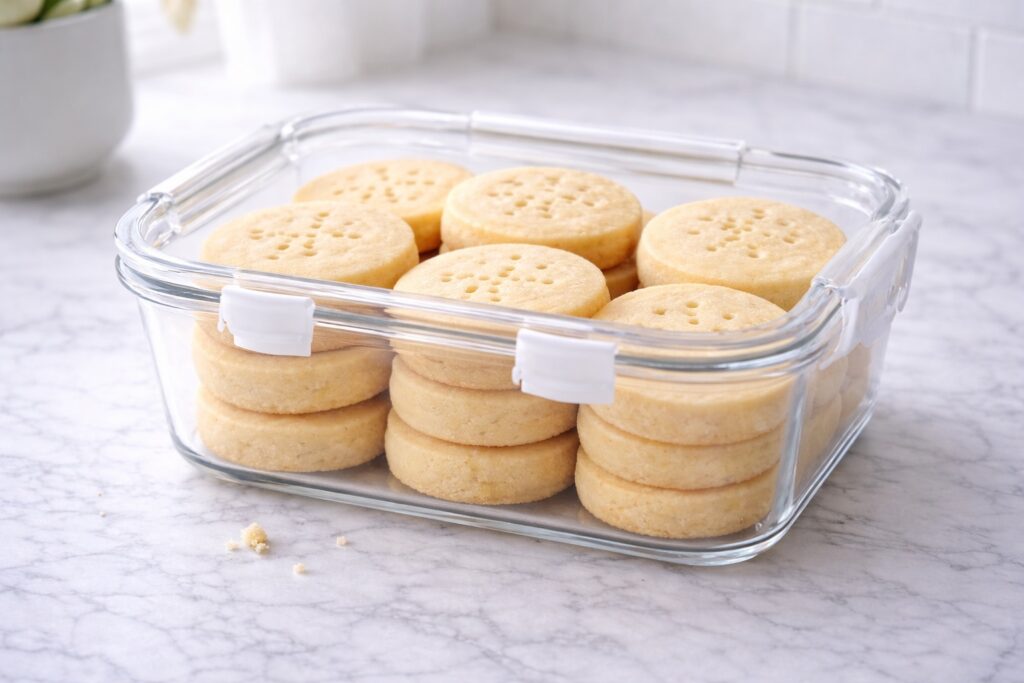
Shortbread cookies store very well and can easily be made ahead for holidays or cookie trays.
- Room temperature: Store in an airtight container for up to 5 days.
- Refrigerator: Store for up to 1 week.
- Freezer: Baked cookies can be frozen for up to 3 months.
The dough can also be frozen and baked fresh whenever needed.
Frequently Asked Questions
Here are a few common questions that come up when baking shortbread cookies at home.
Why are my shortbread cookies crumbly?
Shortbread cookies naturally have a delicate crumb. If they fall apart completely, the dough may need slightly more butter.
Do shortbread cookies contain eggs?
No. Traditional shortbread cookies do not contain eggs. Their texture comes from butter and flour.
Why does shortbread dough need to chill?
Chilling the dough solidifies the butter and prevents the cookies from spreading too much.
Can I use granulated sugar instead of powdered sugar?
Yes, but powdered sugar creates a softer, more delicate crumb.
Why are shortbread cookies called shortbread?
Shortbread cookies are called “shortbread” because of their distinctive crumbly texture. In traditional baking, the word short refers to a dough that contains a high amount of fat, which shortens the gluten strands in the flour.
Because shortbread dough contains a large proportion of butter, gluten development is limited. This creates the tender, delicate crumb that gives shortbread cookies their signature melt-in-your-mouth texture.
Why are my shortbread cookies spreading?
Shortbread cookies may spread too much if the butter becomes too soft or if the dough is not chilled before baking.
Chilling the dough allows the butter to firm up, which helps the cookies hold their shape in the oven. Using properly softened butter and chilling the dough for at least 30 minutes usually prevents excessive spreading.
Why do shortbread cookies taste better the next day?
Shortbread cookies often taste even better the next day because the butter flavor continues to develop as the cookies rest.
As the cookies cool and sit, the moisture and butter redistribute throughout the crumb, creating a more balanced texture and deeper flavor. This is why shortbread cookies are often considered an excellent make-ahead cookie for holiday baking.
More Cookie Recipes You’ll Love
If you enjoy classic homemade cookies like these shortbread cookies, here are a few more cookie recipes you might love to bake next. From buttery classics to festive favorites, these cookies are perfect for holidays and everyday baking.
Buttery Classic Cookies
- Thumbprint Cookies – buttery cookies filled with sweet jam that are perfect for holiday trays and cookie boxes.
- Spritz Cookies – delicate butter cookies pressed into beautiful shapes and perfect for festive baking.
- Sugar Cookie Recipe – classic buttery cookies that are simple, tender, and perfect for decorating.
- Butter Pecan Cookies – rich buttery cookies filled with toasted pecans for a cozy homemade treat.
Festive & Bakery-Style Cookies
- Linzer Cookies – delicate sandwich cookies filled with jam and finished with powdered sugar.
- Chocolate Crinkle Cookies – soft chocolate cookies with a beautiful crackled sugar coating.
Final Thoughts
Classic shortbread cookies are a beautiful example of how simple ingredients can create something truly special. With just butter, sugar, and flour, you can bake cookies that feel elegant, comforting, and timeless.
Their delicate crumb and rich buttery flavor make them perfect for quiet afternoon moments with tea, holiday cookie trays, or sharing with family and friends.
Whether you enjoy them plain or experiment with chocolate, citrus, or spices, shortbread cookies remain one of the most beloved recipes in traditional home baking.
If you enjoy classic homemade cookies, this shortbread cookie recipe is one you’ll likely return to again and again.
For quick reference, the full shortbread cookie recipe with exact measurements and step-by-step instructions is included in the recipe card below so you can easily bake these classic buttery cookies at home.
Classic Shortbread Cookies
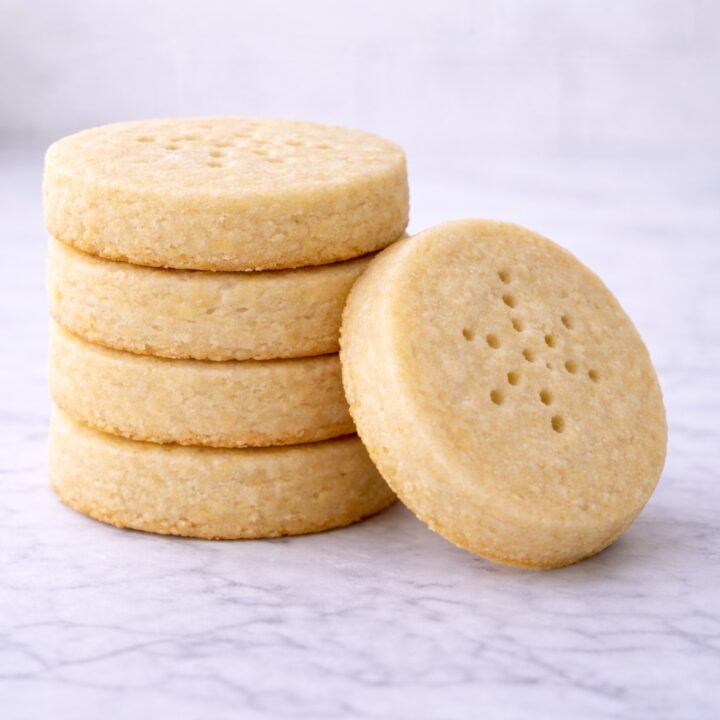
Classic shortbread cookies made with butter, powdered sugar, and flour. These buttery shortbread cookies have a delicate crumb and lightly crisp edges, making them perfect for holiday cookie trays, tea time, or everyday baking.
Ingredients
- 1 cup unsalted butter, softened
- 1/2 cup powdered sugar
- 2 cups all-purpose flour
- 1 teaspoon vanilla extract
- 1/4 teaspoon salt
Instructions
1. Cream butter and sugar
In a mixing bowl, cream the softened butter and powdered sugar together until smooth and creamy.
2. Add vanilla
Mix in the vanilla extract until fully incorporated.
3. Add dry ingredients
Add the flour and salt and mix just until a soft dough forms.
4. Chill the dough
Shape the dough into a disk, wrap it, and refrigerate for about 30 minutes.
5. Roll and cut cookies
Roll the dough to about 1/4-inch thickness and cut into cookies using a cookie cutter or knife.
6. Prepare baking sheet
Place the cookies on a parchment-lined baking sheet.
7. Bake
Bake at 325°F (160°C) for 12–15 minutes, until the edges are lightly golden.
8. Cool
Allow the cookies to cool on a wire rack before serving.
Notes
- Use high-quality butter for the best flavor since butter is the main ingredient in shortbread cookies.
- Chilling the dough helps the cookies keep their shape and prevents spreading during baking.
- If the dough becomes too soft while rolling, chill it again for a few minutes.
- For a traditional look, prick the cookies with a fork before baking.
Nutrition Information:
Yield: 24 cookies Serving Size: 1 cookieAmount Per Serving: Calories: 120Total Fat: 8gCarbohydrates: 11gSugar: 4gProtein: 1g
Nutrition information is automatically calculated and should be considered an estimate.
12 Sweet Favorites — Yours, Free 🍰
Tiramisù, no-bake cheesecake, the perfect chocolate chip cookie & 9 more reader-loved desserts — gathered into one beautiful free recipe book. From my kitchen to yours.
No spam, just sweet things. Unsubscribe anytime.