Thumbprint Cookies (Buttery Jam Filled Cookies)
🎁 FREE E-BOOK: 12 Sweet Favorites — reader-loved desserts in one beautiful recipe book.
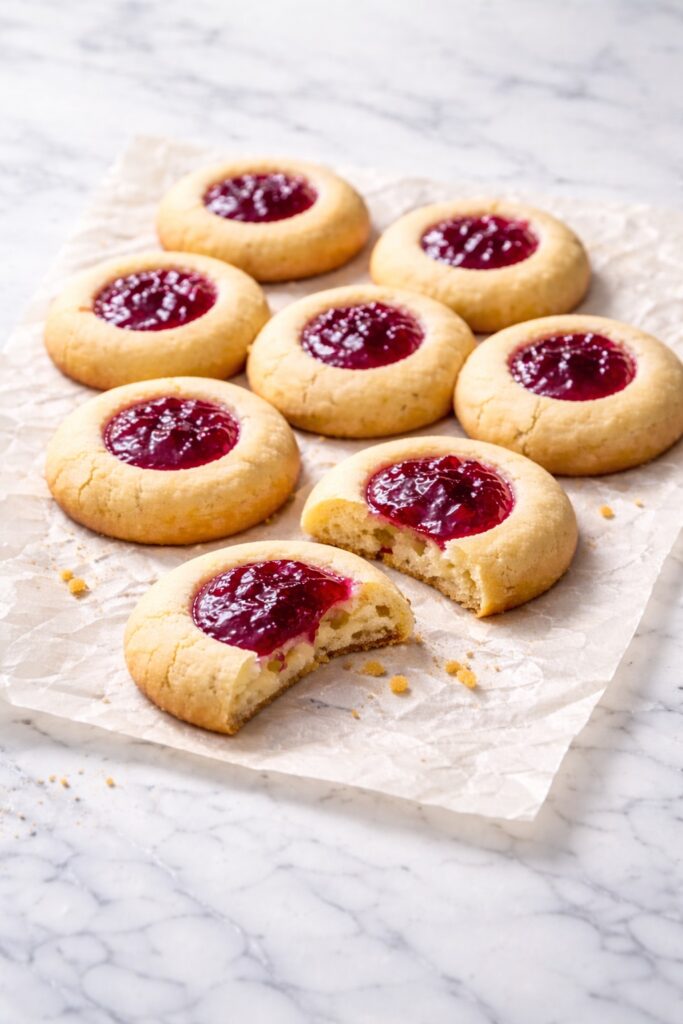
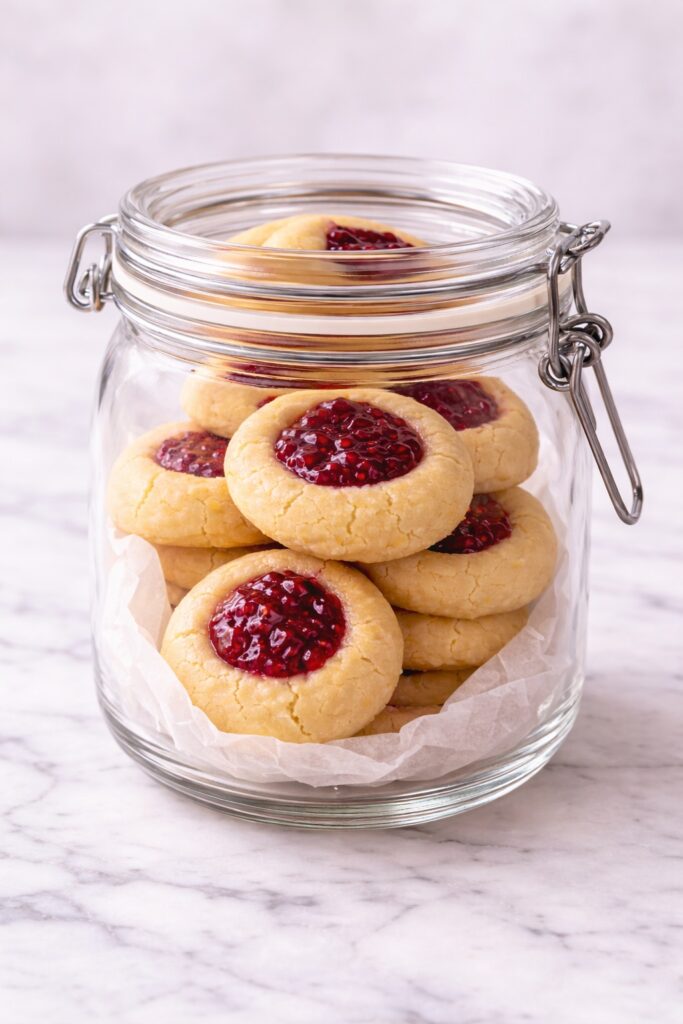
Thumbprint cookies are classic homemade cookies made from a soft butter-rich dough that is rolled into small balls and pressed in the center before baking. The indentation is filled with jam, creating soft cookies with a glossy fruit center and lightly crisp edges. This easy thumbprint cookie recipe creates tender, melt-in-your-mouth cookies that are simple to make and perfect for cookie trays or everyday baking.
Soft, buttery, and filled with a bright jam center, thumbprint cookies are one of those nostalgic homemade treats that never go out of style. Each cookie has a small well pressed into the center before baking, creating the signature “thumbprint” that holds a sweet, fruity filling.
As the cookies bake, the kitchen fills with the comforting aroma of butter and warm sugar while the jam gently bubbles in the center. The result is a batch of cookies that look charming, taste wonderful, and feel like the perfect homemade treat.
These buttery jam thumbprint cookies are especially popular during the holiday season, but they are simple enough to bake any time you want a small batch of comforting homemade cookies.
If you enjoy baking classic homemade cookies like these, you might also love recipes such as soft Chocolate Chip Cookies, chewy Oatmeal Chocolate Chip Cookies, or classic Sugar Cookies.
What Are Thumbprint Cookies and Why Are They So Popular?
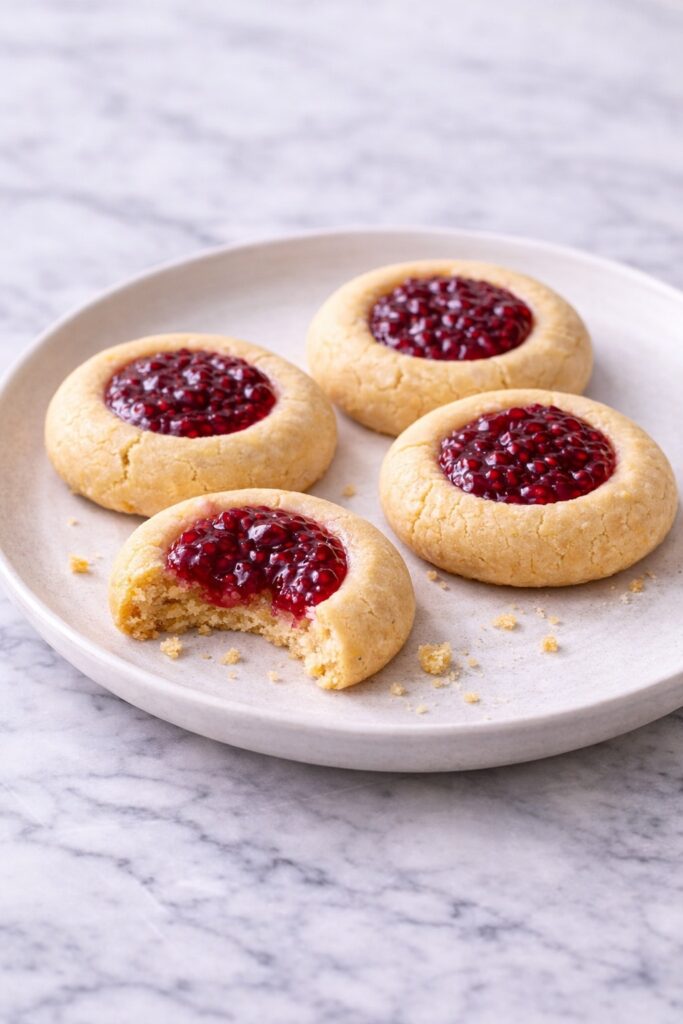
Thumbprint cookies are small buttery cookies made from a soft dough that is rolled into balls and pressed in the center to create a small well. The indentation is traditionally filled with fruit jam before baking, which creates the signature glossy center once the cookies come out of the oven.
These cookies are especially popular during the holiday season, but they are simple enough to bake any time of the year. Because the dough is rich in butter, the cookies have a delicate, tender texture similar to shortbread, while the fruit filling adds brightness and flavor contrast.
The combination of buttery cookie and sweet jam center makes thumbprint cookies a timeless favorite in homemade baking.
Why You’ll Love This Recipe
Buttery and tender texture – These thumbprint cookies are soft, delicate, and melt in your mouth with every bite.
Simple pantry ingredients – The recipe uses basic baking ingredients you likely already have in your kitchen.
Easy to customize – You can fill the cookies with raspberry jam, strawberry jam, chocolate, lemon curd, or other sweet fillings.
Perfect for holidays and cookie trays – These classic jam-filled cookies look beautiful on holiday cookie platters and dessert tables.
Freezer-friendly – The cookies freeze well, making them easy to prepare ahead of time for gatherings or holiday baking.
Quick Recipe Summary
- Prep Time: 20 minutes
- Cook Time: 12–15 minutes
- Total Time: 35 minutes
- Calories: 110 per cookie
- Servings: 24 cookies
- Difficulty: Easy
- Best For: Holiday baking, cookie trays, homemade treats
- Cuisine: American
How Many Thumbprint Cookies Does This Recipe Make
This recipe makes about 24 thumbprint cookies, depending on the size of the dough balls. Each cookie is small, buttery, and filled with a bright jam center, making them perfect for cookie trays, holiday baking, or sharing with friends and family.
Ingredients
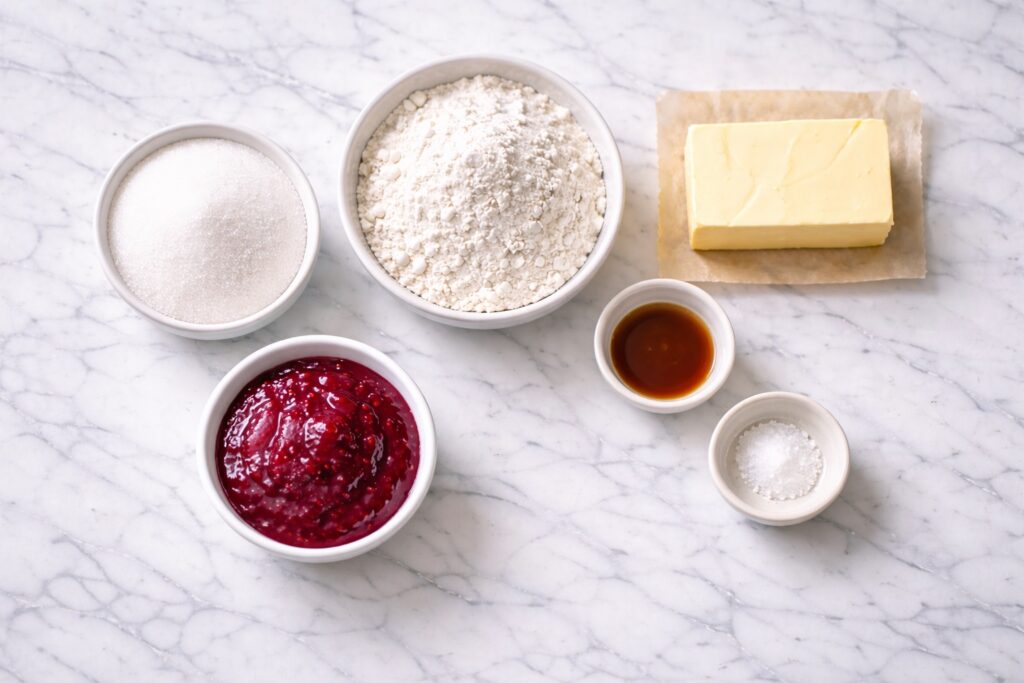
- 1 cup unsalted butter, softened
- 2/3 cup granulated sugar
- 1 teaspoon vanilla extract
- 2 cups all-purpose flour
- 1/4 teaspoon salt
- 1/2 cup jam or filling of choice (raspberry jam is traditional)
Ingredient Notes
Butter
Butter is the foundation of thumbprint cookies. Using properly softened butter helps create a smooth dough and gives the cookies their delicate, tender crumb. The high butter content also creates the rich flavor and soft texture that makes these cookies melt in your mouth.
Jam
Thick jam works best for thumbprint cookies because it stays neatly inside the indentation while baking. Using thicker jam or fruit preserves also helps prevent the filling from spreading or overflowing during baking. Raspberry jam is traditional, but strawberry, apricot, or blackberry jam also work beautifully.
Flour
All-purpose flour provides enough structure to hold the cookies together while still keeping them tender. Too much flour can make the cookies dry, so measuring carefully helps maintain the soft texture.
Vanilla extract
Vanilla extract enhances the buttery flavor of the cookies and adds warmth and depth to the dough. Even a small amount helps balance the sweetness of the jam filling.
How the Dough Should Look
If the dough feels very soft or greasy, chilling it for 20–30 minutes will help the cookies hold their round shape while baking. The dough should feel soft and smooth but still firm enough to keep the thumbprint indentation during baking.
This texture ensures the thumbprint cookies hold their shape while baking.
Kitchen Tools You’ll Need
- Mixing bowls
- Electric mixer or whisk
- Measuring cups and spoons
- Baking sheet
- Parchment paper
- Small spoon or thumb for shaping
- Cooling rack
How To Make Thumbprint Cookies
- Preheat your oven to 350°F (175°C) and line a baking sheet with parchment paper.
- In a large bowl, beat the butter and sugar together until the mixture becomes light and creamy.
- Add the vanilla extract and mix until combined.
- Stir in the flour and salt until a soft cookie dough forms.
- Roll the dough into 1-inch balls and place them on the prepared baking sheet about 2 inches apart.
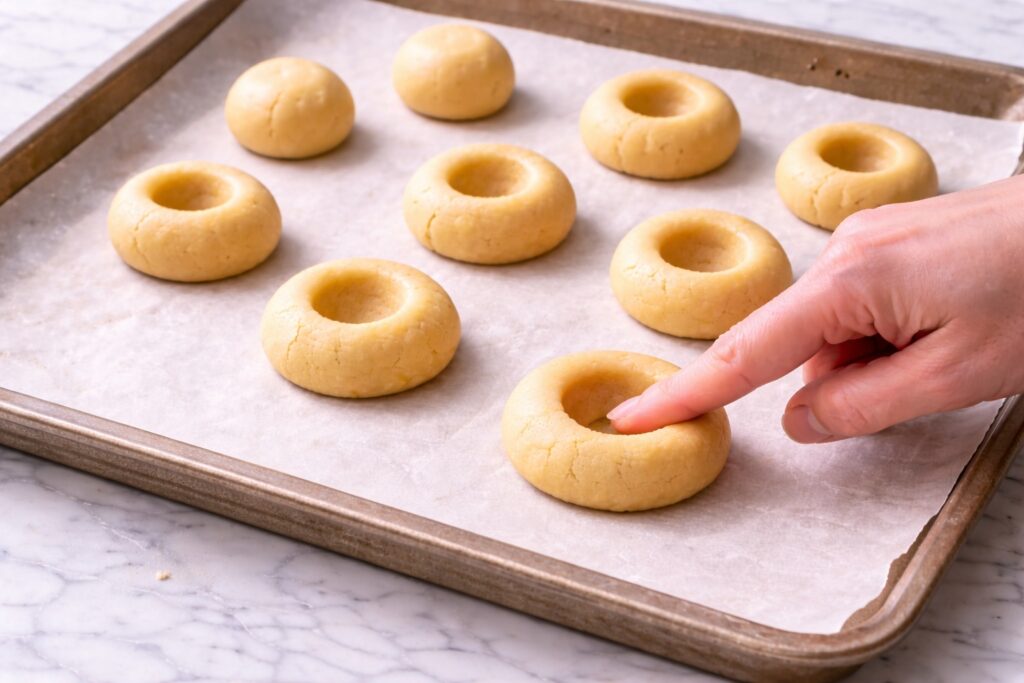
- Using your thumb or the back of a small spoon, press a small indentation into the center of each dough ball.
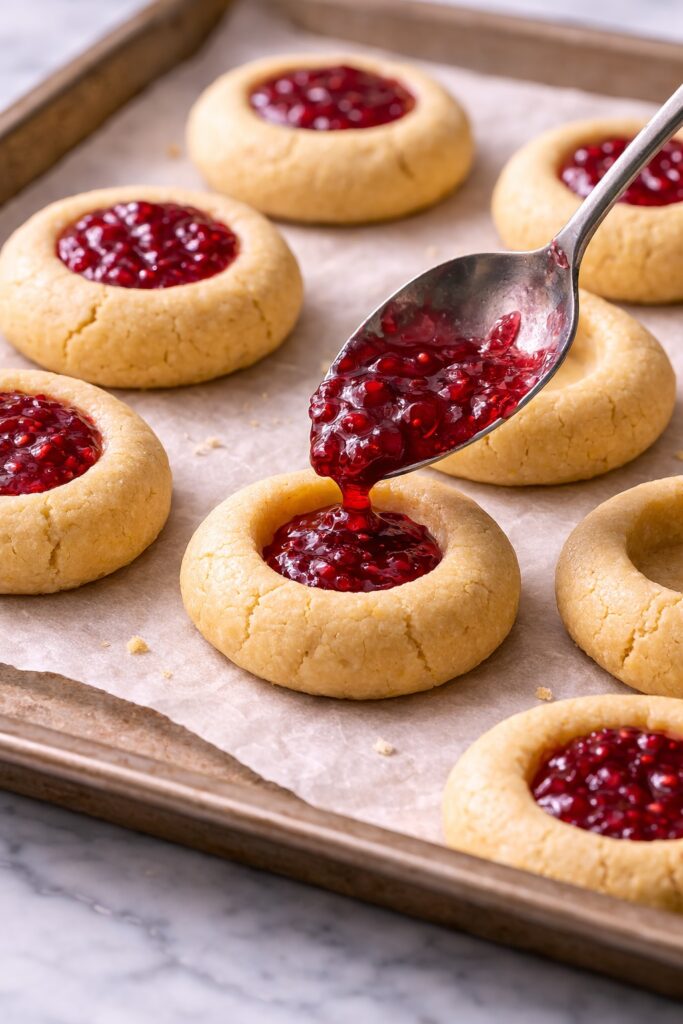
- Fill each indentation with about ½ teaspoon jam.
- Bake for 12 minutes, or until the edges are lightly golden.
- Allow the cookies to cool on the baking sheet for about 5 minutes, then transfer them to a cooling rack.
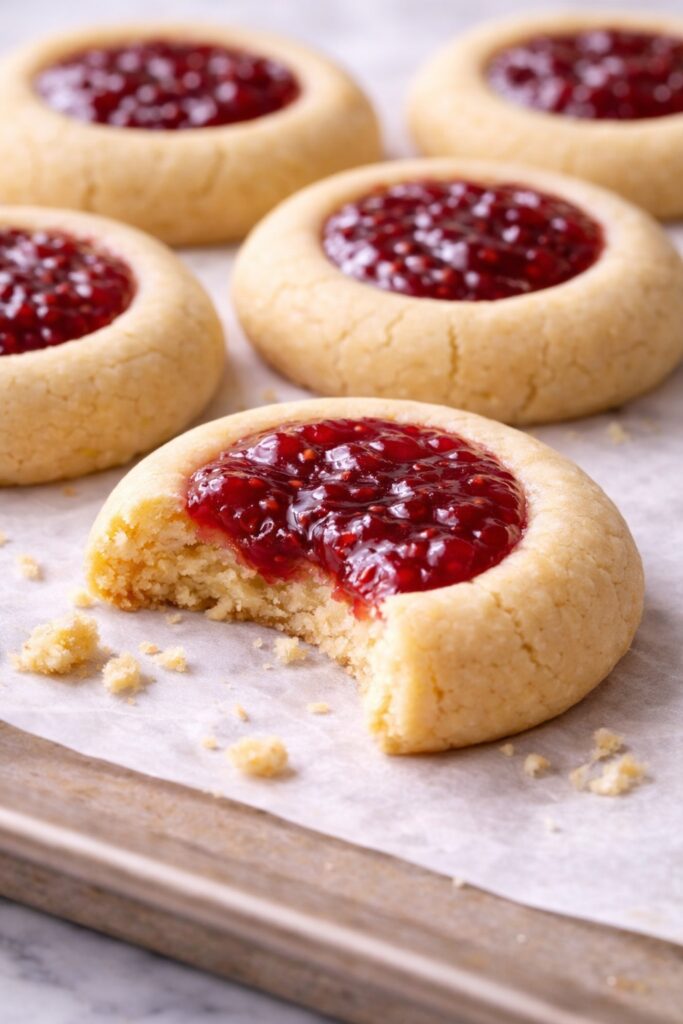
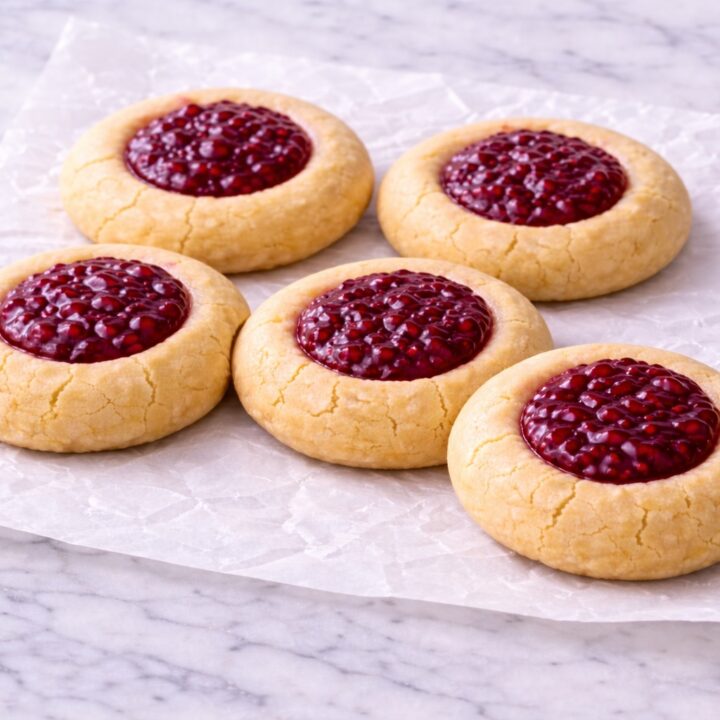
The cookies should look pale with lightly golden edges. The jam center will look glossy and slightly set once the cookies cool.
The cookies will continue to firm up slightly as they cool on the baking sheet.
How to Make Perfect Thumbprints
Creating evenly shaped thumbprints helps the cookies bake consistently and keeps the jam neatly in place.
For the best results, roll the dough into smooth balls about one inch in diameter. Press your thumb gently into the center of each ball to create a shallow well.
If you prefer a more uniform look, you can also use the back of a small measuring spoon instead of your thumb. This creates perfectly round indentations that hold the filling neatly while baking.
How to Fill Thumbprint Cookies Neatly
Filling thumbprint cookies neatly helps keep the jam centered and prevents it from spilling over during baking.
Use about half a teaspoon of jam for each cookie. A small spoon or piping bag makes it easier to control the amount and keep the filling inside the indentation.
If the jam is very thick, stirring it briefly can make it easier to spoon into the cookies. Avoid overfilling, as the jam will expand slightly while baking.
This helps keep the jam centered and creates beautifully shaped thumbprint cookies.
Expert Baking Tips
- Use butter that is softened but not melted. Proper butter temperature helps create a smooth dough and tender cookies.
- If the dough becomes too soft and sticky while shaping the cookies, refrigerate it for 20–30 minutes.
- If cracks appear when pressing the dough, gently smooth the edges with your fingers.
- Use a small spoon to create evenly shaped indentations.
- If the indentations puff up during baking, gently press them again while the cookies are still warm.
How to Keep Thumbprint Cookies From Spreading
Thumbprint cookies should stay round with a defined center indentation after baking.
If the cookies spread too much, the dough may be too warm. Chilling the shaped dough balls for 20 minutes before baking can help them hold their shape.
Using parchment paper and spacing the cookies about two inches apart also helps them bake evenly without spreading into each other.
Why These Thumbprint Cookies Work (Baking Science)
Although thumbprint cookies are simple to make, their texture relies on a few key baking principles.
Butter creates tenderness. The high butter content gives these cookies their rich flavor and soft, melt-in-your-mouth texture.
Sugar balances structure and sweetness. Granulated sugar helps the dough hold its shape while baking and creates lightly crisp edges.
Flour stabilizes the dough. All-purpose flour provides structure so the cookies keep their round shape and don’t spread too much.
The thumbprint holds the filling. Pressing a small well in the dough allows the jam to bake gently in the center, creating the signature look of thumbprint cookies.
Jam adds contrast and brightness. The fruity filling balances the richness of the buttery dough and adds a vibrant flavor.
Together, these ingredients create the classic tender texture that makes thumbprint cookies so beloved.
Understanding how ingredients like butter, sugar, and flour interact in cookie dough is an important part of baking science. The baking experts at King Arthur Baking explain how these ingredients influence cookie texture and structure.
Why Thumbprint Cookies Hold Their Shape
Thumbprint cookies hold their shape during baking because the dough has a balanced ratio of butter, sugar, and flour.
Butter creates tenderness and flavor, but too much butter can cause cookies to spread. Flour provides structure so the dough stays round while baking, while sugar helps create lightly crisp edges.
Because thumbprint cookies are shaped before baking, the dough must be firm enough to hold the indentation while still remaining soft and tender after baking.
This balance is what allows the cookies to keep their signature round shape with a neatly filled center of jam.
Understanding how ingredients behave during baking makes it much easier to avoid the most common cookie problems.
Common Mistakes to Avoid
Using butter that is too soft
This can cause the cookies to spread too much during baking.
Pressing the indentation too shallow
If the indentation is too shallow, the jam may overflow or slide off during baking.
Adding too much jam
Overfilled cookies may bubble over in the oven.
Skipping parchment paper
Parchment helps the cookies bake evenly and prevents sticking.
Overbaking
Thumbprint cookies should remain fairly light in color with slightly golden edges.
Why Do Thumbprint Cookies Crack?
Small cracks around the edges of thumbprint cookies are normal and often part of their homemade charm. However, deep cracks can happen when the dough is slightly too dry or cold.
If the dough cracks while pressing the indentation, gently roll the cookie dough ball again between your hands to warm it slightly before pressing.
You can also smooth the edges lightly with your fingers after making the thumbprint to keep the cookies looking neat and round.
Flavor Variations
Thumbprint cookies are easy to customize with different fillings and flavor combinations. While raspberry jam is the most traditional choice, many variations of thumbprint cookies are just as delicious.
Jam Thumbprint Cookies
Fill with raspberry, strawberry, apricot, or blackberry jam.
Raspberry Almond Thumbprint Cookies
Add 1/4 teaspoon almond extract to the dough and use raspberry jam.
Chocolate Thumbprint Cookies
Fill with melted chocolate or chocolate spread after baking.
Lemon Thumbprint Cookies
Use lemon curd for a bright citrus flavor.
Peanut Butter Thumbprint Cookies
Replace half the butter with peanut butter and fill with chocolate.
Gluten-Free Thumbprint Cookies
Use a 1:1 gluten-free flour blend.
Vegan Thumbprint Cookies
Replace butter with vegan butter.
If you enjoy simple cookie recipes like these jam thumbprint cookies, you may also love soft Peanut Butter Cookies or classic holiday favorites like Chocolate Crinkle Cookies.
Best Jam for Thumbprint Cookies
The best jam for thumbprint cookies is thick and slightly chunky so it stays neatly in the center while baking.
Raspberry jam is the most traditional choice because its bright flavor balances the rich buttery cookie. Strawberry jam, apricot preserves, and blackberry jam are also excellent options.
If the jam is very thin, it can spread during baking. Stirring it briefly or using a thicker preserve helps keep the filling centered and glossy.
Different fruit spreads can be used for thumbprint cookies. If you’re curious about the differences between jam, jelly, and fruit preserves, Bon Appétit explains how these spreads vary in texture and fruit content.
Storage and Freezing
Thumbprint cookies store very well and can easily be made ahead of time.
- Room Temperature: Store cookies in an airtight container for up to 5 days.
- Freezing: Place cooled cookies in an airtight container with parchment paper between layers and freeze for up to 2 months. Allow the cookies to thaw at room temperature before serving.
FAQs
Why are my thumbprint cookies spreading too much?
Thumbprint cookies usually spread if the butter is too soft or the dough is too warm. Chilling the dough for about 20–30 minutes before baking helps the cookies keep their round shape and defined thumbprint center.
Can you fill thumbprint cookies after baking?
Yes. Fruit jam is usually baked with the cookies, but chocolate spread, Nutella, or icing can be added after baking once the cookies have cooled.
What is the best jam for thumbprint cookies?
Raspberry jam is the most traditional filling for thumbprint cookies, but strawberry, apricot, blackberry, or even lemon curd work beautifully.
Do thumbprint cookies need to be refrigerated?
No. Thumbprint cookies can be stored at room temperature in an airtight container for several days.
Can you freeze thumbprint cookies?
Yes. Thumbprint cookies freeze very well. Store them in an airtight container with parchment paper between layers and freeze for up to two months.
Why do thumbprint cookies lose their shape?
Thumbprint cookies can lose their shape if the dough becomes too warm or contains too much butter. Soft dough spreads more quickly in the oven, which can cause the cookies to flatten and the indentations to disappear.
If the dough feels very soft while shaping the cookies, chilling it in the refrigerator for 20–30 minutes can help the cookies keep their round shape and defined centers during baking.
What is the origin of thumbprint cookies?
Thumbprint cookies are believed to have Scandinavian origins and are often associated with Swedish baking traditions. Similar cookies called “hallongrotta,” which means raspberry cave, are filled with jam and baked in a very similar way.
Why are they called thumbprint cookies?
Thumbprint cookies are named after the small indentation pressed into the center of each cookie before baking. The indentation, traditionally made with a thumb, holds the jam or sweet filling that gives the cookies their signature look.
Can you freeze thumbprint cookie dough?
Yes, thumbprint cookie dough freezes very well. Roll the dough into balls and place them on a baking sheet to freeze until firm. Once frozen, transfer the dough balls to an airtight container or freezer bag.
When ready to bake, allow the dough to thaw slightly, press the thumbprint indentation, add the jam, and bake as usual.
Why did my jam bubble out of thumbprint cookies?
Jam can bubble out of thumbprint cookies if too much filling is added or if the indentation is too shallow. As the cookies bake, the jam heats and expands slightly.
Using about half a teaspoon of jam and making a slightly deeper indentation helps keep the filling neatly in the center of the cookie.
Final Thoughts
Thumbprint cookies are proof that simple baking can create something truly special. With their buttery texture and bright jam center, these cookies are easy to make and always bring a touch of charm to any dessert table.
Whether you’re baking for the holidays, preparing a cookie tray, or simply enjoying a cozy afternoon in the kitchen, these classic thumbprint cookies are a recipe you’ll want to make again and again. Few cookies capture the comfort of homemade baking quite like these simple jam-filled treats.
Thumbprint Cookies
These classic thumbprint cookies are soft, buttery cookies with a glossy raspberry jam center. This easy thumbprint cookie recipe creates tender homemade cookies that are perfect for holiday baking, cookie trays, or everyday sweet treats.
Ingredients
- 1 cup unsalted butter, softened
- 2/3 cup granulated sugar
- 1 teaspoon vanilla extract
- 2 cups all-purpose flour
- 1/4 teaspoon salt
- 1/2 cup raspberry jam (or strawberry or apricot jam)
Instructions
- Preheat the oven to 350°F (175°C) and line a baking sheet with parchment paper.
- In a large bowl, beat the butter and sugar together until light and creamy.
- Add the vanilla extract and mix until combined.
- Stir in the flour and salt until a soft cookie dough forms.
- Roll the dough into 1-inch balls and place them on the prepared baking sheet about 2 inches apart.
- Press your thumb gently into the center of each dough ball to create a small indentation.
- Fill each indentation with about 1/2 teaspoon raspberry jam.
- Bake for 12–15 minutes, or until the edges are lightly golden.
- Allow the cookies to cool on the baking sheet for 5 minutes, then transfer them to a cooling rack to cool completely.
Notes
- If the dough becomes too soft while shaping the cookies, refrigerate it for 20–30 minutes.
- Use thick jam or preserves so the filling stays neatly inside the indentation while baking.
- If the indentations puff up during baking, gently press them again with the back of a spoon while the cookies are still warm.
- Store the cookies in an airtight container at room temperature for up to 5 days.
Nutrition Information:
Yield: 24 cookies Serving Size: 1 cookieAmount Per Serving: Calories: 110Total Fat: 6gCarbohydrates: 14gProtein: 1g
Nutrition information is an estimate and may vary depending on the ingredients used.
12 Sweet Favorites — Yours, Free 🍰
Tiramisù, no-bake cheesecake, the perfect chocolate chip cookie & 9 more reader-loved desserts — gathered into one beautiful free recipe book. From my kitchen to yours.
No spam, just sweet things. Unsubscribe anytime.