Peanut Butter Cookies (Soft & Chewy)
🎁 FREE E-BOOK: 12 Sweet Favorites — reader-loved desserts in one beautiful recipe book.
Peanut butter cookies are classic American cookies made with peanut butter, sugar, butter, eggs, and flour. This classic peanut butter cookie recipe creates soft cookies with lightly crisp edges, chewy centers, and a rich roasted peanut flavor, finished with the signature criss-cross fork pattern that makes them instantly recognizable.
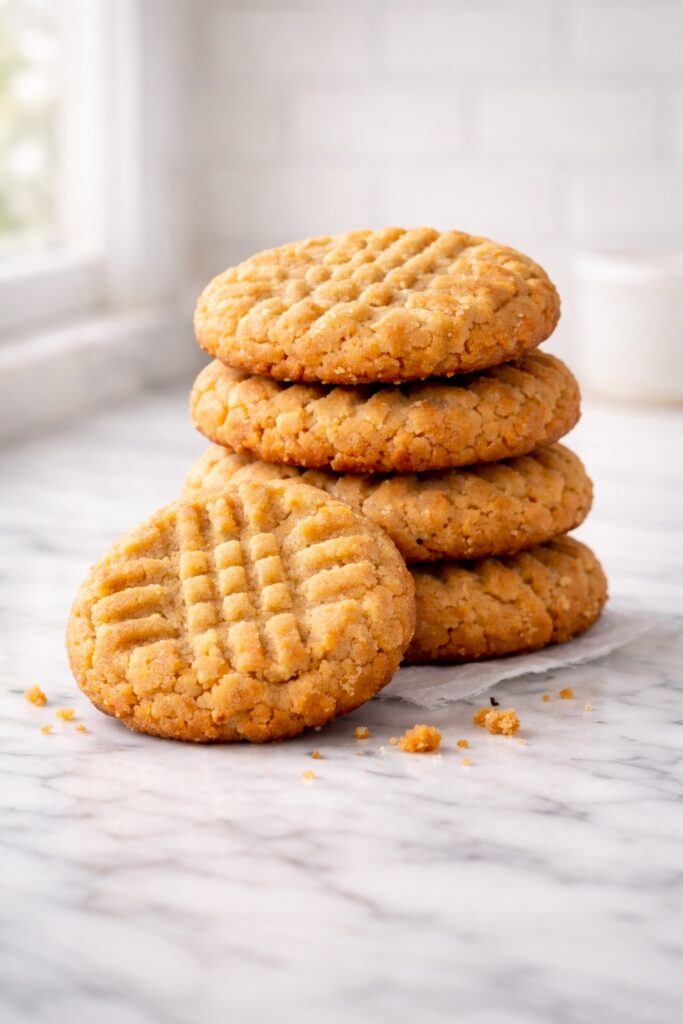
Few cookies feel as comforting as freshly baked peanut butter cookies. As the dough bakes, the warm aroma of roasted peanuts and caramelized sugar slowly fills the kitchen, creating that cozy feeling that only homemade cookies can bring. It’s the kind of cookie that instantly feels nostalgic and comforting the moment it comes out of the oven.
The texture is tender with slightly crisp edges and a soft, chewy center. Each bite delivers a deep peanut butter flavor balanced by gentle sweetness, making these cookies perfect for everyday baking, afternoon treats, or classic cookie trays.
This homemade peanut butter cookie recipe uses simple pantry ingredients and a reliable baking method that works for both beginner and experienced bakers. Like other classic favorites such as Chocolate Chip Cookies, it comes together quickly and bakes into a timeless homemade treat.
Quick Recipe Overview
If you want a quick snapshot before baking, this table gives you the most important details about these classic peanut butter cookies.
| Detail | Overview |
|---|---|
| Texture | Soft and chewy centers with lightly crisp edges |
| Flavor | Rich roasted peanut flavor with balanced sweetness |
| Difficulty | Easy and beginner-friendly |
| Time | 15 minutes prep + 10–12 minutes bake |
| Servings | 24 cookies |
| Best For | Everyday baking, cookie trays, lunchbox treats, and cozy homemade desserts |
In short: These peanut butter cookies are soft, chewy, rich in peanut flavor, and easy to make with simple pantry ingredients. They come together quickly and bake into a classic homemade cookie with the signature criss-cross top and a texture that feels both nostalgic and comforting.
Quick takeaway: soft centers, lightly crisp edges, and a rich peanut butter flavor — all with simple ingredients and no complicated steps.
What Are Peanut Butter Cookies?
Peanut butter cookies are classic American cookies made from a peanut butter-based dough and baked until the edges are lightly crisp and the centers stay soft. They are known for their rich nutty flavor, tender texture, and signature criss-cross top.
The dough is shaped into small balls before baking, which helps the cookies develop their soft centers and lightly crisp edges.
These cookies are known for their rich peanut flavor, slightly crisp edges, and soft, chewy centers. Because the dough is simple and forgiving, peanut butter cookies are one of the easiest homemade cookie recipes for beginner bakers.
Like other classic cookies such as Sugar Cookies, peanut butter cookies are simple homemade treats that rely on a few basic ingredients and traditional baking techniques.
Why This Peanut Butter Cookie Recipe Works
What makes these peanut butter cookies consistently soft, flavorful, and well-structured comes down to the balance between fat, sugar, structure, and heat during baking.
Fat and moisture balance: Peanut butter is naturally rich in oils, which keeps the cookies soft and tender even after baking. Unlike butter alone, these oils coat the flour and limit gluten development, resulting in a softer, more delicate crumb.
Structure without heaviness: Because peanut butter adds density to the dough, the combination of flour and egg provides just enough structure to hold the cookies together without making them dry. The dough stays stable while still allowing a soft center to form.
Sugar and texture control: The mix of granulated sugar and brown sugar creates a balanced texture. Granulated sugar helps the edges set and lightly crisp, while brown sugar adds moisture and chewiness to the center.
Heat distribution and shaping: Peanut butter cookie dough is naturally thicker and denser than many other cookie doughs. Pressing the dough with a fork helps flatten it slightly, allowing the heat to distribute more evenly so the cookies bake through without drying out.
Timing and residual baking: Removing the cookies when the edges are lightly golden and the centers still look soft allows carryover heat to finish baking them on the tray. This is what creates that classic soft and chewy center instead of a dry, crumbly cookie.
In short, this recipe works because each ingredient plays a clear role, and small details like shaping and baking time help control how the cookies spread, set, and stay soft.
In simple terms: peanut butter keeps the cookies soft, sugar creates the edges, and timing controls the final texture.
What Makes Peanut Butter Cookies So Good?
Peanut butter plays an important role in both flavor and texture. Unlike many cookie recipes that rely mostly on butter, peanut butter adds natural oils and proteins that create a soft yet structured cookie.
During baking, the sugars caramelize while the peanut oils help keep the center tender. The result is a cookie that stays soft while still developing slightly crisp edges.
The signature fork pattern pressed into the dough is not only decorative but also practical. Peanut butter cookie dough is naturally dense, and pressing the cookies helps them bake more evenly and develop their classic shape.
Unlike delicate butter-based cookies like Shortbread Cookies, peanut butter cookies use the natural oils in peanut butter to create their soft and slightly chewy texture.
Ingredients for Peanut Butter Cookies
These classic peanut butter cookies use simple pantry ingredients that work together to create their rich flavor and soft chewy texture.
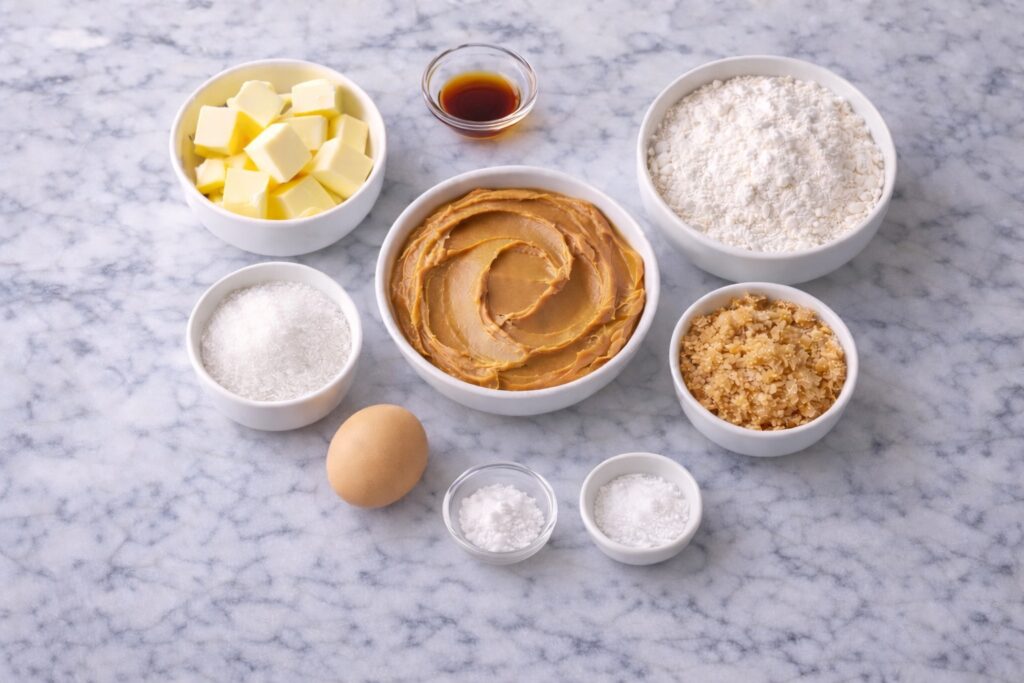
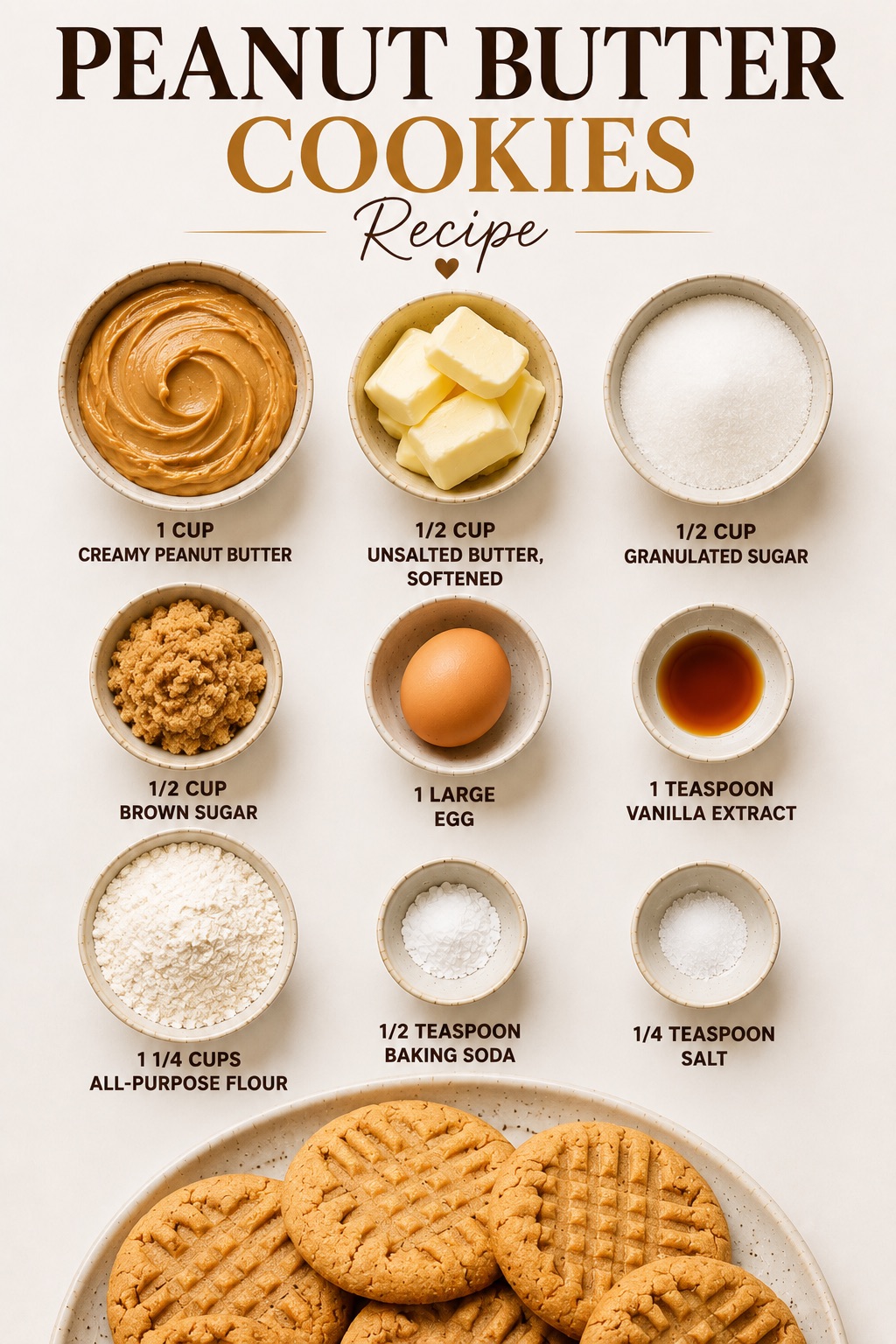
- 1 cup creamy peanut butter
- ½ cup unsalted butter, softened
- ½ cup granulated sugar
- ½ cup brown sugar
- 1 large egg
- 1 teaspoon vanilla extract
- 1¼ cups all-purpose flour
- ½ teaspoon baking soda
- ¼ teaspoon salt
Ingredient Notes
One of the reasons peanut butter cookies are so popular is their simplicity. The ingredients are easy to find and work together to create a balanced cookie texture.
Peanut Butter
Peanut butter provides the dominant flavor in this recipe. Creamy peanut butter works best because it blends smoothly into the dough and creates a consistent cookie texture. Natural peanut butter can also be used, but it should be stirred well so the oils are evenly incorporated.
Butter
Butter adds richness and contributes to the soft crumb. Using softened butter helps the dough mix evenly.
Sugar
Granulated sugar sweetens the cookies and contributes to their slightly crisp edges.
Brown Sugar
Brown sugar adds moisture and creates a soft, chewy center.
Egg
The egg binds the dough together and helps the cookies hold their shape during baking.
Flour
Flour provides structure so the cookies bake into soft rounds instead of spreading too thin.
Baking Soda
Baking soda helps the cookies rise slightly and develop a tender interior by reacting with acidic ingredients during baking.
Vanilla Extract
Vanilla enhances the peanut butter flavor and adds warmth to the cookies.
Salt
Salt balances the sweetness and highlights the roasted peanut flavor.
Ingredient Substitutions
Peanut butter cookies are flexible and can be adjusted with a few simple ingredient substitutions if needed.
Peanut Butter
Creamy peanut butter works best for classic peanut butter cookies because it creates a smooth dough and even texture. Natural peanut butter can also be used, but it should be stirred well so the oils are fully incorporated.
Butter
Unsalted butter allows you to control the salt level in the recipe. If using salted butter, you may want to slightly reduce the added salt.
Brown Sugar
Brown sugar adds moisture and chewiness. In a pinch, you can replace it with granulated sugar, though the cookies may be slightly less soft.
Flour
All-purpose flour works best for structure. If the dough feels too soft, a small additional tablespoon of flour can help stabilize the dough.
Vanilla Extract
Vanilla enhances the overall flavor but can be omitted if needed.
Ingredient takeaway: for classic soft and chewy peanut butter cookies, using creamy peanut butter combined with brown sugar creates the most reliable texture and balanced flavor.
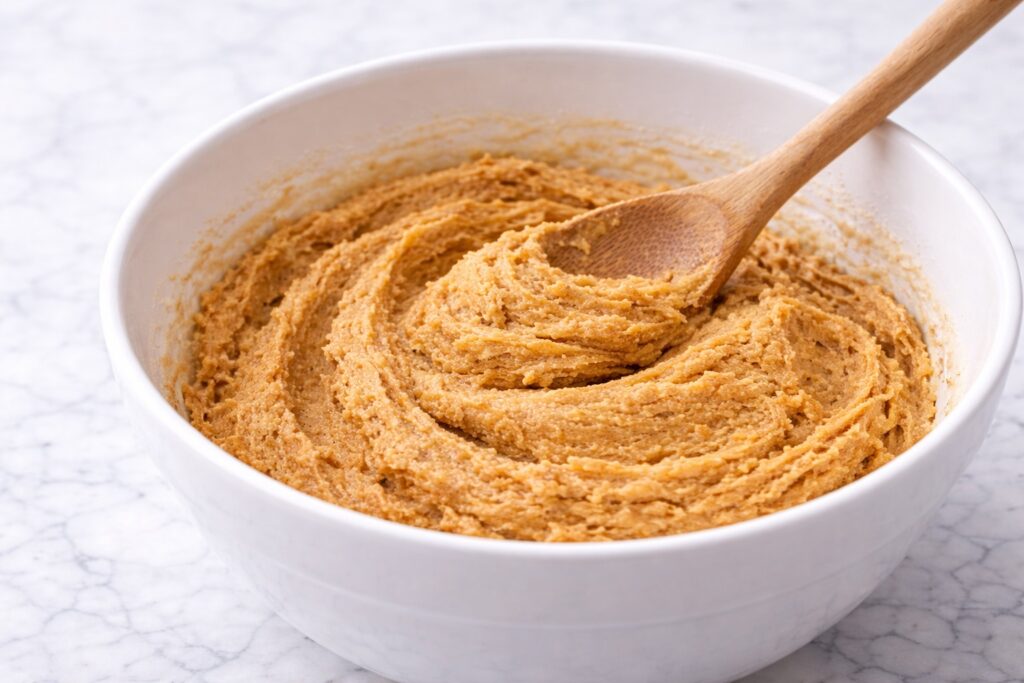
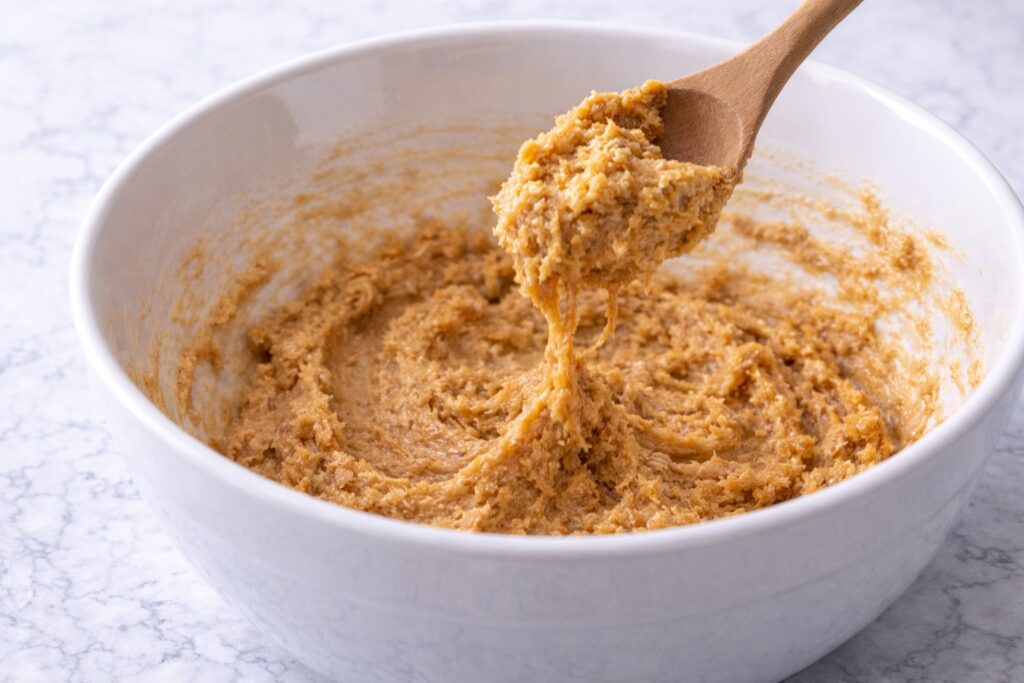
How the Peanut Butter Cookie Dough Should Look
Peanut butter cookie dough should look soft, smooth, and slightly thick when properly mixed. Because peanut butter contains natural oils, the dough will feel richer and slightly denser than many butter-based cookie doughs.
After the butter and sugars are creamed together and the peanut butter is added, the mixture should become creamy and cohesive. Once the flour is mixed in, the dough will form a soft cookie dough that easily holds its shape.
The dough should not feel sticky or greasy. Instead, it should feel soft and slightly firm when rolled into balls.
Sometimes the dough may feel slightly softer than expected, especially if your kitchen is warm. That usually comes from the natural oils in the peanut butter and doesn’t mean anything is wrong.
If the dough feels too soft to handle, letting it rest for about 5–10 minutes allows the flour to hydrate and helps the dough firm up slightly before shaping the cookies.
Equipment You’ll Need
These basic tools are all you need to make peanut butter cookies at home, and most of them are likely already in your kitchen.
- Mixing bowls
- Electric mixer or hand mixer
- Measuring cups and spoons
- Baking sheet
- Parchment paper
- Cookie scoop
- Fork (for the classic criss-cross pattern)
- Cooling rack
How to Make Peanut Butter Cookies
Now that the ingredients are ready, let’s walk through the simple steps to make these classic peanut butter cookies at home.
1. Prepare the oven
Preheat the oven to 350°F (175°C) and line a baking sheet with parchment paper.
2. Cream butter and sugars
In a large mixing bowl, beat the butter, granulated sugar, and brown sugar until light and fluffy.
3. Add peanut butter and egg
Mix in the peanut butter, egg, and vanilla extract until the mixture becomes smooth and creamy.
4. Combine dry ingredients
In a separate bowl, whisk together flour, baking soda, and salt.
5. Mix the dough
Gradually add the dry ingredients to the peanut butter mixture and stir until a soft cookie dough forms.
If the dough looks a little softer than expected, especially in a warm kitchen, that is usually just the peanut butter and butter loosening slightly. A short rest of 5 to 10 minutes often brings it back to an easier shaping texture.
6. Shape the cookies
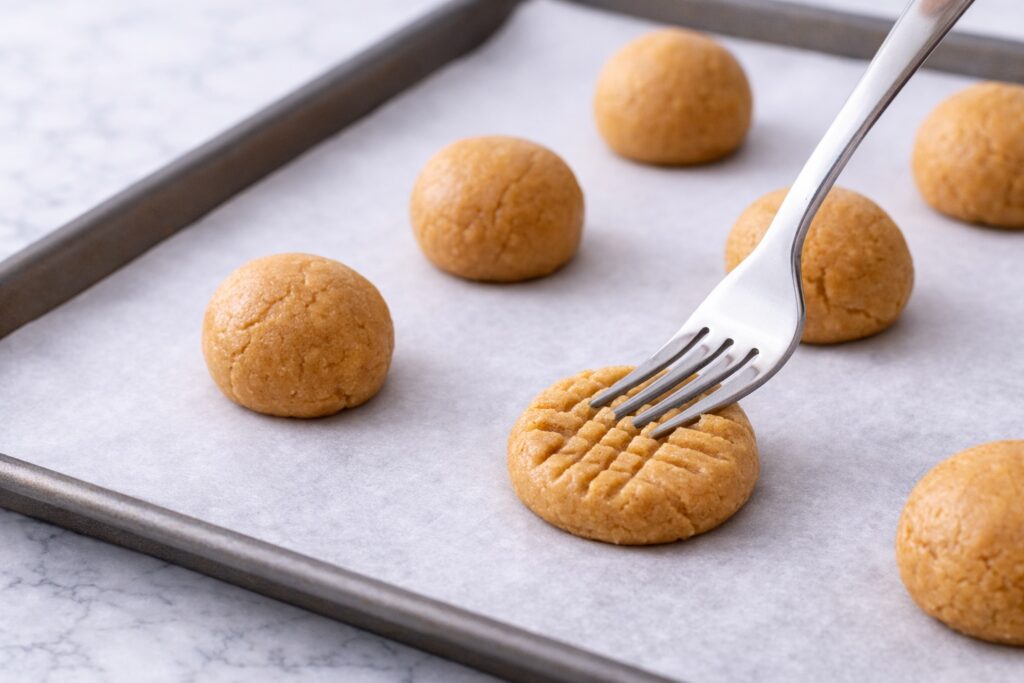
Roll the dough into small balls and place them on the baking sheet.
Using a fork, gently press each dough ball twice in opposite directions to create the classic criss-cross pattern that peanut butter cookies are known for.
If your fork starts sticking to the dough while making the criss-cross pattern, lightly dipping it in sugar can make pressing easier and help keep the tops neat.
7. Bake
Bake for 10–12 minutes, until the edges are lightly golden.
Sometimes they may look slightly underbaked in the center when you take them out, that’s exactly what you want for a soft texture.
One small thing to watch is that peanut butter cookies can go from soft to overbaked faster than they look. If the edges are set and the centers still seem slightly soft, that is usually the best moment to take them out.
Sometimes one tray may bake slightly darker on the bottom than the other, especially if your oven runs a little hot or uneven, rotating the tray halfway through baking usually fixes this.
8. Cool
Allow the cookies to cool on the baking sheet for a few minutes before transferring them to a cooling rack.
Visual Doneness Cues
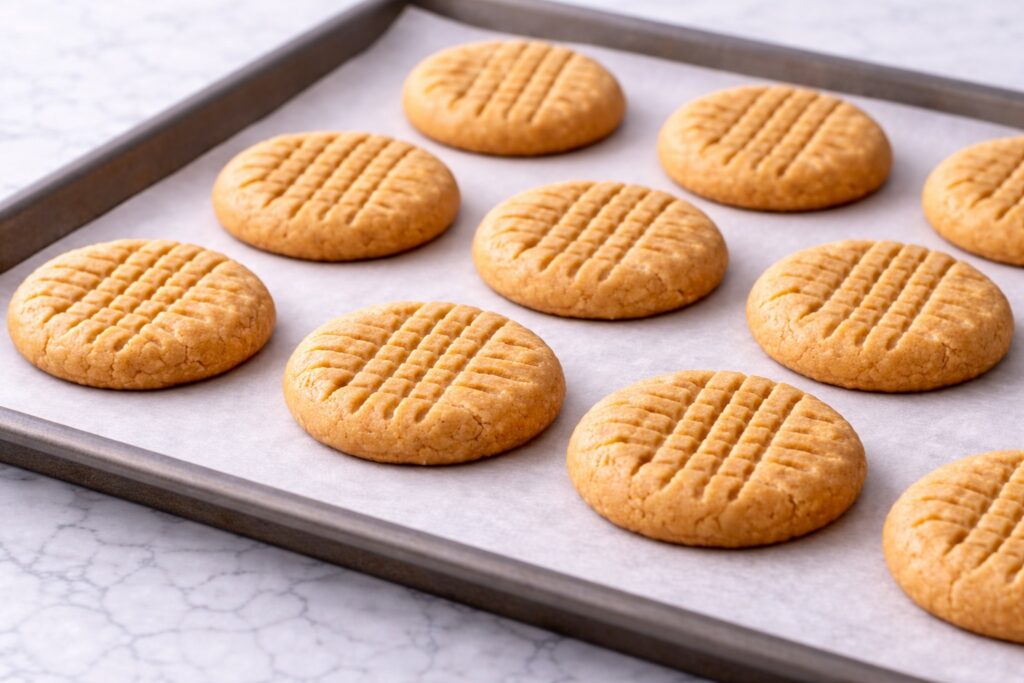
Knowing exactly when peanut butter cookies are done comes down to what you see, not just the timer. These visual cues help you recognize perfectly baked cookies with soft centers and lightly crisp edges.
- Edges: Lightly golden, set, and slightly firmer than the center
- Centers: Soft, slightly pale, and still a little underbaked in appearance
- Surface: Criss-cross pattern remains visible with slight puffing between the lines
- Texture when touched: Cookies feel soft in the center but not raw or sticky
- Bottom: Light golden color, not dark or overly crisp
- Cooling behavior: Cookies firm up slightly as they rest on the baking sheet
If the cookies look fully firm in the center while still in the oven, they are likely overbaked. Slight softness is what gives peanut butter cookies their classic chewy texture.
Peanut Butter Cookie Dough Texture Guide
Understanding how peanut butter cookie dough should look and behave at each stage helps you control the final texture. These visual and tactile cues make it easier to get consistently soft and chewy cookies every time.
| Stage | What You See | What It Means |
|---|---|---|
| Dough (mixed) | Soft, smooth, slightly thick, holds shape when scooped | Balanced fat and flour; dough is stable and ready to shape |
| Before baking | Rolled balls with visible fork pattern, slightly flattened | Proper shaping ensures even baking and correct spread |
| During baking | Slight spreading, edges begin to set, surface gently puffs | Sugars are melting and structure is forming |
| Right out of oven | Edges lightly golden, center soft and slightly underbaked | Perfect doneness for soft and chewy cookies |
| After cooling | Cookies firm up slightly but stay soft in the center | Carryover heat finishes the baking process |
Baking Tips for Perfect Peanut Butter Cookies
Soft peanut butter cookies come from using room temperature ingredients, avoiding overbaking, and pressing the dough gently so the cookies keep their tender centers.
Small baking details can make a big difference in the final texture and flavor of peanut butter cookies. These simple baking tips help ensure cookies that are soft, chewy, and evenly baked.
Use room temperature ingredients
Butter and eggs blend more smoothly when they are at room temperature. This helps create a more uniform cookie dough and improves the final cookie texture.
Let the dough rest for a few minutes
Allowing the dough to rest for about 5–10 minutes before shaping the cookies gives the flour time to fully hydrate, helping the cookies bake with better structure and tenderness.
Press the fork pattern gently
The classic criss-cross fork pattern helps the cookies bake evenly, but pressing too firmly can flatten them too much. A gentle press keeps the cookies slightly thicker and softer.
Bake one tray at a time
For the most even baking, place the cookie sheet on the center rack and bake one tray at a time. This allows heat to circulate properly and prevents uneven browning.
Avoid overbaking
Peanut butter cookies should still look slightly soft in the center when they come out of the oven. They will continue to set as they cool, which keeps the cookies tender rather than dry.
Pro Baking Tips
If you want your peanut butter cookies to look and taste like bakery-style cookies, a few small adjustments can make a big difference.
- Use a cookie scoop to create evenly sized cookies so they bake at the same rate.
- Leave enough space between cookies so the heat circulates properly while baking.
- Rotate the baking tray halfway through baking if your oven heats unevenly.
- Let the cookies cool on the tray for a few minutes before transferring them to a rack.
Common Mistakes When Making Peanut Butter Cookies
Even though peanut butter cookies are simple to make, a few small mistakes can affect their texture and flavor. Avoiding these common issues will help you bake cookies that are soft, chewy, and perfectly balanced.
Using too much flour
Adding too much flour is one of the most common reasons peanut butter cookies turn out dry. Always measure flour carefully using the spoon-and-level method to keep the dough balanced.
Overbaking the cookies
Peanut butter cookies continue to set as they cool. If they stay in the oven too long, they can quickly become dry and crumbly. Remove them from the oven when the edges turn lightly golden.
Pressing the cookies too flat
The traditional fork pattern helps the cookies bake evenly, but pressing the dough too firmly can make the cookies spread too much. A gentle press is enough to create the classic criss-cross pattern.
Using very oily natural peanut butter
Natural peanut butter that separates easily can make the dough too oily and cause the cookies to spread excessively. If using natural peanut butter, mix it thoroughly before measuring.
Understanding how peanut butter affects cookie texture can help you bake consistently soft and chewy cookies. The sections below explain the baking science behind peanut butter cookies, how different textures form, and how they compare to other classic cookie styles.
Peanut Butter Cookies vs Other Classic Cookies
Peanut butter cookies have a distinct texture and structure compared to other classic homemade cookies. This quick comparison helps you understand what makes them different and how ingredient balance affects the final result.
| Cookie Type | Texture | Fat Source | Structure | Key Characteristic |
|---|---|---|---|---|
| Peanut Butter Cookies | Soft, slightly dense, chewy center | Peanut butter + butter | Medium, slightly compact | Rich flavor, fork pattern, tender crumb |
| Chocolate Chip Cookies | Chewy or slightly crisp, more airy | Butter | Lighter, more spread | Balanced sweetness with melted chocolate pockets |
| Shortbread Cookies | Firm, crumbly, melt-in-mouth | Butter | Dense and compact | Buttery flavor with minimal spread |
| Sugar Cookies | Soft or crisp depending on baking time | Butter | Balanced, holds shape well | Smooth surface, ideal for decorating |
Why Peanut Butter Cookies Are Soft and Chewy
Peanut butter cookies develop their distinctive texture from the combination of fats, sugars, and proteins in the dough.
Unlike many traditional cookie recipes that rely mostly on butter, peanut butter contains natural oils and proteins that influence how the cookies bake. These oils help keep the centers soft while the sugars caramelize and create lightly crisp edges.
Brown sugar also plays an important role in the final texture. Because brown sugar contains molasses, it adds moisture to the dough and helps produce a softer, chewier cookie.
Baking the cookies just until the edges turn lightly golden allows the centers to remain tender. As the cookies cool, they continue to set slightly, which creates the classic peanut butter cookie texture: soft centers with gently crisp edges.
Understanding this baking science makes it easier to control the final texture of your cookies, whether you prefer them softer, chewier, or slightly crisp.
In short: the combination of peanut oils, sugar, and gentle baking is what creates that classic soft and chewy peanut butter cookie texture.
Peanut Butter Cookie Texture Guide
Peanut butter cookies can vary in texture depending on small changes in baking time, ingredient ratios, and dough handling. Understanding these differences helps you control whether your cookies turn out soft and chewy, crisp, or thick and bakery-style.
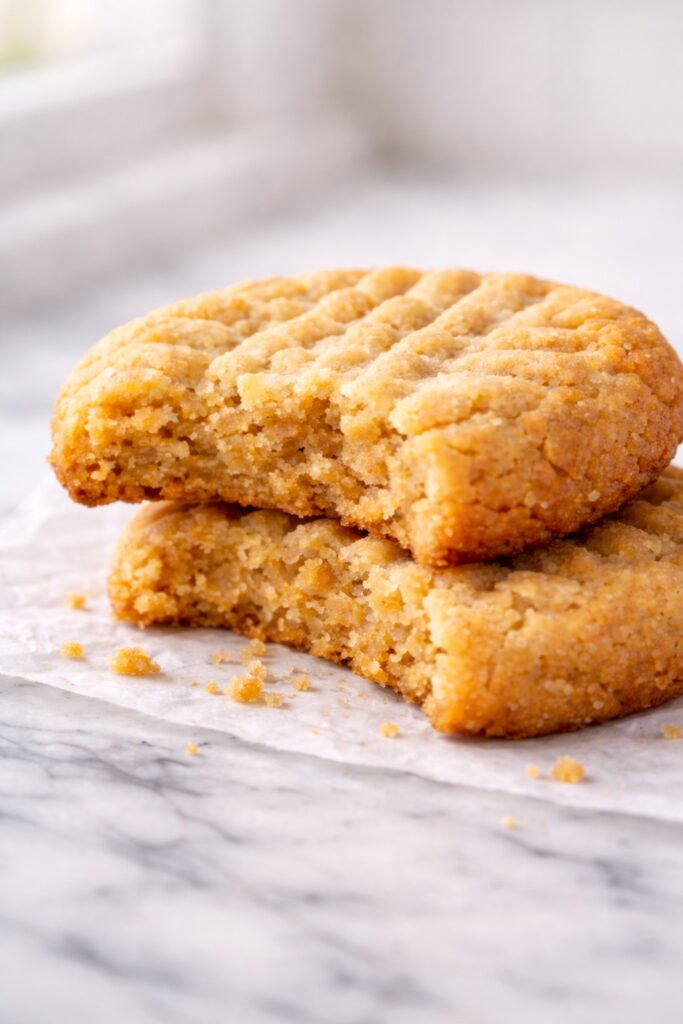
Soft and Chewy Peanut Butter Cookies
Soft peanut butter cookies have tender centers and lightly crisp edges. This texture comes from using brown sugar and removing the cookies from the oven while the centers are still slightly soft.
Crisp Peanut Butter Cookies
If baked a little longer, peanut butter cookies develop firmer edges and a slightly crumbly bite with less moisture in the center.
Thick Bakery-Style Peanut Butter Cookies
Using slightly more flour or allowing the dough to rest or chill creates thicker cookies with a soft interior and a more structured, bakery-style appearance.
This recipe is designed to give you classic soft peanut butter cookies with chewy centers and lightly crisp edges.
Quick guide: shorter baking keeps cookies soft, while longer baking creates a firmer, slightly crisp texture.
Peanut Butter Cookie Texture Comparison
This quick comparison makes it easier to adjust your technique depending on the texture you prefer.
| Texture Type | What It Feels Like | How to Achieve It |
|---|---|---|
| Soft & Chewy | Tender center with lightly crisp edges | Use more brown sugar and remove cookies while centers are still slightly soft |
| Crisp | Firmer edges with a slightly crumbly texture | Bake slightly longer until centers are fully set |
| Thick Bakery-Style | Thicker cookies with a soft, structured interior | Add slightly more flour or chill the dough before baking |
Understanding these differences helps you control the final texture and adapt the recipe to your personal preference.
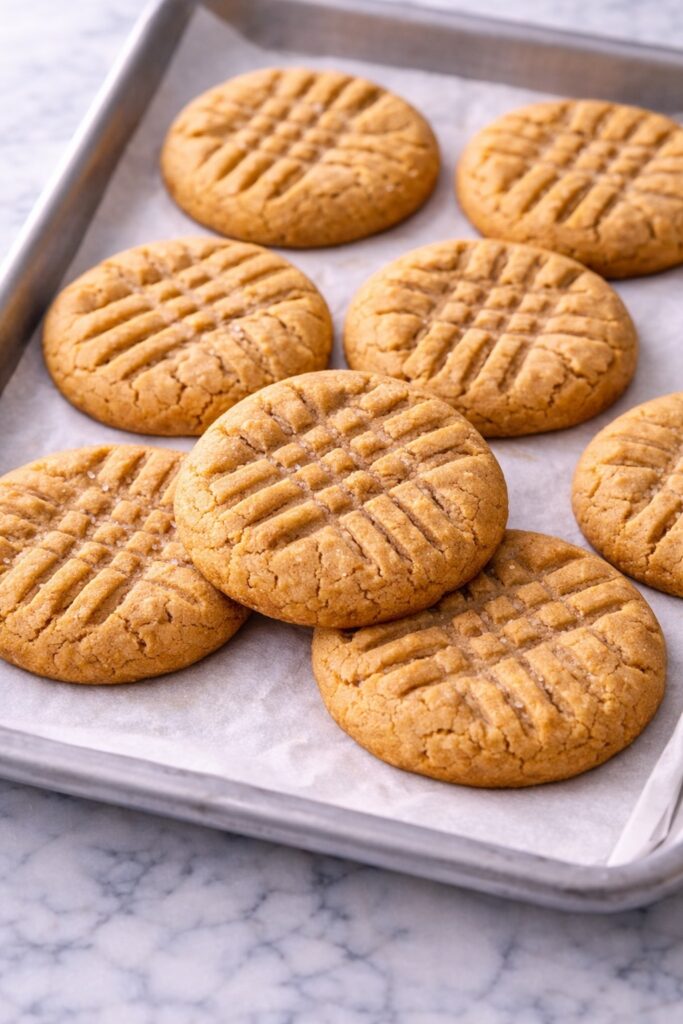
Why Peanut Butter Cookies Have Fork Marks
The famous criss-cross fork pattern on peanut butter cookies began appearing in American cookbooks in the 1930s. This simple technique helps the cookies bake more evenly while creating their classic appearance.
Peanut butter cookie dough is naturally dense because of the oils and proteins in peanut butter. Flattening the dough slightly before baking helps the cookies bake evenly and prevents the centers from remaining underbaked.
The fork pattern also increases surface area, allowing the cookies to bake with balanced edges and centers.
Today the criss-cross pattern has become the instantly recognizable visual signature of peanut butter cookies.
How to Serve Peanut Butter Cookies
Fresh peanut butter cookies are best enjoyed slightly warm, when the centers are still soft and the edges have just the right amount of crispness. That contrast between soft and lightly golden is what makes them feel so comforting and satisfying.
Serve them with a glass of cold milk, a cup of coffee, or even alongside a scoop of vanilla ice cream for a simple but indulgent dessert. The rich peanut flavor pairs beautifully with both creamy and slightly bitter drinks, making these cookies easy to enjoy at any time of day.
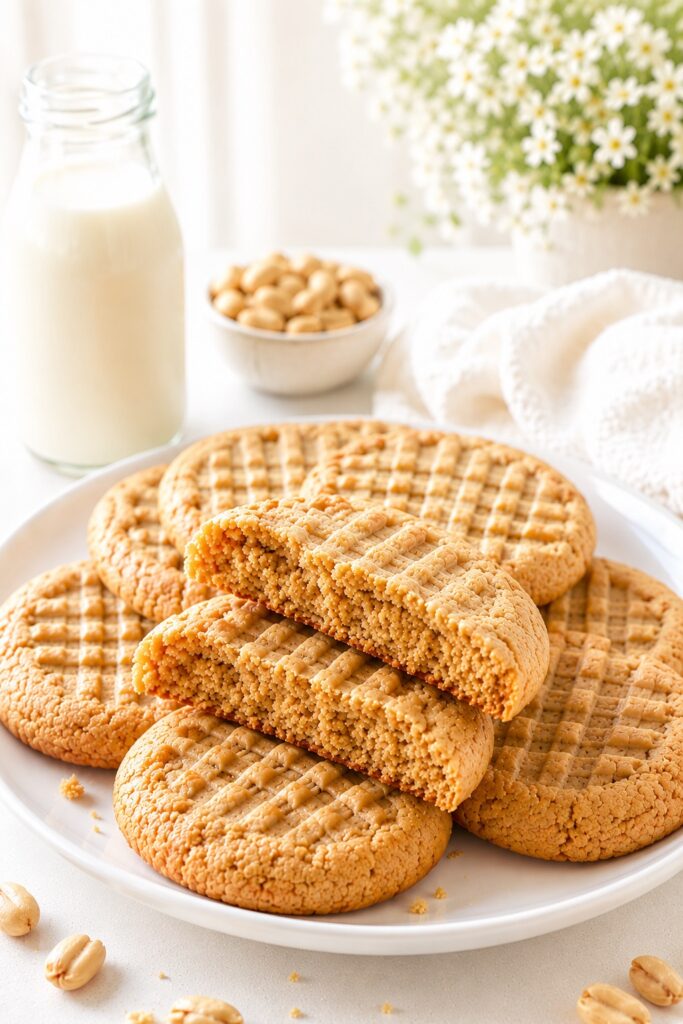
For gatherings or dessert trays, peanut butter cookies add a warm, nostalgic touch. Their classic criss-cross pattern and soft texture make them stand out next to chocolate desserts, fruit-based treats, or lighter vanilla desserts.
You can also turn them into simple cookie sandwiches by adding a layer of chocolate spread or peanut butter frosting between two cookies. The soft centers make them perfect for this, creating a rich and satisfying bite.
Save this for: cozy afternoons, holiday cookie trays, lunchbox treats, or anytime you want a simple homemade dessert that feels both classic and comforting.
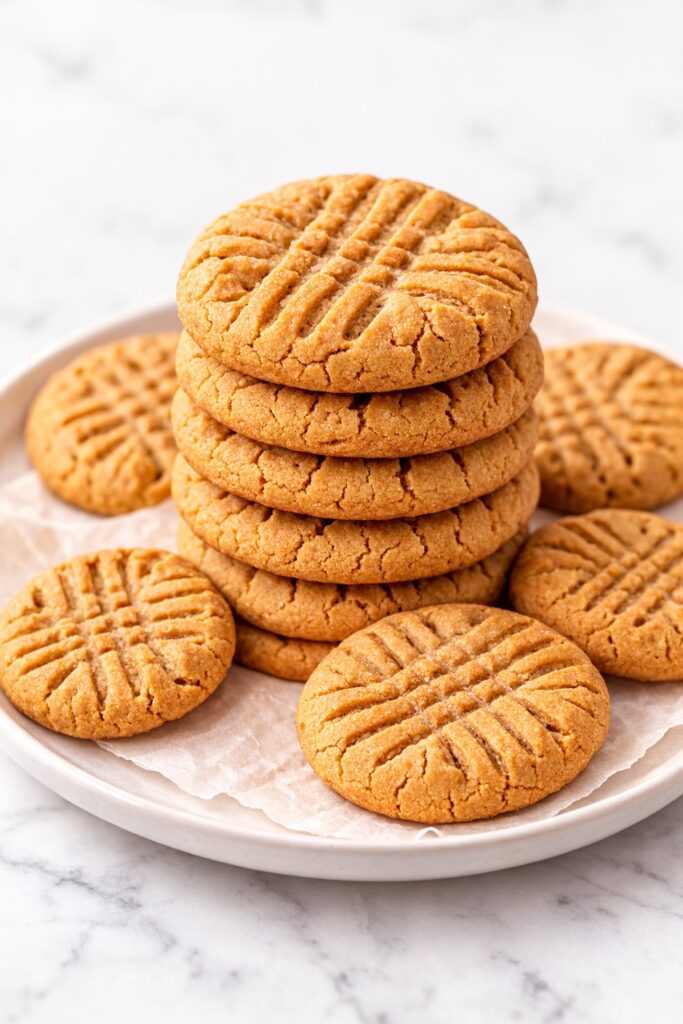
Variations of Peanut Butter Cookies
Once you master classic peanut butter cookies, there are many easy ways to customize them. These simple variations keep the same soft cookie base while adding new flavors and textures.
Chocolate Chip Peanut Butter Cookies
Stir ½ cup chocolate chips into the cookie dough before shaping. The melted chocolate adds richness and pairs beautifully with the nutty peanut butter flavor.
Peanut Butter Blossom Cookies
Roll the dough into balls and bake as usual, then gently press a chocolate kiss into the center of each cookie while they are still warm. This classic variation is especially popular during the holidays.
Peanut Butter Sandwich Cookies
Spread a thin layer of peanut butter frosting or chocolate ganache between two cookies to create simple peanut butter cookie sandwiches.
Crunchy Peanut Butter Cookies
For extra texture, replace creamy peanut butter with crunchy peanut butter. The small peanut pieces create a slightly crisp bite and a more rustic cookie texture.
Peanut Butter and Sea Salt Cookies
After shaping the cookies, sprinkle a tiny pinch of flaky sea salt on top before baking. The salt enhances the peanut flavor and balances the sweetness beautifully.
If you enjoy cookies with a slightly heartier texture, recipes like Oatmeal Chocolate Chip Cookies are another delicious option to add to your baking rotation.
If you love peanut butter desserts, treats like Peanut Butter Bars offer the same rich flavor in a soft, layered dessert.
Make Ahead Tips
Peanut butter cookie dough can easily be prepared ahead of time, making it a convenient recipe for busy schedules or holiday baking.
The cookie dough can be refrigerated for up to 2 days before baking. When ready to bake, simply roll the dough into balls, press with a fork, and bake as directed.
For longer storage, the dough can also be frozen. Shape the dough into balls and freeze them on a baking tray until firm, then transfer them to a freezer-safe container.
Frozen cookie dough can be baked directly from the freezer by adding 1–2 extra minutes to the baking time.
If you happen to have leftovers, peanut butter cookies store beautifully and keep their soft texture for several days.
Storage
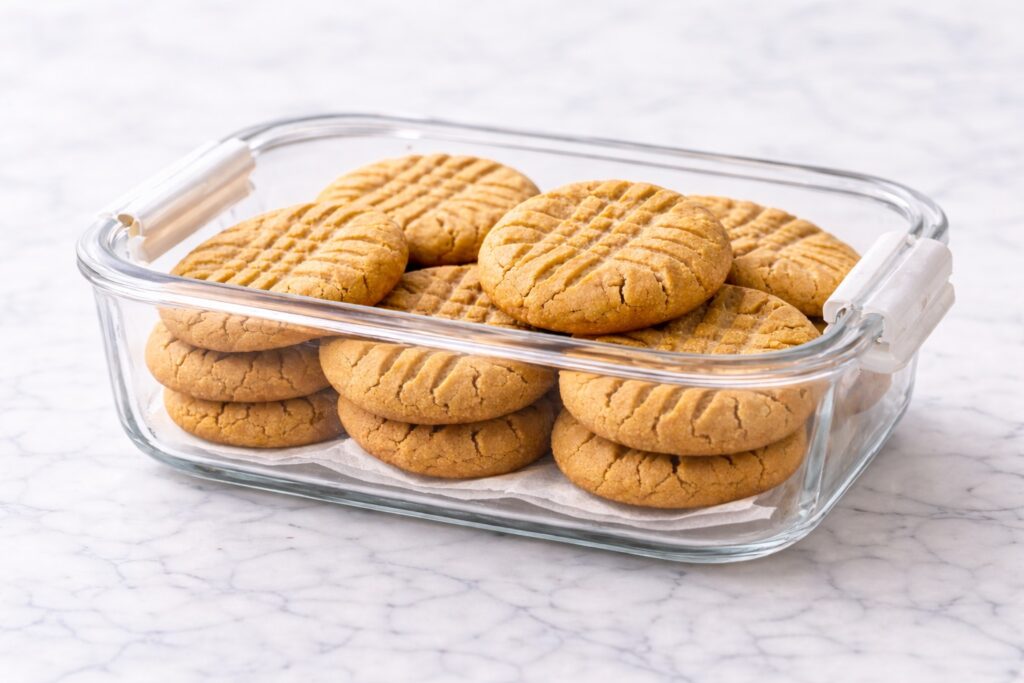
Peanut butter cookies store very well and keep their soft texture for several days when stored properly.
- Room Temperature: Store the cookies in an airtight container for up to 4 days. Placing a small piece of bread in the container can help keep the cookies soft.
- Refrigerator: While refrigeration is not usually necessary, peanut butter cookies can be stored in the refrigerator for up to 1 week.
- Freezer: Baked peanut butter cookies freeze very well. Store them in a freezer-safe container for up to 2 months and thaw at room temperature before serving.
Peanut Butter Cookies FAQ
If you still have questions about making peanut butter cookies, these helpful answers cover some of the most common things bakers ask.
Why do peanut butter cookies have fork marks?
The fork marks flatten the dough slightly so the cookies bake evenly. Peanut butter cookie dough is dense, and pressing the cookies helps heat distribute properly during baking.
Why are my peanut butter cookies crumbly?
Peanut butter cookies can become crumbly if too much flour is added or if the cookies are overbaked. Measuring the flour carefully and removing the cookies from the oven when the edges are lightly golden helps keep the centers soft and tender. Using the right balance of peanut butter, butter, and sugar also helps maintain a moist, chewy texture.
Why are my peanut butter cookies dry?
Peanut butter cookies can become dry if they are overbaked or if too much flour is added. Measuring flour correctly and removing the cookies from the oven when the edges turn golden helps keep them soft.
Why do peanut butter cookies spread so much?
Peanut butter cookies may spread too much if the dough is too warm, if the butter is overly soft, or if very oily natural peanut butter is used. Letting the dough rest briefly, measuring flour carefully, and using properly mixed peanut butter helps the cookies hold their shape better during baking.
Can you freeze peanut butter cookie dough?
Yes. Peanut butter cookie dough freezes very well. Shape the dough into balls and freeze them on a baking tray, then store them in a freezer bag for up to 2 months.
What peanut butter works best for cookies?
Creamy peanut butter works best for peanut butter cookies because it blends smoothly into the dough and creates a consistent texture.
More Delicious Cookie Recipes to Try
Quick picks: If you want something closest in flavor, try the peanut butter chocolate chip cookies. For a more classic homemade favorite, go for the chocolate chip cookies.
If you enjoy soft, classic cookies like these peanut butter cookies, there are a few other favorites worth keeping in your baking rotation. Some stay close in texture and richness, while others bring a slightly different finish or a more creative twist, all with that same cozy, homemade feel.
Classic & Chocolate Chip Variations
- Chocolate Chip Cookies – classic, soft centers with golden edges and gooey chocolate
- Brown Butter Chocolate Chip Cookies – deeper flavor with a rich, slightly nutty finish
- Sourdough Chocolate Chip Cookies – soft cookies with a more complex flavor and subtle tang
- White Chocolate Chip Cookies – softer, sweeter cookies with a creamy finish
Peanut Butter & Soft Cookie Favorites
- Peanut Butter Chocolate Chip Cookies – soft and chewy with rich peanut flavor and melted chocolate throughout
- 3 Ingredient Peanut Butter Cookies – a simpler version with a soft, tender texture and bold peanut flavor
- Peanut Butter Blossom Cookies – classic peanut butter cookies topped with chocolate for a nostalgic finish
- Snickerdoodle Cookies – soft cookies with a warm cinnamon sugar coating
Classic Homemade Favorites
- Sugar Cookies – soft, buttery, and simple, perfect for everyday baking
- Shortbread Cookies – buttery and delicate with a more crumbly texture
- Thumbprint Cookies – soft cookies with a sweet jam center
- Molasses Cookies – soft, cozy cookies with a deeper spiced flavor
Rich & Creative Variations
- Peanut Butter Bars – rich and soft with the same peanut butter flavor in layered dessert form
- Brownie Cookies – fudgy, chocolate-heavy cookies with a soft center
- Chocolate Crinkle Cookies – rich cookies with a soft interior and crackled top
- Hot Chocolate Cookies – soft cookies with a deep chocolate flavor and cozy finish
Each of these recipes follows the same idea: simple ingredients, reliable texture, and that familiar homemade feel that makes cookies easy to come back to again and again.
Peanut Butter Cookies Recipe Summary
These peanut butter cookies are soft, chewy, and rich in roasted peanut flavor, with lightly crisp edges and a tender center. Made with simple pantry ingredients like peanut butter, butter, sugar, and flour, they come together quickly and bake into a classic homemade cookie with the signature criss-cross pattern.
The balance of fat from peanut butter, moisture from brown sugar, and structure from flour and eggs creates cookies that stay soft while still holding their shape. Small details like gently pressing the dough and removing the cookies while the centers are still soft help achieve that perfect texture every time.
This easy peanut butter cookie recipe is ideal for everyday baking, cookie trays, or simple homemade desserts that feel warm, nostalgic, and reliable.
Final Thoughts
Peanut butter cookies are one of those timeless recipes that never lose their charm. With their rich nutty flavor, soft centers, and lightly crisp edges, they bring together simplicity and comfort in every bite.
What makes these cookies so special is how effortlessly they transform a few simple pantry ingredients into something warm, nostalgic, and deeply satisfying.
Whether you’re baking for a quiet afternoon treat, a cookie tray to share, or simply because the craving for peanut butter strikes, these classic peanut butter cookies are always a reliable and comforting treat that never goes out of style.
Now that you understand the technique, ingredients, and baking science behind peanut butter cookies, you’re ready to bake a batch of these classic homemade cookies anytime.
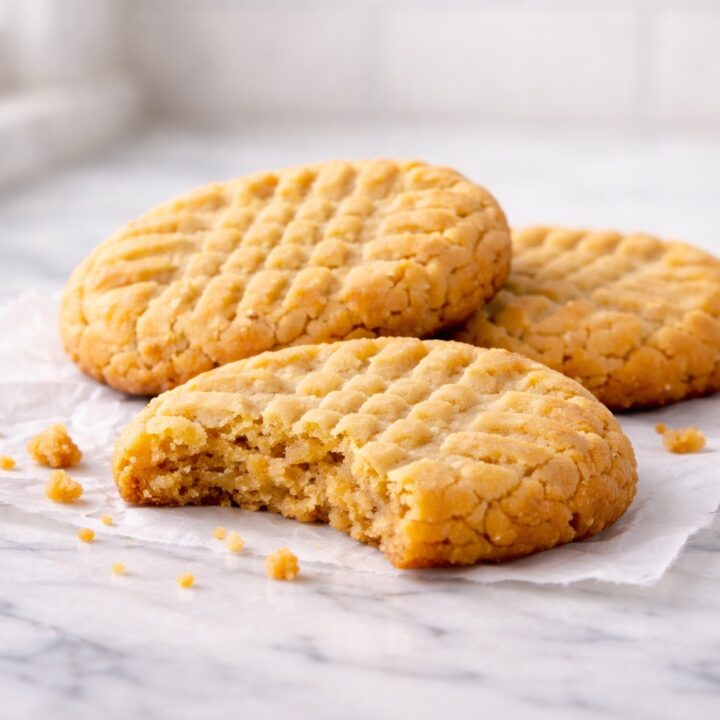
Peanut Butter Cookies
These classic peanut butter cookies are soft, chewy, and packed with rich peanut flavor. Made with simple pantry ingredients, this easy recipe creates homemade cookies with the signature criss-cross fork pattern and perfectly tender centers.
Ingredients
- 1 cup creamy peanut butter
- ½ cup unsalted butter, softened
- ½ cup granulated sugar
- ½ cup brown sugar
- 1 large egg
- 1 teaspoon vanilla extract
- 1¼ cups all-purpose flour
- ½ teaspoon baking soda
- ¼ teaspoon salt
Instructions
- Preheat the oven to 350°F (175°C) and line a baking sheet with parchment paper.
- In a large mixing bowl, beat the butter, granulated sugar, and brown sugar until light and fluffy.
- Mix in the peanut butter, egg, and vanilla extract until smooth and creamy.
- In a separate bowl, whisk together the flour, baking soda, and salt.
- Gradually add the dry ingredients to the peanut butter mixture and mix until a soft cookie dough forms.
- Roll the dough into small balls and place them on the prepared baking sheet.
- Use a fork to gently press each dough ball twice in opposite directions to create the classic criss-cross pattern.
- Bake for 10–12 minutes, until the edges are lightly golden.
- Allow the cookies to cool on the baking sheet for a few minutes before transferring them to a cooling rack.
Notes
- Creamy peanut butter works best for smooth cookie dough and consistent texture. If using natural peanut butter, stir it well so the oils are fully incorporated.
- Do not overbake the cookies. Peanut butter cookies should still look slightly soft in the center when removed from the oven — they will continue to set as they cool.
- For thicker bakery-style cookies, chill the dough for 20–30 minutes before shaping and baking.
Nutrition Information:
Yield: 24 cookies Serving Size: 1 cookieAmount Per Serving: Calories: 150Total Fat: 9gCarbohydrates: 15gFiber: 1gSugar: 10gProtein: 3g
Nutrition information is an estimate and may vary depending on the specific ingredients used.
12 Sweet Favourites — Yours, Free 🍰
Tiramisù, no-bake cheesecake, the perfect chocolate chip cookie & 9 more reader-loved desserts — gathered into one beautiful free recipe book. From my kitchen to yours.
No spam, just sweet things. Unsubscribe anytime.


One Comment
Comments are closed.