Oatmeal Cookie Recipe (Soft, Chewy & Bakery-Style)
🎁 FREE E-BOOK: 12 Sweet Favorites — reader-loved desserts in one beautiful recipe book.
There’s something quietly irresistible about a really good oatmeal cookie. Not just any cookie — the kind with lightly crisp edges, a soft, almost creamy center, and oats that feel toasted and warm rather than dry or heavy.
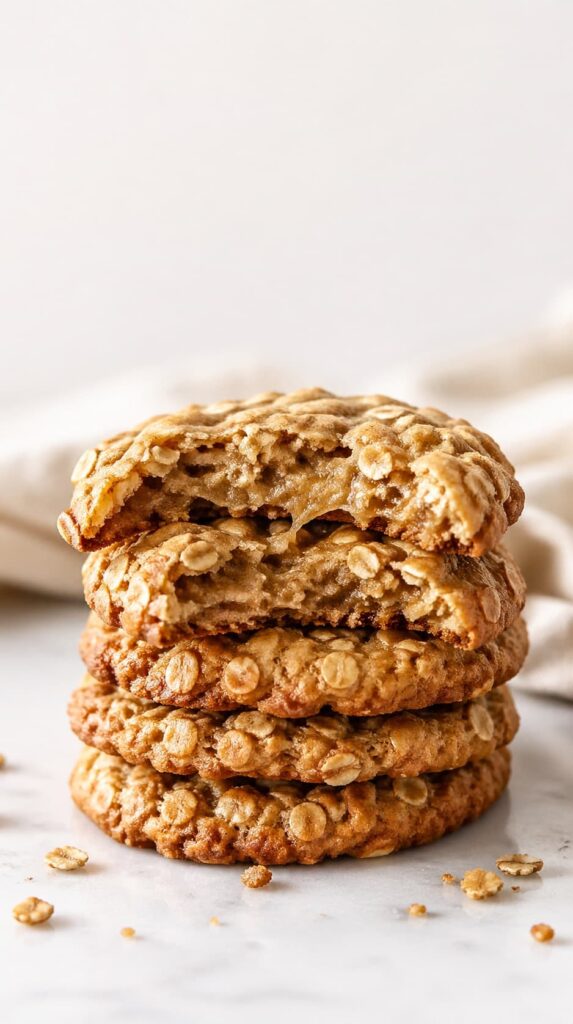
This oatmeal cookie recipe is built around that exact experience. It’s not about making cookies that are just “good enough” — it’s about getting that bakery-style texture where every bite feels balanced: soft, chewy, slightly structured, but never dense.
What makes this recipe different is how it handles moisture and oat hydration. Oatmeal cookies are often misunderstood — they can easily turn dry, flat, or overly thick if the balance is even slightly off. Here, everything is calibrated so the cookies stay soft even after cooling, with a texture that actually improves over time.
And that’s why people come back to this recipe. It’s simple on the surface — but underneath, it’s built to work.
Quick Recipe Overview
Texture: Soft center, chewy bite, lightly crisp edges
Flavor: Buttery, lightly caramelized, warm oat flavor
Difficulty: Easy
Time: ~25 minutes
Servings: 18 cookies
Method: Bake
In short: A no-fail oatmeal cookie recipe that delivers soft, chewy cookies with golden edges and perfect texture.
Why This Oatmeal Cookie Recipe Works
This recipe is all about balance:
- Moisture: Brown sugar + butter keep cookies soft and prevent dryness
- Structure: Flour + oats create stability without making them dense
- Fat: Butter adds richness and helps with spread
- Heat: Proper baking time keeps the center soft while edges set
Key insight:
Oats continue absorbing moisture after baking. That’s why slightly underbaking is essential for a soft texture later.
Why You’ll Love This Oatmeal Cookie Recipe
- Soft, chewy, bakery-style texture
These cookies have that perfect balance — lightly crisp edges with a soft, tender center that stays chewy even after cooling. - Not dry, not dense — just right
The oat-to-moisture ratio is calibrated so the cookies feel rich and satisfying without becoming heavy or crumbly. - Reliable, repeatable results
This is one of those oatmeal cookie recipes that works every time — no guesswork, no unpredictable spreading. - Texture improves over time
Thanks to gradual oat hydration, the cookies stay soft and often taste even better the next day. - Simple ingredients, elevated outcome
Nothing complicated here — just a classic combination that delivers a premium, homemade result. - Flexible and easy to customize
Add chocolate chips, raisins, nuts, or spices — the base recipe holds up beautifully.
Ingredients for Oatmeal Cookies
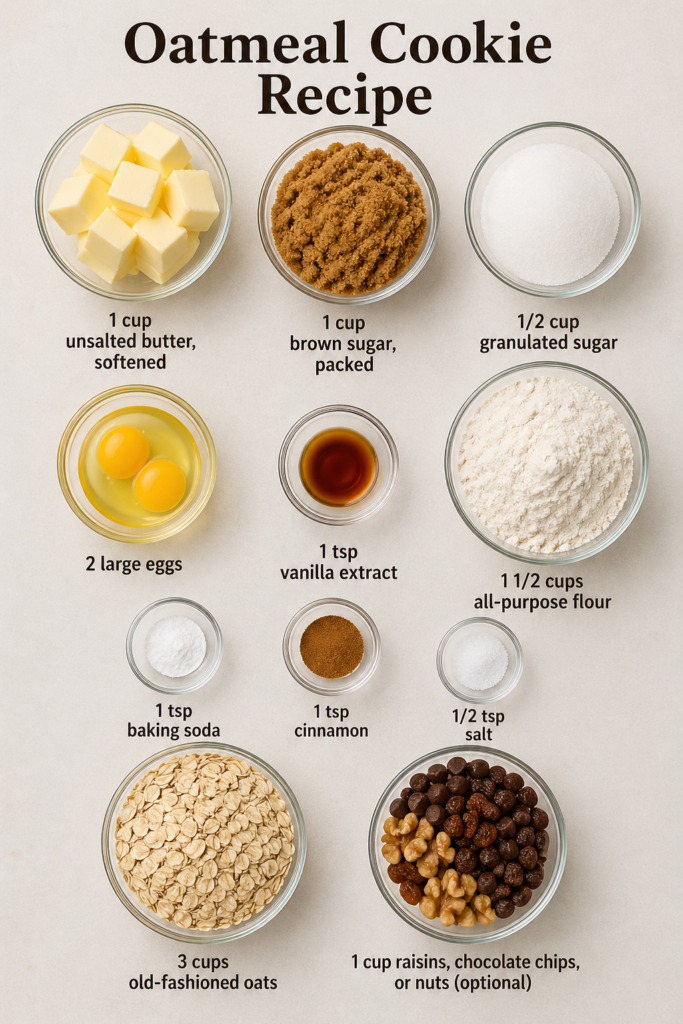
- 1 cup (2 sticks) unsalted butter, softened
- 1 cup brown sugar, packed
- ½ cup granulated sugar
- 2 large eggs
- 1 tsp vanilla extract
- 1 ½ cups all-purpose flour
- 1 tsp baking soda
- 1 tsp cinnamon
- ½ tsp salt
- 3 cups old-fashioned oats
- 1 cup raisins, chocolate chips, or nuts (optional)
Essential Kitchen Tools
- Large Mixing Bowl: For combining all the wet and dry ingredients.
- Medium Mixing Bowl: For whisking together the dry ingredients (flour, cinnamon, baking soda, salt).
- Electric Mixer (Handheld or Stand Mixer): Crucial for creaming the butter and sugars together until the mixture is light and fluffy. You can do this by hand with a whisk, but it will take much more time and effort.
- Measuring Cups and Spoons: For accurately measuring both dry and liquid ingredients.
- Whisk: To thoroughly combine the dry ingredients and ensure the baking soda and salt are evenly distributed.
- Spatula (Rubber or Silicone): For scraping down the sides of the bowl and ensuring everything is well mixed. Also essential for folding in the oats and raisins.
- Baking Sheets: You’ll need one or two standard-sized baking sheets.
- Parchment Paper or Silicone Baking Mats: Highly recommended to prevent the cookies from sticking and for easy cleanup.
- Wire Cooling Rack: For cooling the cookies after they come out of the oven. This stops them from getting soggy on the bottom.
Optional but Helpful Tools
- Cookie Scoop (or Ice Cream Scoop): This ensures all your cookies are the same size, which means they will bake evenly. A 1.5-tablespoon scoop is a good size for this recipe.
- Small Bowl: For beating the egg before adding it to the butter-sugar mixture, though you can also beat it directly in the large bowl.
- Sifter or Fine-Mesh Sieve: If you want to sift your flour for a lighter texture, though whisking it in the bowl is usually sufficient for cookies.
How to Make Oatmeal Cookies
- Preheat oven to 350°F (175°C). Line baking sheets with parchment paper.
- Cream butter and sugars in a large bowl until fluffy. A hand mixer works best, but strong arms work too.
- Add eggs and vanilla, mixing well. No lumps allowed, unless they’re cookie dough lumps, which are encouraged.
- Whisk dry ingredients (flour, baking soda, cinnamon, salt) in a separate bowl. Stir into wet mix until just combined.
- Fold in oats and any add-ins (raisins, chocolate chips, nuts). The dough will be thick, this means success.
- Drop spoonfuls of dough onto baking sheets, spacing them 2 inches apart. These cookies like to spread.
- Bake for 10-12 minutes until edges are golden but centers are soft. Overbaking = hockey pucks.
- Cool for 5 minutes on the sheet, then transfer to a rack. Or eat one immediately, we call it “quality assurance.”
Visual Doneness Cues
- Edges: set, lightly golden, slightly crisp
- Center: soft, slightly puffed, not wet
- Surface: matte, no raw shine
- Structure: holds shape but yields slightly when pressed
If the center looks “just barely done,” that’s exactly the sweet spot.
Expert Tips
- Slightly underbake for best long-term texture
- Let dough rest — even 10 minutes makes a visible difference
- Don’t compress the dough balls too much
- Use parchment for controlled bottom browning
- Bake one tray at a time for even heat
- If cookies spread too much, chill dough briefly
- Always check texture, not just time
Common Mistakes
Dry cookies
→ Overbaking OR too much flour
→ Fix: Pull earlier + measure correctly
Flat cookies
→ Butter too warm or melted
→ Fix: Use soft, not melted butter
Dense texture
→ Overmixing after adding oats
→ Fix: Fold gently
Gritty oats texture
→ Dough not rested
→ Fix: Let oats hydrate before baking
How to Serve Oatmeal Cookies (Best Texture & Serving Ideas)
Oatmeal cookies are at their absolute best when served slightly warm — when the edges have just set and the center still feels soft and almost creamy. That contrast is where the texture really shines.
For an everyday, cozy serving:
- pair with a glass of cold milk for contrast
- serve alongside coffee or a warm latte for a balanced, not-too-sweet bite
- warm briefly before serving to bring back softness and aroma
For a more indulgent treat:
- turn them into oatmeal cookie sandwiches with a light vanilla or cream cheese filling
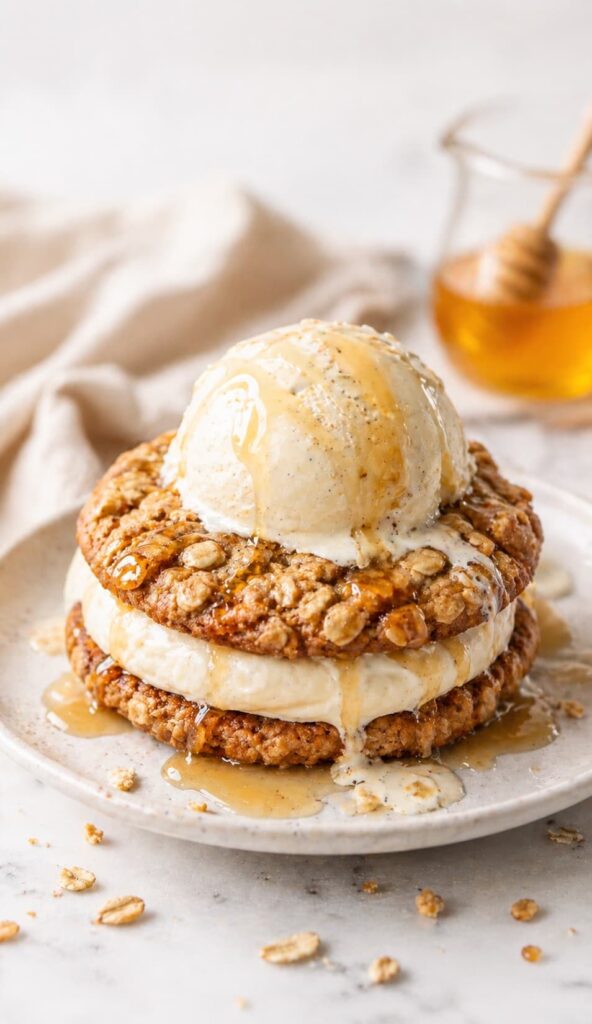
- serve with a small scoop of vanilla ice cream and let it melt gently into the cookie
- drizzle lightly with honey or maple syrup to enhance the oat flavor
For a more “bakery-style” presentation:
- stack cookies slightly offset for a natural, homemade look
- serve on a simple neutral plate or parchment-lined tray
- add a few loose oats or crumbs around for texture realism (perfect for photos too)
Texture tip:
If the cookies have been stored, warming them for 8–10 seconds in the microwave restores that fresh-baked softness without drying them out.
Save this for: slow mornings, cozy afternoons, or when you want a simple homemade dessert that feels warm, familiar, and deeply satisfying.
Variations (Customize Your Oatmeal Cookies)
This oatmeal cookie base is highly adaptable — it’s stable enough to handle mix-ins and flavor changes without breaking texture, as long as balance is preserved.
Oatmeal Raisin (Classic Chewy Version)
Add 1 cup raisins.
→ Soak raisins in warm water for 5–10 minutes before adding
→ Prevents them from pulling moisture out of the dough
Result: softer, juicier bites with a classic bakery feel
Chocolate Chip Oatmeal Cookies
Add 3/4–1 cup chocolate chips.
→ Use semi-sweet for balance or dark chocolate for depth
→ Slightly reduce sugar (optional) if using a lot of chocolate
Result: richer, softer cookies with a more indulgent profile
Nutty Oatmeal Cookies
Add 1/2–3/4 cup chopped walnuts or pecans.
→ Lightly toast nuts before adding for better flavor
→ Adds contrast to the soft texture
Result: more structured bite with a subtle crunch
Coconut Oatmeal Cookies
Add 1/2 cup shredded coconut.
→ Use unsweetened coconut to control sweetness
→ Expect a slightly softer, more moist texture
Result: tender cookies with a light tropical note
Cinnamon Spice Oatmeal Cookies
Add:
- 1 tsp cinnamon
- 1/4 tsp nutmeg (optional)
→ Enhances warmth without overpowering oats
Result: bakery-style cookies with a deeper, cozy flavor
Soft Apple Oatmeal Cookies
Add 1/2 cup finely diced apples.
→ Pat apples dry slightly before adding
→ Reduce baking time by ~1 minute
Result: extra moist, soft cookies with a subtle fruity sweetness
High-Texture Bakery Style (Advanced Variation)
Mix:
- 1/2 cup chocolate chips
- 1/2 cup nuts
→ Slightly increase flour by 1–2 tbsp if dough feels too loose
Result: thick, loaded cookies with strong structure and layered texture
Texture Control Variation (Important)
Want thicker cookies?
→ Chill dough 20–30 minutes
Want softer cookies?
→ Slightly underbake
Want crisp edges?
→ Bake +1 minute and flatten slightly before baking
Key insight:
Every variation changes how moisture behaves. If you add mix-ins, always think in terms of absorption vs release — that’s what keeps the texture consistent.
Storage & Make Ahead (Keep Them Soft & Fresh Longer)
Oatmeal cookies are naturally more stable than many other cookies because the oats continue to retain moisture over time — which means they don’t dry out as quickly if stored correctly.
At Room Temperature (Best for Texture)
Store in an airtight container for up to 4 days.
→ Keep them in a single layer or loosely stacked
→ Add a small piece of parchment between layers if needed
Micro insight:
Adding a small slice of bread to the container helps maintain softness — the cookies absorb just enough moisture to stay tender without becoming soggy.
In the Fridge (Longer Storage)
Store up to 7 days in an airtight container.
→ Texture will become slightly firmer
→ Let them come to room temp or warm briefly before serving
Best practice:
Avoid frequent opening — temperature shifts can dry them out faster.
Freezing Baked Cookies
Freeze for up to 2 months.
→ Store in freezer-safe bag or container
→ Separate layers with parchment
To serve:
→ Thaw at room temperature
→ Or warm directly for a fresh-baked feel
Make Ahead Options (Best Methods)
Refrigerating the Dough (Flavor + Texture Boost)
Chill dough for 12–24 hours.
→ Improves flavor depth
→ Allows partial oat hydration
→ Results in thicker, more developed cookies
Freezing Cookie Dough (Most Practical)
Scoop dough into portions and freeze.
→ Bake straight from frozen
→ Add 1–2 extra minutes to baking time
Why this works well:
Oat-based dough handles freezing better than many other cookie types due to its stable moisture structure.
Pre-Baked Partial Method (Advanced)
Bake cookies slightly underdone, then cool and freeze.
→ Reheat later for “fresh baked” texture
→ Best for events or batching
Reheating for Best Texture
- Microwave: 8–10 seconds → restores softness
- Oven: 150°C (300°F) for 3–5 minutes → restores edges + center balance
Important:
Avoid overheating — oatmeal cookies lose moisture faster when reheated too long.
Key Insight
Oatmeal cookies don’t just store well — they evolve.
Because oats continue absorbing moisture after baking, the texture often becomes:
→ softer
→ more cohesive
→ more evenly chewy
That’s why many batches taste even better on day 2 than right out of the oven.
More Cookie Recipes to Try Next
FAQ
Why are my oatmeal cookies dry?
Usually overbaked or too much flour.
Can I use quick oats?
Yes, but texture becomes softer and less defined.
Should I chill the dough?
Optional, but improves thickness and structure.
Why did my cookies spread too much?
Butter too warm or insufficient flour.
Do oatmeal cookies harden after baking?
They set, but should stay soft if baked correctly.
Can I make them gluten-free?
Yes, with a proper flour blend and GF oats.
Final Thoughts
Some recipes are about technique. Others are about comfort.
This one is both.
Once you make these, you’ll understand why oatmeal cookies never go out of style — they’re simple, honest, and quietly perfect.

Love this? There are twenty more like it.
128 pages, five chapters, 15 kitchen guides and 16 printable planning pages — in US Letter and A4.

Oatmeal Cookies
Golden, chewy oatmeal cookies packed with hearty oats and melty chocolate chips (or plump raisins). Crispy edges give way to a soft, buttery center, each bite is a warm hug of cinnamon-sugar comfort. Perfect with milk, and impossible to eat just one."
Ingredients
- 1 cup (2 sticks) unsalted butter
- 1 cup brown sugar, packed
- ½ cup granulated sugar
- 2 large eggs
- 1 tsp vanilla extract
- 1 ½ cups all-purpose flour
- 1 tsp baking soda
- 1 tsp cinnamon
- ½ tsp salt
- 3 cups old-fashioned oats
- 1 cup chocolate chips, or nuts (optional)
Instructions
- Heat oven to 350°F (175°C). Line pans with parchment.
- Mix butter + sugars until fluffy (mixer or muscle!).
- Beat in eggs + vanilla, smooth is best.
- Whisk dry ingredients, then stir into wet mix.
- Fold in oats + extras (dough will be thick!).
- Scoop dough 2" apart, they’ll spread.
- Bake 10-12 min until edges gold, centers soft.
- Cool 5 min, then devour. Hot cookie tax applies.
Nutrition Information:
Yield: 18 cookies Serving Size: 1 cookieAmount Per Serving: Calories: 120Total Fat: 5gCarbohydrates: 18gSugar: 8gProtein: 2g
Nutrition information is estimated and may vary based on ingredients and portion sizes.
12 Sweet Favorites — Yours, Free 🍰
Tiramisù, no-bake cheesecake, the perfect chocolate chip cookie & 9 more reader-loved desserts — gathered into one beautiful free recipe book. From my kitchen to yours.
No spam, just sweet things. Unsubscribe anytime.