Banana Bread (Moist, Easy & Bakery-Style)
🎁 FREE E-BOOK: 12 Sweet Favorites — reader-loved desserts in one beautiful recipe book.
There is something deeply comforting about the smell of Banana Bread baking in the oven.
As the loaf rises, the kitchen fills with the warm aroma of ripe bananas, vanilla, brown sugar, and melted butter. It feels cozy, familiar, and a little nostalgic — the kind of homemade baking that makes even an ordinary day feel softer.
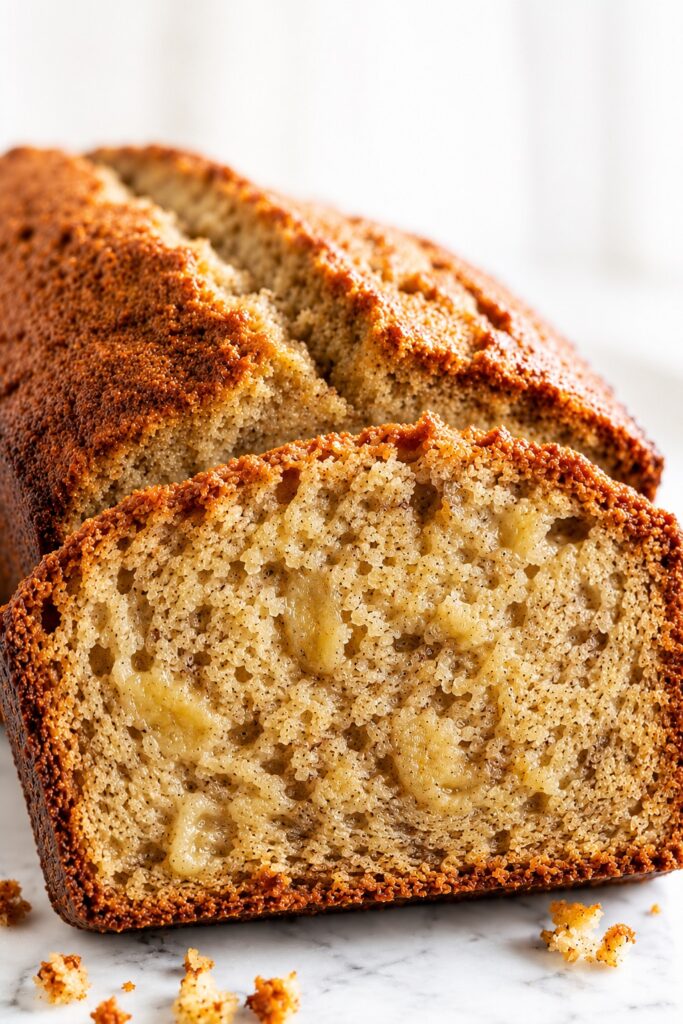
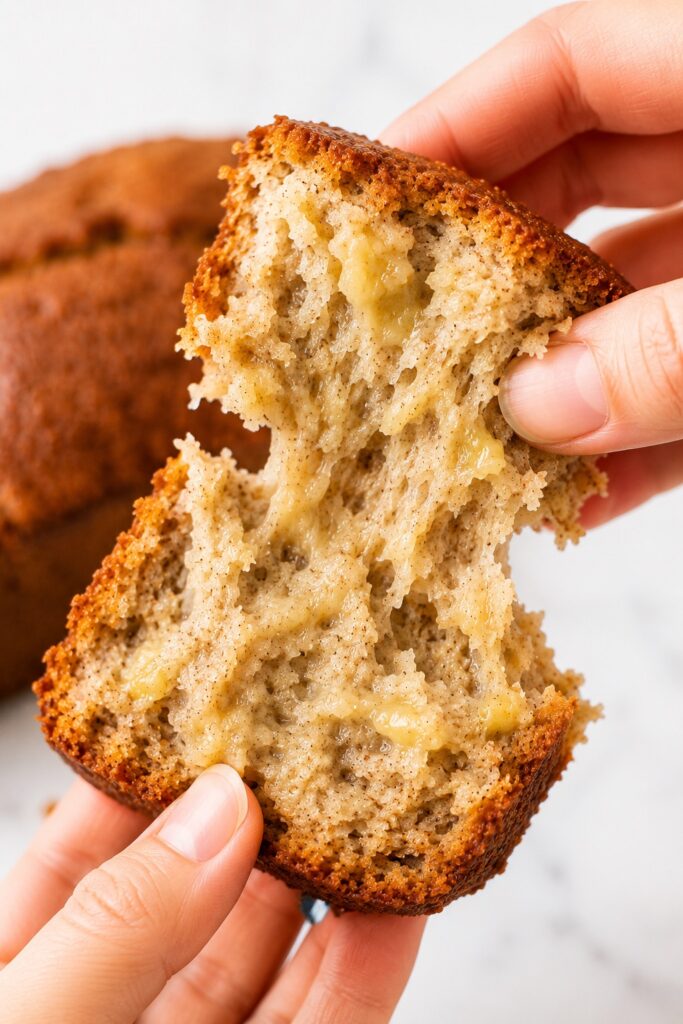
This Banana Bread recipe is moist, tender, and bakery-style without being complicated. The crumb is soft and rich, the banana flavor is full and naturally sweet, and the top bakes into that beautiful golden crack that makes homemade quick bread so inviting.
What makes this version special is a small amount of sour cream. It may seem like a tiny addition, but it helps create a softer crumb, improves moisture retention, and gives the loaf that bakery-style texture that stays tender for days.
This is why people love saving this recipe: it turns a few overripe bananas into a beautiful, reliable loaf that works for breakfast, snacks, brunch, lunchboxes, cozy weekends, and simple homemade dessert moments.
What Is Banana Bread?
Banana Bread is a classic quick bread made with mashed ripe bananas, flour, sugar, fat, egg, and baking soda. Unlike yeast bread, it does not need kneading or rising time. The batter comes together quickly, then bakes into a soft, moist loaf with a tender crumb and rich banana flavor.
Because ripe bananas provide both sweetness and moisture, banana bread is naturally flavorful and forgiving. The best versions balance moisture, structure, and lift so the loaf stays soft without becoming dense or gummy.
Why Banana Bread Became So Popular
Banana Bread has remained one of the most beloved homemade baked goods for generations because it transforms simple ingredients into something genuinely comforting. Unlike many cakes and pastries, it does not require special equipment, complicated techniques, or hard-to-find ingredients.
It also solves a common kitchen problem: overripe bananas. Instead of throwing them away, home bakers can turn them into a soft, flavorful loaf that feels far more rewarding than the ingredients might suggest.
Part of Banana Bread’s lasting appeal is its versatility. It works as breakfast, an afternoon snack, a lunchbox treat, a brunch addition, or even a simple dessert. That combination of convenience, reliability, and homemade comfort is one reason Banana Bread continues to be one of the most searched and baked quick bread recipes in the world.
Quick Recipe Overview
| Texture | Moist, soft, tender, bakery-style crumb |
|---|---|
| Flavor | Sweet banana, brown sugar, vanilla, buttery warmth |
| Difficulty | Easy |
| Time | About 1 hour 10 minutes |
| Servings | 10 slices |
| Method | Quick bread, baked in a loaf pan |
| Best For | Breakfast, brunch, snacks, lunchboxes, cozy desserts |
In short: This Banana Bread is an easy, moist, bakery-style quick bread made with ripe bananas, brown sugar, melted butter, and a touch of sour cream for a soft crumb that stays tender.
Why This Banana Bread Recipe Works
The best Banana Bread is all about balance. A great loaf needs enough moisture to feel soft and rich, but enough structure to slice cleanly without turning dense, gummy, or wet in the center.
Ripe bananas provide the main flavor, natural sweetness, and moisture. As bananas ripen, their starches break down into sugars, which gives the bread a deeper banana flavor and a softer texture.
Melted butter adds richness and that classic homemade banana bread flavor. Unlike oil, butter gives the loaf a warmer, more bakery-style taste while still keeping the crumb tender.
Brown sugar helps keep the crumb moist because it contains molasses. It also adds a subtle caramel note that pairs beautifully with ripe bananas and vanilla.
The sour cream is the small bakery-style upgrade in this recipe. It softens the crumb, helps the loaf stay tender for longer, and adds just enough acidity to support the baking soda for better lift.
The flour helps create the balance between moisture and structure, allowing the loaf to stay soft while still slicing cleanly. Combined with the bananas and sour cream, it creates a crumb that feels moist and tender without becoming dense or gummy.
Baking insight: More banana does not always mean better banana bread. Too much banana can overwhelm the structure and create a heavy, gummy center. The goal is a loaf that tastes deeply of banana while still holding clean, tender slices.
Why You’ll Love This Recipe
- It uses simple pantry ingredients.
- It is perfect for very ripe bananas.
- The crumb is moist, tender, and bakery-style.
- The sour cream keeps the loaf soft for days.
- It slices beautifully once cooled.
- It works for breakfast, snacks, brunch, or dessert.
- It can be made plain or with chocolate chips or walnuts.
- It freezes well for easy make-ahead baking.
Is This Banana Bread Right For You?
This Banana Bread is ideal if you love soft, moist quick breads with rich banana flavor and a tender bakery-style crumb. It is designed to be easy enough for beginner bakers while still delivering the texture and flavor people expect from a great homemade loaf.
You will probably love this recipe if you:
- Have overripe bananas waiting on the counter
- Prefer moist banana bread over dry or cake-like versions
- Enjoy bakery-style breakfast breads and quick breads
- Want a reliable make-ahead breakfast or snack
- Like recipes made with simple pantry ingredients
- Enjoy classic homemade baking with minimal effort
If you’re looking for a Banana Bread that is soft, flavorful, easy to make, and dependable every time, this recipe sits right in that sweet spot between everyday simplicity and bakery-style results.
The Baking Science Behind Moist Banana Bread
Banana Bread may look simple, but a few small baking reactions are responsible for its texture.
As the loaf bakes, moisture from the bananas and sour cream turns into steam. That steam helps the batter expand and creates a softer interior.
Baking soda reacts with the natural acidity from the bananas, brown sugar, and sour cream. This reaction creates tiny bubbles that help lift the loaf and give it a lighter crumb.
The egg provides structure. As the loaf heats, the egg proteins set and help hold the bread together so it does not collapse after baking.
The flour absorbs moisture and forms the framework of the loaf. Too little flour can make banana bread gummy, while too much flour can make it dry. This recipe lands in the middle: moist, but still sliceable.
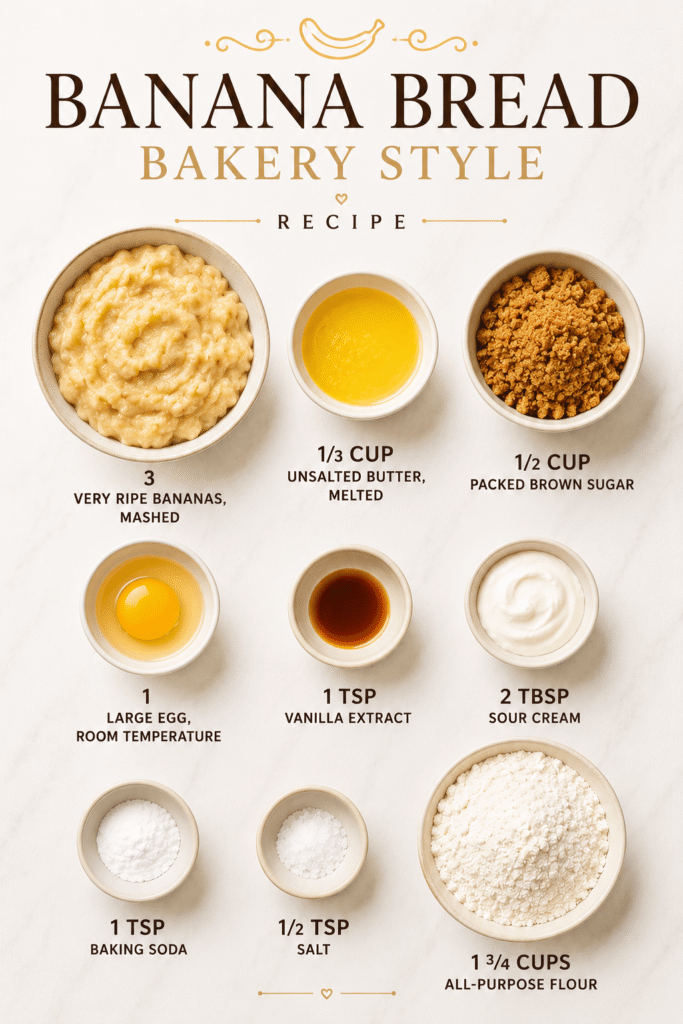
Ingredients
- 3 very ripe bananas, mashed
- 1/3 cup unsalted butter, melted
- 1/2 cup packed brown sugar
- 1 large egg, room temperature
- 1 teaspoon vanilla extract
- 2 tablespoons sour cream
- 1 teaspoon baking soda
- 1/2 teaspoon salt
- 1 3/4 cups all-purpose flour
Optional add-ins:
- 1/2 cup chocolate chips
- 1/2 cup chopped walnuts
Ingredient Intelligence
Very Ripe Bananas
Use bananas with plenty of brown spots. The spottier they are, the sweeter and more flavorful your banana bread will be. A few small banana lumps in the batter are perfectly fine and can create little pockets of flavor in the baked loaf.
Sour Cream
Sour cream is the bakery-style secret in this recipe. It adds moisture, softness, and a subtle richness without making the loaf taste tangy. If needed, you can substitute plain Greek yogurt.
Brown Sugar
Brown sugar keeps the crumb softer than white sugar because it contains molasses, which helps hold moisture. It also adds a warmer, slightly caramel-like flavor.
Melted Butter
Melted butter gives this banana bread a rich homemade flavor. Coconut oil can work as a substitute, but butter creates a more classic bakery-style taste.
All-Purpose Flour
The flour gives the loaf structure. Because bananas vary in size, using 1 3/4 cups flour helps protect the bread from becoming too wet in the center.
Egg
The egg helps bind the batter together and provides structure as the loaf bakes.
Role: Adds stability, richness, and moisture.
Why it matters: Without enough structure, banana bread can collapse or feel overly dense.
Behavior insight: Room-temperature eggs blend more smoothly into the batter and support a more even crumb.
Baking Soda
Baking soda is the primary leavening ingredient in this recipe.
Role: Creates lift and helps the loaf rise.
Why it matters: It reacts with the acidity from the bananas and sour cream to create tiny air bubbles throughout the batter.
Behavior insight: Too little baking soda can produce a dense loaf, while too much can leave an unpleasant aftertaste.
Vanilla Extract
Vanilla may seem like a small ingredient, but it plays an important supporting role.
Role: Enhances sweetness and rounds out the banana flavor.
Why it matters: Banana bread tastes more complete and balanced when vanilla is included.
Substitution: Vanilla bean paste works well if available.
Quick Ingredient Balance Guide
| If This Happens | Likely Cause |
|---|---|
| Loaf feels gummy | Too much banana or underbaking |
| Loaf feels dry | Too much flour or overbaking |
| Weak banana flavor | Bananas were not ripe enough |
| Dense crumb | Overmixed batter |
| Pale flavor | Insufficient banana ripeness |
How Ripe Should Bananas Be?
The ripeness of your bananas has a surprisingly large impact on the flavor, sweetness, and texture of Banana Bread. While almost any banana can technically be baked into a loaf, the best results come from bananas that are well past their peak eating stage.
As bananas ripen, their starches gradually convert into sugars. This natural process makes the fruit sweeter, softer, and more aromatic. Those changes are exactly what create the rich banana flavor and moist texture people expect from great homemade Banana Bread.
Green bananas are not ideal because they contain more starch and less natural sweetness. They can produce a loaf with weaker banana flavor and a firmer texture.
Yellow bananas with little or no spotting work in a pinch, but they still lack the depth of flavor that develops during further ripening.
Heavily spotted bananas are usually the sweet spot for Banana Bread. At this stage, the fruit is soft, naturally sweet, and packed with concentrated banana flavor.
Very dark or nearly black bananas can also work beautifully. As long as they are not moldy or fermented, they often produce the most flavorful loaves because their sugars have become highly concentrated.
If your bananas are not ripe enough yet, simply leave them on the counter for a few more days. For a quicker option, place them on a baking sheet and bake at 300°F (150°C) until the peels turn dark and the fruit softens.
Baker’s tip: If your goal is intensely flavored, bakery-style Banana Bread, choose bananas with plenty of brown spots rather than perfectly yellow ones. The difference in flavor is often far more noticeable than any other ingredient in the recipe.
Ingredient Substitutions & Customizations
One reason Banana Bread has remained popular for generations is its flexibility. While the classic version is difficult to beat, several ingredient swaps work well when you need to adapt the recipe to what you already have at home.
Can I Use Greek Yogurt Instead of Sour Cream?
Yes. Plain full-fat Greek yogurt works almost identically to sour cream in this recipe.
It provides moisture, tenderness, and a slight acidity that supports the baking soda and helps create a softer crumb.
Can I Use White Sugar Instead of Brown Sugar?
Yes, although the flavor will be slightly different.
Brown sugar contributes moisture and subtle caramel notes, while white sugar produces a lighter flavor and slightly drier crumb.
Can I Use Oil Instead of Butter?
Yes.
Vegetable oil or light olive oil can be substituted in equal amounts.
The loaf will often stay moist a little longer, but butter provides a richer homemade flavor that many people associate with traditional Banana Bread.
Can I Add Chocolate Chips?
Absolutely.
Chocolate chips are one of the most popular Banana Bread additions because they complement the sweetness of ripe bananas without overpowering them.
Use about 1/2 cup for balanced flavor.
Can I Add Nuts?
Yes.
Walnuts and pecans both work beautifully and add texture contrast to the soft crumb.
Lightly toasting the nuts before adding them can deepen their flavor.
Can I Make Banana Bread Muffins Instead?
Yes.
The batter works very well as muffins and usually bakes much faster than a loaf.
Fill muffin cups about three-quarters full and bake until the centers spring back lightly when touched.
Can I Use Frozen Bananas?
Yes.
Frozen bananas are often even sweeter than fresh ripe bananas.
Allow them to thaw completely, then mash together with any juices they release.
Those juices contain a lot of banana flavor and moisture.
Can I Make It More Banana-Flavored?
Up to a point.
Adding extra banana may seem like the easiest way to increase flavor, but too much banana can make the loaf dense or gummy.
If you want stronger banana flavor, use extremely ripe bananas rather than simply increasing the quantity.
Key takeaway: Banana Bread is forgiving, but the best texture usually comes from keeping the banana-to-flour ratio relatively balanced. Small ingredient swaps work well, while major moisture changes can affect the final crumb.
Equipment You’ll Need
- Large mixing bowl
- Fork or potato masher
- Whisk
- Rubber spatula
- Measuring cups and spoons
- 9×5-inch loaf pan
- Parchment paper
- Cooling rack
A metal loaf pan works especially well because it gives the banana bread steady heat and helps the edges brown nicely. If using a glass pan, the loaf may need a few extra minutes.
Before You Bake: 5 Quick Checks for Success
Banana Bread is one of the easiest baked goods you can make, but a few small details can have a surprisingly large impact on the final texture. Taking a minute to check these before you start can help ensure a moist crumb, beautiful rise, and bakery-style results.
- Use very ripe bananas. The peels should have plenty of brown spots. Riper bananas create better flavor, sweetness, and moisture.
- Measure the flour carefully. Too much flour is one of the most common reasons banana bread turns out dry instead of moist and tender.
- Let the melted butter cool slightly. Hot butter can affect the egg and create a less consistent batter.
- Do not overmix once the flour is added. Overmixing develops gluten and can make the loaf tougher than intended.
- Prepare for a full cooling period. Banana Bread continues setting as it cools. Slicing too early can make the center appear gummy even when fully baked.
Baker’s note: If you only focus on two things, make them very ripe bananas and gentle mixing after adding the flour. Those two details have the biggest impact on whether the loaf turns out moist, tender, and bakery-style.
How to Make Banana Bread
1. Prepare the oven and loaf pan
Preheat the oven to 350°F. Grease a 9×5-inch loaf pan or line it with parchment paper.
A parchment sling is helpful because it makes the loaf easier to lift out after baking.
2. Mash the bananas
Place the ripe bananas in a large mixing bowl and mash them with a fork until mostly smooth.
The mixture should look soft, glossy, and slightly chunky. Do not worry if a few small banana pieces remain. They add texture and flavor.
3. Add the melted butter
Pour the melted butter into the mashed bananas and stir until combined.
The mixture should look rich and glossy. If the butter is very hot, let it cool slightly first so it does not cook the egg in the next step.
4. Mix in the sugar, egg, vanilla, and sour cream
Add the brown sugar, egg, vanilla extract, and sour cream. Whisk until the mixture looks smooth and creamy.
This is where the batter starts to smell sweet and cozy. The sour cream should disappear into the mixture completely.
5. Add the baking soda and salt
Sprinkle the baking soda and salt over the wet mixture and stir well.
Mixing these in before the flour helps distribute them more evenly throughout the batter.
6. Fold in the flour
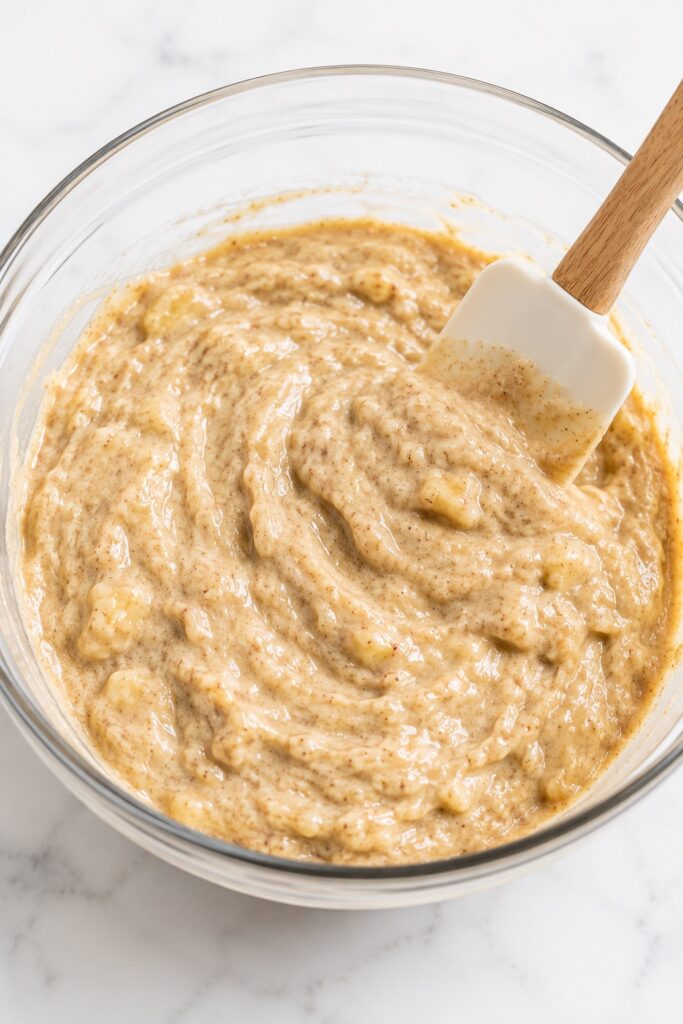
Add the all-purpose flour and gently fold with a rubber spatula until no dry streaks remain.
The batter should be thick, soft, and scoopable. Stop mixing as soon as the flour disappears. Overmixing can make the crumb tougher.
7. Add optional mix-ins
If using chocolate chips or walnuts, gently fold them into the batter.
The batter may look slightly rustic, and that is exactly what you want for homemade banana bread.
8. Transfer to the pan
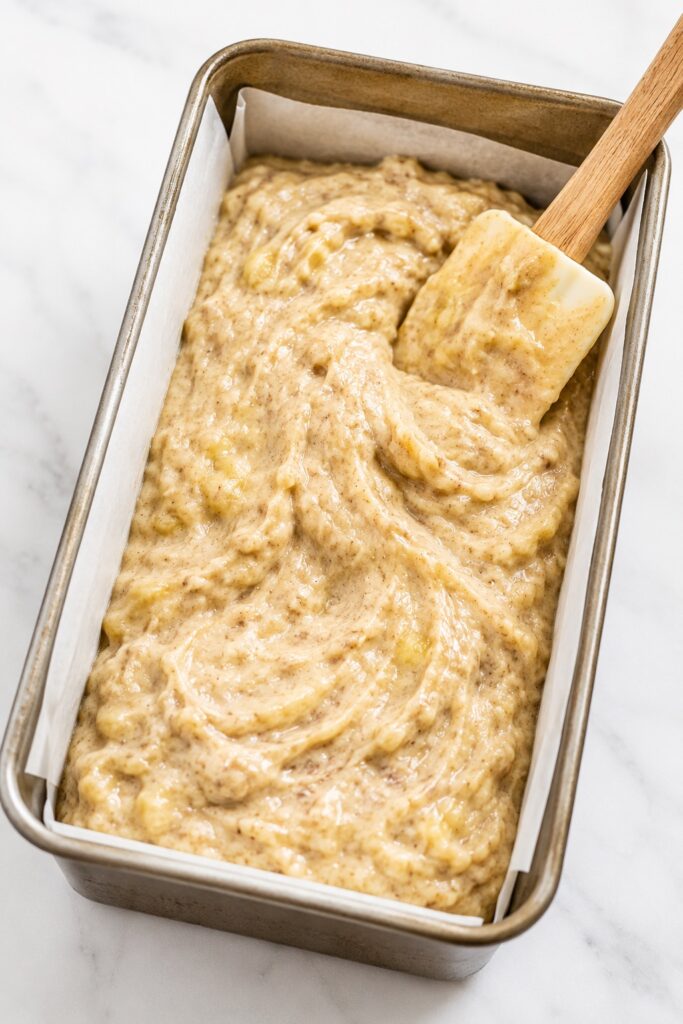
Spoon the batter into the prepared loaf pan and smooth the top gently.
The top does not need to be perfect. A slightly uneven surface often bakes into a beautiful natural crack.
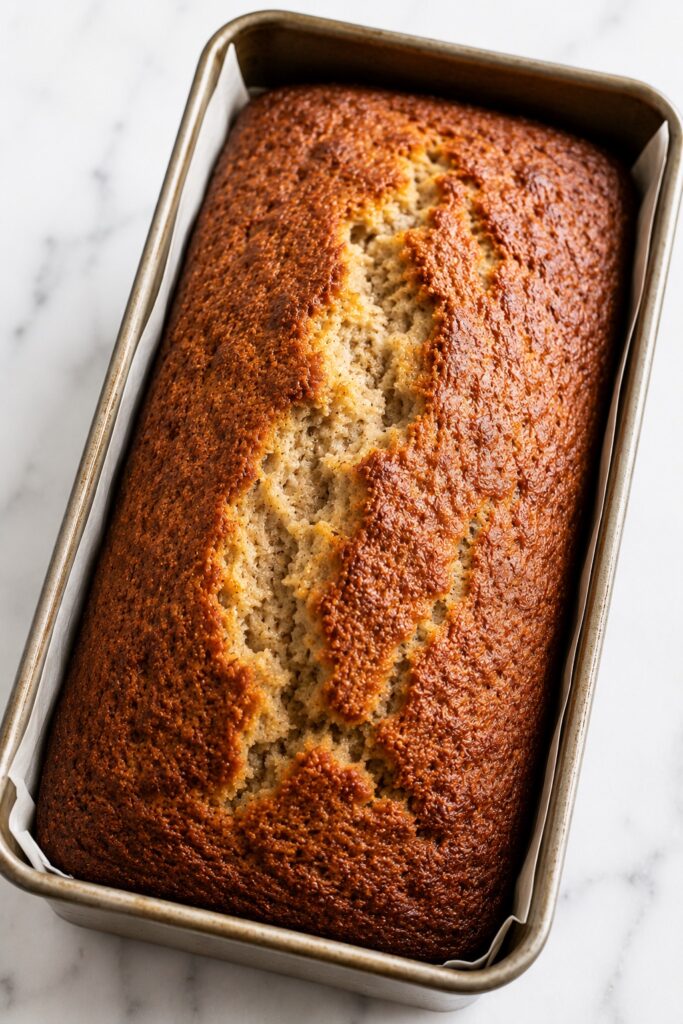
9. Bake until golden and set
Bake for 55 to 65 minutes, or until the top is deeply golden and a toothpick inserted into the center comes out with a few moist crumbs.
If the top is browning too quickly before the center is done, loosely tent the loaf with foil during the last 15 minutes.
Visual Doneness Cues
- The top should be deep golden brown.
- The center should have a natural crack.
- The edges should pull slightly away from the pan.
- The center should look set, not shiny or wet.
- A toothpick should come out with moist crumbs, not raw batter.
- The loaf should feel springy when gently touched in the center.
- Steam should reduce as the bread cools.
10. Cool before slicing
Let the banana bread cool in the pan for 15 minutes, then transfer it to a cooling rack.
This is the hardest part, but it matters. If you slice the loaf while it is too hot, the crumb may look wet or collapse slightly. Once cooled, the slices hold beautifully.
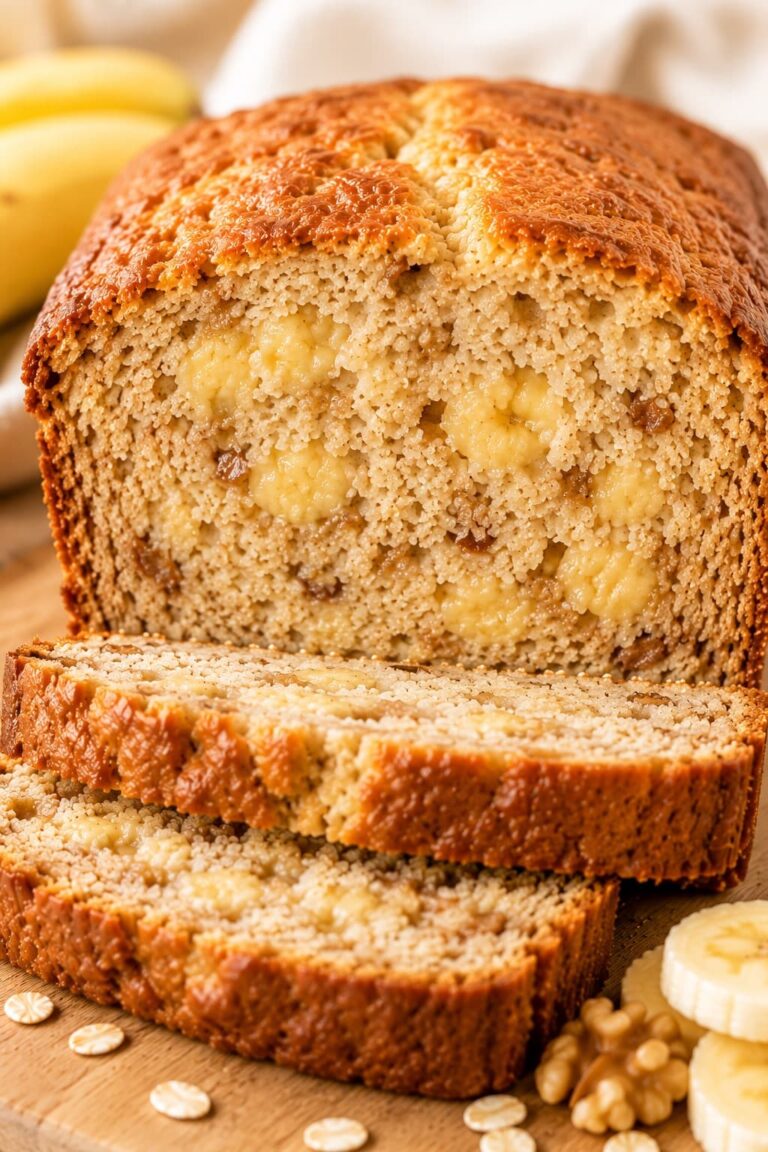
What Perfect Banana Bread Should Look Like
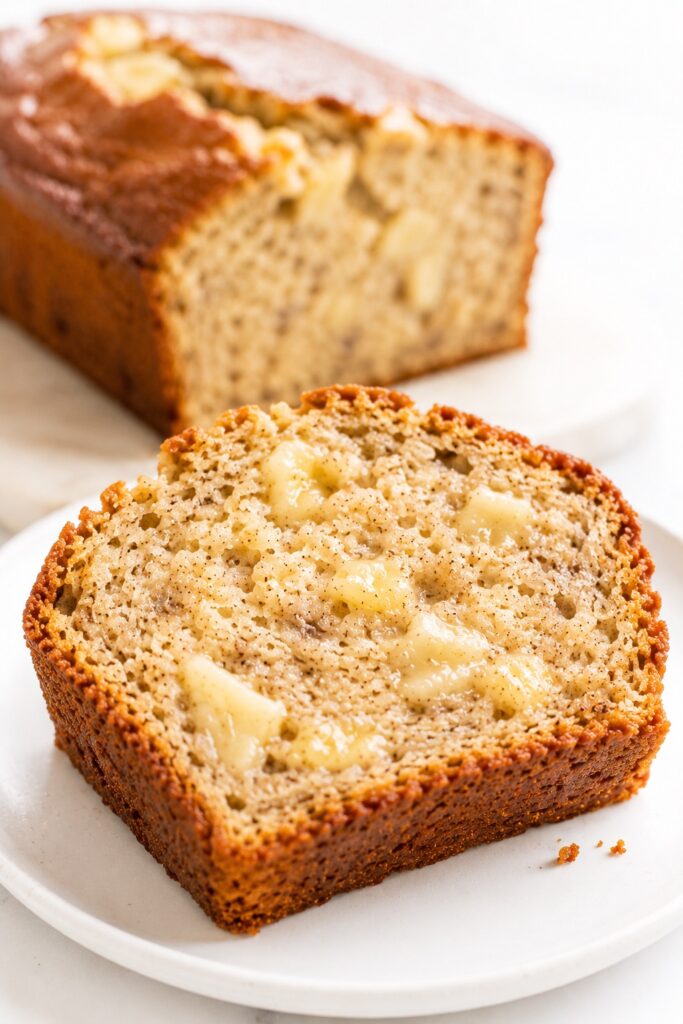
A properly baked Banana Bread should look moist, tall, golden, and inviting from the moment it comes out of the oven. While every loaf develops a little differently, there are several visual cues that indicate excellent texture and proper baking.
- A deep golden-brown top: The surface should be richly colored rather than pale.
- A natural center crack: One of the classic signs of great Banana Bread is a beautiful crack running down the middle of the loaf.
- A well-risen shape: The loaf should look rounded and full rather than flat or sunken.
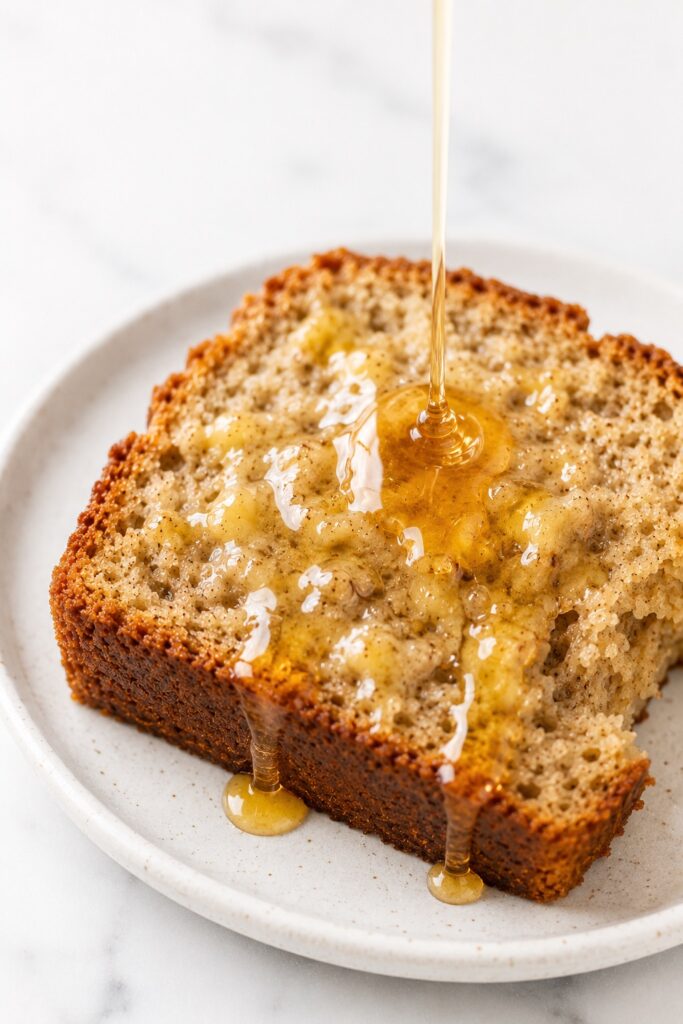
- A moist but not wet crumb: When sliced, the interior should appear soft and tender without looking gummy.
- Even texture throughout: The crumb should contain small, consistent air pockets rather than large tunnels or dense patches.
- Clean slices: Once cooled, the loaf should slice neatly without crumbling excessively or sticking heavily to the knife.
- Visible banana flecks: Small pieces of banana throughout the crumb are a sign of homemade Banana Bread and contribute to flavor and moisture.
Visual cue: Great Banana Bread should look moist, fluffy, and tender rather than dense, wet, or compact. The crumb should hold together easily while remaining soft enough to feel almost melt-in-your-mouth.
One of the easiest ways to judge success is by looking at the first slice. If the loaf shows a golden crust, a soft interior, and a moist crumb that holds together cleanly, you’re very close to the bakery-style texture most people look for in homemade Banana Bread.
Banana Bread Texture Guide
| Stage | What You Should Notice |
|---|---|
| Batter | Thick, soft, scoopable, lightly glossy |
| Mid-Bake | Golden edges, rising center, banana aroma |
| Fully Baked | Deep golden top, set center, moist crumbs on toothpick |
| Freshly Cooled | Tender slices with a soft, moist crumb |
| Next Day | Even deeper banana flavor and softer texture |
Quick Texture Diagnosis Guide
If your Banana Bread doesn’t turn out exactly as expected, these quick clues can help identify what happened during mixing or baking.
| If You See This | Most Likely Cause |
|---|---|
| Dense or heavy crumb | Too much flour or overmixing |
| Gummy center | Underbaking or too much banana |
| Dry loaf | Too much flour or overbaking |
| Sunken center | Underbaked loaf or excess moisture |
| Tough texture | Overmixed batter |
| Pale top | Loaf removed from the oven too early |
| Crumbly slices | Too little moisture or inaccurate measuring |
Baker’s note: Most Banana Bread problems can usually be traced back to one of three things: bananas that weren’t ripe enough, overmixing after adding the flour, or removing the loaf from the oven before the center was fully baked.
Expert Tips for the Best Banana Bread
- Use very ripe bananas. Brown spots mean sweeter flavor and better moisture.
- Do not overmix the batter. Fold gently once the flour is added.
- Let the melted butter cool slightly. Hot butter can affect the egg and texture.
- Use sour cream for a softer crumb. Just 2 tablespoons make the loaf feel more bakery-style.
- Check the center, not just the top. Banana bread can look done before the middle is fully baked.
- Cool before slicing. The crumb finishes setting as the loaf cools.
- For cleaner slices, use a serrated knife. This helps protect the tender crumb.
Common Banana Bread Mistakes
| Mistake | What Happens | How to Fix It |
|---|---|---|
| Using underripe bananas | Weak banana flavor | Use bananas with brown spots |
| Adding too much banana | Dense or gummy center | Use 3 medium-large bananas |
| Overmixing the flour | Tough or chewy crumb | Fold only until combined |
| Underbaking | Wet center | Bake until toothpick shows moist crumbs |
| Slicing too soon | Crumb looks wet or falls apart | Cool before slicing |
Banana Bread Comparison Guide
Classic banana bread is usually made with bananas, sugar, egg, butter or oil, flour, and baking soda. This bakery-style version keeps that familiar flavor but adds sour cream for a softer, more tender crumb.
Compared to oil-based banana bread, this butter version has a richer flavor. Compared to very wet banana bread recipes, this one has more structure, which makes it easier to slice and photograph beautifully.
If you want a classic loaf, keep it plain. If you want something more indulgent, add chocolate chips. If you love a more traditional bakery-style slice, add chopped walnuts.
Banana Bread vs Other Popular Quick Breads
Banana Bread is often grouped together with other quick breads, but each one offers a slightly different flavor, texture, and baking experience.
| Recipe | Texture | Primary Flavor | Best For |
|---|---|---|---|
| Banana Bread | Moist, soft, tender | Sweet ripe banana | Breakfast, snacks, brunch |
| Banana Muffins | Lighter and more portable | Sweet ripe banana | Lunchboxes, grab-and-go breakfasts |
| Pumpkin Bread | Moist and slightly denser | Pumpkin and warm spices | Fall baking and holiday gatherings |
| Zucchini Bread | Moist and delicate | Mild, lightly sweet | Using garden zucchini and summer baking |
While Pumpkin Bread relies on spices and Zucchini Bread focuses on moisture and subtle flavor, Banana Bread stands out for its naturally sweet banana flavor and comforting homemade aroma.
If you already enjoy quick breads, Banana Bread is often the easiest place to start because the ingredients are simple, the method is forgiving, and the results are consistently satisfying.
How to Serve Banana Bread
Banana Bread is beautiful served simply, but a few small touches can make it feel extra special.
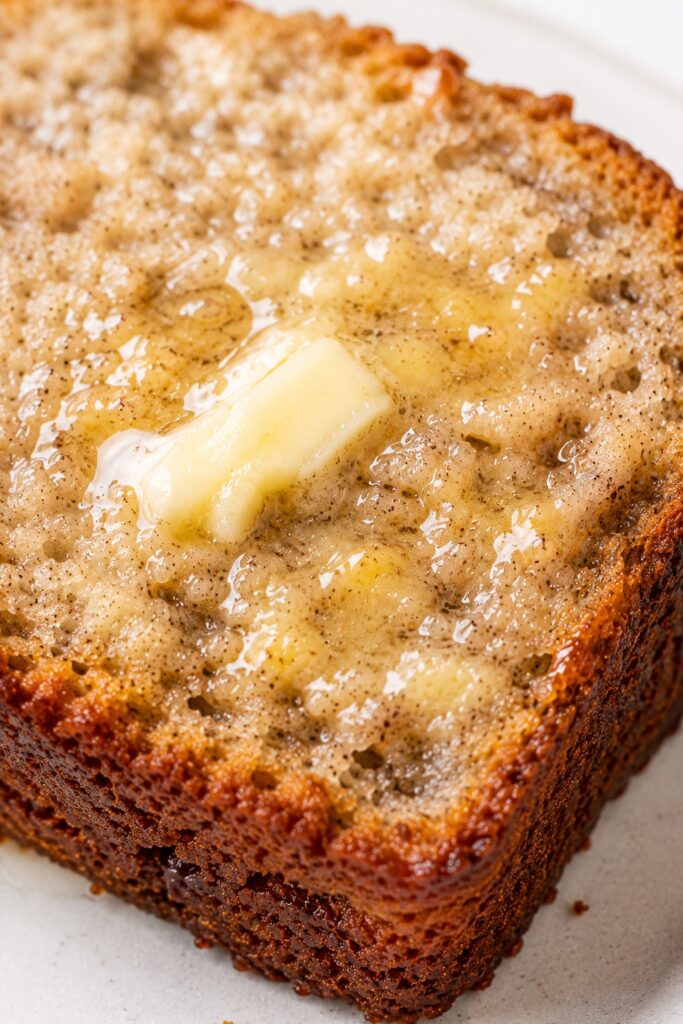
Serve thick slices slightly warm with a little butter melting into the crumb. The edges become soft, the banana flavor feels deeper, and the whole slice tastes cozy and homemade.
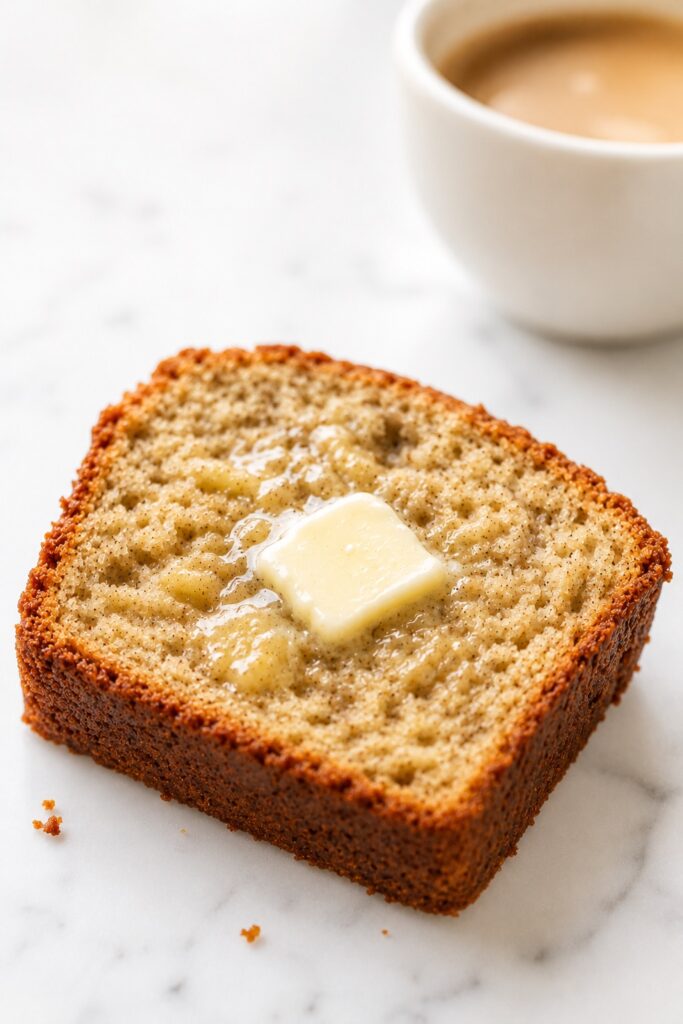
For breakfast, pair it with coffee, tea, Greek yogurt, or fresh berries. For brunch, arrange slices on a board with fruit, honey, and whipped butter.
For dessert, warm a slice and serve it with vanilla ice cream, caramel sauce, or a dusting of powdered sugar.
Save this Banana Bread for slow weekend mornings, cozy baking days, brunch tables, and those moments when the bananas on the counter are just a little too ripe to ignore.
It is also one of those simple homemade recipes that disappears faster than expected once someone takes the first slice.
Storage and Make-Ahead Guide
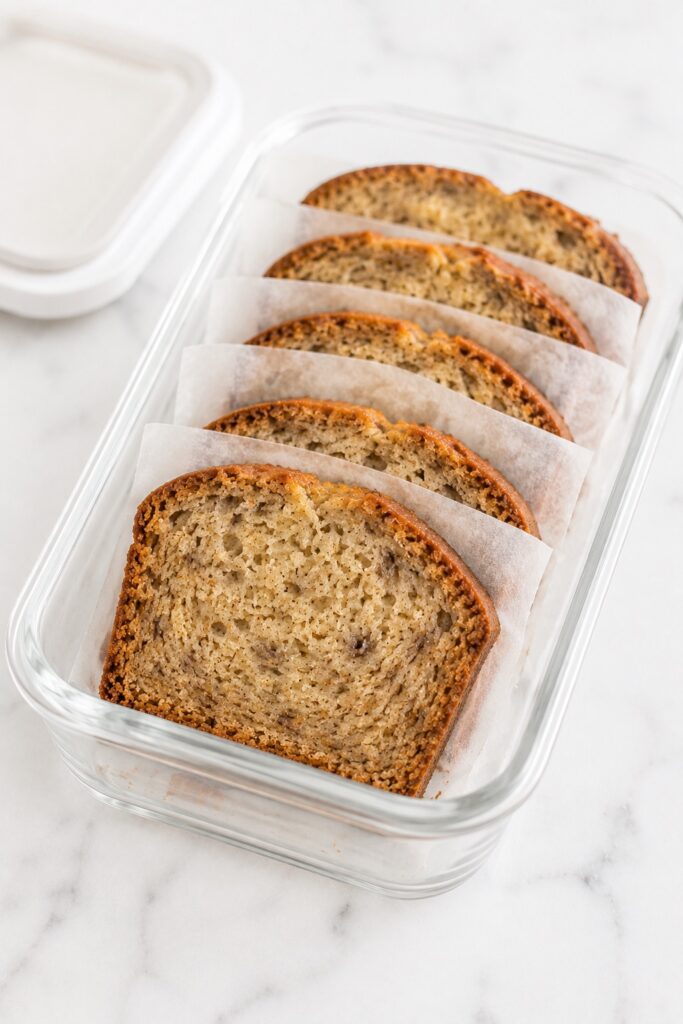
Room temperature: Store cooled banana bread in an airtight container for up to 4 days.
Refrigerator: Store for up to 1 week. Let slices come to room temperature or warm them slightly before serving.
Freezer: Wrap individual slices tightly and freeze for up to 3 months.
Make ahead: Banana bread is excellent made one day ahead because the flavor deepens as it rests.
Best reheating method: Warm individual slices for a few seconds in the microwave or lightly toast them for crisp edges.
Quick Storage & Make-Ahead Chart
| Storage Method | How Long It Lasts | Best Practice |
|---|---|---|
| Room Temperature | Up to 4 days | Store in an airtight container |
| Refrigerator | Up to 1 week | Warm slightly before serving |
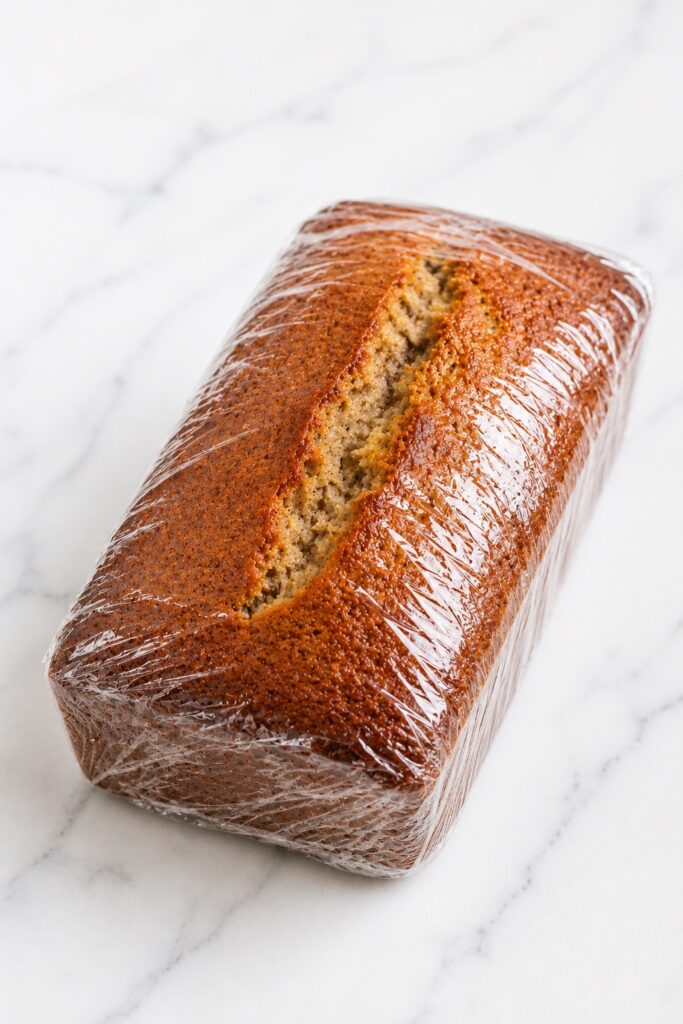
| Freezer (whole loaf) | Up to 3 months | Wrap tightly in plastic wrap and foil |
| Freezer (individual slices) | Up to 3 months | Freeze separately for easy portions |
| Best Flavor Window | Day 2 | Banana flavor deepens overnight |
Quick takeaway: Banana Bread is one of those baked goods that often tastes even better the next day. As the loaf rests, the moisture redistributes through the crumb and the banana flavor becomes richer and more developed.
Easy Banana Bread Variations
Chocolate Chip Banana Bread
Fold 1/2 cup chocolate chips into the batter for a sweeter, more dessert-like loaf.
Walnut Banana Bread
Add 1/2 cup chopped walnuts for a classic bakery-style texture.
Cinnamon Banana Bread
Add 1 teaspoon ground cinnamon for a warmer, cozier flavor.
Brown Butter Banana Bread
Brown the butter before adding it to the bananas for a deeper, nutty flavor.
Banana Bread with Chocolate and Walnuts
Add both chocolate chips and walnuts for a rich, textured loaf.
Which Banana Bread Variation Should You Try First?
The classic version is always the best place to start because it lets the rich banana flavor and soft bakery-style crumb shine.
If you enjoy chocolate desserts, the Chocolate Chip Banana Bread variation adds pockets of melted chocolate that make the loaf feel more like a treat than a breakfast bread.
If you love traditional bakery-style banana bread, the Walnut Banana Bread variation is often the most popular. The nuts add texture contrast and complement the sweet banana flavor beautifully.
For fall and holiday baking, Cinnamon Banana Bread brings a warmer, cozier flavor profile that pairs especially well with coffee and tea.
If you’re looking for the richest option, Brown Butter Banana Bread delivers deeper caramelized notes and a more complex flavor while keeping the same moist texture.
No matter which version you choose, the goal remains the same: a soft, moist loaf with rich banana flavor, a tender crumb, and the beautiful golden crack that makes homemade Banana Bread so inviting.
Frequently Asked Questions
How ripe should bananas be for Banana Bread?
The bananas should be very ripe with plenty of brown spots. The riper the bananas, the sweeter and more flavorful the bread will be.
Can I use frozen bananas?
Yes. Thaw the bananas completely, then mash them before using. If they release a lot of liquid, include it for extra banana flavor unless it seems excessive.
Can I make this Banana Bread without sour cream?
Yes, but the texture will be slightly less soft. You can replace the sour cream with plain Greek yogurt or leave it out if needed.
Why is my Banana Bread gummy?
Banana bread can become gummy if there is too much banana, too little flour, or if the loaf is underbaked. Make sure the center is fully set before removing it from the oven.
Why did my Banana Bread sink in the middle?
This usually happens when the loaf is underbaked or when the batter has too much moisture. Bake until the center is set and a toothpick comes out with moist crumbs.
Can I add nuts or chocolate chips?
Yes. Add up to 1/2 cup of chopped walnuts or chocolate chips. Avoid adding too much, or the loaf may become heavy.
Can I freeze Banana Bread?
Yes. Banana bread freezes very well. Wrap the loaf or individual slices tightly and freeze for up to 3 months.
Can I Make Banana Bread Ahead of Time?
Yes. Banana Bread is excellent made one day ahead because the banana flavor deepens and the crumb becomes even softer as it rests. Store it tightly covered at room temperature, then slice when ready to serve.
More Cozy Baking Recipes You’ll Love
If you enjoyed this Banana Bread, here are a few more cozy baking recipes that deliver the same homemade comfort, soft textures, and bakery-style results. Whether you’re looking for another quick bread, a breakfast bake, or a fruit-filled treat, these recipes make excellent next bakes.
More Banana Favorites
- Chocolate Chip Banana Bread – a richer version packed with melty chocolate chips throughout the loaf.
- Banana Nut Bread – classic banana bread with crunchy nuts and extra texture.
- Gluten Free Banana Bread – soft, moist, and perfect for gluten-free baking.
- Healthy Banana Bread – a lighter version that still delivers great banana flavor.
Easy Muffins & Quick Breads
- Banana Bread Muffins – everything you love about banana bread in an easy grab-and-go format.
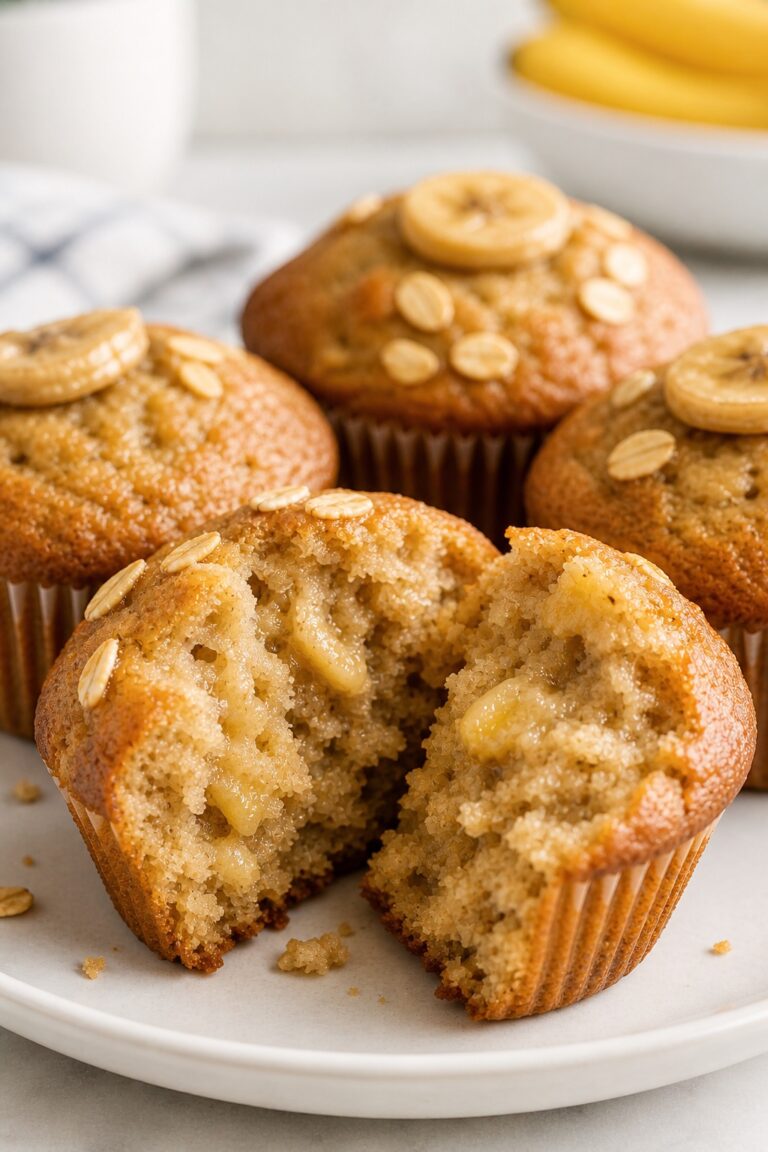
- Banana Oatmeal Muffins – hearty, wholesome, and perfect for breakfast.
- Easy Banana Muffins – fluffy, moist muffins made with simple pantry ingredients.
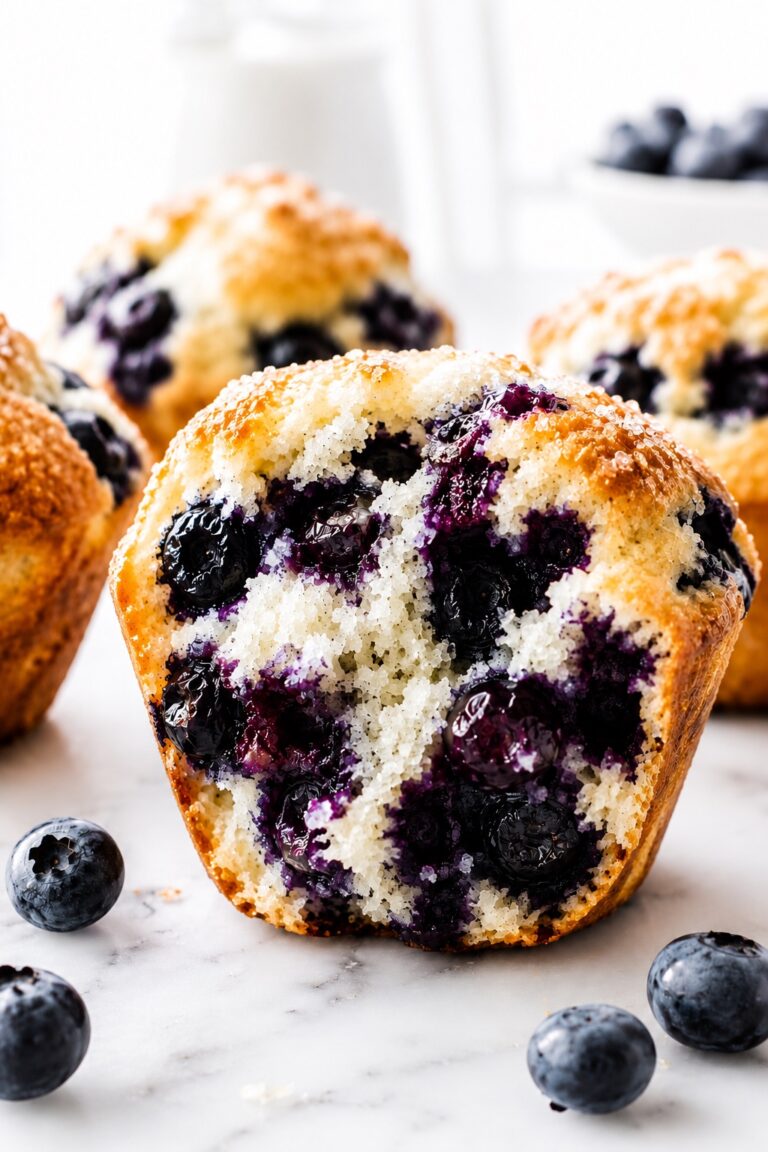
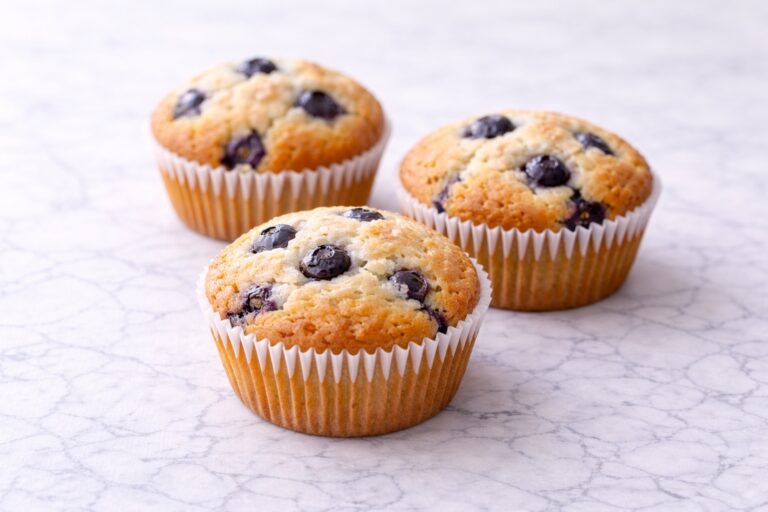
- Bakery Style Blueberry Muffins – tall muffin tops, soft centers, and bakery-style texture.
- Pumpkin Bread – moist, warmly spiced, and ideal for fall baking.
Cozy Breakfast Baking
- Baked Oatmeal – a comforting make-ahead breakfast that’s perfect for busy mornings.
- Sourdough Discard Cinnamon Rolls – soft, fluffy rolls with incredible flavor.
- French Toast – golden, buttery, and perfect for slow weekends.
- Belgian Waffles – crisp outside, fluffy inside, and made for brunch.
Fruit-Filled Homemade Favorites
- Apple Cake – soft, moist, and packed with cozy fruit flavor.
- Apple Crisp – warm cinnamon apples beneath a buttery crumble topping.
- Blueberry Bread – another easy quick bread loaded with juicy berries.
- Strawberry Shortcake – light, fresh, and perfect for spring and summer gatherings.
Whether you’re baking to use up ripe bananas, planning breakfast for the week, or simply craving something homemade, these recipes offer the same cozy, reliable, bakery-style appeal that makes Banana Bread such a timeless favorite.
Recipe Summary
This Banana Bread recipe is moist, soft, and bakery-style, made with ripe bananas, melted butter, brown sugar, and a touch of sour cream for a tender crumb.
It is easy enough for beginner bakers but balanced enough to deliver reliable results every time. The loaf bakes up golden on top, soft in the center, and full of rich banana flavor.
Serve it for breakfast, brunch, snacks, or dessert, and keep a few slices in the freezer for the kind of cozy homemade treat that always feels welcome.
Final Thoughts
Banana Bread is one of those recipes that feels humble and special at the same time.
It starts with bananas that look a little too far gone and turns them into something warm, fragrant, and deeply comforting. That is part of its charm.
This version keeps everything people love about classic banana bread but adds a small bakery-style upgrade with sour cream for a softer, more tender crumb. It is simple, reliable, and easy to come back to whenever a few ripe bananas are waiting on the counter.
It is the kind of loaf that feels simple, useful, and comforting — exactly why Banana Bread never really goes out of style.

Banana Bread (Moist, Easy & Bakery-Style)
This Banana Bread is moist, tender, and packed with rich banana flavor. Made with ripe bananas, brown sugar, melted butter, and a touch of sour cream, it bakes into a soft bakery-style loaf with a beautiful golden crust and a tender crumb that stays fresh for days.
Ingredients
- 3 very ripe bananas, mashed
- 1/3 cup unsalted butter, melted
- 1/2 cup packed brown sugar
- 1 large egg, room temperature
- 1 teaspoon vanilla extract
- 2 tablespoons sour cream
- 1 teaspoon baking soda
- 1/2 teaspoon salt
- 1 3/4 cups all-purpose flour
Optional:
- 1/2 cup chocolate chips
Instructions
- Preheat the oven to 350°F (175°C). Grease a 9x5-inch loaf pan or line it with parchment paper.
- Place the bananas in a large mixing bowl and mash until mostly smooth.
- Stir in the melted butter until fully combined.
- Add the brown sugar, egg, vanilla extract, and sour cream. Whisk until smooth and creamy.
- Stir in the baking soda and salt until evenly distributed.
- Add the flour and gently fold until no dry streaks remain. Do not overmix.
- If desired, fold in the chocolate chips or chopped walnuts.
- Transfer the batter to the prepared loaf pan and gently smooth the top.
- Bake for 55–65 minutes, or until the top is deep golden brown and a toothpick inserted into the center comes out with a few moist crumbs.
- Allow the loaf to cool in the pan for 15 minutes.
- Transfer to a wire rack and cool completely before slicing and serving.
Notes
- Use very ripe bananas with plenty of brown spots for the best flavor and natural sweetness.
- Do not overmix the batter after adding the flour or the loaf may become dense and tough.
- If the top is browning too quickly, loosely tent the loaf with foil during the final 15 minutes of baking.
- Allow the Banana Bread to cool completely before slicing for the cleanest texture.
- For extra texture and flavor, fold in up to 1/2 cup chocolate chips or chopped walnuts.
- Store tightly covered at room temperature for up to 4 days or freeze for up to 3 months.
- Banana Bread often tastes even better the next day as the moisture redistributes and the banana flavor deepens.
Nutrition Information:
Yield: 10 slices Serving Size: 1 sliceAmount Per Serving: Calories: 215Total Fat: 9gSaturated Fat: 5gCholesterol: 35mgSodium: 240mgCarbohydrates: 31gSugar: 14gProtein: 3g
Nutrition information is provided as an estimate only and may vary based on specific ingredients, brands, and portion sizes used. This information should not be considered medical or nutritional advice.
12 Sweet Favourites — Yours, Free 🍰
Tiramisù, no-bake cheesecake, the perfect chocolate chip cookie & 9 more reader-loved desserts — gathered into one beautiful free recipe book. From my kitchen to yours.
No spam, just sweet things. Unsubscribe anytime.