French Toast Recipe
🎁 FREE E-BOOK: 12 Sweet Favorites — reader-loved desserts in one beautiful recipe book.
French toast is a classic breakfast recipe made by soaking slices of bread in a mixture of eggs, milk, sugar, and vanilla, then cooking them in butter until golden brown. The result is bread with soft custardy centers and lightly crisp edges, often served with maple syrup, powdered sugar, or fresh fruit. This easy French toast recipe creates a warm vanilla aroma and comforting texture that makes it one of the most beloved homemade breakfast dishes.
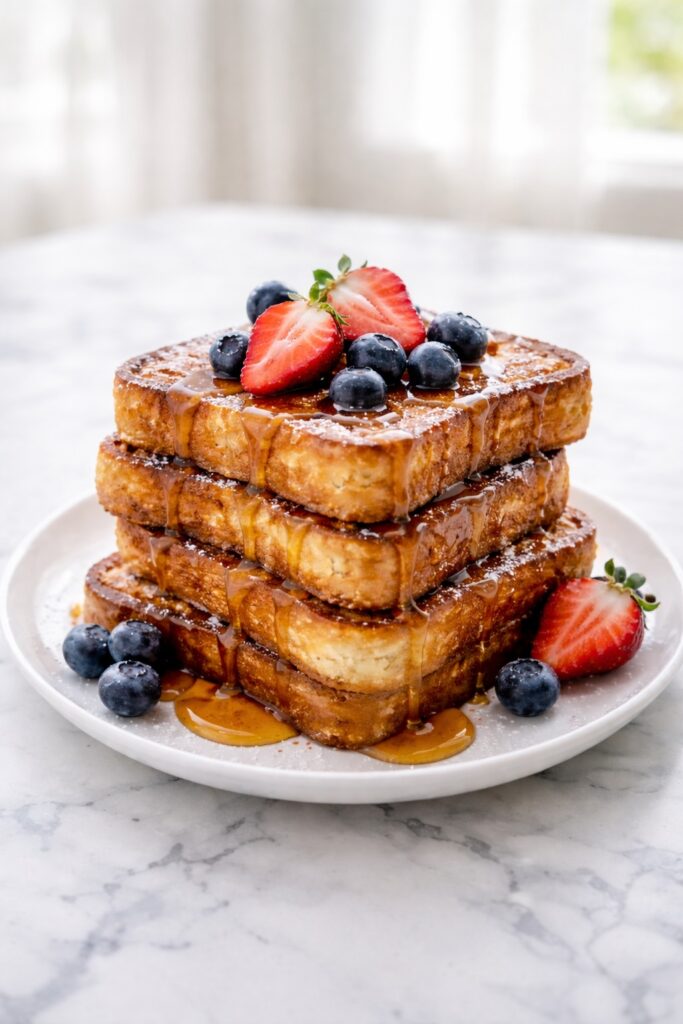
Few breakfasts feel as comforting as warm French toast sizzling in a buttery skillet. As the slices cook, the gentle aroma of vanilla, toasted bread, and caramelizing butter slowly fills the kitchen, creating that cozy atmosphere that makes weekend mornings feel special.
The texture is what makes French toast truly irresistible. The outside develops delicate golden edges while the inside stays soft, custardy, and tender. Each bite delivers warm sweetness balanced by the rich flavor of eggs and butter.
French toast is also one of the simplest breakfast recipes to make. With just a few pantry ingredients and a quick cooking method, you can transform ordinary slices of bread into a breakfast that feels both nostalgic and indulgent.
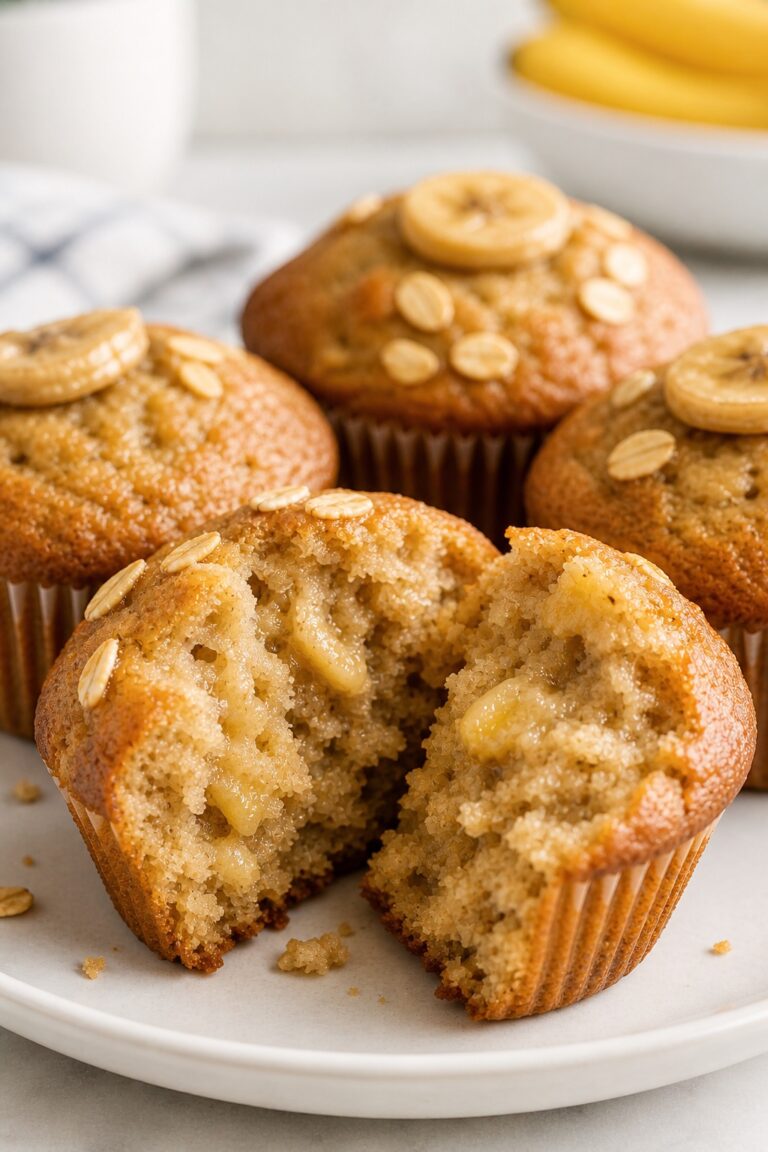
Whether served with maple syrup, fresh fruit, or a light dusting of powdered sugar, this homemade French toast recipe is the kind of breakfast that always brings warmth and comfort to the table. If you enjoy cozy homemade breakfasts, recipes like banana muffins are another simple and comforting option for slow mornings. This easy French toast recipe is also the kind of cozy breakfast you’ll want to save for slow weekend mornings or relaxed family brunches.
Quick Recipe Overview
This quick overview helps you see the key details of the recipe at a glance before you start cooking.
- Prep time: 5 minutes
- Cook time: 10 minutes
- Total time: 15 minutes
- Servings: 4
- Difficulty: Easy
- Best bread types: brioche, challah, Texas toast, sourdough
What Is French Toast?
French toast is a breakfast dish made by dipping slices of bread in an egg and milk mixture before cooking them in butter until golden brown. The bread absorbs the custard mixture, creating a soft interior while the outside develops a lightly crisp, caramelized surface.
Why Is It Called French Toast?
Despite the name, French toast did not actually originate in France. Versions of this dish have existed for centuries in many different cultures as a practical way to use leftover bread, a tradition described in historical food references such as the history of French toast.
The basic idea is simple: slices of bread are dipped in a mixture of eggs and milk, then cooked until golden. This technique transforms stale bread into a rich, custardy breakfast with crisp edges and soft centers.
Over time, French toast became a popular breakfast recipe in many countries, often served with sweet toppings like maple syrup, powdered sugar, fruit, or whipped cream.
What Ingredients Are Needed for French Toast?
Traditional French toast is made with eggs, milk, sugar, vanilla, bread, and butter. Some recipes also include cinnamon or nutmeg for additional warmth and flavor.
How Long Does It Take to Make French Toast?
French toast usually takes about 15 minutes to make from start to finish, including preparing the custard and cooking the bread in a skillet.
Why You’ll Love This French Toast Recipe
There are many breakfast recipes, but French toast remains a favorite because it is both simple and incredibly satisfying.
- Soft custardy centers with golden edges
- Made with simple pantry ingredients
- Ready in about 15 minutes
- Perfect for cozy breakfasts or weekend brunch
- Works beautifully with different breads and toppings
- A timeless homemade breakfast classic
Ingredients
This classic French toast recipe uses simple ingredients that most kitchens already have on hand.
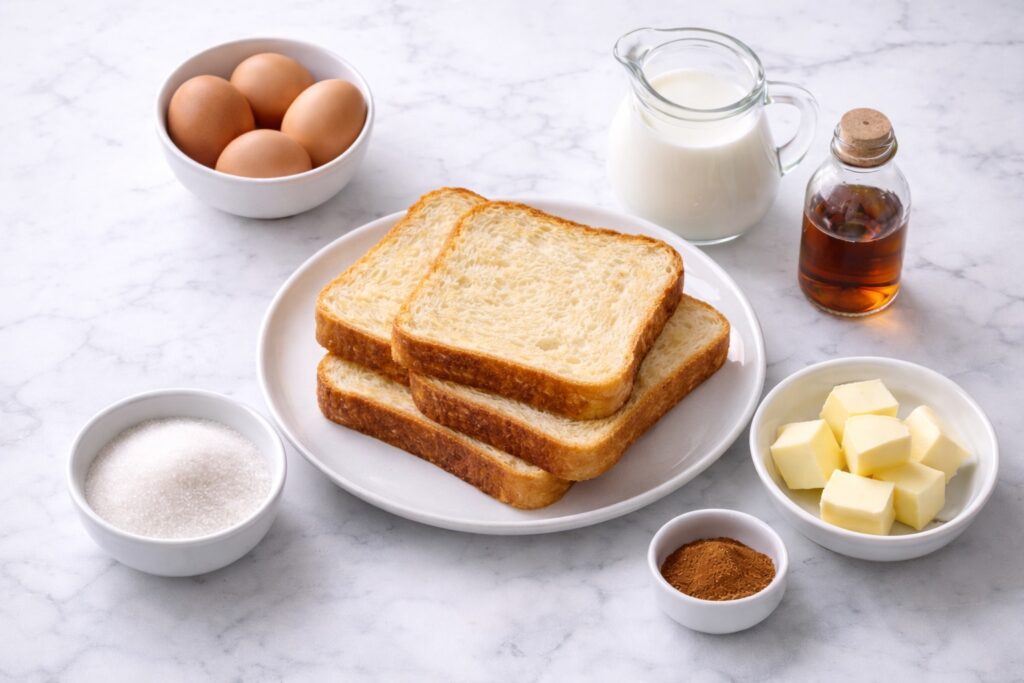
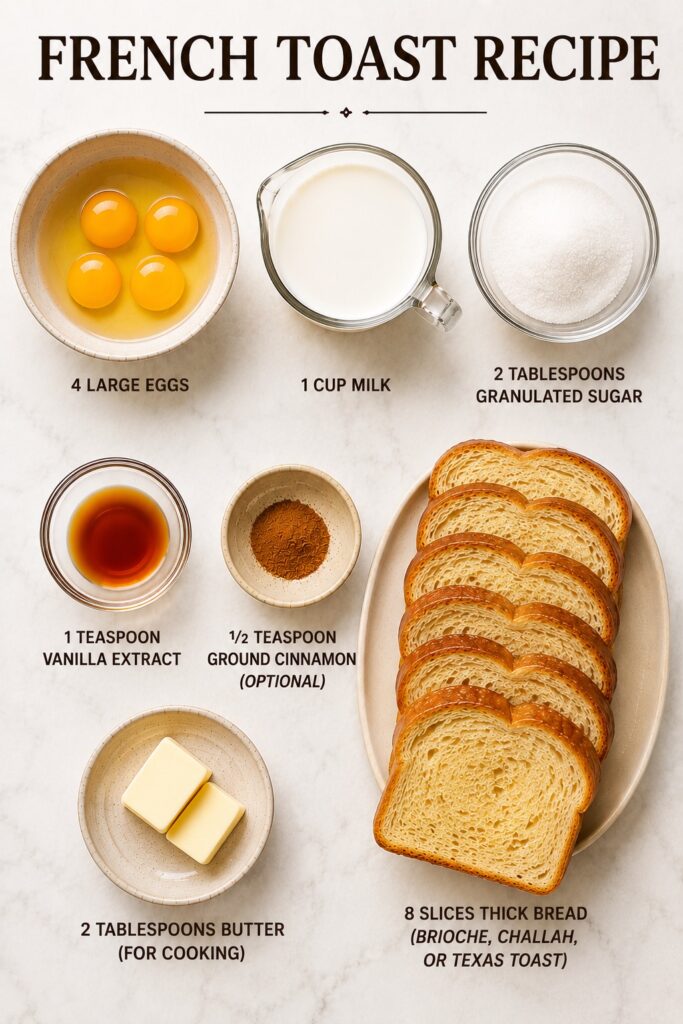
- 4 large eggs
- 1 cup milk
- 2 tablespoons granulated sugar
- 1 teaspoon vanilla extract
- ½ teaspoon ground cinnamon (optional)
- 8 slices thick bread (brioche, challah, or Texas toast)
- 2 tablespoons butter (for cooking)
Optional toppings:
- maple syrup
- powdered sugar
- fresh berries
- whipped cream
- caramelized bananas
Ingredient Notes and Substitutions
Understanding how each ingredient works makes it easier to adapt the recipe depending on what you have available.
Bread
Thick slices of bread absorb the custard mixture while maintaining their structure. Brioche and challah are especially popular choices because they create a rich and tender interior.
Substitutions:
- sourdough
- thick sandwich bread
- Texas toast
- day-old baguette
Slightly stale bread works best because it absorbs more custard without becoming overly soft.
Eggs
Eggs form the custard base that gives French toast its creamy interior texture.
Substitutions:
- flax egg
- mashed banana
- plant-based egg replacers
Milk
Milk softens the bread and helps the custard mixture coat the slices evenly.
Substitutions:
- almond milk
- oat milk
- soy milk
- half-and-half
- heavy cream
Sugar
Sugar adds light sweetness and helps create caramelization when the toast cooks in butter.
Substitutions:
- maple syrup
- honey
- brown sugar
Vanilla
Vanilla provides the warm bakery flavor that defines classic French toast.
Substitutions:
- maple extract
- almond extract (very small amount)
Cinnamon (Optional)
Cinnamon adds warmth and gentle spice.
Substitutions:
- nutmeg
- pumpkin spice
- cardamom
Best Bread for French Toast
Because bread is the foundation of this recipe, choosing the right type can make a noticeable difference in both texture and flavor.
Brioche
Brioche is rich, slightly sweet, and incredibly soft, making it one of the best breads for French toast.
Challah
Challah offers a similar richness with a slightly firmer crumb that holds the custard well.
Texas Toast
Texas toast creates the classic diner-style French toast with fluffy centers and crisp edges.
Sourdough
Sourdough adds a subtle tangy flavor that balances the sweetness of the custard and toppings.
Bread Texture Tip
Different breads will slightly change the final texture of French toast. Soft enriched breads like brioche create a very tender custardy center, while sturdier breads like sourdough or Texas toast hold their structure better and develop slightly crisper edges. Slightly stale bread usually produces the best texture because it absorbs the custard mixture without becoming overly soft.
How to Make French Toast
Making French toast takes only a few simple steps.
1. Prepare the Custard
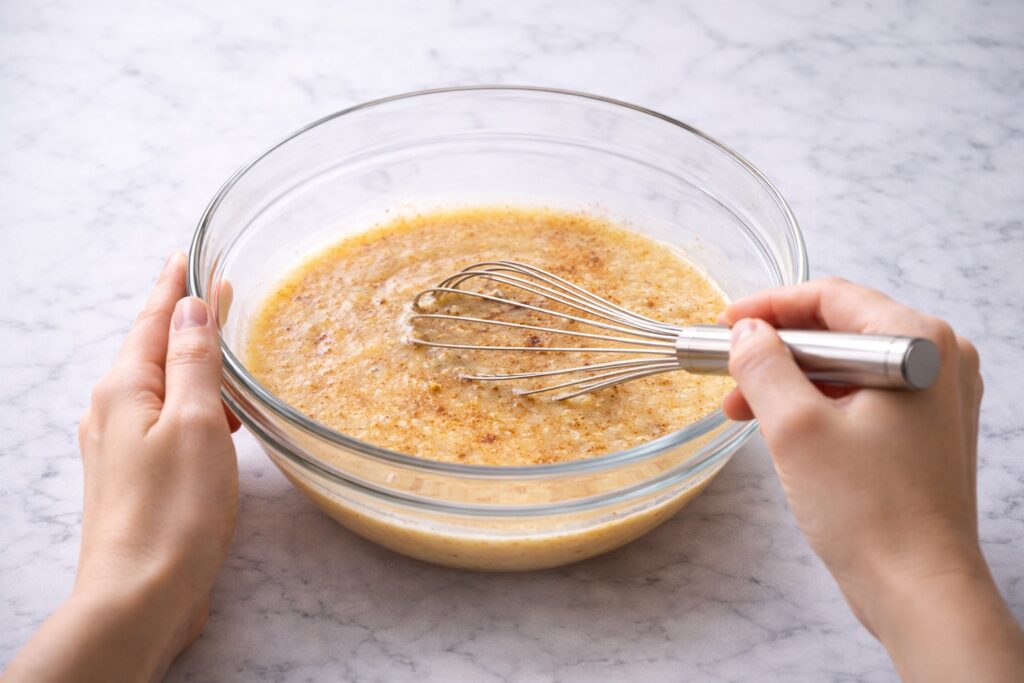
In a shallow bowl, whisk together eggs, milk, sugar, vanilla extract, and cinnamon until smooth.
Custard Texture Guide
The custard mixture for French toast should be smooth, slightly thick, and fully combined. The eggs and milk should be whisked until no streaks remain.
A proper custard lightly coats the bread without becoming too heavy. If the mixture is too thin, the bread may not absorb enough flavor. If it is too thick, the outside can cook too quickly before the inside warms through.
The ideal custard should look smooth, creamy, and lightly foamy after whisking.
2. Dip the Bread
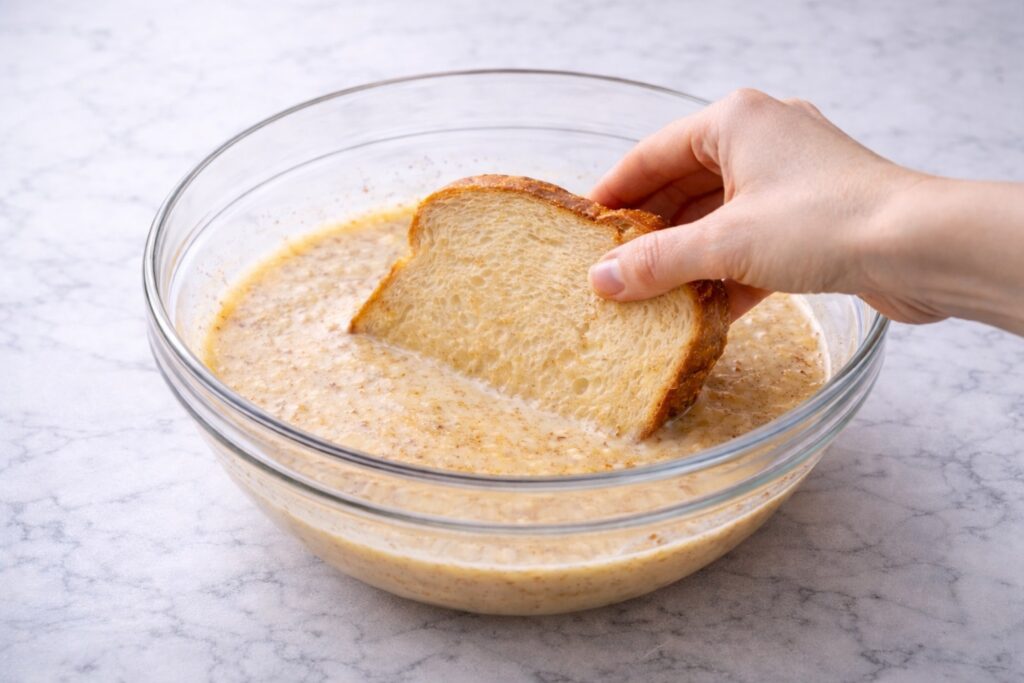
Dip each slice of bread into the mixture, coating both sides evenly.
3. Heat the Pan
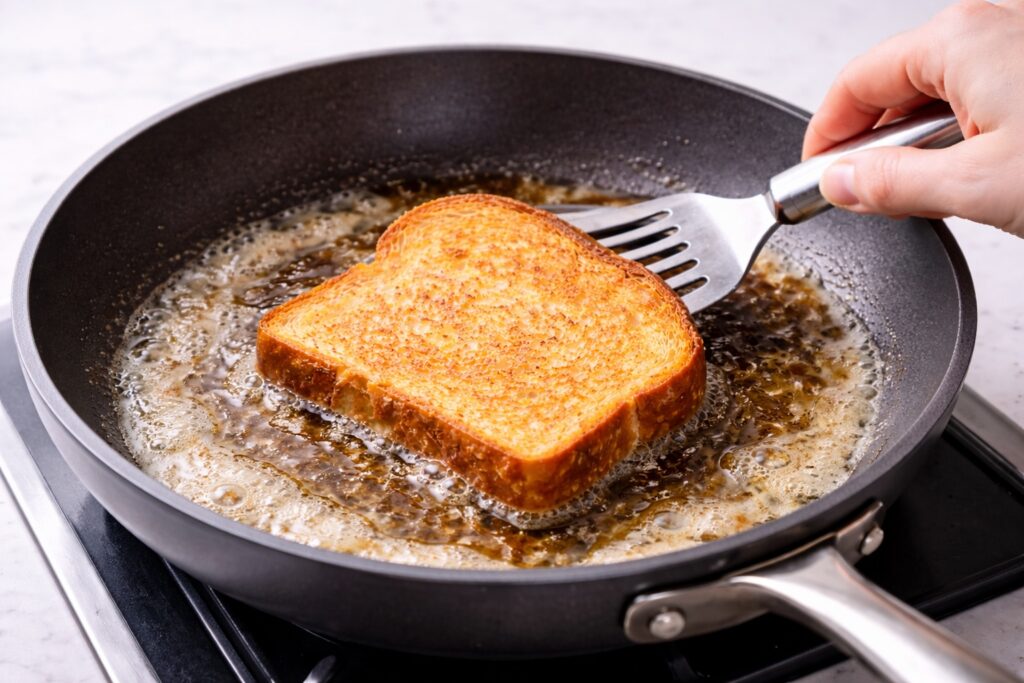
Melt butter in a skillet over medium heat.
4. Cook the French Toast
Cook each slice for 2–3 minutes per side until golden brown.
5. Serve
Serve warm with maple syrup, powdered sugar, or fresh fruit.
Quick Tips for Perfect French Toast
French toast is a simple recipe, but a few small techniques can make a big difference in texture and flavor. One small detail that makes a noticeable difference is using bread that is slightly dry rather than freshly baked. These helpful tips will ensure soft custardy centers and golden edges every time.
Use slightly stale bread
Day-old bread absorbs the custard mixture better than fresh bread. This helps the slices keep their structure while cooking.
Dip the bread briefly
Bread should be coated evenly but not soaked too long. A quick dip on each side allows the bread to absorb flavor without becoming soggy.
Whisk the custard thoroughly
Eggs and milk should be fully combined before dipping the bread. This ensures every slice cooks evenly and prevents streaks of egg.
Use butter for cooking
Butter adds flavor and helps create the signature caramelized surface that makes French toast so delicious.
Avoid overcrowding the pan
Leave space between slices so heat circulates properly and each piece browns evenly.
Pan and Heat Tips
The type of pan and cooking temperature can affect how French toast cooks.
A heavy skillet or cast-iron pan distributes heat evenly and helps create a consistent golden crust.
Medium heat works best. Heat that is too high can burn the outside before the custard inside has time to cook through.
If cooking multiple batches, wipe the pan lightly and add fresh butter between batches to maintain even browning.
Pro Cooking Tips
If you want your French toast to look and taste like restaurant-style French toast, a few small adjustments can make a noticeable difference.
- Use thick slices of bread so the center stays soft and custardy.
- Dip the bread briefly so it absorbs flavor without becoming soggy.
- Cook in butter for richer flavor and golden edges.
- Serve immediately while the slices are still warm and lightly crisp.
Baking Science: Why French Toast Works
Understanding the simple science behind French toast helps explain why this classic recipe produces such a rich and satisfying texture. A balanced custard ratio of eggs to milk is the key to perfect French toast, ensuring the bread absorbs enough moisture without becoming overly dense or soggy.
French toast is essentially bread soaked in a custard mixture made from eggs and milk. When heated, the proteins in the eggs begin to set, creating a soft structure that holds moisture inside the bread.
At the same time, butter and sugar on the surface caramelize as they cook in the pan. This process creates the golden crust and slightly crisp edges that contrast beautifully with the soft interior.
Slightly stale bread works best because it can absorb the custard mixture without falling apart. This is why many cooks prefer bread that has been left out for a short time rather than bread that is freshly sliced.
French Toast Texture Guide
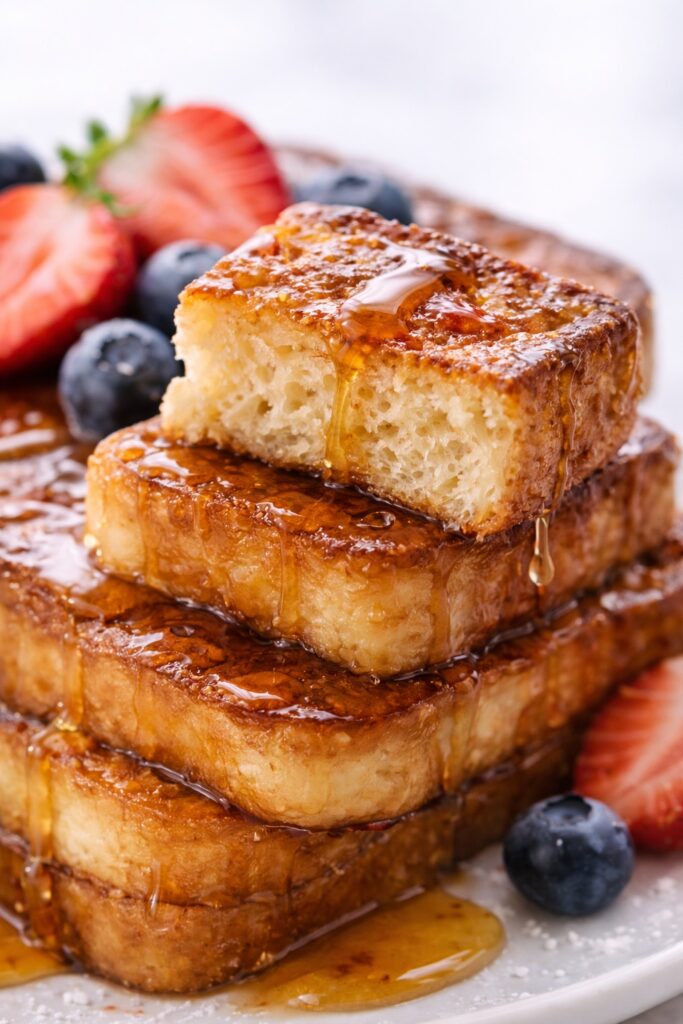
French toast should have a balance between a soft interior and lightly crisp edges.
Perfect French toast has a custardy center where the bread has absorbed the egg mixture evenly.
If the toast becomes dry, it may have cooked too long. If it feels overly soft or soggy, the bread may have been soaked too long or cooked at too low a temperature.
Common Mistakes When Making French Toast
French toast is simple, but a few small mistakes can affect the final result.
Using Bread That Is Too Fresh for French Toast
Fresh bread tends to absorb too much custard and become overly soft.
Soaking the Bread Too Long
Bread should be dipped briefly so it absorbs flavor without becoming soggy.
Cooking at Too High Heat
Very high heat can burn the outside before the inside cooks properly.
Not Using Enough Butter
Butter creates the golden crust and rich flavor.
Overcrowding the Pan
Cooking too many slices at once lowers the pan temperature and prevents proper browning.
Serving Suggestions
French toast can be served in many different ways depending on the occasion, from a simple weekday breakfast to an indulgent weekend brunch.
For a classic breakfast, serve French toast with warm maple syrup and a light dusting of powdered sugar. The sweetness of the syrup pairs beautifully with the buttery toasted bread.
Fresh fruit also makes a wonderful addition. Strawberries, blueberries, raspberries, or sliced bananas bring brightness and balance to the dish. A simple fruit salad is an especially refreshing pairing.
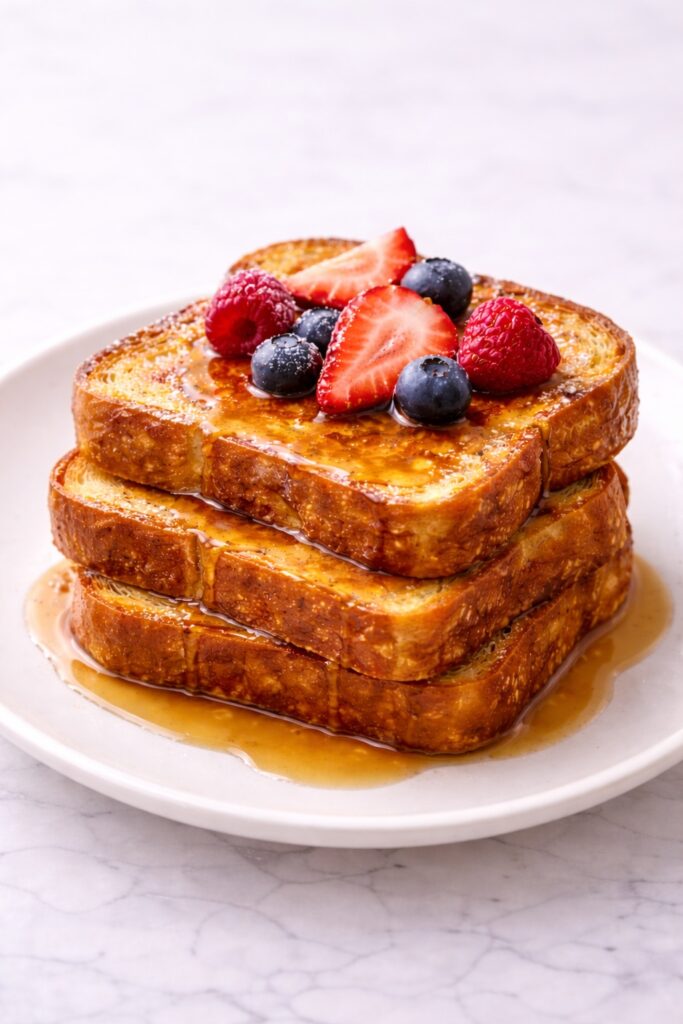
For a more indulgent brunch presentation, try topping French toast with whipped cream, caramelized bananas, or berry compote. If you want to make it from scratch, this guide on how to make whipped cream is a simple place to start. These toppings transform the dish into a beautiful centerpiece for weekend brunch.
French toast can also be served alongside other homemade breakfast favorites. Recipes like strawberry shortcake or a slice of blueberry cake create a cozy and inviting brunch spread. Other classic breakfast recipes like crepes or homemade waffles can also turn a simple morning meal into a relaxed weekend brunch.
French Toast Variations
One of the reasons French toast has remained a beloved breakfast classic for generations is how easy it is to customize. By changing the bread, spices, or fillings, you can create many different variations while keeping the same comforting base recipe.
Cinnamon French Toast
For a warmer, more aromatic flavor, add extra cinnamon or a pinch of nutmeg to the custard mixture. These spices enhance the sweetness and give the toast a cozy bakery-style flavor that pairs beautifully with maple syrup.
Stuffed French Toast
Stuffed French toast is a richer version where two slices of bread are filled with cream cheese, fruit preserves, or chocolate before being dipped in custard and cooked. The result is a creamy, dessert-like breakfast that feels perfect for brunch.
Brioche French Toast
Using brioche bread creates an especially soft and luxurious texture. Brioche absorbs the custard beautifully while maintaining its structure, resulting in French toast with a rich, tender interior.
Overnight French Toast Bake
Instead of cooking slices individually in a skillet, French toast can also be prepared as a baked casserole. Bread cubes are soaked in custard overnight and baked in the morning, creating a soft, custardy dish that is ideal for feeding a crowd.
Sourdough French Toast
Sourdough bread adds a subtle tangy flavor that balances the sweetness of the custard and toppings. Its sturdy texture also helps the slices hold their shape during cooking.
Make Ahead Tips
French toast can easily be prepared ahead of time, which makes it especially helpful for busy mornings, brunch gatherings, or meal prep.
Prepare the Custard Ahead
The egg mixture can be whisked together and stored in the refrigerator for up to 24 hours before cooking. Give it a quick whisk again before dipping the bread.
Cook and Reheat Later
French toast can be fully cooked in advance and reheated when ready to serve. This is especially convenient when making breakfast for family or guests.
Freezer Friendly
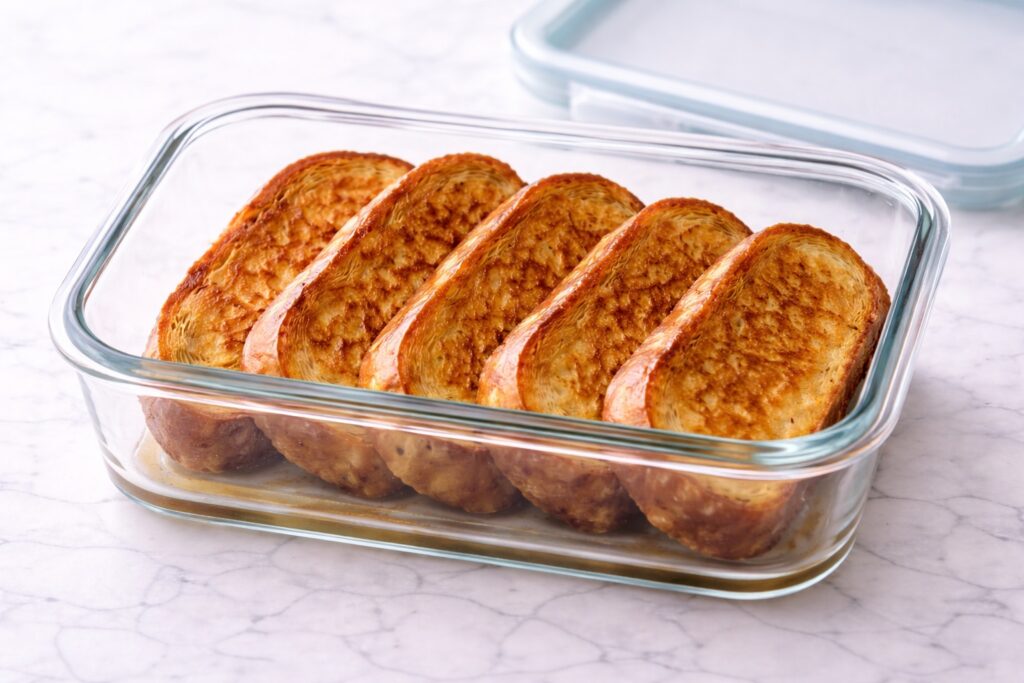
Cooked French toast freezes well. Let the slices cool completely, then place them in a single layer on a baking sheet until firm. Transfer them to a freezer-safe bag or container and freeze for up to 2 months.
If you’re cooking for a crowd, a baked version like French Toast Casserole is another delicious make-ahead breakfast option.
How to Store and Reheat French Toast
French toast stores surprisingly well when kept properly.
- Refrigerator: up to 3 days
- Freezer: up to 2 months
To reheat, place slices in a toaster, skillet, or oven until warmed through.
You May Also Love These Breakfast Recipes
If you enjoy cozy homemade breakfasts, there are plenty of other sweet breakfast recipes that pair beautifully with French toast or fit the same comforting morning mood.
French Toast Casserole
If you love the flavor of classic French toast but need something more convenient for brunch, French Toast Casserole is a perfect make-ahead option with the same soft custardy texture in baked form.
French Toast Sticks
For a fun and family-friendly variation, French Toast Sticks offer the same golden edges and soft center in an easy handheld version that is especially great for kids.
Sourdough French Toast
If you enjoy a slightly tangy contrast to sweet toppings, Sourdough French Toast is a delicious variation that brings extra depth of flavor and a sturdier texture.
Creme Brulee French Toast
For a richer brunch option, Creme Brulee French Toast transforms this breakfast classic into something more indulgent, with deeper caramelized flavor and a custardy finish.
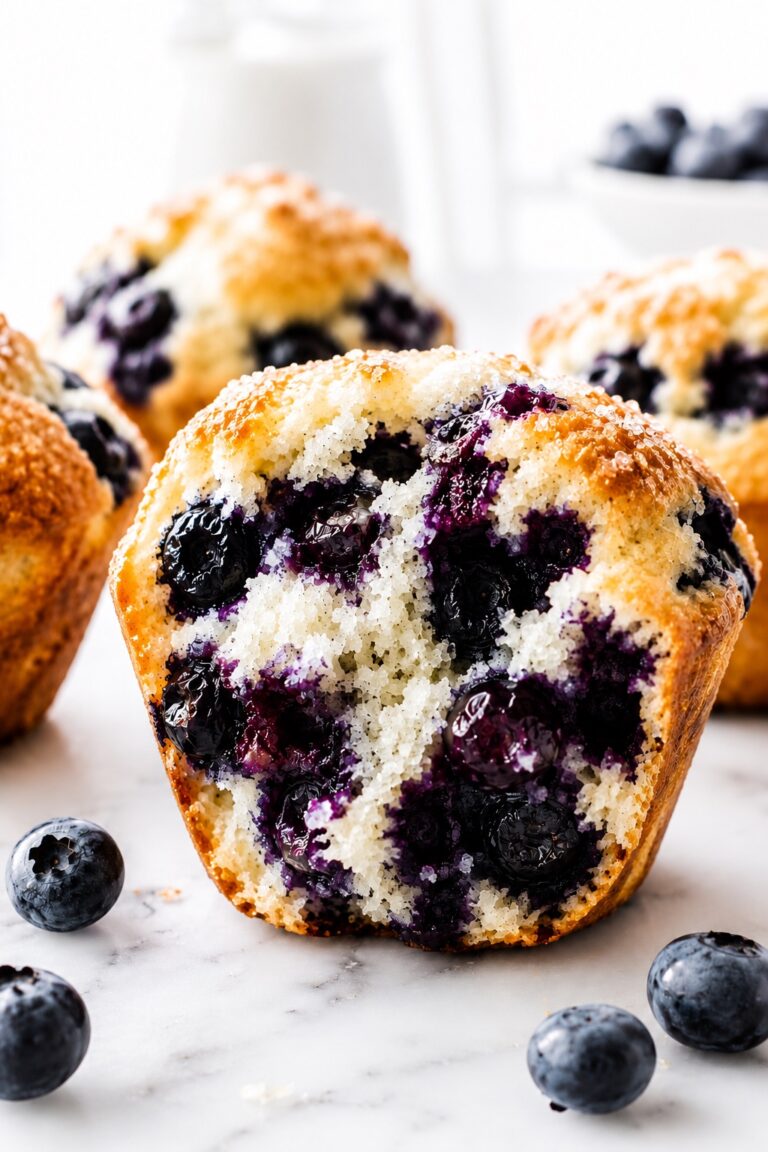
Banana Muffins
Soft and moist with sweet banana flavor, Banana Muffins are another simple homemade breakfast favorite that pairs beautifully with coffee or tea.
Strawberry Shortcake
For a more dessert-inspired brunch spread, Strawberry Shortcake adds fresh berries, whipped cream, and a light homemade feel that works beautifully alongside breakfast classics.
Blueberry Cake
A slice of Blueberry Cake brings fruity sweetness and a tender crumb to the table, making it a lovely addition to a cozy weekend brunch menu.
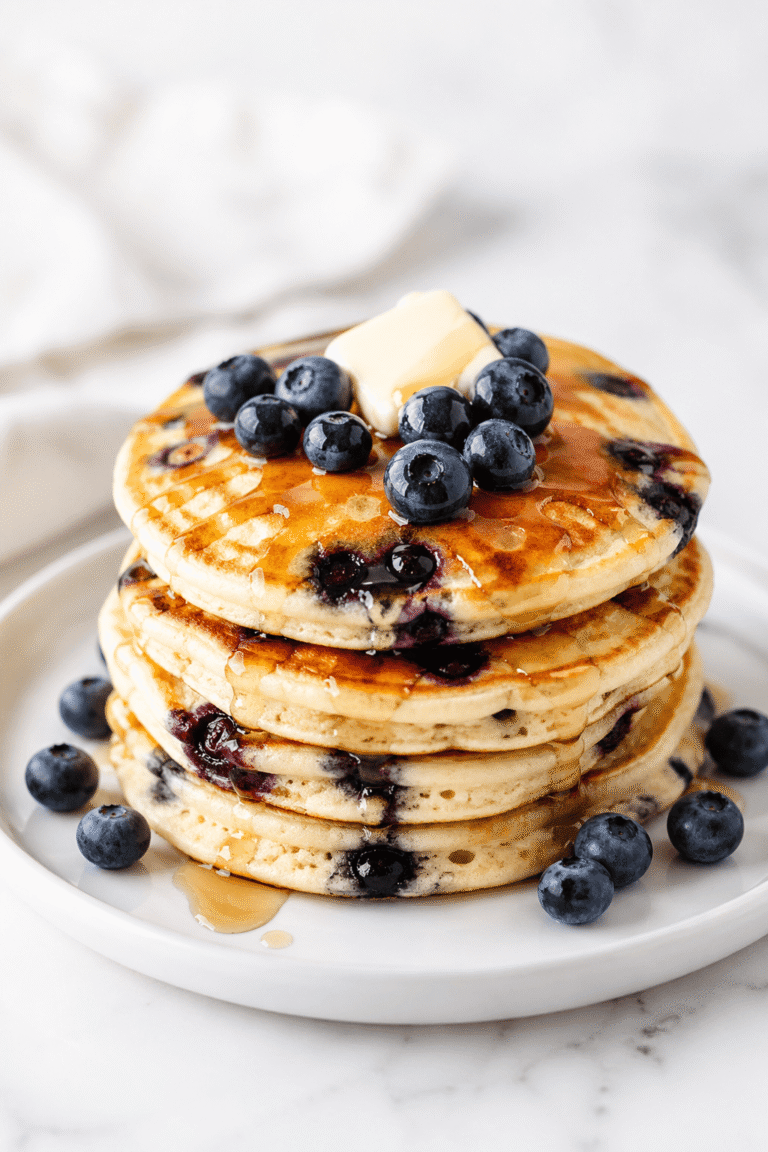
Buttermilk Pancakes
If you love timeless breakfast recipes, Buttermilk Pancakes are another comforting favorite with soft centers and golden edges that never go out of style.
Frequently Asked Questions
What bread is best for French toast?
Brioche and challah are among the best breads because they absorb custard well while maintaining structure.
What is the best milk for French toast?
Whole milk is a classic choice because it creates a rich custard, but half-and-half, heavy cream, almond milk, oat milk, and soy milk can also work well depending on the texture and flavor you want.
Why is my French toast soggy?
French toast becomes soggy if the bread is soaked too long or if the pan temperature is too low.
Can you make French toast without milk?
Yes. Milk can be replaced with plant-based alternatives such as almond milk or oat milk.
Can French toast be made with stale bread?
Yes. Slightly stale bread is actually ideal for French toast because it absorbs the custard mixture better while maintaining its structure during cooking.
Can French toast be made ahead of time?
Yes. French toast can be cooked ahead and reheated in a toaster, oven, or skillet.
Final Thoughts
French toast is one of those timeless recipes that proves simple ingredients can create something truly comforting. With just bread, eggs, milk, and a few pantry staples, you can turn an ordinary morning into a warm homemade breakfast that feels both nostalgic and satisfying.
What makes this recipe special is the balance of textures. The bread absorbs the custard mixture and becomes soft and tender inside, while the outside develops those golden edges that make each bite so enjoyable. It’s the kind of dish that feels just as perfect for a quiet weekday breakfast as it does for a relaxed weekend brunch.
Another reason French toast remains such a beloved classic is its versatility. You can keep it simple with maple syrup and powdered sugar, or dress it up with fresh berries, whipped cream, or caramelized bananas. Small variations in bread, spices, or toppings can create entirely new flavor combinations while keeping the same comforting base.
Whether you’re making breakfast for family, preparing a cozy brunch spread, or simply craving something warm and homemade, this French toast recipe is one of those reliable classics you’ll return to again and again.
French Toast Recipe
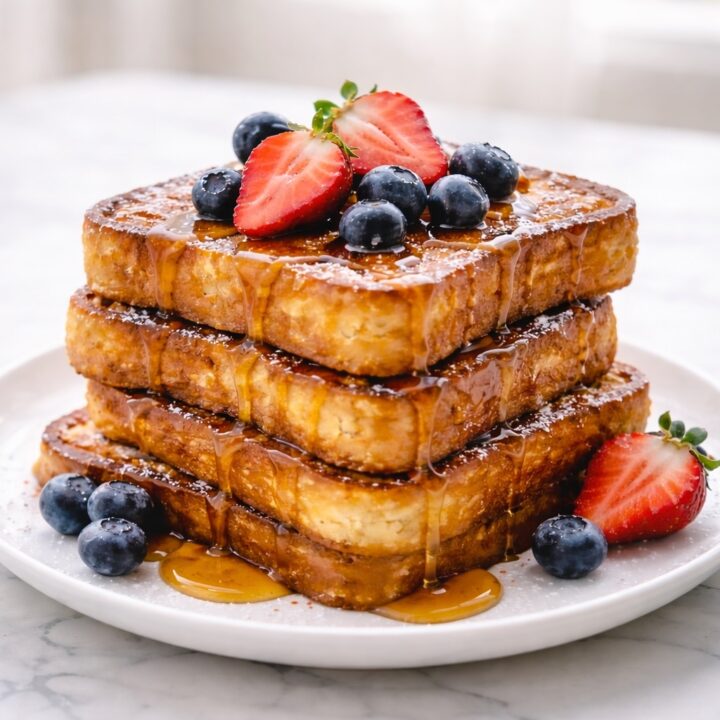
This easy French toast recipe makes soft custardy centers with golden edges using simple ingredients like eggs, milk, sugar, vanilla, and thick slices of bread. It is a classic homemade breakfast that comes together in about 15 minutes and is perfect with maple syrup, powdered sugar, or fresh fruit.
Ingredients
French Toast
- 4 large eggs
- 1 cup milk
- 2 tablespoons granulated sugar
- 1 teaspoon vanilla extract
- ½ teaspoon ground cinnamon (optional)
- 8 slices thick bread (brioche, challah, or Texas toast)
- 2 tablespoons butter, for cooking
Optional Toppings
- maple syrup
- powdered sugar
- fresh berries
- whipped cream
- caramelized bananas
Instructions
- Make the custard. In a shallow bowl, whisk together the eggs, milk, sugar, vanilla extract, and cinnamon until smooth.
- Dip the bread. Dip each slice of bread into the custard mixture, coating both sides evenly. Let the bread absorb the mixture briefly without becoming soggy.
- Heat the skillet. Melt the butter in a skillet over medium heat.
- Cook the French toast. Place the soaked bread in the skillet and cook for 2 to 3 minutes per side, or until golden brown and lightly crisp.
- Serve. Serve warm with maple syrup, powdered sugar, fresh fruit, or other desired toppings.
Notes
- Slightly stale bread works best because it absorbs the custard mixture without becoming too soft.
- Brioche, challah, Texas toast, and sourdough all work well for French toast.
- Cook over medium heat so the inside becomes soft and custardy while the outside turns golden.
- Leftover French toast can be stored in an airtight container in the refrigerator for up to 3 days or frozen for up to 2 months.
Nutrition Information:
Yield: 4 servings Serving Size: 2 slicesAmount Per Serving: Calories: 320Total Fat: 15gSaturated Fat: 7gCholesterol: 195mgSodium: 290mgCarbohydrates: 33gFiber: 1gSugar: 10gProtein: 12g
12 Sweet Favorites — Yours, Free 🍰
Tiramisù, no-bake cheesecake, the perfect chocolate chip cookie & 9 more reader-loved desserts — gathered into one beautiful free recipe book. From my kitchen to yours.
No spam, just sweet things. Unsubscribe anytime.