Banana Muffin Recipe
🎁 FREE E-BOOK: 12 Sweet Favorites — reader-loved desserts in one beautiful recipe book.
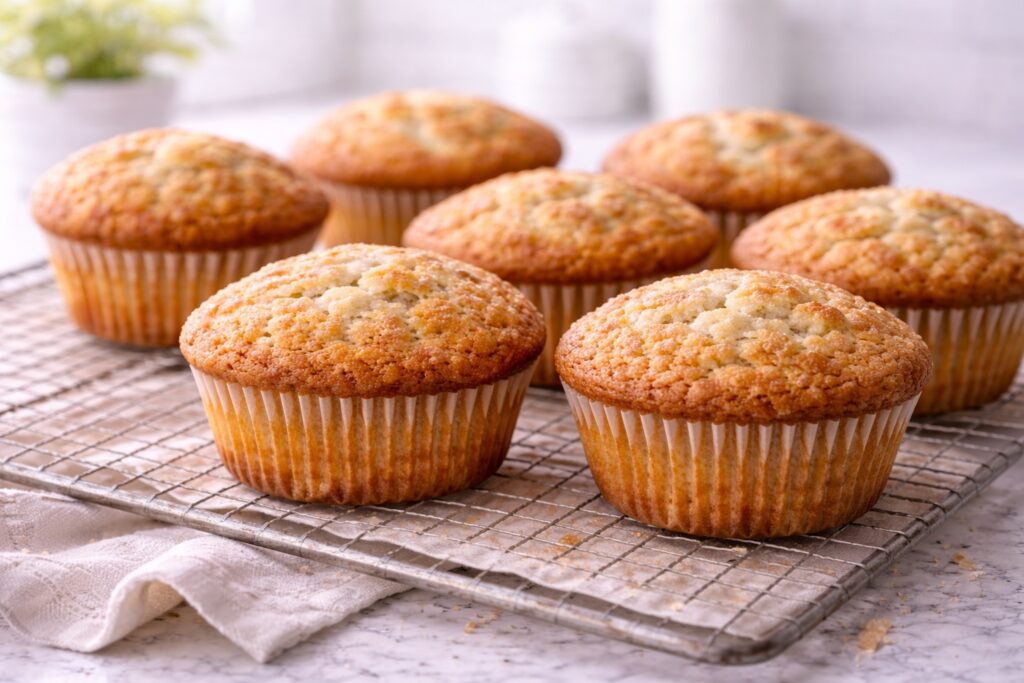
Banana muffins are soft quick-bread muffins made with mashed ripe bananas, flour, eggs, and baking soda, creating a moist and naturally sweet baked treat. This banana muffin recipe comes together quickly and bakes into soft muffins with golden tops and a fluffy crumb. Ready in about 30 minutes, these homemade muffins are perfect for breakfast, snacks, or using up overripe bananas.
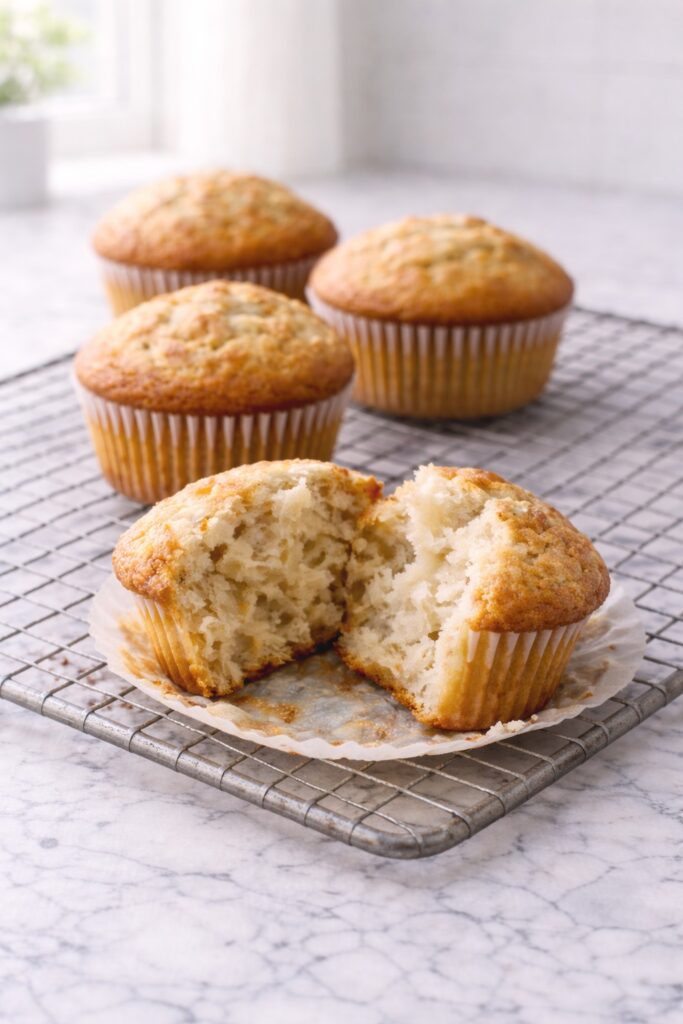
Few baked goods feel as comforting as warm banana muffins straight from the oven. As the batter rises and bakes, the sweet aroma of ripe bananas slowly fills the kitchen, bringing that familiar cozy feeling that only homemade baking creates.
The texture is tender and moist with gentle banana sweetness in every bite. The tops bake into soft golden domes while the inside stays fluffy and delicate. Whether served warm for breakfast or enjoyed as an afternoon snack, banana muffins are one of those classic recipes that always feel comforting.
This easy banana muffin recipe uses simple pantry ingredients and a reliable mixing method that works beautifully for both beginner bakers and experienced home cooks. Like other timeless favorites such as blueberry muffins or chocolate chip muffins, banana muffins are simple to make yet incredibly satisfying.
Quick Recipe Overview
If you want a quick look before baking, here’s everything you need to know about this banana muffin recipe.
- Flavor: naturally sweet banana flavor with a warm bakery-style aroma
- Texture: soft, moist crumb with lightly golden muffin tops
- Difficulty: easy, beginner-friendly recipe
- Prep Time: 10 minutes
- Bake Time: 18–22 minutes
- Total Time: about 30 minutes
- Yield: 12 muffins
- Perfect for: breakfast, snacks, lunchboxes, or using up overripe bananas
These banana muffins are simple to make and perfect when you want a cozy homemade treat.
Why This Banana Muffin Recipe Works So Well
There are many banana muffin recipes, but a few small baking details make a big difference in texture and flavor.
This recipe focuses on the balance between moisture, structure, and natural sweetness, which is what gives banana muffins their soft crumb and rich banana flavor.
You’ll love this recipe because:
- The muffins stay soft and moist for days
- Ripe bananas provide natural sweetness and flavor
- The batter comes together quickly in one bowl
- The muffins bake with beautiful golden bakery-style tops
- The recipe is reliable and beginner friendly
Banana muffins are also one of the best ways to use overripe bananas, transforming them into a soft, fluffy baked treat.
Ingredients
These banana muffins come together with simple ingredients that you likely already have in your kitchen.
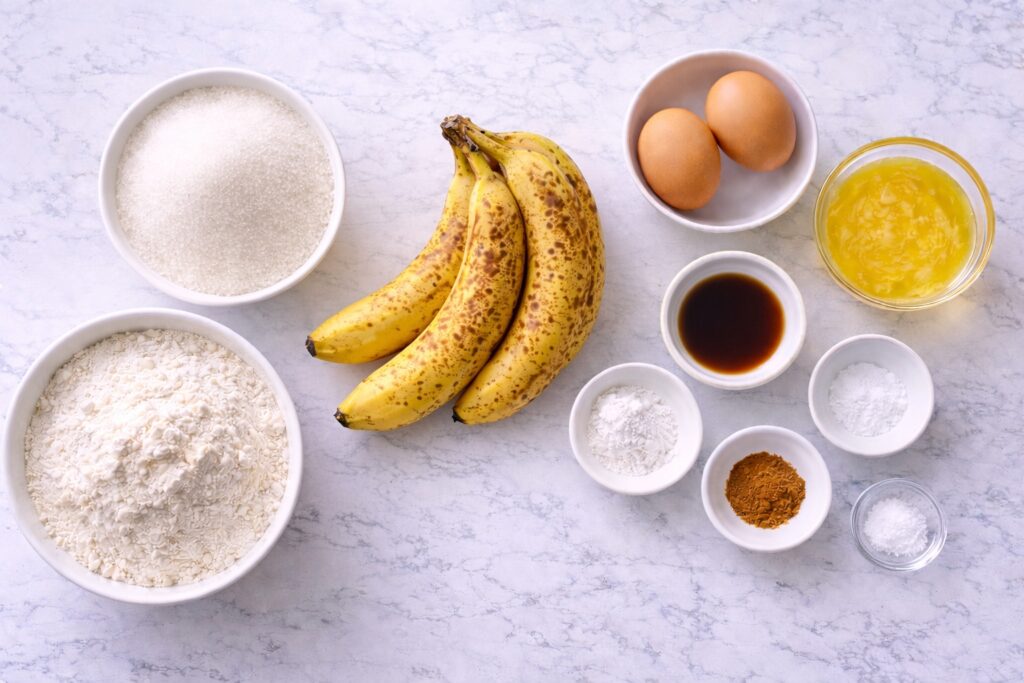
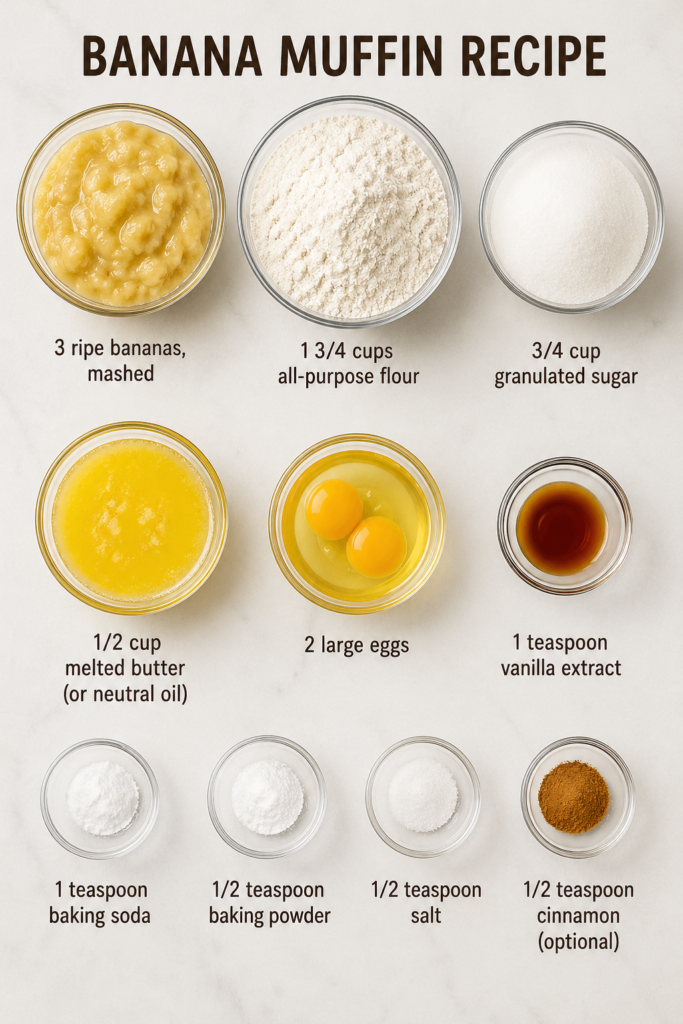
- 3 ripe bananas, mashed
- 1¾ cups all-purpose flour
- ¾ cup granulated sugar
- ½ cup melted butter (or neutral oil)
- 2 large eggs
- 1 teaspoon vanilla extract
- 1 teaspoon baking soda
- ½ teaspoon baking powder
- ½ teaspoon salt
- ½ teaspoon cinnamon (optional)
Ingredient Notes & Substitutions
A few ingredient tips and substitutions can help ensure your banana muffins turn out soft, moist, and full of flavor while also making the recipe flexible depending on what you have in your kitchen.
Ripe Bananas
Bananas should be very ripe with brown spots. Overripe bananas are sweeter, softer, and provide the best flavor and moisture for banana muffins.
Flour
All-purpose flour provides the ideal structure for soft muffins with a tender crumb. For a slightly heartier muffin, you can replace up to one-third of the flour with whole wheat flour.
Butter or Oil
Melted butter adds richer flavor and a slightly more traditional bakery taste. Neutral oils such as vegetable oil or canola oil produce even softer, more moist muffins.
Sugar
Granulated sugar provides clean sweetness, but brown sugar can also be used. Brown sugar adds extra moisture and a deeper caramel-like flavor that pairs beautifully with bananas.
Baking Soda
Bananas are naturally acidic, which activates baking soda and helps the muffins rise properly, creating a soft and fluffy texture.
Cinnamon
Cinnamon is optional but adds warmth and enhances the natural banana flavor. You can also substitute pumpkin spice or omit the spices for a more classic banana muffin flavor.
Why Overripe Bananas Are Best for Baking
Overripe bananas are the secret to the best banana muffins, banana bread, and other banana desserts. As bananas ripen, natural changes happen inside the fruit that improve both flavor and texture in baked goods.
Natural sweetness increases
As bananas ripen, their starches convert into natural sugars. This makes the bananas noticeably sweeter and enhances the flavor of banana muffins without needing extra sugar.
Softer texture for better mixing
Overripe bananas become very soft, which makes them easy to mash and blend smoothly into muffin batter. This helps create a moist and tender crumb.
More moisture in the batter
Ripe bananas contain more moisture, which helps keep banana muffins soft even after baking.
For the best results, choose bananas with many brown spots or even mostly dark peels. At this stage they are sweeter, softer, and perfect for baking.
How to Ripen Bananas Quickly
If your bananas aren’t ripe enough yet, there are a few simple ways to speed up the ripening process so they’re ready for baking.
Oven Method (Fastest)
Place unpeeled bananas on a baking sheet and bake them at 300°F (150°C) for about 15–20 minutes, until the skins turn black and the bananas become soft. Let them cool before using.
Paper Bag Method
Place the bananas in a paper bag with an apple or ripe banana. Fold the bag closed and leave it at room temperature for 24–48 hours. The trapped ethylene gas will speed up ripening.
Microwave Method (Emergency Option)
Pierce the banana peel a few times with a fork and microwave for 30 seconds until softened. This method softens the banana quickly, though it won’t develop quite as much sweetness as natural ripening.
For the best banana muffin flavor, bananas should be very ripe with brown spots, as this stage provides the most natural sweetness and moisture.
Equipment You’ll Need
You only need a few simple kitchen tools to make these banana muffins.
- Muffin tin
- Muffin liners (optional)
- Mixing bowls
- Whisk or spatula
- Fork for mashing bananas
- Ice cream scoop or spoon
Using a scoop to portion the batter helps create evenly sized muffins that bake consistently and helps create evenly domed muffin tops.
How to Mash Bananas for Muffins
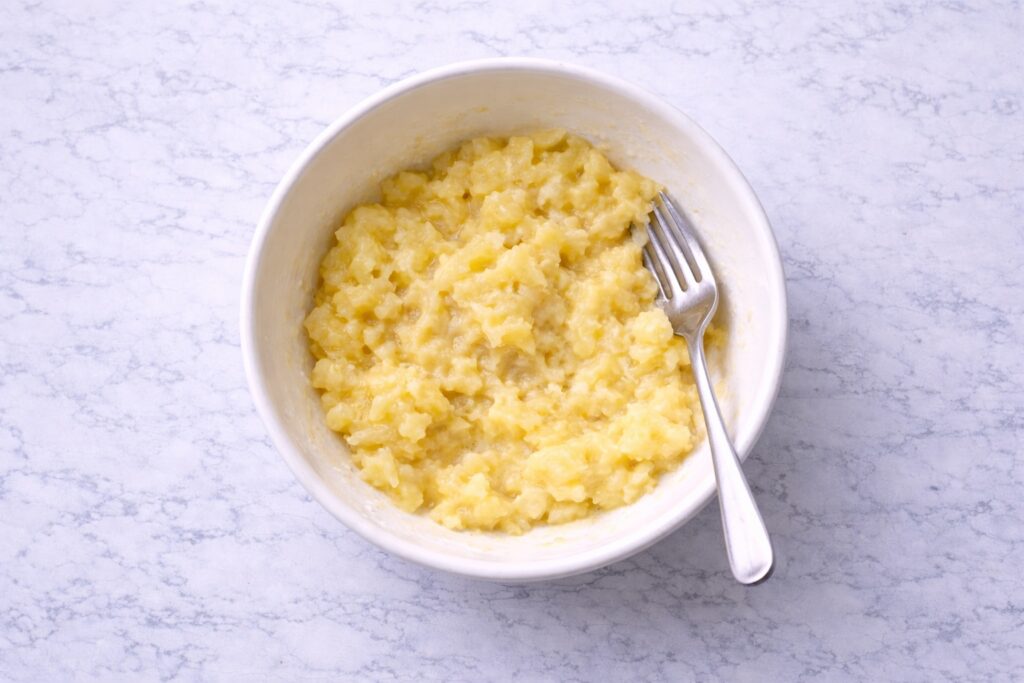
For the best banana muffin texture, bananas should be mashed until mostly smooth but still slightly textured. This allows the banana flavor to distribute evenly through the batter while keeping the muffins moist.
Use a fork
Place the peeled bananas in a bowl and mash them with a fork until they form a soft, thick puree with a few small lumps.
Avoid over-pureeing
Bananas that are completely blended into a liquid can make the batter too wet. A lightly textured mash works best for muffins.
Mash just before mixing
Mash the bananas right before adding them to the batter so they stay fresh and don’t oxidize or become watery.
Ripe bananas should be very soft and easy to mash, which helps create the moist crumb that makes banana muffins so tender.
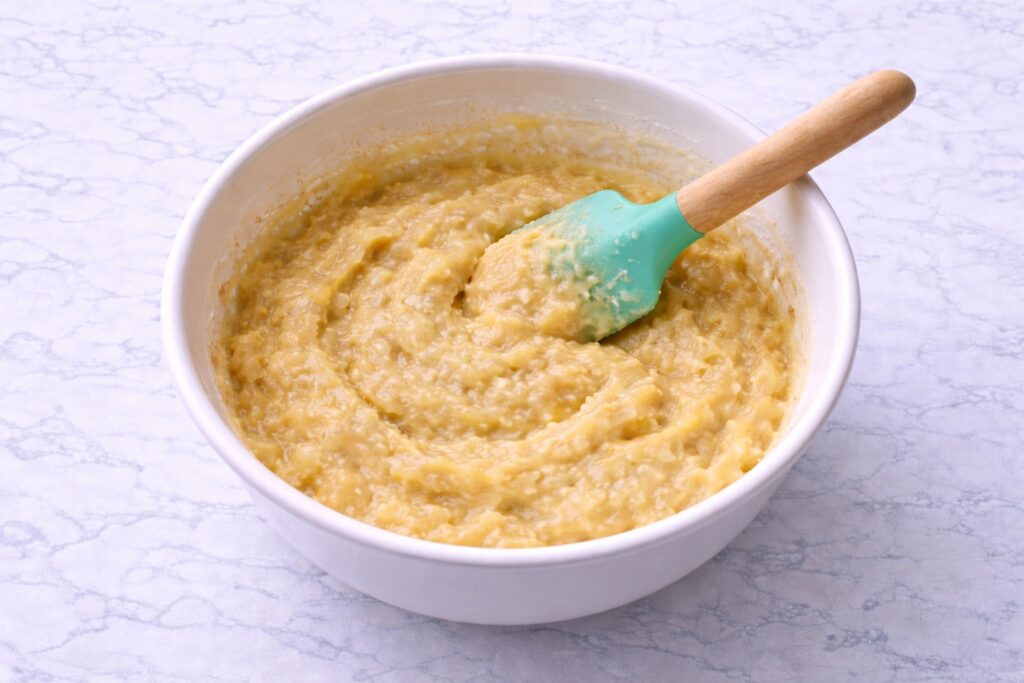
How the Banana Muffin Batter Should Look
Banana muffin batter should be thick, soft, and slightly lumpy. Unlike cake batter, muffin batter is not meant to be perfectly smooth.
After the wet and dry ingredients are combined, the batter should feel soft and scoopable but still thick enough to hold its shape on a spoon. This thicker consistency helps the muffins rise properly and develop soft, fluffy centers.
Small lumps in the batter are completely normal and are actually a sign that the batter has not been overmixed. Overmixing can develop gluten in the flour and lead to dense muffins.
If the batter looks too thin, the muffins may spread and bake flat instead of rising. If it feels too stiff, the muffins may turn out dense rather than light and tender.
A properly mixed banana muffin batter should look thick, soft, and slightly textured.
How to Make Banana Muffins
1. Preheat the oven
Preheat your oven to 350°F (175°C) and line a muffin pan with liners or lightly grease it.
2. Mash the bananas
In a large bowl, mash the ripe bananas with a fork until mostly smooth.
3. Mix wet ingredients
Add the melted butter, sugar, eggs, and vanilla extract to the mashed bananas. Whisk until the mixture is smooth and combined.
4. Combine dry ingredients
In a separate bowl, whisk together the flour, baking soda, baking powder, salt, and cinnamon.
5. Make the batter
Add the dry ingredients to the wet mixture and gently fold until just combined. Avoid overmixing.
6. Fill muffin pan
Divide the batter evenly between muffin cups, filling each about ¾ full.

7. Bake
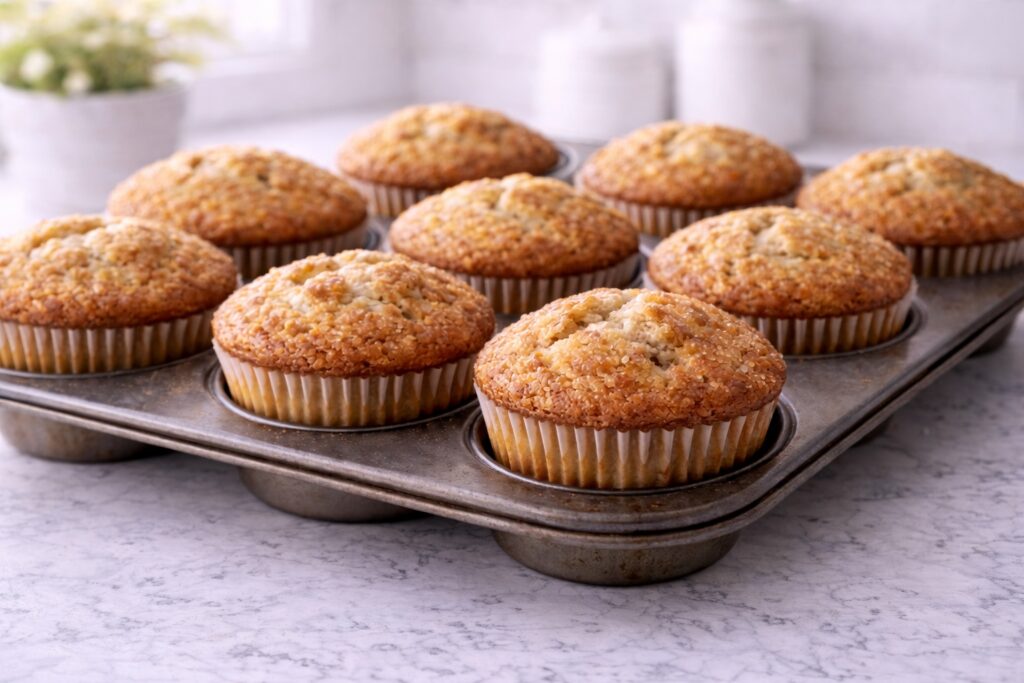
Bake for 18–22 minutes, or until the tops are golden and a toothpick inserted in the center comes out clean.
8. Cool
Allow the muffins to cool in the pan for about 5 minutes before transferring them to a wire rack.
Tips for Perfect Banana Muffins
A few simple baking tips can help ensure your banana muffins turn out soft, moist, and beautifully domed every time.
Use very ripe bananas
The best banana muffins start with overripe bananas covered in brown spots. Ripe bananas are sweeter, softer, and provide the strongest banana flavor and moisture.
Don’t overmix the batter
Mix the batter just until the ingredients are combined. Overmixing develops gluten in the flour and can make muffins dense instead of soft and tender.
Start with thick batter
Muffin batter should be thick and scoopable rather than runny. A thicker batter helps the muffins rise upward instead of spreading.
Use fresh leavening
Baking soda and baking powder lose strength over time. Fresh leavening agents help muffins rise properly and create tall, bakery-style tops.
Fill the muffin cups correctly
For nicely domed muffin tops, fill each muffin cup about three-quarters full.
Check for doneness carefully
Insert a toothpick into the center of a muffin. If it comes out clean or with a few moist crumbs, the muffins are ready.
Let the muffins cool briefly
Allow the muffins to cool in the pan for about 5 minutes before transferring them to a wire rack. This helps them set properly and prevents soggy bottoms.
Optional bakery-style finish
For a bakery-style look and light crunch, sprinkle a little coarse sugar on top of the batter before baking.
Common Mistakes When Making Banana Muffins
Even simple muffin recipes can go wrong if a few small details are overlooked.
Using bananas that aren’t ripe enough
Bananas that are still yellow and firm won’t provide enough sweetness or moisture.
Overmixing the batter
One of the most common muffin mistakes is mixing the batter too much, which leads to dense muffins instead of a soft crumb.
Adding too much flour
Scooping flour directly from the bag can pack it too tightly. For better accuracy, spoon the flour into the measuring cup and level it.
Overbaking the muffins
Baking the muffins too long can dry them out. Start checking them around 18 minutes.
Skipping muffin liners or greasing the pan
Without liners or greasing, muffins may stick to the pan and break when removed.
Baking Science Behind Banana Muffins
Banana muffins belong to the quick bread family of baked goods, which means they rely on chemical leavening agents such as baking soda or baking powder rather than yeast. This allows the batter to rise quickly in the oven and produce muffins with a soft, tender crumb.
Ripe bananas play an essential role in both flavor and texture. As bananas ripen, their starches naturally convert into sugars, making the fruit sweeter and softer. These natural sugars enhance the banana flavor while the fruit’s moisture helps keep the muffins soft after baking.
The final texture of banana muffins depends on the balance between bananas, fat, flour, and leavening. Fat from butter or oil tenderizes the crumb, while flour provides structure. Baking soda reacts with the natural acidity of the bananas to help the muffins rise.
One of the most important steps in muffin baking is avoiding overmixing. When the batter is mixed too much, gluten develops in the flour and the muffins can become dense. Gently mixing the ingredients just until combined helps create the soft, bakery-style crumb that makes banana muffins so enjoyable.
Because the method is simple and forgiving, banana muffins are often considered one of the most reliable beginner baking recipes, while still being versatile enough for experienced bakers to customize with additions such as chocolate chips, chopped nuts, or streusel toppings.
Banana Muffins vs Banana Bread
Banana muffins and banana bread recipes use very similar ingredients, including ripe bananas, flour, eggs, and baking soda, but the texture and baking method are slightly different. Muffins bake faster and usually develop lighter, fluffier crumbs, while banana bread tends to be denser and more sliceable.
Because muffins bake in individual portions, they also develop beautifully domed tops and soft interiors that feel lighter than traditional banana bread. Both recipes are excellent ways to use overripe bananas, but muffins are often the quicker option when you want a small homemade treat ready in under an hour.
Banana Muffin Texture Guide
Banana muffins can turn out slightly different depending on ingredient balance, mixing technique, and baking time. Understanding these differences helps you recognize what affects the final result.
Soft and Moist Banana Muffins
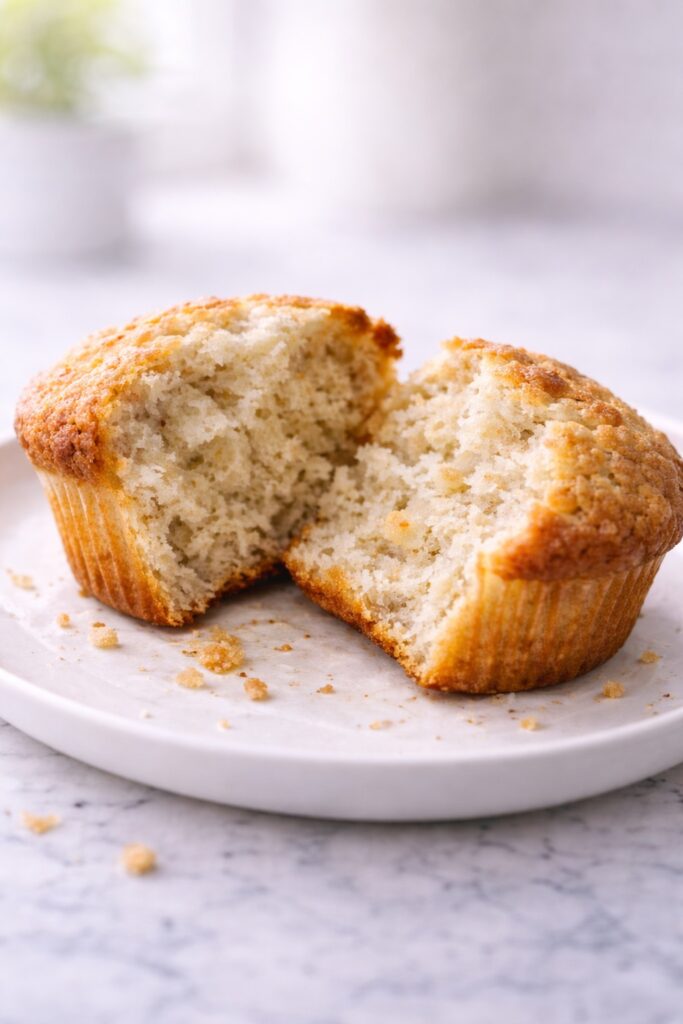
Soft banana muffins have a tender crumb, moist interior, and lightly golden tops. This texture comes from using very ripe bananas, the right balance of fat, and mixing the batter gently without overworking the flour.
Dense Banana Muffins
Dense muffins usually happen when the batter is overmixed or too much flour is added. When flour is mixed too aggressively, gluten develops and the muffins lose their soft, fluffy texture.
Dry Banana Muffins
Dry muffins are most often caused by overbaking or using bananas that are not ripe enough. Overripe bananas provide both sweetness and moisture, which helps keep the muffins soft after baking.
This recipe is designed to produce soft, moist banana muffins with fluffy crumbs and gently domed golden tops.
How to Serve Banana Muffins
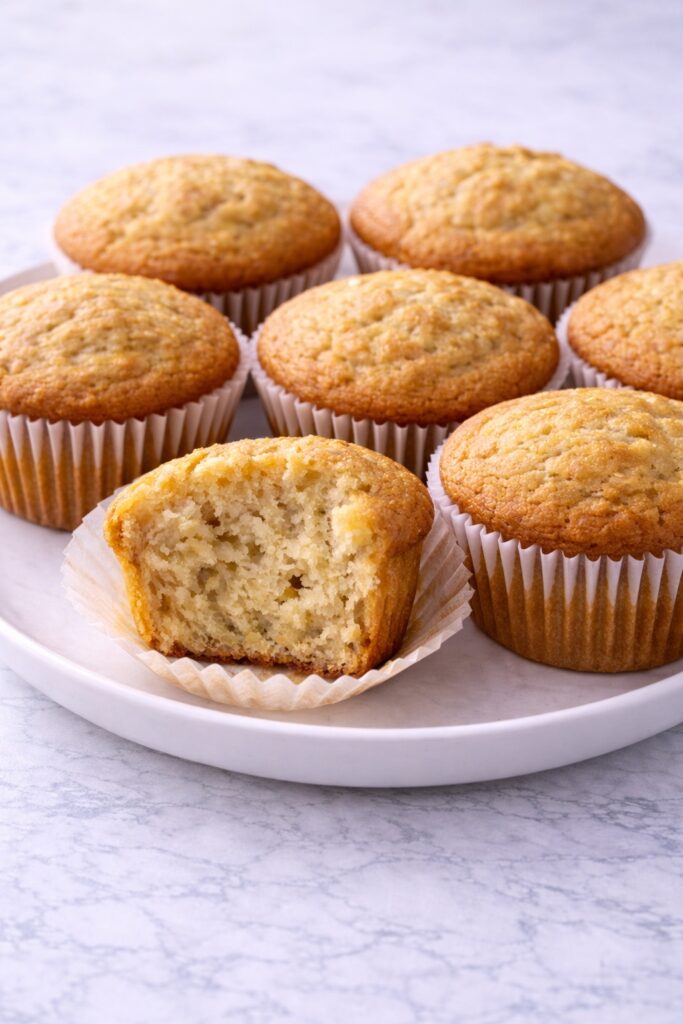
Banana muffins are delicious served:
- Warm with butter
- With honey or maple syrup
- Alongside coffee or tea
- With yogurt and fresh fruit salad
- As an afternoon snack
They also pair beautifully with peanut butter or almond butter for a more filling breakfast.
Variations
You can easily customize these banana muffins with a few extra ingredients for different flavors and textures.
Chocolate Chip Banana Muffins
Fold ½ cup chocolate chips into the batter before baking.
Walnut Banana Muffins
Add ½ cup chopped walnuts for a nutty crunch.
Streusel Banana Muffins
Top the muffins with a simple brown sugar streusel for a bakery-style finish.
Make Ahead Tips
Banana muffins are a great make-ahead baked good and can easily be prepared in advance for busy mornings or quick snacks.
Bake the muffins ahead of time
The easiest option is to bake the muffins in advance. Once cooled, store them in an airtight container at room temperature for several days or freeze them for longer storage.
Prepare the batter shortly before baking
If you want to save time in the morning, the batter can be mixed slightly ahead and refrigerated briefly. For the best rise and texture, it’s usually best to bake muffin batter soon after mixing.
Freeze for longer storage
Banana muffins freeze very well. Once fully cooled, place them in a freezer-safe container or bag and freeze for up to 2 months. Thaw at room temperature or warm briefly in the microwave.
Because banana muffins stay naturally moist, they are perfect for meal prep, lunchboxes, or homemade snacks prepared in advance.
Storage
Proper storage helps keep banana muffins soft, moist, and fresh for longer while preventing the tops from becoming sticky or soggy.
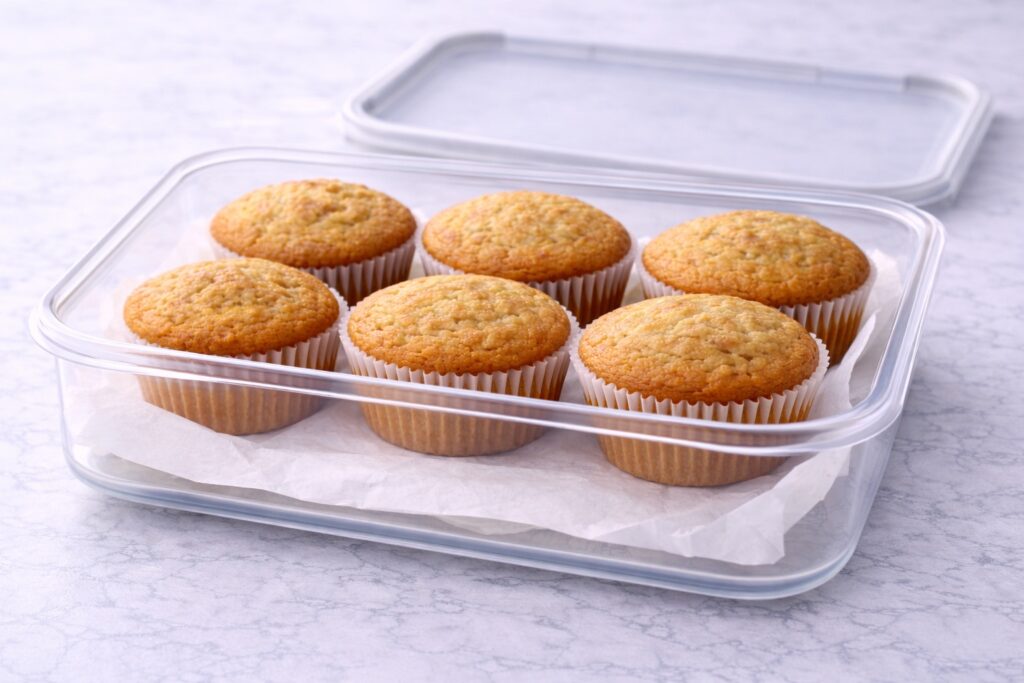
Let the muffins cool completely
Always allow muffins to cool fully before storing them. Warm muffins release steam, which can create condensation inside the container and make the muffins soggy.
- Room temperature: 2–3 days in an airtight container. For best results, line the container with a paper towel and place another sheet on top of the muffins. The paper towel absorbs excess moisture and helps keep the muffin tops from becoming sticky.
- Refrigerator: up to 5 days, though refrigeration may slightly firm the texture.
- Freezer: up to 2 months. Once fully cooled, place the muffins in a freezer-safe container or bag.
To refresh the muffins, microwave for 10–15 seconds or warm briefly in a low oven.
Frequently Asked Questions
Here are a few common questions about baking banana muffins.
Why are my banana muffins dense?
Dense muffins are usually caused by overmixing the batter or adding too much flour.
Can I use frozen bananas?
Yes. Thaw the bananas completely and drain excess liquid before using.
How ripe should bananas be for banana muffins?
Bananas should be very ripe with brown spots for the best sweetness and flavor.
More Muffin Recipes You’ll Love
If you love homemade muffins, here are a few more easy muffin recipes that are perfect for breakfast, snacks, or cozy baking days.
- Banana Chocolate Chip Muffins – a rich banana muffin variation with melty chocolate chips.
- Healthy Banana Muffins – a lighter banana muffin option made with wholesome ingredients.
- Blueberry Muffins – soft, fluffy muffins bursting with juicy blueberries.
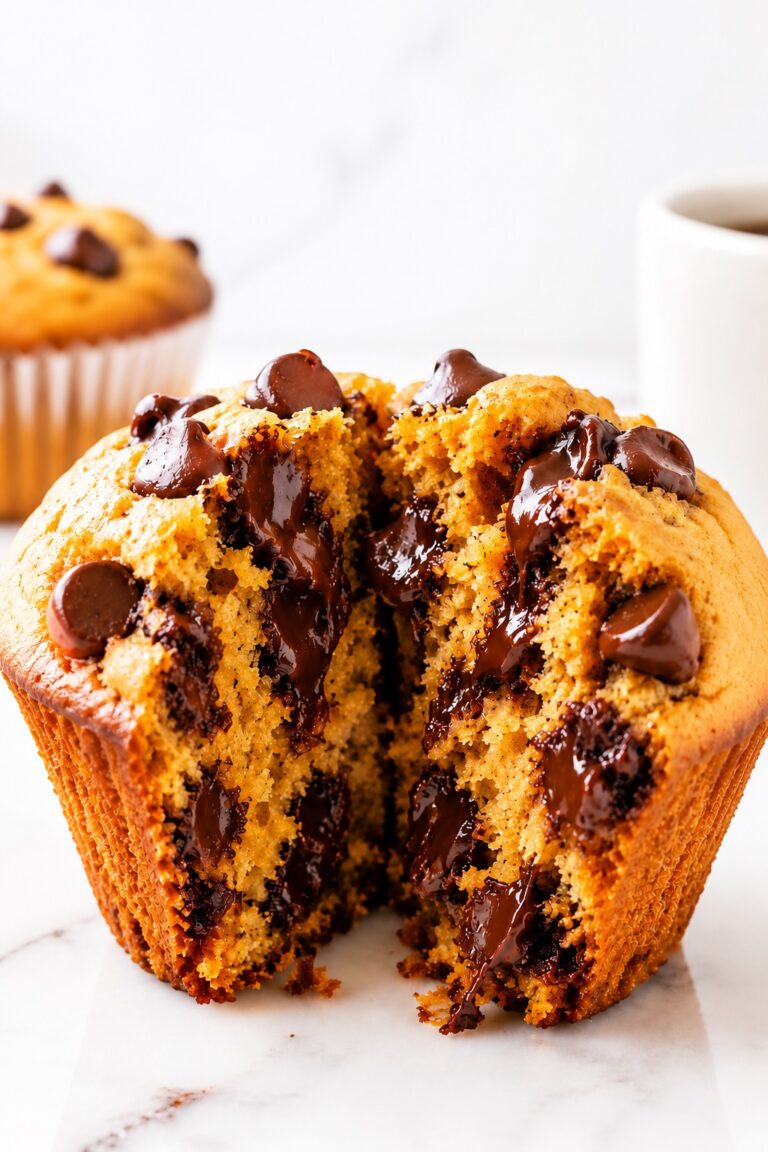
- Chocolate Chip Muffins – bakery-style muffins filled with melty chocolate chips.
- Apple Muffins – soft cinnamon-spiced muffins with tender apple pieces.
- Lemon Blueberry Muffins – bright citrus muffins packed with blueberries.
- Cranberry Orange Muffins – fresh citrus muffins with bright orange flavor and tart cranberries.
- Pumpkin Muffins – soft fall muffins filled with warm pumpkin spice flavor.
Final Thoughts
Banana muffins are one of those timeless homemade recipes that never lose their charm. With just a few simple ingredients and a handful of ripe bananas, you can bake a batch of soft, tender muffins that fill the kitchen with the comforting aroma of fresh baking.
What makes banana muffins so special is their simplicity. They’re easy to make, incredibly forgiving, and always satisfying, whether you enjoy them warm for breakfast, pack them into lunchboxes, or share them with family and friends.
If you find yourself with a few overripe bananas on the counter, this banana muffin recipe is one of the most rewarding ways to use them. Soft, moist, and naturally sweet, these homemade banana muffins are the kind of comforting treat that always feels familiar.
The full banana muffin recipe with exact measurements and steps is in the recipe card below.
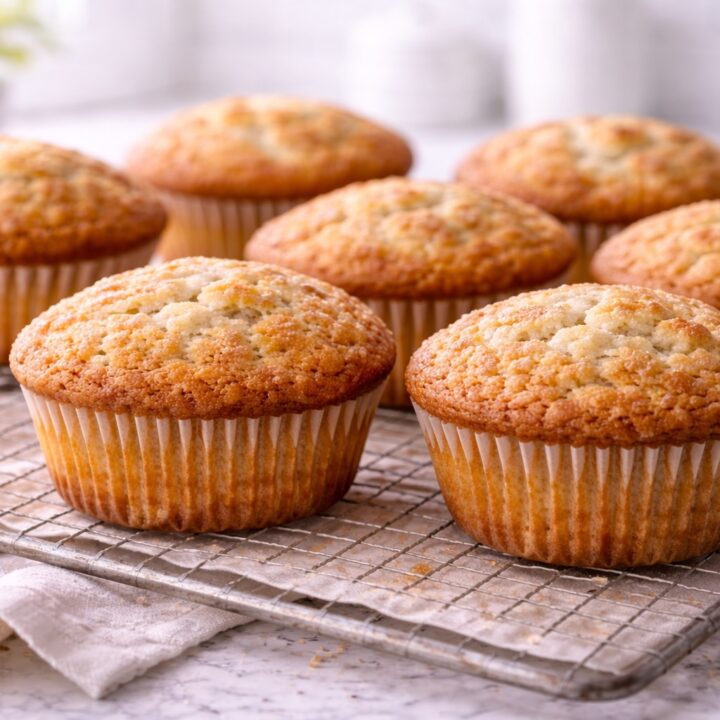
Banana Muffins
Soft and moist banana muffins made with ripe bananas and simple pantry ingredients. This easy homemade banana muffin recipe bakes up fluffy, tender, and perfect for breakfast or snacks.
Ingredients
- 3 ripe bananas, mashed
- 1 3/4 cups all-purpose flour
- 3/4 cup granulated sugar
- 1/2 cup melted butter or neutral oil
- 2 large eggs
- 1 teaspoon vanilla extract
- 1 teaspoon baking soda
- 1/2 teaspoon baking powder
- 1/2 teaspoon salt
- 1/2 teaspoon cinnamon, optional
Instructions
- Preheat the oven to 350°F (175°C). Line a 12-cup muffin pan with paper liners or lightly grease it.
- In a large bowl, mash the ripe bananas with a fork until mostly smooth but still slightly textured.
- Add the melted butter, sugar, eggs, and vanilla extract to the mashed bananas. Mix until smooth and combined.
- Add the flour, baking soda, baking powder, salt, and cinnamon. Gently fold until just combined. Do not overmix.
- Divide the batter evenly among the muffin cups, filling each about 3/4 full.
- Bake for 18–22 minutes, or until the tops are golden and a toothpick inserted in the center comes out clean.
- Allow the muffins to cool in the pan for about 5 minutes, then transfer them to a wire rack to cool completely.
Nutrition Information:
Yield: 12 muffins Serving Size: 1 muffinAmount Per Serving: Calories: 210Total Fat: 8gCarbohydrates: 31gSugar: 16gProtein: 4g
Nutrition information is automatically calculated and should be used as an estimate only.
12 Sweet Favourites — Yours, Free 🍰
Tiramisù, no-bake cheesecake, the perfect chocolate chip cookie & 9 more reader-loved desserts — gathered into one beautiful free recipe book. From my kitchen to yours.
No spam, just sweet things. Unsubscribe anytime.