Lemon Blueberry Muffins with Lemon Streusel
🎁 FREE E-BOOK: 12 Sweet Favorites — reader-loved desserts in one beautiful recipe book.
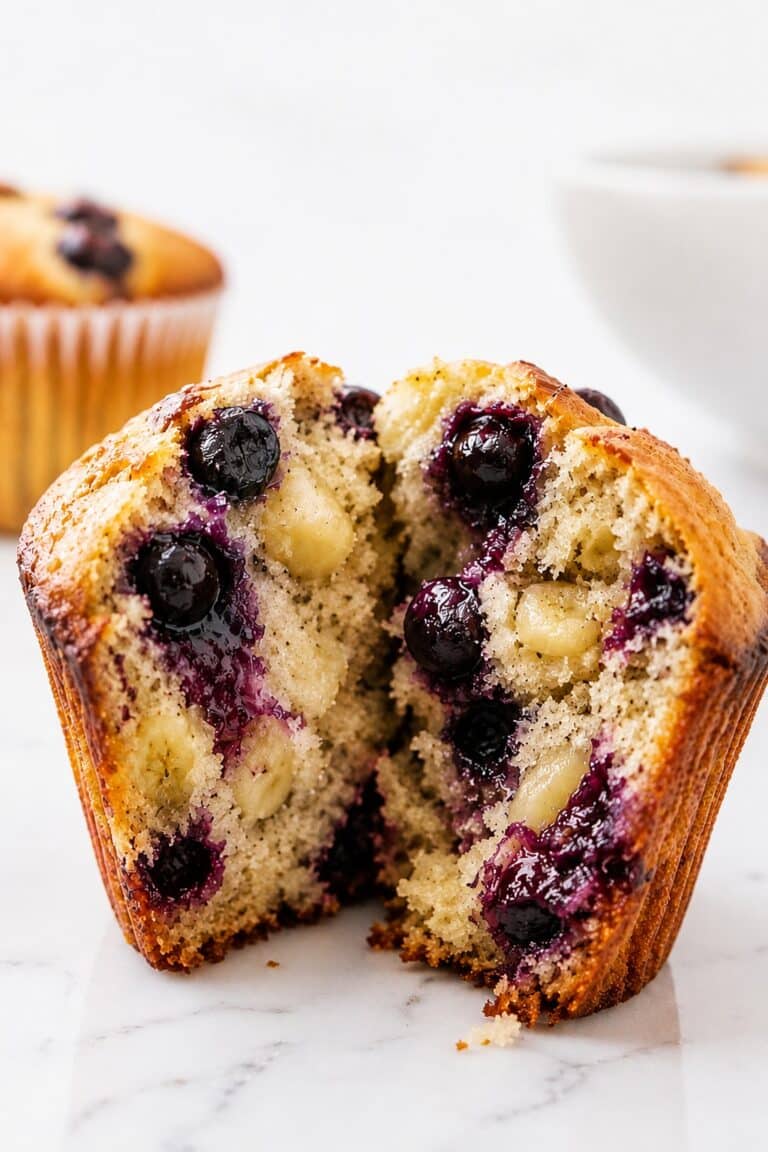
Bright lemon perfume, juicy berry pockets, and crisp little crumbs of streusel make these lemon blueberry muffins feel fresh before the first bite. The crumb is soft and moist but still unmistakably muffin-like, with enough structure to hold the fruit without becoming heavy.

They fit the kind of morning when a familiar homemade muffin sounds comforting, but plain blueberry feels a little too quiet. Fresh zest lifts the buttery crumb, while a light cinnamon-free topping adds contrast without turning breakfast into a heavily crumbed coffee cake.
This is a recipe worth keeping because it removes the guesswork that usually surrounds berry muffins: fresh and frozen blueberries receive separate handling, every well gets a measured portion, and doneness is confirmed away from the juicy fruit.
Lemon Blueberry Muffins at a Glance
This is a lemon-forward batch of 12 standard muffins made with melted butter, a small amount of oil, full-fat sour cream, 190 g blueberries, and a light lemon streusel.
- Yield: 12 standard muffins
- Active prep time: about 25 minutes
- Bake time: 21–25 minutes with fresh blueberries; 23–27 minutes with frozen blueberries
- Cooling time: 5 minutes in the pan, then at least 20 minutes on a rack
- Total time: about 1 hour 11 minutes to 1 hour 17 minutes
- Difficulty: Easy
- Pan: One light-colored metal 12-cup standard muffin pan
- Texture: Moist, gently springy muffin crumb with juicy berry pockets and light crisp streusel
These muffins rise into naturally rounded standard domes rather than oversized coffee-shop caps. If you want a taller vanilla-blueberry muffin with a coarse-sugar finish, use the Bakery Style Blueberry Muffins Recipe.
Why This Lemon Blueberry Muffin Recipe Works
The lemon zest and juice bring brightness, sour cream and two fats keep the crumb moist, and the measured blueberries stay evenly distributed in the thick batter. A steady oven temperature sets the centers without overbrowning the streusel.
- Clear lemon flavor: Ten grams of fine zest carry the aroma, while 30 ml juice adds brightness without making the batter thin.
- Balanced softness: Butter remains the main fat for flavor, and a smaller oil portion protects tenderness after cooling.
- Evenly distributed berries: Full-fat sour cream and the measured 190 g of fruit create a thick batter that can support the blueberries.
- Even home-kitchen bake: A constant 375°F (190°C) sets the centers around juicy fruit without forcing oversized domes or overbrowning the streusel.
- Light lemon streusel: The cinnamon-free topping reinforces the lemon and leaves parts of the dome exposed instead of creating a heavy coffee-cake cap.
Why You’ll Love These Lemon Blueberry Muffins
These muffins suit everyday baking because they use familiar ingredients, require no mixer, and provide clear choices for either fresh or frozen fruit.
- They make one full 12-muffin batch with no awkward leftover batter.
- The lemon tastes fresh and bright without a glaze or artificial color.
- The crumb stays soft while remaining sturdy enough for juicy blueberries.
- The topping adds a delicate crisp contrast without overwhelming the muffin.
- US measurements come first, with metric weights for even portioning.
- The finished muffins work naturally for breakfast, brunch, an afternoon coffee, or a simple homemade gift.
The Recipe Science Behind Moist Lemon Blueberry Muffins
Three mechanisms matter most here: how lemon aroma is released, how the mixed fats stay emulsified, and how a thick batter sets around the fruit.
- Zest oils carry aroma: Lemon juice supplies acidity, but most of the fresh perfume comes from oils in the yellow peel. Rubbing fine zest into sugar spreads those oils before flour can trap them in isolated pockets; King Arthur Baking’s guide to baking with lemon explains why zest is such an effective flavor tool.
- The emulsion keeps the crumb tender: Room-temperature eggs and sour cream accept the 95–105°F (35–40°C) melted butter more evenly, while the small oil portion remains fluid after cooling. A separated wet mixture distributes fat less consistently and can create uneven crumb.
- A thick batter supports the berries: Full-fat sour cream adds moisture without loosening the batter as much as a thinner dairy would. The batter begins setting around the measured 190 g of fruit before gravity can collect most berries at the bottom.
- Moderate heat protects both textures: The 375°F (190°C) oven gives the muffin center time to set around cold fruit while allowing the light streusel to dry and crisp without scorching.
Ingredients for Lemon Blueberry Muffins
The ingredients appear in the same order you will use them, with the lemon streusel first and the muffin batter second.
Lemon Streusel
This small topping batch makes about 107 g, enough for a light 8–9 g layer on each muffin.
- 1/3 cup all-purpose flour (40 g)
- 2 tablespoons packed light brown sugar (25 g)
- 1 tablespoon granulated sugar (12 g)
- 1 teaspoon finely grated fresh lemon zest, yellow layer only (about 2 g)
- Small pinch fine sea salt (about 0.4 g)
- 2 tablespoons unsalted butter (28 g), melted and cooled slightly
Lemon Blueberry Muffin Batter
These quantities fill 12 standard muffin wells. Room-temperature dairy and cooled melted butter help the wet mixture stay smooth.
- 2 cups all-purpose flour, spooned and leveled (240 g)
- 2 teaspoons baking powder (8 g)
- 1/4 teaspoon baking soda (about 1.5 g)
- 1/2 teaspoon fine sea salt (3 g)
- 3/4 cup granulated sugar (150 g)
- 2 tablespoons finely grated fresh lemon zest, yellow layer only (about 10 g)
- 2 large eggs, at room temperature (about 100 g without shells)
- 1/2 cup full-fat sour cream, at room temperature (120 g)
- 2 tablespoons whole milk, at room temperature (30 ml)
- 2 tablespoons fresh lemon juice, strained (30 ml)
- 1 teaspoon pure vanilla extract (5 ml)
- 6 tablespoons unsalted butter, melted and cooled to 95–105°F or 35–40°C (85 g)
- 2 tablespoons neutral oil (28 g)
- 1 1/4 cups fresh or frozen blueberries (190 g)

Ingredient Notes for Bright Lemon Flavor and a Moist Crumb
The ingredients that deserve special attention are the ones whose form, temperature, or moisture level can change batter thickness and the final lemon-blueberry balance.
- Fresh lemon zest: Use a fine grater and remove only the yellow layer. White pith introduces bitterness, while long strips distribute less evenly through the sugar.
- Fresh lemon juice: Measure 2 tablespoons (30 ml) independently rather than using “the juice of one lemon.” Extra juice changes hydration and acidity; stronger lemon aroma should come from the measured zest.
- Full-fat sour cream: Its fat and thickness add moisture while helping the batter support the berries. Greek yogurt is not a direct one-for-one replacement because brands vary in water, protein, fat, and thickness.
- Melted butter and neutral oil: Butter supplies most of the flavor, while oil helps the muffins stay soft after cooling. The butter should be fluid but no hotter than 105°F (40°C) when added.
- All-purpose flour: Weigh 240 g when possible. Packed cups create a drier, denser crumb, while reducing the flour weakens support around the fruit.
- Blueberries: Use exactly 190 g. Fresh berries must be dry, and frozen berries must stay fully frozen until folding.
- Lemon streusel: Brown sugar adds light caramel depth, granulated sugar helps the crumbs crisp, and zest keeps the topping lemony. Cinnamon is intentionally absent.

Fresh vs. Frozen Blueberries in Muffin Batter
Both types work at the same 190 g weight, but frozen blueberries must remain frozen and usually extend the bake by 2–4 minutes.
| Detail | Fresh blueberries | Frozen blueberries |
|---|---|---|
| Preparation | Remove stems and damaged berries; wash only if needed, then dry completely | Keep fully frozen; remove only loose surface ice crystals |
| Rinsing and thawing | Rinsing is acceptable before complete drying | Do not rinse, thaw, or leave at room temperature |
| Folding | Use the minimum strokes needed for even distribution | Fold at the last moment; isolated purple streaks are normal |
| Portioning | Portion immediately after folding | Portion immediately before the berries begin to soften |
| Expected bake | 21–25 minutes; begin checking at 21 minutes | 23–27 minutes; begin checking at 23 minutes |
| Warning sign | Wet surfaces that loosen the batter | Uniformly purple batter, crushed fruit, or syrupy thawed berries |
Keeping frozen fruit cold limits juice release and color bleed, which is consistent with King Arthur Baking’s frozen-blueberry guidance. Keep the berries at 190 g and use the baking times given for this recipe.

Kitchen Tools Needed for Lemon Blueberry Muffins
You need a standard muffin pan, a digital scale, mixing bowls, a whisk, a spatula, a fine zester, a tester, and a cooling rack. The light-colored metal pan and scale make the biggest difference in consistency.
- Pan and liners: One light-colored metal 12-cup standard muffin pan with wells about 2 3/4 inches (7 cm) across the top and 1 3/8 inches (3.5 cm) deep, plus 12 standard paper liners.
- Measuring setup: A digital kitchen scale accurate to 1 g, measuring cups and spoons, and a liquid measure for the milk and lemon juice.
- Mixing tools: One large bowl, two medium bowls, one small streusel bowl, a whisk, a flexible silicone spatula, and a fork.
- Zesting and testing: A fine Microplane-style zester, a thin cake tester or toothpick, and an optional instant-read thermometer.
- Cooling surface: A wire rack large enough to hold all 12 muffins without crowding.
Dark metal, silicone, ceramic, jumbo, mini, and tulip-lined muffins bake differently because the material, capacity, and shape affect browning and timing.
Before You Mix the Lemon Blueberry Muffin Batter
Confirm these six conditions before Step 1 so the mixed batter can move into the oven without a rest.
- Bring the eggs, full-fat sour cream, and whole milk to room temperature.
- Melt the batter butter first and cool it to 95–105°F (35–40°C).
- Finely grate only yellow zest and measure the streusel and batter portions separately.
- Strain and measure exactly 2 tablespoons (30 ml) fresh lemon juice.
- Fully preheat the oven to 375°F (190°C) for at least 20 minutes with the rack centered.
- Dry fresh blueberries completely, or keep frozen blueberries in the freezer until the batter is nearly combined.
What to Expect from These Lemon Blueberry Muffins
Normal results include thick batter, rounded standard domes, a fragile hot crumb, and occasional color streaks when frozen berries are used.
- The finished batter is scoopable and falls from the spatula in slow, heavy folds rather than pouring.
- The muffins rise into rounded standard domes; they are not meant to form oversized mushroom caps.
- Fresh berries leave cleaner pale-yellow crumb, while frozen berries may create a few isolated purple streaks.
- The crumb is very tender while hot and becomes cohesive only after the 5-minute pan rest and at least 20 minutes on the rack.
- The streusel remains a light irregular layer with some exposed muffin surface instead of sealing the whole top.

How to Make Lemon Blueberry Muffins
Follow these ten steps in order, moving directly from folding to portioning and baking so the batter does not sit.
Step 1: Prepare and Chill the Lemon Streusel
Rub 1 teaspoon lemon zest (about 2 g) into the 2 tablespoons brown sugar (25 g) and 1 tablespoon granulated sugar (12 g). Stir in 1/3 cup all-purpose flour (40 g) and the pinch of salt. Add the 2 tablespoons melted, slightly cooled butter (28 g), then mix with a fork until irregular lentil-to-small-pea crumbs form. Refrigerate for at least 10 minutes.
What you should see: Distinct moist crumbs that hold when pinched but are not greasy paste, loose dry flour, or one solid mass.

Step 2: Prepare the Oven and Muffin Pan
Position a rack in the center of the oven and preheat to 375°F (190°C) for at least 20 minutes. Line all 12 wells of one light-colored metal standard muffin pan with paper liners.
What you should see: A fully preheated oven and one evenly lined standard pan, with no alternating empty wells and no oversized liners.
Step 3: Make the Lemon Sugar
Place the 3/4 cup granulated sugar (150 g) and 2 tablespoons lemon zest (about 10 g) in a large mixing bowl. Rub them together with your fingertips for about 60 seconds, until the sugar feels slightly damp and smells strongly lemony.
What you should see: Evenly pale-yellow, fragrant sugar with no long zest strips or pieces of white pith.

Step 4: Whisk the Dry Ingredients
In a medium bowl, whisk the 2 cups all-purpose flour (240 g), 2 teaspoons baking powder (8 g), 1/4 teaspoon baking soda (about 1.5 g), and 1/2 teaspoon fine sea salt (3 g) for 30 seconds.
What you should see: A uniform flour mixture with no compacted flour or visible clumps of leavener.
Step 5: Build the Wet Emulsion
Add the 2 room-temperature eggs to the lemon sugar and whisk for 45–60 seconds, until slightly thickened. Whisk in the 1/2 cup full-fat sour cream (120 g), 2 tablespoons whole milk (30 ml), 2 tablespoons fresh lemon juice (30 ml), and 1 teaspoon vanilla (5 ml) until smooth. Slowly whisk in the 6 tablespoons melted butter cooled to 95–105°F (85 g), followed by the 2 tablespoons neutral oil (28 g).
What you should see: A cohesive, glossy, pale-yellow mixture. A few tiny butter flecks are acceptable; pooled oil, cooked egg strands, or heavy curdling are not.

Step 6: Fold the Batter and Blueberries
Add half of the dry mixture to the wet mixture and fold gently. Add the remaining dry mixture and continue only until a few small flour streaks remain. Add 1 1/4 cups blueberries (190 g)—completely dry if fresh or still fully frozen—and fold with the fewest strokes needed to make the flour disappear and distribute the fruit. Do not rest the batter.
What you should see: Thick, scoopable batter that falls slowly from the spatula in heavy folds. It should not be pourable, dry like cookie dough, streaked with raw flour, or uniformly purple.

Step 7: Portion the Batter and Streusel
Divide the batter among the 12 lined wells, placing 82–84 g in each. Break the chilled streusel into irregular crumbs and add 8–9 g to every muffin. Leave small patches of batter visible and press the crumbs only lightly so they adhere.
What you should see: Liners approximately seven-eighths full, even batter portions, and a light irregular streusel layer rather than a sealed heavy cap.

Step 8: Bake the Muffins
Bake on the center rack at 375°F (190°C) without opening the oven during the first 18 minutes. Begin checking fresh-berry muffins at 21 minutes and expect 21–25 minutes. Begin checking frozen-berry muffins at 23 minutes and expect 23–27 minutes. Use the doneness cues below rather than removing the pan by time alone.
What you should see: Rounded—not oversized—domes, matte set centers, light-golden edges, dry-looking streusel, and isolated softened blueberry pockets without a wet central crater.
Step 9: Confirm Doneness
Touch the center of one muffin lightly; it should spring back slowly. Insert a thin tester into a berry-free area near the center, then check a second location if the first tester carries blueberry juice. A few moist crumbs are correct, but raw batter is not. If using an instant-read thermometer, place it in berry-free crumb; the center should read approximately 200–205°F (93–96°C).
What you should see: A center that is no longer glossy or mobile, springs back without a wet indentation, and gives moist crumbs rather than paste when tested in two areas away from berries.

Step 10: Cool the Muffins
Cool the muffins in the pan for 5 minutes, then transfer every muffin to a wire rack. Let them stand for at least 20 additional minutes before cutting, judging the final crumb, or sealing them for transport or storage.
What you should see: Liners that release cleanly, dry rather than steamed bottoms, streusel that firms as it cools, and a crumb that cuts without compressing into a gummy line.

How to Tell When Lemon Blueberry Muffins Are Done
Check the surface, spring-back, and two berry-free areas with a tester; an optional temperature reading can provide extra confirmation. Color alone is not enough.
| State | What it looks and feels like | What to do |
|---|---|---|
| Correctly baked | Matte rounded center, light-golden edges, slow spring-back, and a few moist crumbs from a berry-free check | Remove the pan and begin the 5-minute rest |
| Underdone | Glossy or mobile center, wet indentation, raw paste on two berry-free checks, or a central crater | Return to the oven and recheck in 1–2 minutes |
| Overdone | Dark edges, firm dry center, fully dry tester, and a top that no longer yields gently | Remove immediately; refresh later with brief gentle warming, but lost moisture cannot be restored fully |
| Cooling normally | Very tender crumb while hot that becomes cohesive as steam escapes and fat settles | Wait the full 5-minute pan rest plus at least 20 minutes on the rack before slicing |
An optional reading of 200–205°F (93–96°C) in berry-free crumb can confirm the other doneness signs. A similar temperature is used as a quick-bread reference in King Arthur Baking’s blueberry bread guidance, but a probe touching fruit can mislead.
A Texture Guide for Batter, Berries, and Streusel
The correct texture changes from thick raw batter to a fragile hot muffin and finally to a cohesive cooled crumb, with a few harmless imperfections depending on the fruit.
| Stage | Correct or normal | Warning sign | Likely cause or recovery |
|---|---|---|---|
| Finished batter | Thick, scoopable, and falling in slow heavy folds | Pourable or dry like dough | Incorrect liquid or flour measurement; check the measurements rather than adding more liquid or flour by guesswork |
| Frozen-berry batter | Colder and stiffer with isolated purple streaks | Uniformly purple or syrupy | Berries thawed or broke; bake promptly, but expect more color bleed |
| Hot muffin | Very tender and steamy | Glossy moving center or wet crater | Underdone; return to the oven while still hot |
| Cooled crumb | Moist, gently springy, and slightly open | Gummy line, compressed bottom, or dry sandy crumb | Underbaking, hot slicing, pan steaming, or too much flour |
| Berry pocket | Juicy with defined crumb around it | Raw batter halo beyond the fruit | Underbaked center or excess fruit moisture |
| Streusel | Attached, irregular, and crisp at the edges | Greasy paste or dry loose flour | The butter was too warm or the ingredients were measured incorrectly; once baked, the topping cannot be fully corrected |
Expert Tips for Lemon Blueberry Muffins
These details add judgment beyond the method itself, especially when fruit distribution, pan behavior, or a deceptively wet tester could change the outcome.
- Stop as soon as the flour disappears: After testing banana muffins repeatedly, I learned how quickly extra stirring tightens a muffin crumb. The same applies here: once the flour disappears and the blueberries are distributed, stop folding.
- Scoop from below: Blueberries settle gradually even in thick batter, so draw each scoop from the bottom of the bowl to keep the final wells from becoming fruit-heavy.
- Keep crumbs inward: Place most streusel slightly inside the liner edge; crumbs resting on bare metal can brown before the muffin center sets.
- Test between the berries: Insert the tester at a slight angle between visible berries rather than straight through a dark fruit pocket, then confirm a second location.
- Watch a dark pan closely: If only a dark pan is available, expect faster edge color and begin visual checks early; do not raise the temperature to compensate.
Common Lemon Blueberry Muffin Mistakes and Fixes
The most useful diagnosis begins with the action that went wrong, then connects it to the visible consequence and the earliest realistic prevention or recovery point.
| Mistake | What Happens | Why It Happens | How to Prevent or Fix It |
|---|---|---|---|
| Using coarse zest or including pith | Lemon flavor feels weak in places or turns bitter | Large pieces distribute poorly, while white pith contributes bitterness without useful aroma | Finely grate only the yellow layer and measure the full 10 g batter portion |
| Packing the flour or overmixing | The crumb becomes dense, tough, or dry | Excess flour lowers hydration; extra stirring develops more gluten | Weigh 240 g flour and stop folding as soon as the last streaks disappear |
| Adding wet fresh berries | The batter loosens and gummy pockets form | Surface water loosens the batter | Dry washed berries completely before folding; a baked gummy zone cannot be fully repaired |
| Thawing frozen berries | The batter turns purple and the fruit breaks down | Released juice coats the batter during folding | Keep berries frozen, do not rinse, and portion immediately; light streaking is harmless |
| Adding too many berries | Berries sink, centers stay wet, or the crumb breaks around fruit pockets | Extra berries add more moisture and weight than the batter can support | Keep the fruit at 190 g; do not compensate with an improvised flour coating |
| Using hot butter in the wet mixture | Egg strands, separation, or uneven crumb appear | Butter hotter than 105°F (40°C) can shock or partially cook the other ingredients | Cool melted butter to 95–105°F (35–40°C) before whisking it in slowly |
| Covering the whole dome with streusel | The top becomes heavy, greasy, or slow to set | Excess topping traps moisture and interferes with expansion | Use 8–9 g per muffin and leave small areas of batter visible |
| Trusting one wet tester | A baked muffin is overbaked or an underbaked center is missed | The tester may pass through blueberry juice instead of representative crumb | Check two berry-free locations and combine the result with spring-back and surface set |
| Leaving muffins in the pan | Bottoms become damp and compressed | Trapped steam continues collecting beneath the liners | Move every muffin to a wire rack after 5 minutes |

Beautiful Ways to Serve Lemon Blueberry Muffins
Let the muffins cool fully before serving, then choose a presentation that keeps the lemon aroma and light streusel visible rather than covering them.
Warm Brunch Basket
Refresh the muffins briefly, rest them for 5 minutes, and tuck them into a linen-lined basket with the rounded tops exposed; serve unsalted butter separately so guests can add richness without softening every streusel cap.
Bright White Platter
Arrange the muffins on a white ceramic platter with a few fresh blueberries and thin lemon slices around—not on—the muffins, keeping the presentation clean and the topping dry.
Coffee or Tea Break
Pair one room-temperature muffin with coffee, black tea, or Earl Grey; the mild bitterness of the drink balances the sweet-tart berries and lets the lemon aroma remain clear.
Lemon Curd on the Side
For a more citrus-forward serving, offer a small spoonful of homemade lemon curd in a separate dish rather than filling or glazing the muffins.

How to Store, Freeze, Thaw, and Refresh the Muffins
Cool every muffin completely before storage, then choose the method according to whether you value same-day streusel crispness, short-term convenience, or longer freezer life.
Same-Day and Room-Temperature Storage
For the best texture, serve the muffins the same day. For up to 2 days, keep them in a single layer at room temperature in an airtight container lined with a paper towel; leave the lid slightly ajar if condensation begins to form. The crumb remains moist, but berry moisture gradually softens the streusel.
Refrigeration
Refrigeration firms the butter and softens the streusel, so it is not the best choice for texture. If room conditions or a longer holding time require it, seal the muffins well and refresh them before serving.
Freezing and Thawing
Wrap fully cooled muffins individually, then seal them in a freezer-safe container for up to 2 months. Unwrap and thaw on a rack at room temperature for 60–90 minutes so condensation does not collect against the topping; the streusel stays attached but becomes softer.
Oven and Microwave Refreshing
For the best texture recovery, warm muffins at 300°F (150°C) for 5–8 minutes, then rest 5 minutes. For softness only, microwave one muffin for 8–12 seconds in a 1000 W microwave; this will not restore crisp streusel, and the berry pockets can become very hot.

If you prefer a sliceable fruit bake that stores in loaf form, the Blueberry Bread follows a different format while keeping juicy blueberry pockets at the center.
Lemon Blueberry Muffin Questions, Answered
These are the questions readers most often ask about frozen berries, sinking fruit, texture, substitutions, storage, and batter timing.
Can I use frozen blueberries in lemon blueberry muffins?
Yes. Weigh 190 g while fully frozen, do not thaw or rinse, fold with minimal strokes, and portion immediately. Expect approximately 2–4 additional minutes of baking compared with fresh berries.
How do I keep frozen blueberries from turning muffin batter purple?
Keep them frozen until the final folds and avoid rinsing, thawing, or aggressive mixing. A few isolated purple streaks are normal; uniformly purple batter means the berries warmed, broke, or were folded too much.
How do you keep blueberries from sinking in muffins?
Use the thick batter as written, keep the fruit at 190 g, dry fresh berries, fold minimally, and bake immediately. Coating the berries with flour will not prevent sinking if the batter is too thin or overloaded.
Why did my lemon blueberry muffins turn out dense or gummy?
Dense muffins usually come from excess flour, butter that cooled and clumped in the wet mixture, stale leavener, or overmixing. A gummy center may come from underbaking, wet fruit, a tester crossing a berry, or slicing before the crumb has cooled and set.
How can I make lemon muffins taste more lemony without adding too much juice?
Use the full 10 g of finely grated yellow zest and rub it into the sugar. Keep the lemon juice at 2 tablespoons (30 ml), because extra juice changes liquid and acidity rather than supplying the same concentrated aroma.
Can I replace sour cream with Greek yogurt?
Not as a direct one-for-one replacement. Greek yogurt varies in water, protein, fat, and thickness, and those differences can change batter thickness, berry distribution, and crumb.
Can lemon blueberry muffins with streusel be frozen?
Yes. Cool completely, wrap individually, and freeze in a sealed container for up to 2 months. Thaw unwrapped on a rack, then refresh at 300°F (150°C) for 5–8 minutes if you want to restore some topping crispness.
Should lemon blueberry muffin batter rest before baking?
No. Portion and bake the batter promptly. Resting delays the reaction between the acid and leaveners and allows frozen berries to thaw and bleed into the batter.
Continue Your Lemon and Blueberry Baking Journey
Choose the next recipe by deciding whether you want another lemon-and-blueberry bake, a different muffin, or a fruit dessert.
Keep Baking with Lemon and Blueberries
Stay close to the same bright fruit family while changing the crumb, finish, or serving format.
- Lemon Blueberry Cake: Move the pairing into a celebration centerpiece with tender layers and a more elaborate finish.
- Bakery Style Blueberry Muffins Recipe: Keep the muffin format but switch to vanilla, blueberries, and a taller coarse-sugar bakery finish.
- Blueberry Bread: Turn juicy blueberry pockets into a sliceable quick bread that works naturally for breakfast or gifting.
- Lemon Cupcakes with Lemon Buttercream: Follow the lemon flavor into a fine cake crumb and silky frosting when you want a true dessert cupcake.
Try Another Homemade Muffin
Choose another individual bake when the convenient muffin format matters more than keeping the same flavor.
- Chocolate Chip Muffin Recipe: Replace fruit pockets with melted chocolate while keeping a familiar bakery-style treat.
- Banana Chocolate Chip Muffins: Choose a softer banana-led crumb with chocolate distributed throughout each muffin.
- Rhubarb Muffins: Keep a bright fruit contrast while moving from juicy berries to tart rhubarb pieces.
- Apple Muffins: Shift toward a cozy fruit muffin with apple flavor and a different seasonal mood.
Turn Bright Fruit into a Dessert Project
Use lemon or blueberries in a richer format when the next recipe can be chilled, spoonable, or more elaborate.
- Lemon Bars: Concentrate the citrus into a sharp, smooth filling over a buttery shortbread base.
- Lemon Posset: Move from baked crumb to a silky chilled lemon dessert with a clean citrus finish.
- Blueberry Cheesecake: Pair blueberries with a rich creamy base when you want a fuller dessert project.
- Blueberry Cobbler: Turn warm bubbling berries into a spoonable dessert beneath a golden topping.
Why This Lemon Blueberry Muffin Recipe Belongs in Your Recipe Box
This is a useful recipe to keep because it gives clear guidance for both fresh and frozen blueberries while preserving a bright lemon flavor and soft crumb.
- Fresh and frozen blueberries each have clear preparation and baking guidance.
- Measured zest and juice remove the uncertainty of using a lemon by fruit count.
- A thick batter, two berry-free tester checks, and full cooling help protect the final crumb.
- Blueberry muffins gain a clear lemon flavor without frosting or glaze.
- Batter and streusel weights make twelve even portions easier to reproduce.
- The unfrosted muffins work naturally for breakfast, brunch, coffee breaks, or simple gifting.
A Final Note on Lemon Blueberry Muffins
This recipe exists to give lemon and blueberries equal clarity: one brings perfume and brightness, the other brings juicy contrast, and the light streusel gives both a crisp place to meet.
Return to it when you want a familiar blueberry muffin with fresh citrus, a light streusel, and clear guidance for either fresh or frozen fruit.
Dependable baking is rarely about making every muffin look identical; it is about learning which small differences are natural and which signals ask for care.

Lemon Blueberry Muffins with Lemon Streusel
These lemon blueberry muffins have bright fresh-lemon flavor, juicy blueberry pockets, a soft moist crumb, and a light cinnamon-free lemon streusel. Separate guidance for fresh and frozen berries, measured portions, and clear doneness cues make the 12-muffin batch easy to follow.
Ingredients
Lemon Streusel
- 1/3 cup all-purpose flour (40 g)
- 2 tablespoons packed light brown sugar (25 g)
- 1 tablespoon granulated sugar (12 g)
- 1 teaspoon finely grated fresh lemon zest, yellow layer only (about 2 g)
- Small pinch fine sea salt (about 0.4 g)
- 2 tablespoons unsalted butter (28 g), melted and cooled slightly
Lemon Blueberry Muffin Batter
- 2 cups all-purpose flour, spooned and leveled (240 g)
- 2 teaspoons baking powder (8 g)
- 1/4 teaspoon baking soda (about 1.5 g)
- 1/2 teaspoon fine sea salt (3 g)
- 3/4 cup granulated sugar (150 g)
- 2 tablespoons finely grated fresh lemon zest, yellow layer only (about 10 g)
- 2 large eggs, at room temperature (about 100 g without shells)
- 1/2 cup full-fat sour cream, at room temperature (120 g)
- 2 tablespoons whole milk, at room temperature (30 ml)
- 2 tablespoons fresh lemon juice, strained (30 ml)
- 1 teaspoon pure vanilla extract (5 ml)
- 6 tablespoons unsalted butter, melted and cooled to 95–105°F or 35–40°C (85 g)
- 2 tablespoons neutral oil (28 g)
- 1 1/4 cups fresh or frozen blueberries (190 g)
Instructions
- Prepare and Chill the Lemon Streusel: Rub 1 teaspoon lemon zest (about 2 g) into the 2 tablespoons brown sugar (25 g) and 1 tablespoon granulated sugar (12 g). Stir in 1/3 cup all-purpose flour (40 g) and the pinch of salt. Add the 2 tablespoons melted, slightly cooled butter (28 g), then mix with a fork until irregular lentil-to-small-pea crumbs form. Refrigerate for at least 10 minutes. What you should see: Distinct moist crumbs that hold when pinched but are not greasy paste, loose dry flour, or one solid mass.
- Prepare the Oven and Muffin Pan: Position a rack in the center of the oven and preheat to 375°F (190°C) for at least 20 minutes. Line all 12 wells of one light-colored metal standard muffin pan with paper liners. What you should see: A fully preheated oven and one evenly lined standard pan, with no alternating empty wells and no oversized liners.
- Make the Lemon Sugar: Place the 3/4 cup granulated sugar (150 g) and 2 tablespoons lemon zest (about 10 g) in a large mixing bowl. Rub them together with your fingertips for about 60 seconds, until the sugar feels slightly damp and smells strongly lemony. What you should see: Evenly pale-yellow, fragrant sugar with no long zest strips or pieces of white pith.
- Whisk the Dry Ingredients: In a medium bowl, whisk the 2 cups all-purpose flour (240 g), 2 teaspoons baking powder (8 g), 1/4 teaspoon baking soda (about 1.5 g), and 1/2 teaspoon fine sea salt (3 g) for 30 seconds. What you should see: A uniform flour mixture with no compacted flour or visible clumps of leavener.
- Build the Wet Emulsion: Add the 2 room-temperature eggs to the lemon sugar and whisk for 45–60 seconds, until slightly thickened. Whisk in the 1/2 cup full-fat sour cream (120 g), 2 tablespoons whole milk (30 ml), 2 tablespoons fresh lemon juice (30 ml), and 1 teaspoon vanilla (5 ml) until smooth. Slowly whisk in the 6 tablespoons melted butter cooled to 95–105°F (85 g), followed by the 2 tablespoons neutral oil (28 g). What you should see: A cohesive, glossy, pale-yellow mixture. A few tiny butter flecks are acceptable; pooled oil, cooked egg strands, or heavy curdling are not.
- Fold the Batter and Blueberries: Add half of the dry mixture to the wet mixture and fold gently. Add the remaining dry mixture and continue only until a few small flour streaks remain. Add 1 1/4 cups blueberries (190 g)—completely dry if fresh or still fully frozen—and fold with the fewest strokes needed to make the flour disappear and distribute the fruit. Do not rest the batter. What you should see: Thick, scoopable batter that falls slowly from the spatula in heavy folds. It should not be pourable, dry like cookie dough, streaked with raw flour, or uniformly purple.
- Portion the Batter and Streusel: Divide the batter among the 12 lined wells, placing 82–84 g in each. Break the chilled streusel into irregular crumbs and add 8–9 g to every muffin. Leave small patches of batter visible and press the crumbs only lightly so they adhere. What you should see: Liners approximately seven-eighths full, even batter portions, and a light irregular streusel layer rather than a sealed heavy cap.
- Bake the Muffins: Bake on the center rack at 375°F (190°C) without opening the oven during the first 18 minutes. Begin checking fresh-berry muffins at 21 minutes and expect 21–25 minutes. Begin checking frozen-berry muffins at 23 minutes and expect 23–27 minutes. Use the doneness cues below rather than removing the pan by time alone. What you should see: Rounded—not oversized—domes, matte set centers, light-golden edges, dry-looking streusel, and isolated softened blueberry pockets without a wet central crater.
- Confirm Doneness: Touch the center of one muffin lightly; it should spring back slowly. Insert a thin tester into a berry-free area near the center, then check a second location if the first tester carries blueberry juice. A few moist crumbs are correct, but raw batter is not. If using an instant-read thermometer, place it in berry-free crumb; the center should read approximately 200–205°F (93–96°C). What you should see: A center that is no longer glossy or mobile, springs back without a wet indentation, and gives moist crumbs rather than paste when tested in two areas away from berries.
- Cool the Muffins: Cool the muffins in the pan for 5 minutes, then transfer every muffin to a wire rack. Let them stand for at least 20 additional minutes before cutting, judging the final crumb, or sealing them for transport or storage. What you should see: Liners that release cleanly, dry rather than steamed bottoms, streusel that firms as it cools, and a crumb that cuts without compressing into a gummy line.
Notes
- Use one light-colored metal 12-cup standard muffin pan and 12 standard liners. Dark metal, silicone, ceramic, jumbo, mini, tulip-liner, and other pan formats need different baking times.
- Bring the eggs, full-fat sour cream, and whole milk to room temperature. Cool the batter butter to 95–105°F (35–40°C) before adding it.
- Use only finely grated yellow lemon zest and exactly 2 tablespoons (30 ml) strained fresh lemon juice in the batter. Extra juice, bottled juice, and white pith can change the batter and are not recommended.
- Dry fresh blueberries completely. Keep frozen blueberries fully frozen; do not thaw or rinse them. Fold either type only at the end and portion immediately.
- Do not coat the blueberries with extra flour. The thick batter, measured 190 g of fruit, minimal folding, and immediate baking help keep the berries evenly distributed.
- Do not rest the finished batter and do not use a high-temperature oven start. Bake at a steady 375°F (190°C).
- Portion 82–84 g batter and 8–9 g chilled streusel into each well. The topping is intentionally light, irregular, cinnamon-free, and glaze-free.
- Time alone does not determine doneness. Look for a matte rounded center and slow spring-back, then test two areas away from berries for moist crumbs rather than paste. An optional reading of 200–205°F (93–96°C) in berry-free crumb can provide extra confirmation.
- Leave the muffins in the pan for exactly 5 minutes, then move them to a wire rack for at least 20 minutes before cutting or sealing. Hot slicing can make a correctly baked crumb appear gummy.
- For the best crumb and streusel texture, serve the muffins the same day.
- Store completely cooled muffins in a single layer at room temperature for up to 2 days in an airtight container lined with a paper towel. Leave the lid slightly ajar if condensation begins to form; berry moisture gradually softens the streusel.
- Refrigeration firms the butter and softens the streusel. If refrigeration is required, seal the muffins well and refresh them before serving.
- Freeze fully cooled muffins individually wrapped inside a freezer-safe container for up to 2 months.
- Unwrap and thaw on a wire rack at room temperature for 60–90 minutes so condensation does not collect against the topping.
- For the best texture recovery, warm at 300°F (150°C) for 5–8 minutes, then rest for 5 minutes.
- For softness only, microwave one muffin for 8–12 seconds in a 1000 W microwave. This does not restore crisp streusel, and berry pockets can become very hot.
- Do not seal, stack, refrigerate, or freeze the muffins while they are warm.
Allergen statement: Contains wheat, milk, and eggs. Ingredient labels and the kitchen environment still control cross-contact risk.
Nutrition Information:
Yield: 12 Serving Size: 1 muffinAmount Per Serving: Calories: 278Total Fat: 13gSaturated Fat: 6gCholesterol: 57mgSodium: 233mgCarbohydrates: 37gFiber: 1gSugar: 18gProtein: 4g
Nutrition information is provided as an estimate only and may vary based on specific ingredients, brands, and portion sizes used. This information should not be considered medical or nutritional advice.
12 Sweet Favorites — Yours, Free 🍰
Tiramisù, no-bake cheesecake, the perfect chocolate chip cookie & 9 more reader-loved desserts — gathered into one beautiful free recipe book. From my kitchen to yours.
No spam, just sweet things. Unsubscribe anytime.