Sourdough French Toast (Easy & Soft with Custardy Centers)
🎁 FREE E-BOOK: 12 Sweet Favorites — reader-loved desserts in one beautiful recipe book.
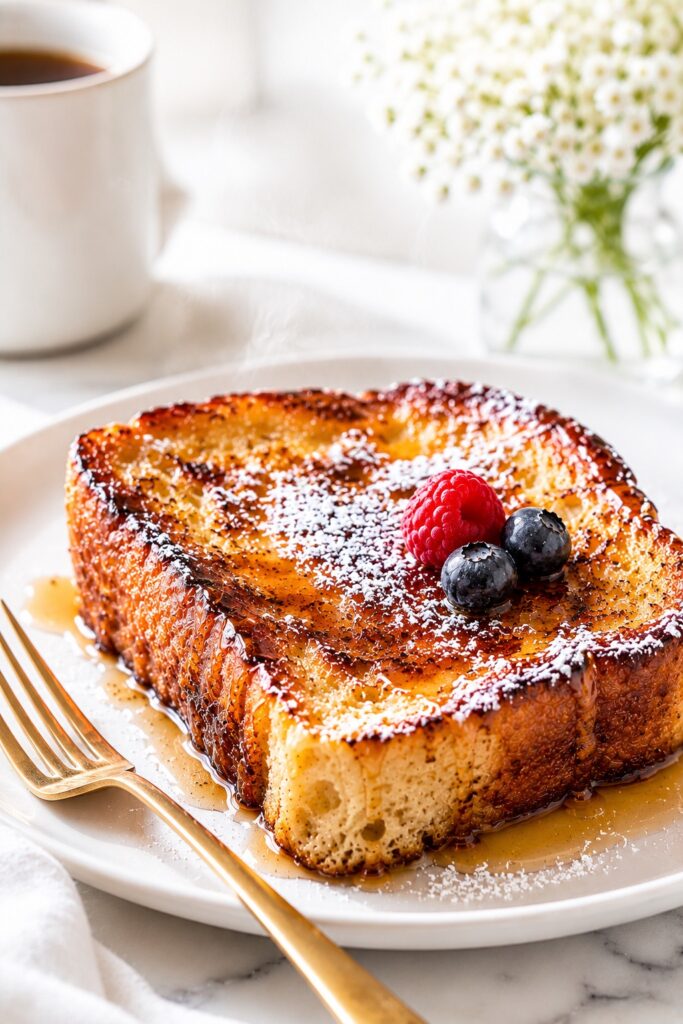
There’s something almost magical about the smell of Sourdough French Toast cooking slowly in butter on a quiet morning. The edges turn deeply golden and crisp while the center stays soft, custardy, and rich with vanilla and cinnamon. As the slices cook, the sourdough develops this incredible contrast between crisp caramelized surfaces and airy, tender pockets inside.
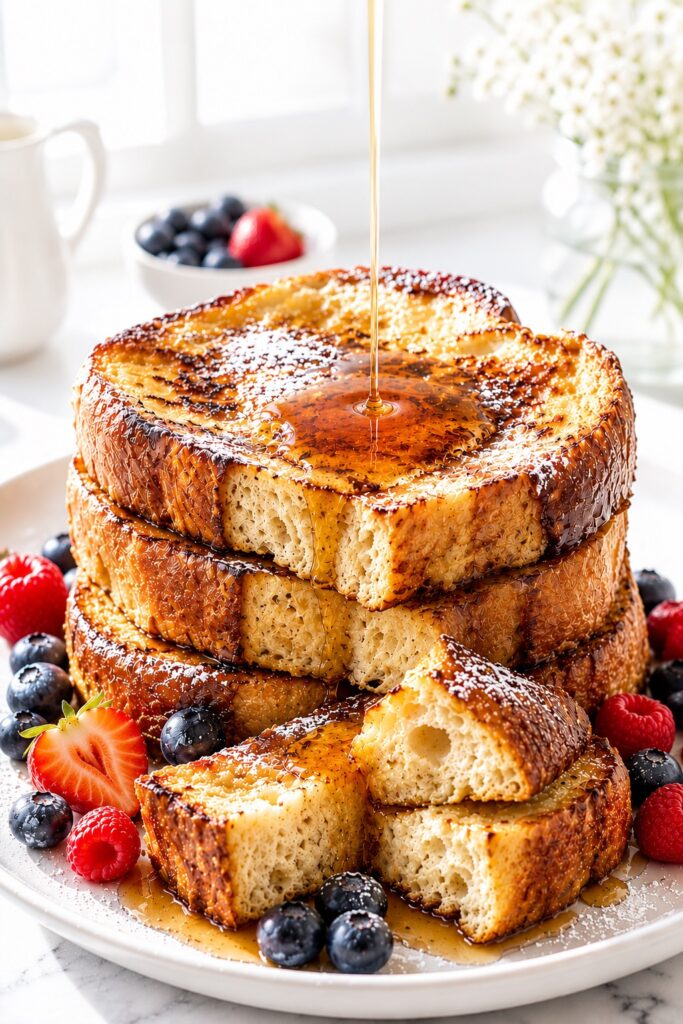
Sourdough French Toast feels more luxurious than classic French toast because the bread itself brings extra depth and texture. The slight tanginess from the sourdough balances the sweetness beautifully, creating a breakfast that tastes warm, comforting, and surprisingly sophisticated without requiring complicated ingredients.
This is the kind of breakfast people save immediately because it looks bakery-level impressive while still feeling cozy and homemade. Thick artisan slices stacked with glossy maple syrup, soft butter melting into the surface, and fresh berries scattered across the plate create the kind of breakfast moment that feels expensive in the best possible way.
One of the reasons this recipe works so well is because sourdough naturally absorbs the custard differently than soft sandwich bread. Instead of turning soggy, it keeps structure while still becoming creamy inside. That balance is what gives truly great French toast its signature texture.
If you love slow breakfasts, weekend brunches, or recipes that make ordinary mornings feel special, this Sourdough French Toast is the kind of recipe you’ll come back to constantly.
What Is Sourdough French Toast?
Sourdough French Toast is a breakfast recipe made by soaking slices of sourdough bread in a rich egg custard mixture and cooking them in butter until golden brown and lightly crisp outside while remaining soft and custardy inside.
Unlike classic French toast made with standard sandwich bread, sourdough bread adds deeper flavor, better structure, and a slightly tangy balance that prevents the dish from tasting overly sweet. The chewy artisan texture of sourdough also creates more contrast between the crisp exterior and creamy interior.
Sourdough French Toast is especially popular for brunch because it feels elevated and bakery-style while still using simple pantry ingredients.
Sourdough French Toast at a Glance
| Category | Details |
|---|---|
| Texture | Crispy edges with soft custardy centers |
| Flavor | Buttery, lightly sweet, vanilla-cinnamon warmth with subtle sourdough tang |
| Difficulty | Easy |
| Time | About 25 minutes |
| Servings | 4 servings |
| Method | Stovetop skillet cooking |
| Best For | Weekend brunches, cozy breakfasts, holiday mornings |
In short: This Sourdough French Toast delivers the perfect balance of crisp buttery edges and soft custard-like centers while keeping the rich flavor and artisan texture that makes sourdough bread so special.
Why This Sourdough French Toast Works So Beautifully
The Sourdough Holds Its Structure
One of the biggest problems with French toast is soggy bread. Sourdough naturally solves that issue because its firmer crumb and stronger gluten structure absorb custard more slowly and evenly.
The bread becomes creamy inside without collapsing.
The Custard Creates Creaminess Without Heaviness
Using the right balance of eggs and milk creates a custard that coats the bread without turning rubbery. Too many eggs can make French toast taste overly “eggy,” while too much milk creates weak structure and sogginess.
This recipe keeps the texture rich but still light.
Moderate Heat Creates the Best Texture
French toast cooked too fast often burns outside before the center sets. Lower-medium heat allows the custard inside to cook gently while the butter slowly caramelizes the surface.
That slower cooking creates the deep golden crust everyone loves.
Slightly Stale Bread Actually Performs Better
Fresh bread can become overly soft when soaked. Slightly dry sourdough absorbs the custard more evenly and keeps its airy interior structure.
This is one of those recipes where day-old bread genuinely improves the result.
Why You’ll Love This Sourdough French Toast
- Crispy buttery edges with soft custardy centers
- Rich bakery-style texture without difficult techniques
- Perfect balance of sweetness and sourdough tang
- Looks elegant and brunch-worthy with minimal effort
- Works beautifully with berries, maple syrup, whipped cream, or powdered sugar
- Excellent use for leftover sourdough bread
- Feels cozy enough for winter mornings but light enough for spring brunches
- Saves beautifully on Pinterest because of the dramatic golden texture
- Freezes and reheats surprisingly well
- Easy to customize with seasonal toppings and flavors
Save this recipe for slow Sunday mornings, holiday brunch tables, or those mornings when you want breakfast to feel comforting and special without spending hours in the kitchen.
The Simple Science Behind Great Sourdough French Toast
French toast is really about controlled moisture and heat.
When the bread soaks in the custard, the starches inside begin absorbing liquid while the eggs provide structure during cooking. As heat reaches the center, the egg proteins gently set and create that soft custardy texture.
Meanwhile, butter and natural sugars on the surface begin caramelizing. That is what creates the golden crust and deeper toasted flavor.
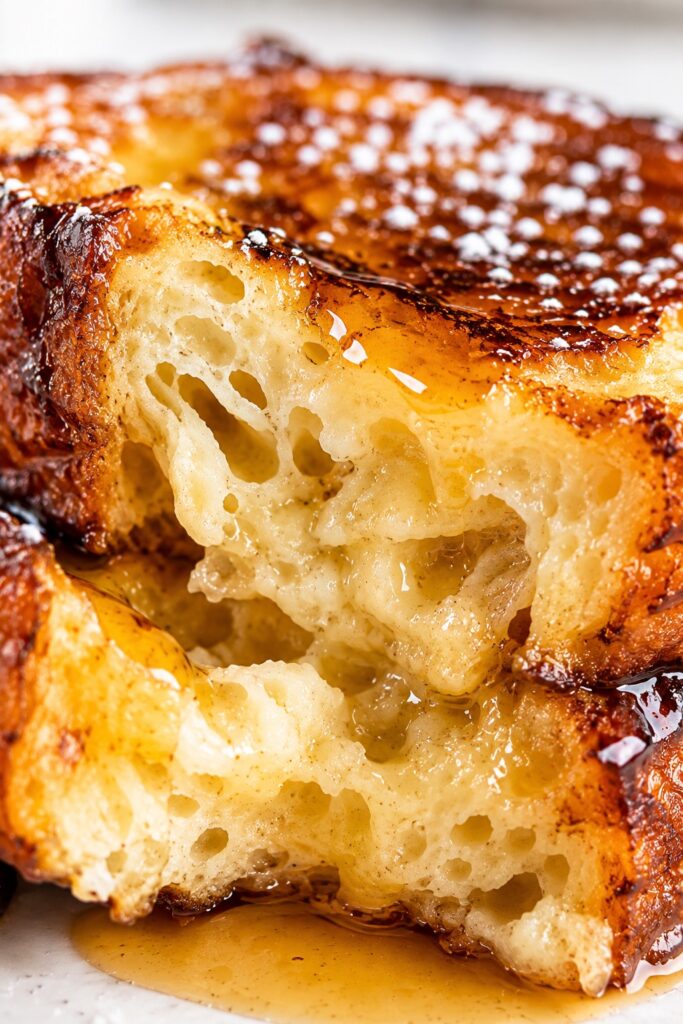
Sourdough behaves differently from softer breads because its open crumb structure traps custard inside little air pockets while still maintaining structural strength. That combination creates more texture contrast in every bite.
Another important detail is steam management. Early in cooking, moisture inside the bread turns to steam. If the heat is too high, the outside browns before enough steam escapes, leaving the center wet. Moderate heat allows the inside to cook gradually while preserving tenderness.
One small observation that makes a huge difference: French toast often looks slightly underdone right before it becomes perfect. Giving it another 30–45 seconds per side usually transforms the center from wet to creamy.
Why Sourdough Is One of the Best Breads for French Toast
The type of bread you use completely changes the texture of French toast. While soft sandwich bread creates a more classic diner-style result, artisan sourdough creates deeper flavor, better structure, and a more balanced custardy texture.
Sourdough works especially well because the bread has a stronger crumb structure and slightly chewy texture. Instead of collapsing after soaking, it absorbs the custard gradually while still holding its shape during cooking.
The slight tanginess also helps balance the richness of the eggs, butter, cream, and maple syrup. That contrast is one of the reasons sourdough French toast tastes more complex and “bakery-style” compared to softer breads.
Another important detail is the open crumb structure. Those airy pockets inside artisan sourdough trap custard throughout the bread while still allowing steam to escape during cooking. This creates the signature contrast between crispy golden edges and soft creamy centers.
How Sourdough Compares to Other French Toast Breads
- Sourdough: Best for crisp edges, balanced flavor, and artisan texture.
- Brioche: Richer, softer, and more buttery with a dessert-like feel.
- Challah: Light, fluffy, and slightly sweet with delicate texture.
- Sandwich Bread: Softer and more traditional, but less structured.
For the best results, slightly stale bread almost always performs better than fresh bread. Drier bread absorbs the custard more evenly and helps prevent soggy centers.
If your sourdough is extremely fresh, leaving the slices uncovered for a few hours or lightly toasting them before soaking can dramatically improve the final texture.
Why Restaurants Use Thick Bread for French Toast
One of the easiest ways to make homemade French toast feel more bakery-style or restaurant-quality is simply using thicker bread slices.
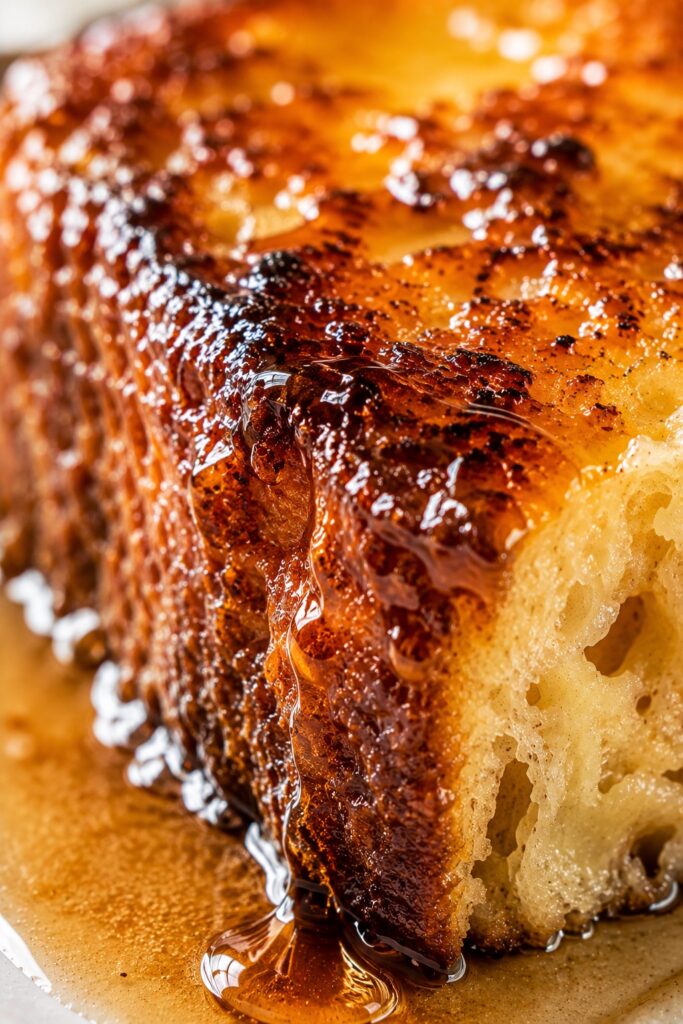
Thick-cut sourdough creates better texture contrast because the exterior can caramelize properly while the center stays soft and custardy. Thin bread cooks through too quickly, which often leaves the entire slice uniformly soft instead of creating distinct layers of texture.
Restaurants also prefer thicker bread because it absorbs custard more gradually. That slower absorption helps prevent sogginess while allowing the inside to stay creamy and rich.
Another reason thick bread works so well is visual presentation. Tall golden slices with visible airy interiors simply look more dramatic and comforting on the plate, especially once topped with syrup, berries, or powdered sugar.
For most sourdough loaves, slices around 3/4 to 1 inch thick create the best balance between structure and custardy texture.
If the slices are especially large or dense, allowing them to soak a few seconds longer helps the custard distribute more evenly toward the center.
One small detail many people notice only after making French toast several times: thicker bread not only tastes better, it stays warm longer after serving because the custardy center retains heat more effectively.
Ingredients You’ll Need for Sourdough French Toast
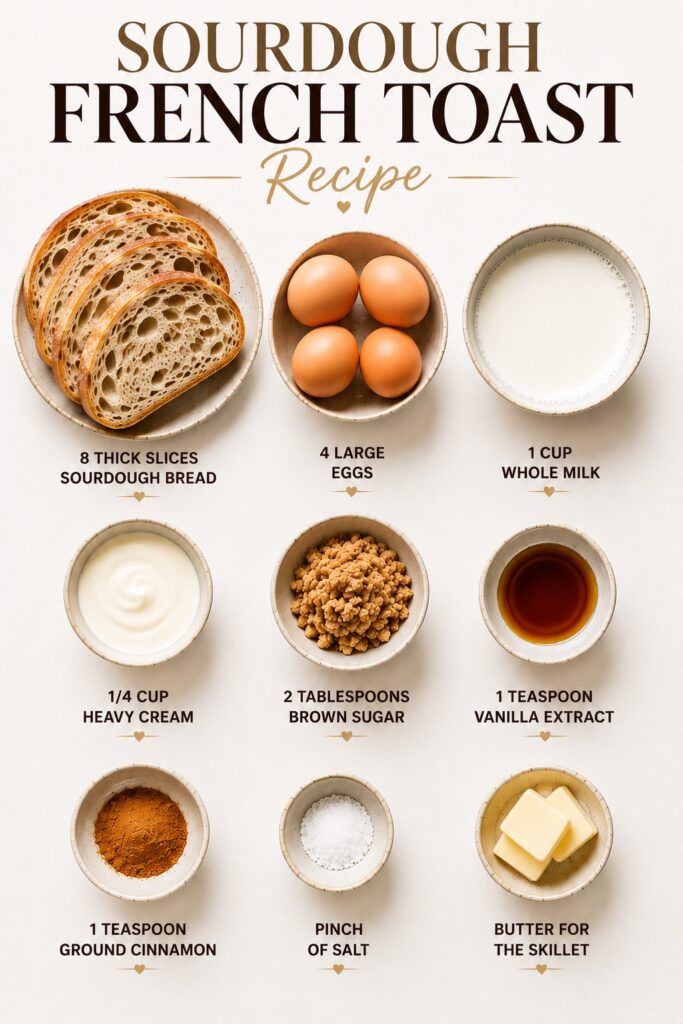
- 8 thick slices sourdough bread
- 4 large eggs
- 1 cup whole milk
- 1/4 cup heavy cream
- 2 tablespoons brown sugar
- 1 teaspoon vanilla extract
- 1 teaspoon ground cinnamon
- Pinch of salt
- Butter for the skillet
Optional Toppings
- Maple syrup
- Fresh berries
- Powdered sugar
- Whipped cream
- Toasted pecans
- Banana slices
Ingredient Intelligence: Small Details That Improve the Texture
Sourdough Bread
Thick-cut artisan sourdough works best because it absorbs custard slowly without falling apart. Bread that is slightly stale performs even better because the drier crumb pulls in moisture more evenly.
Avoid very thin slices since they soften too quickly.
Eggs
Eggs create structure and richness. They help the custard set while cooking and prevent the toast from becoming wet inside.
Too many eggs can make the texture dense and overly savory.
Heavy Cream
A small amount of cream adds fat, which helps create softer, richer interiors and better browning on the surface.
You can substitute half-and-half if needed, but the texture becomes slightly lighter.
Brown Sugar
Brown sugar adds subtle caramel notes that pair especially well with sourdough’s natural tanginess.
It also helps encourage deeper golden browning during cooking.
Cinnamon
Cinnamon blooms in the butter as the French toast cooks, which creates that warm bakery-style aroma people associate with cozy brunch recipes.
Equipment You’ll Actually Use
- Large nonstick skillet or cast iron pan
- Shallow mixing bowl
- Whisk
- Spatula
- Wire rack or plate for holding cooked slices
A cast iron skillet creates especially beautiful browning, but a nonstick pan is often easier for beginners because the custard is less likely to stick during flipping.
How to Make Sourdough French Toast
1. Prepare the Custard
In a shallow bowl, whisk together the eggs, milk, heavy cream, brown sugar, vanilla, cinnamon, and salt until fully smooth.
The mixture should look creamy and lightly frothy with no visible streaks of egg remaining.
2. Preheat the Skillet
Place a skillet over medium-low heat and add a small amount of butter.
The butter should melt gently and foam lightly without browning immediately. If it starts smoking quickly, the pan is too hot.
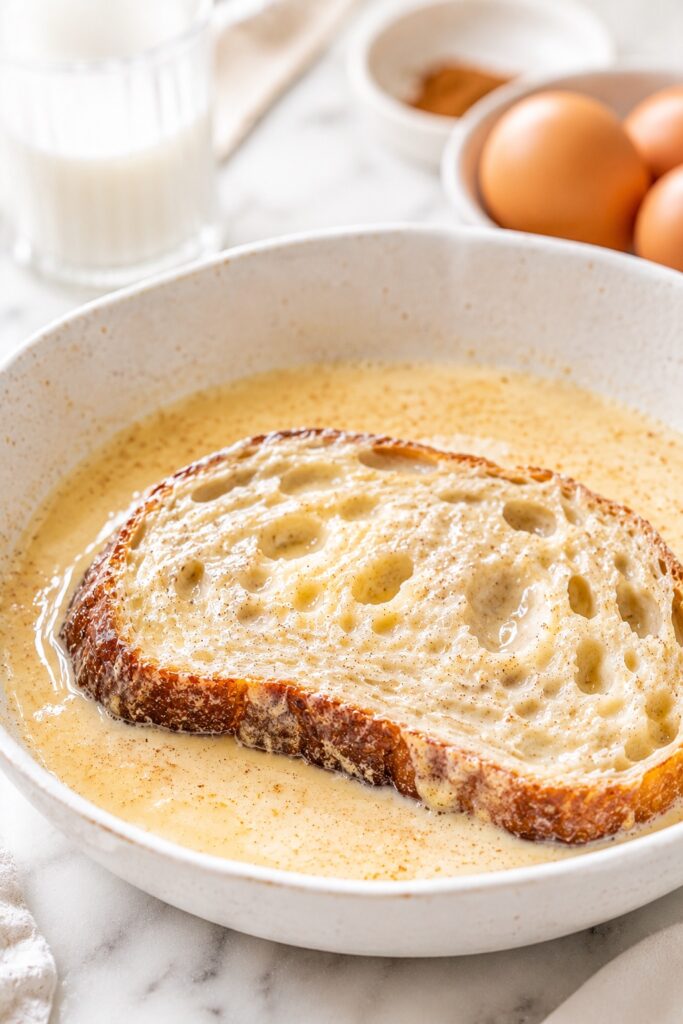
3. Soak the Bread
Dip each slice of sourdough into the custard for about 15–20 seconds per side.
The bread should absorb some custard but still feel structured when lifted. If the bread starts collapsing or tearing, it has soaked too long.
A few dry spots near the crust are completely fine.
4. Cook Until Golden
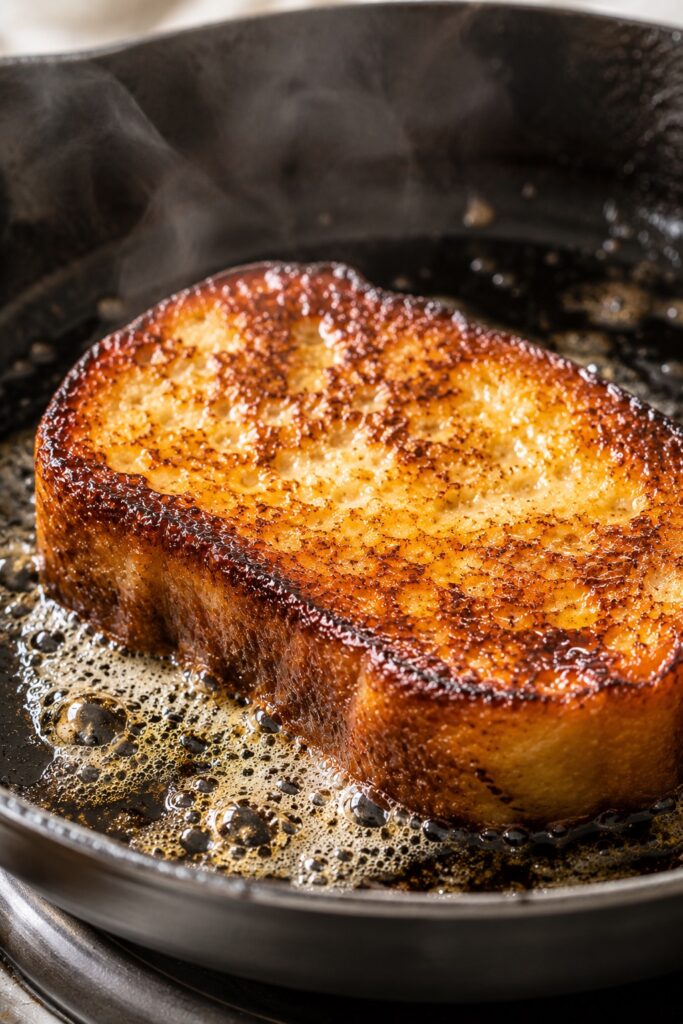
Place the soaked slices into the skillet and cook for about 3–4 minutes per side.
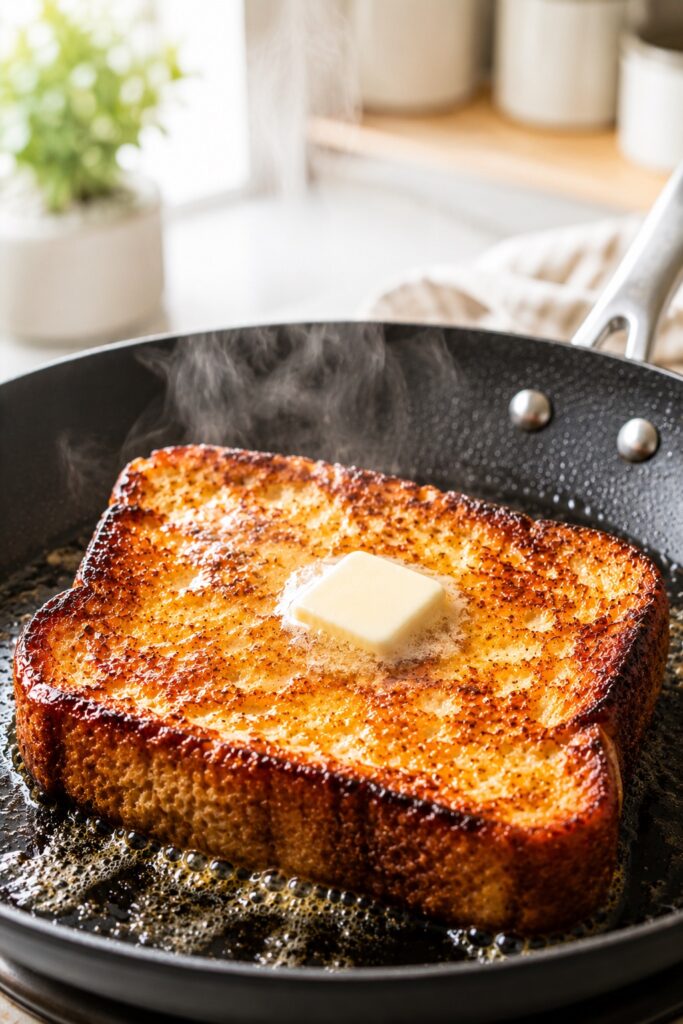
As the French toast cooks, the surface will slowly turn deep golden brown and the center will begin puffing slightly. You may notice steam escaping gently from the edges — that is a good sign the interior is cooking properly.
5. Adjust the Heat if Needed
If the toast darkens too quickly before the center feels set, lower the heat slightly.
This is one of those recipes where patience genuinely improves texture.
6. Finish and Serve Warm
Transfer cooked slices to a wire rack briefly before serving.
This tiny step helps preserve crisp edges instead of trapping steam underneath.
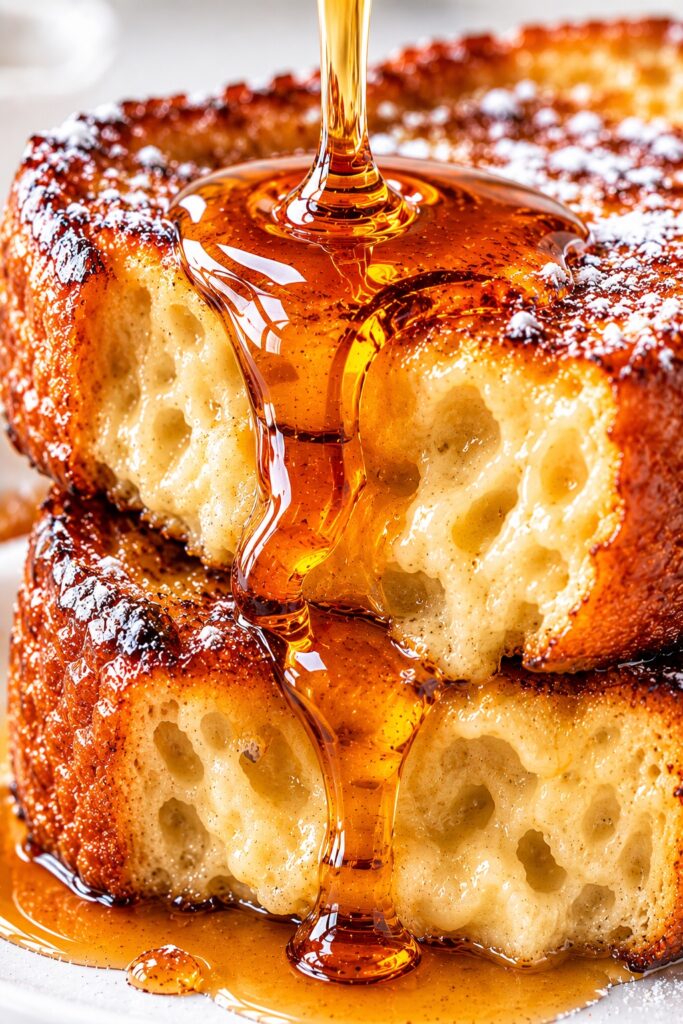
Serve immediately with warm maple syrup, berries, powdered sugar, or whipped butter.
Visual Doneness Cues That Actually Matter
- Deep golden brown edges
- Slight puffing in the center
- Surface looks dry rather than wet or glossy
- Gentle steam escaping from edges
- Bread feels lightly springy when pressed
- Custard no longer looks raw near the center
- Crisp exterior with soft interior resistance
How to Keep French Toast Crispy Without Drying It Out
One of the biggest differences between average French toast and truly great French toast is texture contrast. The best versions stay crisp and golden outside while keeping the center soft and custardy.
The easiest mistake is stacking hot slices directly on a plate. That traps steam underneath the bread and softens the crust within minutes.
Instead, place cooked French toast on a wire rack while finishing the remaining batches. The airflow helps preserve the crisp buttery edges without overcooking the interior.
If you are cooking for a larger brunch or holiday breakfast, keep the finished slices warm in a 200°F oven on a baking sheet or wire rack. This keeps the French toast warm and lightly crisp without drying it out.
- Avoid stacking hot slices immediately after cooking.
- Use medium-low heat for slower, more even browning.
- Cook with enough butter for caramelization, but not so much that the bread fries heavily.
- Let excess custard drip off before placing bread into the skillet.
- Serve immediately for the best texture contrast.
One small restaurant-style trick: lightly dusting powdered sugar only right before serving helps prevent moisture from dissolving into the crust too early.
French Toast Texture & Behavior Guide
| Stage | What You’ll See | What It Means |
|---|---|---|
| Custard Ready | Smooth and lightly frothy | Eggs fully incorporated |
| Bread Properly Soaked | Moist but still structured | Good absorption balance |
| Early Cooking | Pale surface with soft edges | Interior still setting |
| Perfect Doneness | Golden crust + slight puffing | Custard fully cooked |
| Overcooked | Very dark exterior + dry feel | Too much moisture loss |
Expert Tips for the Best Sourdough French Toast
- Use slightly stale bread whenever possible.
- Cook over medium-low heat instead of rushing the process.
- Let excess custard drip off before placing bread into the skillet.
- Wipe out burnt butter between batches if needed.
- Allow cooked slices to rest briefly on a wire rack for better crispness.
- Thick bread slices create dramatically better texture contrast.
- Adding a tiny pinch of salt sharpens sweetness and balances richness.
One small trick many people overlook: letting the soaked bread rest for 15–20 seconds before cooking helps the custard distribute more evenly inside.
Little Details That Make Sourdough French Toast Taste Better
Sometimes the difference between decent French toast and truly memorable French toast comes from a few very small details rather than major recipe changes.
One of the biggest upgrades is letting the bread sit for 15–20 seconds after soaking before placing it into the skillet. This gives the custard time to distribute more evenly through the crumb instead of concentrating only near the surface.
Another small detail is cooking with moderate heat instead of rushing the process. Slightly slower cooking allows the inside to become creamy and fully set while the exterior develops deeper caramelization.
Warm syrup also makes a surprisingly noticeable difference. Cold syrup cools the toast quickly and can dull some of the crisp texture, while warm syrup melts naturally into the surface and keeps the French toast soft and buttery.
Freshly cooked French toast also benefits from a short rest on a wire rack before serving. This tiny pause allows excess steam to escape so the edges stay crisp longer.
If using berries, adding them right before serving keeps their texture fresher and prevents excess juice from softening the surface too early.
One subtle restaurant-style trick: a very small pinch of salt added right before serving can make maple syrup, butter, and vanilla flavors taste dramatically richer and more balanced.
These little adjustments may seem minor individually, but together they create the kind of texture and flavor contrast that makes French toast feel noticeably more comforting, bakery-style, and memorable.
Common French Toast Mistakes and How to Fix Them
| Mistake | Result | Fix |
|---|---|---|
| Heat too high | Burnt exterior, raw center | Lower heat and cook slower |
| Bread too fresh | Soggy texture | Use day-old bread |
| Over-soaking | Bread falls apart | Shorten soak time |
| Too much custard | Wet interior | Let excess drip off |
| Crowded pan | Poor browning | Cook in batches |
Sourdough French Toast vs Classic French Toast
| Feature | Sourdough French Toast | Classic French Toast |
|---|---|---|
| Flavor | Slight tang + richer depth | Mild and sweeter |
| Texture | Crisp exterior with chewy structure | Softer overall |
| Custard Absorption | More controlled | Faster absorption |
| Appearance | Rustic artisan look | Traditional soft slices |
| Best Style | Brunch-style elevated breakfast | Everyday breakfast |
How to Serve Sourdough French Toast Beautifully
Sourdough French Toast is one of those breakfasts that instantly feels comforting and impressive at the same time when served warm straight from the skillet. The crisp golden edges, soft custardy centers, and glossy maple syrup create the kind of cozy bakery-style breakfast moment people naturally gather around.
For the most beautiful presentation, stack the slices slightly offset instead of perfectly aligned. This allows the caramelized edges, airy sourdough texture, and soft interior to stay visible from every angle.
Serve with warm maple syrup gently cascading over the toast rather than fully drenching it. Leaving part of the crisp surface exposed keeps the texture contrast visible and prevents the toast from softening too quickly.
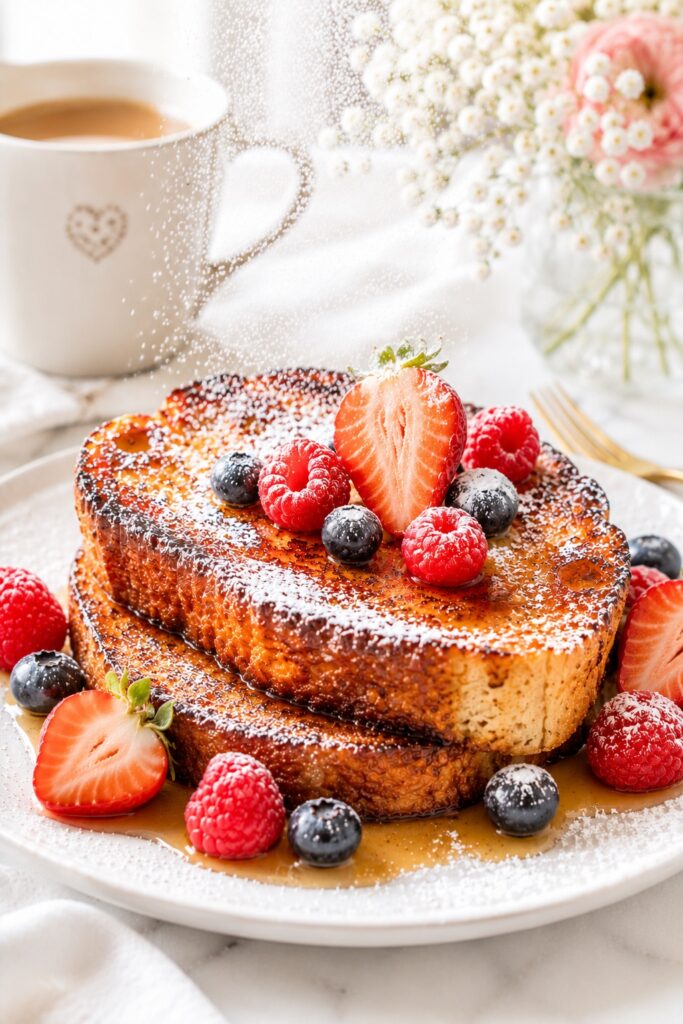
Fresh berries add brightness and color while balancing the richness of the butter and custard. Powdered sugar creates a soft bakery-style finish that photographs especially beautifully in natural morning light.
For a more elevated brunch-style presentation, pair the French toast with:
- Soft whipped mascarpone or lightly sweetened whipped cream
- Brown butter bananas or cinnamon apples
- Toasted pecans or walnuts for crunch
- Crispy bacon for salty contrast
- Fresh espresso or cappuccino
This recipe also works beautifully as part of a larger breakfast spread with fruit bowls, pastries, muffins, or eggs for holiday mornings and brunch gatherings.
One small serving detail that makes a surprisingly big difference: warm the serving plates slightly before plating. French toast cools quickly, and warm plates help preserve the soft custardy texture longer.
For Pinterest-worthy presentation, finish with a light syrup drizzle right before serving so the surface still glistens while the crisp edges remain visible.
Save this recipe for slow Sunday mornings, cozy winter breakfasts, holiday brunch tables, Mother’s Day gatherings, or rainy mornings when you want breakfast to feel warm, soft, and comforting in the best possible way.
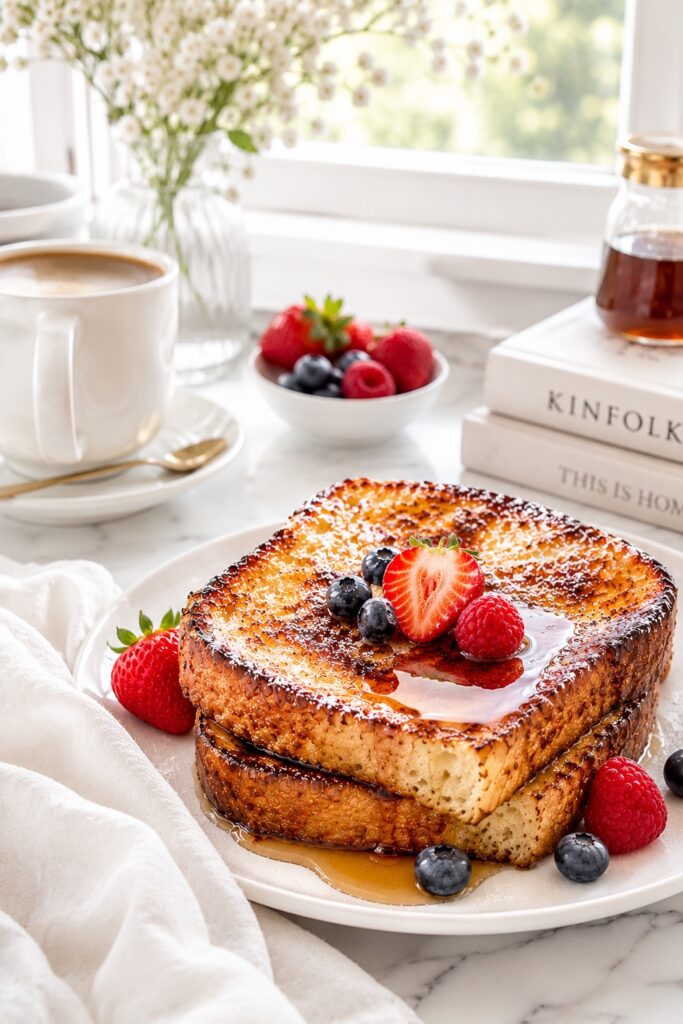
A platter of golden sourdough French toast in the center of the table instantly creates the kind of breakfast atmosphere people remember long after the meal is over.
Best Toppings for Sourdough French Toast
Sourdough French Toast pairs beautifully with toppings that balance richness, texture, and freshness. Because sourdough already brings slightly deeper flavor and structure, the toppings tend to taste more balanced and less overwhelmingly sweet than they do on softer breads.
The goal is usually contrast: warm and cold, crisp and creamy, rich and fresh.
Classic Cozy Toppings
- Warm maple syrup
- Soft salted butter
- Powdered sugar
- Fresh berries
- Whipped cream
This combination creates the classic cozy breakfast feel most people imagine when they think of French toast.
Bakery-Style Brunch Toppings
- Mascarpone cream
- Brown butter bananas
- Toasted pecans or walnuts
- Honey drizzle
- Vanilla whipped cream
These richer toppings make the French toast feel especially elegant and brunch-worthy without becoming too heavy.
Fresh Spring & Summer Pairings
- Macerated strawberries
- Blueberries and lemon zest
- Peaches with honey
- Fresh mint
- Light vanilla yogurt
The brightness from fresh fruit balances the buttery custard beautifully and makes the entire plate feel lighter.
Holiday & Fall-Inspired Toppings
- Candied pecans
- Cinnamon apples
- Pumpkin spice whipped cream
- Maple brown butter
- Cranberry orange compote
Warm spices and caramelized fruit pair especially well with sourdough’s subtle tanginess.
One small detail that makes French toast feel instantly more luxurious: warming the syrup before serving. Cold syrup cools the surface quickly, while warm syrup melts gently into the custardy bread and keeps the entire breakfast feeling softer and cozier.
Save these topping ideas for holiday brunches, spring breakfast boards, cozy winter mornings, or slow weekends when you want breakfast to feel a little extra special.
Storage & Reheating Tips
Sourdough French Toast stores surprisingly well when handled properly. The key is protecting the custardy interior while preserving as much exterior texture as possible.
Allow the French toast to cool slightly before storing so excess steam can escape. Placing very hot slices directly into a sealed container traps moisture and softens the crisp golden edges.
How to Store Sourdough French Toast
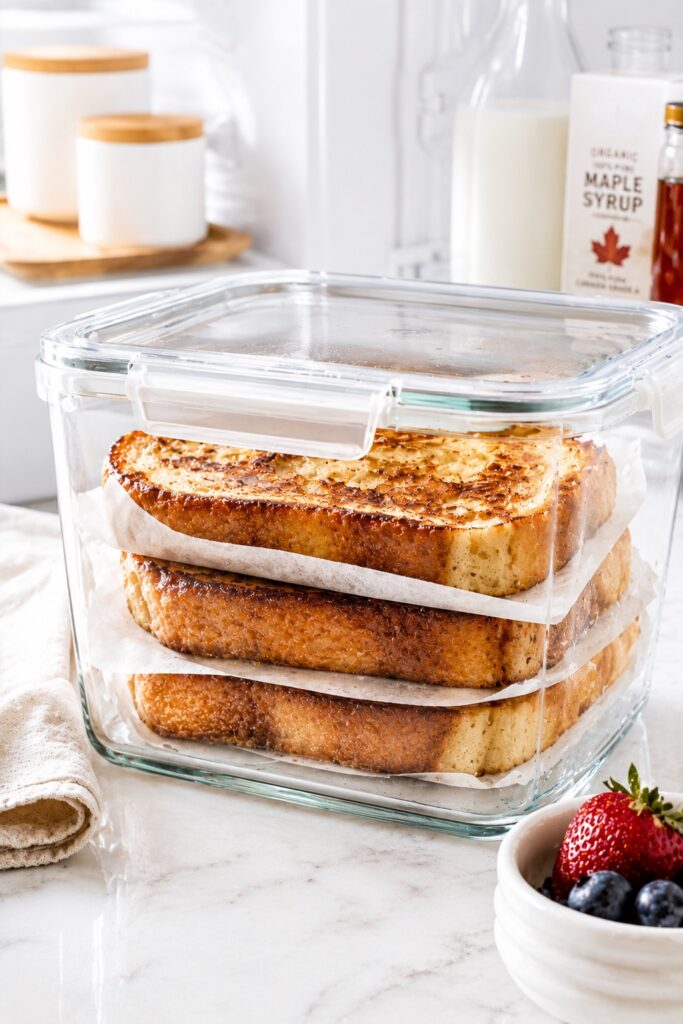
Store leftover slices in an airtight container in the refrigerator for up to 3 days.
If stacking the slices, place parchment paper between layers to help reduce sticking and moisture buildup.
The texture will naturally soften slightly in the refrigerator, but proper reheating brings back much of the crisp exterior.
The Best Way to Reheat French Toast
For the best texture, reheat the slices in a skillet, toaster oven, air fryer, or oven rather than the microwave.
- Skillet: Reheat over medium-low heat with a small amount of butter for crisp edges.
- Oven: Warm at 350°F for 6–8 minutes on a wire rack or baking sheet.
- Air Fryer: Heat at 350°F for 3–4 minutes for especially crisp edges.
- Microwave: Works for convenience, but the texture becomes softer.
One small trick that helps dramatically: reheating on a wire rack instead of directly on a baking sheet allows hot air to circulate around the bread more evenly.
How to Freeze Sourdough French Toast
Sourdough French Toast freezes especially well because the bread structure remains stronger than softer sandwich bread.
- Let the slices cool completely.
- Freeze in a single layer first until firm.
- Transfer to a freezer-safe bag or airtight container.
- Freeze for up to 2 months.
Freezing the slices individually first helps prevent them from sticking together later.
Make-Ahead Tips for Easier Brunch Mornings
Sourdough French Toast is one of those rare brunch recipes that actually becomes easier with a little preparation ahead of time. A few small prep steps can make busy mornings feel dramatically calmer, especially during holidays or weekend gatherings.
If possible, slice the sourdough bread the night before and leave the slices loosely covered on a baking sheet. Slightly drier bread absorbs the custard more evenly and creates better texture once cooked.
You can also whisk together the custard mixture ahead of time and refrigerate it overnight. This allows the cinnamon, vanilla, and brown sugar flavors to blend together more deeply.
If you want an even faster morning workflow, prepare toppings ahead of time as well:
- Wash and slice berries the night before.
- Warm maple syrup gently before serving.
- Mix whipped cream or mascarpone in advance.
- Toast nuts ahead of time for extra crunch and flavor.
One small detail that makes brunch feel especially smooth: keeping the bread, custard, toppings, and skillet station organized before cooking makes the entire process feel much more relaxed and enjoyable.
This recipe is especially beautiful for slow holiday mornings because most of the work can already be done before everyone wakes up.
Easy Sourdough French Toast Variations
One of the best things about Sourdough French Toast is how easily it adapts to different flavors, seasons, and brunch moods without losing its signature crispy edges and custardy center. The slight tanginess of sourdough gives every variation a little more depth and balance than traditional French toast.
These variations are designed to feel bakery-style, comforting, and realistic for home kitchens while still delivering the kind of texture and flavor people immediately want to save and recreate.
Brown Butter Cinnamon Sourdough French Toast
This variation creates a deeper, almost caramel-like flavor that makes the entire kitchen smell incredible while cooking.
- Add 2 extra tablespoons butter to the skillet.
- Let the butter cook for 2–3 minutes until lightly golden and nutty before adding the bread.
- Add an extra 1/2 teaspoon cinnamon to the custard.
- Finish with maple syrup and flaky sea salt.
The browned milk solids in the butter create a richer toasted flavor that pairs especially well with artisan sourdough bread.
Berry Brunch Sourdough French Toast
This version feels lighter, brighter, and especially beautiful for spring or summer brunch tables.
- Top the finished French toast with 1 cup mixed berries.
- Add 2 tablespoons mascarpone or whipped cream.
- Finish with powdered sugar and a drizzle of warm maple syrup.
- Add fresh mint if serving for brunch gatherings.
The slight acidity from the berries balances the richness of the custard beautifully.
Orange Vanilla Sourdough French Toast
This variation tastes elegant and surprisingly fresh while still keeping the cozy warmth people expect from French toast.
- Add 1 tablespoon fresh orange zest to the custard.
- Add an extra 1/2 teaspoon vanilla extract.
- Serve with honey or orange maple syrup.
- Top with toasted almonds for crunch.
The citrus oils brighten the heavier custard notes and make the entire recipe feel more balanced.
Nutella Banana Sourdough French Toast
This version leans slightly toward dessert-style brunch while still feeling warm and homemade rather than overly rich.
- Spread 1–2 tablespoons Nutella between two thinner slices of sourdough.
- Dip carefully in the custard mixture.
- Cook slowly over medium-low heat to warm the filling without burning the exterior.
- Serve with sliced bananas and chopped toasted hazelnuts.
Cooking stuffed French toast slightly slower helps the center heat evenly while keeping the exterior crisp.
Protein-Style Sourdough French Toast
This variation keeps the cozy texture and flavor while making the breakfast feel more filling and balanced.
- Replace 1/4 cup milk with Greek yogurt.
- Add 1 scoop vanilla protein powder to the custard.
- Use slightly thicker sourdough slices for better structure.
- Serve with berries and almond butter.
Protein powder absorbs moisture quickly, so allowing the custard mixture to rest for 2–3 minutes before dipping the bread helps everything hydrate evenly.
Holiday Spiced Sourdough French Toast
This variation feels especially cozy during colder months and holiday mornings.
- Add 1/4 teaspoon nutmeg.
- Add 1/8 teaspoon cloves.
- Add 1/4 teaspoon ginger.
- Serve with warm maple syrup and candied pecans.
The warm spice blend creates a flavor profile similar to bakery-style holiday pastries while still keeping the familiar comfort of classic French toast.
Save these variations for holiday brunches, cozy winter mornings, spring breakfast spreads, or those weekends when you want breakfast to feel a little more special without changing the core recipe too much.
Frequently Asked Questions About Sourdough French Toast
Can I use fresh sourdough bread?
Yes, but slightly stale bread works better because it absorbs the custard more evenly without becoming soggy.
Why is my French toast wet inside?
Usually the heat is too high or the bread soaked too long. Lower heat allows the custard to cook fully before the exterior darkens.
Can I make this dairy-free?
Yes. Substitute oat milk or almond milk and use dairy-free butter.
What is the best pan for French toast?
A cast iron skillet creates excellent browning, but nonstick pans are easier for beginners.
Can I freeze French toast?
Absolutely. Freeze cooled slices and reheat in the oven or toaster oven.
How thick should the bread slices be?
About 3/4 to 1 inch thick is ideal for the best custardy interior.
Why does sourdough taste so good in French toast?
The slight tang balances the sweetness and creates deeper flavor complexity compared to regular bread.
More Cozy Breakfast Recipes You’ll Love
If you love the warm bakery-style comfort of this Sourdough French Toast, there are so many cozy breakfast and brunch recipes that create the same soft, comforting, slow-morning feeling. From fluffy pancakes and homemade muffins to rich cinnamon rolls and buttery sourdough breakfasts, these recipes are perfect for building the kind of breakfast table people instantly want to gather around.
For another deeply comforting brunch recipe with dramatic texture and cozy bakery flavor, try these Cinnamon Roll Pancakes. They have soft fluffy centers, buttery cinnamon swirls, and glossy icing that feels especially perfect for weekend mornings or holiday brunch spreads.
If you enjoy artisan-style sourdough breakfasts, these Sourdough Discard Pancakes and Sourdough English Muffins are wonderful next recipes to make. Both recipes use sourdough to create deeper flavor, better texture, and that cozy homemade bakery feel that makes breakfast feel extra special.
For softer, fluffier breakfast options with a balanced cozy texture, these Cottage Cheese Pancakes, High Protein Waffles, and Protein Pancakes are excellent choices. They feel comforting and indulgent while still being practical enough for everyday mornings.
If you love rich custardy breakfast recipes specifically, you should absolutely try Creme Brulee French Toast and French Toast Casserole. Both recipes lean into that soft creamy interior texture that makes French toast so satisfying, while adding an even more dramatic brunch-style presentation.
For cozy bakery-case energy alongside coffee, these Bakery Style Blueberry Muffins, Chocolate Chip Muffins, and Banana Bread pair beautifully with warm breakfast spreads.
If you want something extra comforting for colder mornings, these Homemade Cinnamon Rolls, Sourdough Discard Cinnamon Rolls, and Monkey Bread bring the same buttery, cozy, bakery-style atmosphere that makes slow breakfasts feel memorable.
And for bright brunch tables during spring and summer, recipes like Fruit Salad, Parfait, and Strawberry Shortcake add freshness and color that pair beautifully with warm sourdough French toast.
Save a few of these recipes together for holiday breakfast mornings, cozy weekend brunches, Mother’s Day breakfast tables, or slow rainy Sundays when you want the kitchen to smell warm, buttery, and comforting all morning long.
Sourdough French Toast Recipe Summary
This Sourdough French Toast recipe creates crisp buttery edges with soft custardy centers using thick artisan sourdough bread, a rich vanilla cinnamon custard, and slow skillet cooking.
The sourdough adds incredible texture, deeper flavor, and the perfect balance to the sweetness. Whether served with maple syrup, berries, powdered sugar, or whipped cream, this recipe delivers the kind of warm cozy breakfast people save and make repeatedly.
Perfect for brunch, holiday mornings, or simple slow breakfasts at home.
Final Thoughts
Some breakfasts feel rushed and forgettable. This one does not.
Sourdough French Toast has a way of making an ordinary morning feel slower, warmer, and more comforting. The smell of butter and cinnamon filling the kitchen, the golden edges crisping gently in the skillet, and the soft custardy center hidden inside every slice create the kind of breakfast experience people remember.
It is simple enough for everyday mornings but beautiful enough for special occasions, which is exactly why recipes like this last for years instead of trends.
And once you make it with sourdough, regular French toast rarely feels quite the same again.

Sourdough French Toast
This Sourdough French Toast has crispy golden edges, soft custardy centers, and warm vanilla cinnamon flavor. Made with thick sourdough slices and a rich egg custard, it is perfect for cozy breakfasts, weekend brunch, and holiday mornings.
Ingredients
- 8 thick slices sourdough bread
- 4 large eggs
- 1 cup whole milk
- 1/4 cup heavy cream
- 2 tablespoons brown sugar
- 1 teaspoon vanilla extract
- 1 teaspoon ground cinnamon
- Pinch of salt
- Butter for the skillet
Optional Toppings
- Maple syrup
- Fresh berries
- Powdered sugar
- Whipped cream
- Toasted pecans
- Banana slices
Instructions
- In a shallow bowl, whisk together the eggs, milk, heavy cream, brown sugar, vanilla, cinnamon, and salt until smooth and lightly frothy.
- Heat a skillet over medium-low heat and add a small amount of butter.
- Dip each slice of sourdough bread into the custard for 15–20 seconds per side until evenly coated but still structured.
- Place the soaked bread into the skillet and cook for 3–4 minutes per side until deeply golden brown with lightly crisp edges.
- Lower the heat slightly if the exterior browns too quickly before the center finishes cooking.
- Transfer cooked slices briefly to a wire rack, then serve warm with maple syrup, berries, powdered sugar, or whipped butter.
Notes
- Slightly stale sourdough creates the best custardy texture without becoming soggy.
- Use thick slices about 3/4 to 1 inch thick for the best texture contrast.
- Cook over medium-low heat for even browning and creamy centers.
- Let excess custard drip off before placing the bread into the skillet.
- Warm maple syrup before serving for a softer bakery-style finish.
- A wire rack helps keep the edges crisp while finishing multiple batches.
- Store leftovers in the refrigerator for up to 3 days.
Nutrition Information:
Yield: 4 servings Serving Size: 2 slicesAmount Per Serving: Calories: 420Total Fat: 18gSaturated Fat: 8gUnsaturated Fat: 8gCholesterol: 205mgSodium: 430mgCarbohydrates: 48gFiber: 2gSugar: 9gProtein: 15g
Nutrition information is provided as an estimate only and may vary based on specific ingredients, brands, and portion sizes used. This information should not be considered medical or nutritional advice.
12 Sweet Favorites — Yours, Free 🍰
Tiramisù, no-bake cheesecake, the perfect chocolate chip cookie & 9 more reader-loved desserts — gathered into one beautiful free recipe book. From my kitchen to yours.
No spam, just sweet things. Unsubscribe anytime.