French Toast Sticks
🎁 FREE E-BOOK: 12 Sweet Favorites — reader-loved desserts in one beautiful recipe book.
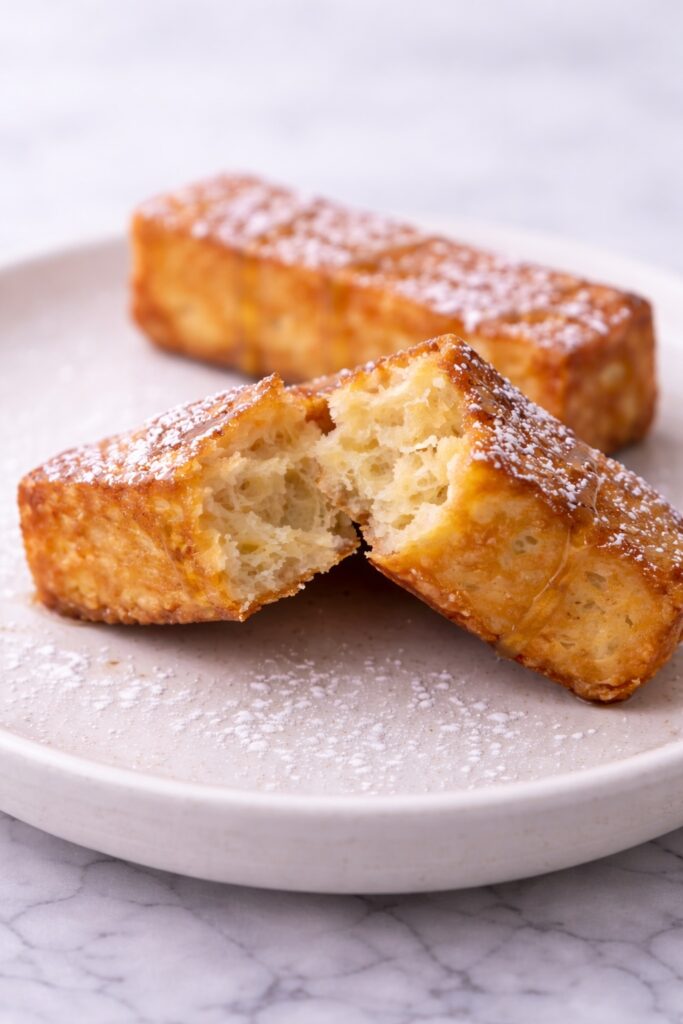
French toast sticks are a breakfast recipe made by dipping bread strips in a cinnamon vanilla egg custard and cooking them in butter until golden and crisp. This easy french toast sticks recipe creates tender centers and lightly caramelized edges, turning simple bread into warm french toast sticks that are easy to serve and share.
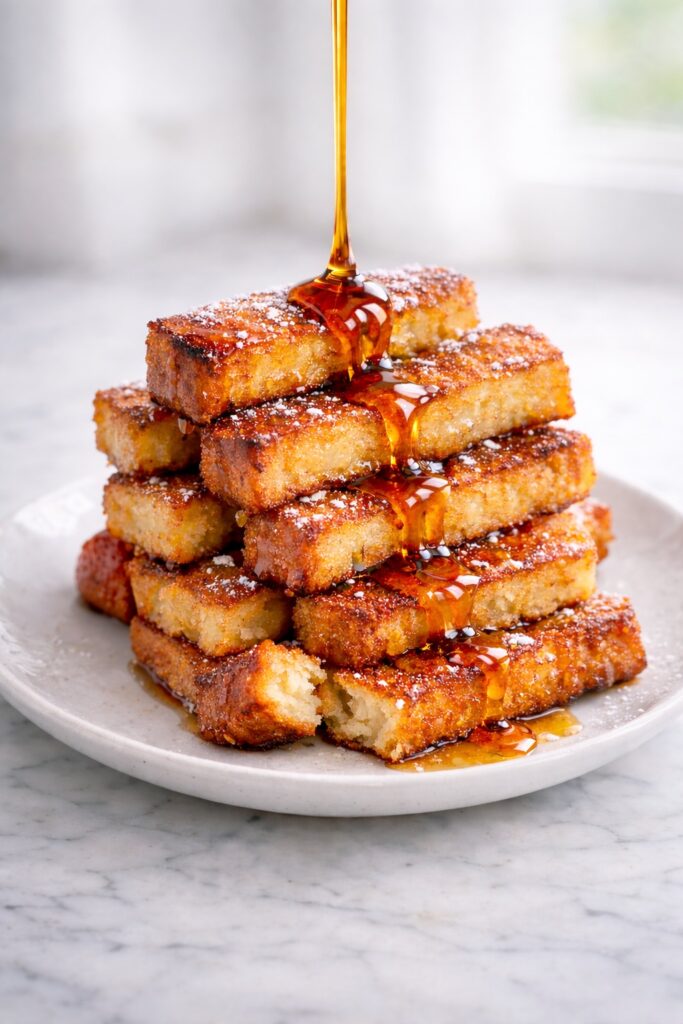
Unlike traditional French toast slices, french toast sticks are cut into narrow strips before cooking. This shape increases the surface area that touches the pan, helping the bread develop its signature caramelized crust while keeping the interior soft and custardy.
As they cook, the aroma of vanilla, butter, and toasted bread slowly fills the kitchen. Within minutes, the bread transforms into warm golden sticks with delicate crisp edges and tender interiors.
Each bite combines a lightly caramelized exterior with a soft center, creating a texture that feels both comforting and satisfying. Their small shape also makes them especially easy to serve for breakfast plates, brunch boards, or casual family mornings.
This homemade french toast sticks recipe uses simple pantry ingredients and a reliable cooking method that produces consistent results. Because the bread is cut into strips before cooking, they cook quickly and evenly, making them perfect for busy mornings, relaxed weekend brunch, or kid-friendly breakfasts.
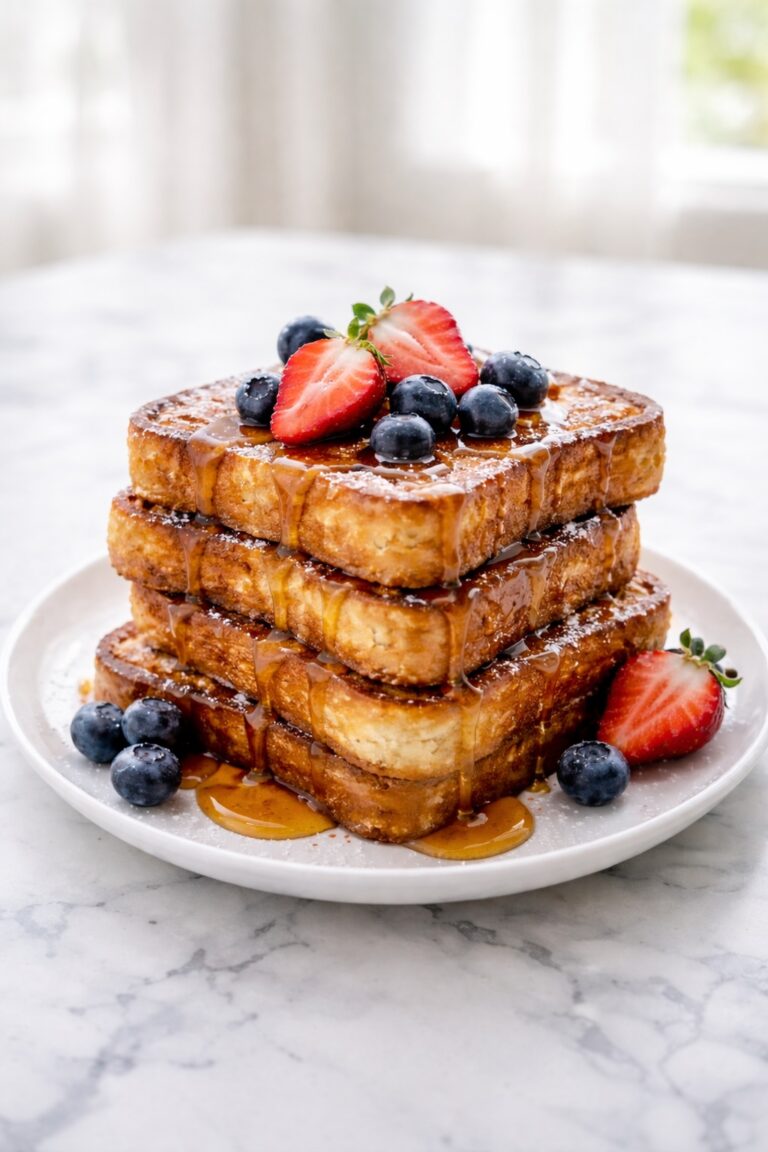
If you enjoy these french toast sticks, you might also love this classic french toast recipe or our easy french toast casserole, which turns the same flavors into a baked breakfast perfect for serving a group.
Quick Answer
French toast sticks are made by cutting bread into strips, dipping them in a custard mixture of eggs, milk, sugar, vanilla, and cinnamon, and cooking them in butter until golden brown. The result is golden bread sticks with crisp edges and soft custardy centers, often served with maple syrup, honey, or fruit sauces.
The best bread for french toast sticks is thick slices such as brioche, challah, or Texas toast because they absorb the custard mixture without falling apart. Cooking them over medium heat allows the exterior to develop a golden crust while keeping the inside tender.
French toast sticks are popular for breakfast and brunch because they cook quickly, are easy to dip, and can be made ahead or frozen for later.
Recipe Overview
This quick overview helps you see the key details of the recipe at a glance before you start cooking.
- Prep time: 10 minutes
- Cook time: 10 minutes
- Total time: 20 minutes
- Servings: 4
- Difficulty: Easy
- Best bread types: brioche, challah, Texas toast, sourdough
- Perfect for: quick breakfasts, brunch, and kid-friendly meals
- Freezer friendly: yes, up to 2 months
These french toast sticks cook quickly and develop crisp golden edges with a soft custardy center, making them perfect for dipping in maple syrup or fruit sauces.
Why You’ll Love This Recipe
- Ready in about 15 minutes
- Crisp golden edges with soft custardy centers
- Perfect for dipping
- Kid-friendly breakfast idea
- Uses simple pantry ingredients
- Works with multiple types of bread
French toast sticks are also great for breakfast meal prep, since they reheat well and freeze beautifully.
Ingredients
You only need a few basic ingredients to make these warm, golden french toast sticks at home.
The recipe uses a light cinnamon vanilla custard and thick slices of bread to achieve the perfect balance between crisp texture and a soft interior.
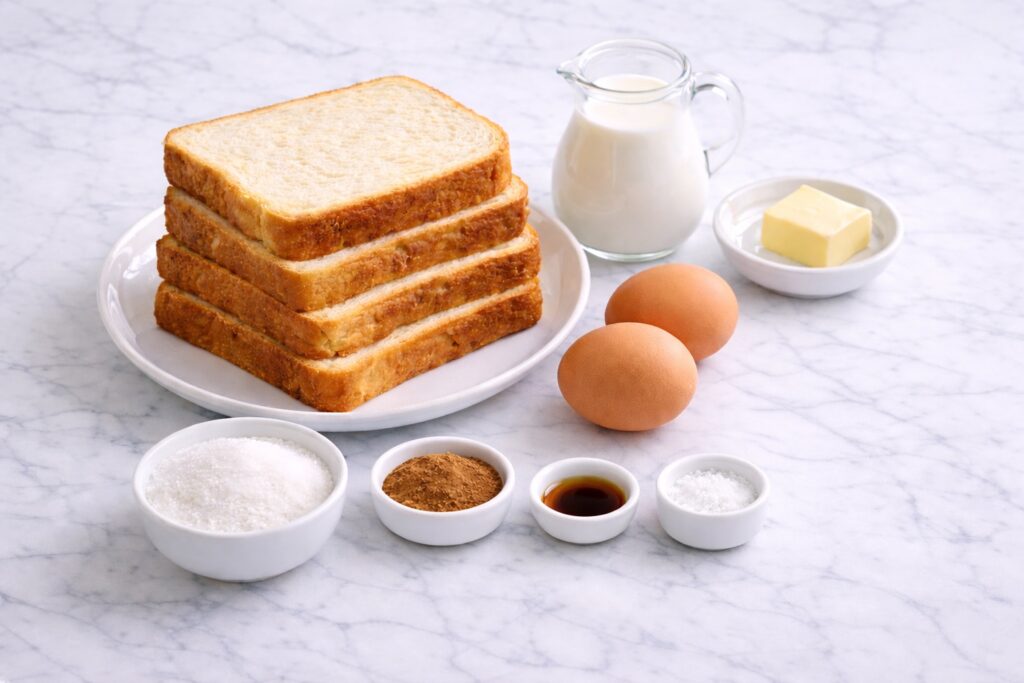
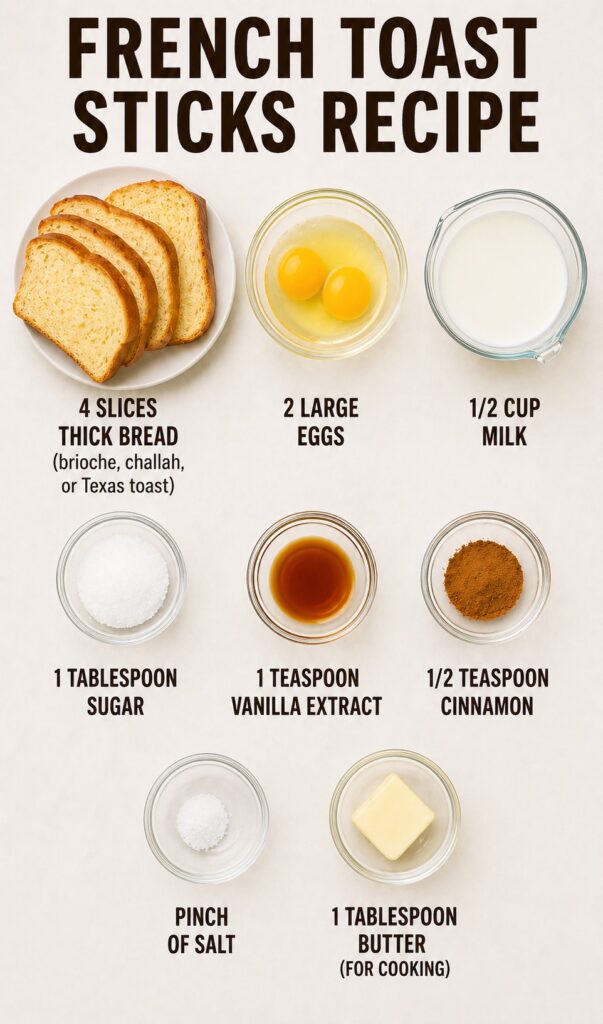
- 4 slices thick bread (brioche, challah, or Texas toast)
- 2 large eggs
- ½ cup milk
- 1 tablespoon sugar
- 1 teaspoon vanilla extract
- ½ teaspoon cinnamon
- pinch of salt
- 1 tablespoon butter (for cooking)
Optional toppings can be added depending on how sweet or indulgent you prefer your french toast sticks.
- maple syrup
- powdered sugar
- fresh berries
- honey
Ingredient Notes & Substitutions
Understanding how each ingredient works helps you adjust the recipe depending on what you have available.
Bread
Thick bread works best because it absorbs the custard while maintaining structure.
Good options include:
- brioche
- challah
- Texas toast
- white sandwich bread
- sourdough
Slightly stale bread absorbs the custard mixture better and prevents soggy french toast sticks.
Eggs
Eggs create the custard base that coats the bread and gives french toast its classic flavor and golden crust.
Possible substitutions:
- egg substitute
- flax egg for dairy-free versions
Milk
Milk helps thin the custard mixture and ensures even coating.
Possible substitutions include:
- almond milk
- oat milk
- soy milk
- half-and-half for richer texture
Sugar
Sugar enhances caramelization and helps create the golden exterior.
Alternatives:
- maple syrup
- honey
- coconut sugar
Cinnamon & Vanilla
These ingredients create the warm aroma that makes french toast smell so inviting while cooking.
Optional additions:
- nutmeg
- pumpkin spice
- orange zest
French Toast Custard Ratio Chart
The balance between eggs and milk determines the final texture of french toast sticks. A richer custard creates a softer interior, while a lighter mixture produces slightly drier, crispier sticks.
This simple ratio chart can help you adjust the texture depending on your preference.
| Eggs | Milk | Texture Result |
|---|---|---|
| 1 egg : ¼ cup milk | lighter custard | slightly firmer interior |
| 2 eggs : ½ cup milk | balanced custard | classic french toast texture |
| 3 eggs : ½ cup milk | rich custard | very soft and creamy interior |
For most french toast sticks recipes, a 2 eggs to ½ cup milk ratio creates the best balance between crisp edges and a tender center.
If using very thick bread like brioche or challah, a slightly richer custard can help the center stay soft and custardy.
Why the Custard Ratio Matters
Eggs and milk work together to create the custard that coats the bread. As the french toast sticks cook, the proteins in the eggs begin to set while the milk keeps the texture tender and moist. If the custard contains too many eggs, the interior can become firm or slightly eggy. If it contains too much milk, the bread may not develop enough structure and can become soggy.
A balanced custard ratio allows the sticks to develop crisp golden edges while the inside stays soft and custardy.
This balance between eggs and milk is what gives french toast sticks their classic contrast between crisp edges and a soft center.
Best Bread for French Toast Sticks
Choosing the right bread makes a big difference in the final texture of french toast sticks. Because the bread is dipped in custard and cooked in butter, it needs enough structure to hold its shape while still becoming soft and tender inside.
Thicker slices usually work best because they absorb the custard mixture without falling apart during cooking.
Some of the best breads for french toast sticks include:
Brioche
Soft, rich, and slightly buttery, brioche bread creates very tender french toast sticks with a custardy interior and lightly crisp edges.
Challah
Challah has a similar soft structure to brioche but is slightly less buttery. It absorbs the custard well and produces fluffy, golden sticks.
Texas Toast
This thick-cut white bread is commonly used in diners and breakfast restaurants. It creates classic french toast sticks with a balanced soft center and crisp exterior.
Sourdough
Sourdough bread has a firmer structure and slightly tangy flavor. It produces french toast sticks with a slightly crispier exterior and a more pronounced bread flavor.
Sandwich Bread
Regular white sandwich bread can work for a quick version, though it is softer and should only be dipped briefly to prevent soggy sticks.
Bread that is slightly stale or one day old works especially well because it absorbs the custard mixture without becoming too soft.
The same technique is often used in a traditional French toast recipe, where slightly stale bread helps create the perfect custardy texture.
Bread Comparison Chart
The type of bread you choose affects both flavor and texture.
| Bread Type | Texture | Flavor | Result |
|---|---|---|---|
| Brioche | very soft | buttery | rich custardy interior |
| Texas toast | fluffy | mild | classic diner texture |
| Challah | soft | slightly sweet | tender interior |
| Sandwich bread | light | neutral | everyday version |
| Sourdough | firm | slightly tangy | crisp exterior |
Slices around ¾–1 inch thick usually produce the best results.
Equipment You’ll Need
You only need a few basic kitchen tools to make these french toast sticks quickly and easily. Most home kitchens already have everything needed to prepare this recipe.
- mixing bowl
- whisk
- non-stick skillet or griddle
- spatula
- knife for cutting bread
- measuring cups and spoons
A well-heated skillet helps the french toast sticks cook evenly and develop a golden crust.
How to Make French Toast Sticks
Making french toast sticks is simple and takes only a few minutes. The key is to coat the bread evenly in the custard mixture and cook the sticks over medium heat so they develop golden edges while staying soft inside.
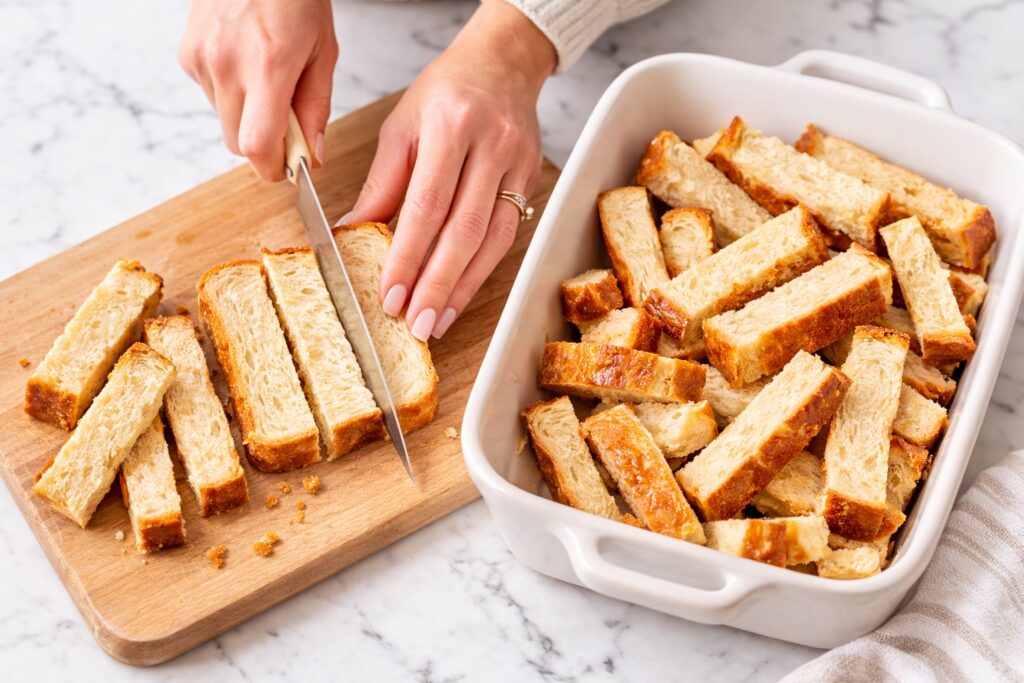
1. Cut the bread
Cut each slice of bread into three or four strips.
This shape allows the bread to cook evenly and makes them perfect for dipping.
2. Prepare the custard
In a bowl whisk together:
- eggs
- milk
- sugar
- vanilla extract
- cinnamon
- salt
Whisk until the mixture is smooth.
Whisking thoroughly prevents egg streaks and creates a smoother coating on the bread.
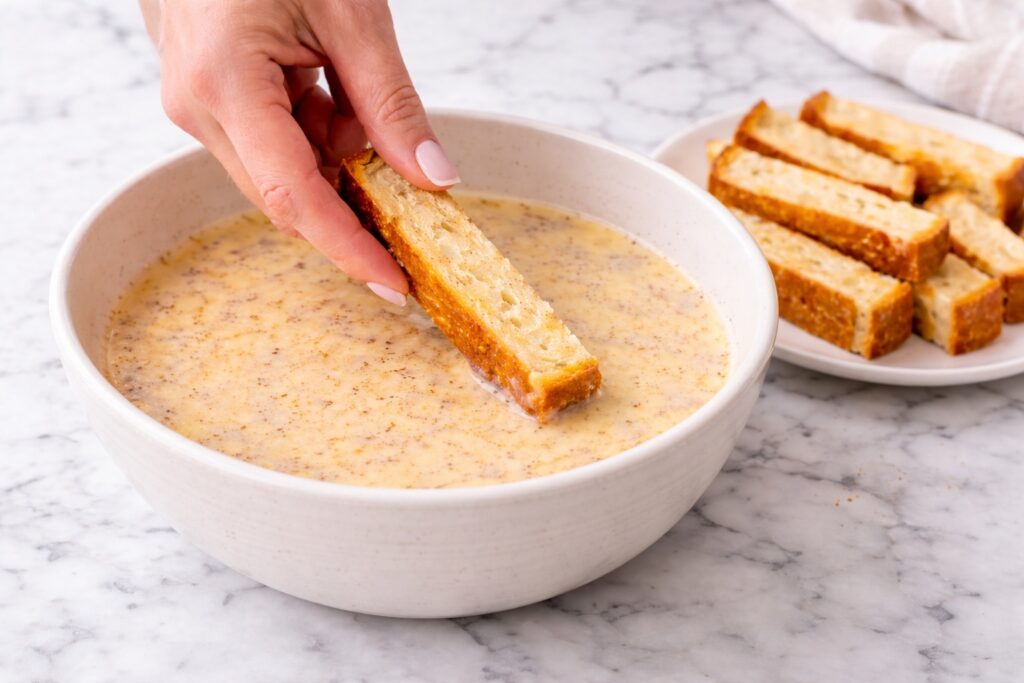
3. Dip the bread
Dip each bread strip into the custard mixture.
Coat both sides but avoid soaking too long.
If the bread absorbs too much custard it may become soggy.
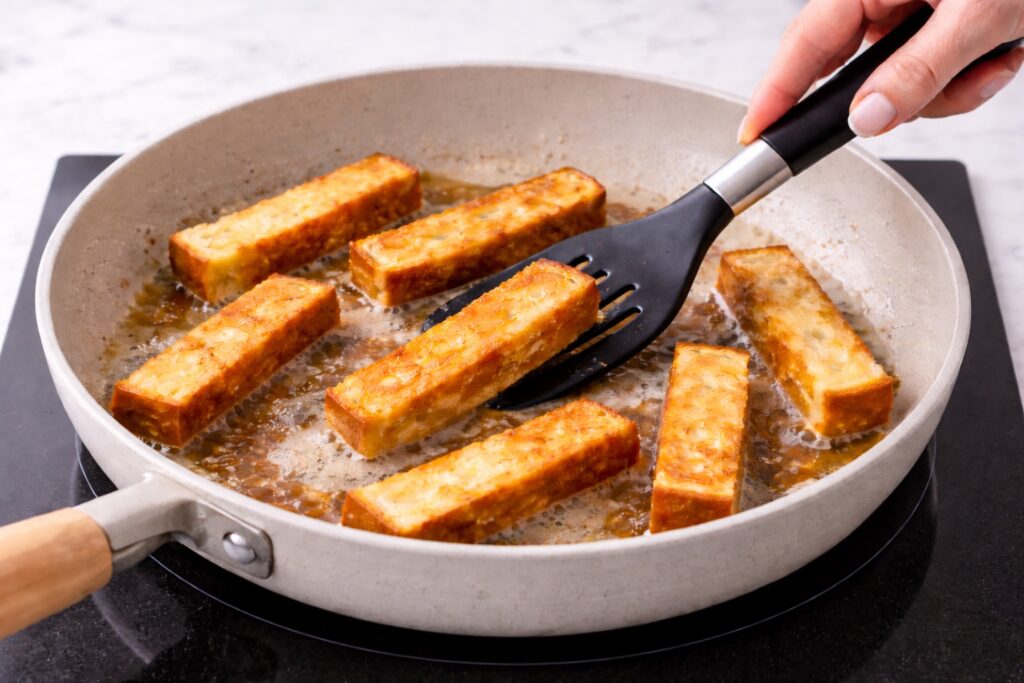
4. Cook the French Toast Sticks
Heat a skillet over medium heat and melt the butter.
Place the coated bread sticks into the pan.
Cook for about 2–3 minutes per side until golden brown.
Rotate the sticks so all sides develop crisp edges.
5. Serve warm
Transfer the french toast sticks to a plate and serve immediately with maple syrup, powdered sugar, or fresh fruit.
They are best enjoyed warm when the edges are crisp and the center is still soft.
French Toast Doneness Guide
Knowing when french toast sticks are perfectly cooked helps you achieve the ideal balance of crisp edges and soft centers.
Use this simple visual guide while cooking.
| Appearance | What It Means | Action |
|---|---|---|
| Pale and soft | custard not cooked yet | cook longer |
| Light golden color | nearly done | flip and cook other sides |
| Deep golden brown | perfect texture | remove from pan |
| Dark brown or burnt spots | heat too high | reduce heat |
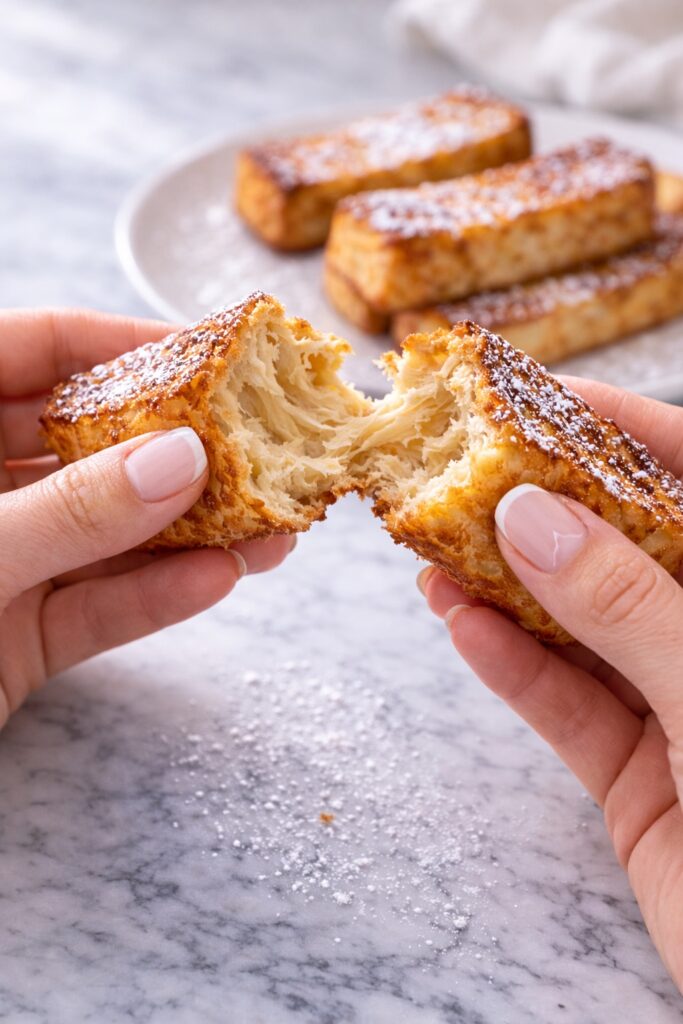
Perfect french toast sticks should have:
- evenly golden edges
- lightly crisp exterior
- soft custardy center
If the outside browns too quickly, lower the heat slightly and allow the custard inside to finish cooking.
Texture Guide
The perfect french toast sticks combine three textures.
| Texture Element | What Creates It |
|---|---|
| Crisp edges | butter caramelization |
| Golden crust | egg proteins cooking |
| Soft center | custard absorbed into bread |
When cooked correctly, french toast sticks should be:
- lightly crisp outside
- soft and custardy inside
- golden brown
- lightly caramelized
Pro Tips for Perfect French Toast Sticks
- Use slightly stale bread
- Cook over medium heat
- Avoid soaking the bread too long
- Use butter for the best flavor
- Rotate the sticks so all edges brown evenly
If the pan is too hot, the outside browns before the inside cooks.
Common Mistakes to Avoid
Soaking the bread too long
Bread that absorbs too much custard can become fragile and difficult to cook evenly.
Cooking at very high heat
High heat burns the exterior before the custard cooks fully.
Using thin bread
Thin slices become too soft after dipping and may fall apart.
Not rotating the sticks
French toast sticks cook best when browned on several sides.
French Toast Troubleshooting Guide
If your french toast sticks don’t turn out quite as expected, small adjustments can usually fix the problem. This quick troubleshooting guide explains some common issues and how to solve them.
| Problem | Possible Cause | How to Fix It |
|---|---|---|
| French toast sticks are soggy | bread soaked too long or heat too low | dip bread briefly and cook over medium heat |
| French toast sticks are dry | too little custard mixture | ensure bread is coated evenly |
| Outside browns too fast | pan heat too high | reduce heat slightly and cook more slowly |
| Bread falls apart | bread too thin or too soft | use thicker bread such as brioche or challah |
| Custard tastes eggy | custard not mixed well | whisk thoroughly before dipping |
Most french toast problems come down to bread choice, custard balance, and cooking temperature.
Medium heat usually produces the best texture because it allows the custard inside the bread to cook while the exterior slowly turns golden.
Why French Toast Sticks Get Crispy
One of the most satisfying things about french toast sticks is the contrast between their crisp golden exterior and soft custardy center. This texture comes from a combination of caramelization and the Maillard reaction as the custard-coated bread cooks in butter.
When the bread hits the hot skillet, the sugars and proteins in the egg mixture begin to brown. Butter also helps create a richer flavor while encouraging the surface to caramelize.
Because french toast sticks are cut into narrow strips, they have more exposed edges than traditional french toast slices. This extra surface area allows more of the bread to touch the pan, which helps create those signature crispy sides.
Turning the sticks on multiple sides during cooking helps brown all edges evenly, which creates the best balance of crispness and tenderness.
Butter also plays an important role in the final texture. As it heats in the skillet, it coats the surface of the bread and helps distribute heat evenly across the custard layer. This encourages the sugars in the custard to caramelize while the egg proteins develop deeper browning, creating the crisp golden edges that make french toast sticks so satisfying.
Why French Toast Sticks Cook Faster Than Regular French Toast
French toast sticks cook slightly faster than traditional french toast slices because of their shape and increased surface area.
When bread is cut into narrow strips, more of the custard-coated surface touches the hot pan. This allows the heat to transfer more efficiently and encourages faster browning through caramelization and the Maillard reaction.
The extra edges also help the sticks develop more crisp surfaces compared to full slices of french toast. As the butter and custard mixture cook, the sugars and proteins begin to brown, creating the golden crust that gives french toast sticks their signature texture.
Because the sticks are smaller and thinner than traditional slices, the custard inside the bread cooks quickly while the exterior develops lightly crisp edges. This balance of crisp exterior and soft interior is what makes french toast sticks especially satisfying.
How to Serve French Toast Sticks
French toast sticks are especially fun to serve because they are easy to dip and simple to customize with different toppings or sauces. Their handheld shape makes them perfect for family breakfasts, casual brunches, or kid-friendly morning meals.
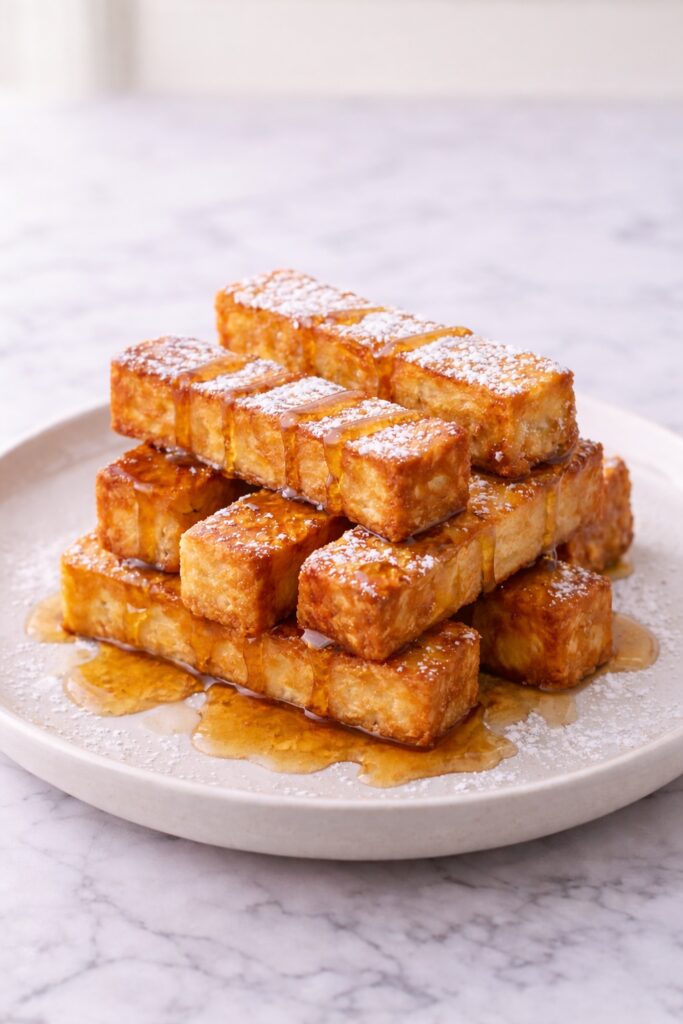
Classic toppings are often the simplest and most popular.
Classic options include:
- warm maple syrup
- powdered sugar
- cinnamon sugar
- honey
Fruit-based toppings add brightness that balances the rich custard flavor.
Popular fruit options include:
- strawberry sauce
- blueberry compote
- raspberry jam
- fresh berries
For a more indulgent breakfast, try richer dipping options such as:
- chocolate sauce
- whipped cream
- cream cheese glaze
For brunch gatherings, french toast sticks can also be arranged on a large platter with small bowls of different sauces. This creates an inviting breakfast spread where everyone can dip and customize their plate.
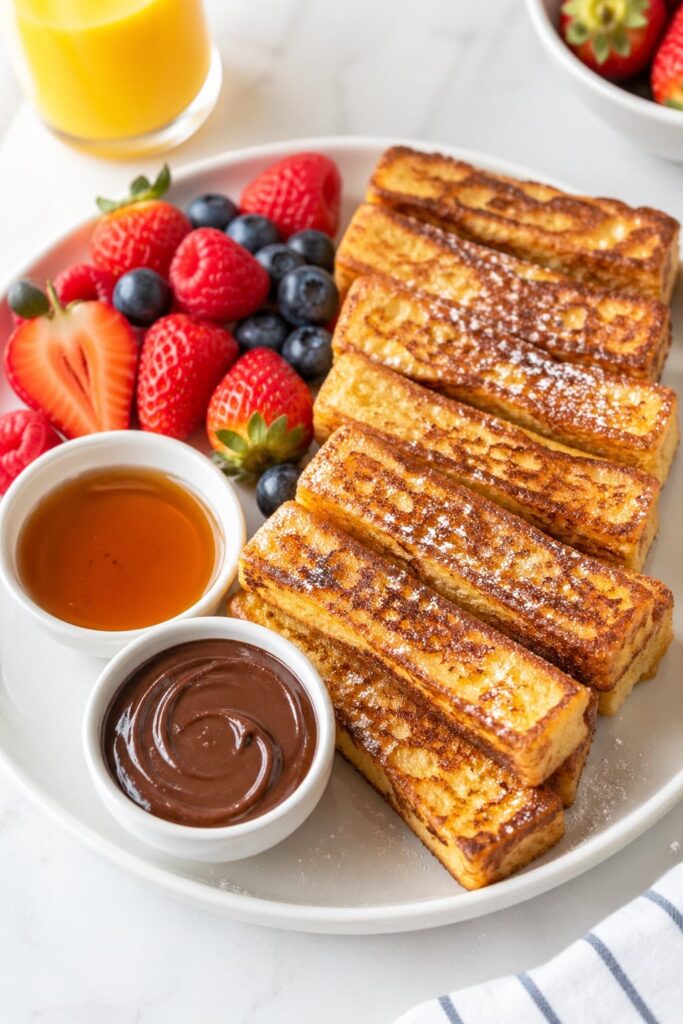
Because the sticks are easy to pick up and share, they also work beautifully for brunch boards or weekend breakfast platters served alongside fruit, classic waffles, pancakes, or other breakfast favorites.
Storage and Make Ahead Instructions
French toast sticks can easily be prepared in advance, which makes them a great option for busy mornings or simple breakfast meal prep. Similar make-ahead techniques are often used for French toast casserole, where the bread soaks overnight before baking.
After cooking, allow the sticks to cool completely before storing them in the refrigerator or freezer. When reheated in a skillet, oven, or air fryer, they quickly regain their crisp edges and soft interior.
This makes french toast sticks convenient for preparing ahead and enjoying throughout the week.
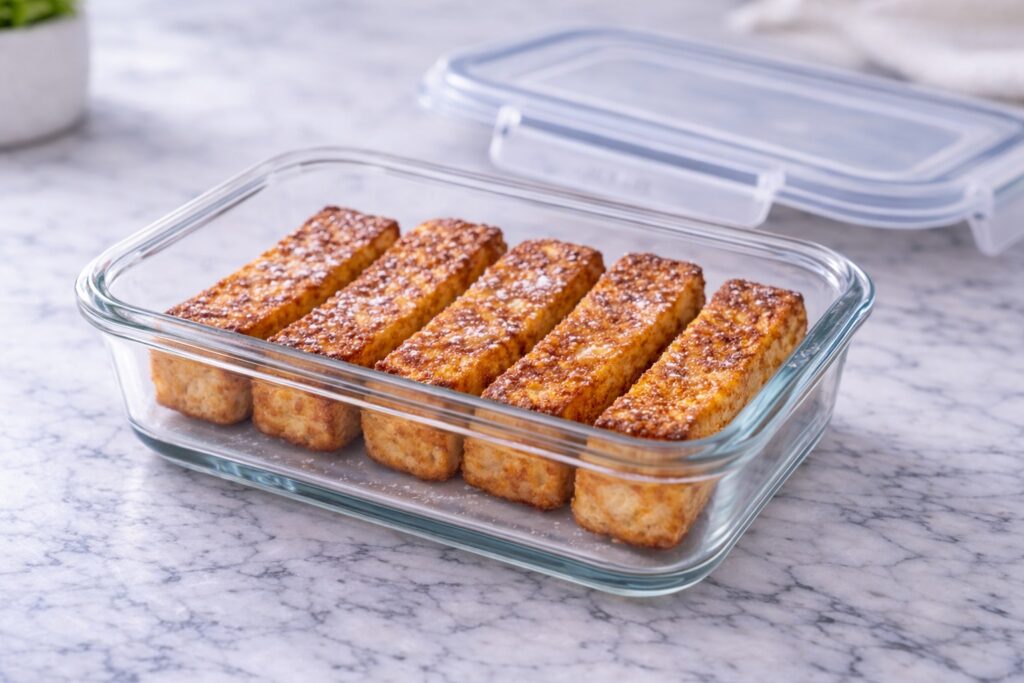
Refrigerator
- Cook the sticks completely and let them cool.
- Store in an airtight container for up to 3 days.
Freezer
- Place cooled french toast sticks on a baking sheet and freeze until solid.
- Transfer to a freezer bag and store for up to 2 months.
How to Reheat
- Skillet: Reheat with a small amount of butter for 2–3 minutes.
- Oven: Bake at 350°F (175°C) for 5–7 minutes.
- Air Fryer: Reheat at 350°F for about 3–4 minutes.
French Toast Sticks Variations
Once you know the basic method, french toast sticks can easily be adapted with different flavors and ingredients.
Cinnamon Sugar French Toast Sticks
After cooking, toss the sticks in a mixture of cinnamon and sugar for a warm, bakery-style finish.
Stuffed French Toast Sticks
Spread a thin layer of cream cheese or chocolate hazelnut spread between two slices of bread before cutting them into sticks.
Protein French Toast Sticks
Add one tablespoon of vanilla protein powder to the custard mixture for a slightly higher protein breakfast.
Baked French Toast Sticks
Instead of cooking in a skillet, place the coated bread sticks on a lined baking sheet and bake at 375°F (190°C) for about 12–15 minutes, flipping halfway through.
This method is helpful when making larger batches.
Air Fryer French Toast Sticks
Cook the sticks in an air fryer at 375°F (190°C) for about 6–8 minutes, turning halfway.
This produces crispy edges with minimal butter.
More Breakfast Ideas to Try
If you enjoy French toast sticks, you may also love these breakfast favorites:
These recipes use simple ingredients and reliable techniques that make homemade breakfasts easy and comforting.
Explore More French Toast Recipes
If you enjoy these french toast sticks, you may also like other classic breakfast recipes that use the same rich custard technique. French toast is one of the most versatile breakfast dishes, and small changes in bread, flavorings, or cooking method can create completely different results.
Here are a few popular french toast recipes you can explore next:
Classic French Toast Recipe
This traditional french toast recipe uses thick slices of bread dipped in a cinnamon vanilla custard and cooked in butter until golden brown.
French Toast Casserole
A baked version of french toast that is perfect for holiday mornings or brunch gatherings. The bread cubes soak in custard and bake into soft, custardy layers with golden edges.
Creme Brulee French Toast
Inspired by the classic dessert, this french toast variation features a rich custard base and a caramelized sugar topping that creates a crisp, brûléed surface with a soft interior.
Sourdough French Toast
Sourdough bread adds a slightly tangy flavor and a firmer texture that creates crisp edges with a tender center.
Exploring different french toast recipes is a great way to discover how small changes in bread, custard ratios, and cooking methods can create completely different textures and flavors.
Building a small collection of french toast recipes makes it easy to create cozy weekend breakfasts or relaxed brunch menus.
Frequently Asked Questions
French toast sticks are a quick and simple breakfast made by dipping bread strips in a lightly sweet custard and cooking them until golden and crisp. The questions below cover some helpful tips for making the best french toast sticks at home.
What bread works best for French Toast Sticks?
Brioche, challah, and Texas toast work best because they absorb the custard mixture while staying fluffy.
Why are my French Toast Sticks soggy?
Bread that is soaked too long or cooked at too low heat may become soggy.
Can French Toast Sticks be baked?
Yes. Bake at 375°F for about 12–15 minutes, flipping halfway.
Can French Toast Sticks be made ahead of time?
Yes. French toast sticks can be made ahead, cooled completely, and stored in the refrigerator for up to 3 days. They also freeze well and can be reheated in the oven, skillet, or air fryer.
How do you keep French Toast Sticks crispy?
Cooking them over medium heat in butter helps develop crisp edges. Turning the sticks so multiple sides touch the pan also helps create an evenly golden crust.
Can French Toast Sticks be frozen?
Yes. After cooking, allow the sticks to cool completely, then freeze them on a baking sheet before transferring them to a freezer bag. They can be stored in the freezer for up to 2 months and reheated directly from frozen.
Reader Tips & Kitchen Notes
If you try this french toast sticks recipe, feel free to experiment with different breads, spices, or dipping sauces depending on what you enjoy most.
Some readers like adding a little extra cinnamon to the custard mixture for a warmer flavor, while others prefer serving the sticks with fresh fruit or berry sauces for a lighter breakfast.
Another simple trick is to sprinkle a little cinnamon sugar over the sticks right after cooking. The warmth of the toast helps the sugar melt slightly, creating a delicate sweet coating.
If you make these french toast sticks at home, you can also adjust the sweetness depending on how you plan to serve them. When using maple syrup or sweet toppings, many cooks prefer a slightly less sweet custard mixture.
When serving with fruit toppings, fresh berries or fruit salad can add a bright contrast to the rich custard flavor.
If you discover a favorite bread or topping combination, feel free to share it in the comments. Other readers often enjoy seeing new serving ideas.
Final Baking Insight
French toast sticks may be simple to make, but small details can transform them into a truly memorable breakfast. Using slightly stale bread, a balanced custard mixture, and steady medium heat allows the sticks to develop crisp golden edges while staying soft and tender inside.
Their handheld shape makes them especially fun to serve, whether arranged on a brunch platter with dipping sauces or enjoyed as a quick morning treat with maple syrup and fresh fruit.
Warm, golden, and lightly caramelized, french toast sticks are the kind of cozy breakfast that can turn an ordinary morning into something a little more special. Simple to make yet deeply comforting, they’re the kind of recipe that quickly becomes a favorite at the breakfast table.
French Toast Sticks
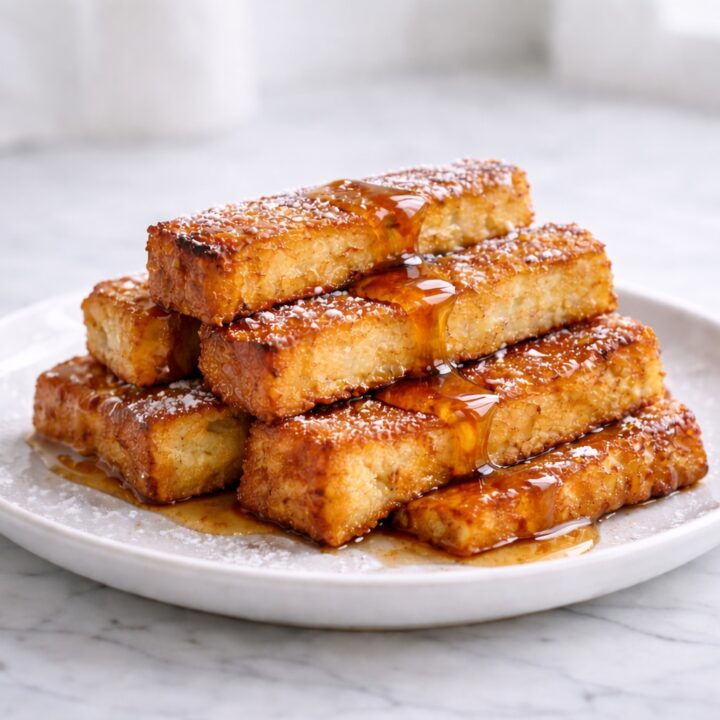
These homemade French toast sticks are golden and crisp on the outside with a soft custardy center. Made with brioche bread, cinnamon, and vanilla, they are easy to cook in butter and perfect for breakfast, brunch, or weekend mornings. Serve warm with maple syrup for a classic homemade breakfast everyone loves.
Ingredients
French Toast Custard
- 2 large eggs
- ½ cup milk
- 1 tablespoon sugar
- 1 teaspoon vanilla extract
- ½ teaspoon ground cinnamon
- pinch of salt
Bread & Cooking
- 4 thick slices brioche bread
- 1 tablespoon butter
Optional for Serving
- maple syrup
- powdered sugar
- fresh berries
Instructions
- Cut each slice of brioche bread into 3 or 4 thick sticks.
- In a shallow bowl, whisk together the eggs, milk, sugar, vanilla extract, cinnamon, and salt until smooth.
- Dip each brioche stick briefly into the custard mixture, turning to coat all sides without soaking the bread.
- Heat butter in a skillet over medium heat.
- Place the coated bread sticks in the skillet and cook for 2–3 minutes per side until golden brown and lightly crisp.
- Transfer the cooked French toast sticks to a plate and serve warm with maple syrup and powdered sugar.
Notes
- Use slightly stale brioche bread for the best texture. Fresh bread can absorb too much custard and become soft while cooking.
- Cook the French toast sticks over medium heat so the inside cooks gently while the outside develops a golden crisp crust.
- Leftover French toast sticks can be stored in an airtight container in the refrigerator for up to 3 days and reheated in a skillet, oven, or air fryer.
Nutrition Information:
Yield: 4 servings Serving Size: 4 french toast sticksAmount Per Serving: Calories: 280Total Fat: 12gCarbohydrates: 32gSugar: 9gProtein: 9g
Nutrition information is provided as an estimate and may vary depending on ingredient brands, portion sizes, and cooking methods.
12 Sweet Favorites — Yours, Free 🍰
Tiramisù, no-bake cheesecake, the perfect chocolate chip cookie & 9 more reader-loved desserts — gathered into one beautiful free recipe book. From my kitchen to yours.
No spam, just sweet things. Unsubscribe anytime.