French Toast Casserole
🎁 FREE E-BOOK: 12 Sweet Favorites — reader-loved desserts in one beautiful recipe book.
French toast casserole is a baked breakfast dish made with cubes of bread soaked in a rich custard of eggs, milk, vanilla, and cinnamon. As it bakes, the bread absorbs the custard mixture and transforms into a soft, tender interior with lightly golden edges. This French toast casserole recipe offers the same comforting flavors as classic French toast but in an easy oven-baked format that is perfect for serving a group.
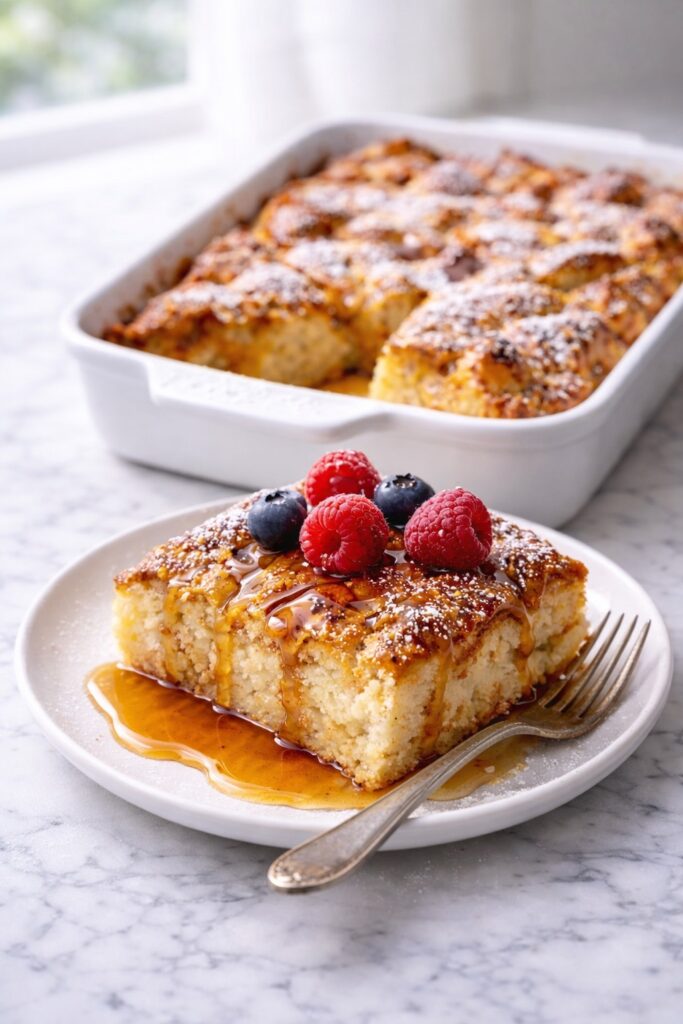
Few breakfast dishes feel as inviting as a warm cinnamon French toast casserole baking in the oven. As it cooks, the aroma of vanilla, cinnamon, and toasted bread slowly fills the kitchen, creating that comforting atmosphere that makes slow weekend mornings feel especially relaxed.
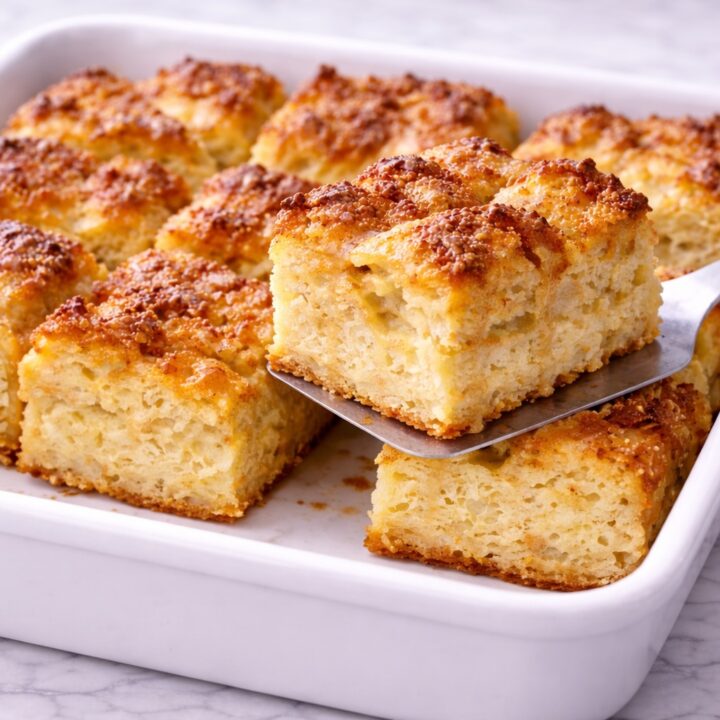
The texture is what makes this dish so satisfying. The top develops lightly crisp golden edges while the inside stays soft, custardy, and tender. Each slice delivers warm sweetness balanced by the rich flavor of eggs and butter.
French toast casserole is also wonderfully practical. Because it can be assembled ahead of time and baked in a single dish, it’s an ideal choice for holiday mornings, brunch gatherings, or slow weekend breakfasts.
Instead of standing at the stove flipping slices one by one, everything bakes together in one dish, making breakfast much easier to prepare for a group.
If you enjoy cozy baked breakfast recipes and comforting classics like French toast, this French toast casserole is a wonderful one to keep on hand for relaxed mornings and family gatherings.
Quick Recipe Snapshot
- Prep time: about 15 minutes
- Bake time: 40–45 minutes
- Total time: about 1 hour
- Servings: 6–8 portions
- Best bread: brioche or challah
- Texture: soft custardy interior with lightly crisp golden edges
Quick tip: letting the casserole rest for a few minutes after baking helps the custard finish setting and improves the texture when serving.
Key Takeaways
- French toast casserole is a baked version of classic stovetop French toast.
- Slightly stale bread absorbs custard more evenly.
- Brioche and challah create the most tender texture.
- The casserole can easily be prepared overnight before baking.
What Is French Toast Casserole
French toast casserole is a baked breakfast dish made by soaking cubes of bread in a custard mixture of eggs, milk, sugar, and vanilla before baking everything together in a casserole dish. As the casserole bakes, the bread absorbs the custard and develops a soft, custardy interior while the top turns lightly golden.
This method transforms classic stovetop French toast into a convenient baked dish that can feed several people at once. Because the bread has time to fully absorb the custard before baking, the texture becomes especially tender and flavorful.
French toast casseroles are often prepared the night before baking, which is why they are especially popular for brunch gatherings, holiday mornings, and relaxed weekend breakfasts.
French toast casserole is essentially a baked version of classic French toast, where bread cubes soak in custard before baking into a soft, sliceable breakfast casserole.
Why You’ll Love This French Toast Casserole
French toast casserole combines the comforting flavors of classic French toast with the convenience of a baked breakfast dish. Instead of standing at the stove cooking slices one by one, everything bakes together in a single dish with a soft custardy center and lightly golden edges.
If you love cozy homemade breakfasts that are easy to prepare and perfect for sharing, this casserole is a wonderful recipe to keep on hand.
- Easy to prepare: The casserole comes together with simple pantry ingredients and minimal prep time.
- Perfect for make-ahead breakfasts: Because the casserole can be assembled the night before, it’s ideal for relaxed mornings when you want something homemade without extra effort.
- Soft custardy texture: The bread absorbs the rich custard mixture, creating a tender interior while the top bakes into lightly golden edges.
- Great for feeding a crowd: French toast casserole is easy to slice and serve, making it perfect for family breakfasts, brunch gatherings, or holiday mornings.
- Simple ingredients: The recipe uses everyday ingredients like bread, eggs, milk, vanilla, and cinnamon.
Casseroles made with slightly stale bread tend to absorb the custard more evenly and bake into the best texture.
Ingredients
This French toast casserole uses simple pantry ingredients that come together to create a rich custard, soft baked bread, and lightly golden edges.
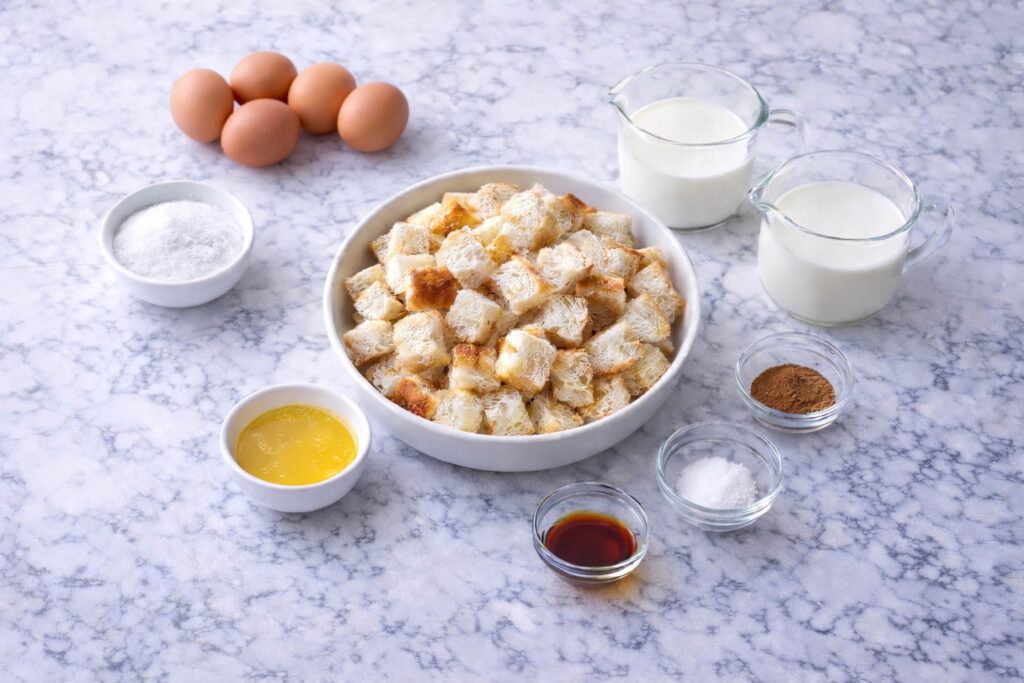
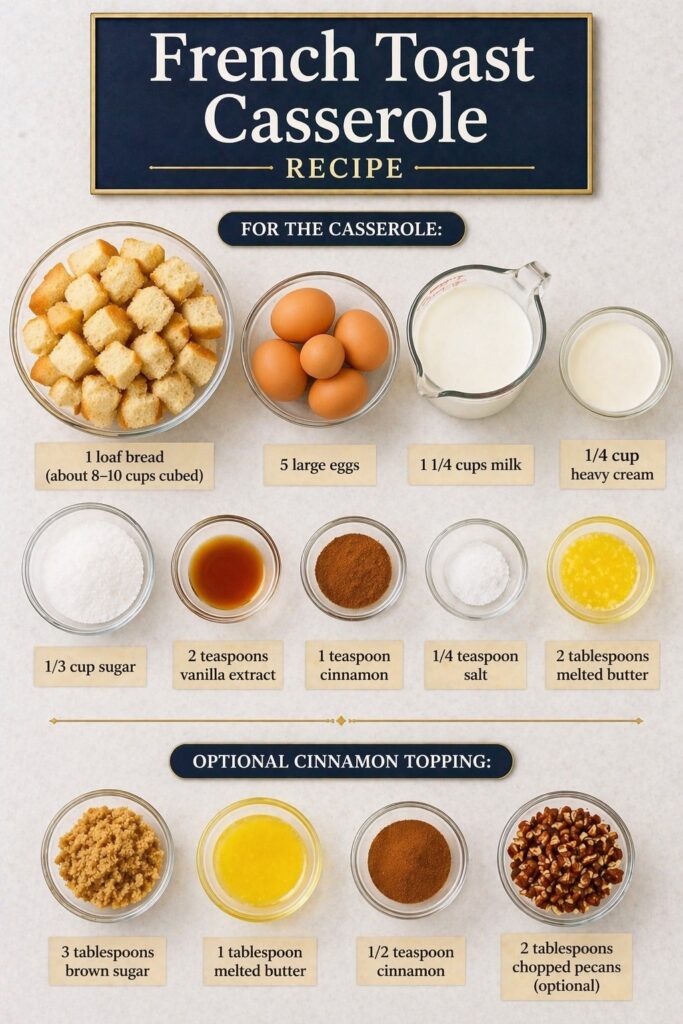
For the casserole
- 1 loaf bread (about 8–10 cups cubed)
- 5 large eggs
- 1 ¼ cups milk
- ¼ cup heavy cream
- ⅓ cup sugar
- 2 teaspoons vanilla extract
- 1 teaspoon cinnamon
- ¼ teaspoon salt
- 2 tablespoons melted butter
Optional cinnamon topping
- 3 tablespoons brown sugar
- 1 tablespoon melted butter
- ½ teaspoon cinnamon
- 2 tablespoons chopped pecans (optional)
Enriched breads like brioche or challah create the most tender texture because they absorb the custard more evenly.
Ingredient Notes and Substitutions
Understanding how each ingredient works helps create the best possible texture.
Bread
Bread forms the base of the casserole. Slightly stale bread absorbs custard more evenly and prevents the casserole from becoming soggy.
Substitutions
- Brioche → challah or sandwich bread
- French bread → Italian bread
- Gluten-free bread can also work
If the bread is very fresh, letting the cubes sit uncovered for about an hour helps them dry slightly.
Eggs
Eggs create the custard structure that binds the casserole together.
Substitution: egg replacers for baking can work but may create a softer texture.
Milk
Milk provides the liquid base of the custard.
Substitutions
- 2% milk
- oat milk
- almond milk
Heavy Cream
Adds richness and creates a smoother custard.
Substitution
- half-and-half
- additional milk
Sugar
Adds sweetness and helps the top caramelize during baking.
Substitutions
- brown sugar
- maple syrup
Choosing the Best Ingredients
Simple ingredients work best for French toast casserole, but choosing the right bread and custard balance can make a noticeable difference in the final texture.
Best Bread for French Toast Casserole
The type of bread you choose plays a major role in the final texture of French toast casserole. Because the bread absorbs the custard mixture before baking, its structure and moisture level determine whether the casserole turns out soft and custardy or dense and soggy.
Breads with a slightly firm crumb and mild sweetness tend to work best because they absorb the custard evenly without falling apart.
Bread that is slightly stale works best for French toast casserole because it absorbs the custard more evenly. Rich breads like brioche or challah create a softer texture, while rustic breads such as those used for sourdough French toast can add a slightly firmer structure.
Bread Comparison Guide
Not all breads absorb custard the same way, which is why choosing the right loaf can make a noticeable difference in the final casserole texture.
| Bread Type | Texture After Baking | Why It Works |
|---|---|---|
| Brioche | Very soft and custardy | Rich eggs and butter in the bread absorb custard beautifully |
| Challah | Soft and fluffy | Slight sweetness pairs well with cinnamon and vanilla |
| French bread | Slightly firmer texture | Holds its shape well during baking |
| Sourdough | Light chew with crisp edges | Slight tang balances the sweetness |
| Sandwich bread | Very soft but delicate | Works in a pinch but may become too soft |
Quick Bread Tip
For the best texture, cut the bread into 1–1½ inch cubes. Larger cubes help the casserole keep its structure while still absorbing the custard evenly, while very small cubes can become overly soft during baking.
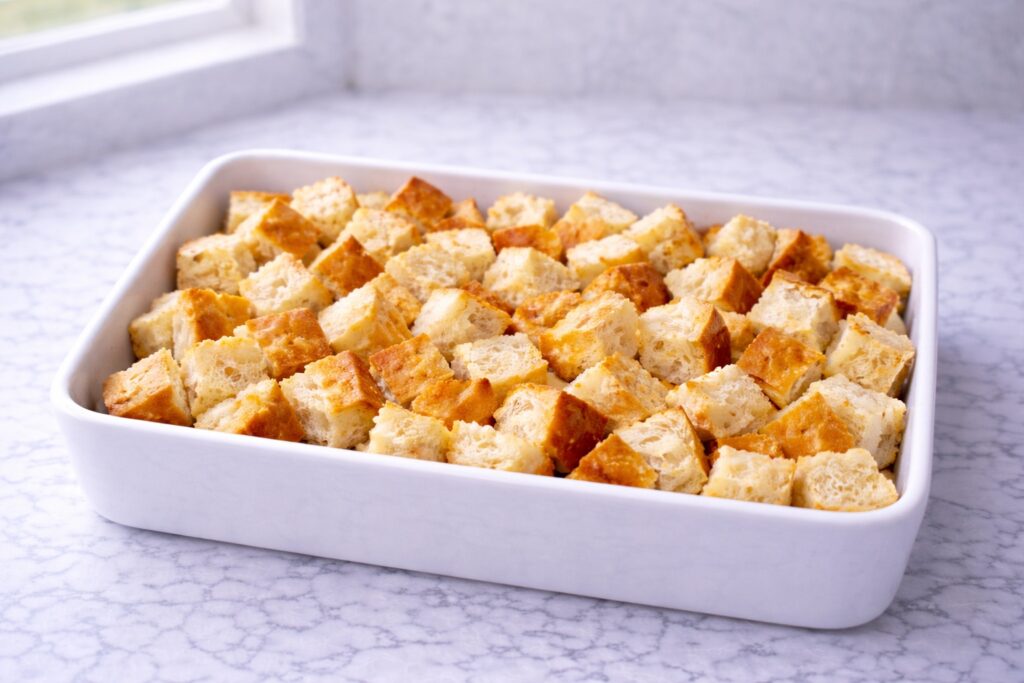
Many bakers notice that enriched breads like brioche absorb custard especially well, which is why they are often preferred for baked French toast casseroles.
Custard Ratio Science
The custard mixture is what transforms simple bread into a soft, rich French toast casserole.
Eggs provide structure because their proteins coagulate when heated, helping the custard firm up while keeping the casserole tender, while milk and cream create the smooth, tender texture that makes the casserole feel custardy rather than dry.
When the casserole bakes, the eggs gently set while the bread absorbs the liquid mixture, creating the classic soft interior with lightly golden edges. This baking method is similar to desserts like bread pudding, where bread soaks in custard before baking.
The balance between eggs and milk determines whether the casserole turns out creamy and tender or firm and dense.
Custard Ratio Guide
| Custard Ratio | Resulting Texture | When to Use |
|---|---|---|
| More milk than eggs | Softer, creamier texture | Best for very soft breads like brioche |
| Balanced egg-milk ratio | Classic custardy texture | Ideal for most French toast casseroles |
| More eggs than milk | Firmer texture | Useful for denser breads like sourdough |
| Bread | Eggs | Milk | Result |
|---|---|---|---|
| 6 cups bread | 4 eggs | 1 cup milk | soft |
| 8 cups bread | 5 eggs | 1¼ cups milk | balanced |
| 10 cups bread | 6 eggs | 1½ cups milk | rich |
Key Ingredients in the Custard
- Eggs are responsible for setting the custard during baking and giving the casserole structure.
- Milk creates a smooth custard base, while cream adds richness and a slightly silkier texture.
- A small amount of sugar balances the egg flavor and encourages light caramelization during baking.
- Vanilla and cinnamon give French toast casserole its classic warm flavor and aroma.
French toast casserole often turns out best when the custard mixture is whisked thoroughly before pouring it over the bread. A smooth custard ensures the eggs distribute evenly and prevents pockets of dense texture after baking.
French Toast Casserole Texture Guide
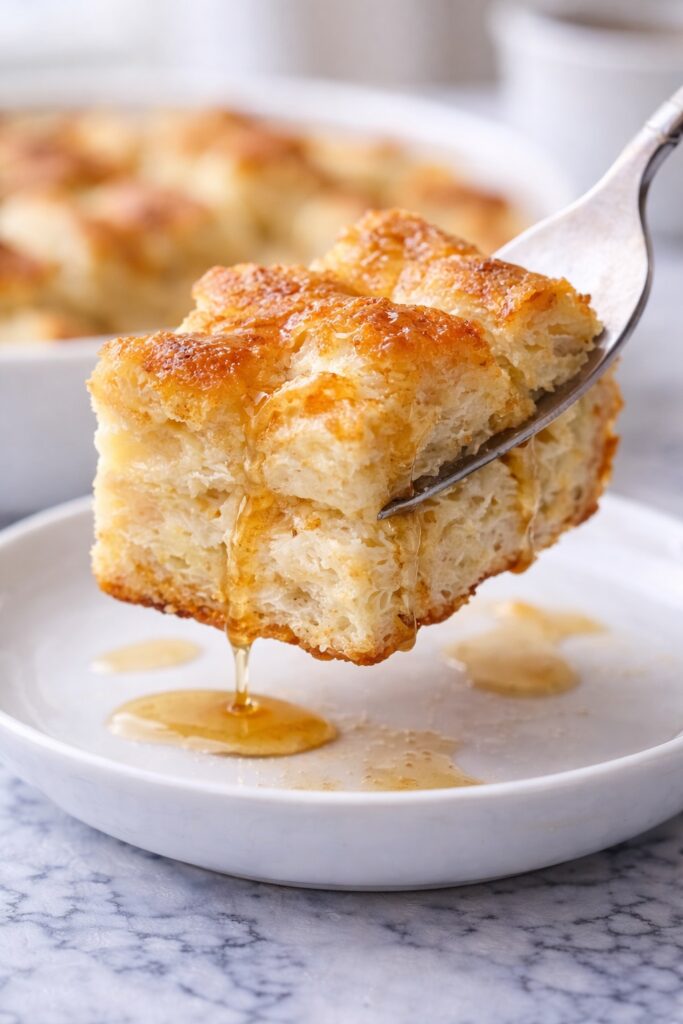
French toast casserole should have a soft, custardy interior with lightly golden edges and enough structure to slice cleanly after resting. The contrast between the tender center and the lightly baked top is what makes this breakfast casserole so comforting.
Soft and Custardy Center
The center of the casserole should feel tender, moist, and almost pudding-like without being wet. This texture happens when the bread absorbs the custard evenly and the eggs set gently during baking.
Lightly Golden Edges
The top and edges should bake until lightly golden. These slightly firmer edges create a gentle contrast with the softer center and give the casserole its classic baked finish.
Sliceable but Tender Structure
A well-baked French toast casserole should hold its shape when spooned or sliced, but still feel soft and delicate when eaten. Letting the casserole rest for several minutes after baking helps the custard finish setting and improves the texture.
If the casserole feels too wet, it may need a little more baking time. If it feels dry, it was likely baked too long or made with too little custard.
Understanding this balance between custard, bread, and baking time helps explain why French toast casserole develops its signature texture in the oven.
Baking Science: Why French Toast Casserole Works
French toast casserole works because of the way eggs, milk, and bread interact during baking. When the bread cubes soak in the custard mixture, they absorb the liquid and trap it within their structure. As the casserole bakes, the proteins in the eggs begin to coagulate, gently setting the custard and creating the soft, sliceable texture that defines a well-made French toast casserole.
Milk and cream contribute moisture and richness, while the bread acts like a sponge that distributes the custard throughout the dish. This balance is what creates the tender interior without making the casserole soggy.
The baking process also lightly dries the surface of the casserole, allowing the top and edges to develop a gentle golden color. This contrast between the lightly baked top and the soft custardy center is what gives French toast casserole its comforting texture.
This cooking method is very similar to bread pudding, where bread absorbs a custard mixture before baking into a soft, structured dessert.
How to Make French Toast Casserole
French toast casserole comes together with just a few simple steps. The bread soaks in a rich custard mixture before baking, creating a soft interior with lightly golden edges.
1. Prepare the bread
Cut the bread into 1–1½ inch cubes and place them in a lightly greased baking dish.
Evenly sized bread cubes help the custard distribute more evenly throughout the casserole.
2. Whisk the custard
In a large bowl, whisk together the eggs, milk, cream, sugar, vanilla, cinnamon, and salt until the mixture is completely smooth.
Make sure the eggs are fully incorporated so the custard bakes evenly.
3. Combine
Pour the custard mixture evenly over the bread cubes. Gently press the bread down with a spoon so it begins absorbing the liquid.
After a few minutes, the bread will start soaking up the custard.
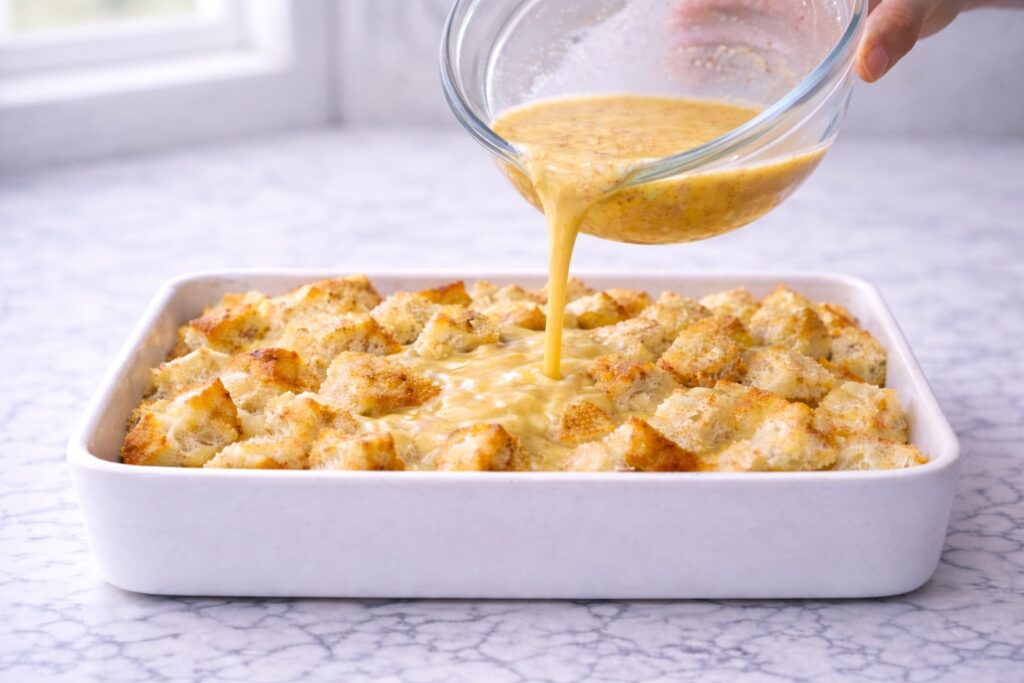
4. Let the bread soak
Allow the casserole to sit for 15–20 minutes so the bread can absorb the custard.
For best results, the casserole can also be covered and refrigerated overnight.
5. Add topping
If using the cinnamon topping, mix the brown sugar, butter, and cinnamon and sprinkle it evenly over the casserole.
This topping creates a lightly caramelized surface during baking.
6. Bake
Bake the casserole in a 350°F (175°C) oven for 40–45 minutes, or until the top becomes golden and the center is set.
The edges should look lightly crisp while the interior remains soft and custardy.
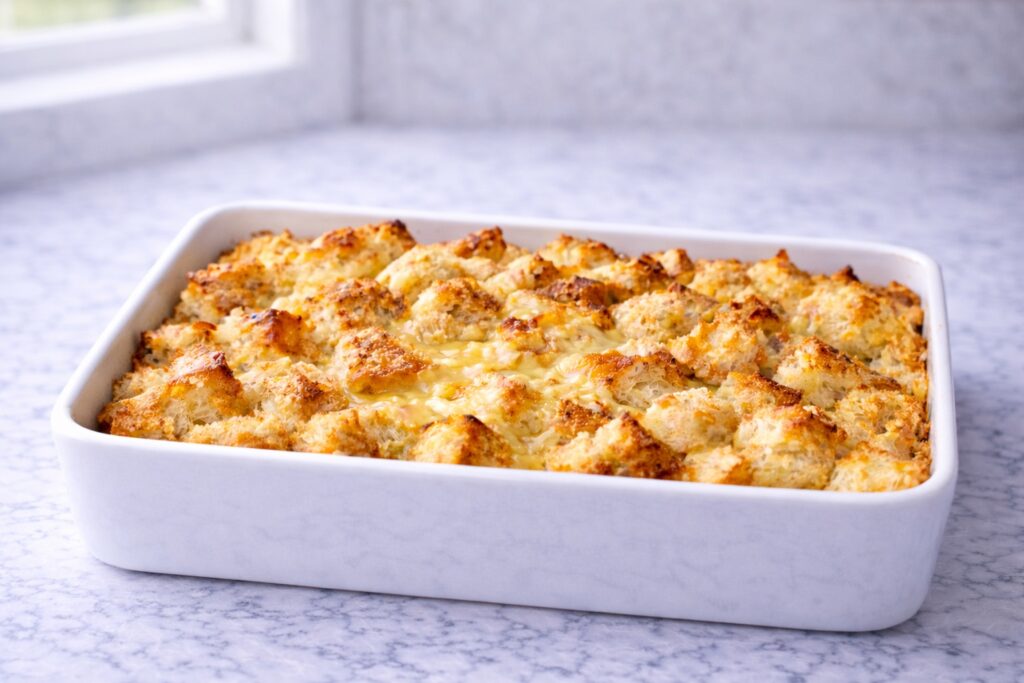
7. Rest before serving
Allow the casserole to rest for 5–10 minutes before serving.
Resting gives the custard time to finish setting and helps the casserole slice more cleanly.
In simple terms, making French toast casserole involves cubing the bread, whisking a custard of eggs and milk, soaking the bread, and baking everything until the top becomes lightly golden and the center is set.
Pro Baking Tips for the Best French Toast Casserole
A few simple baking tips can help create a French toast casserole with the best texture, flavor, and golden finish.
- Use slightly stale bread: Bread that is slightly dry absorbs the custard more evenly and helps prevent the casserole from becoming soggy.
- Let the bread soak long enough: Allow the bread to sit in the custard mixture for at least 15–20 minutes before baking, or refrigerate the casserole overnight for deeper flavor.
- Bake until the center is just set: The casserole should look lightly golden on top while the center remains soft and custardy. Because the custard contains eggs, it should bake until fully set to ensure both proper texture and food safety.
- Let the casserole rest before serving: When the casserole first comes out of the oven, the center may still look slightly soft. After resting for 5–10 minutes, the custard finishes setting and the texture becomes perfectly tender and sliceable.
Troubleshooting French Toast Casserole
Even simple baked breakfast recipes can have small texture issues depending on the bread, custard ratio, or baking time. These tips can help fix the most common problems.
Casserole turns out soggy
- Cause: Fresh bread often contains too much moisture and does not absorb the custard evenly.
- Fix: Use slightly stale bread and allow the casserole to rest for several minutes after baking so the custard can finish setting.
Top browns too quickly
- Cause: Some ovens heat more strongly from the top, which can cause the surface to brown before the center cooks fully.
- Fix: Cover the casserole loosely with foil and continue baking until the center is set.
Casserole feels dry
- Cause: Overbaking removes too much moisture from the custard.
- Fix: Check the casserole near the end of baking and remove it when the center is just set but still soft.
Bread pieces become too soft
- Cause: Very small bread cubes absorb too much custard and lose structure during baking.
- Fix: Cut the bread into cubes about 1–1½ inches so they keep their shape.
The texture of French toast casserole improves slightly as it cools for a few minutes, because the custard continues to set after baking.
Variations of French Toast Casserole
French toast casserole is easy to customize with different fruits, fillings, or toppings. Small additions can transform the flavor while keeping the same soft custardy texture.
Blueberry French Toast Casserole
Add 1–1½ cups fresh or frozen blueberries between the bread layers before pouring the custard. The berries soften while baking and add bright fruity flavor.
Cream Cheese French Toast Casserole
Scatter small cubes of cream cheese throughout the casserole before baking. The cream cheese becomes soft and creamy as the casserole cooks.
Apple French Toast Casserole
Layer thinly sliced apples between the bread cubes and sprinkle lightly with cinnamon. The apples soften in the oven and add natural sweetness.
Chocolate Chip French Toast Casserole
Sprinkle ½ cup chocolate chips between the bread layers for a sweeter breakfast variation that many families enjoy.
Cinnamon Streusel French Toast Casserole
Add a simple streusel topping made with butter, brown sugar, flour, and cinnamon to create a lightly crisp topping.
Placing fillings between layers rather than mixing them into the custard helps distribute the flavor more evenly throughout the casserole.
For an even richer breakfast variation, some bakers enjoy caramelized versions like Creme Brulee French Toast, which adds a lightly crisp sugar topping.
These variations make it easy to adapt the recipe depending on the season or ingredients you already have in the kitchen.
If you enjoy classic breakfast favorites like French toast sticks, this baked casserole offers the same comforting flavor in an easy dish that feeds the whole family.
Make Ahead Instructions
French toast casserole is one of the easiest breakfast recipes to prepare in advance, which makes it especially helpful for busy mornings or holiday gatherings.
Overnight method
The casserole can be assembled the night before baking. After pouring the custard over the bread, cover the baking dish tightly and refrigerate overnight.
During this time, the bread slowly absorbs the custard mixture, which helps create an even softer and more flavorful texture.
In the morning, simply remove the casserole from the refrigerator while the oven preheats, then bake as directed.
Same-day make ahead
If you prefer to prepare the casserole earlier in the day, assemble it and allow it to rest for 20–30 minutes before baking. This short resting time still allows the bread to absorb the custard properly.
When the casserole rests overnight, the custard distributes more evenly through the bread, which often creates the most tender texture after baking.
This make-ahead option is one of the reasons French toast casserole is such a popular choice for Christmas morning breakfasts.
Storage and Reheating
French toast casserole stores very well, which makes it a convenient option for breakfast leftovers or meal prep during the week. Proper storage helps maintain the soft custardy texture while preventing the casserole from drying out.
Refrigerator storage
Allow the casserole to cool completely before storing. Cover the baking dish tightly or transfer slices to an airtight container and refrigerate for up to 3–4 days.
Storage note: covering the casserole well helps keep the bread from drying out in the refrigerator.
Freezing
French toast casserole can also be frozen after baking. Let the casserole cool completely, then wrap individual portions or the entire dish tightly in plastic wrap and foil.
Freeze for up to 2 months for best texture.
When ready to use, thaw the casserole overnight in the refrigerator before reheating.
Reheating in the oven
For the best texture, reheat the casserole in a 325°F (165°C) oven for about 10–15 minutes, or until warmed through.
Covering the dish loosely with foil helps prevent the top from becoming too dark while reheating.
Reheating individual slices
Individual portions can also be reheated in the microwave for 30–60 seconds until warm.
Texture tip: oven reheating keeps the edges slightly crisp, while microwave reheating creates a softer texture.
French toast casserole often tastes even better the next day, once the custard has fully settled into the bread.
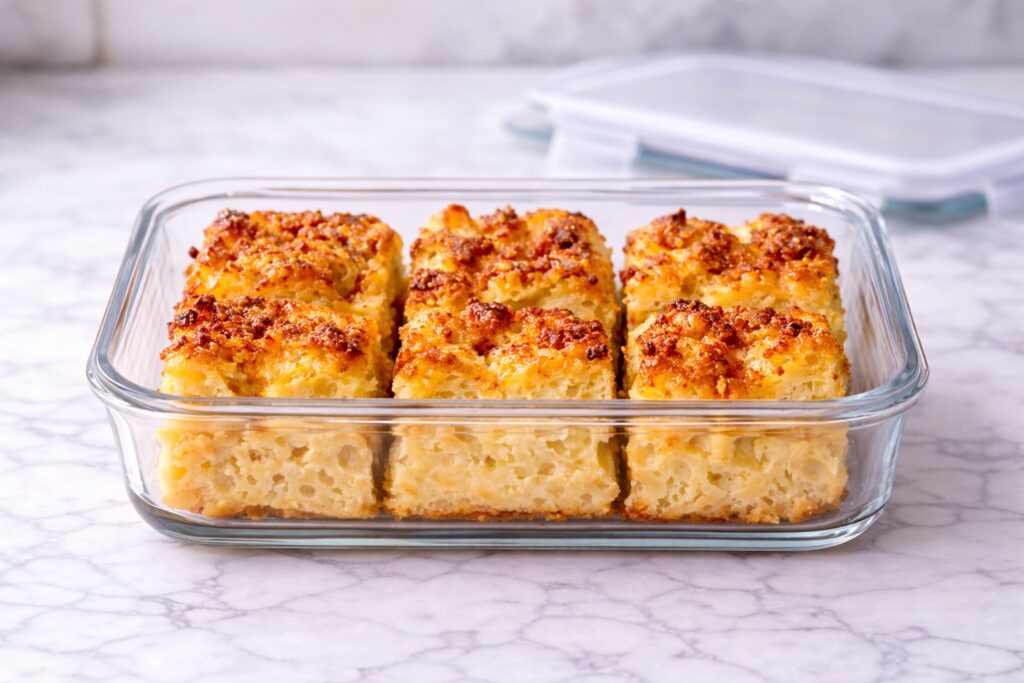
Perfect for Holiday Breakfast
French toast casserole is one of those breakfast dishes that feels especially perfect for holidays and slow family mornings. Because the casserole can be assembled the night before, it allows you to enjoy the morning instead of spending it cooking in the kitchen.
While the casserole bakes, the warm aroma of vanilla, cinnamon, and toasted bread slowly fills the house, creating that cozy holiday atmosphere that makes breakfast feel extra special.
Once it comes out of the oven with lightly golden edges and a soft custardy center, it’s easy to slice and serve for a group, making it a wonderful choice for Christmas morning, Easter brunch, or weekend family gatherings.
It’s one of those recipes that feels festive without requiring complicated preparation.
Small hosting tip: serving the casserole with maple syrup, fresh berries, and powdered sugar lets everyone customize their plate while keeping breakfast simple for the host.
Serving Suggestions
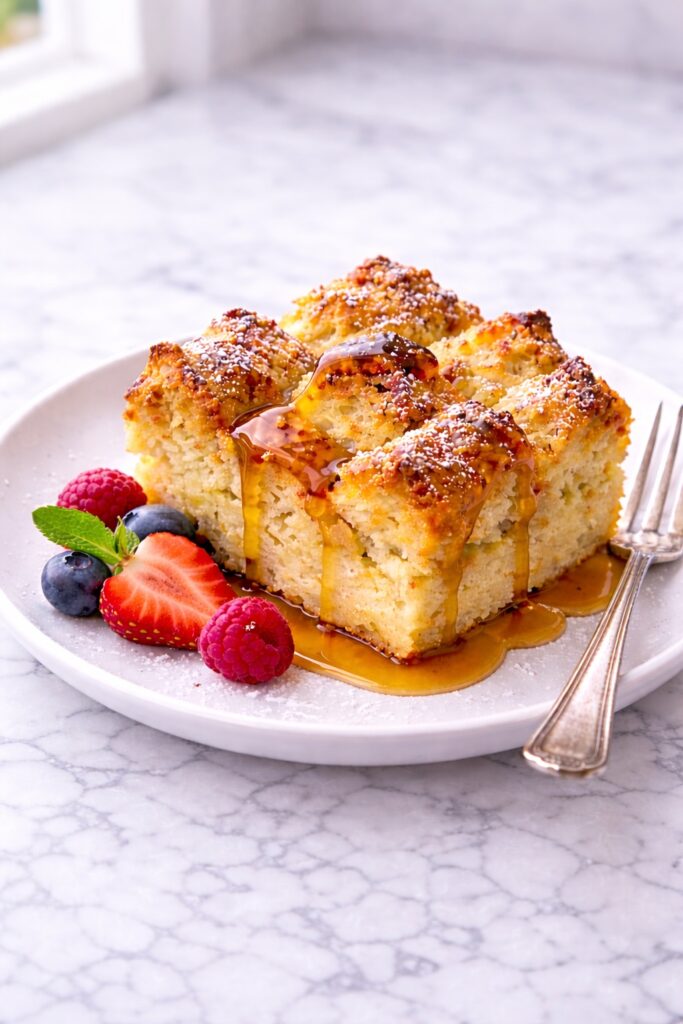
French toast casserole is best served warm, when the custardy interior is soft and the edges remain lightly golden. A few simple toppings can make it feel even more special.
- Maple syrup – Warm maple syrup is the classic topping for French toast casserole. It seeps slightly into the bread and adds natural sweetness.
- Fresh berries – Strawberries, blueberries, or raspberries add brightness that balances the rich custard flavor.
- Powdered sugar – A light dusting of powdered sugar gives the casserole a beautiful bakery-style finish.
- Whipped cream – For a more indulgent brunch version, serve the casserole with a spoonful of lightly sweetened homemade whipped cream.
- Toasted nuts – Chopped pecans or walnuts add a gentle crunch that contrasts nicely with the soft texture of the casserole.
French toast casserole is a wonderful centerpiece for a cozy breakfast or brunch. It pairs beautifully with other breakfast classics like buttermilk pancakes, fresh fruit, and hot coffee.
Frequently Asked Questions
Here are answers to some of the most common questions about making French toast casserole at home.
Can French toast casserole be made the night before?
Yes. French toast casserole is one of the easiest breakfast recipes to prepare ahead of time. The assembled casserole can be covered and refrigerated overnight, allowing the bread to absorb the custard mixture before baking.
What bread is best for French toast casserole?
Soft enriched breads such as brioche or challah create the most tender and custardy texture. However, French bread or Italian bread also work well when cut into evenly sized cubes.
Why is my French toast casserole soggy?
A soggy casserole usually happens when very fresh bread is used or when the custard contains too much liquid. Slightly stale bread absorbs the custard more evenly and helps prevent this problem.
Can French toast casserole be frozen?
Yes. After baking and cooling completely, the casserole can be wrapped tightly and frozen for up to two months. Reheat it in the oven until warmed through.
How do you know when French toast casserole is done?
The casserole is ready when the top becomes lightly golden and the center looks set. A knife inserted near the center should come out mostly clean.
If you still have questions about French toast casserole, feel free to leave a comment below.
Related Breakfast Recipes
If you enjoy cozy homemade breakfast recipes, here are a few more favorites you might like.
- Classic French Toast Recipe – the traditional stovetop version with golden edges and soft centers
- French Toast Sticks – a fun breakfast favorite that is crisp outside and soft inside
- Sourdough French Toast – slightly tangy with beautifully crisp edges
- Creme Brulee French Toast – a rich overnight breakfast with a caramelized topping
Each of these recipes uses similar ingredients but creates a slightly different texture and flavor.
These recipes are great options if you enjoy simple homemade breakfasts with cozy flavors.
If you enjoy cozy homemade breakfast recipes, this French toast casserole is a wonderful one to keep on hand for weekend mornings, holiday brunch, or family breakfasts. The tender custard-like center with lightly golden edges makes it one of those comforting dishes everyone looks forward to. Saving it makes it easy to come back whenever you want a warm, comforting breakfast bake.
Final Thoughts
French toast casserole is one of those comforting breakfast recipes that feels both simple and special. The soft custardy interior, warm cinnamon flavor, and lightly golden edges make it a dish that always feels cozy and satisfying.
Because it can be prepared ahead of time, it’s also perfect for relaxed weekend mornings, holiday breakfasts, or family brunch gatherings when you want something warm and homemade without too much effort.
Once you make this French toast casserole, it often becomes one of those comforting breakfast recipes that people request again and again.
Did you try this French toast casserole with any of the variations or toppings? I’d love to hear how you served it.
French Toast Casserole
French toast casserole is a baked breakfast dish made with cubes of bread soaked in a rich custard of eggs, milk, vanilla, and cinnamon. As it bakes, the bread absorbs the custard and creates a soft custardy interior with lightly golden edges. This easy French toast casserole is perfect for holiday mornings, brunch, or relaxed weekend breakfasts.
Ingredients
For the casserole
- 1 loaf bread (8–10 cups cubed)
- 5 large eggs
- 1 1/4 cups milk
- 1/4 cup heavy cream
- 1/3 cup sugar
- 2 teaspoons vanilla extract
- 1 teaspoon cinnamon
- 1/4 teaspoon salt
- 2 tablespoons melted butter
Optional cinnamon topping
- 3 tablespoons brown sugar
- 1 tablespoon melted butter
- 1/2 teaspoon cinnamon
- 2 tablespoons chopped pecans (optional)
Instructions
- Preheat the oven to 350°F (175°C) and grease a baking dish.
- Cut the bread into 1–1½ inch cubes and place them in the baking dish.
- In a large bowl whisk together eggs, milk, cream, sugar, vanilla, cinnamon, and salt until smooth.
- Pour the custard mixture evenly over the bread cubes and gently press the bread to help it absorb the liquid.
- Let the casserole rest for 15–20 minutes or refrigerate overnight.
- Sprinkle the cinnamon topping over the casserole if using.
- Bake for 40–45 minutes until the top is golden and the center is set.
- Let the casserole rest for 5–10 minutes before serving.
Notes
- Use slightly stale bread for the best texture.
- Brioche or challah work especially well because they absorb the custard evenly.
- Letting the casserole rest for a few minutes after baking helps the custard finish setting.
- Leftovers can be stored in the refrigerator for up to 3–4 days.
Nutrition Information:
Yield: 8 servings Serving Size: 1 sliceAmount Per Serving: Calories: 320Total Fat: 14gCarbohydrates: 36gFiber: 2gSugar: 12gProtein: 10g
Nutrition information is an estimate and may vary depending on ingredients used.
12 Sweet Favorites — Yours, Free 🍰
Tiramisù, no-bake cheesecake, the perfect chocolate chip cookie & 9 more reader-loved desserts — gathered into one beautiful free recipe book. From my kitchen to yours.
No spam, just sweet things. Unsubscribe anytime.