Sweet Potato Pancakes (Easy, Tender & Spiced)
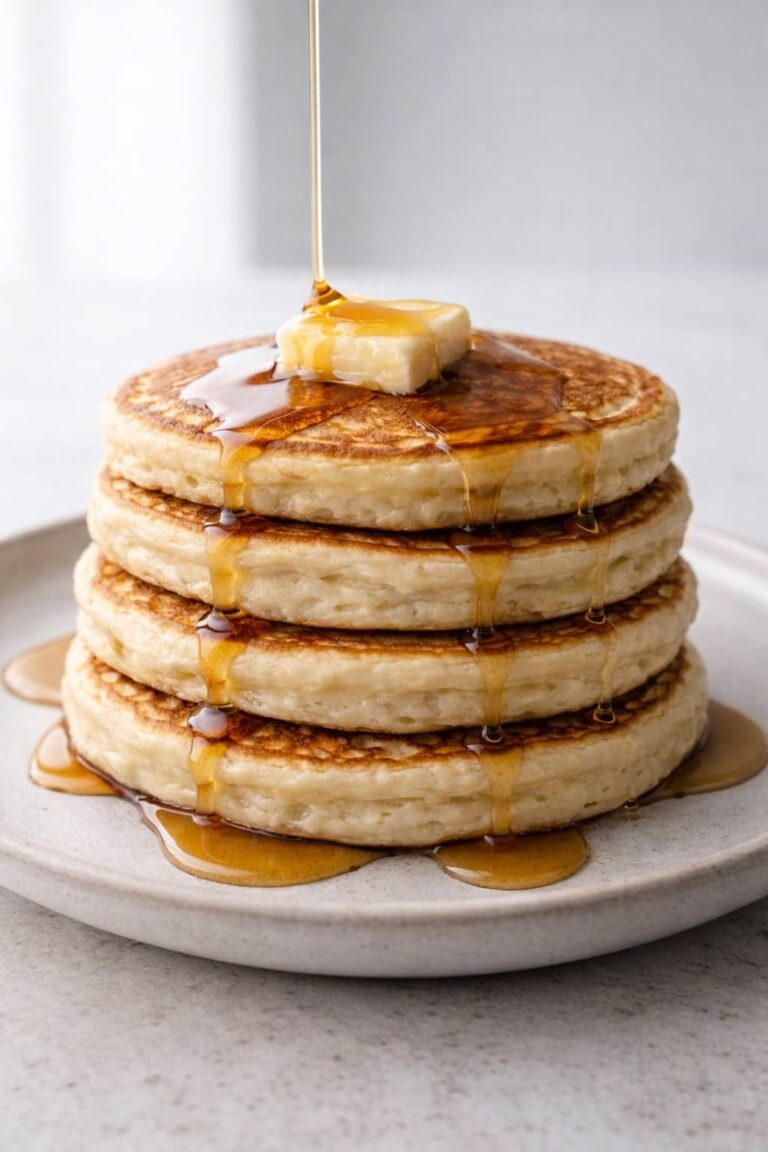
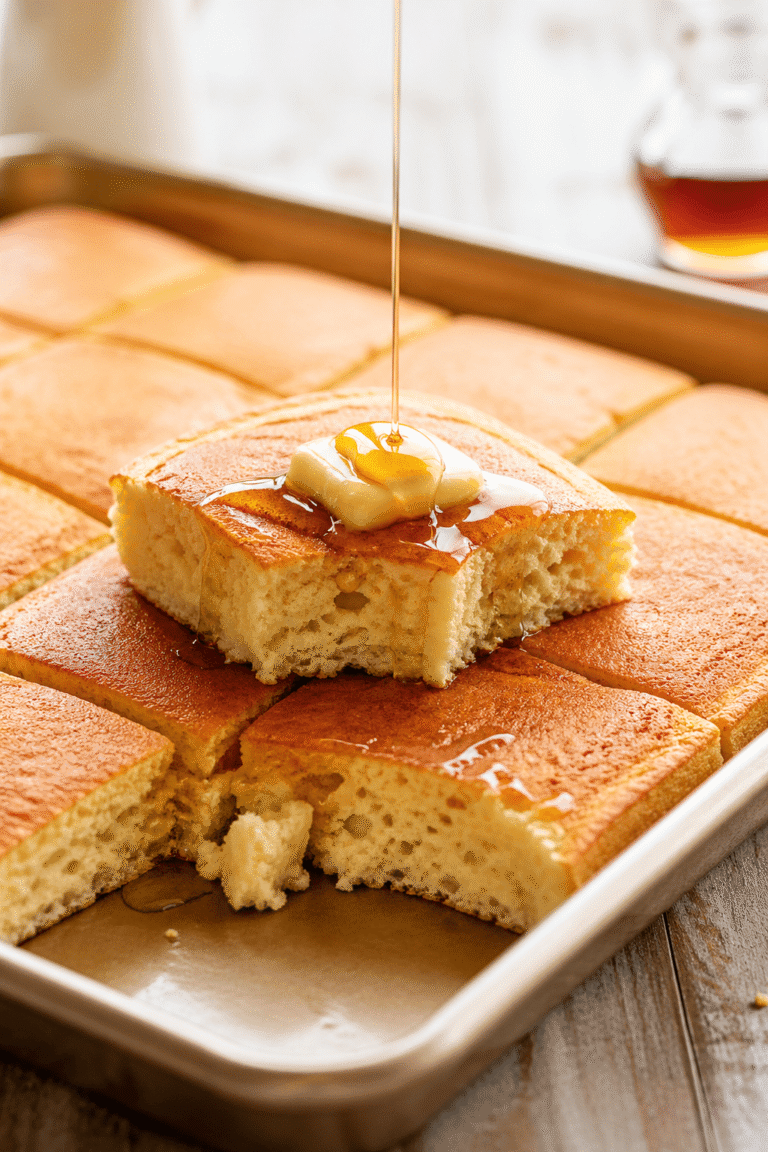
Sweet potato pancakes are tender breakfast pancakes made with cooked sweet potato mash, flour, milk, and egg, gently flavored with cinnamon, vanilla, and brown sugar. Their lightly browned surfaces give way to a moist, softly aerated orange-golden crumb. Served warm with melting butter and maple syrup, they bring the mellow sweetness of baked sweet potato to a cozy breakfast stack.

There is something comforting about a warm breakfast of sweet potato pancakes that asks for a bowl, a whisk, and a little time at the stove. Butter softens against the warm surface, maple syrup gathers around the edges, and the sweet potato makes an ordinary stack feel especially suited to a cool morning.
12 Sweet Favorites — Yours, Free 🍰
Tiramisù, no-bake cheesecake, the perfect chocolate chip cookie & 9 more reader-loved desserts — gathered into one beautiful free recipe book. From my kitchen to yours.
No spam, just sweet things. Unsubscribe anytime.With plain baked mash ready, allow about 40 minutes to mix the batter and cook the pancakes in batches. The batter should be thick enough to scoop, and the first pancake is worth opening to check its center. Those small pauses help sweet potato pancakes reach the table tender and cooked through, with their golden surfaces still ready for a little butter.
Sweet Potato Pancakes at a Glance
These sweet potato pancakes are hand-mixed breakfast pancakes made with cooked mash, flour, milk, and egg. They have a tender, moist crumb and a softly aerated center. If you are looking for the crisp, grated-potato style, try these crisp potato pancakes.
- In short: A gently sweet skillet breakfast with cinnamon, vanilla, and a fully set sweet-potato center.
- Prep time: 15 minutes, including a 5-minute batter rest.
- Cook time: About 25 minutes in four batches of three pancakes.
- Total time: 40 minutes when the sweet potato mash is already prepared.
- Starting with raw sweet potatoes: Allow roughly 75–90 extra minutes for preheating, baking, cooling, and mashing, or around 2 hours overall. Larger roots may take longer.
- Yield: About 12 pancakes, or 4 servings of approximately 3 pancakes each.
- Method and pan: Hand mixing and a 12-inch / 30-cm nonstick skillet with enough flat cooking surface for three 4-inch pancakes.
- Heat: Start over medium-low heat and adjust after the first pancake.
- Difficulty: Easy, with attention to batter thickness and center doneness.
- Flavor and texture: Sweet potato with cinnamon and vanilla; tender inside, lightly browned outside.
- Make ahead: Prepare plain mash ahead, or freeze cooked pancakes for another breakfast.
- Allergens: Wheat, milk, and egg.
Why This Sweet Potato Pancake Recipe Works
Measured mash and a controlled amount of milk give these sweet potato pancakes a more consistent starting point than an unspecified leftover potato. The flour provides a framework for the moist mash, while modest portions give the center time to cook before the surface becomes too dark.
- A defined potato amount: Weighing 240 g of finished mash avoids the uncertainty of calling for one medium potato, which can vary considerably in size.
- Liquid added with a purpose: The batter starts with 240 ml milk. A small additional amount is reserved for batter that remains too stiff after resting.
- One leavener: Double-acting baking powder supplies the lift without a separate baking-soda adjustment.
- A manageable diameter: Four-inch pancakes are easier to spread evenly, support with a turner, and check in the first batch.
Why You’ll Love These Sweet Potato Pancakes
These sweet potato pancakes bring a little autumn warmth to the table, from their orange-golden crumb to the way butter melts over the top. Here is what makes them such a welcoming breakfast:
- A tender crumb with golden edges. Sweet potato brings a soft, moist middle to each pancake, while the skillet gives the surfaces their light browning. That warm orange crumb is especially inviting beneath a melting pat of butter.
- Cinnamon warmth and mellow sweetness. Vanilla, brown sugar, and a little cinnamon round out the baked sweet potato’s flavor. The spice stays gentle enough for the sweet potato to come through in every bite.
- Simple mixing, familiar ingredients. Two bowls, a whisk, and a spatula are all you need for the batter. With the mash already prepared, these sweet potato pancakes come together from everyday pantry and refrigerator staples.
- Toppings that suit your table. Serve them with butter and maple syrup, or add crisp pear or apple slices alongside. Set the toppings out separately so each person can finish a warm stack just the way they like it.
- A batch worth making ahead. Freeze plain cooked pancakes in separate portions, then reheat them thoroughly for another morning. Add fresh toppings at the table for a breakfast that feels welcoming even when there is less time to cook.
Who These Sweet Potato Pancakes Are Perfect For
Sweet potato pancakes suit mornings when you want a warm, gently spiced breakfast and have time to tend a few skillet batches. They are especially inviting for these occasions:
- A slow weekend breakfast: The cinnamon and vanilla feel right beside a fresh cup of coffee, with the first warm pancakes going straight to the table as the next batch cooks.
- A fall brunch for a small gathering: A batch of sweet potato pancakes gives four people a warm stack of about three each. Set out butter, maple syrup, and fresh pear or apple slices so each plate can be finished at the table.
- A morning after roasting sweet potatoes: Set aside plain baked flesh before adding butter, sugar, or seasoning to the rest. Weigh out 240 g for the batter and refrigerate it promptly until needed.
- Breakfasts you can prepare ahead: Cook a batch when you have time, then freeze plain portions separately. Reheat them through the center before adding toppings, so another morning begins with a warm plate and very little mixing.
The Science of a Moist, Fully Cooked Pancake
The main challenge with sweet potato pancakes is balancing a moist interior with a surface that browns readily. Understanding the mash, leavener, and heat helps explain why the batter should stay thick and why the color underneath is only one part of the doneness check.
How Sweet Potato Changes Batter Moisture
Cooked sweet potato brings both moisture and solids to the bowl. It thickens the mixture while making the finished crumb moist, so a thick-looking batter does not automatically need more liquid. Mash made with added water behaves differently from plain baked flesh.
For these sweet potato pancakes, judge the batter after its short rest. It should fall from the spatula slowly and settle with a little help. A mixture that pours freely like a thin crepe batter has moved away from the intended consistency.
Why This Batter Uses Baking Powder
Double-acting baking powder contains the acid and base needed for leavening. That makes it suitable for this regular-milk batter without adding a separate acidic liquid. Use the listed amount of baking powder and leave out baking soda.
Baking soda and baking powder are not interchangeable spoon for spoon. Brown sugar can contribute acidity, but that does not make an extra spoonful of soda a useful addition here. More leavener does not solve a center that needs gentler cooking.
Browning and Center Doneness
A hot skillet can brown the outside while the thick middle still needs time to set. Gentle heat gives warmth more time to reach the center. The portion’s diameter matters too: a small mound left very tall cooks differently from a portion eased into a wider, even circle.
That is why sweet potato pancakes benefit from a first-batch check. Surface color tells you how the pan is behaving; the opened center tells you whether that heat and portion size are working together.
Ingredients for Sweet Potato Pancakes
Use plain baked sweet potato mash and measure it after peeling. The ingredient amounts below make one batch of sweet potato pancakes; the extra milk is a small adjustment only if the rested batter needs it, and the serving toppings are optional.

Ingredient List
Have the mash ready and no longer hot before measuring the wet ingredients. Keep the oil for the skillet separate from the melted butter that goes into the batter.
Dry Mix
- 1 1/2 cups (180 g) all-purpose flour, spooned into the cup and leveled if not weighed
- 2 1/2 teaspoons (10 g) double-acting baking powder
- 1/2 teaspoon (about 1.3 g) ground cinnamon
- 1/4 teaspoon (about 1.5 g) fine table salt
Wet Mix
- 1 cup (240 g) plain cooked, peeled, smoothly mashed orange-fleshed sweet potato, cooled until no longer hot
- 2 tablespoons (27 g) packed light brown sugar
- 1 cup (240 ml) whole milk, plus 1 to 2 tablespoons (15 to 30 ml) only if needed after resting
- 1 large egg (about 50 g without shell)
- 2 tablespoons (28 g) unsalted butter, melted and cooled until warm, not hot
- 1 teaspoon (5 ml) pure vanilla extract
For the Pan
- 1 teaspoon (5 ml) neutral oil, divided into thin films between batches
Optional for Serving
- Butter and maple syrup, to taste
Choosing and Preparing the Sweet Potato
Orange-fleshed sweet potatoes give these sweet potato pancakes their warm color and familiar flavor. For shopping, roughly 400–500 g of raw sweet potato gives you a practical allowance for peeling and moisture loss, but weigh the cooked mash rather than relying on that raw amount to produce exactly one cup.
To start from raw, scrub and dry the potatoes, pierce the skins several times, and place them on a lined rimmed baking sheet. Bake at 400°F / 200°C for about 45–60 minutes, until a thin knife enters the center easily and the flesh crushes without resistance. The North Carolina Sweetpotato Commission gives similar guidance for baking whole sweet potatoes.
Carefully split them open to release steam, then allow about 15–20 minutes until handleable and no longer hot. Scoop out the flesh, mash smoothly, and weigh 240 g. Do not add water, milk, butter, or seasoning to this mash. A few small fibers are fine; large firm chunks or a puddle of liquid are not.
Plain baked leftovers can be useful for sweet potato pancakes. Sweetened canned yams, sweet-potato casserole, watery boiled mash, and dry white or purple varieties can change the batter substantially, so they are not simple equivalents for this version.

Measuring Flour and Milk Accurately
Weigh the flour if possible. When using cups, spoon it in lightly and level the top rather than pressing a measuring cup into the bag. Extra flour can make sweet potato pancakes dense even when the potato amount is correct.
For sweet potato pancakes, measure the milk as 240 ml. Add it gradually to the mash so you can break up soft clumps before folding in the flour. Reserve the additional 15–30 ml for the post-rest consistency check; it is not an automatic part of every batch.

Kitchen Tools for Evenly Cooked Pancakes
A broad, gently heated cooking surface and a thin turner make sweet potato pancakes easier to handle. The skillet’s usable flat base matters more than the diameter printed on the package, particularly when you want to cook three pancakes at once.
- Measuring and mixing: A digital kitchen scale, measuring cups and spoons, two mixing bowls, a whisk, and a flexible spatula cover the batter preparation; an electric mixer is unnecessary.
- Preparing the sweet potato: Use a fork or potato masher, with an optional ricer for fibrous pieces. Starting from raw also requires a conventional oven, a rimmed sheet pan, a knife, and foil or baking paper rated for 400°F / 200°C. No blender is required for the flour-containing batter.
- Cooking and turning: Use a 12-inch / 30-cm nonstick skillet, a broad thin turner, and an approximately 1/4-cup scoop. Leave enough flat surface for three 4-inch pancakes without touching; cook two if the base is smaller. An electric griddle is an alternative, starting around 350°F / 175°C and adjusted from the first pancake.
- Holding and reheating: An optional oven-safe wire rack over a sheet pan allows brief holding at 200°F / 95°C. For reheating, use an oven-safe dish or loosely covered tray and a food thermometer to check the 165°F / 74°C center temperature.
- Storing and freezing: Have a shallow airtight container for refrigeration, plus parchment and a sealed freezer bag for separately frozen pancakes.
Before You Mix the Sweet Potato Batter
The 40-minute estimate for sweet potato pancakes begins with prepared mash. A few checks before mixing keep that timing realistic and prevent hot ingredients or an overcrowded skillet from making the first batch difficult.
- Weigh 240 g of smooth, plain mash and make sure it is no longer hot.
- Let melted butter cool until warm and liquid, rather than steaming.
- Check that the baking powder is within its useful storage period and has been kept dry.
- Choose whether your skillet comfortably fits two or three pancakes; more batches mean more cooking time.
- If serving everyone together, have the optional rack and 200°F / 95°C oven ready for short holding.
What to Expect from Sweet Potato Pancake Batter
Sweet potato pancake batter is thick and spoonable, with an orange-beige color and a few small, soft lumps. It falls slowly from a spatula rather than pouring in a thin stream. The pancakes rise modestly and have a tender, moist crumb with a fully set, opaque center.
Small variations in the shape of sweet potato pancakes, a few potato flecks, and slightly uneven browning are normal. The finished interior should have visible aeration and enough structure to lift cleanly; it should not resemble shiny wet paste between two browned surfaces.
How to Make Sweet Potato Pancakes
Make sweet potato pancakes from prepared mash, combining the wet and dry mixtures separately before folding them together. Use the first pancake to judge the skillet heat, then carry that adjustment into the remaining batches. The cooking times for each side are guides; the edge and center cues decide when to move on.
1. Prepare and Measure the Mash
Measure 1 cup / 240 g of plain cooked, peeled mash into a bowl. Break up firm pieces with a fork or masher. Melt the butter and let it become warm rather than hot, then set out the remaining ingredients and the broad turner.
What you should see: The mash holds a soft mound without a puddle of water. The butter is still liquid but no longer steaming, and the mash is cool enough that it will not cook the egg during mixing.
2. Whisk the Dry Ingredients
Whisk the dry ingredients for sweet potato pancakes in the larger bowl: flour, double-acting baking powder, cinnamon, and salt. Sweep through the bottom and edges of the bowl so the small amount of leavener is dispersed throughout the flour.
What you should see: The dry mixture looks evenly colored, with no separate pale pockets of baking powder or dark streaks of cinnamon.

3. Combine the Wet Ingredients
In the second bowl, whisk the sweet potato mash with the brown sugar. Gradually whisk in the 1 cup / 240 ml milk to loosen the mash, then add the egg, warm melted butter, and vanilla. Continue just until the mixture is evenly combined.
What you should see: The mixture is orange-beige and uniform, without large potato chunks. Tiny flecks of sweet potato are normal and do not need to be blended away.

4. Fold and Rest the Batter
Pour the wet mixture into the dry ingredients. Fold with the flexible spatula, scraping the bottom, until the flour disappears. Stop while small soft lumps remain, then rest the batter for 5 minutes. During the rest, preheat the skillet over medium-low heat according to its manufacturer’s guidance; do not let it smoke.
What you should see: The rested batter drops in a broad ribbon and slowly settles. If it stays in a stiff mound that cannot be gently spread, fold in 1 tablespoon / 15 ml milk, then reassess. Add at most one more tablespoon, for a maximum of 30 ml extra. Thickness alone is not a reason to thin sweet potato pancakes.

5. Portion and Cook the First Side
Brush the pan with a very thin film from the 1 teaspoon oil allowance. Scoop roughly 1/4 cup batter per pancake, aiming to divide the batch into about 12 similar portions. Gently ease each portion into a circle about 4 inches / 10 cm across. Cook three at a time only if they fit with turning room.
Cook the first side for about 3–4 minutes. Watch the first pancake before filling the whole pan: if the underside darkens while the edge still looks wet, lower the heat and briefly move the pan off the burner to cool. Keep the portion modest and even instead of building a tall mound. These adjustments help sweet potato pancakes cook at the center before the surface becomes too dark.
What you should see: A set rim and a matte band form near the edge, some bubbles stay open, and the underside is golden brown. With this thick batter, a particular number of bubbles is not the signal to flip.

6. Flip Once and Finish the Center
Slide the turner fully beneath the pancake and flip it once. Cook the second side for another 2–3 minutes, adjusting the burner as needed. Do not press down with the spatula. Open one pancake from the first batch to check the middle before continuing with the same heat.
What you should see: The center springs lightly, both surfaces are browned, and the opened crumb is opaque and softly aerated with no shiny raw batter stripe. A golden underside by itself does not mean sweet potato pancakes are cooked through.

7. Repeat and Serve Warm
Use another thin film of oil as needed for the next batch. Avoid stirring the remaining batter unnecessarily. Serve the pancakes warm, or hold finished ones in a single layer on a rack over a tray in a 200°F / 95°C oven for up to about 20 minutes while you finish.
What you should see: The pancakes stay separate rather than steaming in a tightly covered stack. Their centers remain set, with warm, lightly browned surfaces ready for butter and syrup.
Four skillet batches take roughly 20–28 minutes of cooking, which is why the displayed cook time is about 25 minutes. If only two fit, six batches may take about 30–42 minutes. A griddle that holds six can shorten the cooking to roughly 12–16 minutes, but the center check still controls completion.

How to Tell When Sweet Potato Pancakes Are Done
Sweet potato pancakes are done when the center is opaque and softly aerated, without a glossy stripe of uncooked batter. Check one from the first batch after the estimated second-side cooking time. The inside should be moist, but it should hold together rather than smear like raw paste.
| What you notice | What it means | What to do |
|---|---|---|
| Golden surfaces, light spring, moist opaque crumb | The pancake has set through the middle. | Serve warm or use the short rack-holding option. |
| Dark surface with a shiny, pasty center | The outside has cooked faster than the middle. | Lower the heat and continue gentle cooking until set; a scorched flavor cannot be reversed. |
| Pale surface and a heavy, under-set center | The pan may be too cool or the pancake may need longer. | Continue cooking, adjusting the heat modestly, and reassess the center. |
| Set but rubbery crumb | Mixing or excess flour may have made the structure too firm. | Cooking longer will not make it tender; change the mixing or measuring approach next time. |

Expert Tips for Tender Sweet Potato Pancakes
A little portion planning makes sweet potato pancakes easier to cook and serve evenly. Keep the pancake count, pan capacity, and holding time working together rather than trying to hurry the last batch with a hotter burner.
I’ve had pancakes brown on the outside before the middle was cooked. Lowering the heat helped, and I learned not to judge doneness by color alone.
- Divide for an exact count: If you need exactly twelve, weigh the finished batter and divide that weight by twelve. A scoop gives an approximate count because thick batter does not always fill it identically.
- Plan around the usable base: A smaller flat cooking area means more batches. Allow extra time instead of crowding the pan, which makes it harder to turn a soft pancake without disturbing its neighbors.
- Keep the last portions comparable: Distribute the remaining batter among the final pancakes so one unusually large portion does not need a different cooking time.
- Use holding as a short bridge: A rack lets steam escape while the remaining batches cook. Extended oven holding dries the pancakes, so finish and serve within the short quality window.
Sweet Potato Pancake Mistakes and How to Fix Them
The most useful correction depends on what went wrong. A dark surface and wet middle call for a heat adjustment; a cooked but rubbery crumb points toward mixing or flour measurement. Use the symptom to choose a response rather than adding more liquid or flour to every troublesome batch of sweet potato pancakes.
| Problem | Likely cause | Prevention | Recovery |
|---|---|---|---|
| Dark outside, wet middle | Heat too high or a tall, thick portion. | Medium-low start, four-inch spread, first-batch center check. | Lower heat and finish gently; discard badly scorched pancakes. |
| Dense or rubbery crumb | Overmixing or too much flour. | Weigh flour and stop folding when dry streaks disappear. | Cannot undo the structure after cooking; correct the next batch. |
| Pancake breaks during turning | Turning early, watery mash, or an unset rim. | Use plain baked mash and wait for the combined edge and underside cues. | Wait longer before attempting the next turn; support the full pancake. |
| Batter will not spread | Drier mash or measurement variation. | Assess only after the short rest. | Add milk in 15 ml increments, no more than 30 ml extra. |
| Batter runs thin | Excess liquid or watery puree. | Measure mash and milk, and avoid added water in the potato. | Do not keep adding unmeasured flour; a very wet mixture needs a fresh, correctly measured batch. |
| Pale, heavy pancakes | Pan too cool or ineffective baking powder. | Check powder storage and adjust from the first pancake. | Raise heat modestly if needed; weak leavener cannot be repaired after cooking. |
| Soggy surfaces | Steam trapped in a covered pile. | Hold briefly in a single layer on a rack. | Brief uncovered warming may improve the surface, though it will not recreate a freshly cooked pancake. |
Beautiful Ways to Serve Sweet Potato Pancakes
Serve sweet potato pancakes while warm, with enough of the browned surface showing to keep the stack appetizing. Put wetter accompaniments alongside or add them just before eating, so the careful skillet browning does not disappear under a long soak.
Butter and Maple Syrup
A small pat of butter and a light pour of maple syrup suit the cinnamon and vanilla in sweet potato pancakes. Let the butter soften against the warm top pancake, then add syrup at the table. Keep extra syrup in a small jug so each person can choose the sweetness.

Fresh Fruit on the Side
Fresh pear or apple slices add a crisp contrast beside the soft stack. Arrange the fruit alongside sweet potato pancakes instead of covering the whole surface, particularly if the slices are juicy. The fruit is an optional accompaniment, so the pancake quantities stay the same.

A Brunch Platter for Sharing
Arrange sweet potato pancakes in small overlapping groups on a warmed platter, with butter and syrup nearby. Bring them to the table promptly rather than building one deep pile. Coffee or tea can accompany the platter without needing another sweet topping or a separate sauce.

Storing and Reheating Sweet Potato Pancakes
Store cooked sweet potato pancakes separately from syrup and serving butter. Plain mash can be prepared in advance, but mixed pancake batter is best cooked after its short rest. Keep food-safety storage limits separate from the shorter window when the surfaces and crumb taste freshest.
Refrigerating Cooked Pancakes
Let steam escape briefly in a single layer, then refrigerate sweet potato pancakes promptly in a shallow airtight container. Follow the FDA food-storage guidance: refrigerate within 2 hours of cooking, or within 1 hour when the air is above 90°F / 32°C, and keep the refrigerator at 40°F / 4°C or below.
Use cooked pancakes within 3–4 days, with earlier use preferable for texture. The University of California’s three-to-four-day leftovers guideline also explains that making a new dish from older leftovers does not restart their storage life. If you began with previously cooked mash, account for its age rather than assuming a fresh four-day allowance.
Freezing Without Sticking
Freeze cooled sweet potato pancakes in a single layer until firm, then pack them in a sealed freezer bag with parchment between portions. Press out excess air without crushing the pancakes, and label the bag so you can use the older portions first.
Aim to use frozen sweet potato pancakes within 2 months for quality at 0°F / −18°C. This is a practical flavor and texture target, rather than an exact safety expiration. Freeze plain portions and add butter, fruit, or syrup after reheating.

Reheating the Center Gently
Reheat sweet potato pancakes in an oven-safe dish or on a loosely foil-covered tray at 350°F / 175°C. For refrigerated portions, begin checking around 8–10 minutes; for frozen portions, begin around 12–15 minutes. Continue until the center reaches 165°F / 74°C, since the starting temperature and thickness affect the time.
Keep the covering loose enough to avoid soaking the surfaces with trapped condensation. A warm outside does not tell you that a frozen middle has heated through, so check the center before serving.

Preparing Components Ahead
For sweet potato pancakes the next morning, prepare plain mash the day before and refrigerate it promptly in a covered shallow container. Cold mash can be loosened thoroughly into the measured milk; there is no need to leave it on the counter for a prolonged warm-up.
You can also measure the dry ingredients ahead and keep them separate from the appropriately refrigerated wet ingredients. Combine close to cooking. Do not expect mixed raw batter held overnight to give the same rise and consistency as batter cooked after the short rest.
Variations and Substitutions for Sweet Potato Pancakes
Keep changes to sweet potato pancakes modest when you want the same intended texture. The following substitutions have clear amounts and predictable tradeoffs. Larger changes, especially to the mash, flour type, or egg, can change how the batter spreads and sets.
| Ingredient | Replacement | Expected difference |
|---|---|---|
| 1 cup / 240 ml whole milk | The same volume of 2% milk. | Slightly less richness; use the same post-rest consistency check. |
| 2 tablespoons / 28 g butter in the batter | 2 tablespoons / 30 ml neutral oil. | Less buttery flavor. Milk remains, so this does not make the pancakes dairy-free. |
| 2 tablespoons / 27 g packed brown sugar | 2 tablespoons / 25 g granulated sugar. | Less molasses flavor; no other liquid adjustment is specified. |
For pumpkin flavor, use the separate pumpkin pancakes recipe rather than replacing this mash directly. Sweetened yams, pumpkin pie filling, watery puree, and dry purple or white sweet potatoes are not straightforward substitutes in these sweet potato pancakes. Gluten-free flour and egg replacements also need a different approach; this recipe contains wheat, milk, and egg.
To make a double batch of sweet potato pancakes, double the batter ingredients proportionally, then mix and cook in manageable batches. Keep the heat gentle rather than doubling it, and allow more total skillet time. Larger pancakes change the cooking time and count, so keep the four-inch size when you want the stated yield.
Sweet Potato Pancake Questions, Answered
For sweet potato pancakes, begin with plain baked mash and cook the batter after its short rest. A browned surface does not prove a cooked center, and a thinner puree or overnight batter can behave differently.
Why are my sweet potato pancakes wet in the middle?
The skillet may be browning the outside faster than the center can set, especially if the portion is tall. Lower the heat, spread each pancake to about 4 inches, and open one from the first batch. Sweet potato pancakes should have an opaque, aerated center, without a shiny raw stripe.
Can I make sweet potato pancake batter the night before?
For sweet potato pancakes tomorrow, prepare the plain mash ahead, or cook the pancakes and reheat them later. For this recipe, combine wet and dry ingredients close to cooking and use the short 5-minute rest. Mixed batter held overnight may become denser and is not the recommended make-ahead route.
Can I use canned puree for these sweet potato pancakes?
Use plain baked orange-fleshed mash for this version. Thinner canned puree and sweetened canned yams can change the liquid balance or sweetness, so a direct same-amount swap is not specified. The 240 g measurement refers to cooked, peeled mash without added water, sugar, butter, or seasoning.
Continue Your Cozy Breakfast Baking Journey
Sweet potato pancakes sit comfortably among fruit-filled breakfasts and warmly spiced bakes. For your next morning at the stove, follow the flavor you enjoyed most: tender fruit in the batter, a little extra cinnamon, or something golden from the oven. There are a few ways to carry that same warmth into dessert, too.
Choose Another Pancake Flavor
Carry the habit of watching the first pancake into your next skillet breakfast. Fruit pieces, buttermilk, and cinnamon filling each bring something different to the pan, so let the individual recipe guide the batter and cooking cues.
- Apple Pancakes tuck small pieces of buttery, softened apple into a cinnamon-scented crumb. Choose them when you want recognizable fruit in each bite alongside the familiar warmth of spice.
- Blueberry Pancakes bring warm pockets of juicy berries to a soft, golden stack. Their little bursts of fruit make a bright breakfast when you are in the mood for something berry-filled.
- Buttermilk Pancakes put a softly tangy batter and delicate golden edges at the center of breakfast. They are a lovely next choice when you want butter and maple syrup to lead the plate.
- Cinnamon Roll Pancakes turn the cinnamon note into a buttery cinnamon-sugar swirl with a smooth glaze. Keep them for a birthday breakfast or a morning when the stack is the celebration.
Plan a Weekend Brunch
Think about how you want to serve the table. Waffles offer crisp pockets for toppings, while baked French toast lets a dish of breakfast cook in the oven as you set out plates and coffee.
- Waffles pair a crisp exterior with a fluffy middle and little wells for syrup. Choose them when the texture of the browned edges is your favorite part of breakfast.
- Pumpkin Waffles keep the autumn mood with pumpkin puree and warm spices in a waffle-iron batter. They make a natural next breakfast for anyone drawn to the cinnamon in sweet potato pancakes.
- French Toast Casserole bakes cubes of bread in a vanilla-cinnamon custard, with golden edges around a soft middle. It suits a shared brunch where you want to serve portions from one baking dish.
- Crème Brûlée French Toast combines thick brioche slices, a vanilla custard, and buttery brown sugar caramel. Assemble it the night before for a special brunch with much of the preparation already done.
Bake Something Cozy Next
For a later baking project, let sweet potato take a place on the dessert table, or choose a muffin to have with tomorrow’s coffee. The sweet potato cake and pie each call for their own amount of cooked potato, so check that recipe before setting mash aside.
- Sweet Potato Cake pairs a warmly spiced, orange-gold crumb with tangy vanilla cream cheese frosting. Its two layers make it a generous choice for a fall gathering or a family celebration.
- Sweet Potato Pie brings roasted sweet potato into a smooth, spiced custard inside buttery pastry. Plan for a full chill when you want creamy slices that hold a clean edge at the dessert table.
- Pumpkin Oatmeal Muffins combine a soft pumpkin crumb with the heartier texture of oats. Choose them for a batch of individual breakfasts or a cozy afternoon snack.
- Cranberry Orange Muffins bring tart fruit, fragrant orange zest, and a buttery streusel top. Their bright flavor is especially welcome on a brunch table filled with warm spices and sweet bakes.
Why This Sweet Potato Pancake Recipe Belongs in Your Recipe Box
The recipes worth keeping often belong to a particular kind of morning. Sweet potato pancakes are for the cool days when a warm skillet, a little cinnamon, and a stack passed around the table feel especially welcome. They also give a plain baked sweet potato a delicious reason to become breakfast.
- Turn one roasting session into another meal: When sweet potatoes are already in the oven, set aside enough plain flesh for a future batch. Having the mash ready makes sweet potato pancakes a breakfast you can plan around.
- Keep a gentler sweetness on the table: Brown sugar rounds out the potato’s mellow flavor, while cinnamon and vanilla give it warmth. Butter, syrup, or crisp fruit can finish each plate to suit the person eating it.
- Make the first pancake useful: Opening one to check the crumb gives you a clear guide for the remaining batches. It is a simple habit to remember whenever a moist pancake browns before its center is ready.
- Have enough for a small shared breakfast: About twelve pancakes give four people a warm stack of their own. A short stay on the rack helps bring the final plates to the table together.
- Keep a few for another morning: Plain cooked pancakes can be frozen in separate portions, ready to reheat and finish with fresh toppings when breakfast time is shorter.
- Return for the flavor of sweet potato itself: The soft orange crumb and light spice give sweet potato pancakes an identity of their own, with the baked potato’s flavor present from the first bite.
Final Thoughts on Sweet Potato Pancakes
There is a lovely moment when butter begins to soften on the top pancake and maple syrup slips into the edges of the stack. Cut through the golden surface and the orange crumb underneath is soft, warm, and lightly scented with cinnamon. That first plate of sweet potato pancakes is worth sitting down for while it is still warm.
For a shared breakfast, bring the syrup jug and a plate of sliced pears to the table and let everyone finish their own stack. A little space between batches gives you time to pour coffee, pass the butter, and enjoy breakfast as it comes from the pan. The welcome is in those small things as much as in the pancakes.
When you make sweet potato pancakes, tell me how you served them. Was it butter and maple syrup on a quiet morning, or a platter of warm pancakes and fruit for the table? I’d love to hear which little finishing touch made the breakfast yours.

Sweet Potato Pancakes
Sweet potato pancakes with cinnamon, vanilla, tender orange-golden centers, and lightly browned surfaces. Made with plain baked mash and regular milk, this batch gives about 12 pancakes in 4 servings. The 40-minute total begins with prepared mash.
Ingredients
Dry Mix
- 1 1/2 cups (180 g) all-purpose flour, spooned into the cup and leveled if not weighed
- 2 1/2 teaspoons (10 g) double-acting baking powder
- 1/2 teaspoon (about 1.3 g) ground cinnamon
- 1/4 teaspoon (about 1.5 g) fine table salt
Wet Mix
- 1 cup (240 g) plain cooked, peeled, smoothly mashed orange-fleshed sweet potato, cooled until no longer hot
- 2 tablespoons (27 g) packed light brown sugar
- 1 cup (240 ml) whole milk, plus 1 to 2 tablespoons (15 to 30 ml) only if needed after resting
- 1 large egg (about 50 g without shell)
- 2 tablespoons (28 g) unsalted butter, melted and cooled until warm, not hot
- 1 teaspoon (5 ml) pure vanilla extract
For the Pan
- 1 teaspoon (5 ml) neutral oil, divided into thin films between batches
Optional for Serving
- Butter and maple syrup, to taste
Instructions
- Prepare and measure. Have 1 cup / 240 g of plain, cooked, peeled, smoothly mashed orange-fleshed sweet potato ready and no longer hot. Melt the butter and let it cool until warm. The mash should hold a soft mound without free water; the butter should be liquid without steaming.
- Whisk the dry ingredients. Whisk the flour, double-acting baking powder, cinnamon, and salt thoroughly in a large bowl. The mixture should look even, without pockets of baking powder.
- Combine the wet ingredients. In a second bowl, whisk the mash and brown sugar. Gradually whisk in the 1 cup / 240 ml milk, then the egg, warm melted butter, and vanilla, until uniform. Small potato flecks are normal; break up large chunks before adding flour.
- Fold and rest. Pour wet into dry and fold with a flexible spatula until the flour disappears, leaving small soft lumps. Rest 5 minutes. Preheat the skillet over medium-low heat during the rest, following its manufacturer’s guidance; do not let it smoke. Sweet potato pancakes need thick, scoopable batter that falls in a broad ribbon and settles slowly. Only if it remains a stiff mound that cannot be gently spread, add milk 1 tablespoon / 15 ml at a time, maximum 2 tablespoons / 30 ml extra.
- Portion and cook the first side. Brush the skillet with a thin film from the 1 teaspoon oil allowance. Portion roughly 1/4 cup each, aiming for about 12 similar sweet potato pancakes, and ease each portion into a circle about 4 inches / 10 cm wide. Cook three at once only if they fit with turning room. Cook about 3–4 minutes, until the rim sets, the edge becomes matte, some bubbles stay open, and the underside is golden. If browning comes before the rim sets, lower the heat and briefly move the pan off the burner to cool.
- Flip once and finish. Support each pancake fully with the turner, flip once, and cook another 2–3 minutes. Do not press down. Sweet potato pancakes should spring lightly and have an opaque, aerated center with no shiny raw stripe. Open one first-batch pancake to check before repeating the same heat; a golden surface alone is not enough.
- Repeat and serve warm. Use another thin oil film as needed and repeat without unnecessarily stirring the remaining batter. Serve sweet potato pancakes warm with optional butter and syrup. For simultaneous service, hold finished pancakes in one layer on an oven-safe rack over a tray at 200°F / 95°C for up to about 20 minutes for quality. Avoid a tightly covered stack that traps steam.
Notes
Equipment
- A digital kitchen scale, measuring cups and spoons, two bowls, a whisk, and a flexible spatula.
- A fork or potato masher; optional ricer for fibers. For raw sweet potatoes, a conventional oven, lined rimmed sheet pan, knife, and temperature-rated paper or foil.
- A 12-inch / 30-cm nonstick skillet with a usable base for three 4-inch pancakes, a broad thin turner, and an approximately 1/4-cup scoop. Cook two per batch if the base is smaller. An electric griddle is an alternative, beginning around 350°F / 175°C and adjusted from the first pancake.
- Optional oven-safe rack over a sheet pan for short warm holding; oven-safe dish or loosely covered tray and food thermometer for reheating.
- A shallow airtight container, parchment, and sealed freezer bag for leftovers.
- Timing and batch size: The 40-minute time for sweet potato pancakes starts with prepared mash. Prep includes the 5-minute rest. Cook time is an estimate of about 25 minutes for four batches of three; first and second sides together take about 5–7 minutes per batch. A smaller skillet fitting two needs six batches, roughly 30–42 minutes cooking. A griddle fitting six may take roughly 12–16 minutes cooking. Keep the center check decisive.
- Starting from raw sweet potatoes: Allow about 75–90 additional minutes for preheating, baking, cooling, and mashing, or roughly 2 hours overall. Scrub, dry, and pierce the roots, place on a lined rimmed tray, and bake at 400°F / 200°C about 45–60 minutes until a knife enters easily. Split carefully, cool about 15–20 minutes until handleable and no longer hot, then peel, mash smoothly, and weigh 240 g. Larger roots may need longer. Do not add water or seasonings.
- Mash and portions: Use plain baked orange-fleshed mash for sweet potato pancakes. Sweetened canned yams, watery puree, seasoned casserole, pumpkin, and dry white or purple roots are not direct substitutes here. The quarter-cup scoop gives an approximate count. For exactly twelve, weigh the finished batter and divide by twelve; do not equate an exact scoop volume with an exact gram weight.
- Make ahead and leftovers: For sweet potato pancakes the next morning, prepare plain mash ahead and refrigerate promptly, or cook the pancakes ahead. Keep dry ingredients separate from appropriately refrigerated wet ingredients and combine near cooking; mixed batter held overnight is not recommended. Refrigerate cooked pancakes in a shallow airtight container within 2 hours, or 1 hour above 90°F / 32°C, at 40°F / 4°C or below. Use within 3–4 days while accounting for the age of previously cooked mash.
- Freezing and reheating: Freeze cooled sweet potato pancakes separately until firm, then pack with parchment in a sealed freezer bag. Use within 2 months for best quality at 0°F / −18°C. Reheat in an oven-safe dish or loosely foil-covered tray at 350°F / 175°C, checking refrigerated portions from 8–10 minutes or frozen portions from 12–15 minutes. Continue until the center reaches 165°F / 74°C. Store syrup and serving butter separately.
- Substitutions and scaling: Use the same volume of 2% milk for slightly less richness; 2 tablespoons / 30 ml neutral oil can replace 28 g butter, with less buttery flavor; 2 tablespoons / 25 g white sugar can replace 27 g brown sugar, with less molasses flavor. Milk remains if oil replaces butter. Gluten-free flour and egg replacements are not direct swaps in this recipe. For a double batch, scale batter ingredients proportionally but mix and cook in manageable batches. Keep the same pan size, four-inch portions, cooking heat, and doneness cues; allow more batches instead of automatically doubling a cooking time.
- Estimated nutrition: Nutrition for sweet potato pancakes is estimated per one quarter of the batch, approximately 3 pancakes. It includes the full pan-oil allowance and excludes optional toppings and extra milk. Ingredients, brands, and portion sizes can change the values.
Nutrition Information:
Yield: 4 Serving Size: About 3 pancakes (one quarter of the batch)Amount Per Serving: Calories: 364Total Fat: 10.5gSaturated Fat: 5.2gCholesterol: 68mgSodium: 412mgCarbohydrates: 57.4gFiber: 3.4gSugar: 13.8gProtein: 9.4g
Nutrition information is provided as an estimate only and may vary based on specific ingredients, brands, and portion sizes used. This information should not be considered medical or nutritional advice.
12 Sweet Favorites — Yours, Free 🍰
Tiramisù, no-bake cheesecake, the perfect chocolate chip cookie & 9 more reader-loved desserts — gathered into one beautiful free recipe book. From my kitchen to yours.
No spam, just sweet things. Unsubscribe anytime.