Buttermilk Biscuits (Tall, Flaky & Buttery Every Time)
🎁 FREE E-BOOK: 12 Sweet Favorites — reader-loved desserts in one beautiful recipe book.
Few things feel more comforting than a tray of freshly baked Buttermilk Biscuits coming out of the oven.
The tops are golden and lightly crisp, the edges are tender, and the rich buttery aroma fills the kitchen before the biscuits even reach the table. When you split one open while it is still warm, the soft layers pull apart gently and release a little steam, making the whole thing feel cozy, homemade, and deeply satisfying.
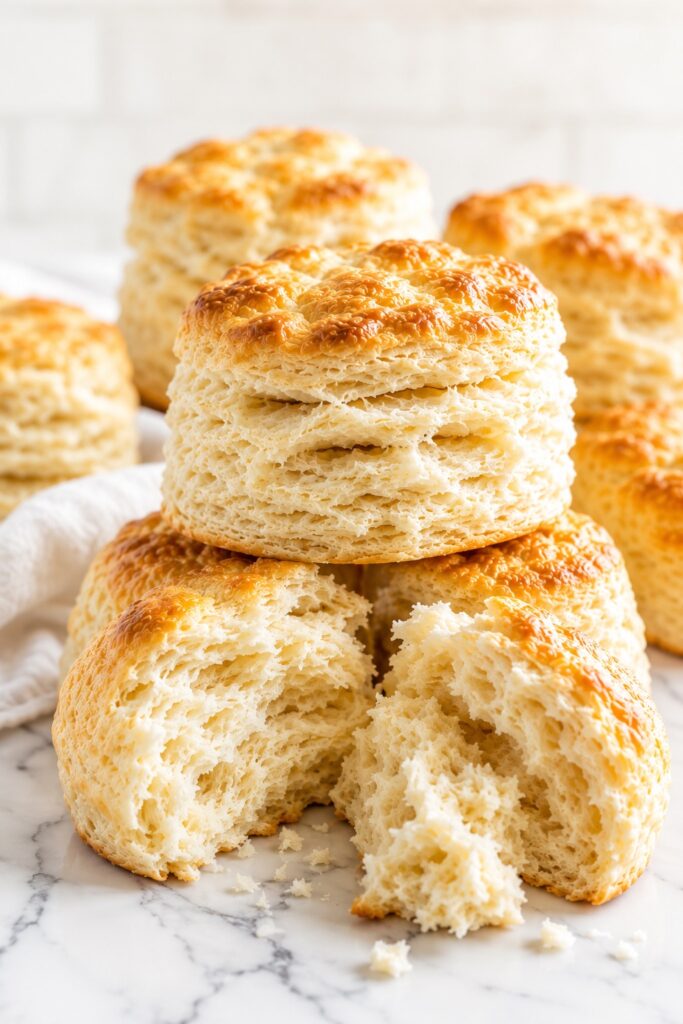
These Buttermilk Biscuits are tall, flaky, buttery, and tender in the center. They are the kind of biscuits that feel right at home beside a bowl of soup, tucked around eggs and bacon, covered with sausage gravy, or served warm with honey, jam, or softened butter.
For generations, homemade biscuits have been one of the defining symbols of Southern comfort baking. A basket of warm biscuits on the table has a way of making even the simplest meal feel more generous, welcoming, and memorable. Whether served alongside a hearty breakfast or passed around during a family dinner, fresh biscuits bring a sense of warmth and familiarity that few baked goods can match.
What makes this recipe special is the balance between simplicity and technique. The ingredients are basic, but the method matters. Cold butter creates flaky layers, buttermilk keeps the crumb tender, and a hot oven helps the biscuits rise tall instead of spreading flat.
This is why people love saving this recipe: it gives you bakery-style biscuits without complicated steps. You do not need yeast, special equipment, or hours of waiting. You only need a few smart details that make the difference between ordinary biscuits and truly beautiful homemade ones.
If you have ever wondered why some biscuits rise high while others stay dense, why the butter needs to be cold, or how to get those soft pull-apart layers, this guide walks you through the process clearly. By the end, you will know exactly what the dough should look like, how it should feel, and how to recognize when your biscuits are perfectly baked.
What Are Buttermilk Biscuits?
Buttermilk biscuits are classic quick breads made with flour, cold butter, buttermilk, and leavening agents such as baking powder and baking soda. Unlike yeast breads, biscuits do not need time to rise before baking. They rise quickly in the oven as the leavening activates and the cold butter releases steam.
A good buttermilk biscuit should be tall, tender, buttery, and flaky. The outside should bake into a golden top and lightly crisp edges, while the inside stays soft, layered, and delicate.
The buttermilk gives biscuits their signature flavor and texture. It adds moisture, a gentle tang, and acidity that helps create a tender crumb. This is one of the reasons buttermilk biscuits feel richer and more flavorful than plain milk biscuits.
Although buttermilk biscuits are strongly connected to Southern baking, they are useful far beyond breakfast. They work beautifully for brunch, holiday dinners, cozy family meals, biscuit sandwiches, and comfort-food sides.
Why Buttermilk Biscuits Became a Southern Classic
Few baked goods are as closely connected to Southern cooking as homemade buttermilk biscuits. For generations, they have been a staple on breakfast tables, family dinner spreads, holiday gatherings, and Sunday suppers throughout the American South.
Part of their popularity comes from their simplicity. The ingredients are inexpensive, the dough comes together quickly, and the biscuits bake in minutes. Yet despite their simplicity, a well-made biscuit feels special. The flaky layers, buttery flavor, and warm homemade aroma create a level of comfort that few other baked goods can match.
Buttermilk biscuits have also remained popular because of their versatility. They can be served alongside savory dishes like fried chicken, sausage gravy, soups, and stews, or enjoyed with butter, honey, and fruit preserves. That combination of practicality, tradition, and comfort is one reason buttermilk biscuits continue to be one of the most beloved homemade breads in American baking.
Quick Recipe Overview
| Texture | Tall, flaky, tender, soft inside, lightly crisp outside |
| Flavor | Buttery, lightly tangy, warm, rich, and comforting |
| Difficulty | Easy to medium-easy |
| Time | About 35 minutes |
| Servings | 8 biscuits |
| Method | Cut cold butter into flour, add buttermilk, fold, cut, and bake |
| Best For | Breakfast, brunch, holidays, biscuits and gravy, dinner sides |
In short: These Buttermilk Biscuits are made with cold butter, tangy buttermilk, and a simple folding method that creates tall, flaky layers without complicated baking techniques.
Why This Recipe Works
This Buttermilk Biscuits recipe works because it balances four important elements: moisture, structure, fat, and heat.
The flour gives the biscuits structure. It creates enough strength for the dough to rise and hold its shape, but the dough is handled gently so the final texture stays tender instead of tough.
The cold butter creates the flaky layers. As the biscuits bake, the butter melts and releases steam. That steam pushes between the layers of dough, helping the biscuits lift and separate into soft, buttery flakes.
The buttermilk adds moisture and tenderness. Its acidity also works with the baking soda to help the biscuits rise and create a softer crumb. This is why buttermilk biscuits often taste richer and feel more delicate than biscuits made with regular milk.
The hot oven gives the biscuits their height. High heat creates a quick burst of steam before the butter has time to melt completely into the dough. That early lift helps the biscuits rise upward instead of spreading outward.
One of the most important real-life biscuit lessons is that the dough should not look perfect. A slightly shaggy dough with visible butter pieces usually bakes into better biscuits than a smooth dough that has been overmixed.
Why You’ll Love This Recipe
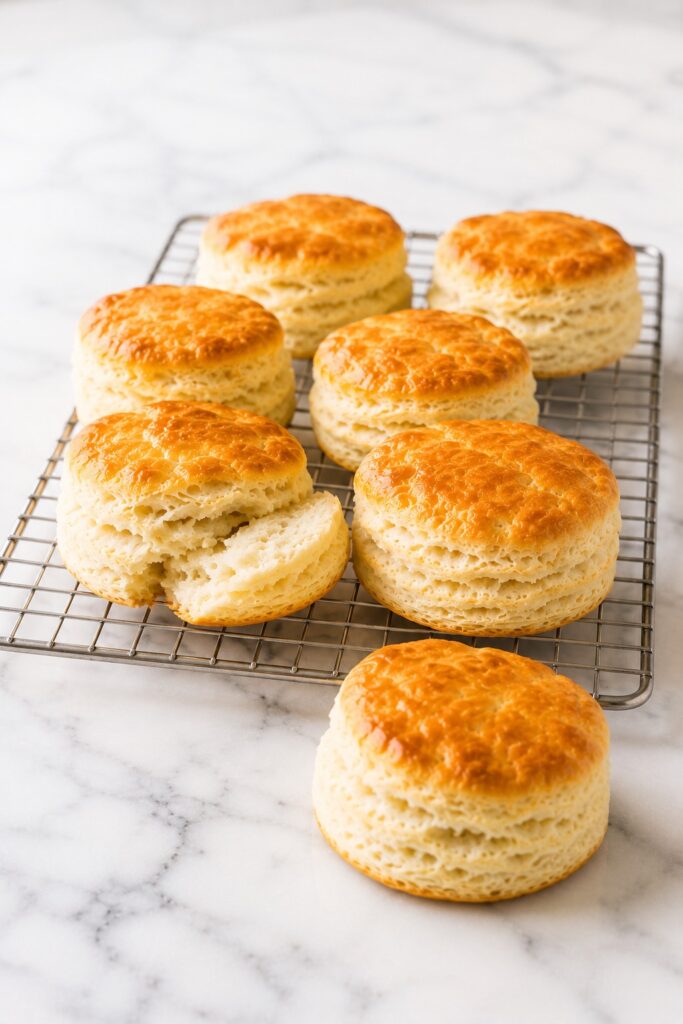
- These biscuits bake up tall, golden, and beautifully layered.
- The texture is flaky on the outside and tender in the center.
- The flavor is buttery, cozy, and lightly tangy from the buttermilk.
- The recipe uses simple ingredients and no yeast.
- The folding method gives the biscuits a bakery-style look without being difficult.
- They are perfect for breakfast, brunch, holiday meals, and comfort-food dinners.
- You can freeze the biscuits baked or unbaked for easy make-ahead baking.
Is This Buttermilk Biscuit Recipe Right For You?
These Buttermilk Biscuits are ideal if you love tall, flaky biscuits with buttery layers and a soft, tender interior. They are designed to deliver bakery-style results using simple ingredients and straightforward techniques that home bakers can confidently master.
You will probably love this recipe if you:
- Enjoy classic Southern comfort baking
- Want tall biscuits with visible flaky layers
- Prefer buttery biscuits over dense or cake-like biscuits
- Need a reliable recipe for biscuits and gravy
- Want a versatile side for breakfast, brunch, or dinner
- Like freezer-friendly and make-ahead baking recipes
- Appreciate simple recipes that produce impressive results
If you’re looking for a dependable homemade biscuit recipe that balances simplicity, flavor, tenderness, and bakery-style height, these Buttermilk Biscuits are an excellent place to start. The method is approachable enough for beginners while still producing the kind of flaky layers experienced bakers love.
The Secret to Tall Buttermilk Biscuits
The secret to tall buttermilk biscuits is not one single trick. It is the combination of cold butter, gentle handling, thick dough, clean-cut edges, and a fully heated oven.
Cold butter is essential because it creates steam. When small pieces of butter melt in the oven, that steam pushes through the dough and helps the biscuits rise. If the butter melts before baking, the biscuits lose much of their lift.
The dough also needs to be thick enough before cutting. If the dough is patted too thin, the biscuits cannot rise into those beautiful bakery-style layers. For tall biscuits, the dough should be about 1 inch thick before cutting.
Clean edges matter more than many bakers realize. Press the biscuit cutter straight down without twisting. Twisting can seal the edges of the dough and make it harder for the layers to rise freely.
A hot oven is the final piece. The heat needs to hit the biscuits quickly so the butter turns to steam while the dough is still firm enough to lift upward.
If your kitchen is warm or the dough starts to feel soft, chill the cut biscuits for 10 minutes before baking. This small pause can make the difference between flat biscuits and tall, flaky ones.
Understanding Biscuit Layers
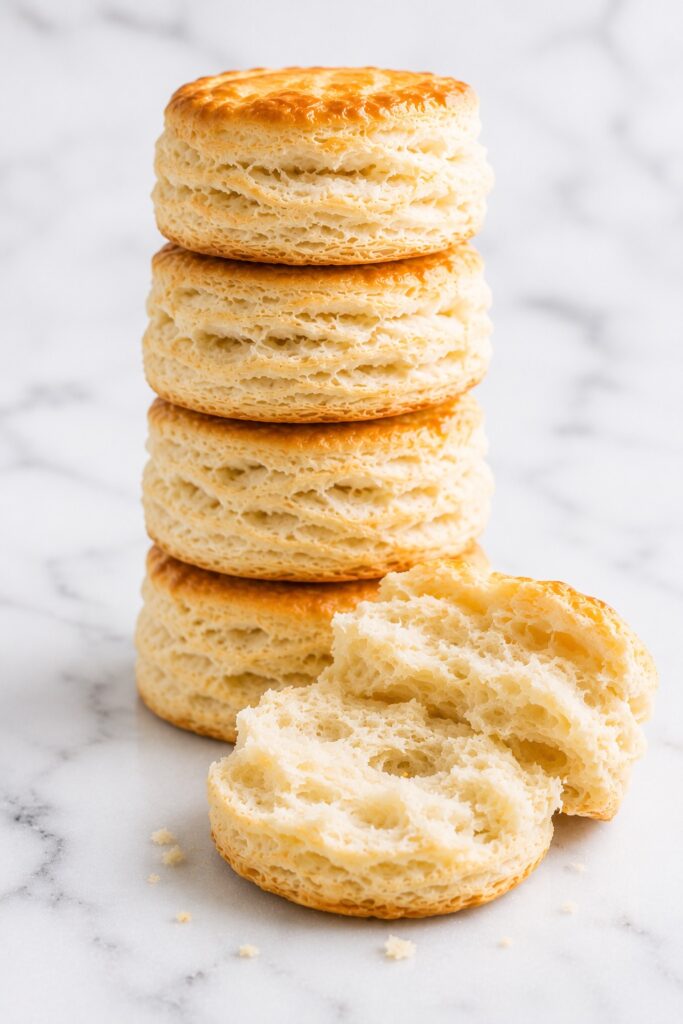
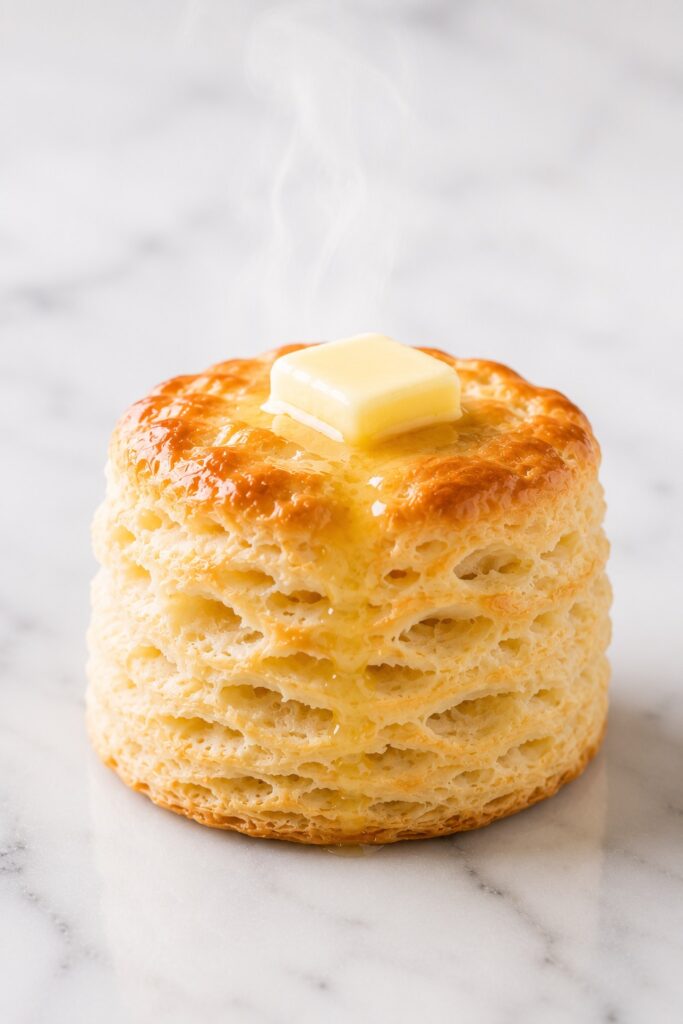
Biscuit layers happen when thin sections of dough and butter are stacked together. During baking, the butter melts, steam forms, and the dough separates into flaky layers.
The folding step in this recipe helps build those layers. Each time you fold the dough, you are stacking butter and dough on top of itself. This creates a simple laminated effect without the long process used for croissants or puff pastry.
The dough should look slightly uneven after folding. You may see small butter streaks or rough edges, and that is a good sign. Those little imperfections often become the most beautiful flaky sections after baking.
One helpful visual cue is to look at the side of the dough before cutting. If you can see faint lines or layers along the edge, your biscuits are already on the right track.
What Makes Biscuits Flaky Instead of Dense?
The difference between flaky biscuits and dense biscuits often comes down to a few small details that happen long before the biscuits go into the oven.
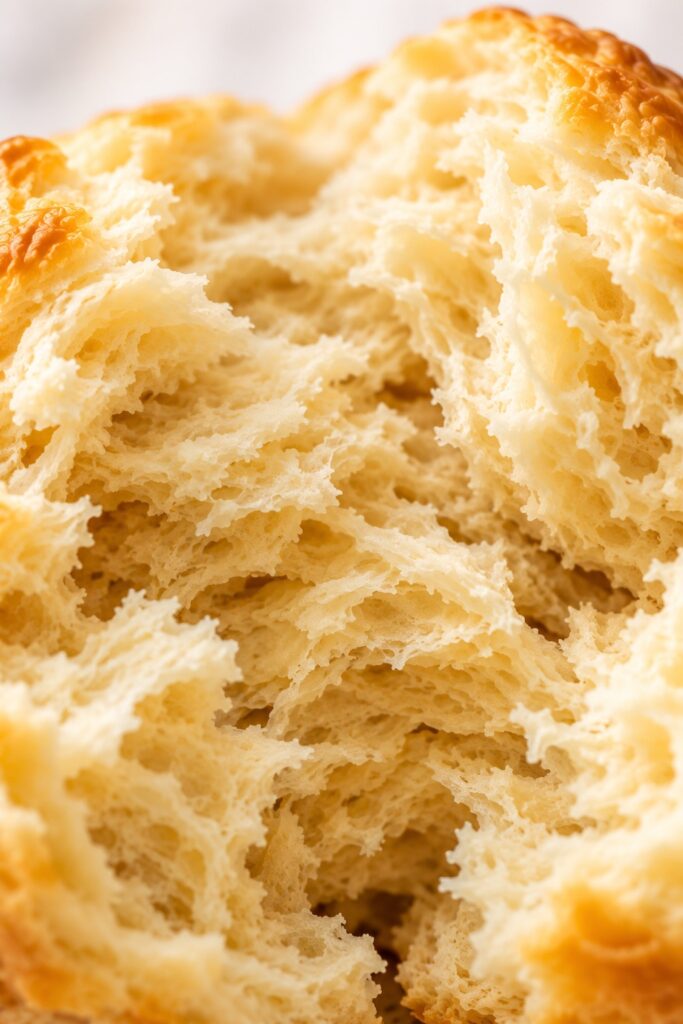
Flaky biscuits are created when layers of dough are separated by small pieces of cold butter. As the biscuits bake, the butter releases steam, which pushes those layers apart and creates the light, pull-apart texture that makes homemade biscuits so appealing.
Dense biscuits usually happen when the butter becomes too warm, the dough is overmixed, or too much extra flour is added during shaping. Any of these can reduce the steam pockets and make the finished biscuits heavier.
Another common cause of dense biscuits is overworking the dough. Unlike bread dough, biscuit dough should not be kneaded extensively. The goal is simply to bring the ingredients together while keeping the dough light and delicate.
The folding process also plays an important role. Each fold creates additional layers of butter and dough. Skipping this step does not ruin the biscuits, but it often results in a more uniform texture and less visible flakiness.
Temperature matters as much as technique. Cold butter, cold buttermilk, and a fully preheated oven work together to create rapid steam during the first minutes of baking. That steam is one of the biggest reasons bakery-style biscuits rise high and develop beautiful layers.
If you remember only one biscuit rule, make it this: keep the butter cold and handle the dough gently. Those two habits alone can dramatically improve the texture of homemade biscuits.
Why Southern Bakers Prefer Buttermilk
Buttermilk has been a staple ingredient in Southern biscuit baking for generations, and its popularity is not simply tradition. It provides several practical advantages that help create better biscuits.
First, buttermilk adds a gentle tang that balances the richness of the butter. The flavor is subtle, but it gives biscuits more depth and character than plain milk.
Second, the acidity in buttermilk helps create a more tender crumb. It softens the dough slightly and works together with baking soda to support lift and browning during baking.
Southern bakers have long appreciated how reliable buttermilk can be. Even simple biscuit recipes often feel richer, softer, and more flavorful when buttermilk is used instead of regular milk.
Another benefit is moisture retention. Biscuits made with buttermilk tend to stay tender longer after baking, making them especially useful for family breakfasts, holiday gatherings, and make-ahead baking.
While many modern biscuit recipes offer milk substitutions, traditional Southern bakers often continue to reach for buttermilk because it consistently delivers the texture and flavor people expect from a truly great homemade biscuit.
The Baking Science Behind Perfect Buttermilk Biscuits
Buttermilk biscuits rely on simple baking science, but the results feel almost magical when the technique is done well.
Cold Butter Creates Steam
Butter contains water. When cold butter hits the heat of the oven, that water turns into steam. The steam pushes apart the dough and helps create height and flaky texture.
Buttermilk Tenderizes the Crumb
Buttermilk adds acidity, which helps soften the dough and gives the biscuits a more tender bite. It also gives the biscuits their classic lightly tangy flavor.
Baking Powder and Baking Soda Create Lift
Baking powder gives the biscuits reliable rise. Baking soda reacts with the acidity in the buttermilk and helps support extra lift and browning.
High Heat Builds Height
A hot oven helps the biscuits rise quickly. If the oven is too cool, the butter may melt before enough steam is created, which can lead to flatter biscuits.
Gentle Handling Keeps Biscuits Tender
When dough is mixed too aggressively, gluten develops and the biscuits can become tough. This recipe keeps the dough just mixed enough to hold together while still staying soft and tender.
Ingredients
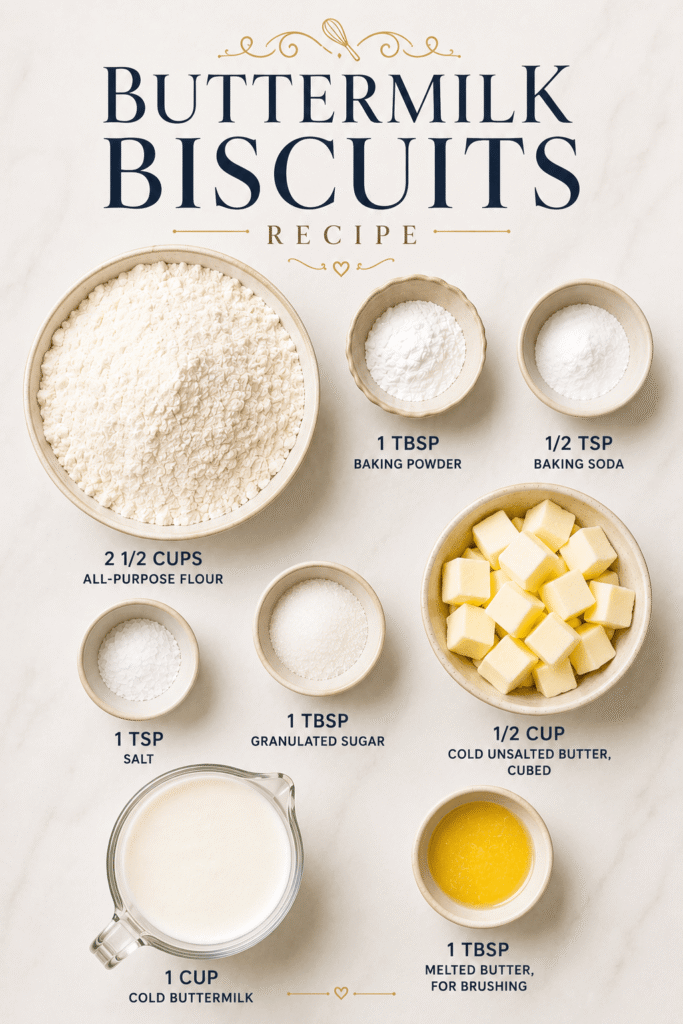
- 2 1/2 cups all-purpose flour
- 1 tablespoon baking powder
- 1/2 teaspoon baking soda
- 1 teaspoon salt
- 1 tablespoon granulated sugar
- 1/2 cup cold unsalted butter, cubed
- 1 cup cold buttermilk
- 1 tablespoon melted butter, for brushing
Ingredient Intelligence
All-Purpose Flour
All-purpose flour gives the biscuits enough structure to rise while still keeping the crumb tender. It is strong enough to hold the layers, but not so strong that the biscuits become chewy.
If you use too much extra flour while shaping, the biscuits can become dry. Lightly flour the surface only as needed.
Cold Unsalted Butter
Cold butter is one of the most important ingredients in this recipe. The butter should be cold enough to stay in small visible pieces throughout the dough.
Those little butter pieces melt during baking and create steam pockets. This is what gives the biscuits their flaky texture.
If your butter softens too quickly, place the bowl in the refrigerator for a few minutes before continuing.
Buttermilk
Buttermilk adds moisture, tenderness, and flavor. Its acidity helps create a softer crumb and works with the baking soda to support rise.
If you do not have buttermilk, you can make a quick substitute by adding 1 tablespoon of lemon juice or vinegar to 1 cup of milk. Let it sit for 5 minutes before using.
Baking Powder
Baking powder is the main leavening agent in this recipe. It helps the biscuits rise in the oven and creates a lighter texture.
For best results, make sure your baking powder is fresh. Old baking powder can make biscuits rise poorly.
Baking Soda
Baking soda works with the acidity in the buttermilk. It supports lift, improves browning, and helps balance the dough.
Sugar
A small amount of sugar does not make these biscuits sweet. It helps balance the tang of the buttermilk and encourages a more beautiful golden top.
Why Cold Butter Matters So Much
Cold butter is one of the most important factors in making tall, flaky Buttermilk Biscuits. In fact, many biscuit failures can be traced back to butter that became too warm before the dough reached the oven.
Butter contains both fat and water. When small pieces of cold butter are distributed throughout the dough, they remain solid during mixing and shaping. Once the biscuits enter the hot oven, the water inside the butter quickly turns to steam.
That steam creates tiny pockets between the layers of dough, pushing them apart and helping the biscuits rise. This process is one of the main reasons homemade biscuits develop their signature flaky texture and impressive height.
If the butter softens too much before baking, it blends into the flour instead of remaining in separate pieces. When that happens, much of the steam-producing potential is lost. The biscuits may still taste good, but they often bake up shorter, denser, and less flaky.
This is also why many bakers prefer to chill the dough if the kitchen is warm. Even a short 10-minute rest in the refrigerator can help firm the butter back up and improve the final texture.
One helpful visual cue is to look for small visible pieces of butter throughout the dough. The dough should not look perfectly smooth. Those tiny butter pockets are often what create the most beautiful layers once the biscuits bake.
Baker’s Note: If you only remember one biscuit rule, remember this one — cold butter creates steam, and steam creates flaky biscuits.
Why Are My Biscuits Flat?
Flat biscuits are usually caused by one or more issues related to temperature, dough thickness, or leavening.
The most common cause is butter that became too warm before baking. When warm butter melts into the dough instead of creating steam in the oven, the biscuits lose much of their ability to rise.
Another frequent problem is dough that has been patted too thin. For tall bakery-style biscuits, the dough should be about 1 inch thick before cutting. Thinner dough naturally produces shorter biscuits.
A partially preheated oven can also reduce biscuit height. Biscuits need immediate high heat so the butter creates steam quickly and the baking powder begins working right away.
Old baking powder is another possibility. Even a well-made dough may struggle to rise if the leavening has lost its strength.
Finally, twisting the biscuit cutter can seal the edges of the dough and make it harder for the layers to lift during baking.
For the tallest biscuits, keep the butter cold, use a fully preheated oven, cut straight down without twisting, and keep the dough about 1 inch thick before baking. These small details make a surprisingly large difference in the final rise.
Equipment You’ll Need
- Large mixing bowl
- Whisk
- Pastry cutter, fork, or your fingertips
- Measuring cups and spoons
- Rolling pin, optional
- 2 1/2-inch biscuit cutter
- Baking sheet
- Parchment paper
- Pastry brush
A sharp biscuit cutter gives the best rise because it cuts clean edges. A drinking glass can work in a pinch, but it may press the edges down more firmly, which can slightly reduce the biscuit height.
How to Make Buttermilk Biscuits
Making Buttermilk Biscuits is mostly about texture and temperature. The dough should stay cold, slightly shaggy, and soft enough to come together without being kneaded heavily.
1. Preheat the oven
Preheat the oven to 425°F. Line a baking sheet with parchment paper.
A fully heated oven matters here. The biscuits need strong heat right away so the butter creates steam quickly and the dough rises upward.
2. Mix the dry ingredients
In a large mixing bowl, whisk together the flour, baking powder, baking soda, salt, and sugar.
The mixture should look even and powdery, with no pockets of baking powder or salt. This small step helps the biscuits rise evenly instead of baking with uneven spots.
3. Cut in the cold butter
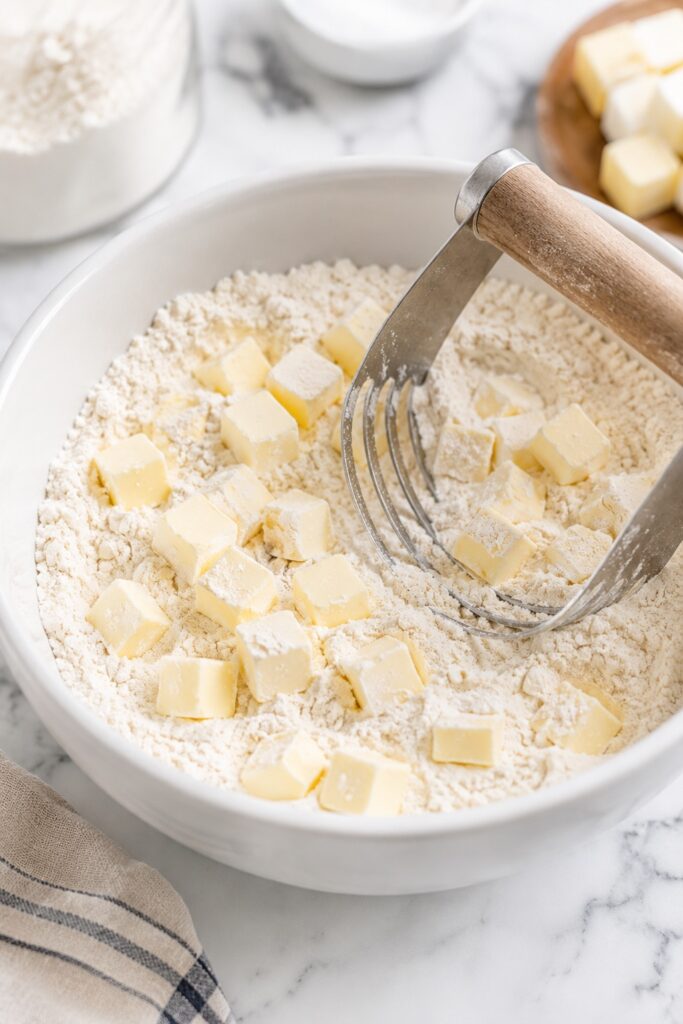
Add the cold cubed butter to the flour mixture. Use a pastry cutter, fork, or your fingertips to work the butter into the flour until the mixture looks like coarse crumbs with some pea-sized pieces of butter remaining.
Do not blend the butter completely into the flour. Those visible butter pieces are what create steam pockets and flaky layers in the oven.
If your fingers are warm or the butter starts to soften, pause and place the bowl in the refrigerator for 5 to 10 minutes. This is one of those small real-life adjustments that protects the final texture.
4. Add the cold buttermilk
Pour the cold buttermilk into the flour and butter mixture.
Stir gently with a fork or spatula just until the dough begins to come together. It should look shaggy, slightly uneven, and a little messy. That is exactly what you want.
The dough should not look smooth like bread dough. If there are a few dry bits in the bowl, gently press them into the dough rather than mixing aggressively.
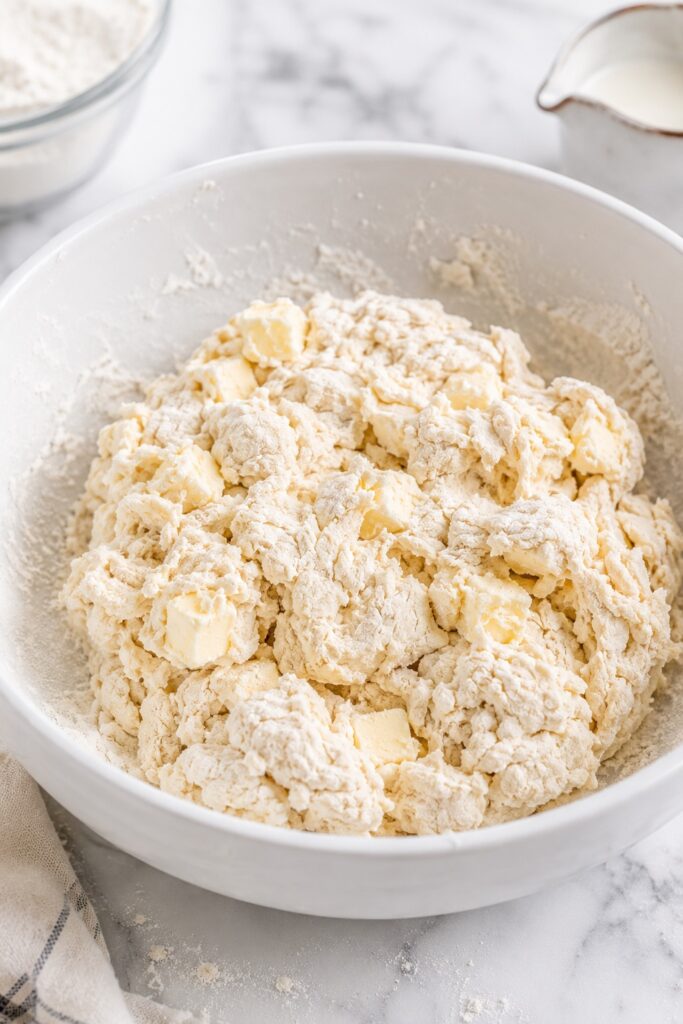
5. Turn the dough out
Lightly flour a clean surface and turn the dough out onto it.
Pat the dough together with your hands. It should feel soft, cool, and slightly tacky, but not wet. If it sticks aggressively to your hands, dust the surface with a very small amount of flour.
6. Fold the dough
Pat the dough into a rough rectangle. Fold it into thirds like a letter, then gently press it back into a rectangle.
Repeat this folding process 3 to 4 times.
Each fold stacks dough and butter together, creating the flaky layers that make these biscuits beautiful. The dough may crack slightly around the edges, and that is normal. Biscuits do not need perfect dough; they need cold, lightly handled dough.
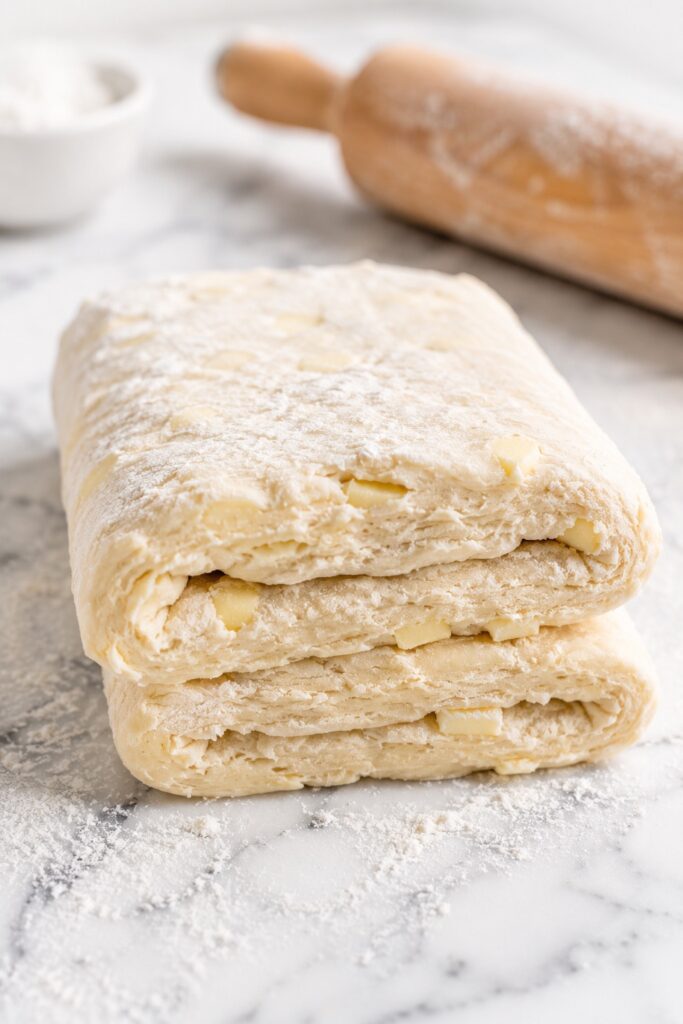
7. Cut the biscuits
Pat the dough to about 1 inch thick. Use a sharp biscuit cutter to cut out the biscuits.
Press straight down without twisting. Twisting can seal the edges and prevent the biscuits from rising as high.
Gather the scraps gently, pat them back together, and cut more biscuits. The second round may look a little more rustic, but they will still taste wonderful.
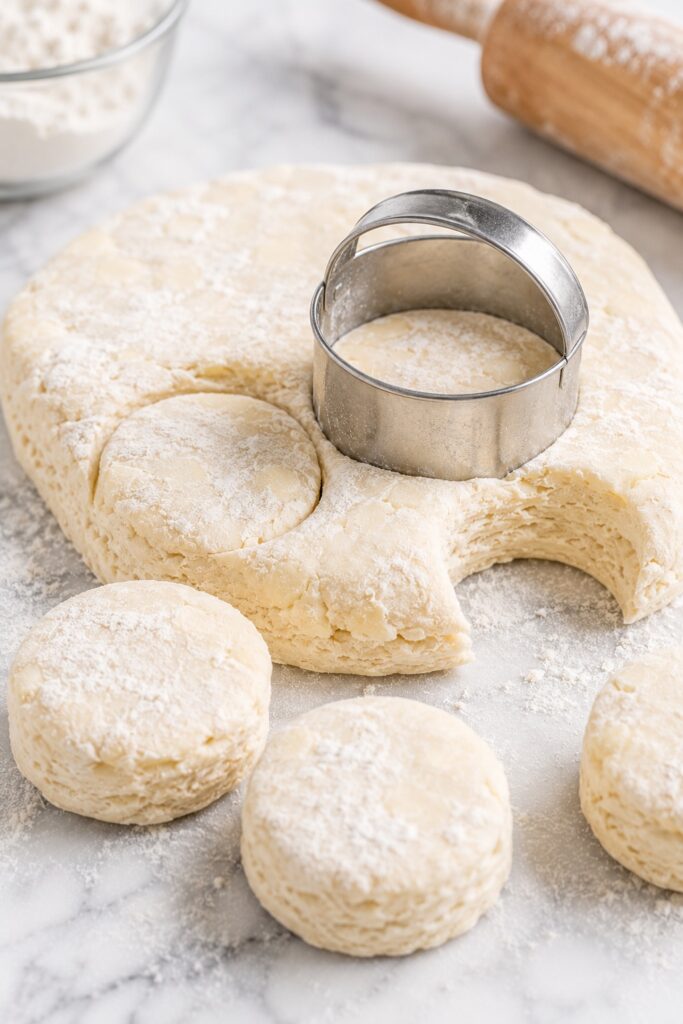
8. Arrange the biscuits
Place the biscuits on the prepared baking sheet so they are just touching or very close together.
This helps encourage the biscuits to rise upward rather than spread outward. If you prefer crispier sides, leave a little space between them.
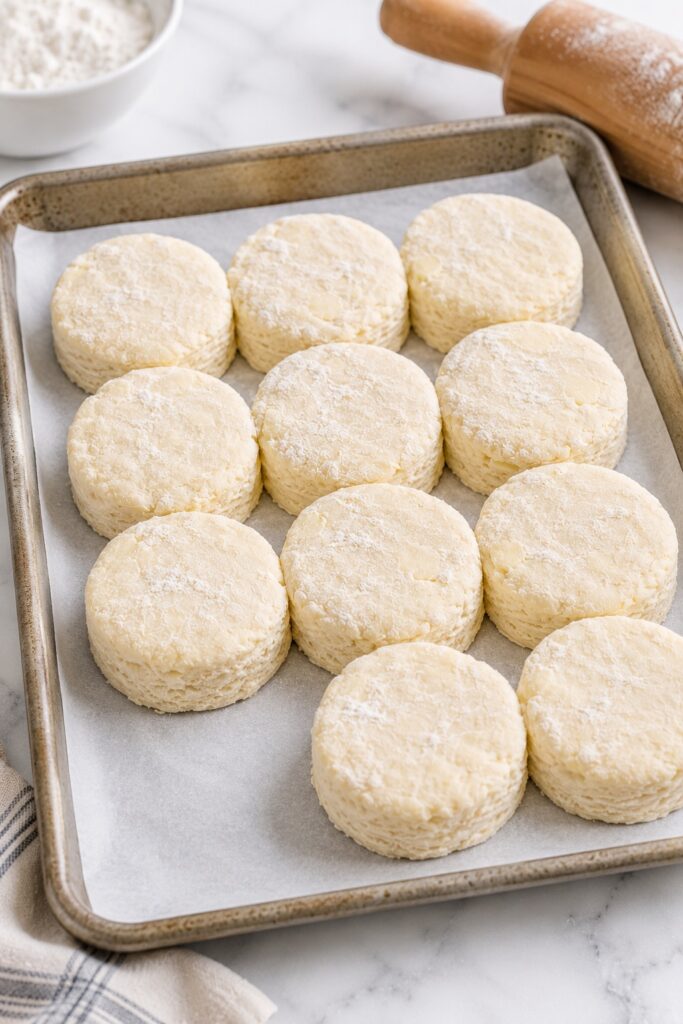
9. Bake
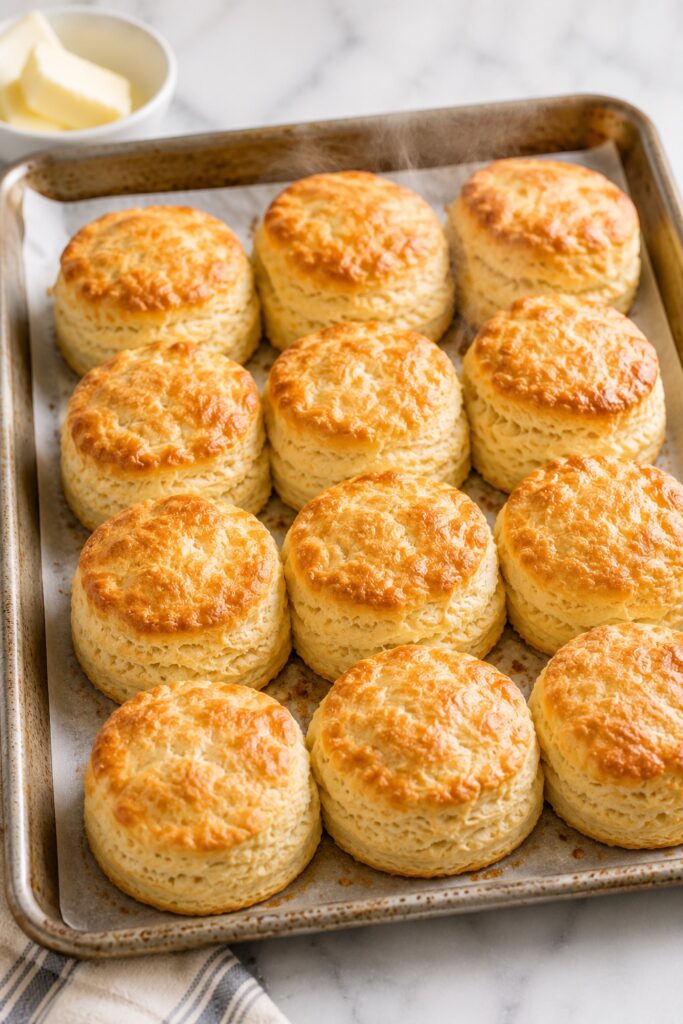
Bake for 14 to 18 minutes, or until the tops are golden and the biscuits have risen tall.
You should see defined edges, puffed sides, and golden tops. The kitchen will smell buttery and warm, and the biscuits should feel set when gently touched on top.
10. Brush with butter
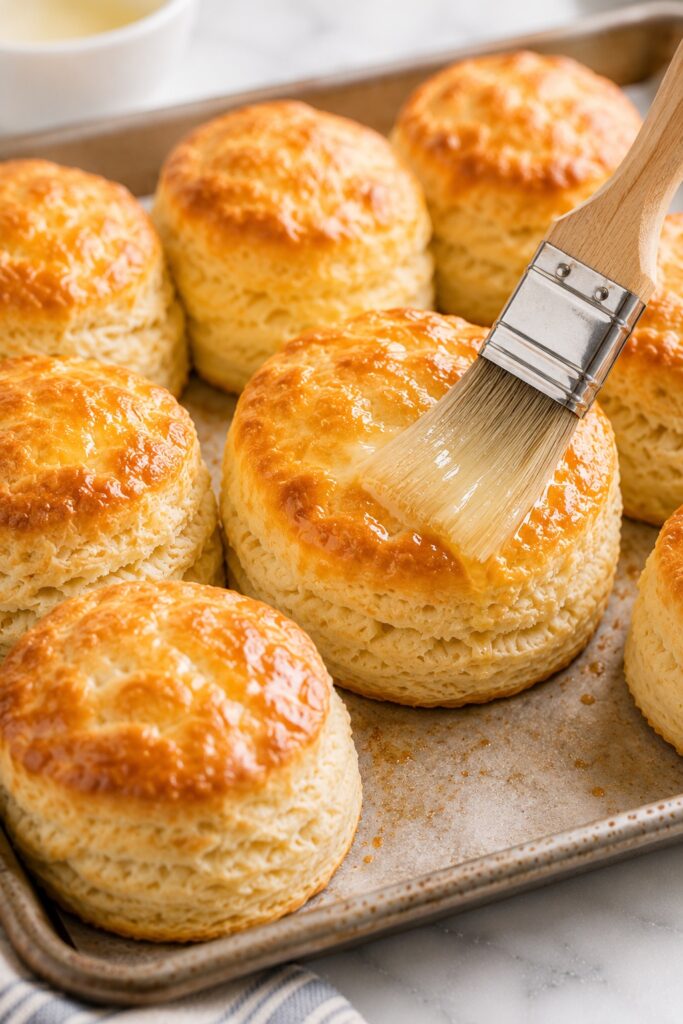
Brush the hot biscuits with melted butter as soon as they come out of the oven.
Let them rest for about 5 minutes before splitting. This short rest allows the steam to settle slightly so the inside stays tender instead of gummy.
Visual Doneness Cues
- The biscuit tops are golden brown, not pale.
- The sides look lifted and layered.
- The edges are set and lightly crisp.
- The centers no longer look wet or doughy.
- The biscuits feel light when lifted from the tray.
- The bottoms are lightly golden.
- Steam escapes when a biscuit is split open.
- The inside looks soft, tender, and layered rather than dense.
Texture and Behavior Guide
| Stage | What You Should See | What It Means |
| Butter mixed into flour | Coarse crumbs with pea-sized butter pieces | The biscuits will have better steam pockets and flakier layers |
| Dough after buttermilk | Shaggy, uneven, slightly tacky | The dough is hydrated but not overworked |
| Dough after folding | Slightly smoother with visible layers along the edges | The folding step has created structure and future flakiness |
| Cut biscuits | Thick rounds with clean edges | The biscuits are ready to rise tall in the oven |
| Baked biscuits | Golden tops, lifted sides, tender centers | The biscuits are fully baked and properly risen |
Expert Tips for Best Results
- Keep the butter cold. Cold butter creates steam, and steam creates flaky layers.
- Do not overmix the dough. A slightly shaggy dough makes softer biscuits than a perfectly smooth one.
- Pat the dough instead of aggressively rolling it. Pressing gently protects the layers.
- Cut straight down. Twisting the cutter can seal the edges and reduce the rise.
- Use a hot oven. The first few minutes of baking are when the biscuits get most of their height.
- Place the biscuits close together. This helps them support each other and rise upward.
- Chill before baking if needed. If the dough feels soft, a 10-minute chill can save the texture.
One deeper biscuit insight: the dough should still feel alive and delicate when it goes into the oven. If it feels heavy, warm, and elastic, it has probably been handled too much.
Common Mistakes When Making Buttermilk Biscuits
Biscuits are simple, but a few small mistakes can dramatically affect their texture and height. Understanding what causes common problems makes it much easier to achieve consistently tall, flaky biscuits.
| Mistake | What Happens | How to Fix It |
| Using warm butter | Dense biscuits with fewer layers | Keep butter cold and chill the dough if necessary |
| Overmixing the dough | Tough, chewy texture | Mix only until the dough comes together |
| Rolling the dough too thin | Short biscuits with little height | Keep the dough about 1 inch thick before cutting |
| Twisting the biscuit cutter | Poor rise and uneven layers | Press straight down and lift cleanly |
| Adding too much flour during shaping | Dry biscuits | Use only enough flour to prevent sticking |
| Using an oven that is not fully preheated | Flat biscuits | Allow the oven to fully reach temperature before baking |
| Old baking powder | Limited rise | Use fresh baking powder for best results |
One of the most common biscuit disappointments is seeing beautiful dough go into the oven and come out flatter than expected. In many cases, the culprit is simply butter that became too warm during preparation.
Technique Comparison Guide
Small technique changes can create noticeably different results. This guide shows why certain biscuit methods consistently produce taller and flakier biscuits.
| Technique | Result |
| Cold butter | Taller biscuits with flaky layers |
| Warm butter | Denser biscuits with less lift |
| Folded dough | Visible pull-apart layers |
| No folding | More uniform, cake-like crumb |
| 1-inch thick dough | Tall bakery-style biscuits |
| Thin dough | Short biscuits |
| Hot oven | Strong rise and better browning |
| Cool oven | Reduced rise and flatter texture |
| Biscuits touching slightly | Softer sides and greater height |
| Biscuits spaced apart | Crisper sides and more spreading |
Beautiful Ways to Serve Buttermilk Biscuits
Few baked goods are as versatile as warm Buttermilk Biscuits.
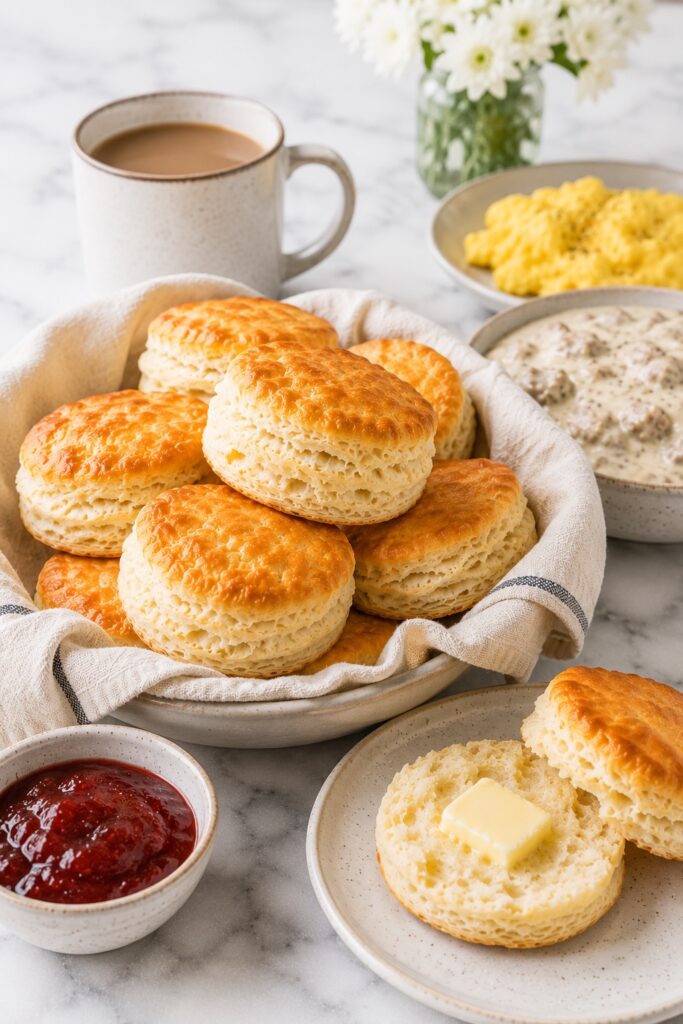
For a classic Southern breakfast, split the biscuits and serve them with sausage gravy, scrambled eggs, and crispy bacon. The soft layers soak up the gravy beautifully while still maintaining their texture.
For a simple weekend brunch, serve warm biscuits with whipped honey butter, fruit preserves, strawberry jam, or homemade apple butter. The contrast between the flaky biscuit and creamy spread is difficult to resist.
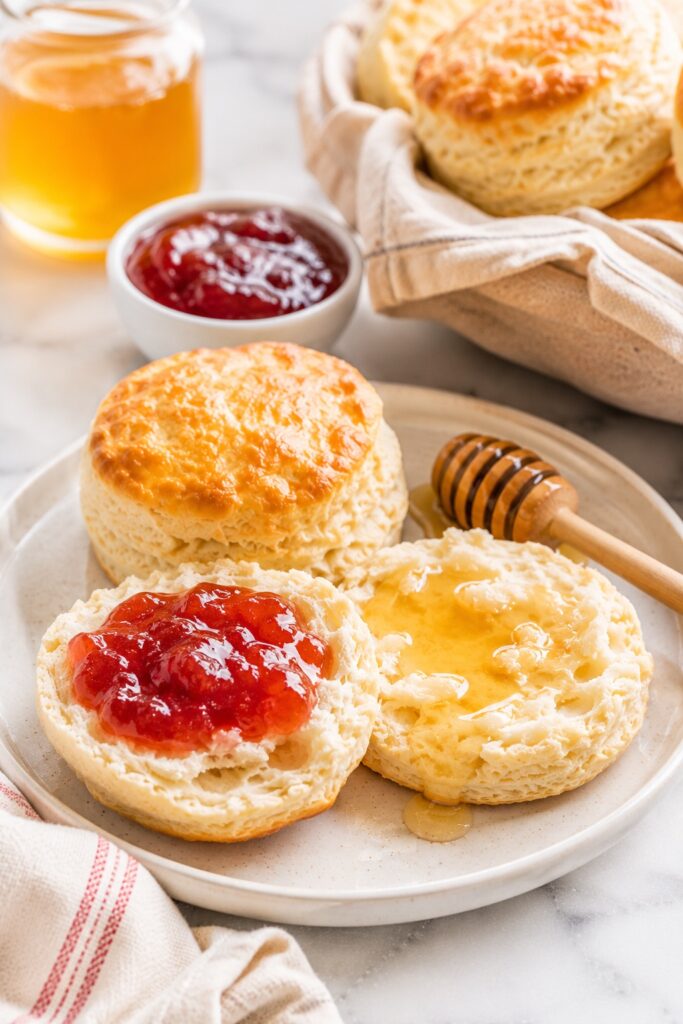
During the holidays, arrange freshly baked biscuits in a linen-lined basket and place them in the center of the table alongside roasted turkey, ham, or comforting casseroles. They add warmth and familiarity to almost any meal.
Buttermilk biscuits also make incredible sandwiches. Fill them with fried chicken, breakfast sausage, ham, cheese, or scrambled eggs for a hearty meal that feels both rustic and indulgent.
If you enjoy sweet breakfasts, drizzle warm biscuits with honey, maple syrup, or cinnamon butter. Their lightly tangy flavor works surprisingly well with sweeter toppings.
Save this recipe for holiday brunches, cozy weekend breakfasts, family dinners, and those moments when a basket of warm homemade biscuits makes the entire meal feel more special.
It is one of those timeless recipes that people rarely regret having in their collection.
Storage and Make-Ahead Guide
One of the best things about homemade biscuits is how well they fit into make-ahead baking.
Room Temperature
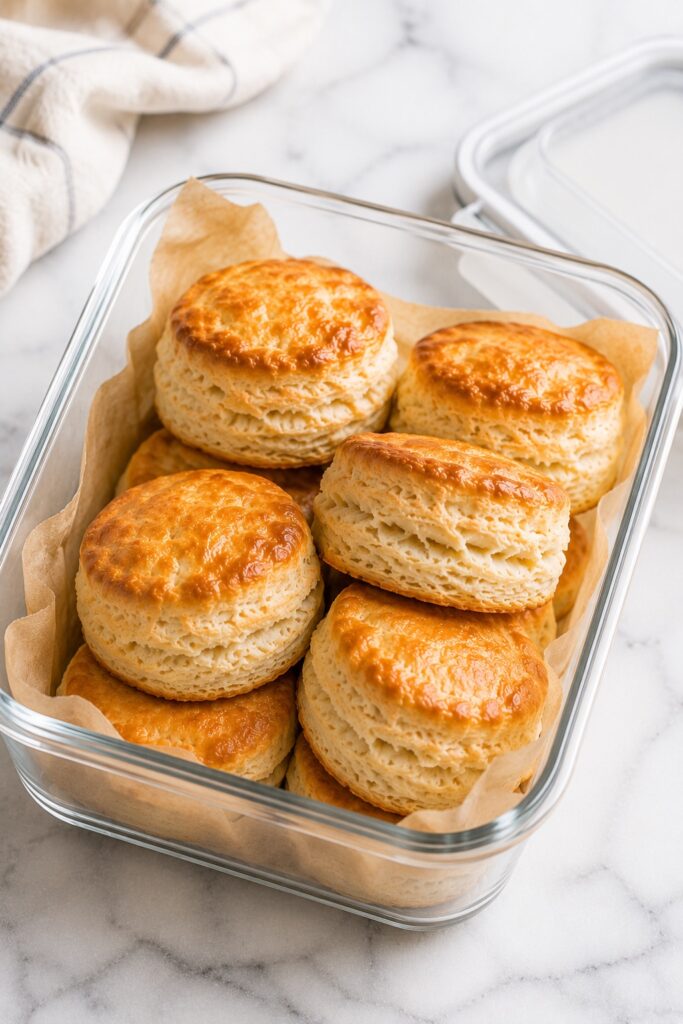
Store cooled biscuits in an airtight container for up to 2 days.
To refresh them, warm them in a 300°F oven for a few minutes before serving.
Refrigerator
Store biscuits in an airtight container for up to 5 days.
Reheat before serving for the best texture.
Freezer
Baked biscuits freeze exceptionally well.
Wrap them individually or place them in a freezer-safe container and freeze for up to 3 months.
Warm directly from frozen in a low oven until heated through.
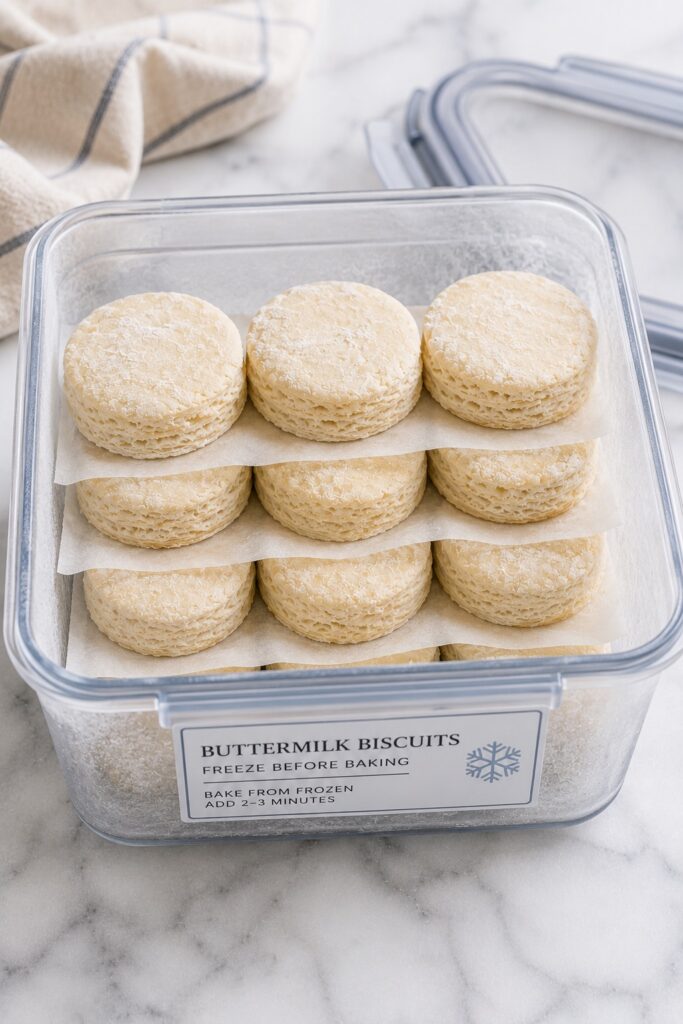
Freezing Unbaked Biscuits
For the freshest results, freeze the cut biscuits before baking.
Place them on a baking sheet until frozen solid, then transfer them to a freezer container.
When ready to bake, place them directly into the oven from frozen and add 2 to 3 extra minutes to the baking time.
This method allows you to enjoy freshly baked biscuits whenever you want without preparing the dough from scratch each time.
Easy Variations to Try
Cheddar Buttermilk Biscuits
Add 1 cup shredded sharp cheddar cheese to the dry ingredients for a savory version that pairs beautifully with soups and chili.
Garlic Herb Biscuits
Mix chopped parsley, chives, thyme, or rosemary into the dough and brush the baked biscuits with garlic butter.
Honey Butter Biscuits
Brush warm biscuits with a mixture of melted butter and honey for a lightly sweet finish.
Jalapeño Cheddar Biscuits
Add diced jalapeños and cheddar cheese for a spicy variation that works especially well with barbecue meals.
Cinnamon Sugar Biscuits
Brush baked biscuits with melted butter and sprinkle with cinnamon sugar for an easy sweet treat.
Mini Biscuit Sliders
Cut smaller biscuits and use them for breakfast sandwiches, ham sliders, or mini chicken sandwiches.
Frequently Asked Questions
Why didn’t my buttermilk biscuits rise?
The most common causes are warm butter, overworked dough, old baking powder, or an oven that was not fully preheated. Tall biscuits depend on cold butter creating steam and strong oven heat providing immediate lift.
Can I make buttermilk biscuits without buttermilk?
Yes. While real buttermilk produces the best flavor and texture, you can make a quick substitute by adding 1 tablespoon of lemon juice or vinegar to 1 cup of milk and letting it sit for about 5 minutes.
Can I freeze biscuit dough?
Absolutely. In fact, freezing unbaked biscuits is one of the best make-ahead strategies. Bake them directly from frozen and simply add a few extra minutes to the baking time.
Why are my biscuits dense instead of flaky?
Dense biscuits are usually caused by overmixing, excessive flour, warm butter, or skipping the folding step. Flaky biscuits rely on visible pieces of cold butter and gentle handling.
Should biscuits touch while baking?
Many bakers prefer placing biscuits so they lightly touch. This encourages upward rise and creates softer sides. Leaving space between biscuits produces crispier edges.
Can I use self-rising flour?
Yes. If using self-rising flour, reduce or omit the baking powder and salt according to the flour manufacturer’s recommendations.
What is the best butter for biscuits?
Any good-quality unsalted butter works well. European-style butter often produces richer flavor because it contains slightly more butterfat, but standard unsalted butter still creates excellent biscuits.
Can I make the dough ahead of time?
Yes. The dough can be prepared, cut, and refrigerated for several hours before baking. Keeping the dough cold actually helps preserve the flaky texture.
Why are my biscuits dry?
Dry biscuits are usually caused by too much flour, overmixing, or overbaking. When measuring flour, spoon it into the measuring cup and level it off rather than scooping directly from the bag. Also remember that biscuit dough should look slightly shaggy and soft before baking.
Can I use frozen butter for biscuits?
Yes. In fact, many bakers prefer frozen butter because it stays cold longer while the dough is being mixed and folded. Frozen butter can be grated directly into the flour mixture, making it easier to distribute evenly throughout the dough.
Can I use salted butter instead of unsalted butter?
Yes. If using salted butter, reduce the added salt slightly to avoid overly salty biscuits. Unsalted butter is generally preferred because it gives you more control over the final flavor.
More Homemade Baking Recipes You’ll Love
If you loved making these Buttermilk Biscuits, here are a few more cozy homemade baking recipes that fit beautifully into the same kitchen rhythm.
Breakfast and Brunch Favorites
For another buttermilk-based recipe, try these Buttermilk Pancakes. They have that same tender, lightly tangy flavor, but in soft, fluffy pancake form.
If you want something warm and bakery-style for a weekend breakfast table, these Bakery Style Blueberry Muffins are a perfect match. They bring tall muffin tops, juicy blueberries, and the same homemade comfort as fresh biscuits.
For a cozy make-ahead breakfast, French Toast Casserole is another beautiful option, especially for holidays, brunches, and slow weekend mornings.
Southern Comfort Baking
If you enjoy classic Southern-style recipes, Buttermilk Pie is a natural next recipe to try. It uses simple ingredients and buttermilk to create a rich, custardy dessert with old-fashioned comfort.
For another deeply comforting classic, this Peach Cobbler pairs beautifully with the same warm, homemade baking mood. It is especially lovely for summer gatherings, Sunday dinners, and family dessert tables.
You might also love this Chess Pie, another simple Southern dessert with a rich filling and nostalgic flavor.
Homemade Baking Basics
If you want to build more confidence with foundational kitchen recipes, start with the How to Make Buttermilk guide. It is especially helpful when you want homemade biscuits but do not have buttermilk on hand.
You can also try Homemade Butter if you love from-scratch baking projects. Homemade butter served over warm biscuits is simple, rustic, and incredibly satisfying.
For another classic homemade dough recipe, these Homemade Cinnamon Rolls are perfect when you want a soft, sweet bake with a cozy weekend feel.
Recipe Summary
These Buttermilk Biscuits are tall, flaky, buttery, and wonderfully tender inside.
Made with cold butter, tangy buttermilk, and a simple folding technique, they develop beautiful layers and bakery-style height without requiring complicated methods or special equipment.
The recipe is approachable for beginners yet reliable enough to become a long-term favorite. Whether served with breakfast, alongside dinner, or as part of a holiday meal, these biscuits deliver comforting homemade flavor every time.
- Texture: Flaky, tender, layered, and soft
- Flavor: Buttery, rich, and lightly tangy
- Difficulty: Easy
- Best For: Breakfast, brunch, holidays, and comfort-food meals
- Make Ahead Friendly: Yes
- Freezer Friendly: Yes
Final Thoughts
Some recipes stay popular because they are trendy. Others remain favorites because they consistently deliver comfort, reliability, and satisfaction.
Buttermilk Biscuits belong firmly in the second category.
They transform a handful of simple ingredients into something that feels special every time. The golden tops, flaky layers, buttery aroma, and soft interior create the kind of baking experience that never really goes out of style.
What makes this recipe worth keeping is not just the final result, but the confidence it builds. Once you understand how cold butter, gentle handling, folding, and high heat work together, making great biscuits becomes surprisingly predictable.
Whether you’re baking for a quiet weekend breakfast, a holiday table filled with family, or simply because you want something warm and homemade, these Buttermilk Biscuits are the kind of recipe you’ll find yourself returning to again and again.
And when you split open that first warm biscuit and see those delicate flaky layers inside, you’ll understand exactly why homemade biscuits have remained a beloved baking tradition for generations.

Buttermilk Biscuits
These Buttermilk Biscuits are tall, flaky, buttery, and wonderfully tender inside. Made with cold butter, tangy buttermilk, and a simple folding technique, they bake up with beautiful layers and bakery-style height every time.
Ingredients
- 2 1/2 cups all-purpose flour
- 1 tablespoon baking powder
- 1/2 teaspoon baking soda
- 1 teaspoon salt
- 1 tablespoon granulated sugar
- 1/2 cup cold unsalted butter, cubed
- 1 cup cold buttermilk
- 1 tablespoon melted butter, for brushing
Instructions
- Preheat the oven to 425°F and line a baking sheet with parchment paper.
- In a large bowl, whisk together the flour, baking powder, baking soda, salt, and sugar.
- Add the cold cubed butter and cut it into the flour mixture until coarse crumbs form and pea-sized butter pieces remain visible.
- Pour in the cold buttermilk and stir gently until a shaggy dough forms.
- Turn the dough onto a lightly floured surface and gently bring it together.
- Pat the dough into a rectangle and fold it into thirds. Repeat the folding process 3 to 4 times to create flaky layers.
- Pat the dough to about 1 inch thick and cut out biscuits using a sharp biscuit cutter. Press straight down without twisting.
- Place the biscuits on the prepared baking sheet so they are just touching.
- Bake for 14 to 18 minutes, or until the tops are golden brown, the biscuits have risen tall, and the layers look visibly puffed and flaky.
- Brush the hot biscuits with melted butter and let them cool for 5 minutes before serving.
Notes
- Keep the butter and buttermilk as cold as possible for the flakiest biscuits.
- Do not overmix the dough. A slightly shaggy dough creates a more tender texture.
- For taller biscuits, cut the dough about 1 inch thick and avoid twisting the biscuit cutter.
- If the dough becomes soft or warm while working, chill the cut biscuits for 10 minutes before baking.
- Store leftovers in an airtight container for up to 2 days at room temperature or freeze for up to 3 months.
Nutrition Information:
Yield: 8 biscuits Serving Size: 1 biscuitAmount Per Serving: Calories: 245Total Fat: 13gSaturated Fat: 8gCholesterol: 34mgSodium: 420mgCarbohydrates: 27gFiber: 1gSugar: 2gProtein: 4g
Nutrition information is provided as an estimate only and may vary based on specific ingredients, brands, and portion sizes used. This information should not be considered medical or nutritional advice.
12 Sweet Favorites — Yours, Free 🍰
Tiramisù, no-bake cheesecake, the perfect chocolate chip cookie & 9 more reader-loved desserts — gathered into one beautiful free recipe book. From my kitchen to yours.
No spam, just sweet things. Unsubscribe anytime.