Blueberry Bread (Moist, Tender & Loaded with Berries)
🎁 FREE E-BOOK: 12 Sweet Favorites — reader-loved desserts in one beautiful recipe book.
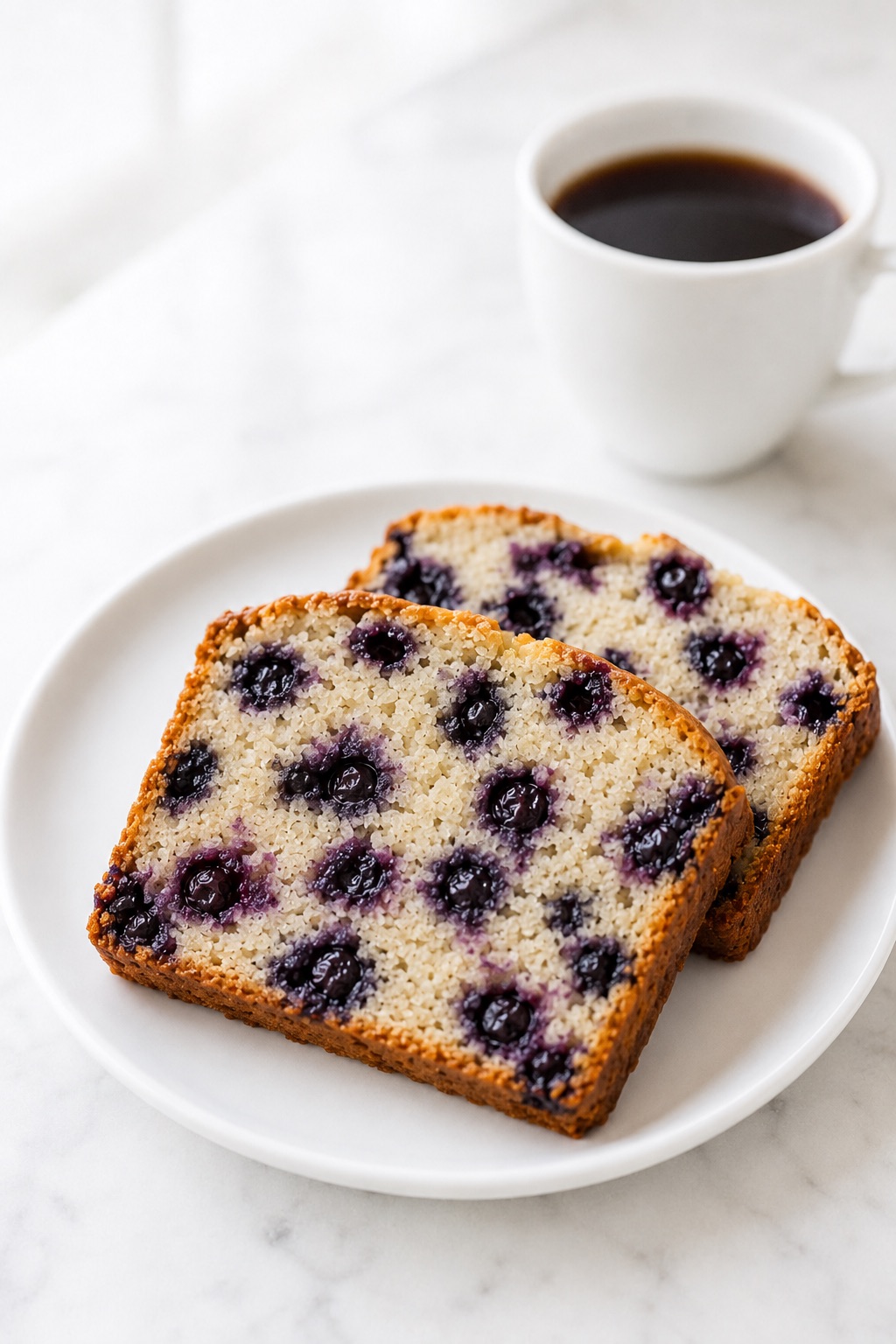
A golden, gently domed loaf with juicy berries suspended through a soft, tender crumb makes this blueberry bread recipe feel both generous and wonderfully simple. Each cooled slice is distinctly blueberry-forward, lightly vanilla-scented, and moist without becoming wet or gummy.
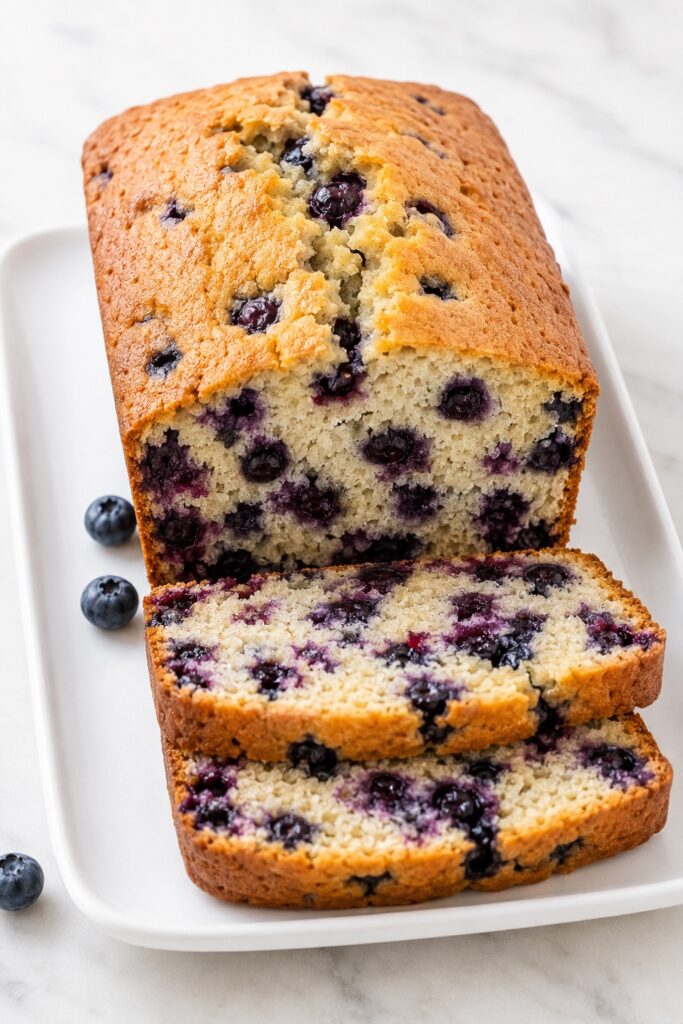
It is the kind of bake that fits easily into breakfast, an afternoon coffee break, or a relaxed weekend brunch. The familiar quick-bread method keeps the process approachable, while a few careful details protect the center, the berry distribution, and those clean bakery-style slices.
This recipe is worth saving because it gives fresh and frozen blueberries their own clear handling and baking guidance. You can reach for it in berry season or open a bag from the freezer and still know what the batter, loaf, and finished crumb should look like.
The loaf needs only about 15 minutes of preparation, but complete cooling matters. Giving the crumb time to settle is what turns a berry-filled quick bread from fragile and seemingly underbaked into cohesive slices that hold every juicy pocket beautifully.
Blueberry Bread at a Glance
This overview defines the loaf before you begin, including the result, pan, timing, and the one distinction that protects its blueberry-first identity.
| Recipe type | American-style blueberry quick bread |
| Texture | Moist, tender, soft, and fully baked with clean slices |
| Flavor | Blueberry-led with warm vanilla; lemon zest is optional and restrained |
| Yield | One 9×5-inch loaf, about 10 generous slices |
| Preparation | About 15 minutes |
| Baking | 55–65 minutes with fresh berries; 60–70 minutes with frozen |
| Cooling | 15 minutes in the pan, then at least 90 minutes on a rack |
| Real total time | About 2 hours 55 minutes to 3 hours 10 minutes |
This is a chemically leavened quick bread—not a yeast bread, glazed lemon loaf, streusel loaf, or filled cake. Optional lemon zest brightens the berries without changing the recipe’s primary blueberry identity.
Why This Blueberry Bread Works
The formula is designed to create a batter thick enough to support a generous amount of fruit while still baking into a tender, cohesive loaf.
- Butter and oil share the work. Butter gives the loaf a classic bakery aroma, while a small amount of neutral oil helps the cooled crumb stay soft.
- The liquid is deliberately controlled. A modest amount of milk keeps the batter scoopable rather than runny, reducing heavy wet zones around the berries.
- The blueberry amount is generous but measured. At 225 g, the fruit is abundant without overwhelming the structure of one 9×5-inch loaf.
- Fresh and frozen berries have separate bake windows. That prevents the convenience of frozen fruit from becoming a vague instruction that leaves the center underbaked.
- Doneness uses several reconciled cues. Color, spring-back, the center crack, a tester, and an optional temperature check work together more reliably than a fixed time alone.
One lesson behind this update is that a fixed 50-minute bake and a “completely clean” toothpick are too blunt for a fruit-filled center. The rebuilt method replaces that shortcut with a realistic bake window and several matching cues while preserving the simple character of the original loaf.
Why You’ll Love This Blueberry Bread
This loaf fits the moments when you want a homemade berry bake that feels special but does not require a mixer, topping, or complicated assembly.
- Simple preparation: The batter comes together by hand in two bowls.
- Year-round flexibility: Fresh or frozen blueberries both work when you follow the matching protocol.
- Balanced sweetness: It is sweet enough to feel like a treat but comfortable at breakfast or brunch.
- Make-ahead friendly: The loaf slices especially well after it has cooled completely, making it useful for next-day serving.
- Easy to portion and freeze: Individual slices can be wrapped and thawed as needed.
- Blueberry-forward flavor: Vanilla supports the fruit, while lemon remains optional rather than taking over.
Blueberry Bread Ingredients
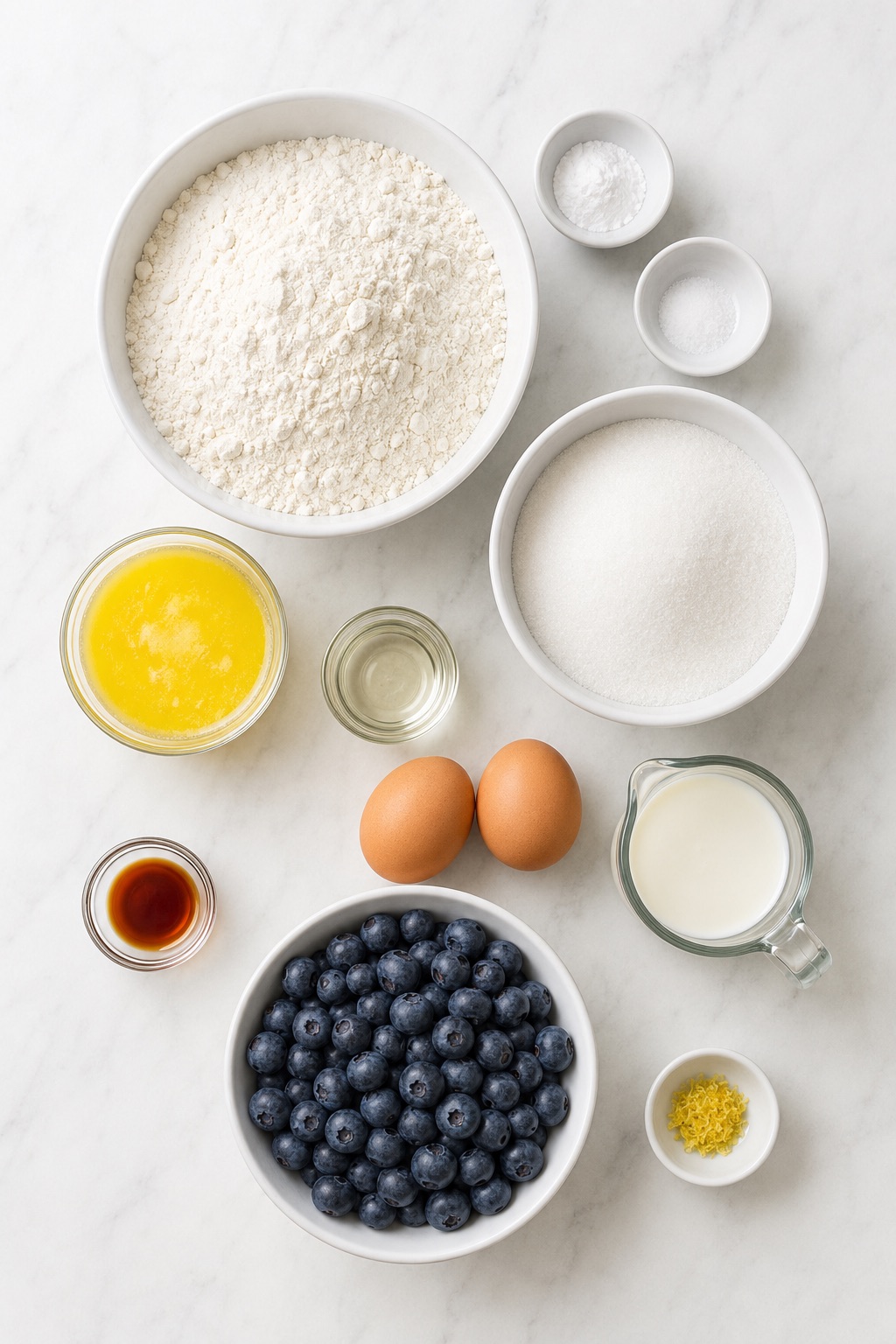
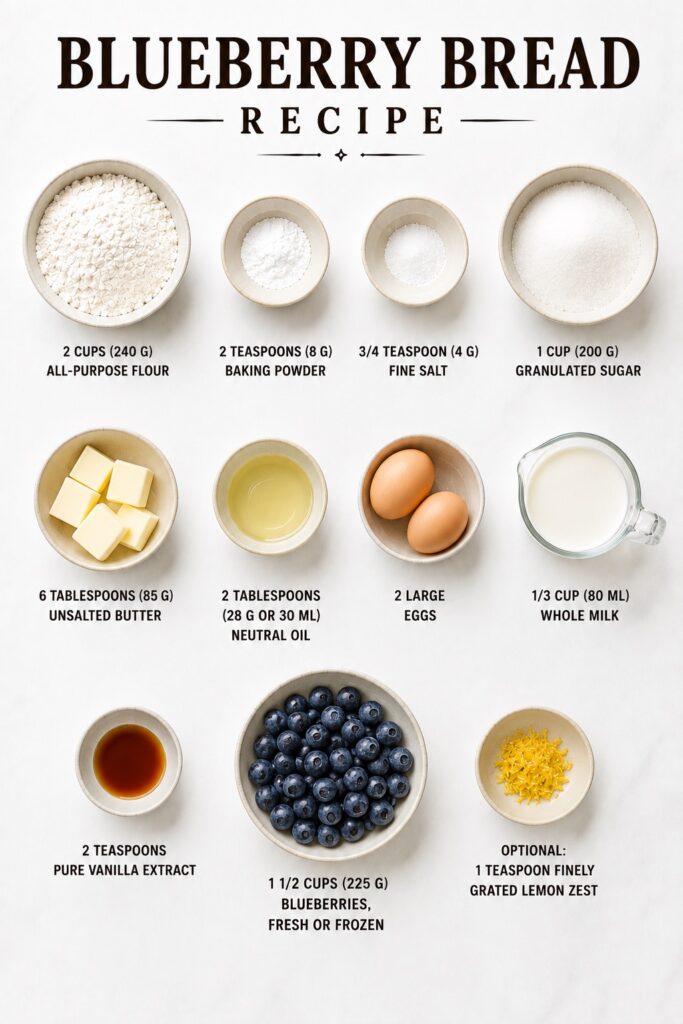
These everyday baking ingredients create one generous loaf; use the gram weights when possible because flour and blueberries are the two measurements most likely to change the batter’s balance.
Ingredient List
Measure the ingredients in this order so the article, method, and recipe card remain easy to reconcile while you bake.
- 2 cups (240 g) all-purpose flour, spooned and leveled
- 2 teaspoons (8 g) baking powder
- ¾ teaspoon (4 g) fine salt
- 1 cup (200 g) granulated sugar
- 6 tablespoons (85 g) unsalted butter, melted and cooled to 90–100°F (32–38°C)
- 2 tablespoons (28 g or 30 ml) neutral oil
- 2 large eggs (about 100 g without shells), at room temperature
- ⅓ cup (80 ml) whole milk, at room temperature
- 2 teaspoons pure vanilla extract
- 1½ cups (225 g) blueberries, fresh or frozen
- Optional: 1 teaspoon finely grated lemon zest
Ingredient Notes for a Moist, Evenly Baked Crumb
A few ingredient specifications do more than refine the flavor; they directly control batter thickness, emulsification, and the way the loaf sets around the fruit.
- All-purpose flour: Weigh 240 g or use the spoon-and-level method. Packing flour into the cup can make the loaf dry and dense.
- Melted butter: Let it cool to 90–100°F (32–38°C). Hot butter can warm the eggs too quickly, while butter allowed to become too cool may begin to resolidify in the wet mixture.
- Neutral oil: Vegetable, canola, grapeseed, or a mild avocado oil keeps the crumb soft without competing with the blueberries.
- Eggs and milk: Room-temperature ingredients combine more smoothly with the melted butter and help the batter remain uniform.
- Vanilla: Two teaspoons add warmth without masking the fruit. If you enjoy the same soft quick-bread texture with a richer flavor, this chocolate chip banana bread is a natural companion bake.
- Lemon zest: Keep it to one teaspoon and omit it freely. Lemon juice is not included because it would change the liquid and acid balance.
Fresh or Frozen Blueberries: What Changes
Both forms work, but treating them as identical would ignore the extra cold and moisture frozen berries bring to the center of the loaf.
- Fresh blueberries: Choose firm berries, rinse them ahead of time, and dry them completely. Remove any split, soft, or leaking fruit.
- Frozen blueberries: Keep them frozen until the final fold. Do not thaw or rinse them, and expect a few natural blue streaks in the batter.
- Wild frozen blueberries: Their smaller size distributes easily; use the same 225 g weight and fold with minimal strokes.
- Flour coating: This recipe does not depend on an extra spoonful of flour around the berries. Batter viscosity and gentle folding do more of the structural work.
Kitchen Tools Needed
You only need five practical tool groups, but the pan material and cooling rack meaningfully affect browning, baking time, and slice quality.
- Oven and loaf pan setup: An oven with a center rack plus one light-colored metal 9×5-inch loaf pan. A dark pan may brown the edges faster, while glass changes heat transfer.
- Parchment and pan preparation: Parchment paper for a sling and a small amount of butter or nonstick spray for the pan.
- Mixing tools: One large bowl, one medium bowl, a whisk, and a flexible spatula for folding without crushing the berries.
- Measuring tools: A digital kitchen scale is preferred; measuring cups and spoons also work when flour is spooned and leveled.
- Doneness and cooling tools: A cake tester or thin toothpick, an optional instant-read thermometer, and a wire cooling rack.
What to Expect from Every Blueberry-Filled Slice
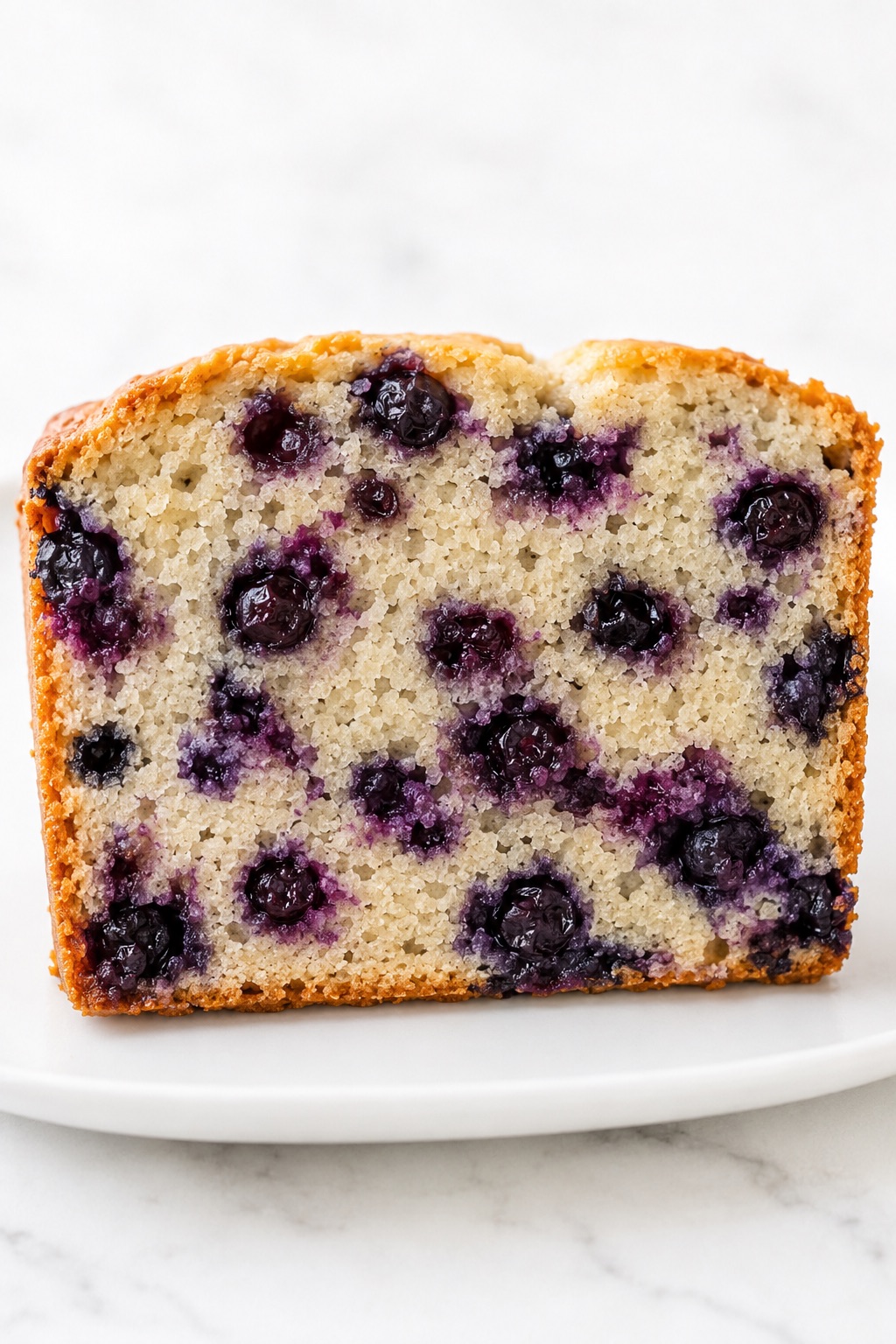
The finished loaf should be moist and delicate without looking wet, pasty, or compressed through the center.
- Top: Golden and gently domed, often with a natural central crack.
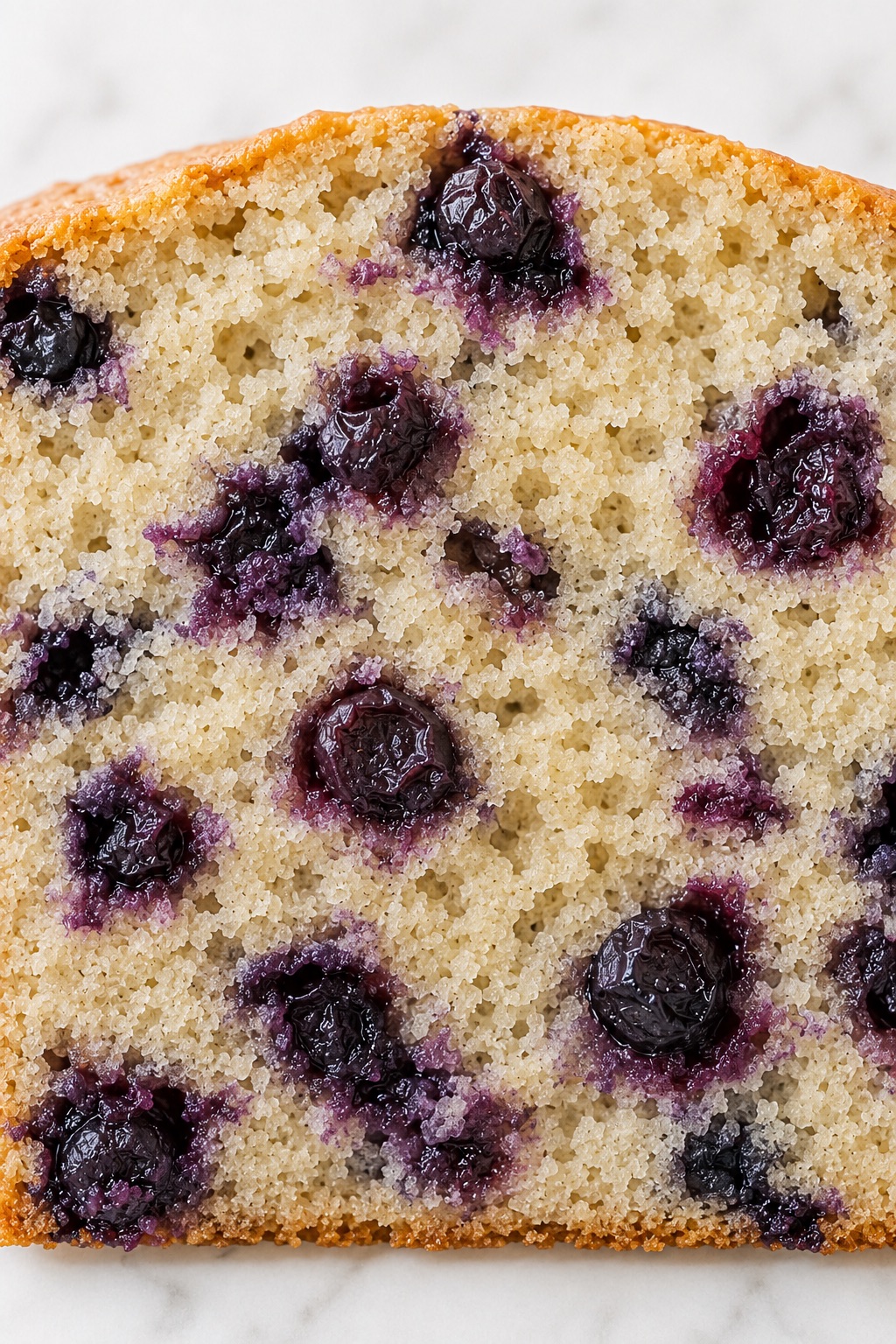
- Crumb: Soft, fine, and cohesive enough to hold a clean slice after complete cooling.
- Berries: Generously distributed, with occasional jammy pockets but no heavy layer gathered at the bottom.
- Edges: Delicately set and browned rather than hard or deeply crusty.
- Flavor: Clearly blueberry-led, lightly buttery, and warm with vanilla.
- Frozen-fruit variation: A few blue-purple streaks are normal and do not mean the loaf has failed.
How to Make Blueberry Bread, Step by Step
The method is straightforward, but each phase includes a stopping point so you can respond to the batter and loaf instead of relying on the clock alone.
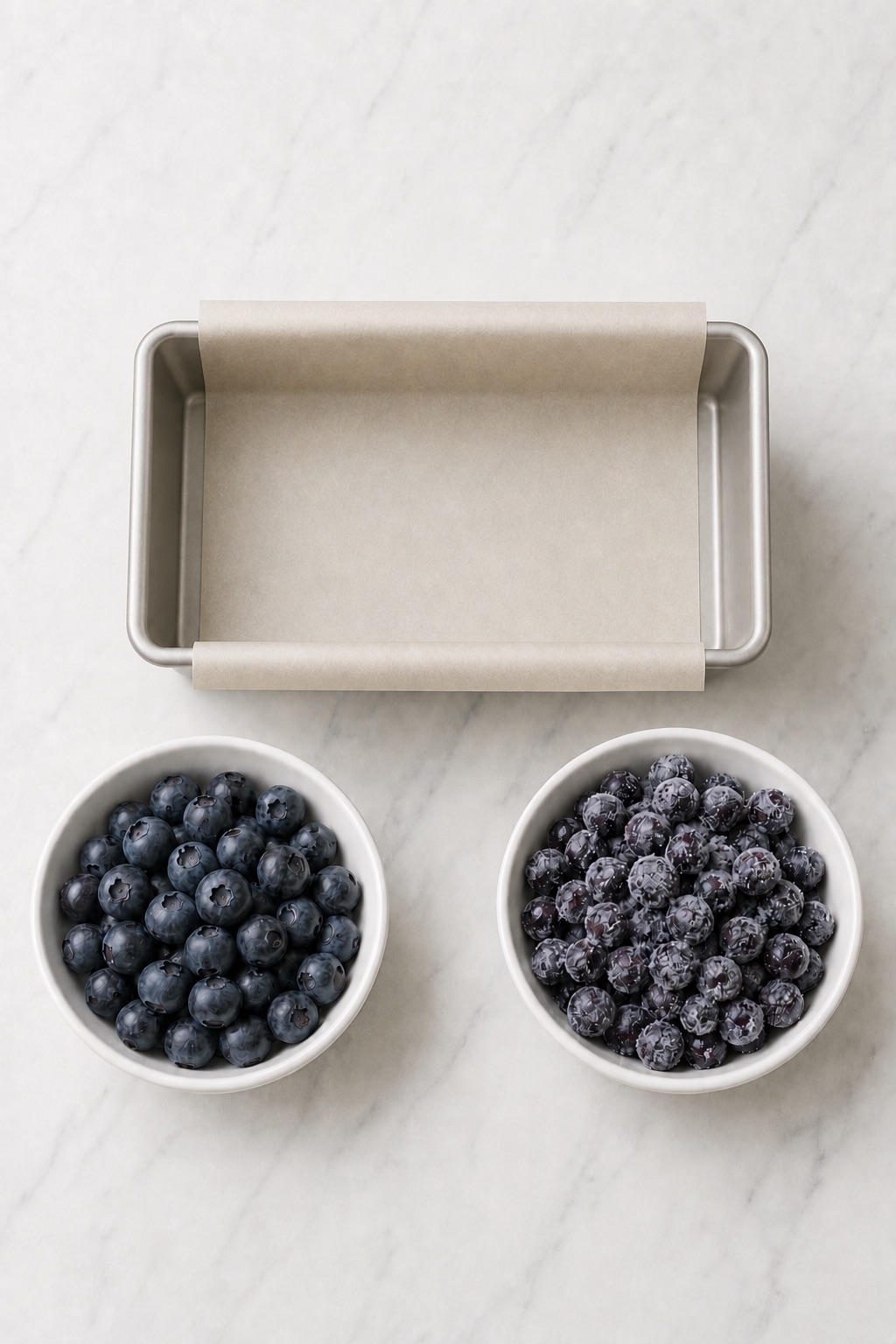
Prepare the Oven, Pan and Blueberries
Set up the heat and fruit first so the finished batter can go into the oven promptly once the baking powder is hydrated.
- Preheat the oven to 350°F (177°C) with a rack in the center.
- Lightly grease a light-colored metal 9×5-inch loaf pan and line it with a parchment sling.
- If using fresh blueberries, make sure they are completely dry. Keep frozen blueberries in the freezer until the final fold.
What you should see: The parchment lies flat against the long sides of the pan, and the fresh berries look dry and firm with no leaking juice.
Whisk the Dry Ingredients Evenly
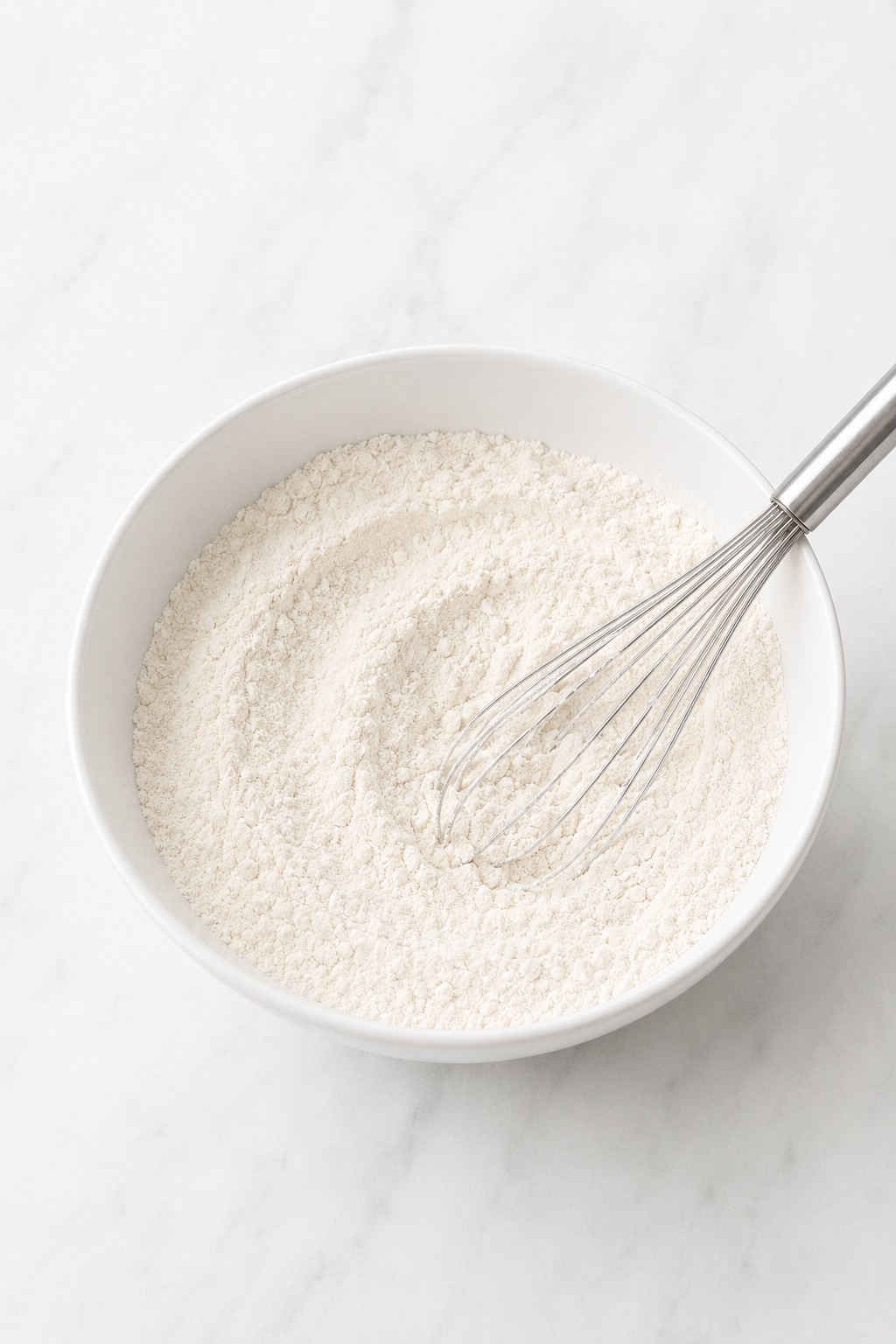
Distribute the leavener and salt before they meet the wet mixture so the loaf rises evenly and no bitter baking-powder pockets remain.
- Whisk the flour, baking powder, and salt together in the medium bowl for about 20 seconds.
- Break up any visible clumps with the whisk.
What you should see: The dry mixture looks uniform, loose, and free of compact white or gray clumps.
Build a Smooth Butter-and-Oil Base
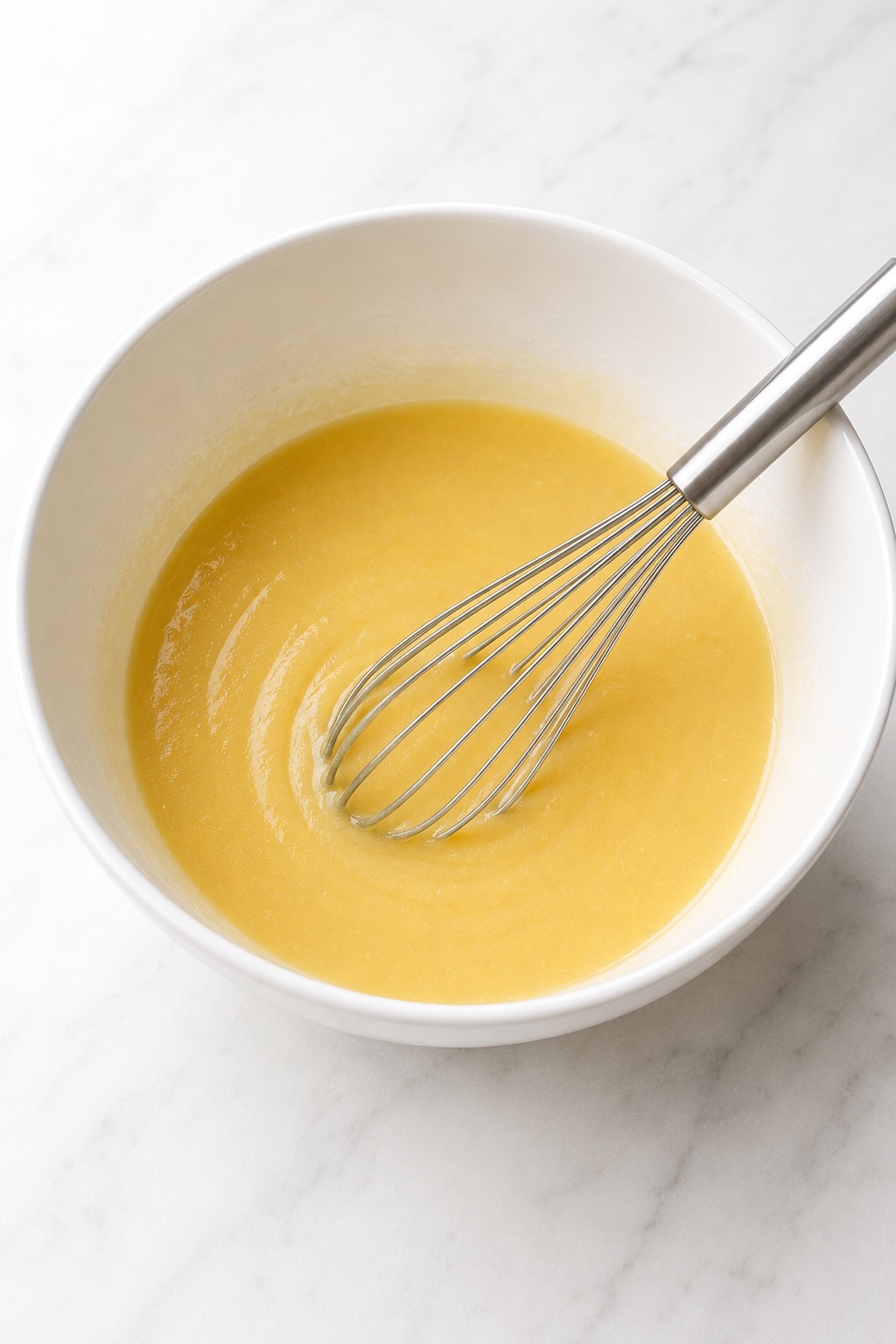
Keeping the melted butter warm but not hot helps the sugar, oil, eggs, and milk form a smooth base instead of a greasy or curdled-looking mixture.
- In the large bowl, whisk the sugar, melted cooled butter, and neutral oil until evenly combined.
- Add the eggs one at a time, whisking well after each addition.
- Whisk in the room-temperature milk, vanilla, and optional lemon zest.
What you should see: The mixture is smooth, slightly glossy, and evenly pale yellow, without floating pools of oil or firm flecks of butter.
Fold the Batter Before Adding the Berries
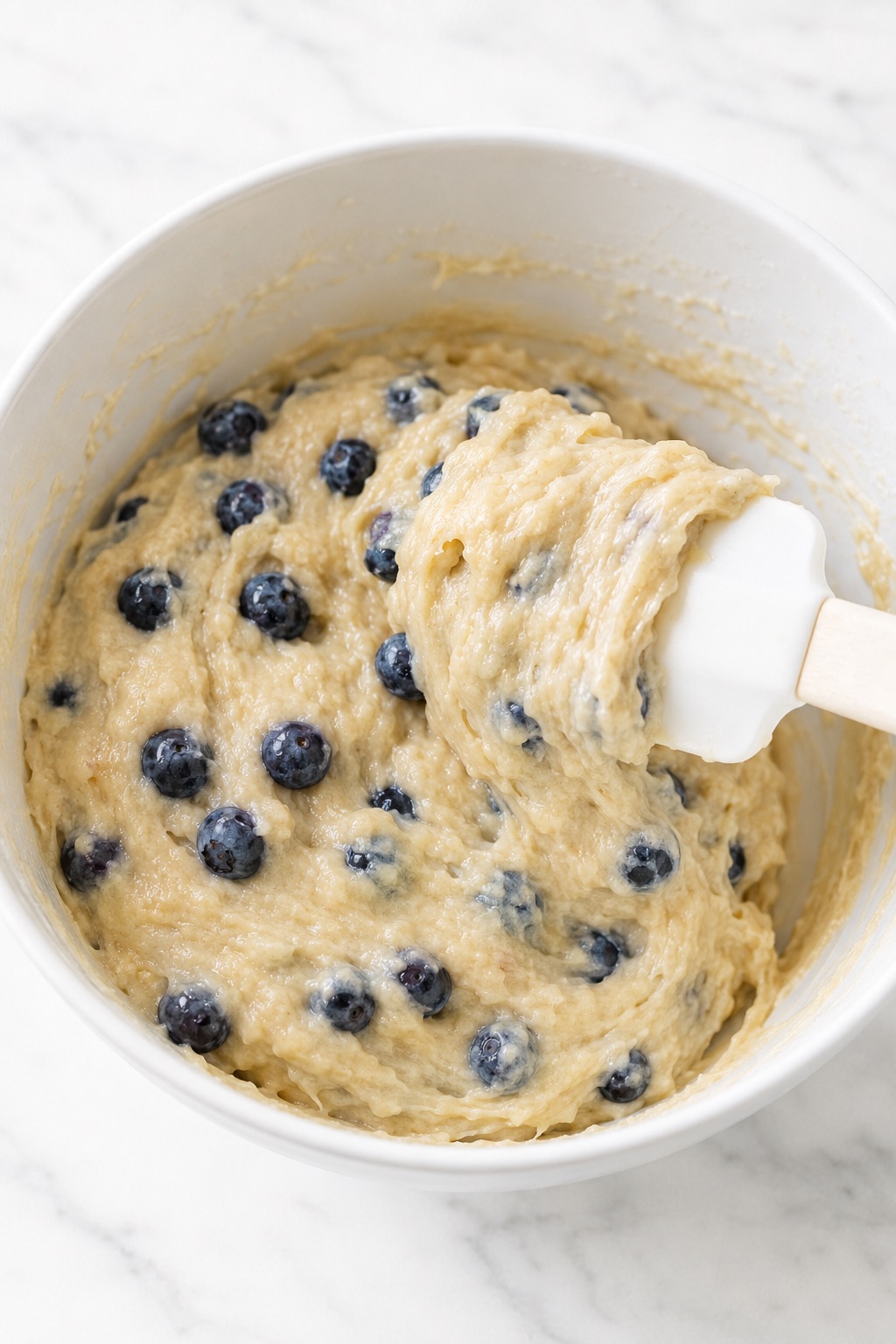
Stop the first fold while a few fine flour streaks remain; the final strokes used to add the fruit will finish the batter without overworking the gluten.
- Add the dry mixture to the wet mixture.
- Fold gently with a flexible spatula, scraping the bottom and sides, until only a few thin flour streaks remain.
- Reserve about 2 tablespoons (25 g) blueberries for the top, then add the remaining berries.
- Fold only until the berries are distributed and no dry flour pockets remain.
What you should see: The batter is thick, soft, and scoopable. It should fall slowly from the spatula rather than pour like pancake batter or stand like a stiff dough.
Fill the Pan Without Deflating the Batter
A light touch preserves the air already in the mixture and keeps the berry juices from spreading unnecessarily through the batter.
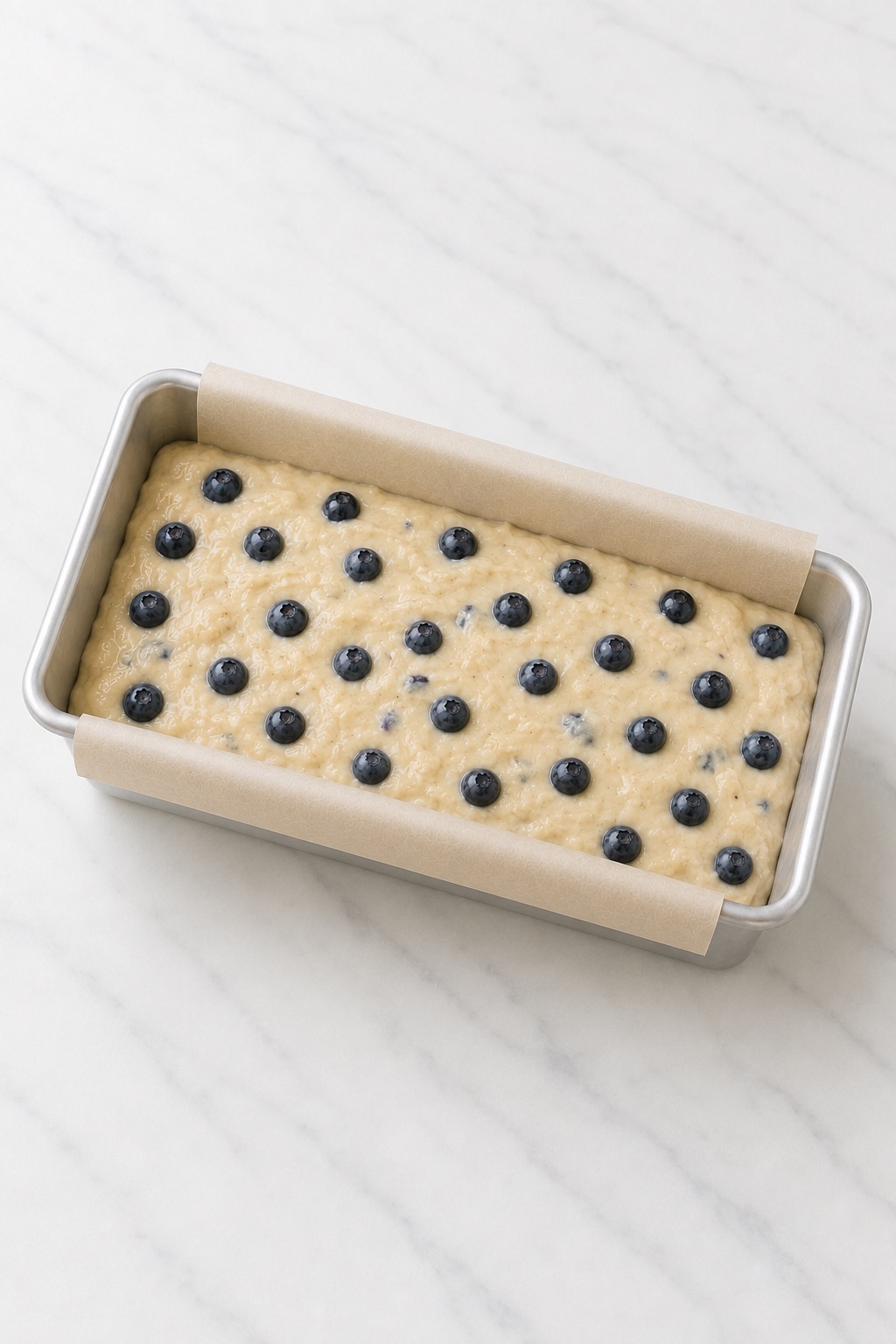
- Transfer the batter to the prepared loaf pan.
- Spread the top gently into an even layer without pressing down firmly.
- Scatter the reserved blueberries over the surface.
What you should see: The pan is filled with a level, thick layer of batter and the reserved berries sit lightly on top rather than being pushed beneath the surface.
Bake Until the Center Is Fully Set
The berries change the bake window, so begin checking early but let the center—not the first golden color at the edges—decide when the loaf is ready.
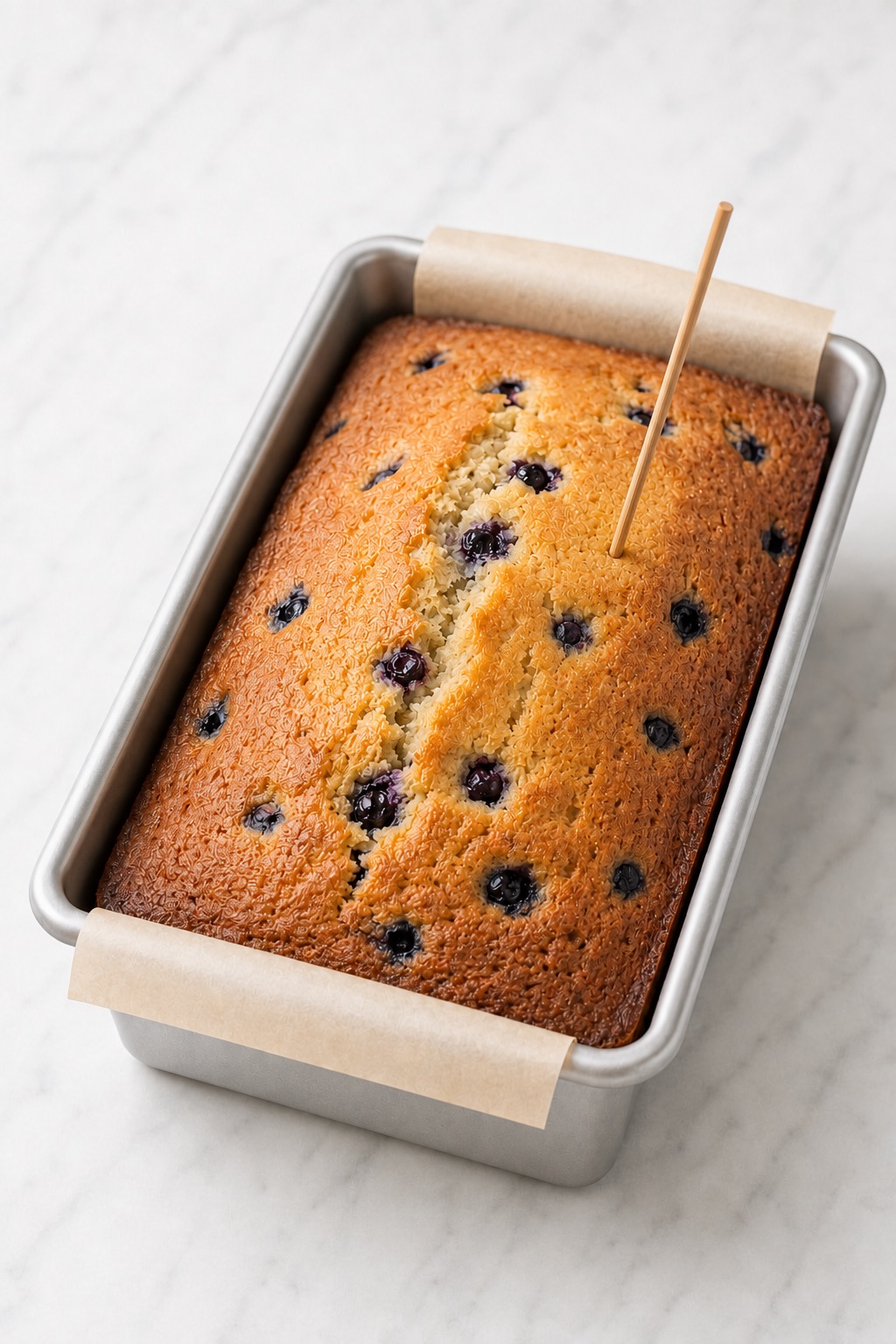
- Bake a fresh-blueberry loaf for approximately 55–65 minutes, beginning checks at 52 minutes.
- Bake a frozen-blueberry loaf for approximately 60–70 minutes, beginning checks at 58 minutes.
- If the top becomes deeply browned before the center is set, tent it loosely with foil without sealing the pan.
- Remove the loaf only when the visual, tactile, and tester cues in the doneness section agree.
What you should see: The top is golden and gently domed, the crack shows no shiny raw batter, and the center springs back softly when touched.
Cool the Loaf Before Cutting Clean Slices
Cooling is part of the method because the hot crumb is still fragile and the blueberry juices need time to settle into the surrounding structure.
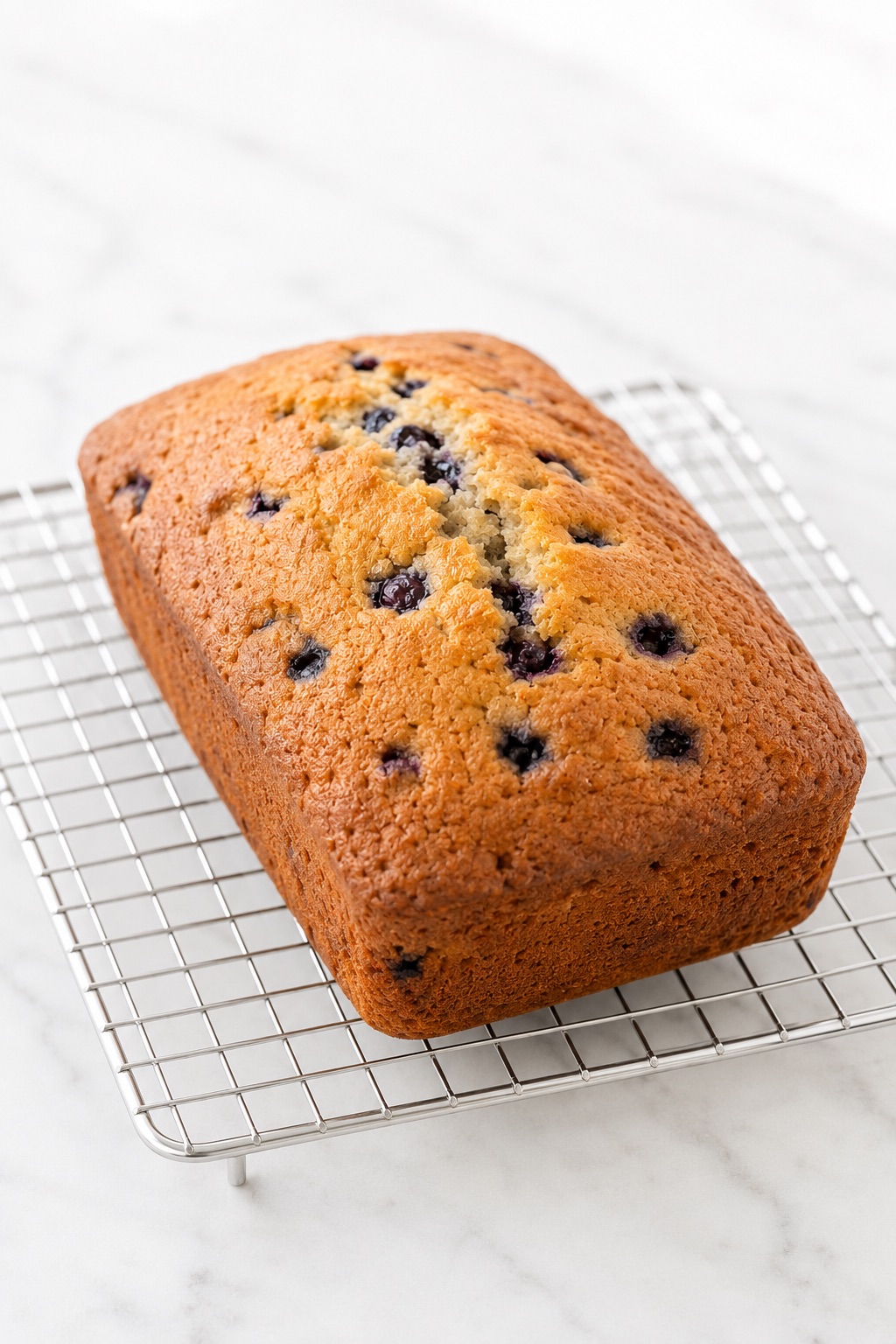
- Cool the loaf in the pan for 15 minutes.
- Use the parchment sling to lift it onto a wire rack.
- Cool for at least 90 minutes, ideally until completely at room temperature, before slicing.
What you should see: The loaf releases cleanly, the sides feel set, and a cooled slice holds together without compressing beneath the knife. This short pan rest followed by complete rack cooling is consistent with Utah State University Extension’s quick-bread guidance.
How a Thick Batter Controls Blueberry Distribution
Berry distribution depends more on the batter’s structure and the final folding technique than on coating the fruit with an extra spoonful of flour.
- Batter viscosity slows movement. With 240 g flour and only 80 ml milk, the batter is thick enough to resist the berries dropping rapidly before the structure sets.
- Fat keeps the crumb tender. Reducing the butter from the legacy formula and adding a smaller amount of oil supports softness without turning the center heavy or greasy.
- Minimal folding protects both color and lift. Fewer strokes limit gluten development, prevent crushed berries, and reduce blue streaking from frozen fruit.
- Early oven rise helps lock the fruit in place. Evenly distributed baking powder expands the batter as heat sets the flour and egg structure around the berries.
A little flour around very wet berries can sometimes help manage surface moisture, but it cannot compensate for a thin batter or aggressive mixing. That is why this formula controls the batter first.
How to Tell When Blueberry Bread Is Done
No single cue is completely reliable in a fruit-filled loaf, so look for agreement across the surface, center, tester, and optional internal temperature.
- Surface: The top is golden and gently domed.
- Central crack: A crack is normal, but it should not contain shiny, flowing batter.
- Spring-back: The center returns gently when pressed with one fingertip.
- Tester: Insert it between visible berries. Dry or moist crumbs are ideal; raw batter is not.
- Optional temperature: Check a berry-free area near the center for 200–205°F (93–96°C). King Arthur Baking also uses at least 200°F as a secondary quick-bread check.
Temperature supports the decision but does not replace the other cues. A probe pushed into a hot blueberry can read differently and bring berry juice back out with it.
The Texture of a Properly Cooled Slice
Judge the final texture only after the loaf has cooled, because a hot berry pocket can make an otherwise baked crumb look wetter than it really is.
- The crumb should feel moist and tender, not sticky like paste.
- The slice should bend slightly before breaking rather than crumbling immediately.
- Berry pockets may look glossy, but the crumb between them should be set.
- The bottom should be evenly baked with no dense, translucent line.
Details That Make a Better Blueberry Loaf
These small controls solve the problems most likely to affect this exact loaf without repeating the full method.
- Dry fresh berries thoroughly. Surface water thins the batter exactly where the fruit enters it.
- Keep frozen berries frozen. Add them at the last possible moment so they release less color and do not warm before baking.
- Reserve a few berries for the top. This creates an abundant finished appearance without forcing all the fruit downward through extra folding.
- Use a metal pan when possible. A light-colored metal 9×5-inch pan gives the most predictable balance of center baking and edge browning.
- Check beside the berries. A tester through a fruit pocket can look wet even when the crumb is properly baked.
- Cool longer than feels necessary. The 90-minute rack rest protects the clean, cohesive slice promised by the recipe.
Blueberry Bread Mistakes—and How to Prevent Them
When this loaf misses its target, the appearance of the crumb usually points directly to the step that needs adjustment.
| Mistake | What happens | Why it happens | How to prevent or fix it |
|---|---|---|---|
| Adding wet fresh berries | Gummy pockets or purple smears form around the fruit | Surface water loosens the batter locally | Wash the berries early and dry them completely before mixing |
| Thawing frozen berries | The batter turns deeply blue and the center bakes unevenly | Released juice spreads before the crumb sets | Use the berries straight from the freezer and fold only at the end |
| Overmixing after adding flour | The crumb becomes tough, tight, or tunneled | Excess stirring develops gluten and crushes the berries | Stop at a few flour streaks, then finish with minimal berry-folding strokes |
| Trusting one wet tester | A baked loaf stays in the oven too long and dries out | The tester may have pierced a blueberry | Test again in a berry-free area and reconcile the other doneness cues |
| Removing the loaf at a fixed time | The center remains raw or the edges become dry | Pan, oven, and berry temperature change the real bake window | Begin checking within the stated range and let the center cues decide |
| Slicing while warm | The center compresses and the slices tear | The crumb and berry juices have not finished settling | Cool 15 minutes in the pan and at least 90 minutes on a rack |
Beautiful Ways to Serve Blueberry Bread
Blueberry bread is lovely at room temperature, but the right finishing touch can shift it from an everyday snack to a polished breakfast or dessert plate.
- Simple and warm: Gently rewarm one slice and spread it with salted or unsalted butter.
- Breakfast style: Serve with plain Greek yogurt and a small handful of fresh blueberries.
- Brunch board: Arrange clean slices with butter, honey, berries, and toasted almonds on the side.
- Light dessert: Add a small spoonful of softly whipped cream. This homemade whipped cream keeps the finish simple and lets the berries remain the focus.
- Bright variation: Offer a little lemon curd beside the loaf rather than adding lemon glaze to the bread itself.
For drinks, pair it with medium-roast coffee, black tea, Earl Grey, or cold milk. Avoid very sweet accompaniments if you want the blueberry flavor to remain clear.
How to Store, Freeze and Gently Rewarm Blueberry Bread
Let the loaf cool completely before wrapping it; trapped warmth creates condensation that softens the surface and can make the crumb feel wetter.
| Method | How to store | Quality window |
|---|---|---|
| Room temperature | Keep the completely cooled loaf or slices airtight | Up to 2 days |
| Refrigerator | Wrap airtight; bring to room temperature or warm briefly before serving | Up to 5 days |
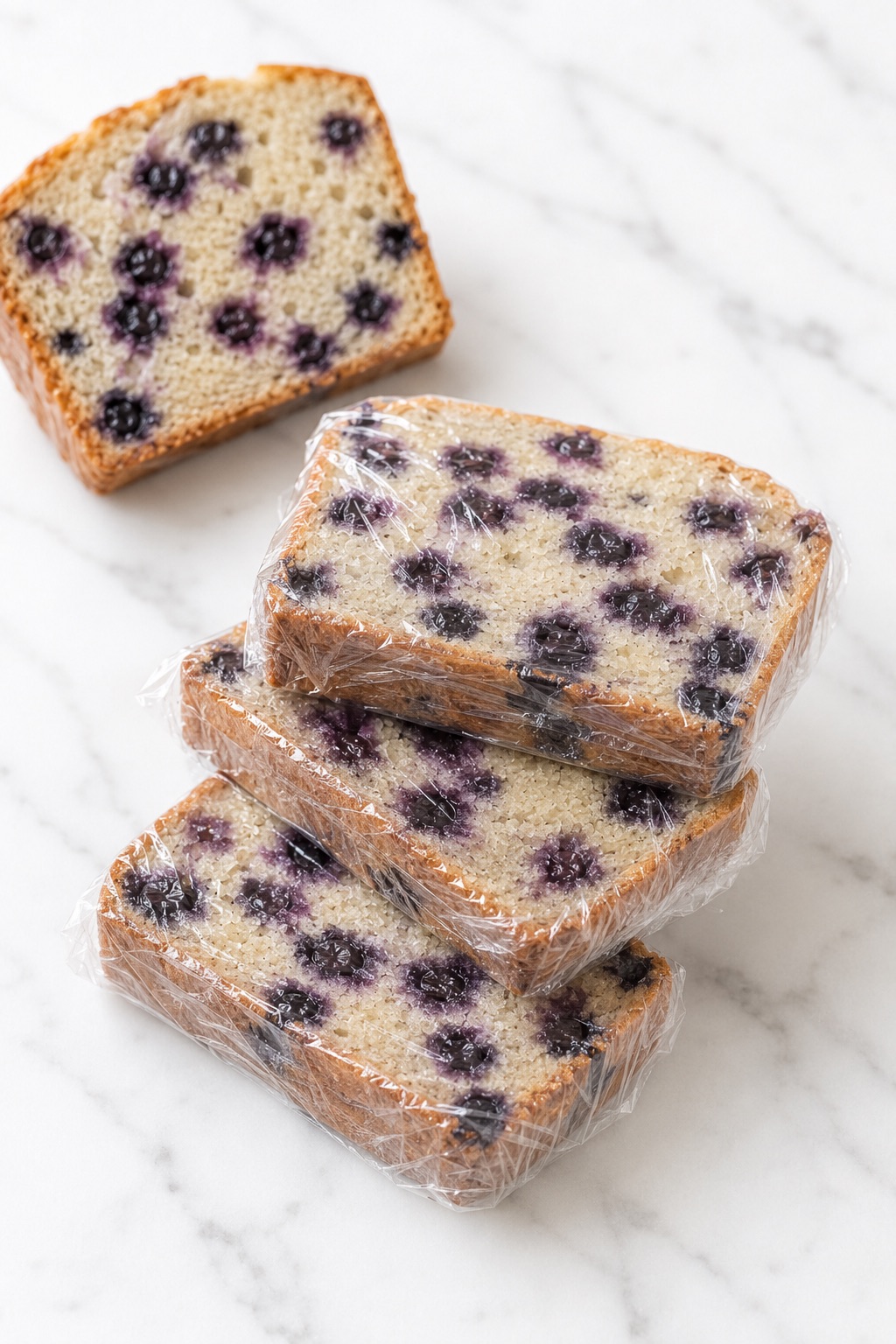
| Freezer | Wrap individual cooled slices, then place them in a freezer-safe container or bag | Up to 2 months |
Thaw a frozen slice for 45–60 minutes at room temperature or overnight in the refrigerator. To refresh it in the oven, warm at 300°F (150°C) for 6–8 minutes.
Microwave Reheating by Wattage
For one room-temperature slice, begin with the shortest time and add only a few seconds if needed so the fruit does not become scalding while the crumb turns tough.
| Microwave power | Initial time |
|---|---|
| 700 W | 18–22 seconds |
| 800 W | 15–18 seconds |
| 1000 W | 12–15 seconds |
| 1200 W | 10–12 seconds |
Thoughtful Blueberry Bread Substitutions—and What They Change
Only a few swaps preserve the intended loaf closely enough to recommend without creating a separate, unvalidated recipe.
- Whole milk to 2% milk: Replace 1:1. The loaf may taste slightly less rich, but the structure should remain close.
- Fresh to frozen blueberries: Replace 1:1 by weight and follow the frozen-fruit handling and longer bake window.
- Neutral oil: Use the same amount of another neutral oil, including mild avocado, canola, grapeseed, or vegetable oil.
- Lemon zest: Omit it completely if you want the purest blueberry-and-vanilla profile.
Do not add lemon juice without rebalancing the formula. Gluten-free, dairy-free, egg-free, mini-loaf, and muffin conversions are not promised here because each changes structure, heat transfer, or timing beyond a simple substitution.
Blueberry Bread Questions, Answered
These answers cover the useful questions that remain after the fresh-versus-frozen protocol, doneness guide, and storage instructions above.
Can I use frozen wild blueberries instead of regular blueberries?
Yes. Use 225 g directly from the freezer and do not thaw. Wild blueberries are smaller, so they may distribute more evenly and tint the batter more readily; fold them in with as few strokes as possible.
Can I bake blueberry bread in a glass loaf pan?
A glass 9×5-inch pan can work, but it does not behave exactly like light-colored metal. Watch the edges closely, begin checking early, and rely on the full doneness guide rather than assuming the same bake time. Metal remains the recommended pan for the most predictable result.
Why can the center look moist even when the loaf reached 200°F?
The probe or knife may have passed through a hot blueberry, leaving glossy juice on the surrounding crumb. Check a second berry-free spot, confirm that no raw batter shows in the central crack, and cool the loaf completely before judging the final texture.
Keep Baking with Blueberries and Cozy Loaves
Once this blueberry loaf is cooling, your next bake can follow one of three paths: stay close to the same berry-filled breakfast mood, explore another comforting quick bread, or turn blueberries into a more elaborate dessert.
More Easy Blueberry Bakes for Breakfast
These recipes keep the bright blueberry flavor while changing the format, timing, or texture for another morning-friendly bake.
- Bakery Style Blueberry Muffins Recipe — choose these when you want tall individual portions with a fluffy bakery-style crumb.
- Lemon Blueberry Muffins — this is the brighter, streusel-topped route when you want lemon to become a clear part of the flavor.
- Blueberry Pancakes — make these for a faster stovetop breakfast with soft layers and warm berry pockets.
- Blueberry Cake — move from quick bread to a softer cake-style crumb while keeping blueberries at the center.
Stay with a Cozy Homemade Loaf
If the sliceable quick-bread format is what you loved most, these loaves offer a familiar method with a different flavor direction.
- Banana Bread Recipe — the closest all-purpose loaf for a moist, classic bakery-style result.
- Healthy Banana Bread — choose this when you want a naturally sweeter, lighter everyday loaf.
- Banana Nut Bread Recipe — toasted nuts add the crunch and depth that this tender blueberry loaf intentionally leaves out.
- Pumpkin Bread Recipe — shift from fresh berry flavor to warm spice and a soft autumn crumb.
Make Blueberries the Centerpiece Dessert
For a weekend table or special occasion, these recipes build the same fruit into richer fillings, contrasting textures, and more dramatic presentations.
- Blueberry Pie — choose it for a classic pastry shell filled with thick, sliceable blueberry filling.
- Blueberry Cobbler — this is the warm, rustic route with a juicy fruit base and golden topping.
- Blueberry Cheesecake — make it when you want a creamy celebration dessert finished with glossy berry topping.
- Blueberry Cream Cheese Bars Recipe — these combine berry brightness and creamy richness in an easier-to-portion bar.
Why This Blueberry Bread Belongs in Your Recipe Box
This is the kind of dependable loaf recipe that earns its place by answering the practical questions that usually appear only after the batter is mixed.
- A true blueberry-first identity: Vanilla supports the fruit, and lemon stays optional.
- Fresh and frozen reliability: Each berry type receives its own handling and baking window.
- A controlled tender crumb: Butter, oil, milk, and flour are balanced for softness without gumminess.
- Observable stopping points: The batter, doneness, and cooling stages all include usable visual or tactile cues.
- Flexible serving: The loaf moves naturally from breakfast to brunch, snack time, or a light dessert.
- Practical keeping quality: Clear room-temperature, refrigerator, freezer, thawing, oven, and microwave guidance protects every slice.
A Final Note on Blueberry Bread
This blueberry bread is built for the simple pleasure of a tender homemade loaf filled generously with fruit. It does not need glaze, streusel, or a complicated finish to feel complete.
Return to it whenever you have fresh berries to use or a frozen bag waiting for a reliable plan. The separate protocols make the recipe useful across seasons, while the measured formula keeps the promised texture consistent.
The quiet discipline of good quick bread is knowing when to stop mixing, when to keep baking, and when to let cooling do the final work. Those pauses are what turn simple ingredients into a loaf that slices cleanly and tastes as generous as it looks.

Blueberry Bread (Moist, Tender & Loaded with Berries)
A moist, tender American-style blueberry quick bread filled with juicy berries and warm vanilla. The thick batter supports abundant fruit, while separate fresh and frozen blueberry directions protect the center and create clean slices after complete cooling.
Ingredients
- 2 cups (240 g) all-purpose flour, spooned and leveled
- 2 teaspoons (8 g) baking powder
- 3/4 teaspoon (4 g) fine salt
- 1 cup (200 g) granulated sugar
- 6 tablespoons (85 g) unsalted butter, melted and cooled to 90–100°F (32–38°C)
- 2 tablespoons (28 g or 30 ml) neutral oil
- 2 large eggs (about 100 g without shells), at room temperature
- 1/3 cup (80 ml) whole milk, at room temperature
- 2 teaspoons pure vanilla extract
- 1 1/2 cups (225 g) blueberries, fresh or frozen
- Optional: 1 teaspoon finely grated lemon zest
Instructions
- Prepare the oven and pan. Preheat the oven to 350°F (177°C) with a rack in the center. Lightly grease a light-colored metal 9×5-inch loaf pan and line it with a parchment sling.
- Prepare the blueberries. If using fresh blueberries, rinse them ahead of time and dry them completely. Keep frozen blueberries frozen until the final fold; do not thaw.
- Combine the dry ingredients. Whisk the flour, baking powder, and salt together in a medium bowl until evenly distributed.
- Build the wet base. In a large bowl, whisk the sugar with the melted, cooled butter and oil. Add the eggs one at a time, whisking well after each addition. Whisk in the milk, vanilla, and optional lemon zest.
- Form the batter. Fold the dry ingredients into the wet ingredients only until a few thin flour streaks remain. The batter should be thick, soft, and scoopable rather than pourable.
- Add the blueberries. Reserve about 2 tablespoons (25 g) blueberries for the top. Fold the remaining berries into the batter with minimal strokes.
- Fill the pan. Transfer the batter to the prepared pan, level it gently, and scatter the reserved blueberries over the surface.
- Bake to the full doneness standard. Bake a fresh-blueberry loaf for 55–65 minutes or a frozen-blueberry loaf for 60–70 minutes. Tent loosely with foil only if the top becomes deeply browned before the center is ready.
- Confirm doneness. The loaf is ready when the top is golden and gently domed, no shiny wet batter appears in the central crack, the center springs back gently, and a tester inserted between visible berries shows dry or moist crumbs rather than raw batter. An optional reading in a berry-free center area is 200–205°F (93–96°C).
- Cool before slicing. Cool in the pan for 15 minutes. Lift the loaf onto a wire rack and cool for at least 90 minutes, ideally completely, before cutting.
Notes
- Fresh blueberries must be firm and completely dry before folding.
- Use frozen blueberries directly from the freezer; do not thaw or rinse them.
- Light blue streaking from frozen fruit is normal. Minimal folding keeps the entire batter from turning blue or purple.
- A natural crack along the top is normal when no shiny raw batter remains inside it.
- Insert the tester and thermometer between visible berries; berry juice can imitate wet batter or distort the temperature reading.
- Lemon zest is optional. Do not add lemon juice without rebalancing the formula.
- Cool the loaf completely for the most accurate crumb assessment and the cleanest slices.
- Store airtight at room temperature for up to 2 days or refrigerate for up to 5 days. Freeze individually wrapped slices for up to 2 months.
Nutrition Information:
Yield: 10 Serving Size: 1 sliceAmount Per Serving: Calories: 285Total Fat: 11.2gSaturated Fat: 5.1gCholesterol: 56mgSodium: 259mgCarbohydrates: 42.4gFiber: 1.2gSugar: 22.8gProtein: 4.2g
Nutrition information is provided as an estimate only and may vary based on specific ingredients, brands, and portion sizes used. This information should not be considered medical or nutritional advice.
12 Sweet Favorites — Yours, Free 🍰
Tiramisù, no-bake cheesecake, the perfect chocolate chip cookie & 9 more reader-loved desserts — gathered into one beautiful free recipe book. From my kitchen to yours.
No spam, just sweet things. Unsubscribe anytime.