Peach Cobbler (Juicy Southern Peach Filling & Golden Buttery Topping)
🎁 FREE E-BOOK: 12 Sweet Favorites — reader-loved desserts in one beautiful recipe book.
There is something almost magical about a warm Peach Cobbler fresh from the oven.
As it bakes, the sweet aroma of ripe peaches, vanilla, and butter fills the kitchen. The fruit bubbles gently around the edges while the golden topping develops a lightly crisp surface that gives way to a soft, tender interior. It is the kind of dessert that instantly feels like summer.
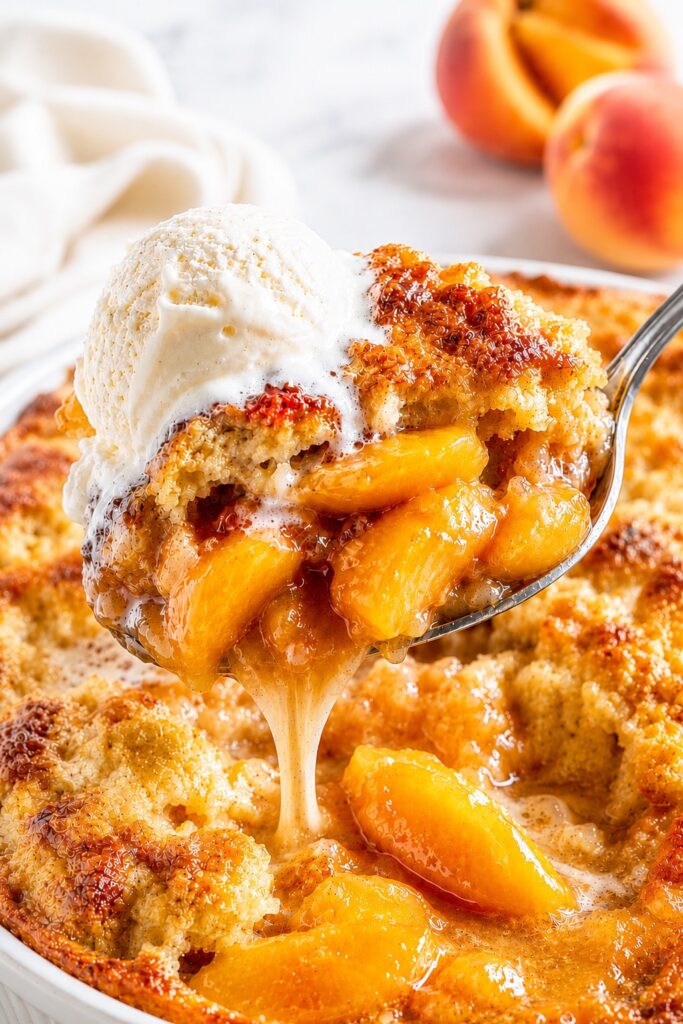
One of the reasons so many people save this Peach Cobbler recipe is because it strikes the perfect balance between simplicity and comfort. You do not need complicated techniques or specialty ingredients to create a dessert that feels worthy of a family gathering, holiday table, or weekend treat.
Unlike cobblers that turn soggy underneath or dry on top, this version creates layers of texture. The peaches stay juicy without becoming watery, while the buttery topping absorbs just enough fruit juice to remain soft and flavorful.
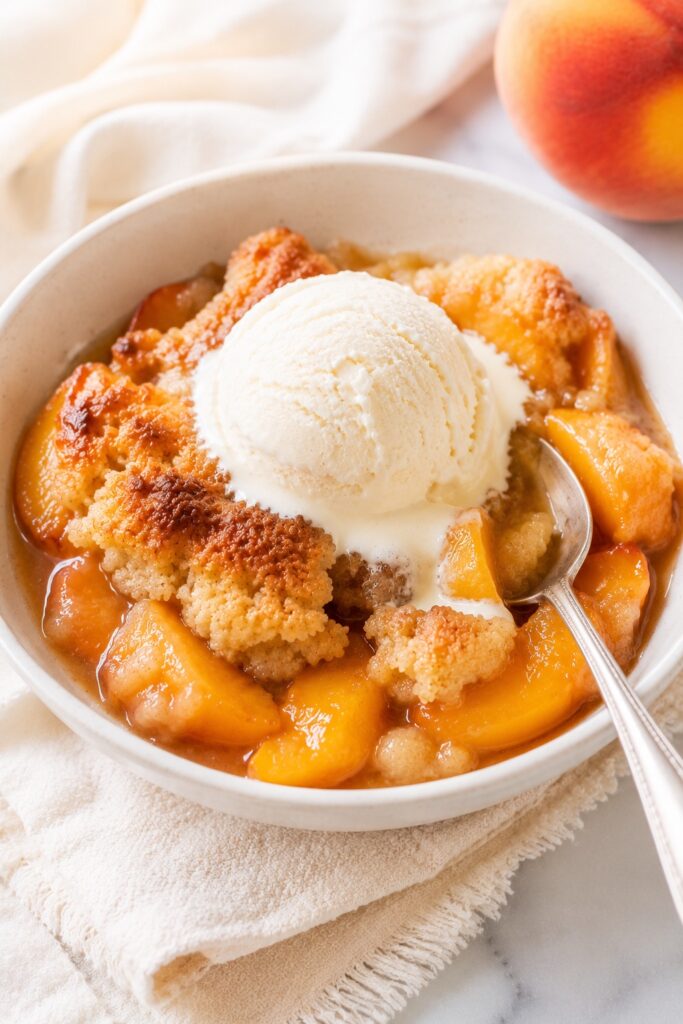
Whether served with melting vanilla ice cream on a warm evening or enjoyed cold straight from the refrigerator the next day, this is one of those timeless desserts that never seems to go out of style.
What Is Peach Cobbler?
Peach Cobbler is a classic baked fruit dessert made with sweet peaches and a rustic topping that bakes into a golden, tender crust. Unlike peach pie, which uses a rolled pastry crust, cobbler has a more relaxed homemade structure, with the topping spooned, poured, or dropped over the fruit before baking.
The name “cobbler” is often connected to the dessert’s uneven, cobbled appearance after baking. As the peaches bubble underneath, the topping rises and settles in rustic patches, creating a dessert that looks homemade, generous, and naturally imperfect in the best way.
In Southern-style Peach Cobbler, the goal is not a neat slice like pie. The beauty is in the contrast: soft juicy peaches, syrupy fruit juices, golden edges, and a buttery topping that is tender underneath and lightly crisp on top.
This makes Peach Cobbler different from peach crisp or peach crumble, which usually have a streusel-style topping made with oats, sugar, flour, and butter. Cobbler is softer, more cake-like or biscuit-like, and especially good served warm with vanilla ice cream melting into the peach filling.
Peach Cobbler at a Glance
| Feature | Details |
|---|---|
| Texture | Juicy peaches with a soft, buttery golden topping |
| Flavor | Sweet peaches, vanilla, butter, and warm cinnamon |
| Difficulty | Easy |
| Time | About 1 hour |
| Servings | 8 servings |
| Method | Oven baked |
| Best For | Summer desserts, family gatherings, potlucks, holidays |
In short: This Peach Cobbler delivers juicy fruit, a rich buttery topping, and classic homemade flavor with minimal effort.
Why This Peach Cobbler Recipe Works So Well
Many cobbler recipes fail because the peaches release more liquid than expected during baking.
This recipe works because the fruit filling and topping support each other rather than compete.
The peaches provide moisture and natural sweetness while a small amount of flour helps lightly thicken the juices as they bake.
The butter contributes richness while helping the topping brown beautifully.
The batter contains enough structure to rise and hold its shape without becoming dense.
Moderate baking temperatures allow the fruit juices to reduce slightly while giving the topping time to cook through completely.
One small detail that makes a noticeable difference is allowing the cobbler to rest after baking. During this time, the juices settle and thicken naturally, making serving easier and improving texture.
Why This Peach Cobbler Isn’t Watery
One of the biggest complaints about homemade Peach Cobbler is a filling that turns thin, watery, or soupy after baking.
This recipe is designed to avoid that problem by balancing the fruit, thickener, baking time, and resting period.
The peaches release plenty of natural juice as they bake, but a small amount of flour helps lightly thicken those juices without creating a heavy pie-filling texture. The result is a filling that stays syrupy, glossy, and scoopable rather than runny.
Proper baking is equally important. The cobbler is baked until the peach filling bubbles actively around the dish, which indicates the juices have reached temperatures high enough to begin thickening properly.
The final step is patience. Allowing the cobbler to rest for at least 15 minutes after baking gives the filling time to settle and naturally thicken.
When these elements work together, the result is exactly what most bakers want: juicy peaches, rich flavor, and a Peach Cobbler that holds together beautifully when served.
Why You’ll Love This Peach Cobbler
- Made with simple pantry ingredients
- Works with fresh, frozen, or canned peaches
- Perfect balance of fruit and topping
- Beginner-friendly recipe
- Wonderful warm or cold
- Easy to prepare ahead
- Beautiful enough for holidays yet simple enough for weeknights
Save this recipe for peach season, summer cookouts, family reunions, and those evenings when you want something comforting without spending hours baking.
Is This Peach Cobbler Recipe Right For You?
This Peach Cobbler is ideal if you love warm, fruit-filled desserts with juicy peaches, a buttery golden topping, and a soft homemade texture. It is designed to feel comforting and classic without requiring complicated techniques or specialty ingredients.
You will probably love this recipe if you:
- Want an easy Peach Cobbler with a soft, buttery topping
- Prefer juicy peaches without a watery filling
- Need a beginner-friendly summer dessert
- Want a recipe that works with fresh, frozen, or canned peaches
- Enjoy warm fruit desserts served with vanilla ice cream
- Need a crowd-friendly dessert for potlucks, holidays, or family gatherings
- Like old-fashioned desserts that taste homemade and comforting
If you’re looking for a dependable Peach Cobbler recipe that delivers sweet peaches, golden topping, and a scoopable texture every time, this is an excellent recipe to keep for summer baking and year-round comfort desserts.
Why This Peach Cobbler Recipe Is Reliable
This recipe was designed to solve the most common Peach Cobbler problems: watery filling, undercooked topping, and bland peach flavor.
The ingredient ratios create enough structure to thicken the fruit juices naturally while still keeping the filling juicy and spoonable. The baking method also allows the topping to become deeply golden without drying out.
If you have struggled with Peach Cobbler in the past, this version focuses on consistency as much as flavor.
The Baking Science Behind Perfect Peach Cobbler
Great Peach Cobbler is all about balancing fruit juices, structure, and heat.
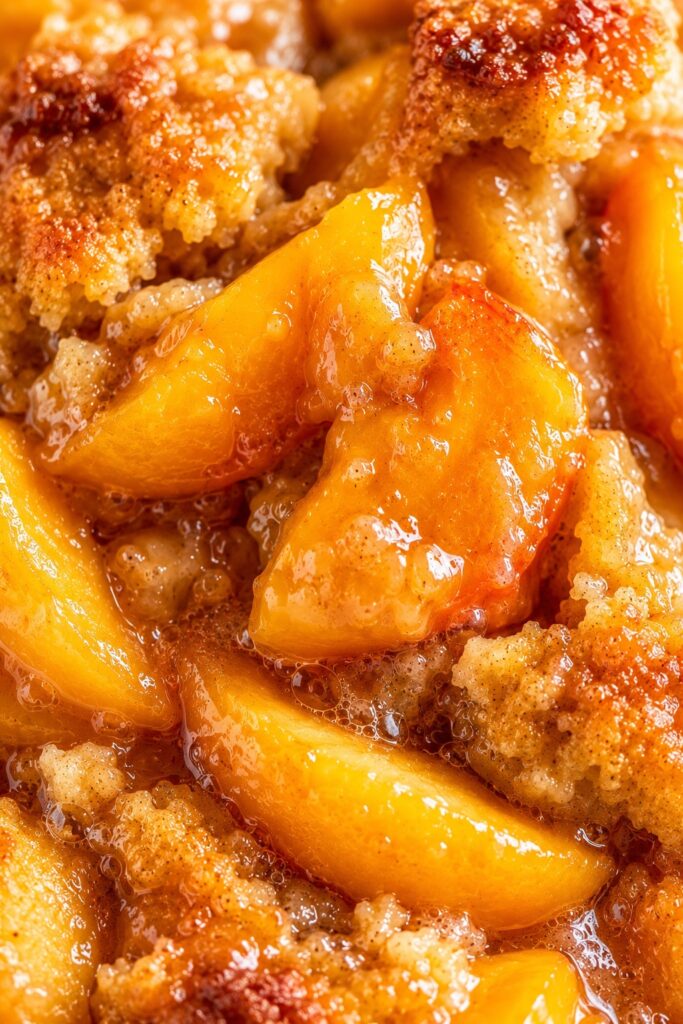
As peaches bake, their cell walls begin to soften and break down. This releases natural juices that combine with sugar to create the syrupy filling that makes cobbler so irresistible. The challenge is allowing enough juice to develop for flavor while preventing the dessert from becoming watery.
Why Peaches Taste Sweeter After Baking
Many people notice that baked peaches taste sweeter than raw peaches. While the sugar content does not actually increase, baking softens the fruit and concentrates some of its moisture, making the natural peach flavor seem richer, deeper, and more pronounced.
How Sugar Controls Juice Release
Sugar does more than sweeten the filling. It begins drawing moisture from the peaches almost immediately. This is why the peach mixture often looks noticeably juicier after sitting for just a few minutes. During baking, those juices combine with the sugar to create the glossy syrup that surrounds the fruit.
Why the Topping Stays Soft Underneath and Golden on Top
One of the most recognizable characteristics of Peach Cobbler is the contrast between the top and bottom of the crust. The portion closest to the fruit absorbs some of the peach juices and stays soft and tender, while the exposed surface browns in the oven and develops a lightly crisp golden finish.
The Importance of Fruit-to-Topping Ratio
A common mistake is adding too much topping. When the topping layer becomes too thick, the peaches can struggle to bubble through properly and the dessert loses the balance that makes cobbler special. A good Peach Cobbler should always showcase the fruit first, with the topping supporting rather than overpowering it.
Another small but important detail is the resting period after baking. While the cobbler cools, the bubbling juices naturally thicken and settle. This is why a Peach Cobbler that seems slightly loose straight from the oven often reaches its ideal consistency 15 to 20 minutes later.
Why Some Peach Cobblers Turn Watery (And How to Prevent It)
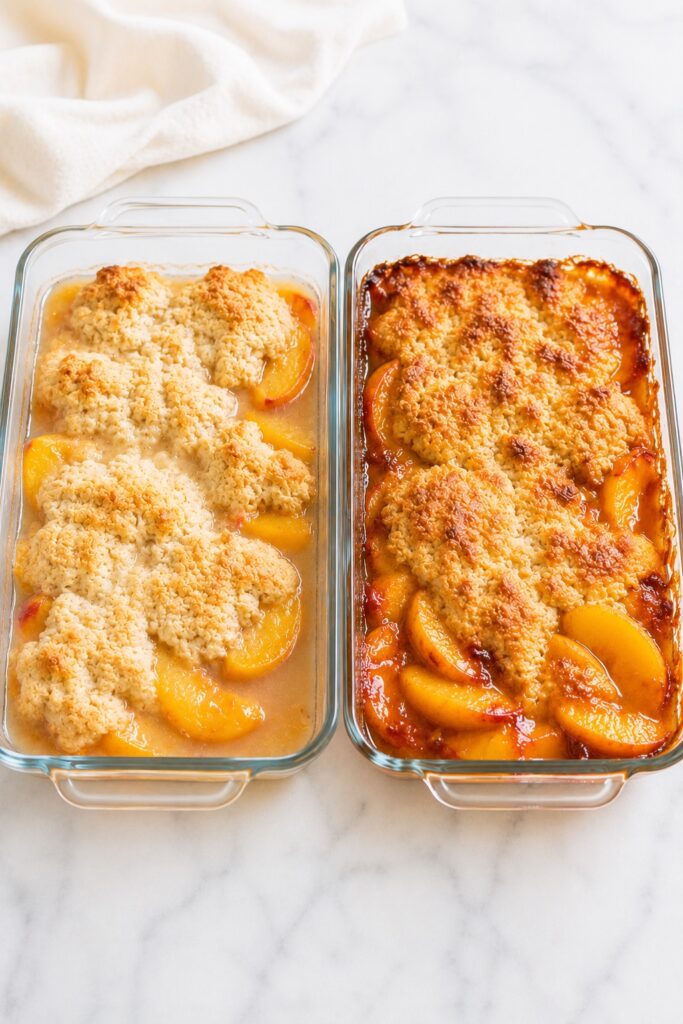
A watery Peach Cobbler is one of the most common frustrations home bakers encounter, especially when using very ripe summer peaches.
The good news is that the peaches themselves are usually not the problem. In most cases, excess liquid comes from a combination of fruit moisture, insufficient thickening, underbaking, or serving the cobbler too soon.
Very Ripe Peaches Release More Juice
As peaches ripen, their structure softens and their water content becomes easier to release during baking. Exceptionally ripe peaches often produce significantly more juice than slightly firm peaches.
If your peaches feel extremely soft, adding an extra tablespoon of flour to the filling can help compensate for the additional moisture.
Frozen Peaches Need Extra Attention
Frozen peaches are convenient and work well in cobbler, but they often release more liquid than fresh fruit. Thawing and draining excess liquid before baking can make a noticeable difference in the final texture.
Undercooked Cobbler Often Looks Set but Isn’t
One of the easiest mistakes is removing the cobbler from the oven when the topping looks golden but the filling has not fully bubbled underneath.
The peach filling should be actively bubbling around multiple areas of the dish, not just near one corner. Those bubbles indicate that the juices have reached temperatures high enough to begin thickening properly.
Skipping the Resting Period
Fresh from the oven, even a perfectly baked Peach Cobbler may appear slightly loose.
During the first 15 to 20 minutes of cooling, the filling continues to thicken as the temperature gradually drops. Cutting into it immediately can make the dessert seem much runnier than it actually is.
The Best Rule of Thumb
If the topping is deeply golden, the peaches are visibly bubbling throughout the dish, and the cobbler has rested for at least 15 minutes, you are very unlikely to end up with a watery filling.
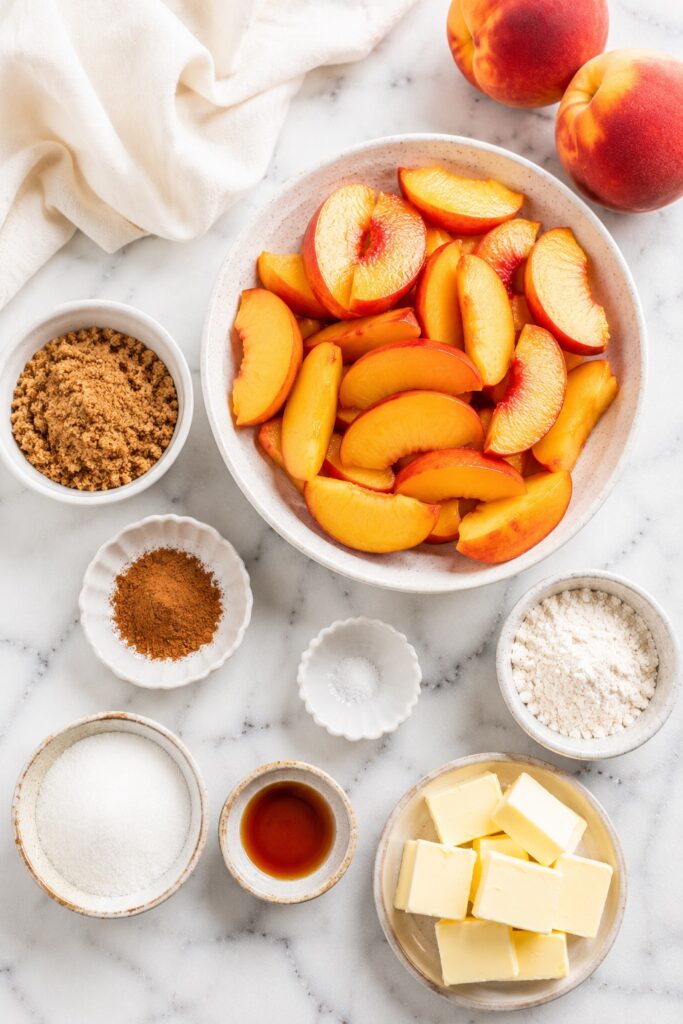
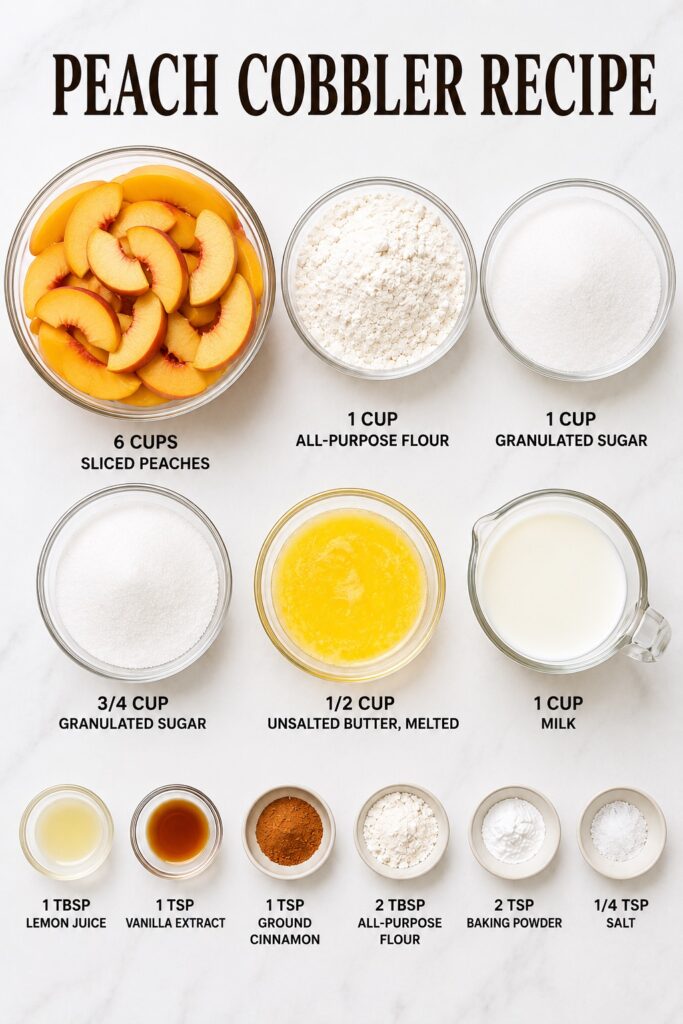
Ingredients for Peach Cobbler
For the Peach Filling
- 6 cups sliced peaches
- 3/4 cup granulated sugar
- 1 tablespoon lemon juice
- 1 teaspoon vanilla extract
- 1 teaspoon ground cinnamon
- 2 tablespoons all-purpose flour
For the Cobbler Topping
- 1 cup all-purpose flour
- 1 cup granulated sugar
- 2 teaspoons baking powder
- 1/4 teaspoon salt
- 1 cup milk
- 1/2 cup unsalted butter, melted
Ingredient Intelligence: Small Details That Make a Difference
Peaches
Fresh ripe peaches provide the best flavor, but frozen peaches work surprisingly well. If using frozen peaches, thaw and drain excess liquid before baking.
Flour
A small amount in the filling helps stabilize the peach juices without creating a pie-like consistency.
Butter
Melted butter creates the signature rich flavor while helping form a beautifully golden crust.
Baking Powder
This gives the topping lift and prevents a heavy texture.
Sugar
Granulated sugar sweetens the filling while also helping draw moisture from the peaches. As the peaches bake, the sugar combines with the fruit juices to create the glossy syrup that makes Peach Cobbler so irresistible.
The sugar in the topping contributes sweetness, structure, and browning. It helps create the golden crust that contrasts beautifully with the juicy peaches underneath.
Lemon Juice
Lemon juice brightens the flavor of the peaches and helps balance sweetness. Even though the finished cobbler does not taste lemony, the acidity makes the peach flavor taste fresher and more pronounced.
This is especially helpful when using very sweet peaches or canned peaches packed in syrup.
Vanilla Extract
Vanilla adds warmth and depth to the filling. It complements both the peaches and the buttery topping without overpowering either one.
Although used in a small amount, vanilla helps create the classic homemade flavor people often associate with old-fashioned Peach Cobbler.
Cinnamon
Cinnamon adds gentle warmth and enhances the natural sweetness of the peaches.
It should support the fruit rather than dominate it. The goal is a subtle background note that makes the peach flavor feel deeper and more comforting.
Milk
Milk provides moisture for the cobbler topping and helps create its soft, tender texture.
Combined with the melted butter and baking powder, it allows the batter to rise evenly while staying light rather than dense.
A Helpful Insight
Very ripe peaches often release more liquid than expected. If your peaches are exceptionally juicy, adding an extra tablespoon of flour to the filling can help maintain the ideal consistency.
Why Lemon Juice Matters More Than You Think
At first glance, one tablespoon of lemon juice may seem insignificant in a Peach Cobbler, but it plays several important roles behind the scenes.
Most importantly, lemon juice helps balance sweetness. As peaches bake, their flavor becomes softer, rounder, and more concentrated. A small amount of acidity prevents the filling from tasting flat and helps the natural peach flavor stand out more clearly.
Lemon juice also supports overall flavor perception. Even when you cannot specifically taste lemon in the finished dessert, the peaches often taste brighter and fresher because of its presence.
Another benefit is that acidity helps create a more balanced filling when using especially sweet peaches or canned peaches packed in syrup.
Many experienced bakers describe lemon juice as an ingredient that disappears into the recipe while quietly making everything taste more like itself.
It is a small addition, but it often makes the difference between a cobbler that tastes simply sweet and one that tastes distinctly peachy.
The Best Peaches for Peach Cobbler
Not all peaches bake the same way. While almost any ripe peach can make a delicious cobbler, some varieties hold their shape better during baking while others break down into a softer, more jammy filling.
Freestone Peaches Are Usually the Best Choice
Freestone peaches are often preferred for cobbler because the pit separates easily from the flesh, making them faster to prepare. They also tend to maintain a pleasant texture during baking without turning mushy.
Many of the peaches sold at farmers markets during peak summer season are freestone varieties.
Clingstone Peaches Create a Softer Filling
Clingstone peaches have flesh that clings tightly to the pit. They are often exceptionally juicy and flavorful but can soften more dramatically during baking.
If you enjoy a cobbler with a softer, more spoonable filling, clingstone peaches can work beautifully.
Yellow vs White Peaches
Yellow peaches are the traditional choice for Peach Cobbler. They offer a balanced combination of sweetness and acidity that becomes even more pronounced after baking.
White peaches are sweeter and less tart. They create a milder flavor profile and often produce a slightly more delicate-tasting cobbler.
How to Choose Ripe Peaches
Look for peaches that smell fragrant and yield slightly when gently pressed near the stem end.
Very firm peaches often lack flavor, while overly soft peaches may release excessive liquid during baking.
A peach that feels slightly soft but still holds its shape is usually ideal for cobbler.
Baker’s Note: If your peaches are so ripe that they leave juice on the cutting board while you slice them, expect a juicier cobbler. In that case, a little extra flour in the filling can help maintain the perfect balance between syrupy and runny.
Understanding Cobbler Toppings: Biscuit, Cake-Style, and Crisp Toppings
One reason Peach Cobbler recipes can look so different from one another is that the word “cobbler” is often used to describe several styles of fruit desserts. While they all feature baked fruit and a topping, the texture can vary dramatically depending on the method used.
Biscuit-Style Cobbler
Biscuit-style cobbler is one of the oldest Southern versions. Spoonfuls of biscuit dough are dropped over the fruit before baking, creating a rustic dessert with tender biscuits on top and juicy fruit underneath.
This style tends to have more contrast between the fruit and topping, with distinct biscuit pieces throughout the dish.
Cake-Style Cobbler
This recipe uses a cake-style topping.
Instead of biscuit dough, a pourable batter is spread over the peaches before baking. As the cobbler bakes, the batter rises around the fruit and develops a golden crust while remaining soft and tender underneath.
The result is often richer, more buttery, and easier to serve in neat scoops.
What About Peach Crisp and Peach Crumble?
Although they are sometimes grouped together, crisps and crumbles are technically different desserts.
A peach crisp typically contains oats in the topping, creating a crunchy texture after baking. A peach crumble usually features a streusel-style mixture of flour, sugar, and butter without oats.
Both are delicious, but neither creates the soft, buttery topping that defines a classic Peach Cobbler.
Why Cake-Style Cobbler Is So Popular
Many home bakers love cake-style cobbler because it combines the comfort of a simple fruit dessert with the texture of a buttery cake. The topping absorbs just enough peach juice to stay moist while still developing beautifully golden edges.
That combination of juicy fruit, soft crumb, and lightly crisp surface is one of the reasons this style remains a favorite at family gatherings, potlucks, and summer celebrations.
Fresh vs Frozen vs Canned Peaches for Peach Cobbler
One of the best things about Peach Cobbler is that it can be made year-round. Fresh peaches are wonderful during summer, but frozen and canned peaches can also produce excellent results when used correctly.
The best choice often depends on the season, the texture you prefer, and how much preparation time you want to spend.
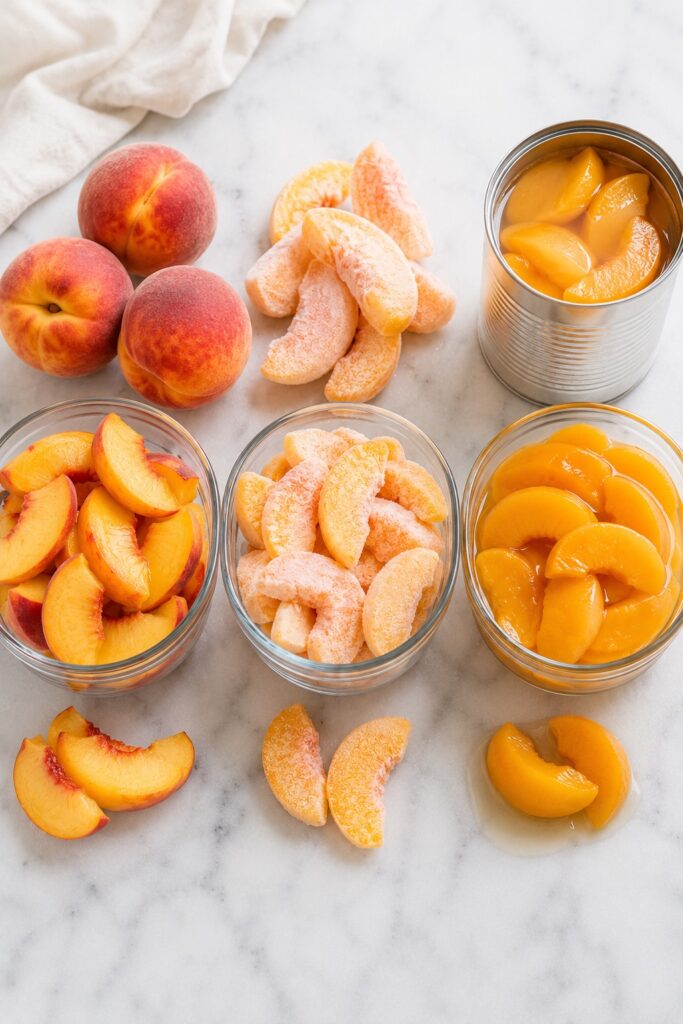
Fresh Peaches: Best Overall Flavor
Fresh peaches are the gold standard when they are in season. They provide the brightest flavor, the best texture, and the most natural peach aroma.
Because you control the ripeness level, fresh peaches also allow you to fine-tune the balance between firm fruit pieces and a softer filling.
For many bakers, peak-season fresh peaches create the most memorable cobbler.
Frozen Peaches: Best Year-Round Option
Frozen peaches are picked and processed when ripe, making them a reliable alternative outside peach season.
They often release more liquid during baking, so draining excess moisture after thawing can improve the final texture.
When prepared properly, frozen peaches can produce a cobbler that is remarkably close to one made with fresh fruit.
Canned Peaches: Fastest and Most Convenient
Canned peaches are ideal when you need a quick dessert with minimal preparation.
Because they are already softened during processing, they create a more tender filling and a slightly sweeter overall flavor.
For the best results, drain canned peaches thoroughly before using them in the filling.
Which Option Should You Choose?
If fresh peaches are in season, they are usually the best choice.
If peaches are out of season, frozen peaches generally deliver the best balance of flavor and texture.
If convenience is the priority, canned peaches remain an excellent option and can still produce a delicious homemade Peach Cobbler.
Quick Comparison Guide
| Peach Type | Flavor | Texture | Prep Required |
|---|---|---|---|
| Fresh | Excellent | Excellent | Moderate |
| Frozen | Very Good | Very Good | Thaw and drain |
| Canned | Good | Soft | Drain only |
Equipment You’ll Need
- 9×13-inch baking dish
- Mixing bowls
- Measuring cups and spoons
- Whisk
- Rubber spatula
A glass baking dish works particularly well because it allows you to monitor how actively the peach filling is bubbling near the edges.
Choosing the Best Baking Dish for Peach Cobbler
The baking dish you use can subtly influence the final texture of your Peach Cobbler.
While all three common materials—glass, ceramic, and metal—can produce excellent results, they each behave a little differently in the oven.
Glass Baking Dishes
Glass dishes are a favorite for fruit desserts because they heat gradually and retain warmth well. They also make it easy to monitor how actively the peach filling is bubbling around the edges.
The extended heat retention often encourages slightly thicker fruit juices as the cobbler cools.
Ceramic Baking Dishes
Ceramic dishes distribute heat gently and beautifully. Many bakers prefer them for serving because they transition easily from oven to table.
They tend to create a slightly softer edge texture and help prevent aggressive browning.
Metal Baking Pans
Metal conducts heat more quickly than glass or ceramic, which can lead to faster browning and more pronounced caramelization around the edges.
This can be especially appealing if you enjoy deeply golden corners and slightly crispier sections of topping.
Does the Difference Matter?
Not enough to buy a new pan.
A well-made Peach Cobbler can be delicious in any of these dishes. The biggest factors are still the quality of the peaches, proper baking time, and allowing the cobbler to rest before serving.
If you already have a favorite baking dish that consistently produces good results, that is usually the best choice.
Before You Bake: 5 Quick Checks for Success
Peach Cobbler is one of the easiest fruit desserts to make, but a few small details can dramatically improve the final texture, flavor, and consistency. Taking a minute to check these before baking can help ensure juicy peaches, a golden topping, and a perfectly scoopable filling.
- Use ripe peaches. Peaches should smell fragrant and yield slightly when pressed. Underripe peaches often lack sweetness and flavor.
- Drain frozen or canned peaches well. Excess liquid is one of the most common causes of watery cobbler.
- Measure the flour correctly. Too little flour in the filling can make the cobbler runny, while too much can create a heavier texture.
- Do not overmix the batter. Stir only until combined. Overmixing can make the topping denser than intended.
- Allow time for resting. The filling thickens significantly during the first 15 to 20 minutes after baking, making serving easier and improving texture.
Baker’s note: If you focus on only two things, make them using ripe peaches and allowing the cobbler to rest after baking. Those two details alone can dramatically improve the final result.
How to Make Peach Cobbler
1. Prepare the oven
Preheat the oven to 350°F (175°C).
Lightly grease a 9×13-inch baking dish.
The dish should be ready before you mix the filling so everything can go directly into the oven.
2. Make the peach filling
In a large bowl, combine the peaches, sugar, lemon juice, vanilla, cinnamon, and flour.
Stir until the peaches are evenly coated.
The mixture should look glossy and lightly syrupy.
3. Transfer the peaches
Spread the peach mixture evenly into the prepared baking dish.
You should see peaches distributed throughout rather than piled in one area.
4. Mix the dry ingredients
In a separate bowl, whisk together the flour, sugar, baking powder, and salt.
Whisking helps distribute the baking powder evenly.
5. Add the wet ingredients
Pour in the milk and melted butter.
Stir just until combined.
The batter should look smooth with a consistency similar to pancake batter.
Do not worry if a few tiny lumps remain.
6. Add the topping
Pour the batter evenly over the peaches.
Avoid aggressively spreading it.
As it bakes, the batter naturally rises around the fruit and creates the classic cobbler texture.
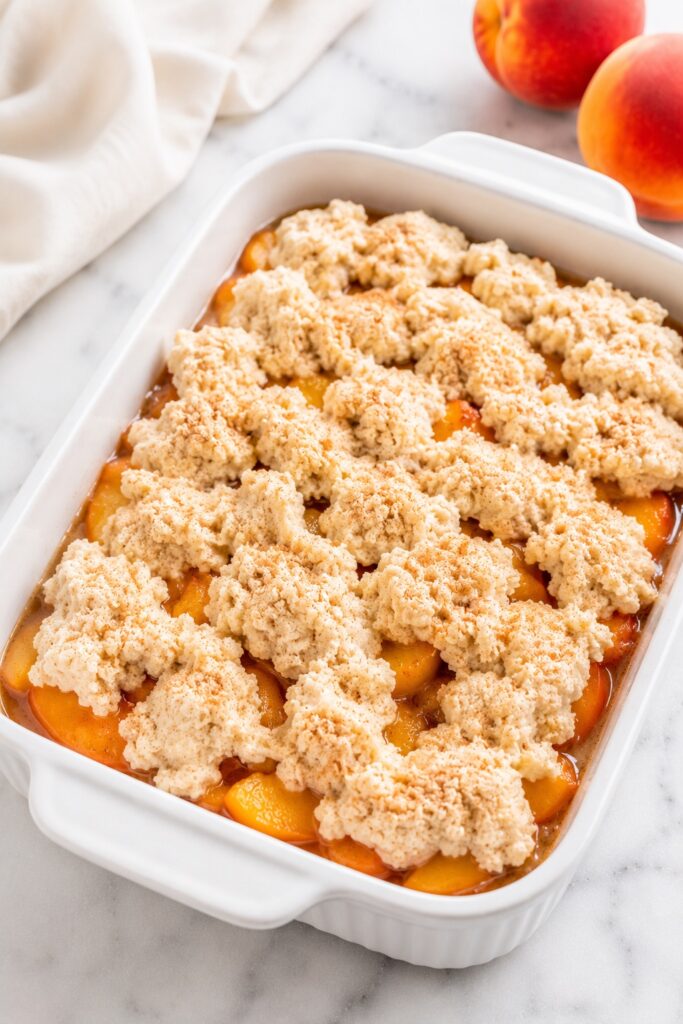
7. Bake
Bake for 40–50 minutes.
The topping should become deeply golden while peach juices bubble actively around the edges.
If your oven runs cool, an extra few minutes may be necessary.
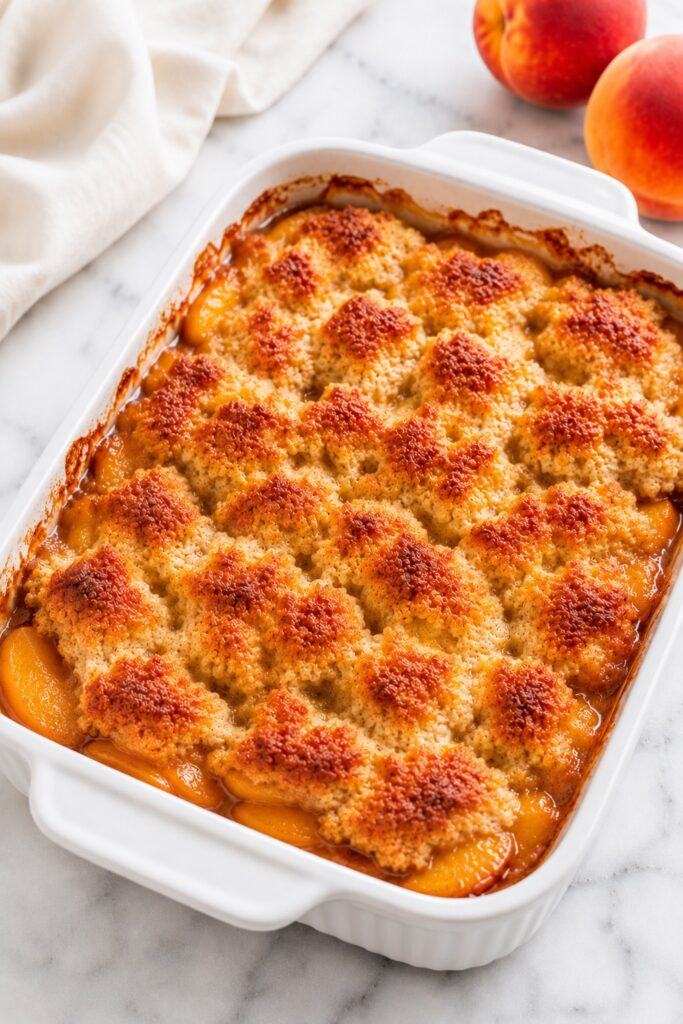
8. Rest before serving
Allow the cobbler to cool for at least 15 minutes.
This is one of the hardest parts because it smells incredible, but the resting period helps the filling thicken noticeably.
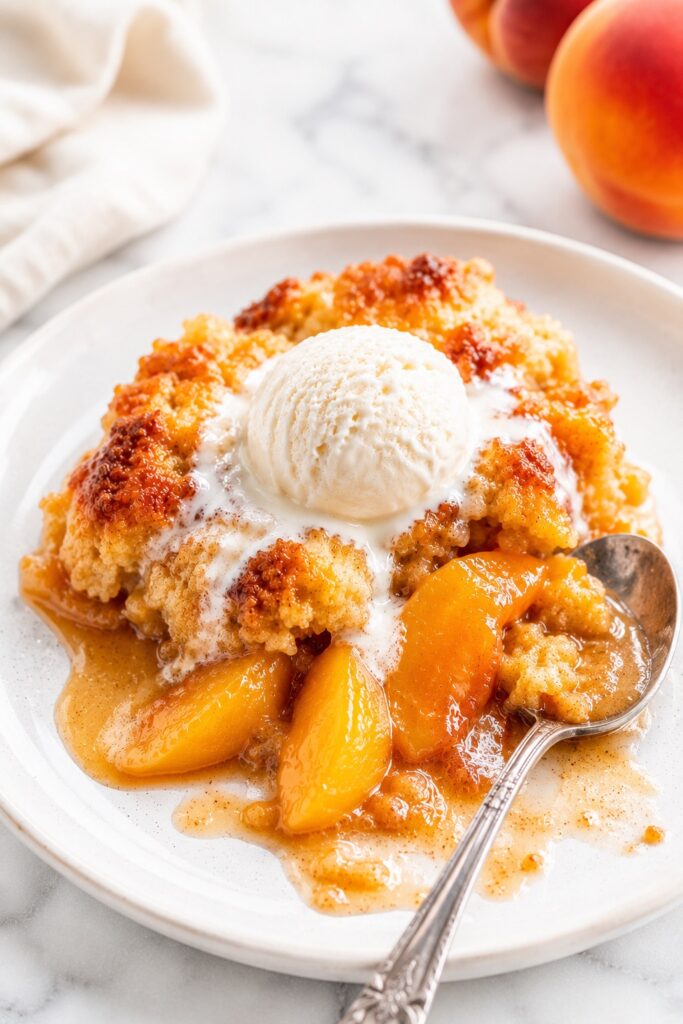
How to Tell When Peach Cobbler Is Perfectly Baked
- Deep golden brown topping
- Active bubbling around the edges
- Center appears set rather than wet
- Peaches look soft and glossy
- Surface springs back lightly when touched
- No pale or doughy spots in the center
Baker’s insight: If you’re unsure whether the cobbler is done, look at the filling rather than the topping. Active bubbling throughout the dish is usually a more reliable indicator of doneness than color alone.
Peach Cobbler Texture Guide
| Stage | Appearance | Texture | What It Means |
|---|---|---|---|
| Peach Filling Before Baking | Glossy peaches lightly coated in sugar | Juicy but not swimming in liquid | The fruit is properly balanced and ready for baking |
| Cobbler Batter | Smooth and pourable | Similar to thick pancake batter | The topping will rise evenly without becoming dense |
| Mid-Bake | Golden patches forming on top | Edges beginning to set | The topping is developing structure while the peaches release juice |
| Fully Baked | Deep golden surface with bubbling fruit around the edges | Tender underneath, lightly crisp on top | The cobbler is fully cooked and the filling has begun thickening |
| After 15–20 Minutes Resting | Bubbling slows noticeably | Syrupy, scoopable filling | The juices have settled and reached their ideal consistency |
| Cold from the Refrigerator | Filling appears thicker and more set | Dense, jammy fruit texture | Normal behavior; flavors often become even more concentrated |
One of the most common surprises for first-time bakers is how much the texture changes during cooling. A Peach Cobbler that looks slightly loose when it comes out of the oven often transforms into a perfectly scoopable dessert after resting for just 15 to 20 minutes.
Expert Tips for the Best Peach Cobbler
- Use ripe peaches for the strongest flavor.
- Let the cobbler rest before serving.
- Do not overmix the batter.
- Measure flour correctly using the spoon-and-level method.
- Bake until deeply golden, not merely lightly colored.
- Place the baking dish on a sheet pan if your peaches are exceptionally juicy.
- For extra flavor, add a pinch of nutmeg alongside the cinnamon.
One lesson many bakers learn after making cobbler a few times is that slightly darker golden tops almost always taste better than pale ones.
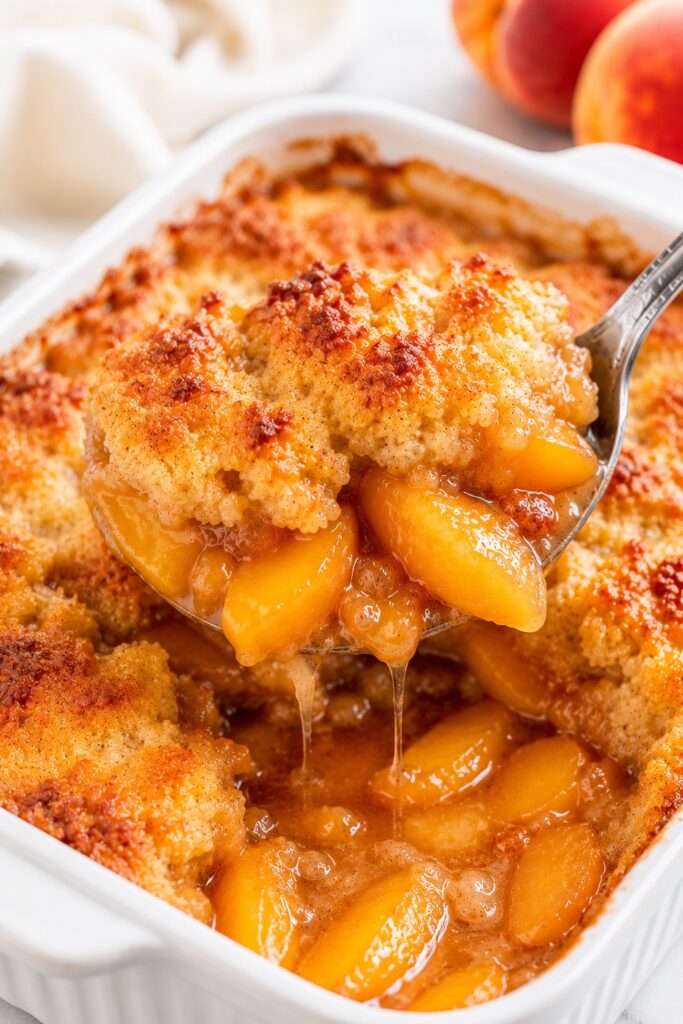
Reader Success Notes
One thing many bakers notice after making Peach Cobbler a few times is that every batch of peaches behaves a little differently.
The first is that the peaches almost always look juicier than expected once they start baking. Many bakers worry that the filling is becoming too liquid, only to discover that it thickens beautifully during the resting period.
Another common observation is that the cobbler often tastes even better a few hours after baking. As the filling cools, the peach flavor becomes more concentrated and the topping absorbs some of the fruit juices, creating an even richer texture.
If you’re making Peach Cobbler for the first time, resist the temptation to pull it from the oven as soon as the top turns golden. The peaches should be actively bubbling around multiple areas of the dish before the cobbler is truly finished.
One final tip: every batch of peaches behaves a little differently. Some peaches release a surprising amount of juice, while others bake up thicker and more concentrated. Learning to watch the fruit rather than the clock is one of the small skills that makes homemade cobbler better every time.
Common Peach Cobbler Mistakes and How to Fix Them
| Mistake | Result | Fix |
|---|---|---|
| Underbaking | Doughy center | Bake until fully golden |
| Overmixing batter | Dense topping | Mix just until combined |
| Skipping rest time | Runny filling | Cool for 15–20 minutes |
| Using unripe peaches | Weak flavor | Use ripe fruit |
| Excess liquid from frozen peaches | Watery cobbler | Drain before using |
Fresh, Frozen, and Canned Peach Cobbler Comparison
| Version | Texture | Sweetness | Best Use |
|---|---|---|---|
| Fresh Peach Cobbler | Juicy and vibrant | Moderate | Summer peach season |
| Frozen Peach Cobbler | Slightly softer | Moderate | Year-round baking |
| Canned Peach Cobbler | Softer filling | Sweeter | Quick preparation |
| Southern Style Cobbler | Rich and buttery | Balanced | Traditional serving |
Beautiful Ways to Serve Peach Cobbler
Few desserts feel more inviting than a warm scoop of Peach Cobbler served straight from the baking dish.
For summer gatherings, serve it warm with vanilla ice cream slowly melting into the peaches.
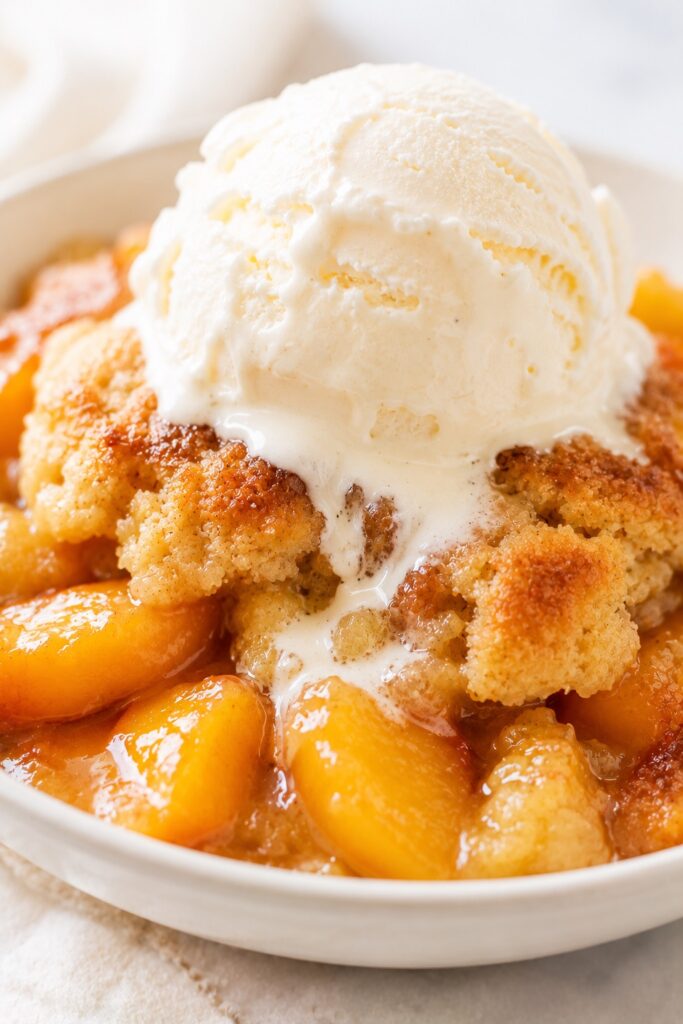
For backyard cookouts, add a drizzle of caramel sauce and a sprinkle of toasted pecans.
For brunch tables, pair smaller portions with whipped cream and fresh peach slices.
The contrast between warm fruit and cold ice cream creates one of those dessert moments people remember long after dinner ends.
Save this recipe for peach season, holiday potlucks, family reunions, and cozy weekends when you want a dessert that feels homemade in the best possible way.
How to Store and Make Peach Cobbler Ahead
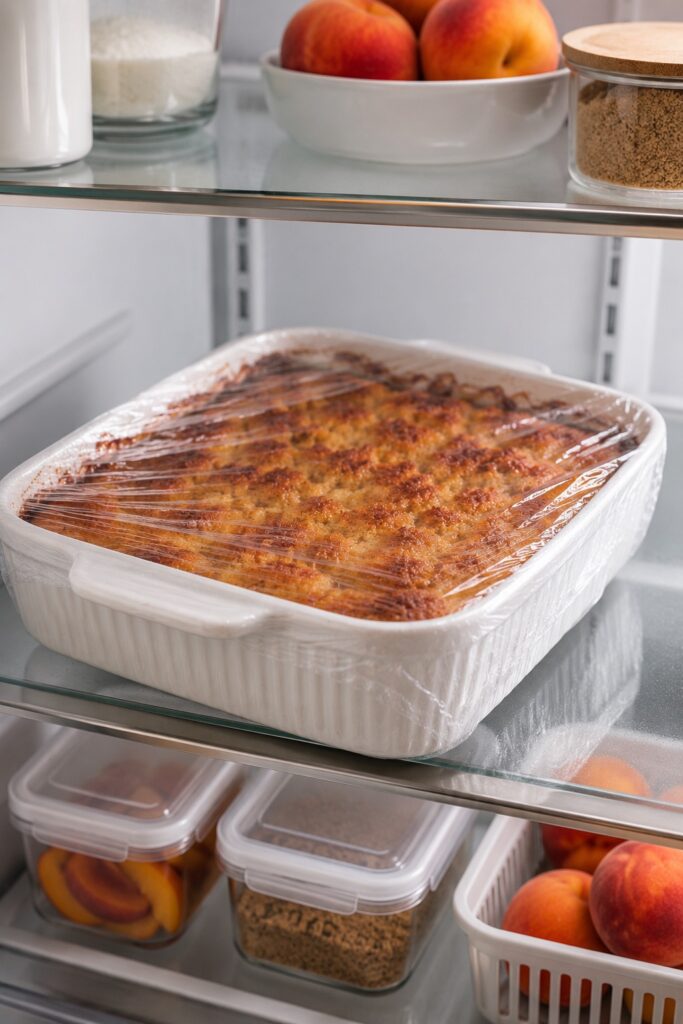
Refrigerator
Store covered for up to 4 days.
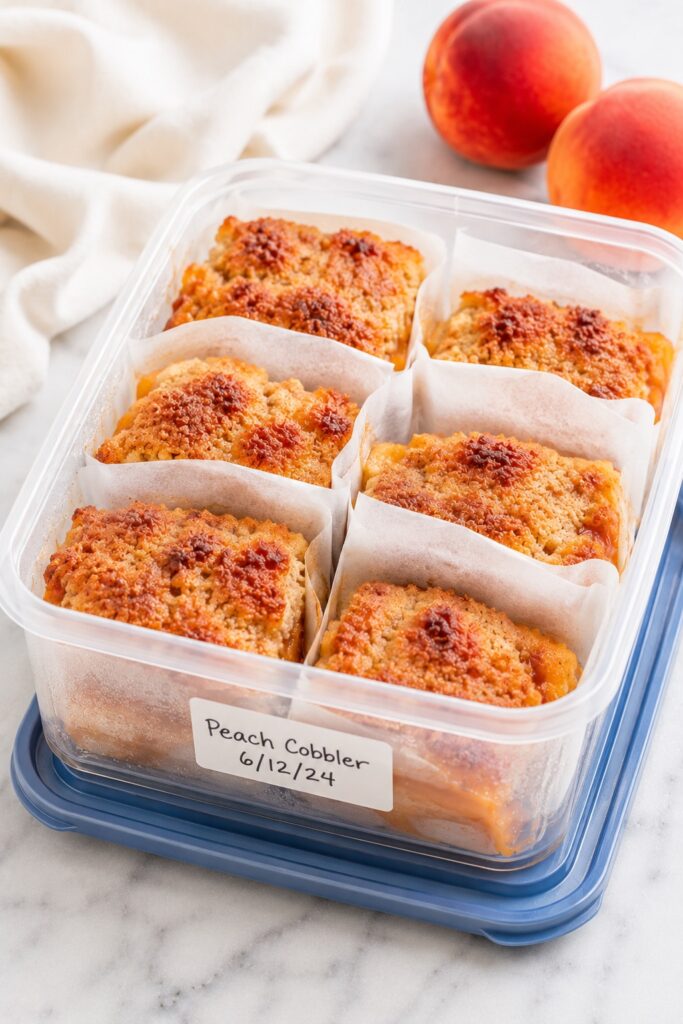
Freezer
Freeze for up to 3 months.
Allow to thaw overnight in the refrigerator before reheating.
Reheating
Warm individual servings in the microwave or reheat larger portions in a 300°F oven until heated through.
Make Ahead
The peach filling can be prepared several hours in advance and refrigerated until needed.
Quick Storage & Make-Ahead Chart
| Storage Method | How Long It Lasts | Best Practice |
|---|---|---|
| Room Temperature | Up to 8 hours | Cover loosely once cooled |
| Refrigerator | Up to 4 days | Store tightly covered |
| Freezer | Up to 3 months | Freeze after cooling completely |
| Make Ahead Filling | Up to 24 hours | Prepare and refrigerate before baking |
| Best Serving Window | 15–30 minutes after baking | Allows filling to thicken naturally |
Quick takeaway: Peach Cobbler is usually at its absolute best after resting for about 15 to 30 minutes. The filling thickens, the topping settles, and the flavors become more balanced while still remaining warm.
How to Make Peach Cobbler for a Crowd
Peach Cobbler is one of the easiest desserts to scale for larger gatherings because it bakes beautifully in larger pans and is simple to serve.
Whether you’re planning a summer barbecue, family reunion, church potluck, holiday gathering, or backyard cookout, a larger Peach Cobbler often disappears faster than expected.
For 12 to 16 Servings
A standard 9×13-inch Peach Cobbler usually serves about 8 people comfortably.
For larger groups, simply double the recipe and bake it in two separate 9×13-inch dishes rather than trying to fit everything into one oversized pan.
This helps maintain the ideal fruit-to-topping ratio and promotes more even baking.
For Potlucks and Parties
If transporting the cobbler, allow it to cool completely before covering and moving it.
The filling will continue thickening as it cools, making it easier to serve and less likely to spill during transport.
Serving Station Ideas
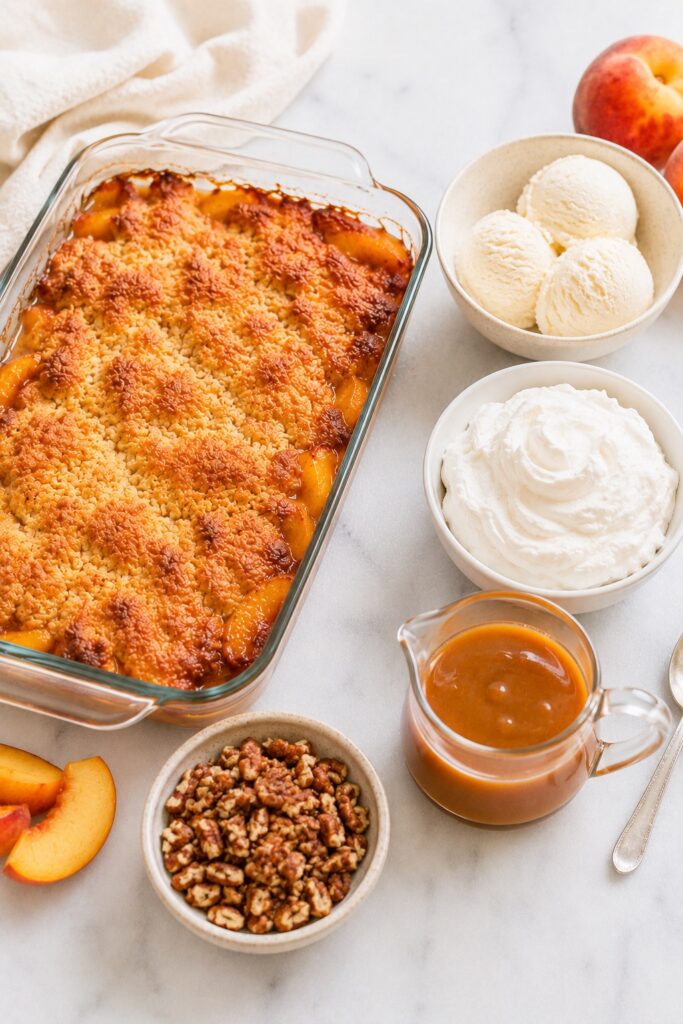
For gatherings, consider setting out:
- Vanilla ice cream
- Fresh whipped cream
- Toasted pecans
- Caramel sauce
- Extra sliced peaches
This allows guests to customize their servings while making the dessert table feel extra special.
A Helpful Rule of Thumb
If Peach Cobbler is the main dessert, plan for generous portions. If it is part of a larger dessert spread, most guests will take smaller servings and the recipe will stretch much further than expected.
Easy Peach Cobbler Variations
One of the reasons Peach Cobbler has remained popular for generations is how easy it is to customize. Whether you prefer richer flavors, extra texture, or a more traditional Southern-style dessert, these variations can help you make the recipe your own.
Cinnamon Brown Sugar Peach Cobbler
Replace 1/4 cup of the granulated sugar in the filling with 1/4 cup packed brown sugar.
This creates deeper caramel notes and a slightly richer flavor while still allowing the peaches to remain the star of the dessert.
Berry Peach Cobbler
Replace 1 cup of the peaches with 1 cup fresh blueberries or blackberries.
The berries add color, brightness, and a more complex fruit flavor while maintaining the classic cobbler texture.
Pecan Peach Cobbler
Sprinkle 1/2 cup chopped pecans evenly over the topping before baking.
The nuts add crunch and a buttery flavor that pairs beautifully with the soft peaches and golden crust.
Bourbon Peach Cobbler
Add 2 tablespoons bourbon to the peach filling along with the vanilla extract.
The alcohol bakes off while leaving behind warm caramel-like notes that complement ripe peaches exceptionally well.
Peach Cobbler with Oat Topping
Replace 1/4 cup of the topping flour with 1/4 cup old-fashioned rolled oats.
This creates additional texture and a slightly heartier topping while still preserving the character of a cobbler.
Southern Peach Cobbler
Add an extra 1/4 teaspoon cinnamon to the filling and serve warm with vanilla ice cream.
The additional spice enhances the classic Southern-style flavor profile without overwhelming the peaches.
Which Peach Cobbler Variation Should You Try First?
The classic version is always the best place to start because it delivers the balance most people want: juicy peaches, a rich buttery topping, and the comforting homemade flavor that makes Peach Cobbler so popular.
If you enjoy deeper caramel flavors, the Cinnamon Brown Sugar Peach Cobbler is often the best choice. The brown sugar adds warmth and richness while still allowing the peach flavor to shine.
If fresh summer berries are in season, Berry Peach Cobbler adds color, brightness, and a slightly more complex fruit flavor that works beautifully for summer gatherings.
If texture is your priority, Pecan Peach Cobbler adds a pleasant crunch that contrasts nicely with the soft peaches and tender topping.
For special occasions and holiday gatherings, Bourbon Peach Cobbler offers a slightly more sophisticated flavor profile with subtle caramel and vanilla notes.
If you enjoy fruit desserts with extra texture, Peach Cobbler with Oat Topping provides a heartier finish that sits somewhere between a classic cobbler and a fruit crisp.
No matter which variation you choose, the goal remains the same: juicy peaches, a golden buttery topping, and the kind of comforting homemade dessert people come back to year after year.
Peach Cobbler FAQs
Can I use canned peaches?
Yes. Drain them well before using.
Do I need to peel the peaches?
Peeling is recommended for the smoothest texture, but it is not absolutely necessary.
Why is my cobbler runny?
It likely needs more baking time or additional resting time after baking.
Can I make Peach Cobbler ahead?
Yes. Bake it earlier in the day and reheat before serving.
Can I freeze Peach Cobbler?
Absolutely. Freeze after cooling completely.
What ice cream goes best with Peach Cobbler?
Classic vanilla remains the most popular pairing.
Can I reduce the sugar?
Yes. The recipe can be moderately reduced if your peaches are especially sweet.
Can I Use Frozen Peaches Without Thawing?
You can, but thawing first usually produces better results.
Frozen peaches release a significant amount of liquid as they thaw. If they are added directly to the baking dish while frozen, that extra moisture can make the filling thinner and may increase the baking time.
For the most consistent Peach Cobbler, thaw the peaches first, drain excess liquid, and then proceed with the recipe as written.
How Do I Know When Peach Cobbler Is Done?
The best indicator is active bubbling throughout the filling.
The topping should be deeply golden brown, the peaches should be visibly bubbling around multiple areas of the baking dish, and the center should look set rather than wet.
If the topping is golden but the filling is barely bubbling, the cobbler usually needs a few more minutes in the oven.
Proper bubbling indicates that the fruit juices have reached temperatures high enough to thicken correctly as the cobbler cools.
Should Peach Cobbler Be Served Warm or Cold?
Most people prefer Peach Cobbler served warm, especially with a scoop of vanilla ice cream.
The contrast between the warm peaches and cold ice cream is one of the reasons this dessert remains so popular.
That said, Peach Cobbler is also delicious chilled. After refrigeration, the filling becomes thicker and more jammy, while the flavors often become even more concentrated.
Many bakers enjoy it both ways and consider the leftovers just as good as the freshly baked dessert.
More Fruit Desserts You’ll Love
If Peach Cobbler is the kind of dessert you find yourself making on repeat, there are plenty of other fruit-filled classics worth saving for every season. From bubbling cobblers to old-fashioned pies and comforting baked fruit desserts, these recipes deliver the same homemade charm and crowd-pleasing flavor.
Delicious and Easy Cobbler Recipes
If you love warm fruit desserts with golden toppings, try Blackberry Cobbler, Blueberry Cobbler, Apple Cobbler, or Chocolate Cobbler. Each recipe offers its own take on the comforting cobbler experience, from juicy berries to rich chocolate.
Peach and Summer Fruit Favorites
For more seasonal fruit desserts, try Peach Pie, Strawberry Shortcake, Strawberry Pie, or Blueberry Pie. These recipes showcase fresh fruit flavors and are especially popular during spring and summer baking season.
Old-Fashioned Comfort Desserts
If classic homemade desserts are your favorite, you’ll also enjoy Bread Pudding, Buttermilk Pie, Apple Crisp, and Baked Apples. These timeless recipes bring the same cozy, nostalgic feel that makes Peach Cobbler a beloved dessert generation after generation.
Whether you’re baking for a summer cookout, holiday gathering, church potluck, or quiet weekend at home, having a collection of dependable fruit desserts means you’ll always have something comforting and crowd-pleasing ready to share.
Peach Cobbler Recipe Summary
This Peach Cobbler combines juicy peaches, warm cinnamon, vanilla, and a rich buttery topping in one simple dessert.
It is easy enough for beginner bakers, impressive enough for guests, and versatile enough to enjoy throughout the year with fresh, frozen, or canned peaches.
The result is a golden, comforting dessert that captures everything people love about homemade fruit baking.
Final Thoughts
Some desserts impress because they are complicated. Peach Cobbler is beloved for the opposite reason.
Whether you make it during peak peach season or in the middle of winter using frozen fruit, this is the kind of recipe that fills the kitchen with the smell of butter, vanilla, and bubbling peaches long before dessert is served.
It is simple, comforting, and dependable—the kind of homemade Peach Cobbler people request again and again once they have tasted it.

Peach Cobbler
This easy Peach Cobbler combines juicy peaches, warm cinnamon, vanilla, and a golden buttery topping for a classic old-fashioned dessert that's perfect for summer gatherings, holidays, and family dinners.
Ingredients
For the Peach Filling
- 6 cups sliced peaches
- 3/4 cup granulated sugar
- 1 tablespoon lemon juice
- 1 teaspoon vanilla extract
- 1 teaspoon ground cinnamon
- 2 tablespoons all-purpose flour
For the Cobbler Topping
- 1 cup all-purpose flour
- 1 cup granulated sugar
- 2 teaspoons baking powder
- 1/4 teaspoon salt
- 1 cup milk
- 1/2 cup unsalted butter, melted
Instructions
- Preheat the oven to 350°F (175°C). Lightly grease a 9x13-inch baking dish.
- In a large bowl, combine the sliced peaches, sugar, lemon juice, vanilla extract, cinnamon, and flour. Stir until the peaches are evenly coated.
- Transfer the peach mixture to the prepared baking dish and spread it into an even layer.
- In a separate bowl, whisk together the flour, sugar, baking powder, and salt.
- Add the milk and melted butter to the dry ingredients. Stir just until combined. Do not overmix.
- Pour the batter evenly over the peaches. Avoid aggressively spreading the batter.
- Bake for 40 to 50 minutes, or until the topping is deep golden brown and the peach filling is bubbling around the edges.
- Remove the cobbler from the oven and let it rest for at least 15 minutes before serving.
- Serve warm on its own or with vanilla ice cream, whipped cream, caramel sauce, or toasted pecans.
Notes
- Use ripe peaches for the best flavor and texture.
- If using frozen peaches, thaw and drain excess liquid before baking.
- If your peaches are exceptionally juicy, add an additional tablespoon of flour to the filling.
- Do not remove the cobbler from the oven until the filling is actively bubbling and the topping is deeply golden.
- Allowing the cobbler to rest for 15 to 20 minutes helps the filling thicken and improves serving consistency
- Store covered in the refrigerator for up to 4 days or freeze for up to 3 months.
Nutrition Information:
Yield: 8 servings Serving Size: 1 servingAmount Per Serving: Calories: 365Total Fat: 10gSaturated Fat: 6gCholesterol: 25mgSodium: 210mgCarbohydrates: 66gFiber: 2gSugar: 50gProtein: 4g
Nutrition information is provided as an estimate only and may vary based on specific ingredients, brands, and portion sizes used. This information should not be considered medical or nutritional advice.
12 Sweet Favorites — Yours, Free 🍰
Tiramisù, no-bake cheesecake, the perfect chocolate chip cookie & 9 more reader-loved desserts — gathered into one beautiful free recipe book. From my kitchen to yours.
No spam, just sweet things. Unsubscribe anytime.