German Pancakes (Crispy Edges & Fluffy Custardy Center Every Time)
🎁 FREE E-BOOK: 12 Sweet Favorites — reader-loved desserts in one beautiful recipe book.
Some breakfasts feel ordinary. Others make everyone stop and look the moment they come out of the oven.
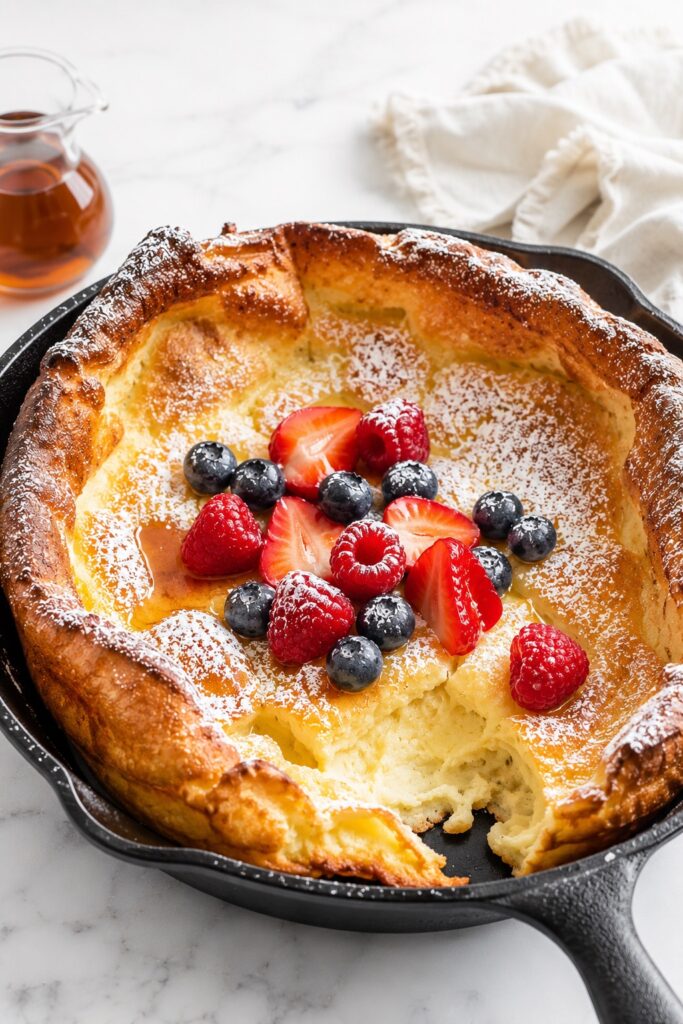
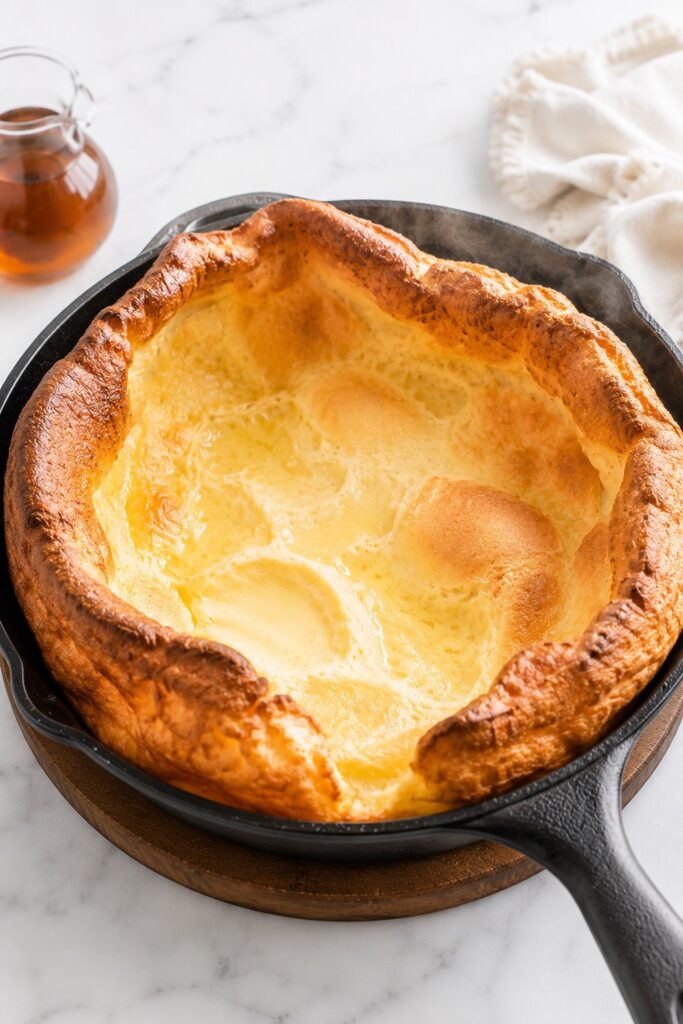
A perfectly baked German Pancake is one of those recipes. As it rises, the edges climb dramatically up the sides of the hot skillet, turning deeply golden, crisp, and buttery, while the center stays light, airy, and delicately custardy. A shower of powdered sugar, a handful of fresh berries, and a drizzle of warm maple syrup are all it takes to transform a few everyday ingredients into something that feels worthy of a special brunch.
One of the reasons this German Pancakes recipe has remained a favorite for generations is its simplicity. There’s no standing over the stove flipping pancakes one by one. Instead, a smooth batter goes into a sizzling hot, buttered skillet, and the oven does all the work. Twenty minutes later, you’re rewarded with an impressive breakfast that’s as fun to watch rise as it is to eat.
The first time I made a German Pancake, I couldn’t resist peeking through the oven window every couple of minutes to watch it puff higher and higher. It almost feels impossible that a batter made with just eggs, milk, flour, and butter can create such dramatic golden peaks without any baking powder. That little bit of kitchen magic never gets old.
Whether you’re planning a slow Sunday breakfast, hosting a holiday brunch, or simply want something a little more memorable than traditional pancakes, this German Pancake recipe delivers crisp buttery edges, a soft custardy center, and reliable results every single time. It’s the kind of recipe people save because once you’ve seen it rise beautifully in your own oven, you’ll want to make it again and again.
Table of Contents
What Is a German Pancake?
A German Pancake, also known as a Dutch Baby Pancake, is a large oven-baked pancake made with eggs, milk, flour, butter, and a small amount of sugar. Instead of cooking individual pancakes on a griddle, the batter is poured into a hot buttered skillet and baked all at once.
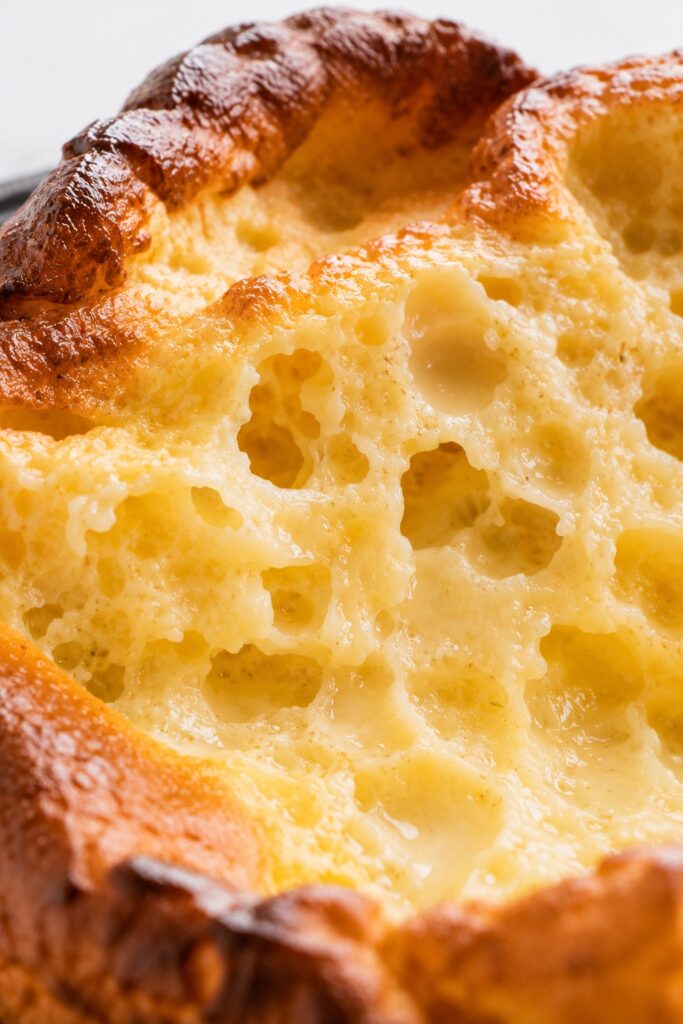
Unlike traditional pancakes, a German Pancake contains no baking powder or baking soda. Its dramatic rise comes from steam created as the egg-rich batter bakes in a very hot oven, giving it tall golden edges and a light, airy center.
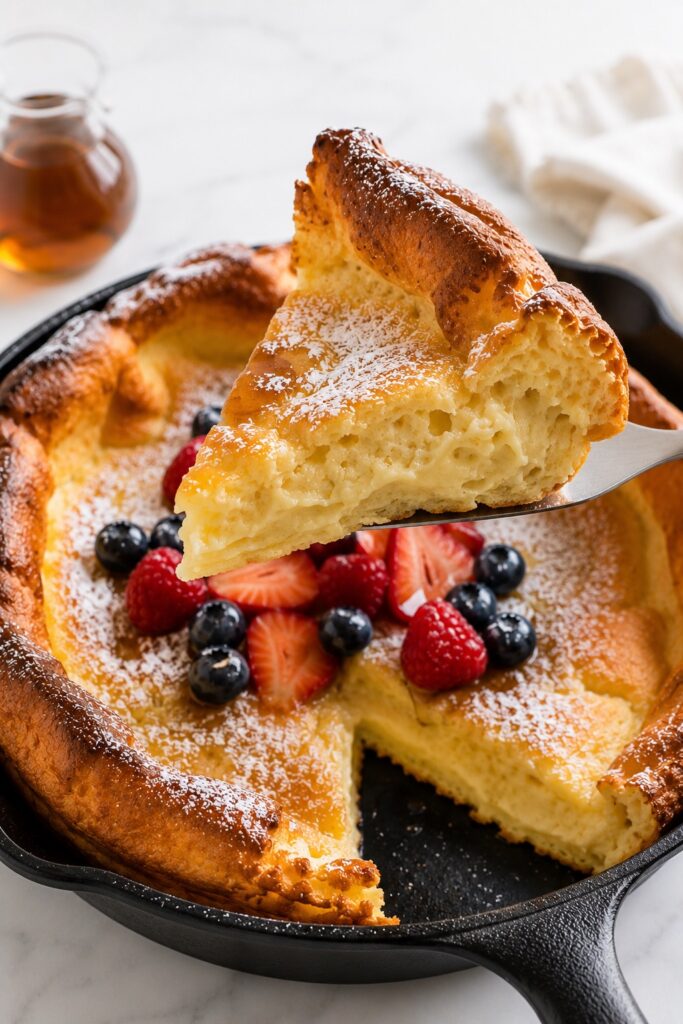
The finished pancake has two signature textures: crisp, buttery edges and a soft, custardy middle that pairs perfectly with powdered sugar, fresh berries, maple syrup, or fruit compote.
Don’t be surprised when it gently deflates a few minutes after coming out of the oven—that’s completely normal and one of the defining characteristics of an authentic German Pancake.
Why Is It Called a German Pancake?
Despite its name, a German Pancake isn’t actually a traditional pancake from Germany. The recipe is much more closely related to the Dutch Baby, an oven-baked pancake that became popular in the United States during the early 1900s.
Most food historians believe the name “Dutch Baby” evolved from the word “Deutsch,” which means German in the German language. Over time, “Deutsch” was mistakenly interpreted as “Dutch,” giving the pancake its now-famous nickname.
Although similar baked pancakes have long existed in Germany and other parts of Europe, the modern American German Pancake is best known for its dramatic puff, crisp buttery edges, and soft custardy center. Today, the names German Pancake and Dutch Baby are often used interchangeably, even though they both refer to the same style of oven-baked pancake.
Quick Recipe Overview
Short on time? Here’s everything you need to know before you start. This quick overview gives you the key details at a glance.
| Feature | Details |
|---|---|
| Texture | Crisp, buttery edges with a light, custardy center |
| Flavor | Rich, buttery, lightly sweet with hints of vanilla |
| Difficulty | Easy |
| Prep Time | 10 minutes |
| Cook Time | 18–22 minutes |
| Total Time | About 30 minutes |
| Servings | 4 |
| Method | Oven baked in a hot skillet (10-inch cast iron skillet recommended) |
| Best For | Weekend breakfasts, brunch, and holiday mornings |
- ✓ No flipping required
- ✓ Dramatic oven rise with crisp golden edges
- ✓ Made with simple pantry ingredients
- ✓ Ready in about 30 minutes
- ✓ Perfect for both everyday breakfasts and special occasions
Why This German Pancake Recipe Works
A great German Pancake isn’t just about following a recipe—it’s about getting the balance of ingredients and heat exactly right. Every ingredient and every step plays a role in creating the signature dramatic rise, crisp buttery edges, and tender custardy center.
- Eggs create the lift. With no baking powder or baking soda, the dramatic rise comes from steam trapped by the egg-rich batter as it bakes.
- A hot skillet jump-starts the rise. Pouring the batter into sizzling butter immediately creates steam and begins crisping the edges before the center has time to set.
- Whole milk keeps the center tender. The extra richness creates a soft, custardy texture instead of a dry or bread-like interior.
- A short batter rest improves the texture. Letting the batter sit for 10 minutes hydrates the flour, creating a smoother batter and a more even rise.
- High heat finishes the structure. Baking at 425°F allows the pancake to puff quickly before the eggs fully set, giving it its iconic tall golden edges.
Why You’ll Love This Recipe
- No flipping required. The oven does all the work, so everyone can eat at the same time.
- Gorgeously impressive. The dramatic puffed edges make it look like something from a bakery, even though it’s surprisingly easy to make.
- Two textures in every bite. Crisp, buttery edges contrast perfectly with the delicate custard-like middle.
- Easy to customize. Keep it simple with powdered sugar or dress it up with berries, whipped cream, maple syrup, or warm fruit compote.
- Made with everyday ingredients. You probably already have everything you need in your kitchen.
- Perfect for any occasion. It’s just as welcome on a quiet Sunday morning as it is on Easter, Christmas, Mother’s Day, or a special brunch with friends.
Once you watch it puff dramatically in the oven, you’ll understand why this is one of those breakfast recipes people come back to again and again.
The Science Behind the Puff
One of the most fascinating things about a German Pancake is that it rises dramatically without any baking powder or baking soda. The secret is simple: steam.
- Eggs provide the structure. As they cook, the proteins set and hold the pancake’s tall shape.
- Steam creates the lift. Moisture from the eggs and milk rapidly turns into steam, pushing the batter upward. Because the batter is thin and fluid, the steam can expand quickly before the egg proteins fully set, creating the signature dramatic puff.
- A hot skillet gives it a head start. The sizzling butter instantly creates steam and helps develop crisp, golden edges.
- The oven sets everything in place. Once the structure firms up, the pancake holds its shape—until it begins to cool.
Did You Know? An authentic German Pancake should gently deflate a few minutes after leaving the oven. That dramatic collapse is completely normal and a sign that the steam responsible for the rise has escaped.
In short, the impressive rise isn’t created by extra ingredients—it’s the combination of an egg-rich batter, plenty of steam, and high oven heat.
Ingredients You’ll Need
One of the best things about this German Pancake recipe is how few ingredients it requires. Most are everyday kitchen staples, but each one plays an important role in creating the signature puff, crisp, buttery ridges, and tender center.
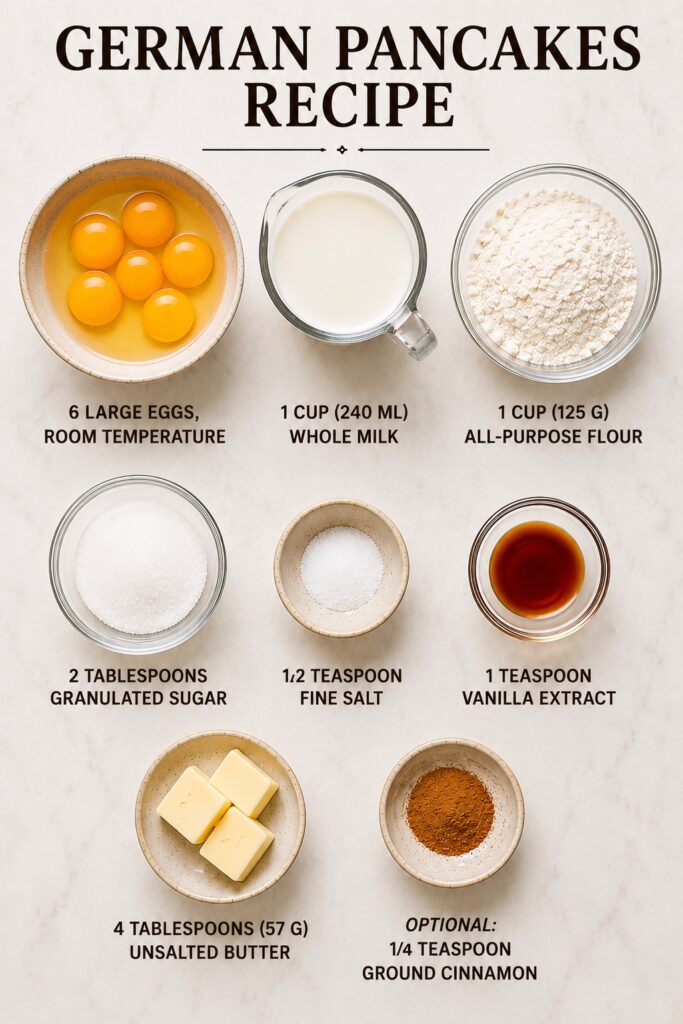
- 6 large eggs, room temperature
- 1 cup (240 ml) whole milk, room temperature
- 1 cup (125 g) all-purpose flour
- 2 tablespoons granulated sugar
- ½ teaspoon fine salt
- 1 teaspoon vanilla extract
- 4 tablespoons (57 g) unsalted butter
- Optional: ¼ teaspoon ground cinnamon for subtle warmth
For serving (optional): Powdered sugar, fresh berries, maple syrup, lemon wedges, whipped cream, or warm fruit compote all pair naturally with the buttery flavor of this pancake.
Tip: For the tallest rise, let the eggs and milk come to room temperature before blending the batter. Cold ingredients can noticeably reduce the impressive rise.
German Pancake Flavor Ideas
| Flavor | Add to Batter |
|---|---|
| Lemon | 1 tsp zest |
| Orange | 1 tsp zest |
| Cinnamon | 1/4 tsp |
| Almond | 1/2 tsp almond extract |
| Pumpkin Spice | 1/2 tsp |
Ingredient Intelligence
This recipe uses just a handful of ingredients, but each one has a specific job. Understanding what they do makes it much easier to get an impressively puffed German Pancake every time.
Eggs
- Create the pancake’s structure and dramatic rise.
- Use large eggs at room temperature for the best lift.
- Note: Most of the dramatic rise comes from steam expanding inside the batter while the egg proteins rapidly set in the hot oven. The flour mainly provides structure, not lift.
Whole Milk
- Keeps the center soft and custardy.
- Whole milk gives the richest texture, but 2% milk also works.
- Avoid very cold milk, which can reduce the initial rise.
All-Purpose Flour
- Provides just enough structure without making the pancake heavy.
- Measure by spooning the flour into the cup and leveling it off.
- Too much flour creates a denser, less airy pancake.
Butter
- Creates crisp, deeply golden edges.
- Coats the hot skillet so the batter starts cooking immediately.
- BDV Insight: European-style butter (around 82% butterfat) adds even richer flavor and slightly crispier edges.
Vanilla & Salt
- Vanilla adds warmth without overpowering the pancake.
- Salt balances the sweetness and enhances the buttery flavor.
- Together, they make the finished pancake taste fuller and more balanced.
Equipment You’ll Need
You don’t need any special gadgets to make a German Pancake, but using the right pan and a few basic tools will give you the best rise and texture.
- 10-inch cast iron skillet – The gold standard for achieving maximum rise, crisp buttery edges, and even browning.
- Blender or mixing bowl – A blender creates an ultra-smooth batter in seconds, but a whisk works just as well with a little extra mixing.
- Whisk – Essential if you’re mixing the batter by hand.
- Oven mitts – The skillet will be extremely hot, so be sure to handle it carefully.
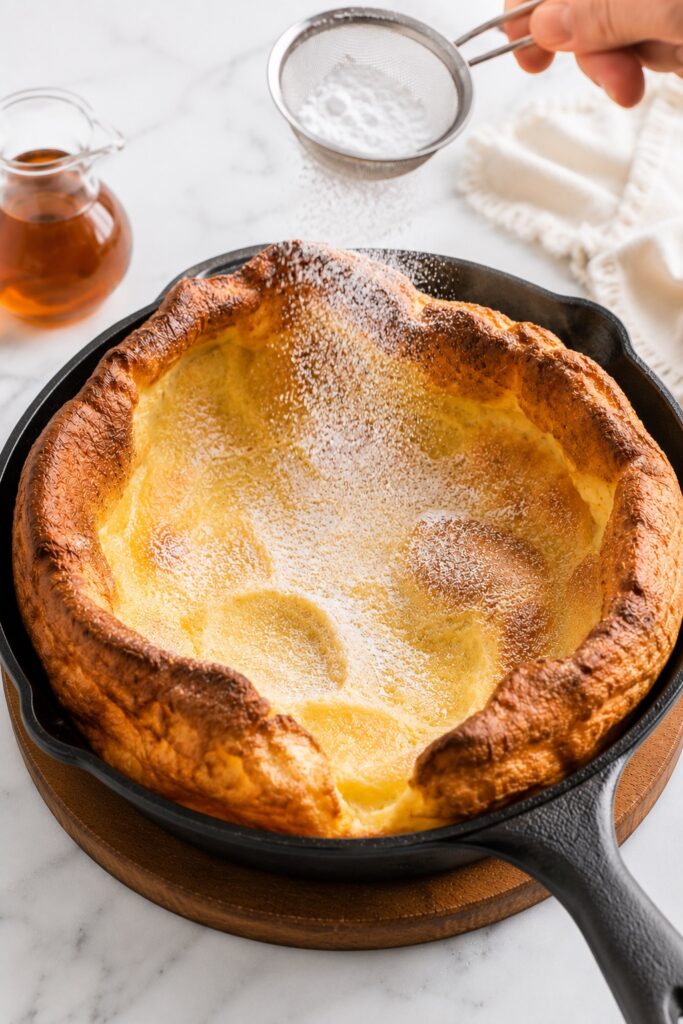
- Fine mesh sieve (optional) – The easiest way to evenly dust the finished pancake with powdered sugar.
Tip: Don’t have a cast iron skillet? A 9×13-inch metal baking dish or another oven-safe skillet will still make a delicious German Pancake, although the rise may be slightly less dramatic.
Which Pan Makes the Best German Pancake?
The pan you use affects how dramatically the pancake rises, how crisp the edges become, and how evenly it bakes. Here’s how the most common options compare.
| Pan | Performance | Best For |
|---|---|---|
| 10-inch Cast Iron Skillet | ★★★★★ | Best overall rise, crisp edges, and even browning. |
| Oven-Safe Stainless Steel Skillet | ★★★★☆ | Excellent alternative with even heating. |
| Metal Baking Dish (9×13-inch) | ★★★★☆ | Great for serving a crowd with slightly less dramatic puff. |
| Ceramic Baking Dish | ★★★☆☆ | Bakes evenly but develops softer edges. |
| Glass Baking Dish | ★★★☆☆ | Works well but heats more slowly, so the rise may be less pronounced. |
My Recommendation: If you own a well-seasoned 10-inch cast iron skillet, it’s the best choice for achieving the signature towering edges, crisp buttery ridges, and beautifully golden finish that make German Pancakes so impressive.
How to Make German Pancakes
This recipe comes together quickly, so it’s worth reading through all the steps before you begin. Once the batter is blended, the rest moves fast.
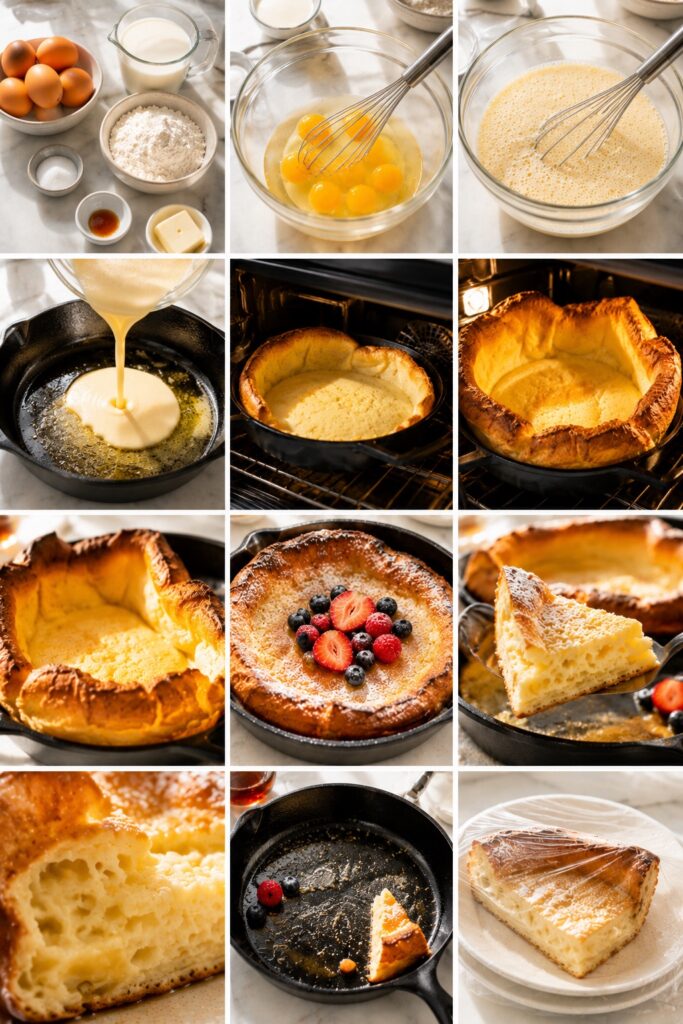
1. Preheat the Oven and Skillet
Place a 10-inch cast iron skillet in the oven and preheat to 425°F (220°C). Let the skillet heat for at least 10 minutes so it’s thoroughly hot before adding the butter.
Visual cue: The skillet should be hot enough that the butter melts and sizzles immediately.
Note: A properly preheated skillet is one of the biggest secrets to achieving those tall, dramatic edges.
2. Blend the Batter
Blend the eggs, milk, flour, sugar, salt, vanilla, and optional cinnamon for 20–30 seconds, just until smooth. Let the batter rest for 10 minutes to fully hydrate the flour.
Visual cue: The batter should be silky, pourable, and completely free of flour lumps.
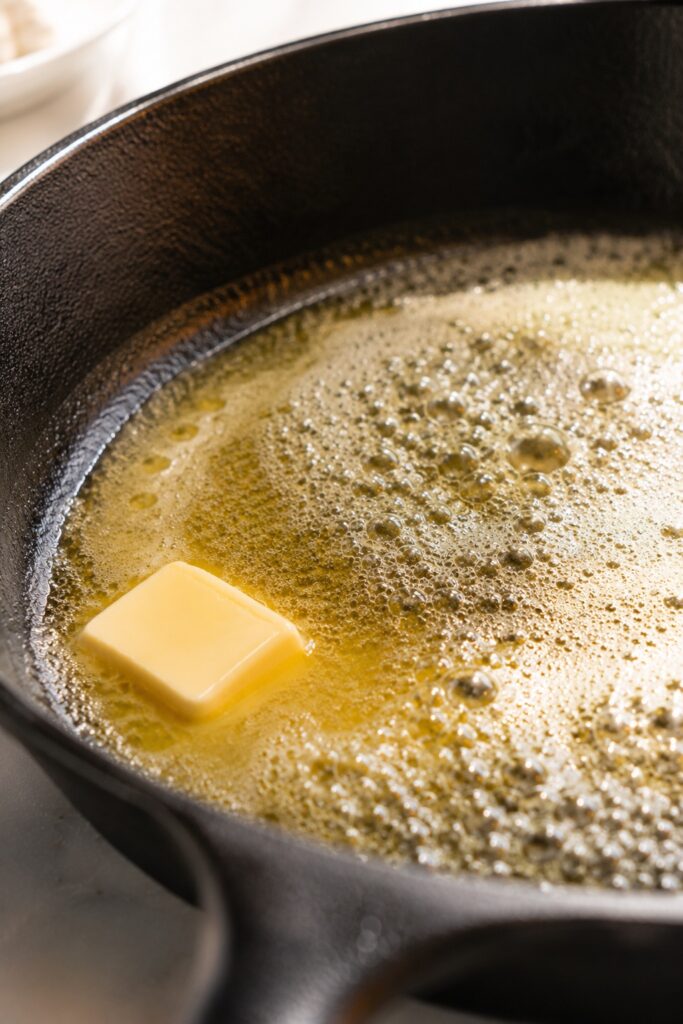
3. Melt the Butter
Carefully remove the hot skillet from the oven, add the butter, and swirl until it’s completely melted and lightly foaming.
Visual cue: The butter should sizzle gently without browning or smoking.
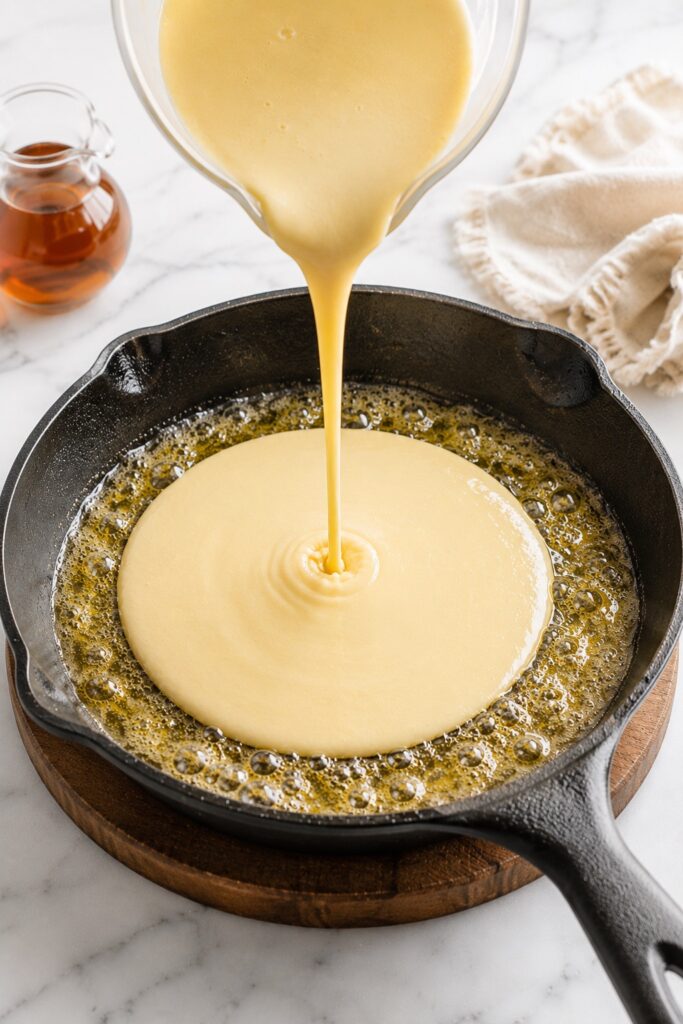
4. Add the Batter
Immediately pour the batter into the hot buttered skillet. Don’t stir—the batter will spread into an even layer on its own.
Visual cue: You’ll hear a gentle sizzle as the batter hits the hot pan.
5. Bake
Bake for 18–20 minutes for a softer center, or up to 22 minutes if you prefer crispier edges. Avoid opening the oven door while it bakes.
Visual cue: The edges should rise dramatically, turn deep golden brown, and the center should look set but still slightly soft.
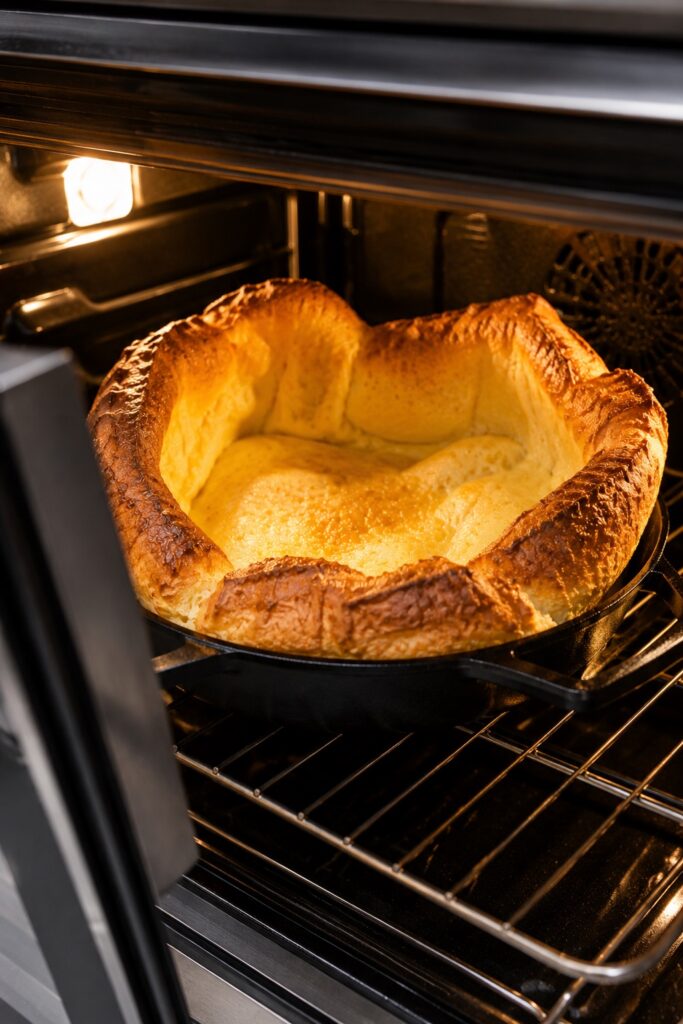
BDV Tip: It’s tempting to peek, but every time the oven door opens, heat escapes and the pancake may not reach its full height.
6. Serve Immediately
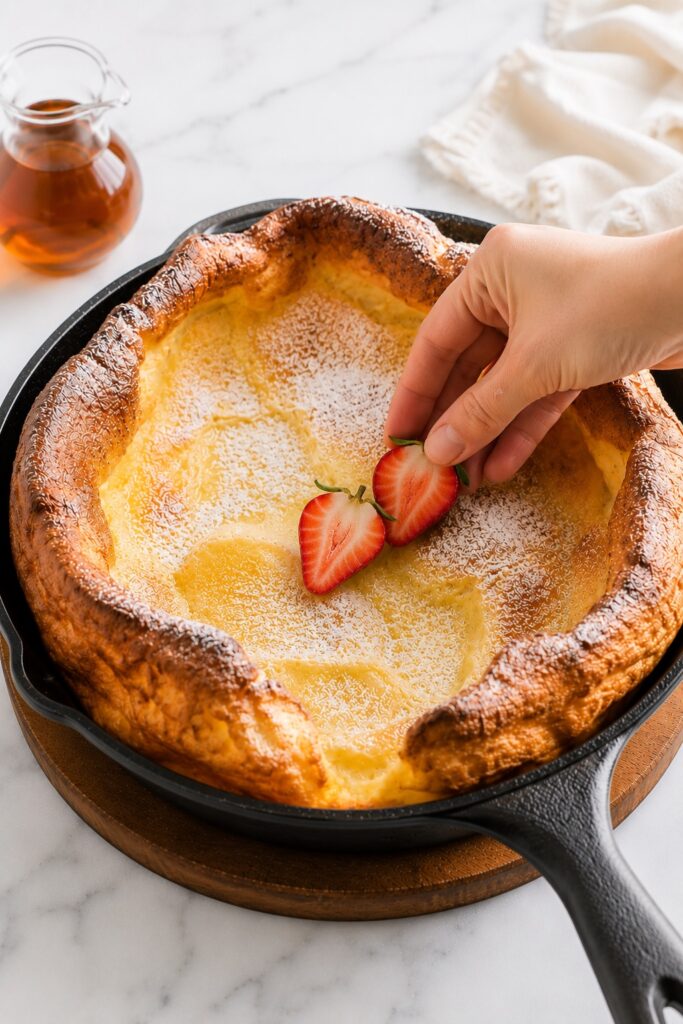
Dust with powdered sugar and add your favorite toppings while the pancake is still warm. Serve immediately for the crispiest edges and the most impressive presentation.
Visual cue: The pancake will begin to gently deflate within a few minutes. That’s completely normal and a sign of an authentic German Pancake.
How to Tell When It’s Done
Timing is a helpful guide, but your eyes are the best indicator. Look for these signs before removing the pancake from the oven.
- ✓ The edges have puffed high above the rim of the skillet.
- ✓ The edges are deep golden brown with crisp, buttery ridges.
- ✓ The center is lightly golden and looks set, not wet or glossy.
- ✓ The butter around the edges has stopped bubbling vigorously.
- ✓ The pancake feels lightly springy when gently touched in the center.
- ✓ A little steam escapes when you remove it from the oven.
Good to Know: Your German Pancake will naturally begin to deflate within a few minutes. That’s exactly what an authentic Dutch Baby is supposed to do.
From Batter to Baked Pancake
If it’s your first time making a German Pancake, don’t worry if it looks different at each stage. Here’s what you should expect from start to finish.
| Stage | What You Should See |
|---|---|
| Mixed batter | Thin, silky, and completely smooth with no visible flour lumps. |
| After pouring | The batter spreads quickly across the hot buttered skillet and begins to sizzle around the edges. |
| Halfway through baking | The edges rise rapidly while the center is still soft and gently puffing. |
| Fully baked | Tall golden edges, a lightly browned center, and a soft custardy texture. |
| After serving | The pancake slowly settles while remaining tender inside with crisp buttery edges. |
Note: No two German Pancakes puff exactly the same. Small differences in your oven, skillet, or ingredient temperature can change the final shape, but they’ll still taste delicious.
Expert Tips for the Best German Pancake
These small details don’t make the recipe more complicated—but they can make the difference between a good German Pancake and one with spectacular height, crisp edges, and a silky center.
- Bring the eggs and milk to room temperature. Warm ingredients create steam more quickly, helping the pancake puff higher in the oven.
- Don’t skip the 10-minute batter rest. It gives the flour time to hydrate, resulting in a smoother batter and a more even texture.
- Preheat the skillet, not just the oven. A hot pan gives the batter an immediate burst of heat, which is essential for dramatic rise.
- Blend just until smooth. About 20–30 seconds is enough. Overmixing can develop gluten and make the pancake slightly tougher.
- Don’t overfill the skillet. A thinner layer of batter creates taller puffed edges and a better balance between crisp edges and a custardy center.
- Serve it right away. German Pancakes are at their absolute best during the first few minutes, while the edges are crisp and the center is still warm and airy.
- Adjust the baking time to your preference. Bake for 18–20 minutes for a softer custardy center, or up to 22 minutes if you prefer crispier, darker edges.
Note: If your German Pancake rises unevenly, don’t worry. Every oven heats a little differently, and slight variations in shape are completely normal for this rustic breakfast classic.
Common Mistakes to Avoid
Most German Pancake problems come down to heat, timing, or batter texture. If yours doesn’t puff the way you expected, this guide will help you spot what happened and fix it next time.
| Mistake | What Happens | How to Fix It |
|---|---|---|
| Using cold eggs or milk | The pancake rises less dramatically. | Let both sit at room temperature before blending. |
| Not preheating the skillet | The edges stay flatter and less crisp. | Heat the skillet in the oven for at least 10 minutes. |
| Over-blending the batter | The center can turn slightly tough instead of custardy. | Blend only 20–30 seconds, just until smooth. |
| Skipping the batter rest | The texture may be less even. | Rest the batter for 10 minutes before baking. |
| Opening the oven door | Heat escapes and the pancake may collapse early. | Watch through the oven window until the edges are fully puffed. |
| Overbaking | The center becomes dry or overly eggy. | Bake 18–20 minutes for a softer center, or up to 22 minutes for crispier edges. |
| Using the wrong pan size | The pancake stays too thin or too thick. | Use a 10-inch skillet for this recipe or adjust the ingredient amounts accordingly. |
German Pancake vs. Regular Pancakes
Wondering how a German Pancake compares to traditional pancakes? While they share similar ingredients, the cooking method creates two completely different breakfast experiences.
| German Pancake | Regular Pancakes |
|---|---|
| Oven baked in one skillet | Cooked individually on a griddle or skillet |
| Dramatic puffed edges | Soft, evenly thick pancakes |
| Crisp edges with a custardy center | Fluffy, cake-like texture throughout |
| Ready all at once | Requires flipping each pancake |
| Perfect for sharing | Easy to serve individually |
If you’re looking for an easy breakfast that feels a little more special, a German Pancake is hard to beat. It delivers bakery-style presentation with surprisingly little hands-on effort.
Beautiful Ways to Serve German Pancakes
A German Pancake is at its absolute best the moment it comes out of the oven. The edges are crisp and buttery, the center is warm and custardy, and even the simplest toppings melt perfectly into every bite.
Whether you’re serving it for a quiet weekend breakfast or placing it at the center of a holiday brunch, these ideas will help you make every slice feel a little more special.
Keep It Classic
Sometimes less really is more. These timeless toppings let the buttery flavor and delicate custardy texture take center stage.
- Powdered sugar and fresh lemon wedges
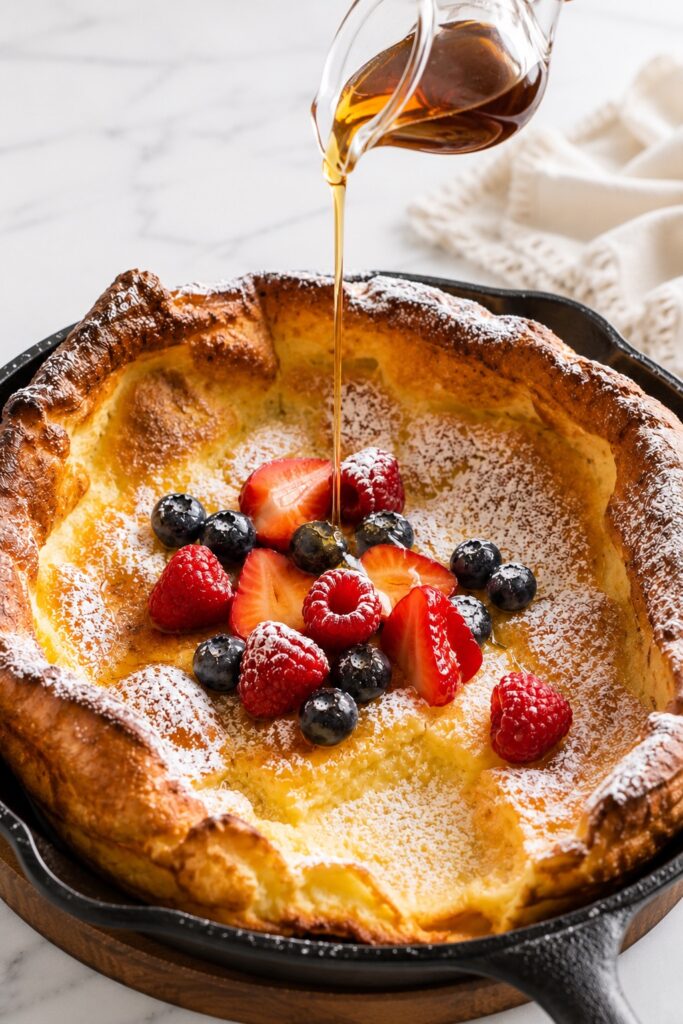
- Warm maple syrup
- A small pat of salted butter
- A light dusting of cinnamon
Seasonal Favorites
One recipe, four seasons. Simply change the toppings to match what’s fresh and in season.
- Spring: Strawberries, blueberries, lemon zest, and lightly sweetened whipped cream.
- Summer: Peaches, nectarines, cherries, or mixed berries with fresh mint.
- Fall: Warm cinnamon apples, maple-glazed pecans, or homemade pear compote.
- Winter: Cranberry sauce, spiced pears, caramelized apples, or a dusting of powdered sugar with orange zest.
Sweet vs. Savory Toppings
One of the best things about a German Pancake is how easily it can be served as either a sweet breakfast or a savory brunch. Simply adjust the toppings to match the occasion.
| Sweet Toppings | Savory Toppings |
|---|---|
| Powdered sugar and fresh berries | Crispy bacon |
| Warm maple syrup | Smoked salmon |
| Lemon juice and powdered sugar | Sautéed mushrooms |
| Berry compote | Baby spinach |
| Whipped cream | Gruyère or Parmesan |
| Nutella with sliced bananas | Fresh chives or herbs |
BDV Tip: For savory German Pancakes, reduce the sugar in the batter to 1 teaspoon or omit it entirely. The result is a naturally versatile pancake that pairs just as well with eggs, cheese, and herbs as it does with fruit and maple syrup.
Build a Beautiful Brunch
Turn your German Pancake into the centerpiece of a relaxed brunch by pairing it with a few simple savory and fresh sides.
- Scrambled or softly cooked eggs
- Crispy bacon or breakfast sausage
- Fresh fruit salad
- Vanilla Greek yogurt with berries
- Freshly brewed coffee, espresso, or orange juice
Make It Extra Special
Hosting brunch or celebrating a special occasion? A few finishing touches make this simple pancake look elegantly bakery-worthy.
- Serve it straight from the warm cast iron skillet for a dramatic presentation.
- Dust with powdered sugar just before bringing it to the table.
- Add fresh berries at the last minute to keep them vibrant and juicy.
- Finish with a few mint leaves or a little lemon zest for fresh color.
- Slice it at the table so everyone can enjoy the lacy golden edges while they’re still warm.
Tip: Wait until the last minute to add powdered sugar, whipped cream, or fresh fruit. They stay fresher, look more beautiful, and preserve the crisp texture of the pancake.
Perfect For
Because it’s easy to prepare yet always impressive, a German Pancake fits just as well into everyday breakfasts as it does special celebrations.
- Weekend family breakfasts
- Holiday brunches
- Easter morning
- Christmas breakfast
- Mother’s Day brunch
- Bridal or baby showers
- Breakfast-for-dinner nights
German Pancakes have a way of bringing everyone to the table before the coffee is even poured. Served warm, perfectly topped, and shared straight from the skillet, they transform a handful of simple ingredients into a breakfast that feels effortlessly special.
Storage & Make Ahead
German Pancakes are at their absolute best fresh from the oven, when the edges are crisp and the center is still warm and custardy. That said, leftovers store surprisingly well and can be enjoyed again with the right reheating method.
Refrigerator
Let the pancake cool completely before storing it in an airtight container.
- Store in the refrigerator for up to 3 days.
- Separate slices with parchment paper if stacking them.
Freezer
Although the texture is best fresh, German Pancakes freeze well for quick breakfasts.
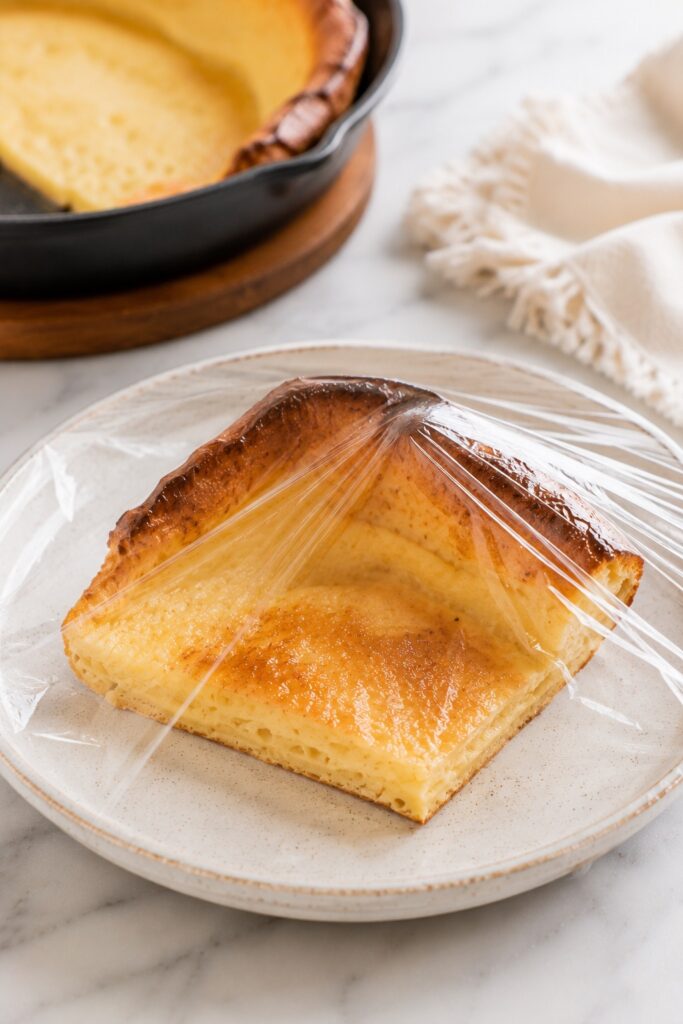
- Freeze individual slices for up to 2 months.
- Wrap tightly in plastic wrap, then place in a freezer-safe bag or container.
- Thaw overnight in the refrigerator or reheat directly from frozen.
How to Reheat
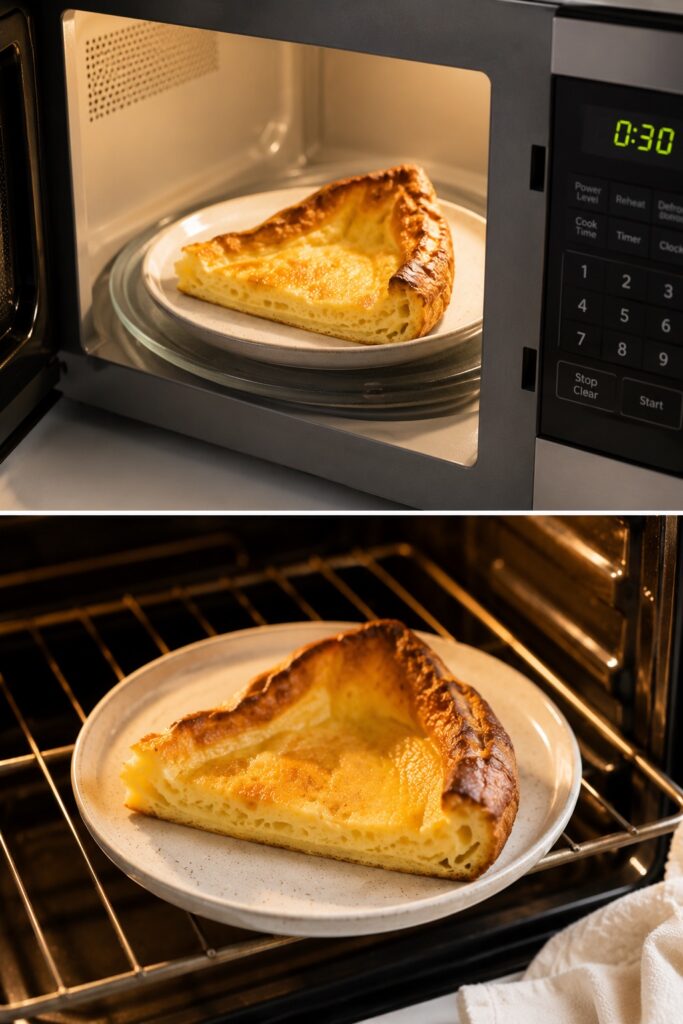
The oven gives the best texture, while the microwave is the quickest option.
| Method | Instructions | Best For |
|---|---|---|
| Oven | 350°F (175°C) for 6–8 minutes. | Restores crisp edges. |
| Air Fryer | 325°F (160°C) for 3–4 minutes. | Quick reheating with crisp texture. |
| Microwave | 20–30 seconds per slice. | Fastest option, but the edges soften. |
Can You Make It Ahead?
Yes, but not fully baked.
Blend the batter up to 24 hours in advance and refrigerate it in a covered container. Before baking, let it sit at room temperature for about 20 minutes while the oven and skillet preheat.
Tip: If you’re serving guests, prepare the batter the night before. In the morning, all you’ll need to do is preheat the skillet, pour in the batter, and bake. You’ll get all the drama of a freshly puffed German Pancake with almost no morning prep.
German Pancake Recipe Variations
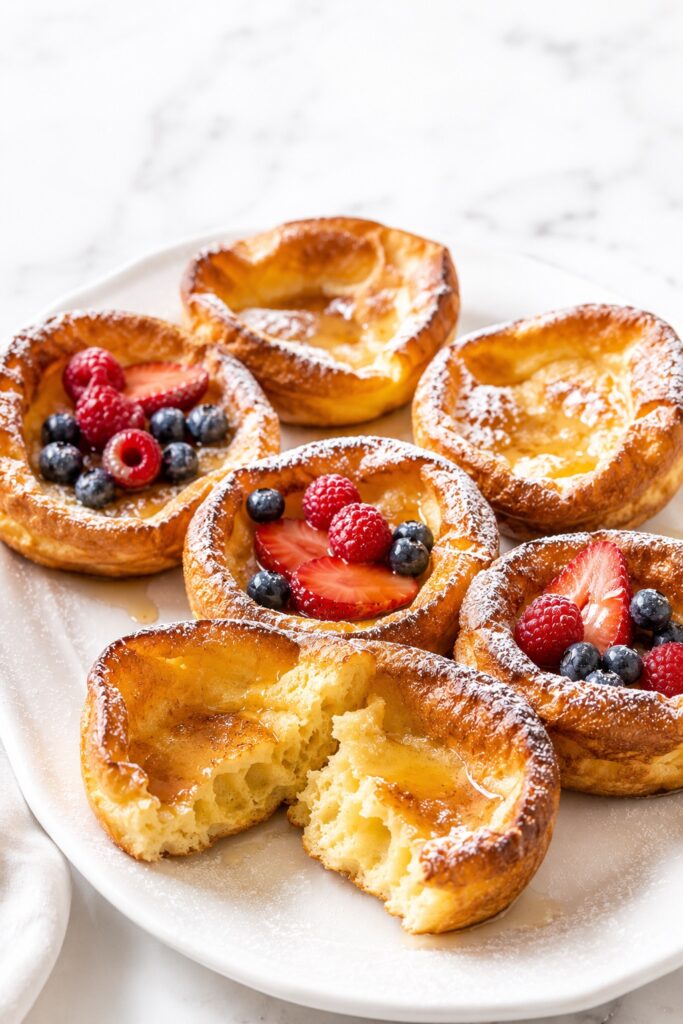
1. Mini German Pancakes
Love the iconic oven spring of a classic German Pancake? These mini versions deliver the same crisp golden edges and tender interior in individual servings. They’re perfect for brunch buffets, holiday breakfasts, meal prep, or little hands that love their own pancake.
Best For
- Holiday brunches
- Kids’ breakfasts
- Meal prep
- Breakfast buffets
- Grab-and-go servings
Ingredients
- 6 large eggs, room temperature
- 1 cup (240 ml) whole milk, room temperature
- 1 cup (125 g) all-purpose flour
- 2 tablespoons granulated sugar
- ½ teaspoon fine salt
- 1 teaspoon vanilla extract
- 4 tablespoons (57 g) unsalted butter, melted and divided between the muffin cups
- Optional: ¼ teaspoon ground cinnamon
How to Make
- Preheat the oven to 425°F (220°C) with a standard 12-cup metal muffin pan inside.
- Blend the eggs, milk, flour, sugar, salt, vanilla, and optional cinnamon for 20–30 seconds until smooth. Let the batter rest for 10 minutes.
- Carefully remove the hot muffin pan and add about 1 teaspoon of melted butter to each cup, swirling to coat the bottom.
- Fill each muffin cup about halfway with batter.
- Bake for 12–15 minutes, or until the pancakes are deeply puffed and golden brown around the edges.
- Serve immediately with your favorite toppings while they’re still warm.
Why This Variation Works
The smaller portions heat more quickly than a large skillet pancake, creating dramatic individual puffs with impressively crisp outer rim. Filling each cup only halfway leaves enough room for the batter to expand without overflowing.
Perfect Toppings
- Powdered sugar and fresh berries
- Maple syrup
- Lemon juice and powdered sugar
- Whipped cream with strawberry compote
- Nutella and sliced bananas
Tip: Bake mini German Pancakes in a light-colored metal muffin pan whenever possible. It heats more evenly than glass or silicone, helping the pancakes puff higher and develop crisp, golden edges.
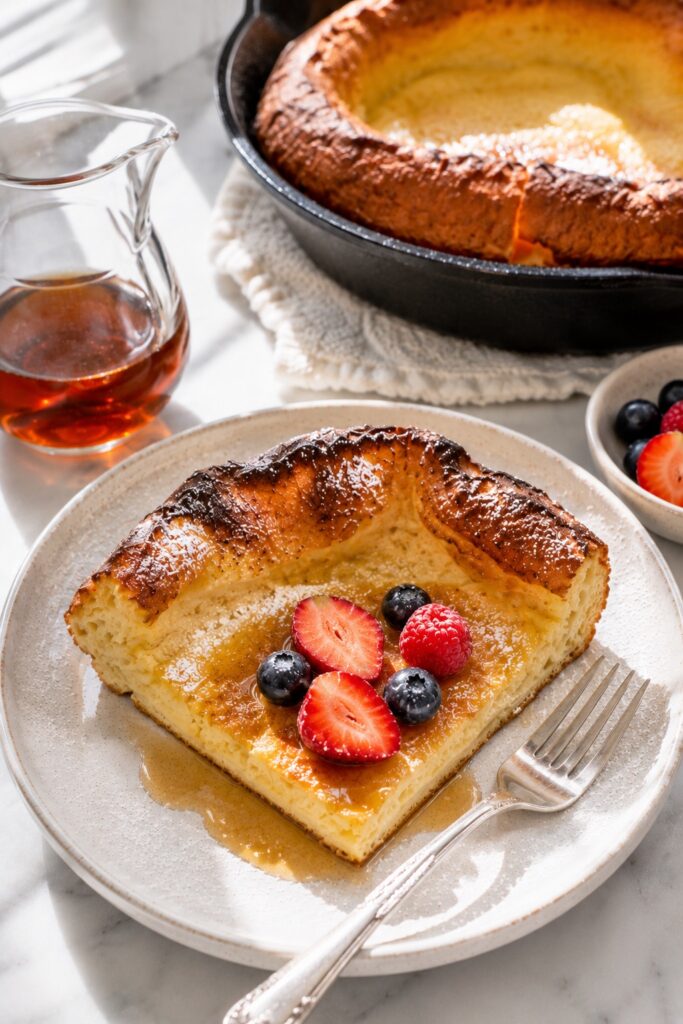
2. High Protein Cottage Cheese German Pancakes
This variation naturally boosts the protein by blending cottage cheese into the batter. The result is a gorgeously puffed German Pancake with crisp buttery edges, a silky custardy center, and a richer, creamier texture that makes it especially satisfying for breakfast.
| Protein | Approximately 15–17 g per serving* |
| Texture | Crisp edges with a creamy, custardy center |
| Best For | High-protein breakfasts, post-workout meals, and meal prep |
*Approximate protein content per serving when divided into four portions.
Ingredients
- 6 large eggs, room temperature
- ¾ cup (180 ml) whole milk, room temperature
- ¾ cup (170 g) small-curd 4% cottage cheese, drained if very wet
- 1 cup (125 g) all-purpose flour
- 1 tablespoon granulated sugar
- ½ teaspoon fine salt
- 1 teaspoon vanilla extract
- 4 tablespoons (57 g) unsalted butter
- Optional: ¼ teaspoon ground cinnamon
How to Make
- Place a 10-inch cast iron skillet in the oven and preheat to 425°F (220°C) for at least 10 minutes.
- Blend the eggs, milk, cottage cheese, sugar, salt, vanilla, and optional cinnamon until completely smooth. Add the flour and blend for another 10–15 seconds, just until incorporated.
- Let the batter rest for 10 minutes so the flour fully hydrates.
- Carefully remove the hot skillet, add the butter, and swirl until completely melted.
- Pour the batter into the skillet and bake for 19–22 minutes, until the edges are dramatically puffed and deep golden brown while the center is just set.
- Serve immediately while warm.
Why This Variation Works
Small-curd cottage cheese blends into an ultra-smooth batter, adding protein, richness, and moisture without making the pancake heavy. Keeping the full amount of flour preserves enough gluten to support the signature puff, while slightly reducing the milk maintains the thin, silky consistency needed for a classic German Pancake.
Perfect Toppings
- Fresh berries with Greek yogurt
- Sliced banana with almond butter
- Warm berry compote
- Chopped toasted pecans with cinnamon
- A light drizzle of honey or pure maple syrup
Tip: If your cottage cheese contains a lot of liquid, drain it for 5–10 minutes before blending. A thicker cottage cheese creates a more consistent batter and helps the pancake rise higher.
3. Blueberry German Pancakes
Fresh blueberries transform a classic German Pancake into a beautiful summer breakfast with bursts of juicy fruit in every bite. The sweet berries pair perfectly with the buttery pancake while keeping its signature crisp edges and custardy center.
Best For
- Spring and summer breakfasts
- Weekend brunches
- Fresh berry season
- Mother’s Day brunch
Ingredients
- 6 large eggs, room temperature
- 1 cup (240 ml) whole milk, room temperature
- 1 cup (125 g) all-purpose flour
- 2 tablespoons granulated sugar
- ½ teaspoon fine salt
- 1 teaspoon vanilla extract
- 4 tablespoons (57 g) unsalted butter
- 1 cup (150 g) fresh blueberries
- 1 teaspoon lemon zest (optional)
How to Make
- Prepare the batter exactly as directed in the main recipe, including the 10-minute batter rest.
- Preheat a 10-inch cast iron skillet at 425°F (220°C) and melt the butter.
- Pour the batter into the hot skillet.
- Scatter the blueberries evenly over the batter. If using lemon zest, sprinkle it over the top now.
- Bake for 18–22 minutes, until the edges are deeply puffed and golden and the center is just set.
- Serve immediately with powdered sugar and maple syrup, if desired.
Why This Variation Works
Adding the blueberries after pouring the batter helps preserve the pancake’s dramatic rise while distributing the fruit more evenly. As the berries bake, they soften and release just enough juice to flavor the custardy center without making it soggy.
Perfect Toppings
- Powdered sugar
- Warm maple syrup
- Lemon zest
- Lightly sweetened whipped cream
- Blueberry compote
- Vanilla Greek yogurt
Note: Fresh blueberries produce the best texture. If using frozen blueberries, add them straight from the freezer without thawing to prevent excess moisture and purple streaks throughout the batter.
4. Apple Cinnamon German Pancakes
If you’re looking for the ultimate fall breakfast, this variation is hard to beat. Warm cinnamon apples, buttery maple flavors, and the delicately crisp edges of a freshly baked German Pancake create a breakfast that tastes like apple pie in pancake form.
Best For
- Fall breakfasts
- Thanksgiving brunch
- Cozy weekend mornings
- Holiday gatherings
Ingredients
- 6 large eggs, room temperature
- 1 cup (240 ml) whole milk, room temperature
- 1 cup (125 g) all-purpose flour
- 2 tablespoons granulated sugar
- ½ teaspoon fine salt
- 1 teaspoon vanilla extract
- 4 tablespoons (57 g) unsalted butter
- 2 medium Honeycrisp or Granny Smith apples, peeled and diced
- 1 tablespoon unsalted butter (for the apples)
- 1 tablespoon brown sugar
- 1 teaspoon ground cinnamon
- ¼ teaspoon ground nutmeg (optional)
How to Make
- Prepare the batter as directed in the main recipe and let it rest for 10 minutes.
- Meanwhile, cook the apples with 1 tablespoon butter, brown sugar, cinnamon, and optional nutmeg over medium heat for 5–7 minutes, until just tender.
- Preheat a 10-inch cast iron skillet, melt the remaining butter, and pour in the batter.
- Spoon the warm cinnamon apples evenly over the batter.
- Bake at 425°F (220°C) for 18–22 minutes, until deeply puffed and golden.
- Serve immediately while warm.
Why This Variation Works
Cooking the apples first removes excess moisture and concentrates their flavor. The pancake still rises beautifully while the apples stay soft, caramelized, and evenly distributed throughout every slice.
Perfect Toppings
- Warm maple syrup
- Whipped cream
- Chopped toasted pecans
- Vanilla ice cream for dessert
- Extra cinnamon
Tip: Choose firm baking apples like Honeycrisp, Granny Smith, or Pink Lady. Softer varieties can release too much moisture and reduce the pancake’s dramatic rise.
5. Dairy-Free German Pancakes
Need a dairy-free option? This version keeps the signature puff, crisp golden edges, and soft custardy center by simply replacing the dairy ingredients—without changing the technique that makes a German Pancake so special.
| Dairy-Free | Yes |
| Texture | Crisp edges with a soft, custardy center |
| Best For | Dairy-free breakfasts and brunches |
Ingredients
- 6 large eggs, room temperature
- 1 cup (240 ml) unsweetened oat milk, room temperature
- 1 cup (125 g) all-purpose flour
- 2 tablespoons granulated sugar
- ½ teaspoon fine salt
- 1 teaspoon vanilla extract
- 4 tablespoons (57 g) vegan butter sticks, melted
- Optional: ¼ teaspoon ground cinnamon
How to Make
- Place a 10-inch cast iron skillet in the oven and preheat to 425°F (220°C) for at least 10 minutes.
- Blend the eggs, oat milk, sugar, salt, vanilla, and optional cinnamon until combined. Add the flour and blend for another 10–15 seconds, just until smooth.
- Let the batter rest for 10 minutes.
- Carefully remove the hot skillet, add the vegan butter, and swirl until completely melted.
- Pour in the batter and bake for 18–22 minutes, until the edges are deeply puffed and golden brown.
- Serve immediately with your favorite dairy-free toppings.
Why This Variation Works
Oat milk has a naturally creamy consistency that closely mimics whole milk, while vegan butter with a high fat content helps create beautifully lacy golden edges. Because the eggs remain unchanged, the pancake still develops the dramatic rise that makes German Pancakes so distinctive.
Perfect Toppings
- Fresh berries
- Maple syrup
- Coconut whipped cream
- Warm apple compote
- Toasted sliced almonds
Tip: Choose an unsweetened, barista-style oat milk if possible. Its slightly higher fat content creates a richer batter and a texture that’s closer to the classic recipe.
6. Gluten-Free German Pancakes
You don’t have to give up the dramatic rise and custardy texture of a classic German Pancake just because you’re avoiding gluten. Using a quality 1:1 gluten-free flour blend creates a beautifully puffed pancake that’s remarkably close to the original.
| Gluten-Free | Yes |
| Texture | Lightly crisp edges with a tender, custardy center |
| Best For | Gluten-free breakfasts and weekend brunches |
Ingredients
- 6 large eggs, room temperature
- 1 cup + 2 tablespoons (270 ml) whole milk, room temperature
- 1 cup (140 g) gluten-free 1:1 baking flour (such as King Arthur Measure for Measure or Bob’s Red Mill 1:1 Baking Flour)
- 2 tablespoons granulated sugar
- ½ teaspoon fine salt
- 1 teaspoon vanilla extract
- 4 tablespoons (57 g) unsalted butter
- Optional: ¼ teaspoon ground cinnamon
How to Make
- Preheat a 10-inch cast iron skillet in a 425°F (220°C) oven for at least 10 minutes.
- Blend the eggs, milk, sugar, salt, vanilla, and optional cinnamon until combined. Add the gluten-free flour and blend just until smooth.
- Let the batter rest for 15 minutes to fully hydrate the gluten-free flour blend.
- Melt the butter in the hot skillet, pour in the batter, and bake for 19–23 minutes, until the edges are puffed and golden.
- Serve immediately while still warm.
Why This Variation Works
A high-quality 1:1 gluten-free flour blend already contains starches and binders that help replace gluten. The extra milk and slightly longer resting time allow the flour to fully hydrate, producing a smoother batter and a more tender finished pancake.
Perfect Toppings
- Fresh berries
- Maple syrup
- Lemon wedges and powdered sugar
- Whipped cream
- Warm berry compote
Tip: Use a gluten-free flour blend that already contains xanthan gum or another binder. If your blend doesn’t include one, add about ¼ teaspoon xanthan gum for better structure and lift.
7. Almond Flour German Pancakes
This almond flour version delivers a rich, buttery flavor with a soft, custardy center while remaining lower in carbohydrates than the classic recipe. Although it won’t rise quite as dramatically, it bakes into a beautifully golden pancake with lightly crisp edges and an incredibly tender texture.
| Flour | Almond flour blend |
| Texture | Rich, moist, and custardy |
| Best For | Lower-carb breakfasts and gluten-conscious eaters |
Ingredients
- 6 large eggs, room temperature
- ¾ cup (180 ml) whole milk, room temperature
- 1 cup (112 g) finely blanched almond flour
- 2 tablespoons tapioca starch
- 1 tablespoon coconut flour
- 1 tablespoon granulated sugar
- ½ teaspoon fine salt
- 1 teaspoon vanilla extract
- 4 tablespoons (57 g) unsalted butter
- Optional: ¼ teaspoon ground cinnamon
How to Make
- Preheat a 10-inch cast iron skillet in a 425°F (220°C) oven for at least 10 minutes.
- Blend the eggs, milk, sugar, salt, vanilla, and optional cinnamon until smooth.
- Add the almond flour, tapioca starch, and coconut flour, then blend for about 15 seconds until fully combined.
- Let the batter rest for 10–15 minutes so the coconut flour can fully hydrate.
- Melt the butter in the hot skillet, pour in the batter, and bake for 20–24 minutes, until puffed, golden brown, and just set in the center.
- Serve immediately while warm.
Why This Variation Works
Almond flour provides richness but very little structure. Tapioca starch adds elasticity, while a small amount of coconut flour absorbs excess moisture without making the pancake dry. Together, they create a texture that’s much closer to a traditional German Pancake than almond flour alone.
Perfect Toppings
- Fresh raspberries and blueberries
- Sliced toasted almonds
- Whipped cream
- Warm berry compote
- Honey or pure maple syrup
Tip: Use finely blanched almond flour, not almond meal. Almond meal contains the skins, producing a heavier batter and a coarser texture that won’t puff as well.
8. Keto German Pancakes
If you’re following a low-carb lifestyle, you can still enjoy the buttery flavor and custardy texture of a German Pancake. This keto-friendly version uses a carefully balanced blend of almond flour, coconut flour, and tapioca starch to create a beautifully tender pancake with lightly crisp edges and a satisfying rise. While it won’t puff quite as dramatically as the classic version, it delivers a delicious Dutch Baby-style breakfast with significantly fewer carbohydrates.
Unlike the almond flour version, this recipe is specifically designed to minimize net carbohydrates by replacing both the milk and sugar with keto-friendly alternatives while preserving as much of the classic Dutch Baby texture as possible.
| Net Carbs | Approximately 5–7 g per serving* |
| Texture | Rich, buttery, and custardy with lightly crisp edges |
| Best For | Keto and low-carb breakfasts |
*Approximate value per serving when divided into four portions.
Ingredients
- 6 large eggs, room temperature
- ¾ cup (180 ml) unsweetened almond milk, room temperature
- 1 cup (112 g) finely blanched almond flour
- 2 tablespoons tapioca starch
- 1 tablespoon coconut flour
- 2 tablespoons granulated keto sweetener (such as allulose or erythritol)
- ½ teaspoon fine salt
- 1 teaspoon vanilla extract
- 4 tablespoons (57 g) unsalted butter
- Optional: ¼ teaspoon ground cinnamon
How to Make
- Place a 10-inch cast iron skillet in the oven and preheat to 425°F (220°C) for at least 10 minutes.
- Blend the eggs, almond milk, keto sweetener, salt, vanilla, and optional cinnamon until smooth.
- Add the almond flour, tapioca starch, and coconut flour, then blend for about 15 seconds until fully incorporated.
- Let the batter rest for 10–15 minutes so the coconut flour fully hydrates.
- Carefully remove the hot skillet, melt the butter, pour in the batter, and bake for 20–24 minutes, until the edges are golden brown and the center is just set.
- Serve immediately while warm with your favorite keto-friendly toppings.
Why This Variation Works
Almond flour provides richness and healthy fats, while coconut flour absorbs excess moisture to prevent a heavy texture. A small amount of tapioca starch improves elasticity and creates a more cohesive custardy center without adding many carbohydrates per serving. Together, these ingredients produce one of the closest low-carb alternatives to a traditional German Pancake.
Perfect Toppings
- Fresh raspberries or blackberries
- Sugar-free maple syrup
- Whipped heavy cream
- Chopped toasted pecans
- Unsweetened almond butter
Tip: Allulose produces the most natural flavor and better browning than erythritol, making it an excellent choice for keto German Pancakes if it’s available.
9. Vegan German Pancakes
Creating a vegan German Pancake requires more than simply replacing the eggs. This version uses silken tofu and aquafaba to create a light, tender batter that bakes into beautifully golden edges with a soft, custardy center. While it won’t puff quite as dramatically as the traditional recipe, it’s a delicious plant-based alternative.
This version is inspired by the texture of a German Pancake rather than an exact duplicate of the classic egg-based recipe.
| Vegan | Yes |
| Texture | Tender, lightly custardy, and delicately crisp around the edges |
| Best For | Plant-based breakfasts and brunches |
Ingredients
- 12 oz (340 g) silken tofu
- ½ cup (120 ml) unsweetened oat milk
- ¼ cup (60 ml) aquafaba (liquid from canned chickpeas)
- 1 cup (125 g) all-purpose flour
- 2 tablespoons granulated sugar
- 1 teaspoon baking powder
- ½ teaspoon fine salt
- 1 teaspoon vanilla extract
- 4 tablespoons (57 g) vegan butter
- Optional: ¼ teaspoon ground cinnamon
How to Make
- Place a 10-inch oven-safe skillet in the oven and preheat to 425°F (220°C).
- Blend the silken tofu, oat milk, aquafaba, sugar, salt, vanilla, and optional cinnamon until completely smooth.
- Add the flour and baking powder, then blend just until incorporated.
- Let the batter rest for 10 minutes.
- Melt the vegan butter in the hot skillet, pour in the batter, and bake for 22–26 minutes, until golden brown and set in the center.
- Serve immediately while warm.
Why This Variation Works
Silken tofu creates a smooth, custardy texture, while aquafaba adds lightness that helps compensate for the lack of eggs. A small amount of baking powder provides additional lift without turning the pancake into a cake.
Perfect Toppings
- Fresh berries
- Maple syrup
- Coconut whipped cream
- Warm berry compote
- Toasted sliced almonds
Tip: Blend the tofu until it’s completely silky before adding the flour. Any remaining pieces can make the finished pancake slightly grainy.
You’ll Also Love These Breakfast Recipes
If German Pancakes have earned a place in your breakfast rotation, these homemade favorites are wonderful recipes to try next. Whether you’re planning a cozy weekend brunch, meal-prepping breakfasts for the week, or simply looking for new family favorites, these recipes will help keep breakfast exciting all year long.
More Pancake Favorites
Love homemade pancakes? These recipes each bring something different to the breakfast table, from extra protein to fluffy diner-style stacks and easy family-friendly baking.
- Cottage Cheese Pancakes – Naturally higher in protein with a soft, tender texture that’s both filling and delicious.
- Sheet Pan Pancakes – Bake breakfast for the whole family in one pan with almost no flipping or standing over the stove.
- Buttermilk Pancakes – Light, fluffy, buttery pancakes that never go out of style and are perfect for lazy weekend mornings.
Weekend Brunch Favorites
If you’re putting together a memorable brunch spread, these recipes pair beautifully with German Pancakes. They’re classic crowd-pleasers that feel special enough for holidays, celebrations, or slow Sunday mornings.
- Belgian Waffles – Crispy outside, fluffy inside, and perfect with fresh berries, whipped cream, or warm maple syrup.
- French Toast – Golden, custardy slices that transform simple bread into one of the most comforting breakfasts you’ll ever make.
- High Protein Waffles – A satisfying, protein-packed option that delivers crispy edges and fluffy centers without sacrificing flavor.
Fresh from the Oven
Nothing makes a home feel cozier than the aroma of freshly baked breakfast treats. These recipes are perfect for baking ahead, serving guests, or filling your kitchen with irresistible homemade goodness.
- Bakery Style Blueberry Muffins – Tall, golden muffins packed with juicy blueberries and finished with beautiful bakery-style tops.
- Homemade Cinnamon Rolls – Pillowy soft rolls layered with cinnamon sugar and topped with a rich, creamy glaze.
- Buttermilk Biscuits – Tall, flaky biscuits with buttery layers that pair beautifully with both sweet and savory breakfasts.
Fresh & Light Breakfast Ideas
Looking for something fresh to balance a rich breakfast? These lighter recipes add bright flavors, colorful ingredients, and refreshing textures that complete any brunch table.
- Fruit Salad – A colorful mix of fresh seasonal fruit that adds brightness and natural sweetness to any breakfast spread.
- Parfait – Creamy yogurt layered with fruit and crunchy granola for an easy breakfast or elegant brunch side.
- Chia Seed Pudding – A creamy make-ahead favorite that’s perfect for busy mornings and easy meal prep.
Whether you’re craving fluffy pancakes, bakery-style treats, or lighter breakfast options, these recipes are wonderful additions to your homemade breakfast collection and perfect for sharing with family and friends.
German Pancakes FAQs
Why didn’t my German Pancakes puff up?
The most common causes are a skillet that wasn’t fully preheated, cold ingredients, or opening the oven door too early. German Pancakes rise because the moisture in the batter quickly turns to steam, so a very hot pan and room-temperature eggs and milk are essential for creating those dramatic, golden edges.
Why do my German Pancakes taste eggy?
German Pancakes are naturally egg-rich, but they should taste buttery, lightly sweet, and custardy rather than overly eggy. If the flavor is too strong, the pancake may be overbaked, under-seasoned, or served after cooling too much. Vanilla, enough salt, and serving it warm all help create a more balanced flavor.
Why did my German Pancakes deflate?
That’s completely normal. German Pancakes puff dramatically in the oven thanks to steam, then naturally settle within a few minutes after baking. Serve them immediately for the tallest presentation and the best contrast between crisp edges and the soft, custardy center.
Can I make the batter ahead of time?
Yes. You can blend the batter up to 12 hours in advance and refrigerate it in a covered container. Before baking, let it sit at room temperature for 20–30 minutes, then whisk or blend briefly before pouring it into the hot skillet.
Can I use a different pan?
Absolutely. A 10-inch cast iron skillet gives the best rise and browning, but an oven-safe stainless steel skillet, ceramic baking dish, or 9×13-inch baking dish also works well. Whatever pan you choose, preheat it thoroughly before adding the batter.
Can I make German Pancakes without a cast iron skillet?
Yes. While cast iron holds heat exceptionally well, it’s not required. Any sturdy oven-safe skillet or baking dish that can safely withstand 425°F (220°C) will produce excellent results when properly preheated.
Can I make German Pancakes in a blender?
Yes. In fact, a blender is one of the easiest ways to create a perfectly smooth batter in just 20–30 seconds. Simply avoid overblending once the flour is incorporated.
Can I freeze German Pancakes?
Yes, although they’re best enjoyed fresh. Let the pancake cool completely, wrap individual portions tightly, and freeze for up to 2 months. Reheat in a 350°F (175°C) oven or air fryer until warmed through to help restore the edges.
Can I make this recipe gluten-free?
Yes. Use a quality 1:1 gluten-free baking flour blend, such as King Arthur Measure for Measure or Bob’s Red Mill 1:1 Baking Flour. For the best texture and rise, follow the complete Gluten-Free German Pancakes variation included earlier in this article.
Can I use almond milk instead of whole milk?
Yes. Unsweetened almond milk works well and still produces a beautifully puffed German Pancake, although the center may be slightly less rich and custardy than when using whole milk. For the closest texture to the classic recipe, choose an unsweetened almond milk with a creamy consistency and let it come to room temperature before making the batter.
Can I make German Pancakes savory?
Definitely. Reduce the sugar to 1 teaspoon or omit it entirely, then top the baked pancake with ingredients like sautéed mushrooms, spinach, bacon, smoked salmon, ham, Gruyère, or fresh herbs. It’s an easy way to turn this breakfast favorite into a satisfying brunch or light dinner.
Should I blend or whisk the batter?
Both methods work, but a blender produces the smoothest batter with very little effort. If you’re whisking by hand, mix until no dry flour remains. A few tiny lumps are perfectly fine, but avoid overmixing once the flour is incorporated.
What are the best toppings for German Pancakes?
Classic toppings include powdered sugar, fresh lemon juice, maple syrup, and fresh berries. For something more indulgent, try whipped cream, warm berry compote, sautéed cinnamon apples, Nutella, or vanilla Greek yogurt. You’ll also find plenty of serving inspiration in the Beautiful Ways to Serve German Pancakes section above.
Can I double this recipe?
Yes, but don’t double the batter in the same skillet. Instead, divide it between two preheated skillets or two baking dishes so each pancake has enough room to puff properly. Overfilling a single pan can prevent the edges from rising and leave the center undercooked.
Why This Recipe Deserves a Spot in Your Recipe Box
Some recipes are fun to make once, while others become the ones you return to year after year. German Pancakes have earned that place in countless kitchens because they’re simple to prepare, endlessly versatile, and always impressive when they emerge from the oven with their beautifully puffed golden edges.
Whether you’re making breakfast for your family, hosting a relaxed weekend brunch, or creating a special holiday tradition, this is one of those timeless recipes you’ll be glad to have in your collection.
- Made with everyday ingredients – You’ll only need a handful of simple pantry staples to create an impressive homemade breakfast.
- Easy enough for any home baker – Straightforward techniques and clear visual cues make this recipe approachable, even if it’s your first German Pancake.
- Ready in about 30 minutes – It’s quick enough for weekends while still feeling special enough for holidays and celebrations.
- Beautifully crisp and custardy – The dramatic puff, golden buttery edges, and soft center create a texture that’s both comforting and unforgettable.
- Endlessly customizable – From fresh berries and maple syrup to cinnamon apples, savory toppings, or seasonal fruit, you can enjoy it a different way every time.
- Perfect all year long – Dress it up with summer berries, cozy fall apples, festive holiday toppings, or keep it beautifully simple with powdered sugar and lemon.
- More than one recipe in one guide – This article includes nine fully developed German Pancake variations, including Mini, Blueberry, Apple Cinnamon, High Protein Cottage Cheese, Dairy-Free, Gluten-Free, Almond Flour, Keto, and Vegan versions, giving you a recipe for nearly every taste, season, and lifestyle.
- A recipe you’ll come back to again and again – Once you’ve mastered the classic version, it’s the kind of breakfast that becomes part of family traditions and creates delicious memories around the table.
Great recipes aren’t simply the ones that taste delicious—they’re the ones that make mornings feel a little more special, bring people together, and become trusted favorites you reach for without thinking twice. This German Pancake is exactly that kind of recipe, and we hope it earns a permanent place in your recipe box.
Final Thoughts
Some breakfasts are simply something to eat before the day begins. Others become the meals everyone remembers long after the plates have been cleared. A beautifully baked German Pancake has a way of turning an ordinary morning into something that feels warm, relaxed, and just a little more special.
From the dramatic rise in the oven to the first slice topped with powdered sugar, fresh berries, or warm maple syrup, every step of this recipe is part of the experience. It’s simple enough for everyday mornings, yet impressive enough to become the centerpiece of weekend brunches, holiday breakfasts, and family traditions for years to come.
If this recipe finds a permanent place in your breakfast rotation, then it’s done exactly what the very best homemade recipes are meant to do: bring people together, create lasting memories, and make even the simplest mornings feel worth celebrating.

German Pancakes
This German Pancake recipe (also known as a Dutch Baby) bakes into dramatic golden, buttery edges with a light, custardy center. Made with simple pantry ingredients and baked in a hot cast iron skillet, it’s an easy breakfast that’s perfect for weekend mornings, holiday brunches, or any time you want an impressive oven-baked pancake.
Ingredients
- 6 large eggs, room temperature
- 1 cup (240 ml) whole milk, room temperature
- 1 cup (125 g) all-purpose flour
- 2 tablespoons granulated sugar
- ½ teaspoon fine salt
- 1 teaspoon vanilla extract
- 4 tablespoons (57 g) unsalted butter
- Optional: ¼ teaspoon ground cinnamon
For serving (optional)
- Powdered sugar
- Fresh berries
- Maple syrup
- Lemon wedges
- Whipped cream
- Warm fruit compote
Instructions
- Preheat the oven to 425°F (220°C) with a 10-inch cast iron skillet inside for at least 10 minutes until thoroughly hot.
- Blend the eggs, milk, flour, sugar, salt, vanilla, and optional cinnamon for 20–30 seconds, just until smooth. Let the batter rest for 10 minutes.
- Carefully remove the hot skillet from the oven, add the butter, and swirl until completely melted and lightly foaming.
- Immediately pour the batter into the hot buttered skillet without stirring.
- Bake for 18–20 minutes for a softer custardy center, or up to 22 minutes for crispier, darker edges. Do not open the oven door while baking.
- Remove from the oven once the edges are deeply puffed and golden brown and the center is just set. Dust with powdered sugar and serve immediately with fresh berries, maple syrup, lemon wedges, whipped cream, or your favorite toppings.
Notes
- Use room-temperature ingredients. Warm eggs and milk help create more steam, giving the pancake its signature dramatic rise.
- Preheat the skillet thoroughly. A hot cast iron skillet is essential for crisp buttery edges and maximum puff.
- Let the batter rest for 10 minutes. This hydrates the flour and creates a smoother batter with a more even texture.
- Don’t open the oven door while baking. Sudden heat loss can reduce the pancake’s rise.
- Serve immediately. German Pancakes naturally deflate within a few minutes after baking, which is completely normal. They’re at their best while the edges are crisp and the center is warm and custardy.
- Storage: Refrigerate leftovers in an airtight container for up to 3 days or freeze for up to 2 months. Reheat in a 350°F (175°C) oven for 6–8 minutes or in an air fryer at 325°F (160°C) for 3–4 minutes for the best texture.
Nutrition Information:
Yield: 4 servings Serving Size: 1 servingAmount Per Serving: Calories: 292Total Fat: 18gSaturated Fat: 9gSodium: 391mgCarbohydrates: 20gFiber: 1gSugar: 7gProtein: 11g
Nutrition information is provided as an estimate only and may vary based on specific ingredients, brands, and portion sizes used. This information should not be considered medical or nutritional advice.
12 Sweet Favorites — Yours, Free 🍰
Tiramisù, no-bake cheesecake, the perfect chocolate chip cookie & 9 more reader-loved desserts — gathered into one beautiful free recipe book. From my kitchen to yours.
No spam, just sweet things. Unsubscribe anytime.