Cottage Cheese Pancakes (Fluffy, Healthy & High Protein Breakfast)
🎁 FREE E-BOOK: 12 Sweet Favorites — reader-loved desserts in one beautiful recipe book.
There’s something deeply comforting about a stack of warm Cottage Cheese Pancakes fresh from the skillet. The delicate golden edges, soft fluffy centers, and creamy richness tucked into every bite make these pancakes feel cozy and satisfying in a way that many “healthy breakfasts” simply do not.
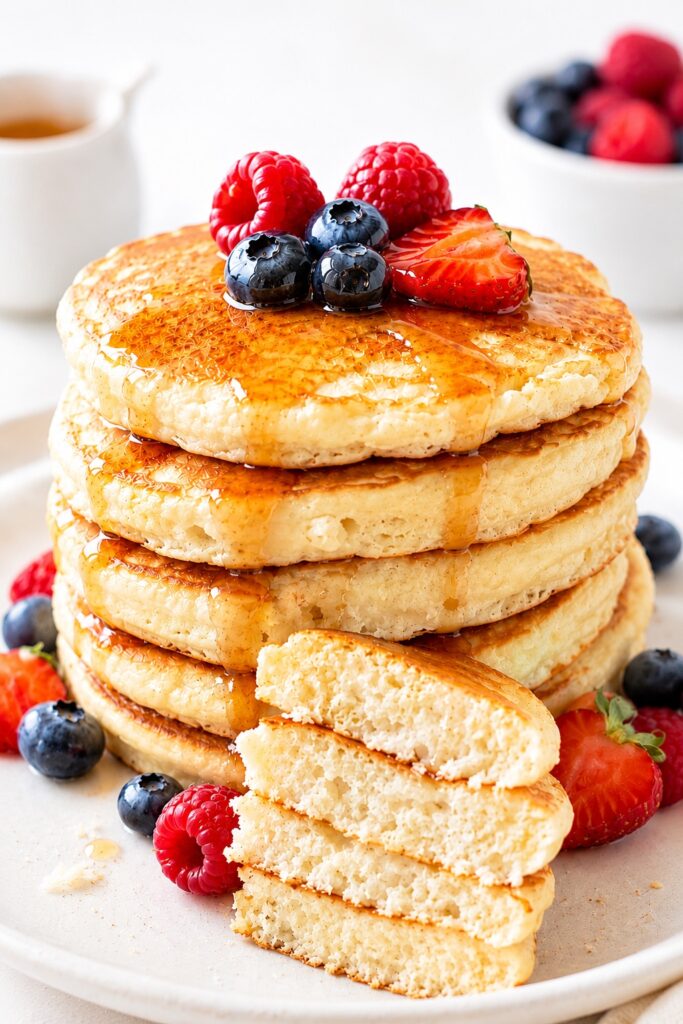
These healthy cottage cheese pancakes have become incredibly popular because they deliver the soft fluffy texture people love while adding extra protein and staying surprisingly balanced. They feel indulgent enough for a slow weekend brunch but practical enough for busy weekday mornings.
One of the biggest reasons people save this recipe over and over again is because the pancakes stay moist and tender without tasting overly heavy or dense. The cottage cheese melts gently into the batter as the pancakes cook, creating a creamy almost custardy softness inside while the outside develops a light buttery golden finish.
I also love how forgiving this recipe is. Even slightly imperfect pancakes still taste incredible. Some batches puff a little taller, some spread slightly wider, but the texture stays soft, fluffy, and comforting either way.
If you want pancakes that feel cozy, filling, fluffy, and genuinely satisfying for hours afterward, these Cottage Cheese Pancakes are exactly that kind of breakfast.
What Are Cottage Cheese Pancakes?
Cottage Cheese Pancakes are soft, fluffy pancakes made with cottage cheese blended or mixed into the batter for added protein, moisture, and tenderness.
Unlike traditional pancakes that rely heavily on flour and butter for richness, cottage cheese creates a creamy texture while helping the pancakes stay soft and satisfying. Most versions also include eggs and baking powder, which help create lift and structure.
Depending on how the batter is prepared, the pancakes can range from rustic and lightly textured to smooth and diner-style fluffy.
The result is a pancake that feels comforting and indulgent while offering more protein and longer-lasting fullness than many classic pancake recipes.
Quick Recipe Overview
| Detail | Description |
|---|---|
| Texture | Fluffy, moist, tender centers with lightly golden edges |
| Flavor | Mild vanilla, creamy, lightly tangy, buttery |
| Difficulty | Easy |
| Time | About 25 minutes |
| Servings | 4 servings (12 small or 8-10 larger pancakes) |
| Method | Skillet pancakes |
| Best For | High-protein breakfasts, brunch, meal prep |
In short: These Cottage Cheese Pancakes are fluffy high-protein pancakes with soft creamy interiors, cozy homemade flavor, and balanced breakfast appeal.
Why These Cottage Cheese Pancakes Stay So Fluffy and Tender
A lot of healthy pancake recipes become dense because they reduce fat too aggressively or overload the batter with protein powder. This recipe works differently.
The cottage cheese adds moisture, creamy richness, and protein while the eggs help create lift and structure. Together, they create pancakes that feel soft and fluffy instead of rubbery or dry.
The balance between wet and dry ingredients matters a lot here. Too much flour makes the pancakes heavy and tight, while too little flour causes them to spread too much in the skillet. The batter should look thick but still scoopable, almost like soft muffin batter.
As the pancakes cook, moisture inside the batter turns into steam, helping the pancakes puff gently upward. That steam is one of the reasons the centers stay so tender.
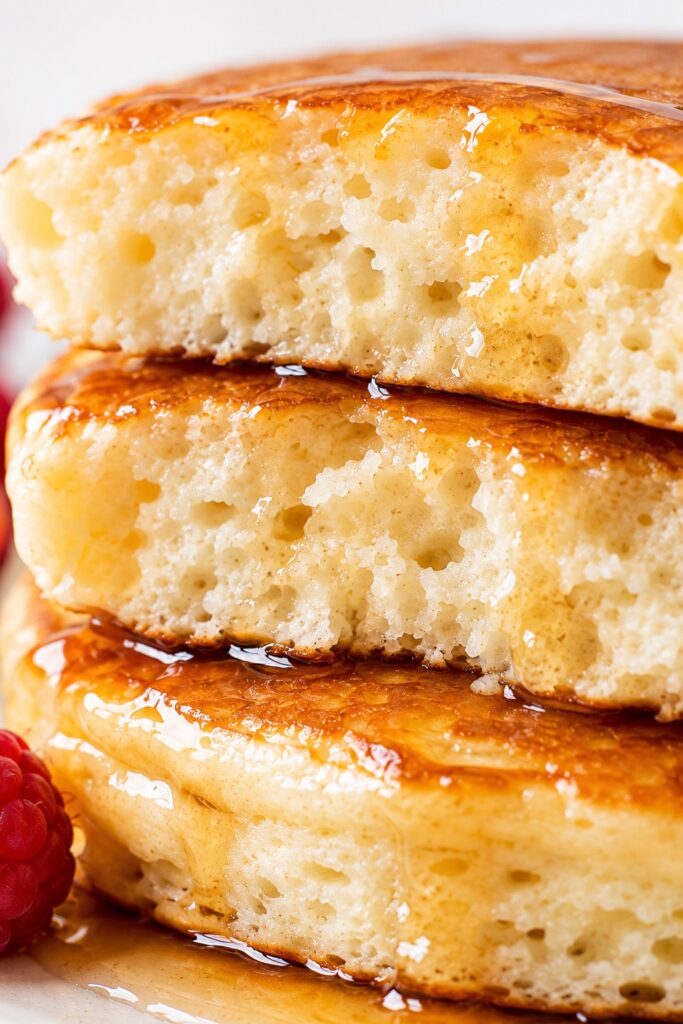
You can often see this happening in real time as the pancakes slowly rise and the centers become slightly thicker while cooking.
One small detail that makes a surprisingly big difference: letting the batter rest for a few minutes allows the flour to hydrate fully and gives the baking powder time to activate slightly before cooking.
The pancakes usually become noticeably fluffier after that short rest.
Why Cottage Cheese Pancakes Feel More Filling Than Traditional Pancakes
One of the biggest differences between Cottage Cheese Pancakes and classic pancakes is how satisfying they feel after eating them.
Traditional pancakes are usually built mostly around flour and sugar, which creates a lighter fast-digesting breakfast. These pancakes work differently because the cottage cheese and eggs add significantly more protein and richness to the batter.
That protein helps slow digestion and creates longer-lasting fullness compared to many traditional pancake recipes.
The balance of protein, moisture, and fat also changes the texture experience. Instead of feeling airy for a few minutes and then disappearing, these pancakes feel soft, creamy, and genuinely substantial while still staying fluffy.
The extra moisture also slows down how quickly the pancakes dry out, which is one reason they stay satisfying longer than many traditional pancakes.
They are especially good for mornings when you want a cozy breakfast that still feels balanced and energizing rather than overly sweet or heavy.
One interesting thing I noticed after testing multiple batches is that these pancakes actually stay softer after reheating than many traditional pancakes because the cottage cheese helps retain moisture inside the crumb.
Save this recipe for mornings when you want pancakes that actually keep you full until lunch.
Why You’ll Love These Cottage Cheese Pancakes
- Soft fluffy texture without feeling heavy
- Higher protein than classic pancakes
- Naturally moist and tender interiors
- Easy to customize with fruit or chocolate chips
- Perfect for meal prep breakfasts
- Beginner-friendly recipe
- Balanced enough for everyday breakfasts
- Freezer-friendly and reheats beautifully
- Cozy diner-style appearance with healthier ingredients
- Feels indulgent while still nourishing and satisfying
Save this recipe for slow Sunday mornings, cozy winter breakfasts, post-workout brunches, or meal prep days when you want something comforting and balanced at the same time.
The Pancake Science That Makes This Recipe Work
Cottage cheese changes pancake batter behavior in several important ways.
The proteins in the cottage cheese help create structure while also trapping moisture. That is one reason these pancakes stay soft even after cooling.
Eggs contribute both richness and stability. As the pancakes heat, the egg proteins firm up and help hold the fluffy structure together so the pancakes do not collapse.
Baking powder creates tiny gas bubbles that expand as the batter heats. Those bubbles create lift and help form the soft fluffy interior.
One interesting detail: cottage cheese contains more moisture than many traditional pancake ingredients. That extra moisture creates steam while cooking, which helps produce softer interiors and more delicate crumb structure.
You can actually see this happening in the skillet. The pancakes slowly puff upward, bubbles form across the surface, and the edges begin developing a delicate golden ring before flipping.
Protein-rich batters also brown slightly faster than classic pancake batters, which is one reason medium heat works better than aggressive high heat here.
Before you start: the batter for these Cottage Cheese Pancakes should look thicker than classic pancake batter. That thickness is what helps the pancakes puff up, hold their shape in the skillet, and stay soft in the center instead of spreading too thin.
Ingredients You’ll Need
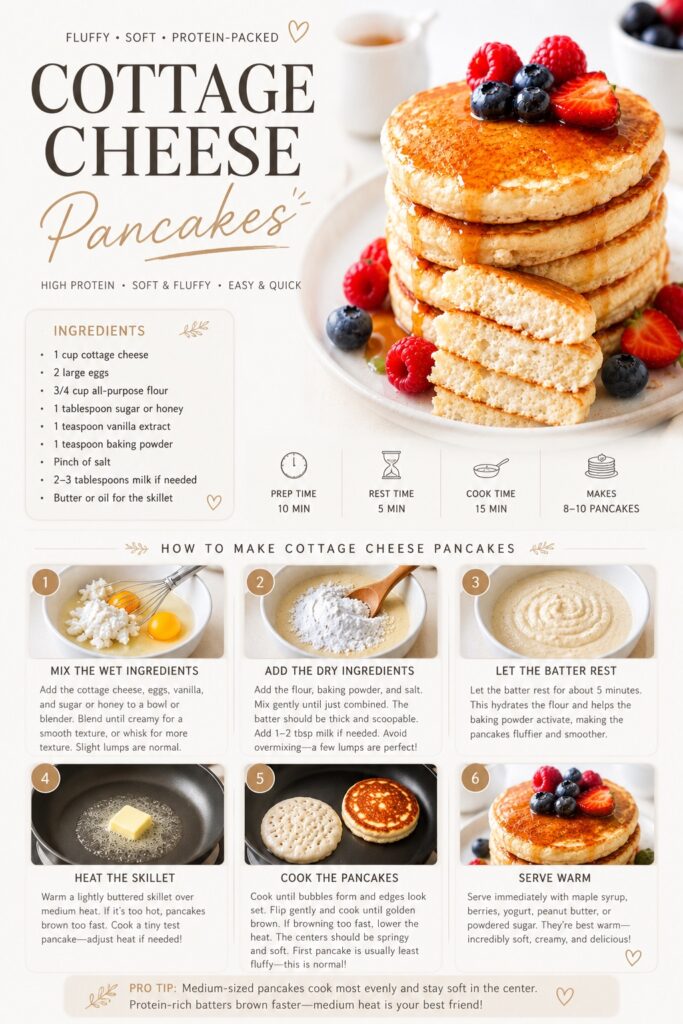
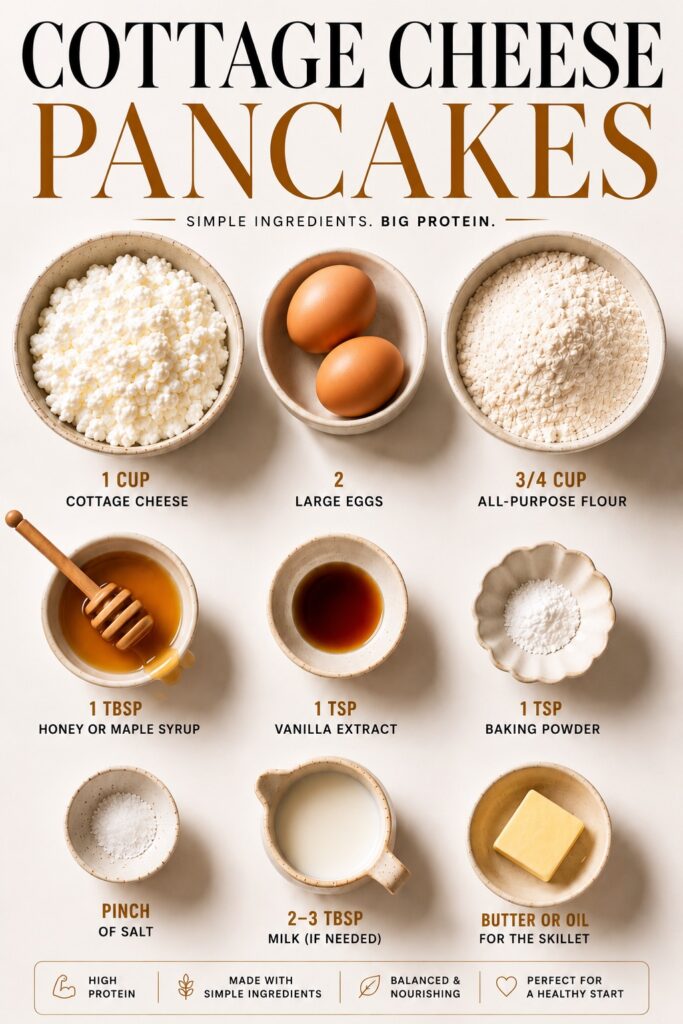
- 1 cup cottage cheese
- 2 large eggs
- 3/4 cup all-purpose flour
- 1 tablespoon maple syrup or honey
- 1 teaspoon vanilla extract
- 1 teaspoon baking powder
- Pinch of salt
- 2–3 tablespoons milk if needed
- Butter or oil for the skillet
Optional Add-Ins:
- Blueberries
- Chocolate chips
- Lemon zest
- Cinnamon
- Sliced bananas
Ingredient Intelligence: Why Certain Ingredients Matter
Cottage Cheese
Cottage cheese is the ingredient that completely changes the texture of these pancakes. It adds protein, moisture, creamy richness, and softness while helping the pancakes stay tender longer.
Small curd cottage cheese blends more smoothly into the batter, but large curd still works beautifully.
Full-fat cottage cheese usually creates the softest richest texture because the extra fat helps keep the pancakes tender during cooking.
Eggs
Eggs provide structure and help create lift. They also contribute richness and color while helping the pancakes stay fluffy instead of fragile.
Baking Powder
Baking powder creates the fluffy rise. If your baking powder is old, the pancakes usually turn flatter and denser.
Flour
Flour gives the pancakes enough structure to hold their shape while staying soft.
Vanilla
Vanilla softens the tanginess of the cottage cheese and creates a warmer bakery-style flavor.
One small detail many people overlook: even a tiny pinch of salt dramatically improves flavor balance in protein-rich pancake batter.
Healthy Ingredient Swaps That Actually Work
These Cottage Cheese Pancakes adapt surprisingly well to different dietary preferences and breakfast styles without losing their soft fluffy texture.
| Swap | What Changes | Best For |
|---|---|---|
| Oat Flour | Softer, slightly heartier texture | Cozy healthy breakfasts |
| Whole Wheat Flour | More structure and nuttier flavor | Higher fiber pancakes |
| Honey | Slightly softer interiors | Natural sweetness |
| Maple Syrup | Warmer deeper flavor | Classic breakfast flavor |
| Greek Yogurt | Smoother batter with mild tang | Extra creamy texture |
| Vanilla Protein Powder | Higher protein but slightly firmer texture | Post-workout breakfasts |
| Blended Batter | Smoother diner-style pancakes | Classic pancake texture |
| Gluten-Free Flour Blend | Softer slightly delicate pancakes | Gluten-free breakfasts |
Important note: almond flour alone usually creates very soft fragile pancakes because it lacks enough starch structure to support fluffy pancake texture on its own.
Best Flour Options for Cottage Cheese Pancakes
| Flour | Texture Result | Best For |
|---|---|---|
| All-Purpose Flour | Classic fluffy pancake texture | Best overall balance |
| Oat Flour | Softer and slightly heartier | Healthy breakfast version |
| Whole Wheat Flour | More structured and nutty | Higher fiber pancakes |
| Gluten-Free Blend | Soft but slightly delicate | Gluten-free option |
| Almond Flour | Very soft and fragile | Best mixed with another flour |
The best overall texture usually comes from either all-purpose flour or a blend of all-purpose and oat flour.
Kitchen Tools You’ll Need
- Large mixing bowl
- Blender or food processor, optional
- Nonstick skillet or griddle
- Silicone spatula
- Measuring cups and spoons
- Cookie scoop or measuring cup for portioning
A nonstick skillet makes these pancakes much easier to flip because cottage cheese batter can be softer and slightly more delicate than traditional pancake batter.
A heavier skillet usually produces more even golden browning because it holds heat more consistently between batches.
How to Make Cottage Cheese Pancakes
1. Mix the Wet Ingredients
Add the cottage cheese, eggs, vanilla, and sugar or honey to a bowl or blender.
For smoother pancakes, blend until creamy. For more texture, simply whisk everything together.
The batter may still look slightly lumpy if you skip blending. That is completely normal.
2. Add the Dry Ingredients
Add the flour, baking powder, and salt.
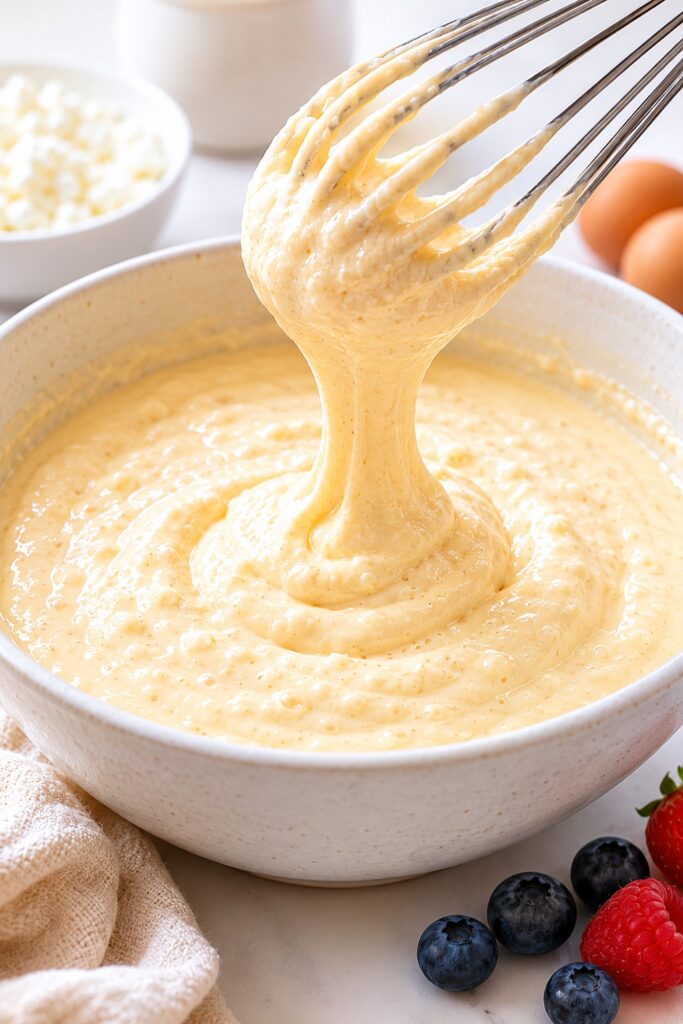
Mix gently until just combined. The batter should look thick, soft, and scoopable.
If it feels too thick, add 1–2 tablespoons milk.
Avoid overmixing. A few small lumps actually help keep the pancakes tender.
If the batter starts looking overly glossy or tight, it has probably been mixed enough.
3. Let the Batter Rest
Let the batter rest for about 5 minutes.
This gives the flour time to hydrate and allows the baking powder to activate slightly before cooking.
You will usually notice the batter becoming a little fluffier and smoother during this short rest.
4. Heat the Skillet
Warm a lightly buttered skillet over medium heat.
If the skillet is too hot, the pancakes brown too quickly before the centers cook through. Medium heat gives them time to puff properly.
I still make a tiny test pancake sometimes because every skillet heats differently.
If your first pancake is slightly uneven, do not worry. The first batch often helps stabilize skillet temperature and batter consistency.
5. Cook the Pancakes
Scoop the batter onto the skillet.
Cook until bubbles appear across the surface and the edges begin looking slightly dry and set.
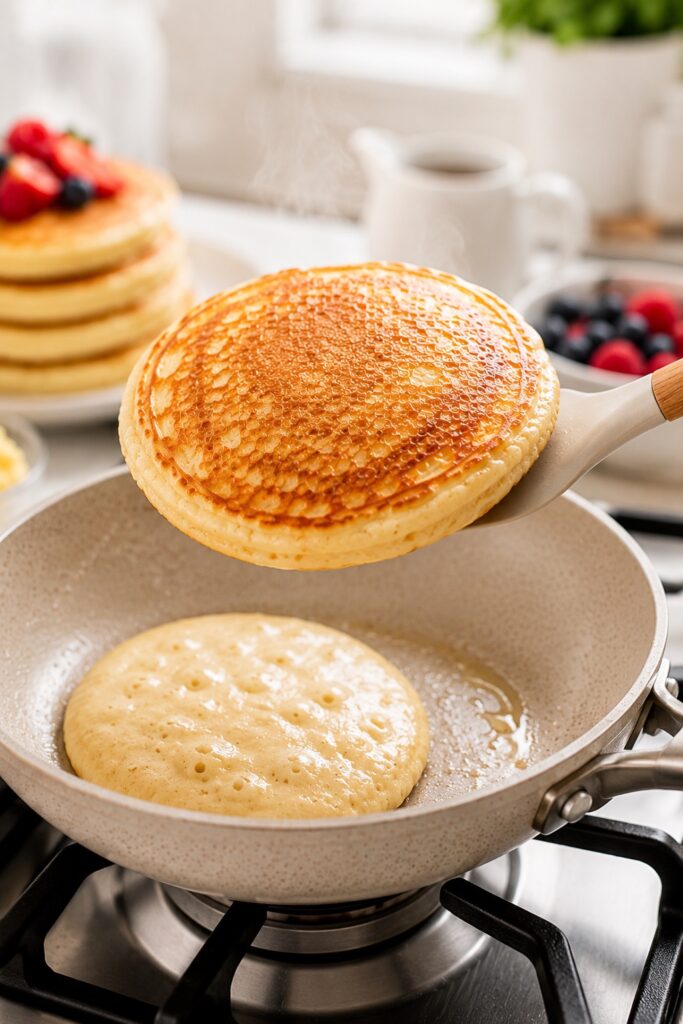
If the pancakes seem to brown too quickly before the centers finish cooking, lower the heat slightly. Protein-rich batters usually brown faster than traditional pancake batter.
Flip gently and cook the second side until lightly golden brown.
The centers should feel springy but soft when lightly pressed.
Note: the first pancake is often slightly less fluffy because the skillet temperature is still stabilizing.
Smaller medium-sized pancakes usually cook more evenly than oversized pancakes because the centers heat through more gently.
Visual Doneness Cues
- Edges look lightly golden and slightly dry
- Tiny bubbles appear across the surface
- Centers puff gently upward while cooking
- Pancakes release easily from the skillet
- Bottom develops an even golden-brown color
- Interior looks fluffy instead of wet or gummy
- Centers spring back lightly when touched
- The first flipped side should release cleanly without tearing
6. Serve Warm
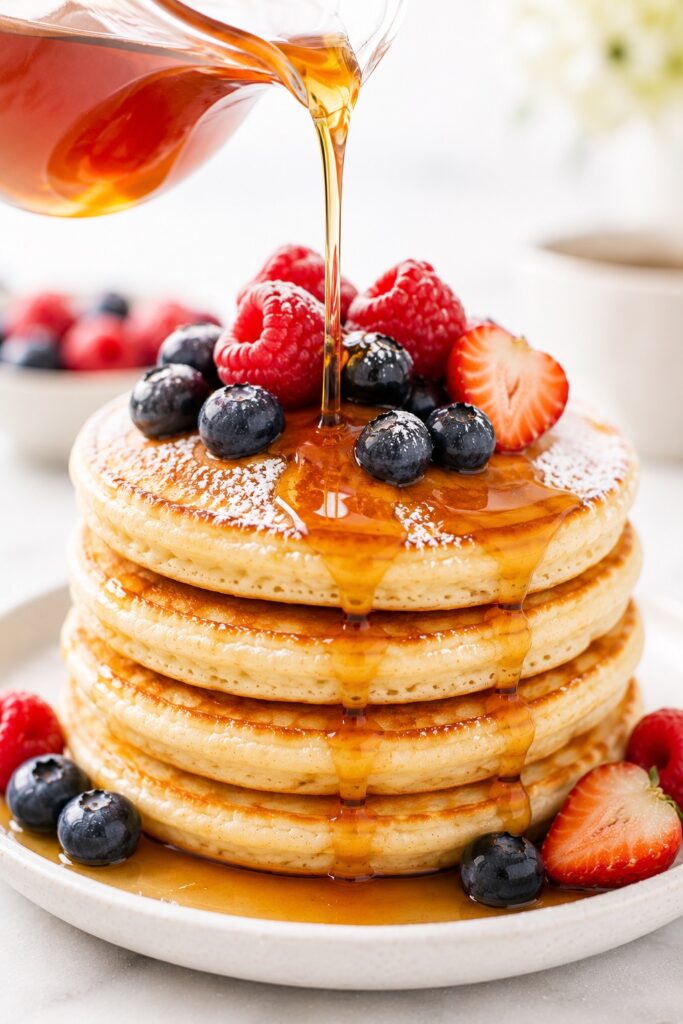
Serve immediately with maple syrup, berries, yogurt, peanut butter, or powdered sugar.
The pancakes are especially good while warm because the interiors stay incredibly soft and creamy.
Cottage Cheese Pancake Texture Guide
| Element | What You Should See |
|---|---|
| Batter | Thick but scoopable |
| Before Flipping | Bubbles forming across surface |
| Edges | Slightly dry and set |
| Interior | Soft fluffy layers |
| Exterior | Light golden color |
| Overmixed Batter | Dense or rubbery pancakes |
| Properly Cooked Pancakes | Tender centers with slight bounce |
Expert Tips for the Best Cottage Cheese Pancakes
- Blend the cottage cheese for smoother diner-style texture.
- Let the batter rest before cooking for fluffier pancakes.
- Use medium heat instead of high heat.
- Avoid pressing pancakes down after flipping.
- Use a cookie scoop for evenly sized pancakes.
- Add blueberries directly onto the batter after scooping into the skillet.
- If the batter thickens while sitting, add a small splash of milk.
- If making a large batch, keeping finished pancakes on a wire rack instead of stacking them immediately helps preserve the fluffy texture.
One deeper insight: slightly thicker batter creates taller fluffier pancakes because it holds steam more effectively during cooking.
Helpful Tip: wiping excess butter from the skillet between batches can help the pancakes brown more evenly instead of developing darker patches.
Pancake Troubleshooting Guide
| Problem | Likely Cause | Fix |
|---|---|---|
| Gummy center | Heat too high | Lower skillet temperature slightly |
| Flat pancakes | Thin batter or old baking powder | Use slightly thicker batter |
| Dry texture | Too much flour or protein powder | Reduce dry ingredients slightly |
| Pancakes spreading too much | Batter too loose | Add 1–2 tablespoons flour |
| Burning outside quickly | Pan overheated | Cook over medium heat |
What Makes Cottage Cheese Pancakes Different From Other Healthy Pancakes?
Not all healthy pancakes behave the same way. Some rely heavily on bananas, oats, or protein powder, while Cottage Cheese Pancakes create a very different balance of moisture, structure, protein, and fluffiness.
The cottage cheese adds both richness and softness at the same time, which helps these pancakes feel closer to classic diner-style pancakes while still offering a more balanced high-protein breakfast.
| Pancake Type | Texture | Protein Level | Sweetness | Best For |
|---|---|---|---|---|
| Cottage Cheese Pancakes | Fluffy, creamy, soft centers | High | Mildly sweet | Balanced cozy breakfasts |
| Banana Pancakes | Very soft and moist | Moderate | Naturally sweeter | Fruit-forward breakfasts |
| Protein Powder Pancakes | Dense or slightly dry | Very high | Depends on powder used | Post-workout meals |
| Oat Pancakes | Heartier and more rustic | Moderate | Mildly nutty | Fiber-rich breakfasts |
| Greek Yogurt Pancakes | Tender with slight tang | Moderate to high | Mild | Light balanced breakfasts |
One of the biggest differences is texture balance. Cottage Cheese Pancakes stay fluffy and moist while still feeling filling, which is something many high-protein pancake recipes struggle to achieve.
One important expectation: Cottage Cheese Pancakes are usually slightly softer and more delicate than classic diner pancakes because of the extra moisture and protein in the batter. That softer texture is completely normal and is part of what makes them feel creamy and satisfying instead of dry.
If you want healthy pancakes that still feel soft, cozy, and satisfying like classic homemade pancakes, cottage cheese pancakes are usually the closest match.
How to Serve Cottage Cheese Pancakes Like a Cozy Brunch Stack
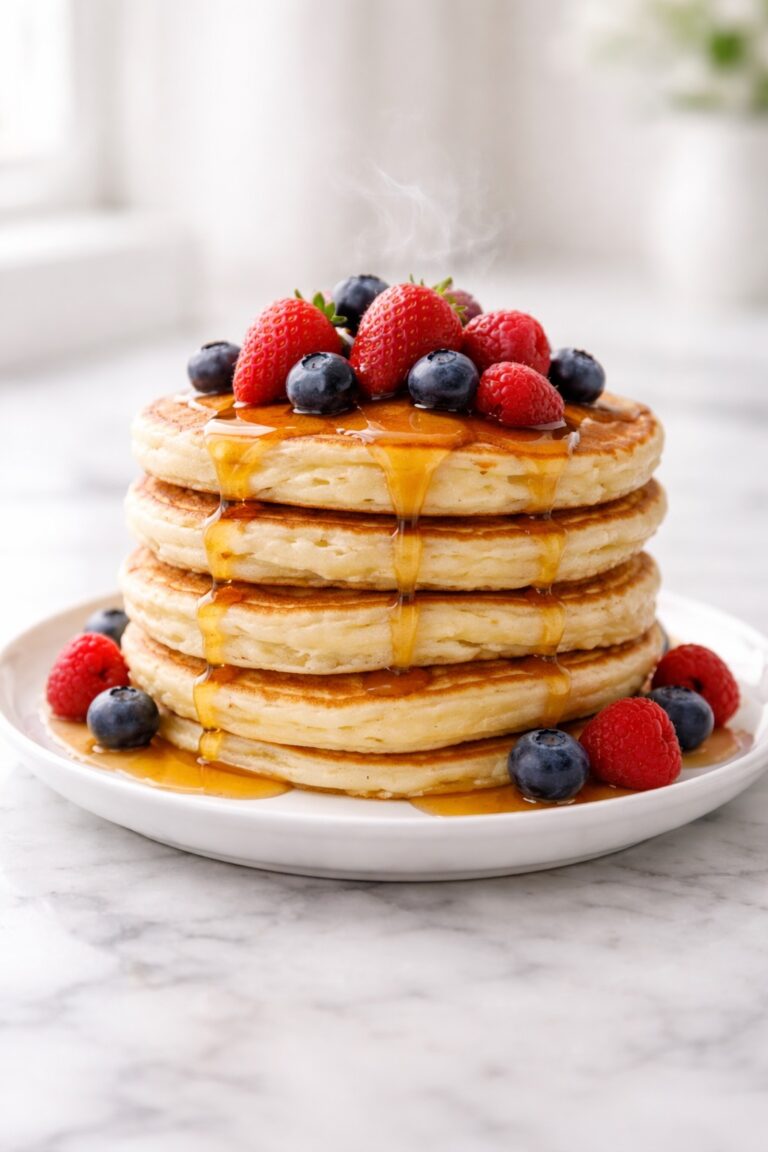
Serve these Cottage Cheese Pancakes warm with soft butter melting slowly into the layers and maple syrup gently cascading down the sides.
The warm buttery skillet aroma and soft steamy centers make these pancakes feel especially cozy straight from the pan.
Fresh berries add brightness and contrast beautifully with the creamy fluffy interiors. Banana slices, toasted pecans, cinnamon apples, or Greek yogurt also work beautifully here.
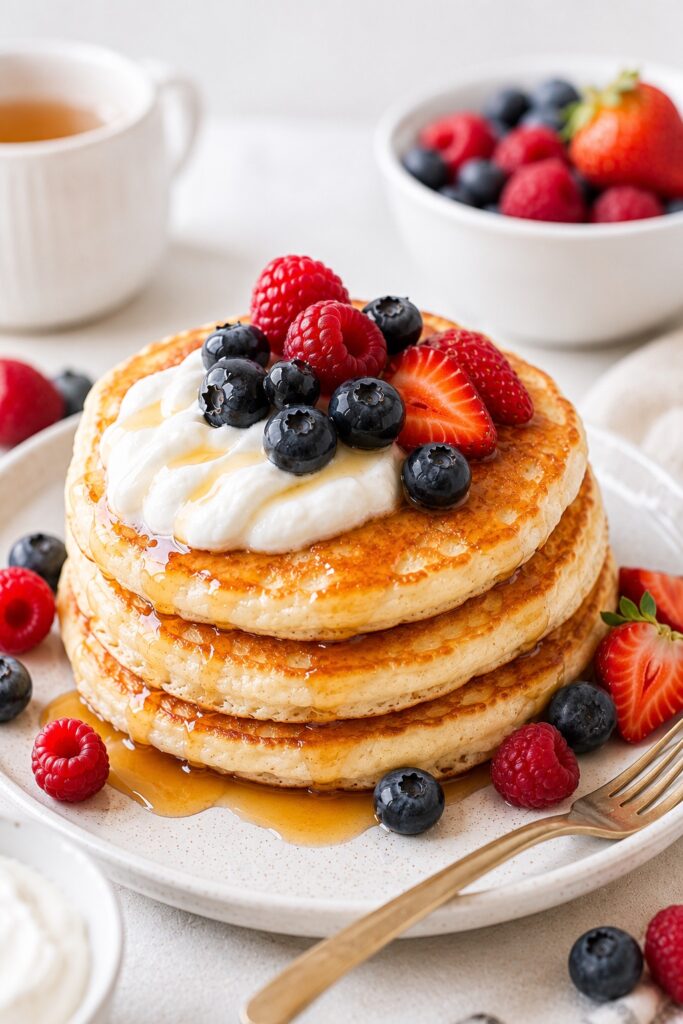
For a more indulgent brunch version, add whipped cream and warm berry compote.
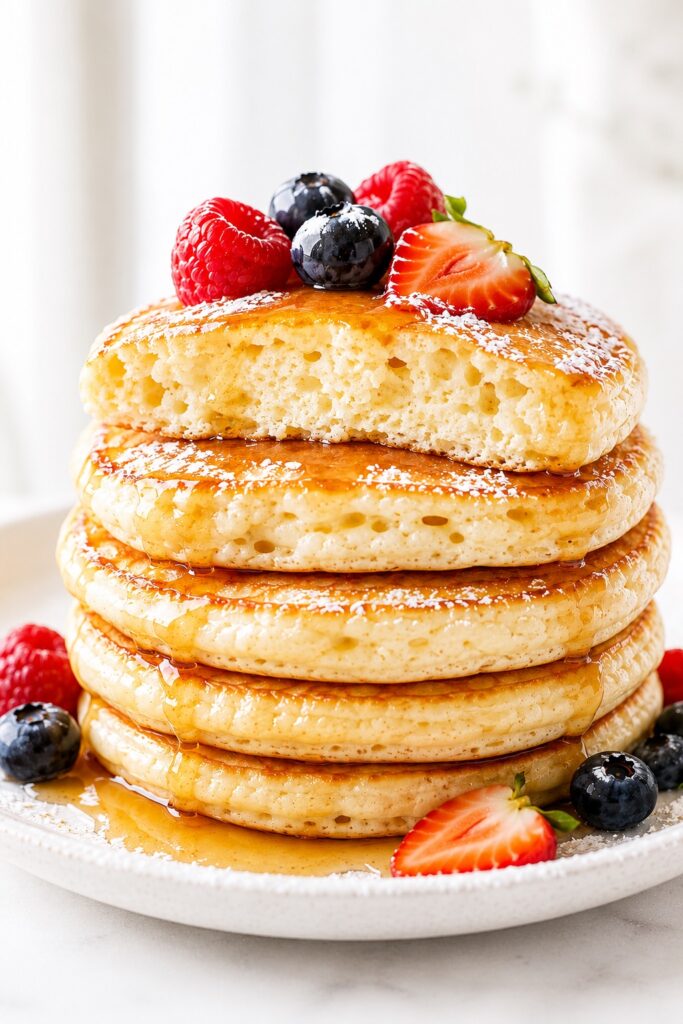
These pancakes look especially beautiful stacked high with a light dusting of powdered sugar across the top. The delicate golden edges and soft steamy centers create the kind of cozy bakery-style breakfast moment people instantly want to save on Pinterest.
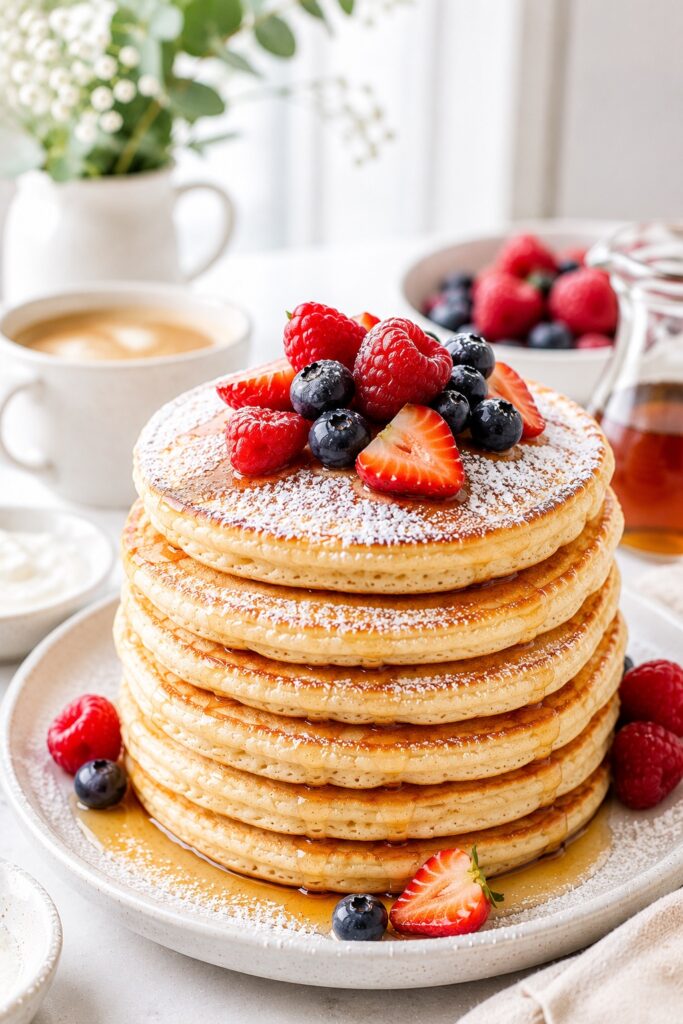
Save this recipe for quiet weekend mornings, cozy winter breakfasts, meal prep Sundays, or post-workout brunches when you want something comforting that still feels balanced.
Best Toppings for Cottage Cheese Pancakes
Fresh Berry Stack
Top with strawberries, blueberries, raspberries, and warm maple syrup for a bright fresh breakfast feel.
Peanut Butter Banana
Add warm peanut butter, banana slices, and cinnamon for a richer high-protein breakfast.
Yogurt and Honey
Greek yogurt, honey drizzle, and toasted nuts create a balanced brunch-style topping combination.
Cinnamon Apple Version
Warm cinnamon apples make these pancakes feel especially cozy during fall and winter mornings.
Chocolate Drizzle
For a more indulgent version, add melted dark chocolate and sliced strawberries.
Storage and Make Ahead Tips
These Cottage Cheese Pancakes store and reheat surprisingly well because the cottage cheese helps the interiors stay moist and tender instead of drying out quickly like many traditional pancakes.
The texture usually becomes slightly softer after refrigeration because the moisture inside the pancakes continues redistributing overnight.
In fact, after testing multiple batches, I noticed these pancakes often taste softer on day two than many classic pancake recipes. The protein and moisture from the cottage cheese help protect the texture during storage.
How to Store Cottage Cheese Pancakes
Let the pancakes cool completely before storing.
Stacking warm pancakes traps steam, which can create excess moisture and slightly gummy surfaces.
If you want slightly crisp edges after storage, let the pancakes cool in a single layer for a few minutes before stacking them.
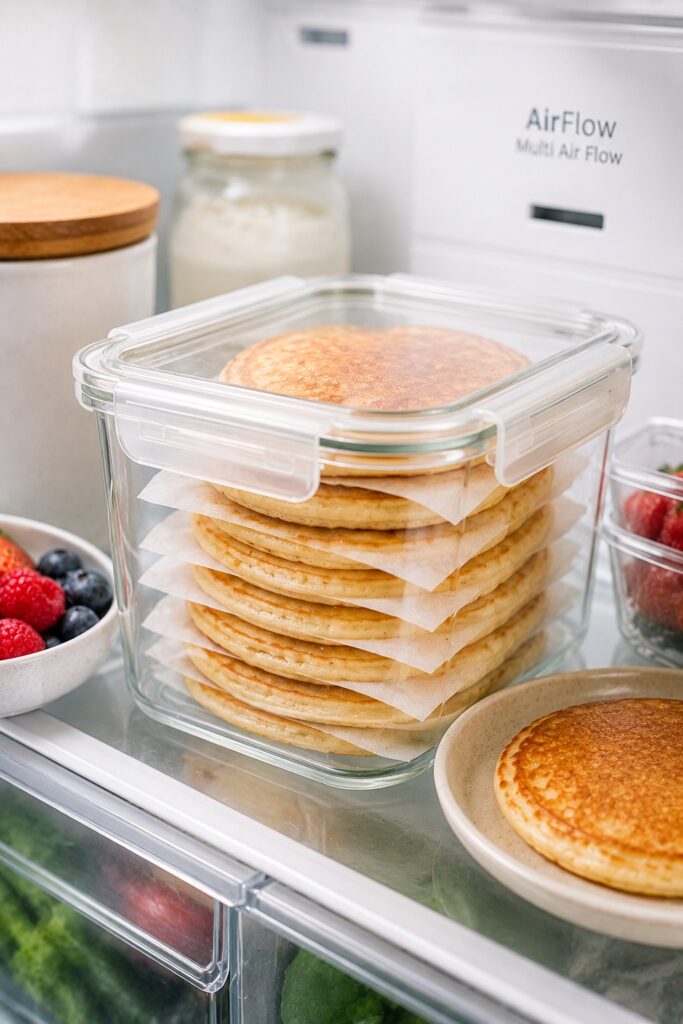
Once cooled, place the pancakes in an airtight container and refrigerate for up to 4 days.
Layering parchment paper between the pancakes helps prevent sticking and makes reheating individual portions much easier.
How to Freeze Cottage Cheese Pancakes
These pancakes freeze beautifully for quick breakfasts and meal prep mornings.
Arrange the cooled pancakes in a single layer on a baking sheet and freeze until firm, about 30–45 minutes. This quick pre-freeze helps prevent sticking.
Transfer the pancakes to a freezer-safe bag or container with parchment paper between layers.
They keep well in the freezer for up to 2 months.
One small detail that helps preserve texture: removing excess air from the storage bag helps reduce freezer dryness around the edges.
Best Ways to Reheat Cottage Cheese Pancakes for the Best Pancake Texture
These Cottage Cheese Pancakes reheat beautifully because the cottage cheese helps the interiors stay moist instead of drying out.
| Method | Texture Result | Best For |
|---|---|---|
| Skillet | Soft centers with lightly crisp buttery edges | Best overall texture |
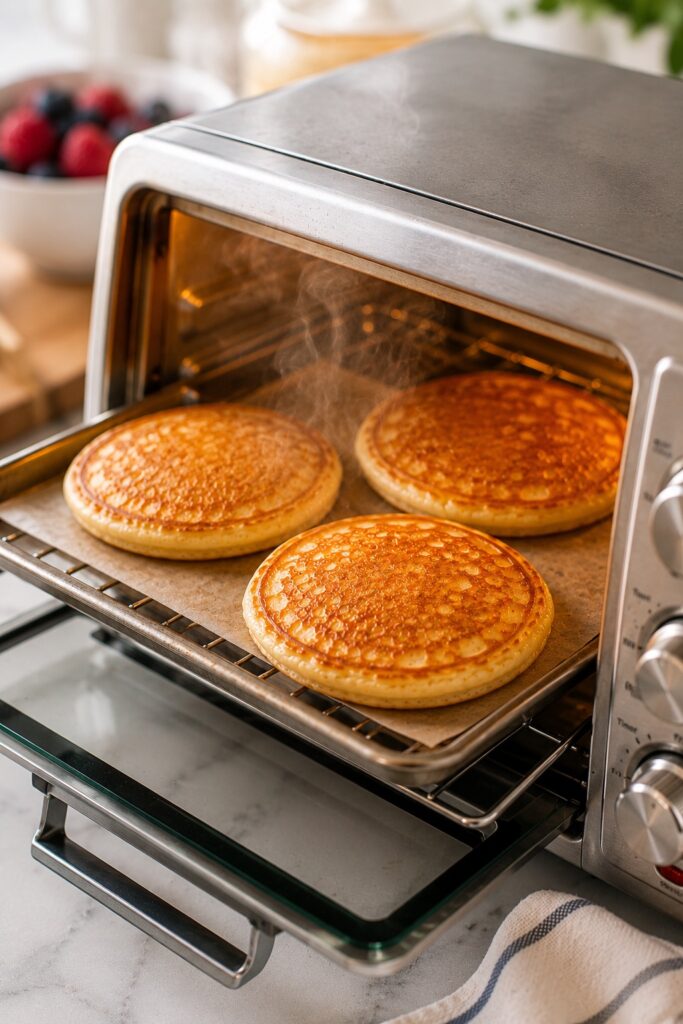
| Toaster Oven | Warm fluffy centers with slight crispness | Quick breakfast reheating |
| Microwave | Very soft and moist texture | Fastest reheating method |
| Air Fryer | Lightly crisp outside with fluffy interior | Batch reheating |
After testing several reheating methods, I found the skillet version tastes closest to freshly made pancakes because the edges regain that buttery golden texture.
If reheating directly from frozen, lower heat works better than aggressive high heat. Heating too quickly can warm the outside before the centers fully soften.
Can You Make the Batter Ahead?
You can prepare the batter several hours ahead and refrigerate it overnight if needed, but freshly mixed batter usually produces the fluffiest pancakes.
The baking powder gradually loses strength over time, so pancakes made immediately after mixing often puff slightly higher.
If the batter thickens after refrigeration, simply stir in 1–2 tablespoons milk before cooking.
One important reassurance: chilled batter naturally becomes thicker overnight because the flour continues absorbing moisture. That is completely normal.
Meal Prep Tips
- Cook a double batch and freeze individual portions for busy mornings.
- Store toppings separately to keep the pancakes from becoming soggy.
- Smaller pancakes reheat more evenly than oversized pancakes.
- For the softest texture, reheat gently instead of overheating.
- These pancakes pair especially well with meal prep berries, yogurt cups, or nut butter packets.
- The pancakes usually reheat best within the first month of freezing.
Save this recipe for meal prep Sundays, cozy weekday breakfasts, and mornings when you want something warm, fluffy, and satisfying without starting breakfast completely from scratch.
Once you get comfortable with the base batter, these Cottage Cheese Pancakes become one of the easiest breakfast recipes to customize.
Easy Cottage Cheese Pancake Variations
One of the best things about these Cottage Cheese Pancakes is how adaptable the batter is. The base recipe stays soft, fluffy, and protein-rich while still working beautifully with fruit, spices, chocolate, oats, or extra protein additions.
After testing multiple variations, I found that the batter handles mix-ins best when they are folded in gently at the very end. Heavy stirring can deflate some of the airiness that helps create the fluffy texture.
Blueberry Cottage Cheese Pancakes
Fold 1/2 cup fresh blueberries into the batter right before cooking.
For the best texture and appearance, sprinkle some of the blueberries directly onto each pancake after the batter hits the skillet instead of mixing them all into the bowl. This helps prevent purple streaking and keeps the pancakes fluffier.
The juicy berries pair especially well with maple syrup and Greek yogurt.
Chocolate Chip Cottage Cheese Pancakes
Add 1/3 cup mini chocolate chips for a more dessert-style breakfast version.
Mini chocolate chips work better than regular chocolate chips because they distribute more evenly and weigh down the batter less.
These pancakes taste especially cozy with peanut butter drizzle or sliced bananas.
Lemon Blueberry Cottage Cheese Pancakes
Add 1 teaspoon fresh lemon zest plus 1/2 cup blueberries.
The citrus brightens the richness of the cottage cheese and creates a fresher lighter breakfast flavor.
This version feels especially good during spring and summer mornings.
Cinnamon Oat Cottage Cheese Pancakes
Replace 1/4 cup of the flour with oat flour and add 1 teaspoon cinnamon.
This variation creates a slightly heartier pancake with warm bakery-style flavor and extra cozy texture.
The pancakes usually brown a little faster because of the oats, so medium-low heat works best.
Banana Cottage Cheese Pancakes
Fold 1/2 mashed ripe banana into the batter.
The banana adds natural sweetness and softer texture while pairing beautifully with cinnamon or chopped walnuts.
The batter may spread slightly more because of the extra moisture, so keeping the pancakes slightly smaller helps them cook more evenly.
Extra Protein Cottage Cheese Pancakes
Add 1–2 tablespoons vanilla protein powder to the batter.
A small amount boosts protein without dramatically changing the texture. Adding too much protein powder can make the pancakes dry or rubbery.
If using protein powder, adding an extra tablespoon of milk usually helps maintain softer texture.
Blender Cottage Cheese Pancakes
Blend all ingredients completely smooth before cooking.
This creates pancakes with a softer, more classic diner-style texture and helps eliminate visible cottage cheese curds entirely.
It is also one of the easiest versions for busy weekday mornings because the batter comes together very quickly.
Gluten-Free Cottage Cheese Pancakes
Use a 1:1 gluten-free flour blend or oat flour.
The pancakes stay soft and fluffy, although gluten-free versions are usually slightly more delicate while flipping.
Letting the batter rest for 5–7 minutes becomes even more important here because gluten-free flours absorb moisture differently.
Save this recipe for the mornings when you want fluffy pancakes that still feel balanced, filling, and easy to customize with whatever you have in the kitchen.
Frequently Asked Questions
Can I blend the cottage cheese completely smooth?
Yes. Blending creates a smoother more classic pancake texture.
Can I make these pancakes gluten free?
Yes. A gluten-free flour blend or oat flour usually works well.
Why are my pancakes dense?
Overmixing or adding too much flour are the most common reasons.
Can I freeze Cottage Cheese Pancakes?
Absolutely. Freeze them in layers with parchment paper between each pancake.
Do these taste like cottage cheese?
Not strongly. The flavor becomes mild and creamy once cooked.
Can I make them without sugar?
Yes. The pancakes still work beautifully without added sugar.
Are these good for meal prep?
Very much. They reheat better than many traditional pancakes because they stay moist.
Can I make these in a blender?
Yes. Blender Cottage Cheese Pancakes are one of the easiest ways to create extra smooth fluffy batter.
More Cozy Breakfast Recipes You’ll Love
If you love these Cottage Cheese Pancakes, here are more cozy breakfast recipes that fit the same fluffy, satisfying, make-ahead morning mood. These recipes help you build a stronger breakfast table around pancakes, waffles, muffins, oats, and soft homemade bakes.
More Fluffy Pancake Recipes
- Protein Pancakes — another satisfying high-protein breakfast with a soft, fluffy texture.
- Healthy Pancakes — a lighter pancake option for balanced weekday breakfasts.
- Banana Pancakes — naturally sweet, soft pancakes with cozy banana flavor.
- Blueberry Pancakes — juicy, berry-filled pancakes perfect for brunch mornings.
- Cinnamon Roll Pancakes — a more indulgent, bakery-style pancake for slow weekend mornings.
High-Protein Breakfast Ideas
- High Protein Waffles — crisp edges, fluffy centers, and a more filling breakfast feel.
- Peanut Butter Energy Balls — easy make-ahead bites for breakfast boxes or snack prep.
Cozy Muffins and Make-Ahead Breakfast Bakes
- Baked Oatmeal — warm, simple, and perfect for meal prep mornings.
- Blueberry Muffin Recipe — soft, classic muffins with juicy berry pockets.
- Healthy Blueberry Muffins — a lighter muffin option that still feels cozy and homemade.
- Banana Oatmeal Muffins — soft, hearty, and naturally sweet for easy breakfasts.
- Healthy Banana Muffins — tender banana muffins for balanced grab-and-go mornings.
Weekend Brunch Favorites
- French Toast Recipe — golden, custardy, and perfect with berries or maple syrup.
- French Toast Casserole — a cozy make-ahead brunch bake for family mornings.
- Sourdough French Toast — a richer, slightly tangy brunch option with crisp golden edges.
- Creme Brulee French Toast — an indulgent brunch recipe for special weekends.
For the best breakfast path, start with these Cottage Cheese Pancakes, then try Protein Pancakes for another high-protein option, High Protein Waffles for a crispier breakfast texture, or Baked Oatmeal when you want something warm and make-ahead friendly.
Cottage Cheese Pancakes Recipe Summary
These Cottage Cheese Pancakes are soft fluffy high-protein pancakes with creamy interiors, delicate golden edges, and cozy homemade flavor.
They come together quickly with simple ingredients and create a breakfast that feels comforting, balanced, and genuinely satisfying.
With their tender texture, easy customization, and meal-prep-friendly structure, they work beautifully for everything from busy weekday breakfasts to slow relaxed brunches.
Final Thoughts
Some healthy breakfast recipes feel like compromises. These Cottage Cheese Pancakes really do not.
They still deliver the warmth, softness, buttery skillet aroma, and fluffy texture people want from homemade pancakes while adding extra protein and staying genuinely satisfying for hours afterward.
The more you make them, the more you notice the little details that make the recipe special — the way the batter puffs softly in the skillet, the delicate golden ring forming around the edges, the creamy fluffy centers staying tender even after cooling.
And honestly, those are usually the recipes people end up making for years.

Cottage Cheese Pancakes
These healthy Cottage Cheese Pancakes are soft, fluffy, high in protein, and naturally satisfying. Made with cottage cheese, eggs, flour, vanilla, and baking powder, they cook into tender golden pancakes with creamy centers and lightly crisp edges.
Ingredients
- 1 cup cottage cheese
- 2 large eggs
- 3/4 cup all-purpose flour
- 1 tablespoon maple syrup or honey
- 1 teaspoon vanilla extract
- 1 teaspoon baking powder
- Pinch of salt
- 2–3 tablespoons milk, if needed
- Butter or oil, for the skillet
Optional Add-Ins
- 1/2 cup blueberries
- 1/3 cup mini chocolate chips
- 1 teaspoon lemon zest
- 1 teaspoon cinnamon
- 1/2 mashed ripe banana
- 1–2 tablespoons vanilla protein powder
Instructions
- Add the cottage cheese, eggs, vanilla extract, and sugar or honey to a bowl or blender.
- Blend until smooth for a classic pancake texture, or whisk by hand for a slightly more rustic texture.
- Add the flour, baking powder, and salt. Mix gently until just combined. The batter should look thick, soft, and scoopable.
- If the batter feels too thick, add 1–2 tablespoons of milk until it loosens slightly.
- Let the batter rest for 5 minutes so the flour can hydrate and the pancakes cook up fluffier.
- Heat a nonstick skillet or griddle over medium heat and lightly grease with butter or oil.
- Scoop the batter onto the skillet, making small to medium pancakes for the most even cooking.
- Cook until bubbles appear on the surface and the edges look slightly dry and set.
- Flip gently and cook the second side until golden brown and cooked through.
- Serve warm with berries, Greek yogurt, maple syrup, peanut butter, or your favorite toppings.
Notes
- The batter should be thicker than classic pancake batter. This helps the pancakes puff up and stay soft inside.
- Small lumps are completely fine. Overmixing can make the pancakes dense or rubbery.
- Medium heat works best because cottage cheese pancakes brown faster than traditional pancakes.
- The first pancake may look slightly uneven while the skillet temperature stabilizes.
- For smoother pancakes, blend the cottage cheese completely before mixing in the dry ingredients.
- For extra protein, add only 1–2 tablespoons of protein powder. Adding too much can create a dry texture.
- Let cooked pancakes cool completely before storing to avoid trapped steam and gummy surfaces.
- Smaller pancakes usually cook more evenly than oversized pancakes because the centers heat through more gently.
- If the batter thickens while sitting, stir in a small splash of milk before cooking the next batch.
- Full-fat cottage cheese usually creates the softest and richest pancake texture.
Recommended Products
As an Amazon Associate and member of other affiliate programs, I earn from qualifying purchases.


Nutrition Information:
Yield: 12 small pancakes Serving Size: 3 pancakesAmount Per Serving: Calories: 210Total Fat: 9gSaturated Fat: 3gCholesterol: 95mgSodium: 320mgCarbohydrates: 20gFiber: 1gProtein: 11g
Nutrition information is provided as an estimate only and may vary based on specific ingredients, brands, and portion sizes used. This information should not be considered medical or nutritional advice.
12 Sweet Favorites — Yours, Free 🍰
Tiramisù, no-bake cheesecake, the perfect chocolate chip cookie & 9 more reader-loved desserts — gathered into one beautiful free recipe book. From my kitchen to yours.
No spam, just sweet things. Unsubscribe anytime.