Healthy Pancake Recipe
🎁 FREE E-BOOK: 12 Sweet Favorites — reader-loved desserts in one beautiful recipe book.
Warm, softly domed pancakes with golden surfaces and tender banana-oat centers make this healthy pancake recipe feel like a familiar breakfast rather than a compromise. The blender batter uses whole-grain rolled oats, ripe banana, eggs, and unsweetened milk, with no refined flour or added sugar.

A stack like this belongs equally well on a quiet weekday morning or at a relaxed weekend table. Banana, vanilla, cinnamon, and toasted oats create the comforting flavor people expect from pancakes, while the small size keeps each one easy to cook and serve.
This is a recipe worth keeping because it solves the texture problems that often make banana-oat pancakes unreliable. The banana is weighed, the oats are ground finely, the batter rests for a full 10 minutes, and the flip depends on visible cues instead of the clock alone.
The finished pancakes are moist but fully cooked, softly fluffy rather than cakey, and sturdy enough to lift and stack without tearing. They are oat-based blender pancakes—not conventional wheat-flour pancakes and not delicate two-ingredient banana-and-egg rounds.
Healthy Banana-Oat Pancakes at a Glance
Here are the batch size, timing, cooking method, expected texture, and the ingredient choices behind the word “healthy.”
| Yield | 12 pancakes, approximately 3 1/2–4 inches (9–10 cm) each |
|---|---|
| Servings | 4 servings; 3 pancakes per serving |
| Timing | About 10 minutes prep, 10 minutes rest, and 18–22 minutes cooking |
| Method | Blender batter cooked on a nonstick griddle or skillet at 325°F (163°C) |
| Texture | Softly domed, tender, moist but not gummy, and sturdy enough to flip |
| What they include | Whole-grain oats, whole banana, no refined flour, and no added sugar in the batter |
Here, “healthy” refers to the ingredients used rather than judging anyone’s food or claiming the pancakes suit every diet. The batter uses 100% whole-grain oats, 225 g whole banana, no added sugar or non-nutritive sweetener, and only 1 teaspoon of olive oil for all 12 pancakes. One three-pancake serving is estimated at about 233 calories before toppings.
These pancakes contain eggs and oats, and the nutrition estimate uses unsweetened almond milk. Toppings will change the final meal. If you want the more conventional texture of wheat-flour pancakes, choose these classic banana pancakes instead.
Current US dietary guidance emphasizes nutrient-dense foods, whole grains, and limiting added sugars, saturated fat, and sodium within the overall eating pattern; the complete context is available in the Dietary Guidelines for Americans 2025–2030. This recipe follows that general direction without making a medical claim or suggesting that one breakfast suits everyone.
Why This Healthy Pancake Recipe Works
These pancakes turn out best when the banana weight, oat quantity, leavening, portion size, and cooking temperature all work together.
- Weighed banana: Using exactly 225 g peeled banana avoids the large difference hidden inside “one banana.”
- Enough oats for structure: The 135 g oat base holds the banana and eggs without creating thin, fragile pancakes.
- Gentle lift: Eggs bind the oat-and-fruit base while 1 3/4 teaspoons double-acting baking powder create the softly domed shape.
- Small, evenly cooked pancakes: Three-tablespoon portions and 325°F (163°C) heat let the middle set before the natural fruit sugars over-brown.
- Visible flip cues: Matte edges, persistent open bubbles, a golden underside, and clean spatula release tell you when to flip.
Why You’ll Love These Banana-Oat Pancakes
These are the everyday reasons this recipe works well for both weekday breakfasts and relaxed weekends.
- The blender makes both the oat flour and the batter, reducing separate bowls.
- The ingredient list is short and built from familiar breakfast staples.
- Ripe banana supplies gentle sweetness without requiring syrup in the batter.
- The small pancakes are easy to portion for adults, children, or freezer packs.
- The flavor works with fruit, yogurt, nuts, seed butter, or a modest maple drizzle.
- Cooked pancakes reheat well for mornings when there is no time to start from scratch.

The Recipe Science Behind Fluffy Oat Pancakes
Three mechanisms matter most here: fine oat particles must hydrate evenly, egg proteins must set around the leavening bubbles, and the naturally sweet banana batter must cook slowly enough for the center to finish before the surface darkens.
Oats do not build the gluten network that gives wheat pancakes elasticity. Grinding the oats finely increases their contact with the liquid, while the eggs provide binding and the baking powder supplies gas. That is why coarse flakes, missing eggs, or stale leavener cannot be corrected simply by extending the cook time.
The 10-minute rest matters because ground oats continue absorbing water from the milk, eggs, and banana. If you judge the batter as soon as it leaves the blender, you may add milk it does not need and make the pancakes spread.
I learned not to correct banana-oat pancake batter as soon as it leaves the blender. The full 10-minute rest lets the oats hydrate and shows whether the batter actually needs the extra tablespoon of milk.
Ingredients for Healthy Banana-Oat Pancakes
The ingredients appear below in the same order as the recipe card. Weigh the oats and peeled banana for the most dependable texture.
Ingredient List
Use all nine ingredients for the 12-pancake batch; the olive oil is measured for the cooking surface rather than mixed into the batter.
- 1 1/2 cups (135 g) old-fashioned rolled oats, whole-grain
- About 1 cup (225 g) peeled very ripe banana, approximately 2 medium-large bananas
- 2 large eggs, approximately 100 g without shells
- 1/2 cup (120 ml) unsweetened almond milk
- 1 teaspoon (5 ml) pure vanilla extract
- 1 3/4 teaspoons (7 g) double-acting baking powder
- 1/2 teaspoon (about 1.3 g) ground cinnamon
- 1/8 teaspoon (about 0.75 g) fine sea salt
- 1 teaspoon (5 ml) extra-virgin olive oil, divided for the cooking surface

Ingredient Notes: Choosing the Right Oats and Bananas
The oats and banana create most of the pancake’s body, moisture, sweetness, and flavor, so their type and weight matter more than their simple appearance suggests.
- Rolled oats: Use plain old-fashioned oats, not steel-cut oats or flavored instant oatmeal. Blend them before adding the wet ingredients so no whole flakes remain.
- Bananas: Choose heavily spotted, room-temperature fruit and weigh 225 g after peeling. Less-ripe fruit is firmer and less sweet; oversized fruit can loosen the batter.
Eggs, Milk, Leavening, and Flavor
The remaining ingredients provide structure, moisture, lift, balanced flavor, and easy release from the cooking surface without changing the banana-oat character.
- Eggs: Two large eggs bind and set the oat-banana base. Egg substitutes are not recommended as a direct swap because they change how the pancakes bind and set.
- Almond milk: Plain unsweetened almond milk keeps the batter consistency predictable and is the milk used for the nutrition estimate.
- Baking powder: Use fresh double-acting baking powder. Baking soda is not equivalent because the batter does not contain enough acid to replace it directly.
- Vanilla, cinnamon, and salt: These keep the banana flavor warm and balanced rather than flat or overly egg-forward.
- Olive oil: Brush on only a thin film; visible pools increase frying and uneven browning.
Substitutions for Healthy Banana-Oat Pancakes
The substitutions below work without significantly changing the batter consistency or the way the pancakes cook.
- Whole-grain oat flour: Replace the rolled oats with exactly 135 g oat flour. Do not use a cup-for-cup volume conversion.
- Quick oats: Use 135 g plain unsweetened quick oats; expect a slightly softer center.
- Another milk: Replace almond milk 1:1 with an unsweetened dairy or plant milk that has a thin, milk-like viscosity. Nutrition and allergen status change.
- Avocado oil: Use it 1:1 in place of olive oil for the cooking surface.
Steel-cut oats, coconut flour, almond flour, wheat flour, protein powder, yogurt, applesauce, pumpkin, egg replacements, and baking soda are not direct swaps. Each changes the batter consistency, binding, lift, or cooking time enough to need a separately developed recipe.

Kitchen Tools Needed for Healthy Banana-Oat Pancakes
You need only a few basic tools to measure, blend, cook, flip, and cool the pancakes.
- For measuring: Use a digital kitchen scale, liquid measuring cup, measuring spoons, and a small bowl for weighing the peeled banana.
- For blending: Use a full-size blender or high-powered personal blender with at least 24-ounce (700 ml) working capacity, plus a flexible spatula for the post-rest stir.
- For cooking: Use a 10–12-inch nonstick skillet or an electric nonstick griddle; an electric griddle set to 325°F (163°C) makes the heat especially easy to maintain.
- For portioning and flipping: Use a 3-tablespoon scoop—or a 1/4-cup measure filled three-quarters full—and a thin, wide, nonstick-safe spatula.
- For cooling or holding: Use a wire rack, plus a sheet pan and 200°F (95°C) oven only when a brief warm hold is needed.
For the easiest results, use a nonstick surface. Cast iron and stainless steel need different preheating and more careful fat management.
What to Expect from Healthy Banana-Oat Pancakes
Expect small American-style pancakes with clear banana flavor, gentle oat character, and a tender fully cooked center rather than the elastic crumb of wheat pancakes.
- Flavor: Ripe banana leads, with vanilla, cinnamon, toasted oats, and restrained salt supporting it.
- Sweetness: The pancakes are gently sweet from fruit, leaving room for toppings at the table.
- Appearance: Each pancake is softly domed with natural shape variation and evenly golden surfaces.
- Interior: The crumb is moist and opaque with irregular small-to-medium air cells, never glossy, custardy, or pasty.
- Structure: The pancake lifts and stacks cleanly but remains more tender than a conventional wheat-flour pancake.
How to Make Healthy Banana-Oat Pancakes
Follow the seven steps in order and use the appearance and feel of the batter and pancakes to guide you.
1. Grind the Oats
Place 1 1/2 cups (135 g) rolled oats in the blender. Blend on high for 25–35 seconds, stopping once if needed, until the oats resemble fine flour with only a few tiny flecks.

What you should see: an even, pale-beige flour with no intact oat flakes. Coarse pieces create rough, fragile pancakes and hydrate unevenly.
2. Build the Batter
Add 225 g peeled banana, 2 large eggs, 1/2 cup (120 ml) unsweetened almond milk, vanilla, cinnamon, and salt. Blend for 15–20 seconds until smooth. Add the baking powder and pulse 3–4 times, only until evenly dispersed.

What you should see: a smooth, thick, pourable batter with fine bubbles and no visible banana pieces or dry oat pockets. Avoid prolonged final blending, which can make the egg mixture unnecessarily foamy.
3. Rest and Adjust the Batter
Rest the batter in the blender for exactly 10 minutes while the griddle preheats, then stir once with a flexible spatula. A 3-tablespoon portion should spread naturally to about 3 1/2–4 inches within 10–15 seconds.
If you weighed the ingredients and the batter still remains mound-like after the full rest, stir in 1 tablespoon (15 ml) additional milk. Do not add milk before the rest. If the batter is already runny, recheck the weights instead of adding extra oats by guesswork.

What you should see: batter that falls in a thick ribbon and slowly settles back into itself. It should neither remain a rigid mound nor race outward like crepe batter.
4. Preheat and Grease
Heat an electric griddle to 325°F (163°C), or preheat a nonstick skillet over medium-low heat for 3–4 minutes. Brush the surface with a very thin film of the measured olive oil.

What you should see: oil that shimmers gently without smoking. A small drop of batter should sizzle softly and begin setting at the edge without darkening during the first 30 seconds.
5. Portion and Cook the First Side
Portion 3 level tablespoons, or approximately 48–50 g, of batter per pancake. Cook for 2 1/2–3 1/2 minutes without pressing the tops.

What you should see: a softly domed pancake with a matte, set outer 1/4 inch (6 mm), small bubbles across the top with several remaining open, and an evenly golden underside. The spatula should slide underneath without dragging wet batter. Do not flip by time alone.
6. Flip Once and Finish
Flip once with a thin, wide spatula. Cook the second side for 1 1/2–2 1/2 minutes without pressing, until the center is resilient.

What you should see: two evenly golden surfaces, a center that feels springy rather than squishy, and a pancake that returns after a light touch. If you check with an instant-read thermometer, the center should be approximately 200–205°F (93–96°C).
7. Serve or Hold Briefly
Transfer each batch to a wire rack. Wipe away dark residue and use only the remaining measured oil as needed. Serve promptly, or hold the pancakes in a single layer on a rack in a 200°F (95°C) oven for no more than 20 minutes.
What you should see: distinct dry-golden surfaces and pancakes that remain softly domed. Do not tightly stack or cover them while hot, because trapped steam can make oat pancakes feel gummy.
How to Tell When Banana-Oat Pancakes Are Done
Check the surface, center, crumb, and spring-back rather than relying on brown color alone.
Correctly Cooked
A correctly cooked pancake has two evenly golden surfaces, an opaque tender crumb, a resilient center that springs back, and no glossy wet band. If used, an instant-read thermometer should read approximately 200–205°F (93–96°C).

Undercooked
An undercooked pancake feels heavy and squishy, stays indented after a light touch, or shows a glossy, custardy, pasty band in the center. Return it to moderate heat rather than increasing the temperature sharply.
Overcooked
An overcooked pancake has a dark, dry exterior and a tight or chalky crumb. This usually follows excessive heat, an extended second side, or pressing the pancake against the pan.
Resting and Carryover
The center settles during the first minute on the rack, but resting cannot cook a visibly wet middle. Keep the pancakes uncovered so escaping steam does not soften the surfaces or mimic gumminess.
Expert Tips for Fluffy Oat Pancakes
These tips help keep the batter consistent and the pancakes evenly cooked from the first batch to the last.
- Weigh the peeled fruit: Banana size varies widely, so measure it after removing the peel.
- Pulse in the baking powder last: Use 3–4 pulses instead of prolonged blending, which can create unnecessary foam.
- Wait before adjusting: Decide whether the batter needs the extra tablespoon of milk only after the full 10-minute rest.
- Cook one test pancake: Check the spread, color, and flip timing before filling the griddle.
- Keep the scoop level: A 48–50 g pancake cooks through more reliably than an oversized round.
- Adjust the heat first: If the underside darkens before the edge becomes matte, lower the heat instead of flipping early.
- Cool on a rack: A plate traps steam beneath the pancake and softens the golden surface.
Common Mistakes with Banana-Oat Pancakes
This table shows what each common mistake looks like, why it happens, and how to prevent or fix it.
| Mistake | What Happens | Why It Happens | How to Prevent or Fix It |
|---|---|---|---|
| Making pancakes too large | The exterior browns while the center stays gummy | A thick oat-banana center needs more time than the surface can tolerate | Use 3 level tablespoons or 48–50 g batter per pancake |
| Skipping the full rest | The batter spreads too quickly and pancakes tear | Ground oats have not finished absorbing liquid | Rest exactly 10 minutes before judging consistency |
| Correcting batter too early | A correct batter becomes unnecessarily thin | Freshly blended batter is mistaken for its hydrated state | Add the one-tablespoon milk correction only after the rest and only when mound-like |
| Using excessive heat | The underside turns dark before the edge sets | Banana sugars brown faster than the center cooks | Use 325°F (163°C) or medium-low heat and lower it after the test pancake if necessary |
| Flipping by time alone | The pancake folds, smears, or tears | The first side has not built enough structure | Wait for matte edges, open bubbles, a golden underside, and clean release |
| Stacking while hot | The surfaces become damp and the crumb seems gummy | Steam is trapped between pancakes | Cool or hold in one layer on a wire rack |

Beautiful Ways to Serve Healthy Pancakes
These simple toppings complement the gently sweet banana-oat flavor without hiding the golden pancakes.
Fresh Berries and Yogurt
Add a spoonful of plain Greek yogurt and a loose scatter of fresh berries so the cool tang and juicy fruit balance the warm banana and cinnamon without covering the stack.

Nut Butter and Sliced Fruit
Spread a thin ribbon of unsweetened peanut, almond, or seed butter over the warm pancakes and finish with banana, apple, or pear slices for creamy richness and fresh texture.
Warm Berry Compote
Spoon a small amount of unsweetened berry compote beside the stack rather than flooding the top, preserving the golden surfaces while adding concentrated fruit flavor.
A Simple Brunch Plate
Serve three pancakes with a protein-rich side that suits your needs, fresh fruit, and an optional modest maple drizzle for a composed breakfast that still lets the pancakes lead.
Toppings and sides are not included in the nutrition estimate and can change calories, sugar, protein, fat, and allergen status.
How to Store, Freeze, and Reheat Oat Pancakes
Store the cooked pancakes rather than preparing the batter the night before, and protect their texture by allowing steam to escape before packing.
Cool and Refrigerate
Cool pancakes in one layer on a wire rack, then refrigerate airtight within 2 hours of cooking—or within 1 hour above 90°F (32°C). Keep for up to 4 days; texture is best within 3 days.
Freeze for Best Quality
Freeze fully cooled pancakes in one layer until firm, then pack airtight with parchment between layers for up to 2 months for best quality.
Reheat Without Drying
Reheat refrigerated or frozen pancakes in a toaster or 325°F (163°C) oven until hot. A microwave works in short intervals but produces the softest surface. USDA guidance recommends reheating leftovers to 165°F (74°C); see the USDA leftovers and food-safety guide for details.
Make Ahead
Do not refrigerate the mixed batter overnight. The oats continue absorbing liquid, and the baking powder becomes less reliable. Cook and store the pancakes instead, or prepare these healthy blueberry muffins when you want a separate portable freezer-friendly breakfast.

Healthy Pancake Recipe FAQs
These answers cover the questions that come up most often about texture, ingredients, cooking, and storage.
Why are my banana-oat pancakes gummy or mushy inside?
The most likely causes are oversized pancakes, excessive heat, an early flip, or stopping before the center becomes resilient. Coarse oats, a skipped rest, extra banana, and overnight batter can also create a wet or pasty center.
How ripe should the bananas be?
Use heavily spotted, room-temperature bananas and weigh exactly 225 g after peeling. Ripeness provides the expected sweetness and softness, while the weight keeps the batter moisture consistent.
Can I use oat flour instead of rolled oats?
Yes. Replace the rolled oats with exactly 135 g whole-grain oat flour. Do not substitute by cup because oat flour and rolled oats occupy different volumes.
Why does banana-oat pancake batter thicken as it rests?
Ground oats absorb water from the milk, eggs, and banana during the 10-minute rest. Evaluate thickness only after that period; if the batter remains mound-like, stir in no more than 1 tablespoon (15 ml) additional milk.
What heat should I use, and when should I flip?
Use 325°F (163°C) or medium-low heat. Flip when the outer 1/4 inch is matte, several small bubbles stay open, the underside is evenly golden, and a thin spatula releases the pancake cleanly.
Can I make the batter the night before?
No—not for the best result. Overnight hydration can make the batter much thicker and the baking-powder response less predictable, so cook and store the pancakes instead.
Are these pancakes gluten-free?
They can be gluten-free when you use certified gluten-free oats, check every other ingredient, and avoid cross-contact during preparation and cooking. The FDA gluten-free labeling Q&A provides more information about US labeling requirements.
Can I substitute another milk?
Yes. Use 1/2 cup (120 ml) of another unsweetened dairy or plant milk with a thin, milk-like consistency. Thick canned coconut milk and sweetened beverages are not equivalent, and changing milk changes nutrition and allergens.
How do I freeze and reheat the pancakes?
Cool completely, freeze in one layer until firm, and pack airtight with parchment between layers for up to 2 months for best quality. Reheat directly from frozen in a toaster or 325°F (163°C) oven until hot.
Continue Your Healthy Breakfast Baking Journey
Choose your next breakfast by the ingredients, fruit flavor, or cooking style that sounds best.
Wholesome Pancake Variations
These warm pancake recipes offer different ingredients and dietary options.
- Choose Protein Pancakes when you want more protein at breakfast.
- Try Cottage Cheese Pancakes for soft pancakes with a creamy dairy base.
- Use Gluten Free Pancakes when you want a recipe developed specifically without gluten.
- Make Sweet Potato Pancakes for a warmly spiced vegetable-forward variation.
Fruit and Seasonal Pancakes
Choose one of these when you want fruit or a cozy seasonal flavor to lead the stack.
- Choose Banana Pancakes for the classic wheat-flour banana version.
- Make Blueberry Pancakes for juicy berry pockets in every serving.
- Try Apple Pancakes when tender apple and warm spice fit the season.
- Save Pumpkin Pancakes for a soft, cozy autumn breakfast.
Classic and Make-Ahead Brunch
For another brunch option, try a classic pancake, a sourdough version, a hands-off sheet-pan batch, or crisp waffles.
- Choose the Buttermilk Pancake Recipe for a traditional tender, tangy stack.
- Use Sourdough Discard Pancakes when you want to turn discard into a practical breakfast.
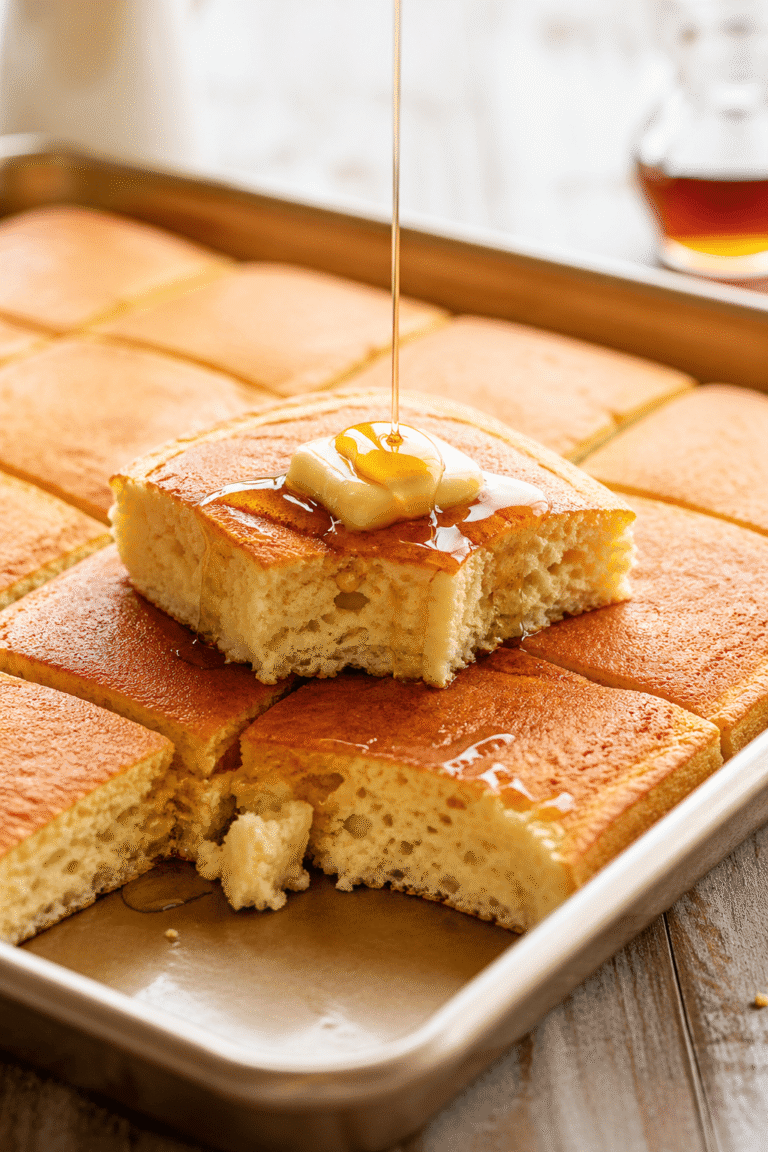
- Make Sheet Pan Pancakes when serving the full batch at once matters more than griddle rounds.
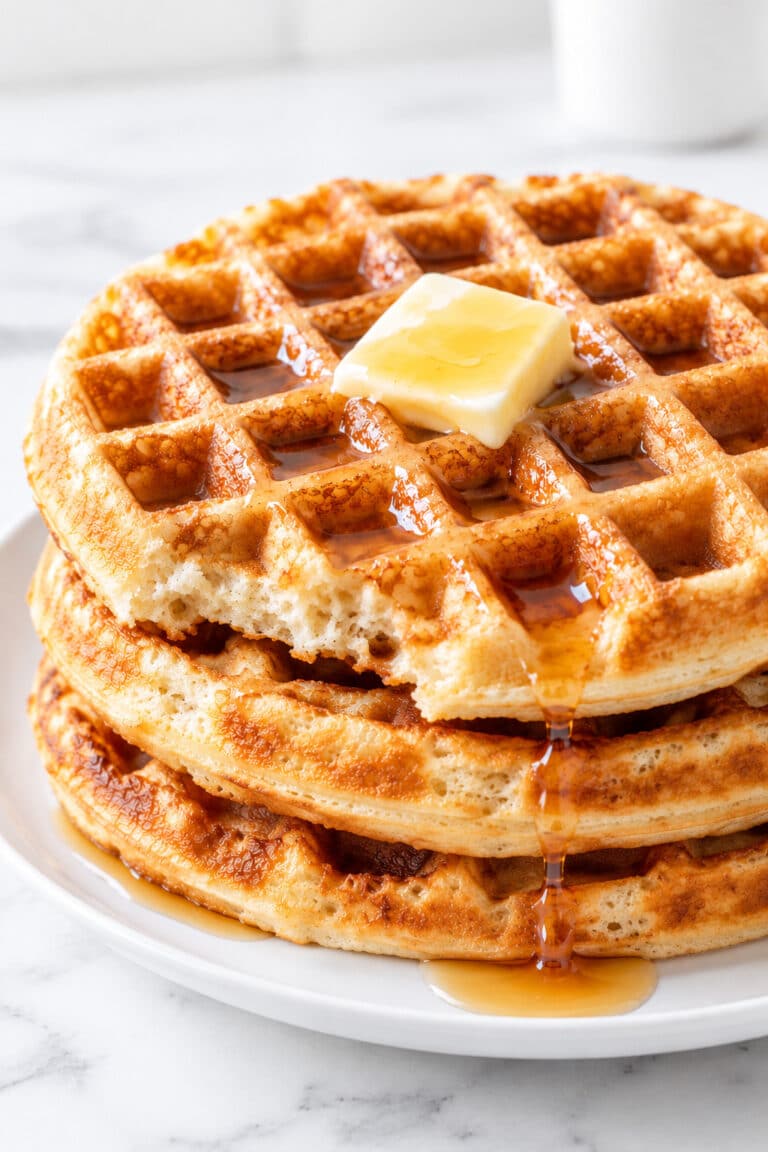
- Try the Waffle Recipe when crisp edges and deep pockets are the better brunch texture.
Why This Healthy Pancake Recipe Belongs in Your Recipe Box
This is a practical recipe to keep because it combines familiar flavor with clear measurements, useful visual cues, and realistic substitution limits.
- Weighing the banana makes each batch more consistent instead of relying on fruit size.
- The post-rest ribbon test gives you a clear way to judge the batter before cooking.
- The gentle sweetness works with simple fruit, creamy toppings, or a more generous brunch plate.
- Twelve small pancakes divide naturally between immediate servings and freezer portions.
- The substitution notes make it clear what you can change and what needs a different recipe.
- The pancakes still feel familiar while letting the oat and banana flavors come through.

A Final Note on Healthy Banana-Oat Pancakes
These banana-oat pancakes are warm, familiar, and satisfying, with whole-grain oats and no added sugar in the batter.
Make them when ripe bananas are ready, serve them warm with your favorite toppings, or cool a batch for the freezer.
Let the batter rest for the full 10 minutes, check its thickness, and cook one test pancake before filling the griddle.

Fluffy Healthy Banana-Oat Blender Pancakes
Fluffy banana-oat blender pancakes made with whole-grain oats and no refined flour or added sugar in the batter, with clear cues for tender, fully cooked centers.
Ingredients
- 1 1/2 cups (135 g) old-fashioned rolled oats, whole-grain
- About 1 cup (225 g) peeled very ripe banana, approximately 2 medium-large bananas
- 2 large eggs, approximately 100 g without shells
- 1/2 cup (120 ml) unsweetened almond milk
- 1 teaspoon (5 ml) pure vanilla extract
- 1 3/4 teaspoons (7 g) double-acting baking powder
- 1/2 teaspoon (about 1.3 g) ground cinnamon
- 1/8 teaspoon (about 0.75 g) fine sea salt
- 1 teaspoon (5 ml) extra-virgin olive oil, divided for the cooking surface
Instructions
- Grind the Oats: Place the rolled oats in the blender. Blend on high for 25–35 seconds, stopping once if needed, until the oats resemble fine flour with only a few tiny flecks. What you should see: an even, pale-beige flour with no intact oat flakes. Coarse pieces create rough, fragile pancakes and hydrate unevenly.
- Build the Batter: Add the peeled banana, eggs, almond milk, vanilla, cinnamon, and salt. Blend for 15–20 seconds until smooth. Add the baking powder and pulse 3–4 times, only until evenly dispersed. What you should see: a smooth, thick, pourable batter with fine bubbles and no visible banana pieces or dry oat pockets. Avoid prolonged final blending.
- Rest and Check the Batter: Rest the batter in the blender for exactly 10 minutes while the griddle preheats, then stir once. The batter should fall in a thick ribbon and slowly settle back into itself; a 3-tablespoon portion should spread to approximately 3 1/2–4 inches within 10–15 seconds. If the weighed batter remains mound-like after the full rest, stir in up to 1 tablespoon (15 ml) additional milk. Do not add milk before the rest. What you should see: batter that pours without racing outward, rather than a rigid mound or thin crepe-like stream.
- Preheat and Grease: Heat an electric griddle to 325°F (163°C), or preheat a nonstick skillet over medium-low heat for 3–4 minutes. Brush with a very thin film of the measured olive oil. What you should see: oil that shimmers gently without smoking. A small drop of batter should sizzle softly and begin setting at the edge without darkening during the first 30 seconds.
- Portion and Cook the First Side: Portion 3 level tablespoons, or approximately 48–50 g, batter per pancake. Cook for 2 1/2–3 1/2 minutes without pressing. What you should see: a softly domed pancake with a matte, set outer 1/4 inch (6 mm), small surface bubbles with several remaining open, and an evenly golden underside. The spatula should slide underneath without dragging wet batter. Do not flip by time alone.
- Flip Once and Finish: Flip once with a thin, wide spatula. Cook the second side for 1 1/2–2 1/2 minutes without pressing. Transfer to a wire rack and repeat, wiping away dark residue and using only the remaining measured oil as needed. What you should see: two evenly golden surfaces and a resilient center that springs back after a light touch. If checked with an instant-read thermometer, the center should be approximately 200–205°F (93–96°C).
- Serve or Hold Briefly: Serve promptly, or hold the pancakes in a single layer on a rack in a 200°F (95°C) oven for no more than 20 minutes. Do not tightly stack or cover them while hot. What you should see: distinct dry-golden surfaces and pancakes that remain softly domed rather than damp from trapped steam.
Notes
- Weigh the banana: Use 225 g after peeling. Banana size varies widely and can change the batter consistency.
- Use the full rest: Ground oats continue absorbing liquid for 10 minutes. Do not adjust the batter thickness before the rest is complete.
- Keep pancakes small: Use 3 level tablespoons (48–50 g) batter. Larger pancakes are more likely to brown before the center cooks.
- Follow the flip cues: Flip only after the edge is matte, several bubbles remain open, the underside is golden, and the spatula releases cleanly.
- Oat flour option: Replace the rolled oats with exactly 135 g whole-grain oat flour. Do not substitute by cup.
- Quick-oat option: Use 135 g plain unsweetened quick oats; the center may be slightly softer.
- Milk option: Another unsweetened dairy or plant milk with a thin, milk-like consistency may replace almond milk 1:1. Nutrition and allergen information will change.
- Gluten-free note: Use certified gluten-free oats, check every other ingredient, and avoid cross-contact during preparation and cooking.
- Make ahead: Do not prepare the batter overnight. Cook, cool, and store the pancakes instead.
- Storage: Refrigerate airtight for up to 4 days; texture is best within 3 days. Freeze cooled pancakes with parchment between layers for up to 2 months for best quality.
- Reheating: Reheat in a toaster or 325°F (163°C) oven until hot. A microwave produces a softer surface. Reheat leftovers to 165°F (74°C) when following USDA guidance.
- Nutrition estimate: Values are estimated per 3 pancakes without toppings, using unsweetened almond milk and the full measured teaspoon of olive oil.
Nutrition Information:
Yield: 4 Serving Size: 3 pancakesAmount Per Serving: Calories: 233Total Fat: 6.2gSaturated Fat: 1.4gCholesterol: 93mgSodium: 340mgCarbohydrates: 37.3gFiber: 5.1gSugar: 7.5gProtein: 8.3g
Nutrition information is provided as an estimate only and may vary based on specific ingredients, brands, and portion sizes used. This information should not be considered medical or nutritional advice.
12 Sweet Favorites — Yours, Free 🍰
Tiramisù, no-bake cheesecake, the perfect chocolate chip cookie & 9 more reader-loved desserts — gathered into one beautiful free recipe book. From my kitchen to yours.
No spam, just sweet things. Unsubscribe anytime.