Sweet Potato Casserole with Buttery Pecan Crumble
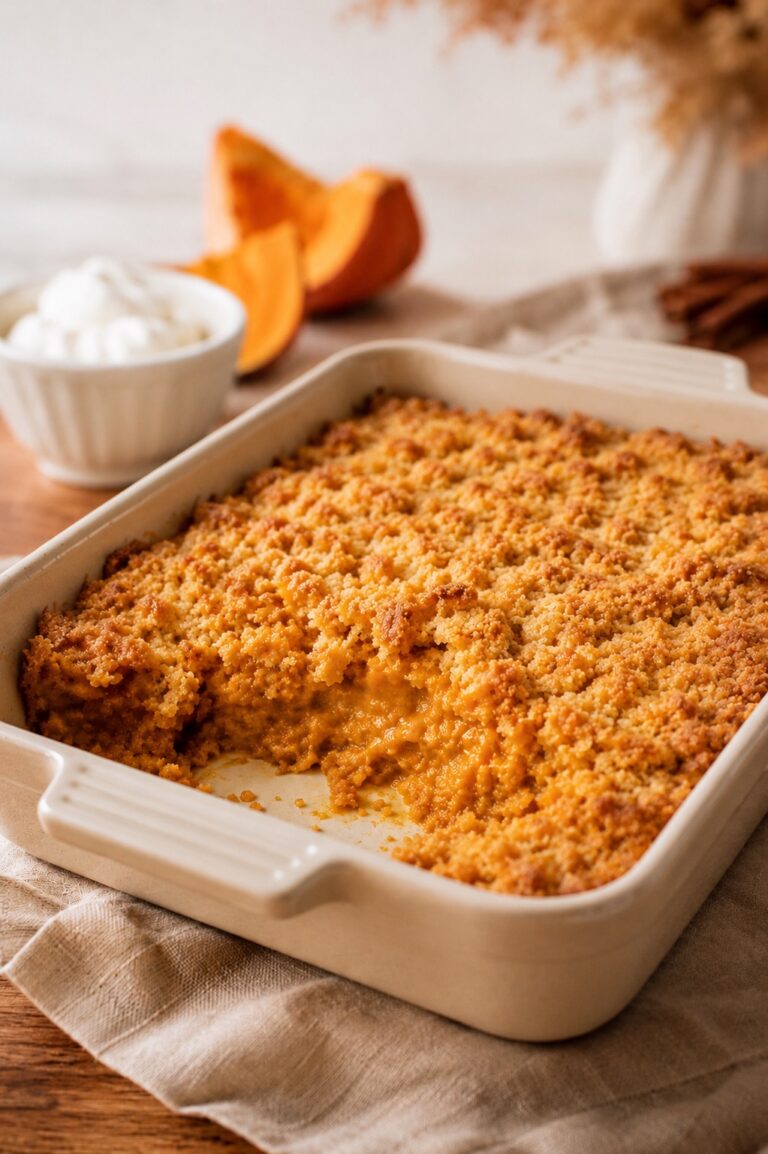
Sweet potato casserole is a baked American side dish made with mashed sweet potatoes and a sweet topping. This version has a soft orange filling enriched with butter, milk, eggs, and vanilla, beneath a brown sugar crumble with chopped pecans. A warm spoonful brings creamy sweet potato and buttery, nutty crumbs together.

On a Thanksgiving plate, a sweet side has a particular place: a small scoop beside the roast, with something green close by. The familiar combination of sweet potatoes and pecans brings that holiday feeling without needing a marshmallow topping. It is generous, rich food for a meal where several dishes share the table.
12 Sweet Favorites — Yours, Free 🍰
Tiramisù, no-bake cheesecake, the perfect chocolate chip cookie & 9 more reader-loved desserts — gathered into one beautiful free recipe book. From my kitchen to yours.
No spam, just sweet things. Unsubscribe anytime.Keep this sweet potato casserole recipe handy when you need to plan that meal. The steps show how dry the mash should look, when the eggs can go in, and how to check underneath a browned topping. There is also a day-ahead option, so the peeling and mashing need not compete with every other job on the holiday morning.
Sweet Potato Casserole at a Glance
This sweet potato casserole makes eight side-dish servings in one square pan. Allow time for cooking the potatoes as well as baking the assembled dish; the oven time alone does not describe the whole job.
| Detail | What to plan for |
|---|---|
| Recipe type | Sweet potato casserole served as a baked side dish with pecan crumble |
| Cuisine and occasion | American; Thanksgiving, Christmas, and holiday meals |
| Flavor | Sweet potato, butter, vanilla, brown sugar, and pecans |
| Texture | Creamy, spoonable filling beneath crisp nut crumble when freshly baked |
| Skill and method | Straightforward boiling, hand mixing, and oven baking; a thermometer is needed for the center check |
| Yield | 8 side-dish servings |
| Pan | 9-inch / 23 cm square light-colored metal pan, about 2 inches / 5 cm deep; capacity at least 2 1/2 quarts / 2.4 L |
| Oven | 350°F / 175°C, conventional oven, middle rack |
| Hands-on preparation | About 30 minutes |
| Combined cooking | About 80 minutes on the stovetop and in the oven |
| Cooling and resting | About 10 minutes before adding eggs, plus 15 minutes after baking |
| Total planning time | About 2 hours 15 minutes; allow longer if the mash is still hot or the filling starts chilled |
| Final bake | About 40–55 minutes; begin checking at 35 minutes |
| Center temperature | 165°F / 74°C |
| Make ahead | Refrigerate filling and crumble separately at 40°F / 4°C or below; bake within 24 hours and allow longer for chilled filling |
| Estimated calories | About 465 kcal per side-dish serving (1/8 of the casserole); ingredients and portion size can change the estimate |
| Allergens | Milk, eggs, wheat, and pecans (tree nuts) |
Who This Sweet Potato Casserole Is Perfect For
Choose this sweet potato casserole for a sweet, pecan-topped side to serve alongside savory food.
- Holiday hosts. One 9-inch pan provides eight side-dish portions for a Thanksgiving or Christmas menu.
- Pecan crumble fans. This sweet potato casserole pairs a creamy vanilla filling with buttery brown sugar crumbs and chopped nuts.
- Day-ahead cooks. Prepare sweet potato casserole filling and crumble separately, refrigerate, and bake within 24 hours.
- Home cooks. The method uses boiling, hand mixing, and a thermometer check, with clear texture cues at each stage.
For a savory or allergen-free option, choose a recipe designed for that need. This dish contains eggs, milk, wheat, and pecans.
Why This Sweet Potato Casserole Works
This sweet potato casserole pairs a creamy filling with distinct pecan crumbs. Measuring the prepared mash, keeping the topping loose, and checking below the surface protect that contrast through mixing and baking.
- A measured base for a creamy filling: Using 720 g of drained mash keeps the potato amount consistent with the measured milk and eggs, instead of letting a variable potato count determine the filling.
- Crumbs that stay distinct: Cold topping butter and loose scattering create small clusters among the chopped pecans, giving the soft base a contrasting surface without pressing on a compact lid.
- A filling check beneath the golden top: The center-temperature cue separates readiness from browning, so early color on the nuts leads to a foil shield rather than an early end to baking.
- A soft mound after resting: Eggs give the filling enough structure to hold together gently, while the 15-minute rest makes it easier to spoon both layers onto the plate.
Why You’ll Love This Sweet Potato Casserole
This sweet potato casserole suits a busy holiday kitchen: some work moves to the day before, one pan serves eight, and the finished dish comes to the table ready to spoon.
- Less preparation on the holiday morning. Make the filling and crumble a day ahead, refrigerate them separately, and leave assembly and baking for serving day.
- Eight portions from a familiar pan. A 9-inch square pan gives this rich side a defined place among the roast and vegetables without individual dishes to fill.
- Serving stays relaxed. The warm filling is meant for scoops, so guests can choose portions that fit the rest of the meal.
- The topping is the finish. Brown sugar, butter, and pecans bring the sweetness and crunch; there is no frosting, glaze, or sauce to prepare at the last minute.
The Science Behind Creamy Sweet Potatoes and Crisp Pecan Crumble
The texture of sweet potato casserole depends on moisture, the egg-enriched filling, and the exposed crumble. Understanding those three parts makes the visual cues in the method easier to use.
Moisture in the Sweet Potato Mash
Cooking softens the sweet potato tissue so it can be mashed, but water clinging to the drained cubes adds liquid that the filling does not need. Drying off that surface water helps the mash stay thick when the measured milk goes in. A visible puddle is a reason to pause before mixing, not a reason to add extra flour to the filling.
How Eggs Set the Filling
Egg proteins firm as the filling heats, helping the mash hold together in a soft mound. If eggs meet very hot mash during mixing, they can begin setting in streaks before the casserole reaches the oven. Cooling the mash first lets them blend evenly; the final center check tells you whether the deepest part has heated sufficiently.
Why Pecan Crumbs Brown First
The exposed nuts and sugary crumbs receive heat at the surface while the center warms more slowly. Their color can therefore look ready before the filling is ready, especially when it starts cold. Loose foil can shield the top as baking continues; pressing the crumble into a dense layer does not solve that difference.
Ingredients for Sweet Potato Casserole
Measure the filling and pecan crumble separately for this sweet potato casserole. The sweet potato quantity below is the cooked, peeled mash you will actually use, while the two butter portions need different temperatures.

Ingredient List
The first seven ingredients make the filling; the final four make the crumble. Set out two bowls so the softened butter and cold butter stay with their own components.
Sweet Potato Filling
- 3 cups (720 g) cooked, peeled and mashed orange-fleshed sweet potatoes, well drained and only warm
- 1/2 cup (100 g) granulated sugar
- 2 large eggs (about 100 g without shells), lightly beaten
- 1/2 cup (120 ml) whole milk
- 1 teaspoon (5 ml) pure vanilla extract
- 1/2 teaspoon (3 g) fine table salt
- 4 tablespoons (57 g) unsalted butter, softened
Pecan Crumble
- 1 cup (213 g) packed light brown sugar
- 1/3 cup (40 g) all-purpose flour, spooned and leveled
- 4 tablespoons (57 g) unsalted butter, cold and cubed
- 1 cup (113 g) chopped raw pecans
Choose Orange-Fleshed Sweet Potatoes
Look for orange-fleshed sweet potatoes for the creamy orange filling described here. About 2 to 2 1/2 pounds (900 g to 1.1 kg) of whole potatoes is a shopping estimate, allowing for peeling and variation between potatoes. Measure the cooked mash afterward; neither the number of potatoes nor their unpeeled weight replaces that measurement.
Keep the Two Butter Portions Separate
The softened butter mixes into the filling, while cold cubed butter makes the crumble. Take the small amount needed to grease the pan from the measured filling butter, then add the remainder to the mash. Keeping the topping butter cold helps you form crumbs instead of smearing everything into a paste.
Use Chopped Raw Pecans
Chopped raw pecans distribute through the crumble and brown during baking. Whole halves would make a different surface and give larger bites of nut; already toasted pecans have less room to brown further. Start with the chopped raw nuts listed here, and check the topping as the casserole bakes.
Ingredient Changes to Plan Separately
Canned sweet potatoes can carry added syrup or water, and roasted mash can have a different moisture level from boiled, drained mash. Cream also changes the filling compared with whole milk. Keep those changes for a recipe that gives specific amounts and preparation steps for them.
Removing the eggs changes how the filling sets, while changing the flour or pecans changes the crumble. For an egg-free, gluten-free, or nut-free dish, use a recipe written for that need rather than simply leaving out an ingredient. A marshmallow topping also needs its own timing; it is not part of this pecan crumble.

Tools for Mashing, Mixing, and Baking the Casserole
A potato masher, two bowls, and a thermometer do the essential work here. A blender is unnecessary for sweet potato casserole: thoroughly tender cubes can be mashed by hand, and the filling does not need to be whipped.
- Pan and oven: 9-inch / 23 cm square light-colored metal pan, about 2 inches / 5 cm deep, capacity at least 2 1/2 quarts / 2.4 L; Conventional oven, preheated to 350°F / 175°C; middle rack; foil for a loose browning shield.
- Potato preparation: Large pot with room for water above the cubes; Colander; Vegetable peeler and knife/cutting board; Potato masher.
- Measuring and mixing: Kitchen scale or US measuring cups and spoons; Large mixing bowl; smaller topping bowl; Spoon or spatula; Fork or pastry cutter for cold butter.
- Temperature and service: Instant-read food thermometer with probe positioned in filling center away from pan; Heatproof resting surface and serving spoon.
Before You Begin This Sweet Potato Casserole
Before starting sweet potato casserole, check that the pan has the size, material, depth, and capacity listed above. Set the filling butter out to soften, leave the topping butter chilled, and make room to cool the mash before the eggs are added.
Keep the thermometer and a sheet of foil near the oven. If you are sharing oven space with a roast, reserve an interval at 350°F / 175°C for the casserole instead of baking it at the roast’s temperature. Its final resting time can overlap with plating the other dishes.
What to Expect from This Sweet Potato Casserole
Expect a creamy, soft, spoonable sweet potato casserole with golden pecan crumbs on top. After resting, a scoop should hold a gentle mound on the plate. It is a side dish to spoon from the pan; for a pastry dessert that cuts into wedges, see the sweet potato pie recipe.
Before baking, the mash should hold a spoon trail and the mixed filling should be thick but spreadable. The crumble should look loose and uneven, with small clusters among the chopped nuts. After baking, the center can remain soft, but it should have no loose liquid movement; a browned surface alone cannot confirm readiness.

How to Make Sweet Potato Casserole
Start with fully tender, well-drained potatoes, then let the mash cool before adding the eggs. Keep the crumble loose and cold so it can be scattered over the filling just before the sweet potato casserole goes into the oven.
1. Cook and Drain the Sweet Potatoes
Peel about 2 to 2 1/2 pounds (900 g to 1.1 kg) of orange-fleshed sweet potatoes and cut them into roughly 1-inch / 2.5 cm cubes. Put them in a large pot, cover with water, and bring to a boil. Reduce to a simmer and cook for about 15–20 minutes, until a fork passes through a cube without resistance.
Drain thoroughly in a colander. Return the potatoes to the warm pot over low heat for 2–3 minutes, stirring to evaporate surface water without browning them. The whole-potato weight is only a starting estimate; you will measure the mash in the next step.
What you should see: Tender cubes with no hard center and no puddle of cooking water at the bottom of the pot.

2. Mash, Measure, and Cool
Mash the drained potatoes until smooth, then measure exactly 3 cups (720 g) of plain mash into the mixing bowl. Keep any extra for another use. Let the measured mash cool for about 10 minutes, or longer if it is still hot, until only warm and no longer steaming strongly.
What you should see: Thick mash that holds a spoon trail without free water; it should be warm rather than hot before the eggs go in.

3. Prepare the Pan and Filling
Heat a conventional oven to 350°F / 175°C with a rack in the middle. Lightly grease a 9-inch / 23 cm square light-colored metal pan, about 2 inches / 5 cm deep and at least 2 1/2 quarts / 2.4 L in capacity, using a little of the measured softened filling butter.
Stir the remaining softened butter into the warm mash, followed by the granulated sugar, whole milk, vanilla, and salt. Add the lightly beaten eggs only when the mixture is no longer hot. Mix evenly and spread into the prepared pan, smoothing the surface without leaving a thick mound in the center.
What you should see: Smooth, thick, spreadable filling with no streaks of egg or pooled liquid.

4. Make and Scatter the Pecan Crumble
Combine the packed brown sugar and flour in the smaller bowl. Rub or cut in the cold cubed topping butter with your fingertips, a fork, or a pastry cutter until small, uneven crumbs form. Fold in the chopped raw pecans, then scatter the mixture over the filling without pressing it down.

What you should see: Loose crumbs and small clusters with nuts throughout, rather than a greasy paste or a compact lid.

5. Bake and Check the Center
Bake the sweet potato casserole for about 40–55 minutes, beginning your checks at 35 minutes. If the nuts or crumbs are sufficiently browned before the center is ready, cover loosely with foil and continue baking. Check the filling in the center with an instant-read thermometer, keeping the probe away from the pan; it must reach 165°F / 74°C.
What you should see: Golden-brown crumbs and a hot center without loose liquid movement, together with the required thermometer reading. Top color by itself is not the endpoint.

6. Rest and Serve
Set the pan on a heatproof surface and let the sweet potato casserole rest for about 15 minutes. Spoon it into eight side-dish portions, taking some crumble and filling in each scoop.
What you should see: A warm scoop that keeps a soft mound beneath its pecan crumbs.

How to Tell When Sweet Potato Casserole Is Done
Sweet potato casserole is done when the filling reaches 165°F / 74°C at the center, checked away from the pan, and there is no loose liquid movement. The thermometer matters even if the pecans already look golden. FoodSafety.gov lists that temperature for meat and meatless casseroles in its safe minimum internal temperature chart.
I used to let the pecan topping tell me when a casserole was ready. Once those buttery crumbs turned golden, I was already reaching for the oven mitts. Learning to check the filling underneath changed that habit. Now I give the center its own check, then let the casserole rest while the rest of the table comes together.
| What the top looks like | What the center tells you | What to do |
|---|---|---|
| Golden crumbs | Below 165°F / 74°C | Keep baking; add a loose foil shield if the top needs protection. |
| Deeply browned nuts or crumbs | Below 165°F / 74°C | Shield the topping and continue checking the center; browning cannot replace that check. |
| Golden crumbs | 165°F / 74°C, with no loose liquid movement | Take the pan out and begin the 15-minute rest. |
| Any topping color | Reading taken against the pan | Reposition the probe in the filling center and read again before deciding. |

Small Details for a Better Sweet Potato Casserole
These small adjustments help when sweet potato casserole is nearly ready but the surface and center seem to disagree. They improve the quality of the check and protect the crumble while the filling finishes.
Keep the Probe off the Pan
A probe touching the hot metal can give a reading that does not represent the filling. Aim for the middle of the food, with the sensing area immersed in the filling and clear of the bottom and sides. If the position is uncertain, move it and take another reading rather than relying on the first number.
Protect the Crumble Without Sealing It
A loose foil tent shields browned pecans while leaving space above the crumble. Keep it off the topping and avoid crimping it tightly around the pan; trapped steam encourages the crumbs to soften. Lift it carefully when checking the filling, then replace it if more baking is needed.
Keep the Crumble Cool Until Assembly
If the kitchen is warm or the filling needs more cooling time, refrigerate the prepared crumble while you wait. Cold butter is easier to keep in small pieces. If the mixture begins smearing as you work it, stop and chill it before scattering; more rubbing will not turn warm butter back into crumbs.
Sweet Potato Casserole Problems and What to Check
If sweet potato casserole looks wetter, darker, or rougher than expected, match the symptom to the stage you are at. Some problems can be prevented before assembly; baking longer cannot correct every ingredient or mixing problem.
| Symptom | Possible cause | What to check or do | Limit |
|---|---|---|---|
| Water around the plain mash | Cooking water remains after draining | Before mixing, return the drained potatoes to low heat briefly and evaporate surface water without browning. | Do not add unmeasured flour to compensate after assembly. |
| Brown topping, underheated center | The surface browned before the middle heated through | Shield loosely with foil and continue baking to the center-temperature cue. | A darker top is not evidence of a ready center. |
| Greasy or compact crumble | Butter warmed too much, or topping was pressed down | Chill the crumble if needed and scatter it loosely before baking. | Chilling cannot rebuild distinct crumbs once the casserole has baked. |
| Egg streaks in the filling | Eggs met mash that was still too hot | Let the mash become only warm before adding the eggs. | Further stirring does not reverse cooked egg streaks. |
| Firm lumps in the mash | The potato cubes were not fully tender | Check cubes with a fork before draining; keep simmering if there is resistance. | The final bake is not a reliable fix for hard potato centers. |
Beautiful Ways to Serve Sweet Potato Casserole
Serve sweet potato casserole warm in modest scoops, with enough of the pecan topping for each portion. Its sweetness is most comfortable beside savory food, and a simple presentation keeps the orange filling and golden crumbs easy to see.
A Warm Scoop from the Pan
Bring the rested pan to a heatproof trivet and use a broad serving spoon to lift filling and crumble together. A small side plate or an open space on the dinner plate leaves the crumbs visible and gives guests room for the rest of the meal.

Alongside Roast Turkey or Chicken
Place a scoop beside sliced roast turkey or chicken, keeping gravy on the savory side of the plate so the pecan crumbs retain their texture. The casserole already supplies sweetness and richness, so it needs no extra butter or sweet sauce at serving.

A Small Portion with Green Vegetables
Green beans, broccoli, or Brussels sprouts make useful companions for sweet potato casserole. Serve the vegetables alongside rather than under the scoop, especially when they have a juicy dressing; the separation helps keep the crumble from sitting in extra liquid.

A Casserole for the Holiday Table
Set the casserole among the savory side dishes with its own serving spoon. If pecans are also part of your dessert plans, classic pecan pie belongs to a separate course and can have its own preparation slot, leaving this warm side to accompany the main meal.

Storing and Making Sweet Potato Casserole Ahead
For sweet potato casserole, separate the day-ahead plan from the leftover plan. Unbaked egg-containing filling has a shorter refrigerator window than the finished dish, and the crumble keeps a better chance of distinct crumbs when it waits in its own container.
Prepare the Filling and Crumble a Day Ahead
Prepare the filling, cover it, and refrigerate at 40°F / 4°C or below for no more than 24 hours before baking. Refrigerate the crumble in a separate covered container. Add it just before the pan goes into the oven, and bake at the same oven temperature.
Chilled filling can need longer than the usual baking range, so allow extra room in the schedule and use the center reading to decide when it is done. Do not leave the raw-egg mixture on the counter to catch up with the timetable, and do not assume an extra ten minutes will always be enough.

Refrigerate Baked Leftovers
Refrigerate leftover sweet potato casserole promptly in shallow covered containers, within two hours of taking it out of the oven, and keep it at 40°F / 4°C or below. Use it within 3–4 days. The FoodSafety.gov cold food storage chart gives that refrigerator window for baked casseroles containing eggs, with 2–3 months in the freezer for best quality.

Freeze, Thaw, and Reheat
Freeze baked portions in covered freezer-safe containers at 0°F / -18°C or below for 2–3 months for quality. Thaw in the refrigerator, then reheat until the center reaches 165°F / 74°C. Cover loosely if the topping darkens while the filling heats; the crumbs may be softer after chilling, freezing, or reheating, so expect less crunch than in a freshly baked portion.
Planning Sweet Potato Casserole for a Holiday Meal
For a same-day sweet potato casserole, work backward about 2 hours 15 minutes from serving. This example gives the oven stage a 50-minute allowance within the usual 40–55-minute range; the actual food cues still decide when you move on.
| Before serving | Reserved task |
|---|---|
| 2 hr 15 min to 2 hr | Peel and cut the potatoes; set out measured ingredients. |
| 2 hr to 1 hr 30 min | Heat the water, cook, drain, and briefly dry the potatoes; mash and measure. |
| 1 hr 30 min to 1 hr 20 min | Cool the measured mash until only warm; extend this interval if needed. |
| 1 hr 20 min to 1 hr 5 min | Preheat the oven, grease the pan, mix the filling, and prepare the crumble. |
| 1 hr 5 min to 15 min | Bake, checking from 35 minutes and shielding browned crumbs if needed. |
| Final 15 min | Rest the finished casserole while the other dishes are plated. |
That adds up to about 30 minutes of preparation, 80 minutes of combined cooking, and 25 minutes of cooling and resting. Keep a little flexibility around serving: cold filling or slower-heating potatoes can extend the plan. If you prepare components the day before, keep them refrigerated until assembly rather than building an unrefrigerated holding period into the schedule.
Sweet Potato Casserole Questions
Two decisions often come up when planning sweet potato casserole: how to judge the middle and how much work can move to the day before.
Should Sweet Potato Casserole Be Firm in the Middle?
The center should be soft and spoonable, without loose liquid movement. It also needs to reach 165°F / 74°C when checked in the filling away from the pan. Let it rest for about 15 minutes before serving; neither a firm-looking edge nor golden pecans can stand in for checking the middle.
Can You Make Sweet Potato Casserole the Night Before?
Yes. Refrigerate the prepared filling and crumble separately at 40°F / 4°C or below, and bake within 24 hours. Add the crumble just before baking. Chilled filling may need longer in the oven, so plan around the center-temperature cue rather than a fixed number of extra minutes.
More Baking for Your Holiday Table
Once the savory menu is settled, choose the holiday baking that fits the remaining oven and refrigerator space. These recipes offer different ways to carry pecans, autumn fruit, or pumpkin into dessert and the following morning.
More Crumb and Pecan Desserts
For a dessert with nuts or a crumb topping, choose by serving style: bars for portioning, cobbler for spooning, or fruit beneath a crisp surface.
- Pecan Pie Bars put pecan filling over shortbread in portions you can cut ahead of dessert.
- Pecan Pie Cobbler makes room for a warm, spooned dessert with a saucy pecan filling.
- Apple Crumble Pie pairs fruit and pastry with a cold-butter crumb topping.
- Apple Crisp offers an oat-topped fruit dessert without a pastry crust.
Creamy Pumpkin for the Dessert Table
A pumpkin dessert can be planned around chilling time instead of sharing the casserole’s final oven slot. Pick the shape and portion size that suit the meal.
- Crustless Pumpkin Pie gives you a chilled pumpkin custard without making pastry.
- Pumpkin Cheesecake Bars divide a creamy filling and graham cracker base into manageable squares.
- Pumpkin Cheesecake provides a full chilled centerpiece when there is refrigerator space for it.
- Pumpkin Cake brings a layer-cake option with cream cheese frosting to the dessert table.
Bake Ahead for the Holiday Morning
If breakfast needs attention too, a loaf or individual muffins can simplify serving. Cinnamon rolls make a different choice when you want to plan time for yeast dough.
- Pumpkin Bread is a hand-mixed loaf to slice for breakfast or an afternoon cup of coffee.
- Pumpkin Muffins give you individual, unfrosted portions that need no slicing at the table.
- Cranberry Orange Muffins add tart fruit, orange, and streusel when you want a brighter flavor alongside pumpkin baking.
- Pumpkin Cinnamon Rolls offer an overnight shaping option for a holiday morning centered on warm yeast rolls.
Why This Sweet Potato Casserole Belongs in Your Recipe Box
When sweet potato casserole comes around again next holiday, the details most worth keeping are the ones that spare you a fresh round of measuring, pan questions, and last-minute guesswork.
- A Pan You Can Plan Around: The specified 9-inch metal pan helps you reserve oven space before the rest of the holiday dishes compete for it.
- A Useful Potato Measure: Weighing the cooked mash lets you return to the same filling amount even when the potatoes in the shopping bag are different sizes.
- A Crumble That Can Wait: Preparing the topping separately gives you a practical stopping point while the mash cools or the next day’s meal comes together.
- A Better Browning Decision: The top-and-center comparison helps you choose between continuing to bake, shielding the pecans, and taking the pan out to rest.
- A Defined Side-Dish Yield: Eight portions give you a useful starting point for planning a table that also includes savory mains and other sides.
- A Plan Beyond the First Meal: The storage and reheating guidance helps you decide which portions to refrigerate for the next few days and which to freeze.
Final Thoughts on Sweet Potato Casserole
Sweet potato casserole earns its place at the table through a familiar contrast: a soft, warmly flavored filling under buttery pecan crumbs. A small scoop can feel generous, especially beside a roast and a plateful of vegetables.
It is also a dish that welcomes a serving spoon and an unhurried meal. There is no elaborate finish to add at the last moment; the golden topping and orange filling provide their own color on the plate.
Save this sweet potato casserole for the next menu that calls for a sweet holiday side. When the pan reaches the table, let everyone choose a portion and settle in while it is warm.

Sweet Potato Casserole with Buttery Pecan Crumble
Sweet potato casserole with a creamy vanilla-scented filling and buttery brown sugar pecan crumble. Serve it warm in soft scoops beside your holiday main dish.
Ingredients
Sweet Potato Filling
- 3 cups (720 g) cooked, peeled and mashed orange-fleshed sweet potatoes, well drained and only warm
- 1/2 cup (100 g) granulated sugar
- 2 large eggs (about 100 g without shells), lightly beaten
- 1/2 cup (120 ml) whole milk
- 1 teaspoon (5 ml) pure vanilla extract
- 1/2 teaspoon (3 g) fine table salt
- 4 tablespoons (57 g) unsalted butter, softened
Pecan Crumble
- 1 cup (213 g) packed light brown sugar
- 1/3 cup (40 g) all-purpose flour, spooned and leveled
- 4 tablespoons (57 g) unsalted butter, cold and cubed
- 1 cup (113 g) chopped raw pecans
Instructions
- Cook and drain the sweet potatoes. Peel about 2 to 2 1/2 lb (900 g to 1.1 kg) of orange-fleshed sweet potatoes and cut into 1-inch / 2.5 cm cubes. This is a shopping estimate; measure the cooked mash in the next step. Cover the cubes with water in a large pot, bring to a boil, then simmer for about 15–20 minutes, until a fork passes through without resistance. Drain thoroughly, then return to the warm pot over low heat for 2–3 minutes, stirring to evaporate surface water without browning. The cubes should be tender throughout, with no puddle of cooking water.
- Mash, measure, and cool. Mash until smooth and measure exactly 3 cups (720 g) of plain mash into a large mixing bowl. Reserve any excess for another use. Cool for about 10 minutes, longer if needed, until only warm and no longer steaming strongly. The mash should hold a spoon trail without free water; do not add eggs while it is hot.
- Prepare the pan and filling. Preheat a conventional oven to 350°F / 175°C with a rack in the middle. Use a 9-inch / 23 cm square light-colored metal pan, about 2 inches / 5 cm deep and at least 2 1/2 quarts / 2.4 L in capacity. Grease lightly with a little of the measured 4 tablespoons (57 g) softened filling butter. Stir the remaining softened butter into the warm mash, then add the granulated sugar, whole milk, vanilla, and salt. Once the mixture is no longer hot, stir in the lightly beaten eggs. Spread evenly in the pan. The filling should be thick and smooth, without egg streaks or pooled liquid.
- Make and scatter the pecan crumble. In a smaller bowl, combine the packed light brown sugar and flour. Rub or cut in the separate 4 tablespoons (57 g) cold cubed butter with your fingertips, a fork, or a pastry cutter until small, uneven crumbs form. Fold in the chopped raw pecans. Scatter loosely over the filling without pressing down. Look for loose crumbs and small clusters, not a greasy paste.
- Bake and check the center. Bake for about 40–55 minutes, beginning checks at 35 minutes. If the pecans or crumbs brown before the filling is ready, shield loosely with foil and continue baking. Check the center of the filling with an instant-read thermometer, keeping the probe away from the pan. The center must reach 165°F / 74°C and have no loose liquid movement; a golden topping alone does not establish doneness.
- Rest and serve. Set the pan on a heatproof surface and rest for about 15 minutes before spooning into eight side-dish servings. Each warm scoop should hold a soft mound beneath the pecan crumbs.
Notes
Equipment
- Pan and oven: 9-inch / 23 cm square light-colored metal pan, about 2 inches / 5 cm deep, capacity at least 2 1/2 quarts / 2.4 L; Conventional oven, preheated to 350°F / 175°C; middle rack; foil for a loose browning shield
- Potato preparation: Large pot with room for water above the cubes; Colander; Vegetable peeler and knife/cutting board; Potato masher
- Measuring and mixing: Kitchen scale or US measuring cups and spoons; Large mixing bowl; smaller topping bowl; Spoon or spatula; Fork or pastry cutter for cold butter
- Temperature and service: Instant-read food thermometer with probe positioned in filling center away from pan; Heatproof resting surface and serving spoon
- Measure the cooked mash: For consistency, weigh 720 g of cooked, peeled, well-drained mash. The raw shopping weight and potato count do not replace the cooked amount.
- Butter and topping: Take pan-greasing butter from the filling portion. Keep the separate topping butter cold and use chopped raw pecans; scatter the crumbs without compressing them.
- Timing: Allow about 30 minutes of preparation, 80 minutes of combined stovetop and oven cooking, and 25 minutes of cooling and resting, for about 2 hours 15 minutes total. These are planning estimates; warm-mash and center-temperature cues control the steps.
- Make ahead: Cover and refrigerate the prepared filling at 40°F / 4°C or below for no more than 24 hours before baking. Refrigerate the crumble separately and add it just before baking. Chilled filling may need longer; bake to the same center-temperature cue rather than adding a fixed number of minutes.
- Leftovers: Refrigerate promptly in shallow covered containers, within two hours of taking the casserole out of the oven, at 40°F / 4°C or below. Use within 3–4 days. Freeze baked portions at 0°F / -18°C or below for 2–3 months for quality. Thaw in the refrigerator and reheat the center to 165°F / 74°C. The crumble may soften after storage.
- Allergens and ingredient changes: Contains milk, eggs, wheat, and pecans (tree nuts). For an allergen-free version or a different topping, choose a recipe written for those ingredients; omitting the eggs, flour, or pecans changes the filling or crumble.
- Nutrition: Estimated per side-dish portion, based on eight servings and including all of the pecan crumble. Serving companions are not included.
Nutrition Information:
Yield: 8 Serving Size: 1 side-dish portion (1/8 of the casserole)Amount Per Serving: Calories: 465Total Fat: 23.6gSaturated Fat: 8.8gUnsaturated Fat: 13.5gCholesterol: 79mgSodium: 203mgCarbohydrates: 61.2gFiber: 3.7gSugar: 44.9gProtein: 5.3g
Nutrition information is provided as an estimate only and may vary based on specific ingredients, brands, and portion sizes used. This information should not be considered medical or nutritional advice.
12 Sweet Favorites — Yours, Free 🍰
Tiramisù, no-bake cheesecake, the perfect chocolate chip cookie & 9 more reader-loved desserts — gathered into one beautiful free recipe book. From my kitchen to yours.
No spam, just sweet things. Unsubscribe anytime.