Apple Pancakes (Soft, Fluffy & Perfect Every Time)
🎁 FREE E-BOOK: 12 Sweet Favorites — reader-loved desserts in one beautiful recipe book.
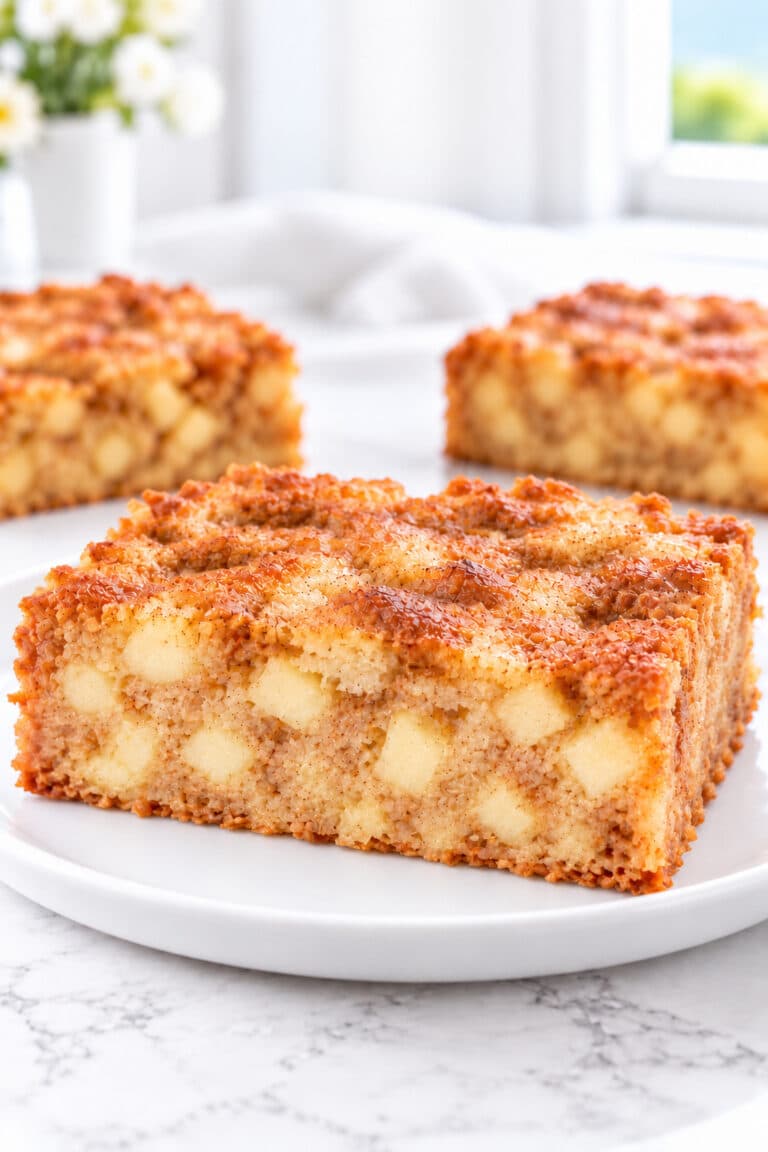
These apple pancakes have golden surfaces, a soft cinnamon-scented crumb, and small pieces of tender apple tucked into every round. The fruit is softened in a little butter before it meets the batter, so the pieces stay recognizable without needing a long time inside the pancake to lose their crunch.

Apple and cinnamon are a comfortable pairing for a relaxed breakfast, especially when the skillet is warm and everyone can choose their own topping. This is a roughly 45-minute breakfast with time to cook the apples and work through the batches. For another fruit-filled morning, banana pancakes offer a different flavor to add to your rotation.
The useful details are in the batter and the first cooked pair: how slowly the mixture should spread, how large to make each round, and what a fully set center looks like. Those cues make these apple pancakes worth returning to, whether you serve each batch straight from the pan or hold a few briefly for a shared breakfast.
Apple Pancakes at a Glance
This recipe makes ten individual apple pancakes, with two pancakes counted as one serving. The timing assumes a skillet large enough to cook two at once; a smaller pan needs more batches. Plan for a mostly hands-on breakfast, with the brief apple-cooling time used to prepare the dry and wet mixtures.
| Detail | What to plan for |
|---|---|
| Category and style | American-style breakfast or brunch pancakes |
| Cooking method | Stovetop; soften the diced apple before adding it to the batter |
| Difficulty | Easy, with attention to skillet heat and the cooked center |
| Prep time | About 15 minutes |
| Cook time | About 30 minutes, including the apples and all pancake batches |
| Total time | About 45 minutes; allow roughly 40 to 50 minutes in practice |
| Active time | Mostly hands-on, especially during the five skillet batches |
| Yield | 10 pancakes, approximately 4 inches (10 cm) across |
| Servings | 5 servings of 2 pancakes |
| Skillet and capacity | 12-inch (30 cm) nonstick skillet with an approximately 9-inch (23 cm) flat base; 2 pancakes per batch |
| Resting and chilling | No scheduled batter rest or chilling; cool the cooked apple for about 5 minutes while preparing the mixtures |
| Texture | Soft, moderately fluffy crumb with tender little apple pieces |
| Flavor | Apple, cinnamon, vanilla, and optional nutmeg |
| Best serving temperature | Warm, soon after cooking; brief oven holding is optional |
| Make-ahead option | Measure dry ingredients ahead or refrigerate/freeze cooked plain pancakes |
| Allergens | Wheat, milk, and egg |
| Nutrition serving basis | 2 pancakes, before optional toppings |
In short: These apple pancakes make a ten-pancake breakfast in about 45 minutes with the specified two-at-a-time skillet setup. Keep the apple pieces small, the batter spoonable, and the heat gentle enough for the centers to cook.
Why These Apple Pancakes Work
The tenderness of these apple pancakes comes from giving the fruit and the batter the preparation each needs. The apples soften before mixing, while measured flour and milk keep the batter substantial enough to hold the pieces without turning it into a stiff dough.
- Softened apple pieces stay tender. A few minutes in butter gives the small dice a head start. The pancake cooking time can then focus on setting the surrounding batter, rather than trying to soften large raw chunks at the same time. The pieces should still hold their shape when they leave the skillet.
- Measured flour keeps the batter manageable. The recipe starts with 180 g flour and 240 ml milk, then allows a small, measured adjustment if needed. This gives you both a clear starting point and an observable consistency cue, rather than asking you to guess what a thick batter should mean.
- Evenly mixed leavener supports an even crumb. Two level teaspoons of double-acting baking powder are whisked thoroughly through the dry ingredients. Breaking up visible clumps before the wet mixture goes in helps distribute the leavener throughout the apple pancakes instead of leaving concentrated pockets.
- Modest rounds give the centers time. A roughly 4-inch pancake is easier to spread, turn, and inspect than an oversized mound. Combined with medium-low heat, that shape helps the middle cook while the outside becomes golden. The first pair tells you whether the pan needs a heat adjustment.

Why You’ll Love These Apple Pancakes
These apple pancakes suit a morning when you want a fruit-filled breakfast and can stay near the stove. There is no mixer to set up or separate filling to prepare, and the portioning is clear enough to plan a small shared meal.
- Familiar ingredients. Whole milk, one egg, flour, butter, and warm spices form the base. You do not need to buy buttermilk specifically for these apple pancakes, and the optional nutmeg can be left out without changing the preparation.
- Ordinary kitchen tools. Two bowls, a whisk, a flexible spatula, and a suitable nonstick skillet handle the mixing and cooking. The same skillet melts the batter butter and softens the apple, so those steps do not require a second cooking pan.
- A clearly portioned breakfast. Ten apple pancakes give five servings of two. Serve those portions as small stacks or arrange the batch on a platter, with butter and maple syrup alongside so each person can choose how much to add.
- Useful cooked leftovers. Plain apple pancakes can be refrigerated or frozen in portions for another breakfast. Keeping toppings separate makes the leftovers easier to pack and reheat, while the storage instructions give a clear route from cooling to a warm center.
The Science Behind Tender Apple Pancakes
Three simple relationships explain how this batter behaves: flour takes up liquid, mixing changes the structure of the crumb, and the skillet heats the outside before the center. Understanding those relationships helps you decide when to add a little milk, when to stop stirring, and when to lower the heat.
Hydration changes the way the batter spreads. Flour absorbs liquid after the dry and wet mixtures meet, so batter waiting for a later batch can feel thicker than it did at the start. An overfilled flour cup can also make the initial mixture too stiff. Weighing 180 g flour gives a dependable starting measure; the small extra-milk allowance is there for a stiff mixture, not for turning apple pancakes into thin, freely pouring batter.
More mixing can mean a tougher crumb. Once wheat flour is wet, continued stirring develops the structure that can make apple pancakes chewy. Stop folding when the dry streaks disappear, then distribute the apple with a few gentle turns. Small lumps are normal. Trying to beat every lump away adds mixing that these apple pancakes do not need.
A brown surface does not tell the whole story. The skillet touches the outside directly, while heat takes longer to reach the thickest middle. Too much heat can therefore create a dark underside around a wet center. Smaller rounds, a gentle cooking temperature, and a cut into one pancake from the first pair give you more useful information than surface color alone.
Ingredients for Apple Pancakes
For apple pancakes with a spoonable batter and evenly distributed fruit, pay particular attention to the flour weight and the prepared apple weight. The butter is divided between the batter and the skillet apple, while the extra milk is a small allowance for the entire batch.
Ingredient List
Measure the apple after peeling and coring, but before cooking. Set aside the two butter portions before you start, and keep the optional serving butter separate from the measured butter used in the apple pancakes.
- 3 tablespoons (42 g) unsalted butter, divided, including its 28 g batter / 14 g apple allocation.
- About 1 cup (120 g) peeled/cored apple, weighed before cooking, approximately 5 mm dice.
- 1 1/2 cups (180 g) all-purpose flour, spooned/leveled if not weighed.
- 2 tablespoons (25 g) granulated sugar.
- 2 level teaspoons (about 8 g) double-acting baking powder.
- 1 teaspoon (about 3 g) ground cinnamon.
- 1/2 teaspoon (about 3 g) fine table salt.
- 1/4 teaspoon ground nutmeg, optional.
- 1 cup (240 ml) whole milk, plus up to 2 tablespoons (30 ml) only as needed, total allowance across all batches.
- 1 large egg, about 50 g without shell.
- 1 teaspoon (5 ml) vanilla extract.
- 1 teaspoon (5 ml) neutral oil, for the pan across all batches.
- Maple syrup, optional, for serving.
- Extra butter, optional, for serving.

Choosing and Preparing the Apples
Gala is the first choice here, with Golden Delicious as an alternative. Peel and core the apple, then weigh 120 g and cut it into pieces about 3/16 inch (5 mm) across. The approximate cup measure is a convenience; apple size and the way the pieces sit in a cup can vary.
Similar-sized pieces soften more evenly and distribute more easily through the batter. Leave out the peel so the little pieces in the finished apple pancakes have a tender bite. The skillet step is finished when the apple gives easily to a fork or the side of a spatula while still holding its shape; the clock alone cannot account for every apple.
Measuring Flour and Baking Powder
Use 180 g all-purpose flour. If you measure by volume, spoon the flour lightly into the cup and level it instead of scooping and packing it down. Extra flour makes apple pancake batter harder to spread and can leave a heavier center.
The baking powder amount is 2 level teaspoons, about 8 g, for the whole batch. Use standard measuring teaspoons, not tablespoons, and choose double-acting baking powder rather than baking soda. Whisk it through the flour until no separate white clumps remain. A strong leavener taste can have more than one cause, so a bitter batch is not a reason to add more sugar or change the leavener blindly.
Milk and Divided Butter
Start with 1 cup (240 ml) whole milk. If the mixed batter sits in a firm mound rather than falling in soft dollops, add milk a tablespoon at a time, up to 2 tablespoons (30 ml) extra across the entire batch. Any milk added before the first pancakes counts toward that total.
The 3 tablespoons (42 g) butter are divided into 2 tablespoons (28 g) for the batter and 1 tablespoon (14 g) for the apples. Scrape the cooked apple and its buttery coating into the batter. This gives the fruit step its own measured fat without leaving an extra, unspecified spoonful to add later.
Kitchen Tools for Evenly Cooked Apple Pancakes
The most useful tools for these apple pancakes are accurate measures and a skillet with enough flat space for two rounds. Organize the mixing tools before cooking the apple so its cooling time can overlap with measuring and whisking.
- Accurate Measuring: A digital scale, standard measuring spoons, and a liquid measure for the flour, prepared apple, butter, leavener, and milk.
- Apple Preparation: A peeler, knife, board, and small shallow plate for cooling the cooked apple in a thin layer.
- Gentle Mixing: A large dry bowl, medium wet bowl, whisk, and flexible spatula. The separate bowls let you blend each mixture thoroughly before the gentle final folding.
- Skillet and Turning: A 12-inch (30 cm) nonstick skillet with an approximately 9-inch (23 cm) flat base, room for two 4-inch (10 cm) pancakes, a flexible wide turner, brush, and approximate quarter-cup scoop. An optional griddle changes batch capacity; a smaller pan requires more batches.
- Serving, Storage and Reheating: A wire rack; an optional conventional oven with a rack on a baking sheet in the middle position for holding; a shallow covered container, parchment, and freezer-safe bag or container for leftovers. For reheating, use a microwave-safe plate and lightly damp paper towel, or an oven tray and foil, plus a food thermometer to check the 165°F (74°C) leftover endpoint.
Check the flat cooking base, not just the rim diameter. Two pancakes need space for the turner as well as room to spread. If your pan comfortably holds only one, keep the same pancake size and allow approximately 20 to 25 extra minutes for the additional batches.
A Simple Timeline for Your Pancake Breakfast
The roughly 45-minute plan for apple pancakes includes softening the fruit and cooking five batches. The apple cools while you prepare the two mixtures, so that short cooling period is not an extra wait added to the total.
| Approximate time | Task and dependency |
|---|---|
| Minutes 0 to 5 | Prepare the apple and divide the butter. Melt and reserve the batter butter. Start the optional holding oven. |
| Minutes 5 to 10, or about 12 if needed | Cook the apple in the remaining butter until tender but still distinct. |
| Minutes 10 to 15 | Spread the cooked apple on a plate to cool while measuring and mixing the dry and wet ingredients separately. |
| Minutes 15 to 20 | Fold the mixtures together, add the lukewarm apple, check the batter, and ready the skillet. |
| Minutes 20 to 45 | Cook two pancakes at a time in five batches. Serve promptly or hold earlier batches briefly in one layer. |
The tenderness of the apple and the cooking cues control the finish time. If the fruit needs longer, shift the remaining tasks accordingly. To serve the apple pancakes together, put a rack on a baking sheet in a 200°F (95°C) oven and hold earlier apple pancakes for about 20 to 25 minutes while you finish; longer holding can dry them.
What to Expect from the Apple Batter and Finished Pancakes
The batter for these apple pancakes should be thick and scoopable, with small lumps and visible pieces of apple. It falls from the spoon in soft dollops or a thick ribbon and spreads slowly, rather than pouring like a thin crepe batter or standing up like dough.
Expect individual American-style skillet pancakes with a moderate lift, a soft set crumb, and tender fruit pieces. They have more texture than a plain pancake because of the apple, and their lift is modest compared with a tall soufflé pancake. The centers should feel soft when cut, without a shiny streak of raw batter between the apple pieces.
How to Make Apple Pancakes
Make these apple pancakes by softening and cooling the fruit first, mixing the wet and dry ingredients separately, and then cooking the apple pancakes in small rounds over medium-low heat. The first pair is part of the ten-pancake batch and gives you a chance to check the heat before continuing.
1. Measure the Ingredients and Dice the Apple
Weigh 180 g flour and 120 g peeled, cored apple. Cut the apple into approximately 5 mm dice and measure the remaining ingredients. Divide the butter into 28 g for the batter and 14 g for the apples. If you plan to hold batches, heat a conventional oven to 200°F (95°C) with a rack on a baking sheet in the middle position.
What you should see: Small apple pieces of similar size, level measuring spoons of baking powder, and the two butter portions kept separate.

2. Melt and Reserve the Batter Butter
Melt the 2-tablespoon (28 g) butter portion in the skillet over low heat. Pour it into the medium wet bowl and let it cool slightly while you cook the apples. Keep the remaining tablespoon of butter for the fruit. For these apple pancakes, the reserved butter should stay liquid but should not be piping hot when the egg is added.
What you should see: Liquid butter without browned solids or smoke. A slightly cooled bowl is ready for the milk and egg; hot butter needs a little more time.
3. Soften the Apple and Let It Cool
Add the remaining 1 tablespoon (14 g) butter and all the diced apple to the skillet. Cook over medium-low heat, stirring frequently, for about 5 to 7 minutes. The pieces should give easily to a fork or the edge of a spatula while still keeping their shape. Lower the heat if they brown before becoming tender, and continue gently if they need longer.

Let any visible puddle of apple juice evaporate before taking the skillet off the heat. Scrape the apple and its buttery coating onto the shallow plate. Spread the pieces out and cool for about 5 minutes, until lukewarm and no longer steaming. Do not add sugar, water, or extra butter to this step.
What you should see: Tender little apple pieces, not puree, with no loose puddle of juice. The fruit is lukewarm before it goes into the batter.

4. Mix the Dry and Wet Ingredients Separately
While the apple cools, whisk the flour, sugar, baking powder, cinnamon, salt, and optional nutmeg thoroughly in the large bowl. Break up any visible baking-powder clumps now. In the medium bowl, whisk 1 cup (240 ml) milk, the large egg, and 1 teaspoon (5 ml) vanilla into the reserved, slightly cooled melted butter until combined.
What you should see: An evenly speckled dry mixture without isolated white clumps, and a blended wet mixture. A few tiny butter flecks are fine; do not heat the egg mixture to melt them away.

5. Fold the Batter and Check Its Consistency
Add the wet mixture to the dry ingredients and fold gently until no dry flour remains. Fold in all the lukewarm apple and its buttery coating. Stop once the pieces are distributed; small batter lumps are welcome. Do not beat the mixture smooth or add flour to remove those ordinary lumps.
Lift a spoonful to check the flow. If it remains a stiff mound, fold in 1 tablespoon (15 ml) extra milk and check again. Use a second tablespoon only if needed, keeping the total extra milk at no more than 2 tablespoons (30 ml) across all batches. If the mixture seems to need much more, recheck the flour and milk measures. Do not taste the raw batter or give it a long rest.
What you should see: Thick, scoopable batter that falls in soft dollops and spreads slowly with a light nudge. Apple pieces are distributed throughout, without dry flour pockets.

6. Portion, Cook and Check the First Pancakes
Wipe browned residue from the skillet if needed, return it to medium-low heat, and brush it with a little of the measured teaspoon of oil. Aim to divide the batter into ten similar portions, using roughly 1/4 cup per pancake as a starting guide. Cook two at a time, gently nudging each mound into a round about 4 inches (10 cm) across.

Cook the first side for approximately 2 to 3 minutes, until bubbles appear and some stay open, the edges lose their wet shine, and the underside is golden. Flip once with the wide turner and cook for about 2 more minutes, until the second side is golden and the middle is set. Do not press the pancakes with the turner.
Cut into the thickest center of one pancake from this first pair. If there is shiny raw batter or gummy flour paste, lower the heat and continue cooking gently. Spread later rounds to the same size instead of leaving a tall mound. The two cooked apple pancakes still count toward the ten-pancake yield.
What you should see: Moderately lifted apple pancakes with golden surfaces, a soft set center, and tender fruit. The edge holds together when lifted, and wet batter does not run from the middle.

7. Finish the Batches and Serve Warm
Continue with the remaining batter, brushing with a little of the remaining measured oil as needed between batches. Watch the pan: later apple pancakes may brown faster as the skillet stays hot. Adjust the heat to preserve the cooking cues, and use only any extra-milk allowance that remains if the batter becomes stiffer.
Finish ten apple pancakes in five batches. Serve each batch promptly, or place cooked apple pancakes in a single layer on the rack in the 200°F (95°C) oven for about 20 to 25 minutes while finishing. Add optional toppings at the table. Avoid a covered tall stack, which traps steam and softens the surfaces.

What you should see: Soft set centers and tender apple pieces from the first batch to the last. Brief holding keeps breakfast warm, but the edges may soften and the apple pancakes can gradually dry if held too long.
How to Tell When Apple Pancakes Are Cooked Through
The center of apple pancakes should be soft and fully set, with distinct tender fruit pieces. Inspect one pancake from the first pair at its thickest point, where an undercooked streak is easiest to miss. Golden surfaces alone do not establish that the middle is cooked.
| Where to look | Ready cue | What needs more attention |
|---|---|---|
| First-side surface and edges | Some bubbles stay open; edges lose their wet shine. | The underside darkens while the top remains very wet: reduce the heat. |
| Underside and second side | Golden surfaces with enough structure to lift and turn. | Very dark patches developing quickly: the pan may be too hot. |
| Cut center | Soft, set crumb between the apple pieces. | Shiny raw batter or gummy flour paste: continue cooking gently and reassess the next round’s thickness. |
| Apple pieces | Tender pieces that yield easily. | Firm chunks suggest the fruit needed more softening before mixing. |

Check doneness by inspecting the cooked pancake, not by tasting uncooked batter. The FDA’s guidance on raw flour and batter explains why flour and raw egg mixtures should not be sampled before cooking.
Small Adjustments for Better Apple Pancakes
Consistency across the batch comes from watching what changes as you cook: the batter can thicken, the skillet can grow hotter, and stacked pancakes can collect steam. Small adjustments work best when you know which of those changes you are responding to.
After a reader mentioned very thick batter, I realized that “thick” needed a clearer description. For these pancakes, look for soft dollops that fall from the spoon and spread slowly, with just a little help.
- Keep track of the extra milk. If you used a tablespoon before cooking the first pair, only one tablespoon remains in the allowance. Measuring the remaining amount separately keeps a later thickening adjustment from becoming another full addition and making the last apple pancakes too loose.
- Read the second and third batches, too. A skillet can retain more heat after several batches of apple pancakes. If later undersides color faster, reduce the heat before repeating the same timing. That gives the center time to set without chasing a darker crust.
- Let steam escape while holding. A rack and a single layer give warm pancakes more exposed surface than a covered stack. Keep the holding window short, then stack for serving. Pressing or tightly covering hot apple pancakes can compress the crumb or make the outside damp.
Common Apple Pancake Problems and How to Fix Them
Start with the symptom before changing the batter. Soft dollops that spread slowly are normal for apple pancakes; a stiff mound calls for a measurement and milk check. A golden outside with a wet middle points you toward heat and thickness, rather than another spoonful of baking powder.
| Problem | Possible cause | What to do now | Next-batch prevention |
|---|---|---|---|
| Batter stays in a stiff mound | Too much flour, too little milk, or thickening while waiting. | Check the measures. Add only the remaining extra milk in 1-tablespoon increments, within the 2-tablespoon total. Stop and recheck if substantially more seems necessary. | Weigh 180 g flour and measure the 240 ml milk before mixing. |
| Batter spreads very thinly | A liquid-measuring error, too little flour, or extra liquid carried in with the apple. | Check the ingredient measures and apple preparation. Avoid adding flour repeatedly by eye; a major measuring error is better corrected with a freshly measured batch. | Let a visible apple-juice puddle evaporate and keep the extra-milk allowance separate. |
| Strong baking-powder or bitter taste | An incorrect amount or product, uneven distribution, or another ingredient problem. The taste alone does not identify the cause. | Check the container and the spoon used. Extra sugar cannot reliably correct excess leavener; remake the batter if the wrong amount or product went in. | Use 2 level teaspoons of double-acting baking powder and whisk away dry clumps. |
| Firm apple pieces | Pieces were too large or still firm when added. | Cook pancakes until the batter is done, but do not expect prolonged pan cooking to fix large hard fruit without drying the crumb. | Cut approximately 5 mm dice and soften to tenderness before mixing. |
| Brown outside, wet center | Heat is too high, rounds are too thick, or the center needs longer. | Lower the heat and continue gently. Inspect a cut center, then spread the next rounds to about 4 inches. | Use the first pair to check heat and keep portions similar. |
| Tough or compressed crumb | Overmixing, pressing during cooking, or too much flour. | Stop pressing and handle the remaining batter gently. The texture of already overmixed batter cannot simply be stirred back to tenderness. | Fold only until dry flour disappears and turn once without flattening. |
Beautiful Ways to Serve Apple Pancakes
Serve apple pancakes warm and add toppings just before eating. Small stacks of apple pancakes keep the fruit-filled crumb easy to cut, while a shared platter works when you want everyone to sit down together. Butter, maple syrup, and apple butter are optional extras rather than part of the plain pancake portion.
A Warm Stack with Butter and Maple Syrup
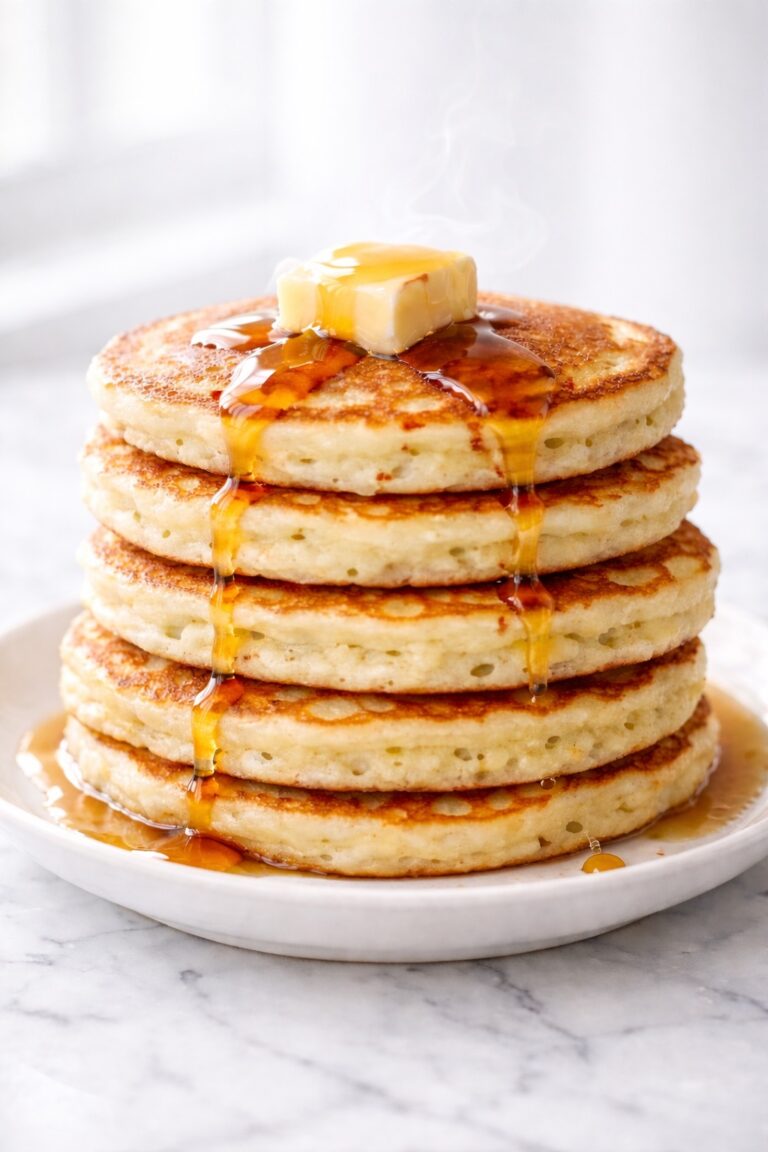
Place two apple pancakes on a warm plate, add a small pat of optional butter, and bring maple syrup to the table. A light drizzle lets the cinnamon and apple remain easy to taste. Add more syrup to the cut pieces if you like, rather than soaking the whole stack before serving.

A Small Stack with Apple Butter
Spoon a little homemade apple butter beside a two-pancake stack for an apple-forward breakfast. Its smooth texture sits alongside the tender pieces inside the pancakes. Start with a small amount so it complements the crumb, and offer maple syrup separately if someone wants additional sweetness.

A Shared Breakfast Platter
Arrange the apple pancakes in low overlapping stacks on a platter and set the optional toppings alongside. Hold the earlier batches briefly in the oven, then assemble the platter just before serving so a tall covered pile does not collect steam. Coffee or tea fits naturally beside this warm, cinnamon-scented breakfast.

Storing, Freezing and Reheating Apple Pancakes
Cooked plain apple pancakes are the useful make-ahead option for this recipe. Let steam escape briefly, then store them promptly without syrup or extra serving butter. Refrigerated pancakes will have softer surfaces than freshly cooked ones, so reheat only the portions you plan to eat.
Refrigerating Cooked Pancakes
Use a rack to let steam dissipate in a single layer, then put the apple pancakes into a shallow covered container. Refrigerate within 2 hours of cooking, or within 1 hour if the surrounding temperature is above 90°F (32°C). Keep the refrigerator at or below 40°F (4°C); do not leave the pancakes out for hours while waiting for them to become completely cold.
Use refrigerated apple pancakes within 3 days. These prompt-chilling limits follow the CDC’s food-safety guidance; the three-day use window is a conservative way to plan your leftovers.
Freezing and Thawing Portions
For longer storage, separate promptly cooled plain apple pancakes with parchment and seal them in a freezer-safe bag or container. Pack them in two-pancake portions if that is how you usually serve them. Keep the freezer at or below 0°F (-18°C), and use within about 2 months for best quality.
Thaw the portion overnight in the refrigerator before following the chilled reheating directions. Keeping toppings off the apple pancakes makes the separators easier to remove and avoids a syrupy coating in the storage container. Expect some softening of the surfaces after storage.

Reheating Without a Cold Center
For two chilled apple pancakes, arrange them on a microwave-safe plate without a tall stack and cover loosely with a lightly damp paper towel. In a roughly 1000-watt microwave, start with 30 seconds on high, turn or reposition, and continue in 15-second intervals as needed. Let them stand for 1 minute, then check that the center reaches 165°F (74°C). The first 30 seconds is a starting interval, not a promised total time.
Lower-powered 700- to 800-watt microwaves may need more intervals. With a 1200-watt appliance, use shorter 10-second follow-up intervals and check frequently. For an oven alternative, arrange chilled pancakes in one layer, cover loosely with foil, and heat at 350°F (175°C). Begin checking around 8 to 10 minutes and continue until the centers reach 165°F (74°C), the CDC’s reheating endpoint for leftovers.
Getting a Head Start on Breakfast
Measure and combine the dry ingredients ahead and keep them covered and dry. Prepare the wet mixture and apple when you are ready to cook, or make the pancakes completely ahead and use the storage instructions. For this recipe, mix the full batter close to cooking rather than holding it overnight.
Adjusting the Apple Batter and Batch Size
A few small choices keep these apple pancakes close to the recipe: leave out the optional nutmeg, or use Golden Delicious in place of Gala and cook the pieces to the same tenderness cue. Changes that alter the fruit’s moisture, the flour, or the liquid need more care than a simple one-for-one swap.
Grated apple releases and distributes moisture differently from the softened dice used here. Applesauce also changes the way the fruit blends into the batter. Keep the diced-apple preparation for this recipe rather than substituting either by the cup. Yogurt, protein powder, gluten-free flour, or an egg replacement can change both thickness and structure, so they are not interchangeable additions to these apple pancakes.
For a larger breakfast with the same skillet, make sequential single batches instead of filling an oversized bowl of batter long before it can be cooked. A larger apple quantity needs enough pan space to soften evenly, and more apple pancakes still mean more cooking time. Keep each round the same size; making them bigger does not solve a capacity problem.
A larger griddle can cook more rounds at once. If it has a temperature dial, about 350°F (175°C) is a starting point; adjust to the same first-side browning and center cues. Follow the appliance directions and leave room for turning. Do not assume that a griddle and a skillet, or two different griddles, will finish the batch in identical time.
Apple Pancake Questions, Answered
These apple pancakes use double-acting baking powder, peeled diced apple, and a thick but spreadable batter. The exact measuring and preparation details matter when you are choosing apples, checking consistency, or planning breakfast ahead.
Is two teaspoons of baking powder correct?
Yes. These apple pancakes use 2 level teaspoons, about 8 g, of double-acting baking powder with 180 g all-purpose flour. Measure with standard teaspoons and distribute it thoroughly through the dry ingredients. A strong taste can have several causes, so check the product, amount, and mixing before changing the recipe.
Why is my apple pancake batter too thick?
It may contain too much flour, too little milk, or have thickened while waiting. The intended batter falls in soft dollops and spreads slowly. Check the 180 g flour and 240 ml milk, then add only the remaining allowance of extra milk, up to 30 ml total for the batch.
Why are my apple pancakes wet in the middle?
The skillet may be too hot or the rounds too thick for the center to cook before the outside browns. Lower the heat, keep rounds around 4 inches across, and inspect the thickest center of the first pair. Use small apple pieces that were already softened before mixing.
Can I make the batter the night before?
For these apple pancakes, prepare the dry ingredients ahead or cook the pancakes ahead instead. Mix the full batter close to cooking, after the softened apple has cooled to lukewarm. Refrigerated or frozen cooked pancakes give you a more straightforward make-ahead breakfast.
Which apples should I use, and should I peel them?
Use Gala or Golden Delicious and remove the peel and core. Weigh 120 g of prepared apple, cut it into roughly 5 mm dice, and soften it in the measured butter before mixing. The tenderness cue matters more than the exact number of minutes in the skillet.
Continue Your Breakfast and Baking Journey
After a breakfast of apple pancakes, the next recipe might follow the fruit, the warm spice, or the kind of morning you are planning. These three paths offer different pancake styles, more ways to use apples, and other dishes for a relaxed brunch.
More Pancakes for Your Breakfast Rotation
Choose another pancake style when you want to keep the skillet breakfast but change the flavor or ingredients. Berries, buttermilk, sourdough discard, and a cinnamon-roll direction each give the next batch a different place in your breakfast rotation.
- Blueberry Pancakes: Bring berries into the next skillet breakfast with a different fruit flavor.
- Buttermilk Pancakes: Choose a classic tangy pancake style when you have buttermilk to use.
- Sourdough Discard Pancakes: Put sourdough discard toward a breakfast batch with its own mixing method.
- Cinnamon Roll Pancakes: Try a cinnamon-led breakfast when you want the flavor to be the main attraction.
More Ways to Bake with Apples
Keep the apple theme and change the format, from a cake you can slice to a warm dessert served with a spoon. These recipes make different use of fruit and texture, so the choice can follow how you want to serve it.
- Apple Cake: Turn the apple theme into a sliceable cake for serving later in the day.
- Baked Apples: Make the fruit itself the focus of a warm baked dessert.
- Apple Pie Cookies: Choose individual cookies when small, shareable portions fit the occasion.
- Apple Crisp: Pair tender baked fruit with a crisp topping in a spoonable dessert.
A Cozy Weekend Brunch
For a weekend breakfast beyond pancakes, consider a shared casserole, waffles, sweet rolls, or a cake to serve with coffee. Choose the format that suits how much time you want at the stove or oven before everyone sits down.
- French Toast Casserole: Use a casserole format for a breakfast that can be served from one dish.
- Belgian waffles: Switch from the skillet to a waffle iron for a different breakfast texture.
- Homemade Cinnamon Rolls: Set aside time for a sweet-roll baking project and a warm shared breakfast.
- Pumpkin Coffee Cake: Serve a spiced coffee cake when you want a slice to enjoy alongside a hot drink.
Why These Apple Pancakes Belong in Your Recipe Box
A useful breakfast recipe is one you can return to with a clear idea of the ingredients, the pan space, and the result. These apple pancakes bring those practical details together with a familiar fruit-and-spice flavor.
A Measured Batch
Ten apple pancakes give a clear starting point for five two-pancake servings.
Clear Batter Cues
The spoon-and-spread description helps you recognize a workable batter before it reaches the skillet.
A Skillet Plan
The timing includes the apple preparation and five batches, making it easier to choose when to start.
Flexible Serving
Individual plates and a briefly held shared platter both fit the same measured batch.
Useful Leftovers
Plain cooked apple pancakes can be stored in portions and reheated using a clear center-temperature endpoint.
A Familiar Flavor
Tender apple pieces, cinnamon, and vanilla make a warm breakfast combination without a separate filling.
A Final Note on Homemade Apple Pancakes
These apple pancakes put tender fruit inside a soft, gently spiced breakfast, with golden surfaces and small apple pieces that remain easy to recognize. Softening the fruit first gives it the attention it needs before the batter reaches the skillet.
Return to the measured batch and the two most useful checks: a batter that falls in soft dollops and a first pancake with a fully set center. Those details help you respond to the bowl and pan in front of you without guessing at extra flour or leavener.
Serve the apple pancakes while they are warm, bring the toppings to the table, and leave enough time for the last batch. Leave the skillet at a gentle heat even when everyone is ready to eat; the last pair deserves the same tender center as the first.

Apple Pancakes
Tender apple pancakes with small pieces of buttery cooked apple, cinnamon and golden edges. Clear batter and cooking cues help you make ten evenly sized pancakes for a warm breakfast.
Ingredients
- 3 tablespoons (42 g) unsalted butter, divided, including its 28 g batter / 14 g apple allocation.
- About 1 cup (120 g) peeled/cored apple, weighed before cooking, approximately 5 mm dice.
- 1 1/2 cups (180 g) all-purpose flour, spooned/leveled if not weighed.
- 2 tablespoons (25 g) granulated sugar.
- 2 level teaspoons (about 8 g) double-acting baking powder.
- 1 teaspoon (about 3 g) ground cinnamon.
- 1/2 teaspoon (about 3 g) fine table salt.
- 1/4 teaspoon ground nutmeg, optional.
- 1 cup (240 ml) whole milk, plus up to 2 tablespoons (30 ml) only as needed, total allowance across all batches.
- 1 large egg, about 50 g without shell.
- 1 teaspoon (5 ml) vanilla extract.
- 1 teaspoon (5 ml) neutral oil, for the pan across all batches.
- Maple syrup, optional, for serving.
- Extra butter, optional, for serving.
Instructions
- Measure the Ingredients and Dice the Apple. Peel and core a Gala or Golden Delicious apple, then weigh 120 g and cut it into roughly 5 mm dice. Measure the remaining ingredients. Weigh the flour, or spoon it into the measuring cup and level it. Use 2 level teaspoons of double-acting baking powder. Divide the butter into 28 g for the batter and 14 g for the apple. If holding earlier batches, preheat a conventional oven to 200°F (95°C) with a rack on a baking sheet in the middle position.
- Melt and Reserve the Batter Butter. In a 12-inch (30 cm) nonstick skillet with about a 9-inch (23 cm) flat base, melt the 28 g portion of butter over low heat. Transfer it to the medium wet-ingredient bowl and let it cool until warm, not hot. Keep the same skillet for the apple and pancakes.
- Soften the Apple and Let It Cool. Add the remaining 14 g butter and the diced apple to the skillet over medium-low heat. Cook for 5–7 minutes, stirring, until the pieces are tender but still distinct. Lower the heat if they brown before softening; cook longer if needed. Let any puddle of juice evaporate. Transfer the apple and buttery coating to a shallow plate; cool for about 5 minutes, until lukewarm, while preparing the bowls.
- Mix the Dry and Wet Ingredients Separately. In a large bowl, whisk the flour, sugar, baking powder, cinnamon, salt and optional nutmeg thoroughly, breaking up any baking-powder clumps. Whisk the 240 ml milk, egg and vanilla into the cooled melted butter in the medium bowl.
- Fold the Batter and Check Its Consistency. Fold the wet mixture into the dry ingredients just until no dry flour remains, then gently fold in the lukewarm apple. Small lumps are fine. The batter should fall in soft dollops or a thick ribbon and spread slowly with a little help. If it stays in a stiff mound, fold in 1 tablespoon (15 ml) milk and reassess. Use no more than 2 tablespoons (30 ml) extra milk in total, including adjustments to later batches. Do not rest the finished batter.
- Portion, Cook and Check the First Pancakes. Heat the skillet over medium-low heat and brush it with a little of the measured teaspoon of oil. Divide the batter into 10 approximately equal portions, using a quarter-cup scoop as a guide. Cook two at a time, gently spreading each to about 4 inches (10 cm). Cook the first side for 2–3 minutes, until bubbles stay open, the edges lose their wet shine and the underside is golden. Flip once and cook for about 2 minutes more. Cut into a pancake from the first pair: the center should be soft and set, with no shiny raw batter or gummy flour paste. If the outside darkens before the center sets, lower the heat and cook a little longer. Do not press the pancakes.
- Finish the Batches and Serve Warm. Cook the remaining batter in four more batches, brushing the pan with the remaining oil as needed. Keep within the total extra-milk allowance if the batter thickens. Adjust the heat using the browning and center cues. Serve the apple pancakes warm, with optional maple syrup and extra butter. To hold earlier batches, place them in a single layer on a rack over a baking sheet on the middle shelf of a 200°F (95°C) conventional oven for about 20–25 minutes.
Notes
Equipment
- Digital scale, standard measuring spoons and liquid measure.
- Peeler, knife, board and small shallow plate for cooling.
- Large dry bowl, medium wet bowl, whisk and flexible spatula.
- 12-inch/30 cm nonstick skillet with approximately 9-inch/23 cm flat base; room for two 4-inch/10 cm pancakes, flexible wide turner, brush and approximate quarter-cup scoop. An optional griddle changes batch capacity; a smaller pan requires more batches.
- Wire rack; optional conventional oven, rack on baking sheet at middle position for holding; shallow covered container, parchment and freezer-safe bag/container for leftovers; microwave-safe plate and lightly damp paper towel or oven tray/foil for reheating; food thermometer for the 165 F/74 C leftover endpoint.
- Baking powder and batter. These apple pancakes use 2 level teaspoons (about 8 g) double-acting baking powder for 180 g flour. Use baking powder, not baking soda, and disperse it thoroughly in the dry mixture. If the batter needs substantially more than the allowed 30 ml extra milk, recheck the flour and liquid measurements before adding more.
- Yield and timing. This batch makes 10 apple pancakes, or 5 servings of 2. Portion the batter evenly; a quarter-cup scoop is a guide, not a promise of ten exact quarter-cup measures. Allow about 45 minutes, with a practical range of 40–50 minutes. The 30-minute cooking estimate includes the apple and five pancake batches; apple cooling overlaps mixing. A smaller skillet that fits only one pancake adds approximately 20–25 minutes. For a griddle, 350°F (175°C) is a starting point; adjust using the same cooking cues.
- Cooling and storage. Let leftover apple pancakes release steam briefly on a rack, then refrigerate in a shallow covered container within 2 hours of cooking, or within 1 hour above 90°F (32°C). Keep at 40°F (4°C) or below and eat within 3 days. Freeze plain pancakes with parchment between them in a sealed freezer-safe bag or container at 0°F (-18°C) or below for up to 2 months for best quality. Thaw overnight in the refrigerator.
- Reheating. For two chilled apple pancakes, cover loosely with a lightly damp paper towel on a microwave-safe plate. At about 1,000 watts, start with 30 seconds, then use 15-second intervals, turning or repositioning as needed. Let stand for 1 minute and check that the center reaches 165°F (74°C); heat further if needed. A 700–800-watt microwave may take longer; use 10-second follow-up intervals at 1,200 watts. Alternatively, reheat in a single layer, loosely covered with foil, in a 350°F (175°C) oven. Start checking at 8–10 minutes and continue until the center reaches 165°F (74°C).
- Make ahead and substitutions. Measure the dry ingredients ahead, or cook and chill the apple pancakes. Mix the full batter close to cooking. Golden Delicious can replace Gala, and nutmeg can be omitted. Grated or puréed apple, gluten-free flour, egg replacements, yogurt and protein powder need separate adjustment and testing; they are not established substitutions for this formula. For a larger quantity, make separate batches; pan capacity, temperature and doneness cues do not double.
- Nutrition. Estimated per 2 apple pancakes, before toppings, using 240 ml milk. Includes all butter in the recipe and the full teaspoon of pan oil; excludes optional nutmeg, extra milk, maple syrup and serving butter. Values vary with ingredient brands and portion size.
- Method: Stovetop.
Nutrition Information:
Yield: 5 Serving Size: 2 pancakesAmount Per Serving: Calories: 279Total Fat: 10.7gSaturated Fat: 5.6gCholesterol: 60mgSodium: 396mgCarbohydrates: 38.9gFiber: 1.6gSugar: 10.1gProtein: 6.7g
Nutrition information is provided as an estimate only and may vary based on specific ingredients, brands, and portion sizes used. This information should not be considered medical or nutritional advice.
12 Sweet Favorites — Yours, Free 🍰
Tiramisù, no-bake cheesecake, the perfect chocolate chip cookie & 9 more reader-loved desserts — gathered into one beautiful free recipe book. From my kitchen to yours.
No spam, just sweet things. Unsubscribe anytime.