English Muffin Recipe
🎁 FREE E-BOOK: 12 Sweet Favorites — reader-loved desserts in one beautiful recipe book.
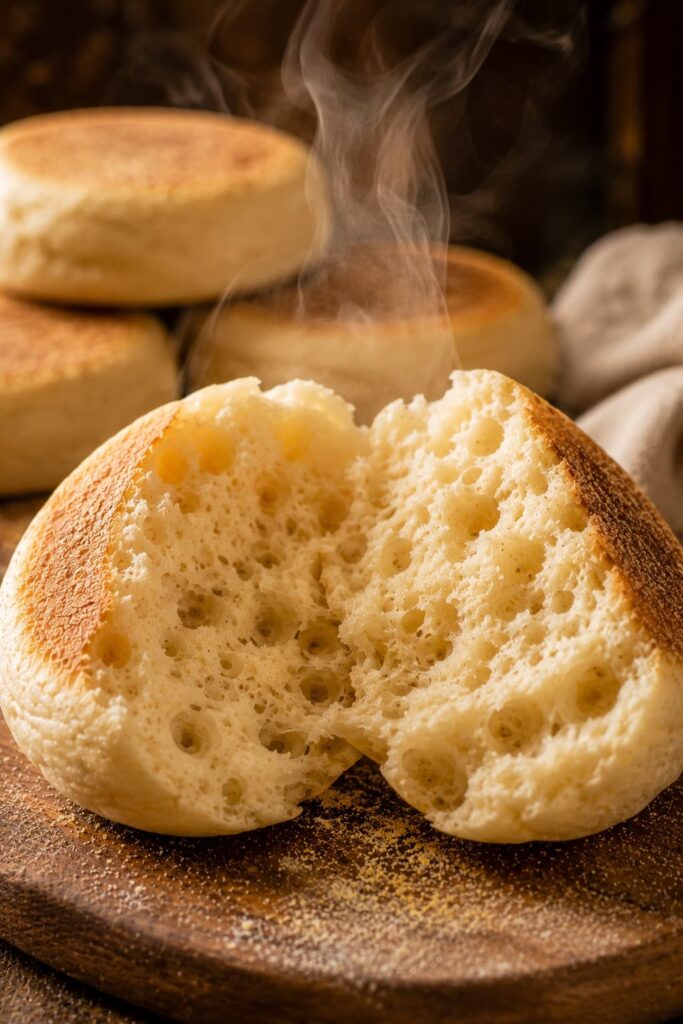
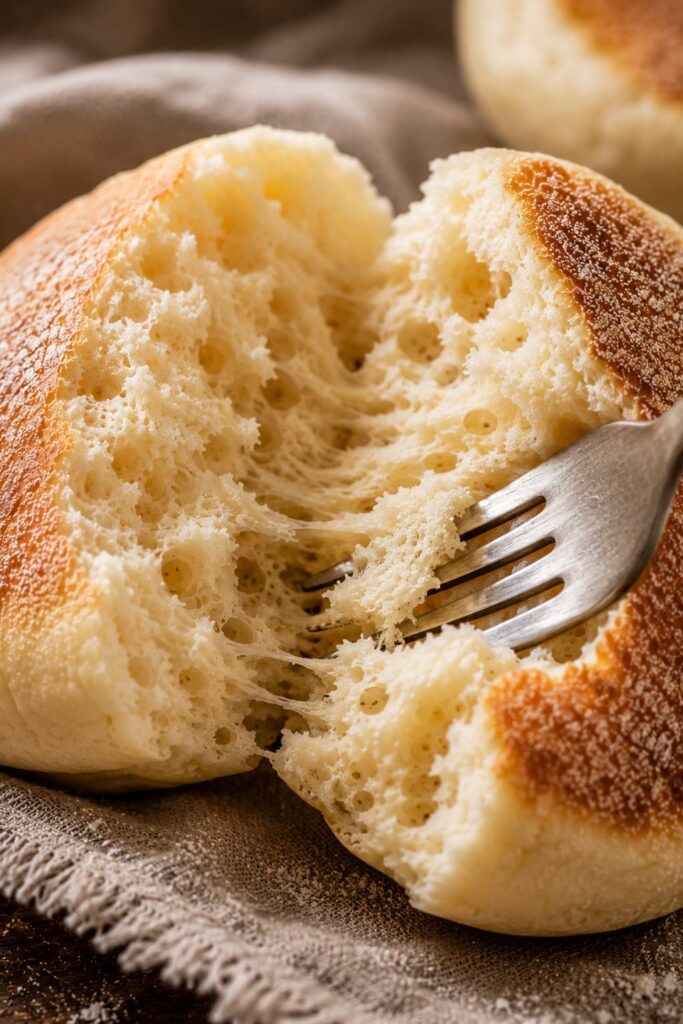
There is something deeply comforting about homemade English muffins fresh off the skillet — golden on the outside, soft and airy inside, with all those beautiful little nooks and crannies ready to catch melted butter and jam. The moment you split one open with a fork and see the steam rise from the fluffy center, it instantly feels like the kind of breakfast worth slowing down for.
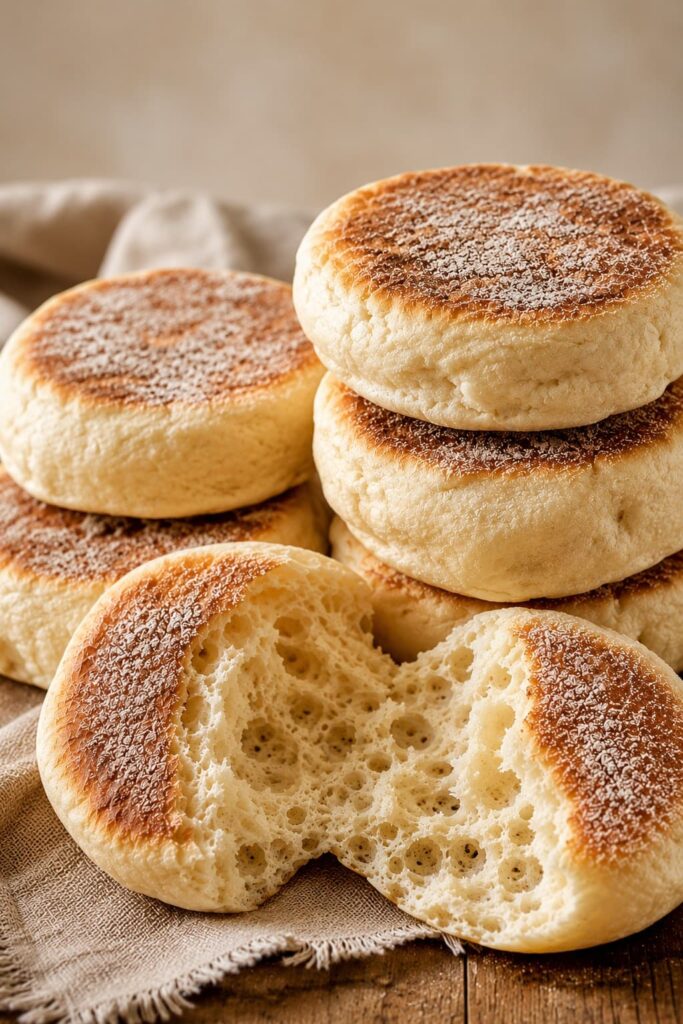
This English muffin recipe creates bakery-style muffins with a lightly chewy texture, crisp toasted edges, and that signature interior people love. They cook gently on the stovetop instead of baking aggressively in the oven, which gives them their iconic texture and soft structure.
What makes homemade English muffins so special is the contrast: lightly crisp surfaces paired with a tender, almost stretchy crumb inside. They feel rustic and cozy at the same time — the kind of recipe that turns a simple breakfast into something memorable.
This is also why people save this recipe so often. Homemade English muffins freeze beautifully, work for both sweet and savory meals, and make everyday breakfasts feel homemade in the best possible way.
And once you make them from scratch, store-bought versions start feeling surprisingly flat in comparison.
What Is an English Muffin?
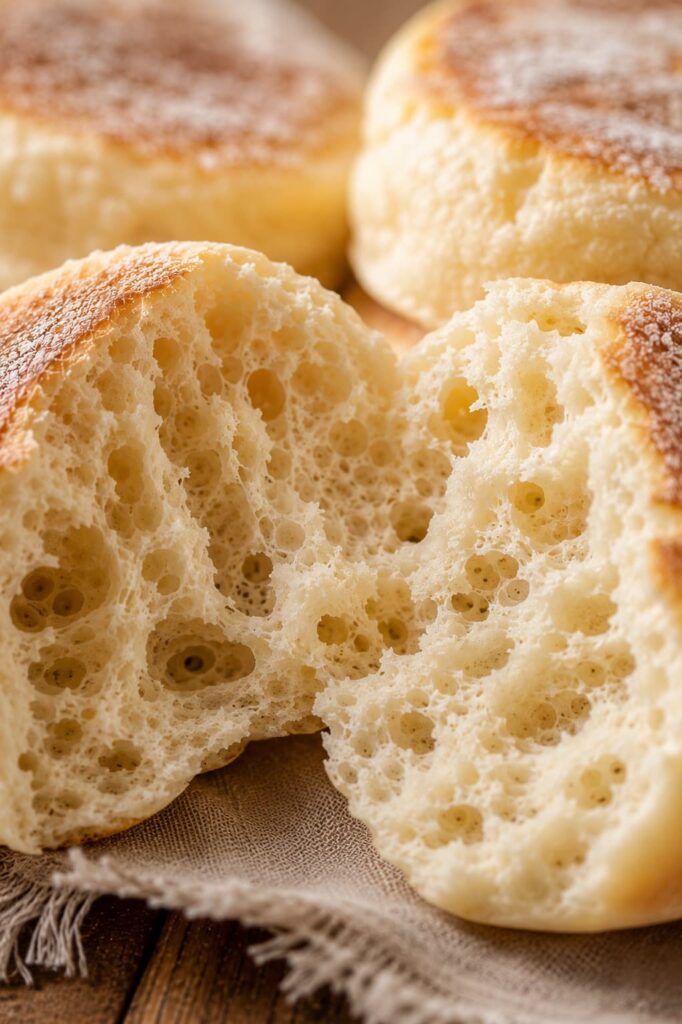
An English muffin is a soft, round yeast-leavened bread traditionally cooked on a griddle or skillet rather than baked like standard bread rolls. Unlike sandwich buns or dinner rolls, English muffins are known for their airy interior filled with small holes and pockets often called “nooks and crannies.”
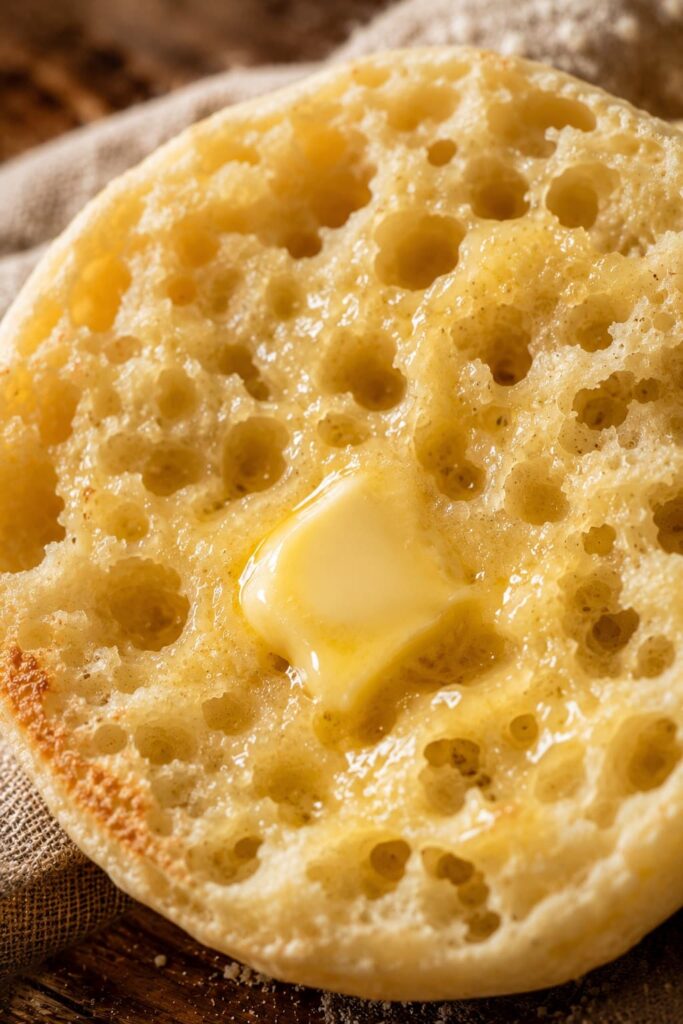
They are usually split with a fork instead of sliced cleanly with a knife because the rough interior texture helps create the signature pockets that hold butter, honey, or jam.
Classic English muffins have:
- a lightly chewy texture
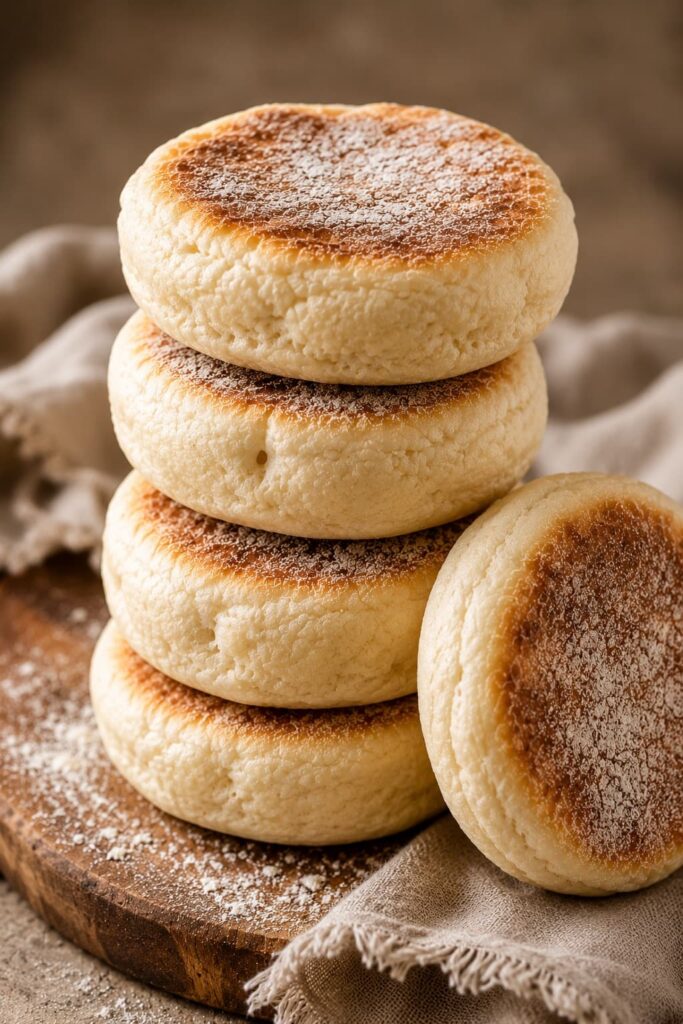
- a golden skillet-cooked exterior
- mild buttery flavor
- soft interior structure
- gentle tang from yeast fermentation
They are commonly toasted and served for breakfast sandwiches, eggs Benedict, butter and jam breakfasts, or simple cozy morning meals.
Quick Recipe Overview
| Texture | Soft, airy, lightly chewy |
| Flavor | Mildly buttery with subtle yeast flavor |
| Difficulty | Beginner-friendly |
| Time | About 2.5 hours |
| Servings | 8 English muffins |
| Method | Stovetop + yeast dough |
| Best For | Breakfast, sandwiches, meal prep |
In short: This English muffin recipe creates soft homemade muffins with golden skillet crusts and airy interiors that toast beautifully and freeze exceptionally well.
Why This English Muffin Recipe Works
English muffins look simple, but the texture depends on a careful balance between hydration, gluten structure, yeast activity, and gentle cooking.
The milk adds softness and richness while still allowing enough structure for the muffins to hold their shape during stovetop cooking. A slightly sticky dough is important here — drier dough tends to produce dense interiors with fewer pockets.
The slower rise helps develop elasticity and those signature interior air pockets. One of the biggest mistakes people make is rushing the fermentation stage. The dough should feel alive and airy before shaping.
Cooking the muffins gently over medium-low heat is another major factor. High heat creates dark outsides before the centers finish cooking. Lower heat gives the interior enough time to expand and fully set.
One small but important detail: using a fork to split the muffins instead of a knife preserves the irregular crumb structure that makes English muffins special.
Why You’ll Love This Recipe
- Soft and fluffy inside with authentic nooks and crannies
- Golden skillet-cooked texture without fancy equipment
- Perfect for breakfast sandwiches and buttered toast
- Freezer-friendly and meal-prep friendly
- Better flavor and texture than most store-bought muffins
- Beginner-friendly dough that is forgiving to work with
- Incredible warm with melted butter and honey
Save this recipe for slow weekend breakfasts, cozy brunch boards, or make-ahead breakfast meal prep.
These English muffins also make incredible breakfast sandwiches with eggs, bacon, sausage, or melted cheese.
Baking Science Behind English Muffins
Yeast fermentation creates gas bubbles inside the dough, which later become the airy pockets inside the muffins. A properly hydrated dough traps those gases while still staying soft enough to expand during cooking.
The stovetop cooking method gives English muffins their signature texture. Because the heat is gradual and direct, the muffins develop a thinner crust and softer interior than oven-baked bread rolls.
Milk contributes proteins and natural sugars that help the muffins brown evenly while keeping the crumb tender.
One important detail: English muffins should be cooked at lower heat than many skillet breads. That slower cooking gives steam inside the dough time to expand gently instead of creating a crust too quickly.
This is why patience matters more than aggressive heat.
Ingredients
For the Dough
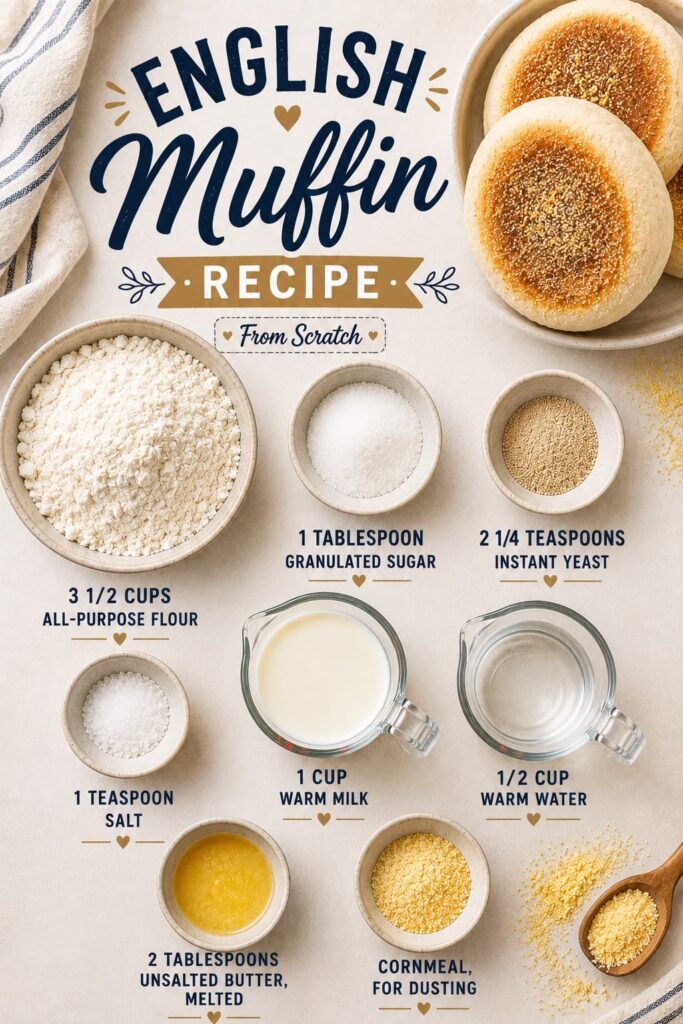
- 3 1/2 cups all-purpose flour
- 1 tablespoon granulated sugar
- 2 1/4 teaspoons instant yeast
- 1 teaspoon salt
- 1 cup warm milk
- 1/2 cup warm water
- 2 tablespoons unsalted butter, melted
- Cornmeal, for dusting
Ingredient Intelligence
Milk
Milk softens the dough and creates a more tender crumb than water-only doughs. Whole milk gives the richest texture, but 2% milk also works well.
Instant Yeast
Instant yeast makes the process easier because it can be mixed directly into the flour without blooming separately.
Butter
Butter adds softness, subtle richness, and a more rounded homemade flavor.
Cornmeal
Cornmeal prevents sticking and creates the classic bakery-style exterior texture on the bottom of the muffins.
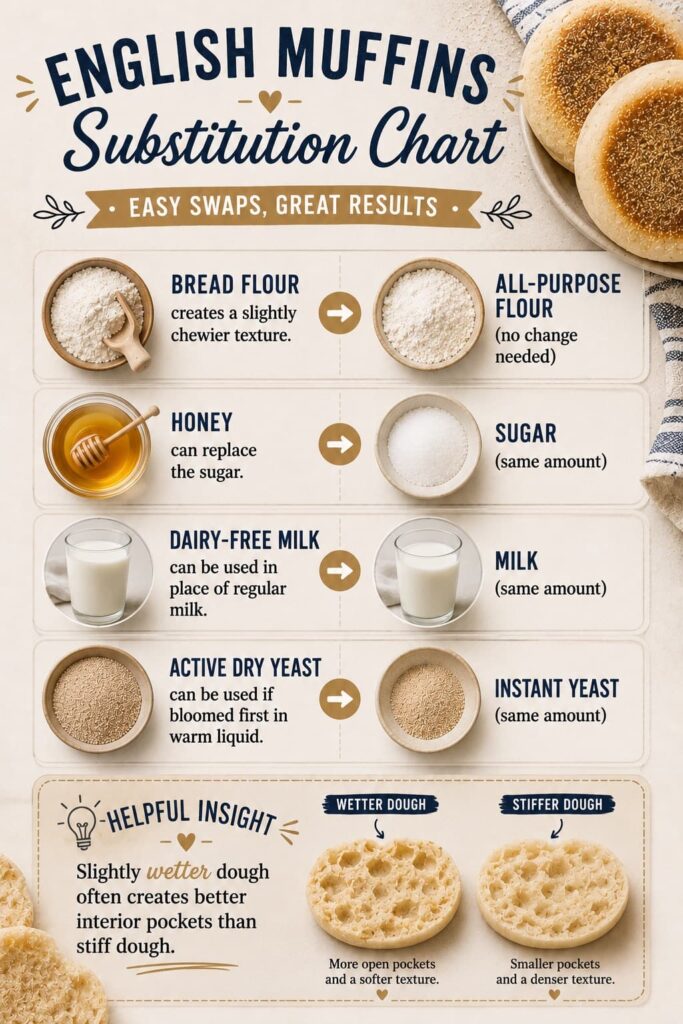
Practical Substitutions
- Bread flour creates a slightly chewier texture.
- Honey can replace the sugar.
- Dairy-free milk can be used in place of regular milk.
- Active dry yeast can be used if bloomed first in warm liquid.
One helpful insight: slightly wetter dough often creates better interior pockets than stiff dough.
Equipment You’ll Need
- Large mixing bowl
- Wooden spoon or dough hook
- Rolling pin
- Biscuit cutter or glass
- Large skillet or griddle
- Baking sheet
- Fork for splitting
A heavy skillet works especially well because it distributes heat more evenly and helps prevent dark hot spots underneath the muffins.
How to Make English Muffins
1. Make the Dough
In a large bowl, combine the flour, sugar, yeast, and salt.
Add the warm milk, warm water, and melted butter. Stir until a shaggy dough forms.
The dough should feel soft and slightly sticky, not dry or stiff.
If the dough looks extremely wet, add flour one tablespoon at a time, but avoid adding too much. English muffin dough needs enough moisture to create a light interior.
2. Knead the Dough
Knead for about 8–10 minutes until smooth and elastic.
The dough should become soft, stretchy, and slightly tacky but manageable.
A common beginner moment here: the dough may feel too sticky at first. Resist adding too much flour early on because the texture improves as gluten develops.
3. First Rise
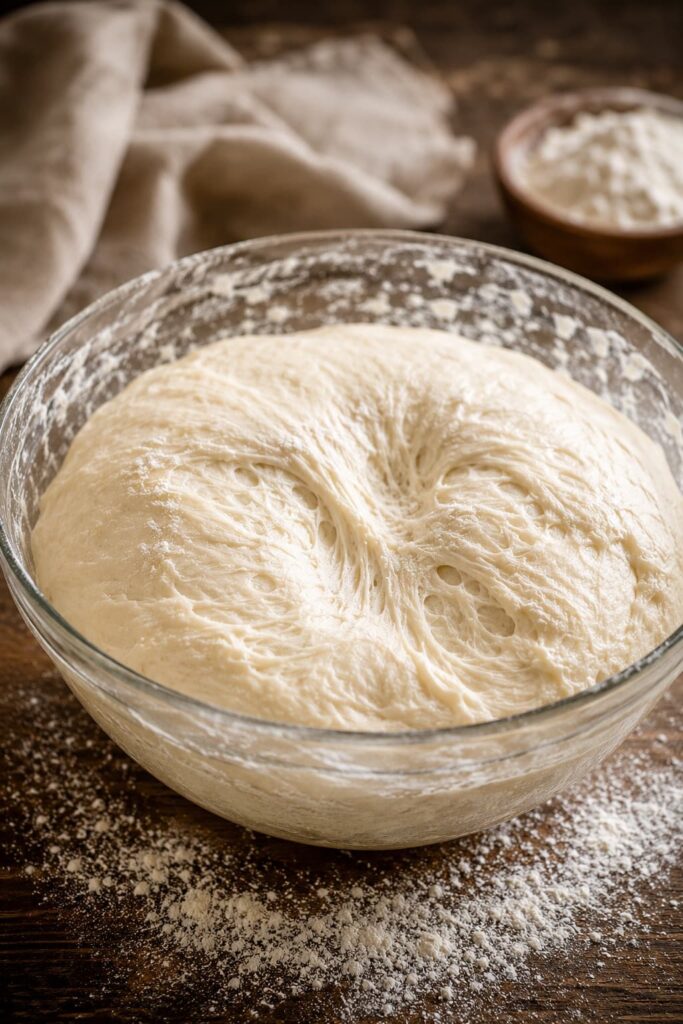
Place the dough in a lightly greased bowl, cover, and let rise for about 1–1.5 hours, or until doubled in size.
The dough should look airy and puffy, with a soft surface when gently pressed.
If your kitchen runs cool, the rise may take longer, and that is completely normal.
4. Roll and Cut
Turn the dough onto a lightly floured surface and roll it to about 3/4-inch thickness.
Cut into rounds using a biscuit cutter or drinking glass.
Place the rounds onto parchment dusted with cornmeal, then sprinkle extra cornmeal on top.
5. Second Rise
Cover loosely and let the muffins rise again for 30–40 minutes.
They should look visibly puffier and slightly delicate when gently touched.
This second rise helps create the lighter interior texture.
6. Cook the Muffins
Heat a skillet or griddle over medium-low heat.
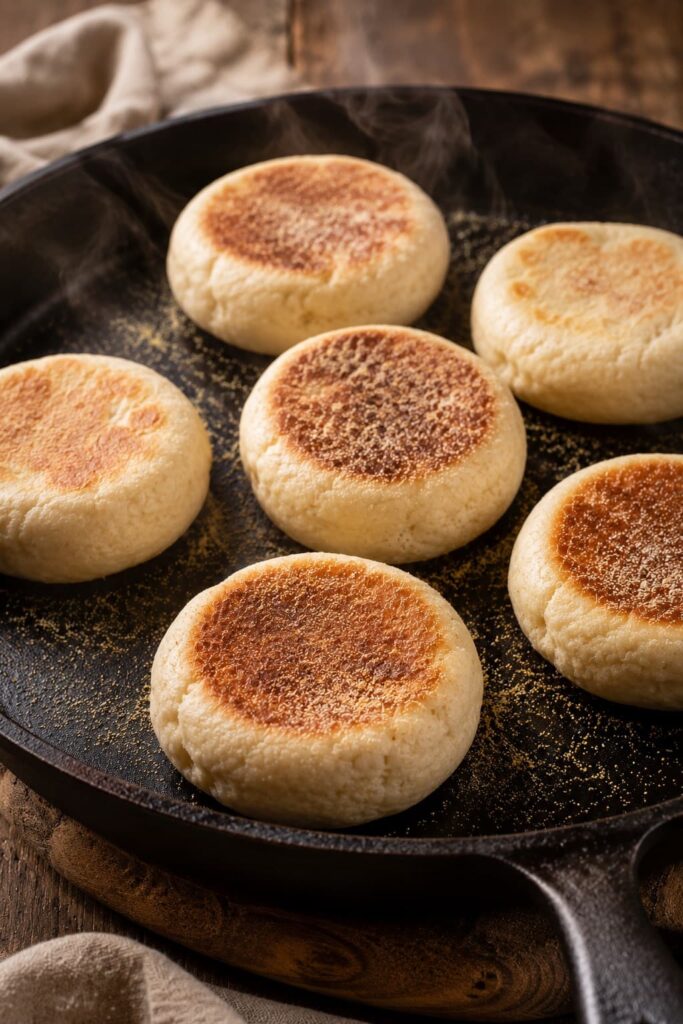
Cook the muffins for about 6–8 minutes per side, until deeply golden brown.
The tops should feel firm and the sides should look set.
If they brown too quickly before cooking through, reduce the heat immediately.
One small learning moment many bakers experience: the first batch often cooks unevenly while you adjust the heat. That is normal.
Visual Doneness Cues
- Golden brown tops and bottoms
- Firm but slightly springy sides
- Muffins feel lighter when lifted
- Interior looks airy, not gummy
- Split centers show visible pockets and tunnels
- Steam escapes cleanly when opened
7. Cool and Split
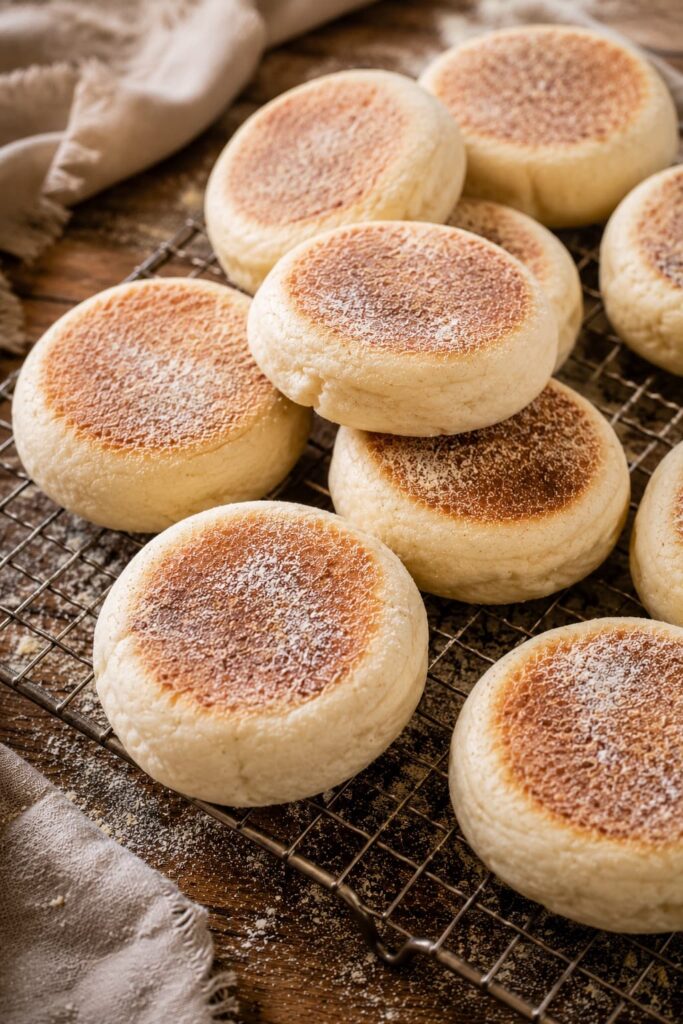
Let the muffins cool slightly before splitting with a fork.
Using a fork instead of a knife creates the classic rough interior texture with beautiful pockets and crannies.
Toast before serving for the best flavor and texture.
Texture and Behavior Guide
| Stage | What You Should See |
| Mixed Dough | Soft, shaggy, slightly sticky |
| Kneaded Dough | Smooth and elastic |
| First Rise | Puffy and doubled |
| Second Rise | Light and airy rounds |
| Finished Muffins | Golden exterior, soft interior |
| Toasted Texture | Crisp edges with fluffy center |
Expert Tips for Best Results
- Use medium-low heat instead of rushing the cooking.
- Keep the dough slightly sticky for better texture.
- Fork-splitting matters because it creates better nooks and crannies.
- Let the muffins cool slightly before toasting.
- Dust generously with cornmeal for classic texture.
- Avoid rolling the dough too thin.
- A longer rise improves flavor noticeably.
One deeper insight: English muffins benefit more from gentle fermentation than aggressive kneading. Texture comes from trapped gas pockets and proper heat control.
Common Mistakes
| Mistake | Result |
| Heat too high | Burned outside, raw center |
| Too much flour | Dense texture |
| Skipping second rise | Tight crumb |
| Cutting with a knife | Fewer pockets inside |
| Overcrowding the skillet | Uneven cooking |
| Underproofing the dough | Heavy muffins |
If the centers seem slightly undercooked, you can finish the muffins in a low oven for a few minutes.
Comparison Guide
| Version | Texture | Flavor | Best Use |
| Homemade English Muffins | Airy and chewy | Fresh buttery flavor | Breakfast and sandwiches |
| Store-Bought Muffins | More uniform | Mild | Convenience |
| Bread Rolls | Softer crumb | Richer bread flavor | Sandwiches |
| Bagels | Dense and chewy | Malty | Heavier breakfasts |
How to Serve English Muffins
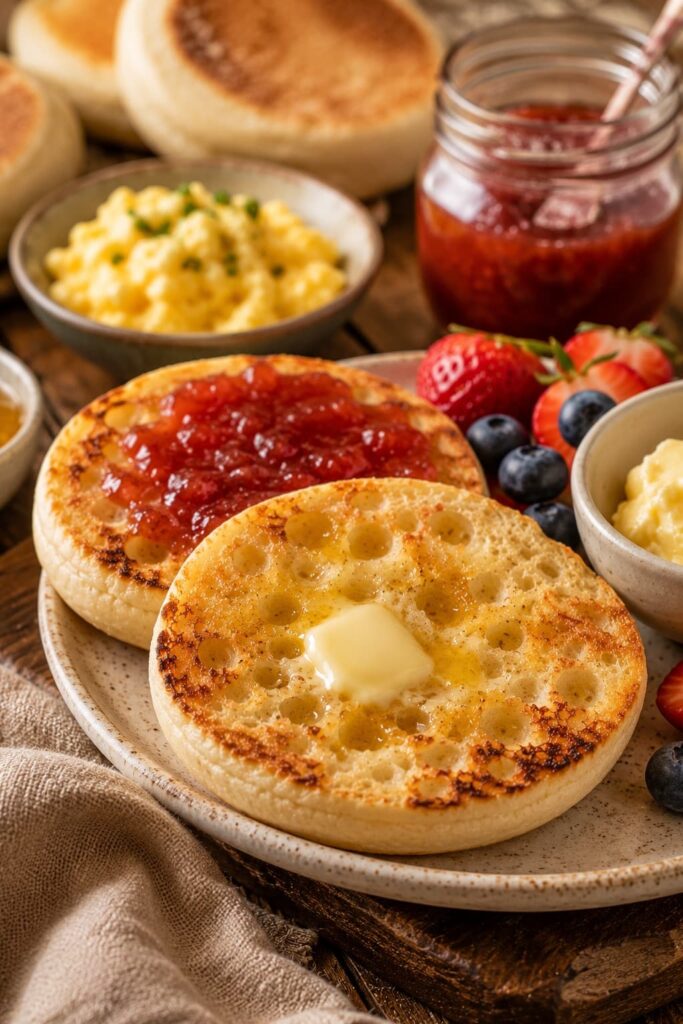
Toast the English muffins until the edges turn lightly crisp and golden, then add salted butter while they are still warm so it melts into all the little pockets.
They are delicious with strawberry jam, honey butter, peanut butter, fried eggs, crispy bacon, sausage patties, avocado, or melted cheddar.
Save this recipe for cozy breakfast mornings, homemade brunch spreads, or freezer-friendly breakfast prep.
For a beautiful breakfast board, serve toasted English muffins with whipped butter, jam jars, fruit, and soft scrambled eggs.
Storage and Make Ahead
- Store in an airtight container for up to 3 days.
- Refrigerate for up to 5 days.
- Freeze for up to 2 months.
- Split before freezing for easier toasting later.
- Toast directly from frozen.
The flavor can improve slightly by the next morning because the crumb structure settles and the yeast flavor deepens subtly overnight.
Variations
Whole Wheat English Muffins
Replace up to half of the all-purpose flour with whole wheat flour for a nuttier flavor.
Sourdough English Muffins
Use sourdough starter for deeper flavor and a more complex texture.
Cinnamon Raisin English Muffins
Add raisins and cinnamon for a cozy bakery-style breakfast version.
Cheddar Herb English Muffins
Mix in shredded cheddar and herbs for a savory sandwich-style muffin.
Honey Butter English Muffins
Add extra honey to the dough for a slightly sweeter finish.
FAQ
Why are my English muffins dense?
English muffins usually turn dense when the dough is too dry, underproofed, or overfloured during shaping.
Can I bake English muffins instead?
Traditional English muffins are skillet-cooked, but you can finish them briefly in the oven if the centers need a little more time.
Why should I split English muffins with a fork?
Fork splitting preserves the rough interior texture and creates better nooks and crannies for butter, jam, and toppings.
Can I freeze homemade English muffins?
Yes. Homemade English muffins freeze very well and toast beautifully straight from frozen.
How do I know English muffins are fully cooked inside?
The centers should feel light, not gummy, and the muffins should sound slightly hollow when tapped.
Can I make the dough overnight?
Yes. Refrigerating the dough overnight can improve flavor development and make the muffins easier to prepare in the morning.
What is the best way to toast English muffins?
Split them with a fork first, then toast until the edges are crisp and golden brown.
More Homemade Bread Recipes You’ll Love
If you loved making these homemade English muffins, you may also enjoy trying Sourdough English Muffins for a deeper, tangier flavor, Gluten Free English Muffins for a wheat-free option, or soft, flaky Buttermilk Biscuits for another cozy homemade bread recipe.
Recipe Summary
This English muffin recipe creates soft homemade muffins with golden skillet-cooked exteriors and airy interiors filled with classic nooks and crannies.
With simple ingredients, gentle stovetop cooking, and a forgiving dough, these muffins deliver bakery-style texture and flavor right at home.
They are perfect for breakfast sandwiches, buttered toast, meal prep, or cozy weekend mornings.
Final Thoughts
Homemade English muffins have a way of making ordinary mornings feel slower, warmer, and more intentional.
They are simple without feeling plain, comforting without being heavy, and satisfying in that deeply familiar homemade way.
Once you learn the rhythm of the dough — the softness, the gentle rise, the quiet skillet cooking — this becomes the kind of recipe you return to again and again.
Not because it is complicated.
Because it works beautifully every time.

English Muffin Recipe
This English Muffin Recipe creates soft, airy homemade muffins with golden skillet-cooked edges and classic nooks and crannies. Perfect for breakfast sandwiches, butter, or jam.
Ingredients
- 3 1/2 cups all-purpose flour
- 1 tablespoon granulated sugar
- 2 1/4 teaspoons instant yeast
- 1 teaspoon salt
- 1 cup warm milk
- 1/2 cup warm water
- 2 tablespoons unsalted butter, melted
- Cornmeal, for dusting
Instructions
- In a large mixing bowl, whisk together the flour, sugar, instant yeast, and salt.
- Add the warm milk, warm water, and melted butter. Stir until a shaggy dough forms.
- Knead the dough for 8–10 minutes until smooth, elastic, and slightly tacky.
- Transfer the dough to a lightly greased bowl, cover, and let rise for 1–1.5 hours or until doubled in size.
- Turn the dough onto a lightly floured surface and roll it to about 3/4-inch thickness.
- Cut the dough into rounds using a biscuit cutter or drinking glass.
- Place the rounds onto parchment paper dusted with cornmeal. Sprinkle additional cornmeal on top.
- Cover loosely and let rise again for 30–40 minutes until visibly puffy.
- Heat a skillet or griddle over medium-low heat.
- Cook the English muffins for 6–8 minutes per side until golden brown and cooked through.
- Let cool slightly, then split with a fork for classic nooks and crannies.
- Toast and serve warm with butter, jam, or your favorite breakfast toppings.
Notes
- Medium-low heat is important for fully cooked centers.
- Slightly sticky dough creates softer, airier muffins.
- Fork-splitting creates better texture than slicing with a knife.
- If the muffins brown too quickly, lower the heat immediately.
- English muffins freeze very well and can be toasted directly from frozen.
Nutrition Information:
Yield: 8 english muffins Serving Size: 1 muffinAmount Per Serving: Calories: 220Total Fat: 5gSaturated Fat: 3gCholesterol: 12mgSodium: 300mgCarbohydrates: 38gFiber: 1gSugar: 3gProtein: 6g
Nutrition information is estimated and may vary based on ingredients and portion sizes.
12 Sweet Favorites — Yours, Free 🍰
Tiramisù, no-bake cheesecake, the perfect chocolate chip cookie & 9 more reader-loved desserts — gathered into one beautiful free recipe book. From my kitchen to yours.
No spam, just sweet things. Unsubscribe anytime.