Easy Blueberry Muffins Recipe (Moist & Tender)
This blueberry muffins recipe makes classic American breakfast muffins with a tender vanilla crumb, juicy pockets of fruit, and gently rounded golden tops. A little sugar on the surface adds a delicate crunch, while the blueberries soften into deep purple bursts inside. They are mixed by hand and baked in a standard twelve-cup pan.

There is something especially inviting about peeling back the paper from a warm muffin. The edge comes away first, then the soft middle opens around a berry. A cup of coffee and one of these on a small plate make a lovely breakfast without needing anything elaborate alongside.
The recipe is just as useful when breakfast needs to stretch beyond one morning. Bake a dozen, enjoy a few while fresh, and freeze the rest in individual portions. The mixing is simple, and the cues below help you keep the crumb tender from the first fold to the last minute in the oven.
Blueberry Muffins at a Glance
Plan on about 35 minutes from mixing to moving the muffins onto a rack, provided the oven is fully heated before baking. That includes five minutes in the pan, enough to help the muffins hold together when lifted. Allow additional cooling before packing them for later.
| At a glance | What to expect |
|---|---|
| Taste | Vanilla in the crumb, sweet-tart blueberries throughout, and a little extra sweetness if you add the sugar top. |
| Texture | Soft, tender crumb around moist berry pockets, with gently rounded tops and a light sugar crunch when freshly baked. |
| Prep time | 10 minutes with ingredients and equipment at hand. Begin preheating before measuring. |
| Bake time | Usually 18–20 minutes with fresh berries. Begin checking at 18; frozen berries may need longer. |
| Cooling in pan | 5 minutes, followed by cooling on a wire rack. |
| Total time | About 35 minutes to the rack. A slower preheat, frozen fruit, or extra baking can extend this. |
| Yield | 12 standard muffins; one muffin per serving. Divide the batter evenly rather than filling fewer cups more deeply. |
| Difficulty | Easy, with two mixing bowls, a small berry bowl, and hand mixing. |
| Method | Whisk wet and dry separately, fold together, add berries, and bake at a steady 375°F / 190°C. |
| Pan and tools | A light-colored standard 12-cup metal muffin pan, paper liners, whisk, flexible spatula, and wire rack. |
| Chilling or resting | No batter chill or rest. Have the pan and oven ready so the mixed batter can go straight into the oven. |
| Best for | A warm breakfast, a brunch basket, or individual snacks to pack once cool. |
| Make ahead | Bake first, cool completely, then freeze individually for up to 3 months for best quality. |
| In short | A classic dozen of soft blueberry muffins, with a simple vanilla batter and enough fruit to make each bite interesting. |
Why This Blueberry Muffin Recipe Works
The strength of this blueberry muffins recipe is the balance between a tender crumb and plenty of fruit. Each muffin needs enough batter to hold its shape, while leaving room for the blueberries to soften into juicy pockets.
- Oil gives the berries a soft background. Neutral vegetable oil brings tenderness without a strong flavor of its own. The vanilla stays noticeable around the fruit, and the crumb remains pleasantly soft after the muffins have cooled.
- A generous measure of blueberries makes the fruit count. The batch contains 222 g of berries, divided among twelve muffins. Gentle folding leaves most of them intact, so the baked crumb has distinct bursts of fruit instead of blueberry color spread through every bite.
- Separate mixing protects the texture. The dry ingredients are evenly distributed before the liquid arrives, and the egg is blended into the wet ingredients first. Once the two bowls meet, only a short fold is needed to bring the batter together.
- Standard portions suit a steady bake. Dividing the batter across all twelve cups keeps each muffin at a similar depth. A single oven setting then gives the centers time to set while the tops turn lightly golden.
Why You’ll Love These Blueberry Muffins
These are blueberry muffins you can fit into an ordinary morning: familiar ingredients, a short spell of mixing, and one tray in the oven. The small choices are easy to make before you begin.
- No mixer to set up. A whisk handles the separate mixtures and a spatula finishes the batter. You can feel when it becomes scoopable and see the last dry streaks disappear, without deciding which mixer speed to use.
- Fresh or frozen fruit. Use a fresh carton when the berries look good, or reach for plain frozen blueberries when they are more convenient. The berry amount stays the same; the oven check allows for a little extra baking if needed.
- A finish to suit your breakfast. Keep the tops plain for a softer surface, or add the optional tablespoon of sugar across the tray. It is a small finishing choice that leaves the vanilla-and-blueberry flavor of the batter intact.
- A complete batch in one pan. Twelve individual portions are easy to offer around the table, tuck into a lunch bag once cool, or divide between breakfast now and a few mornings later.

Who These Blueberry Muffins Are Perfect For
Choose this recipe when you want a classic, fruit-filled muffin that feels at home beside coffee or in a breakfast basket. It is particularly useful in these situations.
- You are learning to bake muffins. The method gives you a stopping point at each stage, including what a few harmless lumps look like and how to read a toothpick that has touched a blueberry. You can follow the batter instead of relying on a fixed number of stirring strokes.
- You want a relaxed weekend breakfast. Start with the oven and ingredients ready, and the hands-on work is brief. The five-minute pan rest leaves the muffins warm enough to enjoy as soon as they move to the rack.
- You are filling a brunch table. A dozen standard muffins give guests an easy individual serving. Their vanilla crumb works alongside coffee, plain yogurt, or other breakfast dishes without needing a frosting or sauce.
- You bake for one or two people. The recipe still makes sense as a full tray when some portions go into the freezer. You can take out one at a time instead of keeping a large batch on the counter until it loses its freshness.
The Baking Science Behind Soft Blueberry Muffins
A tender muffin still needs enough structure to hold the fruit and the air released during baking. Three parts of this recipe control that balance: how long the flour is worked, when the baking powder starts acting, and the fat that stays in the cooled crumb.
- Folding develops only the structure you need. Flour proteins begin forming gluten when moistened, and continued mixing develops that network further. Too much mixing can leave muffins tougher, with long tunnels in the crumb. Mississippi State Extension’s muffin mixing guidance describes that connection. Fold until the flour is incorporated, accepting small lumps rather than beating the batter smooth.
- Double-acting baking powder works in two stages. It releases gas when moistened and again as the batter heats. The oven and lined pan should be ready before the wet and dry mixtures meet, so you can portion and bake promptly. Even distribution in the dry mixture also matters: a small clump of baking powder cannot do the same job as leavening spread through the whole bowl.
- Liquid oil supports a soft cooled crumb. Neutral oil remains fluid at room temperature, contributing tenderness after the warmth has left the muffins. Flour and egg provide structure around the fruit, so the goal is a soft crumb that still holds together. Adding extra oil to chase more moisture would change that balance; use the measured amount and judge moisture by the baked crumb.
Ingredients for Classic Blueberry Muffins
The ingredient list is short, but a few details make a difference: all-purpose flour measured lightly, whole milk, a neutral oil, and blueberries with no extra water clinging to them. The main flour and berry-coating flour are measured separately, as are the batter sugar and optional topping.

Ingredient List
These quantities make twelve standard blueberry muffins. The 180 g flour goes into the main mixture; the additional 8 g is reserved for the berries. If you use the topping, its tablespoon of sugar is shared across the entire tray.
Dry ingredients
- 1½ cups (180 g) all-purpose flour, spooned and leveled
- ¾ cup (150 g) granulated sugar
- 2 teaspoons (8 g) double-acting baking powder
- ½ teaspoon (3 g) fine table salt
Wet ingredients
- ⅓ cup (73 g) neutral vegetable oil
- 1 large egg (50 g without shell)
- ½ cup (122 g) whole milk
- 1 teaspoon (4 g) vanilla extract
For folding in
- 1½ cups (222 g) fresh blueberries, washed and dried well
- 1 tablespoon (8 g) all-purpose flour, for coating the blueberries
Optional topping
- 1 tablespoon (12 g) granulated sugar, for all 12 muffins
Fresh or Frozen Blueberries
Fresh blueberries should be sorted, washed, and dried well on the surface before they go into the batter. Weigh 222 g after sorting, then let any remaining water drain away. The aim is fruit that is naturally juicy inside without carrying washing water into the bowl.
For frozen blueberries, use the same 222 g of plain, unsweetened fruit directly from the freezer. Keep them frozen until the batter is ready for them. Thawed berries release more juice during handling, making it harder to keep the batter pale and the berries intact.
A few violet streaks are normal, particularly with frozen fruit. What matters more is a gentle fold and a reasonably even distribution across the twelve cups. The tablespoon of flour gives the berries a light coating and helps with surface moisture; it cannot guarantee that every berry stays at the same height in the muffin. Frozen fruit may also extend baking, so use the crumb check rather than a fixed extra time.

Flour, Oil, and the Optional Sugar Top
Use all-purpose flour, neutral vegetable oil, and whole milk for this blueberry muffins recipe. Measuring and ingredient choice work together here: the right flour amount gives the batter enough body to carry the fruit, while the measured liquid and oil keep it soft enough to fold.
- Flour: keep the two amounts separate. Spoon flour into the measuring cup and level the top, or weigh it. Packing the cup by scooping directly from the bag can add more flour than intended. Set aside the additional 8 g for the berries before mixing, so you do not take it from the 180 g main portion.
- Oil: choose a mild flavor. Canola or another neutral vegetable oil lets the blueberries and vanilla lead. Melted butter brings different proportions of water and fat, as well as a different cooled texture, so it is not the same ingredient choice for this batch.
- Milk, egg, and vanilla: blend them before folding. Whole milk contributes liquid and milk solids, while the large egg helps the crumb hold together. Whisking these with the oil and vanilla first distributes them without requiring extra stirring once flour is involved.
- Baking powder and salt: measure level spoonfuls. Use double-acting baking powder and fine table salt in the stated amounts. These small quantities need to be spread through the dry ingredients, rather than left in pockets.
- Sugar: separate sweetness from the finish. The 150 g goes into the batter. The optional 12 g gives the tops a little crunch and should be divided over all twelve muffins, not added to each one. Leaving it off changes the surface, not the batter quantities.

Kitchen Tools for Classic Blueberry Muffins
A standard twelve-cup metal pan gives these blueberry muffins the portion size used for the baking window. Choose a light-colored pan if possible, and keep the mixing tools simple so you can control the final folds.
- Pan and liners. Use a standard light-colored 12-cup metal muffin pan with 12 paper liners. Mini and jumbo wells change the depth of batter and need different baking times; the standard pan is the useful starting point for this recipe.
- Bowls and mixing. Have two mixing bowls, a small bowl for berries, a whisk, and a flexible spatula. The whisk breaks up the separate mixtures; the spatula reaches the bottom and sides of the main bowl without crushing the berries as readily.
- Measuring and portioning. US measuring cups and spoons are sufficient, with a kitchen scale helpful for flour, fruit, and even portions. Use a portion scoop or spoon to divide the batter, then compare the cups before baking instead of assuming every scoop held the same amount.
- Oven and doneness. Use a conventional oven with a center rack at 375°F / 190°C and a toothpick for checking the crumb. The color of the muffin tops alone does not tell you whether the crumb beside a blueberry is baked.
- Cooling. Set out a wire rack before baking. After five minutes in the pan, the muffins move onto it with space around them, allowing steam to escape instead of collecting around their paper liners.
Before You Mix the Blueberry Muffin Batter
Get the waiting jobs out of the way before you mix. Once the blueberries are folded in, the batter should be divided and baked promptly, so this is the moment to clear a little counter space and make sure everything is ready.
- Oven ready. Begin preheating to 375°F / 190°C before measuring. The oven must be fully heated when the tray goes in; ten minutes of preparation is not a promise that every oven will finish preheating in that time.
- Pan ready. Put liners into all twelve cups and set the pan close to the mixing bowl. This makes it easier to share the batter across the whole tray before any cup is overfilled.
- Fruit ready. Dry fresh berries now. If using frozen berries, measure them and keep them in the freezer until the folding step, with the separate coating flour ready beside the bowl.
- Scoop and rack ready. Put the portioning spoon within reach and give the cooling rack a clear space. You should not need to pause with finished batter in the bowl or a hot pan in your hands.
What to Expect From These Blueberry Muffins
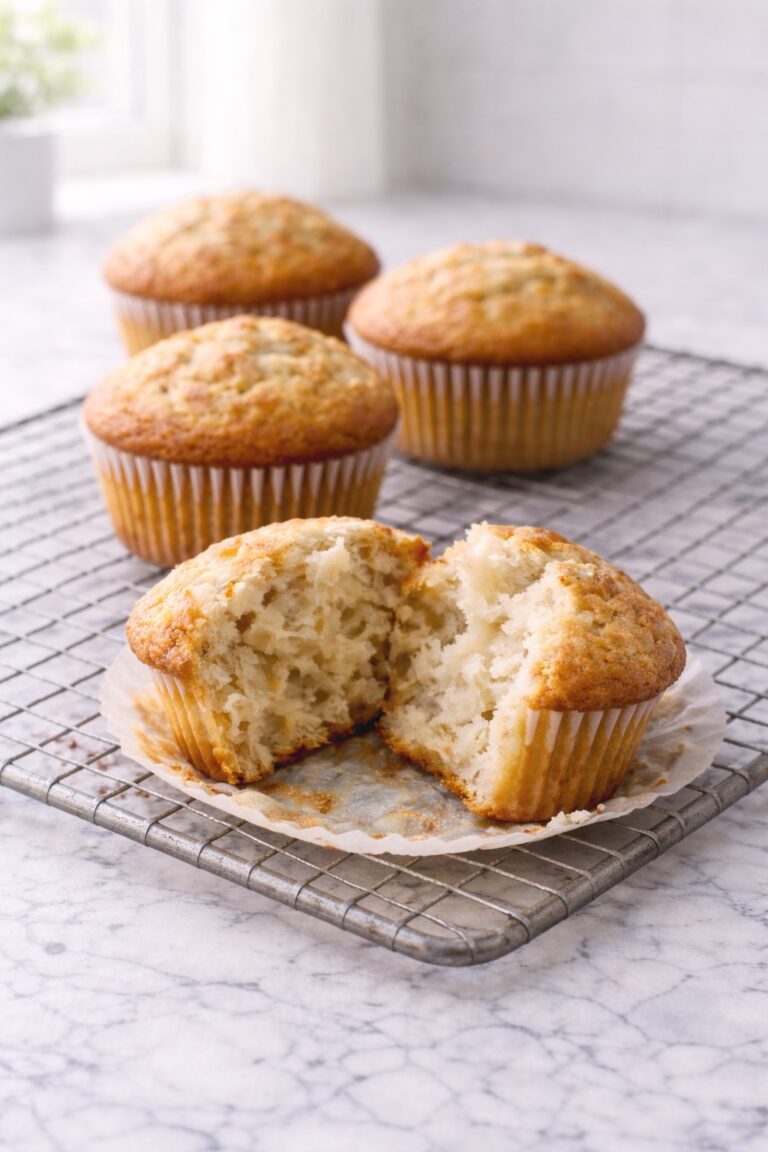
These blueberry muffins have a gently rounded top, a soft vanilla crumb, and irregular pockets of fruit. The berries make some bites juicier than others, while the baked crumb between them should feel tender and hold together.
- The top. Expect light golden color and small natural cracks, with occasional blueberries visible at the surface. The optional sugar adds a delicate crust that is most noticeable on the day of baking.
- The inside. Pale crumb surrounds purple berry pockets. A split muffin may look particularly moist immediately around a berry, where the fruit has softened and released juice.
- The color. Fresh berries usually leave clearer pockets. Frozen berries may spread more violet color through the batter, so streaks alone do not indicate a problem.
- The cooled texture. The crumb becomes easier to handle as the muffin cools, while the oil helps it stay soft. The sugar top gradually loses some of its crunch during storage.
If the part you look forward to most is a very tall, pronounced dome, the separate bakery-style blueberry muffins recipe is designed for that shape. This classic batch gives you a more gently rounded breakfast muffin.

How to Make Blueberry Muffins
The whisk does its work before the flour is hydrated. Once wet meets dry, switch to the spatula and watch the batter closely: first leave a few fine flour streaks, then finish incorporating them with the berries. That sequence limits the amount of handling the finished batter needs.
1. Preheat the Oven and Line the Pan
Place a rack in the center of a conventional oven and preheat to 375°F / 190°C. Line all twelve cups of a standard metal muffin pan. Begin this before measuring, and wait for the oven to reach temperature even if the rest of your preparation is already finished.
What you should see: All twelve paper liners are in place, and the oven is fully heated. The filled tray will be able to go straight in, without waiting for the oven to catch up.

2. Whisk the Dry Ingredients
Add the 180 g flour, 150 g sugar, baking powder, and salt to the larger bowl. Whisk across the center and around the edges until evenly mixed. Break up any visible baking-powder clumps now, while you can whisk freely without developing the wet batter. Keep the extra tablespoon of flour separate for the berries.
What you should see: A loose, even dry mixture with no small pockets of baking powder or salt. The separate 8 g flour is still waiting for the blueberries.

3. Whisk the Wet Ingredients
Whisk the egg in the second bowl, then add the whole milk, oil, and vanilla. Whisk until the egg is thoroughly dispersed through the liquid. This is a blending step; you do not need to build a thick foam. Getting the egg smooth now prevents the temptation to beat the flour mixture later.
What you should see: An evenly combined liquid without long, clear strands of egg white. The mixture is fluid and ready to pour, rather than thick or whipped.

4. Fold the Wet and Dry Mixtures Together
Pour the wet mixture into the dry ingredients. Draw the spatula down the side of the bowl, along the bottom, and up through the batter, turning the bowl as you work. Pause when only a few fine flour streaks remain. Look especially at the bottom, where a dry pocket can hide beneath a mixture that looks finished on top.

What you should see: A soft, slightly lumpy batter that falls from a spoon in a thick mass and settles slowly. It is scoopable, with a few fine dry streaks left for the final folds. Small lumps do not need to be chased out with the whisk.

5. Coat and Fold In the Blueberries
Toss the blueberries gently with the separate tablespoon of flour in the small bowl. Add the berries and any flour left in that bowl to the batter. Fold slowly from the bottom, turning the mixture over rather than pressing the spatula through the fruit. Stop when the berries are distributed and the last dry flour pockets have disappeared.
What you should see: Most berries remain intact, with fruit spread through the bowl and no visible dry flour. A little purple staining is normal with frozen fruit; continuing to stir in an attempt to even out the color will release more juice.

I’ve overmixed muffin batter before. For these blueberry muffins, stop folding as soon as the last dry streaks disappear. A few small lumps are fine.

6. Divide the Batter Between the Cups
Divide the batter promptly among all twelve lined cups, aiming for about 68 g per cup before topping. Make an initial pass around the tray, then share out what remains rather than filling the first cups heavily. If using the sugar topping, distribute the single tablespoon over the whole batch.
What you should see: Twelve similar portions, with visible space below the pan rims. The exact fraction of each cup depends on the pan shape; an even division of this batter is more useful than forcing every cup to a particular fill line.

7. Bake Until the Centers Are Set
Place the tray on the center rack and bake for approximately 18–20 minutes with fresh berries, starting the check at 18 minutes. Insert a toothpick into crumb near the center of a muffin, choosing a spot away from a visible berry. Frozen blueberries may extend the baking time.
What you should see: Lightly golden, firm tops and a tester that comes out clean or with a few crumbs. A thin purple mark may be berry juice; a thick smear of pale batter needs more baking. Use the guide below if the two are hard to distinguish.

8. Cool the Muffins on a Rack
Let the muffins stand in the pan for 5 minutes, then lift them carefully onto a wire rack. Support the muffins as you lift rather than pulling hard on a hot, delicate top. Leave space between them so the bottoms and sides can release steam. Cool completely before sealing them in a container.
What you should see: Muffins that hold their shape when lifted and stand separately on the rack. The crumb is still delicate while warm, and the liners should not be enclosed while steam is rising from the batch.

How to Tell When Blueberry Muffins Are Done
The most useful question is whether the crumb beside a blueberry has set. Fruit can leave a wet mark on the tester even in a baked muffin, so read the texture of the mark as well as its color. If the first test goes through a berry, test again nearby before deciding.
| Tester result | What it tells you | What to do |
|---|---|---|
| Clean or a few small crumbs | The tested crumb has set. Small crumbs can still be moist without being raw batter. | Check that the top is lightly golden and firm, then take the tray out rather than baking until every crumb feels dry. |
| Thin violet juice | The tester likely passed through a blueberry. This mark alone does not tell you whether nearby crumb is baked. | Insert the tester into adjacent crumb away from visible fruit. Base your decision on that second reading. |
| Sticky pale batter or a thick paste | The center at that point has not finished baking. This is more substantial than a thin stain of fruit juice. | Return the tray to the oven for another 1–2 minutes, then check again. Repeat as needed rather than guessing a large extra interval. |
Use more than surface color when the tray looks uneven. A larger portion or a muffin with a cluster of berries may be slower to finish than one with less fruit. Check an uncertain muffin directly; a clean tester in its neighbor does not answer the question for it.
The 18–20-minute window is a guide for this portion size and fresh berries. Oven performance and frozen fruit can change the finish time. The goal is set crumb around juicy blueberries, so keep the short rechecks focused on the center rather than waiting for a dark top.

Expert Tips for Tender Blueberry Muffins
Once the basic mixing method is familiar, the most useful refinements happen before the batter is finished. These choices reduce the urge to correct it with extra liquid, extra stirring, or an unnecessarily long bake.
- Check the flour before changing the liquid. An overfilled cup of flour can make the batter look unusually stiff. Weigh the 180 g main portion, or spoon and level it, before mixing. If the finished mixture looks different from the cue, review the measurements first; pouring in milk by eye can turn a measuring problem into a different recipe.
- Make every scoop carry both batter and berries. A cluster at one side of the bowl can send most of the fruit into the first few cups. Take portions from different parts of the bowl and compare them as you go. This helps avoid a few very wet, fruit-heavy muffins without stirring the whole batch again.
- Treat a second tray as a second mixing session. If you are making two batches with one pan, have the pan ready again before combining the second wet and dry mixtures. The oven time does not double, and the batter for the second batch does not need to wait through the first bake.
Common Blueberry Muffin Mistakes and How to Fix Them
Start with the symptom you can actually see: long tunnels, sticky pale crumb, a very uneven batch, or purple streaks. Each points toward a different check. The most useful correction may be possible before baking, during a short oven recheck, or only on the next batch.
| Mistake | What happens | Why it happens | How to prevent or fix it |
|---|---|---|---|
| Working the batter until smooth | The crumb may feel tougher or show long tunnels. | Repeated mixing after hydration develops more gluten structure than this tender muffin needs. | Switch to a spatula after combining wet and dry. After adding the blueberries, stop folding as soon as the last dry streaks disappear. Extra baking cannot correct an overworked crumb. |
| Taking the tray out by top color alone | A golden muffin may still have sticky pale batter in the middle. | The outside can color before a deep or fruit-heavy center has set. | During the bake, use the crumb test and return the tray for 1–2 minutes if batter remains. Check again instead of relying on a darker top. |
| Packing flour into the measuring cup | The batter can be stiff and the baked muffin dry or heavy. | More flour enters the bowl than the measured liquid was meant to moisten. | Spoon and level, or weigh the flour. Check the measurement before mixing; do not automatically thin a finished batter with an unmeasured splash of milk. |
| Dividing fruit and batter unevenly | Some muffins are wetter, larger, or slower to bake than others. | Clusters of berries and uneven scoop sizes create different portions within one tray. | Distribute the fruit gently, fill all twelve cups, then compare portions before baking. A flour coating cannot compensate for a heavy cluster in one cup. |
| Stirring frozen berries repeatedly | The batter becomes strongly purple and the berries break down. | Frozen fruit releases color and juice as it warms and is worked. | Add the berries straight from the freezer and stop once distributed. Some staining is normal; use the baked crumb to judge doneness. |
| Closing the storage container while muffins are warm | The tops soften and the liners become damp. | Steam condenses inside the closed container instead of escaping. | Cool on the rack until the muffins are no longer warm before sealing. The five-minute pan rest is only the first stage of cooling. |
Beautiful Ways to Serve Blueberry Muffins
A good serving choice brings out a different part of these blueberry muffins: warm fruit, the delicate top, or the soft crumb against something cool and tangy. Keep the muffin itself as the main part of the plate, and choose just enough alongside it to make breakfast feel complete.
Warm and Split for Breakfast
Serve a muffin after its short pan rest, once it can be handled comfortably. Peel the paper back and open it gently by hand, letting the soft crumb part around the blueberries. A small white plate makes those purple pockets especially inviting.
Coffee is a simple companion because its bitterness sits well beside the sweet vanilla crumb. Leave the muffin open just before eating rather than splitting the whole batch in advance, so the inside stays protected until it reaches the plate.

A Blueberry Muffin Basket for Brunch
For a shared table, let the muffins cool before arranging them loosely in a shallow basket or on a platter. Keep the tops visible and give guests enough room to lift one without pressing into the muffin beside it. Paper liners make these blueberry muffins easy to pick up.
If the brunch includes a second blueberry dish, blueberry pancakes offer something warm from the skillet while the muffins are ready to serve. Put out a few muffins at a time and replenish from the cooled batch when space is limited.

A Muffin With Yogurt and Fresh Fruit
Place a muffin beside plain yogurt and a handful of fresh berries for a breakfast with warm, soft crumb and a cool, tangy contrast. Keep the yogurt in a separate little bowl or to one side of the plate, so it does not soak into the muffin before you start eating.
This is a particularly nice way to serve a muffin without the sugar topping: the vanilla sweetness remains gentle alongside the yogurt. If using a thawed muffin, warm it briefly on its own first, then add the cold accompaniments to the plate.

How to Store, Freeze, and Reheat Blueberry Muffins
Let blueberry muffins cool completely before choosing a container. The five minutes in the pan help them settle enough to lift, but they can still release plenty of steam after that. Sealing them too soon turns that steam into moisture on the tops and liners.
Keep the Muffins Soft at Room Temperature
Keep completely cooled muffins in an airtight container in a cool, dry place for up to 3 days for best quality. Let them sit comfortably without pressing the tops against the lid. A soft crumb is the aim; the sugar topping will not keep its freshly baked crunch throughout storage.
Take out only the portions you need and close the container again. If you already know the whole batch will not be eaten within that short window, freeze the extra muffins while fresh. Waiting until they taste dry and then freezing them will preserve that drier texture.
Freeze the Baked Blueberry Muffins
Wrap the cooled muffins individually, or separate them in a freezer bag so you can remove one without pulling the others apart. Remove excess air, close the packaging well, and label the date. Freeze at 0°F / −18°C for up to 3 months for best quality.
Illinois Extension’s freezer storage guidance for baked muffins gives a 2–3-month quality window. Freezing protects the quality you start with, which is why it is worth packing the extra portions as soon as they have cooled. Keep the muffins whole for freezing, with the soft interior enclosed.

Thaw and Rewarm a Single Muffin
Take out the portion you want and thaw it covered at room temperature. Once thawed, remove the wrapping and place the muffin on a microwave-safe plate. Warm it in short bursts, checking between them rather than setting one long heating time.
Stop when it is pleasantly warm. The blueberry pockets may feel warmer than the surrounding crumb, so let it stand briefly if necessary before eating. Rewarming can bring back the pleasure of a warm, soft muffin, but it will not recreate the original sugar crunch or undo dryness from storage.

Blueberry Muffin Questions
You can make this batch with either fresh or frozen blueberries, but the fruit temperature can change the oven time. Keep the berry amount and twelve-portion yield the same, then use the crumb to make the final baking decision.
Can I use frozen blueberries in blueberry muffins?
Yes. Use 222 g of plain, unsweetened frozen blueberries and add them without thawing. Coat them with the separate tablespoon of flour, fold gently, and portion the batter promptly. Some violet streaks are normal. Keep the oven at 375°F / 190°C, but allow extra baking if the crumb test shows the centers need it.
How long do blueberry muffins bake at 375°F?
This batch of twelve standard muffins usually takes 18–20 minutes with fresh blueberries. Begin checking at 18 minutes. If a toothpick carries purple juice, test adjacent crumb; if it carries sticky batter, bake another 1–2 minutes and check again. Frozen fruit and larger portions can extend the time, so the first check is a starting point rather than a deadline.
More Muffins and Blueberry Recipes to Bake Next
Once you know which part of these blueberry muffins you enjoy most, choosing the next bake becomes easier. Stay with a familiar muffin shape, keep the blueberries in a different breakfast, or turn the fruit into a dessert for the table.
More Muffins for Breakfast
These are good next choices when you like the individual portions and easy serving of a muffin batch but want a different flavor. Let the fruit you have, or the contrast you are craving, guide the choice.
- Apple Muffins bring soft pieces of apple into the crumb, a good choice when you want a gentler fruit flavor at breakfast.
- Pumpkin Muffins put pumpkin and warm spices at the center of the batch, especially inviting alongside coffee on a cool morning.
- Banana Muffins turn ripe bananas into individual breakfast portions, useful when the fruit already on the counter is ready to bake.
- Cranberry Orange Muffins bring tart fruit, bright citrus, and streusel together when you want more contrast in both flavor and texture.
More Blueberry Bakes for Breakfast
If the blueberries are what you want to keep, change the shape or the flavors around them. These separate recipes let you choose a sliced loaf, a citrus note, banana sweetness, or a whole-wheat option without changing this batter by guesswork.
- Blueberry Bread gives you a loaf to slice at the table, with the freedom to cut a small piece or a generous breakfast slice.
- Lemon Blueberry Muffins pair the berries with lemon and streusel, adding citrus flavor around the fruit and a textured top.
- Banana Blueberry Muffins combine the berries with a banana batter, bringing two familiar breakfast fruits together in one muffin.
- Healthy Blueberry Muffins offer a whole-wheat option with its own ingredient balance, useful when that is the flour you want to bake with.
Blueberry Desserts to Share
For a dessert, decide how you would like to serve the blueberries. A warm spoonful, a slice of cake, a creamy bar, and a pastry-enclosed filling each give the fruit a different place on the plate.
- Blueberry Cobbler brings warm fruit to the table in a dessert you can spoon into individual bowls.
- Blueberry Cake keeps the berries in a soft crumb, with a cake to cut when slices suit the gathering.
- Blueberry Cream Cheese Bars add a creamy layer and cut into squares, offering a richer contrast alongside the blueberries.
- Blueberry Pie puts the filling inside a pastry crust, the next project when a flaky edge is part of the appeal.
Why These Blueberry Muffins Belong in Your Recipe Box
A recipe earns its place in your box when it begins to feel like yours. With these blueberry muffins, that might mean knowing who reaches for the ones with the most fruit, or discovering that a dozen on the table is just right for the people coming to breakfast. Those small preferences give you a reason to turn to the same page again.
Leave a little room beside the recipe for your own notes: the pan you used, whether the berries were fresh or frozen, and when the centers were baked through. Record the result as well as the minutes. A note such as “checked at 18 minutes, ready at 20, tender once cool” is useful only if it describes your batch; it gives you a starting point for next time, while the doneness cues still guide the bake.
Over time, that page becomes more than a set of quantities. It holds the details of a breakfast you know how to make, and the little choices that make it welcome in your kitchen.
The Simple Pleasure of Homemade Blueberry Muffins
Bring the muffins to the table and let everyone choose their own. Pass the plate from one person to the next while the morning conversation carries on, and leave it within reach for anyone who would like another.
If someone arrives as you are clearing away, leave a muffin on a small plate for them. It is a lovely way to say there is still room at the table, even when breakfast is nearly over.
And when only one is left, split it with whoever is sitting beside you. Half a muffin each is a good excuse to stay a little longer.

Blueberry Muffins Recipe
Soft vanilla muffins filled with juicy blueberries and finished with gently rounded golden tops. Mix this classic batch by hand, bake twelve standard muffins, and add the optional sugar topping for a little crunch.
Ingredients
Dry Ingredients
- 1½ cups (180 g) all-purpose flour, spooned and leveled
- ¾ cup (150 g) granulated sugar
- 2 teaspoons (8 g) double-acting baking powder
- ½ teaspoon (3 g) fine table salt
Wet Ingredients
- ⅓ cup (73 g) neutral vegetable oil
- 1 large egg (50 g without shell)
- ½ cup (122 g) whole milk
- 1 teaspoon (4 g) vanilla extract
For Folding In
- 1½ cups (222 g) fresh blueberries, washed and dried well
- 1 tablespoon (8 g) all-purpose flour, for coating the blueberries
Optional Topping
- 1 tablespoon (12 g) granulated sugar, for all 12 muffins
Instructions
- Preheat and prepare the pan. Set a rack in the center of a conventional oven and preheat to 375°F / 190°C. Line a standard 12-cup metal muffin pan with paper liners. Have the oven fully heated before combining the wet and dry mixtures.
- Whisk the dry ingredients. Whisk the 1½ cups (180 g) flour, ¾ cup (150 g) sugar, baking powder, and salt in a large bowl until evenly distributed, with no visible baking-powder clumps. Keep the extra tablespoon of flour aside for the berries.
- Whisk the wet ingredients. Whisk the egg in a second bowl, then add the whole milk, oil, and vanilla. Whisk until evenly combined, with no visible strands of egg white.
- Fold the batter. Pour the wet mixture into the dry ingredients. Fold gently with a flexible spatula, reaching the bottom of the bowl, until only a few fine flour streaks remain. The batter should be soft and slightly lumpy, falling from a spoon in a thick mass that settles slowly.
- Fold in the blueberries. Gently toss the blueberries with the separate tablespoon (8 g) of flour. Add the berries and any flour left in their bowl to the batter. Fold just until the berries are distributed and the last dry flour pockets disappear. Stop while most berries are still intact.
- Fill the muffin cups. Divide the batter promptly among all 12 cups, about 68 g per cup before topping, leaving visible room below the rims. If using the optional topping, sprinkle the single tablespoon (12 g) of sugar evenly over the whole tray.
- Bake and check the centers. Bake for approximately 18–20 minutes with fresh berries, beginning the check at 18 minutes. The tops should be lightly golden and firm. Insert a toothpick into crumb near the center, away from a visible berry. A clean tester or a few crumbs indicates set crumb. If it carries purple juice, test adjacent crumb. If sticky batter remains, bake another 1–2 minutes and check again.
- Cool on a rack. Let the muffins cool in the pan for 5 minutes, then transfer carefully to a wire rack. Leave space between them and cool completely before wrapping or storing.
Notes
- Measuring flour. The 180 g flour is for the main batter. The additional 8 g is for coating the blueberries. Spoon flour into the measuring cup and level it, or use a scale.
- Frozen blueberries. Use 222 g of plain, unsweetened frozen blueberries directly from the freezer. Fold briefly and bake promptly. Purple streaks are normal, and baking may take longer. Use the same crumb check.
- Pan and portions. Use twelve standard muffin cups for the stated baking window. Mini or jumbo muffins need different baking times. For another batch, keep the same pan size, portions, and oven temperature. If baking one tray at a time, mix the next batter close to its baking time.
- Timing. The 35-minute total includes 10 minutes of preparation, 20 minutes of baking, and 5 minutes of cooling in the pan. Begin preheating before measuring. Allow extra time for a slower preheat, any additional baking, and complete cooling before storage.
- Storage. Keep completely cooled muffins in an airtight container in a cool, dry place for up to 3 days for best quality. The sugar topping will soften during storage.
- Freezing and reheating. Wrap cooled muffins individually or separate them in a freezer bag, remove excess air, and freeze at 0°F / −18°C for up to 3 months for best quality. Thaw covered at room temperature. Unwrap and warm on a microwave-safe plate in short bursts, stopping when pleasantly warm.
- Nutrition estimate. Nutrition is estimated for one muffin, without the optional sugar topping. The topping adds about 4 calories and 1 g of carbohydrate, including 1 g sugar, per muffin.
Recommended Products
As an Amazon Associate and member of other affiliate programs, I earn from qualifying purchases.


Nutrition Information:
Yield: 12 Serving Size: 1 muffinAmount Per Serving: Calories: 183Total Fat: 7gSaturated Fat: 0.8gCholesterol: 17mgSodium: 179mgCarbohydrates: 28gFiber: 0.9gSugar: 15gProtein: 2.6g
Nutrition information is provided as an estimate only and may vary based on specific ingredients, brands, and portion sizes used. This information should not be considered medical or nutritional advice.
12 Sweet Favorites — Yours, Free 🍰
Tiramisù, no-bake cheesecake, the perfect chocolate chip cookie & 9 more reader-loved desserts — gathered into one beautiful free recipe book. From my kitchen to yours.
No spam, just sweet things. Unsubscribe anytime.