Crepe Recipe – Easy Homemade French Crepes
🎁 FREE E-BOOK: 12 Sweet Favorites — reader-loved desserts in one beautiful recipe book.
A crepe is a very thin French-style pancake made from a smooth batter of flour, eggs, milk, butter, and a small amount of sugar and salt. Unlike thick American pancakes, crepes are poured into a hot pan in a thin layer and cooked quickly until tender and lightly golden. The result is soft, flexible, and ideal for folding, rolling, or stacking with sweet or savory fillings.

There is something quietly magical about a warm crepe fresh from the pan. The edges are delicate, the center is soft and flexible, and the whole kitchen feels a little gentler the moment that buttery aroma starts to rise. A good crepe recipe has a way of turning simple ingredients into something that feels elegant, comforting, and almost effortless all at once.
Crepes sit in that beautiful space between everyday and special occasion. They can be folded around fruit and cream for brunch, filled with chocolate for dessert, or served simply with butter and sugar when you want something classic and deeply satisfying. They look refined, but the ingredients are humble and familiar.
This is exactly why people love and save a reliable crepe recipe. It feels versatile, beautiful, and surprisingly approachable once you understand the texture of the batter and the rhythm of the pan. With the right method, crepes become less intimidating and much more repeatable.
This version is designed to give you soft, thin, tender crepes with a smooth surface and flexible texture that folds beautifully without tearing. Whether you want a cozy breakfast at home or a dessert-worthy stack for guests, this recipe gives you that light, delicate result that makes crepes so timeless.
Quick Recipe Overview
| Texture | Thin, soft, tender, and flexible with lightly delicate edges |
|---|---|
| Flavor | Lightly buttery, subtly sweet, and neutral enough for many fillings |
| Difficulty | Easy once you learn the pan swirl |
| Time | About 10 minutes prep + 20 minutes resting + 15 minutes cooking |
| Servings | About 8 crepes |
| Method | Blended or whisked batter, stovetop cooking |
| Best For | Breakfast, brunch, dessert, make-ahead entertaining |
In short: This crepe recipe gives you tender, thin homemade crepes that feel elegant but are made with simple pantry ingredients and a very manageable stovetop method.
Why This Recipe Works
Crepes rely on balance more than heaviness. The batter needs enough flour to hold together, enough eggs to create structure and flexibility, enough milk to keep it thin, and enough butter to add tenderness and a delicate richness. When that balance is right, the crepes cook into thin sheets that are soft and foldable rather than rubbery or fragile.
Resting the batter makes a real difference here. It gives the flour time to hydrate fully and allows air bubbles to settle, which helps the batter spread more smoothly in the pan. That is one of the easiest ways to get more even crepes with fewer holes and less tearing.
This recipe also works because the batter is intentionally pourable. A thick pancake-style batter would sit too heavily in the pan and create dense, uneven rounds. A thinner batter lets you swirl quickly and form that signature delicate layer.
One more important detail is moderate heat. If the pan is too cool, the batter can stick and cook unevenly. If it is too hot, the crepes brown too fast before they have time to set properly. Medium heat gives you that sweet spot where the surface dries gently and the underside turns lightly golden.
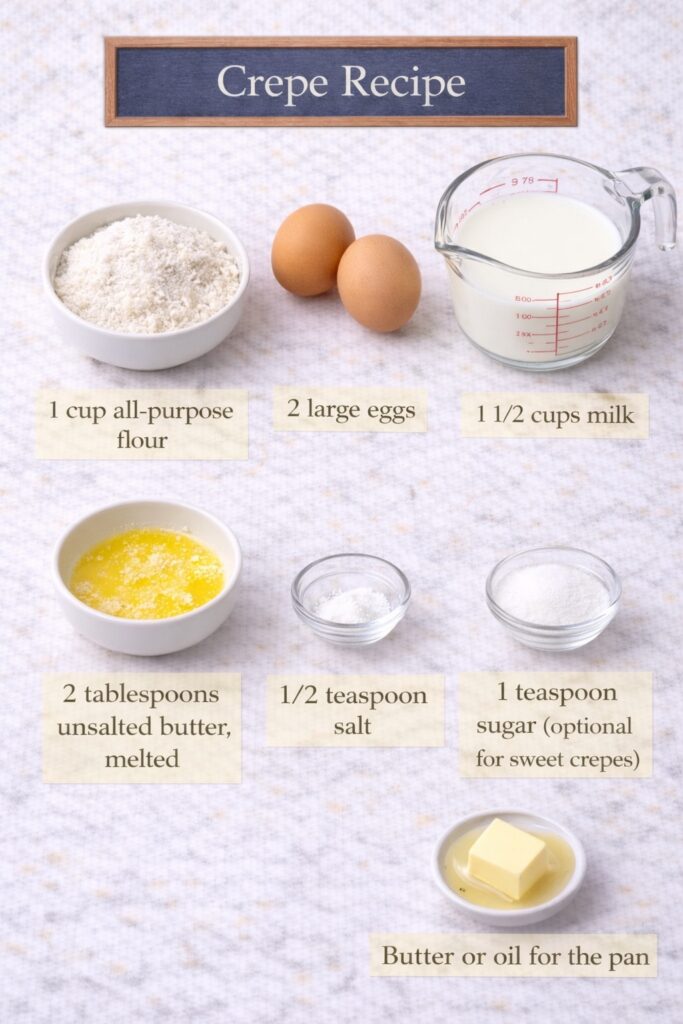
Ingredients
- 1 cup all-purpose flour
- 2 large eggs
- 1 ½ cups milk
- 2 tablespoons unsalted butter, melted
- ½ teaspoon salt
- 1 teaspoon sugar (optional for sweet crepes)
- Butter or oil for the pan
How to Make Crepes
Add flour and salt to a mixing bowl. Crack in the eggs. Pour in half of the milk. Whisk until smooth. Add the rest of the milk, the melted butter, and sugar (if using). Whisk again until fully blended. The batter should look thin, not thick like pancake batter.
Let the batter rest for 20–30 minutes at room temperature. This helps the flour absorb the liquid and makes the crepes softer. If you’re in a rush, skip this and promise not to blame the crepes.
How to Cook Crepes
Heat a nonstick skillet over medium heat. Lightly coat with butter or oil. Pour about ¼ cup of batter into the center. Quickly tilt and swirl the pan to spread the batter thin.
Cook for 1–2 minutes or until the bottom is lightly golden. Flip it gently with a spatula (or with flair if you’re feeling risky). Cook the other side for about 30 seconds.
Transfer to a plate. Repeat with the rest of the batter. Keep the cooked crepes warm under a clean towel or foil.
Visual Doneness Cues
Knowing what to look for makes crepes much easier:
- The batter should spread quickly and thinly when it hits the pan
- The top surface should lose its wet shine before flipping
- The edges should look lightly set and begin to release
- The underside should have pale golden spots, not deep dark browning
- The finished crepe should be soft and flexible, not crisp
Fill and Roll
Crepes are like edible envelopes. Fill them with anything from Nutella and strawberries to ham and cheese. Fold them in half or roll them up. No crepe police here.
Texture and Behavior Guide
| If You Notice | What It Means | What To Do |
|---|---|---|
| Batter too thick to swirl | Too much flour or not enough liquid | Whisk in a small splash of milk |
| Crepes tearing when flipped | Too thin, undercooked, or too delicate | Cook slightly longer before flipping |
| Rubbery texture | Too much flour or overcooking | Use gentler heat and measure carefully |
| Too many holes | Batter too bubbly or pan too hot | Rest the batter longer and lower heat slightly |
| Uneven thick patches | Swirl was too slow | Pour and rotate the pan immediately |
Expert Tips for Better Crepes
- Use a blender if you want the smoothest possible batter with minimal effort
- Rest the batter even if you are short on time because it genuinely improves texture
- Keep the pan at medium heat rather than turning it up high
- Wipe away excess butter so the batter spreads cleanly instead of frying
- Do not worry if the first crepe is imperfect because it often acts as your test crepe
- Stack finished crepes under a clean towel to keep them soft
Common Mistakes and How to Fix Them
- Batter that is too thick: A thick batter creates heavy crepes that feel closer to pancakes. Add milk a tablespoon at a time until the batter looks loose and pourable.
- Pan too hot: An overheated pan can set the batter before it spreads fully, which gives uneven shapes and darker spots. Reduce the heat slightly and let the pan stabilize.
- Flipping too early: If the top still looks wet, the crepe is not ready. Wait until the surface is mostly dry and the edges begin to loosen.
- Too much fat in the pan: A greasy pan can make the batter slide poorly and cook unevenly. Use just a light film of butter or oil.
- Overcooking: Crepes cook quickly. Leaving them too long in the pan can make them dry, stiff, or lightly brittle instead of soft and flexible.
How to Serve Crepes
Crepes are one of the easiest recipes to dress up or keep simple. Serve them warm with powdered sugar, fresh berries, whipped cream, Nutella, lemon and sugar, jam, or a drizzle of maple syrup. For a richer dessert feel, you can fill them with pastry cream, sweetened cream cheese, or chocolate sauce.
They are also lovely for slow weekend mornings when you want something a little softer and more special than toast or pancakes. Save this recipe for brunch spreads, breakfast-for-dinner nights, spring gatherings, or those quiet mornings when you want something elegant without making anything complicated.
Storage and Make-Ahead Tips
Store leftover crepes in an airtight container in the refrigerator for up to 3 days. Place parchment paper between them if needed to prevent sticking.
To reheat, warm them briefly in a skillet or microwave until soft and pliable again.
You can also make the batter ahead and refrigerate it for up to 1 day. Give it a gentle whisk before using, as some settling is natural.
For longer storage, stack cooled crepes with parchment between layers and freeze them in a freezer-safe bag for up to 2 months.
Variations
Lemon Sugar Crepes
Skip heavy fillings and serve with fresh lemon juice and a sprinkle of sugar for a classic bright finish.
Chocolate Crepes
Add a little cocoa powder to the batter for a soft chocolate version that works beautifully with berries or whipped cream.
Berry and Cream Crepes
Fill with whipped cream and sliced strawberries, blueberries, or raspberries for a pretty brunch or dessert plate.
Nutella Banana Crepes
Spread with Nutella and add sliced bananas for a rich, crowd-friendly option.
Savory-Style Base
Reduce or omit the sugar and vanilla if you want to use the crepes for savory fillings.
Are Crepes Gluten Free?
Traditional crepes are not gluten-free because they use all-purpose flour, which contains gluten.
However, you can make gluten-free crepes by using one of these substitutes:
- Gluten-free all-purpose flour (store-bought blend)
- Buckwheat flour (common in French galettes, especially for savory crepes)
- Almond flour (adds a slightly nutty flavor)
- Oat flour (for a mild taste and softer texture)
- Rice flour (very light but may be more delicate)
Just swap the regular flour 1:1 with a gluten-free option. You may need to adjust the milk slightly for texture, depending on the flour.
Frequently Asked Questions
Do I need a special crepe pan?
No. A good nonstick skillet works very well for homemade crepes.
Why is my crepe batter lumpy?
It usually just needs more whisking or straining. A blender also solves this quickly.
Why are my crepes tearing?
They may be too thin, undercooked, or flipped too early. Let the first side set more fully before turning.
Can I make crepes ahead of time?
Yes. You can make both the batter and the finished crepes ahead, which makes this recipe very practical for brunch.
Are crepes sweet or savory?
They can be either. This recipe leans lightly sweet, which makes it especially versatile for dessert and breakfast-style fillings.
How thin should crepe batter be?
It should be thinner than pancake batter and easily pourable, almost like heavy cream.
Why is the first crepe often not perfect?
The first one helps you test the pan temperature and amount of batter. It is completely normal for it to be the least tidy one.
Final Thoughts
Crepes have a softness to them that feels comforting in a very particular way. They are light, delicate, and a little elegant, but never fussy. Once you make them a time or two, they stop feeling intimidating and start feeling like one of those quietly dependable recipes you can return to whenever you want something gentle, cozy, and just a little special.

Crepe Recipe
Light, delicate, and irresistibly thin, crepes are the epitome of French elegance on a plate. These golden, buttery pancakes can be folded around sweet fillings like Nutella and strawberries or savory delights like ham and cheese.
Ingredients
- 1 cup all-purpose flour
- 2 large eggs
- 1 ½ cups milk
- 2 tablespoons unsalted butter, melted
- ½ teaspoon salt
- 1 teaspoon sugar (optional for sweet crepes)
- Butter or oil for the pan
Instructions
1. Mix the batter: In a bowl, whisk flour, salt, eggs, and half the milk until smooth. Add the rest of the milk, melted butter, and sugar (if using). Whisk again, the batter should be thin, not thick.
2. Rest the batter (optional): Let it sit 20–30 minutes for softer crepes. Skip if you're in a hurry.
3. Cook the crepes: Heat a lightly buttered or oiled nonstick pan over medium heat. Pour in about ¼ cup batter, then quickly tilt the pan to spread it thin.
4. Flip and finish: Cook for 1–2 minutes until golden, then flip and cook the other side for about 30 seconds.
5. Keep warm: Stack cooked crepes under a clean towel or foil while you finish the rest.
Enjoy your delicious crepes!
Notes
Fill your crepes with sweet or savory favorites, Nutella & strawberries, ham & cheese, or anything you like. Fold or roll them. No rules, just delicious! 🥞✨
Nutrition Information:
Yield: 8 crepes Serving Size: 1 crepeAmount Per Serving: Calories: 110Total Fat: 5gSodium: 100mgCarbohydrates: 12gSugar: 1gProtein: 4g
Nutrition information is estimated and may vary based on ingredients and portion sizes.
12 Sweet Favourites — Yours, Free 🍰
Tiramisù, no-bake cheesecake, the perfect chocolate chip cookie & 9 more reader-loved desserts — gathered into one beautiful free recipe book. From my kitchen to yours.
No spam, just sweet things. Unsubscribe anytime.