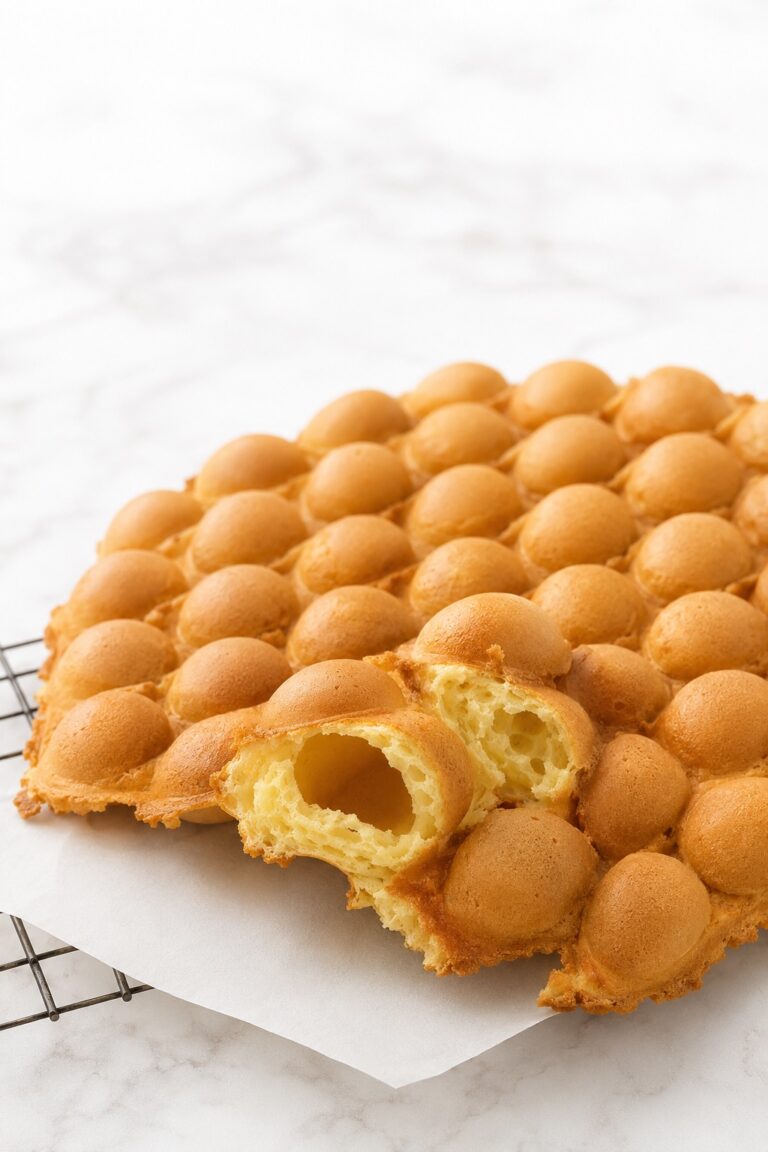
Bomboloni Recipe (Vanilla Cream-Filled Doughnuts)
🎁 FREE E-BOOK: 12 Sweet Favorites — reader-loved desserts in one beautiful recipe book.
This Bomboloni recipe makes twelve round Italian doughnuts with a fine granulated-sugar coating, a light yeast-raised crumb, and a generous center of smooth vanilla pastry cream. Vanilla and lemon zest give the enriched dough a delicate bakery aroma, while the cool cream makes every bite feel rich without turning the dough heavy.

There is something especially comforting about the contrast in a freshly filled Bombolone: warm sugar at the surface, a soft and springy center, and cool vanilla cream hidden inside. They feel celebratory enough for a brunch table, yet familiar enough to serve simply with coffee or espresso.
This guide is worth saving because it turns the uncertain parts of the process into visible decisions. You will learn what developed dough looks like, how a ready-to-fry round responds to a fingertip, why the oil must recover between batches, and how one early center check can protect the rest of the batch.
Plan this as a deliberate half-day pastry project, or make the pastry cream one day ahead and complete the dough and frying the next day. The recipe yields twelve equal Bomboloni, uses two proofing stages, and calls for 35 grams of cold vanilla pastry cream in every finished piece.
Bomboloni at a Glance
Before you begin, this overview shows the texture, timing, yield, and method so you can decide whether this is the right baking project for your day.
| Texture | Fine sugar crust, soft elastic crumb, and smooth chilled pastry cream |
|---|---|
| Flavor | Vanilla-forward with gentle butter, milk, egg, and lemon notes |
| Difficulty | Intermediate, with temperature control and deep-frying |
| Time | About 4 1/2 to 5 1/2 hours with chilling, proofing, and cooling |
| Servings | 12 filled Bomboloni |
| Method | Mix, proof, shape, proof again, fry, coat, cool, and fill |
| Best For | Weekend baking, brunch, an Italian dessert table, or a pastry project shared with family |
In short: Bomboloni are holeless Italian yeast doughnuts made to be filled after frying. This version is rolled in granulated sugar and filled with vanilla pastry cream, or crema pasticcera. Unlike cake doughnuts, the light crumb depends on yeast development and proofing; unlike ring doughnuts, the solid center creates space for the cream.
Why This Bomboloni Recipe Works
The recipe controls the variables that most often decide whether filled doughnuts become light and evenly cooked or dense and greasy. Portion weight, proof readiness, oil recovery, and center doneness work together rather than as isolated tips.
- Two flours balance tenderness and structure. Equal amounts of all-purpose flour and bread flour give the enriched dough enough strength to expand while keeping the crumb soft rather than bread-like.
- Butter is added after the dough begins to develop. The flour and liquids first form an elastic network, then soft butter enriches it without preventing early gluten formation.
- Proofing is judged by the dough, not the clock alone. Height, volume, surface bubbles, and a slow-return fingertip indentation tell you when the rounds are ready.
- Equal portions cook at a similar rate. Dividing all recovered dough into twelve pieces, approximately 65 grams each, reduces the risk of one center staying raw while another dries out.
- Oil recovery and an early center check create a repeatable frying pattern. Frying two at a time, returning the oil to 340°F, and checking one early piece at 190 to 195°F establish the conditions for the remaining batches.
The pastry cream follows the same controlled approach. Cornstarch gives the cooled filling enough body to pipe, while a full 60 seconds of bubbling through the center finishes the thickening step before the vanilla and butter are stirred in.

Why You’ll Love This Bomboloni Recipe
This recipe is for the baker who wants a real pastry-shop experience at home and appreciates clear checkpoints along the way. The reward is not only the finished doughnut, but also a process that becomes easier to read each time you make enriched yeast dough.
- A soft, sugar-coated bite. Granulated sugar adds a delicate crunch against a springy, fully set crumb.
- A generous vanilla center. Each Bombolone receives 35 grams of pastry cream, enough to feel abundant without forcing the dough to split.
- A controlled twelve-piece yield. Equal portions make serving, filling, and frying more consistent.
- A make-ahead component. The pastry cream can be prepared one day early, which shortens the active work on frying day.
- Useful visual cues. Windowpane, rise, indentation, oil temperature, crumb texture, and filling weight replace vague directions with observable decisions.
The final flavor is classic and focused: vanilla in both the dough and cream, a small amount of lemon zest for freshness, butter for richness, and no alternate filling competing with the Bomboloni identity.
The Science Behind Soft, Evenly Fried Bomboloni
Four mechanisms matter most in this recipe. Understanding them helps you make better decisions without turning the method into a chemistry lesson.
Gluten develops before the butter goes in. Milk, egg, yolks, and flour need time to form an elastic network. Butter coats flour and softens dough, so adding it after initial kneading lets the structure develop first. The finished dough should stretch into a thin translucent window and still feel slightly tacky. If you enjoy learning how enriched dough behaves, these homemade cinnamon rolls offer a related baked project.
Yeast works according to temperature and dough condition. A cooler kitchen slows fermentation, while a warm dough moves faster. That is why the clock gives only a range. During bulk proofing, the dough should grow about 75 to 100 percent; during final proofing, the shaped rounds should become light and puffy and hold a faint indentation.
Oil temperature controls the relationship between crust and center. Dough cools the oil as soon as it enters the pot. If the next batch goes in before the oil recovers, the crust sets more slowly and absorbs more oil. If the oil is too hot, the exterior darkens before heat reaches the center. The 334 to 342°F working range gives both crust and crumb time to develop together.
Cornstarch sets the pastry cream as it cooks and cools. The cream thickens in the saucepan, but its final piping texture develops after chilling. Cooking until bubbles break through the center, then continuing for 60 seconds, gives the starch time to thicken evenly. Pressing wrap directly onto the surface prevents a skin from forming.
Ingredients for Soft, Cream-Filled Bomboloni
The formula has three parts: enriched yeast dough, vanilla pastry cream, and the oil and sugar used for frying and coating. Weigh every ingredient with a gram amount so the dough hydration, cream thickness, and final yield remain synchronized.
Ingredient List
Measure the dough and pastry-cream ingredients separately, then keep the frying oil and coating sugar ready for the final stage.

Bomboloni Dough
Bring the egg, yolks, and butter to the stated temperatures before mixing so the final dough temperature is easier to control.
- 200 g unbleached all-purpose flour, approximately 11 to 12 percent protein
- 200 g bread flour, approximately 12 to 13 percent protein
- 160 g whole milk, warmed to 95 to 100°F / 35 to 38°C
- 50 g large egg without shell, about 1 large egg, at room temperature
- 36 g large egg yolks, about 2 large yolks, at room temperature
- 55 g granulated sugar
- 6 g instant yeast
- 7 g fine sea salt
- 5 g pure vanilla extract
- 2 g finely grated lemon zest, yellow outer zest only
- 60 g unsalted butter, soft at 68 to 72°F / 20 to 22°C
Vanilla Pastry Cream
Use cold or cool milk and keep the finished cream refrigerated until the fried dough has cooled enough to fill.
- 360 g whole milk, cold or cool
- 70 g large egg yolks, about 4 large yolks
- 70 g granulated sugar
- 28 g cornstarch, weighed and lump-free
- 1 g fine sea salt
- 6 g pure vanilla extract
- 25 g unsalted butter, cold and cubed
Frying and Coating
Choose a neutral oil suitable for high heat, and use enough to create safe depth without filling the pot more than halfway.
- About 1.5 L / 6 cups neutral high-heat oil, such as canola, sunflower, or peanut oil
- 150 g / about 3/4 cup granulated sugar, for coating
Ingredient Roles and Approved Choices
The equal flour blend is intentional. All-purpose flour supports tenderness, while bread flour adds strength for proofing and frying. Flour brands can absorb liquid differently, so stay within the stated protein ranges and resist adding unmeasured flour simply because the dough feels tacky.
Instant yeast is designed to mix directly with the dry ingredients. Active dry yeast and fresh yeast require different handling and conversion, so neither is included as a direct swap. Whole milk, whole egg, yolks, sugar, and butter enrich the dough, while salt balances flavor and supports controlled fermentation.
In the filling, yolks provide richness and cornstarch gives the cold cream a pipeable body. Vanilla is added after cooking so its aroma remains clear, and cold butter smooths the finish. If you want another dessert built around vanilla pastry cream, Boston cream pie is the closest current recipe in a cake format.
Canola, sunflower, or peanut oil may be used when allergy considerations allow. Vanilla bean paste may replace vanilla extract gram for gram only when the manufacturer supports that substitution. All-purpose flour alone, plant milk, reduced-fat milk, alternate yeast forms, baked or air-fried Bomboloni, different fillings, and doubled batches are outside this recipe.

Tools for Consistent Bomboloni and Safer Frying
The most important tools are the ones that make weight, temperature, proofing, transfer, and frying visible. Gather them before mixing so you do not have to improvise around hot oil or chilled cream.
- Weighing and mixing: a digital gram scale, stand mixer with dough hook, and instant-read thermometer for the dough and the early crumb check.
- Proofing and shaping: a lightly greased straight-sided container, bench scraper, ruler or thickness guide, and twelve individual parchment squares.
- Temperature and frying control: a clip-on or probe oil thermometer, a 5 to 6 quart heavy Dutch oven or equivalent deep heavy pot, a frying spider or slotted spoon, and dry tongs.
- Draining and cooling: a wire rack set over a sheet pan, plus a fitted lid or sheet pan kept near the frying pot for safety.
- Pastry cream and filling: a medium saucepan, whisk, fine sieve, shallow heat-safe chilling dish, food-safe wrap, piping bag, and long plain filling tip.
You also need a refrigerator at or below 40°F / 4°C and, ideally, a proofing area near 75 to 80°F / 24 to 27°C. The pot must hold 2 1/2 to 3 inches of oil while remaining no more than halfway full.
What the Dough, Proof, and Finished Bomboloni Should Look Like
Several normal states can look uncertain the first time you make enriched dough. Use these expectations before the method begins so slight tackiness, variable proofing time, and the pale center band are not mistaken for failure.
| Stage | What is normal |
|---|---|
| Developed dough | Smooth, elastic, and slightly tacky but not wet; it clears most of the bowl and stretches thin before tearing |
| Proofing dough | Slow, steady expansion that may take longer in a cool kitchen; volume and fingertip response matter more than exact minutes |
| Fried Bomboloni | Evenly golden rounds with a narrow pale center band; the band is a useful sign but not proof of a cooked center |
| Cold pastry cream | Glossy, smooth, and thick enough to hold a soft ridge after a brief whisk |
The finished crumb should be light, springy, and fully set, with small to medium irregular cells and no raw or gummy line. A filled Bombolone should feel full but should not split or leak from excessive pressure.
How to Make Vanilla Pastry Cream Bomboloni
Work through the seven stages in order and use the visual cues to decide when to continue. The pastry cream must be completely cold before filling, while the fried dough must be only slightly warm or at room temperature.
1. Cook and Chill the Vanilla Pastry Cream
Begin with the cream because it needs at least three hours to cool and set. Place a fine sieve over a shallow heat-safe dish and prepare an ice bath before the saucepan goes on the stove.
Heat 360 g whole milk over medium heat until it steams and small bubbles gather at the edge. In a separate bowl, whisk 70 g egg yolks, 70 g sugar, 28 g cornstarch, and 1 g salt until smooth and pale. Slowly whisk about half of the hot milk into the yolk mixture so the temperature rises gradually, then return everything to the saucepan.
Cook over medium heat, whisking continuously and reaching into the corners, until the cream thickens and bubbles break through the center. Continue whisking for 60 seconds and make sure the mixture reaches at least 160°F / 71°C. Press the hot cream through the sieve, then stir in 6 g vanilla and 25 g cold butter until smooth.
Spread the cream in the shallow dish and press food-safe wrap directly onto the surface. Cool over the ice bath for 10 to 15 minutes, then refrigerate at or below 40°F / 4°C until fully cold, at least 3 hours. Whisk briefly before filling to restore a smooth piping texture.
What you should see: glossy cream that holds the tracks of the whisk while hot and a soft ridge once cold. Strain small cooked-egg particles while the cream is hot, but do not use a batch that tastes scorched or remains badly curdled.

2. Mix and Develop the Dough
The dough builds strength in two phases: initial development without butter, followed by gradual butter incorporation. This sequence keeps the rich dough elastic enough to hold gas during both proofs.
Combine 200 g all-purpose flour, 200 g bread flour, 55 g sugar, 6 g instant yeast, 7 g salt, and 2 g lemon zest in the mixer bowl. Add 160 g warm milk, 50 g whole egg, 36 g yolks, and 5 g vanilla. Mix on low for 2 to 3 minutes, until no dry flour remains, then cover and rest for 10 minutes.
Knead on medium-low for 5 to 7 minutes, until the dough begins to clear the bowl and shows moderate elasticity. Add 60 g soft butter in four additions, allowing each portion to disappear before adding the next. Knead for another 7 to 10 minutes, stopping once to scrape the bowl if needed.
What you should see: smooth, elastic dough that feels slightly tacky but not wet and stretches into a thin translucent window without tearing immediately. The final dough temperature should be 78 to 82°F / 26 to 28°C. If it is warmer than 84°F / 29°C, flatten it in a lightly greased covered container and chill for 10 minutes. Do not add unmeasured flour to make it feel dry.

3. Bulk Proof the Dough
The first rise develops gas throughout the entire dough mass. A straight-sided container makes the change in volume much easier to judge than a wide bowl.
Place the dough in a lightly greased straight-sided container and mark the starting height. Cover and proof at about 75 to 80°F / 24 to 27°C for approximately 75 to 105 minutes.
What you should see: a 75 to 100 percent increase in volume, a softly domed top, bubbles near the container sides, and a shallow fingertip impression that begins to recover. If the room is cooler, let the dough state, rather than the end of the time range, decide when to divide.

4. Divide and Shape Twelve Equal Pieces
Equal mass and thickness help all twelve centers cook under the same frying conditions. Preserve every usable piece of dough instead of forcing a nominal weight that creates scraps.
Turn the dough onto a very lightly greased or minimally floured surface. Weigh all recovered dough and divide that number by twelve. With full recovery, each portion will be approximately 65 g. Keep the pieces within 1 g of one another, and do not discard dough or create a thirteenth Bombolone.

Shape each portion into a tight, smooth ball without tearing the outer skin. Rest the balls seam-side down for 10 minutes under a cover. Press each one gently into a round about 3 inches / 7.5 cm wide and 3/4 inch / 2 cm thick, then place it on an individual parchment square.
What you should see: twelve smooth rounds of matching weight and thickness, with closed seams, relaxed edges, and no dry flour crust.

5. Final Proof the Bomboloni
The second rise determines how light the shaped rounds will be when they enter the oil. Cover them loosely so the surfaces remain supple and test one gently near the end of the time range.
Proof at about 75 to 80°F / 24 to 27°C for approximately 45 to 75 minutes. Begin heating the oil during the final 20 to 25 minutes so it can stabilize before the dough is ready.
What you should see: visibly puffy, light rounds about 1.5 times their shaped height. A lightly floured fingertip indentation should return slowly while leaving a faint mark. Immediate spring-back means the dough needs more time. A deep indentation with deflation means the dough has gone too far and should be handled very gently.

6. Fry Two Bomboloni at a Time
Frying in small batches keeps the oil inside the working range and leaves enough space to turn each piece safely. Keep the pot no more than halfway full, keep every tool dry, and never leave the oil unattended.
Add oil to a depth of 2 1/2 to 3 inches and heat it to 340°F / 171°C. Maintain a working range of 334 to 342°F / 168 to 172°C. Lower two dough rounds into the oil with their parchment squares, then remove each paper with dry tongs as soon as it releases.

Fry the first side for about 75 to 90 seconds, turn once, and fry the second side for another 75 to 90 seconds. Adjust by color, oil recovery, and center doneness rather than forcing the clock. Let the oil return to 340°F before adding the next pair.

Cut through one of the first pieces and check the center with an instant-read thermometer. Look for 190 to 195°F / 88 to 91°C, a springy crumb, and no raw or gummy line. This piece is the practical confirmation that portion size, thickness, oil temperature, and frying time are working together.

If the oil begins to smoke, turn off the heat. If a grease fire starts, turn off the heat if it is safe to do so and cover the pot with the lid or sheet pan. Never add water. The U.S. Fire Administration cooking-fire guidance reinforces staying with hot cooking and smothering a grease fire rather than using water.
What you should see: an evenly golden exterior, a narrow pale band, no split seam, and a fully set light center. A dark crust before the center sets points to oil that is too hot; slow pale browning points to oil that is too cool.
7. Drain, Coat, Cool, and Fill
The coating adheres best while the Bomboloni are warm, but the filling must wait until the crumb is no longer hot. This short cooling interval protects the chilled pastry cream and keeps it from loosening inside the dough.

Drain the Bomboloni on a wire rack over a sheet pan for 45 to 60 seconds. Roll them in granulated sugar while they are still warm but no longer dripping oil. Cool for approximately 20 to 30 minutes, until only slightly warm or at room temperature.

Fit a piping bag with a long plain tip and fill it with cold pastry cream. Puncture the side of each Bombolone and pipe exactly 35 g into the center. Weigh the first filled piece, then spot-check later pieces so the cream stays consistent across the batch.

What you should see: a full, rounded Bombolone with a generous cream center and no split from overfilling. If cream pushes back out immediately, stop and check that the dough is cool, the pastry cream is fully chilled, and the portion has not exceeded 35 g.
How to Tell When Bomboloni Are Proofed and Cooked Through
Proofing and frying each have a clear stopping point. Read the indentation, color, crumb, and temperature together instead of relying on a single signal.
| State | What you notice | Decision |
|---|---|---|
| Underproofed | The round feels firm and the indentation springs back immediately | Continue proofing and test again |
| Ready to fry | The round is light and puffy; the indentation returns slowly and leaves a faint mark | Fry promptly |
| Overproofed | The indentation stays deep and the round begins to deflate | Do not extend proofing; handle gently |
| Oil too hot | The outside darkens before the center sets | Lower the heat and wait for the working range |
| Oil too cool | The piece browns slowly, stays pale, and absorbs more oil | Pause and let the oil recover |
| Cooked through | Golden crust, springy set crumb, and 190 to 195°F in the early test piece | Continue with the same portion size and recovered oil |
The narrow pale ring around the middle is encouraging because it shows that the dough floated in the oil, but the ring alone cannot prove that the center is cooked. Once the early test piece confirms a set crumb, maintain the same weight, thickness, oil range, and batch size.
Expert Tips for Light, Evenly Filled Bomboloni
These five controls have the greatest effect on consistency because each one removes a hidden source of variation from the batch.
- Divide the recovered dough, not the theoretical dough mass. Weigh what is actually in front of you, divide by twelve, and keep the portions within 1 g so no dough is discarded to force an arbitrary number.
- Transfer the proofed rounds on parchment. The individual squares protect the airy shape from fingers and a bench scraper; remove the paper with dry tongs as soon as it releases in the oil.
- Wait for full oil recovery. The thermometer may drop after each two-piece batch. Do not add the next pair until the oil returns to 340°F.
- Sacrifice one early piece to protect the batch. Cutting and checking a single center at 190 to 195°F is more useful than discovering raw lines after all twelve have been fried.
- Weigh the filling. Pipe 35 g into the first Bombolone and spot-check later pieces. The piping bag can feel deceptively lighter as the batch continues.
Consistency does not mean ignoring the dough. If the kitchen, dough, pot, or burner behaves differently, keep the fixed portions and temperature boundaries but let the observable cues guide the exact timing.
Why Bomboloni Turn Dense, Greasy, or Raw Inside
Most Bomboloni problems can be traced to dough development, proof state, portion geometry, oil temperature, or filling temperature. Identify the visible symptom first, then correct the cause rather than adding more flour or extending frying without a plan.
One lesson I learned from working with enriched yeast dough is not to let the clock make the final decision. I used to move on as soon as the suggested proofing time ended, but the dough was not always ready when the kitchen was cooler. Now I look for the increase in volume and a slow-return fingertip indentation first, using the time only as a guide.
| Symptom | Likely cause | Prevention | What you can do now |
|---|---|---|---|
| Dense, tight crumb | Dough was underdeveloped, too cool, or fried before the final proof was complete | Reach the windowpane cue, control final dough temperature, and wait for the slow-return indentation | Give the remaining rounds more proofing time if they still spring back quickly |
| Greasy exterior | The oil fell below the working range or too many pieces entered at once | Fry only two pieces and recover to 340°F before every batch | Pause the next batch until the thermometer stabilizes |
| Dark outside, raw inside | The oil is too hot, pieces are too thick, or portions are unequal | Use equal weights, shape to the stated thickness, and stay inside 334 to 342°F | Lower the heat, wait for the correct range, and verify another early center |
| Collapsed or oily round | The final proof went too far | Fry while the indentation still returns slowly | Handle remaining rounds gently and do not extend proofing |
| Split surface | The outer skin tore during shaping, the seam remained open, or filling pressure was excessive | Shape a smooth skin, close the seam, and stop at 35 g filling | Use the split piece as the center check and reduce filling pressure in the rest |
| Pastry cream leaks out | The dough is hot, the cream is loose, or too much filling was added | Cool the dough, chill the cream fully, and weigh the first filling | Return the cream to the refrigerator and let the remaining Bomboloni cool |

A difficult first pair is still useful information. Because the recipe fries six two-piece batches, you can adjust the oil and verify the next center before the entire batch follows the same error.
Beautiful Ways to Serve Bomboloni
Bomboloni are at their best freshly filled and served at cool room temperature, when the crumb is soft, the granulated sugar still feels distinct, and the pastry cream is cool rather than icy. These three presentations preserve that contrast while making the cream-filled center part of the experience.
Serve Them Freshly Filled
Arrange the Bomboloni in a single layer on a wide platter just after filling. Leave several whole and cut one cleanly through the center so guests can see the light crumb and vanilla cream. A simple white platter lets the golden color and sugar coating do the visual work without adding an unapproved garnish.

For the neatest cut, use a thin sharp knife and wipe it between slices. Cut only the number you expect to serve immediately so the exposed cream does not sit out longer than necessary.
Pair Bomboloni With Coffee or Espresso
Serve one Bombolone per person with espresso, cappuccino, or freshly brewed coffee. The slight bitterness of coffee balances the vanilla filling and sugar coating, while the small format keeps the presentation relaxed enough for breakfast, brunch, or an afternoon pause.

Bring refrigerated Bomboloni out 15 to 20 minutes before serving so the crumb loses its chill. Keep the total time at room temperature within the food-safety boundary described below.
Build a Brunch or Dessert Platter
For a larger table, arrange the twelve Bomboloni in two gentle rows or a loose circle, then place one cut piece near the front as the visual anchor. Keep them in a single layer so the sugar coating stays intact and the cream-filled sides are not compressed.
Fill as close to serving time as practical. If the platter needs to wait, refrigerate the filled Bomboloni covered, then temper them briefly before presenting them. This is a better quality choice than leaving pastry cream at room temperature for the full event.
Make-Ahead, Storage, Freezing, and Reheating Boundaries
The pastry cream is the best make-ahead component. Once the Bomboloni are filled, refrigeration protects the cream but gradually firms the fried crumb and moistens the sugar, so safety and quality windows are not identical.
| Item | Storage | Quality window | Boundary |
|---|---|---|---|
| Pastry cream alone | Covered and refrigerated at or below 40°F / 4°C | Up to 2 days recommended | Whisk smooth before piping; discard after more than 2 cumulative hours at room temperature |
| Filled Bomboloni | Covered and refrigerated at or below 40°F / 4°C | Best the same day; up to 2 days | Refrigerate within 2 hours, or within 1 hour above 90°F / 32°C |
| Unfilled fried Bomboloni | Covered at cool room temperature | Same day | Fill only after the pieces are no longer hot |
| Frozen filled Bomboloni | Not approved for this recipe | Not established | The pastry cream, sugar coating, and crumb have not been established after freezing |
| Reheating filled Bomboloni | Not approved | Not applicable | Temper refrigerated pieces briefly instead of heating the pastry cream |
For perishable fillings, the FDA food-storage guidance supports prompt refrigeration and limited room-temperature exposure. The age of the pastry cream begins when it is made; filling the Bomboloni does not reset that clock.
An overnight dough proof is not included here because this exact formula has no established cold-proof path. If you want to split the work across two days, make and chill the pastry cream on day one, then mix, proof, fry, coat, cool, and fill the Bomboloni on day two.
Bomboloni Timeline and Make-Ahead Plan
Work backward from serving time so the cream is cold before piping and the finished Bomboloni spend as little time as possible in the refrigerator. The times below are planning estimates; proof readiness and oil recovery still govern the actual pace.
| When | Task | Readiness check |
|---|---|---|
| The day before, preferred | Cook and chill the pastry cream | Cold, glossy, and able to hold a soft ridge |
| About 3 1/2 hours before serving | Mix and develop the dough | Smooth, elastic, slightly tacky, and 78 to 82°F |
| About 2 1/2 hours before serving | Bulk proof, divide, and shape | Dough has risen 75 to 100 percent before dividing |
| About 1 1/2 hours before serving | Final proof and heat the oil | Rounds are puffy and the indentation returns slowly |
| About 45 minutes before serving | Fry, coat, and cool | One early piece has a set center at 190 to 195°F |
| Just before serving | Fill each piece with 35 g pastry cream | Dough is no longer hot and the cream remains cold |
For a same-day schedule, cook the pastry cream first and allow at least three hours of chilling. Some of that time can overlap with dough mixing and proofing, which is why the full project usually falls between 4 1/2 and 5 1/2 hours rather than the simple sum of every stage.
Bomboloni FAQs
These answers address the questions that most often affect whether a baker starts, pauses, stores, or changes the recipe. Each answer stands on its own, while the method and troubleshooting sections provide the full working detail.
What Are Bomboloni?
Bomboloni are round, holeless Italian yeast doughnuts that are fried, coated with sugar, and commonly filled after cooking. In this recipe, the coating is granulated sugar and the filling is vanilla pastry cream.
How Are Bomboloni Different From Regular Doughnuts?
Bomboloni are defined here by their solid round shape, yeast-raised crumb, sugar coating, and filled center. They are not ring doughnuts or chemically leavened cake doughnuts, and their light texture depends on gluten development and two stages of proofing.
How Do I Know When Bomboloni Are Proofed Enough?
Bomboloni are ready to fry when the rounds look puffy and light, have grown to about 1.5 times their shaped height, and a lightly floured fingertip indentation returns slowly while leaving a faint mark. If the dough springs back immediately, it needs more time; if it deflates around a deep indentation, it has gone too far.
Why Are My Bomboloni Dark Outside but Raw Inside?
The oil is probably too hot, the rounds are too thick, or the portions are uneven. Keep the oil between 334 and 342°F, shape equal pieces about 3/4 inch thick, and check one early center for a fully set crumb at 190 to 195°F before frying the remaining batches.
What Does the Pale Ring Around a Bombolone Mean?
A narrow pale ring shows that the proofed dough floated with its middle above the oil for part of the frying time. It is a useful visual cue, but it does not prove the center is cooked, so confirm the early test piece by crumb texture and internal temperature.
Can I Make the Pastry Cream or Dough Ahead?
You can make the vanilla pastry cream up to two days ahead and keep it covered in the refrigerator at or below 40°F / 4°C. An overnight dough proof is not included because a cold-proof path has not been established for this exact formula.
Can I Freeze or Reheat Filled Bomboloni?
Freezing and reheating filled Bomboloni are not approved for this recipe. The pastry cream, sugar coating, and fried crumb have not been established after freezing, and reheating can compromise the cream; refrigerate filled pieces and let them stand for 15 to 20 minutes before serving instead.
Continue Your Italian Pastry and Bakery Journey
Choose your next recipe by the part of this project you enjoyed most: frying and filling, Italian dessert tradition, or the measured rhythm of a bakery-style project.
More Fried and Filled Pastries
Continue with another dessert that explores hot oil, sugar, a creamy center, or a different combination of those elements.
- Churros Recipe for another granulated-sugar-coated fried dough in a crisp ridged shape.
- Apple Fritter for a fruit-led fried pastry with a loose, irregular structure.
- Cannoli Recipe for an Italian fried shell filled with cream.
- Boston Cream Pie for a cake built around vanilla pastry cream.
Stay With Italian Desserts
Keep the Italian theme while moving from fried dough to frozen custard, mascarpone layers, set cream, or a cookie project.
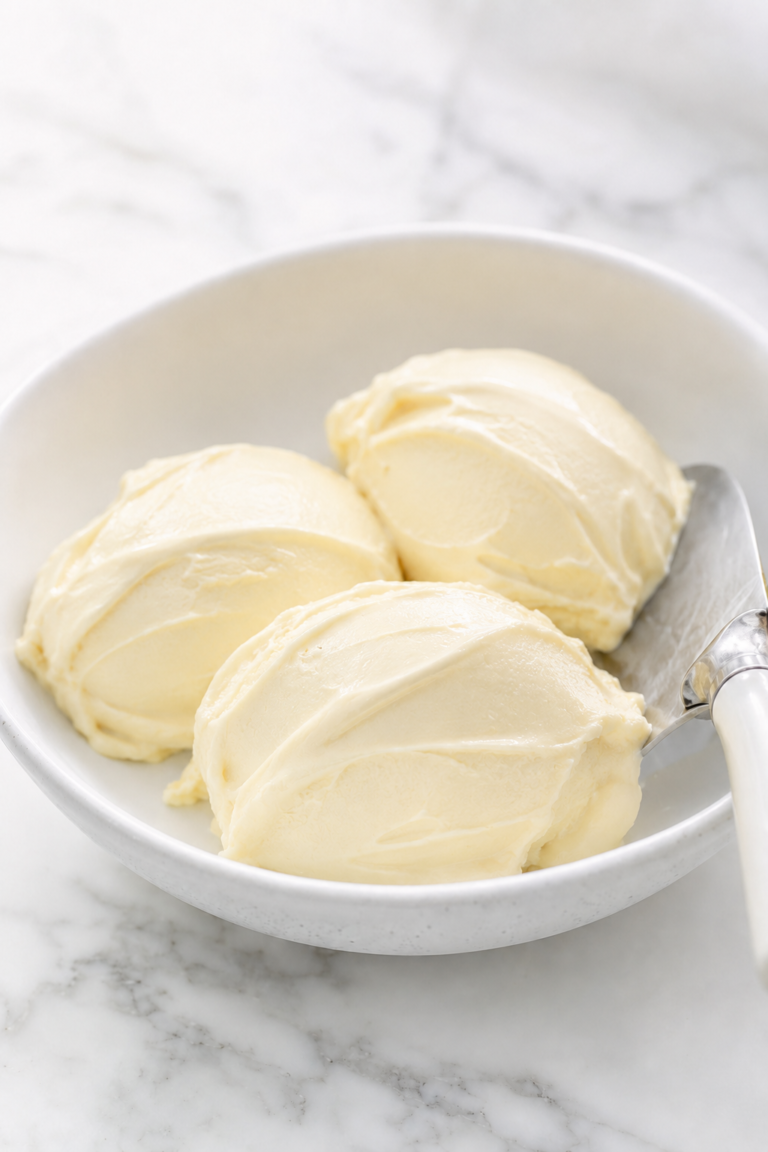
- Authentic Italian Gelato Recipe for a vanilla-forward frozen custard project.
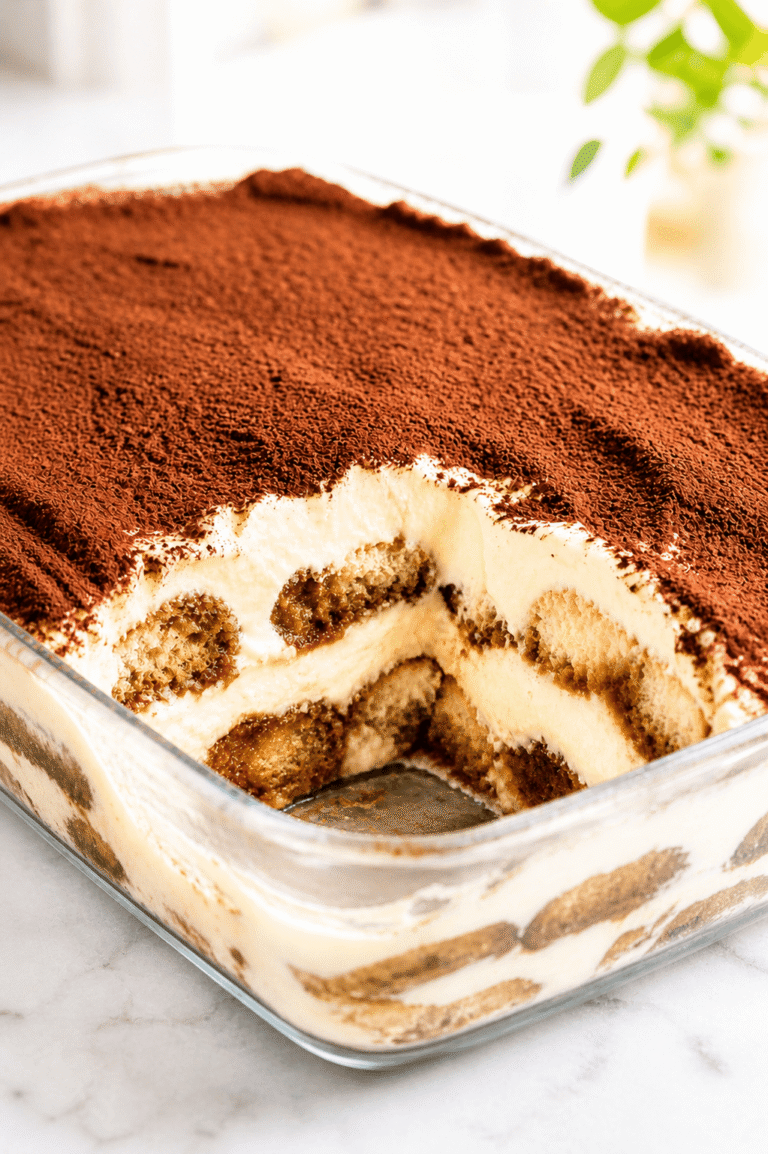
- Tiramisu Recipe for layers of coffee, mascarpone, and cocoa.
- Panna Cotta for a simpler chilled cream dessert.
- Italian Christmas Cookies for a contrasting Italian baking tradition.
Try Another Bakery-Style Project
If you enjoyed weighing, proofing, portioning, and building the recipe in stages, one of these structured projects is a natural next step.
- Homemade Cinnamon Rolls for another enriched yeast dough with a baked finish.
- Oatmeal Cream Pies for a filled bakery dessert with make-ahead value.
- How to Make Cake Pops for another project built around portion and coating control.
- Creme Brulee French Toast for a rich brioche-and-custard breakfast bake.
Why This Bomboloni Recipe Belongs in Your Recipe Box
This is the kind of recipe that becomes more valuable when you return to it, because its cues and control points apply beyond one batch of filled doughnuts.
- A complete pastry project: dough, pastry cream, frying, coating, and filling come together in one rewarding recipe.
- Transferable proofing skills: volume and fingertip response help you read other enriched yeast doughs more confidently.
- Repeatable portion control: weighing the recovered dough and filling creates twelve balanced servings.
- Built-in frying feedback: the two-piece batches and early center check let you correct conditions before the full batch is committed.
- A flexible workback: making the pastry cream one day early turns a long project into two manageable sessions without changing the dough.
- A memorable finished contrast: fine sugar, springy crumb, vanilla and lemon aroma, and cool cream make the result worth the careful process.
Final Thoughts on Homemade Bomboloni
Homemade Bomboloni are a celebration of contrast: golden sugar against soft dough, warm vanilla and lemon aroma against cool pastry cream, and a simple round exterior hiding a generous center. Their pleasure comes from how carefully those small contrasts are built.
This is a recipe to revisit when you want a pastry project with clear milestones and a beautiful payoff. The next batch will feel more familiar because you will remember the elastic dough, the slow-return indentation, the sound of steady frying, and the weight of a properly filled Bombolone.
Patient baking is less about obeying every minute and more about noticing what the dough, oil, and cream are telling you. When observation leads and the clock supports it, the process becomes calmer, more precise, and much more enjoyable.

Vanilla Pastry Cream Bomboloni
Soft, sugar-coated Italian yeast doughnuts filled with smooth vanilla pastry cream. The method uses measured proofing cues, a controlled 340°F frying target, and 35 g of chilled filling in each Bombolone.
Ingredients
Bomboloni Dough
- 200 g unbleached all-purpose flour, approximately 11 to 12 percent protein
- 200 g bread flour, approximately 12 to 13 percent protein
- 160 g whole milk, warmed to 95 to 100°F / 35 to 38°C
- 50 g large egg without shell, about 1 large egg, at room temperature
- 36 g large egg yolks, about 2 large yolks, at room temperature
- 55 g granulated sugar
- 6 g instant yeast
- 7 g fine sea salt
- 5 g pure vanilla extract
- 2 g finely grated lemon zest, yellow outer zest only
- 60 g unsalted butter, soft at 68 to 72°F / 20 to 22°C
Vanilla Pastry Cream
- 360 g whole milk, cold or cool
- 70 g large egg yolks, about 4 large yolks
- 70 g granulated sugar
- 28 g cornstarch, weighed and lump-free
- 1 g fine sea salt
- 6 g pure vanilla extract
- 25 g unsalted butter, cold and cubed
Frying and Coating
- About 1.5 L / 6 cups neutral high-heat oil, such as canola, sunflower, or peanut oil
- 150 g / about 3/4 cup granulated sugar, for coating
Instructions
- Cook and chill the vanilla pastry cream. Set a fine sieve over a shallow heat-safe dish and prepare an ice bath. Heat 360 g whole milk over medium heat until steaming with small bubbles at the edge. Whisk 70 g egg yolks, 70 g sugar, 28 g cornstarch, and 1 g salt until smooth and pale. Slowly whisk in about half of the hot milk, then return everything to the saucepan. Cook over medium heat, whisking continuously, until the cream thickens and bubbles break through the center. Continue whisking for 60 seconds and make sure it reaches at least 160°F / 71°C. Press through the sieve, then stir in 6 g vanilla and 25 g cold butter until smooth. Spread in the dish, press food-safe wrap onto the surface, cool over the ice bath for 10 to 15 minutes, and refrigerate at or below 40°F / 4°C until fully cold, at least 3 hours. Whisk briefly before filling. The cold cream should be glossy and hold a soft ridge.
- Mix and develop the dough. Combine both flours, 55 g sugar, 6 g instant yeast, 7 g salt, and 2 g lemon zest in the mixer bowl. Add 160 g warm milk, 50 g whole egg, 36 g yolks, and 5 g vanilla. Mix on low for 2 to 3 minutes, until no dry flour remains, then cover and rest for 10 minutes. Knead on medium-low for 5 to 7 minutes, until the dough begins to clear the bowl. Add 60 g soft butter in four additions, allowing each addition to disappear before adding the next. Knead for another 7 to 10 minutes. Stop when the dough is smooth, elastic, slightly tacky but not wet, and stretches into a thin translucent window without tearing immediately. The final dough temperature should be 78 to 82°F / 26 to 28°C. If it is warmer than 84°F / 29°C, flatten it in a lightly greased covered container and chill for 10 minutes. Do not add unmeasured flour.
- Bulk proof the dough. Place the dough in a lightly greased straight-sided container and mark the starting height. Cover and proof at about 75 to 80°F / 24 to 27°C for approximately 75 to 105 minutes. Continue until the volume has increased by about 75 to 100 percent, the top is softly domed, bubbles are visible near the sides, and a gentle press leaves a shallow impression that begins to recover. Let the dough state, not the clock alone, decide when to continue.
- Divide and shape twelve equal pieces. Turn the dough onto a very lightly greased or minimally floured surface. Weigh all recovered dough and divide that number by twelve. With full recovery, each portion will be approximately 65 g. Keep the pieces within 1 g of one another, and do not discard dough or create a thirteenth Bombolone. Shape each portion into a tight smooth ball without tearing the skin. Rest seam-side down for 10 minutes, covered. Press each ball into a round about 3 inches / 7.5 cm wide and 3/4 inch / 2 cm thick, then place it on an individual parchment square.
- Final proof the Bomboloni. Cover the rounds loosely and proof at about 75 to 80°F / 24 to 27°C for approximately 45 to 75 minutes. Begin heating the oil during the final 20 to 25 minutes. The rounds are ready when they look puffy and light, stand about 1.5 times their shaped height, and a lightly floured fingertip indentation returns slowly while leaving a faint mark. Immediate spring-back means they need more time. A deep indentation with deflation means they have gone too far and must be handled gently.
- Fry two Bomboloni at a time. Add oil to a heavy pot to a depth of 2 1/2 to 3 inches, keeping the pot no more than halfway full. Keep a lid or sheet pan nearby, keep all tools dry, and never leave the oil unattended. Heat to 340°F / 171°C and maintain a working range of 334 to 342°F / 168 to 172°C. Lower two rounds with their parchment squares into the oil and remove the paper with dry tongs as soon as it releases. Fry the first side for about 75 to 90 seconds, turn once, and fry the second side for another 75 to 90 seconds. Let the oil return to 340°F before the next pair. Cut through one early piece and check for 190 to 195°F / 88 to 91°C, a springy fully set crumb, and no raw or gummy line. If the oil smokes, turn off the heat. If a grease fire starts, turn off the heat if safe and cover the pot. Never add water.
- Drain, coat, cool, and fill. Drain on a wire rack over a sheet pan for 45 to 60 seconds. Roll in granulated sugar while warm but no longer dripping oil. Cool for approximately 20 to 30 minutes, until only slightly warm or at room temperature. Fill a piping bag fitted with a long plain tip with cold pastry cream. Puncture the side of each Bombolone and pipe exactly 35 g into the center. Weigh the first filled piece and spot-check later pieces. Serve promptly.
Notes
- Make the pastry cream first because it needs at least 3 hours to chill. It may be prepared up to 2 days ahead and kept covered at or below 40°F / 4°C.
- Keep pastry cream refrigerated until filling. Discard it after more than 2 hours of cumulative room-temperature exposure.
- Filled Bomboloni are best the day they are made. Refrigerate them within 2 hours, or within 1 hour when the temperature is above 90°F / 32°C, and keep for up to 2 days.
- Let refrigerated filled Bomboloni stand at room temperature for 15 to 20 minutes before serving, while keeping total unrefrigerated time within the safety limit.
- Keep unfilled fried Bomboloni covered at cool room temperature and use them the same day.
- Freezing or reheating filled Bomboloni is not recommended for this recipe.
- The 5 hour 30 minute total uses the upper end of the same-day range and assumes overlapping chilling, proofing, and cooling. Actual proof times depend on dough and room temperature.
Nutrition Information:
Yield: 12 Serving Size: 1 bomboloneAmount Per Serving: Calories: 360Total Fat: 16gSaturated Fat: 6gTrans Fat: 0gCholesterol: 120mgSodium: 290mgCarbohydrates: 47gFiber: 1gSugar: 20gProtein: 7g
Nutrition information is provided as an estimate only and may vary based on specific ingredients, brands, and portion sizes used. This information should not be considered medical or nutritional advice.
12 Sweet Favourites — Yours, Free 🍰
Tiramisù, no-bake cheesecake, the perfect chocolate chip cookie & 9 more reader-loved desserts — gathered into one beautiful free recipe book. From my kitchen to yours.
No spam, just sweet things. Unsubscribe anytime.