How to Make Cream Cheese Frosting (Smooth, Creamy & Stable Every Time)
🎁 FREE E-BOOK: 12 Sweet Favorites — reader-loved desserts in one beautiful recipe book.
Cream cheese frosting is one of the most versatile frostings you can make. It’s smooth, creamy, slightly tangy, and rich enough to elevate everything from carrot cake and red velvet cake to cupcakes, cookies, cinnamon rolls, and bars.
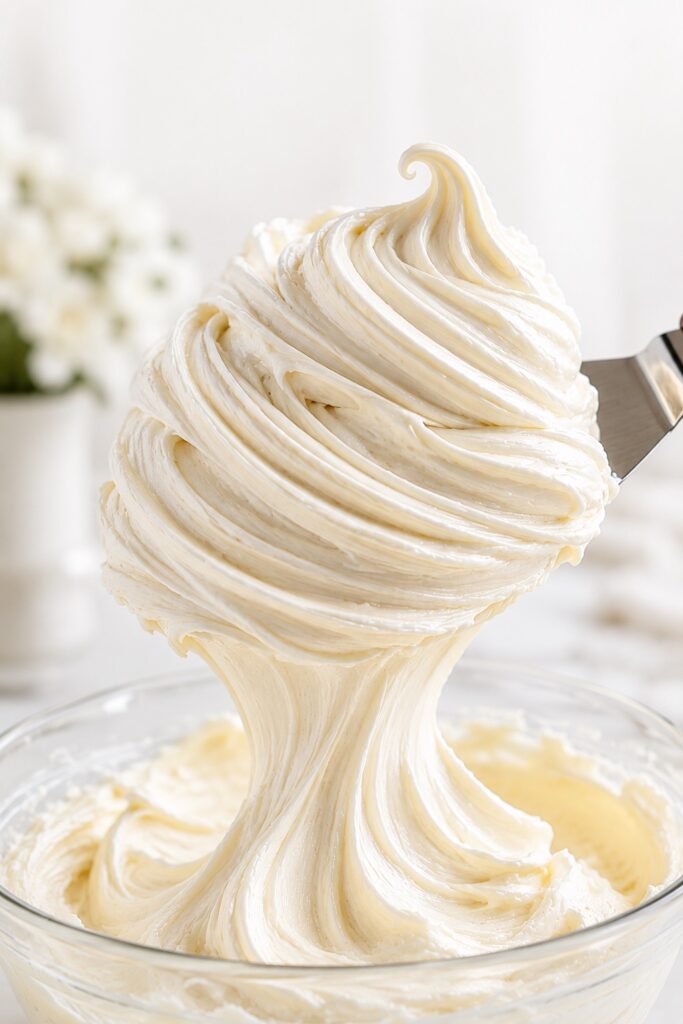
If you’ve ever wondered how to make cream cheese frosting that’s fluffy, stable, and easy to spread, you’re in the right place. This classic cream cheese frosting recipe uses simple ingredients and comes together in just a few minutes, yet delivers the silky texture and balanced flavor that make it a favorite among home bakers and professional bakeries alike.
The secret to perfect cream cheese frosting is achieving the right balance between cream cheese, butter, and powdered sugar while mixing carefully to maintain a smooth, stable consistency. When made correctly, it holds its shape beautifully for piping, spreads effortlessly across cakes, and creates those luxurious swirls that make homemade desserts look bakery-worthy.
In this guide, you’ll learn exactly how to make cream cheese frosting, why each ingredient matters, common mistakes to avoid, and the best ways to use, store, and customize this classic frosting recipe.
Why This Cream Cheese Frosting Works
- Balanced sweetness and tanginess – The combination of cream cheese and powdered sugar creates a frosting that is rich and sweet without becoming overly sugary.
- Smooth and creamy texture – Softened cream cheese and butter blend together into a silky frosting that spreads effortlessly over cakes, cupcakes, and cookies.
- Stable enough for decorating – When mixed properly, this frosting holds swirls, borders, and simple piping designs while maintaining a light texture.
- Made with simple ingredients – You only need a few basic baking staples to create bakery-quality cream cheese frosting at home.
- Ready in minutes – The entire recipe comes together in about five minutes, making it one of the quickest homemade frostings you can prepare.
- Works with countless desserts – From carrot cake and red velvet cake to cinnamon rolls, pumpkin bread, and cupcakes, this frosting complements a wide variety of baked goods.
- Easy to customize – Add citrus zest, spices, cocoa powder, maple syrup, or extracts to create different flavor variations while keeping the same creamy base.
Texture and Flavor Profile
Cream cheese frosting is known for its unique balance of sweetness, richness, and tanginess. Unlike traditional buttercream, which is often very sweet, cream cheese frosting has a slightly tart flavor that helps balance desserts and prevents them from tasting overly sugary.
The flavor is creamy and buttery with a subtle tang from the cream cheese and a smooth vanilla finish. This combination makes it especially popular on rich cakes such as carrot cake, red velvet cake, spice cake, and pumpkin desserts.
When prepared correctly, the texture should be silky, smooth, and fluffy without being overly airy. It spreads easily across cakes and cupcakes while remaining thick enough to hold decorative swirls and simple piping designs.
A well-made cream cheese frosting should feel rich and creamy on the palate, yet light enough that it enhances a dessert rather than overwhelming it. The result is a frosting that delivers both flavor and texture in perfect balance.
The Science Behind Cream Cheese Frosting
Although cream cheese frosting is made with only a handful of ingredients, each one plays an important role in creating its signature flavor, texture, and stability.
Cream cheese provides the frosting’s distinctive tangy flavor while also contributing moisture and body. Unlike traditional buttercream, which relies primarily on butter and sugar, cream cheese frosting has a richer, slightly more complex flavor profile that balances sweetness with subtle acidity.
Butter adds richness and structure. As it cools, the butter helps the frosting firm up, making it easier to spread, pipe, and hold decorative swirls. The balance between cream cheese and butter is important because too much cream cheese can create a softer frosting, while too much butter can overpower the characteristic tangy flavor.
Powdered sugar does more than sweeten the frosting. It also acts as a stabilizer by absorbing excess moisture from the cream cheese. This helps create a thicker consistency and improves the frosting’s ability to hold its shape on cakes and cupcakes.
Vanilla extract rounds out the flavor and softens the sharpness of the cream cheese. Even a small amount helps create a more balanced and bakery-style taste.
One of the most important factors when making cream cheese frosting is temperature. Both the cream cheese and butter should be softened before mixing. Cold ingredients can create lumps, while overly warm ingredients can cause the frosting to become loose and difficult to work with.
Overmixing can also affect texture. Unlike whipped cream or meringue-based frostings, cream cheese frosting does not benefit from prolonged mixing. Once the ingredients are fully combined and smooth, it is best to stop mixing to maintain a thick, stable consistency.
When prepared correctly, cream cheese frosting should be smooth, creamy, spreadable, and sturdy enough for piping while still maintaining its signature light and silky texture.
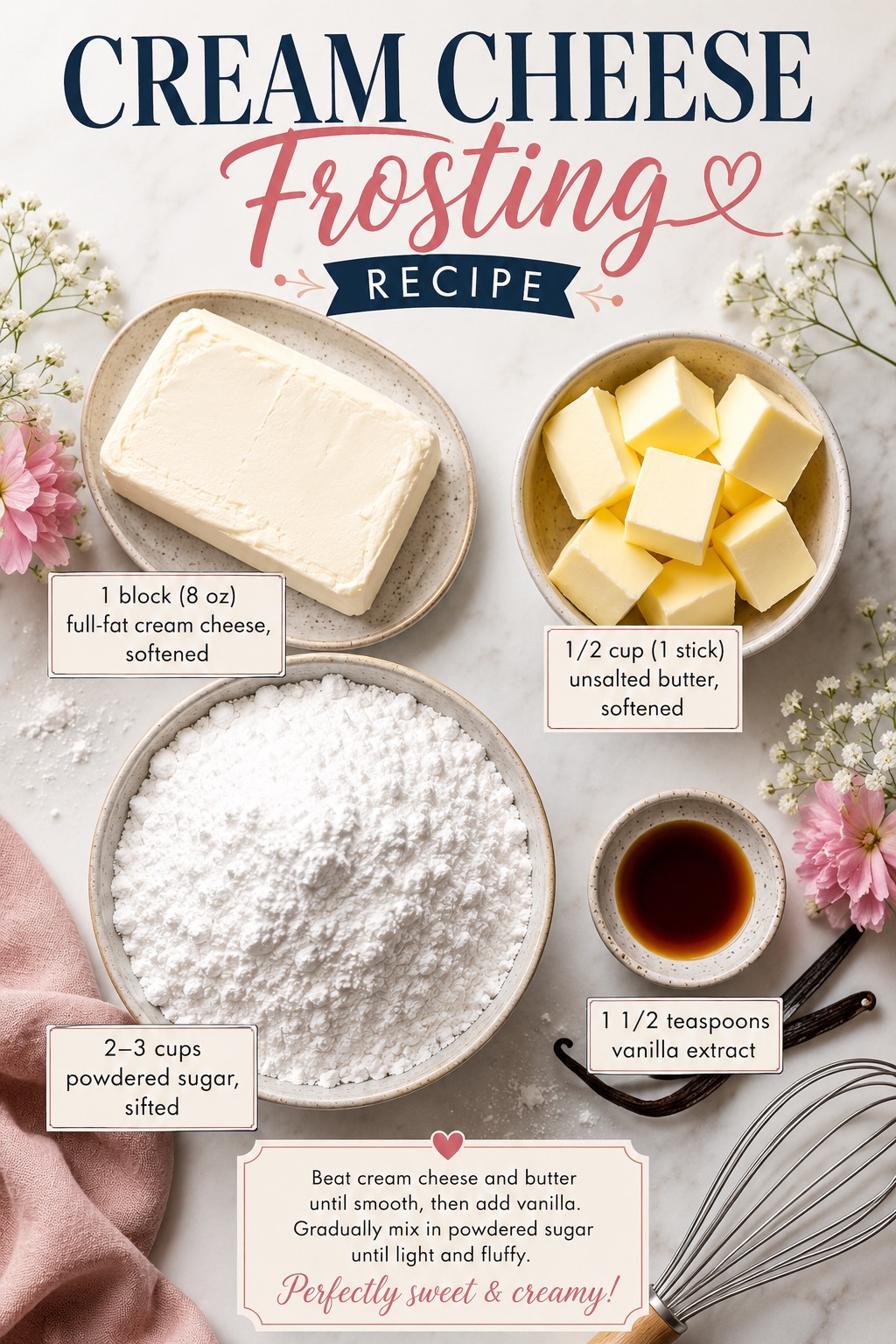
Ingredients You Actually Need
Basic Cream Cheese Frosting
Here’s the classic combo:
- 1 block (8 oz) full-fat cream cheese, softened
- ½ cup (1 stick) unsalted butter, softened
- 2–3 cups powdered sugar, sifted
- 1½ teaspoons vanilla extract
- Pinch of salt – balances out the sweetness
That’s it. Nothing fancy. And no, you don’t need milk or cream unless you like runny, sad frosting.
Optional Extras
Want to get fancy?
- Lemon zest or juice – adds brightness
- Cinnamon or nutmeg – perfect for spice cakes
- Cocoa powder – turns it into chocolate cream cheese frosting
- Almond extract – for a nutty twist
FYI: Don’t overdo the extras. This frosting already has personality.
How to Make Cream Cheese Frosting Step-by-Step:
Step 1: Soften Your Ingredients
Room temp cream cheese and butter are non-negotiable. If they’re cold, you’ll end up with lumpy frosting that looks like cottage cheese. Ew.
- Let them sit out for about 30 minutes.
- Or cheat: microwave in short 10-second bursts. Don’t melt them. You’re softening, not nuking.
Step 2: Beat the Cream Cheese and Butter
Toss them in a mixing bowl. Use a hand mixer or stand mixer on medium speed.
- Beat for about 2 minutes.
- You want a smooth, creamy base before adding sugar.
Pro tip: Scrape the bowl often. Cream cheese hides in corners like it owes you money.
Step 3: Add the Powdered Sugar (Slowly)
Dump it all in at once, and you’ll create a powdered sugar dust cloud. Start with 2 cups, beat on low until combined, then increase to medium-high.
- Want it sweeter/thicker? Add up to another cup.
- Taste as you go. You’re the boss here.
Step 4: Add Vanilla (or Whatever Extras)
Pour in your vanilla and beat again until everything’s fluffy and smooth. This takes about 30 seconds. Don’t overdo it, you’re making frosting, not whipped air.

Common Mistakes to Avoid (Learn From My Pain)
Using Low-Fat Cream Cheese
Don’t. Just don’t.
- It turns out too soft.
- It tastes like sadness.
- It breaks easily and won’t hold shape.
Stick to full-fat block cream cheese. Not the tub. Not the whipped kind. Not some weird non-dairy “alternative” (unless you like crying over cupcakes).
Overbeating
Cream cheese is weird. Beat it too much and it turns runny. Annoying, right?
- Stop once everything’s combined and smooth.
- If you see it getting soupy, pop it in the fridge to firm up.
Frosting Warm Cakes
Ever frosted a cake straight out of the oven? Congrats, you made frosting soup. Always, always let your cake cool completely. Like, stone cold.
How to Fix Runny Frosting (It Happens)

Runny frosting? Happens to the best of us. Here’s how to fix it:
- Chill it – 15–30 minutes in the fridge works wonders
- Add more sugar – thickens it fast, but sweetens too
- Add cornstarch – 1 tablespoon at a time if you want less sweetness
- Mix less next time – overbeating ruins everything
Ever tried adding flour to fix it? Yeah… don’t. Unless you like raw flour flavor.
How to Flavor Cream Cheese Frosting

Wanna level up? Try these combos:
Lemon Cream Cheese Frosting
- Add 1 tablespoon fresh lemon juice
- Add zest from 1 lemon
Perfect on lemon cake or blueberry muffins.
Chocolate Cream Cheese Frosting
- Add ¼ cup unsweetened cocoa powder
- Up the sugar to 3½ cups
Great for chocolate lovers who still want that tang.
Maple Cinnamon Cream Cheese Frosting
- Add 1 tablespoon maple syrup
- Add ½ teaspoon cinnamon
Try it on pumpkin cupcakes or banana bread. Trust me.
Keep flavoring light. The cream cheese should still shine.
Can You Pipe Cream Cheese Frosting?
Yes, but…
- Chill it first – at least 15 minutes
- Use a thicker version (less sugar = softer texture)
- Don’t overbeat
- Use a large tip, this stuff’s denser than buttercream
I’ve piped it onto cupcakes for a bake sale, and yeah, my hands were sore after. But they looked great and sold out in 10 minutes. Worth it 🙂

Does Cream Cheese Frosting Needs to Be Refrigerated?
Yes, cream cheese frosting needs to be refrigerated.
Here’s why:
- It contains dairy.
Cream cheese and butter both spoil if left at room temp too long. - It’s not shelf-stable.
Unlike buttercream, it can’t safely sit out all day.

How long can it stay out?
- Max 2 hours at room temperature.
- After that, bacteria can grow. Not worth the risk.
Storage Tips
- Refrigerate in an airtight container for up to 5 days.
- Freeze for up to 3 months (thaw in the fridge overnight).
- Rewhip after chilling if it looks dense or separated.
Planning a party?
- Frost your cake, then keep it in the fridge.
- Bring it out about 30 minutes before serving so it softens a bit.
Want it to hold up longer at room temp? Use half butter, half shortening, but be ready for a texture tradeoff.
Still wanna risk it? Just ask yourself: Do I feel lucky… and also, am I okay with food poisoning? 😬
Best Desserts to Pair with Cream Cheese Frosting
One of the reasons cream cheese frosting remains a bakery favorite is its versatility. The combination of rich cream cheese, butter, and vanilla complements a wide variety of cakes, cupcakes, cookies, and sweet breads.

The slight tanginess helps balance desserts that are naturally sweet, creating a more complex flavor profile than traditional buttercream frosting.
- Carrot Cake – The classic pairing. Cream cheese frosting complements the warm spices and moist texture of carrot cake perfectly.
- Red Velvet Cake – The tangy flavor provides a traditional contrast to the mild cocoa notes in red velvet cake.
- Pumpkin Cake and Pumpkin Bread – The creamy frosting balances pumpkin’s earthy sweetness and pairs beautifully with fall spices.
- Banana Cake – Cream cheese frosting adds richness while enhancing the natural sweetness of ripe bananas.
- Cinnamon Rolls – Warm cinnamon rolls topped with cream cheese frosting create one of the most popular bakery-style breakfast treats.
- Spice Cake – The frosting complements cinnamon, nutmeg, ginger, and clove-based desserts exceptionally well.
- Cupcakes – Its smooth texture makes it ideal for spreading or piping onto vanilla, chocolate, carrot, or pumpkin cupcakes.
- Cookies and Dessert Bars – Cream cheese frosting can be used as a filling, topping, or decorative finish for cookies, brownies, and dessert bars.
Because of its balanced flavor, cream cheese frosting works particularly well on desserts that contain warm spices, fruit flavors, or rich cake layers that benefit from a slightly tangy contrast.
Quick Fix Cream Cheese Frosting (When You’re Feeling Lazy)
Too tired to bake but craving that cream cheese goodness? Here’s a hack:
- Mix equal parts cream cheese and marshmallow fluff.
- Stir in a splash of vanilla.
- Chill and spread.
Boom. Instant “frosting.” Does it taste the same? Not quite. But in a dessert emergency, it gets the job done.

Final Thoughts (Yes, You Should Totally Make This)
Cream cheese frosting is ridiculously easy, insanely delicious, and basically foolproof, unless you ignore everything we just talked about.
So why buy the sad store stuff when you can whip up the good stuff in five minutes flat?
Your cupcakes deserve it. Your cinnamon rolls deserve it. You deserve it.
Got leftover frosting? Grab a spoon. I won’t judge 🙂
Now go make some magic. And maybe keep a secret spoon in the fridge just for frosting emergencies. You’ll thank me later.
Want more baking shortcuts or recipes that don’t suck? Stick around, I’ve got frosting tips, hacks, and cookie secrets coming your way. 👀

Perfect Cream Cheese Frosting
Smooth, creamy, rich, and perfectly balanced, this homemade cream cheese frosting comes together in minutes with just a few simple ingredients. It’s stable enough for piping, easy to spread, and pairs beautifully with carrot cake, red velvet cake, cinnamon rolls, cupcakes, and cookies.
Ingredients
- 8 ounces full-fat block cream cheese, softened
- 1/2 cup unsalted butter, softened
- 2 to 3 cups powdered sugar, sifted
- 1 1/2 teaspoons vanilla extract
- Pinch of salt (optional)
Instructions
- Place the softened cream cheese and butter in a large mixing bowl.
- Beat with a hand mixer or stand mixer on medium speed for about 2 minutes, or until completely smooth and creamy.
- Add 2 cups of powdered sugar and mix on low speed until incorporated.
- Increase the mixer speed to medium and beat until smooth.
- Add additional powdered sugar as needed for a sweeter or thicker frosting.
- Mix in the vanilla extract and optional pinch of salt.
- Beat for 20 to 30 seconds until light, fluffy, and fully combined.
- Use immediately or refrigerate until ready to use.
Notes
- Use full-fat block cream cheese for the best texture and stability.
- Avoid whipped cream cheese or cream cheese spread from tubs.
- Make sure both the butter and cream cheese are softened before mixing.
- If the frosting becomes too soft, refrigerate it for 15 to 30 minutes before using.
- For piping, chill the frosting briefly before transferring it to a piping bag.
- Store leftover frosting in an airtight container in the refrigerator for up to 5 days.
- Freeze for up to 3 months and thaw overnight in the refrigerator before using.
Nutrition Information:
Yield: 12 servings Serving Size: 1 servingAmount Per Serving: Calories: 175Total Fat: 12gSaturated Fat: 7gCholesterol: 32mgSodium: 55mgCarbohydrates: 16gSugar: 15gProtein: 1g
Nutrition information is provided as an estimate only and may vary based on specific ingredients, brands, and portion sizes used. This information should not be considered medical or nutritional advice.
12 Sweet Favorites — Yours, Free 🍰
Tiramisù, no-bake cheesecake, the perfect chocolate chip cookie & 9 more reader-loved desserts — gathered into one beautiful free recipe book. From my kitchen to yours.
No spam, just sweet things. Unsubscribe anytime.



One Comment
Comments are closed.