Peach Salad
🎁 FREE E-BOOK: 12 Sweet Favorites — reader-loved desserts in one beautiful recipe book.
Peach salad brings juicy wedges of ripe peach together with peppery arugula, creamy feta, toasted pecans, and a bright honey-Dijon vinaigrette. Every forkful balances fresh fruit with savory contrast, while the nuts add the crisp finish that makes the bowl feel complete.

This is the kind of colorful summer side that makes ripe peaches feel at home beside lunch or dinner, not only at dessert. It looks generous on a platter, comes together in 20 minutes, and gives a familiar bowl of greens a more seasonal personality.
The method is worth returning to because it controls the details that usually make fruit-and-green salads watery or bruised: firm-ripe peaches, thoroughly dry components, cooled pecans, and dressing added in two measured stages. If you are looking for a sweet bowl without greens or cheese, this fresh fruit salad follows that fruit-only direction instead.
Quick Peach Salad Overview
This quick overview shows the texture, flavor, timing, and method before you begin, so you can decide whether this fresh savory salad fits your menu.
| Texture | Juicy defined peaches, springy arugula, creamy feta, and crisp pecans |
|---|---|
| Flavor | Sweet peach, peppery greens, salty feta, and bright honey-Dijon vinaigrette |
| Difficulty | Easy |
| Time | 20 minutes total |
| Servings | 4 side servings |
| Method | Toast the pecans, whisk the vinaigrette, dress the greens lightly, then layer the delicate toppings |
| Best For | Summer lunches, cookouts, potlucks, and simple dinners where final assembly can happen near serving |
| Recipe Identity | A savory leafy peach salad, not a fruit-only, creamy dessert, Caprese, or grilled-peach salad |
In short: choose peaches that are ripe but still structured, keep every component dry, and assemble the salad only when you are ready to serve it.
Why This Peach Salad Works
The recipe works because each ingredient and each stage has a defined job, from the thickness of the peach wedges to the exact amount of dressing used on the greens.
- Firm-ripe peach wedges hold their shape. Cutting the fruit into 1/2-inch wedges keeps peaches prominent without making them too fragile to layer.
- A short onion soak protects the fruit flavor. Ten minutes in cold water softens the harshest edge while leaving the slices crisp.
- The vinaigrette is fully measured. A 3:1 oil-to-vinegar ratio, honey, and Dijon create a bright dressing without relying on vague seasoning to taste.
- Two-stage dressing limits rough handling. The greens receive 3 tablespoons first, while peaches, feta, and pecans are layered afterward and finished with the remaining dressing.

Why You’ll Love This Fresh Peach Salad
This salad is especially useful when you want a fast seasonal side with enough contrast to feel special but no complicated finishing work.
- Ready in 20 minutes: the onion soaks while you toast the pecans, mix the dressing, and prepare the peaches.
- Made for ripe summer fruit: peaches stay at the center rather than disappearing beneath heavy dressing.
- Full of contrast: sweet, peppery, tangy, creamy, and crisp elements meet in one bowl.
- Easy to stage ahead: several components can be prepared separately before a quick last-minute assembly.
The Science of a Crisp, Balanced Peach Salad
Four simple mechanisms explain why this salad stays more defined when the ingredients are prepared and combined in the right order.
Dry Surfaces Improve Coating
Water left on arugula, peaches, or soaked onion dilutes the vinaigrette and collects at the bottom of the bowl. Dry produce gives the measured dressing a better surface to coat and helps the finished salad look lightly glossy rather than wet.
Dijon Supports a Temporary Emulsion
Whisking the vinegar, honey, Dijon, salt, and pepper before adding the olive oil helps disperse the thick honey and mustard. The result should look glossy and temporarily unified, and it can be whisked again if it separates while standing.
Staged Dressing Protects Delicate Toppings
Coating the greens first means the peaches and feta do not need prolonged tossing. The final drizzle seasons the top of the salad while allowing the fruit wedges and cheese crumbles to remain visibly distinct.
Cooling Stops Carryover Toasting
Pecans continue to darken in a hot skillet after the burner is turned off. Moving them to a cool plate protects their flavor, and letting them cool completely keeps residual heat away from the arugula and feta.
Ingredients for Peach Salad
The ingredient list is short, so ripeness, freshness, and accurate measuring matter more than adding extra toppings.
Ingredient List
Measure the ingredients in this order so the salad keeps its intended balance of fruit, greens, cheese, nuts, and vinaigrette.
- 3 medium-large yellow freestone peaches, about 1 1/4 pounds (570 g) whole and about 17 1/2 ounces (500 g) prepared, washed, pitted, and cut into 1/2-inch (1.25 cm) wedges
- 1 packed 5-ounce container baby arugula, about 5 cups (142 g), completely dry
- 1/4 small red onion, about 1 ounce (30 g), very thinly sliced
- 1/2 cup crumbled feta cheese, about 2 2/3 ounces (75 g), cold and well drained
- 1/3 cup chopped pecans, about 1 1/2 ounces (40 g)
- 3 tablespoons extra-virgin olive oil, 45 ml (about 41 g)
- 1 tablespoon apple cider vinegar, 15 ml (about 15 g)
- 1 tablespoon honey, about 21 g
- 1 teaspoon Dijon mustard, 5 ml (about 5 g)
- 1/4 teaspoon fine sea salt, about 1.5 g
- 1/8 teaspoon freshly ground black pepper, about 0.3 g

Choosing the Right Ingredients for Peach Salad
The best peaches for this salad smell fragrant, give slightly under gentle pressure, and still hold a clean edge when sliced.
- Yellow freestone peaches: Freestone fruit is easier to pit cleanly, but firmness matters most. Avoid hard fruit with little aroma and very soft fruit that collapses under the knife. Penn State Extension also recommends choosing peaches that are firm to slightly soft and avoiding bruised, wrinkled, or fermented-smelling fruit in its peach selection guidance.
- Baby arugula: Use fresh leaves without slimy spots or excess moisture. Its peppery flavor keeps the peaches from making the salad taste dessert-sweet.
- Red onion: Very thin slices provide a savory edge without turning each bite sharp. The cold-water soak is part of the method, not an optional garnish step.
- Feta: A well-drained block gives the most control over crumble size, but pre-crumbled feta works when it is cold, fresh, and measured by weight.
- Pecans: Use fresh nuts without a stale or paint-like smell. Toasting deepens their flavor, but they must cool before they meet the greens.
- Produce preparation: The FDA’s produce-safety guidance recommends washing produce under running water, not using soap, and drying it with a clean towel. Wash whole peaches before cutting them.
Peaches that are already too soft to hold defined wedges are better suited to a cooked dessert such as peach pie, where their released juices become part of the filling.

Essential Tools for a Crisp Peach Salad
A few correctly sized tools give the greens enough room, keep the vinaigrette measurable, and make it easier to cool the pecans quickly.
- Large shallow serving bowl or platter with salad servers: Use at least a 3-quart working capacity so the arugula can be coated without compression and the finished salad can be lifted gently.
- Small bowls or a 1-cup jar with a whisk or tight-fitting lid: Use one vessel for the vinaigrette and a separate small bowl for the cold-water onion soak.
- 10-inch skillet, heat-safe spatula, and cool plate: These provide even dry toasting, frequent stirring, and immediate transfer for the pecans.
- Cutting board, sharp knife, and measuring tools: A sharp knife creates clean peach wedges and thin onion slices, while measuring spoons keep the dressing allocation exact.
- Clean towels or salad spinner, plus a colander or strainer: Use them to dry washed produce and drain the soaked onion thoroughly.

Before You Begin: Protect the Texture
Check these six details before assembly so the peaches, greens, feta, and pecans enter the bowl in the right condition.
- Use firm-ripe peaches that give slightly but still hold clean wedge edges.
- Make sure the arugula, peaches, and soaked onion are completely dry.
- Keep the feta cold, well drained, and in visible crumbles.
- Slice the onion very thinly and begin its 10-minute cold-water soak first.
- Transfer the toasted pecans from the skillet and cool them completely.
- Wait to dress and assemble the salad until close to serving.
What to Expect from This Fresh Peach Salad
This is a lightly dressed savory salad with distinct components, not a heavily tossed fruit mixture where the cheese and peaches blend into the dressing.
- The peaches should be juicy but firm enough to keep defined edges.
- The vinaigrette may separate after standing; whisking or shaking restores its glossy appearance.
- The arugula should look lightly coated rather than shiny-wet or flattened.
- The feta and pecans should remain visible on top instead of disappearing into the greens.
- A small amount of juice release is normal as the salad sits, which is why immediate service gives the best texture.
How to Make Peach Salad
Follow the seven phases in order, allowing the onion soak, pecan cooling, and produce preparation to overlap so the salad is ready in about 20 minutes.
1. Mellow the Red Onion
Place the very thinly sliced red onion in a small bowl of cold water and let it soak for 10 minutes. Drain it thoroughly, then pat the slices dry before they go near the greens.
What you should see: The onion slices remain crisp but smell and taste less aggressively sharp, with no beads of water clinging to them.

2. Toast and Cool the Pecans
Add the chopped pecans to a dry 10-inch skillet over medium-low heat. Cook for 3 to 5 minutes, stirring frequently, then transfer them immediately to a cool plate.
What you should see: The pecans smell fragrant and look slightly deeper in color without dark scorched patches. Let them cool completely before assembly.

Tip: Do not leave the pecans in the skillet while they cool. The retained heat can turn a light toast into a bitter one.

3. Whisk the Honey-Dijon Vinaigrette
Whisk the apple cider vinegar, honey, Dijon mustard, salt, and black pepper until the honey and mustard are evenly dispersed. Add the olive oil gradually while whisking until the dressing looks glossy and temporarily unified.
What you should see: The vinaigrette has no dense honey streak at the bottom and yields about 1/3 cup (80 ml).

4. Prepare and Dry the Produce
Follow the package direction for the baby arugula. If washing is needed, dry it completely. Wash and dry the whole peaches, remove the pits, and cut the fruit into approximately 1/2-inch (1.25 cm) wedges.
What you should see: The leaves look dry and springy, and the peach wedges bend slightly under pressure while keeping clean edges.

5. Dress the Greens with 3 Tablespoons
Place the dry arugula and dried onion in the large bowl. Measure 3 tablespoons of vinaigrette over them and toss gently until the dressing is evenly distributed.
What you should see: The leaves look lightly glossy but remain springy, with no puddle at the bottom of the bowl.

6. Layer the Peaches, Feta and Pecans
Spread or transfer the dressed greens to a wide serving bowl or platter. Arrange the peaches over the greens, scatter on the feta and cooled pecans, then drizzle the remaining vinaigrette across the top. Lift the components once or twice with clean salad servers instead of vigorously tossing.

What you should see: The peach wedges, feta crumbles, and pecan pieces remain distinct, and the vinaigrette reaches the toppings without coating them into one mixture.

7. Serve the Salad Immediately
Bring the salad to the table as soon as it is assembled, while the arugula is springy, the pecans are crisp, and the fruit still holds clean edges.
What you should see: A lightly glossy bed of greens with defined peach wedges, visible feta, crisp pecans, and no pool of dressing underneath.

Peach Salad Doneness and Texture Guide
This no-cook salad is ready when every component reaches its intended state and the bowl looks composed rather than saturated.
- The pecans are fragrant, lightly toasted, and completely cool.
- The onion remains crisp but has a gentler raw edge.
- The arugula, peaches, and onion are dry before dressing.
- The vinaigrette looks glossy, with no dense honey at the bottom.
- The arugula is lightly coated but not matted.
- The peach wedges keep their shape after the final lift.
- The feta and pecans remain visibly distinct.
- No dressing pool is visible beneath the salad.
Expert Tips for a Crisp, Balanced Peach Salad
These focused tips protect the recipe’s contrast without adding extra ingredients or turning a quick salad into a complicated project.
- Start the onion first. Its 10-minute soak can run while the pecans toast and the vinaigrette comes together.
- Dry more carefully than you think you need to. Moisture hides between leaves and on onion slices, where it can dilute the dressing.
- Keep peach wedges substantial. The 1/2-inch thickness gives ripe fruit enough structure for layering.
- Cool the pecans on a plate. This stops carryover toasting and prevents warm nuts from meeting cold feta and greens.
- Rewhisk before measuring. A temporary vinaigrette may separate while the other components are prepared.
- Handle the final bowl with restraint. I learned to dress the greens first and layer the peaches and feta last because tossing everything together bruised the fruit and smeared the cheese.
Peach Salad Mistakes That Cause Wilted Greens or Mushy Fruit
Most problems come from excess moisture, heat, or handling, and several can be prevented before the salad is assembled.
| Problem | Likely cause | How to prevent or correct it |
|---|---|---|
| Watery bowl | Wet produce, very soft peaches, or dressing added too early | Dry every component and assemble near serving. If liquid pools, move the solids to a clean platter without pouring the liquid back over them. |
| Wilted arugula | Warm nuts, excess dressing, compression, or long holding | Cool the pecans fully, use the measured dressing split, and serve immediately. Wilted greens cannot be made crisp again. |
| Onion dominates | Thick slices, too much onion, or no soak | Use only 30 g, slice very thinly, soak for 10 minutes, and dry well. |
| Separated dressing | Oil added before the honey and Dijon are dispersed | Whisk the acid, honey, mustard, and seasonings first, then add oil gradually. Rewhisk before use. |
| Peaches collapse | Overripe fruit, thin slices, or aggressive tossing | Choose firm-ripe fruit, cut 1/2-inch wedges, and layer instead of repeatedly tossing. |
| Feta smears | Warm or wet cheese and excessive handling | Keep the feta cold and drained, then add it after the greens are dressed. |
| Pecans taste bitter | High heat or cooling in the hot skillet | Toast over medium-low heat, stir often, and transfer immediately. Burnt nuts must be replaced. |
Beautiful Ways to Serve Peach Salad
Serve the salad where its colors and separate textures remain visible, choosing a presentation that suits the size and mood of the meal.
Show the Colors on a Wide Platter
Spread the dressed greens in a low layer on a wide white platter, then arrange the peach wedges, feta, and pecans across the top. The open surface keeps the golden fruit visible and prevents the delicate toppings from being compressed.
Build Individual Peach Salad Bowls
Divide the dressed greens among shallow bowls first, then portion the peaches, feta, pecans, and final drizzle over each serving. This gives every bowl the same sweet, salty, creamy, and crisp balance without a second round of tossing.

Serve It Crisp at a Cookout
Keep the prepared components chilled while the main dish cooks, then dress and layer the salad just before everyone sits down. Its juicy peaches and bright vinaigrette make a fresh contrast beside smoky grilled chicken, pork, or turkey burgers.
Assemble It Fresh for a Summer Potluck
Transport the vinaigrette, peaches, feta, pecans, and dry greens in separate covered containers, then finish the platter at the destination. Last-minute assembly protects the springy leaves, clean peach edges, and crisp nuts while still creating a generous centerpiece.
What to Serve with Peach Salad
The sweet-savory profile pairs best with simple mains that leave room for the peaches, such as grilled chicken, pork tenderloin, salmon, turkey burgers, or a vegetable tart.
- For lunch: Add crusty bread and a simply seasoned protein.
- For a cookout: Pair it with grilled chicken, pork, or burgers and serve it instead of a heavy creamy side.
- For a vegetarian table: Set it beside a savory tart, grilled vegetables, or a grain dish.
- For brunch: Serve smaller portions alongside quiche or toasted bread.
How to Store Peach Salad Without Losing Texture
The salad is at its best immediately, but the components can be staged separately and leftovers can be chilled promptly when quality and safety limits are kept distinct.
Make-Ahead Components
Prepare the vinaigrette and pecans up to 1 day ahead, keep the arugula dry and refrigerated, and handle the onion earlier on serving day.
- Refrigerate the vinaigrette in a covered container for up to 1 day, then whisk or shake it before use.
- Store cooled toasted pecans airtight at cool room temperature for up to 1 day.
- Keep the arugula dry in its refrigerated container.
- Refrigerate soaked, drained, and dried onion in a covered container for several hours on serving day.
- Wait to slice the peaches, dress the greens, and assemble the platter until close to serving.
Leftovers and Food-Safety Limits
Refrigerate leftovers promptly in a covered container and use them within 1 day for the best remaining quality, knowing the arugula will soften and the pecans will lose crispness.
For safety, follow FoodSafety.gov chilling guidance: refrigerate perishable food within 2 hours, or within 1 hour when the temperature is above 90°F (32°C), and keep the refrigerator at 40°F (4°C) or below. The 1-day leftover recommendation is about this salad’s texture, not a claim that it becomes unsafe at a precise quality cutoff.
Why This Salad Should Not Be Frozen
Freezing damages the fresh structure of both peaches and arugula. After thawing, the fruit releases more liquid, the leaves collapse, and the salad no longer matches its intended texture.
Peach Salad Variations That Keep the Balance
These measured substitutions preserve the basic salad format while changing flavor or texture in a predictable way.
- Baby spinach: Replace the arugula with the same 5-ounce (142 g) weight. The salad will be milder and less peppery, and the leaves may look more compressed.
- Soft goat cheese: Replace the feta with 2 2/3 ounces (75 g). The result will be creamier, tangier, and more likely to smear during handling.
- Walnuts: Replace the pecans with 1 1/2 ounces (40 g) chopped walnuts, toasted and cooled. Their flavor is earthier and slightly more bitter.
- Nectarines: Use about 17 1/2 ounces (500 g) prepared firm-ripe nectarines. Their smoother skin and different flavor create a variation rather than the canonical Peach Salad.
If you prefer a creamy fruit-and-nut side rather than a vinaigrette-based leafy salad, this creamy apple salad follows that different format.
Peach Salad Questions, Answered
These answers cover the questions that still need a direct standalone response after the preparation, variation, and storage guidance above.
What Kind of Peaches Are Best for Peach Salad?
Use fragrant yellow peaches that are firm-ripe and give slightly under gentle pressure. They should be juicy but structured enough to hold clean 1/2-inch wedges; very hard fruit lacks flavor, while very soft fruit breaks down during assembly.
Do I Need to Peel the Peaches?
No. Peach skin is tender enough for this salad and helps the wedges keep their color and shape. Peel only if you strongly dislike the texture, understanding that peeled ripe wedges need even gentler handling.
Can I Make Peach Salad Ahead of Time?
Prepare the vinaigrette and toasted pecans up to 1 day ahead and the soaked onion several hours ahead, but keep everything separate. Slice the peaches, dress the greens, and assemble the salad close to serving.
How Do I Keep Peach Salad from Getting Soggy?
Dry the arugula, peaches, and soaked onion thoroughly, cool the pecans completely, and wait to dress the salad. Use 3 tablespoons of vinaigrette on the greens first, then layer the delicate toppings and finish with the remainder.
Can I Use Canned or Frozen Peaches?
Fresh peaches are the best fit for this formula. Canned peaches are softer and carry packing liquid, while thawed frozen peaches release more moisture, so neither provides the defined wedges and fresh structure this salad is designed to have.
How Long Does Peach Salad Last?
The assembled salad is best immediately. Refrigerated leftovers can be used within 1 day as a quality guideline, but the greens soften and the pecans lose crispness even when the salad has been chilled promptly.
More Fruit Salads and Summer Favorites
Continue with a fruit-led salad, a familiar gathering favorite, or a baked dessert that makes seasonal fruit the center of the next recipe.
Fruit-Led Salads for Every Season
These recipes keep fruit at the center while moving from juicy summer bowls to creamy and festive formats.
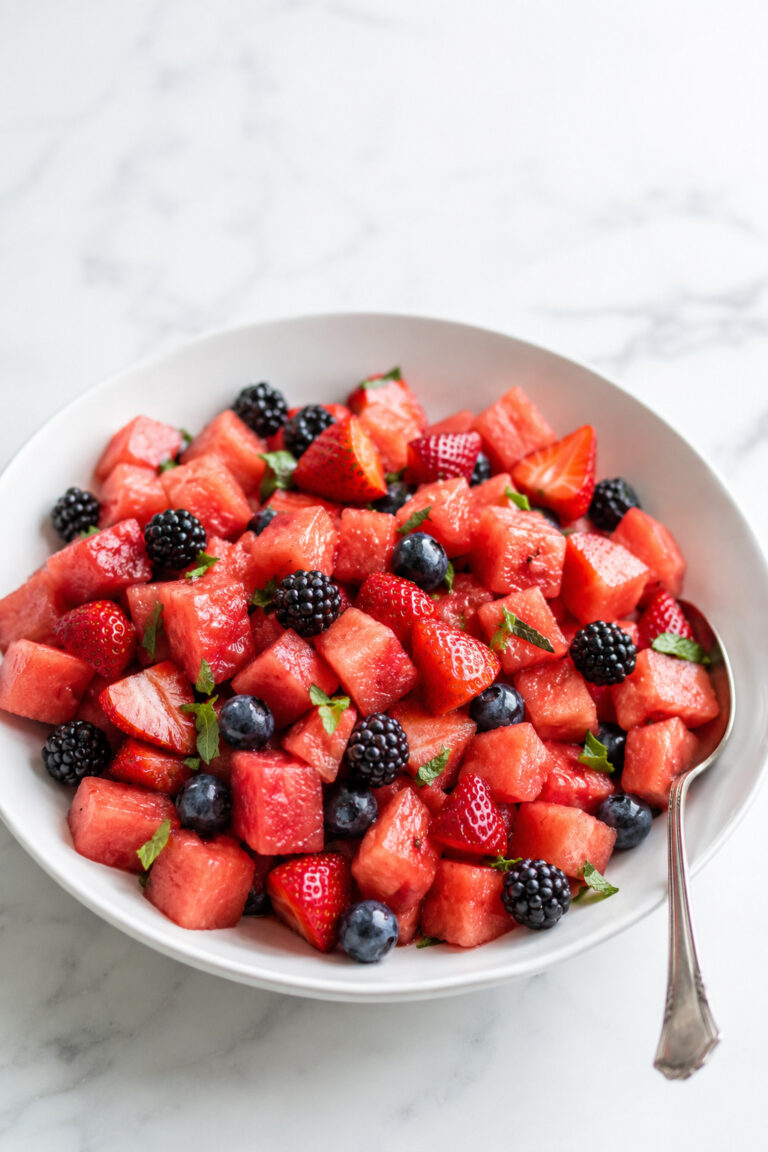
- Try Watermelon Fruit Salad when you want a juicy fruit-only bowl for warm weather.
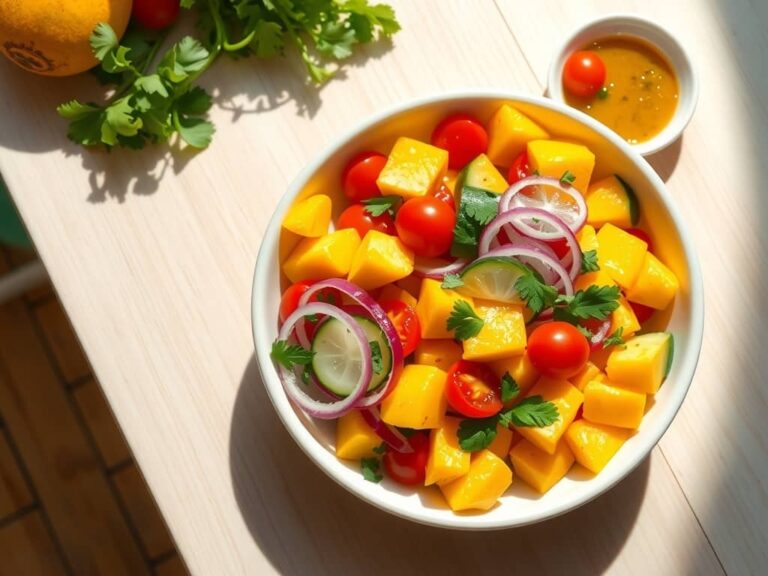
- Choose Mango Salad for another bright fruit-led salad with a tropical direction.
- Make Grape Salad when a creamy option suits a gathering or potluck.
- Save Cranberry Salad for a tart, festive fruit dish on a cooler-season menu.
Classic Salads for Gatherings
These familiar recipes offer heartier, creamier, or more nostalgic directions for potlucks and holiday tables.
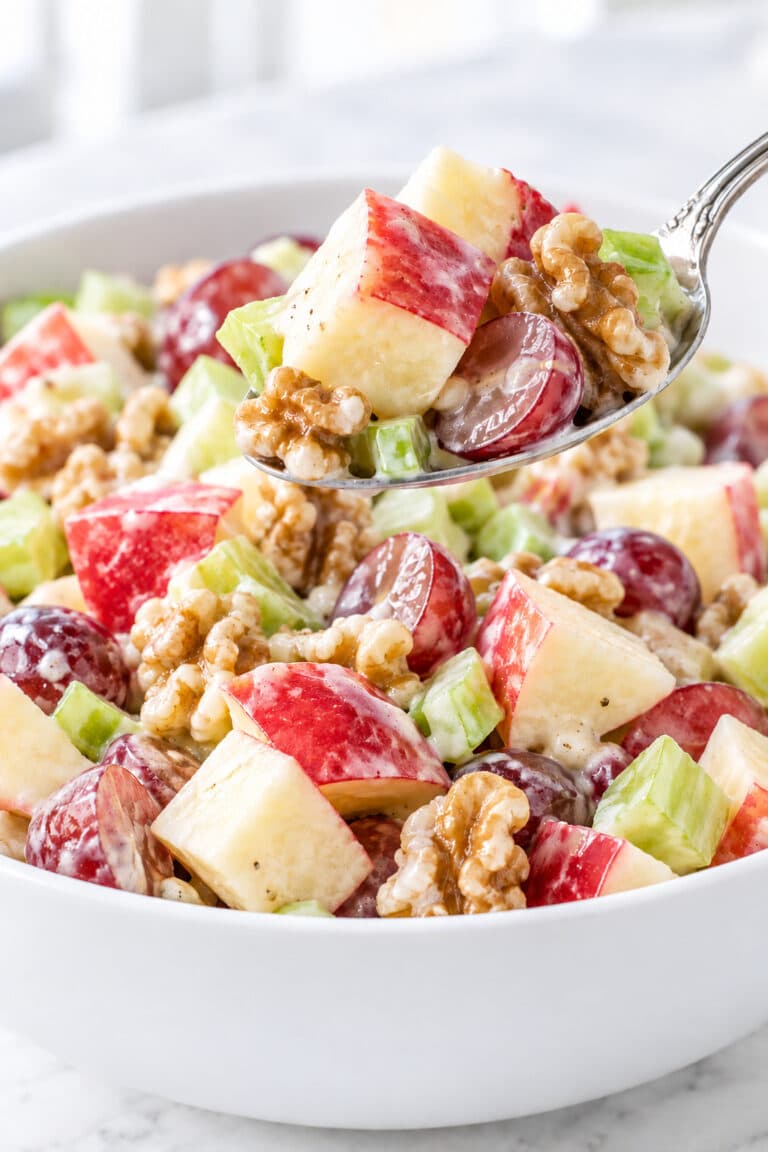
- Choose Waldorf Salad for a crisp fruit-and-nut classic with creamy dressing.
- Make Ambrosia Salad when the table calls for a soft, sweet retro favorite.
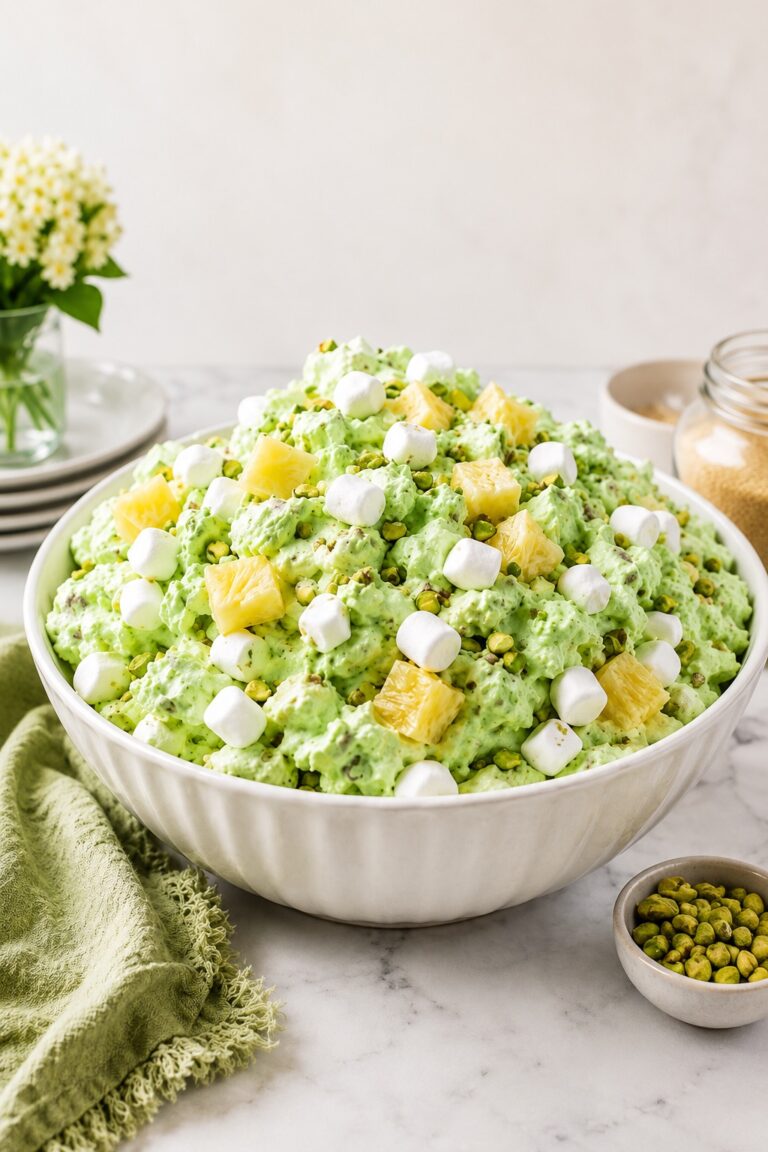
- Try Watergate Salad for a fluffy pistachio dish that travels well to potlucks.
- Serve Sweet Potato Salad when the menu needs a more substantial savory side.
Peach and Berry Desserts to Bake Next
When the next craving is warm and baked, these recipes continue the peach and berry theme in a more indulgent form.
- Bake Peach Cobbler when soft, juicy peaches belong beneath a golden topping.
- Choose Peach Dump Cake for an easier peach dessert with a buttery finish.
- Make Strawberry Pie for a bright berry centerpiece with summer appeal.
- Try Blackberry Cobbler when you want a deep berry filling and a rustic baked topping.
Why This Recipe Belongs in Your Recipe Box
This Peach Salad earns its place as a dependable seasonal side because the method is simple, the contrasts are clear, and the final bowl feels generous without becoming heavy.
- Seasonal Fruit Focus: Ripe peaches stay at the center of every serving.
- Balanced Savory Flavor: Arugula, feta, onion, and Dijon keep the fruit from tasting dessert-sweet.
- Twenty-Minute Method: Concurrent preparation turns a short ingredient list into a complete side quickly.
- Controlled Dressing: One measured batch seasons both the greens and the toppings without guesswork.
- Flexible Component Prep: The dressing, nuts, greens, and onion can be readied separately before assembly.
- Colorful Table Presence: Golden peaches, green arugula, white feta, and toasted pecans create a naturally inviting platter.
A Final Note on Peach Salad
This Peach Salad gives ripe summer fruit a distinctly savory purpose, pairing its sweetness with peppery greens, salty cheese, toasted nuts, and a bright vinaigrette.
Return to the measured, staged assembly whenever texture matters: dry ingredients, cool pecans, a light first coating on the greens, and delicate toppings layered last.
Seasonal ingredients rarely need more noise. A careful cut, a balanced dressing, and a gentle hand are often enough to let them feel abundant.

Peach Salad
Juicy peaches, peppery arugula, creamy feta, and toasted pecans come together with a bright honey-Dijon vinaigrette in this fresh 20-minute summer salad.
Ingredients
For the Peach Salad
- 3 medium-large yellow freestone peaches, about 1 1/4 pounds (570 g) whole and about 17 1/2 ounces (500 g) prepared, washed, pitted, and cut into 1/2-inch (1.25 cm) wedges
- 1 packed 5-ounce container baby arugula, about 5 cups (142 g), completely dry
- 1/4 small red onion, about 1 ounce (30 g), very thinly sliced
- 1/2 cup crumbled feta cheese, about 2 2/3 ounces (75 g), cold and well drained
- 1/3 cup chopped pecans, about 1 1/2 ounces (40 g)
For the Honey-Dijon Vinaigrette
- 3 tablespoons extra-virgin olive oil, 45 ml (about 41 g)
- 1 tablespoon apple cider vinegar, 15 ml (about 15 g)
- 1 tablespoon honey, about 21 g
- 1 teaspoon Dijon mustard, 5 ml (about 5 g)
- 1/4 teaspoon fine sea salt, about 1.5 g
- 1/8 teaspoon freshly ground black pepper, about 0.3 g
Instructions
- Mellow the red onion. Place the thinly sliced onion in a small bowl, cover it with cold water, and let it stand for 10 minutes. Drain thoroughly and pat completely dry.
- Toast and cool the pecans. Toast the pecans in a dry 10-inch skillet over medium-low heat for 3 to 5 minutes, stirring often, until fragrant and slightly deeper in color. Transfer them immediately to a cool plate and let them cool completely.
- Whisk the honey-Dijon vinaigrette. Whisk the apple cider vinegar, honey, Dijon mustard, salt, and pepper until the honey is fully dispersed. Add the olive oil gradually while whisking until the dressing looks glossy and temporarily unified.
- Prepare and dry the produce. Wash the whole peaches under running water and dry them. Pit and cut them into 1/2-inch wedges. Make sure the arugula and drained onion are completely dry before assembly.
- Dress the greens with 3 tablespoons. Place the dry arugula and onion in the large bowl. Measure 3 tablespoons of vinaigrette over them and toss gently until the leaves look lightly glossy with no puddle underneath.
- Layer the peaches, feta, and pecans. Arrange the peaches over the dressed greens, then scatter on the feta and cooled pecans. Drizzle with the remaining vinaigrette and lift the components once or twice with salad servers instead of vigorously tossing.
- Serve immediately. Serve as soon as the salad is assembled, while the arugula is springy, the peach wedges hold clean edges, and the pecans remain crisp.
Notes
- Choose firm-ripe peaches that give slightly but still hold clean wedge edges.
- Dry the arugula, peaches, and soaked onion thoroughly so the measured dressing can coat rather than pool.
- Keep the feta cold and well drained, and cool the toasted pecans completely before assembly.
- Prepare the vinaigrette and toasted pecans up to 1 day ahead and the soaked onion several hours ahead. Store the components separately and slice the peaches near serving.
- The assembled salad is best immediately. Refrigerate leftovers promptly in a covered container and use within 1 day for best quality. Do not freeze.
Substitutions
- Replace arugula with the same 142 g weight of baby spinach for a milder, softer salad.
- Replace feta with 75 g soft goat cheese for a creamier, tangier result that may smear more easily.
- Replace pecans with 40 g walnuts, toasted and cooled, for an earthier flavor.
- Replace the peaches with 500 g prepared firm-ripe nectarines for a similar structure with a different fruit flavor.
Nutrition Information:
Yield: 4 Serving Size: 220 gAmount Per Serving: Calories: 288Total Fat: 22gSaturated Fat: 5gTrans Fat: 0gCholesterol: 17mgSodium: 344mgCarbohydrates: 21gFiber: 4gSugar: 17gProtein: 6g
Nutrition information is provided as an estimate only and may vary based on specific ingredients, brands, and portion sizes used. This information should not be considered medical or nutritional advice.
12 Sweet Favorites — Yours, Free 🍰
Tiramisù, no-bake cheesecake, the perfect chocolate chip cookie & 9 more reader-loved desserts — gathered into one beautiful free recipe book. From my kitchen to yours.
No spam, just sweet things. Unsubscribe anytime.