Classic Pecan Pie Recipe (Rich & Gooey)
Pecan pie is a classic American dessert with a buttery pastry shell, a sweet filling made with eggs and corn syrup, and a generous layer of pecans. This pecan pie recipe adds light brown sugar and vanilla for a rounded, caramel-like flavor, with chopped nuts through the filling and whole halves across the top. The finished slice should hold its shape while remaining soft beneath the toasted pecans.

Picture the Thanksgiving plates cleared, coffee being poured, and a pecan pie ready for its first slice. The fork breaks through the toasted pecans into a soft brown sugar filling, catching a few flakes of butter crust along the way. A spoonful of lightly sweetened whipped cream adds a cool, delicate contrast to that rich bite. With the pie baked and chilled the day before, dessert becomes a moment to sit down and linger.
12 Sweet Favorites — Yours, Free 🍰
Tiramisù, no-bake cheesecake, the perfect chocolate chip cookie & 9 more reader-loved desserts — gathered into one beautiful free recipe book. From my kitchen to yours.
No spam, just sweet things. Unsubscribe anytime.For a flaky base and a center that slices cleanly, this pecan pie recipe includes a partial blind bake, a check beneath the nuts, and a full chill before serving.
Start this pecan pie recipe the day before serving if you can. The pastry rests twice, the shell bakes before the filling goes in, and the finished pie needs a thorough chill. Most of that time is waiting, but it still belongs in your schedule.
Pecan Pie Recipe at a Glance
The pecan pie recipe below makes a full-size, single-crust pie with a soft, set center and a substantial pecan layer. The main planning commitment is cooling and refrigeration, so choose your baking day before you start the pastry.
| Detail | What to expect |
|---|---|
| Texture | Flaky butter crust, soft set filling, and toasted pecans on top |
| Flavor | Pecans, brown sugar, butter, vanilla, and a balancing touch of salt |
| Difficulty | Intermediate, mainly because of the pastry and doneness checks |
| Time | Allow about 10 hours from starting the dough to a chilled pie, including roughly 40–45 minutes of active work |
| Servings | One 9-inch pie, cut into 8 slices |
| Method | Homemade pastry, partial blind bake, baked filling, and a full chill |
| Best for | Thanksgiving, holiday dessert tables, and preparing dessert the day before |
| Pan | A 9-inch / 23 cm metal pie pan, about 1½ inches / 4 cm deep |
| Dough chilling | At least 2 hours before rolling, then 30 minutes after shaping |
| Oven stages | Pecans: 325°F / 165°C for 8–10 minutes; shell: 375°F / 190°C for 25–30 minutes; filled pie: 350°F / 175°C for 55–70 minutes |
| Cooling and final chill | About 1 hour on a rack, then at least 4 hours in the refrigerator until completely cold; refrigerate within 2 hours of baking |
| Make ahead | Bake the day before serving and refrigerate overnight |
| Storage | Refrigerate 3–4 days; freeze the baked, cooled pie for 1–2 months for best quality |
| In Short | A classic pecan pie recipe with homemade butter pastry, brown sugar filling, and pecans in every slice |
Why This Pecan Pie Recipe Works
This pecan pie recipe gives each layer its own attention: the butter crust starts baking before it meets the filling, the chopped pecans are toasted separately, and the whole halves brown on top.
- A drier base beneath a moist filling. Partial blind baking lets the pastry lose moisture before the syrup mixture goes in. Look for a matte, lightly colored bottom before filling the shell.
- Toasted pecans throughout. The 170 g of chopped nuts carry their roasted flavor into the center. Reserving 55 g of untoasted halves for the top gives them time to brown during the filled bake.
- Brown sugar, butter, and vanilla in the center. Light corn syrup supplies sweetness and body; brown sugar adds a gentle molasses note. Melted butter and vanilla round out the filling around the nuts.
- A soft filling that still slices. Eggs provide structure during baking, and a thorough chill lets the cooked filling firm. Checking the center before cooling helps avoid a browned pie with a loose middle.
Why You’ll Love This Pecan Pie Recipe
The pleasure of this pecan pie recipe is in the forkful: crisp pecans first, then soft brown sugar filling and flakes of butter pastry. It is rich enough for a small wedge to feel like a proper dessert.
- Pecans in every bite. Chopped nuts fill the spaces beneath the glossy halves, so the last bite of a slice has as much character as the first.
- Dessert ready the day before. Bake and chill the pie ahead, then clear the oven for dinner. At serving time, all that remains is cutting eight wedges.
- Lovely with very little added. A plain slice suits a cup of coffee; lightly sweetened cream brings a cool contrast. A caramel ribbon is there for anyone who wants an extra indulgence.
- Made for passing around the table. One 9-inch pie fits a family meal, and smaller wedges leave room for a taste of another Thanksgiving dessert.
Who This Pecan Pie Recipe Is Perfect For
This pecan pie recipe is a good match for someone who wants a soft, syrup-sweet filling with nuts in every bite and enjoys working with butter pastry. If you prefer a lightly sweet dessert, a crumb crust, or a pie that can be cut soon after baking, choose a recipe built around that preference instead.
If this pecan pie recipe is your first homemade pastry project, the important commitment is patience with the dough’s temperature. For an experienced baker planning Thanksgiving, the constraint is refrigerator space: the whole pie needs a level place to chill before it becomes a serving-day dessert.
The Baking Science Behind a Set Pecan Filling
In this pecan pie recipe, eggs give the sweet filling its structure, while pieces of cold butter help the pastry bake into flakes. The filling needs to cook through in the oven, then cool completely before it can hold a clean slice.
How Eggs Set a Sweet Filling
In a traditional pecan pie recipe, egg proteins set as they heat, giving the syrup mixture enough structure to hold the pecans. Sugar affects how the eggs set, so check the filling’s movement and central temperature as described in Step 8. Browned nuts alone cannot tell you whether the filling beneath them is cooked.
Why Corn Syrup Affects More Than Sweetness
Corn syrup contributes dissolved sugars and viscosity to the filling. Replacing it with another liquid sweetener changes the composition of the mixture, even when the measuring cup holds the same volume. Use a pecan pie recipe designed for maple syrup or honey if that is the flavor you want, rather than expecting an equal-volume swap to preserve this pie’s set.
How Cold Butter Creates Pastry Layers
The butter crust in this pecan pie recipe needs small, distinct pieces of butter in the dough to help the pastry separate into flakes as it bakes. Too much water or prolonged handling can make it tough. Stop working the dough once it holds together, with butter pieces still visible.
Ingredients for This Pecan Pie Recipe
This pecan pie recipe calls for unsalted butter in both the crust and filling. Keep the pastry butter very cold; melt and cool the filling butter before mixing.
Ingredient List
For this pecan pie recipe, measure the crust and filling separately; butter and salt appear in both. Weigh the pecan halves before chopping so the interior and topping portions come from the same 225 g total.

For the Butter Crust
- 1¼ cups (150 g) all-purpose flour, spooned and leveled
- ½ cup (113 g) unsalted butter, very cold and cubed
- 1 teaspoon (4 g) granulated sugar
- ½ teaspoon (3 g) fine table salt
- 3–5 tablespoons (45–75 ml) ice water, added gradually
For the Pecan Filling
- 2 cups (225 g) pecan halves, measured before chopping: 170 g coarsely chopped for the filling and 55 g halves reserved for the top
- 1 cup light corn syrup (240 ml, approximately 325 g)
- ¾ cup (160 g) packed light brown sugar
- 3 large eggs (approximately 150 g without shells)
- ¼ cup / 4 tablespoons (57 g) unsalted butter, melted and cooled
- 2 teaspoons (10 ml) pure vanilla extract
- ½ teaspoon (3 g) fine table salt
Ingredient Notes for Measuring the Filling
Accurate measurements matter in this pecan pie recipe, especially for corn syrup, packed brown sugar, and pecans. Check the weights before mixing; equal volumes of different ingredients do not weigh the same.
Measure the pecans before chopping. Chopped nuts pack into a cup differently from whole halves. Weighing the full 225 g first, then separating 170 g and 55 g, preserves the nut distribution specified in this pecan pie recipe.
Corn syrup volume and weight are different. One cup is 240 ml here, but weighs approximately 325 g. Weighing out 240 g would give you less syrup than the recipe calls for. The base pecan pie recipe uses light corn syrup; dark corn syrup changes the color and flavor.
Pack the brown sugar and keep the salt consistent. In this pecan pie recipe, 160 g refers to packed light brown sugar. Fine table salt is specified because larger salt crystals do not occupy a teaspoon in the same way. Keep the crust and filling amounts separate.
Cool the melted butter before mixing. It should still pour easily but should no longer feel hot. Keep the eggs out of direct contact with freshly melted, hot butter. For the pastry, use the opposite approach: butter should remain firm and cold.
Kitchen Tools for the Pecan Pie Crust and Filling
To make this pecan pie recipe, prioritize a correctly sized metal pan and a way to check the filling over specialty decorating tools. Gather the equipment by stage so the hot shell, filled pie, and cooling pie each have a safe place to go.
- Pan and oven setup: A 9-inch / 23 cm metal pie pan, approximately 1½ inches / 4 cm deep, a rimmed metal baking sheet, and an oven rack positioned in the lower third for the filled pie.
- Pastry shaping and blind baking: A rolling pin, parchment, and pie weights or dried beans to support the lined shell during its first bake.
- Measuring and mixing: A kitchen scale, measuring cups and spoons, mixing bowls, and a whisk; a pastry cutter or fingertips can work the cold butter into the flour.
- Browning and doneness checks: Foil or a pie shield for the pastry edge, extra foil for a loose tent over the nuts, and an instant-read thermometer for the central filling.
- Cooling and serving: A cooling rack, a level refrigerator shelf that accommodates the pan, a sharp knife, and a pie server that supports the bottom crust.

Before You Begin This Pecan Pie Recipe
Before starting the pecan pie recipe, check the conditions that are difficult to fix once the shell is shaped or the filling is mixed. A compatible pan and enough cold storage are essential for this particular baking schedule.
- Confirm that your metal pan matches both the stated diameter and approximate depth.
- Reserve enough time for the two dough chills and at least four hours of final refrigeration.
- Clear a level refrigerator space large enough for the whole pie.
- Keep the crust butter very cold and the filling butter melted but cooled.
- Separate the chopped interior pecans from the untoasted halves intended for the top.
What to Expect from This Pecan Pie Recipe
With this pecan pie recipe, the hot center will be softer than the chilled slice. That is normal once the edges are set and the middle moves with a small, connected wobble rather than loose waves.
- Visible butter pieces in the pastry dough are expected; it should not resemble a smooth paste.
- The partially baked shell will look dry and lightly colored rather than deeply golden all over.
- The filled pie’s edges settle before its center becomes still.
- A completely chilled wedge should hold together while remaining soft under a fork, rather than cutting like a firm candy filling.

How to Make This Pecan Pie Recipe
Read through the oven stages in this pecan pie recipe before beginning. Toasting the nuts during the dough’s first chill keeps the process moving, but let the nuts cool fully before they meet the filling.
1. Make and Chill the Butter Pastry
Combine the flour, sugar, and salt. Work in the cold butter with a pastry cutter or your fingertips until the mixture contains coarse crumbs and visible small pieces of butter. Stop before it becomes a smooth paste.
Add 3 tablespoons of ice water and toss gently. Squeeze a small handful: if it holds together, bring the dough into a disk. If it falls apart, add more water 1 teaspoon at a time, staying within the 3–5 tablespoon range as needed. Wrap and refrigerate for at least 2 hours. The dough for this pecan pie recipe should hold together without feeling wet or sticky.
What you should see: The dough holds when squeezed, with small butter pieces still visible and no wet sheen.

2. Toast and Cool the Filling Pecans
Heat the oven to 325°F / 165°C. Coarsely chop 170 g of the pecans, spread them on a baking sheet, and toast for 8–10 minutes, watching for a fragrant aroma and slight deepening of color. Stir or shake the pan as needed for even exposure.
Transfer the nuts off the hot sheet and let them cool. The pecan pie recipe reserves 55 g of untoasted halves for the surface; they will spend the full filling bake in the oven.
What you should see: The chopped nuts smell fragrant and look a shade deeper in color, without blackened edges.

3. Roll, Shape, and Chill the Crust
On a lightly floured surface, roll the chilled dough into a circle about 12 inches / 30 cm across. If it cracks immediately, let it soften just enough to roll without breaking; if it becomes greasy or sticky, return it to the refrigerator.
Ease the dough into the metal pie pan without stretching it. Fold and crimp the edge, then refrigerate the shaped shell for 30 minutes. For this pecan pie recipe, the shell should rest against the pan without being stretched tightly over the rim.
What you should see: The dough rests against the pan’s base and sides without tension, and the crimp remains firm.

4. Partially Blind Bake the Shell
Heat the oven to 375°F / 190°C. Line the cold shell with parchment and fill with pie weights, supporting the sides. Bake for about 20 minutes, then carefully lift out the parchment and weights.
Continue baking for 5–10 minutes, until the base looks matte and begins to color. It should no longer look like damp, raw dough, but it does not need to be fully golden. For this pecan pie recipe, let the shell cool before adding the filling. Reduce the oven to 350°F / 175°C.
What you should see: The exposed base looks matte and lightly colored, with no damp-looking patches of raw dough.

5. Mix the Brown Sugar Filling
Whisk the eggs gently with the brown sugar, corn syrup, salt, and vanilla until combined. Stir in the cooled melted butter, scraping the bowl so the ingredients are evenly mixed.
When making this pecan pie recipe, whisk just until the filling is smooth, without beating in a thick layer of foam. Fold in the cooled chopped pecans.
What you should see: The mixture looks evenly blended and pourable, with pecans distributed through it and little surface foam.

6. Fill the Shell and Add the Pecan Halves
Set the cooled, partially baked shell on a rimmed metal baking sheet. Pour in the filling and distribute the reserved pecan halves over the surface. Leave approximately ¼ inch / 6 mm of space beneath the inside rim.
If your pan cannot hold the filling with that space remaining, do not force in the excess. Check your pan against the dimensions specified in this pecan pie recipe; a pan filled to the brim is difficult to move and can overflow.
What you should see: The halves sit across the filling, and a clear gap remains below the shell’s inside rim.

7. Bake and Protect the Crust
Bake in the lower third of the oven at 350°F / 175°C, allowing 55–70 minutes and beginning checks at 45 minutes. Cover the pastry edge with foil or a pie shield when it has enough color.
If the nuts darken before the center is ready, tent the surface loosely with foil. This pecan pie recipe needs enough oven time for the filling to cook even when its top already looks beautifully browned.
What you should see: The pastry and top nuts turn brown while the center continues to set; color alone is not the stopping cue.

8. Check the Center Before Removing the Pie
Look for set edges and a center that moves with a small, cohesive wobble when the pan is nudged gently. The middle should not send loose liquid waves across the pie.
An instant-read thermometer provides another check. Place its tip in the central filling, avoiding a nut or the metal pan. Karo’s pecan pie guidance uses 200°F / 93°C at the center. Use that as a reference alongside the filling’s movement when baking this pecan pie recipe; surface color alone is not a reliable guide.
What you should see: The edges stay settled while the central filling moves together in a small wobble, without liquid waves.

9. Cool and Refrigerate the Pie
Set the pan on a rack for about 1 hour, then refrigerate, even if the pie is still slightly warm. Do not leave it on the counter for more than 2 hours. Allow at least 4 hours in the refrigerator, and longer if the center is not completely cold.
Overnight chilling fits this pecan pie recipe well. Once the pie is cold, cover it to protect it from refrigerator odors and keep the surface from drying out.
What you should see: The pie loses its oven heat on the rack and becomes thoroughly cold during refrigeration.

10. Slice and Serve
This pecan pie recipe makes 8 wedges. Cut the completely chilled pie with a sharp knife, wiping the blade between cuts. Work through the pecan layer deliberately instead of dragging it across the filling.
Slide a pie server beneath the bottom crust to lift each wedge. Add cream or ice cream to individual portions just before serving, leaving the rest of the pie easy to cover and refrigerate.
What you should see: The wedge lifts with its filling attached to the crust instead of leaving a puddle in the pan.

How to Tell When Pecan Pie Is Done
The most useful doneness distinction for this pecan pie recipe is between a gentle wobble and loose liquid. The cooked edges should look settled, and the center should move together when the pan is nudged. If the middle sloshes independently beneath the nuts, it needs more time.
Check the filling itself rather than poking a pecan or reading the temperature of the pan. Combine the center reading with the visual signs described in Step 8. A browned top can hide an undercooked middle, especially when the filling is deeper than intended.
Do not wait for the hot center to feel as firm as a refrigerated slice. The filling in this pecan pie recipe finishes firming as it cools, but cooling only helps a filling that has already been properly baked.
Reading the Center Beneath the Nuts
The nut layer can disguise the movement of the filling underneath. Watch the small exposed spaces between pecans near the center when you gently nudge the pan; the distinction you want is movement together rather than separate waves of liquid.
| Center behavior | What it means | Decision |
|---|---|---|
| Loose waves beneath a browned top | The surface has colored ahead of the filling | Continue baking with the top protected as needed |
| Set edges with a small, connected central wobble | The center is nearly set; confirm with a temperature check | Combine the movement with a central temperature check |
| Completely cold slice that holds but yields under a fork | The baked filling has firmed during chilling | The pie is ready to portion |
| Liquid escaping from a completely cold slice | This is not the intended set | Review baking, measurements, and substitutions; more chilling does not cook the filling |

Expert Tips for a More Even Pecan Pie
For this pecan pie recipe, a lump-free filling, a well-placed thermometer, and a careful first cut help you get from the mixing bowl to a neatly lifted wedge.
- Break up brown sugar clumps before adding the eggs. Dense lumps are harder to disperse once coated with syrup; crushing them in the measuring bowl helps avoid concentrated gritty pockets without vigorous whisking.
- Check the thermometer’s sensing area. Some probes read over more than the tip; place that area in the filling rather than against the metal base so the reading represents the center instead of the pan.
- Space the topping instead of building a thick central stack. An even layer leaves small windows through which you can observe the filling’s movement, making the center easier to judge without disturbing the nuts.
- Use two cuts to free the first wedge. After cutting its sides, separate the outer pastry edge from the pan before lifting; this reduces the force needed to remove the most tightly enclosed slice.
Common Pecan Pie Mistakes and How to Avoid Them
An uneven result usually has a specific cause: dough tension, pan depth, surface browning, or a center that was never fully baked. Identify the symptom before changing the pecan pie recipe, and distinguish a problem you can address during baking from one that needs prevention next time.
| Mistake | What Happens | Why It Happens | How to Prevent or Fix It |
|---|---|---|---|
| Stretching the dough into the pan | The crust retreats or slides down | Tension pulls the pastry back as it heats | Ease dough into the corners and complete the shaped-shell chill; a baked, shrunken edge cannot be stretched back |
| Ending the blind bake while the base still looks damp | The bottom remains pale or soft | Wet filling covers pastry that has not had its drying head start | Wait for a matte, lightly colored base before cooling the shell |
| Judging only by brown nuts | The center stays loose beneath a dark surface | Surface browning outpaces the deeper filling | Protect the top and continue assessing the center during the bake |
| Cutting while the center is still warm | Filling spills from the wedge | The baked filling has not finished firming | Refrigerate the remaining pie until completely cold before judging its final set |
| Using too little syrup or an unplanned sweetener | The cooled texture differs from the intended filling | The sugar and liquid balance has changed | Check both units and ingredients before mixing; extra chilling cannot restore missing ingredients |
| Filling a shallow shell to its rim | Filling overflows and sticks around the pan | The shell lacks sufficient capacity and headspace | Use the specified pan and stop below its inside rim; do not force excess filling into it |
Beautiful Ways to Serve Pecan Pie
Serve modest wedges that show the flaky base, soft center, and pecan top. Add cream, ice cream, or caramel to individual plates, keeping the rest of the pie plain and easy to refrigerate.
A Plain Slice with Coffee
A plain wedge lets the butter pastry and brown sugar filling carry the plate. Cut the pie while cold, then let the individual slice stand briefly as you pour coffee if you prefer a softer bite. The coffee’s bitterness can balance the sweetness without adding another topping; keep the rest of the pie refrigerated.

With Lightly Sweetened Whipped Cream
Lightly sweetened homemade whipped cream provides a cool, airy contrast to the rich filling. Place it beside the slice or just over its back edge so the pecan surface remains visible.

With Vanilla Ice Cream
A small scoop of vanilla ice cream nestles neatly beside a wedge, bringing a cold, creamy bite to the brown sugar filling. Add it at the table and serve immediately so the crust does not sit in melted ice cream.

With a Creamy Caramel Drizzle
For the glossy finish shown on the first slice, spoon thick, pourable caramel sauce across the pecans just before serving. Let a few ribbons fall over the cut edge while leaving the nuts and filling visible. The pie is already rich and sweet, so drizzle individual portions to taste and keep the remaining pie plain for anyone who prefers it. If you like caramel and toasted pecans together, try Turtle Cheesecake for a creamy dessert that brings chocolate into the mix.
Small Wedges for a Holiday Dessert Plate
For a table with several desserts, cut modest tastes and leave space between them on the plate. This pecan pie recipe already brings a dense, sweet filling, so a separate spoonful of cream is usually enough decoration. Bring out only the portions you expect to serve, and replenish from the refrigerator instead of leaving the entire pie beside a warm oven.

Storing and Making Pecan Pie Ahead
Prepare this pecan pie recipe the day before serving and refrigerate it after its initial rack cooling. Cold storage is part of the plan for an egg-based filling, and careful covering protects both the pecans and pastry from refrigerator odors.
Refrigerating the Whole Pie and Leftovers
Cool it on a rack for about an hour, refrigerate within two hours of baking, and chill until completely cold. Cover once cold. Keep it at 40°F / 4°C or below and use it within 3–4 days.
For the best result from this pecan pie recipe, cover the pie once cold, using a cover that does not press onto the pecan surface. A shallow covered container works well for individual wedges. Keep the serving period brief and return the remaining pie to the refrigerator; a sweet filling is not a reason to leave it out overnight.
Freezing and Thawing Baked Pecan Pie
FoodSafety.gov’s cold storage chart gives these refrigerator limits for baked pecan pie and recommends 1–2 months in the freezer for quality. Freeze the baked, fully cooled pie well wrapped, without cream or ice cream, and thaw in the refrigerator before slicing.
To freeze the pie, wrap it securely once completely cold, or protect individual slices in a covered freezer container. Thaw in the refrigerator with the wrapping in place, then uncover for serving. The crust may lose some crispness after freezing and thawing.
A Day-Before Timeline for This Pecan Pie Recipe
Start this pecan pie recipe the day before your serving date. Allow about ten hours from mixing the pastry to a thoroughly chilled pie, with the chopped nuts cooling during the first dough rest; overnight refrigeration gives the final set additional room without demanding more active work.
| Moment / window | What to prepare | What to look for | Hold / storage |
|---|---|---|---|
| Start of baking day | Make the pastry and begin its two-hour rest | Dough needs to be cold before rolling | Wrapped in the refrigerator |
| During that first rest | Toast the chopped interior pecans | They must cool before entering the filling | Cool away from the hot baking sheet; keep top halves separate |
| After the first rest | Shape the shell and complete its 30-minute chill | Firm pastry supports the crimp during blind baking | In the refrigerator |
| Middle of baking day | Partially bake and cool the shell | The base must be dry before it carries the filling | Cool on a rack while preparing the next stage |
| Once the shell and nuts are cool | Mix, fill, and complete the 55–70-minute filling bake | Set edges and a small, connected wobble; begin checks at 45 minutes | Protect browned pastry and nuts while finishing the bake |
| First hour after baking | Begin rack cooling | Initial heat escapes before the long chill | Move to the refrigerator within two hours of baking |
| Remaining day and overnight | Chill at least four hours, until completely cold | The center is completely cold before slicing | Refrigerate at 40°F / 4°C or below; cover once cold |
| Serving window | Cut and finish individual portions | Slice before adding cream or ice cream | Keep the rest refrigerated |
Pecan Pie Variations and Substitution Limits
The simplest variations on this pecan pie recipe involve the syrup’s flavor or the source of the pastry. Changes to sweetener type, filling depth, and dessert format need more care because they affect how the center cooks and holds together.
Dark corn syrup: This offers a darker color and a more pronounced flavor. It is a traditional option, but light corn syrup remains the choice for the base pecan pie recipe. Keep the rest of the formula consistent rather than changing the syrup and sugar together.
Purchased pastry: Choose a pastry crust that fits the specified pan and depth, and follow the manufacturer’s directions for handling and any blind baking. Frozen shells, refrigerated dough, and crumb crusts are different products; they do not all follow the same instructions.
Other sweeteners and formats: Do not replace corn syrup directly with honey or maple syrup in this pecan pie recipe. A version developed for another sweetener is the better starting point. Bars, cheesecake, chocolate pie, and cobbler each need their own proportions and baking approach; the recipes in the Baking Journey section offer those distinct options.
Pecan Pie Recipe Questions Answered
A runny center, a different syrup, or a pie made ahead can raise questions while baking this pecan pie recipe. Here is what to check before changing the ingredients or cutting the first slice.
How do I know when pecan pie is done?
Look for set edges and a center that wobbles as one connected area rather than sloshing. Use a thermometer in the filling as an additional check, following the guidance in Step 8. For this pecan pie recipe, a dark top alone is not enough to judge the center.
Why is my pecan pie still runny after cooling?
Chill the pie for at least 4 hours and give it more time if the center is still warm. If the filling flows after the center is completely cold, think back to Step 8. The center should wobble slightly as one piece when you nudge the pan. A wave of liquid means the filling needed more time in the oven. If the center passed that check, review the pan depth, measurements, and any substitutions.
Can I make this pecan pie without corn syrup?
Use a recipe specifically developed without corn syrup. This pecan pie recipe relies on it for both consistency and sweetness, so a direct replacement with maple syrup, honey, or homemade syrup is not recommended.
Can I use dark corn syrup instead of light?
Dark corn syrup is a traditional alternative and will give a deeper color and stronger flavor. This pecan pie recipe uses light corn syrup with light brown sugar. Expect the flavor to change if you choose dark syrup.
Can I use a store-bought pie crust?
Yes, a purchased pastry crust can be used for this pecan pie recipe with attention to size and handling. Choose a pastry shell with compatible capacity or dough that fits the specified pan. Follow the package directions, particularly for frozen crusts, rather than assuming the homemade pastry’s blind-baking instructions apply to every product.
Does pecan pie need to be refrigerated?
Yes. Refrigerate this homemade pie within two hours of baking and keep it cold between servings. The overnight chill in this pecan pie recipe serves both the storage plan and the goal of a slice that holds together.
Can I freeze pecan pie?
For this pecan pie recipe, freeze the baked, completely cooled pie, wrapped well and without toppings, for 1–2 months for best quality. Thaw it in the refrigerator before serving. These instructions are for the baked pie, not an unbaked frozen filling.
Continue Your Pecan Pie Baking Journey
If you enjoyed this pecan pie recipe, there are more ways to bring pecans to the table, from small bars to a spoonful of warm cobbler. For Thanksgiving, a fruit pie or creamy dessert can also sit happily beside the nut-filled wedges.
Follow the Pecan Flavor into a Different Dessert
Keep the toasted-nut richness and try a new base or filling. These desserts give pecans a different place on the plate.
- Chocolate Pecan Pie adds chocolate to the nut-filled center. Bring it out for the guest who always reaches for the chocolate dessert first.
- Pecan Pie Bars put the familiar filling over shortbread. Cut them small for a shared dessert tray or a plate passed around with coffee.
- Pecan Pie Cookies tuck a gooey pecan center into buttery shortbread for individual bites on a holiday dessert tray.
- Pecan Pie Cheesecake pairs the pecans with creamy cheesecake. It makes a generous chilled centerpiece for a celebration that calls for more than a traditional pie.
- Pecan Pie Cobbler is warm and spoonable, with sauce to catch in the bowl. A scoop of vanilla ice cream fits naturally alongside it.
Build a Thanksgiving Pie Table with Contrasting Fillings
Alongside this pecan pie recipe, offer a filling with a different flavor and texture. A small slice of each makes a lovely holiday dessert plate.
- Pumpkin Pie brings smooth pumpkin and autumn spices to the table. Its soft custard is a gentle companion to the pecans and brown sugar.
- Sweet Potato Pie has the mellow sweetness of sweet potato in a smooth filling. It belongs beside the pecan pie on a table of familiar American classics.
- Apple Crumble Pie offers apple pieces, cinnamon, and a crumbly top. The fruit gives guests a fresh change of flavor between rich bites.
- Chess Pie has a simple vanilla filling with cornmeal. It is a welcoming second pie for someone who prefers their slice without nuts.
Add a Dessert You Can Prepare Ahead
This pecan pie recipe already earns its place in the refrigerator the night before. If you are adding another chilled dessert, clear a shelf for both before you begin.
- Pumpkin Cheesecake combines creamy cheesecake with pumpkin flavor. Bake and chill it ahead for a larger gathering with plenty of dessert lovers.
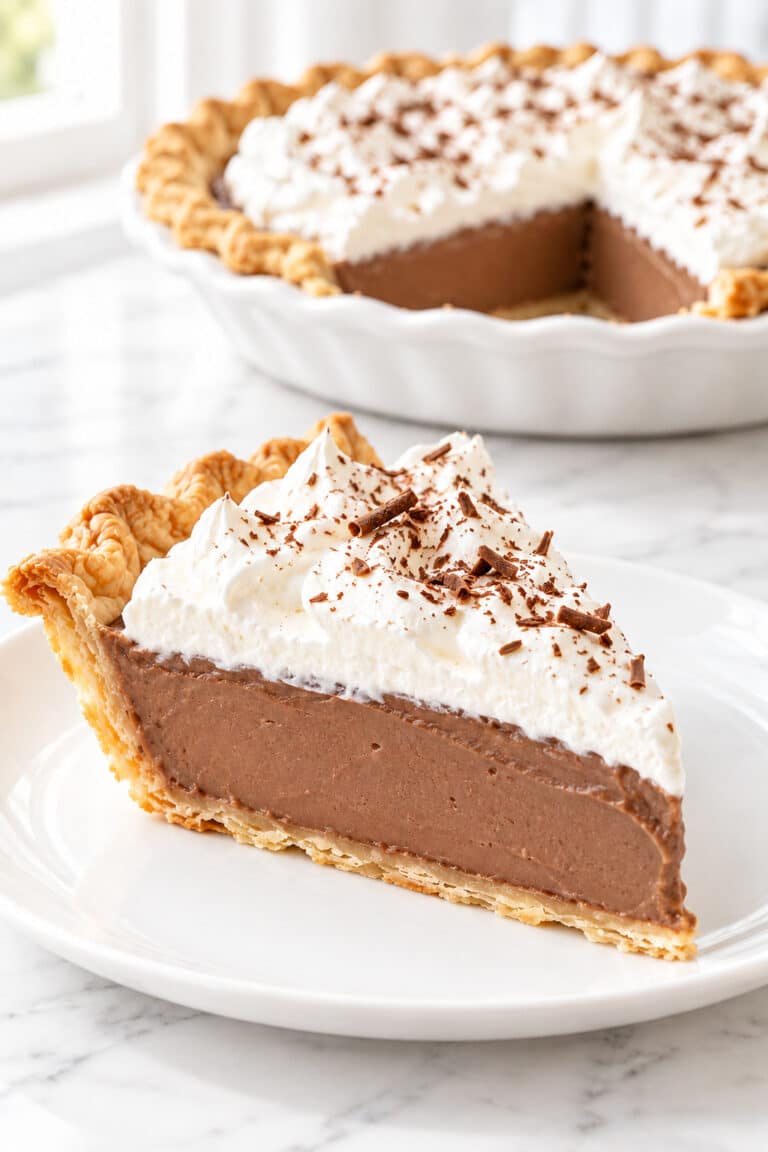
- Chocolate Cream Pie adds cool chocolate custard and whipped cream. A small wedge beside the pecan pie gives the plate a softer, creamier bite.
- Pumpkin Roll wraps cream cheese filling in pumpkin cake. Its spiral slices bring cake to the dessert platter without another pie pan.
- Cranberry Salad is a chilled, spoonable fruit option. Serve a little alongside the pie for a different texture and a splash of cranberry color.
Why This Pecan Pie Recipe Belongs in Your Recipe Box
Save this pecan pie recipe for the next time dessert calls for buttery pastry, toasted nuts, and a filling worth taking a small, slow bite of. It has a place at Thanksgiving, but a Sunday lunch is reason enough to bake it again.
- The flavor of a traditional pecan pie. Brown sugar, vanilla, and butter surround the nuts with a rich filling that feels at home after a holiday meal.
- A crust worth making. Tender flakes beneath the soft center give each wedge more than sweetness; the pastry is part of the pleasure.
- A holiday morning with dessert already waiting. An overnight chill means the pie can stay tucked in the refrigerator while dinner takes its turn in the oven.
- A slice for different tastes. Keep the pie plain, then offer whipped cream, vanilla ice cream, or a little caramel at the table.
- Eight portions from one pie. Serve generous wedges after a family meal or cut smaller tastes for a dessert spread.
- Something good to enjoy tomorrow. Properly covered and refrigerated leftovers keep for 3–4 days, ready for another small slice with coffee.
A Final Note on Homemade Pecan Pie
A homemade pecan pie has a beauty that doesn’t depend on a perfectly even crust or a flawless arrangement of nuts. A slightly crooked crimp belongs quite happily beside those glossy pecan halves. This is a pie made by hand, with time given to the pastry and the filling, and it can arrive at the table looking exactly that way.
Thanksgiving may be the reason you first make it, but a smaller occasion can be just as fitting. A Sunday lunch, a friend coming over, or someone mentioning how long it has been since they had pecan pie can be reason enough to bring out the pie pan again.
After all that careful work, the first missing wedge is a welcome sight. The top is no longer tidy, a few pastry flakes have fallen into the pan, and the pie is finally being enjoyed. That is a good place to leave it.

Pecan Pie Recipe
This pecan pie recipe pairs flaky butter pastry with a soft brown sugar filling and toasted pecans. Bake it ahead and chill thoroughly for slices that hold their shape.
Ingredients
For the Butter Crust
- 1¼ cups (150 g) all-purpose flour, spooned and leveled
- ½ cup (113 g) unsalted butter, very cold and cubed
- 1 teaspoon (4 g) granulated sugar
- ½ teaspoon (3 g) fine table salt
- 3–5 tablespoons (45–75 ml) ice water, added gradually
For the Pecan Filling
- 2 cups (225 g) pecan halves, measured before chopping: 170 g coarsely chopped for the filling and 55 g halves reserved for the top
- 1 cup light corn syrup (240 ml, approximately 325 g)
- ¾ cup (160 g) packed light brown sugar
- 3 large eggs (approximately 150 g without shells)
- ¼ cup / 4 tablespoons (57 g) unsalted butter, melted and cooled
- 2 teaspoons (10 ml) pure vanilla extract
- ½ teaspoon (3 g) fine table salt
Instructions
- Make the pastry. Mix the flour, sugar, and salt. Cut in the cold butter, keeping visible pieces. Add 3 tablespoons ice water, then more by the teaspoon only until the dough holds together. Form a disk, wrap, and refrigerate at least 2 hours.
- Toast the interior nuts. While the dough chills, spread the 170 g chopped pecans on a rimmed baking sheet. Toast at 325°F / 165°C in a conventional oven for 8–10 minutes, stirring as needed, until fragrant. Cool completely. Keep the reserved 55 g halves untoasted.
- Shape the shell. Roll the dough to about 12 inches / 30 cm. Fit it into a 9-inch / 23 cm metal pie pan, approximately 1½ inches / 4 cm deep, without stretching. Crimp and refrigerate 30 minutes.
- Partially blind bake. Line with parchment and pie weights. Bake at 375°F / 190°C for about 20 minutes. Remove the weights and parchment; bake 5–10 minutes more until the base is matte and lightly colored. Cool the shell.
- Mix the filling. Gently combine the eggs, brown sugar, corn syrup, salt, and vanilla. Stir in the cooled melted butter, then the cooled chopped pecans.
- Fill the crust. Set the shell on a rimmed metal baking sheet. Add the filling and distribute the reserved halves over it. Leave approximately ¼ inch / 6 mm below the inside rim.
- Bake. Bake at 350°F / 175°C in the lower third of the oven for 55–70 minutes, beginning checks at 45 minutes. Protect the pastry edge and tent the top when sufficiently browned.
- Check the center. The edges should be set and the small central area should wobble together when the pan is gently nudged, without loose liquid waves. A reading around 200°F / 93°C in the central filling is a useful reference; insert the thermometer away from nuts and the pan, and assess it together with the movement of the filling.
- Cool and chill. Cool on a rack for about 1 hour, then refrigerate within 2 hours of baking. Chill for at least 4 hours and until completely cold before slicing; overnight is convenient.
- Serve. Cut into 8 wedges. Add optional whipped cream, vanilla ice cream, or caramel sauce to individual portions just before serving.
Notes
- Use a 9-inch / 23 cm metal pie pan about 1½ inches / 4 cm deep. If changing the number of servings, do not automatically change the pan, oven temperatures, or baking times. Different filling depths need separate testing.
- Measure the pecans before chopping. The 225 g total is divided into 170 g chopped nuts for the filling and 55 g halves for the top. Keep crust and filling butter and salt separate. One cup of light corn syrup is 240 ml, approximately 325 g.
- All oven temperatures are for a conventional oven. Times are estimates: toast the chopped nuts during the first dough rest, allow the empty shell to cool, and let the final chill continue until the pie is completely cold. About 10 hours is a planning allowance, not a guaranteed completion time.
- Bake the pie the day before serving and refrigerate overnight. Keep the finished pie covered in the refrigerator at 40°F / 4°C or below for 3–4 days. For best quality, freeze the baked, fully cooled and well-wrapped pie for 1–2 months; thaw in the refrigerator. Refrigeration firms a baked filling but does not cook an underbaked center.
- Whipped cream, vanilla ice cream, and caramel sauce are optional accompaniments. Add caramel to individual slices just before serving. Nutrition is estimated for one eighth of the complete pie, including the homemade crust, without toppings. Brands, pastry trimming, and slice size affect the result.
Nutrition Information:
Yield: 8 Serving Size: 1 slice (1/8 of pie)Amount Per Serving: Calories: 643Total Fat: 39.3gSaturated Fat: 13.1gCholesterol: 115mgSodium: 360mgCarbohydrates: 68.2gFiber: 3.3gProtein: 7g
Nutrition information is provided as an estimate only and may vary based on specific ingredients, brands, and portion sizes used. This information should not be considered medical or nutritional advice.
12 Sweet Favorites — Yours, Free 🍰
Tiramisù, no-bake cheesecake, the perfect chocolate chip cookie & 9 more reader-loved desserts — gathered into one beautiful free recipe book. From my kitchen to yours.
No spam, just sweet things. Unsubscribe anytime.