Grape Salad Recipe (Creamy, Fresh & Easy) + Healthy High-Protein Variation
🎁 FREE E-BOOK: 12 Sweet Favorites — reader-loved desserts in one beautiful recipe book.
There is something almost impossible to resist about a bowl of creamy Grape Salad waiting in the refrigerator.
The grapes are cold and juicy, the dressing is smooth and silky, and every spoonful delivers a combination of creamy, sweet, fresh, and crunchy textures that somehow feels both refreshing and indulgent at the same time. It is the kind of dish that disappears quickly at potlucks, holiday gatherings, baby showers, and summer cookouts because people always seem to come back for a second serving.

One reason this Grape Salad recipe has remained popular for decades is its simplicity. The ingredients are easy to find, the preparation takes very little effort, and the result feels far more special than the short ingredient list would suggest.
What makes this version especially useful is its flexibility. You can make the traditional creamy grape salad with cream cheese and sour cream, or transform it into a healthier high-protein grape salad using cottage cheese, Greek yogurt, or Skyr. Both versions deliver the same refreshing fruit-filled experience while appealing to different tastes and nutrition goals.
Whether you’re planning a holiday brunch, a family gathering, a picnic, or simply looking for an easy fruit dessert to keep in the refrigerator, this Grape Salad deserves a place in your recipe collection.
What Is Grape Salad?
Grape Salad is a chilled fruit salad made with fresh grapes coated in a sweet, creamy dressing that is traditionally prepared with cream cheese, sour cream, sugar, and vanilla. The finished salad is often topped with chopped pecans, walnuts, brown sugar, or other crunchy additions that create contrast against the creamy dressing and juicy fruit.
Although it contains fruit, Grape Salad is often served more like a dessert than a traditional fruit salad. The creamy dressing transforms the grapes into something richer and more indulgent while still preserving their natural freshness and texture.
One reason the recipe has remained popular for generations is its unique balance. It combines the refreshing qualities of fresh fruit with the comfort and satisfaction of a creamy dessert, making it equally at home on brunch tables, holiday buffets, potluck menus, and summer cookouts.
Grape Salad became especially popular through church cookbooks, family gatherings, and community potlucks across the United States, where its simplicity, make-ahead convenience, and crowd-pleasing flavor helped it become a long-standing favorite.
Today, many home cooks also prepare healthier high-protein versions using cottage cheese, Greek yogurt, or Skyr. These modern adaptations maintain the creamy texture and fresh fruit flavor while offering a lighter nutritional profile.
Quick Grape Salad Recipe Overview
| Detail | Information |
|---|---|
| Texture | Creamy, juicy, smooth, lightly crunchy |
| Flavor | Sweet, tangy, fresh, fruity |
| Difficulty | Easy |
| Time | 15 minutes plus chilling |
| Servings | 10–12 servings |
| Method | No-bake, chilled |
| Best For | Potlucks, brunches, holidays, cookouts |
| Adaptable | Easily made as a healthy high-protein version |
In short: This creamy Grape Salad combines fresh grapes, a smooth vanilla dressing, and crunchy toppings for an easy make-ahead dessert that works for almost any occasion.
Why This Grape Salad Has Stayed Popular for Decades
Very few recipes remain popular for generations without a good reason. Grape Salad has earned a permanent place at potlucks, holiday gatherings, family reunions, and brunch tables because it delivers something surprisingly difficult to achieve: it feels both refreshing and indulgent at the same time.
While food trends come and go, the combination of juicy fruit, creamy dressing, and crunchy toppings continues to appeal to people of all ages. It is simple enough for everyday entertaining yet special enough for celebrations.
The Perfect Balance of Creamy and Fresh
Many desserts feel rich and heavy. Many fruit salads feel light but forgettable. Grape Salad sits comfortably between those extremes.
The grapes provide freshness, natural sweetness, and a juicy bite, while the creamy dressing adds richness and body. Together, they create a dessert that feels satisfying without becoming overwhelming.
It Feels More Special Than the Ingredient List Suggests
One of the most surprising things about Grape Salad is how impressive it feels despite using simple ingredients. There is no baking, no complicated technique, and no specialty equipment required.
Yet once chilled and topped with something crunchy, the finished salad often feels far more polished and memorable than people expect from such a short ingredient list.
It Actually Gets Better After Chilling
Many recipes are at their best immediately after preparation. Grape Salad is different.
As it chills, the dressing settles around the grapes, the flavors become more cohesive, and the overall texture becomes noticeably creamier. This make-ahead advantage is one of the reasons it remains so popular for entertaining.
It Works for Almost Any Occasion
Few recipes transition as easily from Easter brunch to summer cookouts to holiday buffets.
Because it can be prepared ahead of time and served cold, it often becomes one of the easiest dishes on the table while still feeling festive and crowd-pleasing.
Easy to Adapt for Different Dietary Preferences
The traditional version uses cream cheese and sour cream, while modern variations often use blended cottage cheese, Greek yogurt, or Skyr.
That means the same recipe can become either a classic dessert or a high-protein snack with only a few simple adjustments, making it more versatile than ever.
Why You’ll Love This Grape Salad Recipe
- Juicy grapes in every bite. The combination of red and green seedless grapes creates a refreshing texture that stays crisp even after chilling.
- Creamy without feeling heavy. The dressing coats the grapes lightly, adding sweetness and richness without overwhelming the fresh fruit.
- Perfect for make-ahead entertaining. In fact, many people think it tastes even better after a few hours in the refrigerator when the dressing has had time to settle and thicken.
- Works as both a side dish and dessert. It fits just as naturally on a holiday buffet as it does on a summer dessert table.
- Easy to customize. Keep it classic with cream cheese and brown sugar or make a healthy high-protein version with cottage cheese and Greek yogurt.
- A reliable crowd-pleaser. Even people who normally skip fruit salads are often surprised by how quickly they go back for another spoonful.
- Beautiful with minimal effort. The natural contrast of red and green grapes makes the finished salad look colorful and festive without any complicated decorating.
- Ideal for every season. Serve it at Easter brunch, summer cookouts, baby showers, Thanksgiving gatherings, or Christmas celebrations.
- Meal-prep friendly. The high-protein variation works wonderfully as a grab-and-go snack or healthier dessert throughout the week.
- A recipe you’ll actually reuse. It uses simple ingredients, takes very little time to prepare, and adapts easily to whatever occasion is on your calendar.
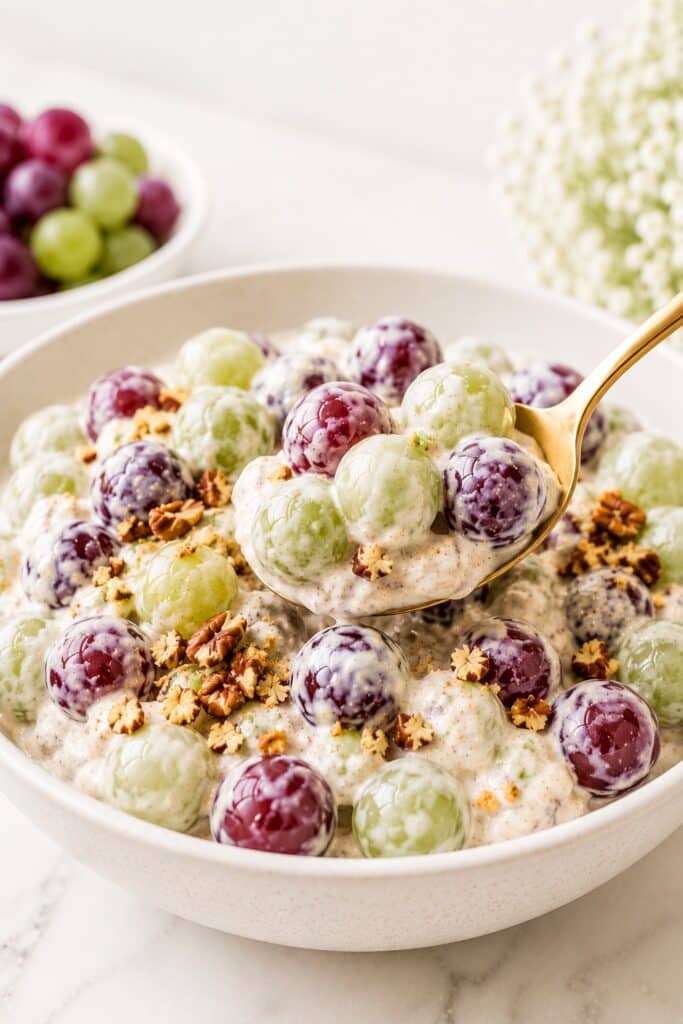
Classic vs Healthy High-Protein Grape Salad
| Feature | Classic Version | Healthy High-Protein Version |
|---|---|---|
| Dressing Base | Cream Cheese + Sour Cream | Cottage Cheese + Greek Yogurt or Skyr |
| Sweetener | Sugar | Honey or Maple Syrup |
| Texture | Rich and Creamy | Light and Creamy |
| Protein | Moderate | High |
| Best For | Potlucks and Holidays | Snacks, Breakfast, Meal Prep |
Both versions are delicious. The classic version feels more indulgent and dessert-like, while the high-protein version feels lighter, fresher, and more suitable for everyday eating.
The Key Elements Behind a Great Grape Salad
Because Grape Salad contains relatively few ingredients, every component plays an important role. The difference between an average version and a memorable one usually comes down to a handful of small details rather than a complicated technique.
Understanding these elements makes it easier to create a salad with the creamy texture, fresh flavor, and satisfying contrast that people love.
Great Grapes Matter More Than Great Dressing
Many people assume the dressing is the most important part of Grape Salad, but the grapes actually have the biggest influence on the final result.
Firm, sweet, flavorful grapes create freshness and texture in every bite. Even the most carefully prepared dressing cannot fully compensate for grapes that are bland, soft, or lacking sweetness.
If you’re deciding where to spend a little extra money, choose the best grapes available. The improvement is often more noticeable than upgrading any other ingredient in the recipe.
Why Dry Grapes Matter More Than Most People Think
One of the biggest mistakes people make is using wet grapes.
Even a small amount of excess water can thin the dressing and reduce its creamy texture. Thoroughly drying the grapes helps the dressing cling properly to the fruit and prevents excess liquid from collecting later.
Why Chilling Improves the Texture
The salad may seem slightly loose immediately after mixing.
As it chills, the dressing firms slightly and wraps around the grapes more effectively, creating the creamy texture people associate with a great Grape Salad.
This is one of the rare recipes that genuinely improves after spending time in the refrigerator.
The Role of Fat in the Dressing
Cream cheese and sour cream contribute richness, body, and stability to the classic version.
Even in healthier versions, a small amount of fat helps create a smoother, more luxurious mouthfeel and prevents the dressing from tasting thin.
Why Crunchy Toppings Make Such a Difference
Without texture contrast, the salad can feel one-dimensional.
Pecans, walnuts, granola, hemp hearts, or toasted almonds provide a satisfying crunch that balances the creamy dressing and juicy fruit.
The best Grape Salads create a balance of textures where no single element dominates the others.
Ingredients You’ll Need
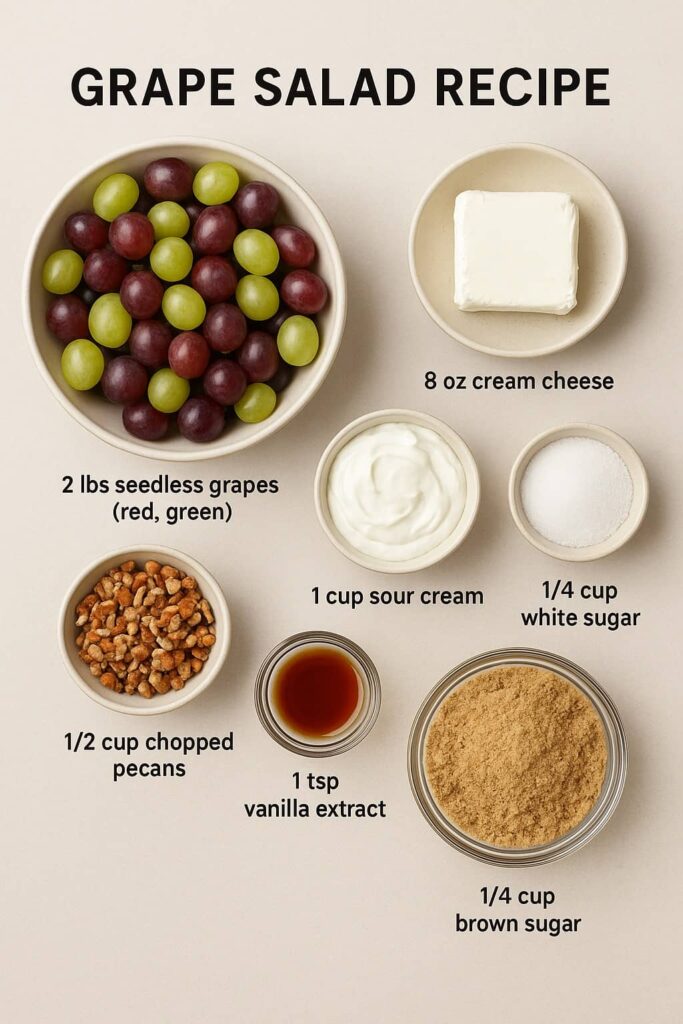
For the Classic Grape Salad
- 2 lbs seedless grapes (red, green, or mixed)
- 8 oz cream cheese, softened (key for grape salad with cream cheese)
- 1 cup sour cream
- 1/4 cup granulated sugar
- 1 tsp vanilla extract
- 1/2 cup chopped pecans or walnuts
- 1/4 cup brown sugar
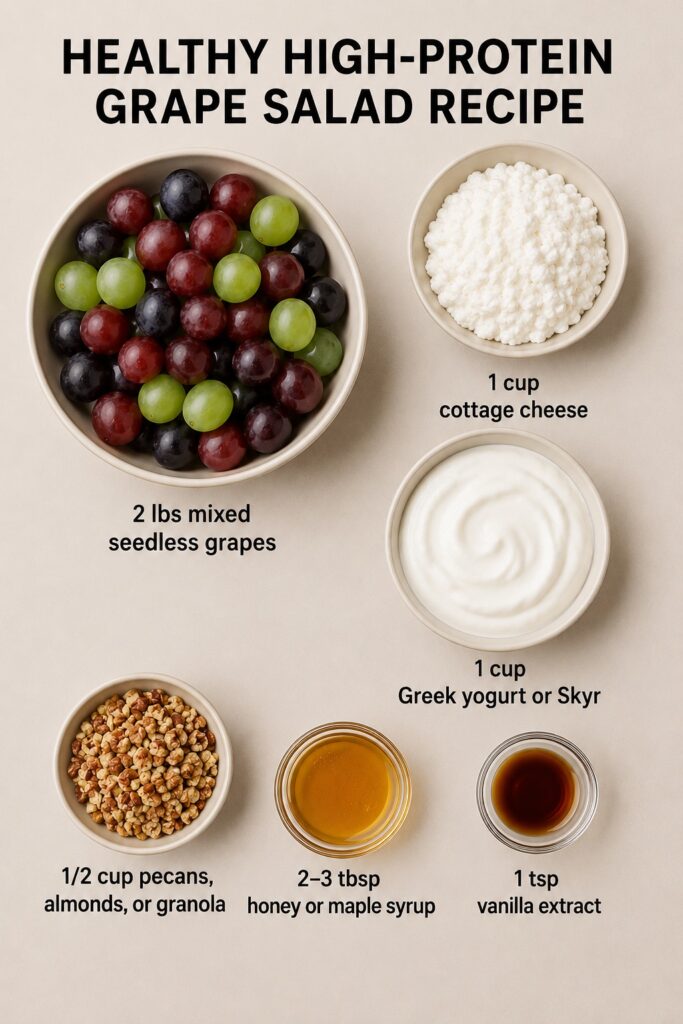
For the Healthy High-Protein Version
- 2 lbs mixed seedless grapes
- 1 cup cottage cheese
- 1 cup Greek yogurt or Skyr
- 2–3 tbsp honey or maple syrup
- 1 tsp vanilla
- 1/2 cup pecans, almonds, or granola
Ingredient Intelligence
Grapes: The Ingredient That Determines Everything
Because grapes make up the majority of the recipe, their quality has a bigger impact on the final result than any other ingredient.
Look for grapes that feel firm, plump, and heavy for their size. Softer grapes tend to release moisture more quickly, which can thin the dressing during storage.
Using a combination of red and green seedless grapes creates the best balance of sweetness, acidity, and visual appeal. Red grapes are often sweeter, while green grapes contribute brightness and a slightly firmer bite.
Tip: If the grapes are exceptionally sweet, reduce the sugar or honey slightly and allow the fruit to remain the star of the recipe.
Cream Cheese vs Cottage Cheese
In the classic version, cream cheese provides richness, body, and the signature dessert-like texture that many people associate with traditional Grape Salad.
For the high-protein version, blended cottage cheese creates a surprisingly smooth dressing while contributing significantly more protein.
The key is blending long enough. Properly blended cottage cheese should look silky and creamy with no visible curds remaining.
Texture Difference:
- Cream cheese = richer and more indulgent
- Cottage cheese = lighter and fresher
Sour Cream vs Greek Yogurt or Skyr
Sour cream contributes richness and a subtle tang that balances the sweetness of the grapes.
Greek yogurt and Skyr provide a similar tangy flavor while increasing protein and creating a lighter overall feel.
Skyr typically produces the thickest dressing, while Greek yogurt creates a slightly softer consistency.
Practical Note: If using Greek yogurt, choose a thick full-fat or 2% variety for the creamiest texture.
Sugar vs Honey or Maple Syrup
Traditional Grape Salad is usually sweetened with granulated sugar, which creates a clean, classic flavor profile.
Honey and maple syrup work particularly well in the high-protein version because they blend easily into the dressing and add subtle flavor complexity.
Honey highlights the fruit’s natural sweetness, while maple syrup contributes a deeper, warmer flavor.
Best Choice:
- Sugar for classic potluck-style Grape Salad
- Honey for a fresher everyday version
- Maple syrup for a slightly richer flavor
Why Vanilla Matters More Than You Think
Vanilla may seem like a small ingredient, but it acts as a bridge between the fruit and the creamy dressing.
Without vanilla, the dressing can taste flat. Even a single teaspoon helps round out the flavor and makes the entire salad feel more balanced.
This is one of those ingredients that rarely stands out on its own but would be immediately missed if omitted.
The Role of Crunchy Toppings
The creamy dressing and juicy grapes already provide contrast, but crunchy toppings elevate the texture even further.
Pecans are the traditional choice, offering a buttery crunch that complements the sweetness of the grapes.
For the high-protein version, almonds, hemp hearts, or high-protein granola work especially well.
The most important rule is timing: add crunchy toppings immediately before serving to preserve their texture.
A small handful of crunchy topping often makes a bigger difference than adding more sweetener.
Kitchen Tools You’ll Need
One reason Grape Salad is such a popular recipe is that it requires very little equipment. Most home cooks already have everything needed to make it successfully.
- Large Mixing Bowl: A large mixing bowl gives you enough space to coat the grapes evenly without crushing them. This becomes especially important when folding the dressing into the fruit.
- Hand Mixer or Stand Mixer: For the classic version, a mixer helps create a completely smooth cream cheese dressing with no lumps. While a whisk can work, achieving the same silky texture requires significantly more effort.
- Blender or Food Processor: If you’re making the high-protein version, a blender or food processor is highly recommended. Proper blending transforms cottage cheese from slightly curdy into a smooth dressing that closely resembles the classic cream cheese version.
- Colander: Washing the grapes thoroughly is important, but so is draining them well. A colander makes this process faster and helps remove excess moisture before drying.
- Clean Kitchen Towels or Paper Towels: Many people overlook this step, but thoroughly drying the grapes is one of the easiest ways to improve the finished texture. Excess water can dilute the dressing and create liquid in the bottom of the bowl after chilling.
- Rubber Spatula: A flexible spatula helps fold the grapes gently into the dressing while scraping every bit of dressing from the bowl.
Helpful Note: The most important piece of equipment isn’t a mixer or blender—it’s enough refrigerator space. Grape Salad truly tastes best after chilling, and giving it time to rest is one of the easiest ways to improve the final result.
How to Make Grape Salad
1. Wash and Dry the Grapes
Rinse the grapes thoroughly under cold water and remove any stems or damaged fruit.
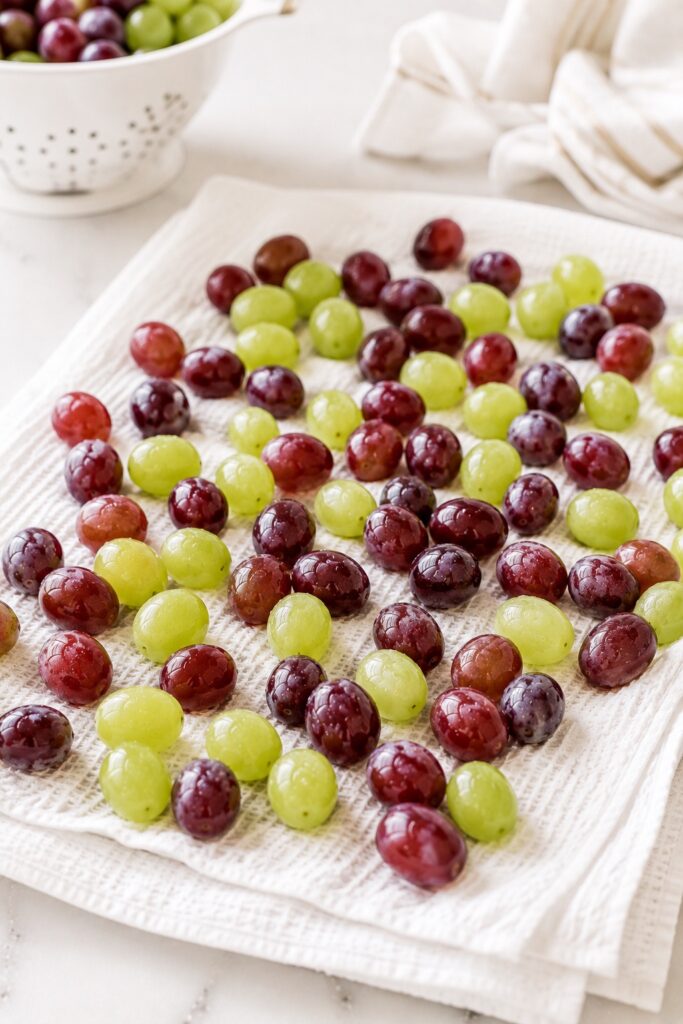
Spread the grapes onto clean kitchen towels or layers of paper towels and dry them completely. This step may seem minor, but it has a surprisingly large impact on the finished texture.
Excess moisture can thin the dressing and create liquid at the bottom of the bowl after chilling.
Visual cue: The grapes should look clean, dry, and naturally glossy rather than wet or dripping.
Helpful Tip: If time allows, refrigerate the dried grapes for 20–30 minutes before assembling the salad. Cold grapes make the finished salad even more refreshing.
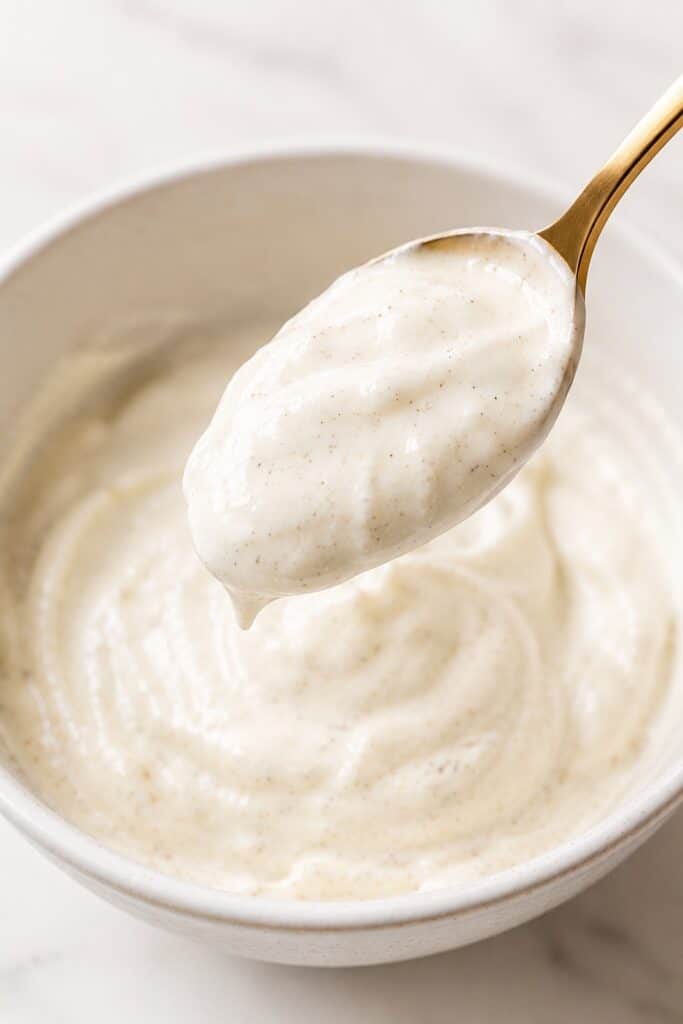
2. Make the Dressing
For the classic version, beat the softened cream cheese until completely smooth. Add the sour cream, sugar, and vanilla extract, then continue mixing until the dressing looks silky and uniform.
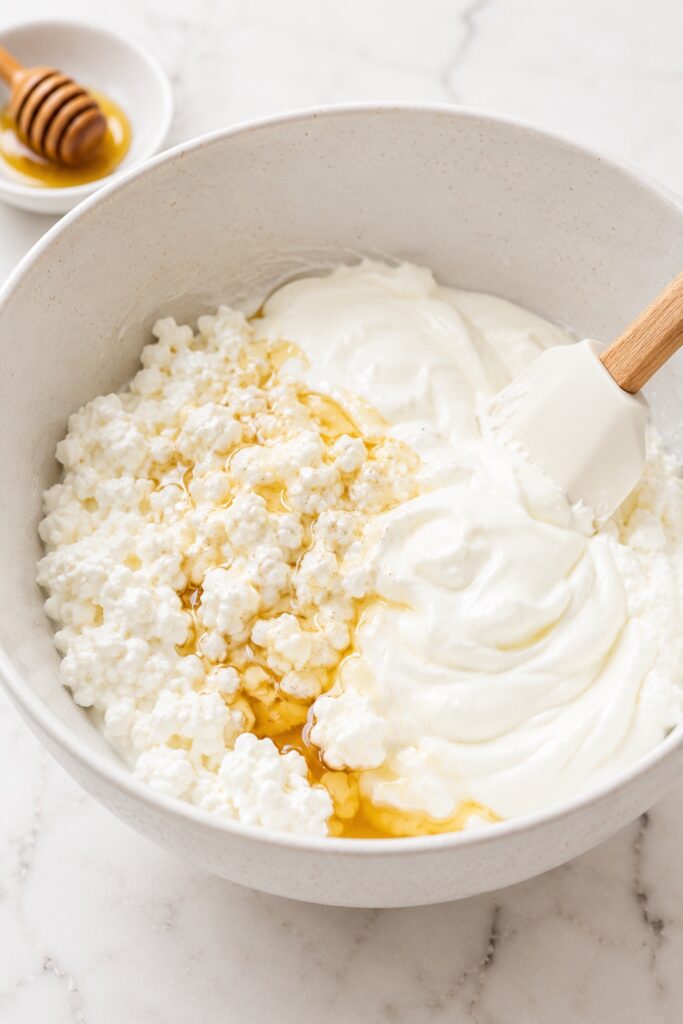
For the high-protein version, blend the cottage cheese, Greek yogurt or Skyr, honey, and vanilla until completely smooth.
Many people stop blending too early. Continue blending until no visible cottage cheese curds remain and the mixture resembles a smooth cheesecake-style filling.
Visual cue: The dressing should appear creamy, smooth, and thick enough to hold soft peaks when lifted with a spoon.
Helpful Tip: Taste the dressing before adding it to the grapes. If your grapes are especially sweet, you may want slightly less sweetener.
3. Coat the Grapes
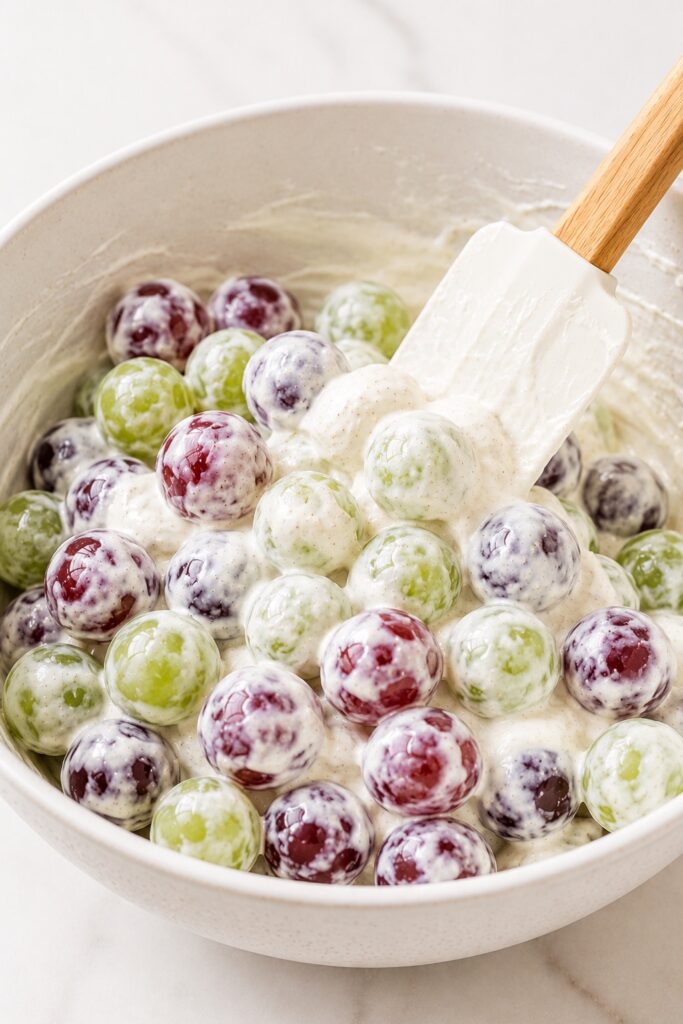
Add the grapes to the bowl and gently fold until every grape is lightly coated with dressing.
The goal is to coat the fruit evenly without crushing it. Take your time and use a rubber spatula rather than aggressive stirring.
One of the easiest mistakes is overmixing. Grapes are sturdy, but excessive stirring can damage their skins and release extra moisture.
Visual cue: Every grape should have a light coating of dressing with very little dressing pooling at the bottom of the bowl.
4. Transfer to a Serving Bowl
Spoon the salad into a serving bowl or storage container and smooth the surface lightly with a spatula.
At this stage, the dressing may seem slightly softer than expected. This is completely normal and improves during chilling.
If you’re serving guests, reserve a small handful of grapes for garnish later. This simple detail makes the finished salad look more polished.
Visual cue: The salad should look evenly coated and creamy without appearing runny.
5. Chill Until Creamy and Refreshing
Cover the bowl and refrigerate for at least 1 hour.
During this time, the dressing firms slightly, the flavors settle, and the overall texture becomes noticeably creamier.
Many people find that Grape Salad tastes even better after several hours of chilling or overnight storage.
Visual cue: The dressing should look slightly thicker and cling more closely to the grapes after chilling.
6. Add the Topping and Serve
Just before serving, sprinkle the salad with chopped pecans, walnuts, granola, almonds, hemp hearts, brown sugar, or your preferred topping.
Adding toppings at the last minute preserves their crunch and creates the texture contrast that makes Grape Salad so enjoyable.
If desired, garnish with a few reserved grapes for a fresher presentation.
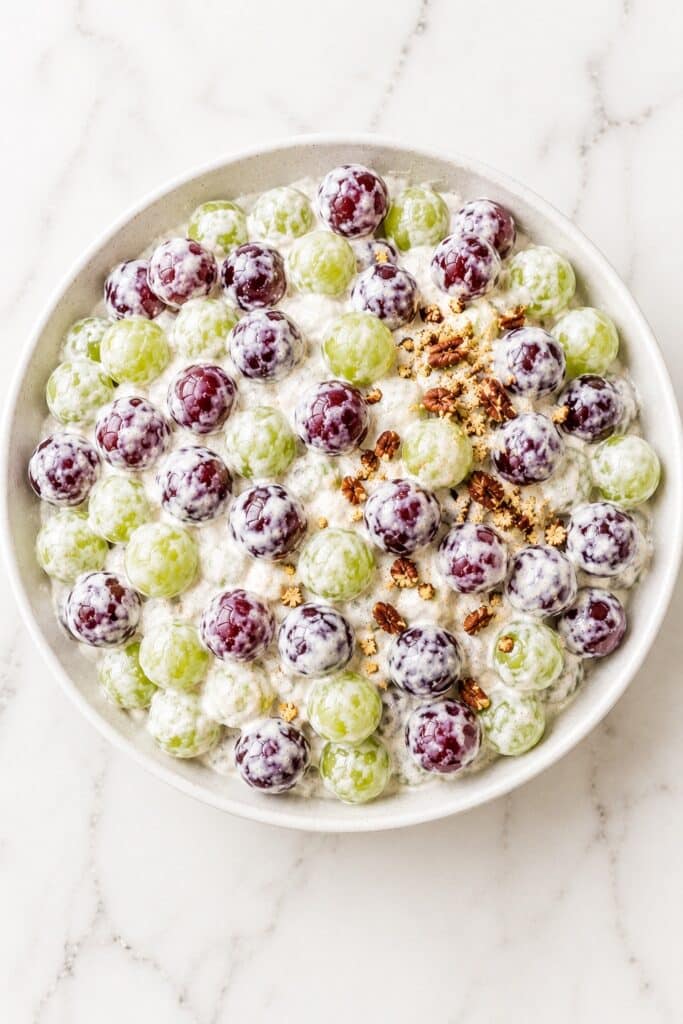
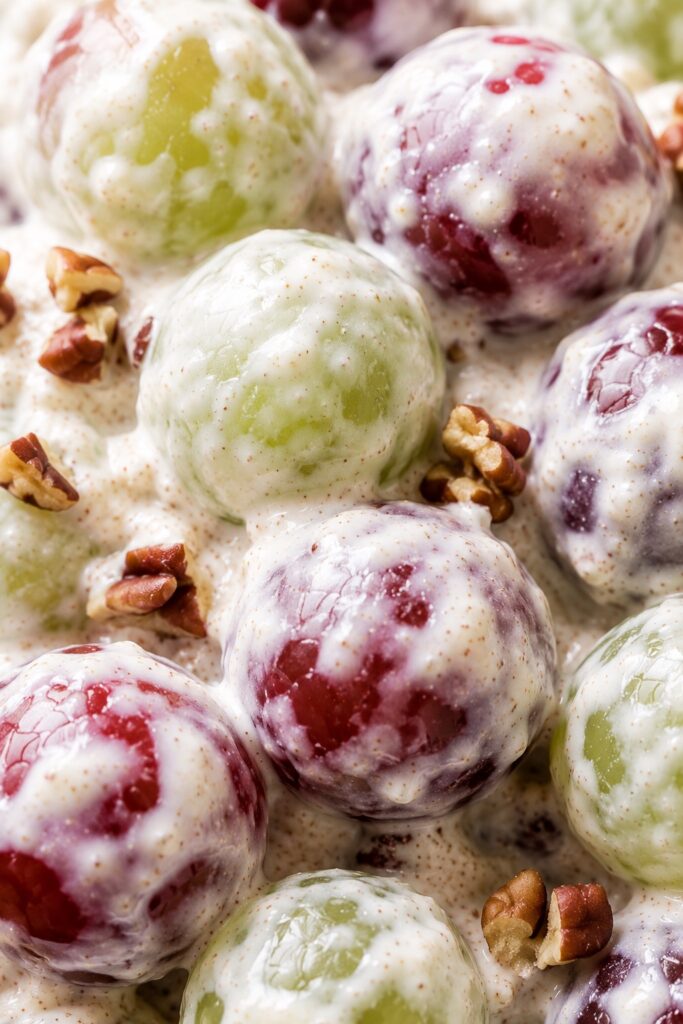
Visual cue: The topping should remain crisp, the grapes should look glossy and well coated, and the dressing should appear creamy rather than watery.
Final Observation: A great Grape Salad should feel balanced in every bite—juicy grapes, creamy dressing, and just enough crunch to keep the texture interesting from the first spoonful to the last.
Grape Salad Texture and Troubleshooting Guide
Because Grape Salad is a no-bake recipe, success is less about cooking and more about texture. Use this guide to quickly identify what you’re seeing and whether any adjustments are needed.
| Stage | What You Should See | What It Means |
|---|---|---|
| Dressing Mixed | Smooth, creamy, and lump-free | Ready to combine with the grapes |
| Dressing Too Thin | Flows easily and doesn’t cling to a spoon | Ingredients may be too warm or grapes may contain excess moisture |
| Grapes Coated | Every grape has a light creamy coating | The dressing ratio is balanced |
| Before Chilling | Slightly softer texture | Normal and expected |
| After Chilling | Thicker dressing that clings to the grapes | Ideal serving texture |
| Liquid at Bottom of Bowl | Small amount of moisture after storage | Grapes have released natural juices; stir gently before serving |
| Finished Salad | Juicy grapes, creamy coating, crunchy topping | Perfect texture balance |
What a Perfect Grape Salad Should Feel Like
The grapes should remain crisp and juicy, the dressing should lightly coat each grape without pooling excessively in the bowl, and the topping should provide noticeable crunch. No single texture should dominate the others.
If the salad feels overly rich, add a handful of additional grapes. If it feels too light, a small spoonful of extra dressing can restore balance.
Observation: The best Grape Salads rarely taste their best immediately after mixing. A short chilling period allows the dressing to settle around the grapes and creates the creamy texture most people associate with a great version of this recipe.
Expert Tips for the Best Grape Salad
Choose Firm Grapes Over Large Grapes
When buying grapes for this recipe, firmness matters more than size. Crisp grapes create a refreshing contrast against the creamy dressing, while softer grapes can make the entire salad feel less fresh. If the grapes don’t “snap” slightly when bitten, the finished salad will never be quite as satisfying.
Let the Grapes Reach Refrigerator Temperature Before Mixing
Many people wash grapes and immediately assemble the salad. Chilling the grapes first helps the dressing cling more effectively and gives the finished salad a fresher, more refreshing texture from the very first bite.
Drying the Grapes Is One of the Most Important Steps
The dressing is designed to coat the grapes, not compete with excess moisture. Even a small amount of water left on the skins can dilute the dressing and create liquid at the bottom of the bowl after chilling. A few extra minutes of drying pays off later.
Don’t Judge the Texture Until After Chilling
Immediately after mixing, the salad may seem softer than expected. This is completely normal. During chilling, the dressing firms slightly and wraps around the grapes more evenly. Many first-time makers think something went wrong when the salad actually just needs time.
Toast Pecans for Better Flavor Contrast
Raw pecans add crunch, but toasted pecans add depth. The slight roasted flavor balances the sweetness of the grapes and makes the finished salad taste more developed and intentional.
Taste Your Grapes Before Sweetening the Dressing
Grapes vary dramatically throughout the year. Mid-summer grapes are often much sweeter than winter grapes. Tasting a few before mixing allows you to adjust the sweetness and keep the fruit as the star of the recipe.
For the Smoothest High-Protein Version, Blend Longer Than You Think
When using cottage cheese, many people stop blending too early. Continue blending until the mixture looks completely silky and resembles a traditional cream cheese dressing. The smoother the dressing, the more luxurious the finished salad feels.
Add the Crunchy Topping at the Last Possible Moment
This small detail separates a good Grape Salad from a great one. Pecans, granola, and brown sugar begin absorbing moisture as soon as they touch the dressing. Waiting until serving preserves the texture contrast that makes every spoonful more interesting.
The Biggest Flavor Upgrade Costs Nothing
Make the salad several hours before serving rather than immediately beforehand. As the dressing rests around the grapes, the flavors become more cohesive and the texture becomes noticeably creamier. It is one of those rare recipes that genuinely improves with a little patience.
The Secret Most People Discover After Making It Once
The dressing gets most of the attention, but the grapes determine the quality of the final dish. Exceptional grapes can make a simple dressing taste incredible. Average grapes can make even the best dressing feel disappointing. If you’re going to spend extra money on one ingredient, spend it on the grapes.
Common Grape Salad Mistakes (and How to Fix Them)
Grape Salad is a simple recipe, but a few small mistakes can dramatically affect the final texture. Fortunately, most problems are easy to prevent once you know what to watch for.
| Mistake | What Happens | How to Fix It |
|---|---|---|
| Using wet grapes | The dressing becomes thinner and excess liquid may collect at the bottom of the bowl. | Dry the grapes thoroughly before mixing. |
| Using cold cream cheese | Lumps remain in the dressing and the texture never becomes completely smooth. | Allow the cream cheese to soften fully before mixing. |
| Skipping the chilling time | The dressing feels softer and less cohesive. | Refrigerate for at least 1 hour before serving. |
| Overmixing the grapes | Some grapes can split and release extra moisture. | Fold gently with a spatula rather than stirring aggressively. |
| Adding crunchy toppings too early | Pecans, granola, or brown sugar lose their texture. | Add toppings immediately before serving. |
| Choosing overly soft grapes | The salad lacks freshness and crisp texture. | Select firm, plump grapes whenever possible. |
| Stopping too early when blending cottage cheese | The high-protein dressing remains grainy. | Blend until completely smooth and silky. |
| Oversweetening the dressing | The grapes lose their fresh fruit flavor. | Taste the grapes first and adjust sweetener as needed. |
The Mistake Most First-Time Makers Don’t Expect
Many people assume the dressing determines whether the recipe succeeds, but the grapes actually have the biggest impact on the final result. Firm, flavorful grapes can make even a simple dressing taste exceptional, while bland or overly soft grapes can make the entire salad feel disappointing.
If you’re deciding where to spend a little extra money, choose the best grapes you can find. The difference is often more noticeable than upgrading any other ingredient.
Healthy High-Protein Grape Salad Variation
If you love the creamy texture of traditional Grape Salad but want something lighter and more protein-rich, this variation is worth trying.
By replacing the cream cheese and sour cream with blended cottage cheese and Greek yogurt or Skyr, you get a dressing that remains creamy and satisfying while providing significantly more protein. The result feels fresher, less dessert-like, and versatile enough to enjoy throughout the day.
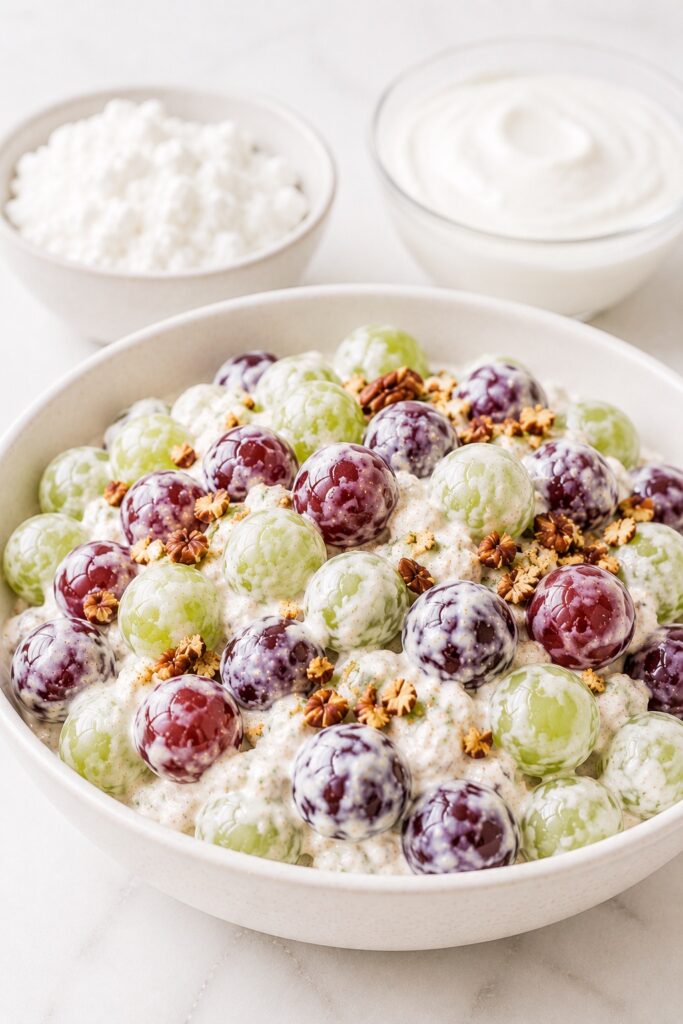
Many people enjoy this version as a healthy snack, quick breakfast, meal-prep option, or post-workout treat. It still delivers the juicy grapes and creamy texture that make Grape Salad so popular, but with a nutritional profile that better fits everyday eating.
One of the biggest surprises for first-time makers is how little they miss the traditional cream cheese dressing. When blended properly, cottage cheese becomes remarkably smooth and creates a texture that feels much more indulgent than most people expect.
Why it works: Cottage cheese provides body and protein, Greek yogurt or Skyr contributes tanginess and creaminess, and honey or maple syrup adds just enough sweetness to complement the natural flavor of the grapes without overpowering them.
Easy Ways to Increase the Protein Even More
If you’d like to turn this into an even more satisfying snack, breakfast, or post-workout treat, try one of these protein-boosting additions.
Vanilla Protein Powder
Add 1 scoop (about 25–30 grams) vanilla protein powder to the dressing before blending.
If the dressing becomes too thick, add 1–2 tablespoons milk or extra Greek yogurt until smooth.
Best for: post-workout snacks and meal prep.
Hemp Hearts
Sprinkle 2–3 tablespoons hemp hearts over the finished salad just before serving.
They add a mild nutty flavor, extra protein, and healthy fats without changing the texture dramatically.
Adds approximately: 6–10 grams protein per batch.
Chia Seeds
Stir 1–2 tablespoons chia seeds into the dressing before chilling.
The chia seeds absorb some moisture and slightly thicken the dressing as it rests.
Tip: If using more than 2 tablespoons, you may need an extra tablespoon of yogurt to maintain a creamy consistency.
High-Protein Granola
Top the salad with 1/2 cup high-protein granola immediately before serving.
This adds crunch while increasing both protein and fiber.
Best for: breakfast bowls and snack cups.
Extra Greek Yogurt or Skyr
Replace the cottage cheese and yogurt ratio with:
- 1 cup cottage cheese
- 1 1/2 cups Greek yogurt or Skyr
This creates a slightly tangier dressing with additional protein while maintaining a smooth texture.
Roasted Almonds
Add 1/3 cup chopped roasted almonds as a topping.
They provide crunch, healthy fats, and roughly 7–8 grams of additional protein per batch.
Maximum Protein Version
For the highest protein option, combine:
- 1 cup cottage cheese
- 1 cup Greek yogurt or Skyr
- 1 scoop vanilla protein powder
- 2 tablespoons hemp hearts
This creates a creamy dressing with substantially more protein while still keeping the fresh, juicy grape flavor as the focus.
Best Times to Serve It
Healthy Breakfast
Serve it in a bowl topped with granola, chopped nuts, and extra Greek yogurt.
Post-Workout Snack
The combination of fruit, protein, and healthy fats makes it a satisfying recovery snack.
Meal-Prep Treat
Portion the salad into individual containers for grab-and-go snacks throughout the week.
Healthier Dessert
When chilled, the creamy dressing and sweet grapes create a dessert-like experience without feeling overly heavy.
Classic vs High-Protein: Which Should You Choose?
Choose the classic version when serving a crowd at holidays, potlucks, and special occasions.
Choose the high-protein version when making the recipe for everyday enjoyment, meal prep, or healthier snacking.
The good news is that both versions share the same qualities that make Grape Salad so popular: juicy grapes, creamy texture, refreshing flavor, and easy preparation.
How to Serve Grape Salad
One of the reasons Grape Salad remains so popular is its versatility. It can feel perfectly at home on a holiday buffet, a summer picnic table, or as a simple make-ahead snack waiting in the refrigerator.
Serve it well chilled for the best texture and flavor. The creamy dressing becomes smoother after chilling, while the grapes stay crisp and refreshing.
Classic Serving Ideas
For holidays and gatherings, transfer the salad to a large serving bowl and finish it with chopped pecans and a light sprinkle of brown sugar just before serving.
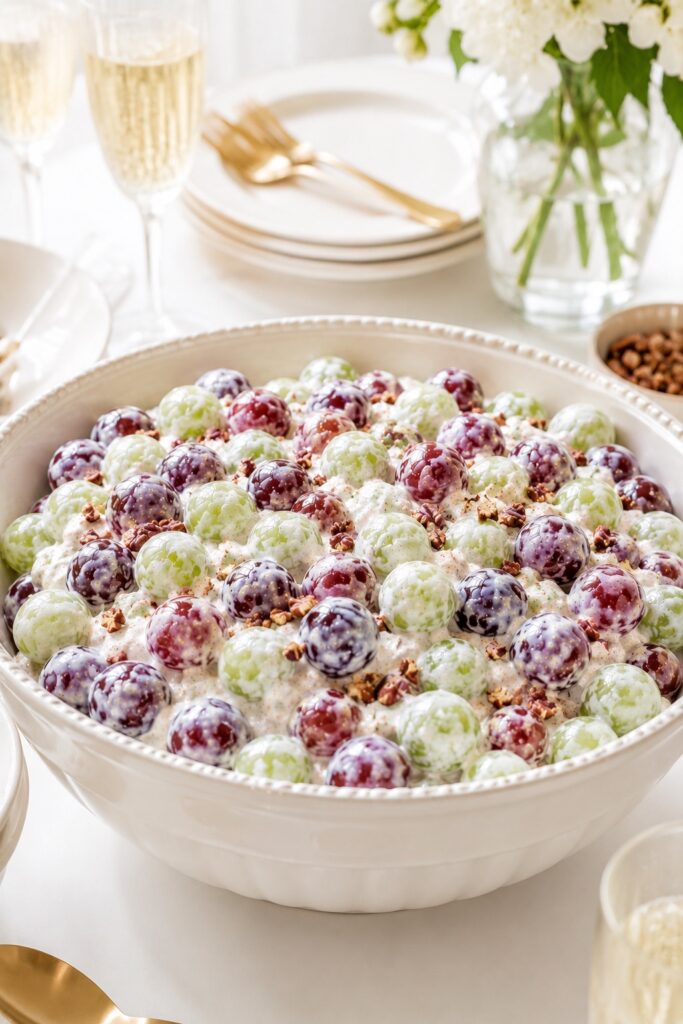
It pairs beautifully with:
- Easter brunch spreads
- Mother’s Day celebrations
- Baby showers and bridal showers
- Summer cookouts and backyard barbecues
- Potluck dinners
- Thanksgiving and Christmas buffets
The colorful mix of red and green grapes makes it especially attractive on buffet tables where it adds both freshness and visual contrast among richer dishes.
Save This For…
- your next holiday gathering
- a last-minute potluck contribution
- a summer dessert table that needs something refreshing
Healthy Serving Ideas
The high-protein version works surprisingly well beyond dessert.
Serve it in individual bowls topped with granola, hemp hearts, or sliced almonds for a quick breakfast, or portion it into containers for grab-and-go snacks throughout the week.
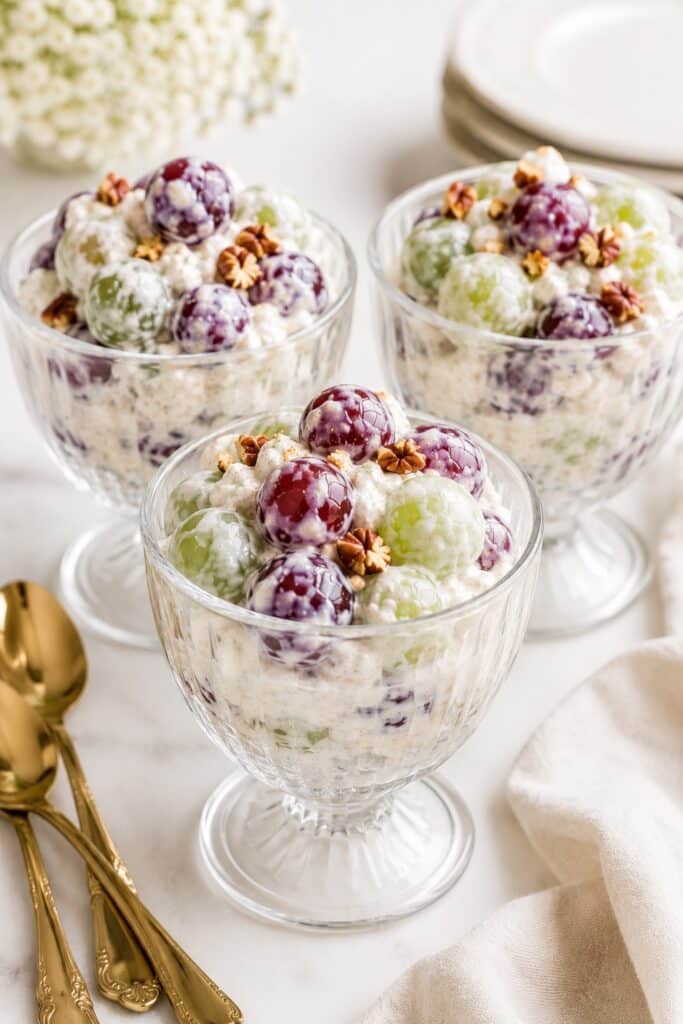
Some favorite ways to enjoy it include:
- Breakfast parfait bowls with granola
- Post-workout snack cups
- Meal-prep containers
- Lunchbox additions
- Healthier desserts after dinner
For an especially satisfying breakfast, layer the high-protein grape salad with extra Greek yogurt and high-protein granola to create a parfait-style bowl that feels both indulgent and nourishing.
Save This For…
- busy weekday breakfasts
- healthy afternoon snack cravings
- meal prep days when you want something sweet already prepared in the refrigerator
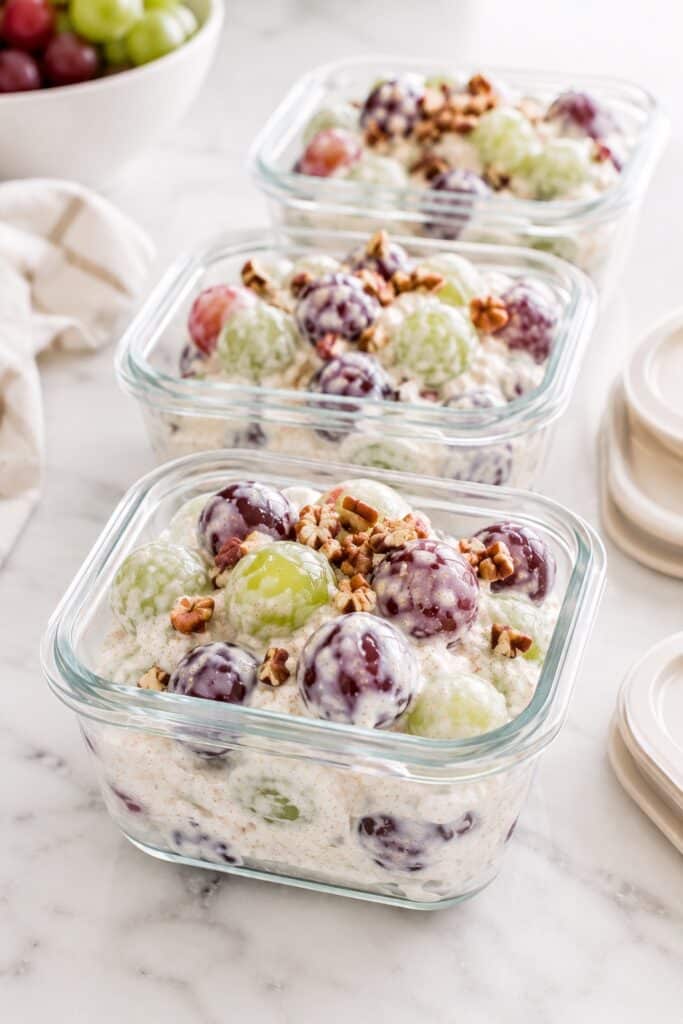
A Simple Presentation Upgrade
If serving guests, reserve a handful of grapes before mixing and scatter them over the top just before serving. Add a small sprinkle of toasted pecans and the salad instantly looks more polished and intentional without requiring any extra work.
Storage and Make-Ahead Tips
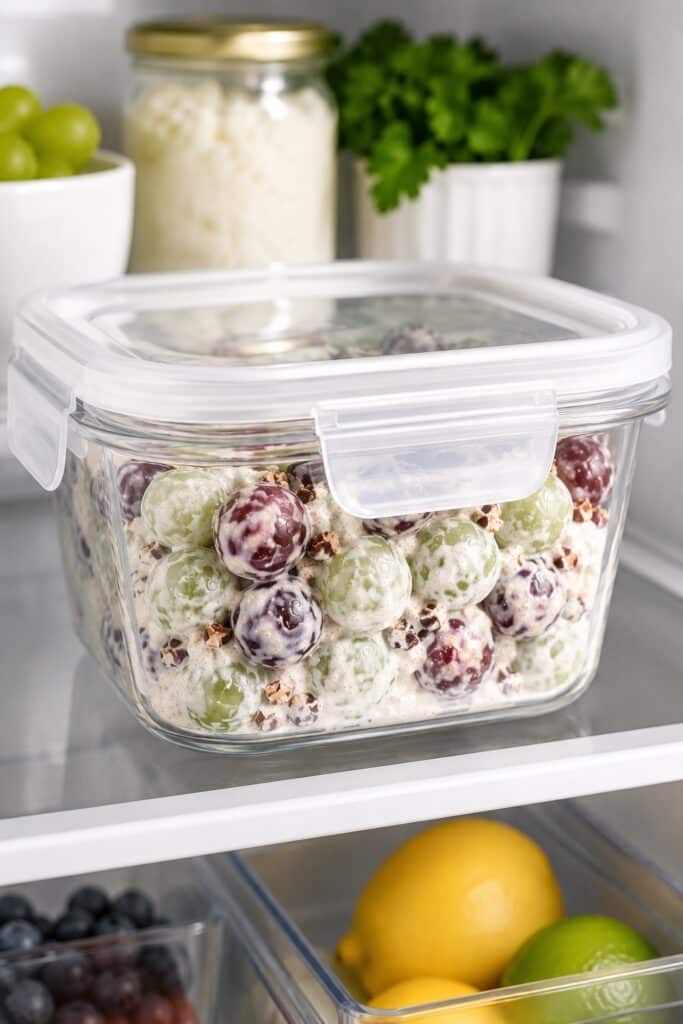
One of the reasons Grape Salad is such a popular party recipe is that it can be prepared ahead of time without sacrificing quality. In fact, many people find that the texture improves slightly after a few hours in the refrigerator as the dressing settles around the grapes.
Refrigerator Storage
Store the salad covered in the refrigerator for up to 3 days.
For the best texture, keep any toppings such as pecans, granola, brown sugar, or almonds separate until serving. This helps preserve their crunch and prevents them from softening.
The grapes will remain juicy and refreshing, while the dressing stays creamy and smooth when properly chilled.
Make-Ahead Tips
Grape Salad is an excellent make-ahead recipe.
For parties and gatherings, prepare the salad up to 24 hours in advance, then add the topping shortly before serving.
If making the high-protein version, it often tastes even better the next day because the cottage cheese and Greek yogurt dressing has additional time to chill and develop a smoother texture.
What Changes Over Time?
The dressing typically becomes slightly thicker after chilling, which many people prefer.
The grapes remain crisp during the first day but may gradually release a small amount of moisture after extended storage. A quick stir before serving is usually all that’s needed.
Best Strategy for Entertaining
If serving guests, assemble the salad the night before and refrigerate it overnight.
Just before serving:
- Stir gently once
- Add the crunchy topping
- Garnish with a few reserved grapes
This gives you the freshest presentation with the least amount of last-minute work.
Can You Freeze Grape Salad?
Freezing is not recommended.
The grapes lose their crisp texture after thawing, and the dressing can separate as it defrosts. While technically safe to eat, the creamy texture that makes Grape Salad so appealing is significantly reduced.
A Helpful Storage Note
If you notice a small amount of liquid collecting at the bottom of the bowl after a day or two, don’t panic. Grapes naturally release moisture as they sit. Simply stir the salad gently before serving and the dressing will come back together.
Easy Grape Salad Variations
One of the best things about Grape Salad is how easily it can be customized. Small ingredient changes can create a completely different flavor profile while keeping the same creamy, refreshing texture people love.
Cheesecake Grape Salad
For a richer dessert-style version, increase the cream cheese to 12 ounces and add 1 teaspoon finely grated lemon zest.
The result tastes surprisingly similar to a no-bake cheesecake filling paired with fresh grapes.
Best for: holidays, dessert buffets, and special occasions.
Honey Vanilla Grape Salad
Replace the granulated sugar with 3 tablespoons honey and increase the vanilla extract to 1 1/2 teaspoons.
This version has a softer sweetness and allows the natural grape flavor to stand out more clearly.
Best for: spring and summer gatherings.
Brown Sugar Pecan Grape Salad
Increase the topping to:
- 1/4 cup brown sugar
- 3/4 cup chopped pecans
This creates a more indulgent dessert-like finish with extra crunch and caramel-like sweetness.
Best for: Thanksgiving, Christmas, and potluck dinners.
Tropical Grape Salad
Add:
- 1 cup diced mango
- 1 cup pineapple chunks
- 1/4 cup toasted coconut
The tropical fruit adds brightness and turns the salad into a refreshing warm-weather dessert.
Best for: summer cookouts, pool parties, and vacation-inspired menus.
High-Protein Cottage Cheese Grape Salad
Replace the traditional dressing with:
- 1 cup cottage cheese
- 1 cup Greek yogurt or Skyr
- 2–3 tablespoons honey
- 1 teaspoon vanilla extract
Blend until completely smooth before mixing with the grapes.
This version contains significantly more protein while maintaining a creamy texture.
Best for: meal prep, healthy desserts, breakfast bowls, and post-workout snacks.
Crunchy Granola Grape Salad
Top the finished salad with:
- 1/2 cup high-protein granola
- 2 tablespoons hemp hearts
The granola adds crunch while the hemp hearts contribute extra protein and healthy fats.
Best for: breakfast and snack cups.
Chocolate Chip Cheesecake Grape Salad
Fold 1/3 cup mini chocolate chips into the finished salad and use the Cheesecake Variation as the base.
The combination of creamy dressing, grapes, and chocolate creates a dessert that feels almost like a deconstructed cheesecake.
Best for: kids’ parties, birthdays, and dessert tables.
Which Variation Is Most Popular?
If you’re serving a crowd, the Brown Sugar Pecan and Cheesecake versions tend to be the biggest hits.
If you’re making the recipe for everyday eating, the High-Protein Cottage Cheese Version is often the most practical because it works as a snack, breakfast, or healthier dessert.
Frequently Asked Questions
Can I Make Grape Salad Ahead of Time?
Yes, and many people actually prefer it after several hours of chilling. The dressing has time to settle around the grapes, the flavors become more cohesive, and the overall texture becomes creamier. For the best results, prepare the salad up to 24 hours ahead and add any crunchy toppings just before serving.
Can I Use Cottage Cheese Instead of Cream Cheese?
Absolutely. Blended cottage cheese creates a surprisingly smooth dressing while significantly increasing the protein content. For the creamiest texture, blend the cottage cheese until completely silky before combining it with the other ingredients.
Can I Make Grape Salad With Greek Yogurt?
Yes. Greek yogurt works beautifully in healthier versions of Grape Salad and provides a pleasant tangy flavor that balances the sweetness of the grapes. For the thickest texture, use a high-quality Greek yogurt or Skyr.
Is Grape Salad a Side Dish or a Dessert?
It can be both. Traditional Grape Salad is often served alongside holiday meals, potlucks, and brunch spreads, but many people consider it a dessert because of its sweet creamy dressing. The high-protein version can even work as a snack or breakfast option.
How Much Protein Is in the High-Protein Version?
The exact amount depends on the brands and ingredients used, but replacing cream cheese and sour cream with cottage cheese, Greek yogurt, or Skyr can increase the protein substantially. Adding protein powder, hemp hearts, or high-protein granola can raise the protein content even further.
Can I Freeze Grape Salad?
Freezing is not recommended. While the salad remains safe to eat, the grapes lose much of their crisp texture and the dressing can separate after thawing. Grape Salad is at its best when enjoyed fresh from the refrigerator.
Which Grapes Work Best for Grape Salad?
Seedless red and green grapes are the most popular choice because they provide both visual contrast and flavor balance. Red grapes tend to be sweeter, while green grapes contribute brightness and a slightly firmer texture. Using a combination of both creates the most attractive and well-balanced salad.
Why Is My Grape Salad Watery?
The most common cause is excess moisture on the grapes before mixing. Thoroughly drying the grapes helps the dressing cling properly. A small amount of liquid can also appear after storage because grapes naturally release moisture over time. A gentle stir before serving usually solves the problem.
Can I Use Only Red Grapes or Only Green Grapes?
Yes. The recipe works with either variety. However, using both colors creates better visual appeal and a more balanced flavor profile because the sweetness and acidity vary slightly between varieties.
What Are the Best Toppings for Grape Salad?
Traditional toppings include chopped pecans and brown sugar. Other excellent options include walnuts, toasted almonds, granola, hemp hearts, or even a light sprinkle of cinnamon. The most important rule is to add toppings just before serving so they stay crunchy.
More Fresh and Fruity Desserts You’ll Love
If you loved the creamy, chilled texture of this Grape Salad, these fresh and fruity desserts are beautiful next recipes to try. They keep the same bright, crowd-pleasing feeling while giving you different ways to serve fruit, cream, berries, and no-bake style desserts throughout the year.
Creamy Fruit Desserts
For another make-ahead dessert with creamy layers and fresh fruit flavor, try this Strawberry Cheesecake Banana Pudding. It has the same party-friendly appeal as Grape Salad, but with a richer cheesecake-style texture.
These Cheesecake Cups are another easy option when you want individual servings that look polished on dessert tables, brunch spreads, or baby shower menus.
If you want something lighter and protein-friendly, this Cottage Cheese Dessert is a smart next recipe to explore after the high-protein version of this grape salad.
Fresh Berry and Fruit Favorites
For a colorful bite-size dessert, these Fruit Pizza Bites are perfect for parties, spring gatherings, and summer entertaining.
If you love fruit-forward desserts with a soft, creamy finish, this Strawberry Shortcake is a classic choice with bright berry flavor and a beautiful homemade feel.
For a simple, colorful fruit option, this Fruit Salad keeps things fresh, juicy, and easy for warm-weather meals and brunch tables.
Summer Dessert Table Ideas
For a chilled dessert that feels especially refreshing in warm weather, this Strawberry Ice Cream brings sweet berry flavor and a creamy frozen texture to summer dessert tables.
If you want something dramatic and highly shareable, this Dubai Chocolate Strawberry Cup combines chocolate, strawberries, and a beautiful layered presentation.
For another fruity dessert that works beautifully after family dinners or cookouts, this Peach Cobbler is warm, juicy, cozy, and perfect with a scoop of vanilla ice cream.
Grape Salad Recipe Summary
Grape Salad is a creamy no-bake fruit dessert made with juicy seedless grapes, a smooth vanilla dressing, and crunchy toppings such as pecans, walnuts, granola, or brown sugar.
The classic version combines cream cheese and sour cream for a rich, dessert-like texture, while the high-protein variation uses cottage cheese and Greek yogurt or Skyr for a lighter and more protein-rich option.
Easy to prepare, make-ahead friendly, and endlessly adaptable, this recipe works equally well for holiday buffets, summer cookouts, potlucks, brunches, meal prep, and everyday snacking.
The combination of juicy fruit, creamy dressing, and crunchy texture is what has kept Grape Salad popular for generations.
Why This Recipe Wins
Some recipes become popular because they’re trendy. Others become popular because they consistently deliver exactly what people want.
Grape Salad belongs firmly in the second category.
It combines ingredients that are easy to find, requires very little effort, and creates a balance of textures that feels far more impressive than its simplicity would suggest. Juicy grapes provide freshness, the creamy dressing adds richness, and the crunchy topping creates contrast in every bite.
Just as importantly, the recipe adapts effortlessly to different occasions and lifestyles. The classic version feels right at home on a holiday dessert table, while the high-protein version works beautifully for meal prep, healthy snacks, and everyday enjoyment.
Whether you’re making it for a family gathering, a summer cookout, a holiday brunch, or simply because you have grapes in the refrigerator, this is the kind of recipe that earns a permanent place in your collection because it works every single time.

Love this? There are twenty more like it.
128 pages, five chapters, 15 kitchen guides and 16 printable planning pages — in US Letter and A4.

Grape Salad
Creamy Grape Salad made with juicy seedless grapes, a smooth vanilla cream cheese dressing, and a crunchy brown sugar pecan topping. This easy no-bake fruit dessert is perfect for potlucks, holidays, brunches, cookouts, and make-ahead entertaining.
Ingredients
- 2 lbs seedless grapes, red, green, or mixed
- 8 oz cream cheese, softened
- 1 cup sour cream
- 1/4 cup granulated sugar
- 1 teaspoon vanilla extract
For the Topping
- 1/2 cup chopped pecans or walnuts
- 1/4 cup brown sugar
Instructions
- Rinse the grapes under cold water, remove any stems, and dry them very well with clean kitchen towels or paper towels.
- In a large mixing bowl, beat the softened cream cheese until completely smooth and creamy.
- Add the sour cream, granulated sugar, and vanilla extract. Mix until the dressing is silky, smooth, and fully combined.
- Add the dried grapes to the bowl and gently fold until all the grapes are evenly coated with the creamy dressing.
- Cover and refrigerate for at least 1 hour, or until the salad is well chilled and the dressing has thickened slightly.
- Just before serving, sprinkle the chopped pecans and brown sugar over the top.
- Serve cold.
Notes
- For the best texture, dry the grapes thoroughly before mixing. Excess moisture can thin the dressing and cause liquid to collect at the bottom of the bowl.
- Use softened cream cheese for a smooth, lump-free dressing.
- Add the pecans and brown sugar just before serving so the topping stays crunchy.
- For a healthy high-protein version, replace the cream cheese and sour cream with 1 cup cottage cheese and 1 cup Greek yogurt or Skyr. Blend until completely smooth, then sweeten with 2–3 tablespoons honey or maple syrup.
- Grape Salad can be made up to 24 hours ahead. Store covered in the refrigerator and add toppings right before serving.
- Freezing is not recommended because the grapes lose their crisp texture and the dressing can separate after thawing.
Recommended Products
As an Amazon Associate and member of other affiliate programs, I earn from qualifying purchases.


Nutrition Information:
Yield: 8 servings Serving Size: 1 servingAmount Per Serving: Calories: 280Total Fat: 16gCarbohydrates: 32gProtein: 3g
Nutrition information is provided as an estimate only and may vary based on specific ingredients, brands, and portion sizes used. This information should not be considered medical or nutritional advice.
12 Sweet Favourites — Yours, Free 🍰
Tiramisù, no-bake cheesecake, the perfect chocolate chip cookie & 9 more reader-loved desserts — gathered into one beautiful free recipe book. From my kitchen to yours.
No spam, just sweet things. Unsubscribe anytime.