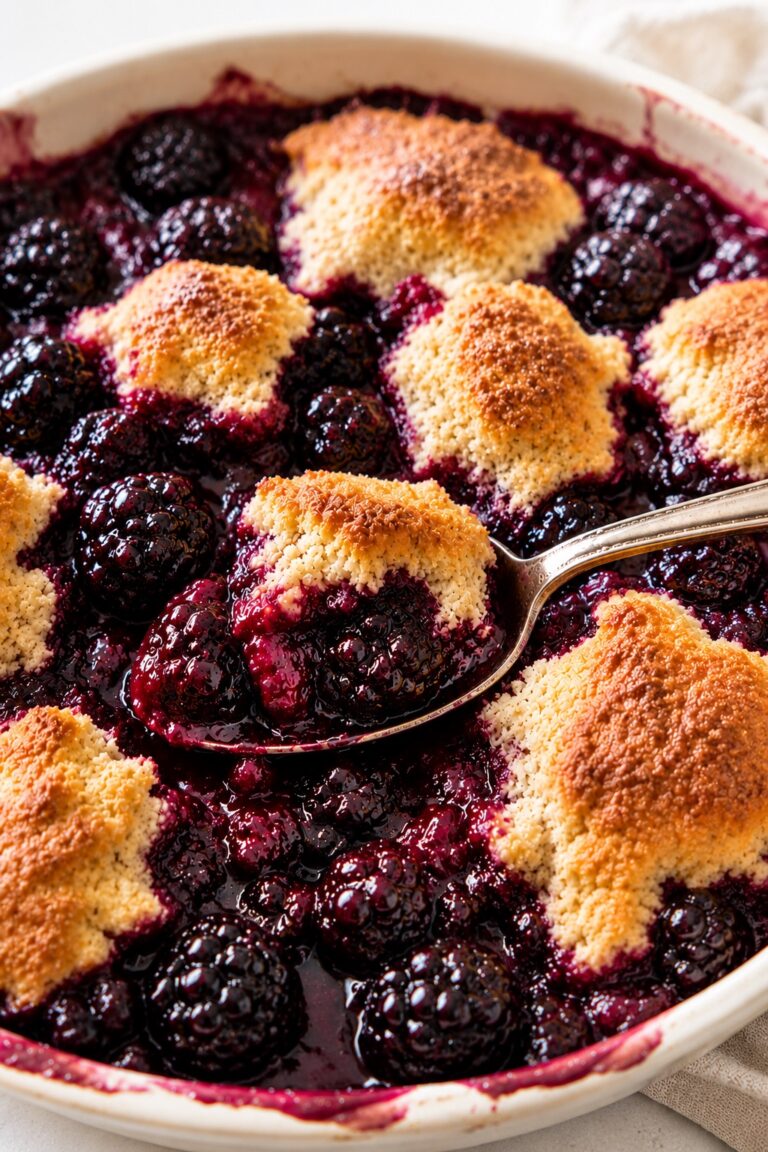
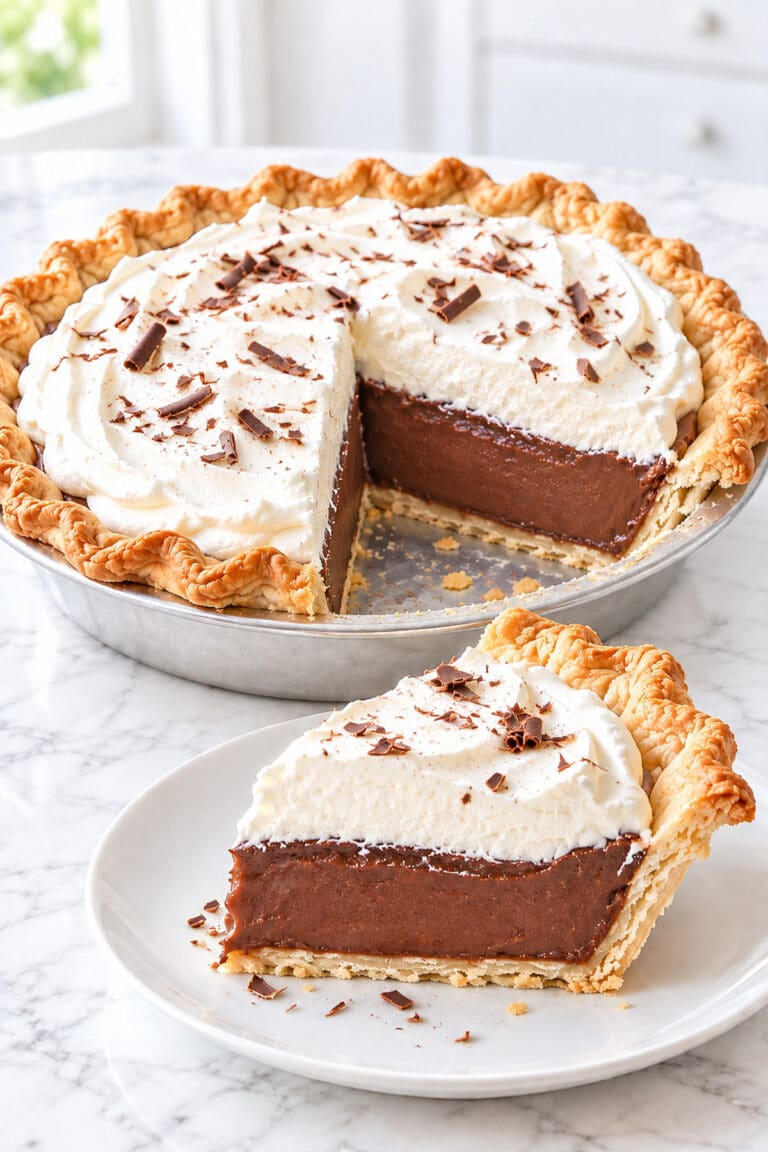
Lemon Meringue Pie
🎁 FREE E-BOOK: 12 Sweet Favorites — reader-loved desserts in one beautiful recipe book.
Lemon meringue pie is a classic dessert made with a buttery pie crust, a bright lemon custard filling, and a fluffy toasted meringue topping. To make it, you bake the crust, cook a lemon curd-style filling until thick, then top it with whipped egg whites and bake again until golden. The result is a perfectly balanced pie with crisp edges, a smooth citrus center, and a stable meringue that slices cleanly.

I made my first homemade lemon meringue pie thinking I had everything under control. Spoiler: I didn’t. My filling turned into lemon soup and my meringue looked cute for five minutes, then started acting suspicious. Ever been there? Let’s fix it.
This lemon meringue pie recipe gives you a crisp buttery crust, a thick lemon filling that actually slices clean, and fluffy golden peaks that stay stable. You’ll also get the “why” behind the steps, so you don’t bake on vibes alone.
It’s the kind of classic lemon dessert you save for spring brunch, Easter tables, or any time you want a bright citrus pie that looks as good as it tastes.
What Is Lemon Meringue Pie?
Lemon meringue pie is a classic lemon pie made with a buttery crust, a thick lemon custard style filling, and a fluffy baked meringue topping. To get the best texture, you must fully cook the lemon filling, spread the meringue over hot filling, and seal it to the crust edges to prevent shrinking or weeping.
Ever wondered why some lemon pies look perfect but turn watery after chilling? This is exactly why technique matters.
What Are the Three Layers of Lemon Meringue Pie?
A traditional lemon meringue pie has three distinct layers:
- A flaky pie crust that supports the filling
- A thick lemon custard filling made with egg yolks and cornstarch
- A fluffy meringue topping whipped from egg whites and sugar
When each layer works correctly, the pie slices clean and holds its structure without collapsing.

Why This Is the Best Lemon Meringue Pie Recipe
I built this recipe around the three things people actually want: bold lemon flavor, clean slices, and stable meringue. I also kept it realistic. You don’t need pastry school energy, you just need the right order of steps.
This method works because you:
- Blind bake the crust so it stays crisp
- Boil the filling long enough so cornstarch sets it
- Temper egg yolks so they stay smooth
- Add sugar slowly so meringue holds structure
- Seal the edges so the topping doesn’t shrink
If you want a classic lemon meringue pie that feels bakery-level but still doable at home, this is the one.
I remember making this lemon meringue pie for Easter one year. I placed it on the table and everyone suddenly lost interest in everything else. No one asked about the main dish.
They just stared at the golden peaks catching the light, waiting for that first clean slice to reveal the glossy lemon filling underneath.
That’s when I realized something. This isn’t just a lemon dessert. It’s the pie everyone quietly hopes you brought.
Ever notice how some desserts disappear quietly, while others become the center of attention?

The Science Behind Lemon Meringue Pie
Lemon meringue pie may look delicate, but it relies on very specific chemistry to work properly.
The lemon filling thickens because cornstarch absorbs liquid and swells when heated to a full boil. If you stop cooking too early, the structure never fully sets. That’s why timing matters more than instinct here.
The meringue works differently. Egg whites trap air as you whip them, creating volume and structure. Heat from the oven then stabilizes that structure so the peaks hold their shape.
When you understand what’s happening inside the bowl and saucepan, the whole recipe feels less mysterious and much more predictable.
Why Sugar Stabilizes Meringue
Egg whites contain proteins that unfold and trap air when you whip them.
This process, known as protein denaturation, is widely explained in food science research on egg proteins. Sugar slows down that process and strengthens the protein network.
When you add sugar gradually, you create a tighter structure that holds air bubbles in place. That’s why dumping sugar in all at once causes weak, unstable peaks.
It’s not magic. It’s protein chemistry working in your favor.

Why Lemon Meringue Pie Never Goes Out of Style
Some desserts fade into the background. Lemon meringue pie never does.
It hits that perfect balance between sweet and tart. The silky lemon filling wakes up your taste buds. The fluffy golden meringue adds drama. The crust brings buttery crunch.
Ever wonder why this classic lemon meringue pie recipe keeps showing up at Easter, Mother’s Day, and summer parties? Because it works. Every. Single. Time.
What Makes This Lemon Meringue Pie Recipe Foolproof
I don’t do vague baking advice. I give you steps that work.
Here’s what makes this homemade lemon meringue pie reliable:
- Fully cooked lemon filling
- Tempered egg yolks
- Stabilized meringue
- Edges sealed to crust
- Proper cooling time
Miss one of these and you risk watery filling or shrinking peaks. And nobody wants lemon soup under fluffy clouds :/
Ingredients You’ll Need
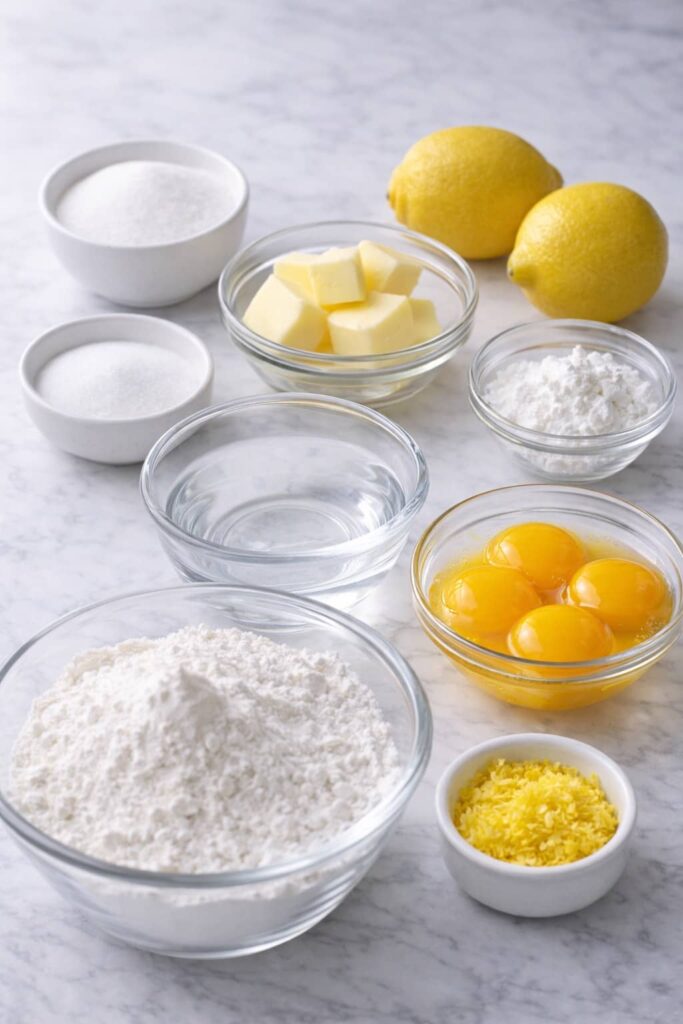
Let’s keep it simple and precise.
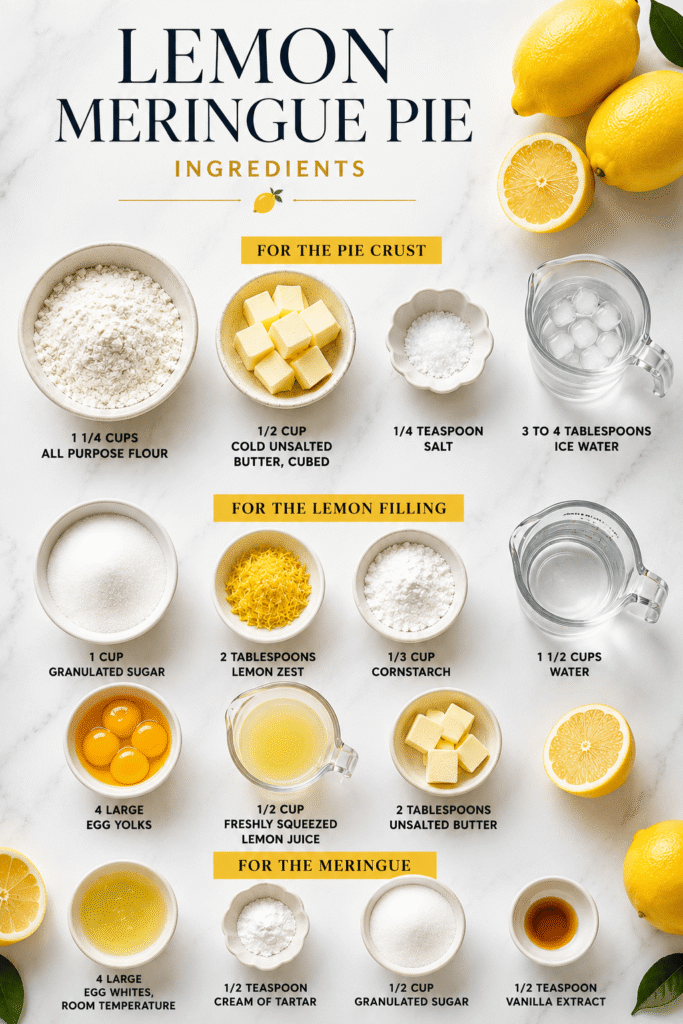
For the Pie Crust
- 1 1/4 cups all purpose flour
- 1/2 cup cold unsalted butter, cubed
- 1/4 teaspoon salt
- 3 to 4 tablespoons ice water
Add ice-cold water slowly so you get a tender, flaky crust that holds up under the lemon filling.
For the Lemon Filling
- 1 cup granulated sugar
- 2 tablespoons lemon zest
- 1/3 cup cornstarch
- 1 1/2 cups water
- 4 large egg yolks
- 1/2 cup freshly squeezed lemon juice
- 2 tablespoons unsalted butter
Fresh lemon zest and juice give this lemon pie recipe its bright flavor and that “wow” citrus bite.
When you zest the lemons, you’ll smell that sharp citrus aroma immediately. That’s how you know this pie is going to taste alive.
For the Meringue
- 4 large egg whites, room temperature
- 1/2 teaspoon cream of tartar
- 1/2 cup granulated sugar
- 1/2 teaspoon vanilla extract
Cream of tartar helps your meringue topping stay tall, glossy, and stable.
Kitchen Tools You’ll Need
You don’t need fancy gear, but you do need the basics:
- 9 inch pie dish
- Rolling pin
- Saucepan
- Mixing bowls
- Electric mixer
- Whisk
- Rubber spatula
- Pie weights or dried beans
That’s it. No complicated equipment. No stress.


Why This Lemon Meringue Pie Works
- Cornstarch stabilizes the lemon filling, preventing it from becoming runny once sliced.
- Hot filling under the meringue helps seal the layers and reduces weeping.
- Beating egg whites to stiff peaks (not dry peaks) keeps the meringue stable without cracking.
- Baking the meringue just until golden prevents over-drying and shrinking.
Prep Time, Bake Time, Servings
- Prep time: 30 minutes
- Cook time: 30 minutes
- Chill time: 3 hours
- Total time: About 4 hours
- Servings: 8 slices
Yes, you must chill it. Patience matters here.
Now here’s where most people go wrong.
They rush. They assume lemon meringue pie works like any other pie. It doesn’t. This recipe rewards patience and punishes shortcuts.
ut once you understand the rhythm of it, the whole process feels calm, almost therapeutic.
Ready?
Step by Step Instructions
Step 1: Blind Bake the Crust
Preheat your oven to 375°F.
Roll out the dough and press it into your pie dish. Prick the bottom with a fork. Line with parchment and fill with pie weights.
Bake for 15 minutes. Remove weights and bake 5 to 7 more minutes until lightly golden.
Why blind bake? Because soggy crust ruins everything. Simple.
Step 2: Make the Lemon Filling
Whisk sugar, lemon zest, and cornstarch in a saucepan.
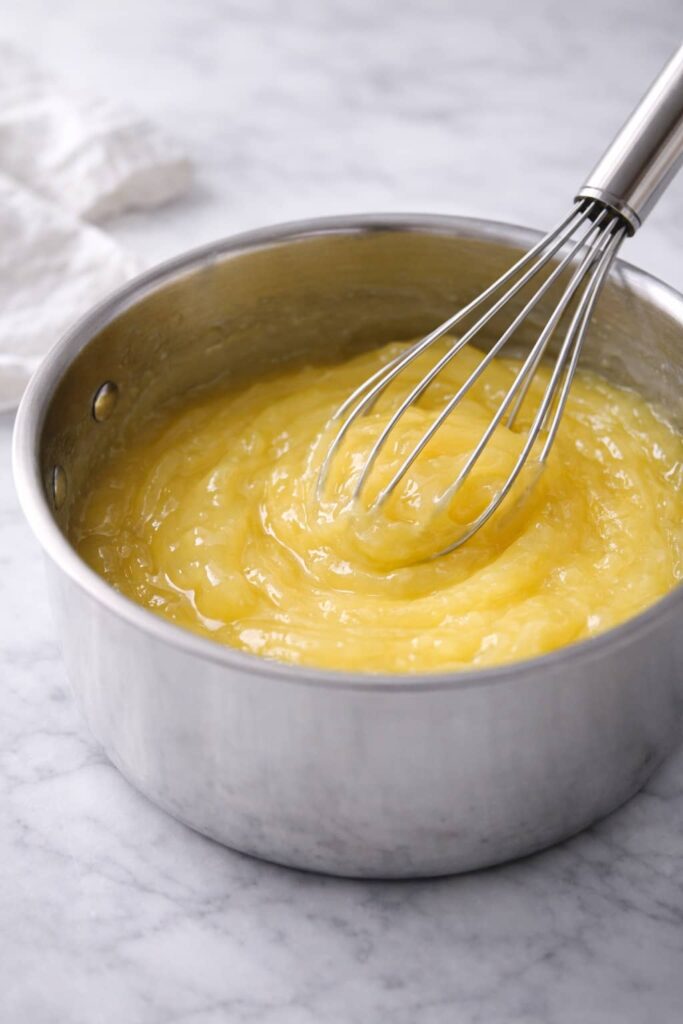
Slowly whisk in water. Cook over medium heat while stirring constantly. The mixture will thicken and bubble.
Temper the egg yolks by slowly adding a little hot mixture while whisking. Pour everything back into the pan and cook 1 to 2 more minutes.
Stir in lemon juice and butter. Pour into the hot crust.
Ever wonder why filling turns runny? Most people don’t boil it long enough. Let it bubble for at least one full minute. That activates the cornstarch properly.
Cook the filling until it coats the back of a spoon and holds a clear line when you run your finger through it.
Step 3: Whip the Meringue
Beat egg whites and cream of tartar until foamy.
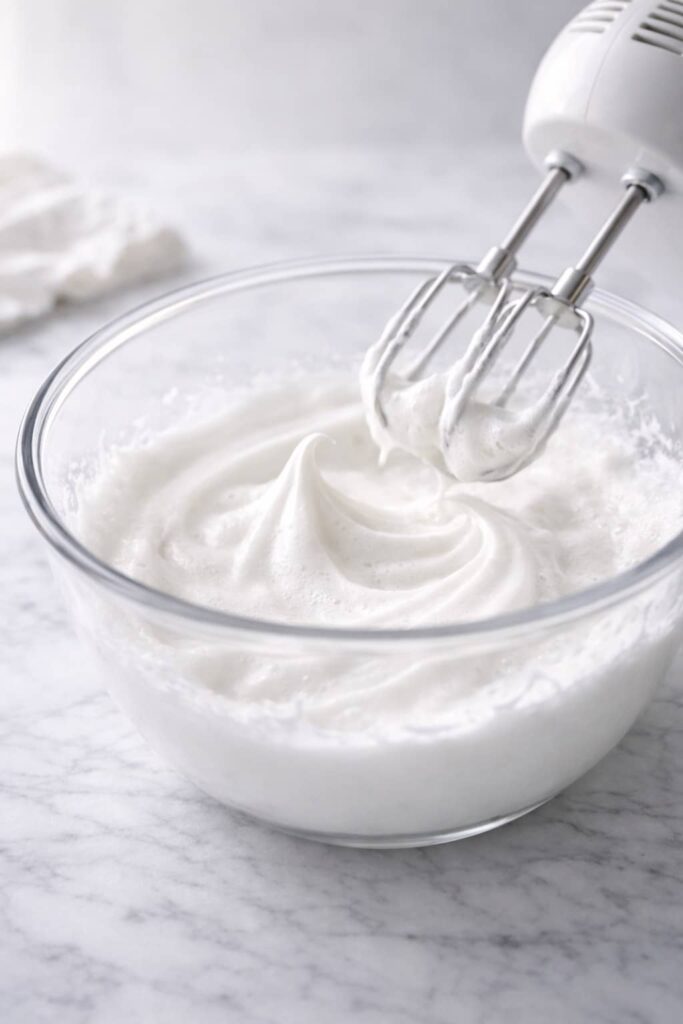
Add sugar one tablespoon at a time. Keep beating until stiff glossy peaks form.
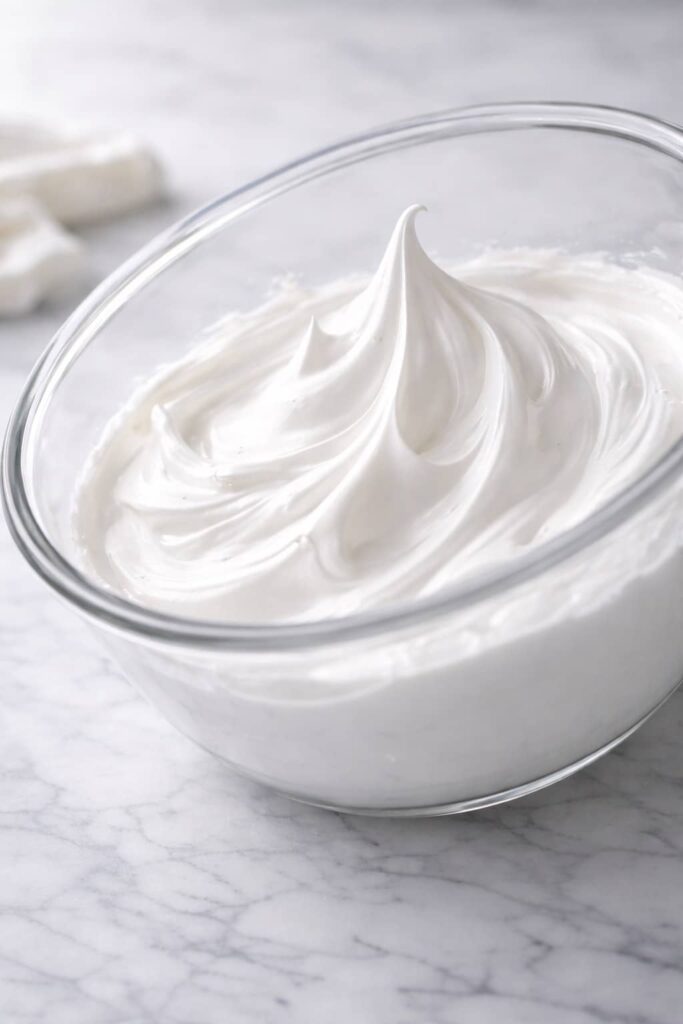
Add vanilla and mix briefly.
Do not rush the sugar. If you dump it in all at once, the meringue collapses later. Ask me how I know.
Step 4: Assemble and Bake
Spread the meringue over the hot filling immediately.
Seal the meringue to the crust edges completely. This prevents shrinking.
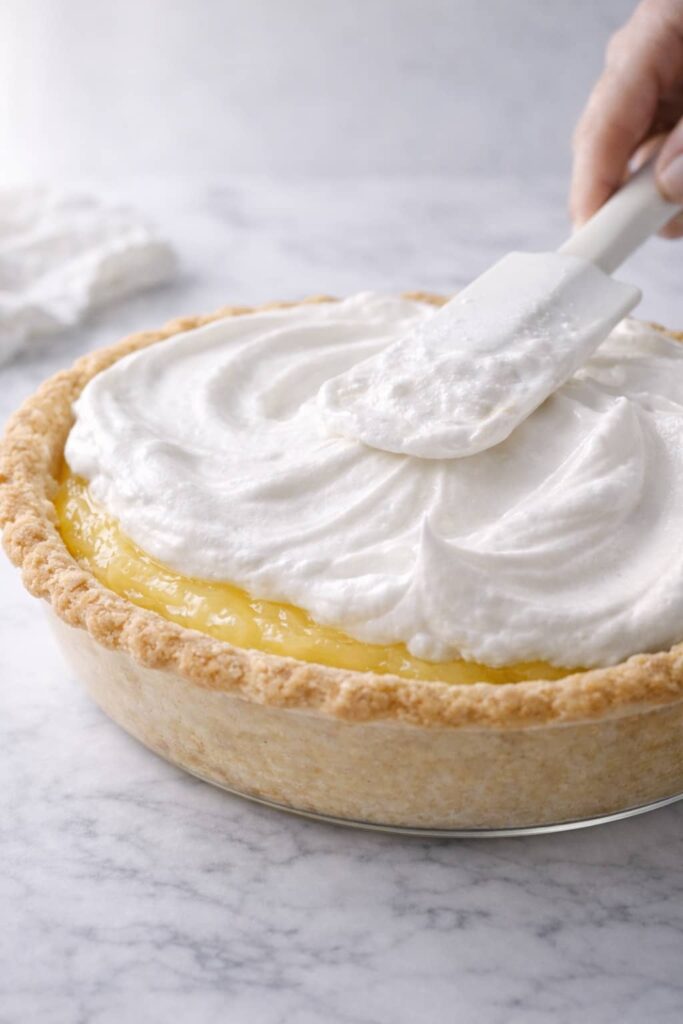
Bake at 350°F for 10 to 12 minutes until the peaks turn golden.
Cool at room temperature first. Then refrigerate.
How to Fix Runny Lemon Pie Filling
If your lemon filling looks thick on the stove but turns loose after chilling, you almost always skip one step. You must let the filling fully bubble for at least one minute after it thickens. Cornstarch needs that boil to set properly.
Here’s what I do every time:
- I stir constantly over medium heat.
- I wait for big bubbles, not tiny simmer bubbles.
- I time one full minute of bubbling.
- I remove it from heat and add lemon juice and butter last.
Do that and your lemon meringue pie filling slices clean instead of sliding around like it wants to escape.
Common Lemon Meringue Pie Mistakes
I see these mistakes constantly, especially with first-time bakers.
- Adding meringue to cool filling
- Dumping sugar into egg whites all at once
- Skipping blind baking
- Cutting the pie too early
- Refrigerating while still warm
Every single one of these affects texture.
If you fix just those five things, your homemade lemon meringue pie instantly improves.
Expert Tips for Perfect Lemon Meringue Pie
Small details make a huge difference with lemon meringue pie.
Here’s what I always focus on:
- Boil the filling fully so the cornstarch activates properly
- Add sugar slowly to egg whites to build stable structure
- Spread meringue over hot filling to prevent separation
- Seal the edges completely so the topping doesn’t shrink
- Cool gradually at room temperature before refrigerating
I’ve tested this pie in humid weather and dry kitchens, and the single biggest difference always comes down to how slowly you add the sugar to the egg whites.
That one step controls the strength of the meringue more than anything else.
Why Does Lemon Meringue Pie Weep?
Weeping happens when moisture forms between the meringue and the filling.
This usually happens because:
- The filling cooled before adding meringue
- The meringue did not seal to the crust
- The pie chilled too quickly
Always spread meringue over hot filling. Heat helps bond the layers together and reduces separation.
That one detail changes everything.
Why Lemon Meringue Pie Gets Watery
Let’s talk science for a minute.
Watery pie happens when:
- Filling doesn’t fully boil
- Meringue sits on cool filling
- Sugar incorporates too fast
- Pie cools too quickly
See a pattern? Technique matters.
French vs Italian Meringue
This recipe uses French meringue. It’s classic and simple.
Italian meringue gives more stability because hot syrup cooks the egg whites. That works great in humid climates.
Swiss meringue sits somewhere in between.
For traditional lemon meringue pie, French style keeps the texture light and nostalgic.
When to Serve Lemon Meringue Pie
This classic lemon dessert shines in:
- Easter dessert spreads
- Spring brunch tables
- Summer backyard gatherings
- Mother’s Day celebrations
- Baby showers
It feels light enough for warm weather, but impressive enough for holidays.
Ever needed a dessert that looks fancy but doesn’t require five layers and a pastry degree?
This is that pie.
Classic Lemon Meringue Pie vs Lemon Cream Pie
People often confuse these two.
Lemon meringue pie uses a cooked lemon custard thickened with egg yolks and cornstarch, then topped with baked meringue.
Lemon cream pie usually uses whipped cream or a chilled filling instead of meringue.
If you want tall golden peaks and dramatic presentation, lemon meringue pie wins every time.
If you enjoy traditional pies like this, you can explore more ideas in our Pie Desserts collection.
Variations You Can Try
Once you master this classic lemon meringue pie recipe, you can start experimenting with different textures and flavors while keeping that bright citrus base everyone loves.
Here are a few variations I genuinely love:
- Graham cracker crust for a slightly sweeter base
- Extra tart lemon filling by increasing zest slightly
- Italian meringue topping for extra stability
- Mini lemon meringue pies for individual servings
- Torch-toasted peaks for dramatic texture
Small tweaks completely change the personality of the pie.
Ever tried torching the meringue instead of baking it? The texture difference is subtle but fun.
Nutrition Information Per Slice
Approximate values per slice:
- Calories: 340
- Carbohydrates: 48g
- Protein: 5g
- Fat: 14g
- Sugar: 34g
It’s dessert. It’s not salad. And that’s okay.
Serving Ideas
Want to level it up?
- Add fresh berries
- Dust lightly with powdered sugar
- Serve with whipped cream
- Pair with iced tea or coffee
If you love citrus desserts in general, you might also enjoy Lemon Bars or a Key Lime Pie for something slightly different but equally bright. Both bring that same fresh citrus energy in their own way.
Can You Make Lemon Meringue Pie Ahead of Time?
Yes, but timing matters.
If you plan to serve this lemon meringue pie for a holiday or gathering, I recommend baking it the same day or the night before.
Here’s what works best:
- Bake and cool completely at room temperature
- Refrigerate loosely covered
- Slice just before serving
If you need to prep earlier, you can blind bake the crust one day ahead and store it at room temperature. That saves time without affecting texture.
Planning ahead makes this classic lemon dessert feel effortless.
How to Store Lemon Meringue Pie
Store lemon meringue pie loosely covered in the refrigerator for up to 3 days, and chill it at least 3 hours before slicing for the cleanest cuts.
Cover loosely to protect the meringue.
Do not freeze fully assembled lemon meringue pie. The texture changes and not in a good way.
Why Lemon Meringue Pie Is Perfect for Spring and Summer
This pie feels light, fresh, and vibrant, which makes it one of the most popular spring dessert recipes.
The bright lemon filling balances heavier meals beautifully, especially around Easter or Mother’s Day. During summer, that cool citrus flavor feels refreshing after grilled dinners or backyard gatherings.
If you search for a homemade lemon pie that looks impressive but tastes clean and bright, this one always delivers.
If you love desserts that look dramatic but rely on simple ingredients, save this lemon meringue pie recipe for your next holiday or gathering. It’s one of those classic pie recipes that never goes out of style.
Quick Lemon Meringue Pie FAQ
Why does meringue weep on lemon pie?
Meringue can release liquid if it is undercooked, overbeaten, or spread over a cold filling. Always spread meringue over hot filling and bake until set.
How do you prevent a soggy crust?
Blind bake the crust fully before adding the lemon filling to prevent moisture from soaking through.
Can lemon meringue pie be made ahead?
Yes. It can be made a day ahead and stored in the refrigerator, but it is best served within 24 hours for the most stable texture.
Can you freeze lemon meringue pie?
Freezing is not recommended because meringue changes texture and releases moisture when thawed.
Why does my meringue collapse?
Overbeating egg whites or failing to seal the edges causes collapse.
How do you get clean slices?
Chill the pie fully and wipe the knife clean between cuts.

More Bright, Creamy, and Classic Dessert Recipes
If you love the contrast of buttery crust, silky lemon filling, and fluffy meringue in this lemon meringue pie, these recipes are natural next bakes. They connect beautifully with classic pie desserts, citrus desserts, creamy fillings, and spring-ready treats.
- Lemon Pie — a smooth, bright lemon dessert with classic citrus flavor and an easy pie-style finish.
- Lemon Bars — buttery, tangy, and sliceable, with the same fresh lemon flavor in a simple dessert bar.
- Key Lime Pie — creamy, tart, and refreshing, perfect if you love citrus pies with a crisp crust.
- Lemon Cake — soft, moist, and full of bright lemon flavor for spring brunches, Easter, or Mother’s Day.
- Lemon Blueberry Cake — a tender fruit cake with fresh lemon flavor and juicy blueberries in every bite.
- Lemon Blueberry Muffins — bright, tender, and easy to bake when you want a lighter lemon dessert or brunch treat.
- Banana Cream Pie — a creamy classic pie with a smooth filling, flaky crust, and bakery-style slices.
- Coconut Cream Pie — rich, creamy, and topped with fluffy texture for another impressive homemade pie.
Final Thoughts
Lemon meringue pie looks dramatic with its tall golden peaks and bright yellow center. It tastes fresh, vibrant, and just sweet enough to keep you coming back for another forkful. And once you understand the technique, it becomes surprisingly reliable.
You don’t need perfect piping skills. You don’t need a culinary diploma. You just need patience, fresh lemons, and a willingness to boil the filling long enough.

- PACK SIZE: 1lb. All lemons. All seedless
- ALL SQUEEZE, NO SEEDS: All the juicy, tart flavor of lemons, now 100% free of seeds; Our Wonderful Seedless Lemons are T…
- EASY PEASY: Whether you’re mixing up a tasty beverage or adding some zest to your next culinary masterpiece, chances are…
Have you ever made lemon meringue pie before, or is this your first attempt? Tell me what part feels most intimidating. I’ll help you troubleshoot.
Now I’m curious. Do you prefer your lemon meringue pie extra tart or slightly sweet? Tell me in the comments. I genuinely want to know how you like it.

Lemon Meringue Pie
A classic lemon meringue pie with a crisp buttery crust, thick glossy lemon filling, and stable golden peaks. Foolproof “no-weep” method with clean slices every time.
Ingredients
Pie Crust
- 1 1/4 cups (156 g) all-purpose flour
- 1/4 teaspoon fine salt
- 1/2 cup (113 g) unsalted butter, cold and cubed
- 3–4 tablespoons ice water
Lemon Filling
- 1 cup (200 g) granulated sugar
- 2 tablespoons lemon zest
- 1/3 cup (40 g) cornstarch
- 1 1/2 cups (360 ml) water
- 4 large egg yolks
- 1/2 cup (120 ml) fresh lemon juice
- 2 tablespoons (28 g) unsalted butter
Meringue Topping
- 4 large egg whites, room temperature
- ½ teaspoon cream of tartar
- 1/2 cup (100 g) granulated sugar
- 1/2 teaspoon vanilla extract
Instructions
- Whisk the flour and salt in a large bowl. Cut in the cold butter until the mixture looks like coarse crumbs with pea-size pieces.
- Add ice water 1 tablespoon at a time. Mix gently just until the dough holds together when pressed. Do not overmix.
- Shape the dough into a disk, wrap it tightly, and refrigerate for 30 minutes.
- Preheat the oven to 375°F (190°C). Roll the chilled dough into a 12-inch circle and fit it into a 9-inch pie dish. Trim and crimp the edges.
- Prick the bottom with a fork. Line the crust with parchment paper and fill with pie weights or dried beans. Bake for 15 minutes. Remove the weights and bake 5–7 more minutes until lightly golden. Set aside.
- Whisk the sugar, lemon zest, and cornstarch in a saucepan. Slowly whisk in the water until smooth.
- Cook over medium heat, stirring constantly, until the mixture thickens and begins to bubble. Let it boil for 1 full minute to activate the cornstarch.
- Lightly beat the egg yolks in a separate bowl. Slowly whisk in a few spoonfuls of the hot mixture to temper the yolks.
- Pour the tempered yolk mixture back into the saucepan. Cook for 1–2 minutes, stirring constantly, until thick and glossy.
- Remove from heat. Stir in the fresh lemon juice and butter until smooth. Pour the hot filling into the baked crust.
- Beat the egg whites and cream of tartar on medium speed until foamy.
- Add the sugar gradually, 1 tablespoon at a time, beating continuously. Continue beating until stiff, glossy peaks form. Mix in the vanilla extract.
- Spread the meringue over the hot filling immediately. Seal the meringue completely to the crust edges to prevent shrinking.
- Bake at 350°F (175°C) for 10–12 minutes, until the peaks turn lightly golden.
- Cool the pie completely at room temperature. Refrigerate for at least 3 hours before slicing for clean cuts.
Notes
- No-weep tip: Always spread meringue over hot filling and seal it to the crust edges.
- Runny filling fix: Your filling must boil for a full minute after thickening to activate cornstarch.
- Clean slices: Chill fully and wipe your knife between cuts.
Recommended Products
As an Amazon Associate and member of other affiliate programs, I earn from qualifying purchases.


Nutrition Information:
Yield: 8 slices Serving Size: 1Amount Per Serving: Calories: 340Total Fat: 14gSodium: 150mgCarbohydrates: 48gFiber: 1gSugar: 34gProtein: 5g
Nutrition information is an estimate and may vary depending on the exact ingredients and brands used. This information is provided as a courtesy and should not be considered medical or dietary advice.
12 Sweet Favorites — Yours, Free 🍰
Tiramisù, no-bake cheesecake, the perfect chocolate chip cookie & 9 more reader-loved desserts — gathered into one beautiful free recipe book. From my kitchen to yours.
No spam, just sweet things. Unsubscribe anytime.