Pavlova Recipe
🎁 FREE E-BOOK: 12 Sweet Favorites — reader-loved desserts in one beautiful recipe book.
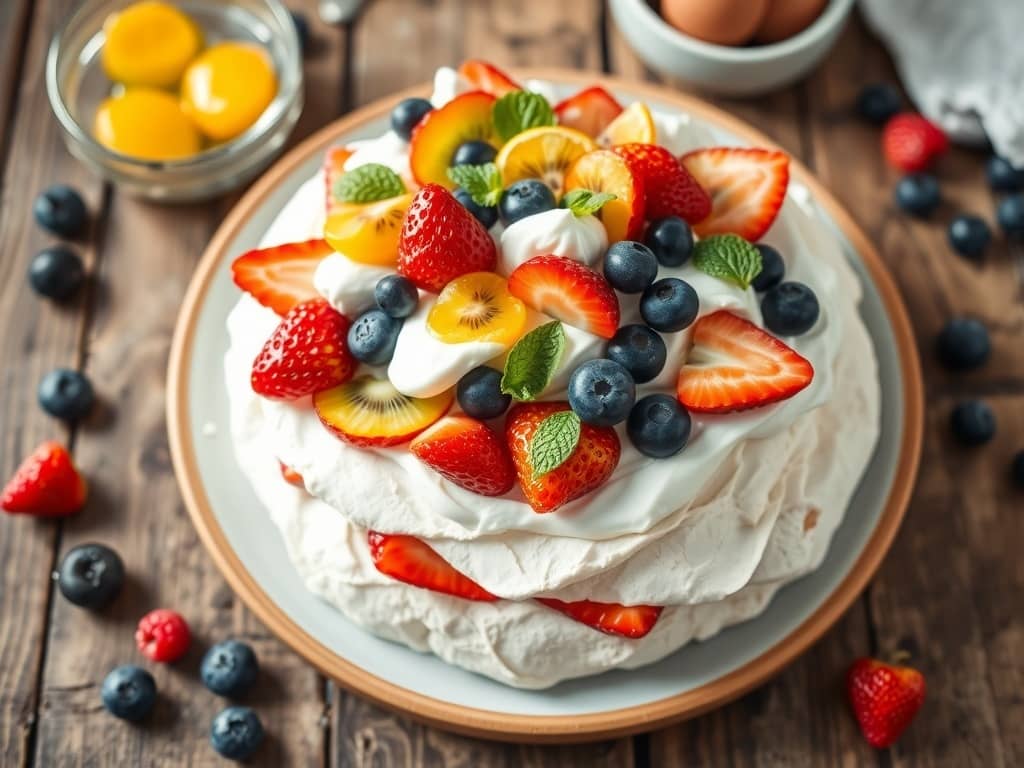
Light, crisp, and cloud-like, this pavlova recipe combines a delicate meringue shell with a soft marshmallow center, silky whipped cream, and fresh fruit for one of the most elegant desserts you can make at home. It looks impressive on the table, but the process is surprisingly simple once you understand how the texture develops in the oven.
There is something especially beautiful about pavlova because it feels both dramatic and delicate at the same time. The outside turns pale, crisp, and lightly crackled, while the inside stays soft and pillowy. Once topped with whipped cream and fruit, it becomes that kind of dessert that instantly makes a gathering feel a little more special.
If you want a dessert that feels airy, fresh, and naturally stunning, this pavlova recipe is one of those classics worth keeping. It is ideal for spring celebrations, summer gatherings, holidays, brunch tables, or anytime you want a centerpiece dessert that feels elegant without being overly heavy.
What is Pavlova?
Pavlova is a baked meringue dessert made from whipped egg whites and sugar, usually stabilized with a small amount of acid and starch. It is known for its signature contrast in texture: a crisp shell on the outside and a soft, marshmallow-like center inside.
Unlike a dry meringue cookie, pavlova is meant to keep some tenderness in the middle. It is typically topped with whipped cream and fresh fruit, which adds richness, freshness, and color. The result is a dessert that feels light yet luxurious, with a delicate sweetness balanced by creamy and fruity toppings.
Why You’ll Love This Pavlova Recipe
This pavlova recipe is worth making because:
- it looks elegant and bakery-worthy
- the texture is beautifully balanced between crisp and soft
- it uses simple ingredients
- it can be dressed up with many different fruits
- it feels light and fresh after a meal
- it is naturally gluten free
Quick Recipe Overview
- Flavor: sweet, delicate, creamy, and fresh
- Texture: crisp shell, marshmallow-soft center, airy whipped topping
- Difficulty: moderate but very manageable
- Best For: holidays, spring desserts, summer entertaining, Easter, brunch tables
- Bake Time: low and slow for a pale, crisp shell
- Style: elegant homemade dessert with dramatic visual appeal
What Does Pavlova Taste Like?
Imagine biting into a crunchy sugar shell that gives way to a soft, melt-in-your-mouth center. The sweetness is balanced by tart fruit and creamy whipped topping, pure heaven for anyone with a sweet tooth.
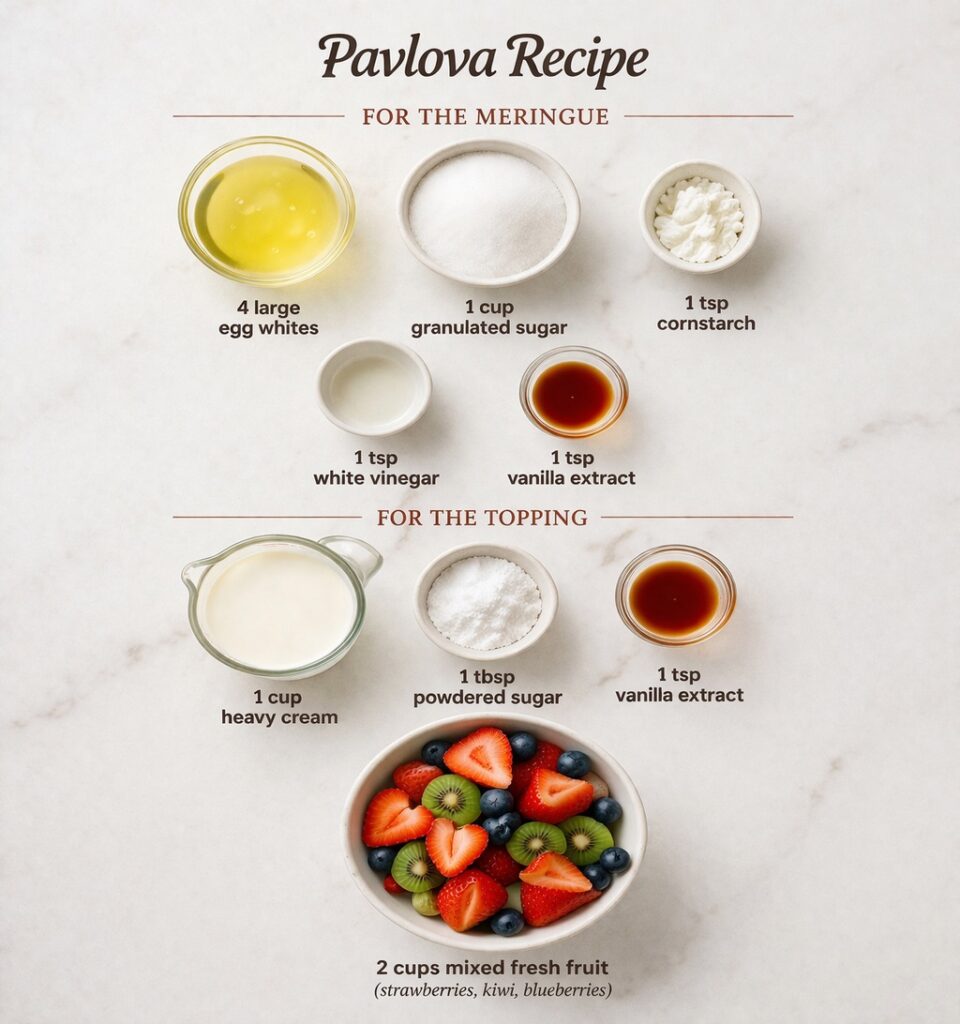
Ingredients
For the Meringue
- 4 large egg whites (room temperature)
- 1 cup granulated sugar
- 1 tsp white vinegar
- 1 tsp cornstarch
- 1 tsp vanilla extract
For the Topping
- 1 cup heavy cream
- 1 tbsp powdered sugar
- 1 tsp vanilla extract
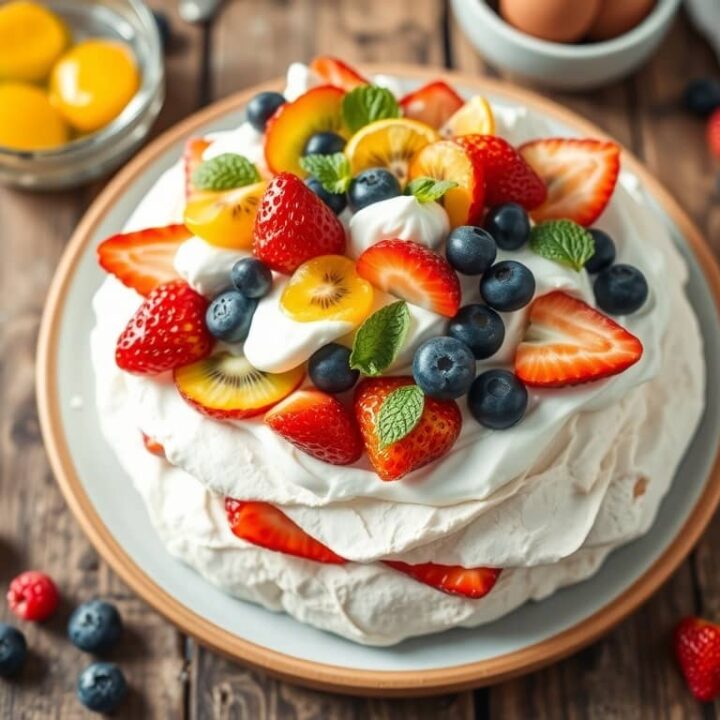
- 2 cups mixed fresh fruit (strawberries, kiwi, blueberries)
Ingredient Notes
A few small ingredient details make a noticeable difference here.
- Egg whites: They whip best when completely free from yolk or grease. Even a little fat can reduce volume.
- Granulated sugar: This dissolves into the egg whites and creates the glossy, stable meringue structure.
- White vinegar: The acid helps stabilize the whipped egg whites and supports that soft-centered interior.
- Cornstarch: This is one of the little details that helps pavlova keep its signature marshmallow-like center.
- Heavy cream: Whips into a stable topping that balances the sweetness of the shell.
- Fresh fruit: Brings brightness, acidity, and contrast. Berries, kiwi, mango, peaches, or passion fruit all work beautifully.
Equipment You’ll Need
You do not need anything overly complicated, but a few basic tools help make the process smoother.
- stand mixer or hand mixer
- large clean mixing bowl
- rubber spatula
- parchment paper
- baking sheet
- measuring spoons and cups
How to Make Pavlova
Step 1 – Whip the Egg Whites
Preheat oven to 250°F (120°C). Line a baking sheet with parchment paper.
In a clean bowl, beat egg whites until stiff peaks form. They should stand straight up when you lift the beaters, no drooping allowed!
Step 2 – Add Sugar & Stabilizers
Gradually add sugar, 1 tbsp at a time, while beating. Keep mixing until glossy and stiff.
Gently fold in vinegar, cornstarch, and vanilla. These keep the Pavlova dessert from collapsing (mostly).
Step 3 – Shape & Bake
Spoon meringue onto the baking sheet, shaping it into a round nest with slightly raised edges.
Bake for 1 hour 30 minutes, then turn off the oven and let it cool inside. (This prevents cracks, or at least minimizes them.)
Step 4 – Add Toppings
Whip cream, powdered sugar, and vanilla until fluffy. Pile it on the cooled meringue and top with fresh fruit.
Visual Cues for Success
Pavlova is one of those desserts where visual cues matter more than strict timing alone.
Here is what to look for:
- Egg whites at soft peaks: foamy and gently curved at the tip
- Finished meringue: glossy, thick, bright white, and holds stiff peaks
- Before baking: shape should hold cleanly without spreading flat
- After baking: shell looks dry and set, not wet or sticky on the outside
- When cut: crisp shell gives way to a soft, marshmallow-like interior
Why Pavlova Works
Pavlova may feel delicate, but the structure is built on a few very specific reactions.
When egg whites are whipped, their proteins unfold and trap air. Sugar stabilizes that foam and helps create a glossy, structured meringue. The vinegar adds acidity, which supports foam stability, while the cornstarch helps create that signature softer interior rather than a fully dry meringue.
The low oven temperature slowly dries the exterior without aggressively browning it. That is what gives pavlova its classic contrast: a shell that feels crisp and fragile outside, with a center that stays tender and slightly chewy-soft.
Expert Tips for the Best Pavlova
- Add the sugar slowly: This is one of the biggest texture details. If the sugar goes in too fast, the meringue can stay grainy and less stable.
- Use a completely clean bowl: Any grease, butter, or trace of egg yolk can interfere with volume.
- Do not rush the bake: Pavlova needs low, gentle heat. A hotter oven can brown it too fast or create a weaker texture.
- Cool it gradually: Sudden temperature changes can lead to more dramatic collapse or cracking.
- Top it close to serving time: Once whipped cream and fruit are added, the shell starts to soften. It is best assembled shortly before serving.
Common Mistakes to Avoid
- Overbeating or underbeating the egg whites: Underbeaten whites will not hold shape well. Overbeaten whites can become clumpy and dry.
- Adding sugar too quickly: This can keep it from dissolving properly and leave the texture grainy.
- Baking at too high a temperature: That often leads to color before the shell has properly dried.
- Opening the oven repeatedly: Temperature swings can affect the structure while it bakes.
- Topping too early: Whipped cream and juicy fruit can soften the crust faster than you want.
Fun Variations
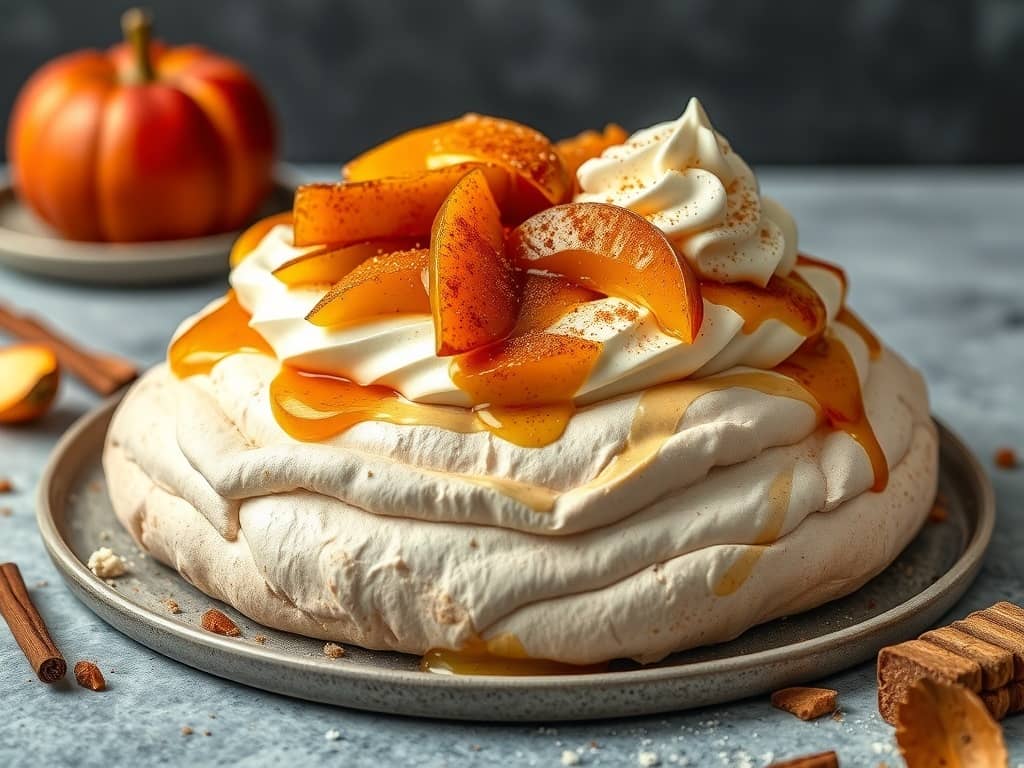
A Cozy Thanksgiving Pavlova
Give your pavlova recipe a festive fall makeover! This version of the classic Pavlova dessert trades summer berries for warm, comforting toppings. Think spiced pumpkin cream, soft caramelized apples, and a fluffy cinnamon whipped cream. It’s a simple way to make your holiday dessert feel extra special!
A Magical Christmas Pavlova
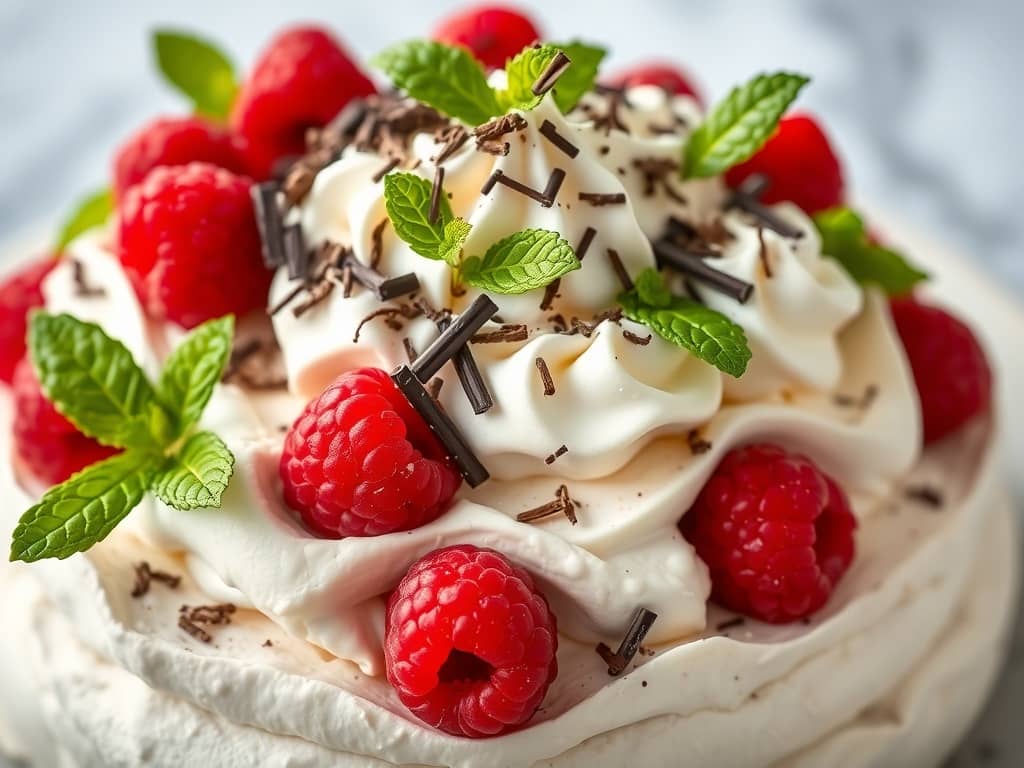
Turn your favorite pavlova recipe into a holiday wonder! This Christmas Pavlova dessert gets dressed up in its festive best with fluffy peppermint whipped cream, rich dark chocolate curls, and cheerful red berries. It’s an easy way to create a dessert that looks as joyful as the season itself.
How to Serve Pavlova
Pavlova is best served as a centerpiece dessert when you want something that feels light but still very special.
It pairs especially well with:
- brunch spreads
- spring gatherings
- Easter dessert tables
- summer dinners
- holiday entertaining
- afternoon coffee or tea
For a beautiful presentation, keep the whipped cream soft and generous, then let the fruit look naturally scattered rather than overly arranged. That relaxed finish usually makes pavlova look more elegant and homemade at the same time.
Storage and Make-Ahead Tips
- To store the shell: You can bake the pavlova shell a day ahead and keep it in an airtight container at room temperature once fully cooled.
- To store assembled pavlova: Once topped, it is best enjoyed the same day. Leftovers can still be eaten, but the shell will soften over time.
Make-ahead strategy
For the best results, bake the shell ahead, prep the fruit separately, whip the cream closer to serving, and assemble at the end.
FAQ
Why did my pavlova crack?
Some cracking is completely normal and part of pavlova’s charm. Large cracks often happen from sudden temperature shifts or overly rapid cooling.
Why is my pavlova sticky?
Humidity can make pavlova sticky, and underbaking can also leave the shell too moist.
Can I make pavlova in advance?
Yes. The shell can be made one day ahead and stored untopped. Add the cream and fruit just before serving.
Is pavlova supposed to be chewy inside?
Yes. A proper pavlova should have a crisp exterior and a soft, marshmallow-like center.
Can I use frozen fruit?
Fresh fruit is best for presentation and texture, but thawed fruit can work if well drained.
Final Thoughts
Pavlova has a way of feeling both delicate and dramatic, which is part of what makes it so memorable. The crisp shell, the soft center, the cool whipped cream, and the bright fruit all come together in a way that feels simple but genuinely special.
It is one of those desserts that does not need heavy frosting or complicated decoration to impress. Once you slice into that crisp shell and see the soft center underneath, it already has everything it needs.
Pavlova
This pavlova recipe has a crisp, delicate shell with a soft marshmallow-like center, topped with whipped cream and fresh fruit for an elegant homemade dessert.
Ingredients
For the Meringue
- 4 large egg whites (room temperature)
- 1 cup granulated sugar
- 1 tsp white vinegar
- 1 tsp cornstarch
- 1 tsp vanilla extract
For the Topping
- 1 cup heavy cream
- 1 tbsp powdered sugar
- 1 tsp vanilla extract
- 2 cups mixed fresh fruit
Instructions
- Whip whites – Beat 4 egg whites until stiff peaks form (no drooping!).
- Sweeten slowly – Add 1 cup sugar, 1 tbsp at a time, until glossy. Fold in 1 tsp each vinegar, cornstarch, and vanilla.
- Shape & bake – Form a nest on parchment paper. Bake at 250°F (120°C) for 1.5 hours, then cool in the oven.
- Top & devour – Whip cream with 1 tbsp powdered sugar and vanilla. Smother on cooled meringue + load with fruit.
Notes
Nutrition Information:
Yield: 8 servings Serving Size: 1 sliceAmount Per Serving: Calories: 280Total Fat: 10gCarbohydrates: 45gProtein: 3g
12 Sweet Favorites — Yours, Free 🍰
Tiramisù, no-bake cheesecake, the perfect chocolate chip cookie & 9 more reader-loved desserts — gathered into one beautiful free recipe book. From my kitchen to yours.
No spam, just sweet things. Unsubscribe anytime.