Panna Cotta – Silky, Creamy & Easy No-Bake Dessert
🎁 FREE E-BOOK:12 Sweet Favorites — reader-loved desserts in one beautiful recipe book.
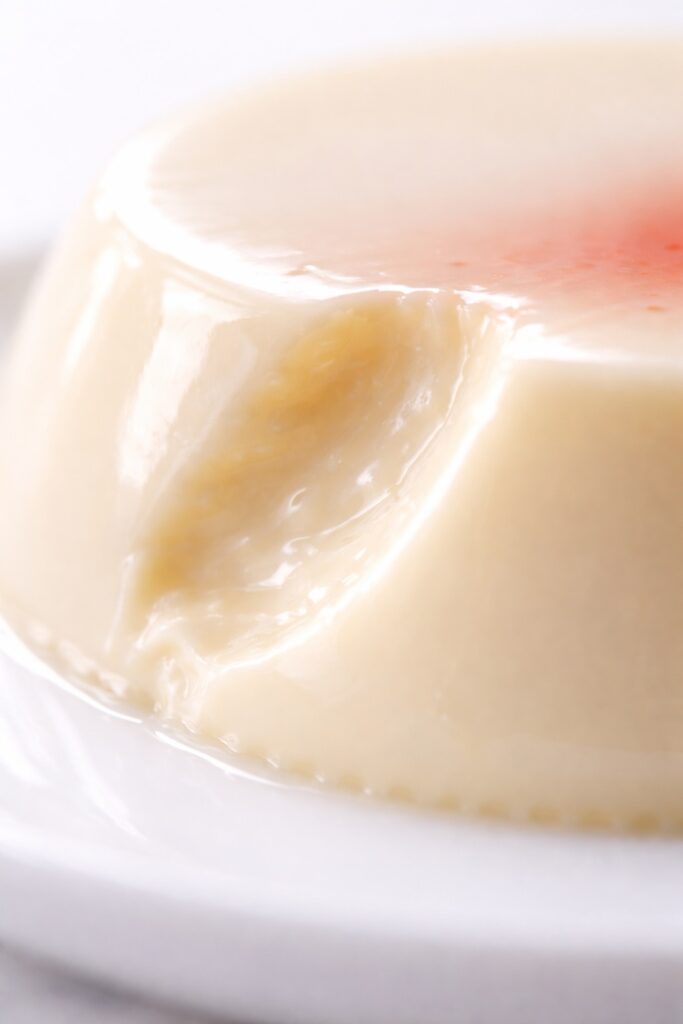
There’s something quietly luxurious about panna cotta. The moment your spoon breaks through that silky surface, you feel it — that delicate wobble, that smooth, creamy texture that almost melts before you even taste it.
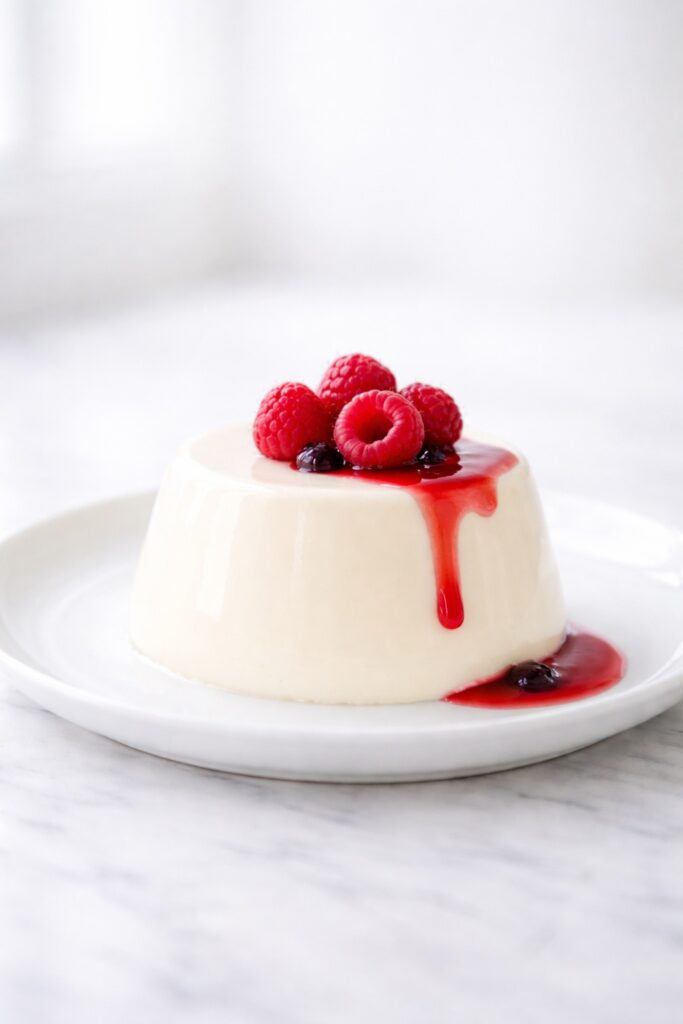
This panna cotta recipe is one of those desserts people save instantly. It looks elegant, feels refined, and tastes like something from a restaurant, yet comes together with just a handful of simple ingredients. No baking, no complicated steps — just gentle heat, patience, and a little attention to detail.
The flavor is clean and creamy with a soft vanilla warmth, making it the perfect base for fresh berries, fruit sauces, or a light drizzle of honey. It has the same simple elegance you find in desserts like vanilla pudding, but with a more delicate, softly set finish. It’s the kind of dessert that fits just as easily into a quiet evening as it does a dinner party table.
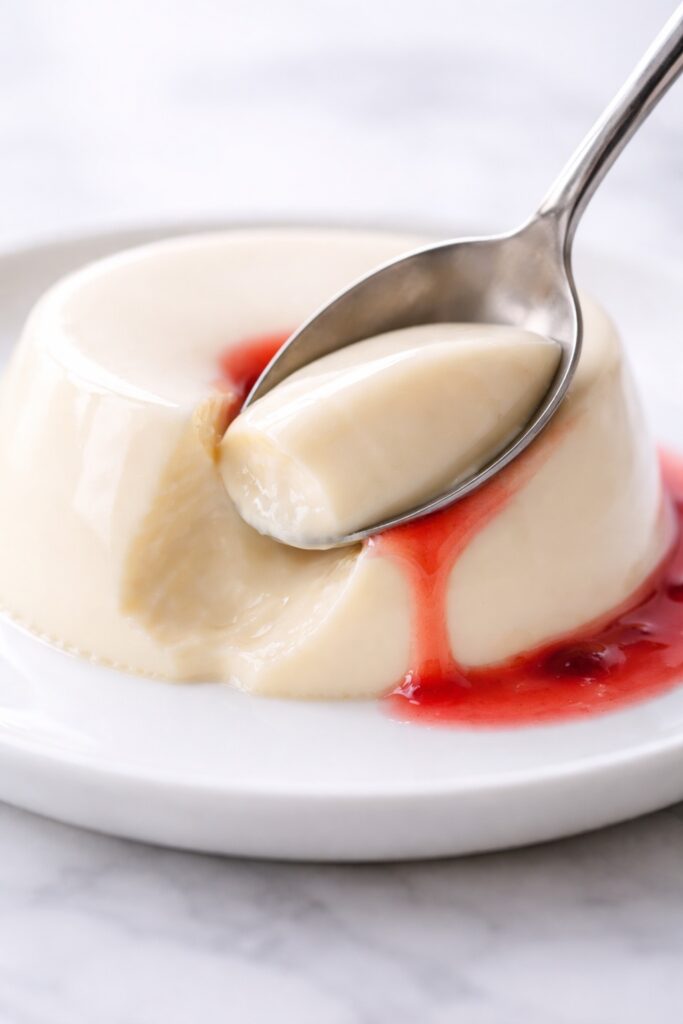
What makes this panna cotta recipe worth making again and again is how reliably it delivers that perfect texture: softly set, silky, and smooth without ever feeling heavy. Once you understand how it works, it becomes one of those recipes you naturally return to over time.
It’s the kind of dessert that looks impressive on the table but feels surprisingly simple once you understand the few details that make it work.
This classic Italian panna cotta is one of the easiest make-ahead desserts that still feels elegant and refined.
What Is Panna Cotta?
Panna cotta is a classic Italian dessert made by gently heating cream, sugar, and gelatin, then allowing the mixture to set into a smooth, custard-like texture.
Traditionally from Italy, panna cotta is known for its delicate structure and clean flavor (see panna cotta). Unlike baked custards such as crème brûlée, panna cotta relies entirely on gelatin for structure, resulting in a delicate, creamy dessert that holds its shape while remaining soft and silky.
Quick Recipe Overview
| Detail | Description |
|---|---|
| Texture | Silky, smooth, softly set |
| Flavor | Creamy, lightly sweet, vanilla-forward |
| Difficulty | Easy |
| Time | 15 minutes prep + 5 minutes cook + 4 hours chilling |
| Servings | 5 servings |
| Method | Stovetop + chilling |
| Best For | Elegant desserts, dinner parties, make-ahead treats |
In short: This easy panna cotta recipe is a no-bake Italian dessert with a delicate, creamy texture and an elegant finish that feels far more impressive than the effort it takes.
Why This Panna Cotta Turns Out Perfect Every Time
This panna cotta is all about balance:
- Moisture: Heavy cream provides richness, while a small amount of milk lightens the texture so it doesn’t feel too dense.
- Structure: Gelatin sets the dessert just enough to hold its shape while keeping that signature wobble.
- Fat: The fat in cream creates that luxurious mouthfeel and smooth finish.
- Heat: Gentle heating dissolves sugar and activates gelatin without damaging its setting power.
This balance is what gives panna cotta that signature texture: soft enough to melt on the spoon, but stable enough to hold its shape.
Insights:
- Too much gelatin makes panna cotta rubbery — the goal is a soft set that barely holds.
- Heating the cream too aggressively can dull the fresh dairy flavor.
- Letting it chill fully (at least 4 hours) is what transforms it from liquid to that perfect, delicate structure.
Another useful detail: residual heat does part of the work for you. Once the cream mixture is hot enough to dissolve the sugar, the gelatin usually melts smoothly off the heat, which helps protect that delicate final texture.
The Science Behind Panna Cotta
Even though panna cotta is not baked, there is still a little dessert science happening here. Gelatin forms a light network as the mixture cools, trapping the liquid and giving panna cotta its signature softly set shape. When the gelatin is properly bloomed first, it dissolves more evenly and creates a smoother finish.
The balance of cream and milk matters too. Cream brings fat, which creates that rich, velvety mouthfeel, while milk keeps the dessert from feeling overly dense. That is why a well-made panna cotta feels luxurious on the spoon but still light enough to finish comfortably.
Ingredients
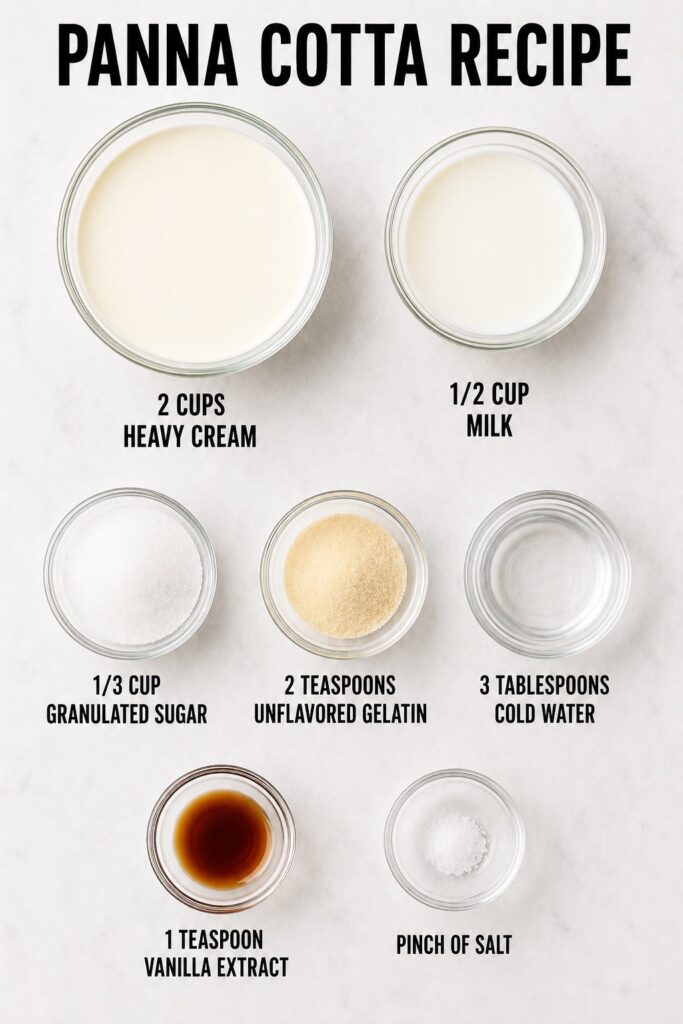
- 2 cups heavy cream
- 1/2 cup milk
- 1/3 cup granulated sugar
- 2 teaspoons unflavored gelatin
- 3 tablespoons cold water
- 1 teaspoon vanilla extract
- Pinch of salt
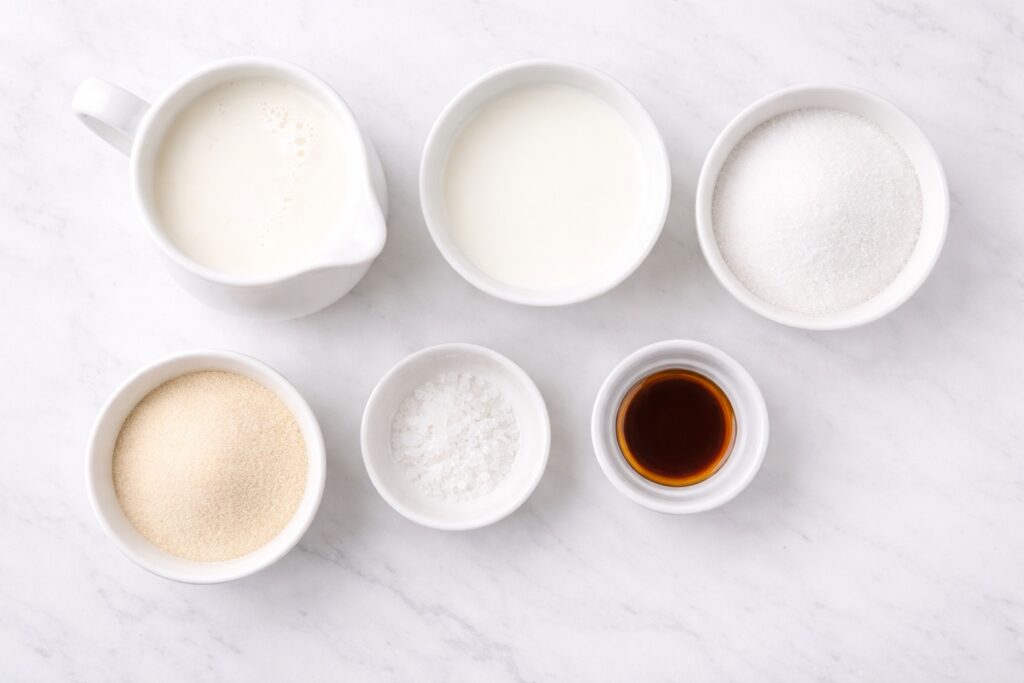
Because this recipe uses so few ingredients, the quality of each one directly shapes both the texture and the final flavor.


Ingredients & What Actually Matters
Gelatin
This is the ingredient that gives panna cotta its delicate structure. Blooming it in cold water first helps it hydrate evenly, so it dissolves smoothly into the warm cream instead of clumping.
Substitution: Agar-agar can work, but the final texture is firmer and less creamy than classic panna cotta.
Heavy Cream
Heavy cream provides most of the richness and that signature silky mouthfeel. It is what makes panna cotta feel elegant rather than simply sweet.
Using only cream can make the dessert feel heavier on the palate, which is why a little milk often creates a more balanced and refined result.
Milk
Milk lightens the texture and softens the richness of the cream. It helps the dessert feel smooth and delicate rather than overly dense.
Sugar
Sugar sweetens the cream mixture, but it also helps round out the dairy flavor. It should dissolve fully during heating so the final texture stays clean and smooth.
Vanilla Extract
Vanilla adds warmth and depth to an otherwise very simple ingredient list. Because panna cotta has so few ingredients, even a small amount of vanilla makes a noticeable difference, just as it does in smooth, simple desserts like vanilla pudding.
- Pure vanilla bean extract with a deep, rich taste and color
- Each batch blended for consistent flavor in every bottle
- A baker’s best friend — even balances meat and seafood dishes
Upgrade option: vanilla bean or vanilla paste gives the dessert a more fragrant, restaurant-style finish.
Key takeaway: panna cotta depends on a precise balance between cream, milk, and gelatin — when that balance is right, it creates a softly set dessert that holds its shape while still melting smoothly on the spoon.
Kitchen Tools You’ll Need
- Small saucepan
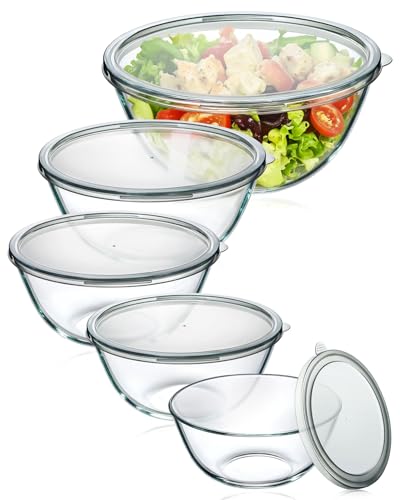
- Mixing bowl
- Whisk or spoon
- Serving glasses or molds
Practical note: Glasses are easier (no unmolding stress), but molds create that classic plated look.


How to Make Panna Cotta (Step-by-Step)
This panna cotta comes together in a few simple steps, but the details matter. Watching how the texture changes at each stage will help you get that perfectly soft, silky set every time.
1. Bloom the gelatin
In a small bowl, sprinkle the gelatin over the cold water and let it sit for 5 to 10 minutes.
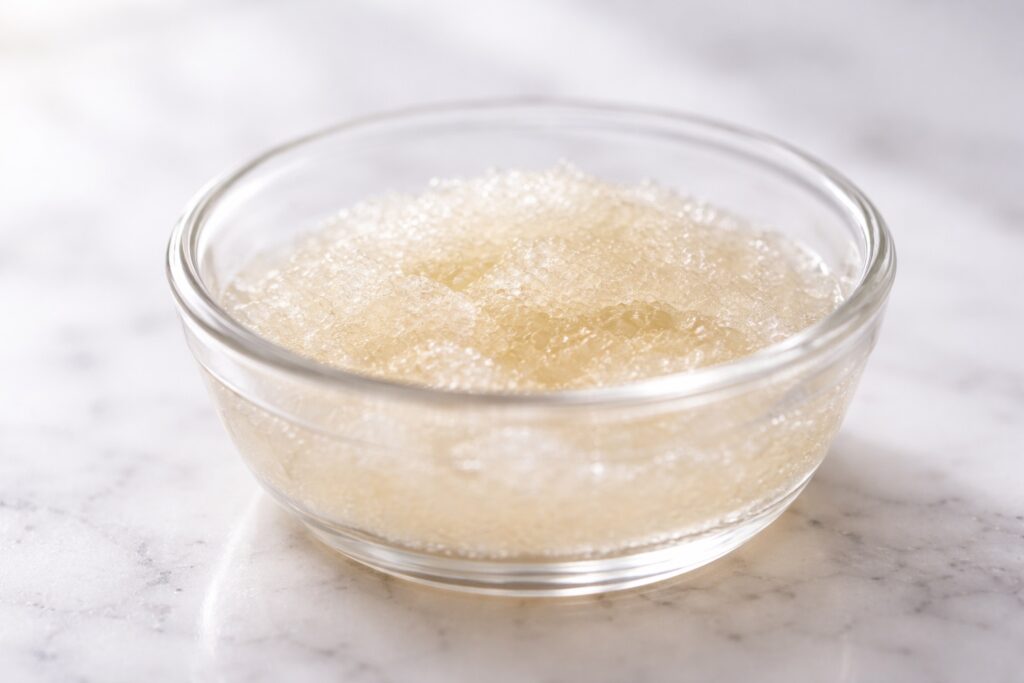
Visual cue: It should look thick, hydrated, and slightly rubbery, not dry or powdery.
Tip: do not stir aggressively at this stage; letting the gelatin absorb the water naturally helps it bloom more evenly.
2. Warm the cream mixture
In a small saucepan, combine the heavy cream, milk, sugar, and salt. Heat over medium-low, stirring gently, until the sugar fully dissolves.
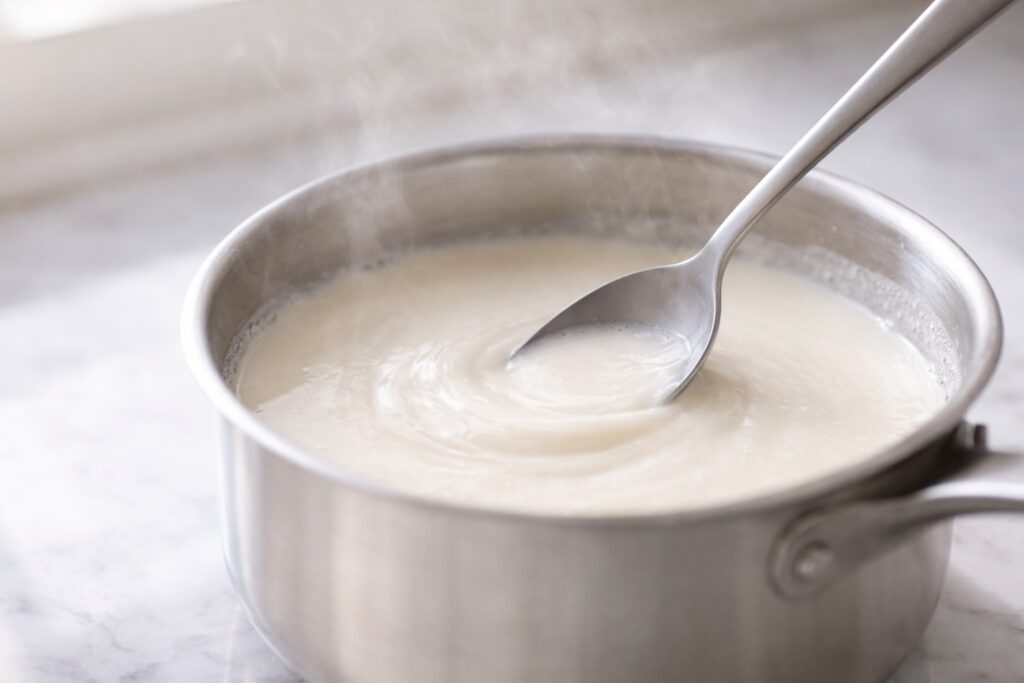
Visual cue: The mixture should be steaming lightly around the edges but should not boil.
Tip: if you see fast bubbles or a simmer starting, lower the heat right away. Gentle heat keeps the dairy flavor fresh and prevents a heavier cooked taste.
3. Dissolve the gelatin
Remove the pan from the heat and add the bloomed gelatin. Stir until fully dissolved.
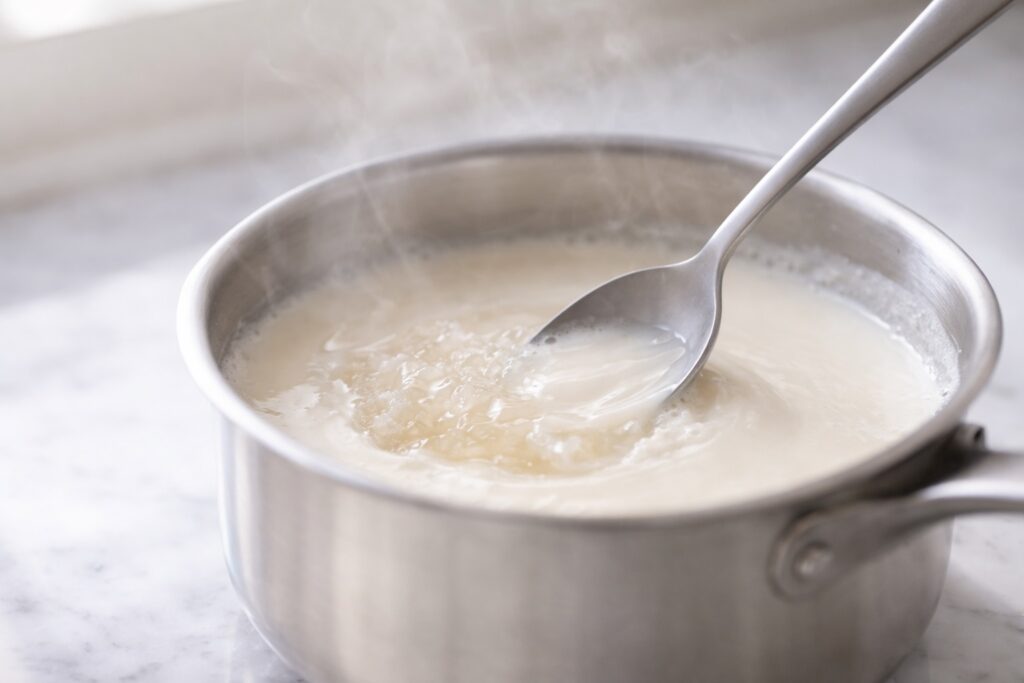
Visual cue: The mixture should feel completely smooth, with no visible bits or graininess.
Micro insight: the residual heat is usually enough to melt the gelatin fully without putting it back over direct heat.
4. Add the vanilla
Stir in the vanilla extract.
This is the point where the mixture starts to smell like dessert instead of just warm cream — soft, sweet, and quietly comforting.
5. Strain for a smoother finish
Pour the mixture through a fine-mesh sieve into a measuring cup or bowl.
Visual cue: The liquid should look glossy, fluid, and uniform.
Tip: this step is optional, but it gives panna cotta a more polished final texture by removing any tiny bits of undissolved gelatin.
6. Pour into molds or glasses
Divide the mixture evenly among serving glasses, ramekins, or molds.
The surface should settle into a smooth, shiny layer.
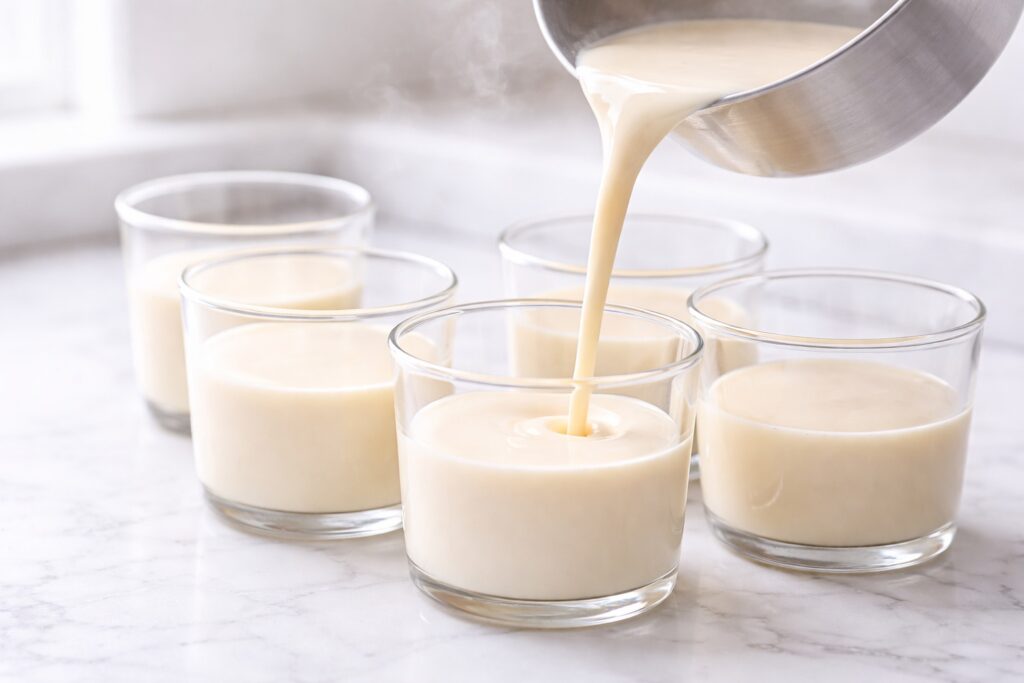
At this stage, the mixture can seem far too thin to ever set properly, especially the first time you make it. That’s completely normal.
Sometimes the surface may not look perfectly smooth after pouring, especially if the mixture has cooled slightly — it settles as it chills, and that’s completely normal.
7. Chill until softly set
Refrigerate for at least 4 hours, or overnight for the cleanest set.
The panna cotta should wobble gently in the center when lightly shaken, while the edges feel a little more set. It should never look wet or slosh like liquid.
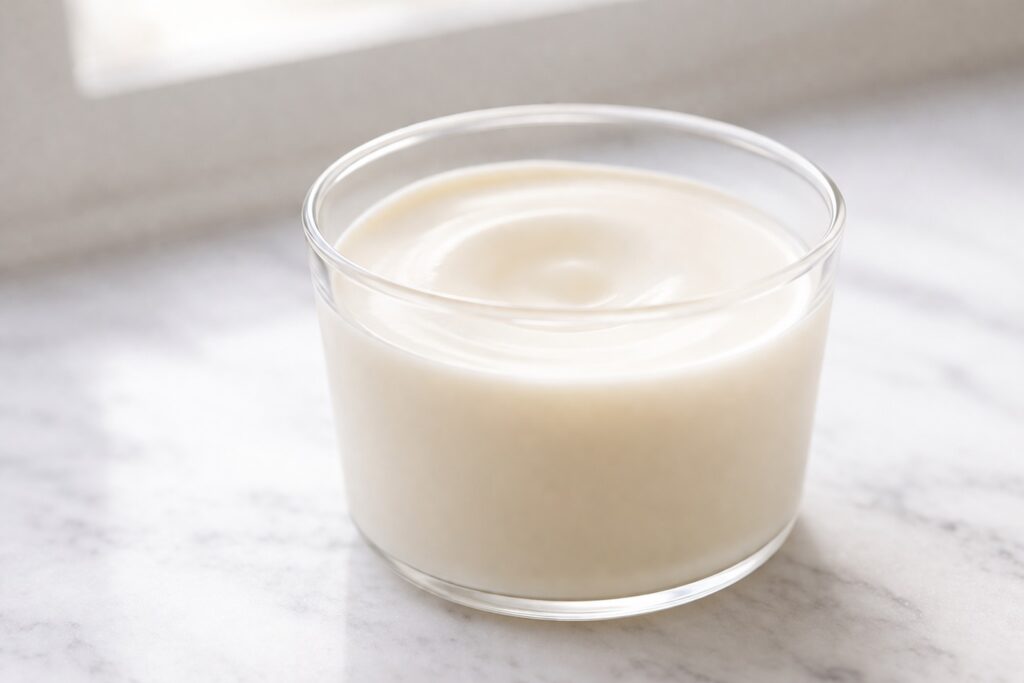
The center should feel softly set, not firm — like a delicate gel that gives easily when you press into it with a spoon.
At this stage, it may still feel surprising how simple the mixture is. It starts as a thin liquid, but with time and the right balance, it transforms into that smooth, softly set dessert that makes panna cotta so satisfying.
How to Tell When Panna Cotta Is Perfectly Set
Because panna cotta relies on a delicate set, visual cues matter more than time alone.
- The surface looks smooth, glossy, and fully set rather than wet
- The panna cotta jiggles gently when the glass or mold is shaken lightly
- The edges look slightly firmer than the center
- There is no liquid pooling around the sides
- If unmolded, it holds its shape cleanly but still trembles softly
- The texture looks delicate and silky, never stiff or bouncy
The panna cotta should move as one smooth piece, not ripple like liquid.
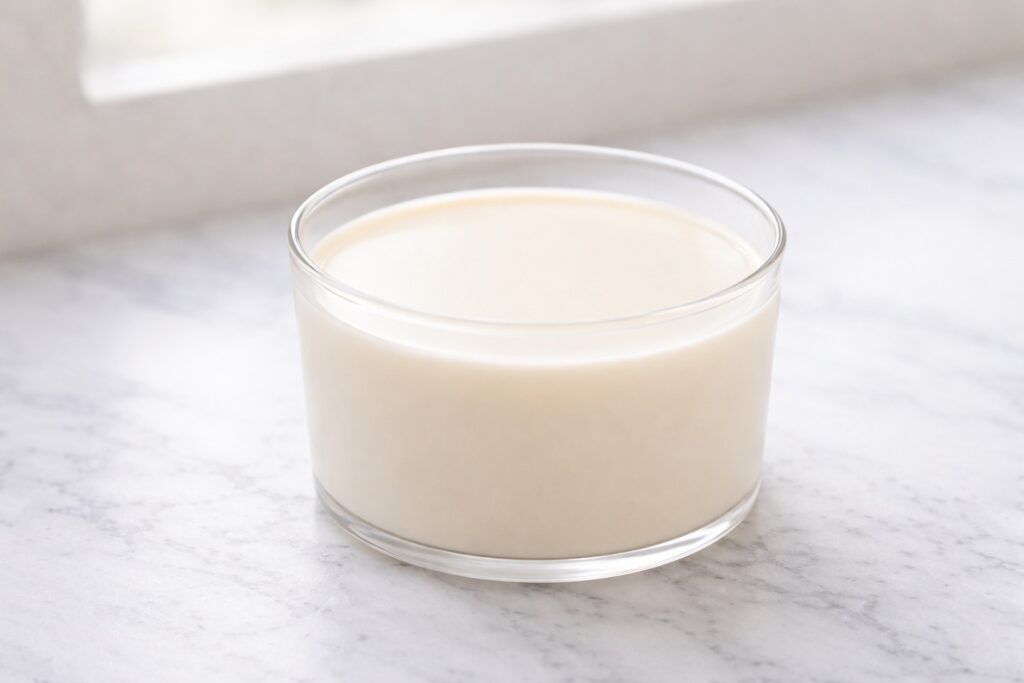
Panna Cotta Texture Guide: From Liquid to Perfect Set
Understanding how panna cotta changes from a thin liquid to a softly set dessert makes it much easier to control texture and get consistent results.
| Stage | What to Look For |
|---|---|
| Before chilling | Thin, glossy liquid with a completely smooth texture |
| After 1–2 hours | Edges begin to set first while the center stays loose |
| Fully set | Soft, delicate wobble with a smooth, uniform structure |
| Ready to unmold | Holds shape but still trembles gently at the center |
| Over-set | Firm, slightly bouncy, less creamy on the spoon |
The center should feel softly set, never firm — it should move gently as one piece rather than ripple like liquid.
Expert Tips for Best Results
- Use medium-low or low heat only; panna cotta is meant to be gently warmed, not cooked aggressively
- Bloom the gelatin fully before adding it, or the final texture may be uneven
- Stir the cream mixture just until the sugar dissolves; overcooking can flatten the fresh dairy flavor
- Strain the mixture for the smoothest, most elegant finish
- Chill long enough for the center to fully set before serving, especially if using larger ramekins
- For the best mouthfeel, let chilled panna cotta sit at room temperature for 5 minutes before serving
- A slightly softer set usually feels more luxurious on the spoon than a very firm one
Common Mistakes (Cause → Effect)
- Too much gelatin → the panna cotta turns firm or rubbery instead of softly set Fix: measure carefully and aim for a delicate wobble, not a stiff mold
- Boiling the cream → the flavor becomes slightly flat or cooked Fix: heat only until steaming and the sugar has dissolved
- Gelatin not fully dissolved → grainy texture or tiny lumps in the final dessert Fix: stir thoroughly off the heat and strain if needed
- Skipping the bloom step → uneven setting or small gelatin clumps Fix: always hydrate gelatin in cold water before adding it
- Not chilling long enough → loose center and weak structure Fix: chill at least 4 hours, and longer for deeper molds or larger portions
Comparison Guide
| Version | Texture | Flavor | Best For |
|---|---|---|---|
| Classic panna cotta | Silky, softly set | Light vanilla cream | Elegant all-purpose dessert |
| All-cream panna cotta | Richer, denser | Fuller dairy flavor | Extra indulgent serving |
| Agar-based panna cotta | Firmer, less delicate | Slightly cleaner finish | Gelatin-free alternative |
| Coconut panna cotta | Creamy but lighter | Tropical, softly sweet | Dairy-free variation |
How to Serve
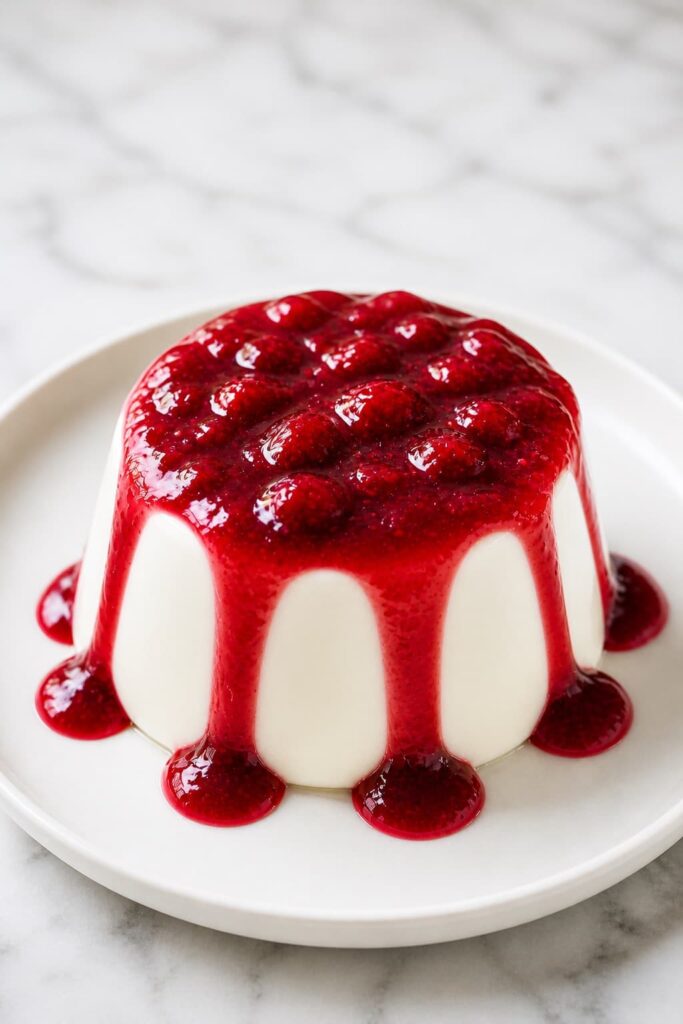
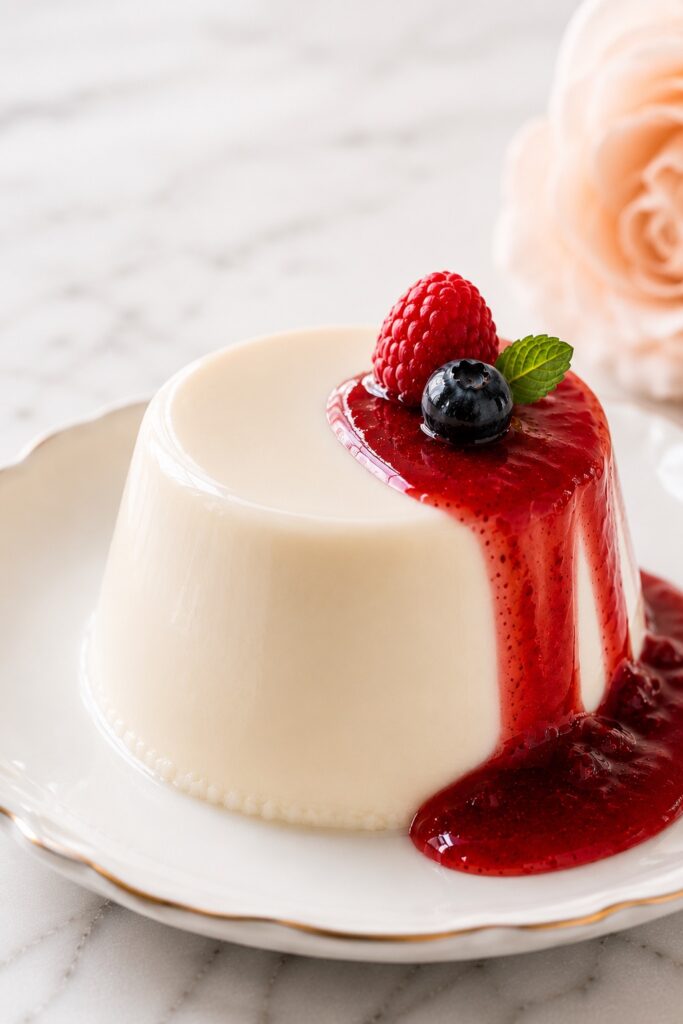
Serve panna cotta well chilled with fresh berries, berry compote, a spoonful of fruit sauce, or a light drizzle of honey. The contrast between the cool, silky cream and a bright, glossy topping is what makes each spoonful feel balanced, elegant, and deeply satisfying.
For a simple but beautiful presentation, serve it in clear glasses where the creamy texture and toppings can be seen right away, much like a layered parfait.
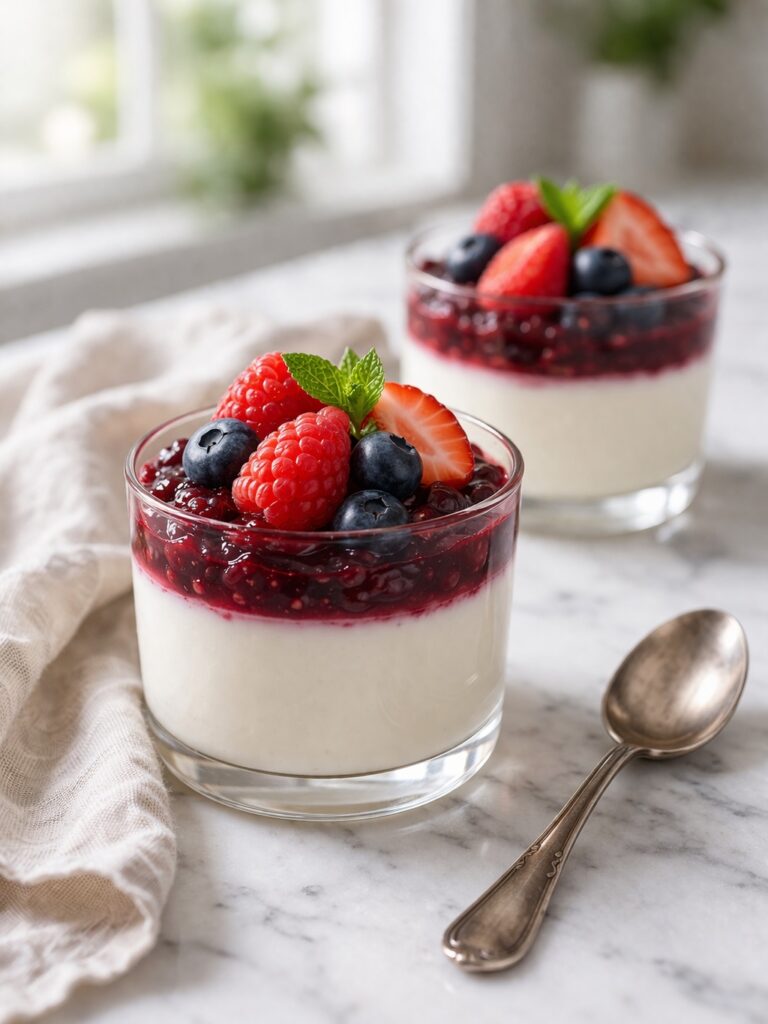
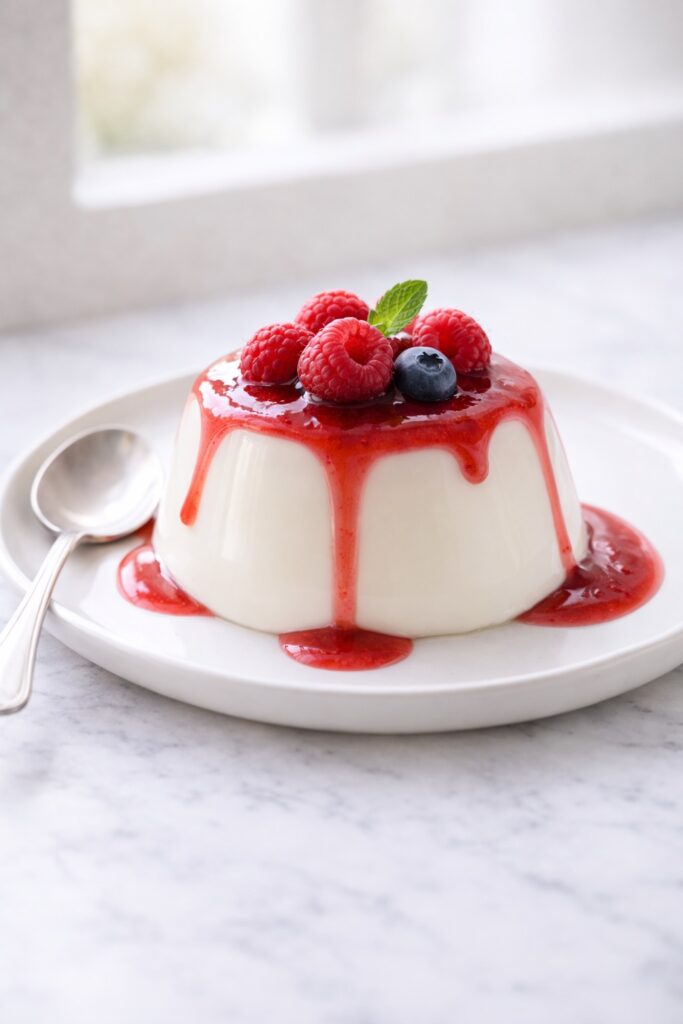
For a more classic plated dessert, unmold it onto a small plate and finish with berries, citrus zest, or a delicate sauce.
That soft wobble, glossy finish, and creamy vanilla base make panna cotta one of those desserts that always looks graceful on the table, even when the effort behind it is minimal.
Save this for dinner parties when you want a make-ahead dessert that feels quietly impressive.
Save this for warm evenings, spring gatherings, or any moment when you want something light, creamy, and elegant without turning on the oven.
Storage & Make Ahead
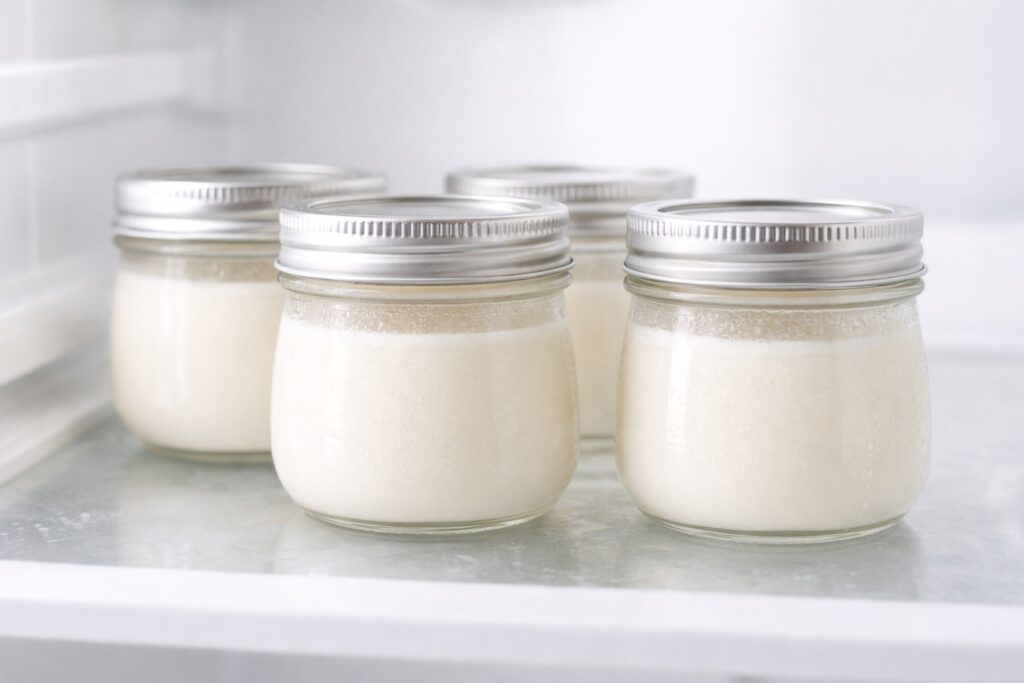
- Refrigerate in an airtight container for up to 3 days.
- Keep well covered to prevent absorbing fridge odors.
- Best texture within first 48 hours
- Can be made a day ahead (ideal for events)
- Do not freeze, as it can break the smooth structure.
Variations
- Berry panna cotta – add a fruit layer or puree
- Chocolate panna cotta – melt chocolate into the cream
- Coffee panna cotta – infuse with espresso
- Coconut panna cotta – replace milk with coconut milk
- Citrus panna cotta – add lemon or orange zest
FAQ
Why didn’t my panna cotta set?
The most common reasons are not enough gelatin, gelatin that was not properly dissolved, or not enough chilling time.
Can I make panna cotta ahead of time?
Yes. It is actually one of the best make-ahead desserts because the texture improves as it chills fully.
Can I freeze panna cotta?
It is not recommended. Freezing can damage the smooth structure and make the texture watery after thawing.
How do I unmold panna cotta cleanly?
Dip the mold briefly in warm water for a few seconds, then gently loosen the edge and invert onto a plate.
Can I use plant-based milk?
Yes, but the final texture and richness will change depending on the fat content. Coconut milk is usually the best alternative for a creamy result.
Is panna cotta the same as custard?
No. Custard is usually thickened with eggs, while panna cotta relies on gelatin for its structure.
Can I reduce the sugar?
Yes, slightly. Just keep in mind that reducing it too much can make the flavor feel flatter, especially in such a simple dessert.
Can panna cotta be made without molds?
Yes. Serving it in glasses is actually easier and eliminates the need for unmolding while still looking elegant.
More Elegant Creamy Desserts You’ll Love
If you love desserts that feel soft, refined, and quietly luxurious, there are a few other recipes on the blog that follow that same silky, spoonable texture and elegant simplicity. These are desserts built around smooth textures, gentle structure, and simple ingredients that come together into something that feels far more elegant than the effort behind them.
Quick picks: If you want something closest in texture, try Vanilla Pudding. For a more classic custard-style dessert with a slightly firmer set and caramelized finish, go for Crème Brûlée.
If you love desserts that feel smooth, calm, and quietly elegant, panna cotta is just the beginning. There’s something about spoon desserts that feels effortless and comforting at the same time — simple ingredients, soft textures, and that gentle, creamy finish that never feels heavy. These are the kinds of desserts you make when you want something easy, but still beautiful enough to slow down and enjoy.
Closest in Texture & Feel
- Vanilla Pudding – smooth, creamy, and softly set with a clean vanilla finish
- Chia Seed Pudding – lightly thickened with a delicate, spoonable texture
- Rice Pudding – creamy and comforting with a more traditional, softly textured feel
Classic & Refined Desserts
- Crème Brûlée – silky custard with a delicate set and a crisp caramelized top
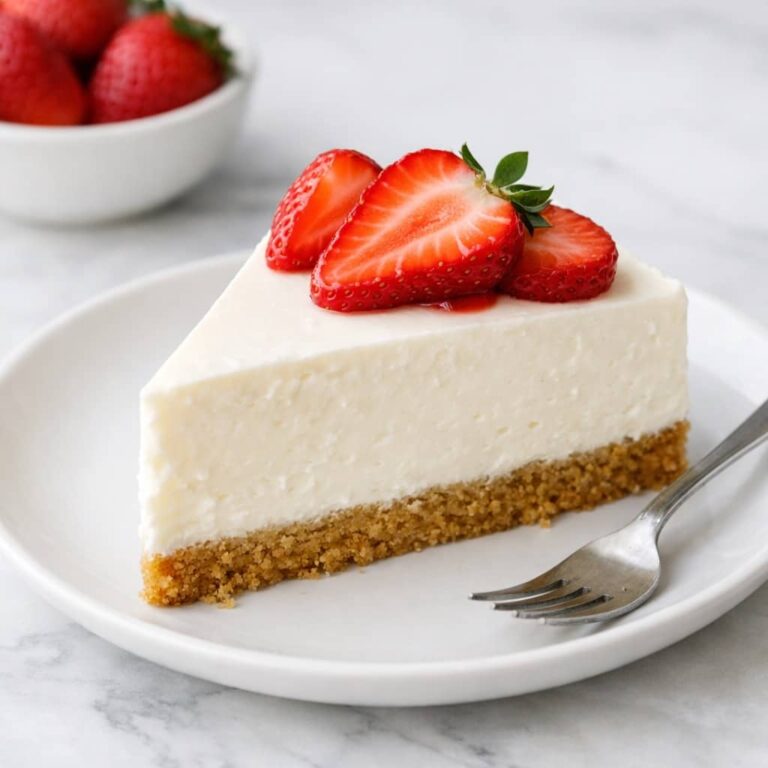
- No Bake Cheesecake – chilled, creamy, and softly structured with an elegant finish
- New York Cheesecake – richer and denser, but built around that same smooth, creamy base
Variations & Creative Options
- Chocolate Pudding – deeper, more indulgent, with a rich and velvety texture
- Cottage Cheese Chocolate Mousse – lighter and airy, with a softly whipped consistency
- Parfait – layered, creamy, and visually elegant with added texture from fruit or toppings
Each of these desserts follows the same philosophy: simple ingredients, balanced texture, and that smooth, creamy finish that makes spoon desserts feel calm, comforting, and quietly elegant.
Recipe Summary
This classic panna cotta recipe is an easy Italian dessert made with cream, milk, sugar, gelatin, and vanilla. The result is a silky, softly set dessert with a delicate wobble and a smooth, creamy finish. If you are looking for an easy panna cotta recipe that feels elegant, make-ahead friendly, and surprisingly simple, this is the kind of dessert you will come back to often.
If you enjoy chilled desserts with a creamy finish, recipes like no bake cheesecake follow a similarly elegant, make-ahead style.
Final Thoughts
Panna cotta is one of those rare desserts that proves elegance does not have to be complicated. With just a few ingredients and a gentle approach, it creates something that feels polished, calm, and a little luxurious every single time.
What makes it worth keeping in your regular dessert collection is not just how easy it is, but how reliably it delivers that soft, silky texture people love. Once you learn the rhythm of it — gentle heat, properly bloomed gelatin, enough chilling time — it becomes the kind of recipe that feels effortless and special all at once.
It is one of those desserts that feels calm, effortless, and just a little bit special every single time you make it.
Panna Cotta
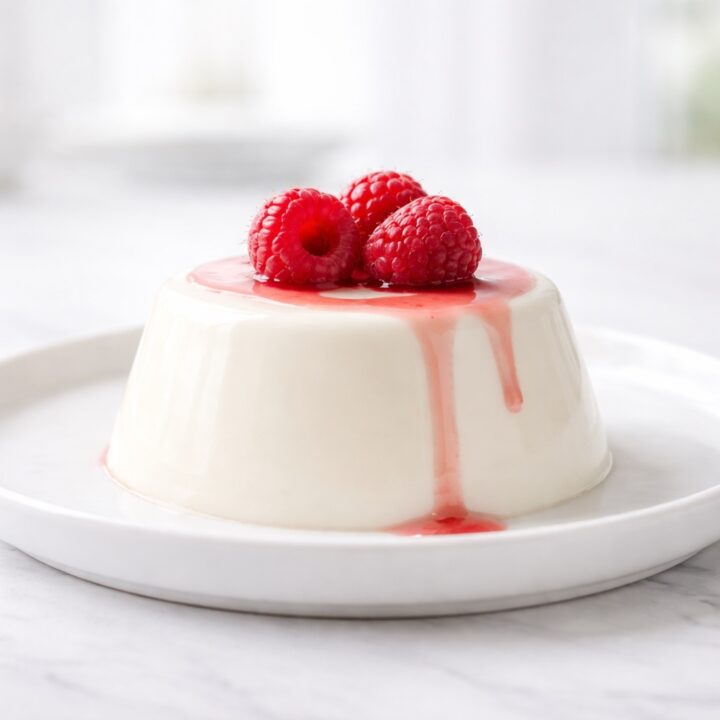
A classic panna cotta recipe made with cream, milk, sugar, gelatin, and vanilla, creating a silky, softly set dessert with a delicate wobble and smooth, creamy finish. This easy no-bake dessert is elegant, make-ahead friendly, and surprisingly simple to prepare.
Ingredients
- 2 cups heavy cream
- 1/2 cup milk
- 1/3 cup granulated sugar
- 2 teaspoons unflavored gelatin
- 3 tablespoons cold water
- 1 teaspoon vanilla extract
- Pinch of salt
Instructions
- In a small bowl, sprinkle the gelatin over the cold water and let it sit for 5 to 10 minutes until fully hydrated and slightly gel-like.
- In a saucepan, combine the heavy cream, milk, sugar, and salt. Heat over medium-low, stirring gently, until the sugar dissolves and the mixture is lightly steaming but not boiling.
- Remove from heat and add the bloomed gelatin. Stir until fully dissolved and the mixture is completely smooth with no visible bits.
- Stir in the vanilla extract until fully incorporated and aromatic.
- Strain the mixture through a fine-mesh sieve into a clean bowl or measuring cup for a smoother finish (optional but recommended).
- Pour the mixture evenly into serving glasses or molds. The surface should look smooth and glossy.
- Refrigerate for at least 4 hours or overnight, until the panna cotta is softly set with a gentle wobble in the center.
Notes
For the best texture, avoid boiling the cream mixture — gentle heat keeps the flavor clean and prevents a firmer set.
A slightly softer panna cotta will feel more creamy and luxurious than one that is too firm.
If unmolding, dip the mold briefly in warm water to release cleanly without breaking the shape.
Recommended Products
As an Amazon Associate and member of other affiliate programs, I earn from qualifying purchases.


Nutrition Information:
Yield: 5 servings Serving Size: 1 servingAmount Per Serving: Calories: 320Total Fat: 24gCarbohydrates: 22gSugar: 20gProtein: 4g
Nutrition values are estimates and may vary depending on ingredients used.
12 Sweet Favourites — Yours, Free 🍰
Tiramisù, no-bake cheesecake, the perfect chocolate chip cookie & 9 more reader-loved desserts — gathered into one beautiful free recipe book. From my kitchen to yours.
No spam, just sweet things. Unsubscribe anytime.