Vanilla Cake (Soft, Moist & Perfect Every Time)
🎁 FREE E-BOOK: 12 Sweet Favorites — reader-loved desserts in one beautiful recipe book.
There is something deeply comforting about a true vanilla cake. The scent of butter and vanilla drifting through the kitchen, the pale golden layers cooling on the counter, the soft crumb that feels light yet rich at the same time — it is simple, but never plain.
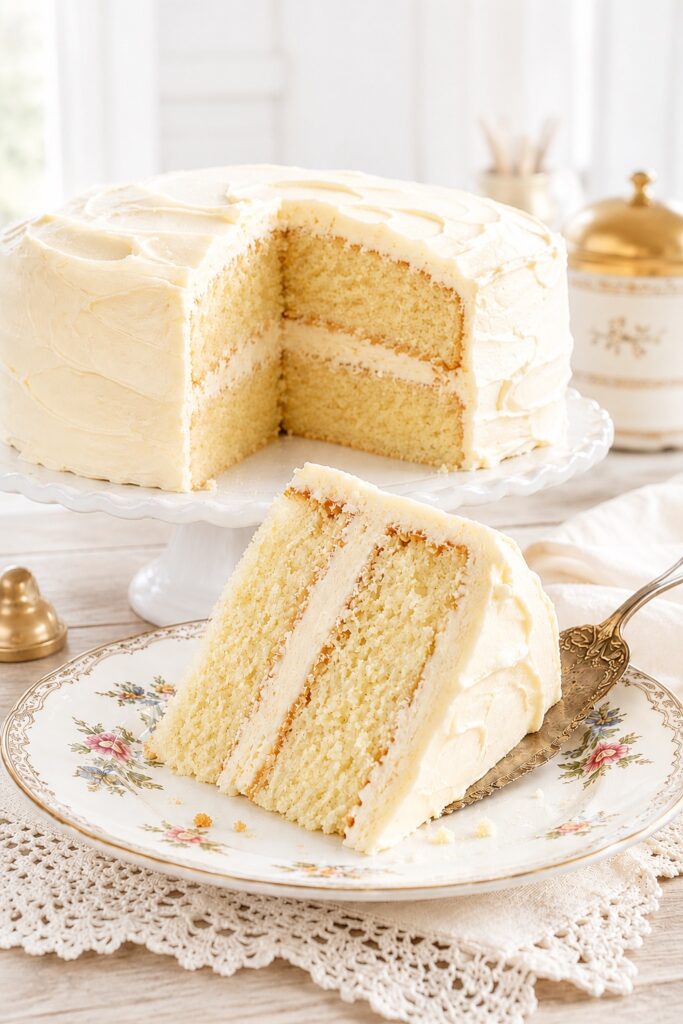
A truly good vanilla cake recipe is one of the most useful things you can have in your kitchen. It is the kind of cake people search for again and again because it needs to do everything — bake up soft and even, hold frosting beautifully, and taste rich without feeling heavy.
This is a classic vanilla cake recipe designed to give you soft, even layers with a tender crumb and reliable structure, making it easy to use for both simple desserts and fully frosted celebration cakes.
This is the kind of cake people come back to again and again because it works for so many moments. It can feel elegant enough for a celebration, easy enough for a weekend bake, and familiar enough to become one of those recipes you keep in the back of your mind whenever you need something reliable.
What makes a good vanilla cake special is not complexity. It is balance. You want enough fat for tenderness, enough structure for clean slices, enough moisture to keep every bite soft, and enough vanilla flavor to make the cake feel warm, fragrant, and full rather than flat.
A really good vanilla cake also has a way of surprising people. A classic vanilla cake recipe might sound simple, but when the crumb is soft, the vanilla comes through clearly, and the layers bake up evenly, it feels far more special than basic.
What Is Vanilla Cake?
Vanilla cake is a classic butter-based cake flavored primarily with vanilla extract or vanilla bean. It is typically made with flour, sugar, butter, eggs, milk, and leavening, creating a soft, tender crumb with a light golden color and a balanced sweetness.
Unlike strongly flavored cakes, vanilla cake depends on texture, structure, and aroma. It also sits close to recipes like white cake, though vanilla cake usually has a warmer flavor and a slightly richer buttery feel. Because the flavor is simple, small changes in ingredients, mixing, or baking can noticeably affect the final result. That is why well-balanced ratios and proper technique matter more here than in most other cakes.
It is one of the most versatile cakes, commonly used for birthdays, layer cakes, sheet cakes, cupcakes, and everyday desserts.
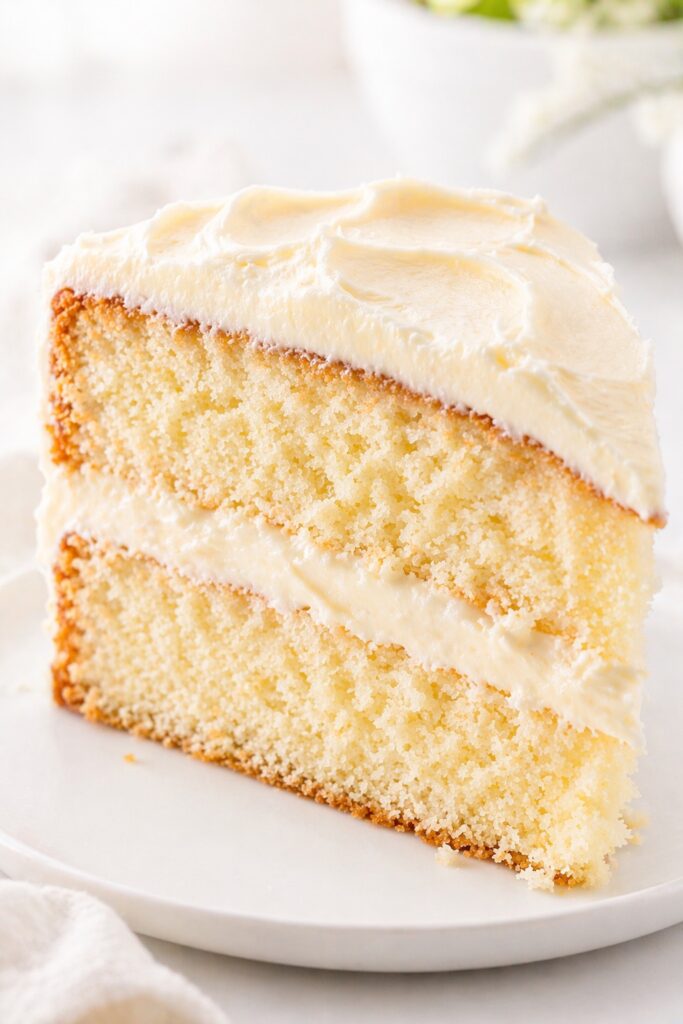
Vanilla Cake at a Glance
| Category | Details |
|---|---|
| Texture | Soft, tender, fine crumb with a moist but sturdy slice |
| Flavor | Buttery, warm vanilla, lightly sweet, classic and clean |
| Difficulty | Easy to moderate |
| Time | About 20 minutes prep + 28 to 32 minutes bake + cooling time |
| Servings | 12 slices |
| Method | Two-layer butter cake method |
| Best For | Birthdays, celebrations, casual gatherings, everyday baking |
In short: This vanilla cake recipe creates soft, fluffy layers with rich vanilla aroma, a tender buttery crumb, and enough structure to frost, stack, and serve beautifully.
Why This Vanilla Cake Recipe Works So Well
This recipe works because it builds balance instead of relying on just one thing. The butter gives flavor and tenderness, but the oil helps hold moisture longer, which keeps the cake from tasting dry the next day. That combination creates a softer, more dependable crumb than butter alone in many home kitchens.
In my kitchen, this is usually the point where you can already tell if the cake will turn out well. When the batter looks smooth, slightly thick, and flows in soft ribbons, it almost always bakes into a more even and tender crumb.
The structure comes from a careful ratio of flour, eggs, and milk. Enough flour supports the layers, while the eggs help the batter set properly as it bakes. The milk loosens the batter just enough so the crumb stays delicate instead of dense.
Heat matters more than many people realize with vanilla cake. A properly preheated oven helps the batter rise before the structure fully sets, which gives the cake that light lift. One real baking observation: if the oven runs cool, vanilla cake often looks pale and flat rather than softly golden and gently domed. Another: overmixing after the flour goes in is one of the fastest ways to lose that tender texture people want from a classic vanilla cake. Even a well-balanced batter can bake up heavier than expected if it is worked too hard at the end.
One more subtle detail that makes this recipe reliable is the use of sour cream. It adds richness without thinning the batter, which helps the cake stay soft while still baking up with a stable, even structure. That balance is what allows the layers to feel tender without becoming fragile.
Baking Science Behind a Perfect Vanilla Cake
There are two key things happening here. First, the baking powder creates gas as the batter heats, helping the cake rise and form a lighter crumb. This leavening reaction is what gives the cake its lift and structure as it bakes. That is why a smooth batter and a fully preheated oven matter — they help trap those bubbles before the cake sets. This is what gives the cake that soft lift and more even interior instead of dense patches or a tight center.
Second, butter, eggs, and sugar work together to build texture. When butter and sugar are beaten together, they hold tiny air pockets that expand in the oven. This creaming process helps create a lighter texture and more even crumb. Meanwhile, the proteins in the eggs and flour set with heat, creating the structure that keeps the cake from collapsing. This is why a well-creamed batter often bakes into a softer, finer vanilla cake with a cleaner, more even slice.
Vanilla cake is also less forgiving than strongly flavored cakes. Because the flavor is subtle, any imbalance in texture stands out more clearly. A slightly dense crumb, uneven rise, or dry edge is easier to notice, which is why precision in mixing and baking makes a bigger difference here than it might in richer or heavier cakes.
Ingredients
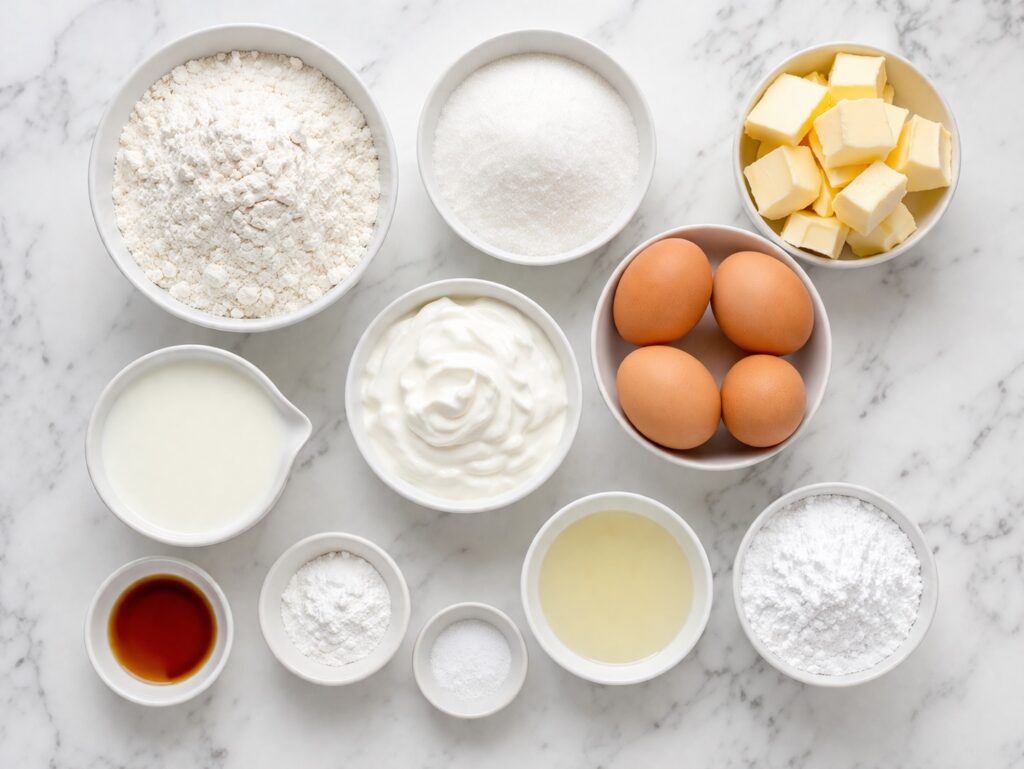
For the Vanilla Cake Layers
- 2 1/2 cups all-purpose flour
- 2 1/2 teaspoons baking powder
- 1/2 teaspoon salt
- 3/4 cup unsalted butter, softened
- 1 1/2 cups granulated sugar
- 1/4 cup neutral oil
- 4 large eggs, room temperature
- 1 tablespoon pure vanilla extract
- 1 cup whole milk, room temperature
- 1/2 cup sour cream, room temperature
For the Vanilla Buttercream Frosting
- 1 cup unsalted butter, softened
- 3–4 cups powdered sugar
- 2–3 tablespoons milk or cream
- 2 teaspoons vanilla extract
- Pinch of salt
Optional Filling & Decoration
- 1–2 cups fresh strawberries or berries
- Whipped cream (optional, for layering)
- Extra frosting for piping
Ingredient Insights (What Makes This Vanilla Cake Work)
Butter: Butter brings the classic flavor that makes vanilla cake taste rich and familiar. It also helps create a tender crumb when creamed properly with sugar. If your butter is too cold, it will not trap enough air. If it is too soft or greasy, the batter can lose structure before baking.
Oil: A small amount of oil gives lasting moisture. This is one of those quiet upgrades that makes a real difference, especially if the cake needs to stay soft for serving later in the day. It does not overpower the butter; it supports it.
Sour cream: Sour cream adds moisture and a gentle richness without making the batter loose. It also helps soften the crumb. Greek yogurt can work as a practical substitute, though the cake may bake slightly less rich.
Eggs: Eggs provide structure, color, and lift. Room temperature eggs blend more easily into the butter mixture, which helps the batter stay smooth instead of curdled. That smoother emulsion usually leads to a more even rise and a finer crumb, which matters a lot in a cake where the texture is one of the main selling points.
Flour: All-purpose flour gives enough stability for neat slices and layered assembly. Cake flour can be used for a softer crumb, but the layers will be a little more delicate. One original insight worth remembering: vanilla cake often tastes “better balanced” when the crumb has a little body, so all-purpose flour is often a stronger choice for an everyday layer cake than people expect.
Buttercream note: A simple vanilla buttercream keeps the focus on the cake itself. It adds sweetness and structure without overpowering the delicate vanilla flavor.

Kitchen Tools You’ll Need (Simple & Practical)
- 2 round 8-inch cake pans
- Mixing bowls
- Electric mixer
- Rubber spatula
- Whisk
- Wire cooling rack
- Parchment paper
A practical note: lining the bottoms of the pans with parchment is one of the easiest ways to make this recipe feel stress-free. Vanilla cake is soft and tender, and even when pans are greased well, parchment gives you a much safer release.
How to Make Vanilla Cake
1. Prepare the pans and oven.
Preheat the oven to 350°F (175°C). Grease two 8-inch round cake pans, line the bottoms with parchment, and lightly grease the parchment as well. The pans should look evenly coated, not heavily slick.
2. Mix the dry ingredients.
In a medium bowl, whisk together the flour, baking powder, and salt. This helps distribute the leavening evenly so the cake rises with a more uniform crumb instead of lifting unevenly in patches.
3. Cream the butter and sugar.
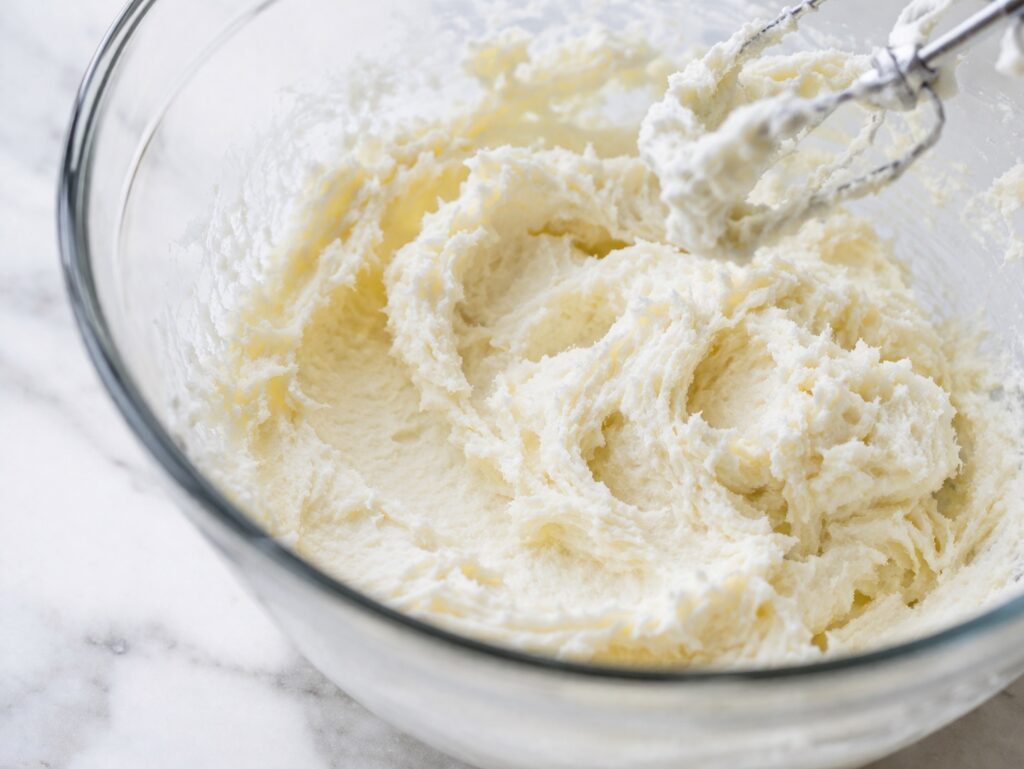
In a large bowl, beat the softened butter and sugar for 3 to 4 minutes until pale, fluffy, and visibly lighter in texture. This is one of the most important texture-building steps.
The mixture should look creamy, pale, and slightly airy, not dense or greasy. If it still looks heavy and deep yellow, it usually needs a little more mixing.
4. Add the oil, then the eggs.
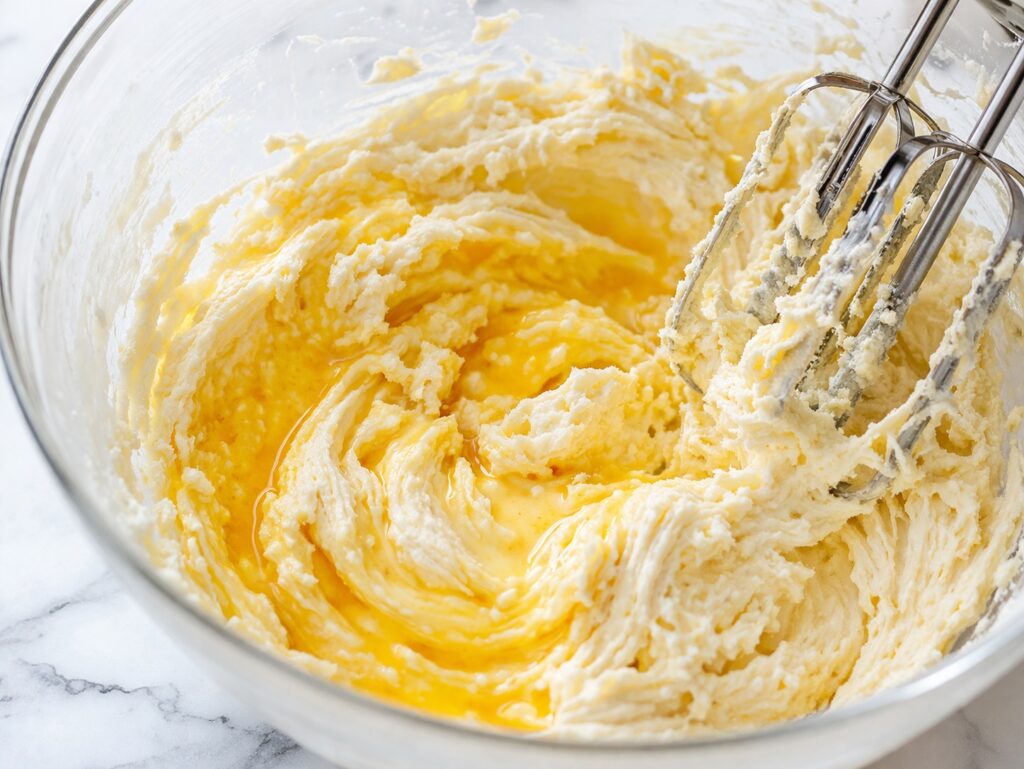
Beat in the oil until fully combined. Add the eggs one at a time, mixing well after each one. Scrape the bowl as needed. If the batter looks slightly curdled at any point, do not panic — that usually smooths out once the dry ingredients and dairy are added.
5. Add the vanilla and dairy.
Mix in the vanilla extract, then stir the milk and sour cream together in a small bowl or measuring cup until mostly smooth. The dairy mixture should be pourable and creamy.
6. Combine the batter.
Add the dry ingredients in three additions, alternating with the milk mixture in two additions, beginning and ending with the dry ingredients. Mix on low speed just until combined.

The final batter should look smooth, thick, and silky. Do not overmix once the flour disappears. At this stage, the batter should spread with the spatula rather than resist it.
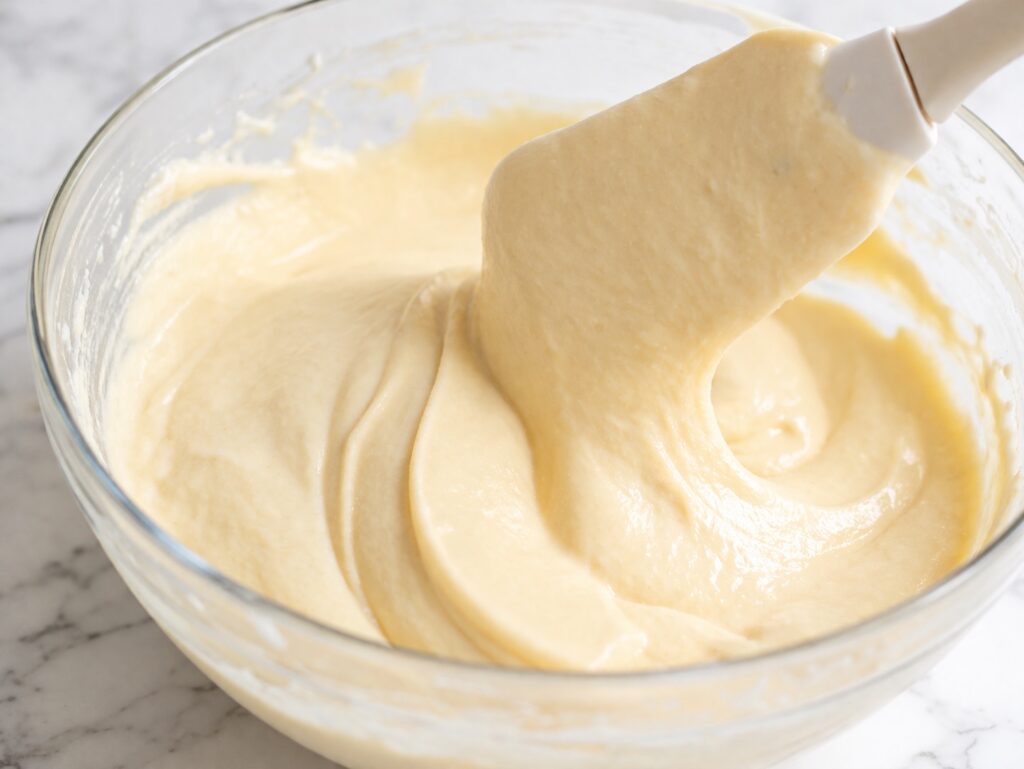
7. Divide and smooth.
Divide the batter evenly between the pans and smooth the tops gently. Tap the pans once or twice on the counter to release any large air pockets. A few tiny bubbles are fine; you just do not want obvious trapped pockets that can bake into tunnels.
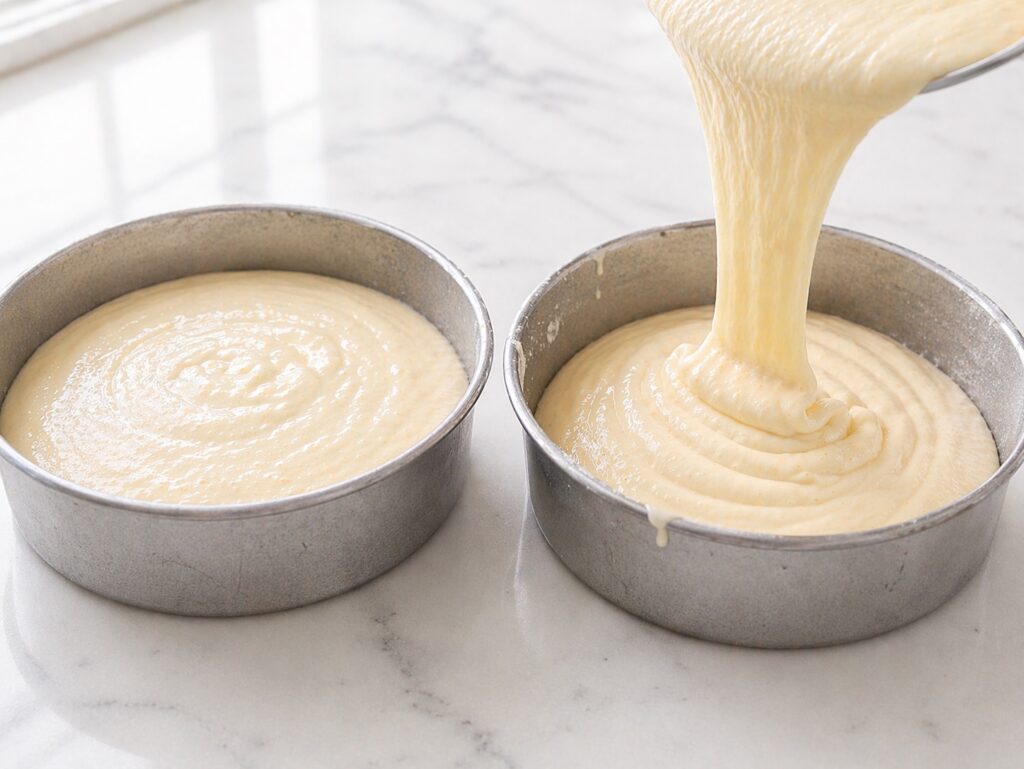
8. Bake until softly golden.
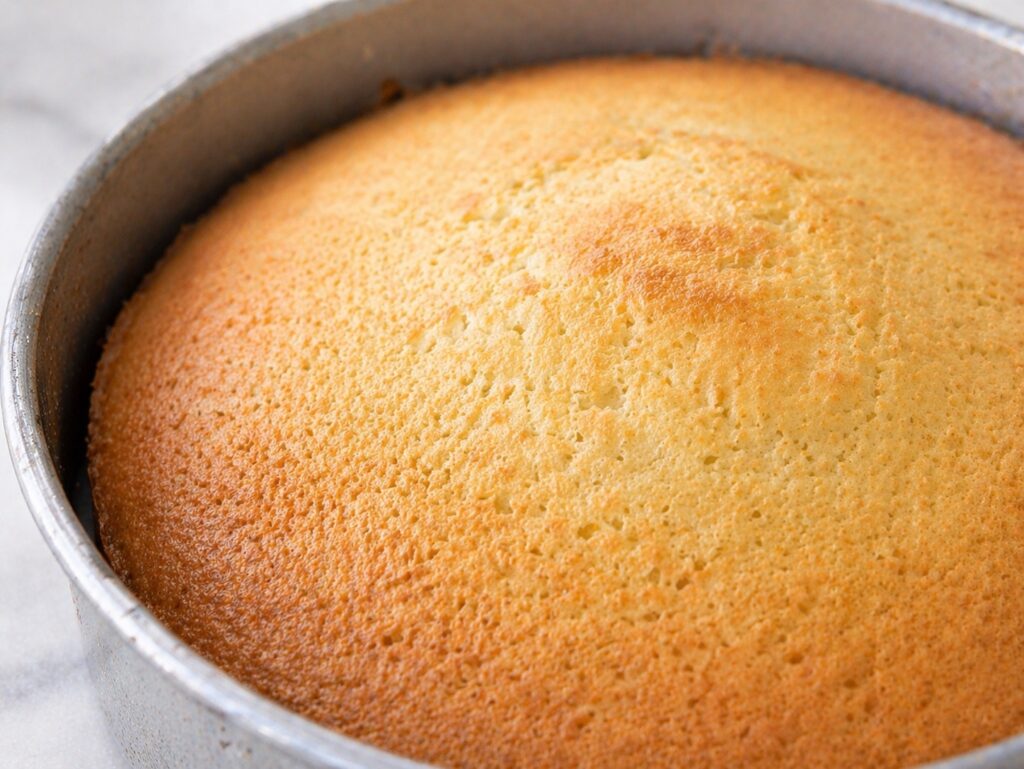
Bake for 28 to 32 minutes, or until the tops are set, lightly golden, and spring back when touched in the center. A toothpick inserted in the middle should come out clean or with a few soft crumbs, not wet batter. If one layer domes a bit more than the other, that is completely normal in home ovens. The edges usually color first, while the center finishes setting slightly later, which is exactly what you want.
One thing I’ve learned from baking this cake multiple times is that it often looks done slightly before it actually is. Giving it just a couple more minutes usually makes the difference between a good cake and a perfectly set one.
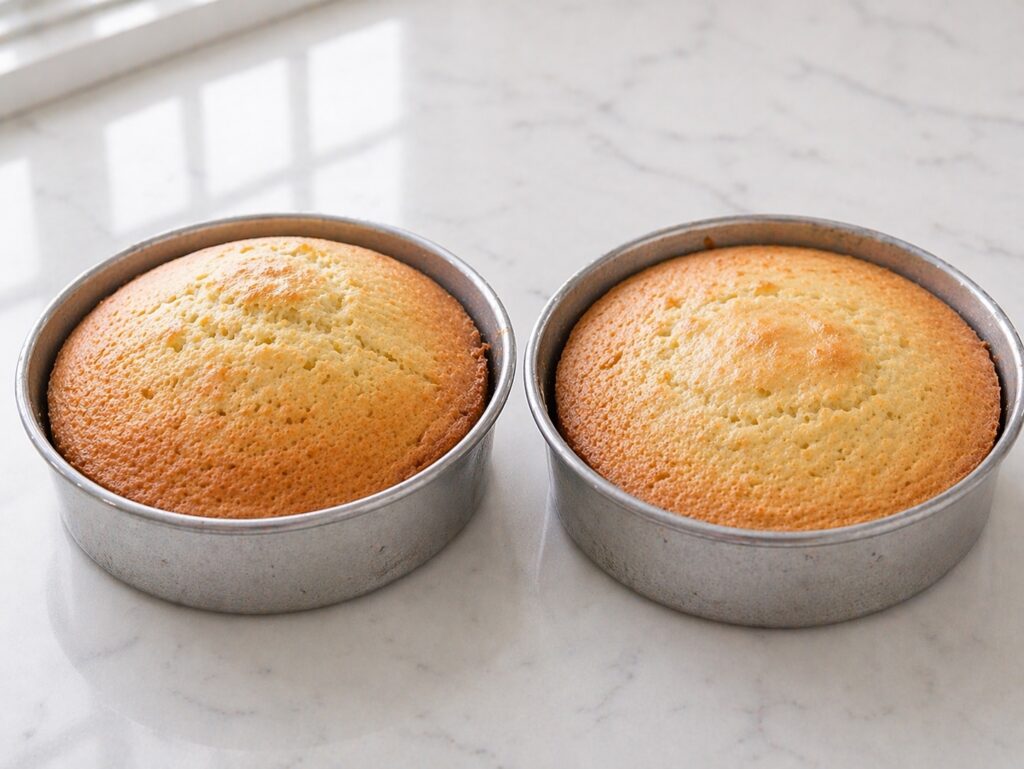
9. Cool with patience.
Let the cakes cool in the pans for 10 to 15 minutes, then turn them out onto a wire rack to cool completely. The layers will be fragile while warm, but they become easier to handle once fully cooled. This is one of those small patience moments that makes frosting and stacking much easier later.
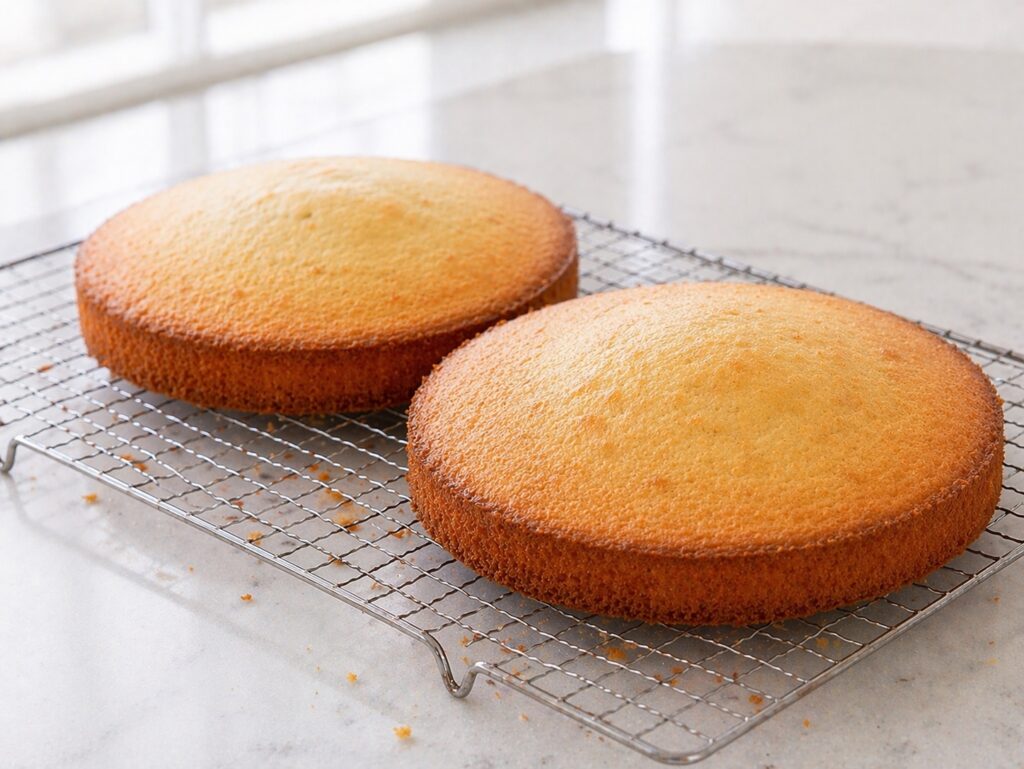
10. Frost and serve.
Fill and frost as desired with vanilla buttercream, whipped frosting, or cream cheese frosting. For the cleanest layers, chill the cake layers briefly before frosting if your kitchen is warm.
How to Tell When Vanilla Cake Is Perfectly Baked
- The top looks set rather than shiny or wet
- The edges are lightly golden and beginning to pull very slightly from the pan
- The center springs back when touched gently
- A toothpick comes out clean or with a few tender crumbs
- The cake smells fragrant and buttery, with a clear vanilla aroma
- The layers feel light but stable when moved, not loose in the center
- The top has a soft spring when pressed lightly, but it should not wobble underneath
How to Make Vanilla Buttercream Frosting
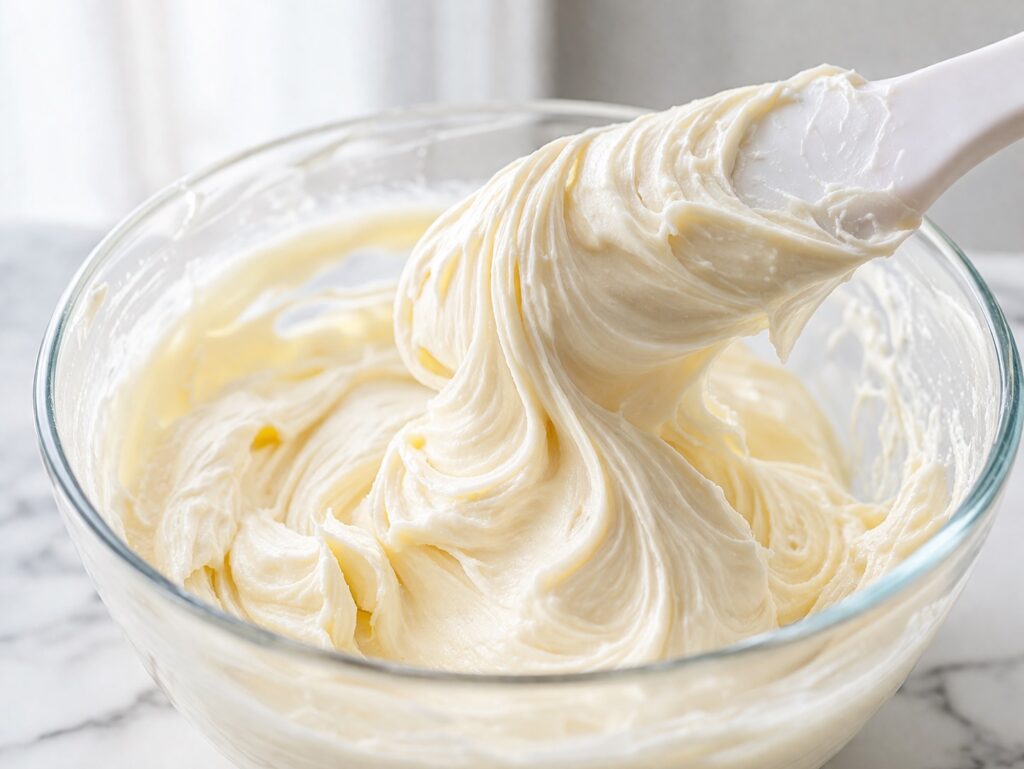
Beat the softened butter for 2–3 minutes until smooth and creamy.
Add powdered sugar gradually, mixing on low speed to avoid a dusty texture. Once combined, increase speed and beat until light and fluffy.
Add vanilla extract and a small amount of milk or cream. Adjust consistency as needed — the frosting should be soft, smooth, and easy to spread.
Taste and add a pinch of salt if needed to balance sweetness.
In my kitchen, the best texture is when the frosting holds soft peaks but still spreads easily without tearing the cake layers.
How to Assemble a Vanilla Layer Cake
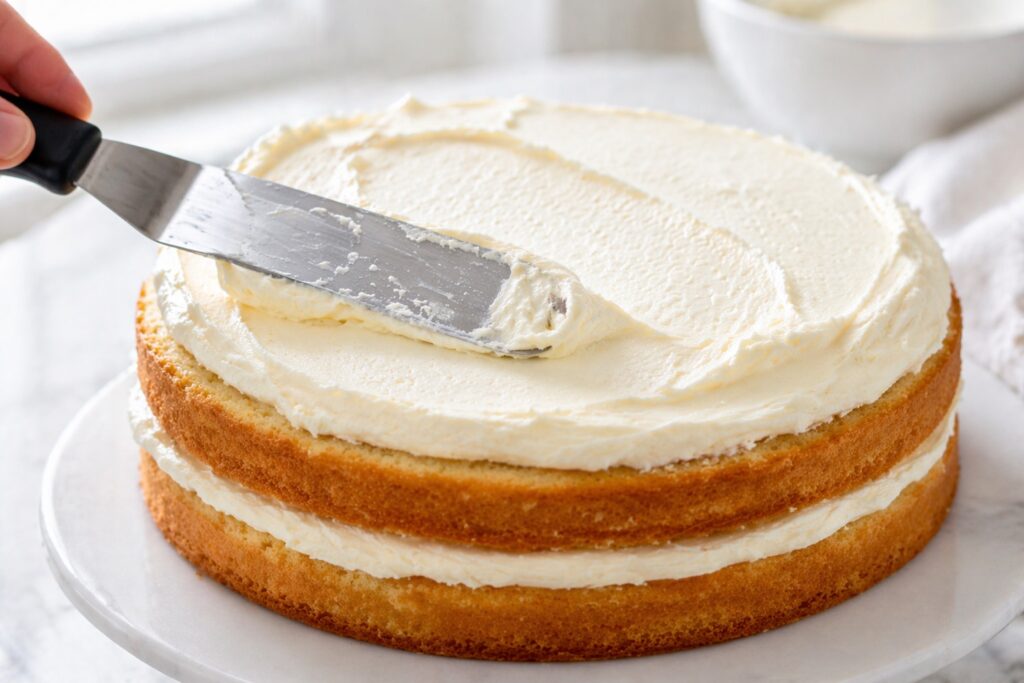
Place the first cake layer on a serving plate or cake stand.
Spread a thick, even layer of frosting across the top. If you want a softer, fresher layer, you can add a thin layer of whipped cream or sliced berries.
Add the second cake layer and press gently to level.
Apply a thin crumb coat (a light layer of frosting) over the entire cake. This helps seal in crumbs and creates a smoother final finish.
Chill the cake for 15–20 minutes if possible.
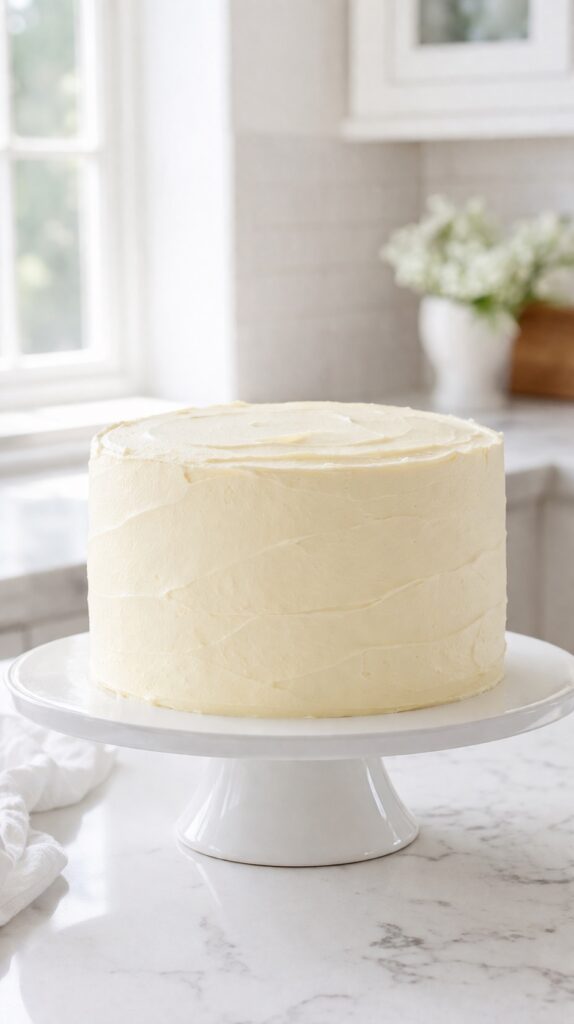
Add the final layer of frosting, spreading evenly over the top and sides. Use soft, relaxed strokes for a natural, bakery-style finish.
From experience, taking a few extra minutes for the crumb coat makes a noticeable difference — especially with soft cakes like this one.
Simple Vanilla Cake Decoration Ideas That Always Work
This vanilla cake already has a beautiful soft crumb and a clean, pale golden color, so decoration works best when it stays simple and natural. The goal is to highlight the texture rather than cover it.
Classic Smooth Finish
Spread the frosting evenly over the cake using soft, relaxed strokes. A slightly imperfect surface with gentle texture often looks more inviting than a perfectly sharp finish. This is the easiest way to get that clean, bakery-style look at home.
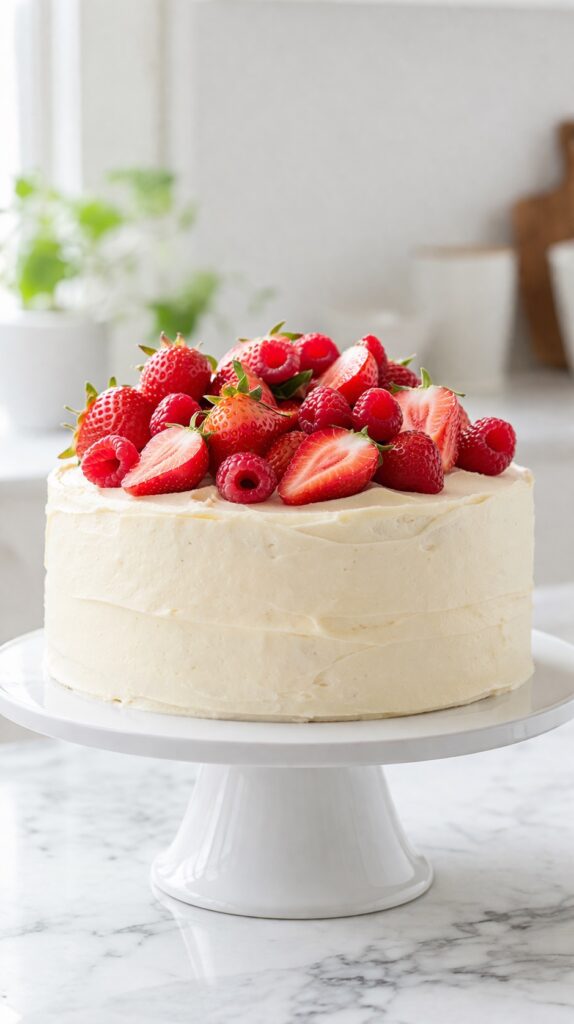
Fresh Berry Topping
Add fresh strawberries, raspberries, or mixed berries on top of the cake. The natural color contrast against the vanilla frosting creates a soft, elegant look that works especially well for spring and summer desserts.
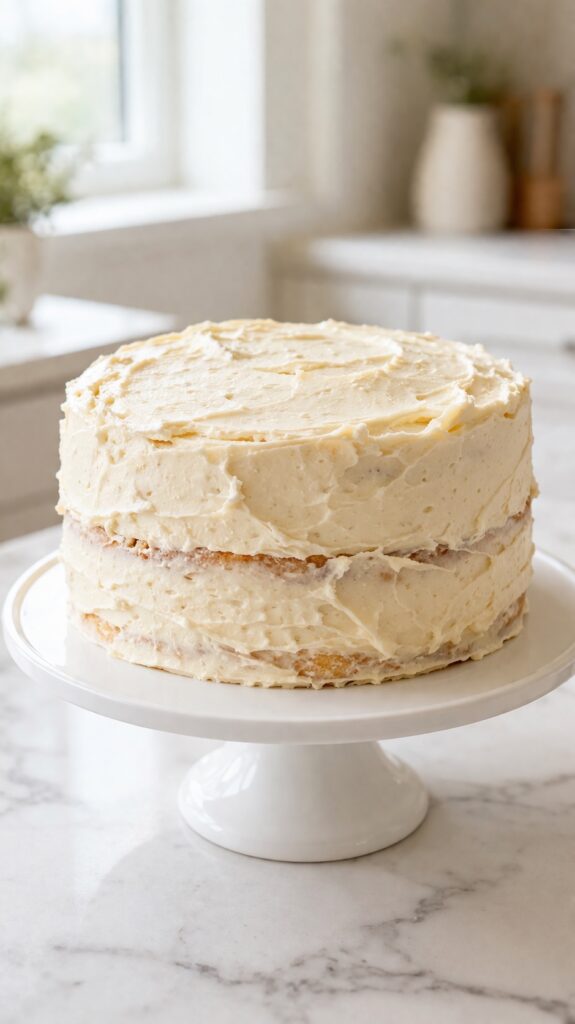
Soft Rustic Style
Use a spatula to create light swirls and texture in the frosting. This relaxed finish makes the cake feel homemade and warm, without needing precise piping or decoration skills.
Light Dusting Finish
For a simpler version, skip heavy frosting and dust the top lightly with powdered sugar. This works especially well if you want a more everyday cake that still looks beautiful when sliced.
Layered Filling Look
Let a little of the filling or frosting peek between the layers. That slightly visible layer gives the cake a soft, bakery-style appearance and makes each slice look more inviting.
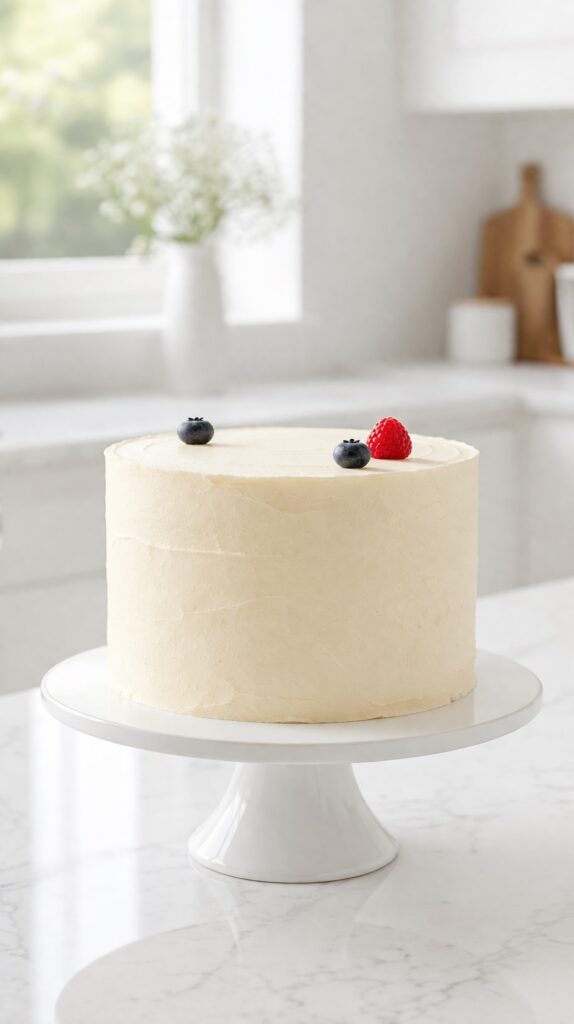
Minimal Elegant Finish
Keep the frosting smooth and add just a few small details on top — a couple of berries, a light swirl, or a clean edge. This style works especially well for celebrations where you want something simple but polished.
Visual Tip
Vanilla cake looks best when it is not over-decorated. Let the soft crumb, light color, and natural frosting texture stay visible — that is what makes it feel warm, homemade, and genuinely appealing.
This is also the kind of cake people save because it looks beautiful without needing complicated decoration — soft frosting, clean layers, and simple details are often all it needs.
How Vanilla Cake Changes as It Bakes and Cools
| Stage | What to Expect |
|---|---|
| Batter | Thick, smooth, silky, slowly flowing from the spatula |
| Before baking | Evenly spread, pale cream color, minimal large bubbles |
| Mid-bake | Rising evenly, center still soft, edges beginning to set |
| Fully baked | Set center, lightly golden edges, soft springy top |
| Cooled crumb | Tender, fine, moist, easy to slice without crumbling apart |
Expert Tips for a Perfect Vanilla Cake Texture
- Use room temperature ingredients, but especially pay attention to the butter. Properly softened butter is one of the biggest differences between a flat, dense cake and a light, evenly textured one.
- Cream the butter and sugar properly. Do not rush this step. It is one of the biggest factors behind a light vanilla cake texture.
- Measure flour carefully. Too much flour can make vanilla cake dry and tight. Spoon and level for best results.
- Mix gently once the flour goes in. Overmixing develops more gluten, which makes the cake less tender.
- Check your oven honestly. A slightly hot oven can dome and brown the cake too quickly, while a cool oven can leave it flat and pale.
- Let the layers cool fully before frosting. This sounds obvious, but it is one of the most common reasons frosting melts, slides, or tears the crumb.
- Trust small visual cues. Over time, you start recognizing when the cake is just right — the soft spring on top, the light golden edges, and the way the layers feel stable but still tender.
- For extra flavor depth, use pure vanilla extract. Because vanilla is the main flavor here, quality matters more than it does in heavily flavored cakes.
- If your cake layers dome more than expected, your oven may be running a little hot. That is a useful clue to remember for the next bake, especially with vanilla cake where evenness shows so clearly.
- If your cake tastes flat rather than rich, it is often a vanilla quality issue. Because vanilla is the main flavor, using a good extract or paste makes a noticeably bigger difference than in most other cakes.
If your batter ever looks slightly curdled before baking, it usually corrects itself once the dry ingredients are added, so there is no need to restart.
Common Vanilla Cake Mistakes (and How to Fix Them)
Cause: Butter too cold
Effect: Dense batter, less trapped air, and a heavier cake
Correction: Use softened butter that gives slightly when pressed but does not look shiny or melted
Why it matters: Properly softened butter traps air during mixing, which directly affects how light the final crumb will be.
Cause: Overmixing after adding flour
Effect: Tougher crumb and less delicate texture
Correction: Mix only until the batter is combined and smooth
Why it matters: Overmixing develops gluten, which makes a vanilla cake feel tighter instead of soft and tender.
Cause: Too much flour
Effect: Dry, heavy cake with a tighter crumb
Correction: Spoon and level the flour instead of scooping directly with the measuring cup
Why it matters: Even a small excess can noticeably change the texture in a cake where balance is key.
Cause: Opening the oven too early
Effect: The cake may sink slightly or bake unevenly through the center
Correction: Wait until the cake looks mostly set and lightly golden before checking
Why it matters: Early heat loss interrupts the structure before it has fully set.
Cause: Frosting warm layers
Effect: Sliding frosting, torn crumb, and a messy finish
Correction: Cool completely first, or chill the layers briefly before assembling
Why it matters: Warm cake is fragile and cannot support frosting cleanly.
Vanilla Cake vs Other Vanilla Cake Styles
| Version | Texture | Flavor | Best Use |
|---|---|---|---|
| This Vanilla Cake | Soft, moist, tender with stable layers | Buttery and richly vanilla | Layer cakes, birthdays, all-purpose baking |
| Classic Butter-Only Vanilla Cake | Slightly firmer, can dry faster | Very buttery | Traditional cakes served same day |
| Cake Flour Vanilla Cake | Very soft and delicate | Lighter and more delicate | Elegant celebration cakes |
| Vanilla Sheet Cake | Soft, simple, casual crumb | Classic vanilla sweetness | Easy gatherings and quick frosting jobs |
If you enjoy cakes with a slightly tighter crumb and a more buttery, classic feel, pound cake is another beautiful option to keep in your baking rotation.
How to Serve Vanilla Cake (Simple & Elegant Ideas)
Serve this vanilla cake thickly frosted for birthdays, lightly dusted with powdered sugar for an everyday dessert, or layered with berries and whipped cream for something that feels soft, fresh, and quietly beautiful. The crumb is tender enough to feel special, but sturdy enough to hold its shape on a dessert table.
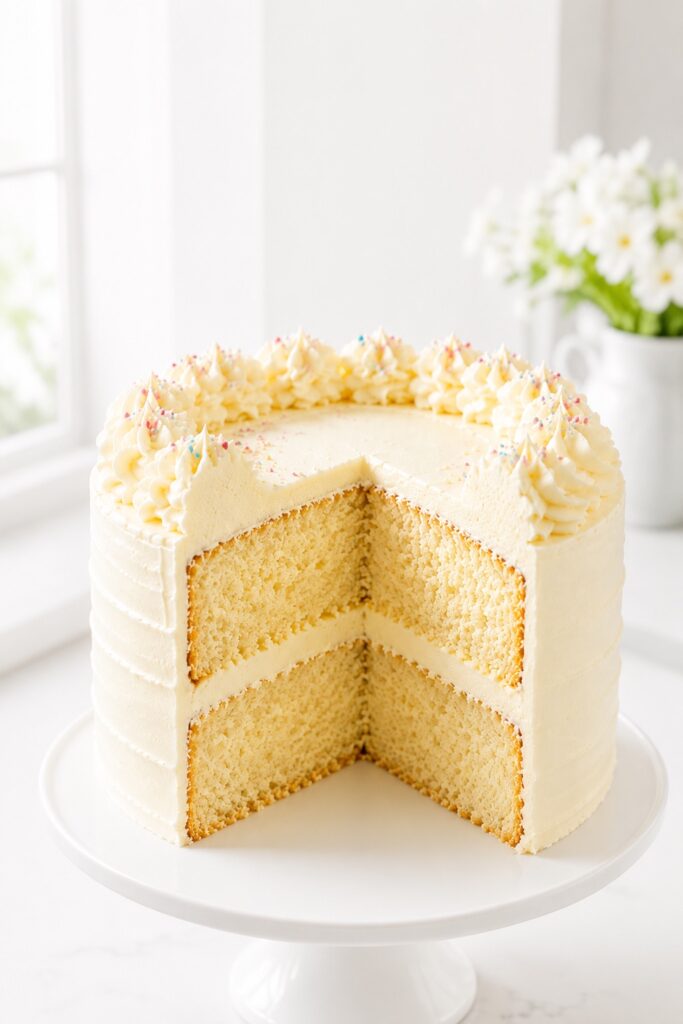
For a classic look, pair it with vanilla buttercream and fresh strawberries. For a softer, bakery-style finish, use whipped cream and a few curls of white chocolate. If you want it to feel especially cozy, serve slices slightly cool or at room temperature with coffee or tea.
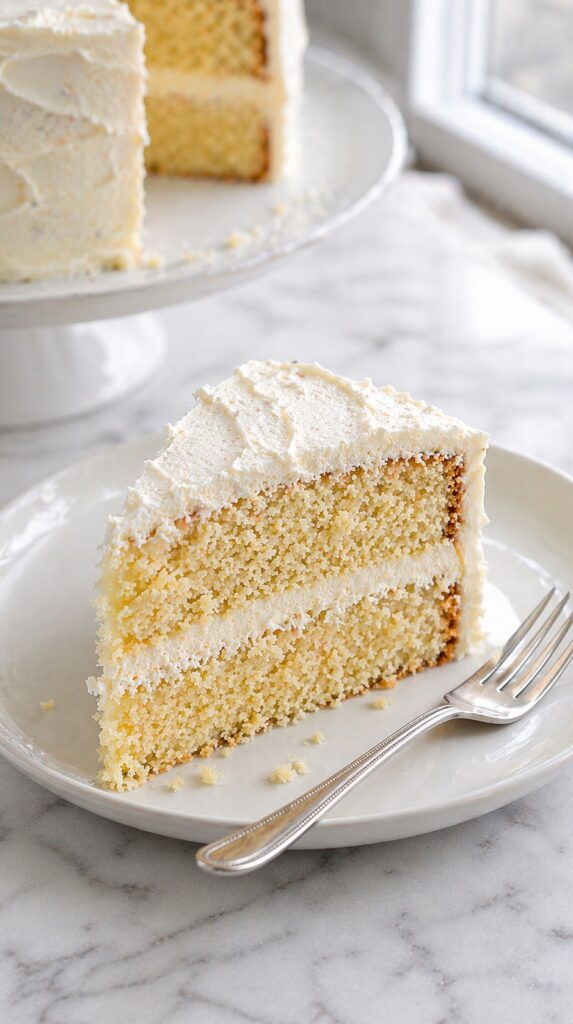
It is also one of those cakes that photographs beautifully without needing much. Soft frosting, clean slices, fresh fruit, and that pale golden crumb do a lot of the work on their own.
Save this for birthdays, spring gatherings, baby showers, and those moments when you want one dependable homemade cake that always feels right.
Save this for the kind of dessert table where you want something simple, elegant, and guaranteed to disappear in neat, soft slices.
This is also the kind of cake people save because it works for almost any occasion — from simple everyday baking to layered celebration cakes that still feel classic and effortless.
For a more layered, bakery-style version, you can fill the cake with fresh berries or a thin layer of jam between the layers. It adds contrast and makes the cake feel slightly more elevated without making it complicated.
It is also one of those cakes people come back to when they want something that feels easy but still looks finished — soft frosting, clean layers, and simple details that naturally stand out without extra effort.
How to Store and Make Vanilla Cake Ahead
Store the unfrosted cake layers tightly wrapped at room temperature for up to 2 days, or refrigerate for up to 4 days. Frosted cake can be refrigerated, covered, for 3 to 4 days. For the best texture, let chilled slices sit at room temperature for a little while before serving.
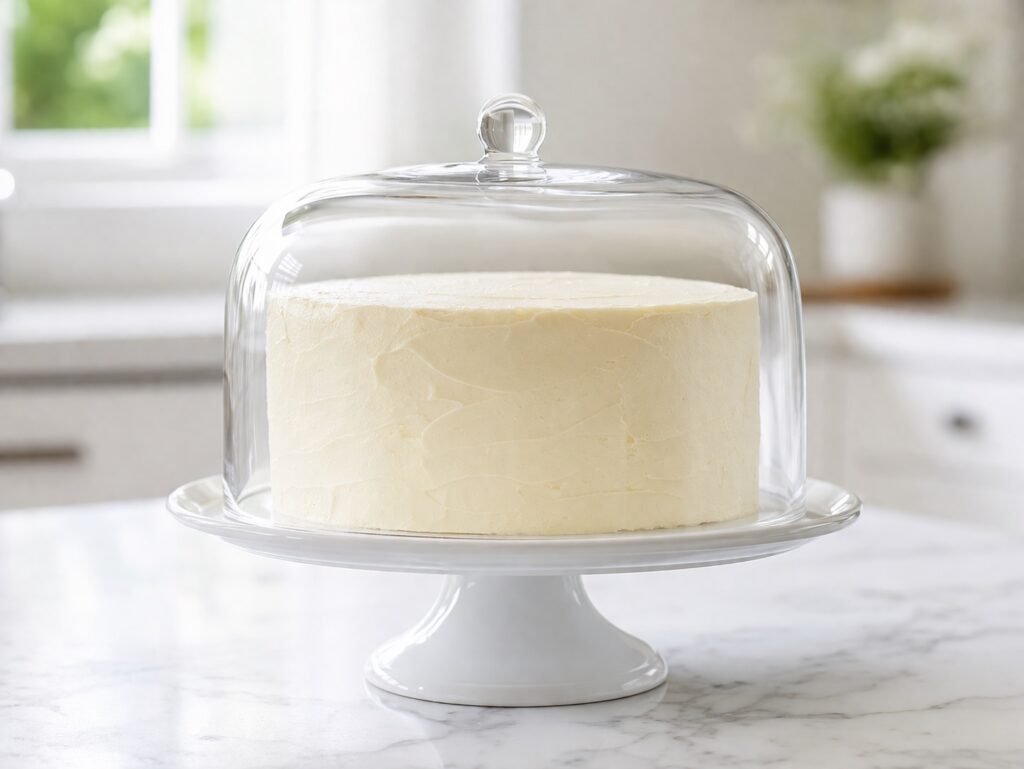
The layers also freeze well. Wrap each cooled layer tightly in plastic wrap and then foil, and freeze for up to 2 months. Thaw overnight in the refrigerator or at room temperature before frosting.
You can also bake the layers a day ahead, which is often a very practical move for celebration baking. In fact, slightly chilled layers are often easier to frost cleanly than freshly baked ones.
Easy Vanilla Cake Variations to Try
Vanilla Bean Cake
Replace some or all of the extract with vanilla bean paste for deeper vanilla flavor and visible specks throughout the crumb, especially if you want a more bakery-style finish.
Lemon Vanilla Cake
Add fresh lemon zest for a brighter, fresher finish that still keeps the soft vanilla base balanced and light.
Berry Vanilla Cake
Layer with whipped cream and sliced strawberries or raspberries for a soft, fresh dessert that works especially well in spring and summer.
Funfetti Vanilla Cake
Fold in colorful sprinkles just before baking for a more playful, celebration-style version, or try this full Funfetti Cake recipe if you want the festive version as its own standalone cake.
Vanilla Sheet Cake
Bake in a 9×13-inch pan for an easier, more casual version that is simple to frost and perfect for gatherings.
Vanilla Cake FAQs (Common Questions Answered)
Can I make this vanilla cake in one pan instead of two?
Yes. You can bake it in a 9×13-inch pan for a sheet cake version. The baking time will likely be a little longer, so start checking once the center looks set and the edges are lightly golden.
Can I use cake flour instead of all-purpose flour?
Yes. Cake flour will give you a softer, finer crumb. The cake may be a little more delicate, but it works beautifully if you want a lighter celebration-style texture.
Why did my cake turn out dry?
The most common reasons are too much flour, overbaking, or overmixing. Vanilla cake is simple, so small ratio or timing issues show up quickly in the final texture. Even an extra few minutes in the oven can make a noticeable difference in a cake like this.
Can I make this recipe into cupcakes?
Yes. This batter works well for cupcakes. Fill liners about two-thirds full and bake until the tops are set and spring back lightly when touched.
What frosting goes best with vanilla cake?
Vanilla buttercream is the classic choice, but cream cheese frosting, whipped frosting, strawberry frosting, or even chocolate buttercream all pair well with it.
How do I keep vanilla cake soft?
Use the correct flour amount, avoid overbaking, and store the cake well wrapped. The small amount of oil and the sour cream in this recipe also help keep the crumb soft longer, which is one reason this cake stays pleasant even the next day.
Can I bake the layers ahead of time?
Yes. Baking the layers a day ahead is often helpful, especially if you plan to frost the cake the next day.
More Classic Cakes & Desserts You’ll Love
If you enjoy simple, reliable bakes like this vanilla cake, there are a few other recipes on the blog that follow the same idea — balanced texture, soft crumb, and that familiar homemade feel that works for both everyday baking and special occasions.
Quick picks: If you want something closest in structure, try Strawberry Cake. For a brighter variation, go for Lemon Cake.
Closest in Texture & Structure
- Strawberry Cake – soft, layered, and built on a similar tender crumb
- Blueberry Cake – fruit-forward with a light, balanced structure
- Banana Cake – slightly richer, with a soft and moist crumb
Classic & Celebration Cakes
- Red Velvet Cake – soft layers with a slightly richer flavor profile
- Coconut Cake – light, tender, and slightly more delicate in texture
- Vanilla Cupcakes – the same base idea in a smaller, more versatile format
Frosting & Finishing Ideas
- Cream Cheese Frosting – soft, slightly tangy, and perfect for layered cakes
- Whipped Cream – light, airy, and ideal for a softer finish
Each of these recipes builds on the same idea: simple ingredients, balanced structure, and that dependable texture that makes homemade cakes easy to return to again and again.
Vanilla Cake Recap
This vanilla cake is soft, moist, buttery, and rich with real vanilla flavor. It uses a balanced combination of butter, oil, milk, and sour cream to create tender layers with dependable structure, making it a strong choice for birthdays, layer cakes, and everyday homemade desserts. If you want a classic vanilla cake recipe that feels easy, beautiful, and reliable, this is the kind of recipe worth keeping.
It’s the kind of vanilla cake people come back to when they want a simple, reliable cake that works every time.
This vanilla cake recipe is designed as a complete layer cake, including soft vanilla cake layers, creamy frosting, and simple decoration ideas for a beautiful homemade result.
A Vanilla Cake You’ll Keep Coming Back To
A really good vanilla cake proves that simple does not mean forgettable. It means balanced, dependable, and quietly special in a way that works year after year. This is the kind of recipe that stays useful because it gives you both comfort and flexibility — something lovely enough to celebrate with, but familiar enough to make just because you feel like baking.
And that is exactly why it works long-term. It is not built around trend or novelty. It is built around texture, warmth, reliability, and the kind of classic flavor people never really stop loving.
Once you make it a few times, it becomes less about following a recipe and more about recognizing the feel of a truly well-balanced vanilla cake — soft, even, and exactly the kind you know will work before it even goes into the oven.
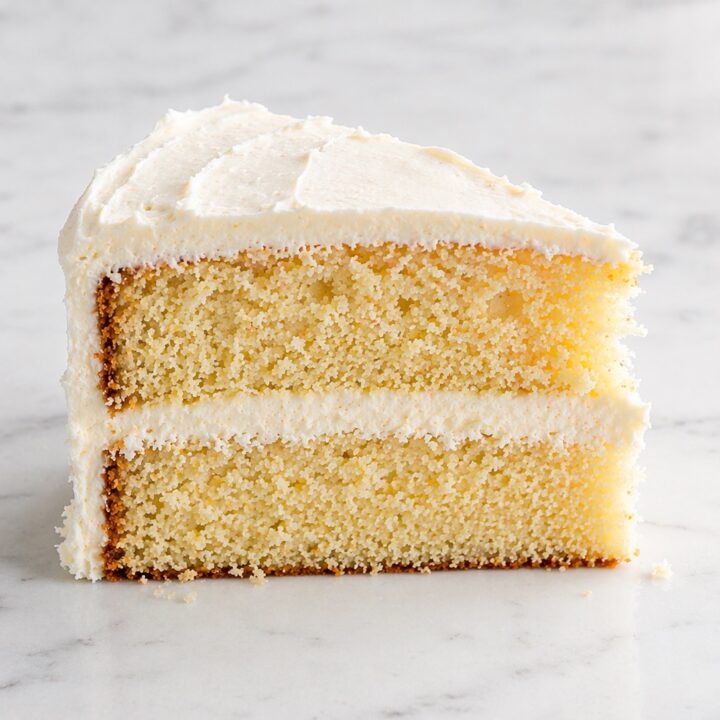
Vanilla Cake
A soft, moist vanilla cake with tender butter cake layers and smooth vanilla buttercream frosting. This classic recipe creates evenly baked layers with a rich vanilla aroma and a balanced, reliable structure perfect for frosting and serving.
Ingredients
For the Vanilla Cake Layers
- 2 1/2 cups all-purpose flour
- 2 1/2 teaspoons baking powder
- 1/2 teaspoon salt
- 3/4 cup unsalted butter, softened
- 1 1/2 cups granulated sugar
- 1/4 cup neutral oil
- 4 large eggs, room temperature
- 1 tablespoon vanilla extract
- 1 cup whole milk, room temperature
- 1/2 cup sour cream, room temperature
For the Vanilla Buttercream Frosting
- 1 cup unsalted butter, softened
- 3–4 cups powdered sugar
- 2–3 tablespoons milk or cream
- 2 teaspoons vanilla extract
- pinch of salt
Optional Filling & Decoration
- 1–2 cups fresh strawberries or berries
- whipped cream (optional)
Instructions
- Preheat the oven to 350°F (175°C). Grease two 8-inch round cake pans, line the bottoms with parchment paper, and lightly grease again.
The pans should look evenly coated, not overly slick. - In a medium bowl, whisk together the flour, baking powder, and salt until fully combined and evenly distributed.
This helps the cake rise evenly instead of forming dense spots. - In a large bowl, beat the softened butter and sugar for 3–4 minutes until pale, fluffy, and visibly lighter in texture.
The mixture should look creamy and airy, not dense or greasy. If it still looks deep yellow, continue mixing. - Add the oil and mix until fully incorporated. Add the eggs one at a time, mixing well after each addition.
The batter may look slightly curdled at this stage — this is normal and will smooth out later. - Mix in the vanilla extract. In a separate bowl, stir together the milk and sour cream until smooth and pourable.
The mixture should look creamy, not lumpy. - Add the dry ingredients in three additions, alternating with the milk mixture in two additions, beginning and ending with the dry ingredients.
Mix on low speed just until combined.
The batter should become smooth, thick, and flow in soft ribbons when lifted. - Divide the batter evenly between the prepared pans and gently smooth the tops.
Tap the pans lightly once or twice to release any large air pockets. A few small bubbles are fine. - Bake for 28–32 minutes, or until the tops are set, lightly golden, and spring back when touched in the center.
A toothpick inserted should come out clean or with a few soft crumbs, not wet batter.
The edges will usually color slightly before the center finishes setting. - Let the cakes cool in the pans for 10–15 minutes, then carefully turn them out onto a wire rack to cool completely.
The layers will feel fragile while warm but will firm up as they cool. - To make the buttercream, beat the softened butter for 2–3 minutes until smooth and creamy.
It should look light and spreadable, not dense or greasy. - Add the powdered sugar gradually, mixing on low speed at first to avoid a dusty texture.
Once combined, increase speed and beat until light, fluffy, and airy. - Add the vanilla extract and milk or cream, mixing until the frosting is smooth and soft.
The frosting should hold soft peaks but still spread easily without tearing the cake. - Place one cake layer on a serving plate and spread an even layer of frosting on top.
The frosting should glide easily across the surface without pulling the crumb. - Add the second cake layer and press gently to level.
Avoid pressing too firmly to keep the layers light and even. - Apply a thin crumb coat over the entire cake.
This layer should be light and slightly translucent, just enough to seal in crumbs. - Chill the cake for 15–20 minutes if possible.
This helps the frosting set and makes the final layer easier to apply cleanly. - Spread the final layer of frosting evenly over the top and sides using soft, relaxed strokes.
A slightly imperfect finish often looks more natural and inviting than a perfectly sharp one. - Slice and serve once the cake is fully assembled.
The crumb should feel soft, tender, and moist, while the frosting remains light and creamy.
Notes
- Do not overmix after adding flour — this keeps the cake soft and prevents a dense texture.
- For clean, stable layers, let the cakes cool completely and chill briefly before frosting.
- The cake may look done on top before the center is fully set — always check with a toothpick.
- If your kitchen is warm, chill the frosting slightly before spreading for better control.
Nutrition Information:
Yield: 12 slices Serving Size: 1 sliceAmount Per Serving: Calories: 420Total Fat: 22gCarbohydrates: 52gProtein: 5g
Nutrition information is estimated and may vary based on ingredients and portion sizes.
12 Sweet Favourites — Yours, Free 🍰
Tiramisù, no-bake cheesecake, the perfect chocolate chip cookie & 9 more reader-loved desserts — gathered into one beautiful free recipe book. From my kitchen to yours.
No spam, just sweet things. Unsubscribe anytime.