Pistachio Cake (Soft, Moist & Made with Real Pistachios)
🎁 FREE E-BOOK: 12 Sweet Favorites — reader-loved desserts in one beautiful recipe book.
There’s something quietly luxurious about a Pistachio Cake. The soft green hue, the delicate nutty aroma, and the tender crumb make it feel both comforting and elevated at the same time. It’s the kind of cake that doesn’t need bold decoration to impress — its flavor does all the work.

This pistachio cake recipe is built to give you that exact result: soft, moist layers with real pistachio flavor, a tender crumb, and just enough richness to feel elegant without becoming heavy. It’s the kind of cake that feels refined, but still completely approachable to bake at home.
This is one of those cakes that often surprises people on the first bite — it looks simple, but the texture and flavor feel noticeably more refined than expected.
It’s also one of those cakes people love to save because it feels a little different from the usual layer cake. Familiar enough to be comforting, but distinctive enough to feel special, it works beautifully for spring gatherings, birthdays, holidays, or any moment when you want a dessert that feels quietly impressive.
What makes Pistachio Cake special isn’t just the flavor — it’s the texture. Real pistachios bring natural richness, softness, and depth, creating a cake that feels smoother and more delicate than many standard butter cakes.
And once you make it once, it quickly becomes one of those recipes you come back to — elegant enough for special occasions, but reliable enough to keep in your regular baking rotation.
What Is Pistachio Cake?
Pistachio cake is a soft, tender cake made with real pistachios, usually in the form of finely ground nuts or pistachio paste, to create a naturally nutty flavor and delicate crumb. Unlike artificial pistachio cakes that rely on flavoring or coloring, this version uses real pistachios for a more authentic flavor, subtle sweetness, and naturally soft green tone.
Because pistachios bring both flavor and fat, pistachio cake often feels softer and richer than standard vanilla-style cakes, while still keeping a light, elegant texture.
It is often served as a layer cake or celebration cake, typically paired with pistachio frosting, mascarpone filling, or light fruit accents that complement its delicate flavor, much like a soft Strawberry Cake or a bright Lemon Cake.
In simple terms, Pistachio Cake is defined by its soft crumb, natural nutty richness, and balanced texture that feels refined rather than heavy.
Key Facts About Pistachio Cake
- Texture: Soft, moist, tender crumb with a delicate finish
- Flavor: Nutty, buttery, slightly sweet, naturally rich
- Main ingredients: Pistachios, flour, butter, sugar, eggs, milk
- Leavening: Baking powder for a light, even rise
- Signature feature: Real pistachio flavor with a naturally elegant texture
- Color: Soft green tone when made with real pistachios
- Best for: Layer cakes, celebrations, spring desserts, elegant baking
These quick facts give you a clear overview of what makes Pistachio Cake unique, but the sections below explain how those elements work together in a real baking scenario.
Pistachio Cake at a Glance
Here’s a quick overview to help you understand the texture, flavor, and baking profile at a glance:
| Detail | Description |
|---|---|
| Texture | Soft, moist, tender crumb |
| Flavor | Nutty, slightly sweet, buttery |
| Difficulty | Easy to intermediate |
| Time | 1 hour 45 minutes (including baking, cooling, and assembly) |
| Servings | 12 slices |
| Method | Three-layer baked cake with filling and frosting |
| Best For | Elegant desserts, spring baking, celebrations |
In short: Pistachio Cake is a soft, moist layer cake with a delicate nutty flavor, tender crumb, and elegant texture, made with real pistachios for a more natural and refined result.
Why You’ll Love This Pistachio Cake
- Made with real pistachios: This cake uses real pistachios instead of artificial flavoring, giving it a naturally rich, clean, and authentic taste.
- Soft, tender crumb: The texture is light but moist, with a delicate softness that feels slightly more refined than a typical butter cake.
- Balanced, not overly sweet: The natural richness of pistachios keeps the sweetness in check, making it easy to enjoy more than one slice.
- Elegant without effort: The soft green tone and clean layers give this cake a naturally elevated look, even with simple decoration.
- Reliable and repeatable: The method is straightforward, and once you’ve made it once, it becomes one of those recipes you can confidently return to.
- Even better after resting: Like many nut-based cakes, the flavor deepens slightly after a few hours, making it taste even more balanced the next day.
This is the kind of cake that doesn’t rely on bold flavors or heavy sweetness — it stands out through balance, texture, and a subtle, naturally elegant finish.
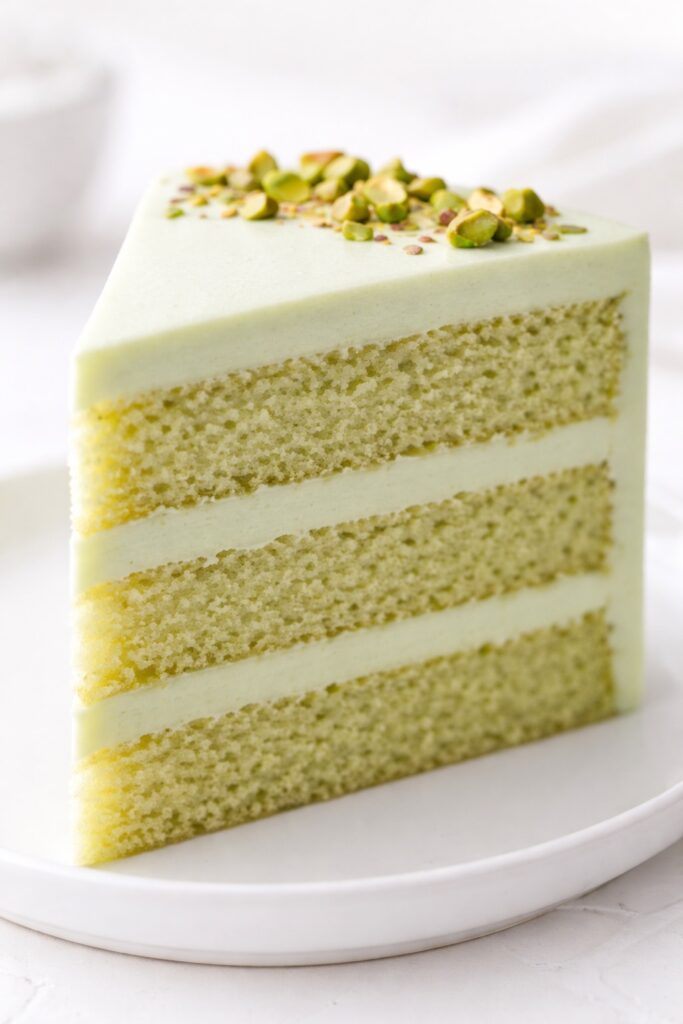
Why This Pistachio Cake Works (Texture, Moisture & Structure)
This pistachio cake works because it balances moisture, structure, fat, and baking temperature in a way that keeps the crumb soft, stable, and naturally rich without becoming heavy.
- Moisture: Butter and milk hydrate the batter while pistachios contribute natural oils, creating a soft crumb that stays tender even after cooling.
- Structure: Eggs and flour provide enough stability for clean layers, while still allowing the cake to feel light and delicate.
- Fat: The combination of butter and pistachio oils adds richness without making the cake dense.
- Heat: A moderate oven temperature allows the cake to rise evenly while keeping the edges from drying out too quickly.
Because pistachios do not absorb liquid the same way flour does, the batter may feel slightly softer or looser than expected — this is exactly what creates the delicate, tender crumb after baking.
Another subtle detail: Pistachio cake often smells fully baked before it actually is. The nut oils release aroma early, so visual cues matter more than scent when checking doneness.
When these elements are balanced correctly, the result is a cake that feels noticeably softer and more refined than most standard butter-based cakes.
Note: because pistachios contain natural fats but no gluten, they soften the crumb without strengthening it — which is why balance with flour and eggs is essential for structure.
Balanced Moisture Without Heaviness
The combination of butter, milk, and natural pistachio oils creates a cake that feels moist but never dense. This balance is what gives pistachio cake its signature soft, almost creamy texture.
Soft Structure That Still Holds Its Shape
The ratio of eggs to flour provides enough structure for clean slicing, while still keeping the crumb tender and delicate.
Why Pistachios Change the Texture
Unlike flour, pistachios contain natural fats that soften the crumb and create a smoother mouthfeel. This is why pistachio cake often feels more refined than traditional cakes.
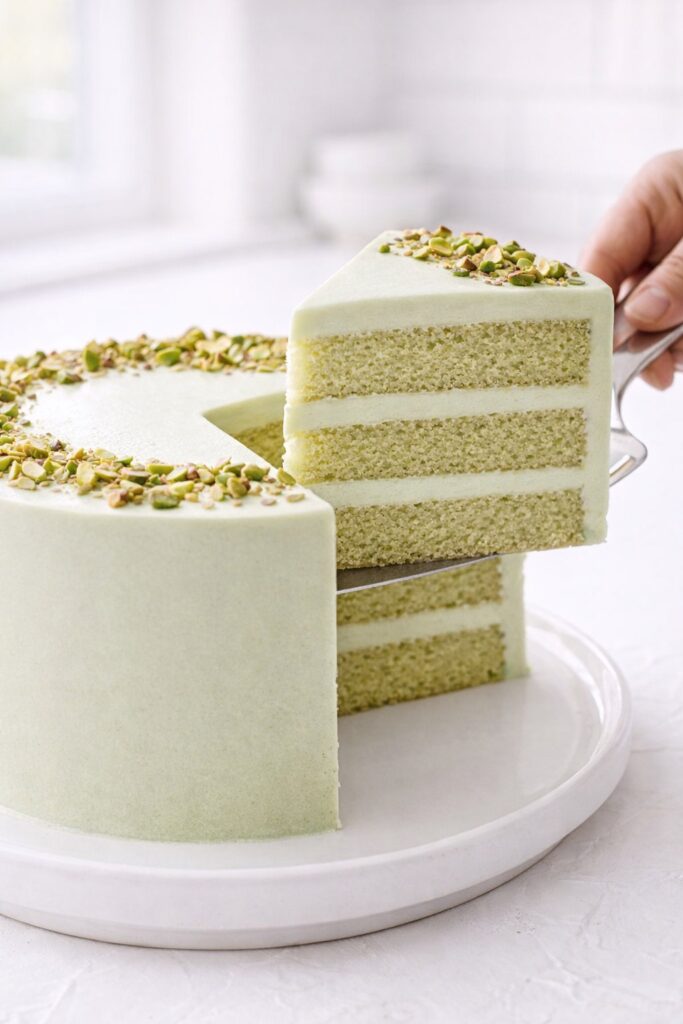
The Baking Science Behind Pistachio Cake
Pistachio cake relies on a combination of fat distribution, air incorporation, and controlled gluten development to achieve its soft, delicate texture.
- Fat Coating: Butter coats flour proteins, limiting gluten formation and keeping the crumb tender instead of chewy.
- Air Incorporation: Beating butter and sugar traps air, which expands during baking and creates a lighter texture.
- Pistachio Oils: Natural oils from pistachios add both moisture and richness, contributing to the cake’s smooth mouthfeel.
- Chemical Leavening: Baking powder expands trapped air, helping the cake rise evenly and maintain a soft structure.
Important detail: Because pistachios add fat but not structure, the balance between flour and eggs becomes more critical than in standard cakes.
Pistachio cakes can go from perfectly soft to slightly dry faster than expected if overbaked, because nut-based batters lose moisture more quickly once fully set.
This balance is what gives pistachio cake its signature texture — soft, tender, and slightly more refined than traditional butter cakes.
Why Pistachios Make the Cake Softer
The natural fats in pistachios soften the crumb and reduce dryness, creating a smoother and more delicate texture.
Why Overbaking Affects Pistachio Cakes Faster
Because nut-based batters hold moisture differently, they can dry out more quickly once fully baked, making timing especially important.
Ingredients for the Perfect Pistachio Cake
Each ingredient in this pistachio cake plays a specific role in creating its soft texture, balanced structure, and natural nutty flavor. Because pistachios behave differently than flour, the proportions here are carefully balanced to keep the cake light, tender, and consistent.
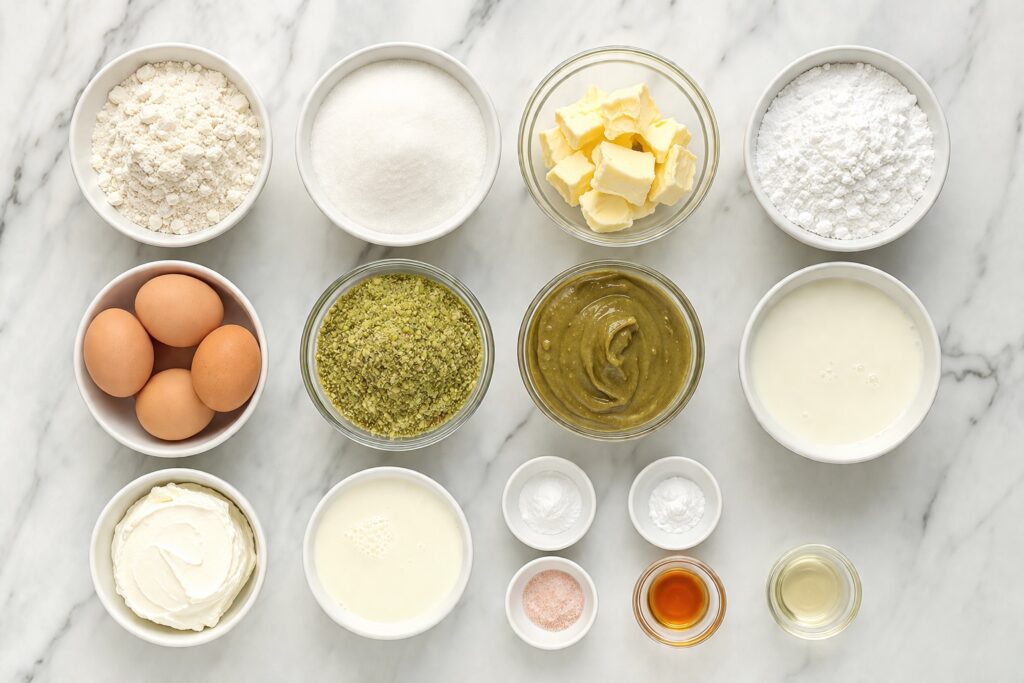
For the Pistachio Cake Layers (3 x 8-inch)
- 1 ½ cups shelled pistachios (unsalted)
- 2 ½ cups all-purpose flour
- 2 tsp baking powder
- ½ tsp baking soda
- ¾ tsp salt
- 1 cup unsalted butter (softened)
- 1 ½ cups granulated sugar
- 4 large eggs
- 2 tsp vanilla extract
- 1 tsp almond extract (optional)
- 1 ¼ cups milk
For the Pistachio Buttercream Frosting (For layering & outer coating)
- 1 ½ cups unsalted butter, softened
- 3 ½ – 4 cups powdered sugar
- 3–4 tbsp milk or cream
- 1 tsp vanilla extract
- ½–1 tsp almond extract (optional)
- 3–4 tbsp pistachio paste or finely ground pistachios
For the Creamy Filling (Between Layers)
- 1 cup mascarpone or cream cheese
- 3 tbsp powdered sugar
- 3–4 tbsp heavy cream (to loosen texture)
- 2–3 tbsp finely chopped pistachios (optional)
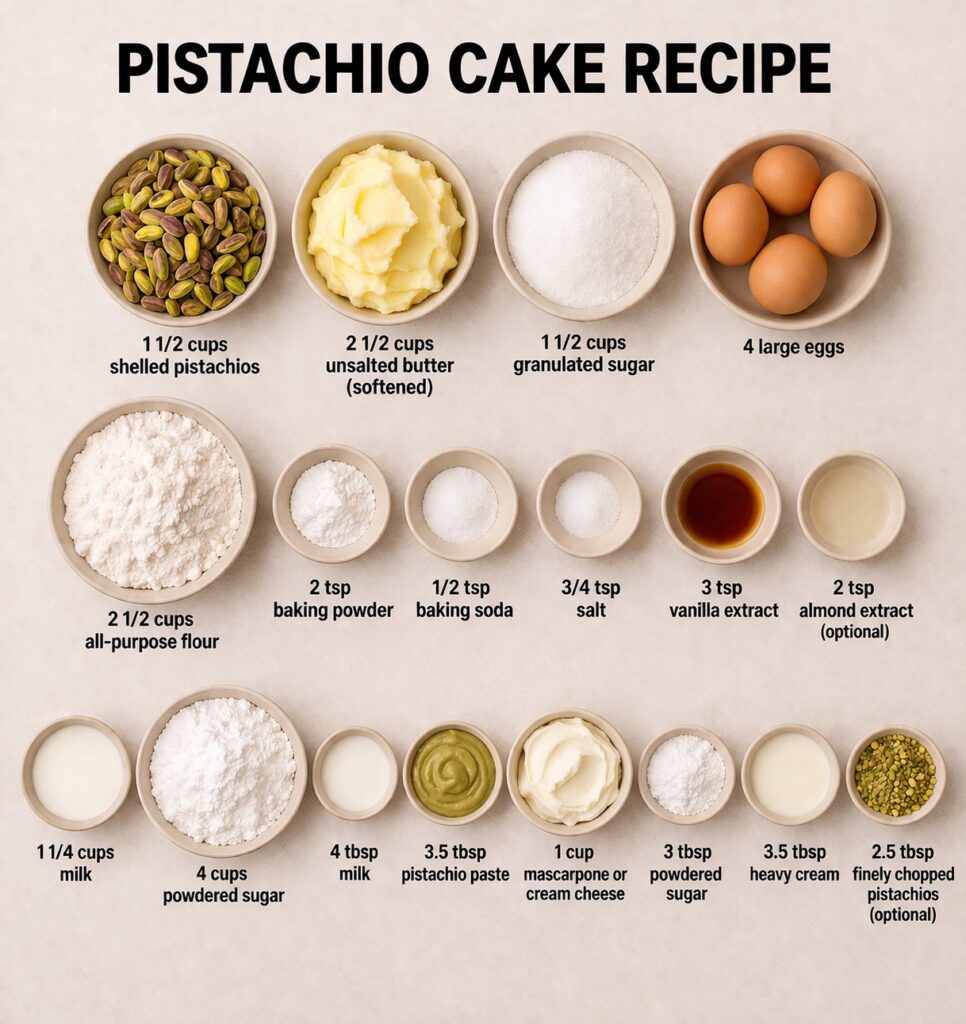
Ingredient Insights (What Makes Pistachio Cake Work)
Pistachio cake depends on balance more than intensity. Each ingredient contributes not just flavor, but also structure, moisture, and texture.
- Pistachios: Finely ground pistachios provide both flavor and natural fat. This adds richness while also softening the crumb.
- Butter: Adds structure and richness while helping create a tender, stable crumb when properly creamed.
- Milk: Hydrates the batter and helps create a smooth, even texture throughout the cake.
- Eggs: Provide structure and stability while also contributing to softness and moisture retention.
- Flour: Builds structure, but must stay balanced — too much can make the cake dense and dry.
- Baking Powder: Helps the cake rise evenly and keeps the crumb light.
Pistachios add fat but not structure, which is why the balance between flour, eggs, and leavening is especially important in this recipe.
The batter may feel softer or slightly thicker than a standard cake batter — this is normal and helps create the final tender texture.
If you don’t have pistachio paste, you can make a simple version by blending finely ground pistachios with a small amount of neutral oil until smooth.
Lightly toasting the pistachios before grinding them brings out a deeper, more pronounced nutty flavor without making the cake heavier.
Even small changes in how finely the pistachios are ground can noticeably affect the final texture — finer grinding gives a softer, more uniform crumb, while slightly coarser textures create a more rustic feel.
Why Finely Ground Pistachios Matter
Pistachios should be ground to a fine, almost flour-like texture. Larger pieces can create a slightly uneven or grainy crumb, while finer grinding blends more smoothly into the batter.
Butter vs Oil in Pistachio Cake
Butter provides structure and flavor, while pistachios contribute additional fat. This combination creates a cake that feels rich but still stable enough for layering.
That balance is part of what makes it feel more refined than a standard butter cake like a classic Vanilla Cake, while still staying soft enough for clean, elegant layers.
How Milk Affects Texture
Milk helps hydrate both the flour and the ground pistachios, ensuring the cake bakes evenly and maintains a soft, tender crumb.
Equipment You’ll Need
- Mixing bowls
- Hand or stand mixer
- Food processor
- Three 8-inch cake pans
- Offset spatula (for frosting)
- Cake scraper (optional, for smooth finish)
- Spatula
Practical note: A food processor is essential — it creates a fine texture that directly impacts the final crumb.
How to Make Pistachio Cake Step by Step
This pistachio cake comes together in a few clear steps, but the small details — texture, mixing, and timing — are what make the difference between a good cake and a truly soft, bakery-style result.
1. Prepare and Bake the Cake Layers
Start by preparing the pistachios. Pulse them in a food processor until they reach a fine, slightly sandy texture — not a paste, but much finer than chopped nuts.
Visual cue: The texture should look soft and uniform, without large pieces.
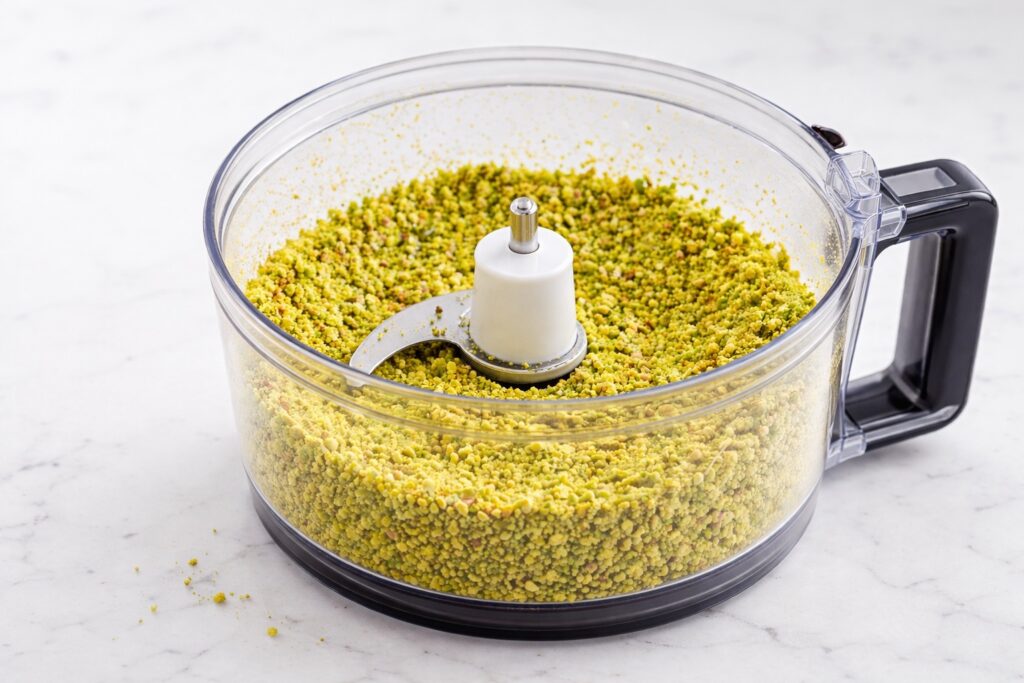
Tip: If your pistachios start clumping or looking slightly wet, stop immediately — that means they are turning into paste instead of the ideal sandy texture.
Preheat the oven to 175°C (350°F) and prepare three 8-inch cake pans by greasing and lining them with parchment paper.
In a bowl, combine the dry ingredients: flour, baking powder, baking soda, salt, and ground pistachios.
In a separate bowl, beat the butter and sugar until pale and fluffy. This step helps incorporate air into the batter, which creates a lighter texture — a process often referred to as the creaming method.
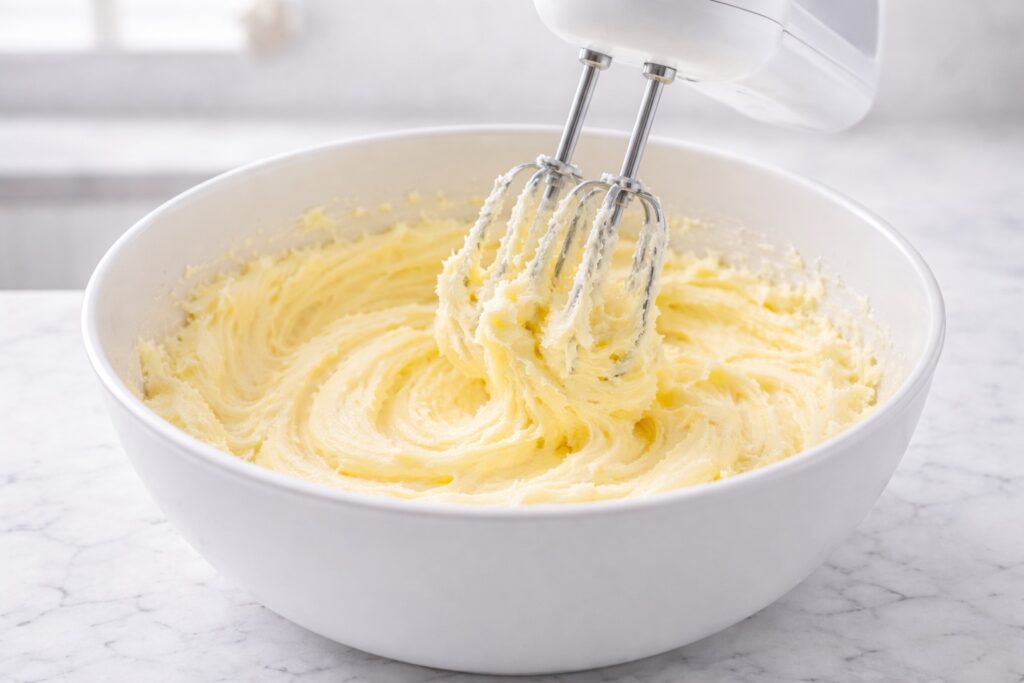
Visual cue: The mixture should look lighter in color and feel soft and airy. If it still looks dense or slightly yellow, keep mixing for another 1–2 minutes.
Add the eggs one at a time, mixing well after each addition.
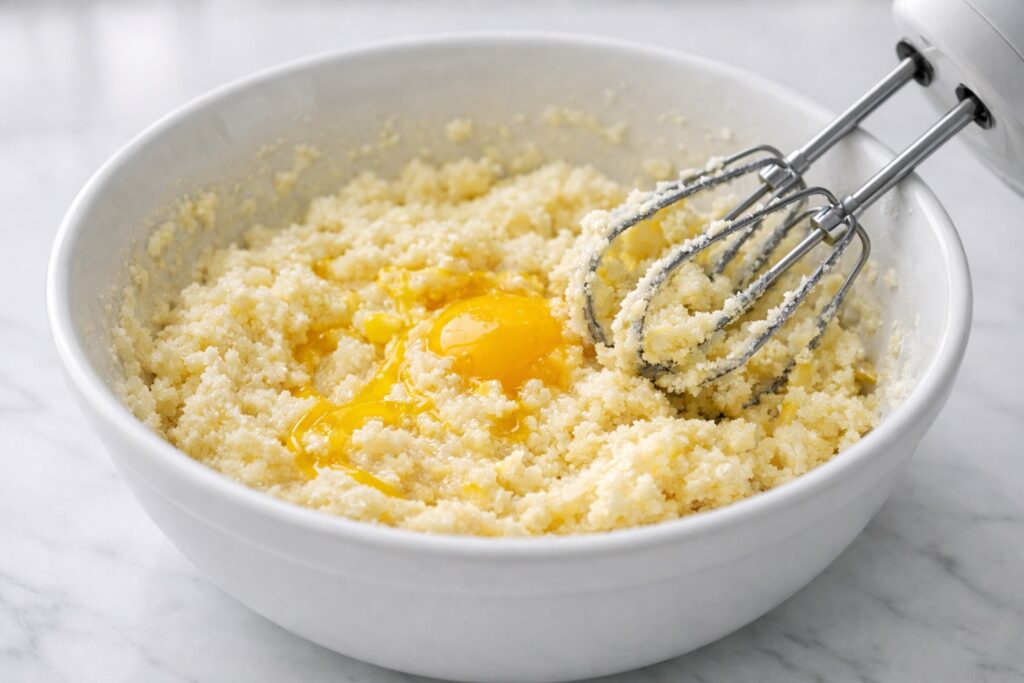
If the mixture looks slightly uneven or not perfectly smooth at this stage, that’s completely normal — it will come together as the dry ingredients are added.
Mix in the vanilla extract and almond extract.
Gradually add the dry ingredients, alternating with the milk, mixing gently until just combined. The batter should feel smooth, slightly thick, and light — not heavy or dense.
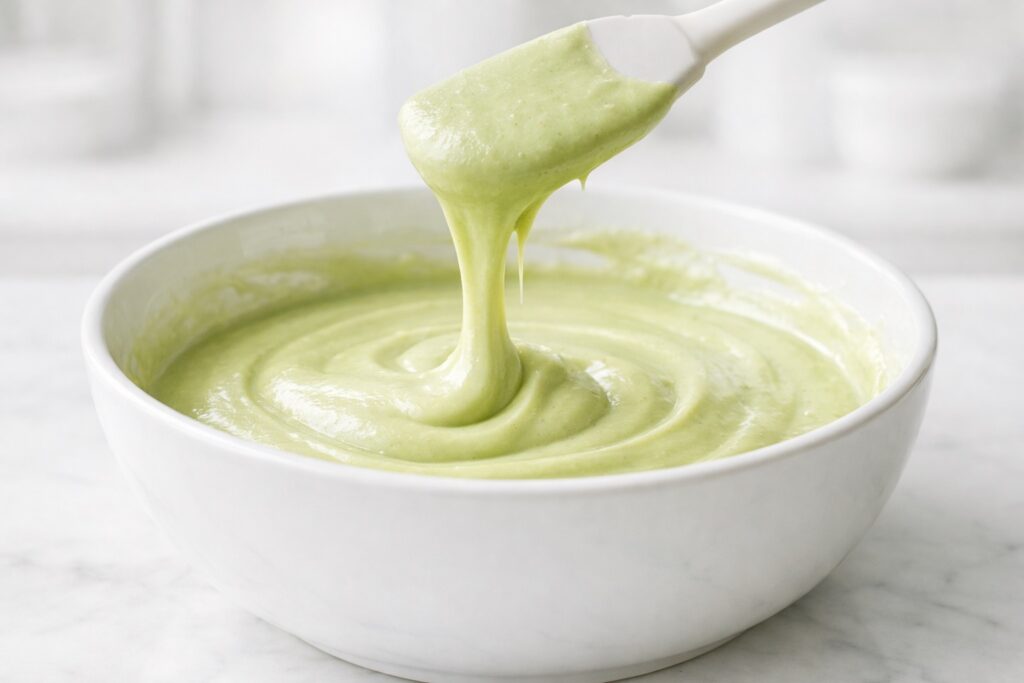
Important: Do not overmix. Overmixing will tighten the crumb and reduce the cake’s softness.
Divide the batter evenly between the prepared pans.
Even layers matter: Try to divide the batter as evenly as possible between pans. This helps the cakes bake uniformly and makes stacking much easier later.
Pro tip: Using a kitchen scale helps create even layers.
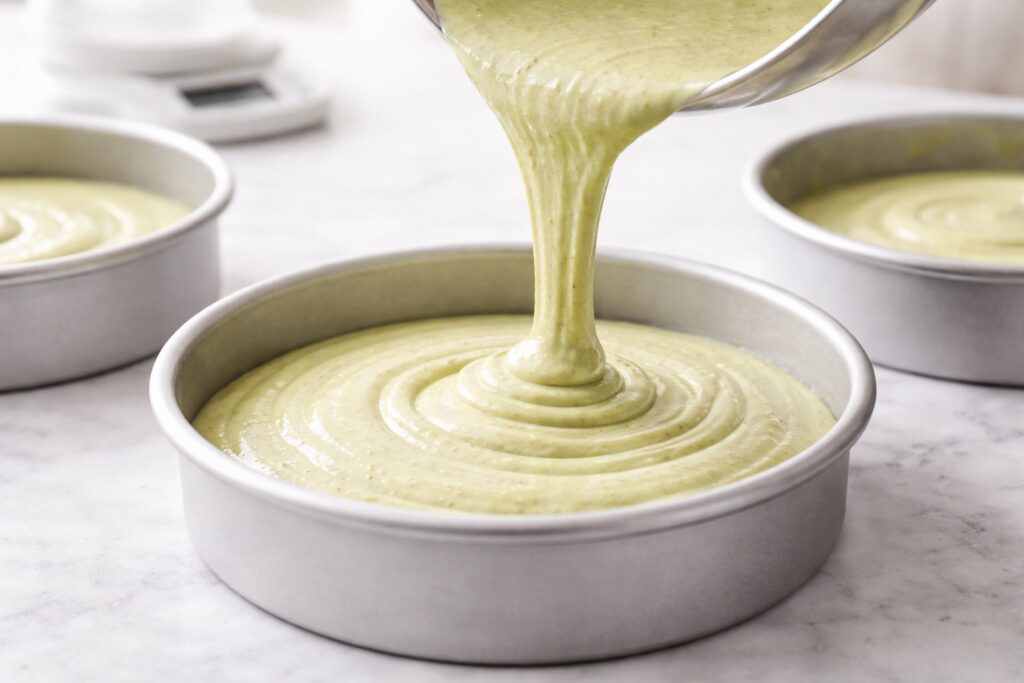
Bake for 30–35 minutes, or until the centers are set and a toothpick comes out with a few soft crumbs.
Visual doneness check: The tops should feel soft but set, and the edges will turn lightly golden. If the center still looks shiny or wet, bake for a few more minutes. The edges will set first, while the center should feel soft but stable.
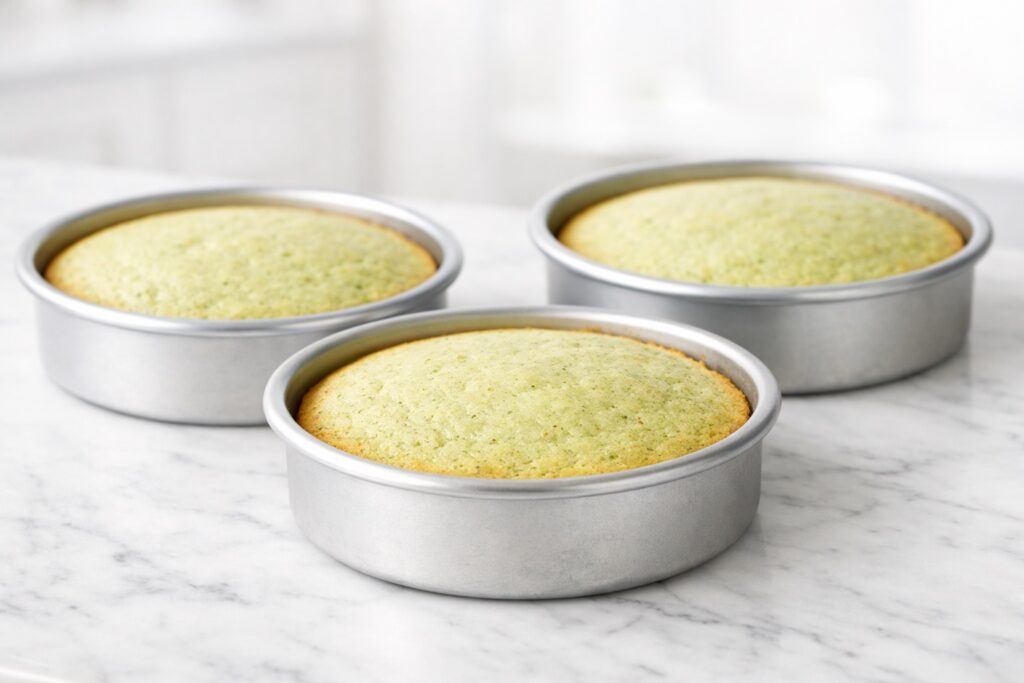
Pistachio cake often smells ready before it actually is, so it’s better to rely on texture and visual cues than aroma alone.
Let the cake layers cool completely before assembling.
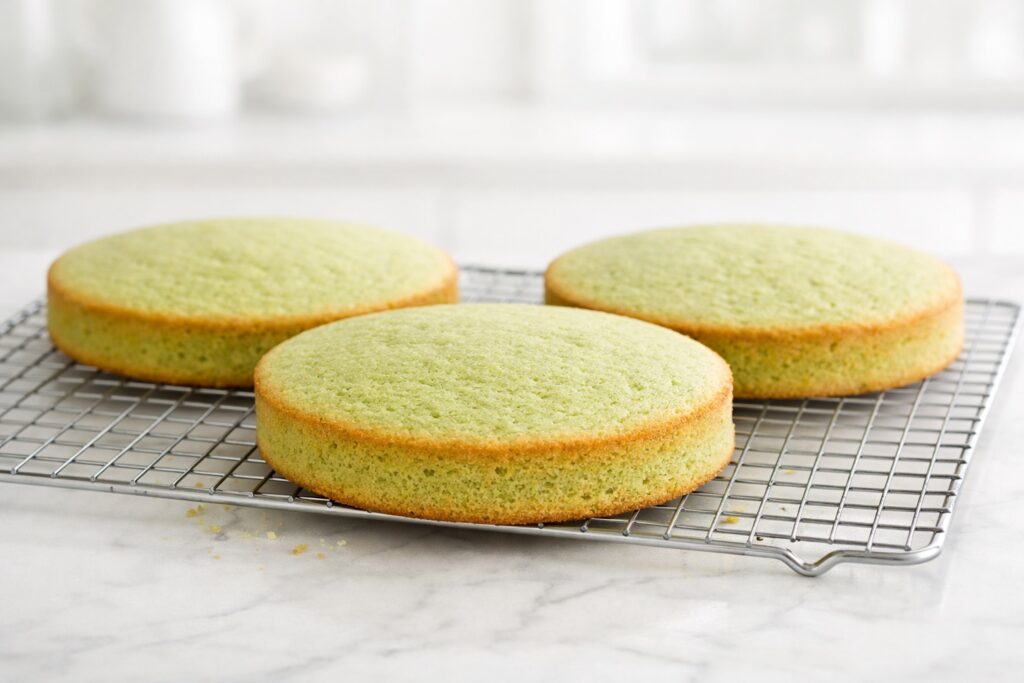
Why this matters: Cooling the cake layers on a rack allows air to circulate underneath, preventing trapped steam that can make the base slightly soggy and affect the final texture.
What the Batter Should Look Like
The batter should be smooth, slightly thick, and evenly mixed, without visible streaks or lumps.
How to Avoid Overmixing
Mix just until the ingredients come together. Overmixing develops gluten and creates a denser texture.
Visual Doneness Cues
- Light golden edges
- Center fully set (no wobble)
- Toothpick with a few soft crumbs
- Top springs back when gently pressed
2. Make the Pistachio Frosting
Beat the softened butter until smooth and creamy.
Add the powdered sugar gradually, mixing until fully incorporated.
Add milk, vanilla extract, and pistachio paste, then continue mixing until the frosting becomes light, smooth, and spreadable.
Texture cue: The frosting should hold soft peaks but still spread easily without tearing the cake layers.
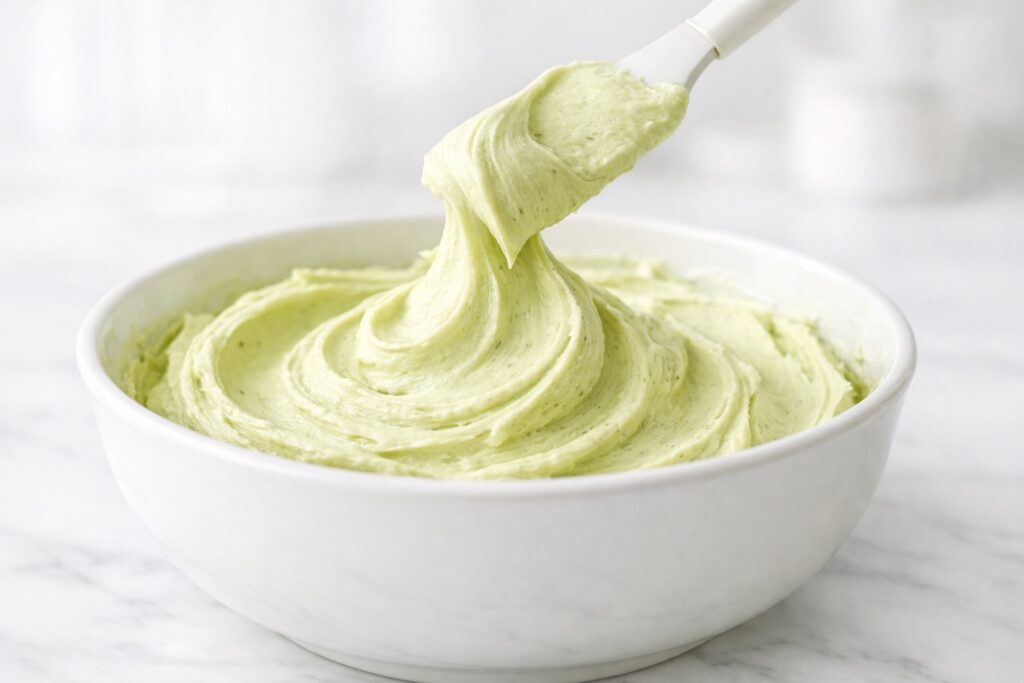
If the frosting feels too soft, chill it briefly before using.
How to Get a Smooth Frosting
Make sure the butter is fully softened before mixing. Cold butter can create a slightly lumpy texture.
Adjusting Consistency
If the frosting feels too thick, add a small amount of milk. If too soft, chill briefly to firm it up.
3. Prepare the Creamy Filling
Beat the mascarpone (or cream cheese) with powdered sugar until smooth.
Add the heavy cream and mix until the texture becomes light, creamy, and easy to spread.
Optional: Fold in finely chopped pistachios for added texture.
Texture cue: The filling should be soft and spreadable, but stable enough to hold between layers without leaking.
This filling adds a lighter, creamier contrast to the cake, balancing the richness of the pistachio frosting.
4. Assemble the Cake
If needed, level the cake layers to create a flat surface.
Place the first layer on a serving plate and spread a thin layer of creamy filling.
Add a light layer of pistachio frosting on top.
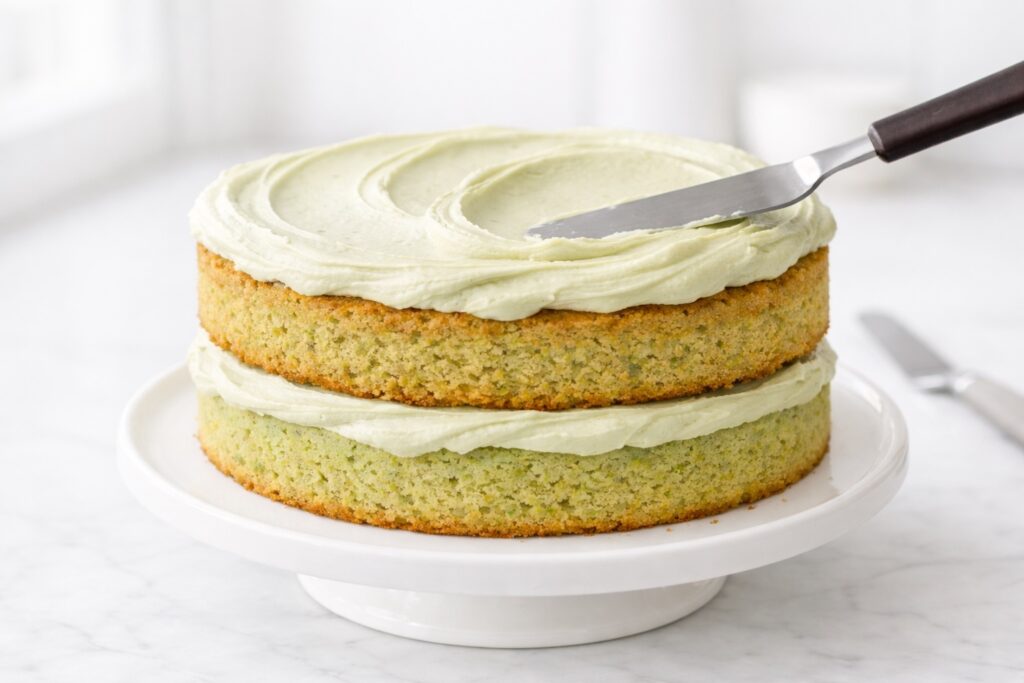
Pro tip: Keep the filling layer even and not too thick — this prevents sliding and helps maintain clean, stable cake layers when stacking.
Repeat with the second layer.
Place the final layer on top and apply a thin crumb coat over the entire cake.
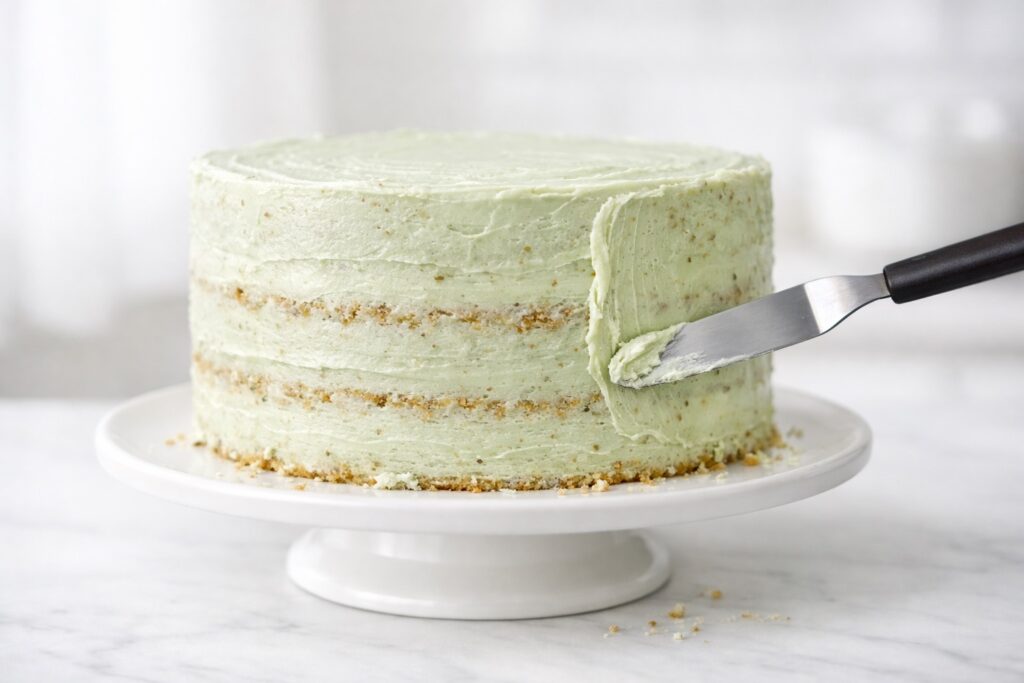
Why this matters: The crumb coat seals in loose crumbs and creates a smoother final finish.
Chill the cake for 20–30 minutes.
Finish with a final layer of frosting, smoothing the sides or creating soft swirls.
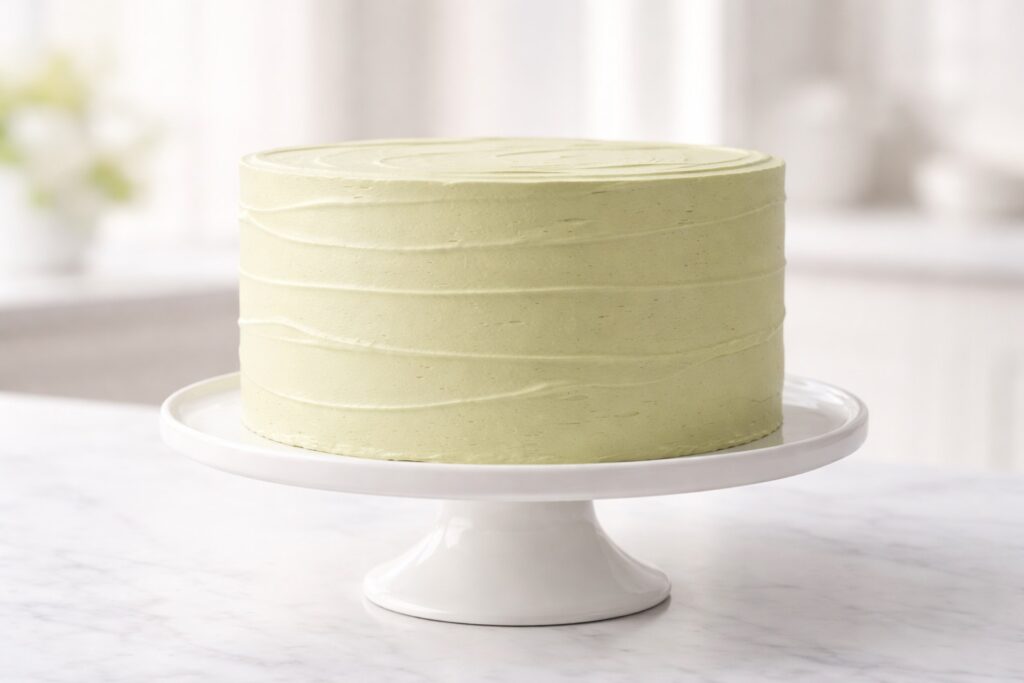
At this stage, the cake should look smooth but still soft — not overly sharp. This creates that elegant, homemade finish that looks beautiful once decorated.
Chilling between steps makes a noticeable difference — the cake becomes easier to handle and the layers stay clean and stable.
How to Keep Layers Even
Press gently when stacking and chill between layers to prevent shifting.
Why Chilling Helps
Chilling firms up both the cake and frosting, making slicing cleaner and more stable.
How to Decorate a Pistachio Cake (Simple & Elegant Ideas)
Pistachio cake already has a naturally refined look, so decoration works best when it stays clean, soft, and slightly understated rather than overly detailed.
Smooth Finish (Clean & Classic)
Use a spatula or cake scraper to create smooth sides and a flat top. This highlights the natural soft green tone and gives a polished, bakery-style finish.
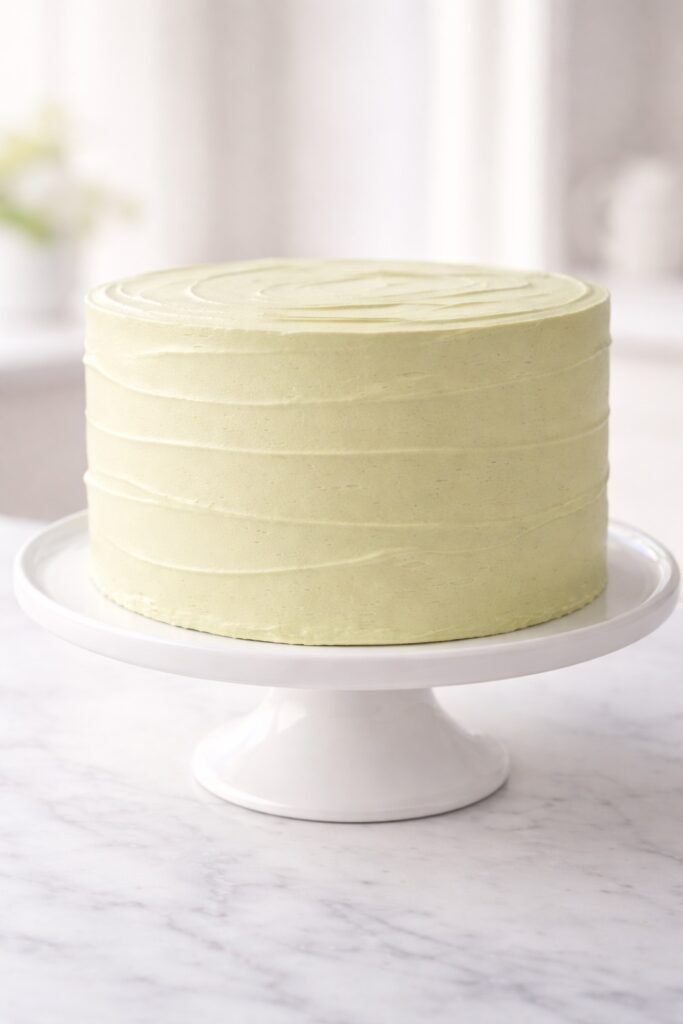
This clean, smooth finish is one of the easiest ways to create an elegant cake. Soft spatula lines add just enough texture while keeping the overall look refined and minimal.
Soft Swirls (Relaxed & Homemade)
Create gentle swirls on top using the back of a spoon or spatula. This adds texture while keeping the cake feeling natural and approachable.
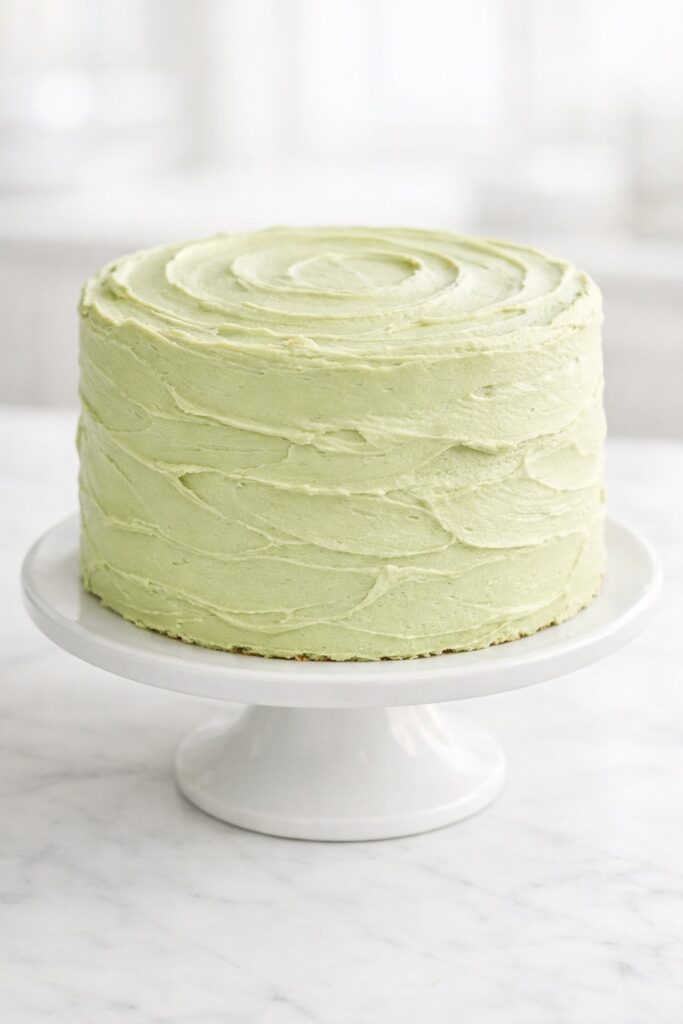
This soft swirl finish gives the cake a warm, homemade feel. The gentle texture adds movement and character while still keeping the cake visually beautiful and inviting.
Pistachio Edge (Texture & Contrast)
Press finely chopped pistachios around the base or lightly sprinkle them on top for subtle crunch and visual contrast.
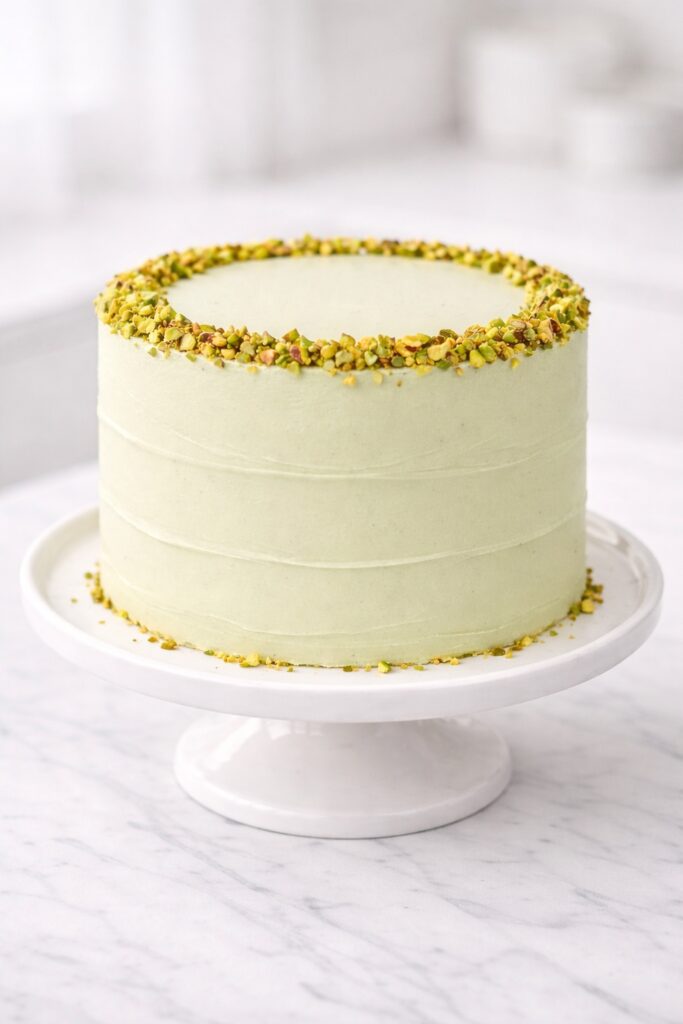
Finishing touch: Keeping the decoration minimal allows the natural pistachio color and smooth frosting texture to stand out, giving the cake a clean, bakery-style finish.
Fresh Fruit Accent
Add raspberries or strawberries on top. The slight acidity balances the richness and creates a beautiful color contrast, especially if you already love elegant fruit-based desserts like Strawberry Cheesecake.
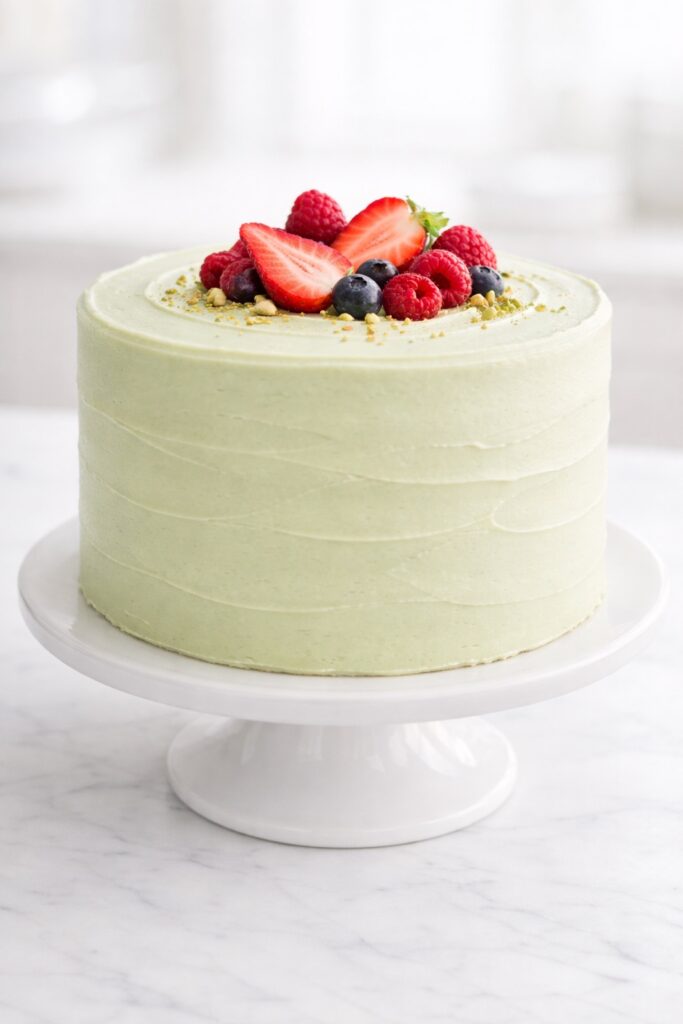
A simple fresh fruit topping adds color, freshness, and contrast, instantly making the cake feel brighter and more special without overwhelming the design.
Minimalist Finish
A light dusting of powdered sugar gives a clean, soft look that feels simple but elegant.
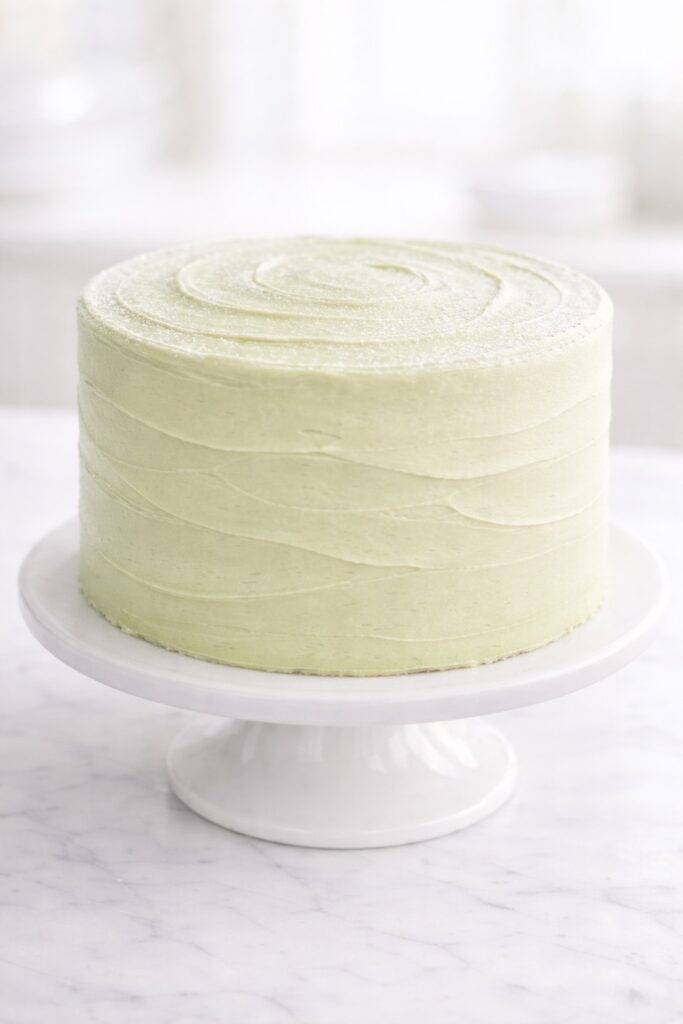
A delicate dusting of powdered sugar adds a soft, airy finish that feels simple, clean, and effortlessly elegant.
Tip: Pistachio cake looks best when you keep it minimal — the natural color and texture already do most of the visual work.
Pistachio Cake Texture & Behavior Guide
| Stage | What to Expect |
|---|---|
| Batter | Smooth, slightly thick, evenly mixed |
| During baking | Rises evenly, edges set first |
| Fully baked | Soft, tender, lightly springy center |
| Cooled | Moist, delicate crumb that slices cleanly |
A properly baked pistachio cake should feel soft and slightly springy when pressed, without feeling fragile or crumbly. The crumb should hold together cleanly when sliced, while still feeling light and tender.
Expert Tips for the Best Pistachio Cake
- Use room temperature ingredients: This helps the batter mix evenly and creates a smoother crumb.
- Don’t overprocess pistachios: Too fine can turn into paste, too coarse creates uneven texture — aim for a soft, sandy consistency.
- Mix gently after adding flour: Overmixing develops gluten and can make the cake dense instead of tender.
- Divide batter evenly: This ensures even baking and cleaner, more stable layers.
- Bake on the center rack: This helps maintain even heat and prevents overbrowning.
- Let the cake fully cool: Cutting too early can make the crumb feel slightly gummy instead of soft and clean.
- Flavor improves with time: Pistachio cake often tastes even better after a few hours as the flavors settle.
If the cake feels slightly soft in the center when it comes out of the oven, that is often exactly what you want — it will continue to set as it cools and create a more tender texture.
Common Pistachio Cake Mistakes (And How to Fix Them)
- Overmixing → Dense cake: Mix just until combined to keep the crumb soft.
- Coarse pistachios → Uneven texture: Grind them finely for a smoother crumb.
- Overbaking → Dry cake: Pistachio cakes lose moisture faster once fully baked.
- Cold butter → Poor structure: It won’t incorporate properly and affects texture.
- Skipping pan prep → Sticking: Always line pans for easy release.
Important insight: Pistachio cake is more sensitive to small mistakes than heavier cakes — small changes in mixing or baking time can noticeably affect the final texture.
Pistachio Cake vs Other Pistachio Desserts
| Version | Texture | Flavor | Best For |
|---|---|---|---|
| This pistachio layer cake | Soft, tender, layered | Balanced, natural pistachio | Celebrations, elegant desserts |
| Simple pistachio cake | Lighter, single-layer | Milder, less complex | Everyday baking |
| Pistachio pound cake | Dense, rich | Stronger buttery flavor | Slicing, coffee cakes |
How to Serve Pistachio Cake
Serve pistachio cake slightly chilled or at room temperature, when the crumb is at its softest and most delicate.
The nutty aroma becomes more pronounced as the cake rests, making each bite feel richer and more balanced.
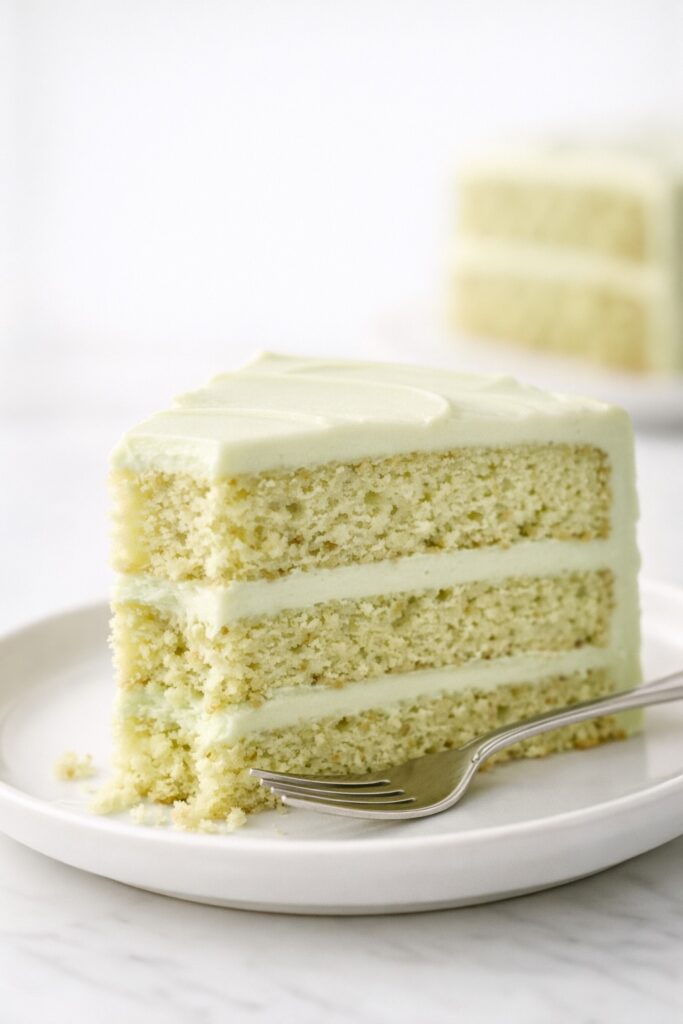
Each slice is soft, tender, and perfectly layered, making it easy to serve and even easier to enjoy.
Pair it with fresh berries, whipped cream, or a simple dusting of powdered sugar for a clean, elegant presentation.
It fits just as naturally on a spring dessert table as it does alongside a quiet cup of coffee.
This is the kind of cake people tend to save the moment they see it — simple, elegant, and just different enough to feel special without being complicated.
Save this for: an elegant gathering, a spring celebration, or any moment when you want a dessert that feels refined but effortless.
How to Store and Make Pistachio Cake Ahead
- Room temperature: Store covered for up to 2 days in a cool environment.
- Refrigerator: Keeps well for up to 5 days. Store in an airtight container to prevent the cake from drying out.
- Freezer: Freeze unfrosted layers for up to 2 months. Wrap tightly in plastic wrap and thaw before assembling.
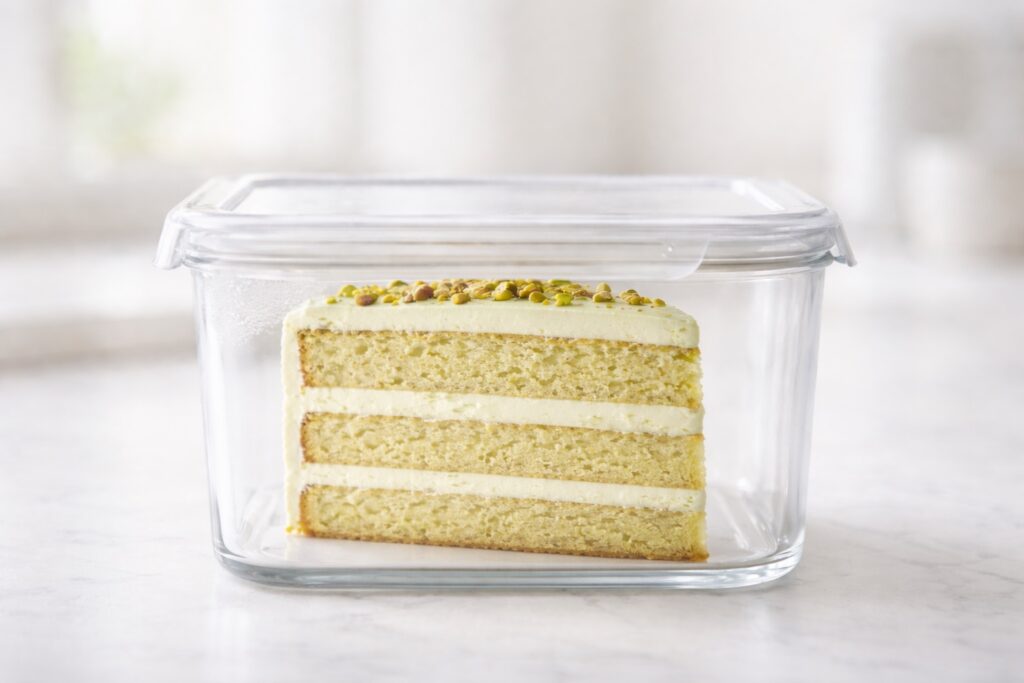
Keeping the cake in an airtight container helps preserve its soft crumb and prevents the frosting from drying out.
Best practice: Let the cake sit at room temperature for 15–20 minutes before serving. This softens the crumb and improves the overall texture.
Pistachio cake often tastes even better after a few hours, as the nutty flavor becomes more pronounced and balanced.
Pistachio Cake Variations to Try
- Pistachio Raspberry Cake: Add a layer of fresh raspberries or raspberry jam for a bright, slightly tart contrast.
- Pistachio White Chocolate Cake: Incorporate white chocolate into the frosting for a richer, sweeter variation.
- Pistachio Mascarpone Cake: Use mascarpone filling for a lighter, creamier texture between layers.
- Pistachio Lemon Cake: Add lemon zest to brighten the flavor and create a fresher profile.
- Pistachio Rose Cake: Add a subtle hint of rose water for a more floral, elegant twist.
Tip: Keep adjustments subtle — pistachio cake relies on balance, and small changes often work better than major ingredient swaps.
Pistachio Cake FAQs (Common Questions Answered)
Can I use pistachio paste instead of ground pistachios?
Yes. Reduce the butter slightly to balance the added fat from the paste.
Why is my pistachio cake dense?
This usually happens from overmixing or overbaking. Both can tighten the crumb and reduce softness.
Can I make pistachio cake ahead of time?
Yes. It stores very well and often tastes even better the next day as the flavors develop.
Why isn’t my cake green?
Natural pistachios create a soft, muted green tone. Brighter colors usually come from added coloring.
Can I substitute almond flour?
Only partially. Replacing too much flour will change the structure and make the cake heavier.
Can I use salted pistachios?
Yes, but reduce the added salt slightly to keep the flavor balanced.
Can I turn this into cupcakes?
Yes. Bake at 175°C (350°F) for 18–22 minutes, or until the centers are set and a toothpick comes out with soft crumbs.
More Cake Recipes & Baking Ideas You’ll Love
If you enjoy cakes with a soft, balanced texture like this pistachio cake, you might also love recipes like a classic Vanilla Cake, a bright Lemon Cake, or a fruit-forward Strawberry Cake — all built around that same idea of light structure and clean, natural flavor.
Quick picks: For a classic layered texture, try Vanilla Cake. For something fruitier, go with Strawberry Cake. If you prefer a richer option, Matilda Cake offers a more indulgent chocolate variation.
Classic Layer Cakes with a Similar Texture
- Vanilla Cake – soft, balanced layers with a clean, classic flavor
- Lemon Cake – bright and fresh with a delicate crumb
- Coconut Cake – light, airy, and slightly more delicate
Fruit-Forward & Lighter Options
- Strawberry Cake – soft and fruity with a similar structure
- Blueberry Cake – tender and slightly more juicy in texture
Richer & More Indulgent Cakes
- Matilda Cake – ultra-rich and deeply chocolatey
- German Chocolate Cake – layered, rich, and more complex
Nutty & Elegant Desserts
- Italian Cream Cake – soft, nutty, and layered
Once you understand how pistachio cake works — the balance of moisture, fat, and structure — it becomes much easier to explore different cake styles while keeping that same soft, bakery-style texture.
Pistachio Cake Recipe Recap
This pistachio cake features soft, moist layers made with real pistachios, paired with a creamy filling and smooth frosting. The result is a balanced, elegant dessert with a delicate crumb and naturally rich flavor — perfect for both special occasions and everyday baking.
A Pistachio Cake You’ll Keep Coming Back To
Pistachio cake has a quiet kind of appeal. It doesn’t rely on bold sweetness or heavy flavors — instead, it stands out through balance, texture, and subtle richness.
The combination of soft crumb, natural nutty depth, and light structure makes it feel more refined than most everyday cakes, while still being simple enough to make at home.
It’s also one of those recipes that becomes more reliable every time you bake it. Once you understand how the ingredients work together, it turns into a cake you can trust — for celebrations, gatherings, or even just a moment when you want something a little more special.
This is the kind of cake people don’t just try once. It’s the one they come back to — because it works, because it feels balanced, and because every slice delivers that same soft, elegant finish every time.
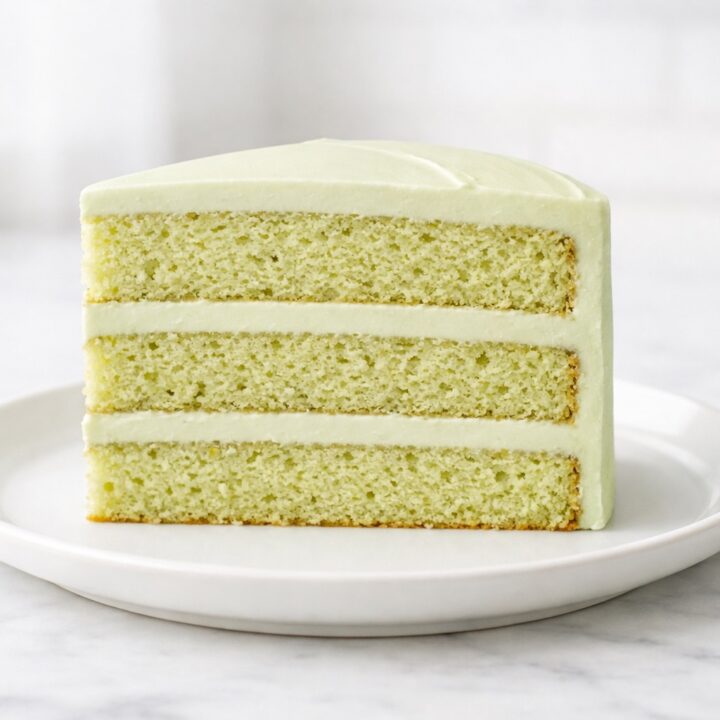
Pistachio Cake
A soft and moist pistachio layer cake made with real pistachios, featuring tender cake layers, a light creamy filling, and smooth pistachio buttercream. Balanced, elegant, and perfect for celebrations or an elevated homemade dessert.
Ingredients
For the Pistachio Cake Layers (3 x 8-inch)
- 1 ½ cups shelled pistachios (unsalted)
- 2 ½ cups all-purpose flour
- 2 tsp baking powder
- ½ tsp baking soda
- ¾ tsp salt
- 1 cup unsalted butter, softened
- 1 ½ cups granulated sugar
- 4 large eggs
- 2 tsp vanilla extract
- 1 tsp almond extract (optional)
- 1 ¼ cups milk
For the Pistachio Buttercream Frosting (For layering & outer coating)
- 1 1/2 cups unsalted butter, softened
- 3 ½ – 4 cups powdered sugar
- 3–4 tbsp milk or cream
- 1 tsp vanilla extract
- ½–1 tsp almond extract (optional)
- 3–4 tbsp pistachio paste or finely ground pistachios
For the Light Creamy Filling (Between layers)
- 1 cup mascarpone or cream cheese
- 3 tbsp powdered sugar
- 3–4 tbsp heavy cream
- 2–3 tbsp finely chopped pistachios (optional)
Instructions
- Prepare the pistachios by pulsing them in a food processor until finely ground, with a soft, slightly sandy texture. Do not overprocess into a paste.
- Preheat the oven to 175°C (350°F) and prepare three 8-inch cake pans by greasing and lining them with parchment paper.
- In a bowl, whisk together the flour, baking powder, baking soda, salt, and ground pistachios.
- In a separate bowl, beat the butter and sugar until pale, light, and fluffy. This helps incorporate air for a softer texture.
- Add the eggs one at a time, mixing well after each addition. If the mixture looks slightly uneven, it will smooth out later.
- Mix in the vanilla extract and almond extract.
- Gradually add the dry ingredients, alternating with the milk, mixing gently until just combined. The batter should be smooth and slightly light.
- Divide the batter evenly between the prepared pans and smooth the tops.
- Bake for 30–35 minutes, or until the centers are set and a toothpick comes out with a few soft crumbs.
- Let the cake layers cool completely before assembling.
- To make the pistachio frosting, beat the butter until smooth and creamy. Gradually add the powdered sugar, then mix in the milk, vanilla extract, and pistachio paste until light and spreadable.
- To prepare the creamy filling, beat the mascarpone (or cream cheese) with powdered sugar until smooth. Add the heavy cream and mix until light, creamy, and easy to spread.
- Level the cake layers if needed. Place the first layer on a serving plate and spread a thin layer of creamy filling, followed by a light layer of pistachio frosting.
- Add the second layer and repeat the filling and frosting.
- Place the final layer on top and apply a thin crumb coat over the entire cake.
- Chill the cake for 20–30 minutes to set the crumb coat.
- Finish with a final layer of frosting, smoothing the sides or creating soft swirls as desired.
Notes
- Use finely ground pistachios for the best texture. Coarse pieces can create a slightly uneven or grainy crumb.
- Make sure all ingredients are at room temperature before mixing. This helps create a smoother batter and a more even texture.
- Do not overmix after adding the flour. Overmixing can make the cake dense instead of soft and tender.
- The batter may feel slightly softer than a typical cake batter. This is normal due to the natural oils in pistachios.
- Bake just until the center is set. Pistachio cakes can dry out quickly if overbaked.
- Let the cake layers cool completely before assembling. This helps prevent the frosting from melting and keeps the layers stable.
- Chill the cake after the crumb coat. This makes it much easier to apply a smooth final layer of frosting.
- For best flavor, let the cake rest for a few hours before serving. The pistachio flavor becomes more balanced over time.
- If the frosting feels too soft, chill it briefly before using. If too thick, add a small amount of milk to adjust consistency.
Nutrition Information:
Yield: 12 slices Serving Size: 1 sliceAmount Per Serving: Calories: 620Total Fat: 40gSaturated Fat: 20gCarbohydrates: 58gFiber: 2gSugar: 42gProtein: 7g
Nutrition information is estimated and may vary based on ingredients and portion sizes.
12 Sweet Favorites — Yours, Free 🍰
Tiramisù, no-bake cheesecake, the perfect chocolate chip cookie & 9 more reader-loved desserts — gathered into one beautiful free recipe book. From my kitchen to yours.
No spam, just sweet things. Unsubscribe anytime.

AI?
Hi! 😊 This is my own recipe, created and written to help home bakers achieve great results. If there’s anything about the recipe you’d like to know, feel free to ask! I’m always happy to help! 💚🍰
How do I make pistachio paste?
To make a simple homemade pistachio paste, add 1 cup (about 120 g) shelled, unsalted pistachios to a food processor and blend until very finely ground. Then add 1–2 tablespoons neutral oil a little at a time and keep processing until the mixture becomes smooth and creamy. Scrape down the sides as needed.
If you want a slightly sweeter paste, you can also add 1–2 teaspoons powdered sugar, but for this cake I prefer keeping it mostly unsweetened so the pistachio flavor stays strong. 💚🌰