Italian Cream Cake (Moist & Rich with Cream Cheese Frosting)
🎁 FREE E-BOOK: 12 Sweet Favorites — reader-loved desserts in one beautiful recipe book.
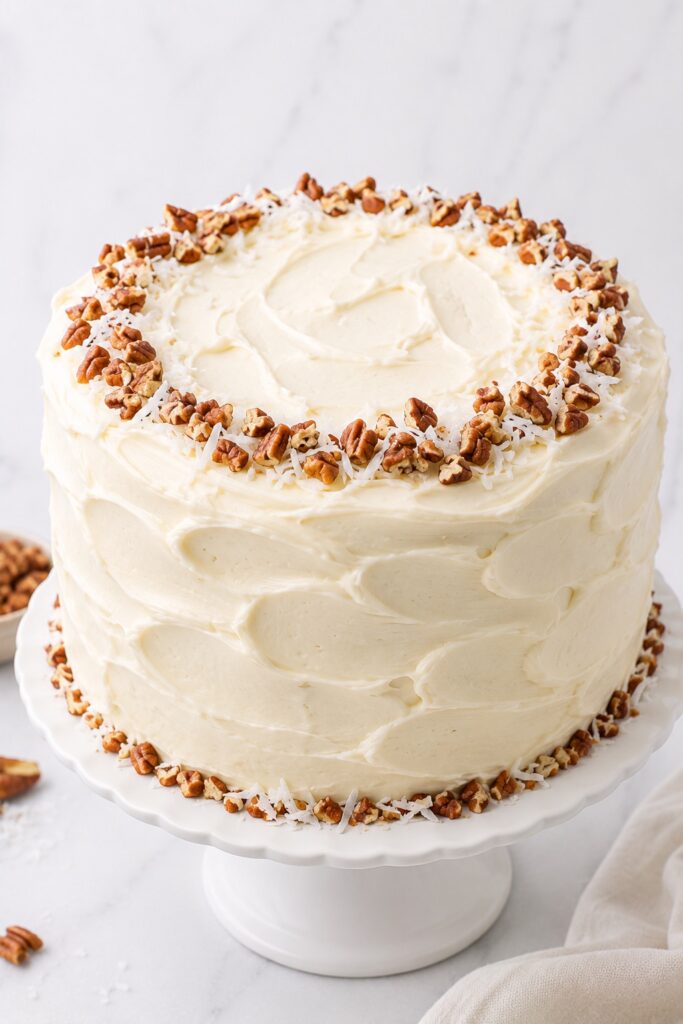
There’s something undeniably special about a tall, elegant Italian Cream Cake sitting on the table. The thick layers of cream cheese frosting, the tender vanilla cake, the delicate coconut, and the toasted pecans create the kind of dessert that instantly feels like a celebration.
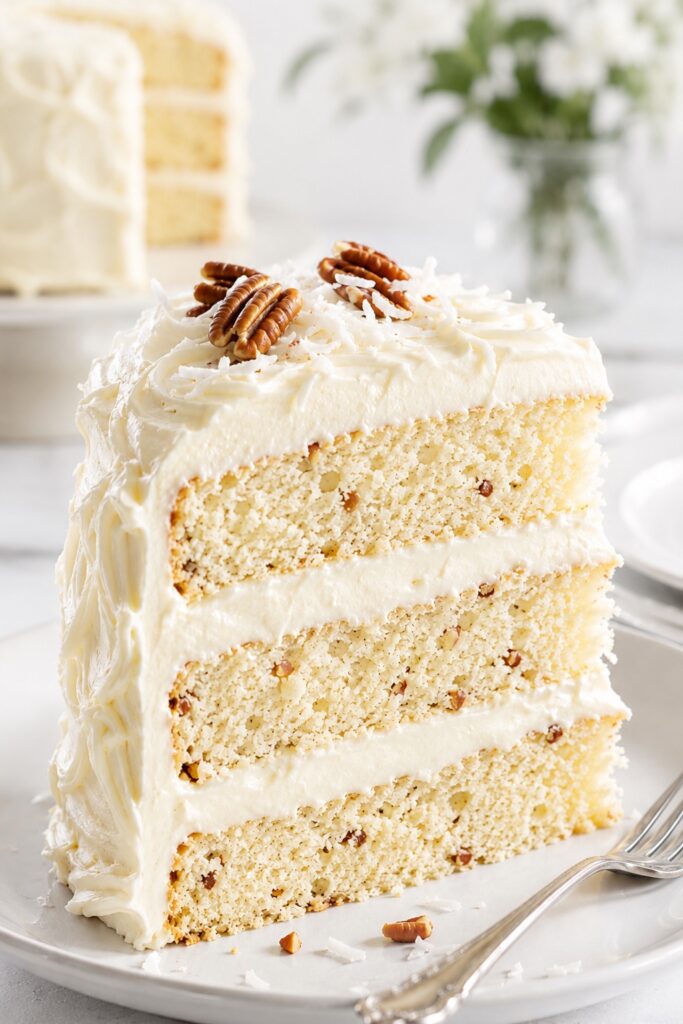
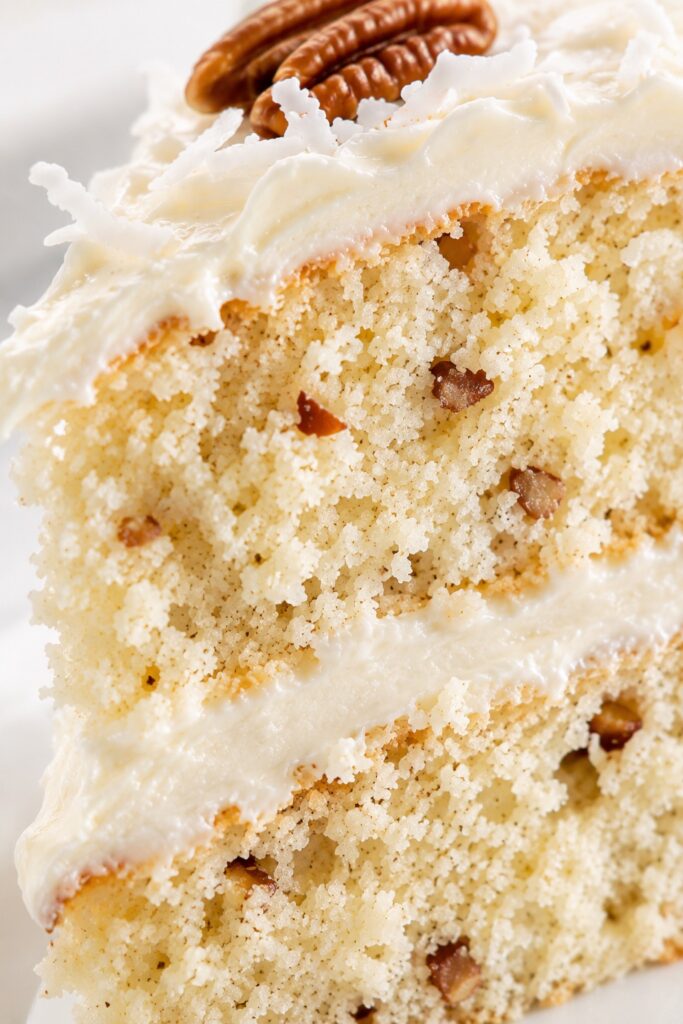
One slice reveals everything people love about this classic Southern bakery-style cake. The cake layers are soft and moist, the frosting is rich without feeling heavy, and every bite delivers a balance of creamy, nutty, and buttery flavors that keeps you coming back for another forkful.
This is the kind of cake people save for holidays, birthdays, Mother’s Day brunches, Easter gatherings, baby showers, and family celebrations. It looks impressive, slices beautifully, and somehow feels both elegant and comforting at the same time.
One reason this recipe has remained popular for decades is that it combines several favorite dessert elements into one cake. You get the richness of cream cheese frosting, the softness of a classic butter cake, the texture of coconut, and the gentle crunch of pecans all in one bite.
If you’ve been searching for an Italian Cream Cake recipe that produces tall bakery-style layers, luxurious frosting, and the beautiful slice shown above, this is the recipe you’ll want to keep.
What Is Italian Cream Cake?
Italian Cream Cake is a classic Southern layer cake made with tender vanilla cake layers enriched with coconut and pecans, then frosted with rich cream cheese frosting.
Despite its name, Italian Cream Cake is generally considered an American Southern cake rather than a traditional Italian dessert. The cake became popular throughout the Southern United States because of its moist texture, creamy frosting, and elegant appearance.
Traditional versions often include buttermilk, coconut, chopped pecans, and cream cheese frosting. The result is a cake that feels luxurious yet approachable, making it a favorite for holidays and special occasions.
Best Occasions for Italian Cream Cake
Italian Cream Cake is one of those desserts that fits beautifully into both formal celebrations and cozy family gatherings. It looks polished enough for a dessert table, but still tastes warm, familiar, and homemade.
It works especially well for:
- Easter dessert tables
- Mother’s Day brunches
- Bridal showers
- Baby showers
- Spring gatherings
- Birthdays
- Holiday celebrations
- Church potlucks
- Family reunions
Because the cake can be made ahead and often tastes even better after resting overnight, it is especially useful when you are hosting and want a dessert that feels special without needing to finish everything at the last minute.
Quick Recipe Overview
| Detail | Description |
|---|---|
| Texture | Moist, fluffy, tender crumb with creamy frosting |
| Flavor | Vanilla, cream cheese, coconut, toasted pecans |
| Difficulty | Intermediate |
| Time | About 2 hours including cooling |
| Servings | 16 slices |
| Method | Layer cake |
| Best For | Holidays, birthdays, Mother’s Day, celebrations |
In short: This Italian Cream Cake combines fluffy vanilla cake, coconut, pecans, and luxurious cream cheese frosting into a bakery-worthy dessert that feels perfect for special occasions.
Why You’ll Love This Italian Cream Cake
- Tall bakery-style layers: This cake bakes into soft, elegant layers that look beautiful when sliced.
- Rich cream cheese frosting: The frosting is thick, creamy, and slightly tangy, balancing the sweetness of the cake.
- Soft, moist crumb: Buttermilk, cake flour, coconut, and whipped egg whites work together to create a tender texture.
- Perfect coconut and pecan balance: The coconut adds subtle sweetness and moisture, while the pecans bring gentle crunch and nutty depth.
- Beautiful for celebrations: It feels right for holidays, birthdays, Mother’s Day, Easter, bridal showers, and family gatherings.
- Even better after resting: The flavors become more cohesive after a few hours, making this an excellent make-ahead cake.
If you love cakes that feel elegant but still deeply homemade, Italian Cream Cake sits in that perfect middle ground. It looks impressive on a cake stand, but the ingredients and techniques are still approachable for home bakers.
Is Italian Cream Cake Right for You?
Italian Cream Cake is a great choice if you love cakes that feel rich, elegant, and deeply homemade without becoming overly heavy. It has more texture than a simple vanilla cake, but it is lighter and more delicate than many fruit-based Southern cakes.
This cake is especially perfect if you enjoy:
- Cream cheese frosting desserts
- Coconut and pecan desserts
- Southern layer cakes
- Bakery-style celebration cakes
- Moist cakes that stay soft for several days
- Make-ahead holiday desserts
You may especially enjoy this recipe if you love the texture of Coconut Cake or the Southern charm of Hummingbird Cake, but want something a little lighter, fluffier, and more vanilla-forward.
Why This Italian Cream Cake Stays Moist, Fluffy, and Bakery-Worthy
A great Italian Cream Cake isn’t just about good ingredients. It’s about how those ingredients work together to create a cake that feels rich without becoming heavy, moist without becoming dense, and elegant without becoming complicated.
The butter brings richness and flavor while helping create a tender crumb. Properly creaming the butter and sugar also incorporates air into the batter, giving the finished cake a lighter texture.
Buttermilk provides moisture and gentle acidity, helping the cake stay soft while supporting the baking soda. That reaction creates tiny air pockets throughout the batter, contributing to the fluffy texture that makes this cake feel bakery-worthy.
The coconut plays a bigger role than many people realize. Beyond flavor, it helps retain moisture throughout the cake layers. Even after refrigeration, the crumb remains surprisingly soft because the coconut continues holding moisture within the cake.
The pecans add texture contrast and richness without weighing down the batter. Their buttery flavor complements both the vanilla cake and the tangy cream cheese frosting.
One particularly important detail is using cake flour. Because it contains less protein than all-purpose flour, it produces a finer, softer crumb that better matches the elegant texture people expect from a celebration cake.
Another key factor is avoiding overbaking. Italian Cream Cake should remain moist and tender. Pulling the layers from the oven as soon as the centers are set helps preserve that soft bakery-style texture.
The result is a cake that delivers everything people love about classic Southern baking: soft layers, rich frosting, balanced sweetness, and a texture that stays moist for days.
Small baker’s observation: Italian Cream Cake often feels even softer on day two than on the day it is baked. As the coconut absorbs moisture from the cake and frosting, the crumb becomes slightly more cohesive while remaining remarkably light.
The Baking Science Behind a Perfect Italian Cream Cake
Italian Cream Cake may look like a simple layer cake, but several baking principles work together to create its signature soft crumb, moist texture, and stable structure.
The first is aeration. During the creaming stage, butter and sugar trap tiny pockets of air that expand in the oven. Those air pockets help give the cake its height and fluffy texture before the chemical leavening even begins working.
Next comes the interaction between the buttermilk and baking soda. The acidity in the buttermilk reacts with the baking soda to create carbon dioxide gas, which expands during baking and helps lift the cake layers. This reaction contributes to the light, tender crumb that makes Italian Cream Cake feel more elegant than many traditional Southern cakes.
Eggs serve multiple purposes. The yolks add richness, moisture, and flavor, while the separately whipped egg whites contribute additional lift. Folding the whipped whites into the batter creates a lighter structure that helps the cake stay fluffy without becoming fragile.
Cake flour also plays an important role. Because it contains less protein than all-purpose flour, less gluten develops during mixing. Less gluten means a softer, finer crumb and a more delicate texture throughout the finished cake.
The coconut contributes more than flavor. It acts almost like a built-in moisture insurance policy, helping the cake retain softness even after refrigeration. This is one reason Italian Cream Cake often tastes just as good—or even better—the day after it’s made.
The final piece is heat management. Overbaking can quickly dry out the outer portions of the cake layers. Removing the cakes from the oven as soon as the centers are set preserves moisture and helps maintain the tender bakery-style texture that defines a great Italian Cream Cake.
When all of these elements work together—proper aeration, balanced structure, controlled gluten development, moisture retention, and careful baking—you get the tall, fluffy layers and luxurious texture that make Italian Cream Cake such a beloved celebration dessert.
Ingredients
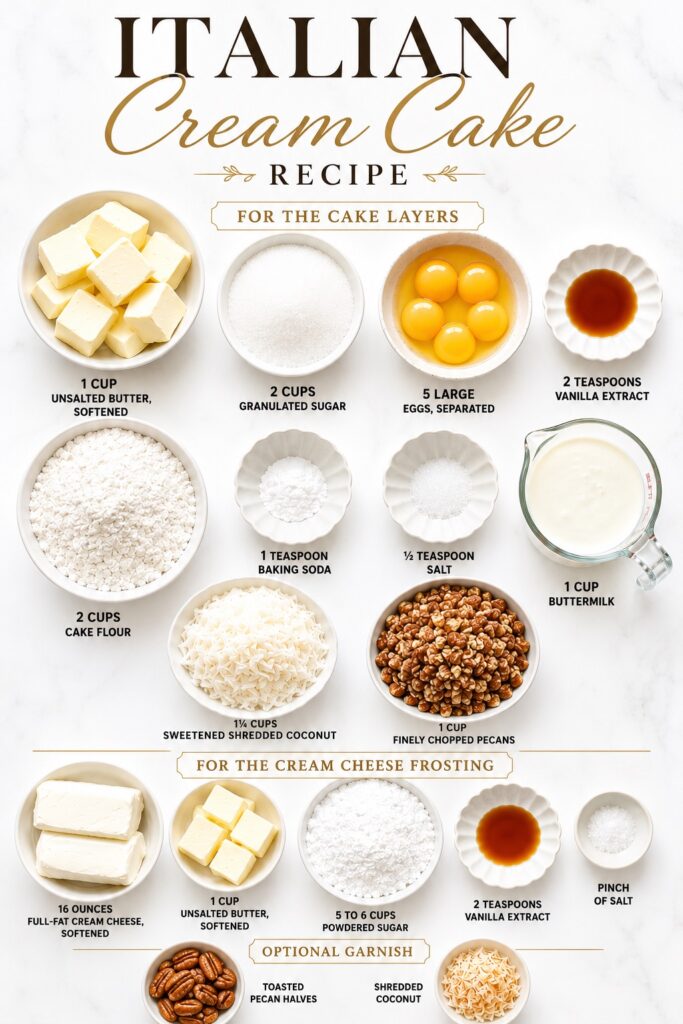
For the Cake Layers
- 1 cup unsalted butter, softened
- 2 cups granulated sugar
- 5 large eggs, separated
- 2 teaspoons vanilla extract
- 2 cups cake flour
- 1 teaspoon baking soda
- ½ teaspoon salt
- 1 cup buttermilk
- 1¼ cups sweetened shredded coconut
- 1 cup finely chopped pecans
For the Cream Cheese Frosting
- 16 ounces full-fat cream cheese, softened
- 1 cup unsalted butter, softened
- 5 to 6 cups powdered sugar
- 2 teaspoons vanilla extract
- Pinch of salt
Optional Garnish
- Toasted pecan halves
- Shredded coconut
Ingredient Intelligence (What Makes Italian Cream Cake Work)
Italian Cream Cake may look like a classic layer cake, but its texture depends on several ingredients working together in very specific ways. Understanding what each ingredient contributes makes it much easier to consistently achieve soft layers, stable frosting, and bakery-style results.
Cake Flour
Cake flour is one of the biggest reasons Italian Cream Cake feels lighter and more delicate than many traditional Southern cakes.
Role: Creates a softer, finer crumb.
Why it matters: Its lower protein content limits gluten development, producing a more tender texture.
Substitution: All-purpose flour can be used, but the finished cake will be slightly sturdier and less delicate.
Buttermilk
Buttermilk provides both moisture and acidity.
Role: Keeps the cake soft while activating the baking soda.
Why it matters: The acidity helps create additional lift and contributes to the fluffy texture.
Substitution: Add 1 tablespoon lemon juice or vinegar to 1 cup milk and let it sit for 5 minutes before using.
Egg Yolks
The yolks add richness and flavor.
Role: Contribute moisture, tenderness, and structure.
Why it matters: They help create the rich mouthfeel that makes Italian Cream Cake feel luxurious without becoming heavy.
Whipped Egg Whites
Many layer cakes use whole eggs only, but Italian Cream Cake traditionally incorporates whipped egg whites separately.
Role: Create additional lift and lightness.
Why it matters: Folding in whipped whites helps produce the tall, fluffy layers that distinguish Italian Cream Cake from denser Southern cakes.
Behavior insight: Overmixing after folding can deflate the air you worked to create.
Coconut
Coconut contributes far more than flavor.
Role: Adds texture and moisture retention.
Why it matters: Coconut continues holding moisture within the cake layers, helping them remain soft even after refrigeration.
Substitution: You can reduce the amount slightly, but removing it completely changes both the texture and character of the cake.
Pecans
Pecans provide gentle crunch and buttery richness.
Role: Create texture contrast.
Why it matters: Without the pecans, the cake can feel softer and more one-dimensional.
Substitution: Walnuts work well if preferred.
Baker’s tip: Toasting the pecans before using them noticeably improves flavor.
Butter
Butter provides much of the cake’s flavor foundation.
Role: Adds richness and supports aeration during creaming.
Why it matters: Properly creamed butter creates tiny air pockets that contribute to a lighter crumb.
Behavior insight: Softened butter should be cool and pliable, not melted or greasy.
Cream Cheese
Cream cheese is responsible for the signature frosting.
Role: Adds tanginess, richness, and stability.
Why it matters: The slight tang balances the sweetness of the cake and powdered sugar.
Substitution: Mascarpone can be used, but the frosting will be milder and slightly softer.
Quick Ingredient Balance Guide
| If This Happens | Likely Cause |
|---|---|
| Cake feels dense | Overmixed batter or deflated egg whites |
| Cake feels dry | Overbaked or too little buttermilk |
| Frosting feels loose | Cream cheese or butter too warm |
| Layers feel heavy | Too much flour or excess mixing |
| Cake lacks flavor | Untoasted pecans or underdeveloped flavor balance |
Can You Customize This Cake?
Yes, but Italian Cream Cake depends heavily on texture balance.
Small adjustments work well:
- Toasted coconut for deeper flavor
- Walnuts instead of pecans
- Extra coconut for stronger coconut flavor
- Cupcake version
- Sheet cake version
Major ingredient substitutions can change the signature fluffy texture that makes Italian Cream Cake unique.
Key takeaway: Italian Cream Cake succeeds because every ingredient has a specific purpose. Understanding how those ingredients contribute to moisture, structure, flavor, and texture makes it much easier to produce consistently bakery-worthy results.
Ingredient Substitutions & Customizations
Italian Cream Cake is surprisingly flexible, but some ingredient substitutions work better than others. Because this cake relies on a delicate balance of moisture, structure, and aeration, even small changes can affect the final texture.
Can I Use All-Purpose Flour Instead of Cake Flour?
Yes. The cake will still be delicious, but the crumb will be slightly less soft and delicate.
If using all-purpose flour, measure carefully and avoid overmixing to help preserve tenderness.
Can I Make Italian Cream Cake Without Buttermilk?
Yes. If you don’t have buttermilk, add 1 tablespoon of lemon juice or white vinegar to 1 cup of milk and let it sit for about 5 minutes before using.
The acidity helps support the baking soda and contributes to the cake’s soft texture.
Can I Omit the Coconut?
Yes, although the cake will lose some of its traditional character and moisture retention.
Coconut contributes both flavor and texture, but the recipe will still work without it.
Can I Substitute Walnuts for Pecans?
Absolutely. Walnuts provide a similar texture and pair well with the cream cheese frosting.
The flavor will be slightly earthier compared to the buttery sweetness of pecans.
Can I Use Mascarpone Instead of Cream Cheese?
Yes, but expect a softer frosting with a milder flavor.
Cream cheese provides the signature tang that balances the sweetness of Italian Cream Cake, while mascarpone creates a richer and more delicate finish.
Can I Use Low-Fat Cream Cheese?
Full-fat cream cheese is strongly recommended.
Lower-fat versions contain more water and often produce a softer frosting that is less stable for layer cakes.
Can I Make This Cake in Different Pan Sizes?
Yes. While three 8-inch layers create the classic bakery-style presentation, the batter can also be baked in two 9-inch round pans or a 9×13-inch baking dish.
Baking times may vary, so use the visual doneness cues rather than relying solely on the clock.
Key takeaway: Most substitutions will still produce a delicious cake, but cake flour, buttermilk, cream cheese, coconut, and pecans each contribute something unique to the texture and flavor that make Italian Cream Cake so recognizable.
Equipment You’ll Need
- Three 8-inch round cake pans
- Mixing bowls
- Electric mixer
- Rubber spatula
- Cooling racks
- Offset spatula
- Cake turntable (optional but helpful)
A cake turntable isn’t essential, but it makes frosting tall layer cakes significantly easier.
Before You Bake: 5 Quick Checks for Success
Italian Cream Cake isn’t difficult to make, but a few small details have a surprisingly large impact on the final texture. Taking a minute to check these before you start can help ensure tall layers, fluffy crumb, and stable frosting.
- Bring refrigerated ingredients to room temperature. Butter, eggs, buttermilk, and cream cheese mix more smoothly and create a more even texture.
- Use properly softened butter. It should feel cool and pliable, not melted or greasy. This helps create the air pockets needed for a light cake.
- Separate the eggs carefully. Even a small amount of yolk can prevent the egg whites from whipping to full volume.
- Measure the flour accurately. Too much flour is one of the most common causes of dense layer cakes.
- Read through the assembly steps before baking. Knowing the order of cooling, frosting, crumb coating, and chilling makes the process much smoother later.
Baker’s note: If you only focus on two things, make them proper butter creaming and gentle folding of the whipped egg whites. Those two steps have the biggest impact on whether the cake turns out tall, fluffy, and bakery-style.
How to Make Italian Cream Cake
1. Prepare the pans
Preheat the oven to 350°F (175°C).
Grease three 8-inch cake pans and line the bottoms with parchment paper.
The parchment may feel unnecessary, but it’s one of those small steps that saves frustration later.
2. Cream the butter and sugar
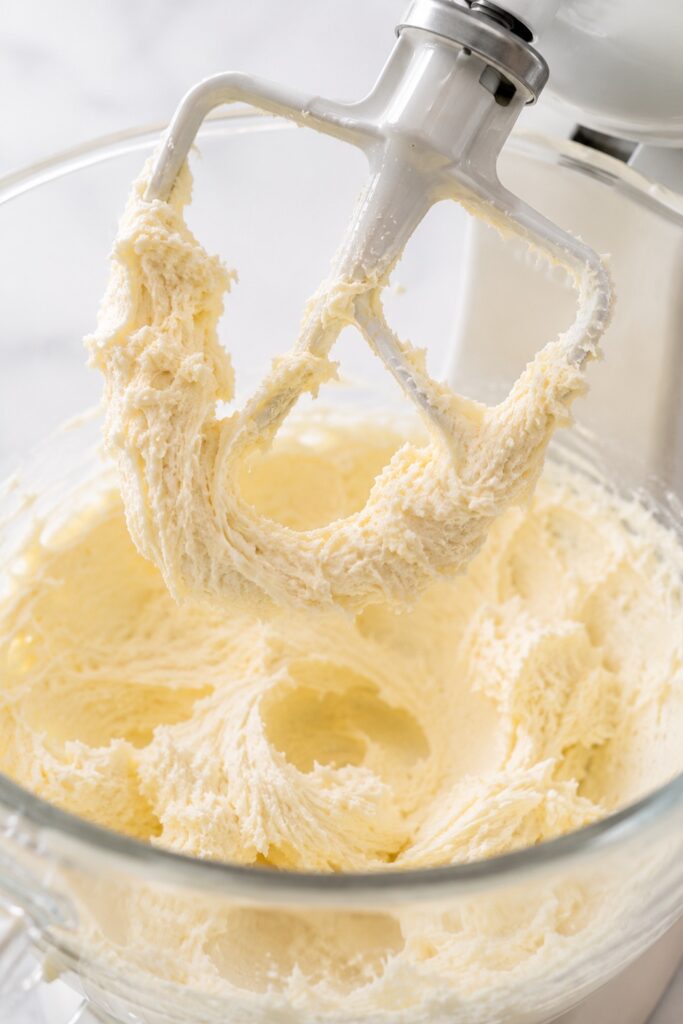
Beat the butter and sugar together for 3 to 5 minutes.
The mixture should become noticeably lighter in both color and texture.
Visual cue: The mixture should look pale, fluffy, and slightly increased in volume, not dense or greasy.
This stage creates tiny air pockets that contribute to the final cake structure.
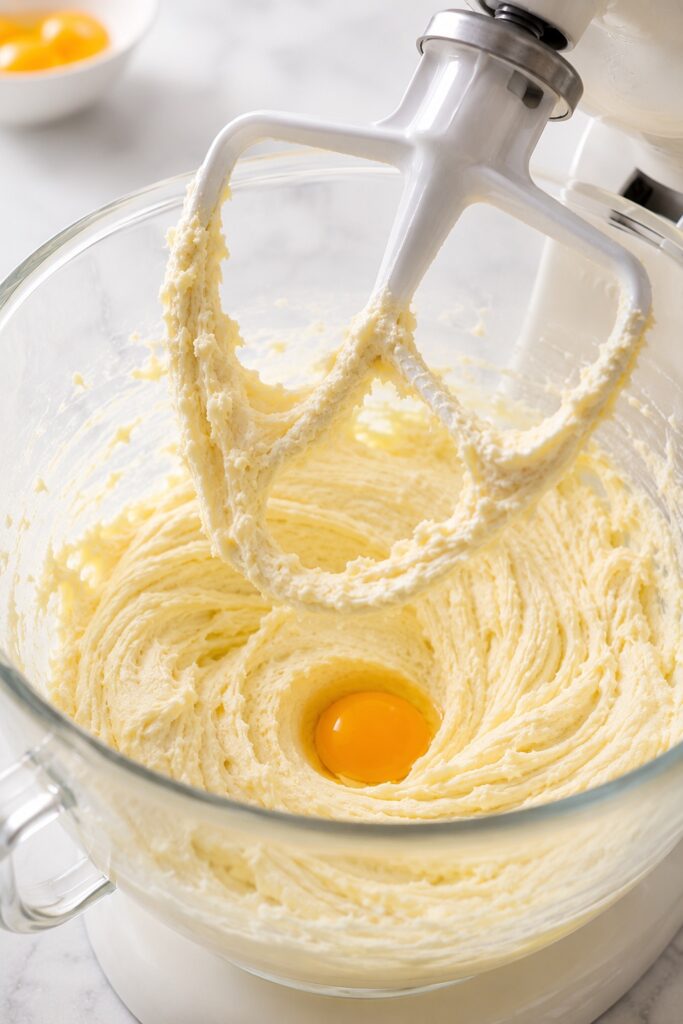
3. Add the egg yolks
Add the egg yolks one at a time.
Mix well after each addition.
The batter should look smooth, creamy, and slightly fluffy.
4. Add vanilla
Mix in the vanilla extract.
At this point the batter should smell sweet and buttery.
5. Combine the dry ingredients
In a separate bowl, whisk together:
- Cake flour
- Baking soda
- Salt
This ensures even distribution throughout the batter.
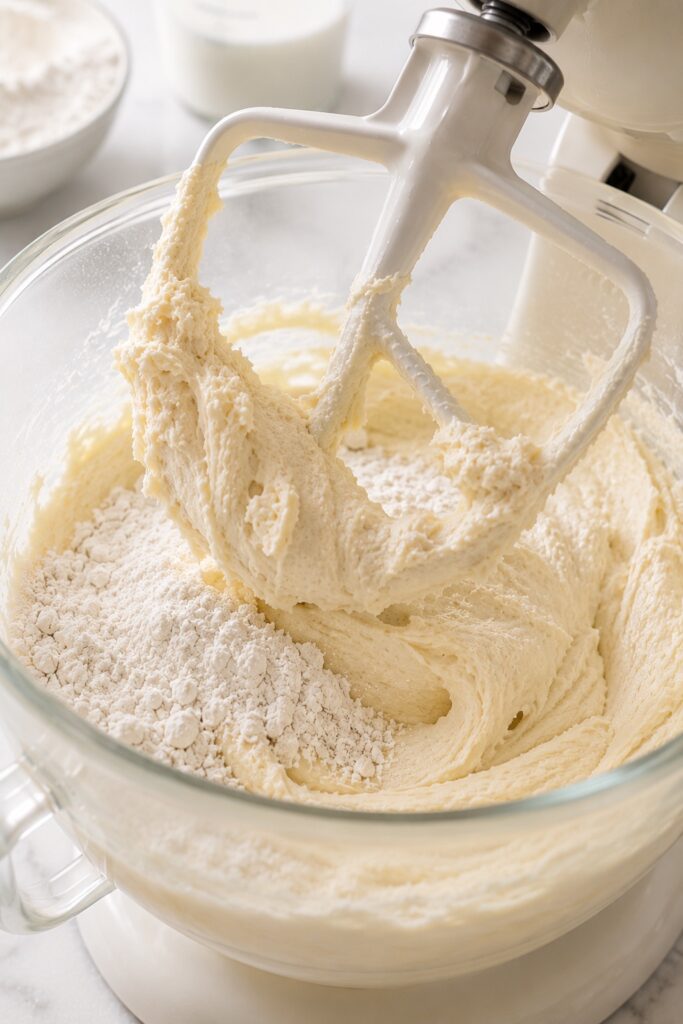
6. Alternate dry ingredients and buttermilk
Add the flour mixture in three additions, alternating with the buttermilk.
Begin and end with the flour.
The batter should remain smooth and thick.
If it looks slightly curdled midway through mixing, don’t panic. It usually comes together perfectly after the remaining ingredients are added.
7. Fold in coconut and pecans
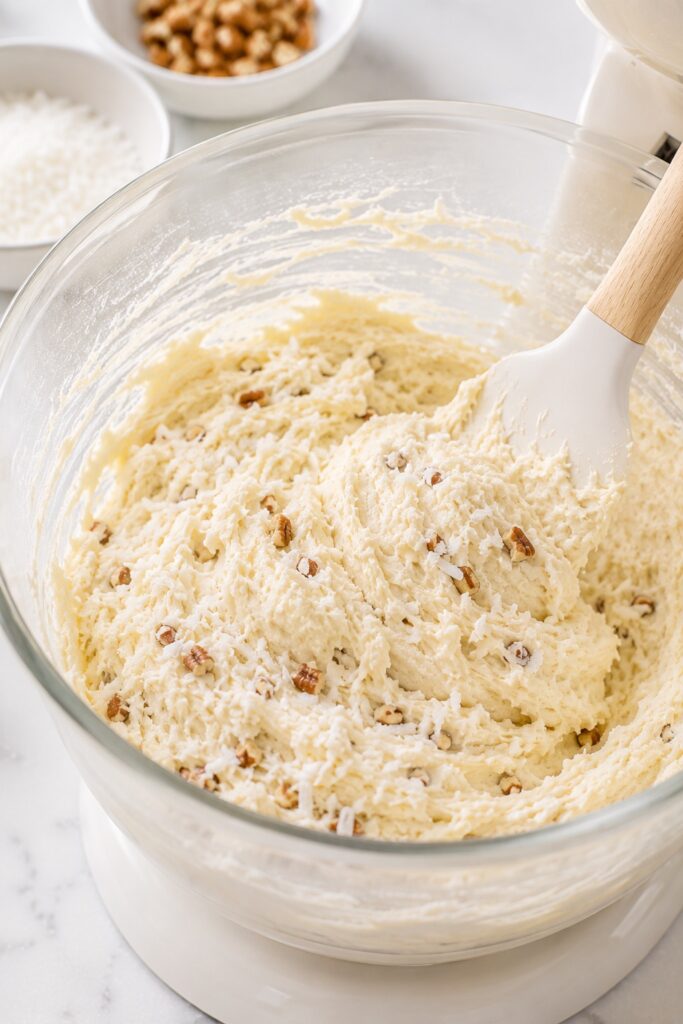
Gently fold in:
- Shredded coconut
- Chopped pecans
The batter should now have visible texture throughout.
8. Whip the egg whites
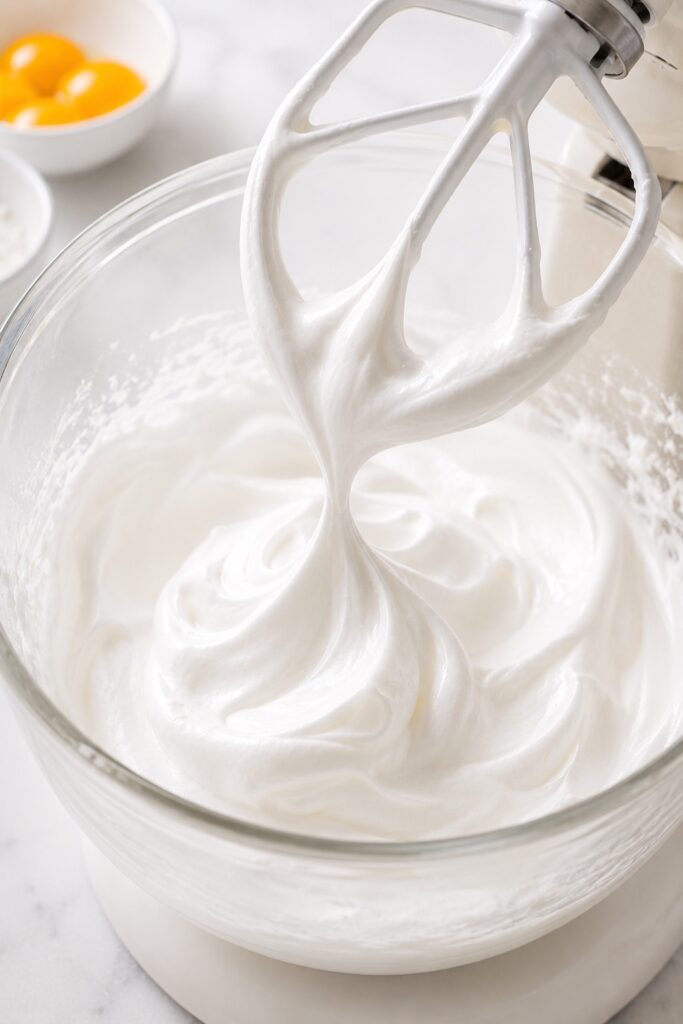
In a clean bowl, beat the egg whites until stiff peaks form.
The peaks should stand upright when the beaters are lifted.
9. Fold in the egg whites
Gently fold the whipped whites into the batter.
The batter should look lighter and slightly airy.
Visual cue: The batter should still look thick, but noticeably lighter than before the egg whites were added.
Avoid aggressively stirring, which can deflate the volume you just created.
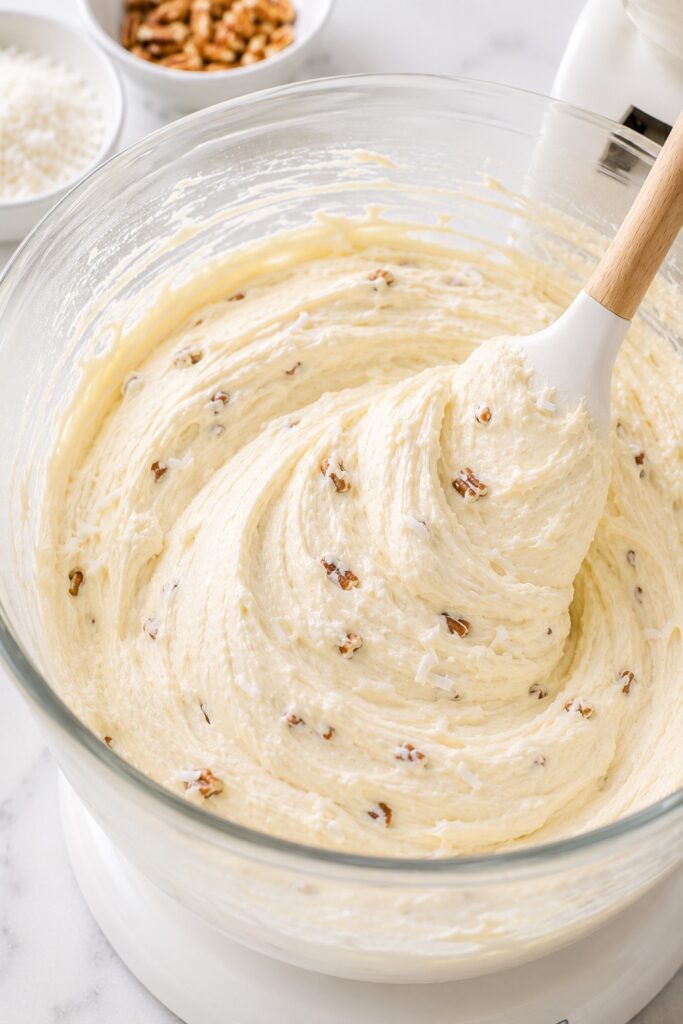
10. Bake
Divide the batter evenly between the prepared pans and smooth the tops gently with a spatula.
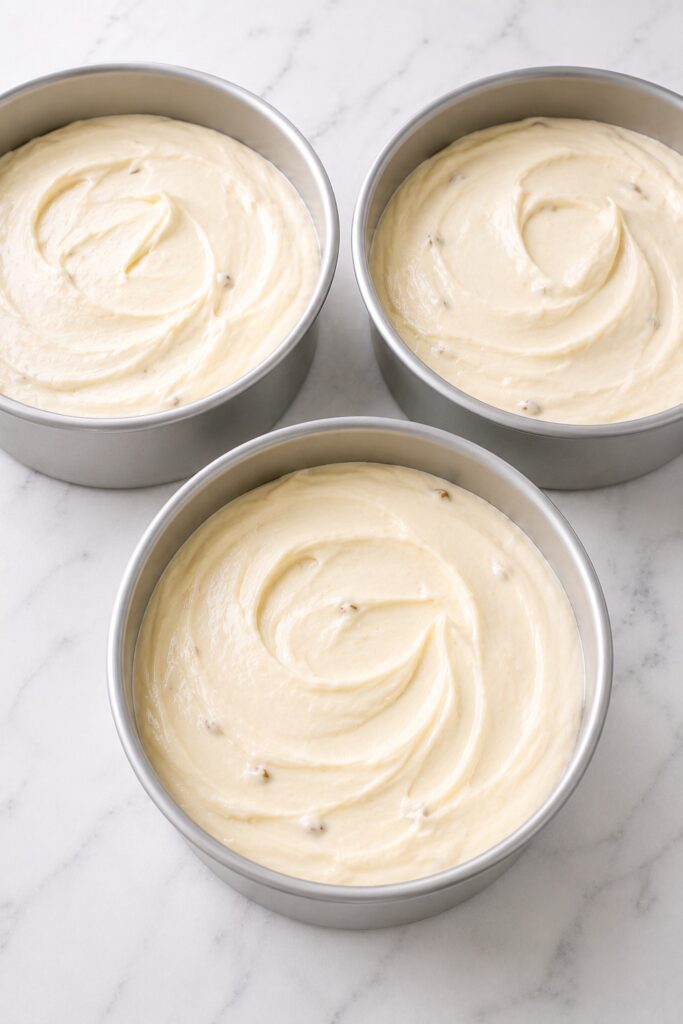
Bake for 25–30 minutes at 350°F (175°C).
As the cakes bake, the batter will rise gradually and the tops will turn lightly golden. The kitchen should begin smelling noticeably buttery, sweet, and slightly nutty from the pecans.
The cakes are ready when the centers spring back lightly when touched and a toothpick inserted near the center comes out with a few moist crumbs attached.
Avoid waiting for a completely clean toothpick. Slightly moist crumbs usually indicate a softer, more tender cake, while a perfectly clean toothpick can sometimes signal that the layers have baked a little too long.
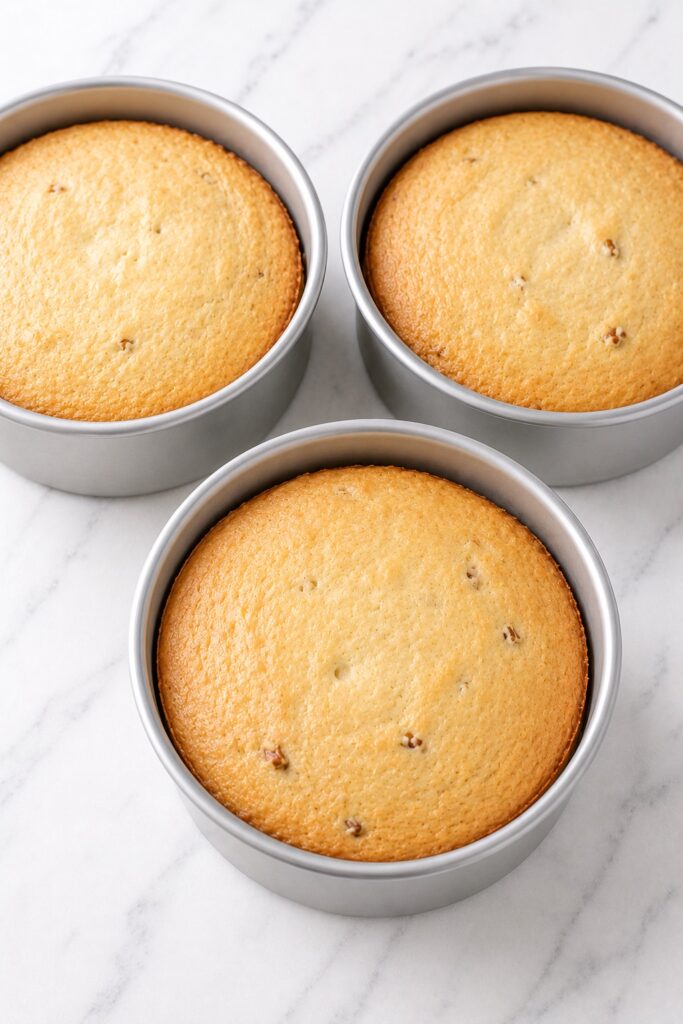
11. Cool completely
Allow the cakes to cool in the pans for 10 minutes.
Transfer to wire racks and cool completely before frosting.
Warm cake layers and cream cheese frosting are rarely friends.
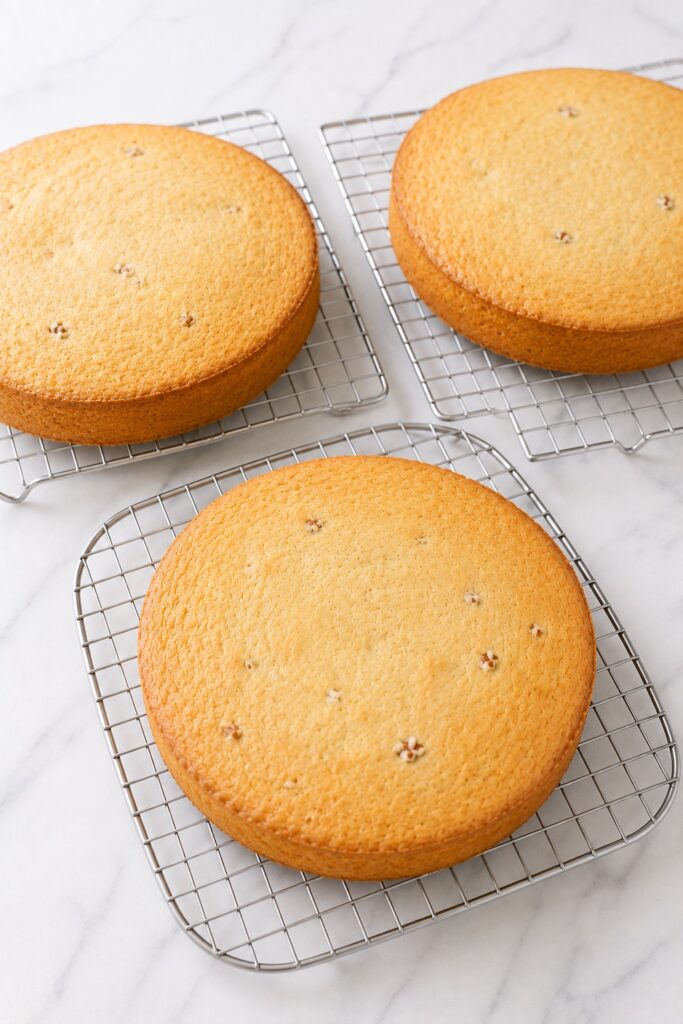
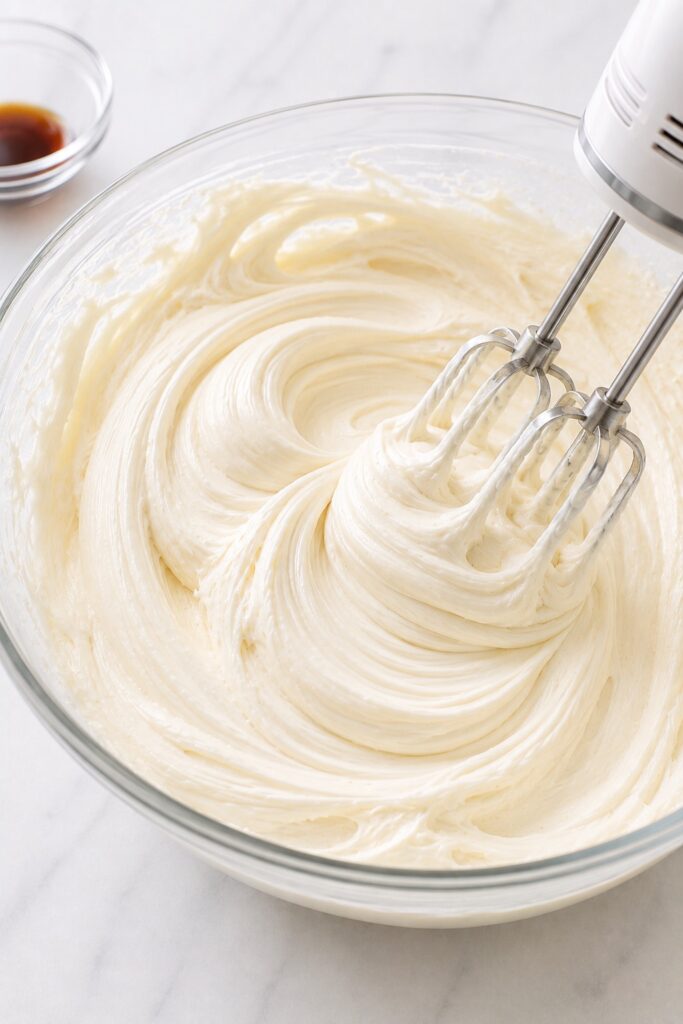
12. Make the frosting
Beat cream cheese and butter until smooth.
Add powdered sugar gradually.
Mix in vanilla and salt.
The frosting should be fluffy, smooth, and thick enough to hold dramatic swirls.
If the frosting seems too soft for layering, refrigerate it for 10–15 minutes before assembling the cake.
13. Assemble the cake
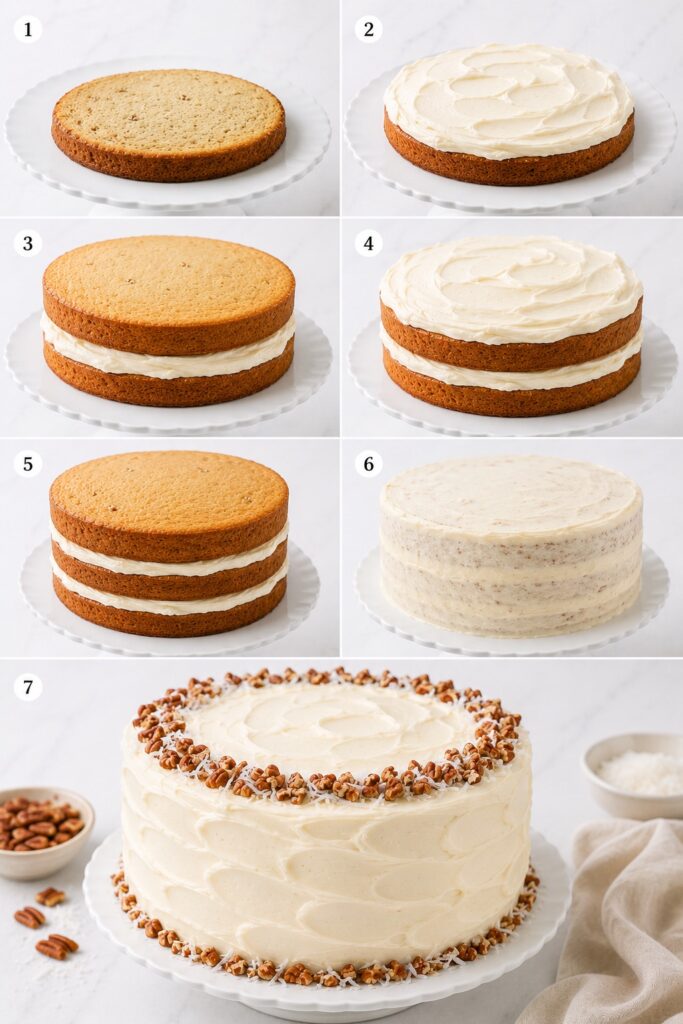
Place the first cake layer on a cake stand or serving plate.
Spread a generous layer of cream cheese frosting all the way to the edges. Aim for a thick, even layer so the finished cake develops the dramatic frosting-to-cake ratio that makes Italian Cream Cake so recognizable.
Layer cue: The frosting should be thick enough to create visible cream cheese layers once the cake is sliced.
Place the second cake layer on top and gently press to level it. Add another generous layer of frosting, spreading it evenly across the surface.
Add the final cake layer, positioning it with the flattest side facing upward for the cleanest finished appearance.
Apply a thin crumb coat of frosting around the entire cake and chill for 15–20 minutes. This helps trap loose crumbs and makes the final frosting layer much easier to apply.
Finish with a thicker layer of frosting over the top and sides of the cake. Use an offset spatula to create soft swirls or smooth bakery-style sides, depending on your preferred look.
Decorate with toasted pecans around the top edge and lightly sprinkle coconut over the cake if desired.
For the cleanest slices, refrigerate the assembled cake for at least 30 minutes before serving. The frosting will set slightly, allowing the beautiful cake layers and frosting layers to remain clearly defined when sliced.
What a Perfect Italian Cream Cake Should Look Like
A properly made Italian Cream Cake should look elegant, soft, and distinctly layered. While appearance alone doesn’t determine quality, several visual cues can help confirm that the cake baked and assembled successfully.
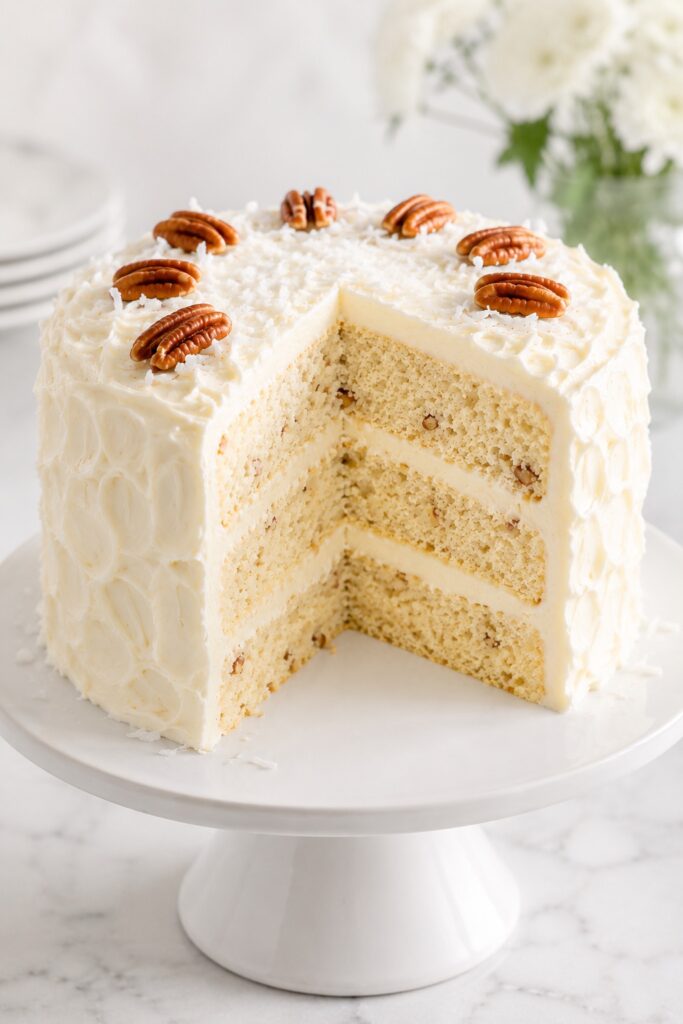
- Tall, even layers: The cake layers should appear level and well-defined, without significant sinking or collapsing.
- Soft, fluffy crumb: When sliced, the interior should look moist and tender with small, delicate air pockets throughout.
- Visible coconut and pecans: The coconut and pecans should be evenly distributed throughout the cake rather than concentrated in one area.
- Thick frosting layers: The cream cheese frosting should form clearly visible layers between the cakes without appearing runny or overly thin.
- Stable slice structure: A properly assembled slice should hold its shape when lifted without sliding apart.
- Smooth frosting finish: The exterior frosting should look creamy and soft, whether finished with rustic swirls or smoother bakery-style sides.
Visual cue: Italian Cream Cake should look moist and fluffy rather than dense or compact. The finished slice should reveal clear frosting layers, visible coconut and pecans, and a soft vanilla crumb that appears rich without looking heavy.
One of the easiest ways to judge success is by looking at the cut slice. If the layers remain clearly defined, the frosting stays in place, and the crumb looks soft and slightly airy, you’re very close to the texture that makes Italian Cream Cake such a beloved Southern bakery classic.
Texture & Behavior Guide
| Stage | What You Should See |
|---|---|
| Creamed butter | Pale and fluffy |
| Finished batter | Thick, smooth, airy |
| Before baking | Evenly distributed coconut and pecans |
| Fully baked cake | Light golden top with springy center |
| Frosting | Smooth, fluffy, stable peaks |
| Finished cake | Soft crumb with thick defined frosting layers |
Quick Texture Diagnosis Guide
If your Italian Cream Cake doesn’t look exactly as expected, these quick clues can help identify what happened during mixing or baking.
| If You See This | Most Likely Cause |
|---|---|
| Dense or heavy crumb | Overmixed batter or deflated egg whites |
| Dry cake layers | Overbaking or inaccurate flour measurement |
| Low cake height | Egg whites lost volume during folding |
| Frosting slides between layers | Cake layers were still warm or frosting was too soft |
| Uneven layers | Batter was not divided evenly between pans |
Baker’s note: Most Italian Cream Cake problems can usually be traced back to one of three stages: creaming the butter properly, preserving the volume of the egg whites, or avoiding overbaking. When those three steps are handled well, the cake is surprisingly forgiving.
Common Italian Cream Cake Mistakes (And How to Fix Them)
Overmixing the Batter
Italian Cream Cake should have a soft, tender crumb with a light bakery-style texture. If the cake turns out dense or slightly tough, overmixing is often the cause.
Once the flour is added, excessive mixing develops gluten, which creates a firmer structure and reduces the delicate texture that makes this cake special.
Fix: Mix only until the ingredients are combined, then stop. The batter does not need to be perfectly smooth.
Deflating the Egg Whites
Whipped egg whites provide much of the cake’s lift and airy texture. If they are stirred aggressively into the batter, the trapped air escapes and the layers may bake up shorter and heavier.
Fix: Fold the egg whites gently using a spatula and stop as soon as they are incorporated.
Overbaking the Cake Layers
One of the fastest ways to lose the signature moist texture of Italian Cream Cake is baking the layers too long.
Because every oven behaves differently, relying only on the baking time can sometimes result in dry cake layers.
Fix: Start checking a few minutes early. The cakes are ready when the centers spring back lightly and a toothpick comes out with a few moist crumbs attached.
Using Cold Ingredients
Cold butter, eggs, cream cheese, or buttermilk can prevent the batter and frosting from mixing properly.
This often creates a less uniform crumb, uneven texture, or frosting that appears slightly lumpy.
Fix: Allow refrigerated ingredients to come to room temperature before beginning.
Frosting Warm Cake Layers
Cream cheese frosting softens quickly when it comes into contact with warm cake.
Even slightly warm layers can cause frosting to slide, shift, or become difficult to spread evenly.
Fix: Allow the cake layers to cool completely before assembling and frosting.
Skipping the Crumb Coat
A crumb coat may seem optional, but it makes a noticeable difference when decorating layer cakes.
Without it, loose crumbs can become trapped throughout the final frosting layer, creating a less polished appearance.
Fix: Apply a thin layer of frosting around the cake, chill for 15–20 minutes, then add the final frosting layer.
Frosting That Feels Too Soft
If the frosting seems loose, difficult to spread, or struggles to hold decorative swirls, the ingredients may simply be too warm.
This is especially common in warm kitchens.
Fix: Refrigerate the frosting for 10–15 minutes before continuing. A brief chill is often all it needs.
Why Does Italian Cream Cake Taste Better the Next Day?
This is completely normal. As the cake rests, the coconut softens slightly, the frosting settles into the layers, and the flavors become more cohesive.
Many bakers intentionally make Italian Cream Cake a day ahead because the texture and flavor often improve overnight.
Expert Tips for the Best Italian Cream Cake
- Don’t rush the creaming stage. Butter and sugar should be beaten together for a full 3–5 minutes. The mixture should become noticeably lighter in both color and texture. This step creates tiny air pockets that help produce the soft, fluffy crumb Italian Cream Cake is known for.
- Use room-temperature ingredients. Butter, eggs, cream cheese, and buttermilk blend together more evenly when they aren’t cold. A smoother batter usually produces a more uniform cake texture.
- Toast the pecans whenever possible. Toasting deepens their flavor and creates a richer, more bakery-style taste throughout the finished cake. Even a few minutes in the oven makes a noticeable difference.
- Don’t overmix after adding the flour. Once the dry ingredients are incorporated, mix only until combined. Excess mixing develops gluten and can make the cake less tender.
- Fold the egg whites gently. The whipped egg whites contribute much of the cake’s light texture. Folding carefully preserves the air you’ve worked to create.
- Watch the center of the cake, not the timer. Every oven bakes a little differently. Start checking early and remove the layers when the centers spring back lightly and a toothpick comes out with a few moist crumbs.
- Chill the cake layers before frosting if needed. Slightly chilled layers are easier to handle, shed fewer crumbs, and help create cleaner frosting layers.
- Allow the assembled cake to rest before serving. While the cake is delicious the day it’s made, the flavors become noticeably more cohesive after several hours in the refrigerator.
Small bakery insight: One lesson many bakers eventually discover is that the most important part of a layer cake happens before it ever reaches the oven. Proper creaming, accurate measuring, and gentle folding typically have a bigger impact on texture than any frosting technique.
Another useful observation: Italian Cream Cake is one of those rare celebration cakes that often tastes even better the next day. As the cake rests, the coconut softens slightly, the frosting settles into the layers, and the overall flavor becomes richer and more unified.
If your goal is the tall bakery-style slice with distinct frosting layers, a moist crumb, and clean structure, patience during mixing, cooling, and assembly is often the secret ingredient.
How Italian Cream Cake Compares to Other Classic Layer Cakes
Italian Cream Cake occupies a unique place among classic American layer cakes. While many celebration cakes focus primarily on vanilla, chocolate, or fruit flavors, Italian Cream Cake combines several textures and flavors into a single dessert.
Compared to a traditional Vanilla Cake, Italian Cream Cake is richer and more complex thanks to the addition of coconut, pecans, buttermilk, and cream cheese frosting. The crumb remains soft and fluffy, but each bite offers more texture and depth.
Compared to Coconut Cake, Italian Cream Cake delivers a more balanced flavor profile. Coconut remains present, but the pecans and cream cheese frosting add richness and contrast that prevent the cake from feeling one-dimensional.
Many bakers compare Italian Cream Cake to Hummingbird Cake because both are Southern favorites often served at holidays and family celebrations. However, Hummingbird Cake is denser and fruit-based, while Italian Cream Cake is lighter, fluffier, and more focused on vanilla, coconut, and pecan flavors.
It also shares some similarities with Carrot Cake because both are commonly paired with cream cheese frosting. The difference is that Italian Cream Cake offers a more delicate vanilla-forward crumb, while Carrot Cake delivers a heartier texture and warm spice notes.
If you’re looking for a celebration cake that combines the elegance of a bakery-style layer cake with the comforting flavors of a classic Southern dessert, Italian Cream Cake sits right in the sweet spot between Vanilla Cake, Coconut Cake, Hummingbird Cake, and Carrot Cake.
| Version | Texture | Flavor |
|---|---|---|
| Italian Cream Cake | Moist and fluffy | Coconut, pecans, cream cheese |
| Vanilla Layer Cake | Light and soft | Pure vanilla |
| Coconut Cake | Moist and rich | Strong coconut flavor |
| Hummingbird Cake | Dense and fruity | Banana and pineapple |
| Carrot Cake | Moist and hearty | Spiced and nutty |
Which cake should you choose?
- Choose Italian Cream Cake if you want the richest combination of texture, frosting, coconut, and pecans in a single celebration cake.
- Choose Vanilla Cake if you prefer a simpler flavor profile that works well with almost any frosting or filling.
- Choose Coconut Cake if coconut is the primary flavor you’re looking for and you want a more coconut-forward dessert.
- Choose Hummingbird Cake if you enjoy fruit-based cakes with banana and pineapple flavors.
- Choose Carrot Cake if you prefer warm spices and a slightly heartier texture.
Italian Cream Cake often sits right in the middle of these classics, combining the elegance of a bakery-style layer cake with the richness, texture, and comfort of traditional Southern baking.
How to Serve Italian Cream Cake
Italian Cream Cake is best served slightly chilled or after resting at room temperature for about 20–30 minutes. This allows the cream cheese frosting to soften slightly while keeping the cake layers beautifully structured.
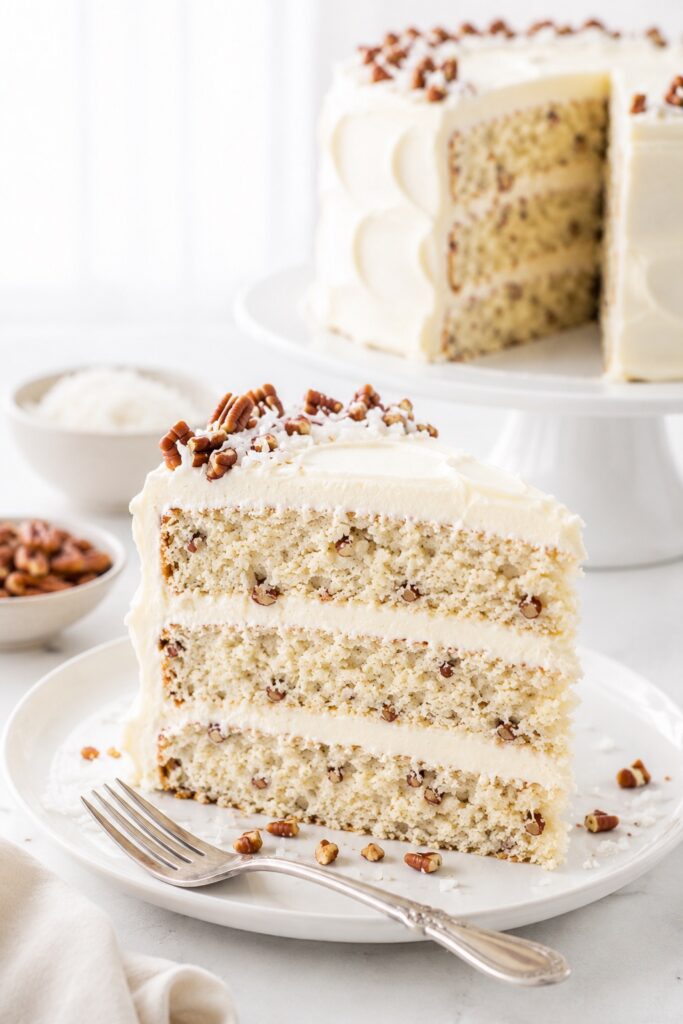
When sliced, the cake should reveal soft vanilla layers studded with coconut and pecans, separated by generous ribbons of cream cheese frosting. The contrast between the tender crumb and creamy frosting is what makes Italian Cream Cake feel both luxurious and comforting.
Because the cake is naturally rich, slightly thinner slices often create the best balance. The flavors are satisfying without needing oversized portions, making it ideal for celebrations and dessert tables.
Perfect Occasions to Serve It
- Mother’s Day brunches and dessert tables
- Easter gatherings and spring celebrations
- Birthdays and family celebrations
- Bridal showers and baby showers
- Holiday dessert spreads
- Weekend baking when you want something truly special
How to Elevate Each Slice
- Serve with freshly brewed coffee or espresso
- Add a few fresh berries for color contrast
- Pair with lightly sweetened whipped cream
- Serve alongside fresh strawberries or raspberries
- Add a small scoop of Vanilla Ice Cream for a richer dessert experience
For spring and summer gatherings, Italian Cream Cake pairs beautifully with lighter desserts such as Panna Cotta, creating contrast between rich cake and delicate creamy textures.
If you’re building a dessert table, the cake also works particularly well alongside fresh fruit desserts, berry-based treats, and simple coffee service.
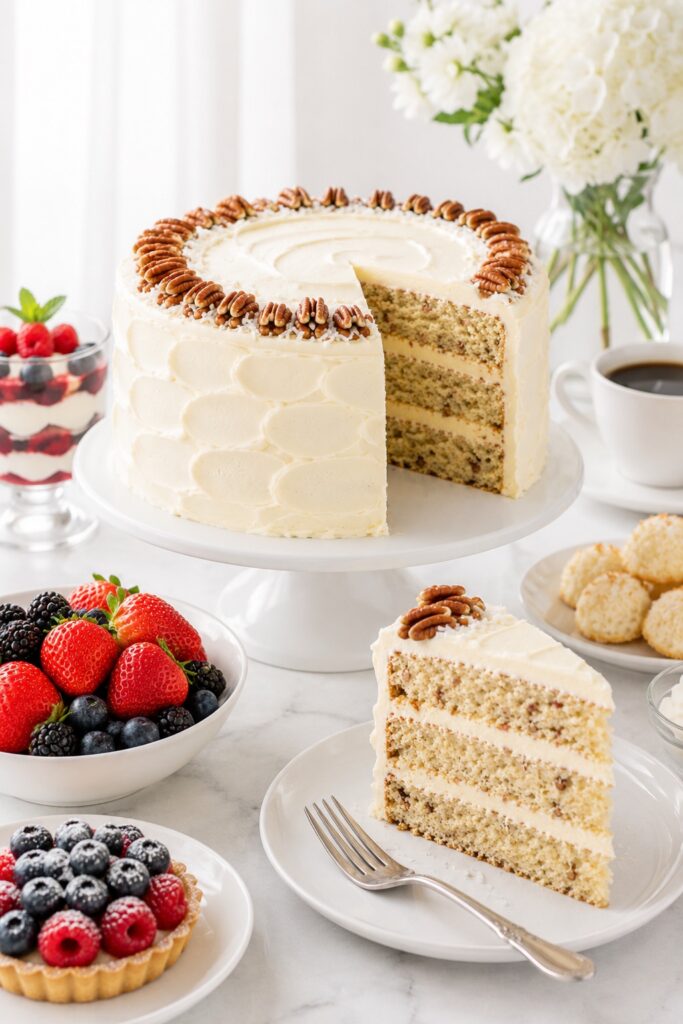
Visual serving tip: For the prettiest presentation, wipe the knife clean between slices. This keeps the frosting layers distinct and creates the clean bakery-style slice that makes Italian Cream Cake so recognizable.
Small hosting insight: Italian Cream Cake is one of those desserts that often receives more compliments on day two than on day one. After resting overnight, the frosting settles slightly into the cake layers, the coconut softens, and the overall flavor becomes even more cohesive.
Save this for Easter desserts, Mother’s Day cakes, bridal showers, birthdays, holiday gatherings, or anytime you want a cake that feels elegant enough for a celebration while still tasting completely homemade.
This is the kind of cake people notice the moment it reaches the table — tall layers, creamy frosting, toasted pecans, and a bakery-style finish that immediately feels special.
Storage & Make-Ahead Guide
Italian Cream Cake is one of those rare layer cakes that often tastes even better after a little time has passed. As the cake rests, the coconut softens slightly, the pecans mellow, and the cream cheese frosting blends with the cake layers to create an even richer flavor. Many bakers intentionally make this cake a day ahead because the texture and flavor continue improving overnight.
Quick Storage & Make-Ahead Chart
| Storage Method | How Long It Lasts | Best Practice |
|---|---|---|
| Room Temperature | 2–3 hours | Ideal for serving after refrigeration |
| Refrigerator | Up to 5 days | Store covered to prevent drying |
| Freezer (unfrosted layers) | Up to 2 months | Wrap tightly in plastic wrap and foil |
| Freezer (fully assembled cake) | Up to 2 months | Freeze after frosting has firmed up |
| Best Flavor Window | Day 2 | Flavors become more cohesive overnight |
Quick takeaway: Italian Cream Cake is one of the few celebration cakes that often tastes even better the day after it’s made. The coconut softens slightly, the frosting settles into the layers, and the overall flavor becomes richer and more balanced.
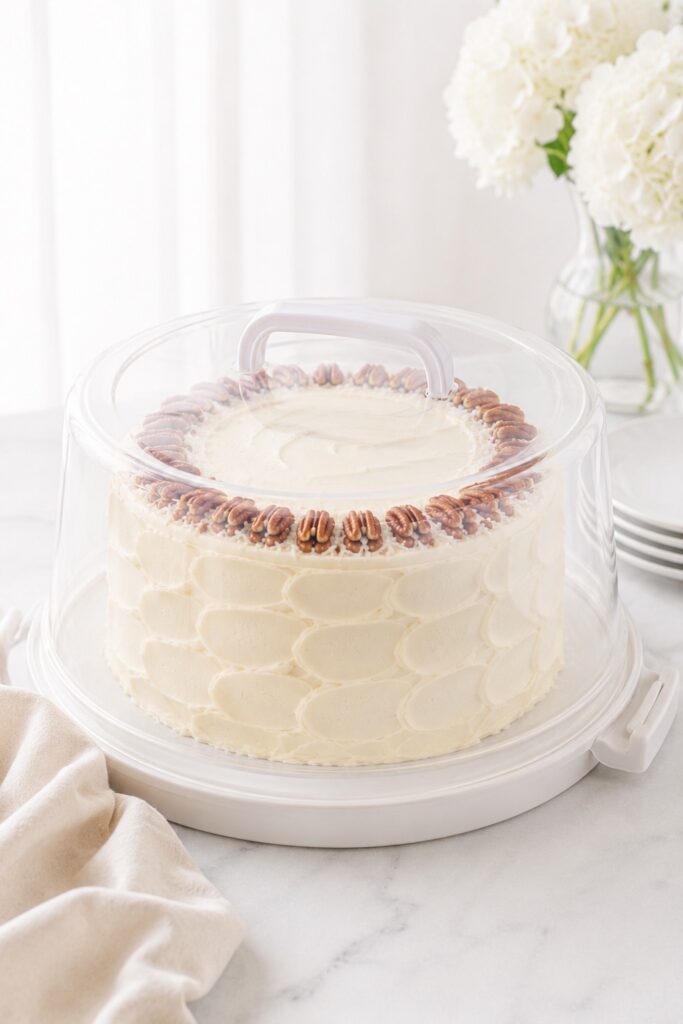
How to Store Italian Cream Cake
Because the frosting contains cream cheese, the cake should be stored in the refrigerator.
- Cover the cake loosely with plastic wrap or place it in a cake carrier.
- Store in the refrigerator for up to 5 days.
- Keep the cake away from strongly scented foods that may affect flavor.
- For the best texture, allow slices to sit at room temperature for 20–30 minutes before serving.
The frosting becomes firmer when chilled, while the cake itself remains surprisingly moist thanks to the buttermilk and coconut in the batter.
Storing Individual Slices
If you have leftover slices, place them in an airtight container and refrigerate. Individual slices are convenient for quick desserts, and many people enjoy them straight from the refrigerator with coffee or tea.
To maintain the soft bakery-style texture, allow refrigerated slices to warm slightly before serving.
Can You Freeze Italian Cream Cake?
Yes. Italian Cream Cake freezes exceptionally well.
You can freeze either the fully assembled cake or individual unfrosted layers.
- Wrap each cake layer tightly in plastic wrap.
- Add a second layer of aluminum foil for extra protection.
- Freeze for up to 2 months.
- Thaw overnight in the refrigerator before assembling or serving.
If freezing a fully frosted cake, chill it first until the frosting is firm, then wrap carefully to protect the decorative finish.
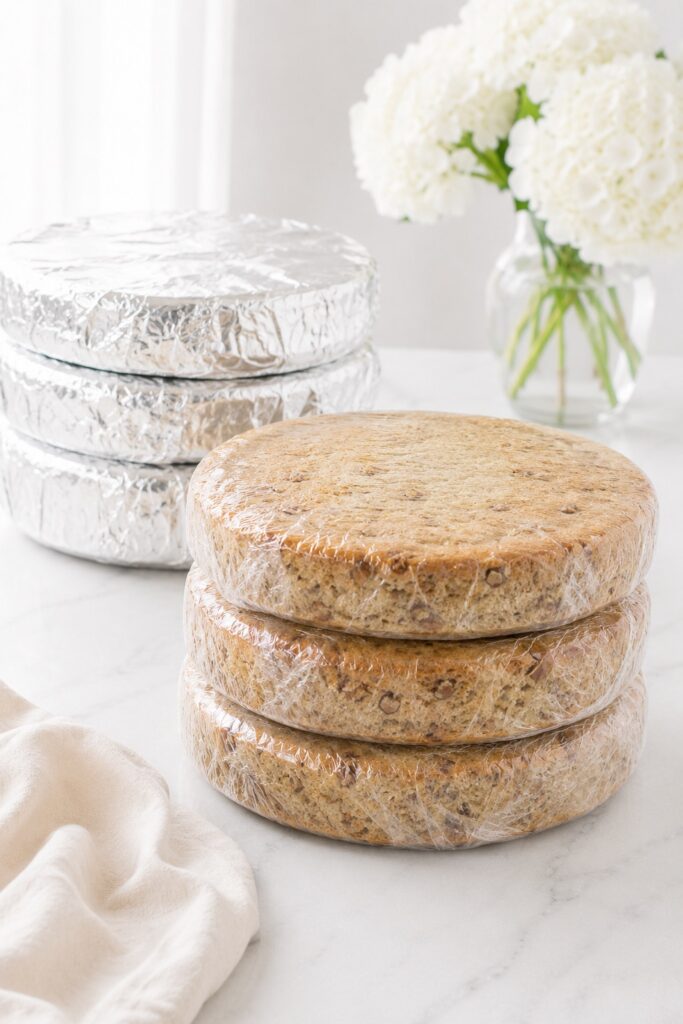
The Best Make-Ahead Strategy
For holidays, birthdays, Easter, Mother’s Day, or special events, the easiest approach is to divide the work into stages.
- Day 1: Bake the cake layers and prepare the frosting.
- Day 2: Assemble and decorate the cake.
- Day 3: Serve and enjoy.
This schedule allows the layers to cool completely, makes assembly less stressful, and gives the flavors time to develop fully.
In fact, one of the reasons Italian Cream Cake is such a popular celebration dessert is that it performs beautifully as a make-ahead cake. Unlike some layer cakes that begin drying out quickly, this cake often becomes more flavorful and cohesive after resting overnight.
How to Refresh Leftover Cake
If the cake has been refrigerated for several days, simply allow slices to rest at room temperature for about 30 minutes before serving. The frosting softens, the crumb relaxes, and the texture returns to the rich, bakery-style consistency that makes Italian Cream Cake so memorable.
For the very best flavor and texture, many bakers consider day two the sweet spot. The cake remains exceptionally moist, the frosting is fully settled, and the coconut, pecans, vanilla, and cream cheese flavors have had time to meld together beautifully.
Delicious Variations
One of the reasons Italian Cream Cake has remained a Southern favorite for generations is its flexibility. The classic version is difficult to beat, but a few thoughtful variations can create entirely new flavor experiences while preserving the cake’s signature moist crumb and luxurious cream cheese frosting.
Extra Coconut Italian Cream Cake
If coconut is your favorite part of the cake, increase the shredded coconut to 1½–2 cups and sprinkle toasted coconut between the frosting layers.
This variation creates a more pronounced coconut flavor while adding additional texture throughout the cake. Toasting part of the coconut also introduces subtle caramelized notes that pair beautifully with the cream cheese frosting.
Toasted Pecan Italian Cream Cake
For deeper flavor, toast the pecans before folding them into the batter.
A quick 6–8 minutes in a 350°F oven transforms the pecans dramatically, creating a richer, nuttier flavor that makes the finished cake taste even more bakery-worthy.
This is one of the easiest upgrades you can make, and the flavor difference is immediately noticeable.
Italian Cream Cake with White Chocolate
Add ½ cup finely chopped white chocolate to the batter or drizzle melted white chocolate over the finished cake.
The creamy sweetness complements both the coconut and cream cheese frosting while adding a slightly more decadent, celebration-style feel.
This version works especially well for bridal showers, birthdays, and holiday dessert tables.
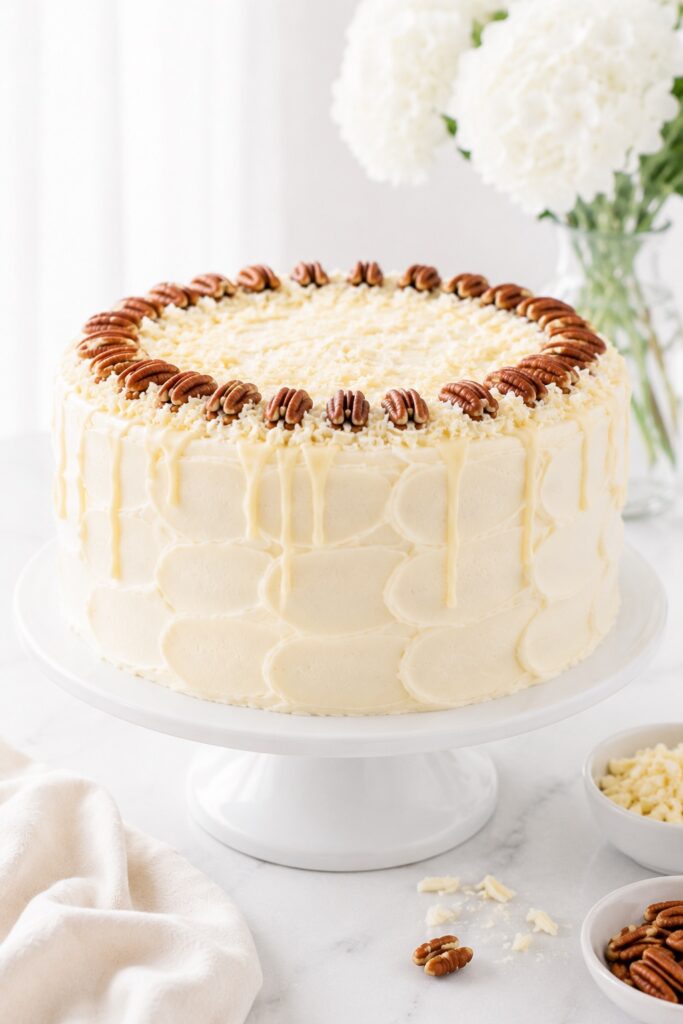
Layered Berry Italian Cream Cake
Spread a thin layer of raspberry or strawberry preserves between the cake layers before adding the frosting.
The fruit adds brightness and color contrast while balancing the richness of the cream cheese frosting.
This variation is particularly beautiful for spring and summer gatherings.
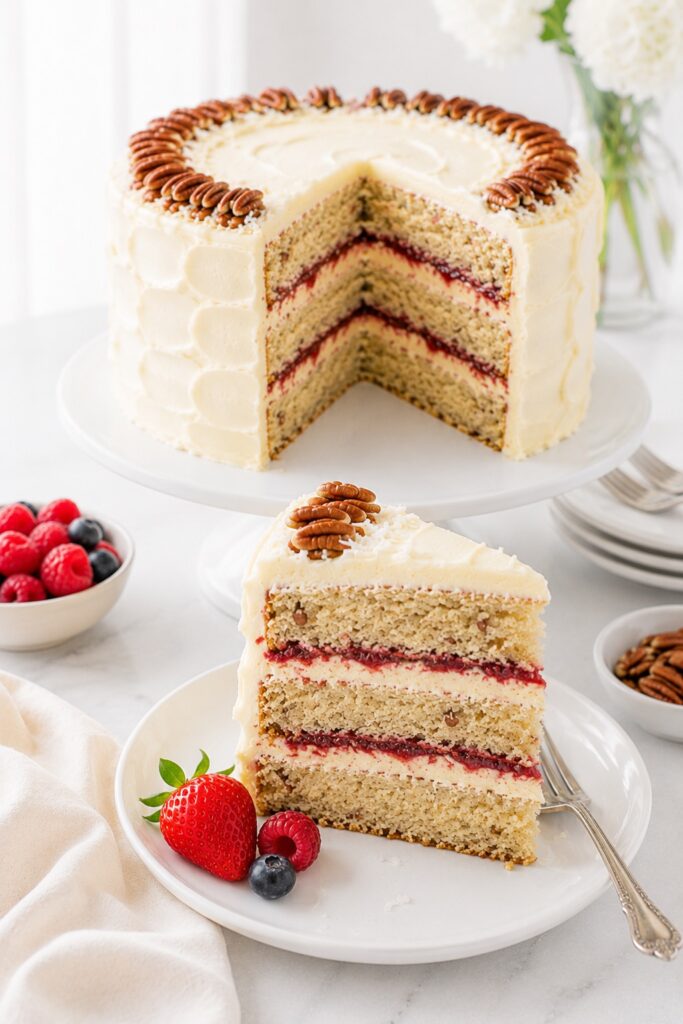
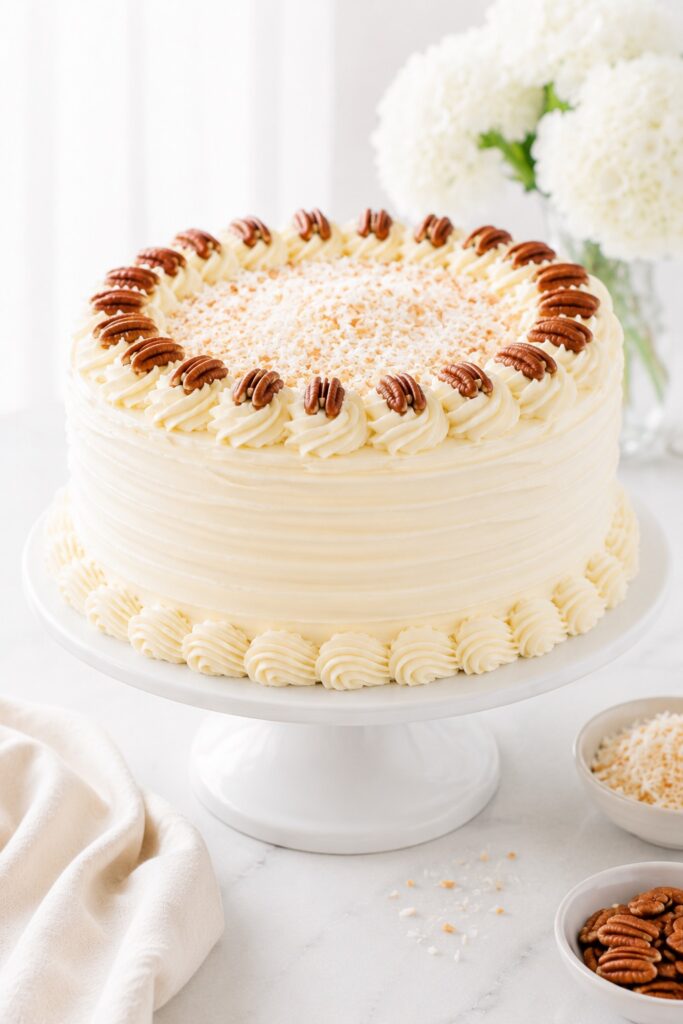
Southern Bakery Celebration Cake
Create taller frosting layers and decorate the finished cake with piped cream cheese frosting borders, toasted pecan halves, and a light sprinkle of coconut.
This presentation closely resembles the elegant bakery-style Italian Cream Cakes often seen at weddings, Easter gatherings, Mother’s Day celebrations, and special occasions.
The dramatic frosting layers create the luxurious slice definition that makes people stop scrolling on Pinterest and immediately want a piece.
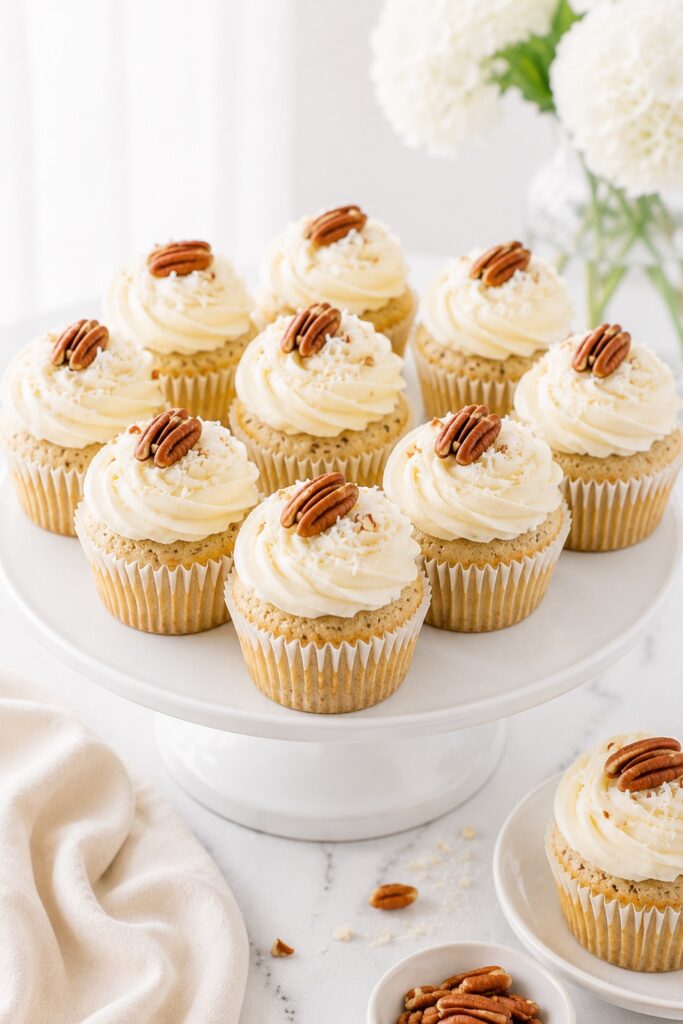
Italian Cream Cupcakes
Transform the batter into cupcakes for parties and gatherings.
Bake in lined cupcake pans until the tops are lightly golden and spring back when touched. Finish with generous swirls of cream cheese frosting and a pecan half on top.
They deliver all the flavor of the classic layer cake in an easy-to-serve format.
Holiday Italian Cream Cake
For Thanksgiving and Christmas celebrations, add a small amount of cinnamon or nutmeg to the batter.
The warm spices remain subtle but enhance the buttery cake, toasted pecans, and cream cheese frosting beautifully.
This version feels especially cozy during the holiday season while still maintaining the classic Italian Cream Cake character.
Which Variation Should You Try First?
If you’re making Italian Cream Cake for the first time, start with the classic version. It delivers the balance of coconut, pecans, cream cheese frosting, and soft vanilla cake that made this Southern dessert so popular in the first place.
If coconut is your favorite part of the cake, the Extra Coconut variation provides the biggest flavor boost while keeping the same moist texture.
If you enjoy deeper, nuttier flavors, the Toasted Pecan version offers one of the most noticeable upgrades with very little extra effort.
For birthdays, bridal showers, and celebration cakes, the White Chocolate variation feels especially indulgent and elegant.
If you’re baking for spring or summer gatherings, the Berry variation adds freshness, color contrast, and a bright fruit element that pairs beautifully with the cream cheese frosting.
No matter which version you choose, the goal remains the same: soft cake layers, rich frosting, balanced sweetness, and the bakery-style presentation that makes Italian Cream Cake so memorable.
The beauty of Italian Cream Cake is that every variation still delivers the same qualities people love most: a moist Southern-style cake, rich cream cheese frosting, and a beautiful bakery-worthy presentation.
Frequently Asked Questions
Is Italian Cream Cake actually Italian?
Despite its name, most food historians consider Italian Cream Cake a Southern American dessert. It became especially popular throughout the Southern United States because of its moist texture, pecans, coconut, and cream cheese frosting.
Can I make Italian Cream Cake ahead of time?
Absolutely. In fact, many bakers prefer making it a day ahead because the flavors continue developing overnight. The coconut softens slightly, the frosting settles, and the overall flavor becomes even richer.
Can I use all-purpose flour instead of cake flour?
Yes. The cake will still be delicious, but cake flour creates a softer, more delicate crumb. If using all-purpose flour, expect a slightly sturdier texture.
Why are the egg whites whipped separately?
Whipping and folding in the egg whites adds air to the batter, helping create the light, fluffy texture that makes Italian Cream Cake different from denser Southern cakes.
Can I freeze Italian Cream Cake?
Yes. Both frosted and unfrosted cake layers freeze well for up to 2 months when wrapped properly. Thaw overnight in the refrigerator before serving.
Do I need to toast the pecans?
No, but toasted pecans add noticeably deeper flavor and aroma. It’s a small step that makes the finished cake taste more bakery-quality.
Should Italian Cream Cake be refrigerated?
Yes. Because the frosting contains cream cheese, the cake should be stored in the refrigerator. For the best texture, allow slices to sit at room temperature for about 20–30 minutes before serving.
Why did my Italian Cream Cake turn out dense?
Dense cake layers are usually caused by overmixing the batter, deflating the whipped egg whites, or using too much flour. Folding gently and measuring ingredients accurately helps maintain a light, fluffy crumb.
Can I make Italian Cream Cake without coconut?
Yes, although coconut is part of the cake’s classic flavor and texture profile. The cake will still be moist and delicious, but it will lose some of the subtle sweetness and moisture retention that coconut provides.
Can I Use Store-Bought Cream Cheese Frosting?
You can, but homemade cream cheese frosting usually provides better flavor, texture, and stability for a tall layer cake like this one.
Store-bought frostings are often sweeter and softer, while homemade cream cheese frosting delivers the tangy flavor and thick bakery-style layers that make Italian Cream Cake so recognizable.
Can I Turn This Into Cupcakes?
Yes. Italian Cream Cake batter works very well as cupcakes. Fill lined cupcake cavities about two-thirds full and bake until the tops spring back lightly when touched.
You’ll still get the same combination of coconut, pecans, and cream cheese frosting, but in a format that’s easier to serve for parties, showers, and holiday gatherings.
More Southern Layer Cakes & Celebration Desserts You’ll Love
If you enjoyed this Italian Cream Cake, there are several other recipes on the blog that deliver the same combination of moist cake layers, rich frosting, bakery-style presentation, and special-occasion appeal. Some lean into classic Southern baking traditions, while others explore creamy fillings, fruit-forward flavors, or elegant celebration cake textures.
Quick picks: If you love the coconut-and-pecan profile, try Coconut Cake. For the closest Southern cake experience, make Hummingbird Cake. If you’re here for the cream cheese frosting, don’t miss Carrot Cake.
Closest in Texture & Southern Bakery Style
- Hummingbird Cake – a beloved Southern classic with a moist crumb, rich texture, and celebration-worthy presentation
- White Cake – soft, elegant, and bakery-style with a delicate vanilla flavor and tender crumb
- Vanilla Cake – fluffy, classic, and perfect if you love traditional layer cakes with a rich homemade feel
- Pound Cake – buttery, rich, and timeless with a more dense Southern-style texture
Cream Cheese Frosting Favorites
- Carrot Cake – moist, warmly spiced, and paired with the same irresistible cream cheese frosting
- Red Velvet Cake – velvety cake layers with the classic cream cheese frosting combination
- Carrot Cake Cupcakes – all the flavor of carrot cake in an easy-to-serve format
Coconut, Pecan & Nutty Dessert Lovers
- Coconut Cake – light, fluffy, and packed with coconut flavor throughout every layer
- Coconut Cream Pie – creamy, silky, and perfect if coconut is your favorite part of Italian Cream Cake
- Pecan Pie Cheesecake – rich, decadent, and ideal for pecan lovers
- Butter Pecan Cookies – buttery, nutty, and packed with toasted pecan flavor
Elegant Celebration Cakes
- Lemon Blueberry Cake – bright, fresh, and beautifully layered with a soft cake crumb
- Strawberry Cake – tender, fruity, and perfect for spring and summer celebrations
- Pistachio Cake – elegant, nutty, and ideal for special occasions
- German Chocolate Cake – another bakery favorite featuring layered textures and rich fillings
Each of these recipes shares something that makes Italian Cream Cake so memorable: a soft homemade texture, balanced sweetness, beautiful presentation, and the kind of flavor that feels equally at home on a holiday dessert table or at a family celebration.
Recipe Recap
Italian Cream Cake is a classic Southern celebration cake made with tender vanilla cake layers, sweet coconut, buttery pecans, and rich cream cheese frosting.
What makes it stand out is the balance of textures. The cake remains soft and fluffy, the coconut helps retain moisture, the pecans provide gentle crunch, and the frosting adds a creamy tang that keeps the sweetness balanced.
Unlike many layer cakes that can become dry after refrigeration, Italian Cream Cake often tastes even better after resting overnight as the flavors meld together and the crumb settles.
Whether you’re baking for Easter, Mother’s Day, birthdays, bridal showers, holiday gatherings, or simply because you’re craving a truly memorable homemade cake, this recipe delivers the tall bakery-style layers, luxurious frosting, and beautiful slice definition that have made Italian Cream Cake a Southern favorite for generations.
In short: If you’re looking for a celebration cake that combines elegance, reliability, and exceptional texture, Italian Cream Cake remains one of the most rewarding layer cakes you can make.
Final Thoughts
Some cakes become popular for a season. Others remain favorites for generations. Italian Cream Cake belongs firmly in the second category.
There is something timeless about the combination of soft vanilla cake, rich cream cheese frosting, coconut, and pecans. The flavors feel familiar and comforting, yet the finished cake always looks elegant enough for the most special occasions.
What I appreciate most about Italian Cream Cake is that it delivers both beauty and reliability. The layers stay moist, the frosting remains rich without being overwhelming, and the flavor seems to improve as the cake rests. It’s the kind of dessert that feels just as appropriate at a holiday gathering as it does around a family table on a quiet weekend.
Whether you’re baking it for Easter, Mother’s Day, a birthday celebration, a bridal shower, or simply because you’re craving a truly exceptional homemade cake, this recipe delivers the tall layers, creamy frosting, and bakery-style texture that have made Italian Cream Cake a Southern classic for decades.
Many cakes are at their best the moment they’re frosted. Italian Cream Cake is one of the few celebration cakes that often becomes even better after a little time has passed. As the layers rest, the frosting settles slightly into the crumb, the coconut softens, and the flavors become more unified from edge to center.
And once you cut that first slice and see the soft crumb, creamy frosting layers, and toasted pecans tucked throughout the cake, it’s easy to understand why so many families return to this recipe year after year.

Italian Cream Cake
This Italian Cream Cake is a classic Southern layer cake made with soft vanilla cake layers, shredded coconut, toasted pecans, and rich cream cheese frosting. Moist, fluffy, and elegant, it's the perfect celebration cake for Easter, Mother's Day, birthdays, holidays, and special occasions.
Ingredients
For the Cake Layers
- 1 cup unsalted butter, softened
- 2 cups granulated sugar
- 5 large eggs, separated
- 2 teaspoons vanilla extract
- 2 cups cake flour
- 1 teaspoon baking soda
- 1/2 teaspoon salt
- 1 cup buttermilk
- 1 1/4 cups sweetened shredded coconut
- 1 cup finely chopped pecans
For the Cream Cheese Frosting
- 16 ounces full-fat cream cheese, softened
- 1 cup unsalted butter, softened
- 5 to 6 cups powdered sugar
- 2 teaspoons vanilla extract
- Pinch of salt
Optional Garnish
- Toasted pecan halves
- Shredded coconut
Instructions
- Preheat the oven to 350°F (175°C). Grease three 8-inch round cake pans and line the bottoms with parchment paper.
- In a large mixing bowl, beat the butter and sugar together for 3–5 minutes until pale and fluffy.
- Add the egg yolks one at a time, mixing well after each addition. Stir in the vanilla extract.
- In a separate bowl, whisk together the cake flour, baking soda, and salt.
- Add the dry ingredients to the butter mixture in three additions, alternating with the buttermilk. Begin and end with the flour mixture. Mix until just combined.
- Fold in the shredded coconut and chopped pecans.
- In a clean mixing bowl, beat the egg whites until stiff peaks form.
- Gently fold the whipped egg whites into the batter until no large streaks remain.
- Divide the batter evenly between the prepared pans and smooth the tops.
- Bake for 25–30 minutes, or until the centers spring back lightly and a toothpick inserted near the center comes out with a few moist crumbs.
- Allow the cakes to cool in the pans for 10 minutes, then transfer to wire racks and cool completely.
- For the frosting, beat the cream cheese and butter until smooth and creamy. Gradually add the powdered sugar, then mix in the vanilla and salt until fluffy.
- Place the first cake layer on a cake stand or serving plate. Spread a generous layer of frosting all the way to the edges. Add the second cake layer and repeat. Place the final cake layer on top.
- Apply a thin crumb coat around the cake and refrigerate for 15–20 minutes. Finish frosting the top and sides with a thicker layer of frosting.
- Garnish with toasted pecans and shredded coconut if desired. Refrigerate for at least 30 minutes before slicing for the cleanest layers.
Notes
- Use room-temperature butter, eggs, cream cheese, and buttermilk for the smoothest batter and frosting.
- Toasting the pecans before adding them to the batter enhances their flavor and gives the cake a richer bakery-style taste.
- Avoid overmixing once the flour is added. Overmixing can develop excess gluten and create a denser cake.
- Fold the whipped egg whites gently to preserve as much air as possible and maintain a light, fluffy texture.
- A toothpick with a few moist crumbs is better than a completely clean toothpick. Slightly moist crumbs usually indicate a softer, more tender cake.
- If the frosting becomes too soft while decorating, refrigerate it for 10–15 minutes before continuing.
- Chilling the assembled cake for at least 30 minutes before slicing helps create clean, bakery-style layers.
- Italian Cream Cake often tastes even better the next day after the coconut, pecans, vanilla, and cream cheese frosting have had time to meld together.
- Store covered in the refrigerator for up to 5 days. Allow slices to sit at room temperature for 20–30 minutes before serving for the best texture and flavor.
Nutrition Information:
Yield: 16 slices Serving Size: 1 sliceAmount Per Serving: Calories: 620Total Fat: 38gSaturated Fat: 19gCholesterol: 125mgSodium: 290mgCarbohydrates: 64gFiber: 2gSugar: 52gProtein: 7g
Nutrition information is provided as an estimate only and may vary based on specific ingredients, brands, and portion sizes used. This information should not be considered medical or nutritional advice.
12 Sweet Favorites — Yours, Free 🍰
Tiramisù, no-bake cheesecake, the perfect chocolate chip cookie & 9 more reader-loved desserts — gathered into one beautiful free recipe book. From my kitchen to yours.
No spam, just sweet things. Unsubscribe anytime.