Chocolate Mousse (Rich, Silky & Easy No-Bake Dessert)
🎁 FREE E-BOOK: 12 Sweet Favorites — reader-loved desserts in one beautiful recipe book.
There’s something undeniably luxurious about a perfectly made chocolate mousse. That first spoonful — light yet deeply rich, silky yet airy — creates a kind of quiet indulgence that feels both elegant and comforting at the same time.

This chocolate mousse recipe is designed to give you that exact balance: a smooth, creamy texture with just enough airiness to keep it light, paired with a deep chocolate flavor that feels satisfying without becoming heavy. It’s the kind of dessert that looks refined and elegant, yet is surprisingly simple to make at home.
It’s also one of those recipes people come back to again and again. Not because it’s complicated, but because it delivers something very specific — a dessert that feels special with minimal effort. No baking, a short ingredient list, and a result that easily feels restaurant-worthy, much like a well-made panna cotta or tiramisu.
One thing you’ll notice quickly is that chocolate mousse is less about ingredients and more about how those ingredients are handled. The way you fold, the temperature of the chocolate, and the texture of the whipped cream all shape the final result more than you might expect.
When everything comes together correctly, the mousse turns out soft, airy, and perfectly smooth — the kind of dessert that feels elegant without trying too hard, and one people naturally want to make again.
This chocolate mousse recipe is also naturally no-bake, making it perfect for quick desserts, elegant dinner parties, or anytime you want something indulgent without turning on the oven.
What Is Chocolate Mousse?
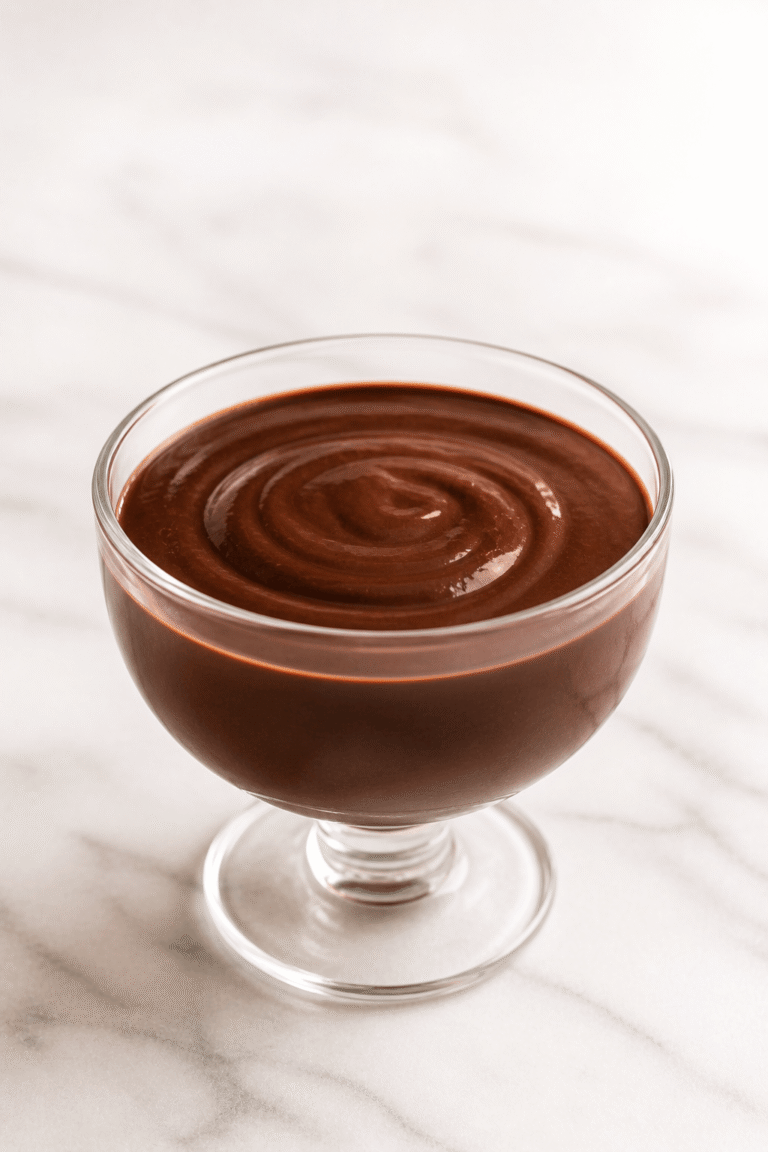
Chocolate mousse is a classic dessert made by combining melted chocolate with an aerated base, most often whipped cream, to create a texture that feels both rich and light at the same time. Unlike chocolate pudding or custard, mousse relies more on trapped air and proper folding than on starch or heavy thickening. The result is a chilled dessert with deep chocolate flavor, a silky mouthfeel, and a delicate structure that holds its shape while still feeling soft on the spoon.
Chocolate Mousse at a Glance
| Texture | Silky, airy, smooth, softly set |
| Flavor | Deep chocolate, balanced sweetness |
| Difficulty | Easy to moderate |
| Time | 20 minutes prep + 2 hours chilling |
| Servings | 6 servings |
| Method | No-bake, whipped and folded |
| Best For | Dinner parties, holidays, elegant make-ahead desserts |
In short: This chocolate mousse creates a perfectly balanced dessert with deep chocolate flavor, a smooth silky texture, and a light airy finish that feels indulgent without becoming heavy.
Why You’ll Love This Chocolate Mousse
- Rich but still light: It delivers deep chocolate flavor without feeling heavy.
- No baking required: The method is simple, elegant, and ideal for make-ahead entertaining.
- Small ingredient list: A few well-balanced ingredients create a surprisingly refined result.
- Beautiful for serving: It looks polished in individual glasses, ramekins, or dessert cups.
- Reliable once you understand the texture: The process is straightforward, but the result feels restaurant-worthy.
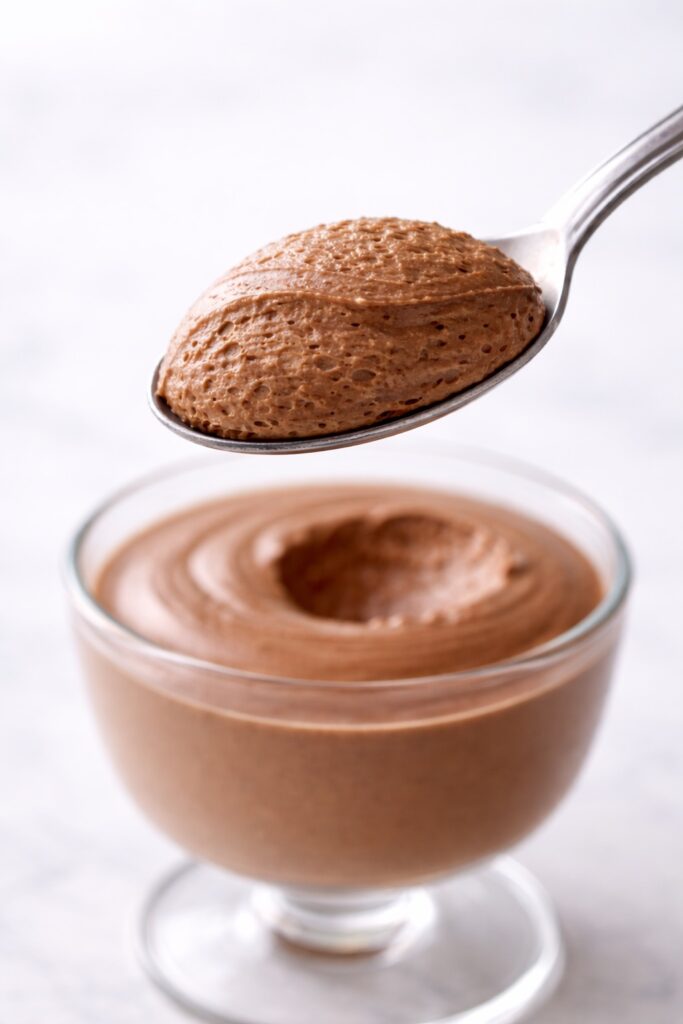
This is one of those desserts that feels quietly impressive — simple in method, but elegant enough to serve for holidays, date nights, or special dinners.
Why This Chocolate Mousse Works (Texture, Structure & Air)
This chocolate mousse works because it balances structure, fat, and air in a very controlled way. Unlike baked desserts, mousse depends almost entirely on technique rather than heat to create its final texture.
Structure: Melted chocolate provides the base structure. As it chills, the cocoa butter firms up just enough to hold the mousse together without making it stiff.
Air: Whipped cream introduces air into the mixture, creating that light, airy texture mousse is known for. The goal is to keep as much of that air as possible during folding.
Fat: Both the chocolate and cream contain fat, which gives the mousse its rich, smooth mouthfeel while also helping stabilize the texture as it sets.
Temperature: Slightly warm (not hot) chocolate is key. If it is too hot, it deflates the whipped cream. If it is too cool, it becomes difficult to fold smoothly.
One important detail: mousse is one of those desserts where overmixing has a direct and noticeable effect. Even a small amount of extra stirring can remove the air that creates its light texture.
When these elements are handled correctly, the result is a mousse that feels smooth, light, and beautifully balanced — rich enough to be satisfying, but airy enough to stay elegant.
The Science Behind a Great Chocolate Mousse
Even though chocolate mousse is a no-bake dessert, its texture relies on a precise balance of fat, air, and temperature.
Chocolate Structure: Melted chocolate contains cocoa butter, which firms up as the mousse chills. This creates a soft structure that allows the mousse to hold its shape without becoming dense or stiff.
Air Incorporation: Whipped cream traps tiny air bubbles inside fat. These air pockets are what give mousse its light, airy texture. The more gently the mixture is handled, the more of that air is preserved.
Emulsification: When chocolate and cream are combined properly, they form a smooth, stable mixture. If the temperature is off, the mixture can separate or become grainy instead of silky.
Temperature Control: Chocolate should be slightly warm when folded into the cream. Too hot, and it collapses the air. Too cool, and it thickens too quickly, making folding uneven.
One small but important insight: soft peaks create a better mousse than stiff peaks. Cream that is too stiff does not fold as smoothly and can lead to a heavier final texture. If you want a clearer visual reference, this guide on how to whip cream to soft peaks explains the difference in a very practical way.
This is why chocolate mousse feels so unique — it is not built through baking, but through careful control of texture and structure at every step.
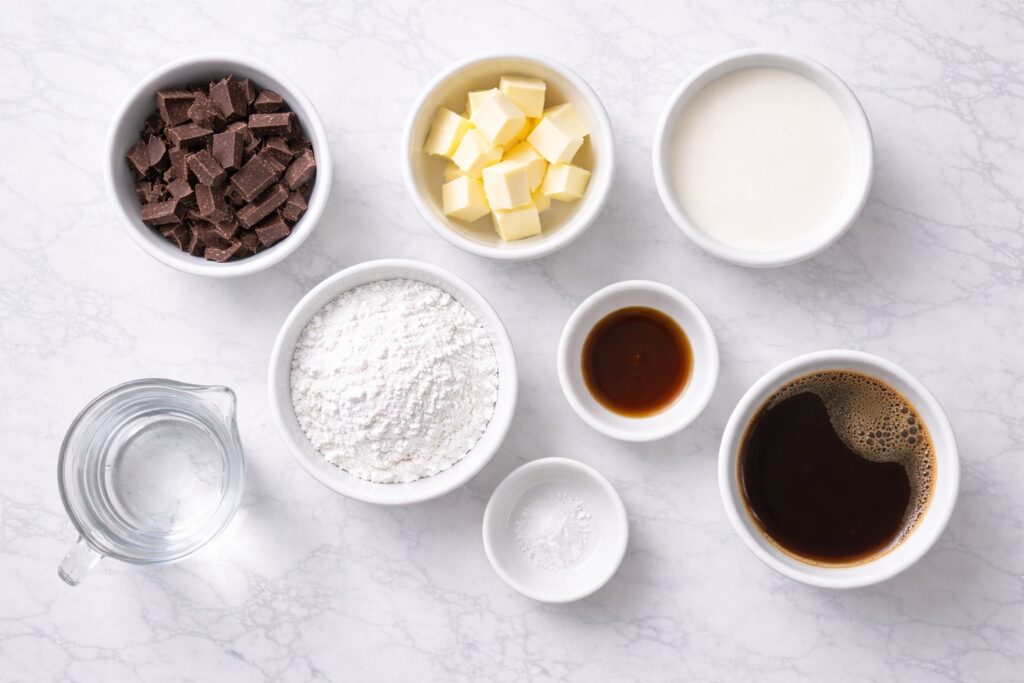
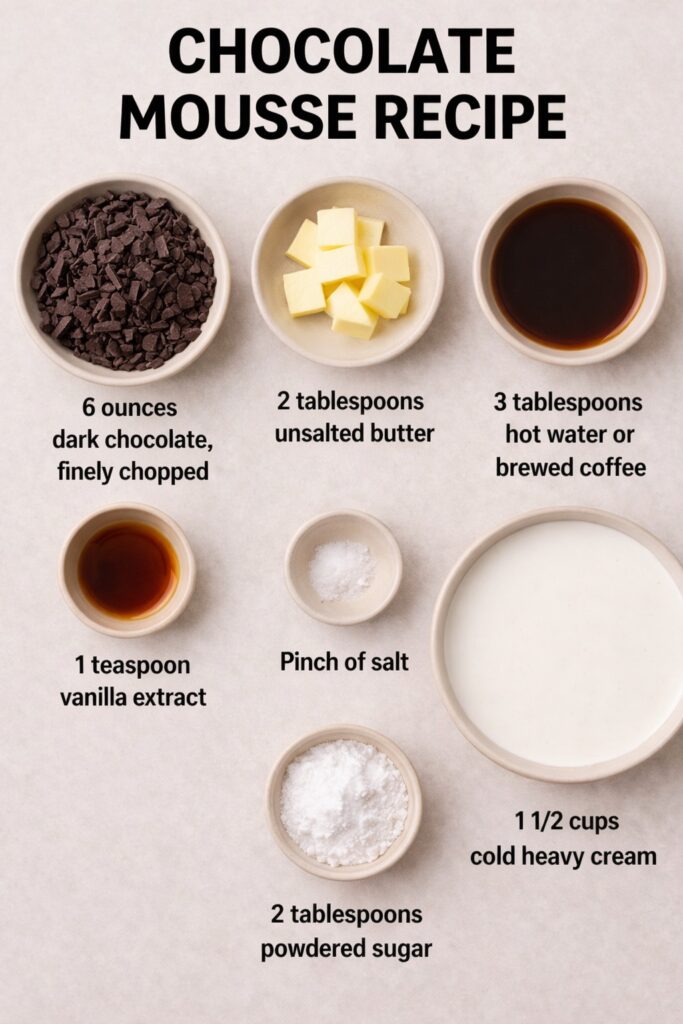
Ingredients
- 6 ounces dark chocolate, finely chopped
- 2 tablespoons unsalted butter
- 3 tablespoons hot water or brewed coffee
- 1 teaspoon vanilla extract
- Pinch of salt
- 1 1/2 cups cold heavy cream
- 2 tablespoons powdered sugar
Ingredient Intelligence (What Makes Chocolate Mousse Work)
Chocolate mousse depends heavily on ingredient quality and balance. Because the recipe is simple, each component plays a noticeable role in both texture and flavor.
Dark Chocolate
This is the foundation of the mousse. Chocolate in the 60% to 70% range gives the best balance between richness, structure, and smoothness. Lower percentages can make the mousse too sweet and soft, while very dark chocolate can create a firmer, more intense result.
Heavy Cream
Whipped cream provides the air that gives mousse its light texture. It must be cold to whip properly and should be beaten only to soft peaks. Overwhipped cream creates a denser texture and folds less smoothly into the chocolate.
Butter
A small amount of butter adds extra smoothness and helps round out the chocolate flavor. It also contributes to a more velvety finish once the mousse chills.
Hot Water or Coffee
This slightly loosens the melted chocolate, making it easier to combine smoothly with the cream. Coffee does not dominate the flavor — it simply enhances the depth of the chocolate.
Powdered Sugar
Used in a small amount to gently sweeten the whipped cream. Because chocolate is the main flavor, keeping sweetness controlled helps maintain a more refined, balanced taste.
Vanilla Extract and Salt
These enhance the overall flavor without standing out. Salt, in particular, sharpens the chocolate and makes the mousse taste fuller and more complex.
Key insight: chocolate provides structure, while whipped cream provides air. The balance between those two elements is what determines whether the mousse feels light and elegant or dense and heavy. In a dessert this simple, that balance is everything.
Another small but important detail: because mousse relies on fat and air instead of starch, small changes in ingredient ratios or technique can have a noticeable impact on the final texture.
Equipment You’ll Need
- Heatproof bowl
- Small saucepan or microwave-safe bowl for melting chocolate
- Large mixing bowl
- Hand mixer or stand mixer
- Rubber spatula
- 6 small dessert glasses, ramekins, or serving cups
A flexible rubber spatula really helps here. It makes it much easier to fold gently along the sides and bottom of the bowl without knocking out too much air.
How to Make Chocolate Mousse (Step-by-Step)
This chocolate mousse comes together in just a few steps, but the texture depends on how gently and intentionally each stage is handled.
1. Melt the Chocolate
Place the chopped chocolate, butter, and hot water or coffee in a heatproof bowl. Melt gently over a saucepan of barely simmering water or in short microwave bursts, stirring until completely smooth.
Stir in the vanilla extract and a pinch of salt.
Let the mixture cool for several minutes, until it is still fluid but no longer hot. Temperature control matters more than it seems here — if the chocolate is too hot, it can collapse the whipped cream and flatten the texture. For a deeper understanding of how chocolate behaves during melting, this guide on how to melt chocolate properly explains the process in a simple and practical way.
Visual cue: The chocolate should look smooth, glossy, and slightly thickened, but still easily pourable.
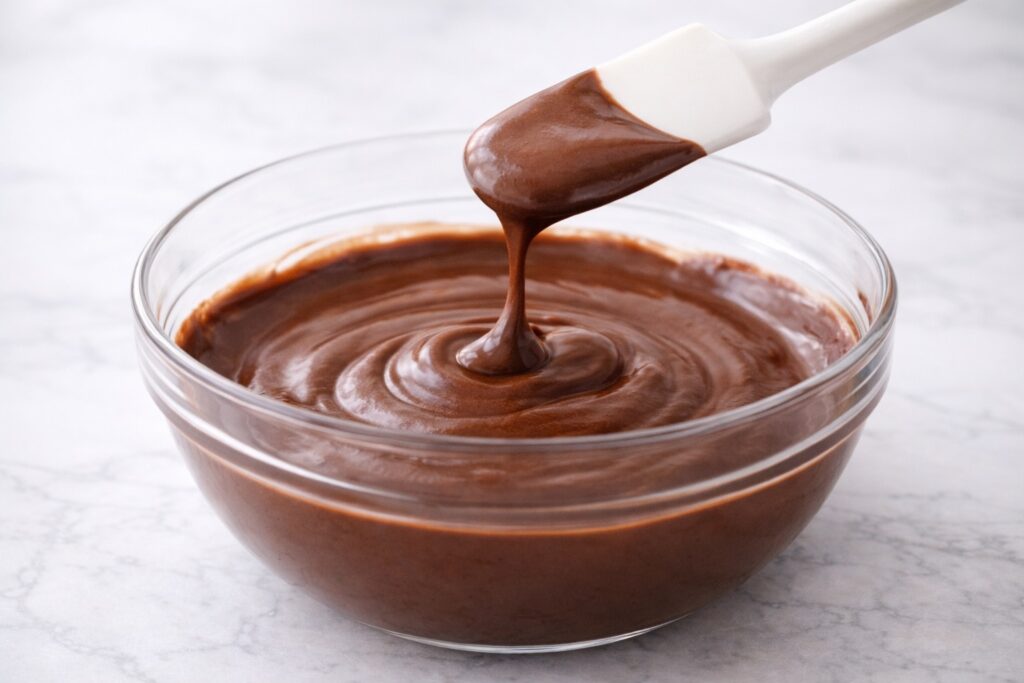
Important detail: If the chocolate feels hot to the touch, it is too warm. Slightly warm chocolate blends best without collapsing the whipped cream.
2. Whip the Cream
In a chilled bowl, whip the cold heavy cream with powdered sugar until soft peaks form.
Visual cue: The cream should hold its shape softly, with peaks that gently fold over rather than standing stiff.
Important: Stop before stiff peaks. Overwhipped cream creates a heavier mousse and is harder to fold smoothly.
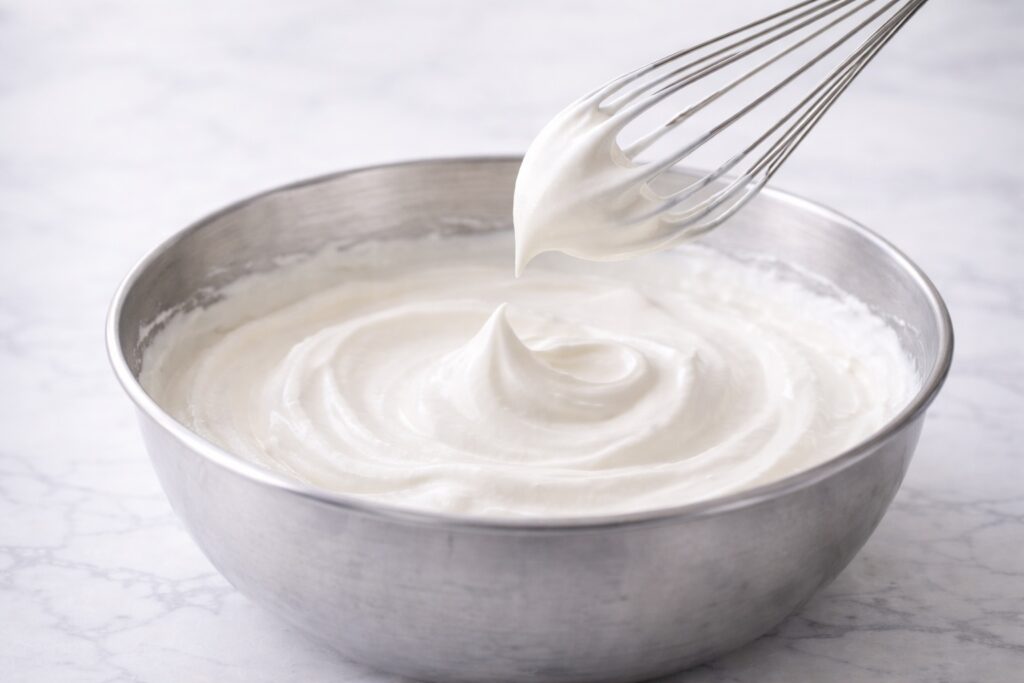
This is one of the easiest places to lose that light, airy texture, which is why stopping at soft peaks makes such a noticeable difference in the final mousse.
3. Lighten the Chocolate Base
Add about one-third of the whipped cream to the melted chocolate.
Stir gently but fully until the mixture becomes lighter and smoother.
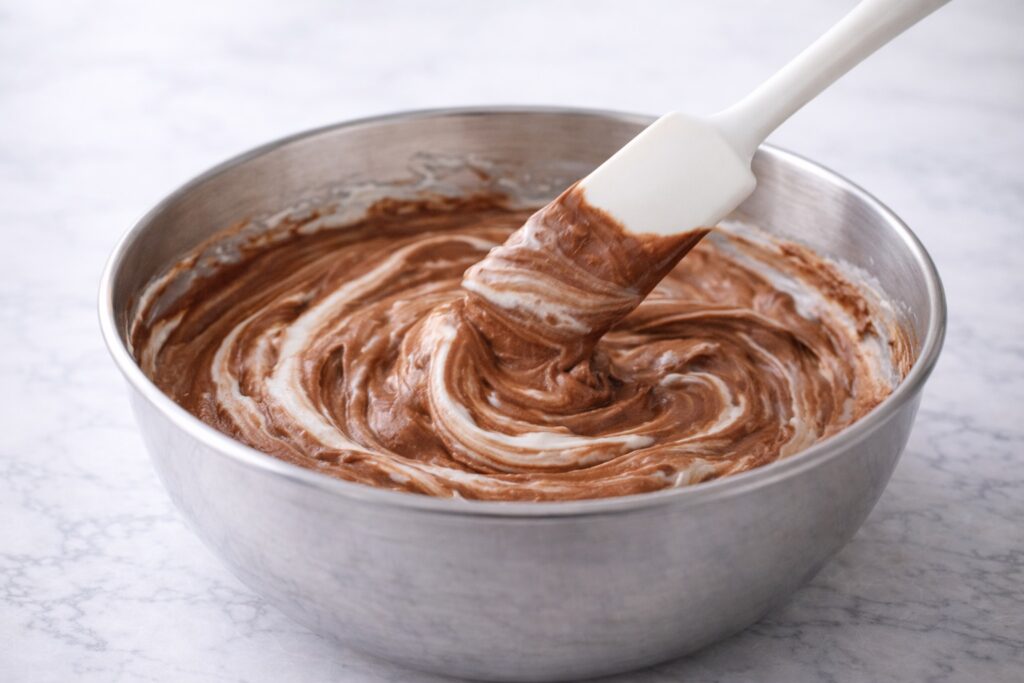
Why this matters: This step loosens the chocolate base, making it much easier to fold in the remaining cream without deflating it.
4. Fold in the Remaining Cream
Add the rest of the whipped cream in two batches.
Using a rubber spatula, fold gently by sweeping along the bottom of the bowl and lifting the mixture over itself.
Continue just until the mixture looks smooth and uniform, with no large white streaks.
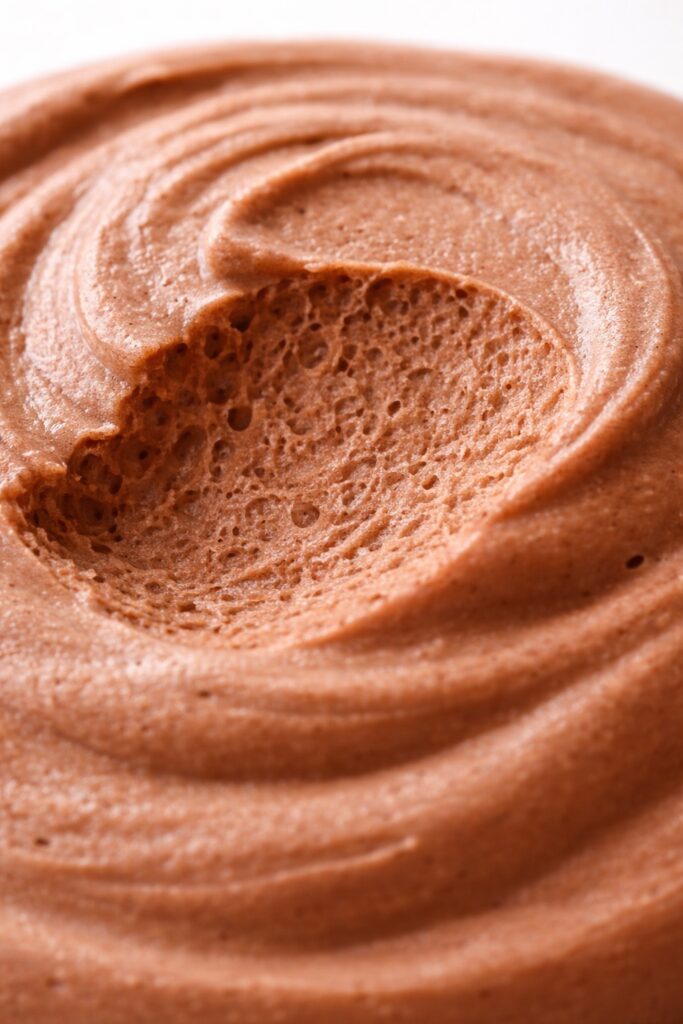
Visual cue: The mousse should look airy, slightly thick, and evenly colored.
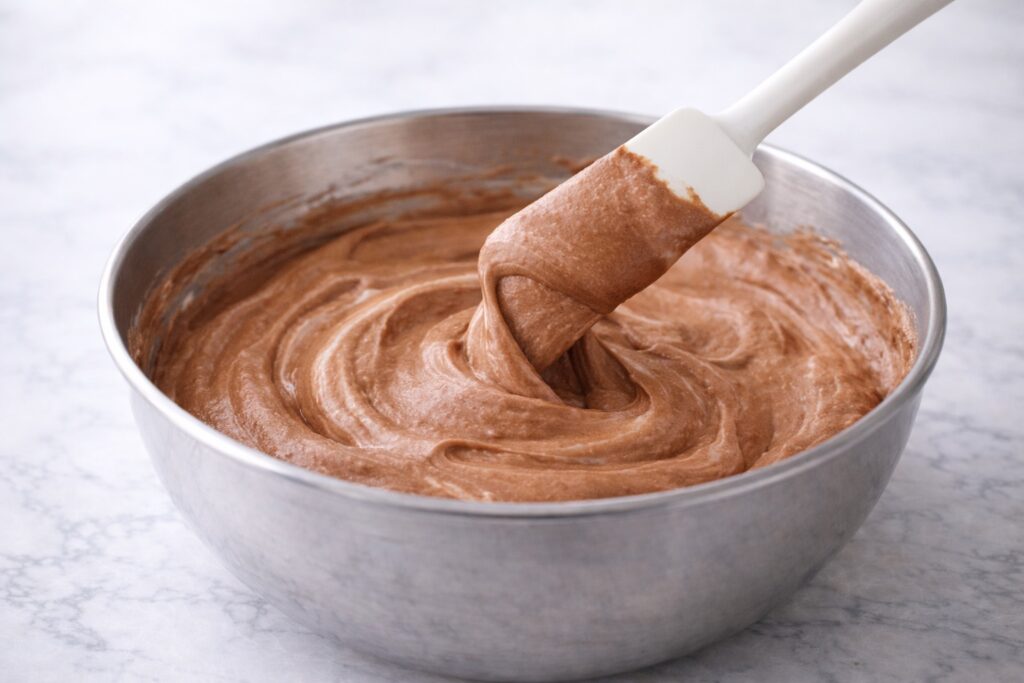
Important detail: Overmixing at this stage removes air and creates a denser texture. Stop as soon as everything is combined.
5. Portion and Chill
Spoon the mousse into serving glasses, ramekins, or small dessert cups.
Smooth the tops if desired, then cover and refrigerate for at least 2 hours.
Visual cue after chilling: The mousse should hold its shape softly while still feeling smooth and creamy when spooned.
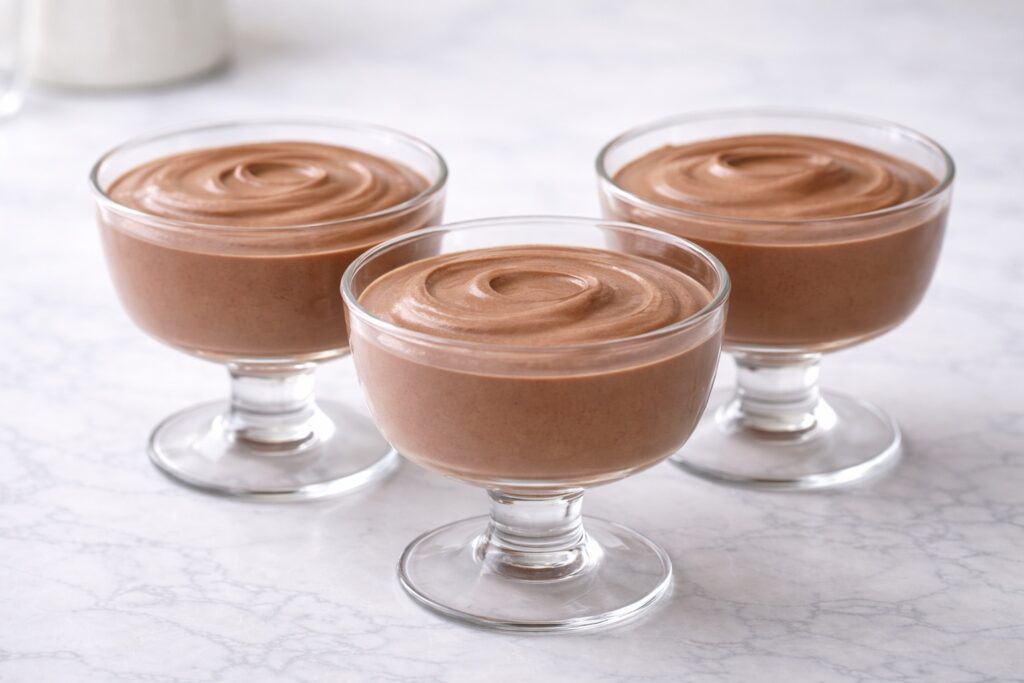
From experience, the texture improves even more after a longer chill — around 4 hours or overnight gives the most balanced, silky result.
How to Tell When Chocolate Mousse Is Perfect
Before chilling:
- The chocolate base looks smooth, glossy, and fluid — not grainy or thick
- Whipped cream holds soft peaks, not stiff or dry
- The combined mousse looks airy and evenly colored, without heavy streaks
After chilling:
- The mousse is softly set but not firm
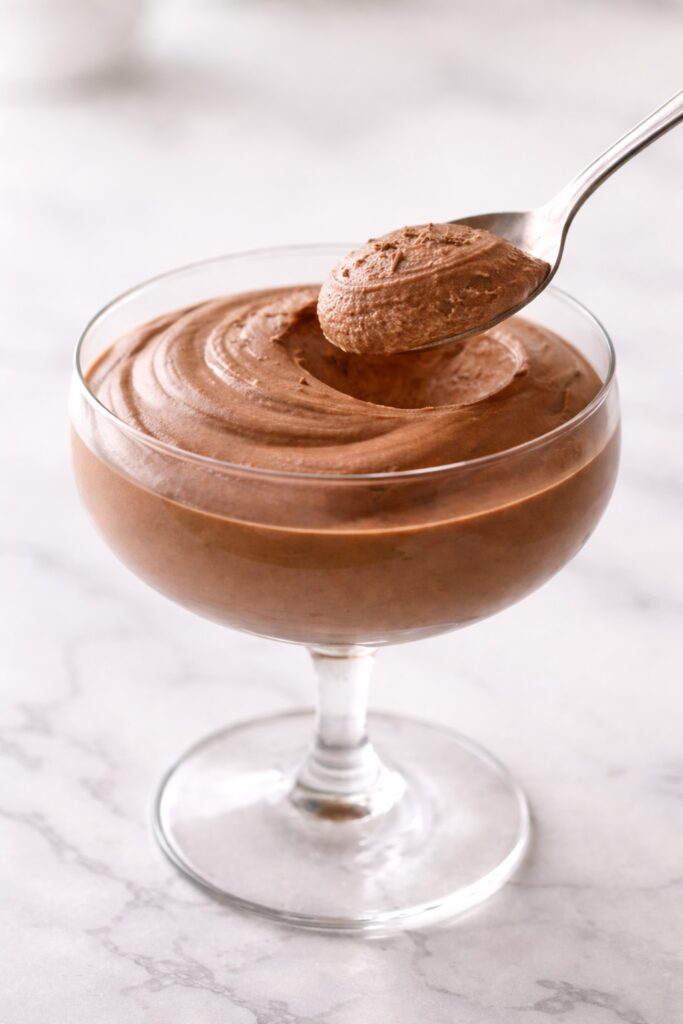
- A spoon leaves a clean, gentle mark without collapsing the structure
- The texture looks silky and smooth, not dull or dense
Most reliable cue:
The mousse should feel light on the spoon but still rich on the palate — soft, airy, and creamy at the same time.
Chocolate Mousse Texture & Behavior Guide
| Stage | What to Expect |
|---|---|
| Chocolate base | Smooth, glossy, fluid, and fully melted without graininess |
| Whipped cream | Soft peaks that hold gently but still fold over at the tip |
| Combined mousse | Light, airy, evenly colored, and slightly thickened |
| Chilled mousse | Softly set, silky, and stable enough to hold its shape in the glass |
| Overmixed mousse | Denser texture, less airy feel, and a heavier spoonful |
A well-made chocolate mousse should feel light and smooth at the same time. It should hold its shape in the glass, but melt easily on the spoon — a balance that comes from properly folded air and gently set chocolate.
Troubleshooting Guide
| What You Notice | What It Usually Means | How to Fix or Prevent It |
|---|---|---|
| Mousse feels too dense | The cream was overwhipped or the mixture was overfolded | Stop at soft peaks and fold more gently next time |
| Mousse is too loose | The chocolate was too warm or the mousse needs more chill time | Cool the chocolate slightly before folding and chill longer |
| Texture looks grainy | The chocolate seized or cooled unevenly | Melt slowly and stir until fully smooth before using |
| Streaks of white remain | The cream is not fully folded in yet | Continue folding gently just until combined |
| Mousse feels too firm after chilling | The chocolate percentage may be too high | Use chocolate around 60% to 70% cocoa for a softer finish |
Expert Tips for the Best Chocolate Mousse Texture
- Use high-quality chocolate. Since chocolate is the main flavor, its quality directly affects the final result. A chocolate you enjoy eating on its own will always give a better mousse.
- Stop whipping at soft peaks. Soft peaks fold more smoothly into the chocolate and create a lighter texture. Overwhipped cream makes the mousse heavier and harder to combine evenly.
- Let the chocolate cool slightly before folding. If the chocolate is too warm, it will melt the whipped cream and reduce the airiness. Slightly warm chocolate blends more smoothly while keeping the structure intact.
- Fold gently, not quickly. Use a wide spatula and slow folding motions. Fast or aggressive mixing removes air and creates a denser mousse.
- Use a large bowl for folding. A bigger bowl gives you more space to move the mixture without compressing it, helping preserve the light texture.
- Chill long enough for proper structure. The mousse sets as the cocoa butter firms up. Rushing the chilling step can leave it too soft and less stable.
- Serve slightly softened, not ice-cold. Let the mousse sit for a few minutes before serving. This brings out a fuller chocolate flavor and a smoother texture.
Small details make a big difference here. Chocolate mousse is one of those desserts where technique matters more than ingredients — and once you get those details right, the result feels effortlessly refined.
Common Chocolate Mousse Mistakes (And How to Fix Them)
| Mistake | What Happens | How to Fix It |
|---|---|---|
| Adding whipped cream to hot chocolate | The cream melts and the mousse loses its airy texture | Let the chocolate cool until slightly warm before folding |
| Overwhipping the cream | The mousse becomes dense and harder to fold smoothly | Stop at soft peaks for a lighter, more flexible texture |
| Overmixing during folding | Air is lost and the mousse turns heavy instead of light | Fold gently and stop as soon as the mixture is combined |
| Using low-quality chocolate | The flavor tastes flat or overly sweet | Use chocolate in the 60–70% range for best balance |
| Not chilling long enough | The mousse stays too soft and does not hold its shape | Chill for at least 2 hours, ideally longer |
| Chocolate seizing during melting | The texture becomes grainy and difficult to smooth out | Melt slowly and avoid contact with water or overheating |
Chocolate mousse is surprisingly sensitive to small changes. Most texture issues come from temperature or mixing — once you control those two elements, the result becomes much more consistent and reliable.
Chocolate Mousse vs. Similar Desserts
| Dessert | Main Texture | How It Sets | Overall Feel |
|---|---|---|---|
| Chocolate Mousse | Airy, silky, softly structured | Whipped air + chilled chocolate fat | Elegant and light |
| Chocolate Pudding | Smooth, creamy, thicker | Usually starch-thickened | Comforting and spoonable |
| Chocolate Ganache | Dense, rich, velvety | Chocolate and cream emulsion | Heavier and more intense |
| Whipped Chocolate Cream | Light and fluffy | Mostly whipped cream structure | Softer and less rich |
How to Serve Chocolate Mousse (Simple & Elegant Ideas)
Chocolate mousse is best served chilled in small glasses, ramekins, or elegant dessert cups, where its smooth texture and airy structure really stand out. Because it’s rich, smaller portions often feel more satisfying — which is part of what makes it such a perfect make-ahead dessert for gatherings.
The texture is at its best when it’s cold but not overly firm. Letting it sit for a few minutes before serving allows the mousse to soften slightly, bringing out a deeper chocolate flavor and a more velvety finish.
For a simple, refined presentation, top it with lightly whipped cream, shaved chocolate, a dusting of cocoa powder, or a few fresh berries. Even a small detail — like a single chocolate curl — can make it feel instantly more elegant.
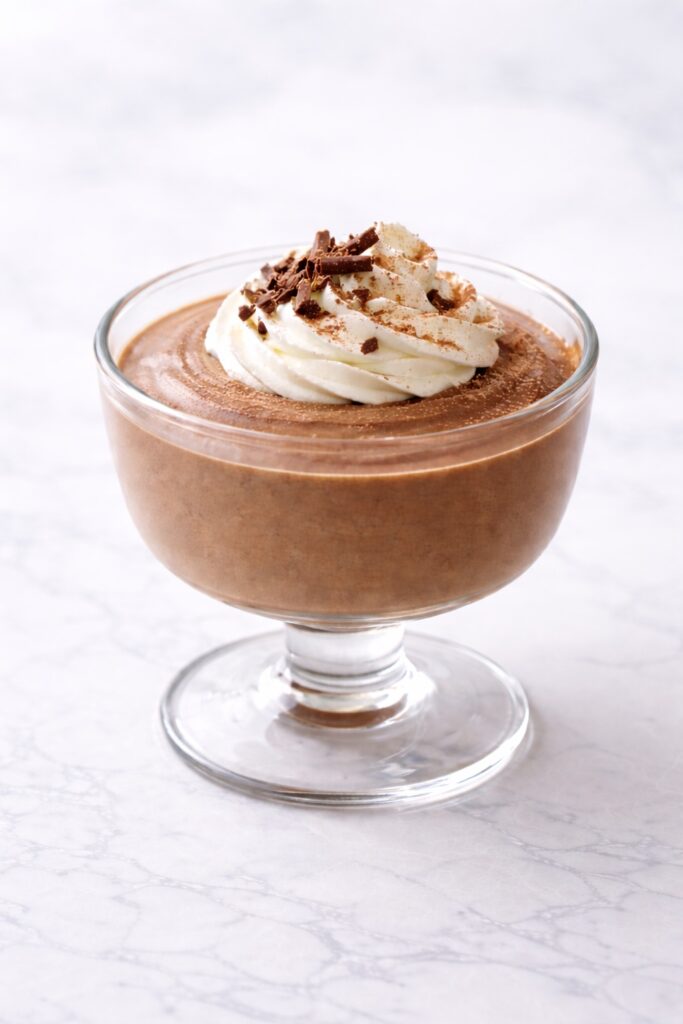
This is the kind of dessert that works beautifully for dinner parties, holidays, or quiet evenings when you want something that feels a little special without extra effort. If you enjoy desserts with that same polished, make-ahead feel, cheesecake cups and no-bake cheesecake make equally elegant options.
Save this for a make-ahead dessert that feels elegant, effortless, and always impressive.
Storage & Make-Ahead
- Store covered in the refrigerator for up to 3 days.
- For the best texture, keep the mousse chilled until serving.
- You can make it a full day ahead, which makes it especially useful for entertaining.
- Freezing is not ideal because the texture can become less silky after thawing.
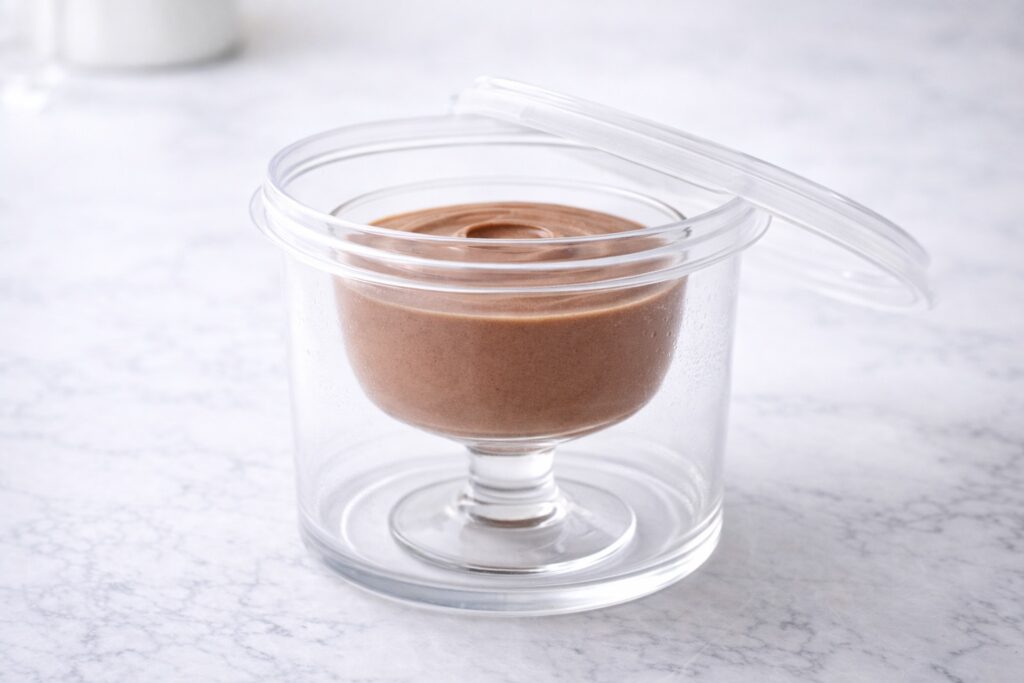
Make-ahead desserts that still feel elegant are always valuable, and this one fits that category beautifully. In fact, chocolate mousse often feels even better after a proper overnight chill because the flavor settles and the texture becomes more cohesive.
Variations
Once you master the base, this chocolate mousse becomes incredibly versatile — small changes in flavor or presentation can completely transform the experience.
Extra Dark Chocolate Mousse Variation
If you love a deeper, more intense chocolate flavor, this Valentine’s Day version creates an ultra rich dark chocolate mousse while still keeping the texture light, airy, and silky smooth. The secret is slightly increasing the dark chocolate and adding a small amount of cocoa powder for extra depth without making the mousse too heavy.
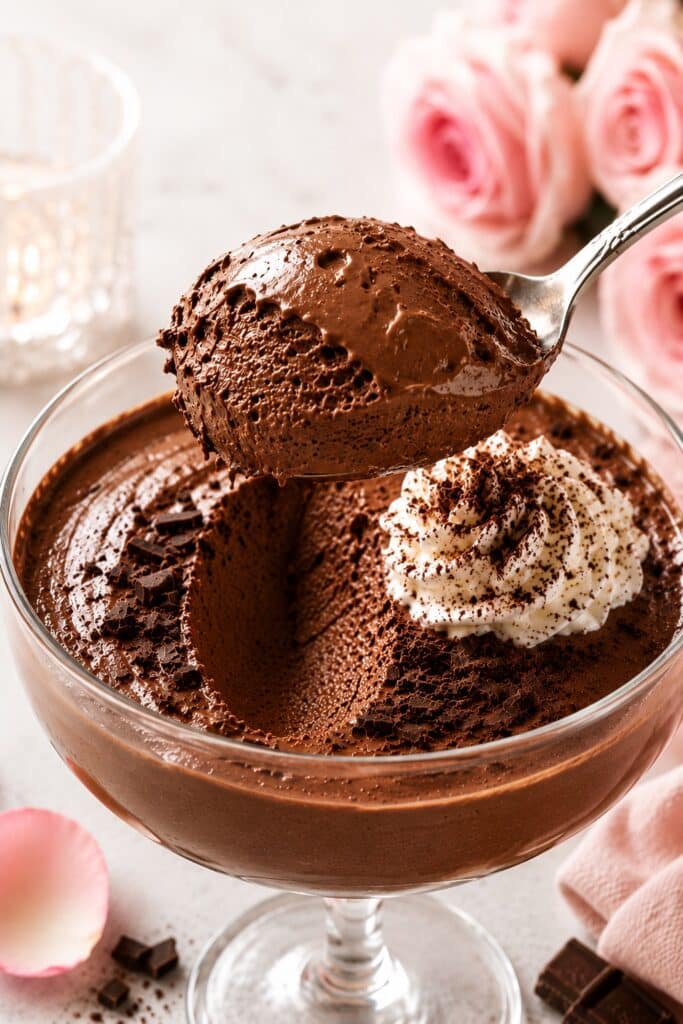
For this variation, use:
- 7 ounces dark chocolate (70%), finely chopped
- 2 tablespoons unsalted butter
- 3 tablespoons hot brewed coffee
- 1 teaspoon vanilla extract
- Pinch of salt
- 1 1/2 cups cold heavy cream
- 2 tablespoons powdered sugar
- 1 tablespoon unsweetened cocoa powder
The brewed coffee quietly intensifies the dark chocolate flavor without making the mousse taste like coffee, while the cocoa powder gives the mousse a more luxurious pâtisserie-style richness. Even with the deeper chocolate flavor, the whipped cream keeps the texture soft, airy, glossy, and perfectly spoonable for an elegant Valentine’s Day dessert.
This version pairs beautifully with whipped cream, chocolate shavings, fresh raspberries, or strawberries for an extra romantic presentation.
Espresso Chocolate Mousse
Add 1–2 teaspoons of espresso to the melted chocolate. It won’t taste like coffee — it simply deepens the chocolate flavor, making it richer and more complex.
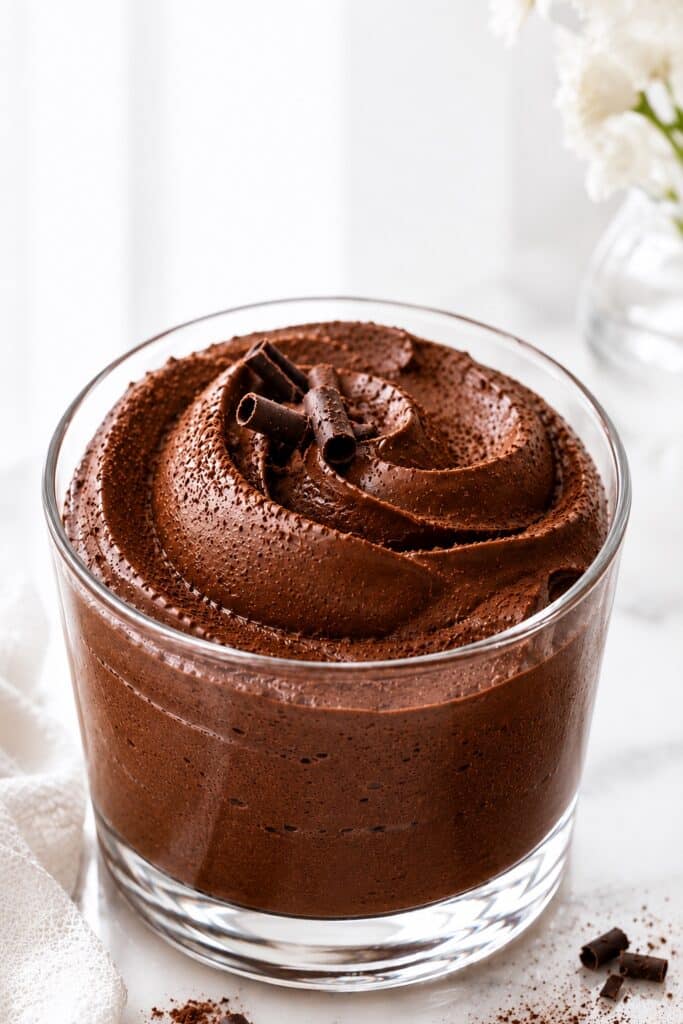
Orange Chocolate Mousse
Stir in 1/2 teaspoon finely grated orange zest into the chocolate base for a subtle citrus brightness that balances the richness.
Milk Chocolate Mousse
Use milk chocolate for a sweeter, softer version with a creamier finish. Reduce the cream slightly if needed to keep the texture stable.
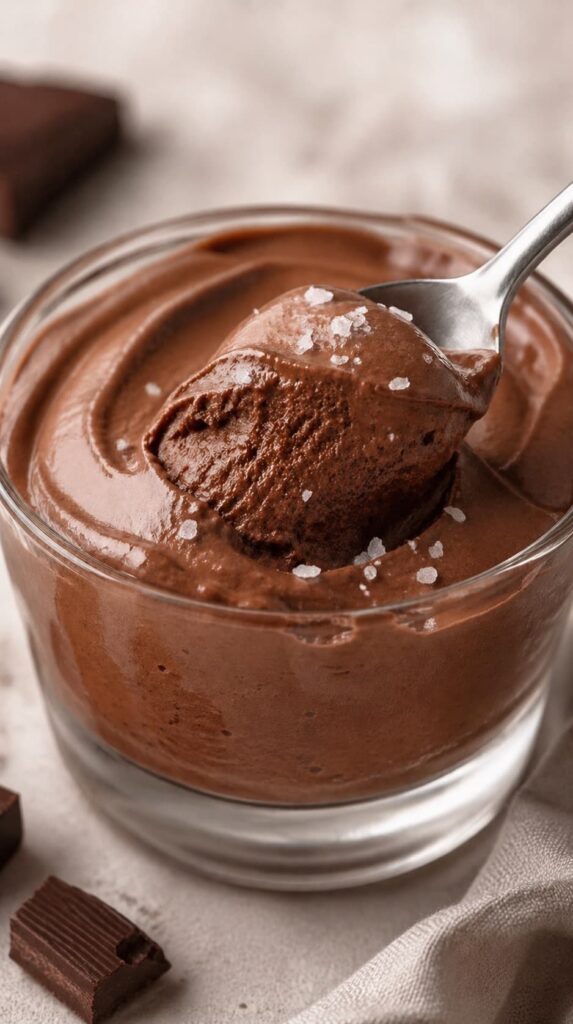
Dark Chocolate Sea Salt Mousse
Finish with a tiny pinch of flaky sea salt just before serving to enhance the chocolate and add contrast.
Berry-Topped Chocolate Mousse
Serve with fresh raspberries or strawberries for a light, fresh contrast to the rich mousse.
Layered Chocolate Mousse Cups
Layer the mousse with crushed cookies, brownie crumbs, or whipped cream in small glasses. This creates a visually striking dessert with contrast in texture — perfect for serving and highly saveable on Pinterest.
Chocolate Mousse Parfait (Elegant Glass Dessert)
Pipe the mousse into tall glasses and alternate with light whipped cream or shaved chocolate layers. The clean, visible layers create a refined, bakery-style presentation that looks instantly elevated with minimal effort.
If you want to take the flavor in a richer direction, desserts like flourless chocolate cake offer a more intense chocolate experience, while lighter chilled desserts keep that same elegant finish with a softer texture.
Frequently Asked Questions
Can I use milk chocolate instead of dark chocolate?
Yes, but the mousse will be sweeter and usually a little softer. Dark chocolate gives a deeper flavor and more classic mousse structure.
Why did my chocolate mousse turn out dense?
This usually happens when the whipped cream is too stiff or when the mixture is overfolded. Soft peaks and gentle folding help keep the mousse light.
Can I make chocolate mousse ahead of time?
Yes. It is actually an excellent make-ahead dessert because chilling improves both the texture and overall finish.
How long does chocolate mousse need to chill?
At least 2 hours, though 4 hours or overnight often gives an even better texture.
Can I serve chocolate mousse in one large bowl instead of individual glasses?
Yes, but individual portions usually feel more elegant and are easier to serve cleanly.
Can I make this without coffee?
Absolutely. Use hot water instead. Coffee simply deepens the chocolate flavor, but it is optional.
More Elegant Desserts You’ll Love
If you love desserts with a silky texture and that same refined, make-ahead ease, there are several recipes on the blog that deliver a similar kind of experience — smooth, elegant, and quietly impressive.
Quick picks: For another elegant chilled dessert, try Panna Cotta. If you want something creamy and crowd-pleasing, go with Cheesecake Cups. For a deeper chocolate direction, Chocolate Pudding is a great next choice.
Elegant Chilled Desserts
- Panna Cotta – smooth, delicate, and perfect for a simple but elegant dessert
- No-Bake Cheesecake – creamy, easy, and ideal for make-ahead serving
- Cheesecake Cups – chilled, creamy, and especially good for gatherings
Rich Chocolate Desserts
- Chocolate Pudding – softer, creamier, and more spoonable with a classic chocolate finish
- Flourless Chocolate Cake – dense, rich, and ideal if you want a more intense chocolate dessert
- Matilda Cake – bold, indulgent, and much richer if you want a full celebration-style chocolate dessert
Creamy Favorites with a Similar Feel
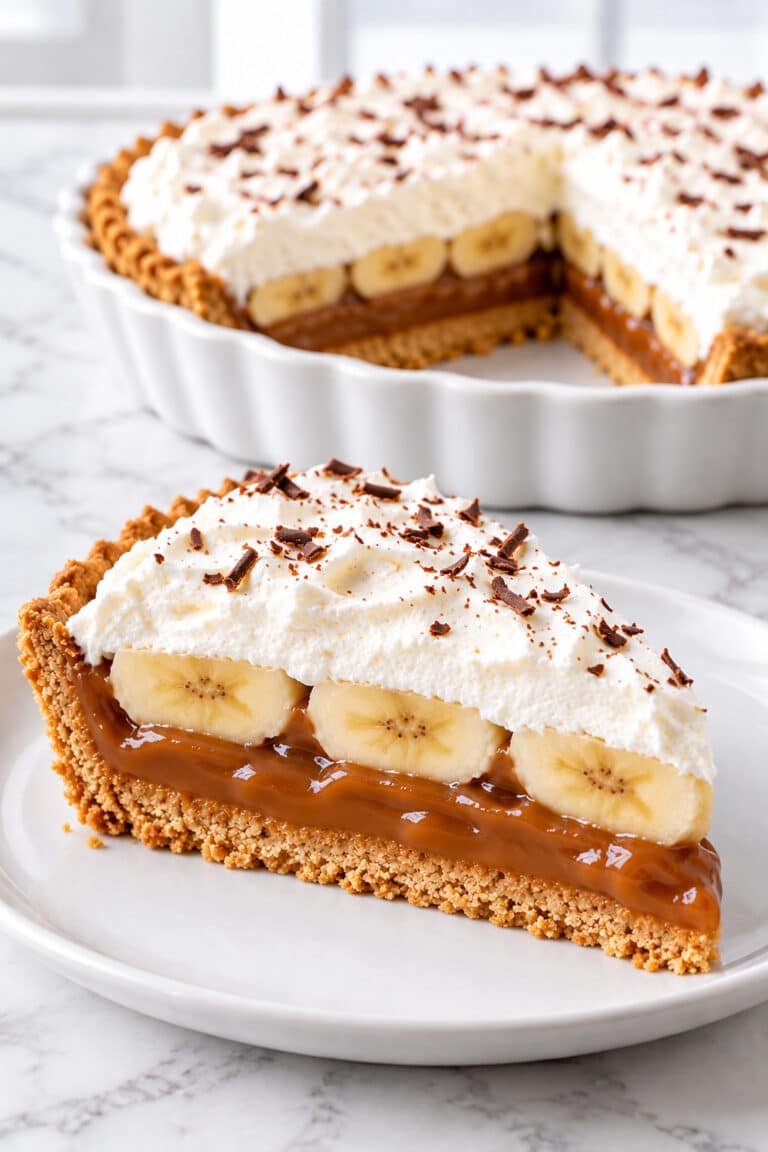
- Banana Pudding – soft, layered, and comforting with a creamy finish
- Cottage Cheese Chocolate Mousse – a higher-protein twist with a similarly smooth chocolate texture
- Tiramisu – layered, creamy, and perfect when you want another elegant make-ahead dessert
Once you understand what makes chocolate mousse so special — the balance of air, fat, and temperature — it becomes much easier to explore other chilled and creamy desserts while still keeping that same polished, bakery-style feel.
Recipe Recap
This chocolate mousse recipe is rich, silky, airy, and surprisingly easy to make at home. With deep chocolate flavor, a smooth whipped texture, and no baking required, it’s the kind of dessert that feels timeless, elegant, and reliably impressive.
Final Thoughts
Chocolate mousse is one of those desserts that proves luxury does not have to be complicated. It is simple in structure, but when done well, it delivers a texture and flavor that feel far more special than the effort suggests.
That is part of its lasting appeal. It feels classic, a little romantic, and quietly impressive in a way that never really goes out of style. Like tiramisu or a simple panna cotta, it proves that texture and balance often matter more than complexity.
This is one of those desserts that feels even more impressive the second time you make it. Once you understand the texture and rhythm of it, chocolate mousse stops feeling delicate and starts feeling dependable — elegant, effortless, and always worth making again.
Love this? There are twenty more like it.
128 pages, five chapters, 15 kitchen guides and 16 printable planning pages — in US Letter and A4.
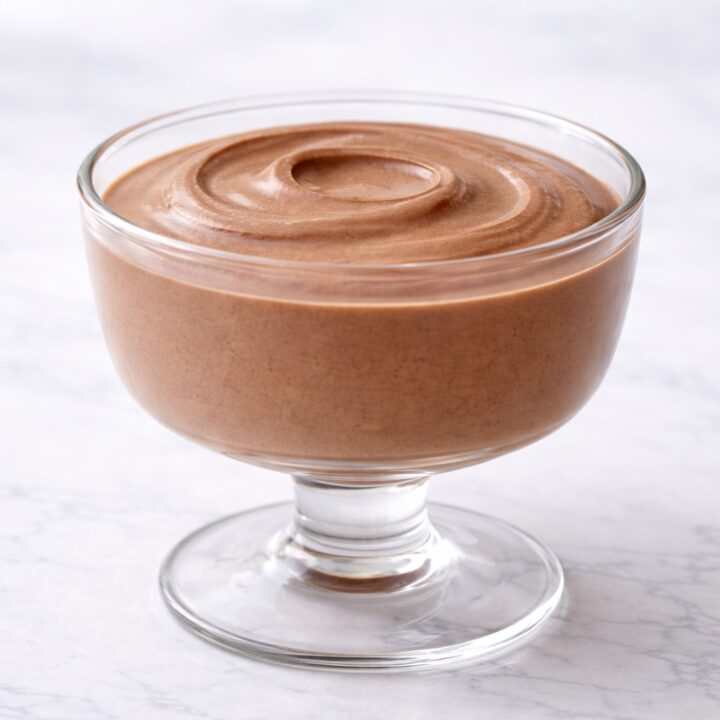
Chocolate Mousse
Silky, airy, and deeply rich, this chocolate mousse recipe creates a perfectly balanced dessert with a smooth, creamy texture and light finish. Made with simple ingredients and no baking, it’s an elegant make-ahead dessert that feels refined yet incredibly easy to prepare.
Ingredients
- 6 ounces dark chocolate, finely chopped
- 2 tablespoons unsalted butter
- 3 tablespoons hot water or brewed coffee
- 1 teaspoon vanilla extract
- Pinch of salt
- 1 1/2 cups cold heavy cream
- 2 tablespoons powdered sugar
Instructions
- Melt the chocolate
Place the chopped chocolate, butter, and hot water or coffee in a heatproof bowl. Melt gently over a double boiler or in short microwave bursts, stirring until smooth. Stir in the vanilla extract and salt, then let cool slightly until just warm, not hot. - Whip the cream
In a chilled bowl, whip the cold heavy cream with powdered sugar until soft peaks form. The cream should hold its shape but gently fold over at the tip. - Lighten the chocolate base
Add about one-third of the whipped cream to the melted chocolate. Stir gently until the mixture becomes lighter and smoother. - Fold the mousse
Add the remaining whipped cream in two batches. Gently fold using a spatula, sweeping along the bottom and lifting the mixture over itself. Continue just until smooth and evenly combined. - Portion and chill
Spoon the mousse into serving glasses or ramekins. Smooth the tops if desired, then refrigerate for at least 2 hours until softly set.
Notes
- Use chocolate between 60–70% cocoa for the best balance of richness and texture.
- Make sure the chocolate is slightly warm, not hot, before folding to avoid deflating the cream.
- Stop whipping at soft peaks — overwhipped cream creates a denser mousse.
- Fold gently and stop as soon as the mixture is combined to preserve the airy texture.
- For the best texture and flavor, chill at least 4 hours or overnight before serving.
Nutrition Information:
Yield: 6 servings Serving Size: 1 servingAmount Per Serving: Calories: 320Total Fat: 24gCarbohydrates: 22gSugar: 18gProtein: 3g
12 Sweet Favorites — Yours, Free 🍰
Tiramisù, no-bake cheesecake, the perfect chocolate chip cookie & 9 more reader-loved desserts — gathered into one beautiful free recipe book. From my kitchen to yours.
No spam, just sweet things. Unsubscribe anytime.