Belgian Waffle Recipe (Crispy Outside, Fluffy Inside Every Time)
🎁 FREE E-BOOK: 12 Sweet Favorites — reader-loved desserts in one beautiful recipe book.
There is something unforgettable about a freshly made Belgian waffle. The deep golden exterior crackles gently under your fork, while the inside stays light, fluffy, and almost cloud-like.
A drizzle of warm maple syrup slips into the deep pockets, collecting between the crisp ridges and creating the kind of breakfast moment that feels both cozy and luxurious.
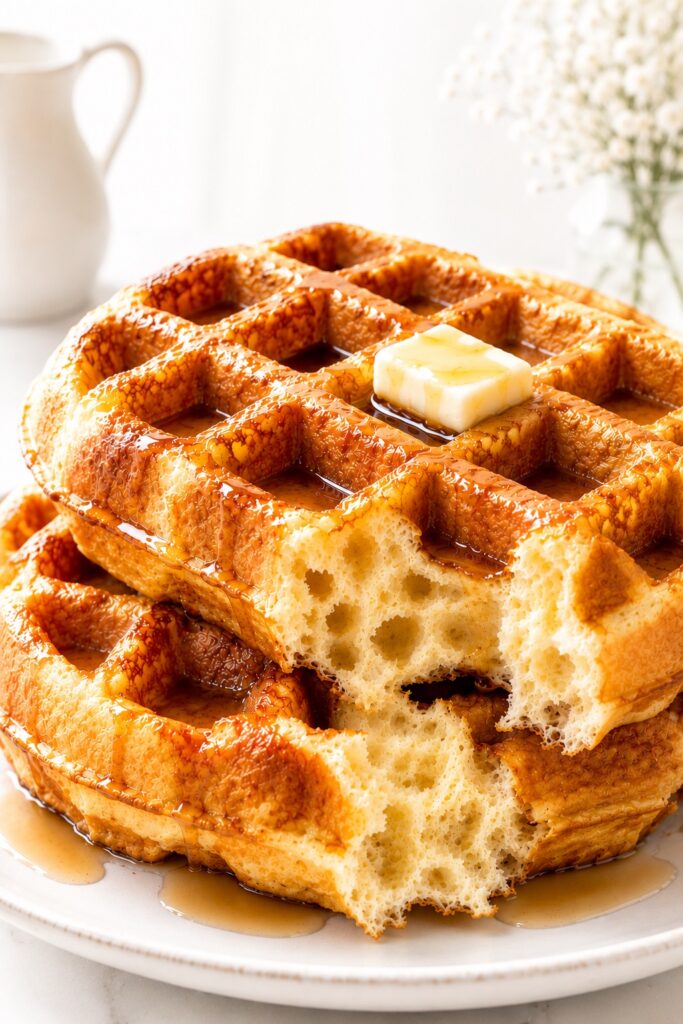
This Belgian waffle recipe delivers everything people love about classic Belgian waffles: crispy edges, airy interiors, rich buttery flavor, and beautiful deep waffle pockets designed to hold fruit, syrup, whipped cream, or whatever toppings you love most.
One reason people save this recipe again and again is because it creates restaurant-quality waffles with simple pantry ingredients. The texture feels special, the process is approachable, and the results look impressive enough for holidays, brunch gatherings, and slow weekend mornings.
Whether you’re making a cozy family breakfast or creating a Pinterest-worthy brunch spread, these waffles strike the perfect balance between comfort food and bakery-style indulgence.
The best part is that once you understand a few simple techniques, you’ll be able to make consistently crisp, fluffy Belgian waffles every time.
Belgian Waffles vs Regular Waffles: What Makes Them Different?
At first glance, Belgian waffles and regular waffles may seem very similar. Both are cooked in a waffle iron and share many of the same ingredients. However, the final texture, appearance, and eating experience are surprisingly different.
Belgian waffles are known for their deep pockets, thicker structure, and lighter interior. They are designed to hold generous amounts of syrup, whipped cream, fruit, and toppings while maintaining a crisp exterior and airy center.
Traditional American waffles are usually thinner, have shallower grids, and tend to be slightly denser. They are excellent for everyday breakfasts but generally do not provide the same dramatic texture contrast that Belgian waffles are famous for.
| Feature | Belgian Waffles | Regular Waffles |
|---|---|---|
| Thickness | Thicker and taller | Thinner |
| Pocket Depth | Deep pockets | Shallow pockets |
| Texture | Crispy outside, fluffy inside | More uniform throughout |
| Topping Capacity | Excellent for holding toppings | Moderate |
| Presentation | Bakery and brunch style | Classic breakfast style |
| Best For | Brunches, holidays, entertaining | Everyday breakfasts |
Why Belgian Waffles Have Deep Pockets
The deeper waffle grids come from the design of the Belgian waffle iron itself. The taller plates create larger pockets that trap syrup, melted butter, fruit sauces, and whipped cream, making every bite more flavorful.
This is one reason Belgian waffles are often served in cafés, brunch restaurants, and hotel breakfast buffets.
Why Belgian Waffles Feel Lighter
Most Belgian waffle recipes are formulated to create more lift and airiness than traditional waffles. The combination of eggs, baking powder, steam production, and high cooking temperatures helps produce a fluffy interior while maintaining crisp edges.
The result is a waffle that feels substantial without feeling heavy.
Which Type of Waffle Is Better?
Neither style is necessarily better—it depends on the experience you’re looking for.
If you want a quick everyday breakfast, regular waffles work beautifully. If you’re looking for crisp edges, fluffy centers, impressive presentation, and waffles that can handle plenty of toppings, Belgian waffles are usually the winner.
For weekend brunches, holiday mornings, and special breakfast gatherings, Belgian waffles are often the style people remember most.
Quick Belgian Waffle Recipe Overview
| Detail | Information |
|---|---|
| Texture | Crispy outside, fluffy inside |
| Flavor | Buttery, lightly sweet, vanilla-forward |
| Difficulty | Easy |
| Time | 30 minutes |
| Servings | 4 servings |
| Method | Belgian waffle iron |
| Best For | Breakfast, brunch, holidays, meal prep |
In short: These Belgian waffles are crisp on the outside, soft and airy inside, easy to make, and perfect for both everyday breakfasts and special brunch occasions.
Why These Belgian Waffles Turn Out So Light and Crispy
Great Belgian waffles depend on balance.
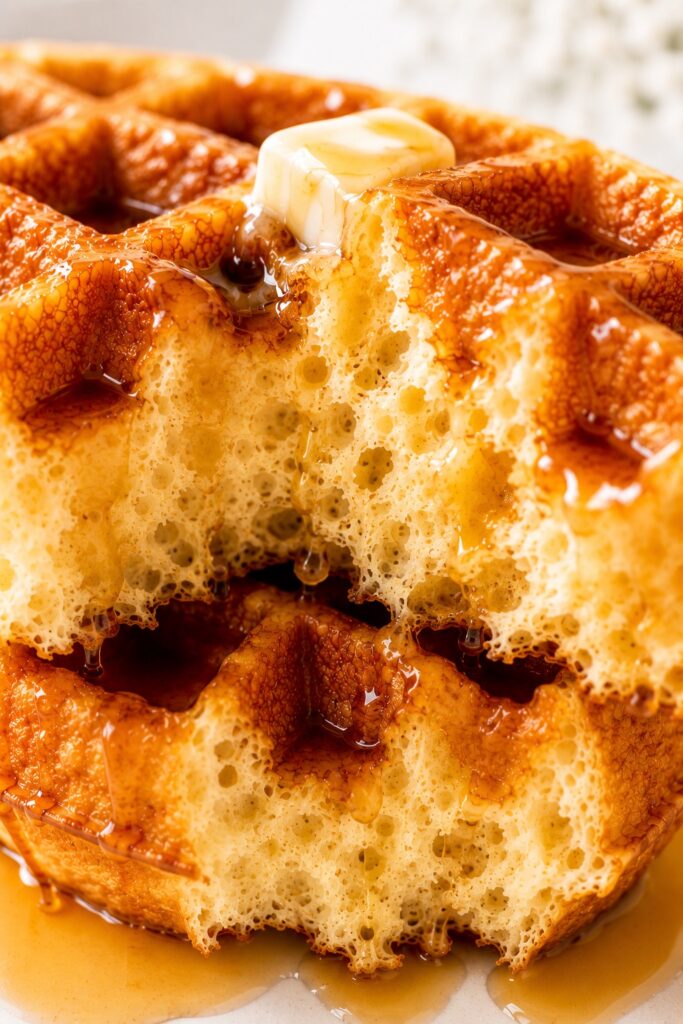
The flour provides structure while the eggs contribute stability and richness. Milk adds moisture, while melted butter creates tenderness and flavor.
The baking powder produces steam and carbon dioxide as the batter cooks, helping create the airy interior that Belgian waffles are known for.
The waffle iron plays an equally important role. Its high heat rapidly evaporates moisture from the surface of the batter, creating the crisp golden shell while the inside remains soft and fluffy.

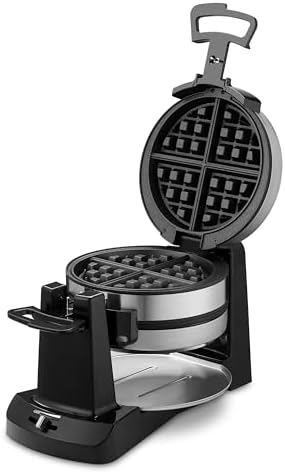

One small detail many home cooks overlook is resting the batter briefly before cooking. A short rest allows the flour to fully hydrate, creating more even texture and better rise.
Why You’ll Love This Belgian Waffle Recipe
There are countless waffle recipes online, but this Belgian waffle recipe continues to be a favorite because it delivers the exact texture most people are looking for: crisp golden edges, deep pockets, and a fluffy interior that stays light instead of dense.
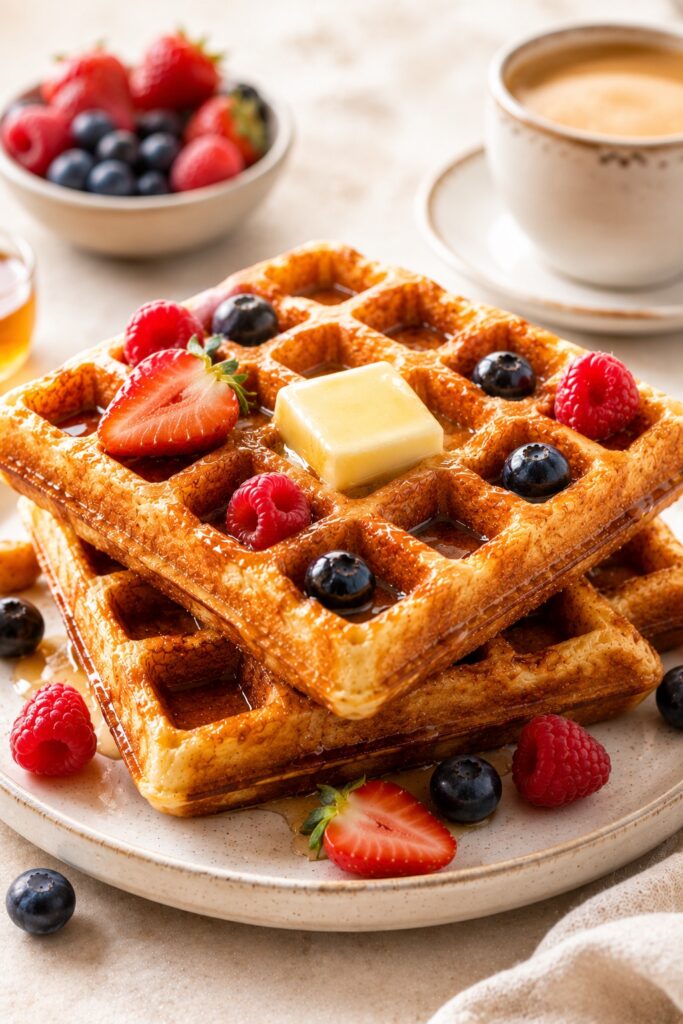
Crispy Outside, Fluffy Inside
The biggest reason people fall in love with Belgian waffles is the contrast in texture. The exterior develops a beautiful golden crispness while the inside stays soft, airy, and tender. Every bite gives you both textures at once.
Deep Pockets Made for Toppings
Unlike thinner waffles, Belgian waffles have deep grids that hold maple syrup, whipped cream, fresh berries, fruit compotes, and melted butter without everything immediately running off the sides.
Those deep pockets are part of what makes Belgian waffles feel special and restaurant-worthy.
Simple Ingredients, Impressive Results
You don’t need specialty ingredients or advanced baking skills to make these waffles. The batter comes together with basic pantry staples, yet the finished waffles look and taste like something from a breakfast café.
Perfect for Both Everyday Breakfasts and Special Occasions
These waffles feel just as appropriate for a quiet Saturday morning as they do for holiday brunches, Mother’s Day breakfasts, birthdays, or family gatherings.
They can be dressed up with elegant toppings or enjoyed simply with butter and maple syrup.
Freezer Friendly and Meal Prep Approved
Belgian waffles store exceptionally well. A single batch can provide quick homemade breakfasts throughout the week, making them just as practical as they are delicious.
Many people intentionally make extra waffles because they reheat beautifully in a toaster or air fryer.
Beautiful Enough to Serve Guests
The tall shape, crisp ridges, and golden color create a presentation that instantly feels inviting. Whether topped with berries, powdered sugar, whipped cream, or warm syrup, Belgian waffles naturally create the kind of breakfast spread people want to photograph and share.
Save this recipe for holiday mornings, cozy weekends, brunch gatherings, or anytime you want breakfast to feel a little more memorable than usual.
The Science Behind Perfect Belgian Waffles
Belgian waffles rely heavily on steam production.
As the batter hits the hot waffle iron, moisture rapidly converts into steam. That steam expands inside the batter and helps create the fluffy interior structure.
Butter coats some of the flour proteins, limiting excessive gluten development. This keeps the waffles tender rather than bread-like.
Meanwhile, baking powder creates additional lift throughout cooking, producing tiny air pockets that contribute to the characteristic Belgian waffle texture.
One interesting observation: waffles often seem slightly soft when they first come out of the iron. During the first minute, excess steam escapes and the exterior continues crisping naturally.
That extra minute of patience often creates noticeably crispier waffles.
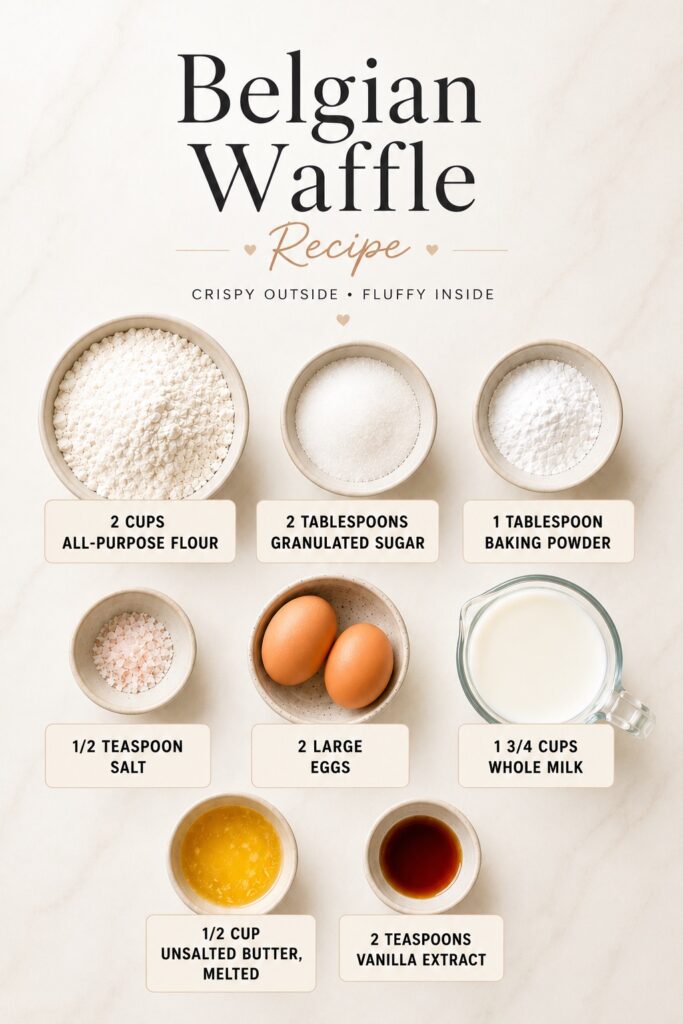
Ingredients You’ll Need
- 2 cups all-purpose flour
- 2 tablespoons granulated sugar
- 1 tablespoon baking powder
- 1/2 teaspoon salt
- 2 large eggs
- 1 3/4 cups whole milk
- 1/2 cup unsalted butter, melted
- 2 teaspoons vanilla extract
Optional toppings:
- Maple syrup
- Fresh berries
- Powdered sugar
- Whipped cream
- Sliced bananas
- Nut butter
Ingredient Intelligence: Small Details That Matter
Flour
All-purpose flour creates the ideal balance between structure and tenderness. Bread flour can make waffles slightly chewier.
Baking Powder
This ingredient creates much of the signature lift. Fresh baking powder produces noticeably fluffier waffles.
Butter
Butter contributes flavor, crispness, and tenderness simultaneously. It also helps create beautifully golden surfaces.
Eggs
Eggs provide structure while helping trap air within the batter during cooking.
Vanilla
Vanilla enhances the buttery flavor and creates a warm bakery-style aroma.
Note: Slightly warm melted butter blends more smoothly into the batter than hot butter. If added while extremely hot, it can partially cook the eggs and affect texture.
Why Whole Milk Produces Better Belgian Waffles
Whole milk contributes more richness and tenderness than lower-fat milk options. The additional fat helps create a softer interior while supporting the crisp exterior that Belgian waffles are known for.
You can use 2% milk if needed, but whole milk generally produces a slightly more luxurious texture and flavor.
Why Resting the Batter Matters
Resting the batter for 5–10 minutes gives the flour time to fully absorb the liquid ingredients. This simple step improves hydration, creates a more even texture, and often helps produce fluffier waffles.
Many people skip this step, but it is one of the easiest ways to improve the final texture without adding extra work.
Fresh vs Frozen Mix-Ins
If you’re adding blueberries, chocolate chips, or other mix-ins, timing matters.
Fresh fruit usually produces the cleanest texture and most attractive appearance. Frozen fruit works well too, but it may release additional moisture and slightly affect browning.
For the best results, fold mix-ins into the batter immediately before cooking rather than letting them sit in the batter for long periods.
Can You Use Oil Instead of Butter?
Yes, but the waffles will be slightly different.
Melted butter contributes both flavor and browning, helping create the rich golden color associated with classic Belgian waffles. Neutral oils such as vegetable oil or canola oil will still produce tender waffles, but the flavor may be less complex.
If substituting, use the same amount of oil as melted butter.
Small detail, big difference: Even a few extra minutes of batter rest and a fully preheated waffle iron often have a greater impact on texture than most ingredient substitutions.
Equipment That Makes Belgian Waffles Easier
- Belgian waffle maker
- Large mixing bowl
- Medium mixing bowl
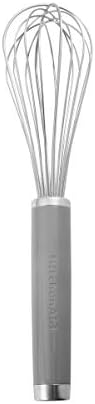
- Whisk
- Measuring cups and spoons
- Silicone spatula
- Cooling rack
Practical note: A cooling rack helps maintain crispness better than stacking waffles on a plate, where trapped steam can soften the exterior.



How to Make Perfect Belgian Waffles at Home
1. Mix the Dry Ingredients
In a large bowl, whisk together the flour, sugar, baking powder, and salt until evenly combined. The mixture should look uniform with no visible streaks of baking powder remaining.
2. Whisk the Wet Ingredients
In a separate bowl, whisk together the eggs, milk, melted butter, and vanilla extract until smooth and fully combined.
3. Combine the Batter
Pour the wet ingredients into the dry ingredients and gently whisk until just combined. A few small lumps are completely normal and actually help keep the waffles tender.
Baking Tip: Overmixing develops gluten and can lead to tougher waffles.
4. Let the Batter Rest
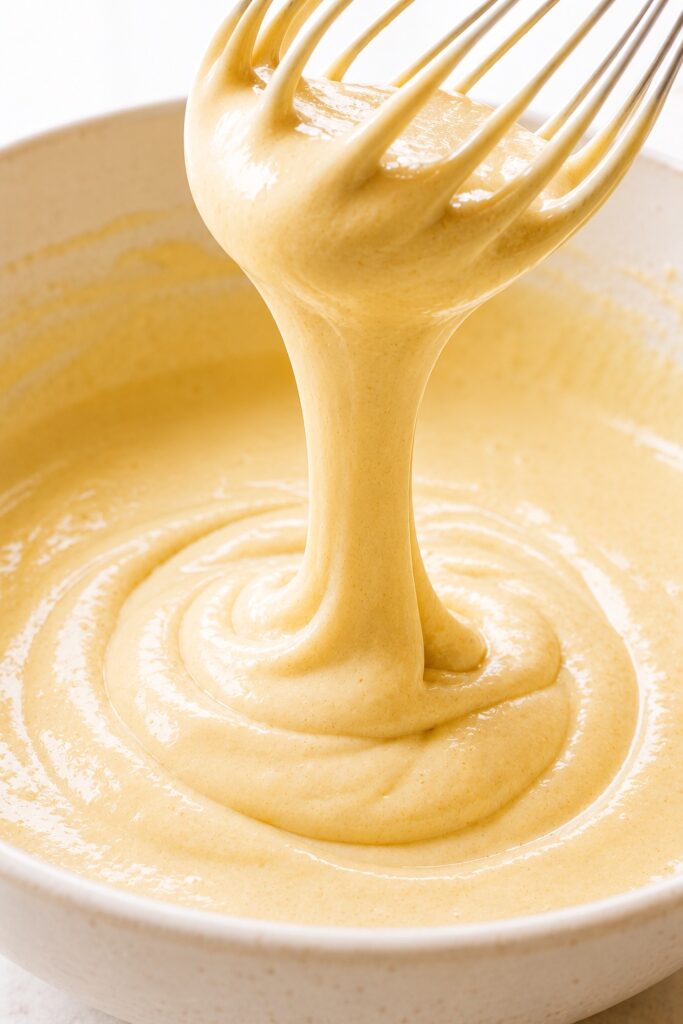
Allow the batter to rest for 5–10 minutes. During this time, the flour absorbs moisture and the batter thickens slightly, helping create a fluffier texture.
5. Preheat the Belgian Waffle Iron
Heat your waffle maker fully before adding any batter. A properly preheated iron helps create the crisp golden exterior Belgian waffles are known for.
6. Cook Until Deep Golden Brown
Pour the batter into the center of the waffle iron and close the lid. Cook according to your waffle maker’s instructions, usually 4–6 minutes.
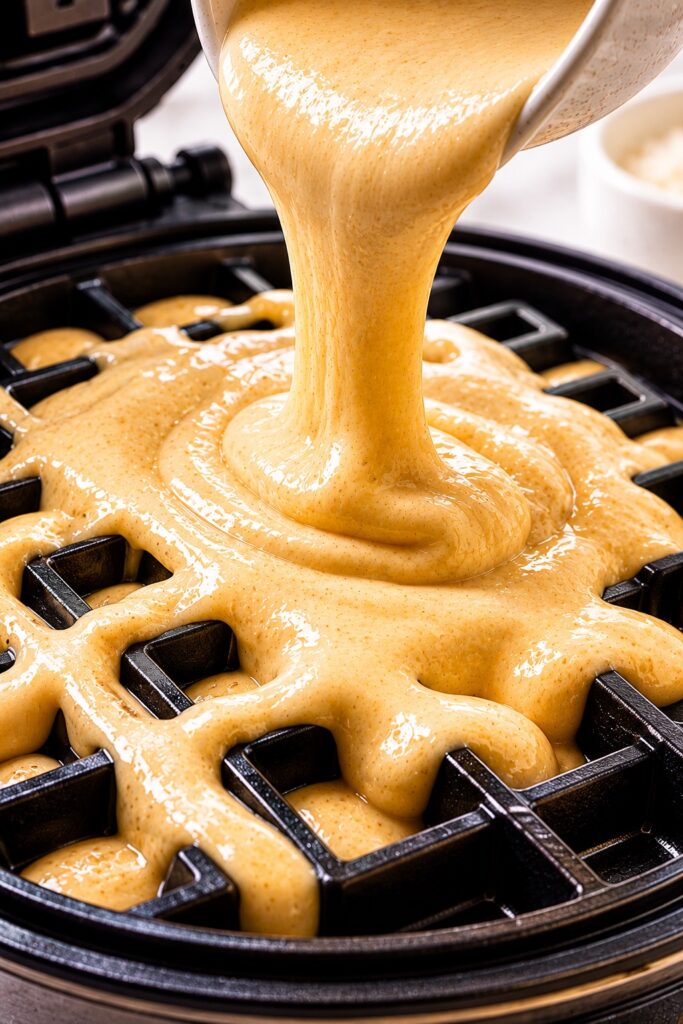
The waffles should develop deep golden ridges and release easily from the iron when fully cooked.
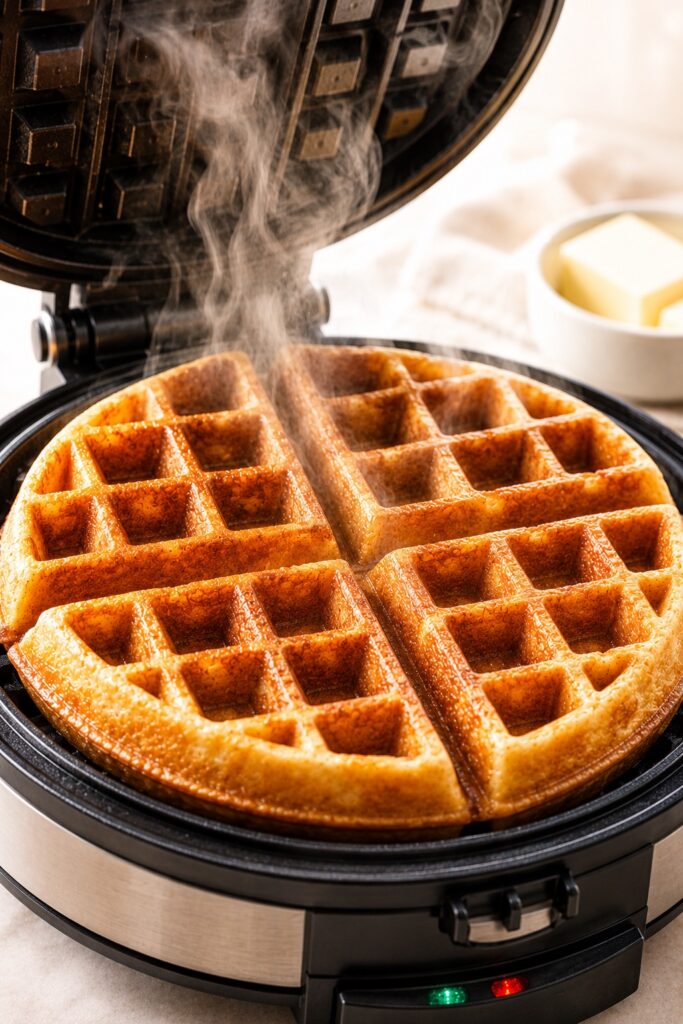
7. Watch the Steam
One of the easiest indicators of doneness is steam. Early in cooking, heavy steam escapes from the waffle maker. As the waffles finish cooking, the steam noticeably decreases.
Note: If you open the waffle maker too early, the waffle may split apart before the structure has fully set.
8. Serve Immediately
Transfer the finished waffles to a wire rack rather than stacking them. This prevents trapped steam from softening the crisp exterior.
Serve warm with maple syrup, fresh berries, whipped cream, or your favorite toppings.
How to Tell When Belgian Waffles Are Perfectly Cooked
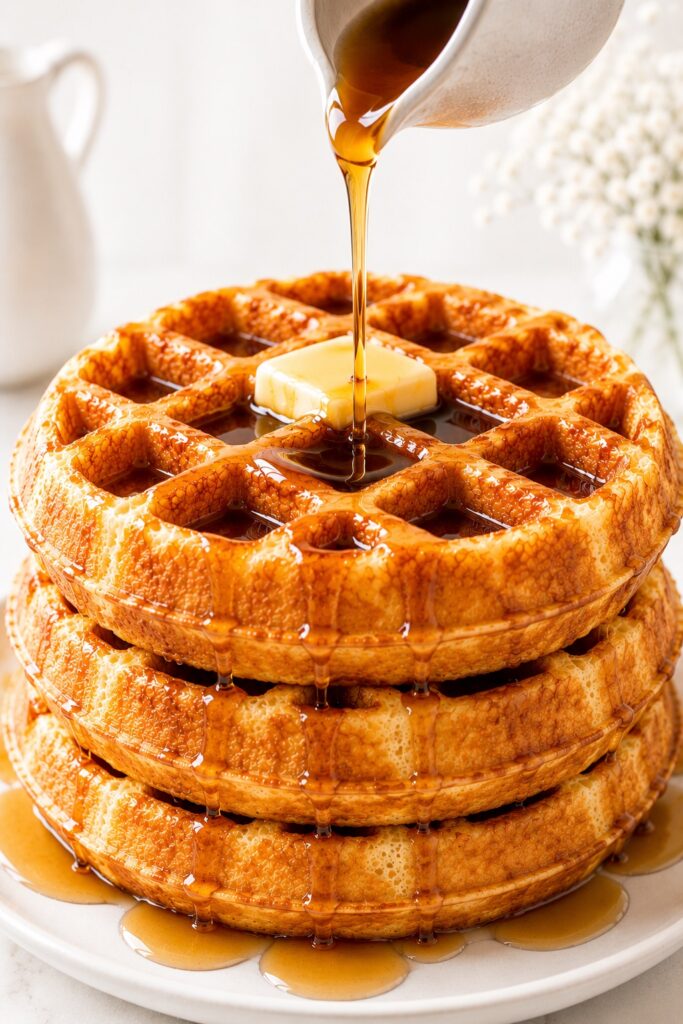
One of the most common waffle mistakes is relying only on the timer. Different waffle makers cook at different speeds, which is why visual cues are often far more reliable than exact minutes.
Instead of focusing only on the clock, look for these signs that your Belgian waffles have reached the ideal balance of crisp exterior and fluffy interior.
The Color Should Be Deep Golden Brown
The surface should develop rich golden ridges with slightly darker caramelized edges. Pale waffles are usually undercooked and often lack the crisp texture Belgian waffles are known for.
A properly cooked Belgian waffle should look bakery-style golden rather than light yellow.
Steam Should Decrease Significantly
During the first few minutes of cooking, you’ll notice a steady stream of steam escaping from the waffle iron.
As the waffles finish cooking, the amount of steam gradually decreases. This is one of the most reliable indicators that excess moisture has evaporated and the exterior is beginning to crisp properly.
Real-life observation: Many experienced home cooks use steam reduction as their primary doneness indicator rather than relying solely on cooking times.
The Waffle Should Release Easily
A fully cooked Belgian waffle naturally releases from the waffle plates with minimal resistance.
If the waffle still sticks aggressively when you try to lift it, the interior structure may not be fully set yet. Giving it another minute often solves the problem.
The Surface Should Look Dry, Not Glossy
Raw batter has a shiny appearance. As the waffle cooks, the surface becomes matte and dry-looking while maintaining a slight buttery sheen.
If portions of the waffle still appear wet or glossy, additional cooking time is usually needed.
The Exterior Should Feel Crisp
When gently touched with a fork, the ridges should feel lightly crisp rather than soft or sponge-like.
The waffles will continue crisping slightly during the first minute after leaving the waffle iron as excess steam escapes.
Listen for the Texture
While not an exact science, perfectly cooked Belgian waffles often develop a subtle crisp sound when cut with a fork.
That delicate crunch is usually a sign that the exterior has reached the ideal texture while the center remains light and fluffy.
| If You See… | What It Usually Means |
|---|---|
| Pale yellow surface | Needs more cooking time |
| Heavy steam still escaping | Interior moisture still evaporating |
| Sticky release from iron | Structure not fully set |
| Deep golden ridges | Nearly finished or fully cooked |
| Dry-looking surface | Properly cooked exterior |
| Light crispness when cut | Ideal Belgian waffle texture |
Quick Rule: If the waffles are deeply golden, releasing easily, producing very little steam, and feel lightly crisp on the outside, they’re ready to serve.
Belgian Waffle Texture Guide
| Stage | What You Should See |
|---|---|
| Batter | Thick but pourable |
| Rested Batter | Slightly thicker and smoother |
| Early Cooking | Heavy steam production |
| Finished Waffle | Golden and crisp |
| Interior | Light, fluffy, airy |
| Overcooked | Dark brown and dry |
Expert Tips For the Best Belgian Waffles
- Fully preheat the waffle iron before cooking.
- Allow the batter to rest briefly.
- Do not overmix the batter.
- Cook until steam production slows significantly.
- Transfer cooked waffles to a rack instead of stacking.
- Use fresh baking powder for maximum lift.
- For extra crispness, place finished waffles in a 200°F oven while cooking remaining batches.
A deeper insight: much of waffle crispness comes from moisture removal. Giving waffles an extra minute after they appear done often improves texture dramatically.
Common Belgian Waffle Mistakes
| Mistake | Result | Fix |
|---|---|---|
| Overmixing | Dense waffles | Mix gently |
| Opening too early | Torn waffles | Wait for steam reduction |
| Underheated iron | Pale waffles | Fully preheat |
| Stacking immediately | Soft exterior | Use cooling rack |
| Too much batter | Overflow | Follow machine capacity |
Belgian Waffles vs Classic American Waffles
| Feature | Belgian Waffles | American Waffles |
|---|---|---|
| Thickness | Thick | Thinner |
| Texture | Airy and fluffy | More uniform |
| Grid Depth | Deep pockets | Shallower pockets |
| Toppings | Holds more toppings | Holds less |
| Appearance | Café-style | Traditional breakfast style |
Beautiful Ways to Serve Belgian Waffles
Few breakfasts look as inviting as a stack of freshly made Belgian waffles. The deep golden pockets, crisp edges, and fluffy interior create the perfect canvas for everything from simple maple syrup to elaborate brunch spreads.
Whether you’re serving them for a quiet weekend breakfast or a special holiday gathering, a thoughtful topping combination can completely transform the experience.
Classic Maple Syrup and Butter
Sometimes the simplest version is still the most satisfying.
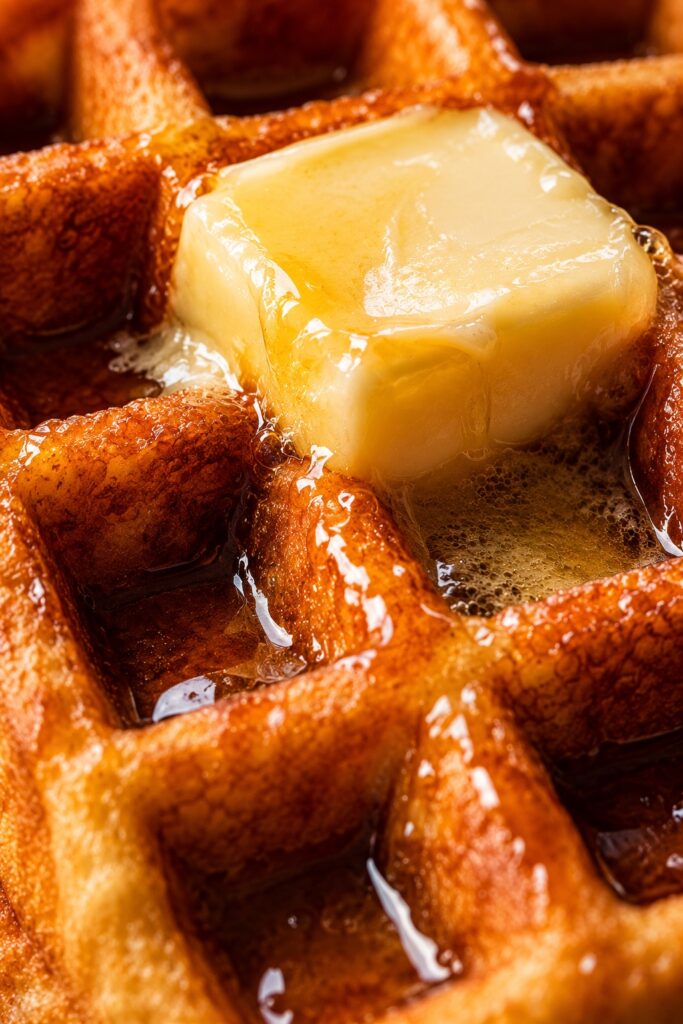
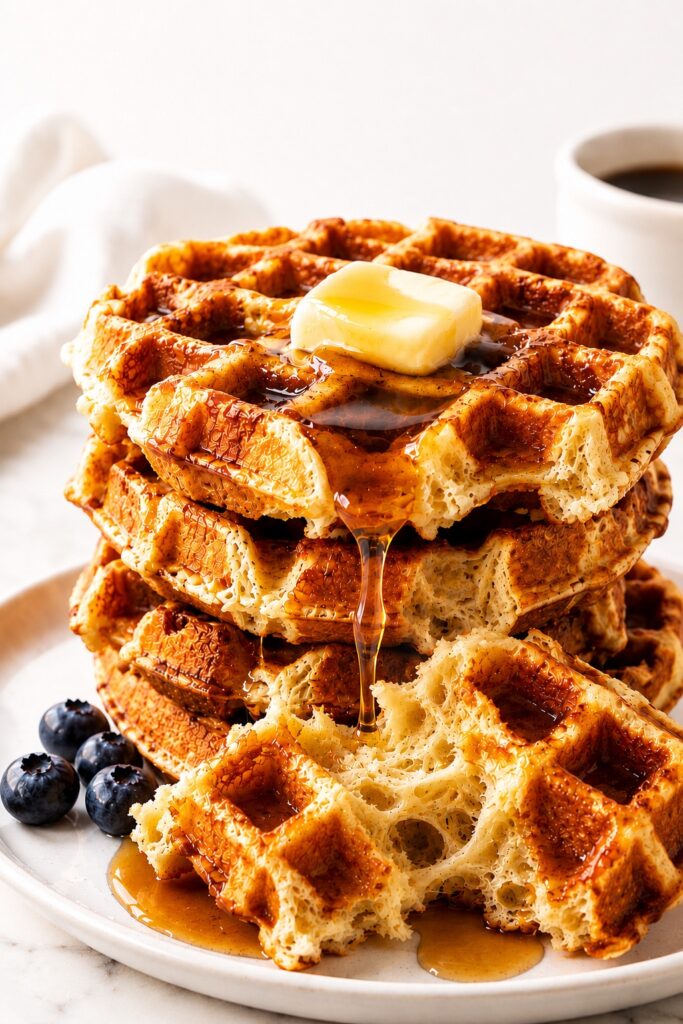
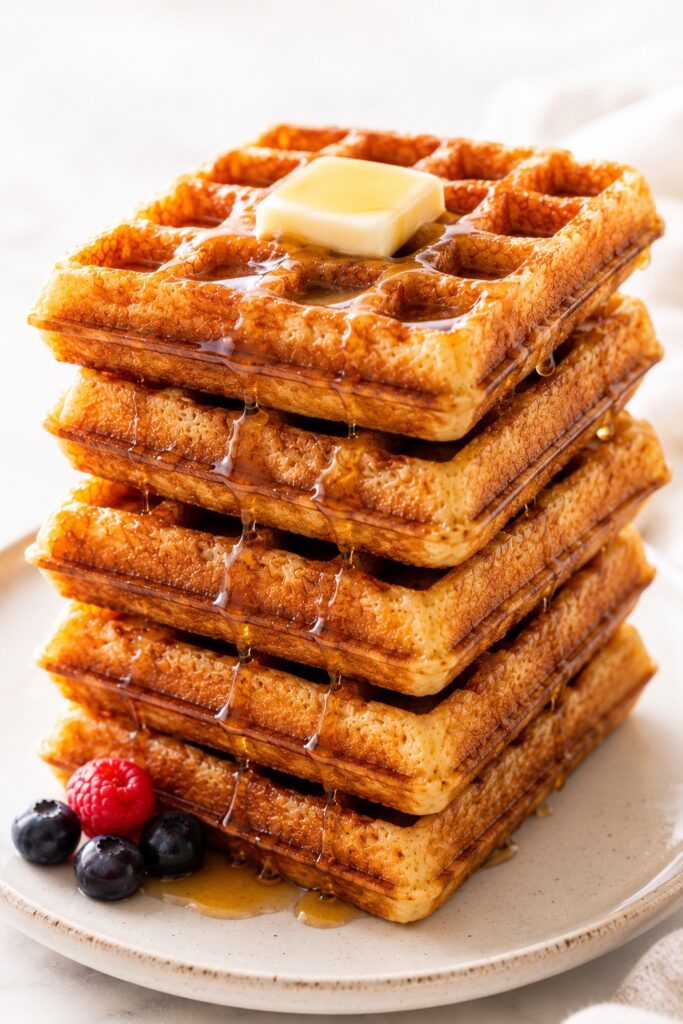
Top warm Belgian waffles with a small pat of butter and a generous drizzle of pure maple syrup. As the butter melts into the deep waffle pockets, it creates the classic breakfast flavor that has made Belgian waffles a favorite for generations.
Fresh Berry Brunch Board
Arrange strawberries, blueberries, raspberries, and blackberries around a stack of warm waffles and finish with a light dusting of powdered sugar.
The contrast between the crisp waffles and juicy berries creates a fresh, elegant presentation that feels perfect for spring and summer brunches.
Whipped Cream and Berry Compote
For a bakery-style presentation, add a dollop of homemade whipped cream and spoon warm berry compote over the top.
The sauce settles naturally into the waffle pockets while the whipped cream softens into the warm surface, creating a dessert-like breakfast that feels special enough for birthdays and celebrations.
Banana and Peanut Butter
Spread warm peanut butter over the waffles and top with sliced bananas and a light sprinkle of cinnamon.
This combination adds richness, protein, and natural sweetness while maintaining the cozy comfort-food feel that makes waffles so satisfying.
Chocolate Lover’s Belgian Waffles
Drizzle warm chocolate sauce over the waffles and finish with chocolate shavings, mini chocolate chips, or fresh strawberries.
The combination feels somewhere between breakfast and dessert, making it a fun choice for special mornings or brunch gatherings.
Holiday Brunch Presentation
Serve Belgian waffles on a large platter surrounded by bowls of fresh fruit, whipped cream, maple syrup, toasted nuts, fruit preserves, and powdered sugar.
This creates a build-your-own waffle bar that works beautifully for Christmas morning, Easter brunch, Mother’s Day, baby showers, or family gatherings.
Elegant Café-Style Serving Idea
Place a single Belgian waffle on a white plate, add fresh berries, a light snowfall of powdered sugar, and a small pitcher of warm maple syrup on the side.
The presentation feels bright, simple, and surprisingly luxurious while allowing the beautiful texture of the waffles to remain the star of the plate.
Save this recipe for slow Sunday mornings when you want breakfast to feel a little more special than usual.
Save it for holiday brunches, family gatherings, and cozy weekends when warm waffles, maple syrup, and fresh fruit are exactly what everyone wants to see on the table.
And if you’re serving guests, don’t be surprised when the waffle platter disappears faster than anything else on the table.
Storage and Make-Ahead Guide
One of the best things about Belgian waffles is how well they store. In fact, many people intentionally make a double batch because leftover waffles reheat beautifully and can turn busy weekday mornings into quick homemade breakfasts.
How to Store Belgian Waffles in the Refrigerator
Allow the waffles to cool completely before storing. Placing warm waffles directly into a container traps steam, which can soften the crisp exterior.
Transfer the cooled waffles to an airtight container or zip-top bag and refrigerate for up to 4 days.
For the best texture, place a sheet of paper towel in the container to help absorb excess moisture.
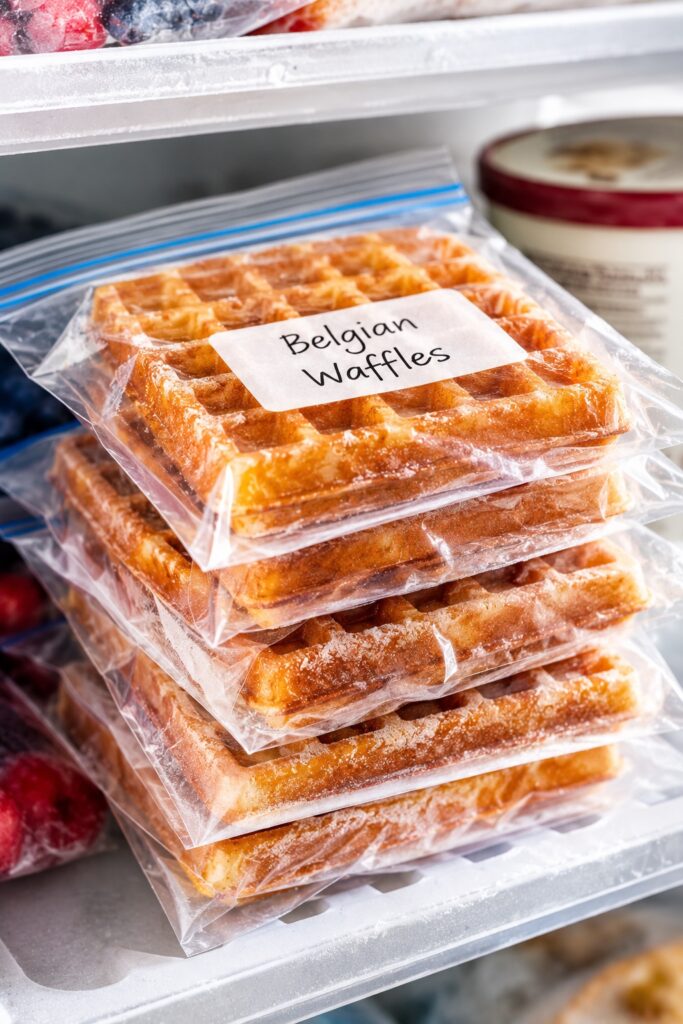
How to Freeze Belgian Waffles
Belgian waffles freeze exceptionally well.
Let the waffles cool completely, then arrange them in a single layer on a baking sheet and freeze until firm, about 1–2 hours. Once frozen, transfer them to a freezer-safe bag or airtight container.
Place small pieces of parchment paper between waffles if stacking multiple layers.
Properly stored waffles will maintain their quality for up to 3 months.
Tip: Freezing the waffles individually first helps prevent them from sticking together and makes it much easier to remove only the number you need.
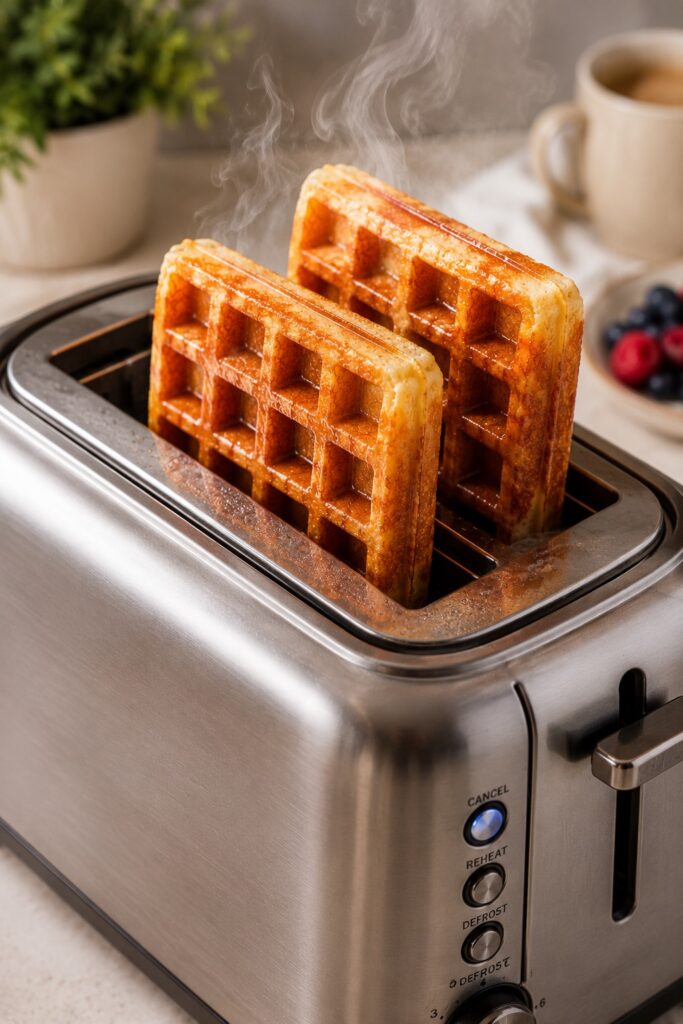
Best Ways to Reheat Belgian Waffles
The toaster is usually the fastest and most effective method because it restores much of the original crispness.
- Toaster: 2–4 minutes, depending on thickness
- Oven: 350°F for 5–8 minutes
- Air Fryer: 350°F for 3–5 minutes
- Microwave: 20–30 seconds (soft texture, less crispness)
If you’re aiming for the same crisp edges the waffles had when freshly made, the toaster, oven, or air fryer will always outperform the microwave.
Can You Make Belgian Waffle Batter Ahead of Time?
Yes, but there are a few things to know.
The batter can be prepared and refrigerated for up to 24 hours. Before using, gently stir the batter because some settling is completely normal.
The waffles may not rise quite as dramatically as batter cooked immediately after mixing because the baking powder becomes less active over time, but the difference is usually minor.
For the absolute fluffiest waffles, mix the batter the same day you plan to cook them.
Meal Prep Strategy for Busy Mornings
If you regularly make breakfast ahead, cook a full batch of waffles over the weekend and freeze them in individual portions.
Reheat directly from frozen in a toaster or air fryer, then top with maple syrup, berries, nut butter, or whipped cream. The result feels surprisingly close to freshly made waffles and takes only a few minutes.
Save this method for school mornings, busy workdays, holiday guests, or anytime you want a homemade breakfast without starting from scratch.
Easy Belgian Waffle Variations
Once you understand the base Belgian waffle recipe, it becomes very easy to adjust the flavor without changing the structure too much. The key is to add ingredients that support the batter instead of weighing it down, especially because Belgian waffles need enough lift to stay crisp outside and fluffy inside.
Cinnamon Vanilla Belgian Waffles
Add 1 teaspoon ground cinnamon to the dry ingredients and increase the vanilla to 1 tablespoon for a warmer bakery-style flavor. This variation works beautifully with maple syrup, powdered sugar, or sautéed apples.
Chocolate Chip Belgian Waffles
Fold 1/2 cup mini chocolate chips into the batter just before cooking. Mini chips distribute more evenly than regular chocolate chips and help prevent heavy pockets from sinking into the waffle iron.
Blueberry Belgian Waffles
Fold in 3/4 cup fresh blueberries right before cooking. If using frozen blueberries, do not thaw them first, and expect the batter to streak slightly purple. Fresh berries create the cleanest texture and the prettiest golden edges.
Lemon Blueberry Belgian Waffles
Add 1 tablespoon lemon zest to the batter and fold in 3/4 cup blueberries. The lemon brightens the buttery waffle base and makes this version especially good for spring brunch, Easter breakfast, or Mother’s Day mornings.
Buttermilk Belgian Waffles
Replace the milk with 1 3/4 cups buttermilk for a slightly tangy, extra tender waffle. Because buttermilk is thicker than regular milk, the batter may look a little heavier, but the finished waffles should still cook up golden and soft inside.
Banana Belgian Waffles
Stir 1/2 cup mashed ripe banana into the wet ingredients and reduce the milk by 2 tablespoons. Banana adds moisture and natural sweetness, so these waffles may brown slightly faster than the classic version.
Chocolate Belgian Waffles
Replace 1/4 cup of the flour with 1/4 cup unsweetened cocoa powder and increase the sugar to 1/4 cup. This creates a deeper chocolate flavor while keeping the batter balanced enough to cook properly in a waffle iron.
Helpful note: For the best texture, avoid adding too many heavy mix-ins at once. Belgian waffles need open air pockets to stay fluffy, so one main flavor addition usually gives the best result.
Frequently Asked Questions About Belgian Waffles
Why are Belgian waffles crispy on the outside and fluffy on the inside?
The signature texture comes from a combination of high heat, steam production, and proper batter structure. As the batter cooks, moisture rapidly turns to steam, helping create a light interior while the hot waffle iron develops a crisp golden crust on the outside.
Do I need a Belgian waffle maker to make Belgian waffles?
A Belgian waffle maker is the easiest way to achieve the thick shape and deep pockets that Belgian waffles are known for. However, the batter can also be cooked in a standard waffle iron. The texture will still be delicious, but the waffles will usually be thinner and have shallower pockets.
Can I make Belgian waffle batter ahead of time?
Yes. The batter can be prepared up to 24 hours in advance and stored in the refrigerator. Before cooking, give it a gentle stir. While freshly mixed batter usually produces the highest rise, overnight batter still creates excellent waffles.
Why do my Belgian waffles stick to the waffle iron?
Sticking usually happens when the waffle iron is not fully preheated or when the waffles have not finished cooking. A properly cooked waffle should release easily from the iron once the exterior has crisped and the structure has set.
Can Belgian waffles be frozen?
Absolutely. Belgian waffles are one of the best breakfast foods for freezing. Allow them to cool completely, freeze in a single layer until firm, then transfer to a freezer-safe container. They maintain excellent quality for up to three months.
How do restaurants keep Belgian waffles crispy?
Many restaurants place finished waffles on wire racks rather than stacking them. This allows excess steam to escape and prevents the crisp exterior from becoming soft. Some also hold waffles in a low oven until serving.
What are the best toppings for Belgian waffles?
Classic toppings include maple syrup, butter, whipped cream, powdered sugar, fresh berries, bananas, toasted nuts, and fruit compotes. Because Belgian waffles have deep pockets, they are especially good at holding sauces and toppings without becoming soggy.
Can I use buttermilk instead of regular milk?
Yes. Buttermilk creates a slightly tangy flavor and often produces an even softer interior. Simply replace the milk with an equal amount of buttermilk for a richer, bakery-style waffle.
Why are my Belgian waffles pale instead of golden brown?
This is usually caused by an underheated waffle iron or removing the waffles too early. Allow the iron to fully preheat and cook the waffles until steam production slows significantly and the exterior becomes deeply golden.
More Cozy Breakfast Recipes You’ll Love
If you love Belgian waffles because of their crisp edges, fluffy centers, and cozy weekend-brunch feeling, these breakfast recipes are the perfect next recipes to explore. Each one supports the same homemade breakfast cluster with a slightly different texture, flavor, or serving moment.
For a classic everyday option, try this Waffle Recipe. It is simple, golden, and perfect when you want homemade waffles with a lighter, more familiar breakfast feel.
If you want a higher-protein version, these High Protein Waffles are a great next step. They keep the cozy waffle experience while adding a more balanced, satisfying breakfast angle.
For a seasonal twist, make this Pumpkin Waffle Recipe. It has warm fall spices, crisp waffle edges, and a soft fluffy center that feels perfect for slow autumn mornings or holiday brunch.
If you love syrupy breakfast recipes, this French Toast Recipe brings the same golden, comforting breakfast energy with soft custardy centers and caramelized edges.
For something extra special, try this Creme Brulee French Toast. It feels rich, elegant, and bakery-style, making it a beautiful choice for holidays, birthdays, or slow weekend brunches.
And if you want another fluffy breakfast favorite, these Buttermilk Pancakes are soft, tender, and classic enough to become part of your regular weekend breakfast rotation.
Together, these recipes create a strong cozy breakfast collection for readers who love homemade waffles, pancakes, French toast, and bakery-style brunch recipes worth saving.
Why This Belgian Waffle Recipe Deserves a Permanent Spot in Your Kitchen
Some recipes are fun to try once. Others quietly become part of your regular routine. This Belgian waffle recipe belongs in the second category.
The combination of crisp golden edges, deep syrup-catching pockets, and a soft fluffy interior creates the kind of breakfast people genuinely look forward to. It feels special enough for holiday mornings and brunch gatherings, yet simple enough to make on an ordinary weekend when you’re craving something warm and homemade.
What makes this recipe particularly reliable is its balance. The batter is easy to prepare, the ingredients are familiar, and the cooking cues make it easy to recognize when the waffles have reached their ideal texture. Instead of guessing, you’ll know exactly what to look for—from the reduction in steam to the deep golden color and crisp exterior.
It’s also a recipe that adapts well to real life. You can serve it simply with butter and maple syrup, dress it up with fresh berries and whipped cream, freeze extras for busy mornings, or customize it with seasonal flavors throughout the year.
Most importantly, these waffles deliver the texture people expect when they hear the words Belgian waffle: crisp on the outside, light on the inside, and sturdy enough to hold all your favorite toppings without becoming soggy.
If you’re searching for a homemade Belgian waffle recipe that’s easy, dependable, freezer-friendly, and consistently delicious, this is one worth keeping in your regular breakfast rotation.
Final Thoughts
Some breakfast recipes come and go, but Belgian waffles remain a classic for a reason. They strike a rare balance between simple and special, creating a breakfast that feels comforting enough for everyday mornings yet impressive enough for celebrations.
Once you experience the contrast between the crisp golden exterior and the soft fluffy center, it’s easy to understand why people keep coming back to them year after year.
This is the kind of recipe that becomes part of a family’s weekend tradition—warm, dependable, and always worth making again.

Belgian Waffle Recipe
These Belgian waffles are crispy on the outside, fluffy on the inside, and made with simple pantry ingredients. Perfect for weekend breakfasts, brunch gatherings, and make-ahead freezer breakfasts.
Ingredients
- 2 cups all-purpose flour
- 2 tablespoons granulated sugar
- 1 tablespoon baking powder
- 1/2 teaspoon salt
- 2 large eggs
- 1 3/4 cups whole milk
- 1/2 cup unsalted butter, melted
- 2 teaspoons vanilla extract
Instructions
- In a large bowl, whisk together the flour, sugar, baking powder, and salt until evenly combined.
- In a separate bowl, whisk together the eggs, milk, melted butter, and vanilla extract until smooth.
- Pour the wet ingredients into the dry ingredients and gently stir until just combined. A few small lumps are completely normal.
- Let the batter rest for 5–10 minutes while the waffle iron preheats.
- Preheat a Belgian waffle maker according to the manufacturer’s instructions.
- Pour enough batter into the center of the waffle iron to fill most of the cooking surface without overflowing.
- Close the lid and cook for 4–6 minutes, or until the waffles are deep golden brown and crisp.
- Wait until steam production decreases significantly before opening the waffle iron.
- Carefully remove the waffle and place it on a wire rack to maintain crispness.
- Repeat with the remaining batter.
- Serve warm with maple syrup, fresh berries, whipped cream, powdered sugar, or your favorite toppings.
Notes
- For the crispiest Belgian waffles, place cooked waffles on a wire rack instead of stacking them. Stacking traps steam and softens the exterior.
- Letting the batter rest for 5–10 minutes helps hydrate the flour and often produces fluffier waffles with a more even texture.
- Do not overmix the batter. A few small lumps are completely normal and help keep the waffles tender.
- Wait until steam production slows noticeably before opening the waffle iron. This is one of the best indicators that the waffles are fully cooked.
- Whole milk and butter provide the richest flavor and help create the classic crisp-outside, fluffy-inside Belgian waffle texture.
- Leftover waffles can be stored in the refrigerator for up to 4 days or frozen for up to 3 months.
- Reheat refrigerated or frozen waffles in a toaster, oven, or air fryer for the best texture. Microwaving works, but the waffles will be softer.
- This recipe makes approximately 8 Belgian waffles, depending on the size and capacity of your waffle maker.
Nutrition Information:
Yield: 8 Belgian waffles Serving Size: 1 waffleAmount Per Serving: Calories: 265Total Fat: 15gSaturated Fat: 8gCholesterol: 75mgSodium: 320mgCarbohydrates: 25gFiber: 1gSugar: 4gProtein: 6g
Nutrition information is provided as an estimate only and may vary based on specific ingredients, brands, and portion sizes used. This information should not be considered medical or nutritional advice.
12 Sweet Favourites — Yours, Free 🍰
Tiramisù, no-bake cheesecake, the perfect chocolate chip cookie & 9 more reader-loved desserts — gathered into one beautiful free recipe book. From my kitchen to yours.
No spam, just sweet things. Unsubscribe anytime.