Carrot Cake Recipe (Ultra Moist with Cream Cheese Frosting)
🎁 FREE E-BOOK: 12 Sweet Favorites — reader-loved desserts in one beautiful recipe book.
There’s something deeply comforting about a carrot cake done right: soft, warmly spiced layers, delicate sweetness, and rich cream cheese frosting that melts into every bite. It feels nostalgic, homemade, and quietly elegant all at once.
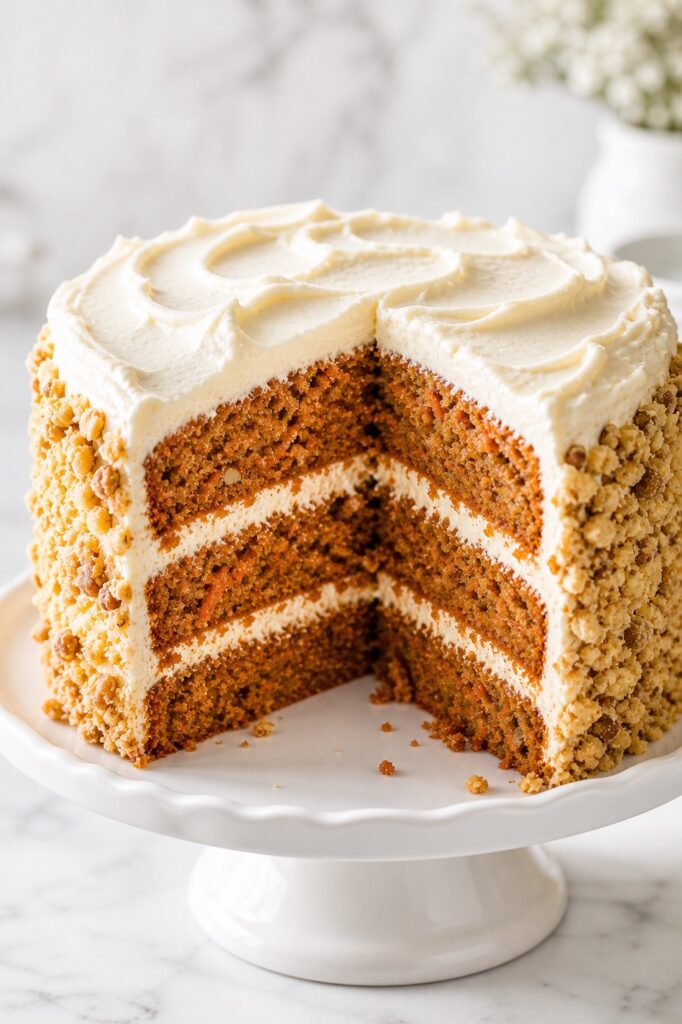
This carrot cake recipe is everything people love about the classic version: incredibly moist crumb, cozy cinnamon flavor, finely grated carrots, and a silky frosting that is tangy, creamy, and not overly sweet.
If you have ever had a dry carrot cake or one that tasted flat, this version is built to fix that. The oil keeps the crumb soft, the carrots add natural moisture, and the frosting brings the perfect balance.
This is exactly why people save this recipe: it gives you a bakery-style carrot cake at home, from the cake layers to the frosting, assembly, and decoration.
What Is Carrot Cake?
Carrot cake is a classic layered cake made with grated carrots, oil-based batter, warm spices, and cream cheese frosting. The carrots add moisture and subtle sweetness, while the oil keeps the crumb soft even after chilling.
Unlike many butter cakes, carrot cake stays tender for days because the fat remains soft and evenly distributed through the crumb.
Quick Recipe Overview
| Texture | Moist, soft, tender crumb |
|---|---|
| Flavor | Warm cinnamon spice, subtle carrot sweetness, tangy frosting |
| Difficulty | Easy to intermediate |
| Time | About 1 hour plus cooling |
| Servings | 10–12 slices |
| Method | 3-layer cake |
| Best For | Easter, Mother’s Day, spring gatherings, birthdays, holidays |
In short: this is a moist homemade carrot cake with soft spiced layers, creamy frosting, and a beautiful finish that feels special without being complicated.
Why This Recipe Works
This carrot cake works because the batter is balanced around moisture, structure, fat, and gentle heat.
The oil gives the cake a soft, plush crumb. The carrots release moisture as the cake bakes, helping the inside stay tender instead of dry. The eggs give structure, while the flour holds everything together without making the cake heavy.
One small but important detail is using finely grated carrots. Thick carrot shreds can stay firm and separate inside the crumb, while fine carrot pieces melt more naturally into the cake.
Another helpful observation: the batter will look thick and textured before baking. That is normal. As the carrots warm in the oven, they soften and release moisture into the cake.
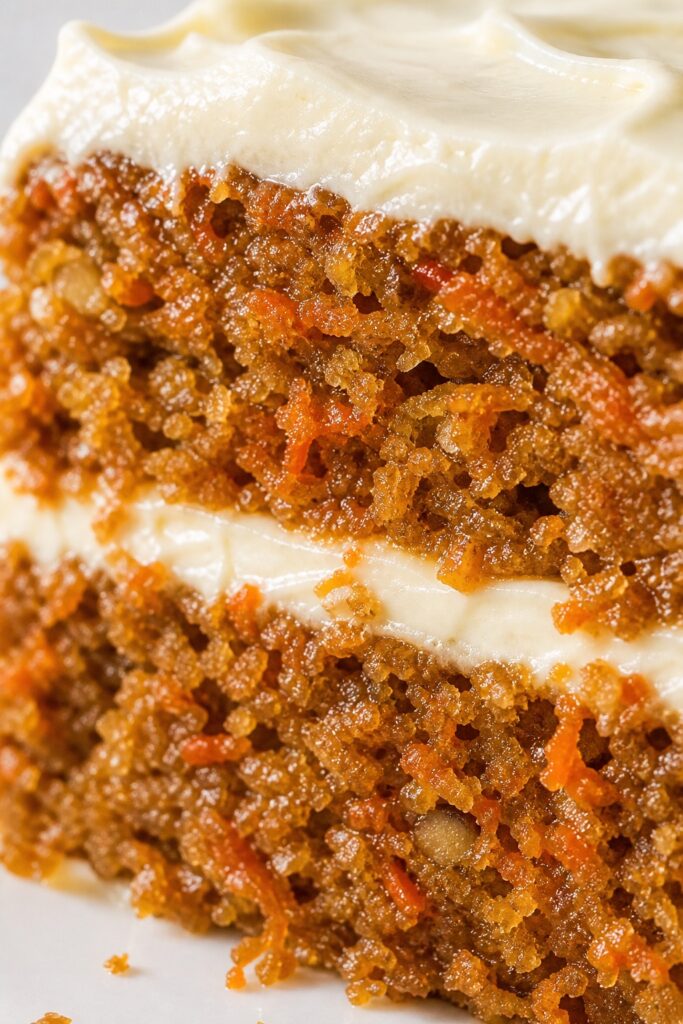
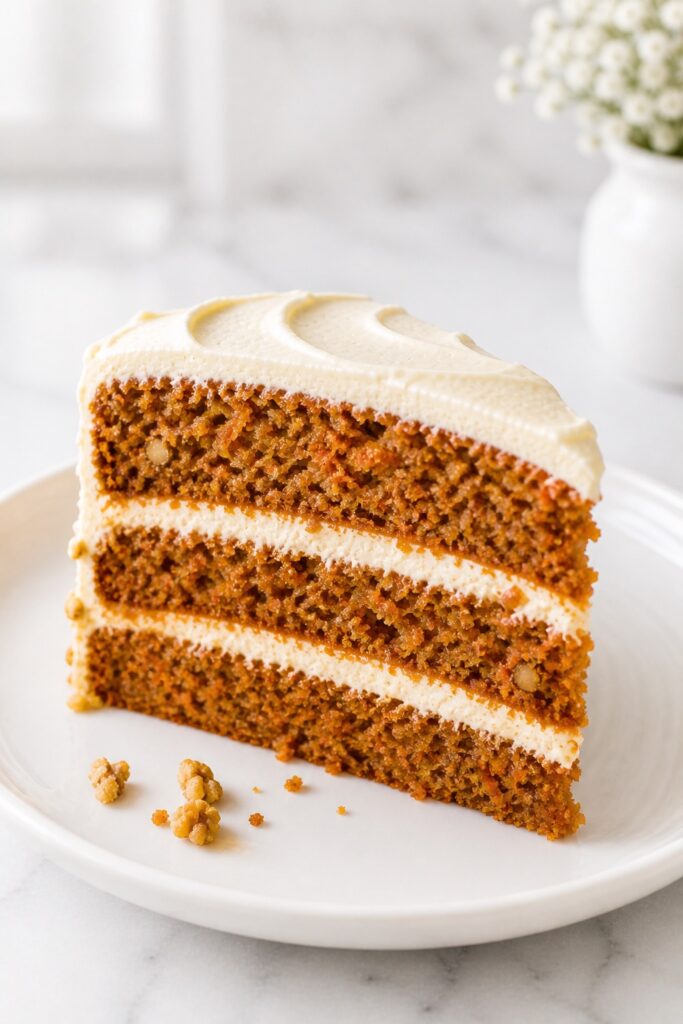
A three-layer carrot cake works even better than a thicker two-layer version because thinner layers bake more evenly and retain moisture more effectively.
Each layer has:
- more controlled heat exposure
- less risk of overbaking
- softer, finer crumb
And with frosting between every layer, each bite has a better balance of cake and creaminess.
Why You’ll Love This Carrot Cake Recipe
- Ultra moist without being dense
- Soft, tender crumb with warm spice
- Classic cream cheese frosting included
- Beautiful enough for celebrations
- Easy enough for home bakers
- Can be made ahead
- Decorates beautifully with nuts, frosting swirls, or simple crumbs
Baking Science: Why Carrot Cake Stays Moist
Carrot cake stays moist because several ingredients work together. Oil coats the flour proteins and keeps the crumb soft. Sugar attracts and holds moisture. Carrots release water during baking, which keeps the cake tender from the inside.
The baking soda helps the cake rise and also supports browning. As the edges set, the center continues to gently bake until it becomes springy and stable.
The key is not overbaking. Once the center springs back lightly and a toothpick comes out with moist crumbs, the cake is done. Waiting for a completely dry toothpick can lead to a drier cake.
Why Three Layers Make a Better Carrot Cake
Three-layer cakes are not just about appearance — they change the texture and overall experience.
- Thinner layers bake more evenly
- Moisture is better preserved
- Frosting is distributed more consistently
- Each bite has a balanced ratio of cake and cream
The result is a softer, more refined crumb and a cake that feels lighter, even though it is rich.
Ingredients
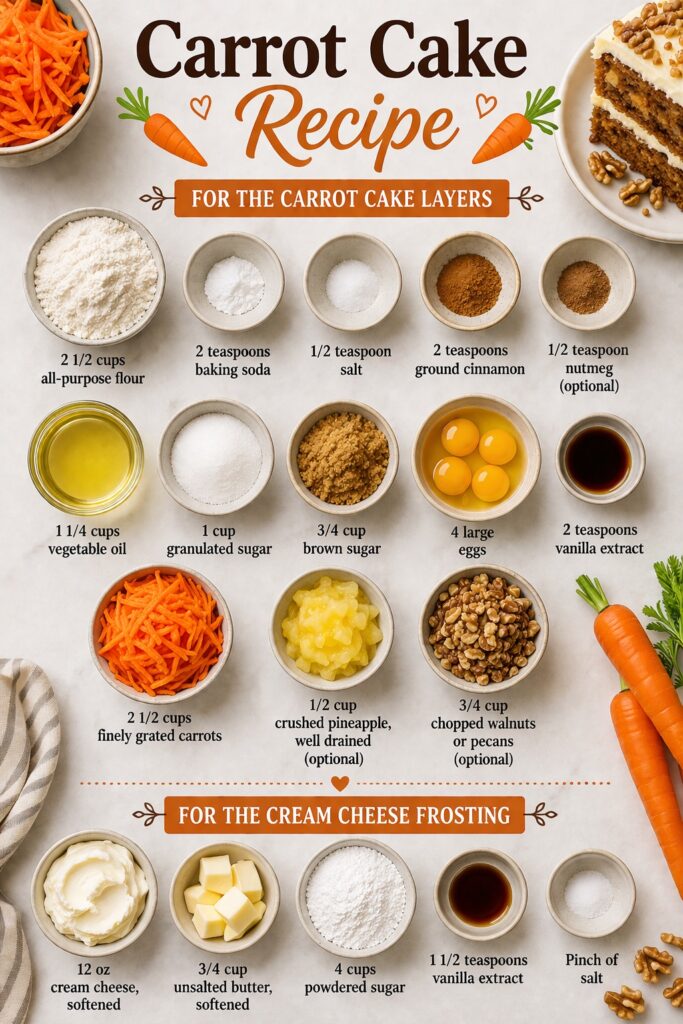
For the Carrot Cake Layers (3 Layers)
- 2 1/2 cups all-purpose flour
- 2 teaspoons baking soda
- 1/2 teaspoon salt
- 2 teaspoons ground cinnamon
- 1/2 teaspoon nutmeg (optional)
- 1 1/4 cups vegetable oil
- 1 cup granulated sugar
- 3/4 cup brown sugar
- 4 large eggs
- 2 teaspoons vanilla extract
- 2 1/2 cups finely grated carrots
- 1/2 cup crushed pineapple, well drained (optional)
- 3/4 cup chopped walnuts or pecans (optional)
For the Cream Cheese Frosting (Enough for layering + finish)
- 12 oz cream cheese, softened
- 3/4 cup unsalted butter, softened
- 4 cups powdered sugar
- 1 1/2 teaspoons vanilla extract
- Pinch of salt
For Assembly and Decoration
- Extra chopped walnuts or pecans, optional
- Reserved cake crumbs, optional
- Small frosting swirls, optional
- A light dusting of cinnamon, optional
Ingredient Intelligence
Carrots
Use freshly grated carrots, not pre-shredded carrots. Pre-shredded carrots are usually drier and thicker, so they do not blend into the crumb as well.
Oil
Oil creates a moist, soft cake because it stays liquid at room temperature and after refrigeration. This is one reason carrot cake tastes even better the next day.
Brown Sugar
Brown sugar adds deeper flavor and helps hold moisture. It also gives the cake a warmer, slightly caramel-like sweetness.
Crushed Pineapple
Pineapple is optional, but it gives the cake extra moisture and a subtle brightness. Drain it well so the batter does not become too wet.
Cream Cheese
Cream cheese gives the frosting its signature tang. That tang is important because it balances the sweetness of the cake.
Baking insight: if your grated carrots feel very wet, gently blot them with a paper towel. You do not want them dry, but removing excess surface moisture helps prevent a heavy cake.
Equipment You’ll Need
- Three 8-inch or 9-inch round cake pans
- Parchment paper
- Mixing bowls
- Whisk
- Rubber spatula
- Box grater
- Hand mixer or stand mixer
- Offset spatula for frosting
- Cake turntable, optional
A simple box grater works beautifully for this recipe. Use the fine or medium side for softer carrot texture.
How to Make Carrot Cake
1. Prepare the pans
Preheat the oven to 330°F. Grease three round cake pans and line the bottoms with parchment paper. This helps the soft cake layers release cleanly after baking.
2. Mix the dry ingredients
In a medium bowl, whisk together the flour, baking soda, salt, cinnamon, and nutmeg. The mixture should look evenly speckled with spice.
3. Mix the wet ingredients
In a large bowl, whisk together the oil, granulated sugar, brown sugar, eggs, and vanilla until smooth and slightly thickened. The mixture should look glossy.
4. Add the carrots and optional mix-ins
Fold in the finely grated carrots, drained pineapple, and chopped nuts if using. The batter will start to look textured and a little rustic. That is exactly what you want.
5. Combine wet and dry ingredients
Add the dry ingredients to the wet mixture and fold gently until no dry flour remains. Do not overmix. The batter should be thick, moist, and spoonable.
Baking tip: stop mixing as soon as the flour disappears. Overmixing can make the cake heavier.
6. Divide and bake
Divide the batter evenly between the prepared pans and smooth the tops.
Important visual cue: layers should be thinner, not tall.
Bake for 22-28 minutes, or until the edges are set and the center springs back lightly. Because layers are thinner, they bake faster.
You should see lightly golden edges and a center that no longer looks wet or shiny.
7. Cool the cake layers
Let the cakes cool in the pans for 10–15 minutes, then turn them out onto a wire rack. Cool completely before frosting.
If the cake tops dome a little, do not worry. Trim them lightly with a serrated knife and save the crumbs for decoration.
Visual Doneness Cues
- The edges look set and lightly golden
- The center springs back gently when touched
- A toothpick comes out with moist crumbs, not wet batter
- The cake pulls slightly away from the pan edges
- The top looks matte instead of shiny
- Layers remain flat or slightly domed (not over-risen)
How to Make the Cream Cheese Frosting
1. Beat the butter and cream cheese
In a large bowl, beat the softened cream cheese and butter together until smooth and creamy. There should be no visible lumps.
2. Add powdered sugar
Add the powdered sugar gradually, mixing on low at first so it does not cloud up. Once incorporated, increase the speed and beat until fluffy.
3. Add vanilla and salt
Mix in the vanilla extract and a pinch of salt. The frosting should be creamy, spreadable, and thick enough to hold soft swirls.
Frosting tip: if the frosting is too soft, chill it for 15–20 minutes before assembling the cake.
Because this is a three-layer cake, the frosting plays a bigger role.
You’re not just covering the cake — you’re building layers of flavor.
Each layer should have enough frosting to create a soft, creamy contrast without overpowering the cake.
How to Assemble the Carrot Cake
1. Level the cake layers
If needed, trim the tops of the cake layers so they stack evenly. Save the crumbs for decorating the sides or top.
2. Place the first layer
Place one cake layer on a cake plate. Spread a generous layer of cream cheese frosting over the top (~3/4 cup), pushing it almost to the edges.
3. Add the second layer
Place the second cake layer on top. Press gently so it sits evenly, but do not push hard enough to squeeze out the frosting. Repeat frosting. (~3/4 cup of frosting)
4. Add the third layer
Place smooth side up for a clean finish.
5. Apply crumb coat
Spread a thin layer of frosting over the entire cake to lock crumbs.
6. Chill briefly
Chill the assembled cake for 20–30 minutes. This stabilizes the structure.
7. Frost the outside
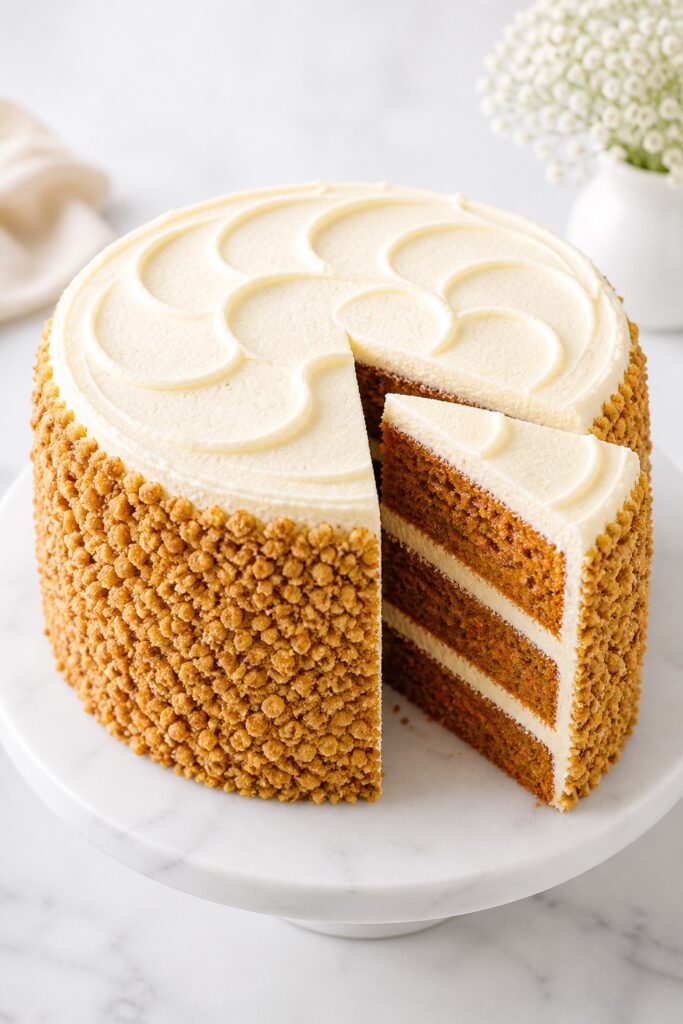
Spread frosting over the top and sides of the cake. For a rustic homemade look, use soft swoops. For a cleaner finish, smooth with an offset spatula.
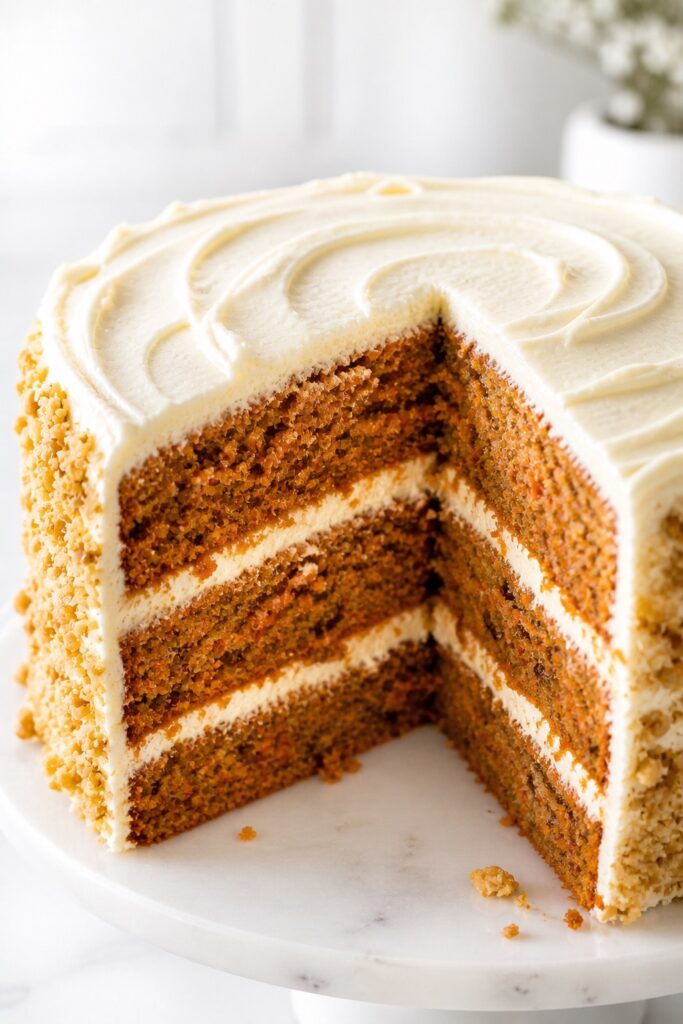
You should see clean layers when slicing, not sliding frosting.
Decoration Ideas
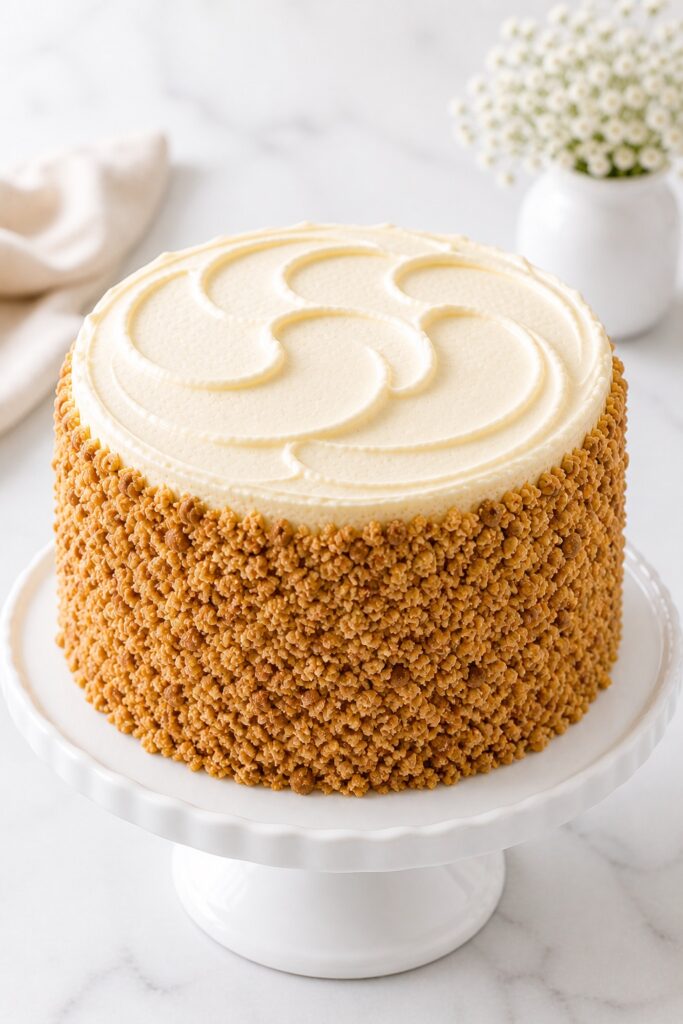
- Press chopped walnuts or pecans around the bottom edge
- Sprinkle cake crumbs over the top for a natural bakery-style finish
- Pipe small frosting swirls around the border
- Dust the top lightly with cinnamon
- Keep it simple with a smooth frosted top and rustic sides
For a Mother’s Day or Easter look, keep the decoration soft and elegant: creamy frosting, a few nut pieces, and clean slices that show the moist carrot crumb inside.
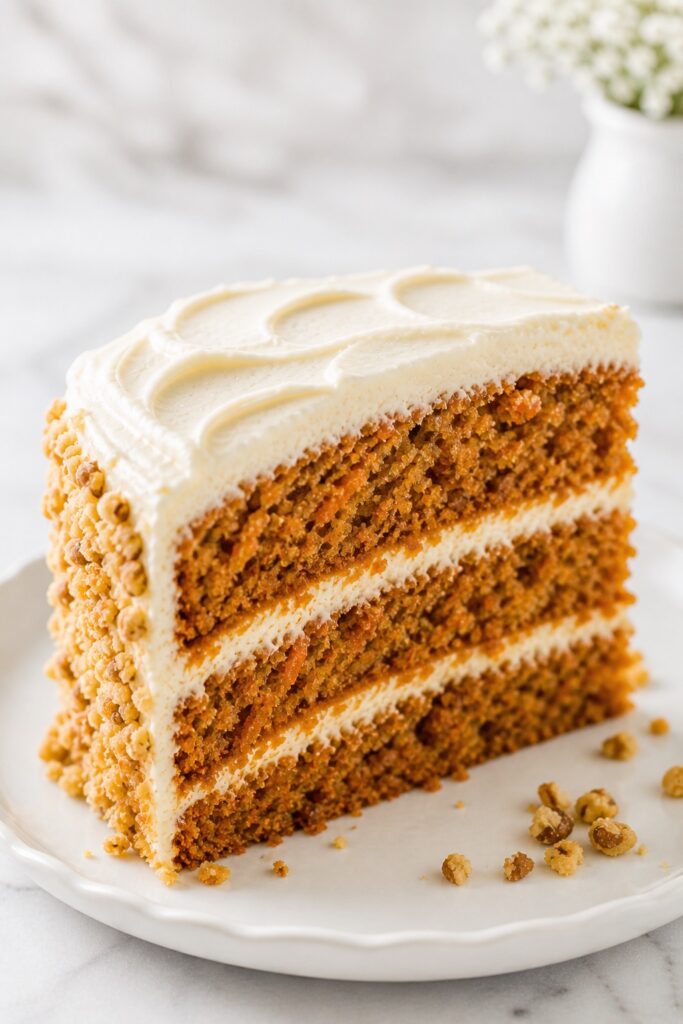
A clean slice revealing three layers is often the most visually powerful presentation.
Texture and Behavior Guide
| Stage | What You Should See |
|---|---|
| Batter | Thick, moist, textured, spoonable |
| During baking | Edges set first, center rises gently |
| Fully baked | Springy center, golden edges, moist crumbs |
| Cooled cake | Soft but stable enough to frost |
| Frosted cake | Creamy layers, clean slice after chilling |
Expert Tips for Best Results
- Use freshly grated carrots for the best moisture and texture.
- Do not overmix once the flour is added.
- Drain pineapple well so the cake does not become too wet.
- Cool the layers completely before frosting.
- Chill the cake before slicing for cleaner layers.
- Use room temperature cream cheese and butter for smooth frosting.
- Add a pinch of salt to frosting to balance the sweetness.
- For ultra clean slices, chill the fully assembled cake for at least 30–60 minutes before cutting. This helps the frosting set and keeps the layers sharp and defined.
Common Mistakes
- Using pre-shredded carrots → drier, tougher carrot pieces in the cake.
- Overmixing the batter → dense or chewy crumb.
- Frosting warm cake layers → melted frosting and sliding layers.
- Too much pineapple liquid → heavy or gummy cake.
- Overbaking → dry edges and less tender crumb.
Carrot Cake Comparison Guide
| Version | Texture | Best For |
|---|---|---|
| This layered carrot cake | Moist, soft, rich | Celebrations and holidays |
| Carrot sheet cake | Soft, simple, easy to frost | Casual gatherings |
| Carrot cupcakes | Light, individual portions | Parties and gifting |
| Carrot loaf cake | Dense, sliceable, cozy | Breakfast-style dessert |
How to Serve Carrot Cake
Serve carrot cake slightly chilled or at cool room temperature. The frosting should be creamy and soft, while the cake layers stay moist and tender.
For the prettiest slices, chill the cake first, then use a sharp knife wiped clean between cuts. Each slice should show soft spiced cake, creamy frosting, and little flecks of carrot throughout the crumb.
Save this for spring gatherings, Easter dessert tables, Mother’s Day brunch, or any moment when you want a cozy homemade cake that still feels beautiful.
Make this when you want a classic dessert that looks elegant, tastes nostalgic, and feels like something people will ask for again.
Storage and Make Ahead
- Store the frosted cake covered in the refrigerator for up to 4 days.
- Bring slices to room temperature for 20–30 minutes before serving.
- Unfrosted cake layers can be wrapped and frozen for up to 2 months.
- The cake can be baked one day ahead and frosted the next day.
- Fully assembled cake tastes even better after a few hours of chilling.
Variations
- Nut-Free Carrot Cake: simply omit the walnuts or pecans.
- Pineapple-Free Carrot Cake: leave out the pineapple for a slightly firmer crumb.
- Carrot Cake with Raisins: add 1/3 cup raisins for a classic old-fashioned version.
- Extra Spiced Carrot Cake: add a pinch of ginger or cloves.
- Simple Sheet Cake: bake in a 9×13-inch pan and frost the top only.
FAQ
Can I make carrot cake ahead of time?
Yes. Carrot cake is a great make-ahead dessert because the flavor deepens as it rests. Bake the layers one day ahead, then frost before serving.
Do I have to use pineapple?
No. Pineapple is optional. It adds moisture and a subtle fruity brightness, but the cake still works without it.
Can I make this carrot cake without nuts?
Yes. Simply leave out the nuts. The cake will still be moist, soft, and flavorful.
Why did my carrot cake turn out dense?
The most common causes are overmixing the batter, using too much moisture, or packing the flour too heavily. Spoon and level the flour for best results.
Can I make this recipe as cupcakes?
Yes. Divide the batter into lined muffin cups and bake for about 18–22 minutes, or until the tops spring back lightly.
Should carrot cake be refrigerated?
Yes, because of the cream cheese frosting. Store it covered in the refrigerator, then let slices soften slightly before serving.
Can I freeze carrot cake?
Yes. Freeze unfrosted cake layers tightly wrapped. Thaw overnight in the refrigerator before frosting and assembling.
More Cake Recipes & Baking Ideas You’ll Love
If you enjoy cakes with a soft, moist texture like this carrot cake, you’ll likely love other recipes built around the same balance of moisture, fat, and structure. From classic layer cakes to fruit-forward options and richer chocolate variations, these recipes follow that same idea of a tender crumb and reliable, bakery-style results.
Quick picks: For a similar cozy spice profile, try Hummingbird Cake. For a classic soft layer cake, go with Vanilla Cake. If you want something richer, Matilda Cake brings a more indulgent chocolate version.
Classic Layer Cakes with a Similar Texture
- Vanilla Cake – soft, balanced layers with a clean, classic flavor
- Red Velvet Cake – tender crumb with a subtle cocoa note and creamy finish
- Coconut Cake – light, airy, and slightly more delicate
Fruit-Forward & Moist Cakes
- Strawberry Cake – soft and fruity with a similar tender structure
- Blueberry Cake – moist and slightly juicy with bursts of fruit
- Lemon Cake – bright, fresh, and delicately soft
Richer & More Indulgent Cakes
- Matilda Cake – ultra-rich, deeply chocolatey, and decadent
- German Chocolate Cake – layered, rich, and more complex
- Ding Dong Cake – creamy, chocolate-filled, and indulgent
Nutty & Cozy Cake Variations
- Hummingbird Cake – moist, fruit-based, and naturally rich
- Italian Cream Cake – soft, nutty, and layered with a creamy finish
Once you understand how carrot cake works — the balance of moisture from oil and carrots, structure from eggs and flour, and gentle baking — it becomes much easier to explore different cake styles while keeping that same soft, tender, bakery-style texture.
Recipe Summary
This carrot cake recipe gives you moist spiced layers, a soft tender crumb, and classic cream cheese frosting from start to finish. It includes the cake, frosting, assembly, and decoration so you can make a complete homemade carrot cake with confidence.
It is cozy, reliable, beautiful for celebrations, and easy to adapt into a sheet cake, cupcakes, or a simple decorated layer cake.
Final Thoughts
Carrot cake is one of those desserts that becomes memorable because it feels familiar, generous, and deeply comforting. When the crumb is moist, the spice is balanced, and the frosting is smooth and tangy, every slice feels special.
This recipe is designed to be dependable long-term: simple enough to repeat, beautiful enough to share, and flavorful enough to become the carrot cake people ask you to make again.

Carrot Cake Recipe with Cream Cheese Frosting
This ultra moist carrot cake is soft, warmly spiced, and filled with smooth cream cheese frosting between every layer. Made with finely grated carrots and simple pantry ingredients, it bakes into a tender, bakery-style cake with a rich yet balanced flavor. Perfect for celebrations, holidays, or cozy homemade baking, this carrot cake delivers that classic texture people love — soft, creamy, and beautifully sliceable.
Ingredients
For the Carrot Cake Layers
- 2 1/2 cups all-purpose flour
- 2 teaspoons baking soda
- 1/2 teaspoon salt
- 2 teaspoons ground cinnamon
- 1/2 teaspoon ground nutmeg (optional)
- 1 1/4 cups vegetable oil
- 1 cup granulated sugar
- 3/4 cup brown sugar
- 4 large eggs
- 2 teaspoons vanilla extract
- 2 1/2 cups finely grated carrots
- 1/2 cup crushed pineapple, well drained (optional but recommended)
- 3/4 cup chopped walnuts or pecans (optional)
For the Cream Cheese Frosting
- 12 oz cream cheese, softened
- 3/4 cup unsalted butter, softened
- 4 cups powdered sugar
- 1 1/2 teaspoons vanilla extract
- Pinch of salt
Instructions
- Preheat oven to 325–340°F. Grease and line three 8-inch round cake pans with parchment paper.
- In a medium bowl, whisk together flour, baking soda, salt, cinnamon, and nutmeg.
- In a large bowl, whisk oil, granulated sugar, brown sugar, eggs, and vanilla until smooth and slightly thickened.
- Fold in grated carrots, drained pineapple, and chopped nuts. Batter will look thick and textured.
- Add dry ingredients to wet ingredients and mix gently until just combined. Do not overmix.
- Divide batter evenly between the three pans.
- Bake for 22–28 minutes, or until the edges are lightly golden and the center springs back when touched.
- Let cakes cool in pans for 10–15 minutes, then transfer to a wire rack to cool completely.
Make the Frosting
- Beat cream cheese and butter together until smooth and creamy.
- Add powdered sugar gradually, mixing until fully incorporated.
- Mix in vanilla extract and salt. Beat until smooth and fluffy.
Assemble the Cake
- Level the cake layers if needed for even stacking.
- Place first layer on a serving plate and spread about 3/4 cup frosting evenly.
- Add second layer and repeat frosting.
- Place third layer on top.
- Apply a thin crumb coat over the entire cake and chill for 20–30 minutes.
- Frost the cake with remaining frosting, smoothing or creating soft swirls.
Optional Decoration
- Press chopped walnuts around the base.
- Add light frosting swirls on top or a soft crumb topping.
Notes
- Use finely grated carrots for best texture.
- Do not overmix the batter — this keeps the cake soft.
- Drain pineapple well to avoid excess moisture.
- Layers bake faster because they are thinner — check early.
- Chill cake before slicing for clean layers.
Nutrition Information:
Yield: 12 slices Serving Size: 1 sliceAmount Per Serving: Calories: 520Total Fat: 28gCarbohydrates: 58gSugar: 40gProtein: 6g
Nutrition information is estimated and may vary based on ingredients and portion sizes.
12 Sweet Favourites — Yours, Free 🍰
Tiramisù, no-bake cheesecake, the perfect chocolate chip cookie & 9 more reader-loved desserts — gathered into one beautiful free recipe book. From my kitchen to yours.
No spam, just sweet things. Unsubscribe anytime.