Butter Pecan Cake (Irresistibly Moist & Nutty Layers)
Butter pecan cake is a three-layer cake made with butter-toasted pecans and vanilla cream cheese frosting. Chopped nuts run through the tender, buttery crumb, with two creamy filling layers and a scattering of toasted pecans on top. The pecans bring the roasted flavor; vanilla and a little brown sugar round out each bite.

Butter, vanilla, and toasted nuts give this cake a familiar flavor that suits a birthday table as comfortably as a Thanksgiving dessert spread. Its pale frosting and golden crumb keep the pecans at the center of the cake, with enough contrast between soft filling and nut-studded layers to make a small slice satisfying.
Keep this butter pecan cake in mind when you want to spread a celebration bake over two days. The layers can be baked ahead, while clear cooling cues and measured filling portions help make assembly more manageable. A simple spatula finish leaves the toasted pecans to do the decorating.

Butter Pecan Cake at a Glance
Allow about 4 hours 35 minutes from starting the pecans to cutting the cake, with much of that time reserved for cooling and chilling. You will need three matching pans and refrigerator space for the assembled cake.
| Detail | What to plan for |
|---|---|
| Style and method | From-scratch three-layer cake; creamed butter batter, butter-toasted pecans, and vanilla cream cheese frosting |
| Flavor and texture | Toasted pecans, butter, and vanilla; tender crumb with chopped nuts and creamy filling |
| Yield | One 8-inch three-layer cake, cut into 16 slices |
| Difficulty | Intermediate: weighing, mixing, complete cooling, and layer assembly |
| Prep time | 80 minutes, including frosting and assembly |
| Cook time | 45 minutes, including pecan toasting; the cake layers bake for about 28–35 minutes |
| Additional time | 150 minutes of net cooling and chilling time; frosting preparation overlaps part of the cooling |
| Total time | About 4 hours 35 minutes; allow longer if the layers are still warm |
| Pans and oven | Three 8 × 2-inch pans; 350°F / 175°C, conventional oven |
| Key equipment | Kitchen scale, mixer, cooling racks, and an oven that holds all three pans with space around them |
| Make ahead | Bake, cool, wrap, and refrigerate the layers the day before assembly |
| Storage | Keep covered and refrigerated at 40°F / 4°C or below; plan to enjoy within 3 days for quality |
| Cake style to expect | A frosted layer cake with toasted pecans, rather than a dense pound cake or a cake with syrupy pecan pie filling |
Why This Butter Pecan Cake Works
Butter-toasted pecans flavor the cake from within, while the cream cheese frosting adds a smooth, tangy contrast. Keeping the nut batches separate and measuring the filling portions gives each layer its share of pecans and leaves enough frosting for the top and sides.
- The toasting butter stays in the cake. Scraping the entire pecan mixture into the batter carries the butter and toasted nut flavor into the layers instead of leaving part of it in the skillet.
- The two nut batches stay separate. The 180 g mixed into the cake supplies flavor throughout; the additional 60 g remains available for a crisp, visible finish.
- Buttermilk and a little oil complement the butter. Butter provides the familiar flavor, while the liquid ingredients support a tender crumb rather than a dry, crumbly slice.
- Enough frosting for filling and finishing. Two portions of about 250 g give the cake two even bands of filling while leaving enough frosting for a simple coating over the top and sides.
Why You’ll Love This Butter Pecan Cake
The work can be divided into a baking day and an assembly day, which makes this butter pecan cake easier to fit around a celebration. The finish also leaves room for an ordinary home-baking setup.
- A useful day-ahead stage. Refrigerated, wrapped layers let you finish the oven work before the day you plan to serve.
- One assembly, sixteen portions. A single cake can cover a family dessert table without decorating individual servings.
- No piping bag required. A spatula finish and toasted pecans provide the decoration, so elaborate buttercream flowers or tall swirls are unnecessary.
Who This Butter Pecan Cake Is Perfect For
Choose this butter pecan cake if toasted nuts are the flavor you want and you can give the layers time to cool completely. It is best suited to a planned bake with enough room for three pans and a refrigerated finish.
- Pecan lovers: chopped nuts appear throughout the crumb as well as on top, so this is a good fit for someone who enjoys their texture in each slice.
- Celebration bakers: the three-layer format gives height without requiring tiers, supports, or elaborate piping.
- Make-ahead hosts: baking the layers the previous day is useful when you have time before the event but want less oven work on the day itself.
Check your oven and refrigerator before choosing this cake for a deadline. If three pans cannot bake together with air circulating around them, arrange a different baking setup before mixing; this schedule does not include holding part of the batter through another oven cycle.
The Science Behind Tender Pecan Cake Layers
Butter condition, nut size, and residual heat all affect how this cake behaves. Understanding these three points helps you decide when to continue, when to pause, and why adding more flour or sugar is not always the right correction.
Creaming Butter Without Melting It
Soft, plastic butter can hold small air pockets as it is beaten with sugar. Those pockets contribute to the cake’s structure as it bakes. Butter that looks oily or partly melted cannot be treated as though it were simply a softer version of the same starting point.
Look for butter that takes a gentle indentation but still holds its shape. If it has become glossy and slumping, let it firm before creaming. A longer beating time will not restore the structure of melted butter.
Supporting the Pecans in the Batter
The size of the pecan pieces and the consistency of the batter affect how evenly the nuts distribute. Pieces around 4–6 mm give distinct bites without the weight and uneven pockets that larger chunks can create.
The batter should be thick enough to spread into the pans rather than pour like a thin pancake batter. Fold the cooled pecans through gently; do not add extra flour to make it stiffer. A thicker batter is not a guarantee against settling, and changing the flour amount can make the finished layers heavier.
Why Cool Layers Protect the Frosting
Warm cake can soften the fats in cream cheese frosting even when the top of a layer no longer feels hot. The underside and center may retain heat longer, especially while a cake sits in its pan.
Let the layers cool on racks before stacking. If warmth remains underneath, give them more time; spreading frosting over warm cake can turn a smooth filling into a soft layer that allows the cake to slide.
Ingredients for Butter Pecan Cake
Prepare three components: the pecans, the cake batter, and the frosting. Keep the two pecan portions and the three butter portions separate so each goes into the correct component.

Ingredient List
Use the gram amounts as your main measurements, especially for flour, pecans, buttermilk, and sugar. The cup measures are approximate; a scale also makes it easier to divide the batter and filling evenly.
For the Pecans
- 28 g unsalted butter (2 tablespoons), for toasting the batter pecans
- 180 g raw pecans, chopped into 4–6 mm pieces, for the batter (about 1½ generous cups)
- 60 g raw pecans, for the topping (about ½ cup), toasted separately without added butter
For the Cake Batter
- 360 g all-purpose flour (3 cups, spooned and leveled)
- 12 g double-acting baking powder (1 tablespoon)
- 2.3 g baking soda (½ teaspoon)
- 5 g fine salt, for the batter
- 227 g unsalted butter (1 cup), softened but not melted
- 300 g granulated sugar (1½ cups)
- 100 g packed light brown sugar (a scant ½ cup, approximately)
- 55 g neutral oil (about ¼ cup)
- 4 large eggs, about 200 g without shells, at a moderate room temperature
- 15 ml vanilla extract (1 tablespoon), for the batter
- 300 g cultured buttermilk, at a moderate room temperature; weigh rather than relying on a cup conversion
For the Vanilla Cream Cheese Frosting
- 226 g unsalted butter (1 cup), softened and still holding its shape, for the frosting
- 480 g powdered sugar (about 4¼ cups before sifting), sifted if lumpy
- 340 g full-fat block cream cheese (12 ounces)
- 10 ml vanilla extract (2 teaspoons), for the frosting
- 1 g fine salt, for the frosting
You will also need a little butter or baking spray to grease the pans. For the small salt amounts, use a fine-resolution scale or calculate the volume from the salt package’s stated weight per teaspoon; different salts do not weigh the same by volume. This cake contains wheat, milk, eggs, and pecans.
Choosing and Chopping the Pecans
Start with raw pecans so you can control their color as they toast. Chop the portion for the batter before weighing and toasting it, then keep the topping portion in a separate bowl. Smell the nuts before using them: stale or rancid nuts will not improve with toasting.
The batter pecans are toasted in butter, and every scrape of that mixture belongs in the cake once cool. The topping pecans toast in a dry skillet. If the butter-and-pecan flavor is what draws you to this cake, butter pecan cookies offer it in a smaller bake for another day.
Flour, Buttermilk, and the Cake Batter
All-purpose flour supplies the structure for the nut-studded layers, while cultured buttermilk contributes liquid and acidity. Keep those ingredients as specified: cake flour has a different protein profile, and plain milk does not provide the same acidity as cultured buttermilk.
The small amount of oil complements the butter rather than replacing it. Measure both, and use large eggs so the amount of egg stays close to the intended quantity. When measuring flour by volume, loosen it first, spoon it into the cup, and level without packing.
Block Cream Cheese for a Spreadable Frosting
Use full-fat cream cheese sold in blocks. Spreadable cream cheese from a tub can behave differently because its moisture and formulation vary, making a soft frosting harder to judge.
Sift clumped powdered sugar before mixing so you do not need prolonged beating to remove lumps later. The frosting has no added milk or cream; if it seems soft, check its temperature before changing the ingredients.

Kitchen Tools for an Even Three-Layer Cake
Three matching pans help the layers bake to similar depths. Set out the weighing and cooling equipment at the same time so you can portion the batter promptly and move the cakes out of their hot pans after the initial rest.
- Pans and lining: three light-colored metal 8 × 2-inch round cake pans, parchment paper, and a little butter or baking spray for greasing.
- Weighing and measuring: a kitchen scale, measuring spoons, and a fine-resolution scale for small salt amounts, or the salt package information giving weight per teaspoon.
- Mixing: a stand mixer with a paddle attachment or a hand mixer, mixing bowls, and a flexible spatula for scraping and folding.
- Toasting and cooling: a wide skillet, a heat-safe spatula, separate bowls for the pecan batches, and wire cooling racks.
- Assembly and slicing: a cake plate or stand, an offset spatula for spreading frosting, and a serrated knife for cutting.
Before You Mix the Pecan Cake Batter
Finish these checks before you begin the batter. Warm nuts, melted butter, or an oven that cannot hold the pans can force a pause at the wrong point.
- Confirm that all three pans fit in the oven with space for air circulation.
- Grease the pans and line their bases with parchment.
- Cool both batches of toasted pecans completely, keeping them separate.
- Check that the batter butter is soft and plastic, with no melted shine.
- Bring the eggs and buttermilk to a moderate temperature rather than using them refrigerator-cold.
- Clear a refrigerator shelf that can hold the assembled cake on its plate.
What to Expect from the Batter and Finished Cake
A thick batter with visible pecan pieces is normal for this butter pecan cake. The finished layers should have a tender, nut-studded crumb, while the cream cheese frosting will feel firmer when refrigerated.
- Before baking: the batter is spreadable rather than freely pourable, with small pecan pieces distributed through it.
- After baking: the layers may have a slight dome and a golden surface; they need not be perfectly flat to have baked evenly.
- Inside a slice: expect a cake crumb with distinct nut pieces, not a mousse-like or custard-like interior.
- From the refrigerator: the butter-rich cake and frosting feel firmer than they do after a short tempering period.
How to Make Butter Pecan Cake
Toast and cool the pecans first, then mix and bake the layers. Make the frosting near the end of the cooling period so it is ready for assembly without spending the whole afternoon on the counter.
1. Prepare the Pans and Toast the Pecans
Heat the oven to 350°F / 175°C. Grease three 8 × 2-inch round pans and line the bases with parchment, leaving enough oven space around them for heat to circulate.
Melt 28 g butter in a wide skillet over medium-low heat. Add the 180 g chopped batter pecans and stir for about 4–7 minutes, until fragrant and slightly deeper in color. Scrape the nuts and all the butter into a bowl immediately. Toast the separate 60 g topping pecans in a dry skillet for about 3–5 minutes, stirring and watching closely, then transfer them to a second bowl. Cool both batches completely.

What you should see: The nuts smell toasted and look a little darker, without black spots or a burnt smell. The buttered pecans and dry topping pecans remain in separate bowls.

2. Cream the Butter and Sugars
Beat the 227 g softened butter with the granulated and brown sugars for about 3–4 minutes, until lighter and aerated. Scrape the bottom and sides of the bowl so a dense band of butter is not left underneath.
Use the appearance of the mixture along with the clock. If the butter looks melted or oily, pause and let it firm before continuing; adding the eggs to a greasy base will make the mixture harder to manage.
What you should see: The mixture looks lighter and fluffier than when you started, with no pool or shiny smear of melted butter.

3. Add the Oil, Eggs, and Vanilla
Mix in the oil, then add the eggs one at a time, incorporating each before adding the next. Add the 15 ml vanilla and scrape the bowl again, including the area under the paddle or beaters.
If the mixture looks a little uneven after an egg, scrape and mix briefly before moving on. Avoid trying to fix it with an extra scoop of flour; the measured dry ingredients come in the next step.
What you should see: The egg mixture is combined throughout, with no unincorporated egg collecting at the bottom of the bowl.

4. Alternate the Dry Ingredients and Buttermilk
Whisk the flour, baking powder, baking soda, and 5 g salt together in a separate bowl. With the mixer on low, add the dry mixture in three portions, alternating with the buttermilk in two portions: dry, buttermilk, dry, buttermilk, dry.
Mix only until the additions are incorporated, then scrape the bowl. Stop once no dry flour remains; prolonged beating at this stage can make the crumb tougher.
What you should see: The batter is thick and cohesive, with no dry flour pockets along the sides or bottom of the bowl.

5. Fold in the Cooled Pecans and Divide the Batter
Fold in the cooled butter-toasted pecans by hand, scraping all the butter and nut pieces from their bowl into the batter. Keep the dry-toasted topping pecans aside.
Divide the batter evenly among the three prepared pans, using the scale to check each portion. Gently spread the batter into an even layer in each pan.
What you should see: Pecans are distributed through all three portions, and the batter sits at similar depths in the matching pans.

6. Bake and Cool the Cake Layers
Bake for about 28–35 minutes, checking from 26 minutes. The centers should spring back lightly, and a tester inserted into the center should come out without raw batter; a few moist crumbs are fine. If one layer is ready before the others, remove it rather than overbaking it to match the clock.
Let the cakes rest in their pans for about 15 minutes, then turn them out carefully onto racks. Allow roughly 1½–2 hours of cooling in total from the moment they leave the oven, or longer if needed. Check the underside as well as the surface before frosting.
After a cream cheese frosting softened against cake layers that were still slightly warm, I stopped judging cooling by the top alone. I check the underside too before stacking, so warmth hidden in the cake does not undo a carefully spread layer of frosting.

What you should see: The layers hold together when handled gently, and no warmth remains underneath before you begin stacking.

7. Make the Vanilla Cream Cheese Frosting
Near the end of the cooling period, beat the 226 g softened butter with the powdered sugar, starting slowly so the sugar stays in the bowl. Once combined, continue until smooth and aerated, scraping as needed.
Add the block cream cheese in pieces, followed by the 10 ml vanilla and 1 g salt. Mix just until smooth and spreadable. If the frosting becomes too soft to hold a spatula mark, refrigerate it briefly and check again before adding more sugar or attempting assembly.
What you should see: The frosting is smooth and holds a soft spatula trail instead of running flat immediately.

8. Stack the Three Cake Layers
If a completely cooled layer has a pronounced dome that prevents the next layer from sitting level, trim the high spot with a serrated knife. A slight dome that allows the layers to sit steadily can stay. Place the first completely cooled layer on the cake plate. Spread about 250 g frosting evenly over it, keeping the thickness consistent rather than building a mound in the center.
Center the second layer over the first and add another 250 g frosting. Set the third layer on top and check the alignment from the side. Lower each layer gently so its weight is supported evenly; do not press hard to force it into place.

What you should see: The three cake layers line up over two even fillings, with no obvious leaning or frosting squeezing out in a thick band.

9. Finish with Frosting and Toasted Pecans
Spread the remaining frosting over the top and sides with an offset spatula. You should have about 550 g left, allowing for a little frosting on the bowl and utensils, enough for a simple coating over the cake.
Use light strokes so the spatula does not drag crumbs from the cake. Arrange all 60 g dry-toasted pecans on top, either in a ring or scattered across the surface.

What you should see: The exterior has a simple, even coating and the toasted pecans are clearly visible, without a heavy pile of frosting hiding the cake.

10. Chill Briefly and Cut Clean Slices
Refrigerate the assembled cake for about 30–45 minutes, until the filling can support a clean cut. Use a serrated knife with gentle sawing strokes instead of pressing straight down through the layers.
Cut into 16 slices, wiping the blade between cuts. Keep the cake refrigerated and bring out only the portions needed for a short tempering period before serving.
What you should see: The filling stays between the layers as the slice is lifted, and the cut shows the crumb without a thick smear of frosting across it.
How to Tell When the Layers Are Baked
Judge the center of each layer before removing it from the oven. Surface color alone cannot tell you whether the middle has finished baking, and chopped pecans can make a tester mark less obvious.
Check the Center, Not Just the Edges
Press the center lightly: it should spring back rather than leave a wet-looking indentation. Insert a tester into the center and look for a few moist crumbs or a clean tip, not streaks of raw batter.
If the tester hits a large nut piece, check a nearby spot. A firm edge with a wet center means the layer needs longer; check again after a short interval rather than treating the full baking range as a deadline.

Read the Crumb After Cooling
A cooled slice can feel tender and moist without being underbaked. Distinct crumbs that separate gently are different from a compressed, gummy band or a wet paste around the cut.
Cold butter and frosting also make a refrigerated slice feel firmer. Let a serving temper briefly before judging tenderness, but do not describe a raw or gummy center as simply extra moist.

Expert Tips for Neat, Tender Slices
Small handling choices matter when a tender cake contains chopped nuts and carries two layers of soft filling. Use the scale and spatula to reduce unnecessary handling, especially once the batter is mixed and the cake is ready to stack.
- Tare each pan separately. Empty pans can differ in weight even when their dimensions match; zero the scale with each pan on it before adding batter, so you are comparing the batter portions rather than the combined weight of pan and cake.
- Check the bottom of the mixing bowl before dividing. Lift a final broad fold from the bottom and look for a pocket of buttered pecans; distributing that pocket now prevents the last pan from receiving most of the remaining nuts.
- Place frosting across the surface before spreading. Set several small dollops from the measured filling portion over the cake, then join them with light strokes; this shortens the distance you need to drag frosting across the delicate crumb.
- Release the spatula with a sideways motion. Keep the blade nearly parallel to the frosting and ease it away at the edge, because pulling it straight upward can lift crumbs or leave a peak that needs another pass.
Butter Pecan Cake Mistakes and How to Fix Them
Identify whether the problem started with the nuts, the batter, or the frosting before changing an ingredient. Some issues can be corrected before assembly; burnt nuts and a dense baked crumb cannot be repaired by adding decoration.
| What you notice | Likely cause | What to do now | How to prevent it |
|---|---|---|---|
| Bitter or scorched pecans | Too much heat, too long in the skillet, or nuts left sitting in the hot pan | Discard burnt nuts and remake that component before adding it to the cake. Extra sugar will not remove the bitterness. | Stir frequently, watch color and aroma, and transfer the nuts immediately. |
| An uneven egg-and-butter mixture | Ingredients at very different temperatures or eggs added too quickly | Scrape the bowl and mix briefly. If the butter is greasy, pause to let it firm; avoid adding unmeasured flour. | Use plastic butter, moderately tempered eggs and buttermilk, and add eggs one at a time. |
| Dense or tough cake layers | Too much flour, prolonged mixing after flour, or weak initial aeration | Once baked, the crumb cannot be aerated again. Cut modest portions and assess the mixing and measuring steps before the next bake. | Weigh flour, cream butter before adding liquid, and stop mixing when flour disappears. |
| Frosting that loses its shape | Warm ingredients, prolonged mixing, or spreadable cream cheese | Chill briefly, then reassess. Do not stack until it can hold a spatula trail. | Use full-fat block cream cheese, do not add milk or cream, and mix briefly after adding the cheese. |
| Cake layers sliding sideways | Warm cake, soft frosting, or uneven filling | Pause assembly and refrigerate until the frosting firms. Realign gently only when the layers can be supported. | Cool the undersides fully, distribute filling evenly, and check alignment as each layer is added. |
Beautiful Ways to Serve Butter Pecan Cake
The height of butter pecan cake makes a narrow slice feel generous. Choose the portion and arrangement around how guests will eat it: a full dessert plate, a small serving with coffee, or slices they can lift easily from a shared platter.
A Clean Celebration Slice
For the planned 16 servings, lightly mark the top into quarters, then mark four wedges within each quarter before cutting. The marks help keep the last few portions close in size to the first, particularly when a pecan ring makes the top harder to judge by eye.
Place each full-height slice on a dessert plate with its cut face visible. If a narrow wedge feels unsteady upright, rest it on one cut side so all three cake layers and both fillings remain easy to see and eat. A lightly tempered portion lets the frosting soften a little while the slice still holds together.
For a future celebration where chocolate is the main preference, German chocolate cake pairs gentle cocoa layers with a coconut-pecan filling, giving the nuts a different flavor setting.

A Small Slice with Coffee
After a substantial meal, cut a narrower wedge that still includes all three cake layers and both fillings. This keeps the proportion of cake, cream, and pecans in each bite while making room for coffee alongside it.
Serve with unsweetened coffee when you want a bitter contrast to the sweet frosting, or coffee with milk for a softer pairing. Let the cake supply the sweetness before adding sugar to the drink; the toasted pecans and coffee already have a roasted flavor in common.

A Shareable Dessert Platter
Arrange a few slices in a loose fan, with the broad outer ends toward the platter edge and the points facing inward. Leave enough space to slide an offset spatula beneath the whole base of a slice without brushing the frosting on its neighbor.
Keep the slices in one layer, since stacking presses the pecans into the frosting and makes portions harder to separate. Put out a modest batch and replenish it from the refrigerator as needed, using the handling limit in the storage section for the time spent on the table.

How to Store Butter Pecan Cake and Prepare It Ahead
Keep butter pecan cake covered in the refrigerator at 40°F / 4°C or below. The cream cheese frosting needs refrigeration; Iowa State University Extension’s guidance on refrigerating cream cheese frosting explains why it should not be treated like a shelf-stable decoration.
Refrigerating the Finished Cake
Use a cake carrier or a cover that does not press against the frosting. Plan to enjoy the cake within 3 days for quality, and protect any exposed cut surface from drying out. A covered container also helps keep refrigerator odors away from the cake.
Keep the cake on a level shelf so the layers remain supported.

Baking the Layers a Day Ahead
Bake the layers the day before, cool them completely, then wrap and refrigerate them separately. Wrapping a warm layer traps steam against the cake, so finish the cooling stage before covering it.
Prepare the frosting and assemble on the day of serving, allowing time for the brief chill before slicing. Keep the finished cake refrigerated until you need to portion it.
Freezing the Unfrosted Pecan Cake Layers
For a longer head start, freeze the completely cooled, unfrosted layers individually. Wrap each layer in plastic wrap, then aluminum foil, and place it flat in the freezer with support underneath to protect the edges. Plan to use the layers within about one month for quality, following Wilton’s general guidance for freezing unfrosted cakes.
When ready to assemble, loosen the foil and plastic wrap and let the layers thaw completely in the refrigerator. Remove the wrapping before stacking, and prepare the frosting on assembly day. Allow extra time for thawing in your schedule, followed by the usual 30–45-minute chill after frosting the cake.
Bringing Out Only the Slices You Need
Let only the required slices temper briefly before serving, and keep the remaining cake refrigerated. Count frosting preparation, assembly, and serving toward the same room-temperature allowance rather than starting the clock again each time the cake comes out.
Keep cumulative room-temperature exposure within 2 hours, or 1 hour when the temperature is above 90°F / 32°C. This is a handling limit, not a suggestion to leave the whole cake out for two hours to soften.
A Practical Butter Pecan Cake Timeline
For butter pecan cake served on the day it is baked, work back about 4 hours 35 minutes from slicing. The schedule assumes the three pans bake together; cooling is the stage to extend whenever the layers still feel warm.
| Time from starting | Stage | What must be ready |
|---|---|---|
| 0–15 minutes | Prepare the pans and toast the pecans | Transfer both nut batches out of the hot skillet for cooling. |
| 15–45 minutes | Mix and divide the batter | The buttered pecans must be cool before folding in. |
| 45–80 minutes | Bake the layers | Begin checking from 26 minutes of baking; remove each layer when its center is ready. |
| 80–200 minutes | Cool the layers | Include about 15 minutes in the pans, then use racks; extend if needed. |
| 185–200 minutes | Make the frosting during the last part of cooling | This overlaps the cooling window rather than adding another 15 minutes. |
| 200–230 minutes | Stack and finish the cake | Both surfaces and undersides of the layers must be cool. |
| 230–275 minutes | Refrigerate to stabilize the filling | Cut only when the frosting supports a clean slice. |
If baking the layers the previous day, move the first four stages to that day and refrigerate the wrapped, fully cooled layers. Keep the frosting, assembly, and finishing chill together on the serving day.
Butter Pecan Cake Variations and Substitution Limits
The most straightforward way to change butter pecan cake is through its finish: the same frosting and toasted pecans can look restrained or generously scattered. Changes to the batter or pan need a different decision, because they affect the structure beneath that decoration.
A Simple Pecan Ring or Scattered Finish
Arrange the 60 g topping pecans in a ring when you want a clear center and a defined edge around the cake. Most of the topping will sit at the broad outside end of each wedge, where it adds a concentrated nutty bite.
Scatter the same 60 g over the whole top when you want the pecan topping spread more evenly across the slice. Press the pieces only lightly into the frosting so they stay in place without sinking into it. The choice changes where the crunch lands, not the amount of pecans or frosting.
Either arrangement works with a smooth spatula finish or gentle surface swirls made from the existing coating. Keep the exterior modest so the remaining frosting covers the sides and top after the two filling portions have been reserved.
Before Changing the Pan, Flour, or Frosting
Match the ingredient or pan to the job it performs before deciding on a replacement. The baking time alone cannot compensate for a deeper layer, a different flour, or a softer frosting.
| Change you are considering | What changes in the cake | How to choose |
|---|---|---|
| A wider pan, one deep pan, a Bundt pan, or cupcakes | Batter depth and the distance heat travels to the center change; the surface may color before the middle is ready. | Use the three 8 × 2-inch pans for this bake. For another format, use a recipe that gives its own pan capacity, portion size, and doneness cues. |
| Cake flour in place of all-purpose flour | A different protein level changes the structure supporting the pecan pieces and the layers during assembly. | Keep the all-purpose flour specified here; an equal weight does not make the two flours behave identically. |
| Plain milk in place of cultured buttermilk | The liquid loses the acidity supplied by cultured buttermilk, changing how it works with the baking soda. | Use cultured buttermilk rather than changing the liquid alone and keeping every other ingredient unchanged. |
| Spreadable cream cheese or a different frosting | Moisture, firmness, sweetness, and the amount available for filling and coating can all differ. | Use full-fat block cream cheese for this frosting. If choosing a different frosting recipe, follow its own yield, consistency cues, and storage guidance. |
| Less sugar in the batter or frosting | Sugar affects the cake crumb and the consistency of the frosting as well as sweetness. | Keep the listed amounts for this cake. If you prefer a less sweet cake or frosting, choose a recipe developed with less sugar rather than reducing it here. |
Butter Pecan Cake Questions, Answered
For the quantities and timing here, use the listed ingredients and three 8-inch pans. Changing a topping arrangement leaves the cake itself intact; changing its flour, liquid, or shape also affects how it bakes.
How do I know when the butter is soft enough?
Press the butter gently with a fingertip. It should take a shallow indentation while still holding its shape, with no oily shine or melted patches. Butter that barely yields needs more time to soften. If it slumps or looks greasy, let it firm before creaming so it can hold air when beaten with the sugars.
Can I use regular milk instead of buttermilk?
Use cultured buttermilk for this recipe. Plain milk does not provide the same acidity, so replacing it without adjusting the rest of the batter can change the result.
Can I use cake flour instead of all-purpose flour?
Stick with all-purpose flour. Cake flour changes the protein level and the way the nut-studded layers hold together; do not substitute it by the same weight or cup measure here.
Can I bake this in different-sized pans?
The quantities and bake range are for three 8 × 2-inch round pans. A different diameter or a single deeper pan changes the batter depth, so the same baking time should not be assumed.
Can I make butter pecan cupcakes with this batter?
For cupcakes, use a butter pecan cupcake recipe with its own portion size and baking time. The three-layer baking schedule here cannot tell you how many cupcakes to make or when those smaller cakes will be done.
Does butter pecan cake need to be refrigerated?
Yes. This butter pecan cake has cream cheese frosting and should be kept covered at 40°F / 4°C or below. Bring out only the slices needed for serving.
How long can this frosted cake stay at room temperature?
Keep the total time out of the refrigerator within 2 hours, or 1 hour when the temperature is above 90°F / 32°C. Count frosting preparation, assembly, and serving together. This cake has cream cheese frosting, so keep it refrigerated and bring out only the slices you plan to serve.
Can I use a different frosting?
The vanilla cream cheese frosting here pairs the toasted pecans with a creamy finish and a gentle tang. Brown butter buttercream or caramel buttercream can provide a different finish. Choose a recipe intended for filling and frosting a layer cake, since sweetness, softness, and stability will vary. Follow that frosting’s own yield and storage instructions. The amounts here are planned for two cream cheese filling layers and a modest coating over the cake.
Can I use a boxed cake mix for this recipe?
This recipe starts with individually measured ingredients. A boxed mix has its own flour, sugar, and leavening proportions, so follow a recipe developed for that mix instead of combining it with the batter quantities listed here.
More Pecan Desserts and Celebration Cakes to Bake Next
Choose the next pecan dessert by the texture you want to eat. Cookies and bars suit smaller portions, pies emphasize sticky filling and pastry, and cheesecakes offer a cool, dense contrast to this butter cake.
More Buttery Pecan Bakes
For a smaller bake, decide whether you want pecans throughout a buttery cookie or concentrated in a sticky filling. These four recipes move from individually portioned cookies to a slab of bars and a traditional pie.
- Butter Pecan Cookies: Toasted pecans and brown sugar flavor a buttery cookie with nut pieces throughout; choose these when you want individual portions without a separate filling.
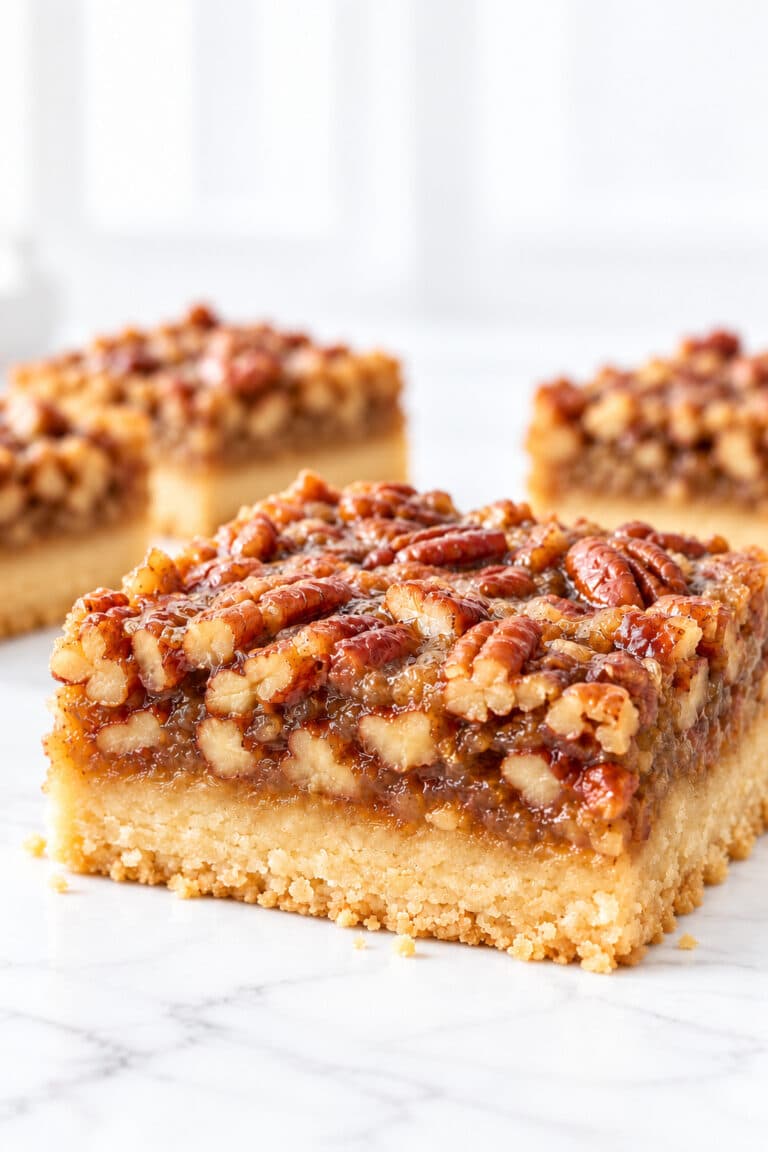
- Pecan Pie Bars: A shortbread base supports a sticky brown-sugar pecan layer; a good choice when you want the flavor of pie in neat squares cut from one pan.
- Pecan Pie Cookies: Brown-sugar shortbread forms a tender rim around a small, syrupy pecan center; choose these for a cookie platter with a distinct filling in each piece.
- Pecan Pie: A flaky butter crust holds a soft brown-sugar filling with chopped pecans inside and halves on top; choose a classic wedge when pastry is part of the craving.
Pecan Desserts with Rich Fillings and Sauces
These desserts make the filling or sauce the main attraction. Choose between a chilled cheesecake slice, a pastry pie with chocolate pockets, and a warm cobbler that is spooned from its dish.
- Turtle Cheesecake: Brown-sugar cheesecake, a chocolate-pecan crust, caramel, and chocolate ganache make a layered, chilled dessert; choose it when you want chocolate and caramel alongside the nuts.
- Chocolate Pecan Pie: Toasted pecans and semisweet chocolate pockets sit in a sticky filling inside pastry; choose it for a holiday pie with a clear chocolate accent.
- Pecan Pie Cheesecake: A smooth brown-sugar cheesecake on a graham cracker base is finished with pecans in butter-and-cream sauce; choose it for a creamy slice with a spoonable topping.
- Pecan Pie Cobbler: Pecan-studded vanilla cake bakes over brown-sugar sauce for a warm dessert served by the spoonful, with sauce scooped from the dish.
Your Next Celebration Cake
Keep the layered celebration format and change the leading flavor. Each cake below gives the filling and crumb a different character, from coconut and chocolate to fruit or another nut.
- German Chocolate Cake: Mild chocolate layers hold a cooked coconut-pecan filling beneath a thin chocolate buttercream finish; choose it when you want the nuts in the filling and coconut in each slice.
- Carrot Cake: Grated carrots and warm cinnamon flavor moist layers with cream cheese frosting, bringing a spiced option to the celebration table.
- Hummingbird Cake: Banana, pineapple, and pecans give this cream-cheese-frosted cake a fruit-rich crumb, with sweet fruit flavor woven through the layers.
- Pistachio Cake: Real pistachios give the layers and frosting a distinct nut flavor and a soft green appearance; choose it for another nut-centered celebration with a different taste and color.
Why This Butter Pecan Cake Belongs in Your Recipe Box
Butter pecan cake earns a place among celebration recipes when you want the nuts to give the cake its identity from the first bite to the last.
- Toasted Pecan Flavor: Keep it for birthdays and holiday meals where a pecan lover’s favorite flavor deserves a whole cake built around it.
- Tender Cake Layers: The soft crumb and small pieces of pecan offer a satisfying change of texture when your usual nut desserts are sticky pies or dense cheesecakes.
- Creamy Vanilla Finish: Vanilla and the gentle tang of cream cheese give the toasted nuts a familiar partner, making the flavor pairing worth returning to without a new sauce or filling.
- Simple Decoration: A spatula finish and toasted pecans make this a useful celebration cake to return to when you want an attractive dessert without piping.
- Day-Ahead Planning: The separate baking and assembly days make this a useful cake to revisit for celebrations that already have a full serving-day schedule.
- Celebration-Sized Portions: A full-height cake with sixteen planned slices gives it a recurring role as the main dessert for a gathering rather than an extra sweet on the side.
A Butter Pecan Cake Worth Taking Your Time For
On the plate, a tall slice shows three golden layers, two pale bands of frosting, and small pieces of pecan scattered through the crumb. The toasted nuts on top add a crisp bite beside the soft cake and creamy frosting.
For a birthday, a ring of pecans leaves the center free for candles. At a holiday meal, a narrow wedge beside a cup of coffee gives butter and toasted nuts their own place among the pies.
As the slice loses its refrigerator chill, the frosting softens around the pecan-studded layers. A forkful from the pointed end brings cake and vanilla cream cheese frosting together, with the nut-covered outer edge still waiting on the plate.

Butter Pecan Cake
Three tender pecan cake layers with butter-toasted nuts, vanilla cream cheese frosting, and a dry-toasted pecan topping. Cool the layers completely before stacking for even fillings and neat slices.
Ingredients
For the Pecans
- 28 g unsalted butter (2 tablespoons), for toasting the batter pecans
- 180 g raw pecans, chopped into 4–6 mm pieces, for the batter (about 1½ generous cups)
- 60 g raw pecans, for the topping (about ½ cup), toasted separately without added butter
For the Cake Batter
- 360 g all-purpose flour (3 cups, spooned and leveled)
- 12 g double-acting baking powder (1 tablespoon)
- 2.3 g baking soda (½ teaspoon)
- 5 g fine salt, for the batter
- 227 g unsalted butter (1 cup), softened but not melted
- 300 g granulated sugar (1½ cups)
- 100 g packed light brown sugar (a scant ½ cup, approximately)
- 55 g neutral oil (about ¼ cup)
- 4 large eggs, about 200 g without shells, at a moderate room temperature
- 15 ml vanilla extract (1 tablespoon), for the batter
- 300 g cultured buttermilk, at a moderate room temperature; weigh rather than relying on a cup conversion
For the Cream Cheese Frosting
- 226 g unsalted butter (1 cup), softened and still holding its shape, for the frosting
- 480 g powdered sugar (about 4¼ cups before sifting), sifted if lumpy
- 340 g full-fat block cream cheese (12 ounces)
- 10 ml vanilla extract (2 teaspoons), for the frosting
- 1 g fine salt, for the frosting
Instructions
- Prepare the pans and toast the pecans. Heat the oven to 350°F / 175°C, conventional. Grease three light-colored metal 8 × 2-inch round cake pans and line the bases with parchment. Melt 28 g butter in a wide skillet over medium-low heat. Add the 180 g chopped batter pecans and stir for 4–7 minutes, until fragrant and slightly darker, without black spots. Immediately scrape the pecans and all the butter into a bowl. Toast the separate 60 g topping pecans in a dry skillet for 3–5 minutes, stirring, then transfer to a separate bowl. Cool both batches completely.
- Cream the butter and sugars. Beat the 227 g softened butter with the granulated and brown sugars for about 3–4 minutes, until lighter and aerated. Scrape the sides and bottom of the bowl. The butter should be soft and hold its shape, with no melted or oily patches.
- Add the oil, eggs, and vanilla. Mix in the oil, then add the eggs one at a time, incorporating each before adding the next. Add the 15 ml vanilla. Scrape the bowl, including underneath the beaters, and mix briefly until no unincorporated egg remains.
- Alternate the dry ingredients and buttermilk. Whisk the flour, baking powder, baking soda, and 5 g salt in a separate bowl. With the mixer on low, add the dry mixture in three portions, alternating with the buttermilk in two portions: dry, buttermilk, dry, buttermilk, dry. Scrape the bowl and stop mixing once no dry flour remains.
- Fold in the pecans and divide the batter. Fold in the completely cooled butter-toasted pecans by hand, scraping in all the butter and nuts from their bowl. Reserve the dry-toasted pecans for the topping. Divide the batter evenly among the three prepared pans, using the scale to check each portion. Gently spread the batter into an even layer in each pan.
- Bake and cool the layers. Bake for about 28–35 minutes, checking from 26 minutes. The centers should spring back lightly, and a tester inserted in the center should come out without raw batter; a few moist crumbs are fine. Remove each layer when ready. Cool in the pans for about 15 minutes, then turn out onto wire racks. Allow roughly 1½–2 hours of cooling in total from leaving the oven, or longer as needed. The tops and undersides must be completely cool before frosting.
- Make the cream cheese frosting. Near the end of the cooling period, beat the 226 g softened butter with the powdered sugar, starting slowly. Once combined, continue until smooth and aerated, scraping the bowl as needed. Add the block cream cheese in pieces, then the 10 ml vanilla and 1 g salt. Mix just until smooth and spreadable. The frosting should hold a soft spatula trail; if it runs flat, refrigerate briefly and check again before assembly.
- Stack the cake. If a completely cooled layer has a pronounced dome that prevents the next layer from sitting level, trim the high spot with a serrated knife. A slight dome that allows the layers to sit steadily can stay. Place the first completely cooled layer on a cake plate and spread about 250 g frosting evenly over it. Center the second layer on top and spread with another 250 g frosting. Set the third layer on top. Check the alignment from the side without pressing hard on the layers.
- Frost and add the topping. Spread the remaining frosting over the top and sides in a simple, even coating. You should have about 550 g left, allowing for a little frosting on the bowl and utensils. Use light spatula strokes to avoid pulling up crumbs. Arrange all 60 g dry-toasted pecans on top, in a ring or scattered over the surface.
- Chill and slice. Refrigerate for about 30–45 minutes, until the filling supports a clean cut. Cut into 16 slices with a serrated knife and gentle sawing strokes, wiping the blade between cuts. Keep refrigerated and bring out only the portions needed for a short tempering period before serving.
Notes
- Weigh the ingredients. Use gram weights for the flour, sugars, butter, buttermilk, and fine salt. Cup measures are approximate. Use full-fat block cream cheese, rather than spreadable cream cheese from a tub.
- Keep the two pecan batches separate. The 180 g butter-toasted pecans and all their toasting butter go into the batter. The 60 g dry-toasted pecans stay aside for the topping. Cool both batches fully before use.
- Plan for complete cooling. The 45-minute cook time includes pecan toasting and cake baking. Prep time includes frosting and assembly. The 150-minute additional time allows for net cooling and chilling, with frosting preparation overlapping the end of cooling. Allow longer than 4 hours 35 minutes if the undersides of the layers are still warm.
- Spreadable frosting and even layers. Keep the frosting butter soft but still holding its shape. Mix the cream cheese only until smooth. If the frosting becomes too soft, chill it briefly before spreading. Use about 250 g between each pair of layers and the remainder for the outside; the quantity is intended for a simple coating, rather than tall piping.
- Pans and substitutions. Use three matching 8 × 2-inch pans and leave space around them in the oven. Changing the pan size or making cupcakes changes the depth and baking time. Keep the all-purpose flour, cultured buttermilk, and sugar amounts as listed for this batter.
- Storage and serving. Keep the cake covered and refrigerated at 40°F / 4°C or below, and plan to enjoy within 3 days for quality. Count frosting preparation, assembly, and serving together toward the 2-hour limit out of the refrigerator, or 1 hour when the temperature is above 90°F / 32°C. Bring out only the slices needed.
- Make ahead. Bake the layers the day before assembly. Cool completely, wrap well, and refrigerate. Make the frosting and assemble the cake on serving day, allowing time for the final 30–45-minute chill.
- Freezing unfrosted layers. Cool the layers completely, then wrap each separately in plastic wrap and aluminum foil. Freeze flat and plan to use within about one month for quality, following general guidance for unfrosted cakes. Loosen the wrapping and thaw completely in the refrigerator before stacking. Make the frosting on assembly day and allow extra time for thawing.
Nutrition Information:
Yield: 16 Serving Size: 1 slice (1/16 of the cake)Amount Per Serving: Calories: 753Total Fat: 48.0gSaturated Fat: 21.4gCholesterol: 135mgSodium: 375mgCarbohydrates: 76.6gFiber: 2.0gSugar: 56.7gProtein: 7.4g
Nutrition information is provided as an estimate only and may vary based on specific ingredients, brands, and portion sizes used. This information should not be considered medical or nutritional advice.