Sourdough Waffles (Same-Day Discard Recipe)
🎁 FREE E-BOOK: 12 Sweet Favorites — reader-loved desserts in one beautiful recipe book.
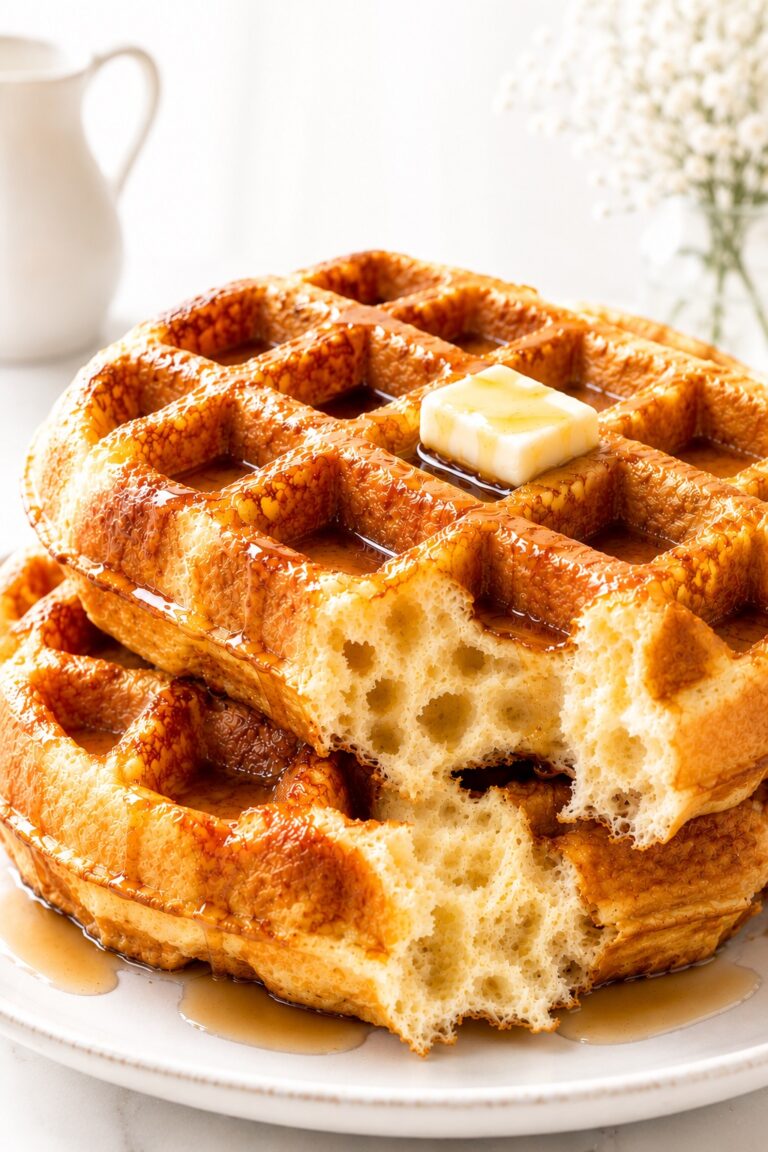
Warm sourdough waffles bring a little tang to the familiar scent of butter and vanilla. Lift one from the iron and let the steam clear before adding maple syrup, and the golden pockets have a better chance to stay crisp around a tender center.

They suit a morning when there is discard waiting in the refrigerator but no overnight batter in progress. The ingredients come together in two bowls, and the waffle iron does the rest.
Keep this recipe close if you want a same-day way to use 200 grams of established sourdough discard. The practical details are how much batter your iron can hold, when to open it, and where to put each waffle while the next one cooks.
Quick Sourdough Waffles Overview
These same-day waffles use established sourdough discard, cultured buttermilk, and baking powder and soda for lift. There is no overnight batter or wait for the starter to rise.
| Detail | At a glance |
|---|---|
| Texture | Golden edges with a delicate crisp surface and a tender, fully cooked center |
| Flavor | A mild sourdough tang with buttermilk, butter, and vanilla |
| Difficulty | Easy; use the first waffle to learn how much batter your iron holds |
| Time | 15 minutes prep, about 30 minutes cooking, 45 minutes total |
| Servings | About 6 standard waffles; fewer in a deep-pocket Belgian iron |
| Method | Mix in two bowls and cook promptly in a fully preheated waffle iron |
| Best For | A same-day breakfast that uses 200 g of established sourdough discard |
In short: Start with about 1/2 cup batter in a standard iron, leaving room for it to spread, and adjust the next portion to fit your maker. Cook until the steam slows substantially, the waffle is golden, and it releases easily. Keep finished waffles in a single layer on a rack until serving.
Why This Sourdough Waffle Recipe Works
The formula gives the discard a clear job: it contributes flour, water, and sourdough flavor, while baking powder and a small amount of baking soda provide lift without a long fermentation.
- A defined starter amount: Weighing the 200 grams of discard keeps its contribution consistent even when one jar is bubbly and another has settled.
- Buttermilk and butter: Cultured buttermilk adds acidity, while melted butter rounds out the flavor of a lightly sweet batter.
- A modest starch portion: Three tablespoons of cornstarch bring a non-wheat starch into the dry blend, a useful choice when aiming for a less bready bite.
- A hot cooking surface: A fully preheated iron sets the waffle against both plates and gives the exterior time to color before the lid is lifted.
Why You’ll Love These Same-Day Waffles
There is room for sourdough flavor in breakfast without building your schedule around a starter feeding.
- No night-before plan: Refrigerated discard goes straight into the wet mixture after a quick stir.
- One straightforward batch: The same batter works in standard and Belgian irons when you adjust the portion to the plates.
- Easy to serve in rounds: A wire rack keeps the first waffles apart while the rest cook.
- Another home for discard: If you have more starter to use, sourdough discard pancakes give it a softer, griddle-cooked breakfast route.

The Science Behind the Sourdough Waffle Batter
Three small interactions explain why the order of mixing and the heat of the iron matter here.
- Starter hydration: At 100% hydration, 200 grams of starter supply about 100 grams of flour and 100 grams of water. Changing to a stiff starter changes that balance.
- Two kinds of lift: Baking soda meets the acids in discard and buttermilk, while double-acting baking powder also helps the batter rise as it heats. King Arthur Baking explains the different roles of baking soda and baking powder.
- Steam and surface texture: Moisture escapes as the waffle cooks. A rack lets that steam move away instead of collecting under a hot waffle and softening its underside.
Ingredients for Sourdough Waffles
The recipe uses one batter and eleven ingredients. Keep the discard at 100% hydration and the butter melted but no longer hot.

Ingredient List
Measure the discard and dry ingredients carefully; the weights in parentheses give the most consistent route for the batter.
- 7 ounces (200 g) mature sourdough discard, stirred, at 100% hydration
- 1 1/2 cups unbleached all-purpose flour (180 g)
- 3 tablespoons cornstarch (24 g)
- 2 tablespoons granulated sugar (25 g)
- 1 1/2 teaspoons double-acting baking powder (about 6 g)
- 1/4 teaspoon baking soda (about 1.2 g)
- 3/4 teaspoon fine sea salt (about 4 g)
- 1 cup cultured buttermilk (240 mL / about 227 g), cool
- 2 large eggs (about 100 g without shells)
- 4 tablespoons unsalted butter (57 g), melted and cooled
- 1 teaspoon pure vanilla extract (5 mL)
Ingredient Notes That Matter
Use discard from a healthy, established starter, whether it was recently removed or kept covered in the refrigerator. If you’re still building one, this sourdough starter guide explains the feeding stage before you begin saving discard for recipes.
Stir before weighing. Refrigerated starter may separate; mixing it first makes the 200-gram measure representative of the whole jar. Discard with visible mold, pink or orange discoloration, or an offensive smell should be discarded.

Use cultured buttermilk. Its acidity is part of the leavening balance. Plain milk is not a one-for-one replacement in this formula. Cool the melted butter so it blends into the eggs and buttermilk without heating them.

Kitchen Tools for Sourdough Waffles
The iron determines each portion’s size and cooking time, so have it fully heated before the wet and dry mixtures meet.
- Waffle iron: A standard electric maker is the yield reference; a deep-pocket Belgian maker uses more batter per waffle. Follow its preheat and greasing instructions.
- Two mixing bowls and a whisk: One for the dry mixture and one for the discard, buttermilk, eggs, butter, and vanilla.
- Digital scale and 1/2-cup measure: Weigh the discard and flour, then use the measure as a starting portion for a standard iron.
- Flexible spatula and plate-safe lifting tool: Fold the batter gently and lift finished waffles without damaging nonstick plates.
- Wire rack and optional sheet pan: Hold waffles apart; set the rack over the pan for a short stay in a warm oven.
What to Expect From the Batter and Iron
This batter is thicker than a thin crêpe batter. It should settle and spread with gentle help from a spoon, and a few small lumps after mixing are normal.
A cold discard may make the wet mixture look slightly uneven at first. Whisk until it is reasonably uniform before combining it with the flour. Once the iron is closed, a strong stream of steam is normal early in cooking; wait for it to slow substantially before checking the waffle.
This is a quick discard waffle, with lift from baking powder and soda. It is distinct from an overnight fermented sourdough waffle, which develops flavor while the batter rests for many hours.
Before You Begin
Have the iron hot and the holding rack ready before the wet and dry mixtures come together. Once mixed, this batter should go into the iron promptly.
- Check the discard: Use discard from an established, healthy starter at 100% hydration. Stir it until uniform, then weigh 200 g.
- Prepare the wet ingredients: Use cultured buttermilk and let the melted butter cool before adding it to the eggs.
- Preheat the iron: Follow your maker’s instructions for heating and greasing the plates. Its capacity determines how much batter each waffle needs.
- Set out a wire rack: Give each cooked waffle its own space. If you need a short warm hold, place the rack over a sheet pan in a 200°F (95°C) oven.
- Mix when ready to cook: Fold wet into dry just until no flour pockets remain. Small lumps are fine; do not leave the finished batter to ferment.
How to Make Sourdough Waffles
Preheat first, mix only until the flour disappears, and use the first waffle to learn how much batter your iron can hold.
1. Heat the Iron and Prepare a Rack
Preheat the waffle iron according to its instructions. Set a wire rack beside it. If several waffles need to wait for serving, heat the oven to 200°F (95°C) and put the rack over a sheet pan.
What you should see: The maker indicates it is fully preheated before any batter is mixed. Its plates are clean and ready for the amount of oil or grease the manufacturer recommends.
2. Whisk the Dry Ingredients
In a large bowl, whisk the flour, cornstarch, sugar, baking powder, baking soda, and salt until evenly distributed. Break up any small clumps of starch or leavener.
What you should see: A uniform dry blend without visible pockets of baking powder or soda.

3. Combine the Wet Ingredients
In a second bowl, whisk the stirred sourdough discard with the buttermilk and eggs. Add the cooled melted butter and vanilla, then whisk until distributed.

What you should see: A mostly smooth mixture with no large clumps of starter and no hot butter pooling on the surface.

4. Fold the Batter Together
Pour the wet mixture into the dry mixture. Fold with a spatula just until the flour is moistened and no dry pockets remain. Small lumps are fine. Cook promptly once the batter is mixed.

What you should see: A thick, slowly spreadable batter rather than a smooth, runny liquid. Stop folding as soon as the last dry streak disappears.

5. Cook One Waffle at a Time
Grease the iron only if its directions call for it. Spoon about 1/2 cup batter into a standard iron, or begin with the amount its manufacturer recommends. A deep-pocket Belgian iron may need 2/3 to 3/4 cup.

Spread gently toward the center of the grid, leaving room for expansion, then close the lid.

Cook for about 4 to 6 minutes, using the iron’s signal as a starting check.
What you should see: Steam is vigorous at first and slows markedly as the waffle cooks.

When the lid opens easily, the surface should be golden and the waffle should release without tearing. If it resists, close the lid and give it more time.

6. Keep Each Waffle Separate
Lift the waffle with a plate-safe tool onto the rack. Repeat with the remaining batter, adjusting the portion after the first waffle if the iron overflows or leaves large empty edges. Serve warm, or keep the rack in the 200°F (95°C) oven for a short hold.

What you should see: Air can circulate under every waffle. None is buried under a hot stack while the rest cook.
How to Tell When Sourdough Waffles Are Done
A cooked waffle should be golden on both sides, release without force, and have a center that is set rather than wet when torn open.
Wait for the steam coming from the sides of the iron to decrease substantially before opening it. An indicator light can help, but the waffle’s color and release tell you more about that particular batch. If the outside is pale, cook it longer. If the waffle splits when the lid lifts, close the iron and allow the structure to set before trying again.
A freshly removed waffle may release a little surface steam on the rack. Keep syrup off until serving so the exterior has a chance to stay crisp.

Expert Tips for Crisp Edges and Tender Centers
Good waffle texture depends as much on the iron and cooling setup as on the mixing bowl.
- Learn the iron with the first portion. Start at 1/2 cup for a standard plate and adjust the next waffle by the space left at the edges or any overflow. Deep Belgian pockets need more batter.
- Respect the steam. King Arthur Baking advises waiting until the steam slows before lifting a waffle iron; an early opening can split a waffle that has not set.
- Do not beat out the lumps. Mixing until perfectly smooth works the wheat flour longer and can make the center tougher.
- Hold on a rack. A short stay in a 200°F (95°C) oven keeps cooked waffles warm while air can reach their undersides.

One lesson I keep in mind when writing a waffle recipe: the first waffle helps you learn the iron. Start with about 1/2 cup of batter in a standard maker, then look at whether it reaches the edges or spills over before measuring the next one. That small adjustment is more useful than treating one scoop size as a rule for every waffle iron.
Common Sourdough Waffle Mistakes
Most disappointing waffles can be traced to a cold iron, the wrong amount of batter, or steam trapped after cooking.
| Mistake | What happens | Why | Next move |
|---|---|---|---|
| Filling the iron too early | Pale, soft exterior | The plates have not regained full heat | Wait for full preheat and recovery between waffles. |
| Adding too much batter | Overflow or a damp middle | The batter is too deep for that iron | Reduce the next portion; use the manufacturer’s capacity as a guide. |
| Opening while steam is strong | A waffle sticks or splits | The interior has not set | Close the lid and allow more cooking time before lifting again. |
| Stacking hot waffles | The undersides turn soft | Escaping steam has nowhere to go | Move each finished waffle to a wire rack in one layer. |
| Mixing until perfectly smooth | A tougher center | Extra mixing develops wheat gluten | Stop when the dry flour disappears; small lumps are acceptable. |
Beautiful Ways to Serve Sourdough Waffles
Bring the waffles to the table warm and add moist toppings at the last moment, so their golden ridges stay visible and inviting.
Warm Butter and Maple Syrup
Set a small pat of butter on each warm waffle and pour syrup at the table. The pockets hold the syrup without soaking the entire serving in advance.

Blueberries and a Spoon of Yogurt
Scatter fresh blueberries across the waffle and add plain or vanilla yogurt just before serving for a cool contrast with the warm grid.

Cinnamon Sugar and Sliced Apples
Arrange thin apple slices on the side and finish the waffle with a light dusting of cinnamon sugar. Keep the fruit separate until the plate reaches the table.
A Simple Brunch Board
Lay the waffles in a loose single layer on a platter with small bowls of syrup, fruit, and butter, allowing everyone to dress their own while the edges are warm.
How to Store and Reheat Sourdough Waffles
Let leftover waffles cool completely in a single layer on a wire rack. Packing them while warm traps steam and softens their surface. Keep syrup and other wet toppings separate until serving.
Refrigerate Leftover Waffles
Pack the cooled waffles in an airtight container within two hours of cooking. Refrigerate for up to three days. Separate them with parchment if needed so they are easy to remove one at a time.
Freeze for Later
Place parchment between fully cooled waffles, then seal them in a freezer bag or airtight container. Freeze for up to two months for best quality. You can reheat individual waffles directly from frozen.
Reheat Until Crisp at the Edges
Toast a chilled or frozen waffle until it is heated through and crisp at the edges. For a waffle too large for a pop-up toaster, use a toaster oven or oven; the time depends on its thickness and whether it is frozen. A microwave will warm it but will not restore the same dry surface texture. Add butter, syrup, or yogurt after reheating.

Sourdough Waffles FAQ
The starter’s condition and hydration are the two details most likely to change this batter before it reaches the iron.
Can I use sourdough discard straight from the refrigerator?
Yes. Use discard from an established, healthy starter, stir it until uniform, and weigh 200 grams. Its chill is fine; its thickness and acidity can vary from jar to jar.
Can I use a stiff sourdough starter instead?
Not as a direct 200-gram swap. This recipe assumes a starter with equal weights of flour and water. A stiff starter contributes less water, so the batter would need a recalculated liquid amount.
Keep Breakfast Baking
If a warm homemade breakfast sounds right, choose another waffle, a softer griddle breakfast, or a longer sourdough project for another morning.
More Waffles for the Iron
Stay with the familiar grid and choose a different batter to match the breakfast you have in mind.
- Belgian Waffle Recipe uses deep pockets for a taller brunch waffle with plenty of space for toppings.
- Classic Waffle Recipe is the pantry-friendly choice when there is no sourdough starter to use.
- Pumpkin Waffle Recipe brings a spiced, autumn flavor to the same breakfast format.
- High Protein Waffles offer a different ingredient balance when a more filling breakfast is the priority.
Take the Batter to the Griddle
A pan or griddle gives you a softer breakfast and a different way to enjoy fruit, buttermilk, or butter.
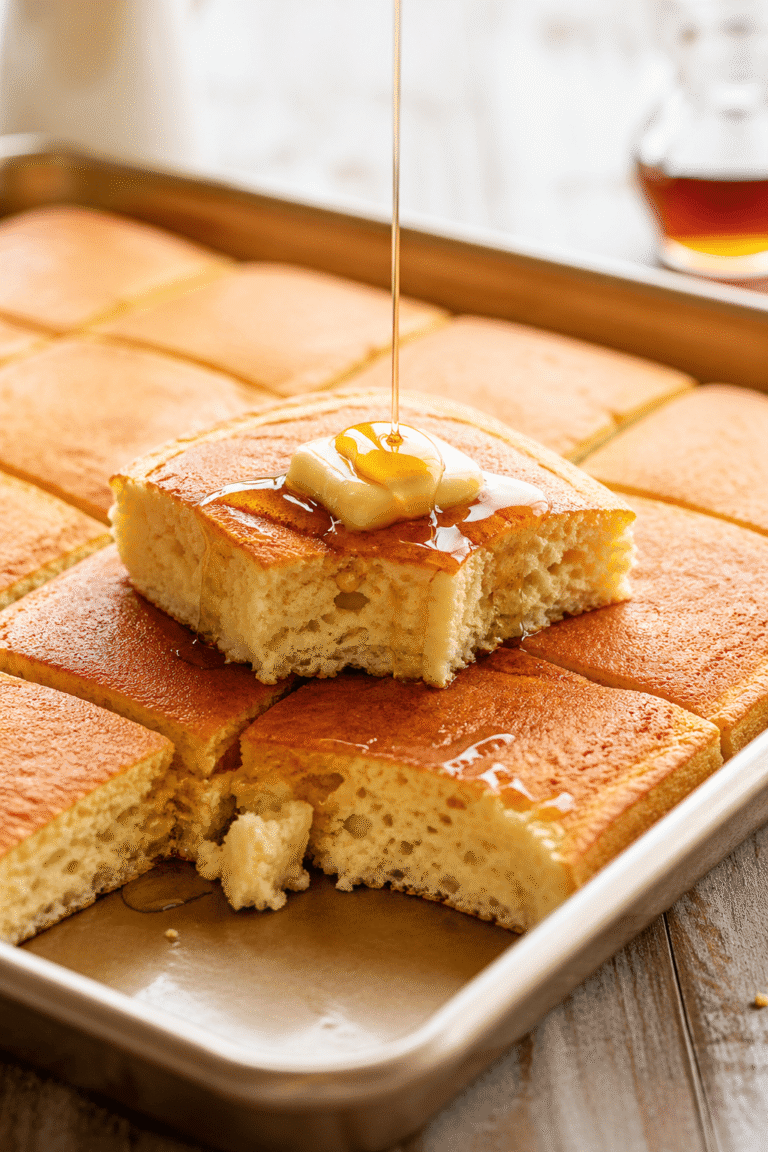
- Buttermilk Pancakes carry the same cultured-dairy tang into a fluffy pancake.
- Blueberry Pancakes put juicy berries into a softer, skillet-cooked stack.
- Banana Pancakes offer a fruit-sweetened direction for a family breakfast.
- Easy Crepes turn a thin batter into foldable rounds for sweet fillings.
Give Sourdough a Longer Morning
When there is more time to shape dough or wait for fermentation, these recipes make a natural next project.
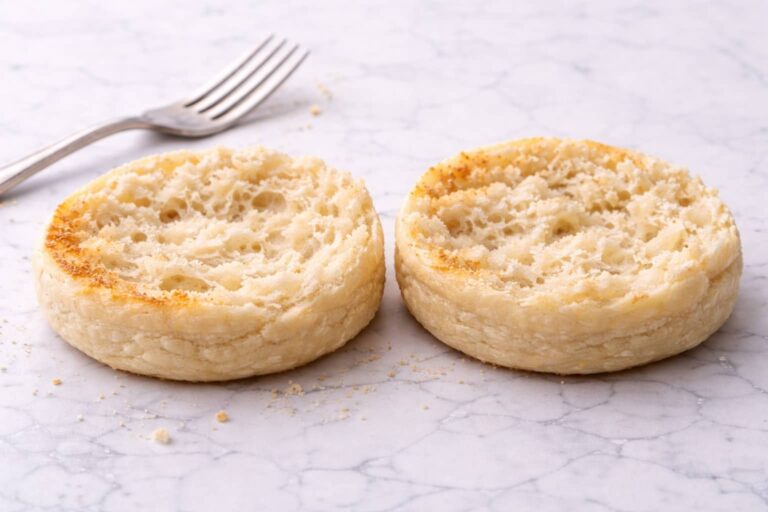
- Sourdough English Muffins turn starter into griddled rounds that can be split and toasted.
- Sourdough Discard Cinnamon Rolls give surplus starter a sweet, rolled breakfast bake.
- Homemade Cinnamon Rolls are the soft, classic alternative when you want a shaped yeast dough.
- Sourdough Bread Recipe moves from using discard to a full naturally leavened loaf.
Why This Sourdough Waffle Recipe Belongs in Your Recipe Box
This is a useful recipe to keep for the mornings when a jar of discard and a waffle iron meet on the counter.
- Everyday sourdough habit: It gives regular starter maintenance a clear breakfast destination.
- One reliable reference: A weighed discard amount is easier to return to than a vague scoop from the jar.
- Useful iron lesson: Learning your maker’s capacity helps with future waffle recipes too.
- Flexible breakfast setting: The same basic waffle suits a quiet table or a larger brunch.
- A gentle flavor change: Discard makes a familiar waffle feel distinct without needing elaborate toppings.
- Good repeat rhythm: The short mixing sequence fits a morning when the waffle iron is already at hand.
A Final Note on Sourdough Waffles
A jar of sourdough discard can be the beginning of breakfast rather than the end of a feeding routine. These waffles give it a place in a simple, warm meal.
You may return to them on a slow weekend, or on a morning that calls for something homemade without a night of planning. Either way, the appeal is in bringing an ordinary ingredient back to the table.
Some recipes become familiar because the process makes room for the day around them. A good breakfast can be one of those small, steady pleasures.

Sourdough Waffles (Same-Day Discard Recipe)
Same-day sourdough discard waffles with cultured buttermilk and vanilla. Cook in a thoroughly preheated waffle iron until golden, then move each waffle to a rack to keep the surface crisp.
Ingredients
- 7 ounces (200 g) mature sourdough discard, stirred, at 100% hydration
- 1 1/2 cups unbleached all-purpose flour (180 g)
- 3 tablespoons cornstarch (24 g)
- 2 tablespoons granulated sugar (25 g)
- 1 1/2 teaspoons double-acting baking powder (about 6 g)
- 1/4 teaspoon baking soda (about 1.2 g)
- 3/4 teaspoon fine sea salt (about 4 g)
- 1 cup cultured buttermilk (240 mL / about 227 g), cool
- 2 large eggs (about 100 g without shells)
- 4 tablespoons unsalted butter (57 g), melted and cooled
- 1 teaspoon pure vanilla extract (5 mL)
Instructions
- Preheat the iron. Heat the waffle iron according to its instructions. Place a wire rack nearby. If you need to keep the waffles warm, set the rack over a sheet pan in a 200°F (95°C) oven.
- Mix the dry ingredients. Whisk the flour, cornstarch, sugar, baking powder, baking soda, and salt in a large bowl until evenly combined.
- Mix the wet ingredients. In another bowl, whisk the stirred sourdough discard with the buttermilk and eggs. Add the cooled melted butter and vanilla, then whisk until combined.
- Combine the batter. Fold the wet mixture into the dry ingredients just until no dry pockets remain. Small lumps are fine. Cook the batter promptly after mixing.
- Cook the waffles. Grease the plates only if the waffle iron’s instructions require it. Start with about 1/2 cup batter for a standard waffle, leaving room for it to spread. A deep-pocket Belgian iron may need 2/3 to 3/4 cup. Cook for about 4 to 6 minutes, until the steam slows substantially, the waffle is golden, and it releases without tearing. Adjust the batter amount for the remaining waffles to fit your iron.
- Hold and serve. Lift each waffle with a utensil safe for the plates and place it on the rack in a single layer. Keep warm briefly in the 200°F (95°C) oven if needed. Add toppings just before serving.
Notes
- Use discard from an established, healthy starter at 100% hydration. Stir before weighing; a stiff starter is not a direct substitute.
- Each waffle iron has a different capacity. About six standard waffles is a guide, not a fixed count; a deep-pocket Belgian iron makes fewer.
- Preheat before mixing. Do not wait for the batter to ferment after adding baking soda.
- If the waffle resists release, close the lid and cook a little longer. Do not lift while steam is still vigorous.
- Cool leftovers on a rack. Refrigerate airtight within two hours and use within three days, or freeze airtight up to two months for best quality.
- Toast chilled or frozen waffles until heated through.
Nutrition Information:
Yield: 6 Serving Size: 1 waffleAmount Per Serving: Calories: 312Total Fat: 10gSaturated Fat: 6gCholesterol: 85mgSodium: 490mgCarbohydrates: 46gFiber: 1gSugar: 6gProtein: 8g
Nutrition information is provided as an estimate only and may vary based on specific ingredients, brands, and portion sizes used. This information should not be considered medical or nutritional advice.
12 Sweet Favourites — Yours, Free 🍰
Tiramisù, no-bake cheesecake, the perfect chocolate chip cookie & 9 more reader-loved desserts — gathered into one beautiful free recipe book. From my kitchen to yours.
No spam, just sweet things. Unsubscribe anytime.