Strawberry Cheesecake Bowl – Creamy, High-Protein & No-Bake
🎁 FREE E-BOOK: 12 Sweet Favorites — reader-loved desserts in one beautiful recipe book.
This strawberry cheesecake bowl brings together a satin-smooth cheesecake cream, juicy fresh strawberries, and buttery graham clusters in one cold, spoonable dessert. The base tastes tangy, lightly sweet, and unmistakably cheesecake-like, while the ruby strawberry swirl keeps every bite bright and fresh.

It captures the familiar pleasure of strawberry cheesecake—the creamy filling, fruit topping, and graham crust—without asking you to bake, wait for a full cheesecake to set, or cut a single slice. You can make one generous bowl for yourself or divide it into two smaller dessert bowls.
The recipe earns its place as a repeatable 10-minute favorite because its protein comes naturally from cottage cheese and Greek yogurt. Real cream cheese provides the classic flavor, and there is no protein powder, instant pudding mix, gelatin, or artificial cheesecake flavoring.
The key is keeping each texture distinct. A compact food processor removes the cottage cheese curds, no extra liquid thins the base, and the strawberries and graham stay separate until assembly. The visual cues below will help you recognize when each component is ready.
Strawberry Cheesecake Bowl at a Glance
This quick overview gives you the practical shape of the recipe before you begin. The bowl is cold, no-bake, naturally protein-rich, and ready in about 10 minutes, with an optional short chill if you prefer a slightly firmer texture.
| Active time | About 10 minutes |
|---|---|
| Optional chill | 10 minutes |
| Yield | 1 generous 14–16 oz bowl or 2 smaller 7–8 oz bowls |
| Primary tool | 3–4 cup mini food processor |
| Best served | Cold and freshly assembled |
| Texture | Thick cheesecake cream, glossy berries, crisp graham clusters |
This is a thick, spoonable no-bake cheesecake bowl built for immediate eating—not a sliceable baked cheesecake or a layered party trifle. If you want the full baked counterpart, make my classic strawberry cheesecake; this bowl is the fast individual option.
Why This Strawberry Cheesecake Bowl Works
Each component has one clear job, which is why a short ingredient list can still taste complete. Instead of forcing one mixture to be creamy, fruity, and crisp at the same time, the recipe builds those qualities separately and brings them together at the last moment.
- Real cheesecake flavor: Full-fat cream cheese spread adds the familiar cultured tang and richness that a yogurt-only bowl cannot provide.
- Naturally protein-rich body: Cottage cheese supplies most of the structure and protein, while thick Greek yogurt helps the processor move without turning the bowl runny.
- Brighter strawberry flavor: Fresh strawberries provide juicy pieces, and a spoonful of preserves creates a concentrated ruby coating without cooking a sauce.
- Graham-crust flavor: Butter binds the graham into irregular clusters, so the topping tastes more like crust and less like dry cracker dust.
- Better texture from separate layers: The fruit is lightly swirled over the surface, and the graham goes on last so the base stays thick and the topping remains crisp.
Why You’ll Love This No-Bake Cheesecake Bowl
This is the kind of recipe that feels indulgent but still fits easily into a real day. It is quick enough for breakfast or a snack and polished enough to serve as a small dessert.
- It takes about 10 minutes. There is no oven, water bath, crust baking, or long setting time.
- It tastes like cheesecake. Cream cheese, vanilla, maple, strawberries, and graham deliver the complete flavor story.
- It makes a useful small batch. Keep it as one generous bowl or divide it into two refined dessert portions.
- It needs no specialty powder. The thick texture and protein come from recognizable dairy ingredients.
- It can be prepared in components. The base and fruit can wait in the refrigerator while the graham stays crisp in a separate container.
- Every spoonful has contrast. Creamy, juicy, and crisp textures arrive together without becoming muddled.

The Science of a Smooth High-Protein Cheesecake Bowl
A smooth, thick bowl comes down to particle size, moisture, and temperature. Understanding those three factors makes the method easier and helps prevent the two most common problems: a grainy base and a loose one.
A Small Processor Breaks Down the Curds
Cottage cheese begins as visible curds suspended in whey. Processing reduces those curds until they are no longer obvious to the eye or tongue, while the yogurt and cream cheese help the mixture become cohesive. A 3–4 cup processor keeps this small batch inside the effective blade path; a large bowl can leave the mixture spinning below or beyond the blade.
The same principle creates the smooth texture in my cottage cheese chocolate mousse: enough blade contact and deliberate scraping matter more than pouring in extra liquid.
Fat and Moisture Create Spoonable Body
Full-fat 4% cottage cheese gives the base richness and structure, thick whole-milk Greek yogurt supplies just enough mobility, and cream cheese spread reinforces both body and cheesecake flavor. Milk is unnecessary. It may make the processor move faster, but it also weakens the mound-and-slow-settle texture that distinguishes this bowl from a smoothie.
Cottage cheese and Greek yogurt also provide the recipe’s protein. Each of the two smaller servings provides approximately 15 g protein, or about 30% of the 50 g Daily Value. For context, the FDA explains that 20% Daily Value or more is considered high.
Cold Ingredients Keep the Base Thick
Processing creates a little heat. Starting with cold dairy and stopping as soon as the base is smooth limits that warming, so the mixture remains thick. If the base is curd-free but slightly softer after processing, a 10-minute refrigerator rest is a better correction than more blending or added powder.
Ingredients for a Creamy Strawberry Cheesecake Bowl
The nine ingredients are grouped by the component they build. Measure them before processing so the dairy spends as little time as possible warming on the counter.
Smooth Cheesecake Base
These five ingredients create the cold ivory base and should be added in the order used in the method.
- 3/4 cup full-fat 4% cottage cheese (170 g), cold
- 1/4 cup plain whole-milk Greek yogurt, preferably 5% (60 g), cold
- 2 tablespoons full-fat cream cheese spread (30 g), cold
- 1 tablespoon pure maple syrup (20 g)
- 1 teaspoon pure vanilla extract (5 ml)
Fresh Strawberry Swirl
The swirl uses both lightly mashed and diced fruit so it tastes concentrated without losing the freshness of a ripe strawberry.
- 3/4 cup hulled, diced fresh strawberries (115 g), divided
- 1 tablespoon strawberry preserves (20 g)
Buttery Graham Crumble
This small crust-inspired component should form irregular clusters rather than fine, dry crumbs.
- 1 full graham cracker sheet (about 15 g), crushed into small irregular crumbs
- 1 teaspoon unsalted butter (5 g), melted

Ingredient Notes for the Best Cheesecake-Bowl Texture
A few ingredient choices make a noticeable difference in the final texture. Substitutions can still taste good, but the bowl may be less thick or smooth.
- Use 4% cottage cheese. Its richer curds blend more creamily and give this small bowl better body than a watery low-fat style.
- Choose thick Greek yogurt. Whole-milk yogurt, preferably 5%, helps the blade circulate while preserving a cheesecake-like texture. Regular unstrained yogurt is too loose for the intended cheesecake-like texture.
- Use full-fat cream cheese spread. It disperses while cold and delivers genuine cheesecake tang. A cold block can leave pale flecks unless it is softened separately.
- Wash and dry the strawberries first. The FDA recommends rinsing produce under running water rather than using soap or commercial produce wash; dry the berries thoroughly before hulling and dicing so surface water does not thin the swirl. See the FDA’s fresh-produce washing guidance.
- Keep the preserves. One tablespoon intensifies strawberry flavor and binds the lightly mashed fruit without requiring a cooked compote.
- Crush, do not pulverize, the graham. Irregular pieces bind with butter into tiny crust-like clusters; fine dust is more likely to feel sandy.

Kitchen Tools Needed
The tools are simple, but the processor size and serving-bowl capacity affect the result. Gather everything before you begin because the four steps move quickly.
- Measuring and berry-prep tools: Measuring cups and spoons or a kitchen scale, plus a colander, clean towel, cutting board, and small knife.
- Strawberry-swirl tools: A small bowl and fork for lightly mashing part of the fruit.
- Cheesecake-base tools: A 3–4 cup mini food processor with a sharp metal blade and a flexible spatula. A full-size processor is not the best tool for this quantity.
- Graham-crumble tools: A small saucepan for melting the butter over low heat, plus a spoon and small bowl.
- Serving bowls: One 14–16 oz bowl or two 7–8 oz dessert bowls. Leave enough open space to create the swirl without overflowing.
What to Expect From This Strawberry Cheesecake Bowl
The finished dessert should show its three components rather than hiding them in one uniform mixture. Here is what to look for before you begin.
- Color: An ivory cheesecake base with ruby-pink marbling, fresh red berry pieces, and golden graham clusters.
- Base texture: Glossy-satin and thick enough to mound from a spoon, with no obvious cottage-cheese curds.
- Strawberry texture: Spoonable and juicy, with lightly crushed fruit surrounding identifiable diced pieces—not a smooth sauce.
- Graham texture: Small buttery clusters that remain crisp at the edges and loose enough to sprinkle.
- Spoon behavior: A spoon should lift a cohesive creamy bite rather than leave a watery trail.
- After an optional chill: The base will feel colder and slightly firmer, but it will remain spoonable rather than set into a slice.
If you are looking for a firm chilled filling and a sliceable crust, use a traditional no-bake cheesecake. Here, the lack of a long setting stage is part of the bowl’s character.
How to Make a Strawberry Cheesecake Bowl
Build the dry topping and fruit first, then process the dairy while it is cold and assemble immediately. Following this order keeps the processor mixture thick and the graham crisp.
1. Make the Buttery Graham Crumble
Preparing the crumble first gives the graham a few minutes to absorb the butter and form tiny crust-like clusters while you make the rest of the bowl.
Crush 1 full graham cracker sheet (about 15 g) into small, irregular crumbs, keeping a few slightly larger pieces. Melt 1 teaspoon unsalted butter (5 g) in a small saucepan over low heat, remove the pan from the heat, and fold the butter into the crumbs until they are evenly moistened. Transfer the crumble to a small bowl and set it aside.

What you should see: Small golden clusters that look dry at the edges, hold together lightly when pinched, and remain loose enough to sprinkle. You should not see an oily puddle, a compressed paste, or only powdery dry crumbs.
2. Build the Strawberry Swirl
Partial mashing creates concentrated strawberry juices while reserved diced fruit keeps the swirl fresh and dimensional.
Place about one-third of the 3/4 cup diced strawberries (115 g total) in a small bowl with 1 tablespoon strawberry preserves (20 g). Mash with a fork just until the preserves loosen and the berries release some juice. Fold in the remaining diced strawberries without crushing them.
What you should see: A ruby-red, glossy, spoonable mixture with syrupy mashed fruit gathered around distinct fresh strawberry pieces. It should not be a thin liquid or a completely smooth purée.

3. Blend the Cheesecake Base
Process the cottage cheese by itself first so the blade can begin breaking down the curds before the other dairy ingredients soften the mixture.
Add 3/4 cup cold full-fat 4% cottage cheese (170 g) to a 3–4 cup mini food processor. Process for 30 seconds, stop the machine, and scrape the sidewall, underside of the lid, and area around the blade hub with a flexible spatula.

Add 1/4 cup cold whole-milk Greek yogurt (60 g), 2 tablespoons cold full-fat cream cheese spread (30 g), 1 tablespoon maple syrup (20 g), and 1 teaspoon vanilla extract (5 ml). Process for 45–75 seconds, stopping once to scrape again. Stop as soon as the mixture is completely smooth; continued processing will warm and loosen it.

What you should see: A thick, glossy, satin-smooth ivory cream with no visible cottage-cheese curds or cream-cheese flecks. A spatula drawn through the base should leave a soft channel for a moment before it slowly closes; the mixture should mound rather than pour.
4. Assemble the Bowl
Swirling only once or twice keeps the cheesecake and strawberry layers distinct, while adding the graham at the end keeps it crisp.
Spoon the cheesecake base into one 14–16 oz serving bowl or divide it between two 7–8 oz dessert bowls. Add most of the strawberry mixture and fold it through the surface only once or twice, leaving broad ivory and ruby streaks.

Spoon the remaining strawberry pieces over the top. Add the buttery graham clusters only when you are ready to serve. Eat immediately, or refrigerate the bowl for 10 minutes if you prefer it slightly firmer.

What you should see: Distinct ivory cheesecake cream, ruby marbling, recognizable fresh fruit, and golden graham clusters. The topping should sit above the wet strawberry layer, and the bowl should still look thick and dimensional rather than uniformly pink.
How to Tell When Your Strawberry Cheesecake Bowl Is Done
Check each component separately before assembly. The table shows how each one should look and how to correct the most common problems.
| Texture | What it should look like | What can go wrong | How to fix it |
|---|---|---|---|
| Satin cheesecake base | Thick mound, glossy surface, slow-closing spatula channel, no obvious curds | Speckled curds, thin pour, or warm loose texture | Scrape and process in short bursts. If smooth but warm, chill briefly. Do not add milk. |
| Glossy strawberry layer | Crushed berry juices and preserves coat identifiable fresh pieces | Watery puddle, fully puréed fruit, or weak color | Dry the fruit before mixing, mash only part of it, and keep the layer separate until assembly. |
| Crisp graham clusters | Small irregular butter-bound clusters with dry-looking edges | Powdery crumbs, greasy paste, or softened topping | Use the listed butter ratio, fold rather than mash, and add only at serving. |
Expert Tips for a Smooth, Thick Cheesecake Bowl
These small details make it easier to get a smooth, thick base without adding thickeners or altering the recipe.
- Match the processor to the batch. A 3–4 cup processor keeps the dairy deep enough for consistent blade contact.
- Scrape the blade hub. Curds and cream cheese can hide near the center even when the sidewall looks clean.
- Keep every dairy ingredient cold. The base will tolerate the brief processing time better and emerge thicker.
- Dry the strawberries completely. Water trapped around the hull or cut surfaces dilutes the preserve coating.
- Stop at smooth. More processing after the curds disappear adds heat without improving the result.
- Keep the layers distinct. Use only one or two folds for the swirl and add the graham at the table.
One blended-dessert lesson I keep coming back to: adding milk can make a stubborn mixture move faster, but it also takes away the thick, spoonable texture. Scraping the processor and blending in short bursts is the better fix.
Common Strawberry Cheesecake Bowl Mistakes and How to Fix Them
A disappointing bowl usually comes down to equipment, moisture, or timing. Start with what you can see, then use the matching fix below.

| Problem | Likely cause | How to fix or prevent it |
|---|---|---|
| The base is grainy | The processor is too large, the mixture was not scraped, or processing stopped early. | Use a 3–4 cup processor, scrape the sidewall and blade hub, then continue in short bursts until no curds remain. |
| The base is loose | Extra liquid, thin yogurt, lower-fat dairy, or excess processing heat weakened it. | Do not add milk. Use the full-fat cottage cheese and thick Greek yogurt listed in the recipe. If the base is smooth but warm, chill it for 10 minutes. |
| Pale cream-cheese flecks remain | Cold block cream cheese did not disperse in the small batch. | Use full-fat cream cheese spread. Block cheese is not an equal straight-from-the-fridge substitution. |
| The strawberry layer is watery | The berries were wet after washing, very ripe fruit released excess juice, or all the fruit was mashed. | Dry the berries thoroughly and mash only one-third with the preserves before folding in the remaining dice. |
| The strawberry flavor feels flat | The preserves were omitted or all the fruit was diluted through the dairy base. | Keep the concentrated preserve mixture and use it as a visible swirl rather than blending it completely into the cream. |
| The graham is soggy | It touched the fruit or dairy too early or was refrigerated on the assembled bowl. | Store the crumble separately at cool room temperature and add it immediately before eating. |
Beautiful Ways to Serve a Strawberry Cheesecake Bowl
This bowl works as either a quick breakfast or a polished dessert. Let the serving dish, swirl, and portion size set the mood while keeping the toppings visible.

- Make one generous breakfast or snack bowl. Use a wide 14–16 oz bowl so the strawberry marbling and graham clusters remain visible across the surface.
- Divide it into two dessert glasses. Two 7–8 oz clear glasses reveal the ivory-and-ruby swirl and make a simple dinner dessert feel intentional.
- Create a cheesecake-style center. Keep the base visible around the edge, spoon the strawberry mixture through the middle, and finish with a narrow line of graham clusters.
- Serve it with coffee or tea. The cultured-dairy tang and berry sweetness work especially well with hot coffee, iced coffee, or unsweetened black tea.
- Choose a layered format when that is the goal. For repeated fruit-and-yogurt layers rather than a cheesecake-style swirl, make a fruit and yogurt parfait.

How to Make Ahead and Store Strawberry Cheesecake Bowl
For the best texture, refrigerate the cheesecake base and strawberries, keep the graham crumble separate, and assemble the bowl as close to serving as possible.

- For best make-ahead quality: Refrigerate the cheesecake base and strawberry mixture in separate airtight containers for up to 24 hours. Stir the fruit gently and give the base one or two folds before assembly.
- For the graham crumble: Keep it in a separate airtight container at cool room temperature. Do not refrigerate it on top of the dairy.
- For an assembled leftover bowl: Cover and refrigerate for up to 2 days. The fruit will gradually release liquid and the graham will soften, so the bowl is best within 24 hours.
- For food safety: Keep the dairy-and-fruit components at 40°F (4°C) or below and refrigerate them within 2 hours, or within 1 hour when the room is above 90°F (32°C). The FDA’s cold-food storage guidance explains these limits.
- When to discard it: Discard the bowl if it develops an unusual fermented odor, visible mold, bubbling, or a markedly changed appearance. Do not taste questionable dairy to decide whether it is safe.
- For freezing: Freezing is not recommended. Fresh strawberries soften and weep after thawing, and the cultured-dairy base may lose its satin texture. If you want a dessert developed specifically for freezing, try cottage cheese ice cream.
Strawberry Cheesecake Bowl Questions, Answered
These answers cover the most common questions about substitutions, equipment, and scaling.
Does a strawberry cheesecake bowl taste like cottage cheese?
Not strongly when the base is processed completely smooth and balanced with Greek yogurt, real cream cheese, maple syrup, and vanilla. Cottage cheese provides body and protein, while cream cheese supplies the main cheesecake flavor. If visible curds remain, the cottage-cheese flavor and texture will be more noticeable.
Can I make it without a food processor?
A compact processor is the most reliable tool for a smooth texture. A high-speed personal blender may work if its blade can circulate this thick, small batch, but it will usually require repeated scraping and can warm the base more quickly. Hand-mashing will not remove the curds and will produce a noticeably different texture.
Can I use low-fat cottage cheese or Greek yogurt?
You can create a bowl with lower-fat dairy, but it is not an equal swap. Lower-fat cottage cheese may blend less richly, and thinner yogurt can loosen the base. If you make the change, do not add any other liquid and expect a lighter, less cheesecake-like result.
Can I use frozen strawberries?
Fresh strawberries work best because they provide firm diced pieces without excess moisture. Thawed berries release considerably more liquid and will create a softer, more sauce-like layer instead of the fresh diced-and-mashed texture described here.
How do I make this strawberry cheesecake bowl gluten-free?
Use one full sheet-equivalent of a certified gluten-free graham-style cracker and verify that the preserves and every packaged dairy product meet your dietary needs. Keep the same approximate 15 g cracker and 5 g butter ratio, then look for loose buttery clusters that hold lightly when pinched because gluten-free crackers vary in absorbency.
Can I double the recipe?
Yes, provided your processor has enough working capacity and the doubled mixture still sits inside the effective blade path. Do not fill beyond the manufacturer’s limit. You may need an additional scrape and slightly more processing time, but stop as soon as the mixture is completely smooth.
More Strawberry and No-Bake Desserts to Try Next
If you enjoyed this bowl, try one of these recipes with similar strawberry flavor, creamy texture, or easy no-bake preparation.
More Strawberry Desserts
Choose this group when ripe strawberry flavor is the main reason you are baking or assembling dessert.
- Strawberry Cheesecake — A full baked cheesecake with creamy filling and a bright strawberry finish.
- Strawberry Shortcake — Tender shortcake, juicy berries, and soft cream in a timeless summer dessert.
- Strawberry Poke Cake — A soft cake infused with strawberry flavor and finished with a cool creamy topping.
- Strawberry Ice Cream — A frozen strawberry dessert with a smooth, scoopable texture and fresh-fruit character.
More Protein-Rich Creamy Desserts
These recipes turn protein-rich dairy or cottage cheese into smooth desserts with their own distinct textures.
- Cottage Cheese Chocolate Mousse — A deeply chocolatey blended mousse with a creamy finish and protein-rich base.
- Cottage Cheese Dessert — An easy sweet cottage-cheese recipe designed for a smooth, satisfying spoonful.
- Cottage Cheese Ice Cream — A frozen cottage-cheese dessert developed for a creamy scoop rather than a chilled bowl.
- Cheesecake Cups — Individual cheesecake portions with a more traditional set filling and neat presentation.
More Easy No-Bake Spoon Desserts
Reach for this collection when you want a cold dessert that is assembled or chilled instead of baked.
- Parfait Recipe — Distinct layers of creamy yogurt, fruit, and crunchy elements in a clear glass.
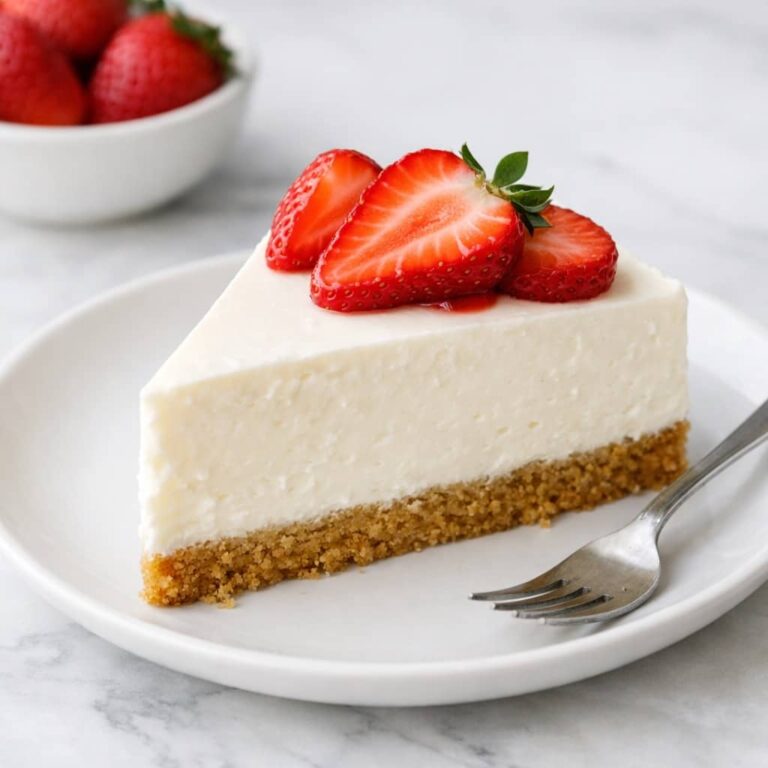
- No-Bake Cheesecake — A sliceable chilled cheesecake for occasions that call for a full dessert.
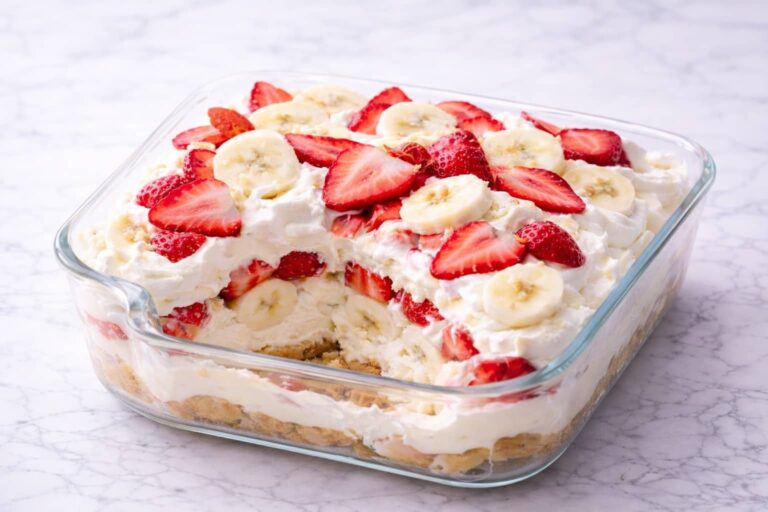
- Strawberry Cheesecake Banana Pudding — A layered spoon dessert combining berries, banana, and cheesecake-inspired cream.
- Chia Seed Pudding — A make-ahead chilled pudding with a naturally thick, spoonable structure.
Why This Strawberry Cheesecake Bowl Belongs in Your Recipe Box
This bowl is worth keeping on hand when you want cheesecake flavor without baking a full dessert.
- It delivers the complete strawberry-cheesecake experience without leftovers from a full cake.
- The process-and-scrape method applies to other blended cottage-cheese desserts.
- Washing, chopping, blending, scraping, and assembly all fit inside a realistic preparation window.
- Creamy, juicy, and crisp components make the short recipe feel finished.
- Separate storage lets you prepare early without sacrificing the graham topping.
- The same recipe works as one substantial bowl or two elegant dessert portions.
A Final Note on Strawberry Cheesecake Bowl
The first spoonful should give you thick vanilla-cheesecake cream, a glossy burst of strawberry, and a small buttery graham crunch. Keeping those textures visible is what makes this simple bowl feel like a composed dessert rather than flavored yogurt.
Once you know what to look for—a curd-free base, partially mashed berries, and graham added last—the method becomes easy to repeat. Trust the slow-closing spatula channel more than the clock, and use a brief chill instead of extra liquid or powder when the dairy feels warm.
Make the bowl the next time you want strawberry cheesecake flavor without committing to a full cake. Save the recipe for berry season, and tell me whether you served it as one generous bowl or two small desserts.
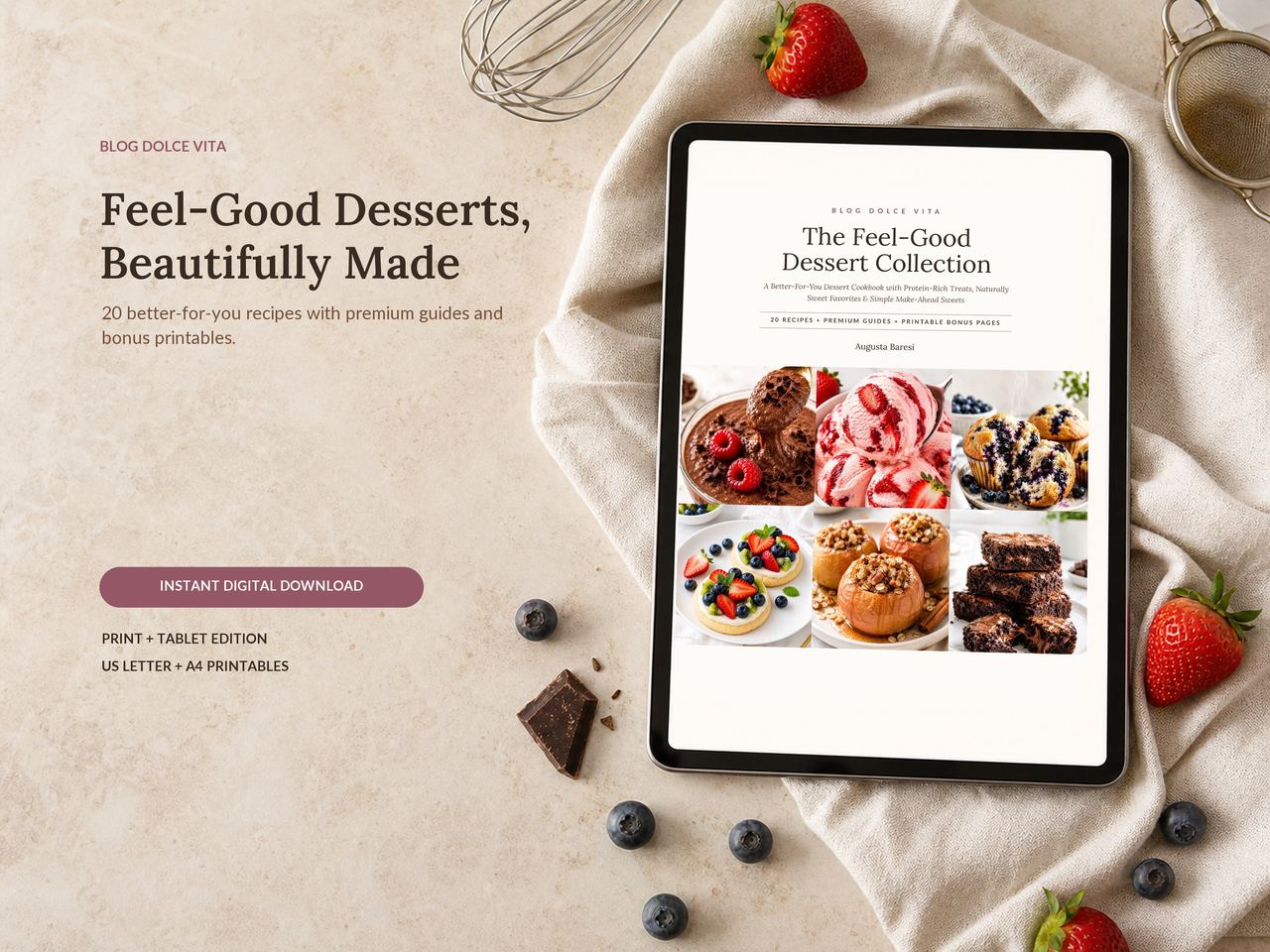
Love this? There are twenty more like it.
128 pages, five chapters, 15 kitchen guides and 16 printable planning pages — in US Letter and A4.

Strawberry Cheesecake Bowl
This creamy, high-protein strawberry cheesecake bowl combines a satin-smooth cottage cheese and cream cheese base with a glossy fresh strawberry swirl and buttery graham clusters. It is ready in 10 minutes with no baking, protein powder, pudding mix, or gelatin.
Ingredients
Smooth Cheesecake Base
- 3/4 cup full-fat 4% cottage cheese (170 g), cold
- 1/4 cup plain whole-milk Greek yogurt, preferably 5% (60 g), cold
- 2 tablespoons full-fat cream cheese spread (30 g), cold
- 1 tablespoon pure maple syrup (20 g)
- 1 teaspoon pure vanilla extract (5 ml)
Fresh Strawberry Swirl
- 3/4 cup hulled, diced fresh strawberries (115 g), divided
- 1 tablespoon strawberry preserves (20 g)
Buttery Graham Crumble
- 1 full graham cracker sheet (about 15 g), crushed into small irregular crumbs
- 1 teaspoon unsalted butter (5 g), melted
Instructions
- Make the buttery graham crumble. Crush the graham cracker into small, irregular crumbs, keeping a few slightly larger pieces. Melt the butter in a small saucepan over low heat, remove it from the heat, and fold in the crumbs until evenly moistened. Transfer to a small bowl and set aside. What you should see: Small golden clusters with dry-looking edges that hold lightly when pinched but remain loose enough to sprinkle.
- Build the strawberry swirl. Place about one-third of the diced strawberries in a small bowl with the preserves. Mash with a fork just until glossy and spoonable, then fold in the remaining diced strawberries without crushing them. What you should see: Syrupy mashed fruit surrounding distinct fresh strawberry pieces, not a thin liquid or smooth purée.
- Blend the cheesecake base. Add the cold cottage cheese to a 3–4 cup mini food processor and process for 30 seconds. Scrape the sidewall, lid, and blade-hub area. Add the cold Greek yogurt, cold cream cheese spread, maple syrup, and vanilla. Process for 45–75 seconds, stopping once to scrape, and stop as soon as completely smooth. What you should see: A thick, glossy ivory cream with no visible curds or cream-cheese flecks; a spatula channel should close slowly and the base should mound rather than pour.
- Assemble the bowl. Spoon the cheesecake base into one 14–16 oz bowl or divide it between two 7–8 oz bowls. Fold most of the strawberry mixture through the surface only once or twice, top with the remaining strawberries, and add the graham clusters immediately before serving. Serve now or chill for 10 minutes for a slightly firmer texture. What you should see: Visible ivory-and-ruby marbling, recognizable fruit, and golden graham clusters resting above the wet layer.
Notes
Processor size: A 3–4 cup mini food processor works best. A full-size processor may not engage this small batch efficiently; scrape instead of adding milk.
Dairy substitutions: Lower-fat cottage cheese or thinner yogurt will make the bowl less rich and looser. Avoid adding extra liquid to compensate.
Cream cheese: Full-fat cream cheese spread incorporates while cold. Cold block cream cheese may leave flecks unless softened separately and is not an equal straight-from-the-refrigerator substitution.
Strawberries: Fresh berries work best. Thawed frozen berries release more liquid and do not reproduce the fresh diced texture.
Gluten-free option: Use approximately 15 g of certified gluten-free graham-style crackers and keep the same 5 g butter ratio. Look for loose buttery clusters that hold lightly when pinched because absorbency varies.
Make ahead: Refrigerate the base and strawberry mixture separately in airtight containers for up to 24 hours for best quality. Store the graham crumble separately at cool room temperature.
Storage: Refrigerate an assembled leftover bowl in an airtight container for up to 2 days, although the berries will release liquid and the graham will soften. Keep at 40°F (4°C) or below and refrigerate within 2 hours, or within 1 hour above 90°F (32°C).
Freezing: Not recommended; thawed strawberries weep and the cultured-dairy base may lose its satin texture.
Nutrition Information:
Yield: 2 Serving Size: 1 bowlAmount Per Serving: Calories: 266Total Fat: 11gSaturated Fat: 7gCholesterol: 31mgSodium: 398mgCarbohydrates: 27gFiber: 1gSugar: 20gProtein: 15g
Nutrition information is provided as an estimate only and may vary based on specific ingredients, brands, and portion sizes used. This information should not be considered medical or nutritional advice.
12 Sweet Favorites — Yours, Free 🍰
Tiramisù, no-bake cheesecake, the perfect chocolate chip cookie & 9 more reader-loved desserts — gathered into one beautiful free recipe book. From my kitchen to yours.
No spam, just sweet things. Unsubscribe anytime.