Mango Sticky Rice (Authentic Thai Dessert with Coconut Sticky Rice)
🎁 FREE E-BOOK: 12 Sweet Favorites — reader-loved desserts in one beautiful recipe book.
There is something almost magical about a plate of Mango Sticky Rice served while the coconut rice is still softly warm and the mango is cold, golden, and dripping with juice.

This Mango Sticky Rice recipe brings together tender Thai sticky rice, rich coconut milk, a delicate touch of sugar and salt, and ripe fresh mango slices for a dessert that feels creamy, tropical, refreshing, and deeply comforting all at once.
The rice is glossy and gently chewy, the coconut sauce is silky and fragrant, and the mango adds that bright, juicy sweetness that makes every spoonful feel like sunshine. It is simple enough for a weeknight dessert, but beautiful enough for a summer dinner party, brunch table, or tropical dessert spread.
One reason people love saving this Mango Sticky Rice recipe is that it looks restaurant-worthy without requiring complicated techniques. Once you understand how the rice absorbs the coconut milk, the whole dessert becomes easy, reliable, and incredibly rewarding.
What Is Mango Sticky Rice?
Mango Sticky Rice is a classic Thai dessert made with glutinous sticky rice that is steamed until tender, soaked in sweetened coconut milk, and served with ripe mango slices. The finished dessert has a soft, chewy rice texture, a rich coconut flavor, and a fresh fruit finish from the mango.
Unlike rice pudding, Mango Sticky Rice is not meant to be loose or creamy in a spoonable custard-like way. The rice grains should stay slightly defined while becoming glossy, tender, and infused with coconut milk.
Quick Recipe Overview
| Texture | Soft, chewy, glossy rice with juicy mango |
| Flavor | Sweet coconut, ripe mango, light salt balance |
| Difficulty | Easy with one important soaking step |
| Time | About 45 minutes active time, plus soaking |
| Servings | 4 to 6 servings |
| Method | Soak, steam, soak again in coconut milk, serve |
| Best For | Thai dessert nights, summer desserts, brunch, dinner parties |
In short: Mango Sticky Rice is a creamy coconut sticky rice dessert served with ripe mango. The secret is steaming the rice first, then letting it absorb warm sweetened coconut milk until the grains become glossy, tender, and beautifully flavored.
Why This Mango Sticky Rice Recipe Works So Well
Mango Sticky Rice may look simple, but a few key techniques are responsible for its signature creamy texture, rich coconut flavor, and perfectly chewy rice.
1. Soaking creates evenly cooked rice.
Glutinous rice needs time to absorb water before steaming. This allows the grains to hydrate from edge to center, helping them cook evenly. Without proper soaking, the outside can become soft while the center remains firm or slightly chalky.
2. Steaming protects the classic sticky rice texture.
Unlike boiling, steaming cooks the rice gently without flooding it with water. The grains become tender and chewy while still maintaining their structure, which is what gives Mango Sticky Rice its distinctive texture.
3. Hot rice absorbs coconut flavor more effectively.
The sweet coconut mixture is added while the rice is still hot. Warm rice acts almost like a sponge, absorbing the coconut milk deeply into the grains instead of leaving the flavor sitting mostly on the surface.
4. The resting period transforms the texture.
Right after the coconut milk is added, the rice may seem slightly loose or overly wet. During the resting period, the grains slowly absorb the liquid and become glossy, creamy, and beautifully cohesive.
5. A small amount of salt makes a big difference.
Salt balances the sweetness, enhances the coconut flavor, and helps the mango taste brighter and more vibrant. It is a small ingredient, but one of the keys to creating a dessert that tastes balanced rather than simply sweet.
The result: soft chewy rice, rich coconut flavor, juicy mango, and the perfect balance between comforting and refreshing.
Why You’ll Love This Mango Sticky Rice Recipe
Mango Sticky Rice has remained one of Thailand’s most loved desserts for a reason. It delivers a combination of flavors, textures, and temperatures that very few desserts can match.
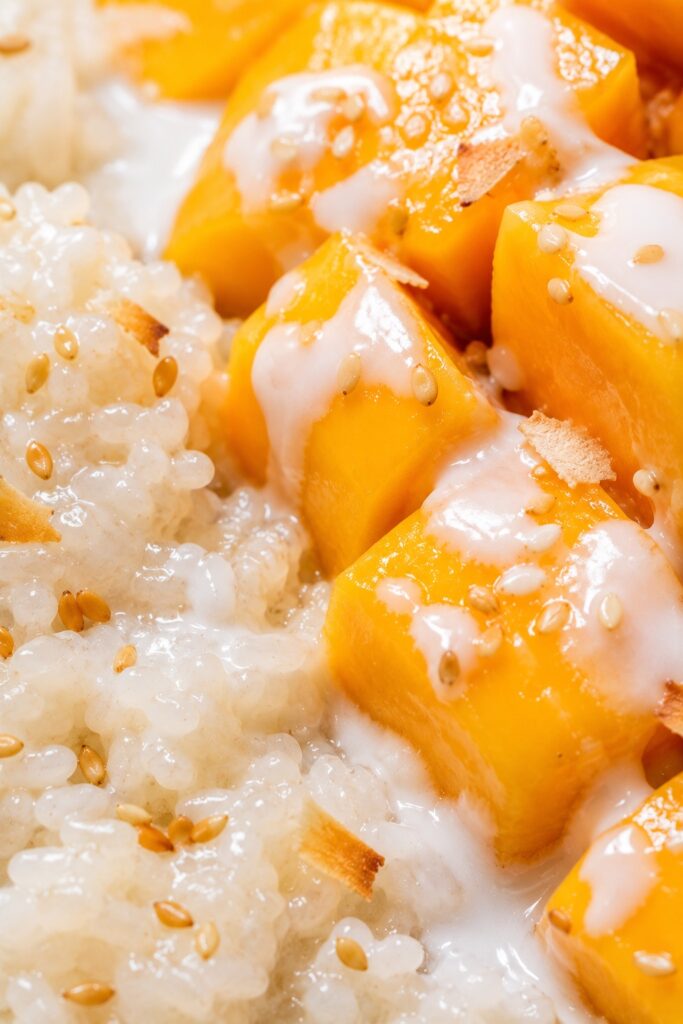
Warm coconut sticky rice + cool juicy mango creates an incredible contrast in every bite. The rice feels rich and comforting while the mango keeps the dessert fresh, bright, and refreshing.
Simple ingredients create a restaurant-worthy dessert. Sticky rice, coconut milk, sugar, salt, and ripe mango transform into something that looks elegant enough for dinner parties and special occasions.
The texture is completely unique. The rice is soft, chewy, and glossy, the coconut sauce is silky, and the mango adds natural juiciness that makes every spoonful feel balanced rather than heavy.
No baking required. Once the rice is soaked and steamed, the rest of the recipe comes together easily, making it approachable even for beginners.
It feels indulgent without being overwhelming. Unlike many rich desserts, Mango Sticky Rice remains surprisingly light and refreshing, which is one reason people continue reaching for a second serving.
Perfect for entertaining. The golden mango, glossy coconut rice, and silky coconut drizzle create a naturally beautiful presentation that looks impressive with very little effort.
Save this recipe for summer dinner parties, tropical dessert tables, brunch gatherings, or any time you want a dessert that feels both comforting and refreshing at the same time.
The Simple Science Behind Creamy Coconut Sticky Rice
Mango Sticky Rice may feel effortless to eat, but several small food science principles are working together to create its signature texture and flavor.
1. Sticky rice contains a different type of starch.
Unlike jasmine rice or basmati rice, glutinous sticky rice is naturally rich in amylopectin. This starch is responsible for the soft, chewy, slightly clingy texture that makes Mango Sticky Rice unique.
2. Soaking helps the rice cook evenly.
During soaking, water slowly moves into the center of each grain. This helps the rice steam evenly from edge to center and reduces the risk of firm or chalky spots.
3. Steaming preserves texture better than boiling.
Steaming cooks the rice gently without saturating it with excess water. This leaves enough room for the grains to absorb the coconut milk later while maintaining their signature chewy structure.
4. Coconut milk creates richness and silkiness.
The natural fat in coconut milk coats the rice grains and creates a smooth, luxurious mouthfeel. Sugar softens the flavor profile, while salt enhances both the coconut and the mango.
5. The resting period is where the magic happens.
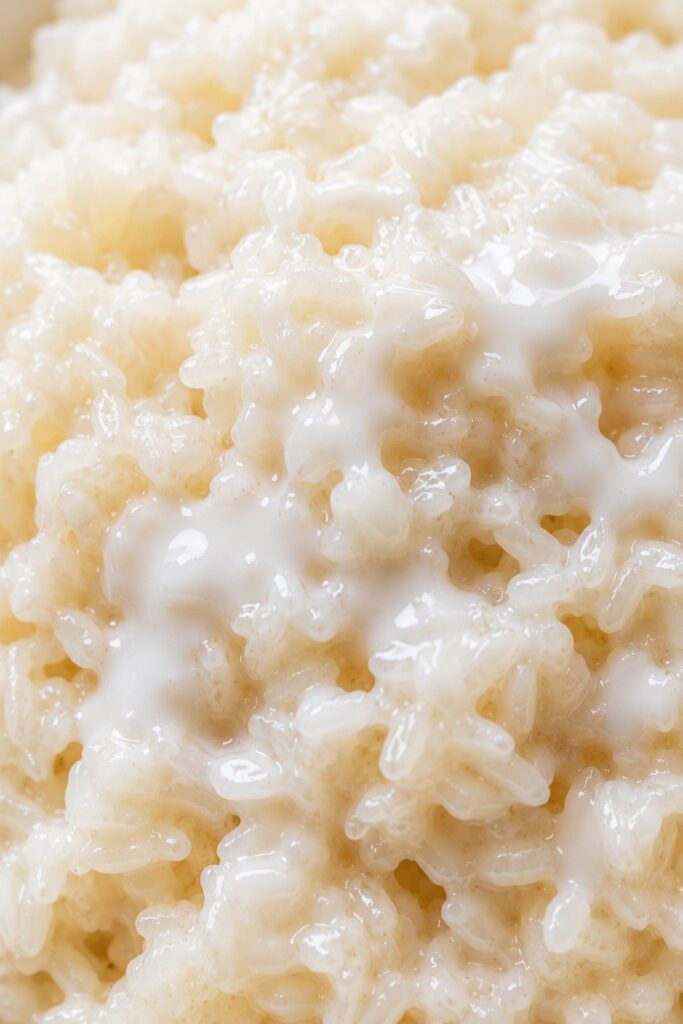
Right after adding the coconut mixture, the rice may seem too wet. As it rests, the grains gradually absorb the liquid and transform into the glossy, plump, creamy texture that defines great Mango Sticky Rice.
Simple takeaway: soak thoroughly, steam gently, add the coconut mixture while the rice is hot, and give the rice time to rest. Those four small steps are responsible for most of the dessert’s success.
Ingredients for Mango Sticky Rice
For the Sticky Rice
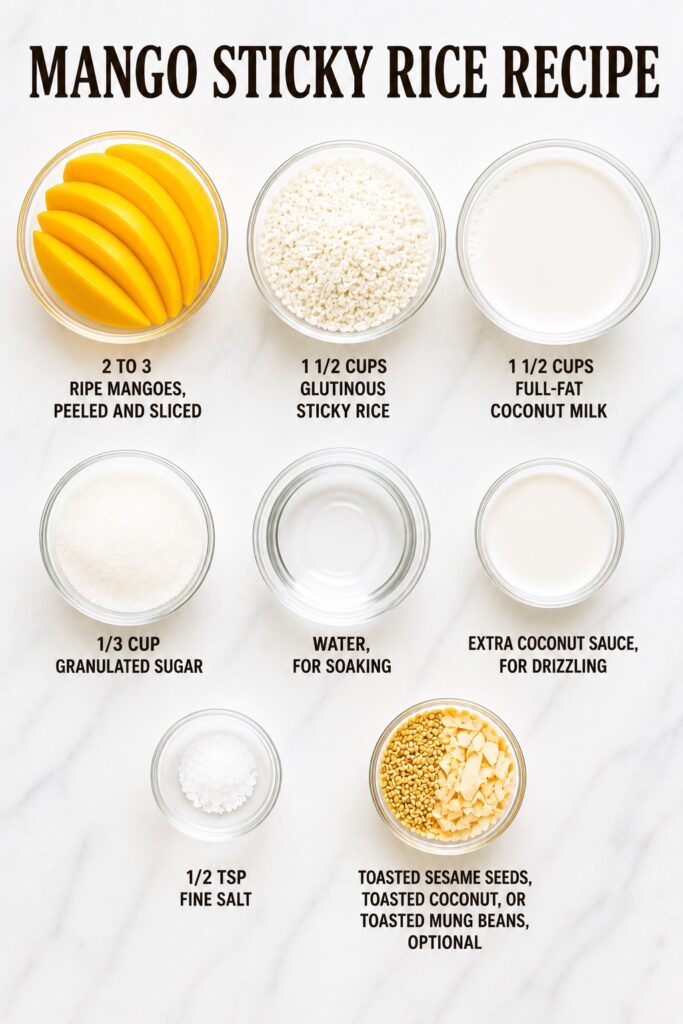
- 1 1/2 cups glutinous sticky rice
- Water, for soaking
For the Coconut Sauce
- 1 1/2 cups full-fat coconut milk
- 1/3 cup granulated sugar
- 1/2 teaspoon fine salt
For Serving
- 2 to 3 ripe mangoes, peeled and sliced
- Toasted sesame seeds, toasted coconut, or toasted mung beans, optional
- Extra coconut sauce, for drizzling
Ingredient Intelligence: What Matters Most
Mango Sticky Rice uses only a few ingredients, so each one has a clear job. The best version comes from choosing ingredients that support the dessert’s signature balance: chewy rice, silky coconut richness, gentle sweetness, and juicy mango freshness.
Glutinous sticky rice creates the classic chew. This is the foundation of the dessert. Despite the name, glutinous rice does not contain gluten. It simply refers to the sticky, clingy texture the rice develops after soaking and steaming.
Regular rice will not behave the same way. Jasmine rice, basmati rice, and long-grain white rice cook into separate grains. They cannot create the soft, chewy structure that makes Mango Sticky Rice different from coconut rice pudding.
Full-fat coconut milk gives the rice body. The fat in coconut milk coats the warm rice grains and creates a silky, luxurious mouthfeel. Light coconut milk can work in a pinch, but the finished dessert will taste thinner and less creamy.
Sugar rounds out the coconut flavor. The goal is not to make the rice aggressively sweet. Sugar softens the richness of the coconut milk and helps the rice taste like dessert while still allowing the mango to shine.
Salt is the quiet flavor booster. A small amount of salt balances the sugar, sharpens the coconut flavor, and makes ripe mango taste brighter. If the dessert tastes sweet but flat, it usually needs a little more salt rather than more sugar.
Ripe mango is non-negotiable. The mango should be fragrant, juicy, and naturally sweet. If the fruit is firm, sour, or bland, even perfectly cooked coconut rice will not taste as balanced.
Best texture insight: serve the rice slightly warm and the mango cool. That temperature contrast makes the coconut rice feel creamier, the mango taste fresher, and the whole dessert more memorable.
Choosing the Best Mangoes for Mango Sticky Rice
The quality of the mango matters just as much as the quality of the sticky rice. In fact, even perfectly cooked coconut rice can feel disappointing if the mango is underripe, bland, or lacking sweetness.
For the best Mango Sticky Rice, look for mangoes that are naturally sweet, fragrant, juicy, and smooth-textured. The fruit should complement the rich coconut rice rather than compete with it.
What to Look For
- A sweet aroma near the stem. A fragrant mango is usually a ripe mango.
- Slight softness when gently pressed. The fruit should yield a little without feeling mushy.
- Vibrant color. Color alone does not guarantee ripeness, but dull green mangoes are often not ready yet.
- Smooth flesh with minimal fibers. Cleaner slices create a better texture and a more beautiful presentation.
Best Mango Varieties for Mango Sticky Rice
- Nam Dok Mai – the traditional Thai favorite, known for its sweetness and silky texture.
- Ataulfo (Honey Mango) – buttery, smooth, and naturally sweet.
- Kent Mango – juicy with relatively few fibers.
- Keitt Mango – sweet, mild, and excellent when fully ripe.
- Tommy Atkins – widely available, though often less sweet than other varieties.
A Simple Kitchen Test
If you’re unsure whether a mango is ready, cut a small piece and taste it before slicing the rest. The flesh should be sweet, juicy, and flavorful enough that you would happily eat it on its own. If it tastes tart or bland, letting it ripen for another day or two can dramatically improve the finished dessert.
Pro tip: slightly chilled ripe mango often tastes even sweeter when paired with warm coconut sticky rice, creating the temperature contrast that makes this dessert so memorable.
How to Cut a Mango for Mango Sticky Rice
Beautiful mango slices are one of the reasons Mango Sticky Rice feels so special. The goal is to create smooth, juicy slices that are easy to eat and showcase the fruit’s vibrant color beside the creamy coconut rice.
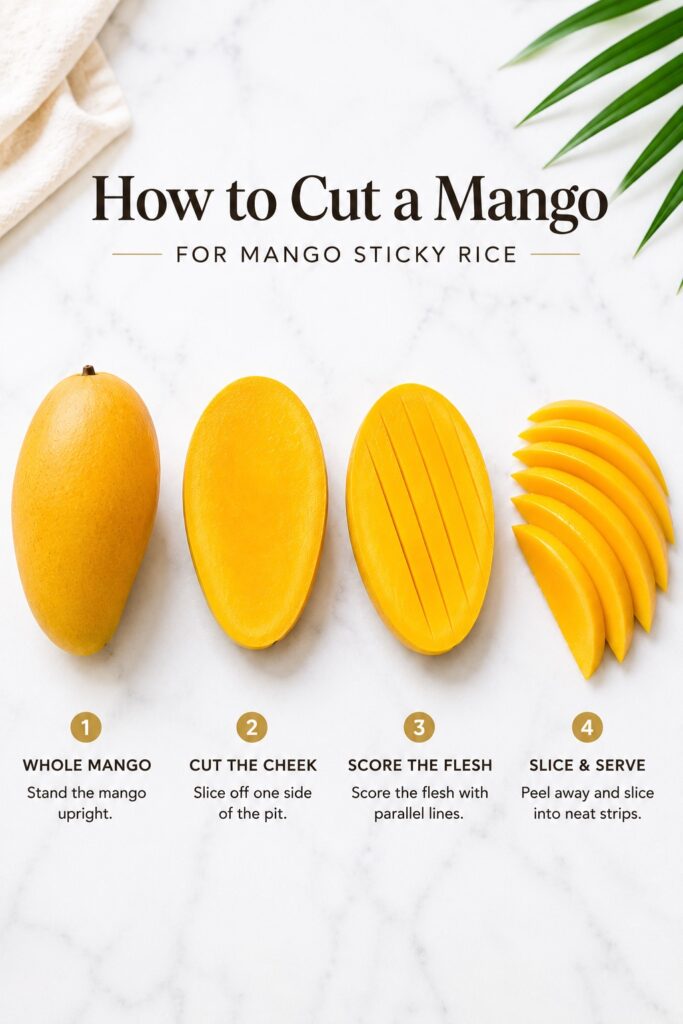
Step 1: Stand the mango upright.
Place the mango stem-side down on a cutting board. Inside the fruit is a long, flat pit running from top to bottom.
Step 2: Slice off both cheeks.
Using a sharp knife, cut about 1/4 inch from each side of the pit. You should end up with two large mango halves, often called the cheeks.
Step 3: Score the flesh.
Without cutting through the skin, score the mango flesh into thin slices or a grid pattern.
Step 4: Remove the slices.
Use a spoon to scoop out the scored mango flesh, or gently peel away the skin and slice the mango into neat strips.
For the prettiest presentation: slightly overlap the slices and fan them outward on the plate. This simple technique instantly makes Mango Sticky Rice look restaurant-worthy.
Helpful tip: if the mango feels slippery or difficult to slice, chill it for 20 to 30 minutes before cutting. Slightly chilled mango is often easier to handle and creates cleaner slices for plating.
Visual cue: the mango should look glossy, juicy, and hold its shape when fanned on the plate. If the slices collapse or tear easily, the fruit may be overripe.
Equipment You’ll Need
The good news is that Mango Sticky Rice does not require professional equipment. The most important thing is creating steady steam and giving the rice enough space to cook evenly.
- Large bowl – for soaking the sticky rice.
- Fine mesh strainer – for draining the soaked rice thoroughly.
- Steamer basket or bamboo steamer – the traditional way to cook sticky rice while preserving its chewy texture.
- Cheesecloth, clean kitchen towel, or perforated parchment paper – helps keep the rice contained while allowing steam to circulate.
- Small saucepan – for warming the coconut milk mixture.
- Silicone spatula or wooden spoon – for gently folding the coconut milk into the rice without crushing the grains.
- Sharp knife – for clean mango slices and a more elegant presentation.
No Bamboo Steamer? No Problem.
A traditional bamboo steamer is wonderful, but it is not required. A standard metal steamer basket placed over simmering water works beautifully. Many home cooks even use a fine mesh strainer suspended above a pot of water.
The key is making sure the rice cooks from steam rather than sitting directly in water. That gentle steaming process is what creates the signature chewy texture that makes Mango Sticky Rice different from ordinary rice desserts.
Most important tool: patience. The soaking and resting periods contribute more to the final texture than any special piece of equipment.
How to Make Mango Sticky Rice
1. Rinse the Sticky Rice
Place the sticky rice in a bowl and rinse it several times with cool water until the water looks less cloudy.
Visual cue: The water does not need to run perfectly clear, but it should look lighter and less milky than the first rinse.
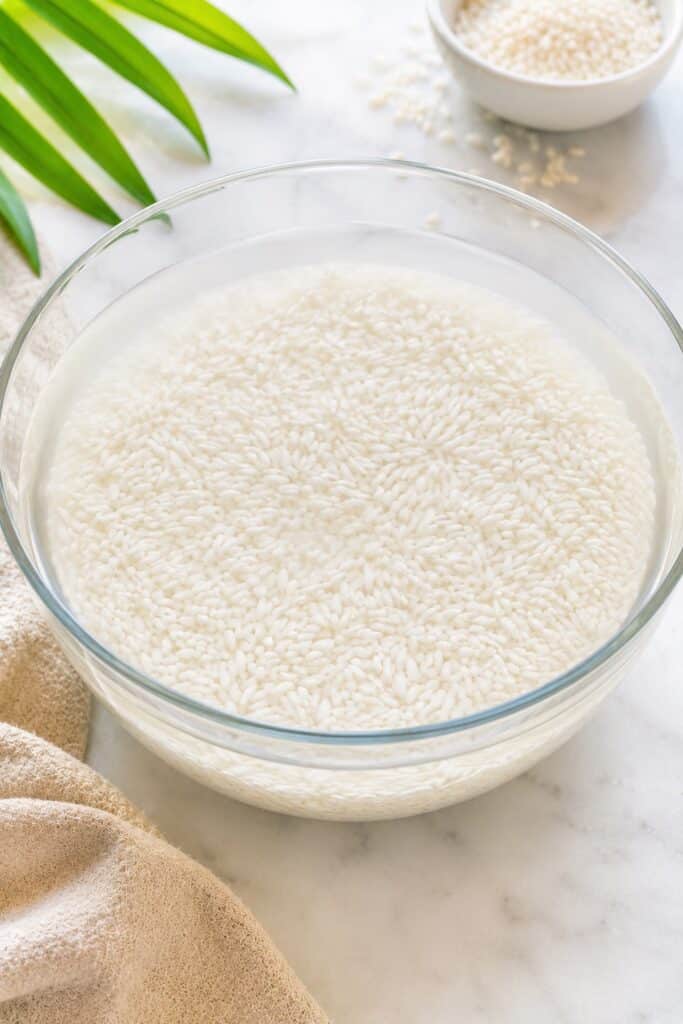
2. Soak the Rice
Cover the rinsed rice with plenty of water and soak for at least 4 hours, or overnight for the most even texture.
Visual cue: The grains will look slightly swollen and more opaque after soaking.
If you forget and only soak it for a short time, the rice may still cook, but the center can stay firmer than ideal. Overnight soaking gives the most reliable result.
3. Drain the Rice Well
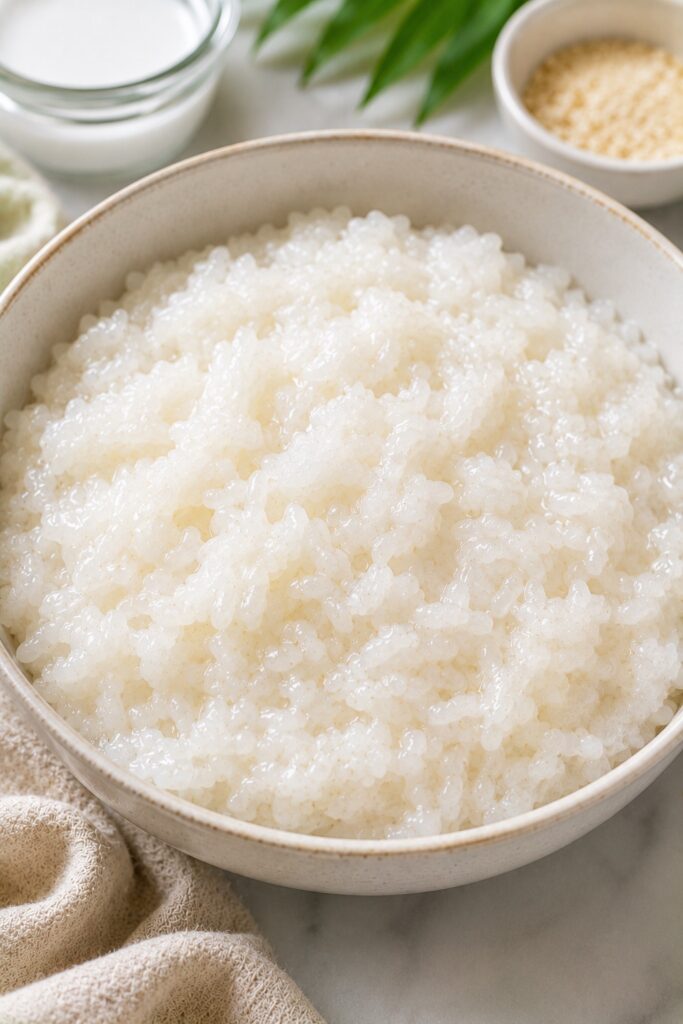
Drain the soaked rice in a fine mesh strainer and let it sit for a few minutes so excess water can drip away.
Visual cue: The rice should be damp but not sitting in visible water.
4. Steam the Rice
Line a steamer with cheesecloth, a clean kitchen towel, or parchment with small holes. Add the drained rice, spread it into an even layer, and steam over simmering water for 25 to 30 minutes.
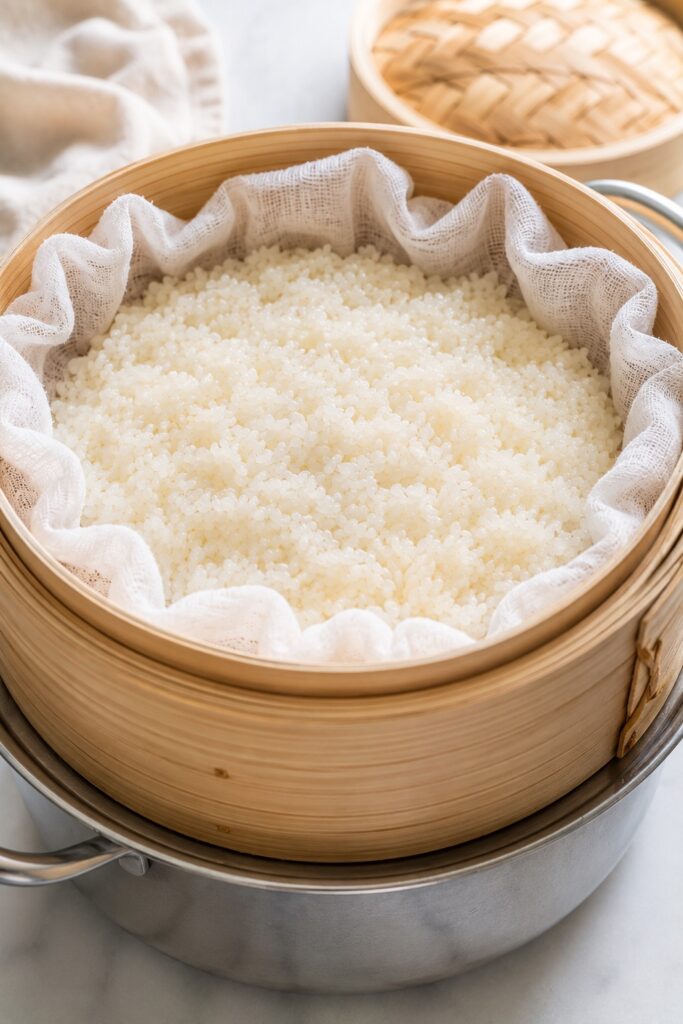
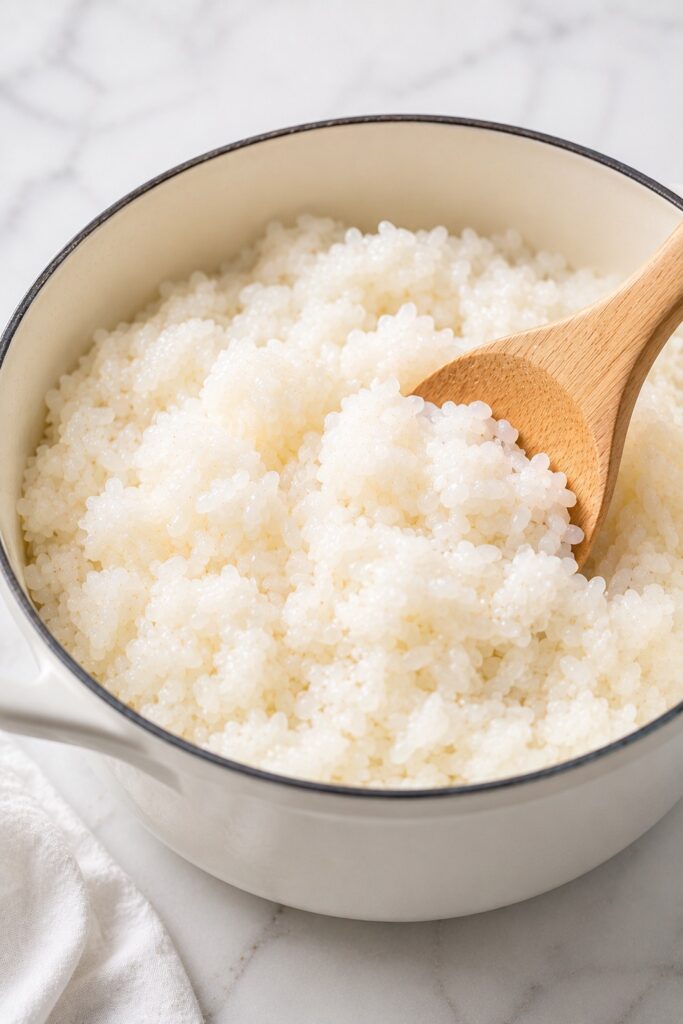
Visual cue: The rice should look glossy and slightly translucent. When you pinch a grain, it should feel tender and chewy, not hard in the center.
If the rice still feels firm, steam it for another 5 minutes. Different steamers hold heat differently, so a few extra minutes is completely normal.
5. Make the Sweet Coconut Sauce
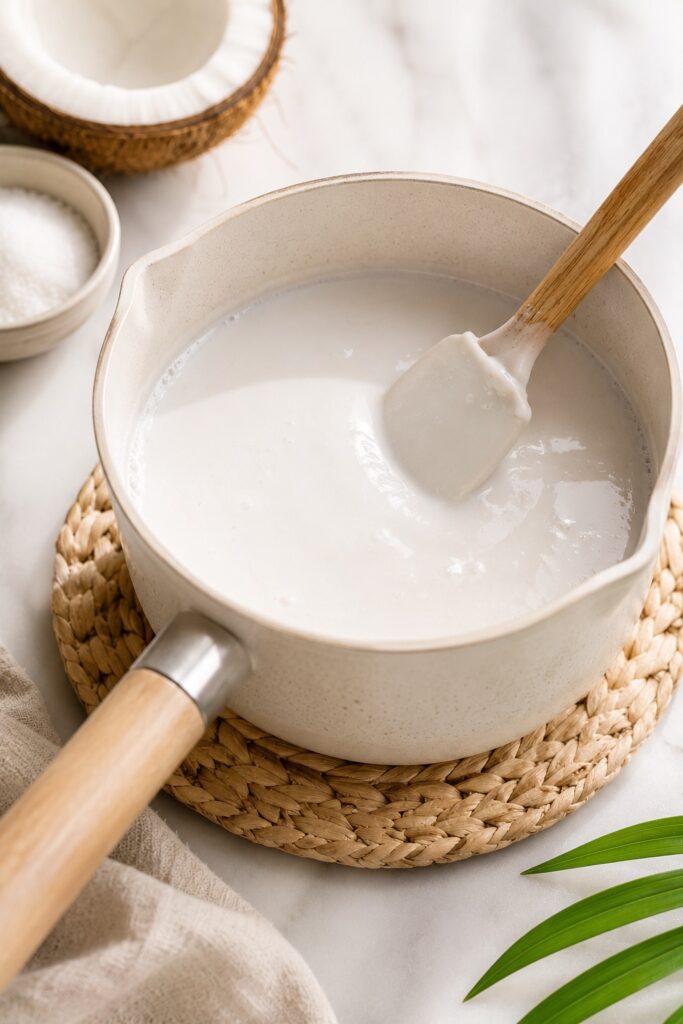
While the rice steams, combine the coconut milk, sugar, and salt in a small saucepan. Warm gently over medium-low heat, stirring until the sugar dissolves.
Visual cue: The sauce should look smooth, glossy, and lightly steaming. Do not let it boil hard.
A gentle heat keeps the coconut milk silky. If coconut milk is heated too aggressively, it can separate and look oily.
6. Soak the Hot Rice in Coconut Sauce
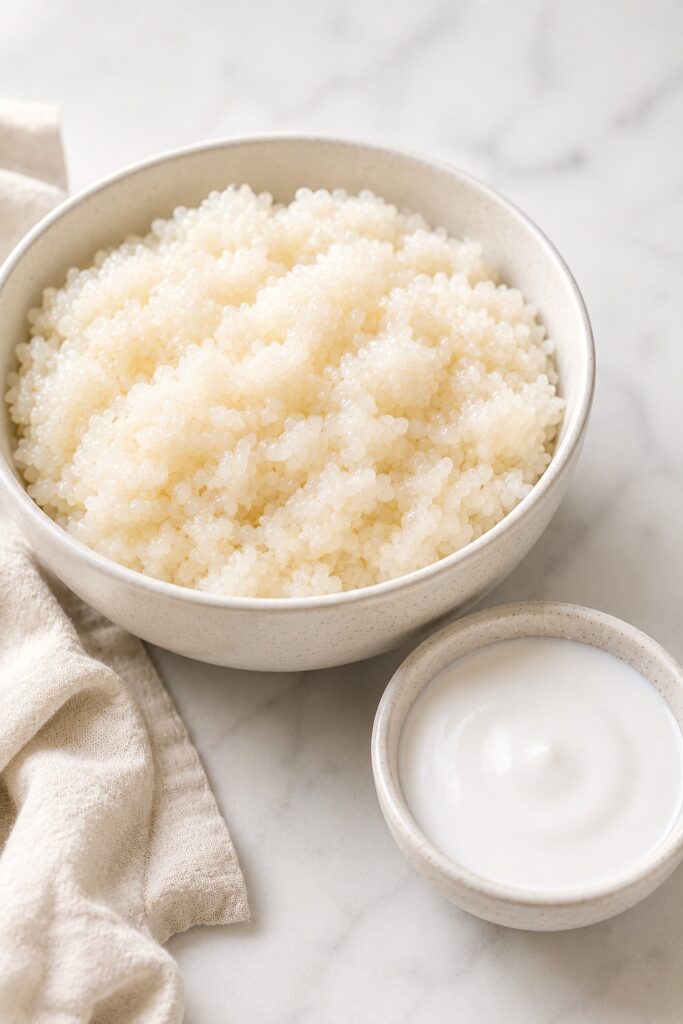
Transfer the hot steamed rice to a bowl. Pour about three-quarters of the warm coconut sauce over the rice and gently fold until the grains are evenly coated.
Visual cue: At first, the rice may look a little loose and shiny with extra sauce around it. This is exactly what you want.
Do not mash the rice while mixing. Gentle folding keeps the grains soft and glossy instead of heavy and compact.
7. Let the Rice Rest
Cover the bowl loosely and let the rice rest for 20 to 30 minutes so it can absorb the coconut sauce.
Visual cue: The rice will become plump, glossy, creamy, and more cohesive. The sauce should no longer pool heavily at the bottom.
This is the step where the dessert changes from cooked rice with sauce into real Mango Sticky Rice.
8. Slice the Mangoes
Peel the mangoes and slice them into thick, smooth pieces. You can fan the slices slightly for a beautiful plated look.
Visual cue: The mango should look juicy and vibrant, with a soft golden-orange color and glossy surface.
9. Assemble and Serve
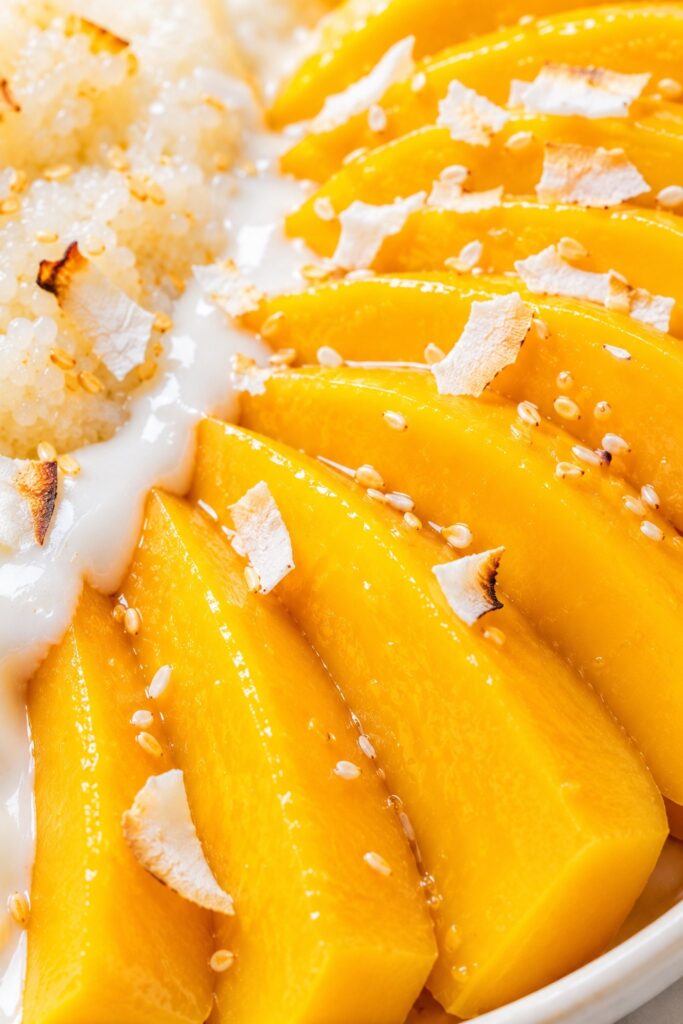
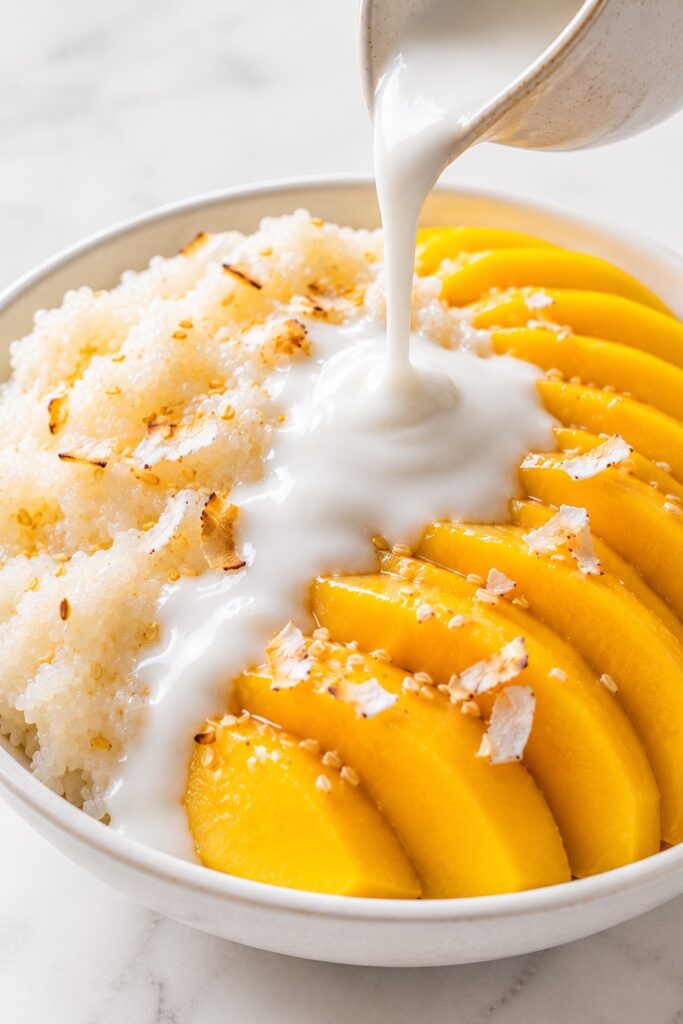
Spoon the coconut sticky rice onto plates or shallow bowls. Arrange the mango beside the rice, drizzle with reserved coconut sauce, and finish with toasted sesame seeds, toasted coconut, or mung beans if desired.
Visual cue: The finished dessert should look glossy, creamy, bright, and fresh, with clear contrast between the white coconut rice and golden mango.
Visual Doneness Cues for Mango Sticky Rice
- The soaked rice looks swollen and opaque before steaming.
- The steamed rice looks glossy and slightly translucent.
- The grains feel chewy and tender, not crunchy.
- The coconut sauce is smooth and lightly steaming, not boiling hard.
- After resting, the rice absorbs most of the sauce.
- The finished rice looks creamy and shiny, not soupy.
- The mango slices look juicy, soft, and vibrant.
Texture and Behavior Guide
| Stage | What You See | What It Means |
| After soaking | Rice grains look swollen and opaque | The rice has absorbed enough water to steam evenly |
| After steaming | Rice looks glossy and slightly translucent | The grains are cooked but still structured |
| After adding coconut sauce | Rice looks shiny and slightly loose | The sauce is beginning to absorb |
| After resting | Rice looks creamy, plump, and cohesive | The texture is ready for serving |
| Final dessert | Rice holds softly beside juicy mango | The balance of moisture and structure is correct |
Expert Tips for the Best Mango Sticky Rice
Small details make a surprisingly big difference when making Mango Sticky Rice. These tips help create the glossy texture, balanced flavor, and beautiful presentation that make the dessert feel truly special.
- Soak the rice overnight whenever possible. While 4 hours works, an overnight soak gives the most even texture and helps prevent firm centers after steaming.
- Do not rush the resting period. The rice may seem too wet immediately after the coconut milk is added. During the next 20 to 30 minutes, the grains absorb the liquid and develop their signature creamy, glossy texture.
- Warm the coconut milk gently. Coconut milk should be heated just enough to dissolve the sugar. Aggressive boiling can cause separation and produce a slightly oily appearance.
- Add the coconut mixture while the rice is still hot. Warm rice absorbs flavor much more effectively than cooled rice. This single step creates noticeably better coconut flavor throughout the dessert.
- Use fully ripe mangoes. Even perfectly cooked rice cannot compensate for underripe fruit. The mango should smell sweet, feel slightly soft when pressed, and slice cleanly without being mushy.
- Slice the mango shortly before serving. Freshly cut mango looks glossier, juicier, and more vibrant than mango that has been sitting in the refrigerator for several hours.
- Reserve extra coconut sauce for serving. A final drizzle right before plating adds shine, moisture, and that restaurant-style finish people associate with great Mango Sticky Rice.
- Serve warm rice with cool mango. One of the reasons this dessert feels so satisfying is the contrast of temperatures. Slightly warm coconut rice paired with chilled mango creates a more memorable eating experience.
- Keep the presentation simple. Mango Sticky Rice is naturally beautiful. The contrast between glossy white coconut rice and vibrant golden mango is often more impressive than excessive toppings or decorations.
Professional plating trick: arrange the mango in a fan shape, spoon the rice beside it rather than underneath it, and finish with a thin ribbon of coconut sauce. This creates a cleaner presentation and keeps the textures distinct until the first bite.
Common Mango Sticky Rice Mistakes and How to Fix Them
| Problem | Why It Happened | How to Fix It |
| Rice is hard in the center | Not soaked long enough or not steamed enough | Soak longer next time and steam in 5-minute increments |
| Rice is mushy | Rice was boiled or too much liquid was added | Steam the rice and add coconut sauce gradually |
| Coconut sauce looks oily | Coconut milk was overheated | Warm gently and avoid boiling hard |
| Dessert tastes flat | Not enough salt | Add the full amount of salt to the coconut sauce |
| Mango tastes sour | Mango was underripe | Use ripe, fragrant mangoes |
| Rice lacks coconut flavor | Rice cooled before sauce was added | Add warm sauce to hot rice |
Traditional Thai Mango Sticky Rice vs Modern Mango Sticky Rice Variations
While Mango Sticky Rice is one of Thailand’s most iconic desserts, the way it is served has evolved over time. The traditional version remains beautifully simple, but modern adaptations have introduced new presentations, textures, and serving styles that make the dessert even more versatile for entertaining and special occasions.
Traditional Thai Mango Sticky Rice
The classic version focuses on balance rather than decoration. Soft coconut-infused sticky rice is served beside ripe mango slices with a light coconut drizzle. The goal is to highlight the natural sweetness of the mango and the rich coconut flavor of the rice without unnecessary extras.
Best for: authentic flavor, everyday enjoyment, and experiencing the dessert as it is traditionally served in Thailand.
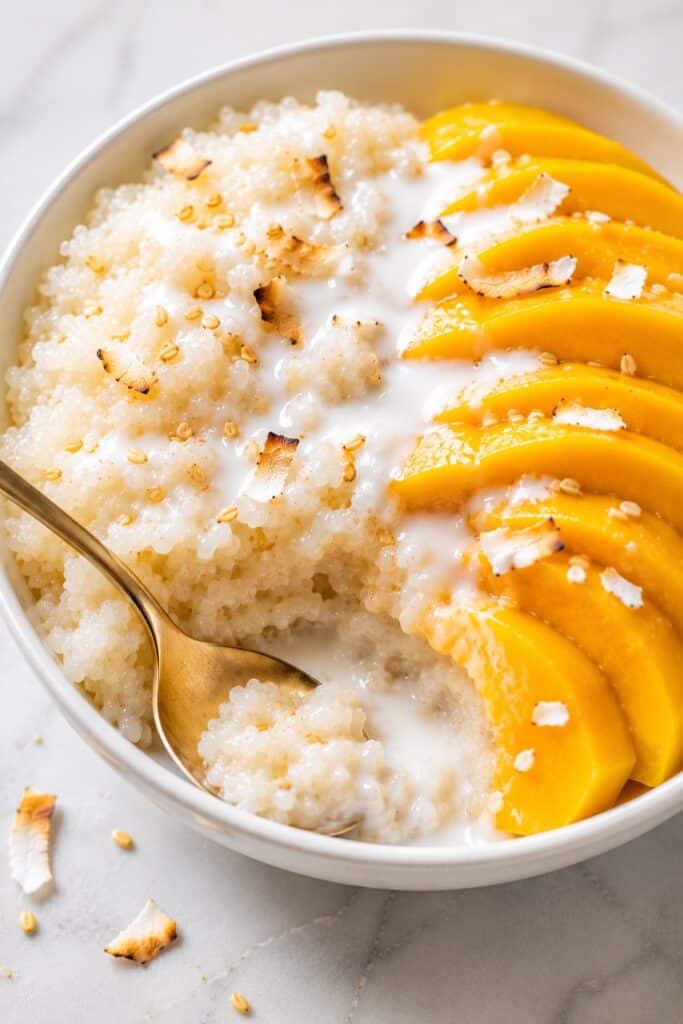
Restaurant-Style Mango Sticky Rice
Many restaurants elevate the presentation with fan-shaped mango slices, extra coconut sauce, and decorative toppings such as toasted sesame seeds, coconut flakes, or crispy mung beans. The flavors remain similar, but the dessert feels more polished and luxurious.
Best for: dinner parties, date nights, special occasions, and elegant plated desserts.
Mango Sticky Rice Dessert Cups
Individual dessert cups layer coconut sticky rice with diced mango and a spoonful of coconut sauce. These portions are easy to serve, travel well, and create a beautiful presentation for brunches, baby showers, and buffet-style gatherings.
Best for: entertaining, make-ahead desserts, parties, and dessert tables.
Mango Sticky Rice Sundae
A modern dessert twist pairs warm coconut sticky rice with fresh mango and a scoop of coconut or vanilla ice cream. The contrast between warm rice and cold ice cream creates an indulgent texture experience while keeping the tropical flavor profile intact.
Best for: restaurant-style desserts, celebrations, and summer entertaining.
Black Sticky Rice Mango Dessert
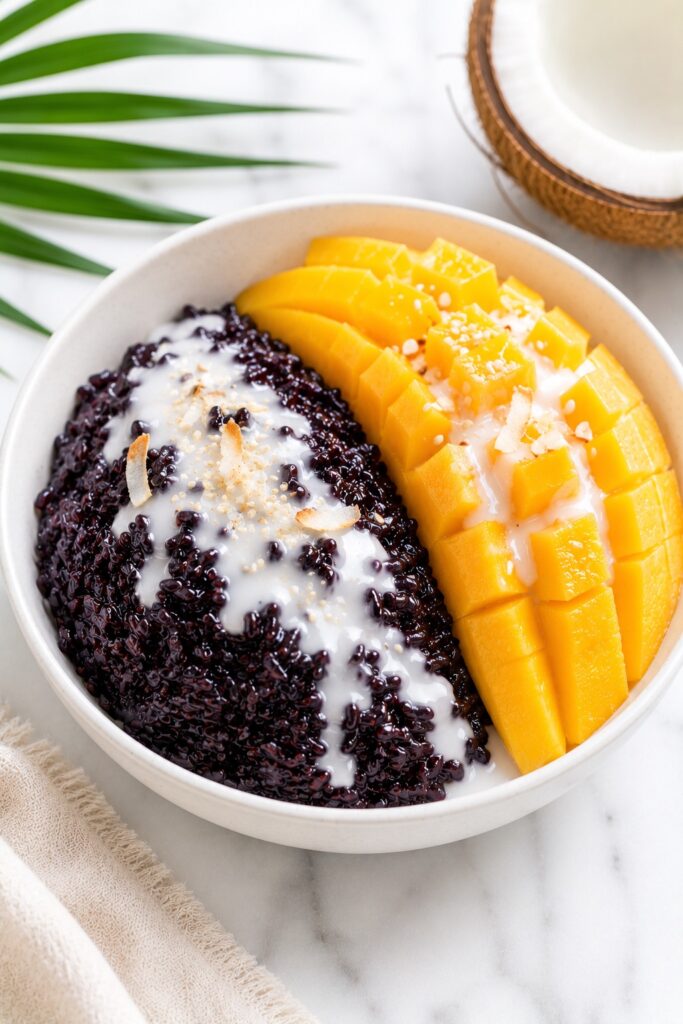
Black glutinous rice creates a more dramatic presentation and adds a slightly nuttier flavor. The deep purple-black rice contrasts beautifully with golden mango, making this variation especially popular for modern plated desserts.
Best for: visual impact, dinner parties, and anyone looking for a unique twist on the classic recipe.
The takeaway: Traditional Thai Mango Sticky Rice remains the gold standard for flavor and balance, while modern variations offer creative ways to serve the dessert for different occasions. Whether you keep it classic or turn it into elegant dessert cups, a sundae, or a black rice version, the combination of coconut sticky rice and ripe mango remains the heart of the dish.
How to Serve Mango Sticky Rice Beautifully
Mango Sticky Rice is at its absolute best when the rice is slightly warm, the mango is cool and juicy, and the coconut sauce is freshly drizzled over the top. That contrast of temperatures makes the coconut flavor feel richer and the mango taste even sweeter.
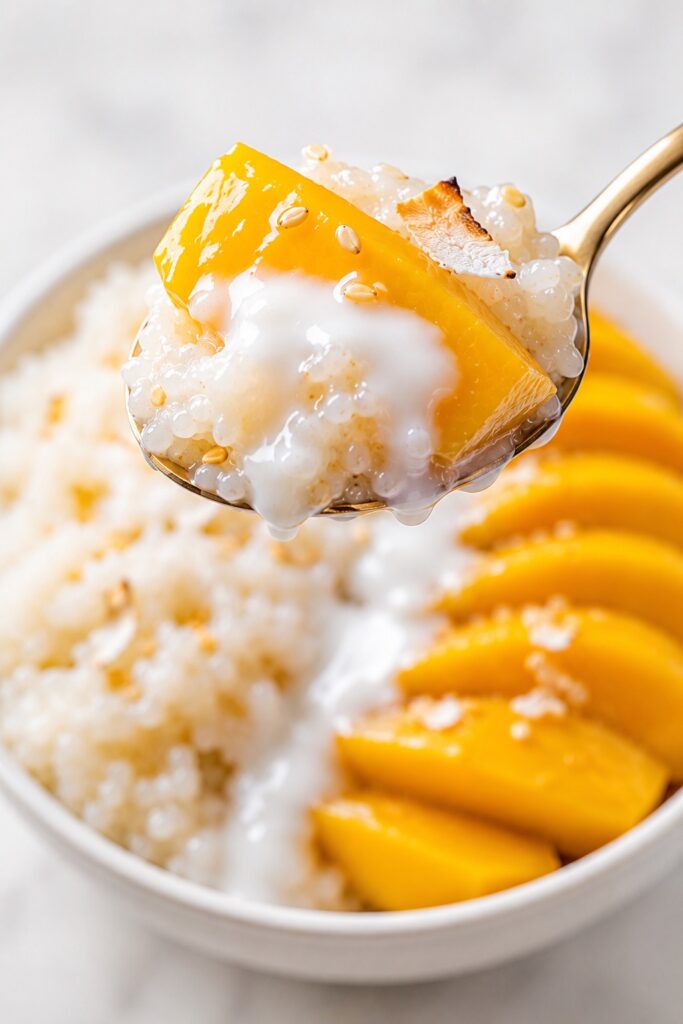
For a classic presentation, spoon a mound of glossy coconut sticky rice onto one side of a shallow bowl or dessert plate. Fan thick slices of ripe mango beside it and finish with a ribbon of warm coconut sauce cascading gently over the rice. A small sprinkle of toasted sesame seeds, toasted coconut, or mung beans adds texture and visual contrast.
The dessert should look simple rather than crowded. The beautiful contrast between golden mango, creamy white rice, and silky coconut sauce is what makes Mango Sticky Rice so visually appealing.
For Summer Entertaining
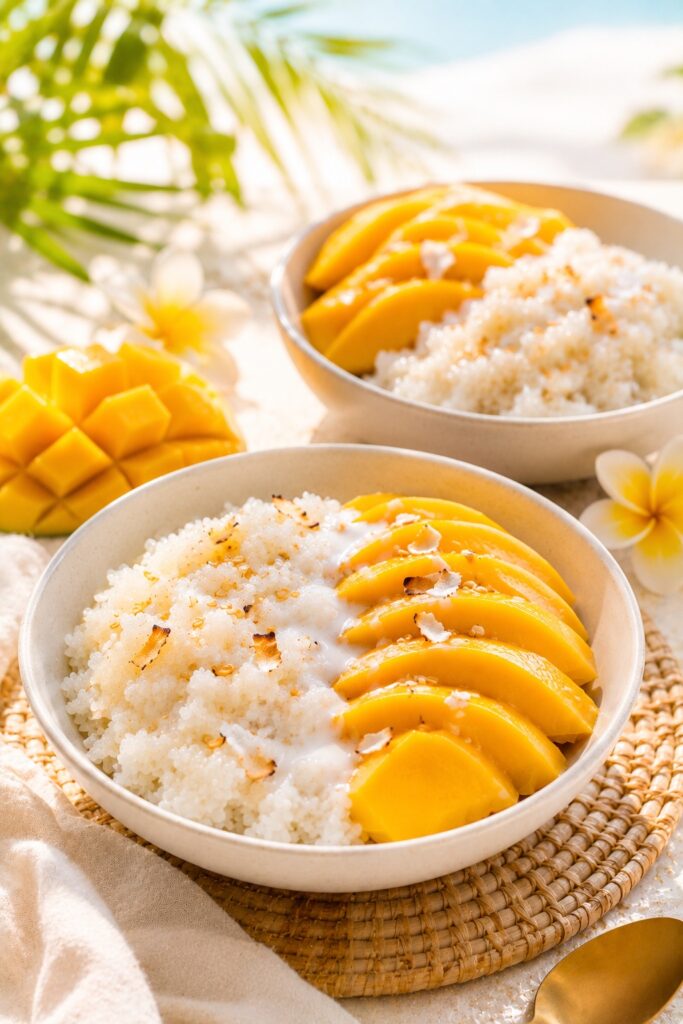
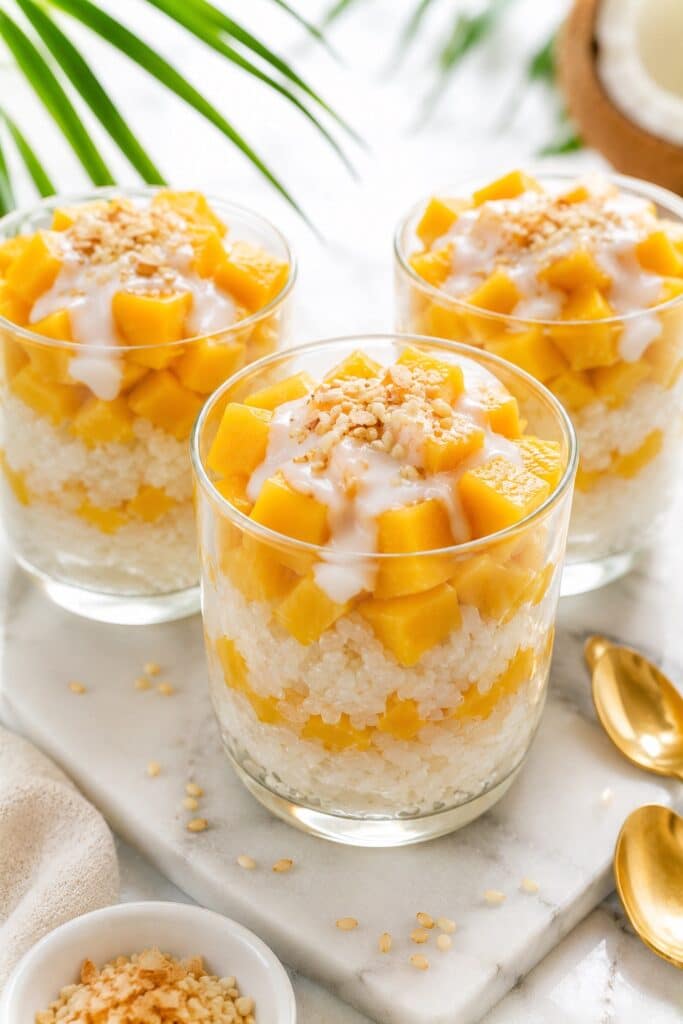
Serve Mango Sticky Rice in individual bowls or dessert glasses for dinner parties, outdoor gatherings, and tropical-themed menus. Individual portions feel elegant, photograph beautifully, and allow guests to enjoy the perfect balance of rice, mango, and coconut sauce in every serving.
Save this serving idea for summer dinner parties. The bright mango color and glossy coconut rice create a naturally beautiful dessert table centerpiece without requiring elaborate decoration.
For Brunch and Dessert Buffets
Mini dessert cups layered with coconut sticky rice and diced mango are perfect for brunches, baby showers, bridal showers, and buffet-style gatherings. They can be prepared ahead and make serving effortless.
Save this version when you need an easy make-ahead dessert. The individual cups look elegant, travel well, and keep their presentation beautifully.
For a Restaurant-Style Finish
For an extra-special presentation, serve Mango Sticky Rice with a small pitcher of warm coconut sauce on the side and let guests drizzle their own. The fresh sauce adds shine, aroma, and that luxurious restaurant-style touch that makes the dessert feel even more memorable.
Traditional Thai Toppings for Mango Sticky Rice
Classic Mango Sticky Rice is often served very simply, but traditional Thai toppings can add texture, flavor, and visual contrast without overwhelming the dessert. The goal is to complement the sweet mango and creamy coconut rice rather than compete with them.
Toasted mung beans are one of the most traditional toppings. They add a delicate crunch that contrasts beautifully with the soft sticky rice and juicy mango. Many Thai restaurants use them to finish the dessert.
Coconut cream drizzle is another classic addition. A thicker coconut sauce spooned over the rice adds richness, shine, and the luxurious finish often seen in restaurant presentations.
Toasted sesame seeds provide a light nutty flavor and subtle crunch. While not always included, they pair naturally with both coconut and mango.
Toasted coconut flakes add extra coconut aroma and texture. They are especially popular in modern versions of Mango Sticky Rice and work beautifully for entertaining.
Pandan-infused coconut sauce is occasionally used in Thailand for a more fragrant variation. Pandan adds a delicate floral-vanilla aroma that complements the coconut without overpowering the mango.
Best approach: choose one topping rather than several. Mango Sticky Rice is naturally elegant, and a light finishing touch usually creates a more balanced dessert than loading it with multiple garnishes.
Traditional favorite: warm coconut sticky rice, ripe mango slices, a spoonful of coconut cream, and a sprinkle of toasted mung beans. Simple, authentic, and incredibly satisfying.
Storage and Make-Ahead Tips for Mango Sticky Rice
Mango Sticky Rice tastes best the day it is made, when the rice is soft and glossy and the mango is freshly sliced. Still, you can prepare the components ahead if you store them separately and refresh the rice gently before serving.
How to Store Coconut Sticky Rice
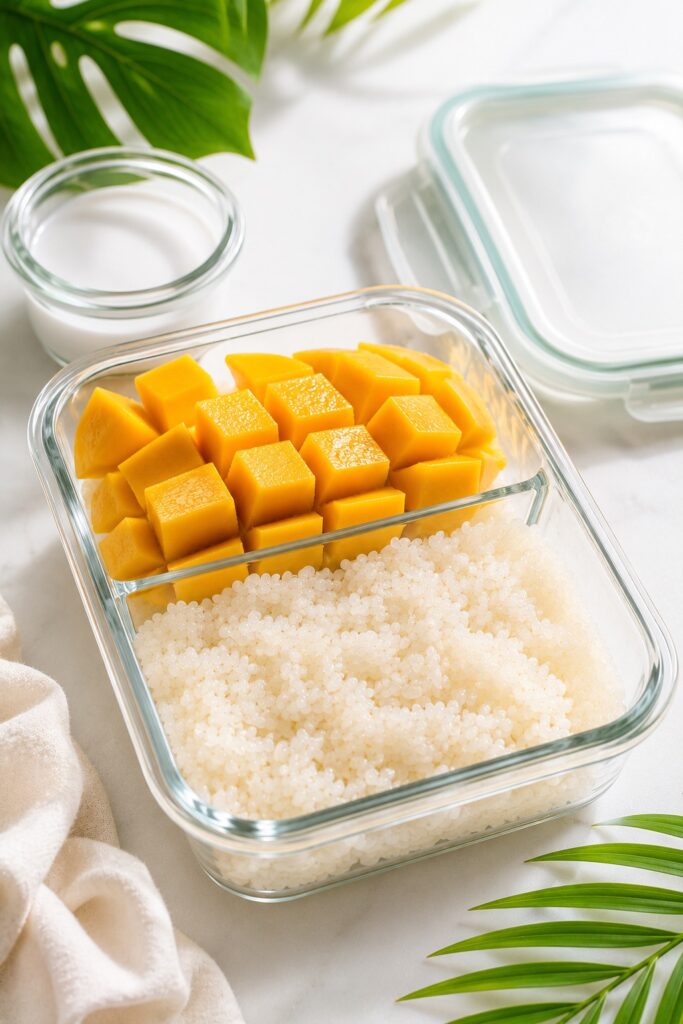
Store the coconut sticky rice in an airtight container in the refrigerator for up to 3 days. As it chills, the rice will firm up and lose some of its freshly made softness. This is normal because the starches tighten as the rice cools.
Before storing, let the rice cool just until it is no longer hot, then cover it well. Avoid leaving it uncovered in the refrigerator, because sticky rice dries out quickly and can form firm edges.
How to Reheat Mango Sticky Rice
To bring the rice back to a soft, creamy texture, warm it gently in the microwave with a small splash of coconut milk or water. Heat in short intervals, stirring softly between each one, until the rice loosens and looks glossy again.
The goal is not to make the rice hot and steaming, but softly warm and tender. If it looks dry after reheating, add another spoonful of coconut milk and fold gently.
How to Store Fresh Mango
Mango is best sliced shortly before serving so it stays juicy, bright, and smooth. If needed, sliced mango can be stored separately in an airtight container in the refrigerator for up to 1 day.
For the prettiest presentation, avoid slicing the mango too early. The surface can dry slightly in the refrigerator, and the slices may lose some of that glossy, fresh-cut look.
Make-Ahead Mango Sticky Rice for Guests
For entertaining, you can steam the rice and mix it with the coconut sauce earlier in the day. Keep it covered, then gently rewarm it before serving with a splash of coconut milk to restore the creamy texture.
Slice the mango close to serving time, warm the extra coconut sauce, and drizzle it over the rice right before plating. This gives the dessert that fresh, glossy restaurant-style finish even when part of it was made ahead.
Best make-ahead rhythm: prepare the coconut rice first, keep the mango whole until serving, and save the final coconut drizzle for the very end.
Creative Mango Sticky Rice Variations to Try
One of the reasons Mango Sticky Rice remains so popular is how easily it can be adapted. The classic version is hard to beat, but small changes in toppings, fruit, or presentation can create completely different dessert experiences while keeping the same creamy coconut foundation.
Black Sticky Rice Mango Dessert
Swap traditional white sticky rice for black glutinous rice to create a more dramatic dessert with a slightly nuttier flavor. The dark rice makes the golden mango stand out visually and creates a stunning presentation for dinner parties.
Extra Coconut Cream Mango Sticky Rice
For a richer restaurant-style presentation, reserve additional coconut sauce and drizzle it generously over both the rice and mango just before serving. This version feels especially luxurious and creates the glossy finish often seen in high-end Thai restaurants.
Toasted Coconut Mango Sticky Rice
Sprinkle toasted coconut flakes over the finished dessert for extra texture and a deeper coconut flavor. The light crunch contrasts beautifully with the soft rice and juicy mango.
Mini Mango Sticky Rice Dessert Cups
Layer coconut sticky rice and diced mango into small glasses or dessert cups for parties, bridal showers, brunches, and buffet tables. These individual portions are easy to serve and photograph beautifully.
Save this version for summer entertaining. The individual cups look elegant on dessert tables and can be prepared ahead of time.
Mango Sticky Rice with Fresh Tropical Fruit
Add small amounts of pineapple, papaya, dragon fruit, or passion fruit alongside the mango for a tropical fruit platter variation. The additional fruit adds color, freshness, and visual appeal while keeping the coconut rice as the star of the dessert.
Coconut Lime Mango Sticky Rice
A small amount of fresh lime zest mixed into the coconut sauce creates a brighter, fresher flavor profile. The citrus lifts the richness of the coconut milk and works especially well during hot summer months.
Mango Sticky Rice Sundae
For a modern dessert twist, serve warm coconut sticky rice with fresh mango and a small scoop of coconut ice cream. The contrast between warm rice and cold ice cream creates an unforgettable texture combination.
Save this variation for special occasions. It transforms a simple traditional dessert into a plated restaurant-style showstopper.
Frequently Asked Questions About Mango Sticky Rice
Can I make Mango Sticky Rice with regular rice?
Not if you want the traditional texture. Mango Sticky Rice relies on glutinous sticky rice, which becomes soft, chewy, and slightly sticky after steaming. Regular white rice, jasmine rice, and basmati rice stay much looser and cannot recreate the same texture.
Why is my sticky rice still hard after steaming?
The most common cause is insufficient soaking time. Sticky rice needs several hours to hydrate before steaming. If the rice is still firm in the center after cooking, steam it a little longer and make sure future batches soak for at least 4 hours, preferably overnight.
Can I make Mango Sticky Rice ahead of time?
Yes. The coconut sticky rice can be prepared several hours ahead and gently rewarmed before serving. For the best presentation and texture, slice the mango shortly before serving and add the final coconut drizzle at the last moment.
Should Mango Sticky Rice be served warm or cold?
Traditionally, the rice is served slightly warm while the mango is cool. This temperature contrast is one of the reasons the dessert feels so satisfying and balanced.
Can I use coconut cream instead of coconut milk?
Yes, but the dessert will be noticeably richer. Coconut cream contains more fat and creates a heavier texture. Many people prefer using full-fat coconut milk because it provides richness while still allowing the mango flavor to shine.
Why does sticky rice become firm after refrigeration?
This is normal. As sticky rice cools, the starches tighten and firm up. Gently reheating the rice with a small splash of coconut milk or water helps restore much of its original softness.
Can I make Mango Sticky Rice without a steamer?
Yes. A metal steamer basket placed over simmering water works well, and many home cooks use a fine mesh strainer set over a pot. The important part is allowing steam to cook the rice without letting the rice sit directly in water.
What are the best mango varieties for Mango Sticky Rice?
Nam Dok Mai, Ataulfo, Honey, and Kent mangoes are all excellent choices. Look for mangoes that are fragrant, slightly soft, and deeply sweet. The quality of the mango has a huge impact on the final dessert.
More Fresh and Fruity Desserts You’ll Love
If you love the creamy coconut rice, juicy mango, and tropical sweetness in this Mango Sticky Rice, these fresh and fruity desserts are beautiful recipes to explore next. They keep the same bright, colorful, crowd-pleasing feeling while giving you different textures for summer tables, brunches, parties, and easy make-ahead dessert moments.
Tropical and Creamy Desserts
For another coconut-forward dessert, try this soft and elegant Coconut Cake, or keep the tropical mood going with a classic Coconut Cream Pie. If you want something cool, creamy, and perfect for warm weather, Strawberry Ice Cream and Homemade Ice Cream are beautiful choices.
Easy Fruit Desserts for Summer
For a fresh dessert that feels colorful and effortless, try Fruit Salad, Fruit Pizza, or these party-friendly Fruit Pizza Bites. They are bright, easy to serve, and perfect for brunches, baby showers, cookouts, and summer dessert boards.
Creamy No-Bake Fruit Desserts
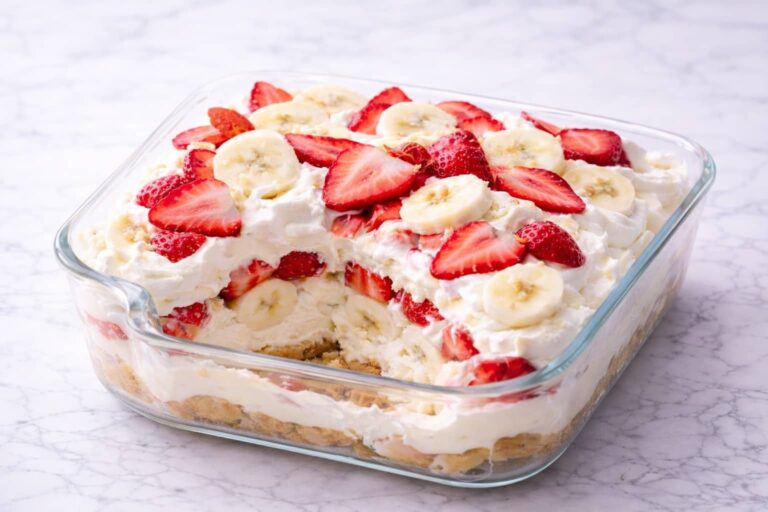
If you love soft, spoonable desserts with fruit, try Strawberry Cheesecake Banana Pudding, classic Banana Pudding, or these elegant Cheesecake Cups. They are especially good when you want a make-ahead dessert that still feels creamy, fresh, and beautiful on the table.
Berry and Stone Fruit Favorites
For more juicy fruit dessert inspiration, try Peach Cobbler, Blueberry Cobbler, or Blackberry Cobbler. If you prefer chilled or bakery-style fruit desserts, Cherry Cheesecake, Strawberry Cheesecake, and Blueberry Cheesecake are rich, creamy, and perfect for special occasions.
Save these recipes for the days when you want something sweet, colorful, and fruit-filled, whether you are planning a summer dinner, a brunch spread, or a simple dessert that feels fresh and joyful.
Mango Sticky Rice Recipe Summary
Mango Sticky Rice is a classic Thai dessert made with steamed glutinous rice, sweetened coconut milk, and ripe fresh mango. The result is a dessert that combines creamy coconut flavor, chewy sticky rice, and juicy mango in every bite.
What makes this recipe special is the balance of contrasts: warm and cool, rich and refreshing, soft and juicy. The sticky rice absorbs the coconut milk until it becomes glossy and flavorful, while the mango adds natural sweetness and brightness.
Key takeaways for success:
- Soak the rice thoroughly before steaming.
- Add the coconut mixture while the rice is still hot.
- Allow the rice to rest and absorb the sauce fully.
- Use ripe, fragrant mangoes.
- Serve slightly warm rice with cool mango for the best texture contrast.
Whether you’re making it for a tropical dinner party, summer gathering, special occasion, or simply because you love coconut and mango together, this Mango Sticky Rice recipe delivers the authentic texture and flavor that have made the dessert a favorite for generations.
Final Thoughts
Some desserts impress because they are elaborate. Mango Sticky Rice has earned its place as a favorite because it does the opposite. With just a few simple ingredients, it creates a combination of flavor, texture, and comfort that feels surprisingly special.
The warm coconut-infused rice, the cool sweetness of ripe mango, and the silky coconut drizzle each play a different role, yet together they create a dessert that feels perfectly balanced. Rich but refreshing. Elegant but approachable. Familiar yet memorable.
It is also the kind of recipe that becomes easier and more rewarding every time you make it. Once you learn the simple rhythm of soaking, steaming, resting, and serving, the process feels almost effortless.
Whether you are discovering Mango Sticky Rice for the first time or recreating a dessert you fell in love with years ago, this is the kind of recipe worth returning to whenever mango season arrives.
Keep this recipe bookmarked for summer dinners, tropical celebrations, and those moments when you want a dessert that proves simplicity can be every bit as memorable as something elaborate.

Mango Sticky Rice
This authentic Mango Sticky Rice combines tender Thai sticky rice, rich coconut milk, and ripe fresh mango for a classic dessert that is creamy, chewy, tropical, and beautifully balanced. Warm coconut-infused rice paired with cool juicy mango creates one of Thailand’s most beloved desserts.
Ingredients
For the Sticky Rice
- 1 1/2 cups glutinous sticky rice
- Water, for soaking
For the Coconut Sauce
- 1 1/2 cups full-fat coconut milk
- 1/3 cup granulated sugar
- 1/2 teaspoon fine salt
For Serving
- 2 to 3 ripe mangoes, peeled and sliced
- Toasted sesame seeds, toasted coconut flakes, or toasted mung beans, optional
- Reserved coconut sauce, for drizzling
Instructions
- Rinse the sticky rice several times under cool water until the water becomes less cloudy.
- Cover the rice with water and soak for at least 4 hours or overnight.
- Drain the rice thoroughly and let any excess water drip away.
- Line a steamer basket with cheesecloth or a clean kitchen towel. Spread the rice into an even layer and steam over simmering water for 25–30 minutes, or until tender and slightly translucent.
- While the rice steams, combine the coconut milk, sugar, and salt in a small saucepan. Warm gently over medium-low heat, stirring until the sugar dissolves. Do not boil.
- Transfer the hot steamed rice to a bowl. Pour about three-quarters of the warm coconut mixture over the rice and gently fold to combine.
- Cover loosely and let the rice rest for 20–30 minutes so it can absorb the coconut mixture fully.
- Peel and slice the mangoes into thick slices.
- Spoon the sticky rice onto serving plates or bowls. Arrange the mango alongside the rice.
- Drizzle with the reserved coconut sauce and garnish with toasted sesame seeds, toasted coconut flakes, or toasted mung beans if desired.
- Serve immediately while the rice is slightly warm and the mango is cool.
Notes
- Use glutinous sticky rice for the traditional chewy texture. Regular rice will not produce the same results.
- For the best flavor and texture, soak the rice overnight whenever possible.
- Use full-fat coconut milk for the richest coconut flavor and creamiest texture.
- Warm the coconut mixture gently and avoid boiling, which can cause the coconut milk to separate.
- Add the coconut mixture while the rice is still hot so the grains absorb the flavor more effectively.
- The rice may look slightly loose immediately after adding the coconut mixture. As it rests, the grains absorb the liquid and become glossy and creamy.
- Use ripe, fragrant mangoes that are naturally sweet and juicy.
- Serve the rice slightly warm and the mango cool for the best contrast of temperatures and textures.
- Reserve some coconut sauce for drizzling over the finished dessert just before serving.
- Toasted mung beans are the traditional Thai topping, while toasted sesame seeds and toasted coconut flakes are popular alternatives.
Nutrition Information:
Yield: 6 servings Serving Size: 1 servingAmount Per Serving: Calories: 390Total Fat: 14gSaturated Fat: 11gSodium: 210mgCarbohydrates: 64gFiber: 3gSugar: 25gProtein: 4g
Nutrition information is provided as an estimate only and may vary based on specific ingredients, brands, and portion sizes used. This information should not be considered medical or nutritional advice.

Love this? There are twenty more like it.
128 pages, five chapters, 15 kitchen guides and 16 printable planning pages — in US Letter and A4.
12 Sweet Favourites — Yours, Free 🍰
Tiramisù, no-bake cheesecake, the perfect chocolate chip cookie & 9 more reader-loved desserts — gathered into one beautiful free recipe book. From my kitchen to yours.
No spam, just sweet things. Unsubscribe anytime.