Lemon Curd Recipe (Silky, Bright & Easy Homemade Spread)
🎁 FREE E-BOOK: 12 Sweet Favorites — reader-loved desserts in one beautiful recipe book.
Few homemade spreads feel as luxurious as a spoonful of silky Lemon Curd.
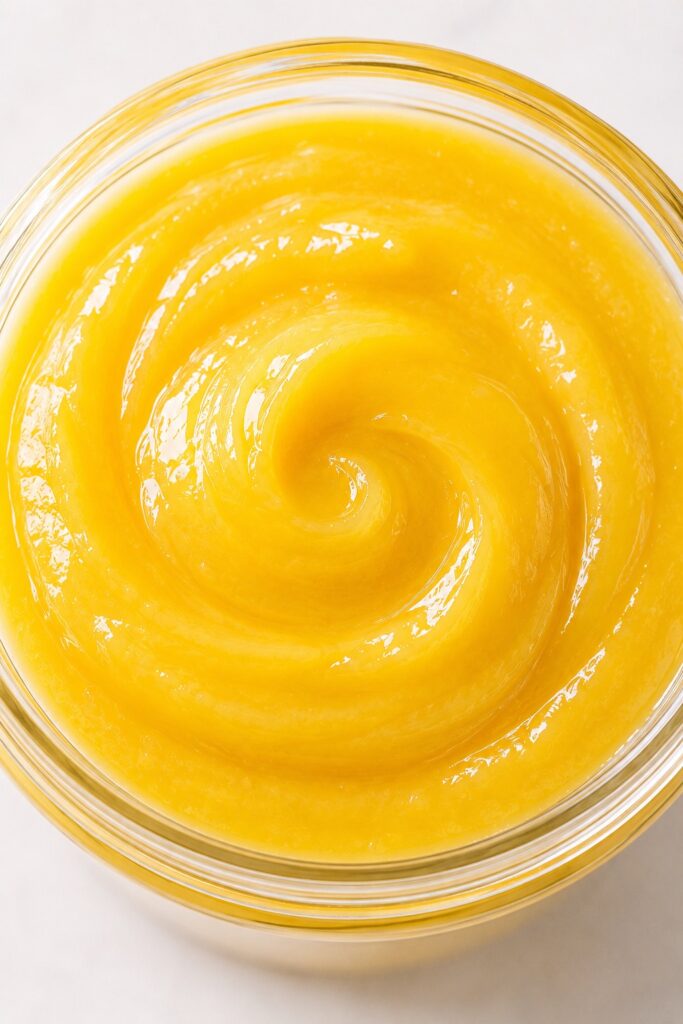
The moment the mixture thickens on the stovetop, the kitchen fills with the aroma of fresh lemons, warm butter, and sweet citrus. Its glossy golden color looks almost like sunshine in a jar, and the texture becomes impossibly smooth, rich, and creamy.
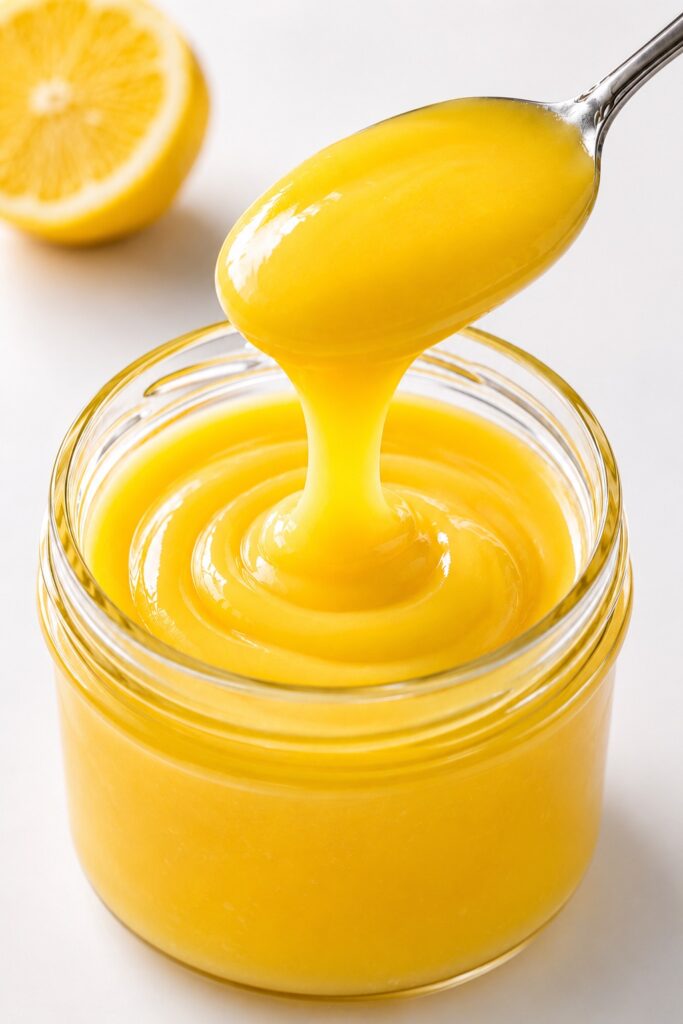
This Lemon Curd recipe delivers the perfect balance of sweet and tart. It is bright enough to wake up your taste buds but smooth enough to feel indulgent. Whether spread onto scones, layered into cakes, spooned over yogurt, or enjoyed straight from the jar, it brings vibrant citrus flavor to every bite.
One reason so many people save this recipe is that homemade lemon curd tastes dramatically better than most store-bought versions. The flavor is fresher, the texture is silkier, and you control exactly how sweet or tart it becomes.
If you’ve ever wanted a versatile citrus filling that instantly elevates desserts, breakfasts, and afternoon treats, this recipe deserves a permanent place in your kitchen.
Quick Recipe Overview
- Recipe Name: Lemon Curd
- Texture: Silky, smooth, creamy, and glossy
- Flavor: Bright, sweet-tart lemon with rich buttery notes
- Difficulty: Easy
- Time: About 20 minutes, plus chilling time
- Yield: Approximately 2 cups
- Method: Stovetop custard-style citrus spread
- Best For: Cakes, tarts, scones, cheesecakes, cupcakes, yogurt, and brunch spreads
- Make-Ahead Friendly: Yes, lemon curd thickens beautifully after chilling
In short: This homemade Lemon Curd is a silky, sweet-tart citrus spread made with fresh lemon juice, zest, eggs, sugar, and butter. It is easy to make, perfect for desserts, and tastes much fresher than store-bought lemon curd.
What Is Lemon Curd?
Lemon curd is a classic citrus spread made by gently cooking lemon juice, lemon zest, sugar, eggs, and butter until thick, smooth, and glossy.
Unlike jam, lemon curd contains no fruit chunks and relies on eggs and butter to create its signature silky texture. The result is a rich yet refreshing spread that can be used as a dessert filling, cake layer, tart filling, topping, or breakfast accompaniment.
Traditional lemon curd originated in England and remains one of the most popular citrus-based preparations because it delivers intense lemon flavor while maintaining a smooth, creamy consistency.
Homemade vs Store-Bought Lemon Curd
Both homemade and store-bought lemon curd have their place, but they deliver noticeably different results. If you’re using lemon curd as the star of a dessert or cake filling, making it from scratch is well worth the small amount of extra effort.
| Homemade Lemon Curd | Store-Bought Lemon Curd |
| Fresh, vibrant lemon flavor | Often milder or sweeter |
| Silky, creamy texture | Usually thicker and more uniform |
| Made with fresh juice and zest | May use concentrates or flavorings |
| You control the sweetness and tartness | Flavor cannot be adjusted |
| No unnecessary preservatives | Longer shelf life |
| Ideal for cakes, tarts, and premium desserts | Convenient for quick everyday use |
Bottom line: Store-bought lemon curd is convenient, but homemade lemon curd delivers brighter citrus flavor, a silkier texture, and the kind of fresh taste that’s difficult to match. For special desserts, the difference is absolutely worth it.
Why Homemade Lemon Curd Is Worth Making
It’s easy to wonder whether homemade lemon curd is really worth making when jars are available at almost every grocery store. After one taste, the answer becomes obvious.
Freshly made lemon curd has a brighter citrus aroma, a cleaner lemon flavor, and a noticeably silkier texture than most commercial versions. Because it’s made with fresh lemon juice, fragrant zest, real butter, and eggs, every spoonful tastes vibrant and luxurious.
Making it yourself also gives you complete control over the final flavor. Prefer a sharper citrus bite? Add a little extra zest. Want it slightly sweeter for cakes or cupcakes? Adjust the sugar to suit your taste. Homemade lemon curd is far more flexible than any store-bought option.
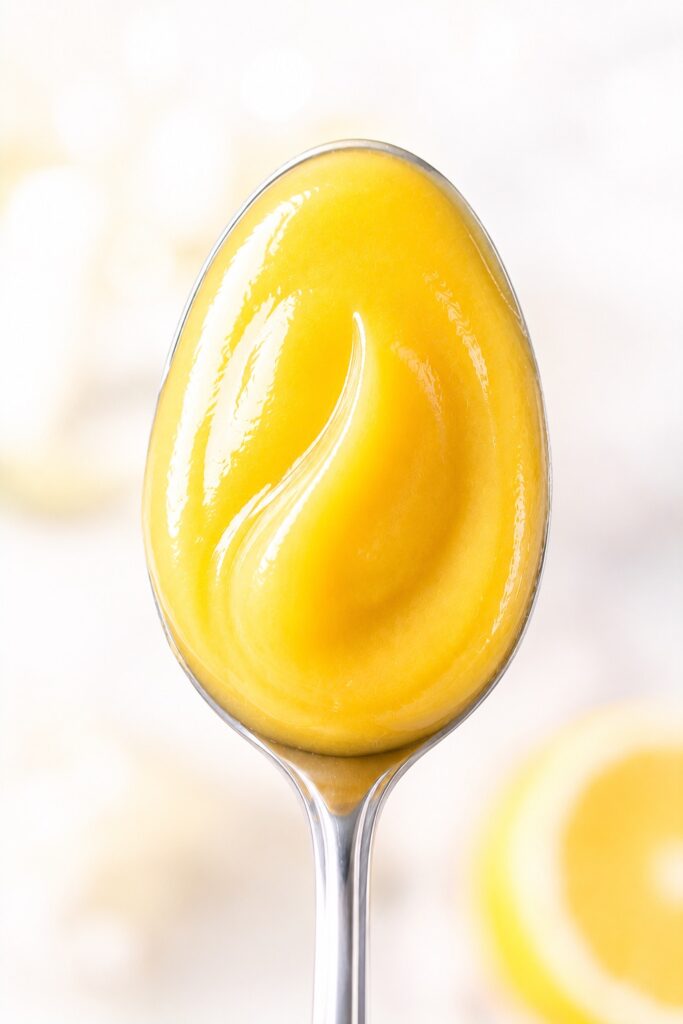
Why Bakers Prefer Homemade Lemon Curd
- Brighter, fresher lemon flavor
- Silkier, creamier texture
- Made with real lemons instead of concentrates
- No unnecessary preservatives or stabilizers
- Easy to customize for sweetness and tartness
- Ideal for premium desserts, cakes, pastries, and fillings
Worth knowing: Lemon curd is one of those recipes where simple ingredients make a remarkable difference. Fresh lemons, good butter, and gentle cooking create a flavor and texture that are difficult to replicate with packaged versions.
Why This Lemon Curd Recipe Works
Great lemon curd isn’t just about combining lemons, eggs, sugar, and butter. It’s about keeping four key elements in balance so the finished curd turns out silky instead of runny, rich instead of heavy, and bright instead of overly tart.
- Fresh lemon juice provides brightness. It delivers the signature sweet-tart flavor while the natural acidity helps create the curd’s fresh citrus profile.
- Eggs create the structure. Whole eggs and extra yolks gently thicken the mixture into a smooth custard without making it dense.
- Butter adds richness and silkiness. As it melts into the hot curd, it creates a creamy mouthfeel and the glossy finish that homemade lemon curd is known for.
- Gentle heat keeps everything smooth. Cooking slowly allows the eggs to thicken gradually, reducing the risk of curdling or a grainy texture.
- Lemon zest builds aroma. Much of the fresh lemon fragrance comes from the natural oils in the zest, giving the finished curd a brighter, more complex flavor than juice alone.
In short: The combination of fresh citrus, slow cooking, and careful emulsification creates a lemon curd that is smooth, creamy, and full of bright homemade flavor.
Why You’ll Love This Lemon Curd Recipe
- It tastes bright, fresh, and truly homemade. Fresh lemon juice and zest give this lemon curd a clean citrus flavor that feels much more vibrant than store-bought versions.
- The texture is silky and spoonable. Butter and egg yolks create a smooth, glossy curd that spreads beautifully without feeling heavy.
- It is easier than it looks. The recipe uses simple ingredients and a gentle stovetop method, so you do not need any special pastry skills.
- It makes simple desserts feel bakery-worthy. Spoon it over cheesecake, layer it into cakes, swirl it into yogurt, or serve it with scones for an instant citrus upgrade.
- It is perfect for make-ahead desserts. Lemon curd thickens as it chills, which makes it ideal for preparing before brunches, parties, holidays, and dessert tables.
- It gives you that sweet-tart balance people remember. The lemon flavor is bold and refreshing, while the sugar and butter round out the sharp edges for a creamy, balanced finish.
The Science Behind Perfect Lemon Curd
Although lemon curd comes together with just a few ingredients, several important reactions happen as it cooks. Understanding them makes it much easier to recognize when the curd is ready.
- Egg proteins gradually thicken the mixture. As the eggs warm, their proteins unfold and link together, transforming the liquid ingredients into a smooth, spoonable custard.
- Sugar slows the cooking process. Dissolved sugar helps protect the eggs from setting too quickly, giving you more time to cook the curd gently without scrambling it.
- Butter forms a stable emulsion. Once whisked into the hot curd, butter blends with the eggs and lemon juice to create a silky, glossy texture.
- Lemon juice balances both flavor and texture. The acidity provides the bright citrus taste while also influencing how the eggs set during cooking.
- The curd continues setting as it cools. It’s completely normal for freshly cooked lemon curd to look slightly loose. As the butter cools and the custard finishes setting, it becomes noticeably thicker.
Good to know: If your lemon curd looks a little thinner than expected when you remove it from the heat, don’t panic. In most cases, a few hours in the refrigerator are all it needs to reach its final silky consistency.
Choosing the Best Lemons for Lemon Curd
Because lemons are the star ingredient, the quality of your fruit has a noticeable impact on the finished curd. Choosing ripe, juicy lemons will give you brighter flavor, more fragrant zest, and a naturally sweeter citrus balance.
- Look for heavy lemons. A lemon that feels heavy for its size usually contains more juice.
- Choose smooth, brightly colored skin. Thin-skinned lemons are often juicier than thick-skinned ones.
- Use unwaxed or organic lemons if possible. Since the zest is used in this recipe, untreated lemons provide the cleanest citrus flavor.
- Avoid dull, wrinkled, or very hard lemons. These are often older and contain less juice.
- Meyer lemons create a sweeter curd. If you prefer a softer, less tangy lemon flavor, Meyer lemons are an excellent choice when they’re in season.
Quick tip: Roll each lemon firmly on the countertop for a few seconds before juicing. This simple trick helps release more juice with very little effort.
Fresh Lemons vs Bottled Lemon Juice
If there’s one place where fresh lemons truly make a difference, it’s lemon curd. Because lemons are the main flavor, even small differences in quality become noticeable in the finished recipe.
Freshly squeezed lemon juice has a brighter, cleaner flavor and naturally pairs with the aromatic oils found in fresh lemon zest. Bottled lemon juice, while convenient, often tastes flatter and lacks the vibrant citrus aroma that gives homemade lemon curd its signature freshness.
Quick Comparison
| Fresh Lemon Juice | Bottled Lemon Juice |
|---|---|
| Bright, vibrant citrus flavor | Often flatter and more one-dimensional |
| Natural aromatic oils from fresh zest | No fresh zest aroma |
| Best for premium desserts | Acceptable in a pinch |
| Produces fresher-tasting curd | Can taste slightly processed |
| Recommended for this recipe | Not ideal |
Recommendation: For the brightest flavor and silkiest homemade lemon curd, use freshly squeezed lemons whenever possible. Since this recipe depends on citrus as its star ingredient, fresh juice and zest produce noticeably better results.
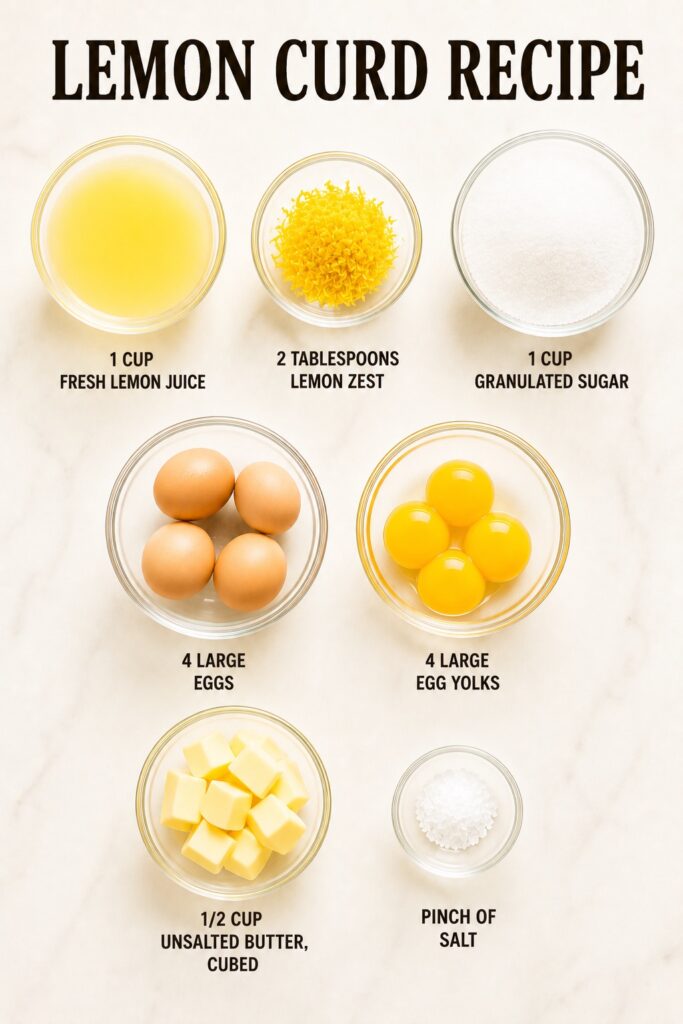
Ingredients for Homemade Lemon Curd
This Lemon Curd recipe comes together with just a handful of everyday ingredients, but each one plays an important role in creating the perfect balance of bright citrus flavor, rich creaminess, and silky texture. Using fresh lemons and good-quality butter makes the biggest difference.
- 1 cup fresh lemon juice
- 2 tablespoons lemon zest
- 1 cup granulated sugar
- 4 large eggs
- 4 large egg yolks
- 1/2 cup unsalted butter, cubed
- Pinch of salt
Ingredient Intelligence: Why These Ingredients Matter
Fresh Lemon Juice
Fresh juice creates a cleaner, brighter flavor than bottled varieties. The difference becomes very noticeable in a recipe where lemon is the star.
Lemon Zest
Zest provides aromatic oils that dramatically boost citrus flavor. Skipping it often results in lemon curd that tastes flatter than expected.
Eggs and Egg Yolks
Whole eggs provide structure while extra yolks add richness and a luxurious texture.
Butter
Butter softens the sharpness of the lemon and creates the silky mouthfeel that defines exceptional lemon curd.
Insight: Many people assume lemon juice provides most of the lemon flavor. In reality, much of the characteristic lemon aroma comes from the oils contained in the zest.
Equipment You’ll Need
You do not need special pastry equipment to make homemade lemon curd, but a few basic tools make the process smoother and help you avoid lumps, curdling, or uneven cooking.
- Medium saucepan: Choose a pan with enough room for whisking so the curd heats evenly without splashing.
- Heatproof whisk: A whisk keeps the eggs moving as they cook and helps create a smooth, even texture.
- Fine mesh strainer: This is the easiest way to remove zest pieces or tiny cooked egg bits for a silky finish.
- Microplane or citrus zester: Use this to remove only the bright yellow zest, avoiding the bitter white pith underneath.
- Citrus juicer: Helpful for getting enough fresh lemon juice quickly and catching seeds before they reach the pan.
- Heatproof bowl or measuring jug: Useful for straining the warm curd before transferring it to jars.
- Clean glass jars or airtight containers: Best for chilling, storing, freezing, and serving the finished lemon curd.
Useful tip: If you only use one “extra” tool, make it the fine mesh strainer. Even when the curd looks smooth in the pan, straining gives it that glossy, bakery-style texture.
Before You Start: 5 Things That Make Lemon Curd Foolproof
Lemon curd is surprisingly simple to make, but a few small details can make the difference between a silky, glossy curd and one that’s grainy or too thin. Take a minute to check these before you begin.
1. Zest the Lemons Before Juicing
It’s much easier to remove the zest while the lemons are still whole. The zest contains fragrant citrus oils that give homemade lemon curd much of its fresh, vibrant flavor.
2. Cut the Butter into Small Cubes
Having the butter ready in small pieces helps it melt quickly and evenly into the hot curd, creating a smooth, glossy emulsion.
3. Use Medium-Low Heat
Gentle heat allows the eggs to thicken gradually without scrambling. Cooking too quickly is the most common cause of grainy lemon curd.
4. Whisk Constantly
Continuous whisking keeps the eggs moving, distributes the heat evenly, and helps the curd thicken into a silky, lump-free consistency.
5. Don’t Judge the Texture While It’s Hot
Freshly cooked lemon curd is naturally looser than the finished product. As it cools and chills, it thickens into the smooth, spreadable consistency you’re looking for.
Quick takeaway: Fresh zest, gentle heat, constant whisking, and patience while the curd chills are the four biggest secrets to consistently silky homemade lemon curd.
How to Make Lemon Curd
1. Combine the Ingredients
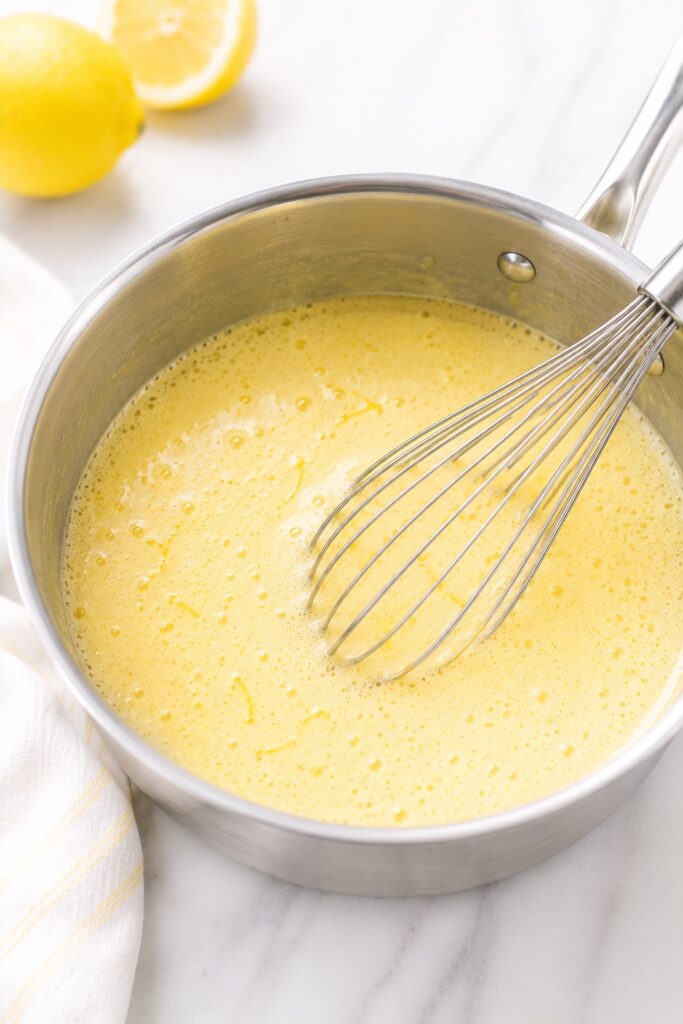
In a medium saucepan, whisk together the sugar, eggs, egg yolks, lemon juice, lemon zest, and salt until completely smooth.
The mixture will look thin, pale yellow, and slightly foamy from the whisking.
Tip: Whisk everything together before turning on the heat. This helps the eggs blend evenly and reduces the chance of small cooked egg bits forming later.
2. Cook Gently While Whisking
Place the saucepan over medium-low heat and whisk continuously. At first, the mixture will seem unchanged, but after several minutes the sugar dissolves completely and the curd slowly begins to thicken.
You may notice tiny wisps of steam and a few small bubbles forming around the edges of the pan. This is exactly what you want.
Tip: Keep the heat gentle. Lemon curd should never come to a rapid boil, as excessive heat can cause the eggs to curdle.
3. Watch for the Thickening Point
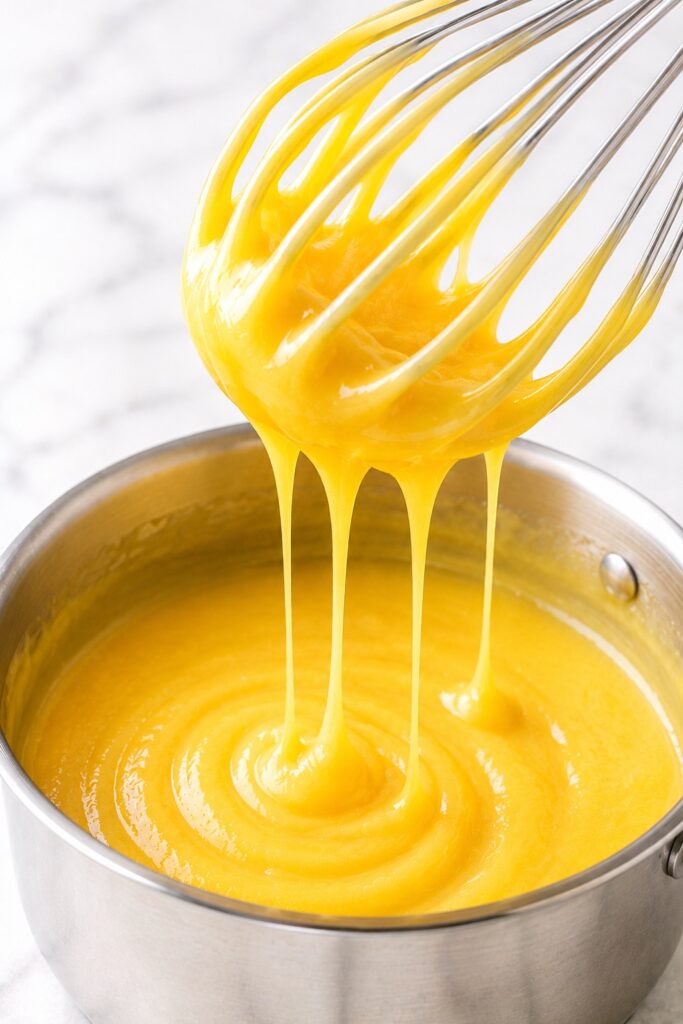
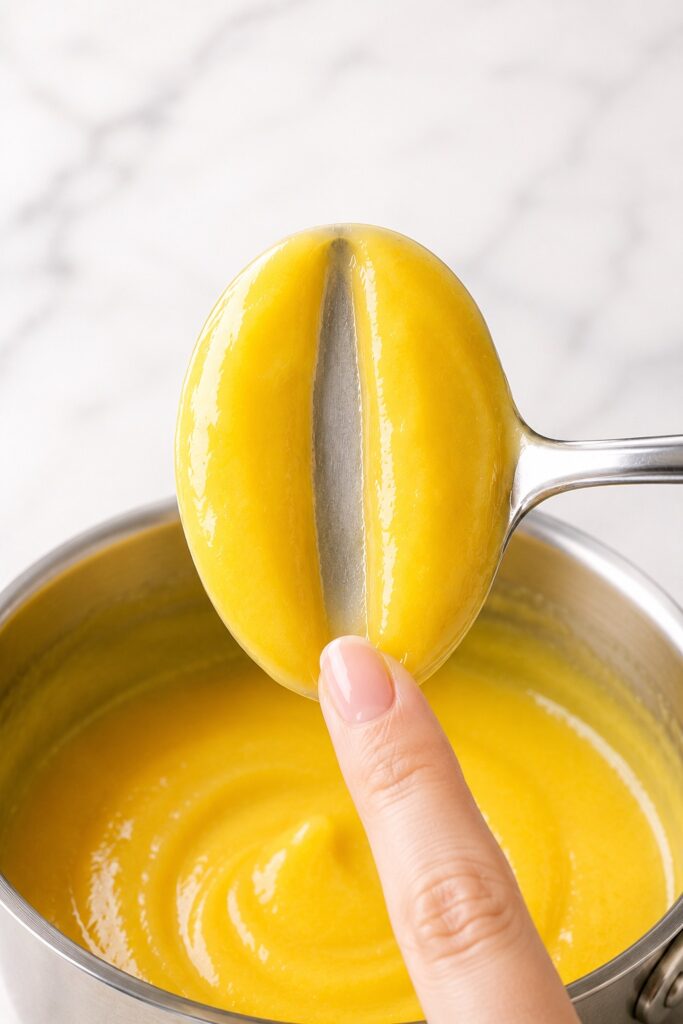
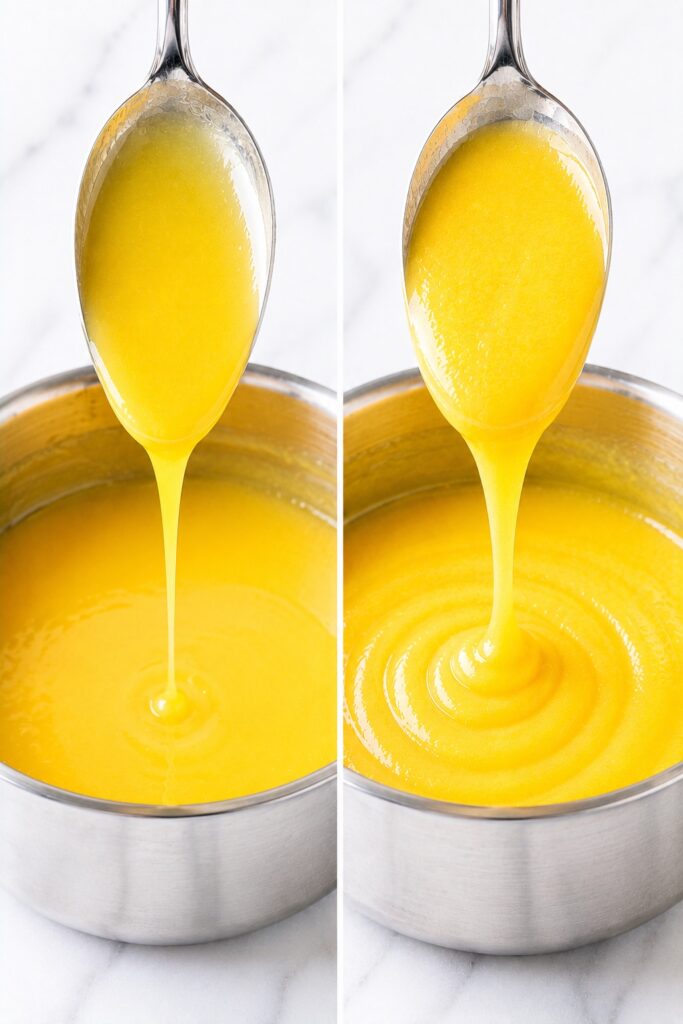
Continue whisking until the curd reaches the consistency of a thin custard or loose pudding. It should coat the back of a spoon, and if you draw your finger across the spoon, the line should remain clear without the curd immediately running back together.
One of the most common surprises is how quickly lemon curd thickens near the end. It can seem almost unchanged for several minutes, then reach the perfect consistency in less than a minute.
Remember: The curd will continue to thicken as it cools, so resist the temptation to overcook it.
4. Remove from the Heat Immediately
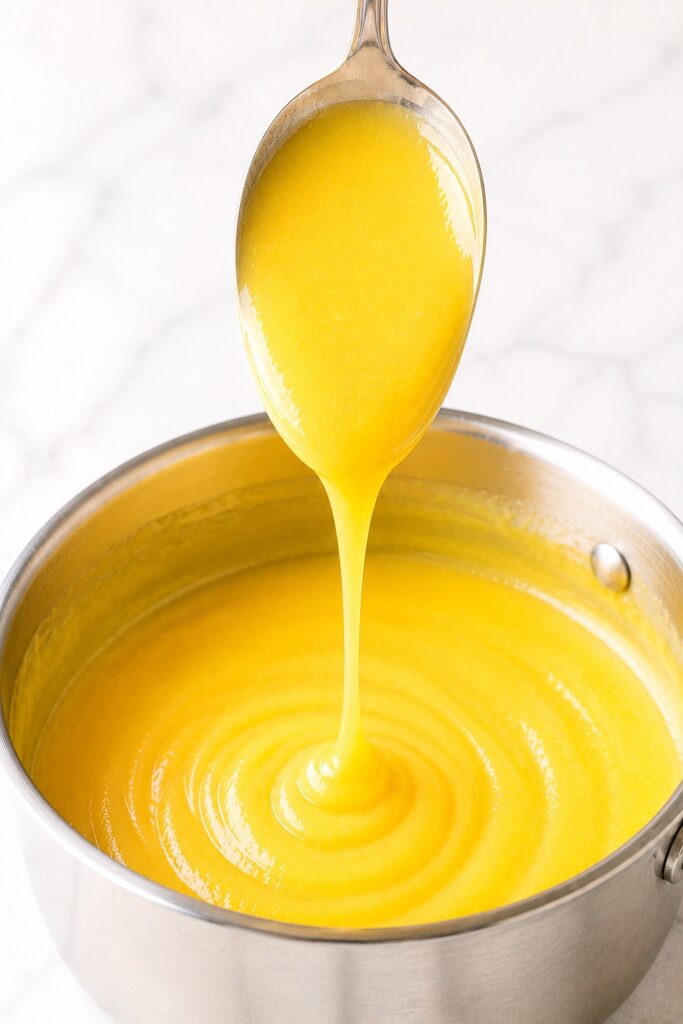
As soon as the curd reaches the proper consistency, remove the saucepan from the heat. The residual heat from the pan will continue cooking the eggs for another minute or two.
Taking it off the heat promptly helps preserve a silky, creamy texture.
5. Whisk in the Butter
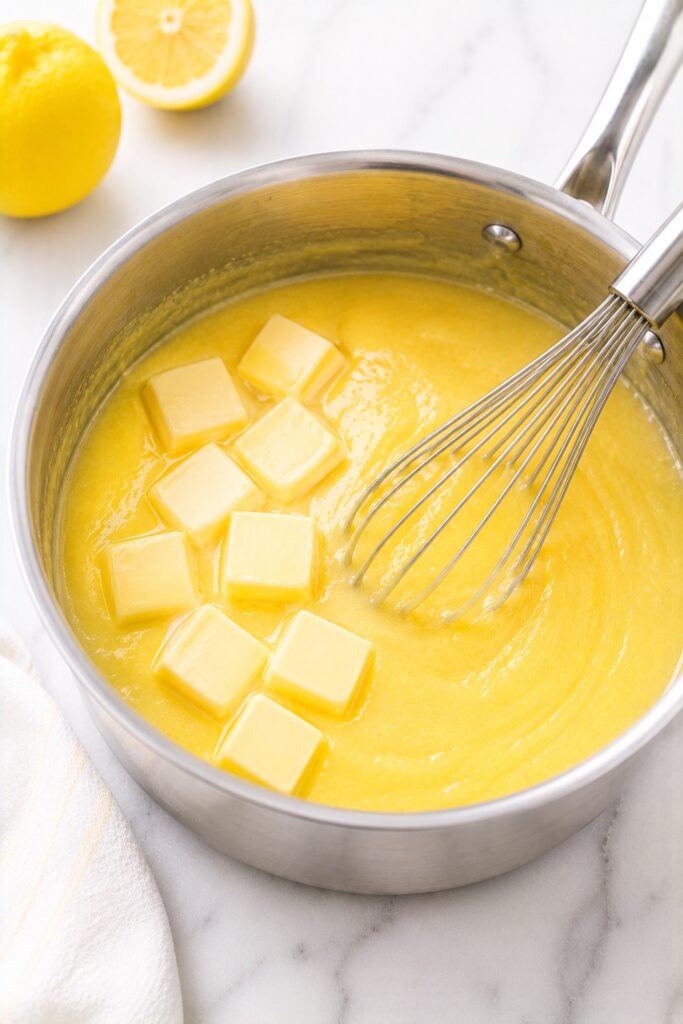
Add the butter a few cubes at a time, whisking until each addition is fully melted before adding more.
As the butter emulsifies into the curd, you’ll notice the texture becoming smoother, silkier, and beautifully glossy.
6. Strain for an Extra-Smooth Finish
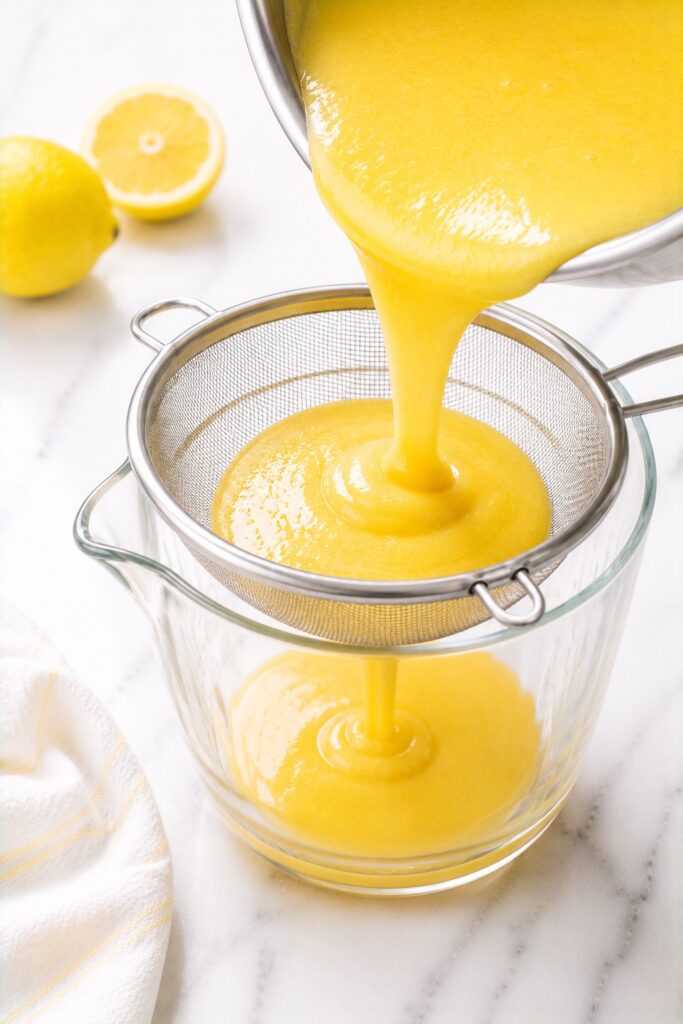
Pour the finished lemon curd through a fine mesh strainer into a clean bowl or measuring jug.
This removes the lemon zest and any tiny bits of cooked egg, giving the curd an exceptionally smooth, bakery-style finish.
7. Cool and Chill
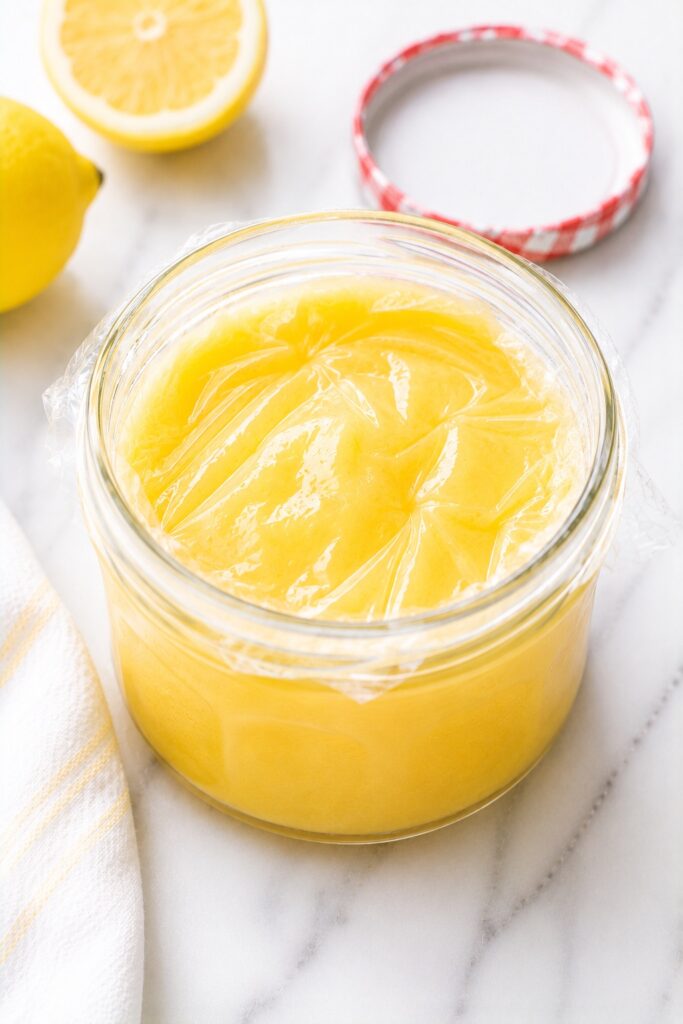
Transfer the lemon curd to clean jars or airtight containers. Press a piece of plastic wrap directly onto the surface to prevent a skin from forming while it cools.
Let the curd cool to room temperature before refrigerating. After a few hours in the refrigerator, it will become noticeably thicker, creamier, and perfectly spreadable.
Visual Doneness Cues
- Thick enough to coat a spoon
- Glossy golden appearance
- Visible steam but not vigorous boiling
- Smooth texture without lumps
- Leaves a clear line when you run a finger across a coated spoon
- Slight jiggle but not watery consistency
Lemon Curd Texture & Behavior Guide
| Stage | What You Should See | What It Means |
|---|---|---|
| Before Heating | Thin, pale yellow, and fully liquid | The ingredients are fully combined and ready to cook. |
| Early Cooking | Slightly warmer with little visible change | The eggs have not started thickening yet, so keep whisking patiently. |
| Beginning to Thicken | Light steam appears and the mixture starts coating the whisk | The egg proteins are setting and the curd is beginning to form. |
| Finished Cooking | Glossy, smooth, and thick enough to coat the back of a spoon | The curd has reached the ideal consistency and should be removed from the heat. |
| After Adding Butter | Even silkier with a rich glossy sheen | The butter has fully emulsified, creating a creamy, luxurious texture. |
| Freshly Strained | Perfectly smooth with no visible lumps or zest pieces | The curd is ready for cooling and will develop its final texture as it chills. |
| Fully Chilled | Silky, creamy, and easily spreadable | The lemon curd has fully set and is ready to use in desserts or as a spread. |
One of the biggest surprises for first-time makers is how long lemon curd can appear almost unchanged before it thickens. Most of the cooking happens gradually, then the mixture reaches its ideal consistency quite quickly near the end. Watching the texture—not just the clock—is the easiest way to know when it’s ready.
How Thick Should Lemon Curd Be?
One of the most common questions when making homemade lemon curd is whether it’s thick enough. The answer depends on when you’re checking it.
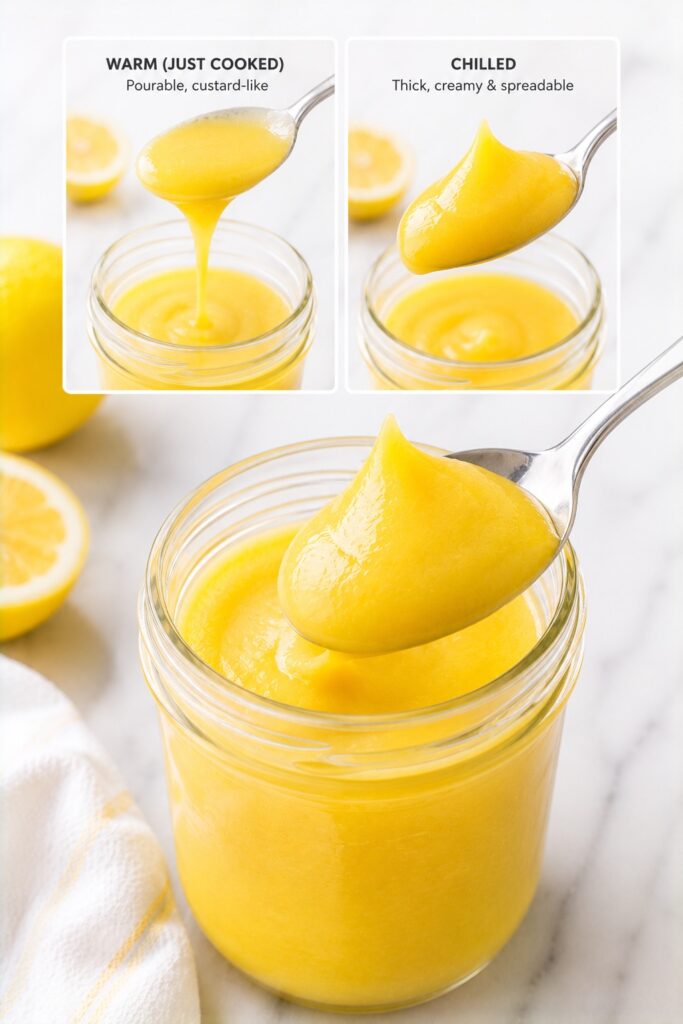
While it’s still hot, lemon curd should resemble a pourable custard. It should coat the back of a spoon, but it won’t be as thick as it will become after chilling.
As the curd cools, the butter firms up and the egg proteins finish setting. After several hours in the refrigerator, it transforms into a smooth, creamy spread that holds soft peaks on a spoon while still remaining easy to spread.
The Ideal Consistency for Different Uses
- For spreading: Thick, smooth, and easily spreadable without running off toast or scones.
- For cake fillings: Thick enough to stay between layers while remaining creamy.
- For tart fillings: Firm enough to slice cleanly after chilling.
- For yogurt or pancakes: Slightly softer consistency is perfectly normal.
Quick check: If your freshly cooked lemon curd already feels as thick as cold pudding, it’s probably been cooked a little too long. If it still pours like heavy cream after chilling, it likely needs a bit more cooking time.
Expert Tips for the Best Lemon Curd
- Use freshly squeezed lemons whenever possible. Fresh juice and zest provide a brighter flavor and more aromatic citrus oils than bottled juice.
- Zest the lemons before juicing them. It’s much easier to remove the zest from whole lemons, and you’ll capture more of the fragrant oils that give lemon curd its signature aroma.
- Keep the heat low and be patient. Gentle cooking allows the eggs to thicken the curd smoothly without scrambling. Rushing the process rarely saves time and often affects the texture.
- Whisk constantly, especially toward the end. The curd thickens gradually, then changes quickly during the final minute of cooking. Continuous whisking helps it cook evenly.
- Remove the saucepan as soon as the curd coats a spoon. Residual heat continues cooking the mixture even after it’s off the burner, so slightly undercooked is better than overcooked.
- Strain the finished curd for an ultra-smooth texture. Even if it looks silky, a quick pass through a fine mesh strainer removes tiny bits of zest or cooked egg for a professional-quality finish.
- Don’t judge the final consistency while it’s hot. Lemon curd becomes noticeably thicker after several hours in the refrigerator as the butter firms up and the custard fully sets.
Pro tip: If your lemon curd ends up slightly thicker than expected after chilling, simply whisk it for a few seconds before serving. It will become smooth, glossy, and spreadable again without affecting the flavor.
Common Lemon Curd Mistakes
| Mistake | Result | Fix |
| Cooking over high heat | Scrambled eggs | Use medium-low heat |
| Skipping whisking | Lumps | Whisk continuously |
| Overcooking | Grainy texture | Remove once spoon-coating stage is reached |
| Using bottled juice | Flat flavor | Use fresh lemons |
| Not straining | Less smooth finish | Pass through mesh strainer |
Lemon Curd Success Checklist
Before transferring your Lemon Curd to jars, use this quick checklist to make sure it has the perfect flavor, texture, and consistency.
- ✓ Fresh lemons were used for both the juice and zest
- ✓ The curd was cooked over medium-low heat
- ✓ The mixture was whisked continuously while cooking
- ✓ The curd coats the back of a spoon before being removed from the heat
- ✓ Butter was whisked in off the heat until fully incorporated
- ✓ The finished curd was strained for an extra-silky texture
- ✓ Plastic wrap was pressed directly onto the surface while cooling
- ✓ The curd chilled completely before its final consistency was judged
Quick takeaway: Fresh lemons, gentle heat, constant whisking, and allowing the curd to chill fully are the four biggest factors that determine whether homemade Lemon Curd turns out silky, glossy, and perfectly spreadable.
How to Fix Lemon Curd
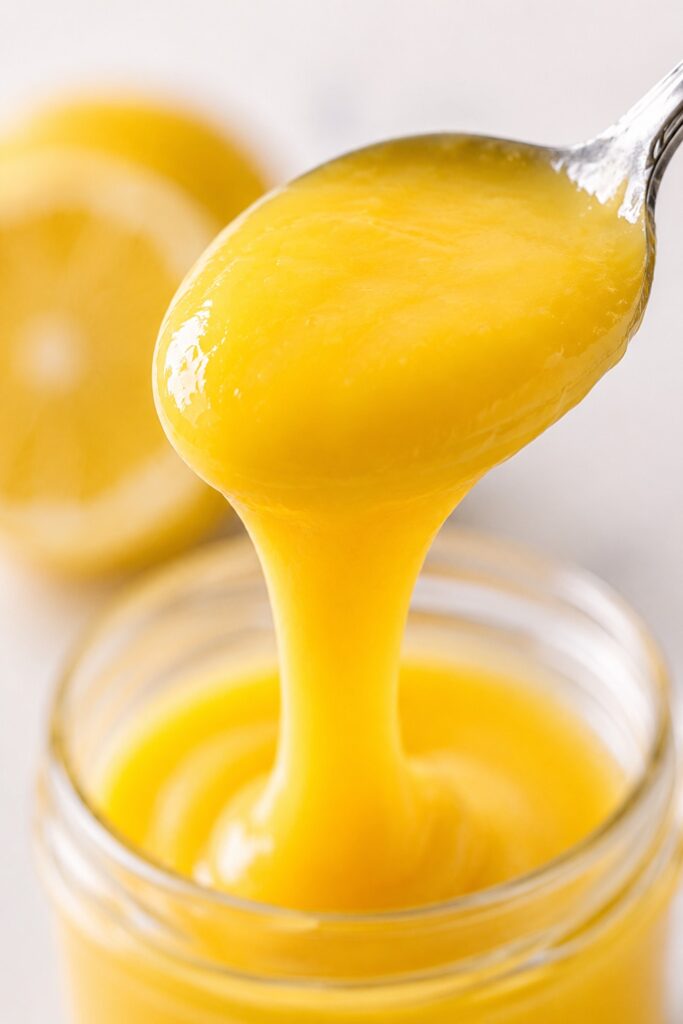
Even experienced bakers occasionally run into problems with homemade lemon curd. The good news is that many common issues can be corrected—or even prevented—once you know what caused them.
| If your lemon curd is… | Most likely cause | How to fix it |
| Too thin | It hasn’t cooked long enough or hasn’t fully chilled. | Continue cooking gently until it coats a spoon, then refrigerate for several hours before judging the consistency. |
| Too thick | It cooked slightly too long or reduced too much. | Whisk in a teaspoon or two of fresh lemon juice while it’s still slightly warm until it reaches the desired consistency. |
| Grainy | The eggs began to overcook. | Immediately strain the warm curd through a fine mesh sieve. Mild graininess can often be improved this way. |
| Lumpy | The eggs cooked unevenly. | Strain the curd while it’s hot and whisk until smooth. |
| Too tart | The lemons were especially acidic. | Serve the curd with whipped cream, buttercream, yogurt, or sweet pastries to balance the citrus flavor. |
| Too sweet | The lemons were mild or less acidic. | Add a small squeeze of fresh lemon juice and whisk until fully incorporated. |
Good news: Most lemon curd problems are easier to fix than people expect. Gentle heat, constant whisking, and allowing the curd to chill completely solve the vast majority of texture issues.
Lemon Curd vs Other Citrus Curds
All citrus curds share the same silky, custard-like texture, but each fruit creates a noticeably different balance of sweetness, acidity, and aroma. Here’s how the most popular versions compare.
Lemon Curd
The classic choice. Bright, sweet-tart, and intensely citrusy, lemon curd is the most versatile option for cakes, tarts, scones, cookies, cheesecakes, and breakfast pastries.
Lime Curd
Lime curd has a sharper, slightly more tropical flavor with higher perceived acidity. It pairs especially well with coconut desserts, tropical cakes, key lime-inspired recipes, and cheesecakes.
Orange Curd
Orange curd is naturally sweeter and milder, making it an excellent choice for breakfast pastries, pancakes, crepes, waffles, and vanilla-based desserts where a softer citrus flavor is preferred.
Grapefruit Curd
Grapefruit curd offers a more sophisticated balance of sweetness, acidity, and gentle bitterness. It works beautifully in elegant tarts, plated desserts, yogurt parfaits, and recipes that benefit from a more complex citrus flavor.
Bottom line: If you’re making homemade citrus curd for the first time, lemon curd is the best place to start. Its bright flavor, silky texture, and incredible versatility make it the most widely used and easiest citrus curd to pair with both baked goods and desserts.
Which Citrus Curd Is Best for Your Dessert?
Each citrus curd shines in different recipes. While lemon curd is the most versatile choice, other citrus fruits can create completely different flavor profiles.
| Dessert | Best Curd | Why It Works |
|---|---|---|
| Layer Cakes | Lemon | Bright flavor balances buttercream beautifully. |
| Cheesecake | Lemon or Lime | Acidity cuts through the rich filling. |
| Tarts | Lemon | Classic silky filling with perfect sweet-tart balance. |
| Pavlova | Lemon | Pairs beautifully with meringue and berries. |
| Pancakes & Waffles | Orange | Milder citrus flavor complements breakfast foods. |
| Tropical Desserts | Lime | Excellent with coconut, mango, and pineapple. |
| Elegant Plated Desserts | Grapefruit | Complex citrus flavor with slight bitterness. |
Beautiful Ways to Serve Lemon Curd
One of the best things about homemade lemon curd is how effortlessly it transforms everyday treats into something that feels special. Its bright citrus flavor pairs beautifully with everything from breakfast pastries to elegant desserts, making it one of the most versatile spreads you can keep in the refrigerator.
Spread It on Breakfast Favorites
Serve lemon curd with warm scones, buttery biscuits, English muffins, croissants, toast, or freshly baked muffins. The contrast between warm baked goods and cool, silky lemon curd is especially delicious.

Use It as a Dessert Filling
Layer it between vanilla or lemon cake layers, spoon it into tart shells, fill cupcakes, sandwich macarons, or swirl it into cheesecakes. Lemon curd adds vibrant flavor and a beautiful pop of color without overpowering the dessert.
Finish Simple Desserts
Spoon lemon curd over Greek yogurt, vanilla ice cream, panna cotta, cheesecake, pavlova, pancakes, waffles, crepes, or fresh berries. Even a small spoonful instantly adds brightness and makes simple desserts look bakery-worthy.
Perfect for Entertaining
Serve lemon curd in small jars as part of a brunch buffet or afternoon tea spread alongside whipped cream, fresh berries, and warm pastries. It also makes a beautiful addition to Easter celebrations, Mother’s Day brunches, baby showers, bridal showers, and spring or summer dessert tables.
Save this recipe for the moments when you want to make an ordinary dessert feel a little more elegant. A single spoonful of homemade lemon curd brings fresh citrus flavor, silky texture, and a bright finish that makes almost any sweet treat feel homemade and memorable.
When to Use Lemon Curd Instead of Lemon Pie Filling or Lemon Jam
Because lemon curd is smooth, creamy, and intensely flavored, it’s often confused with lemon pie filling or even lemon jam. While they may look similar, they behave quite differently in recipes.
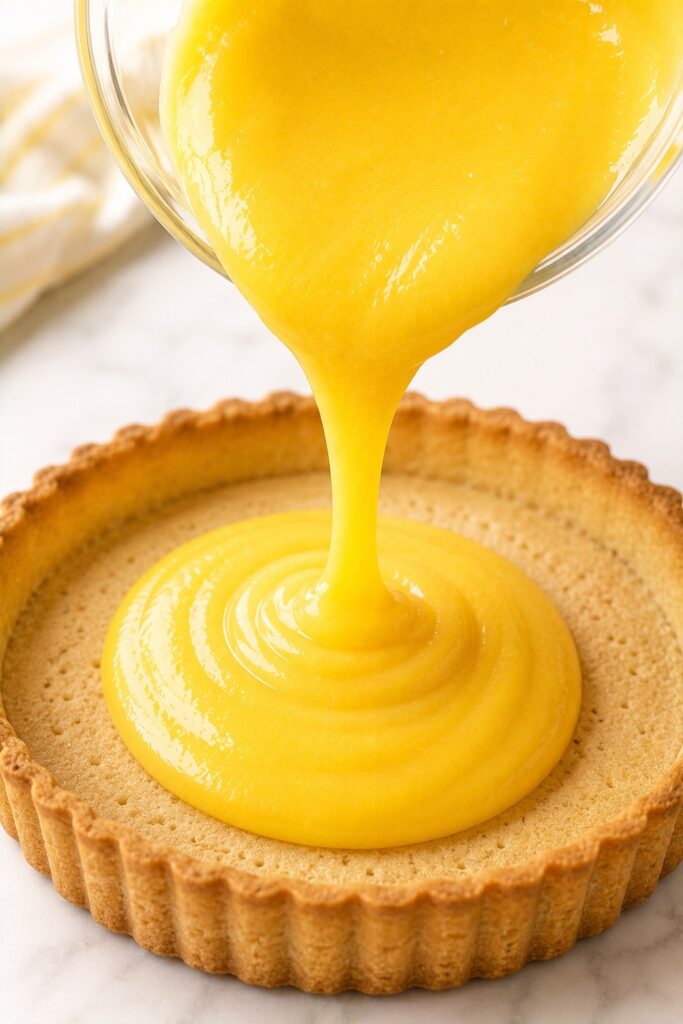
Lemon curd is made with eggs and butter, giving it a rich custard-like texture that melts smoothly on the tongue. Lemon pie filling is usually thickened with cornstarch, making it firmer and better suited for baked pies. Lemon jam contains fruit and pectin, creating a spread with a more traditional jam-like consistency.
Which One Should You Choose?
- Choose lemon curd for cakes, cupcakes, macarons, cheesecakes, parfaits, yogurt, pancakes, waffles, scones, and elegant desserts.
- Choose lemon pie filling when baking classic lemon pies that need a firmer filling.
- Choose lemon jam when you want a fruit preserve for toast, biscuits, or everyday spreading.
In most dessert recipes, lemon curd is the premium option. Its silky texture, fresh citrus flavor, and rich mouthfeel make it the preferred choice whenever you want the lemon itself to be the star of the dish.
Best Desserts to Make with Lemon Curd
Homemade lemon curd is far more than a simple spread. Its silky texture and bright citrus flavor make it one of the most versatile dessert components you can keep in your refrigerator. Here are some of the best ways to use it in baking and desserts.
- Layer Cakes: Spread lemon curd between cake layers for a burst of fresh citrus that balances rich buttercream or cream cheese frosting.
- Cheesecakes: Spoon a glossy layer over baked or no-bake cheesecakes for extra brightness and beautiful presentation.
- Tarts: Fill a crisp tart shell with chilled lemon curd and top with whipped cream, fresh berries, or toasted meringue.
- Cupcakes: Pipe lemon curd into the center of vanilla or lemon cupcakes before frosting for a bakery-style surprise.
- Cookies: Use it to fill thumbprint cookies, sandwich cookies, or buttery shortbread for an elegant citrus twist.
- Breakfast Treats: Spread it over warm scones, biscuits, croissants, pancakes, waffles, or crepes for an easy but impressive breakfast.
- No-Bake Desserts: Swirl lemon curd into yogurt, parfaits, panna cotta, mousse, or trifles to add fresh citrus flavor without any extra baking.
Favorite combination: One of the easiest ways to impress guests is to layer lemon curd with whipped cream and fresh berries. It looks elegant, comes together in minutes, and perfectly showcases the curd’s bright, silky texture.
Best Uses for Lemon Curd by Texture
One of the reasons homemade lemon curd is so versatile is that its silky texture works beautifully in many different desserts. Some recipes benefit from its creamy spreadability, while others rely on its ability to hold soft layers or add a burst of bright citrus flavor.
Perfect for Spreading
Its smooth, creamy consistency makes lemon curd ideal for spreading over warm scones, biscuits, English muffins, toast, croissants, and muffins. It melts slightly from the warmth of the baked goods, creating an especially luxurious bite.
Ideal for Layering
Because chilled lemon curd is thick enough to hold its shape while remaining creamy, it works beautifully between cake layers, inside cupcakes, macarons, tart shells, and pastries.
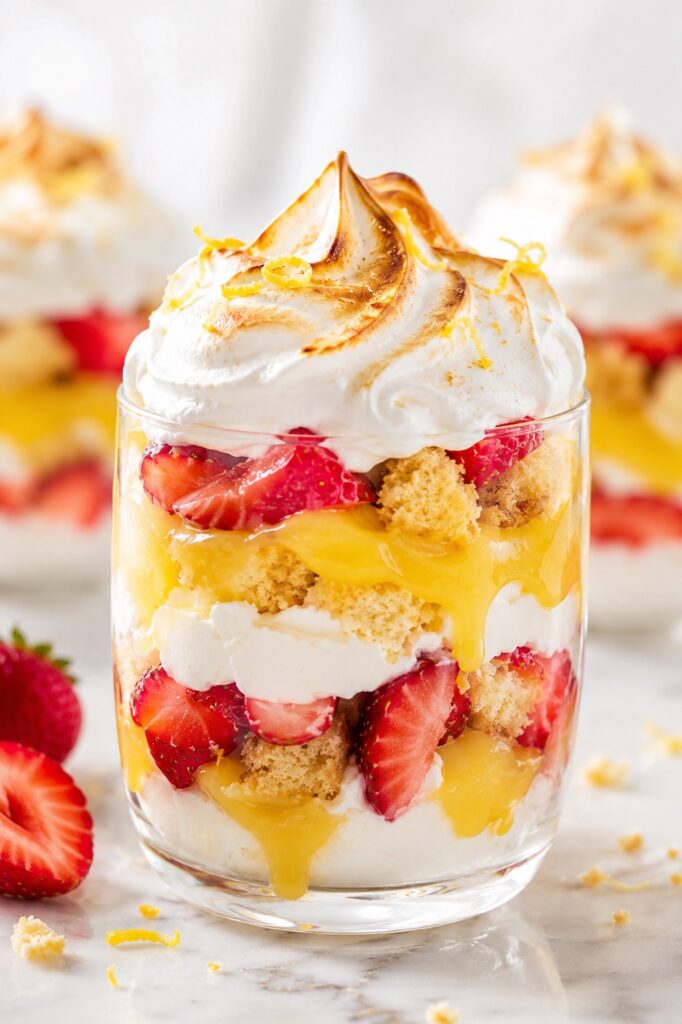
Excellent for Swirling
Fold or swirl lemon curd into Greek yogurt, cheesecake batter, whipped cream, ice cream, panna cotta, mousse, oatmeal, or overnight oats for pockets of bright citrus flavor throughout the dessert.
Beautiful as a Finishing Touch
A small spoonful adds color, shine, and fresh lemon flavor to cheesecakes, pavlovas, pancakes, waffles, crepes, fresh berries, and plated desserts. Its naturally glossy finish makes even simple desserts look professionally presented.
Serving insight: Lemon curd is at its best when it complements other flavors rather than overpowering them. Pair it with vanilla, berries, cream, buttery pastries, or light sponge cakes to let its bright citrus character shine.
Storage and Make-Ahead Guide
Refrigerator
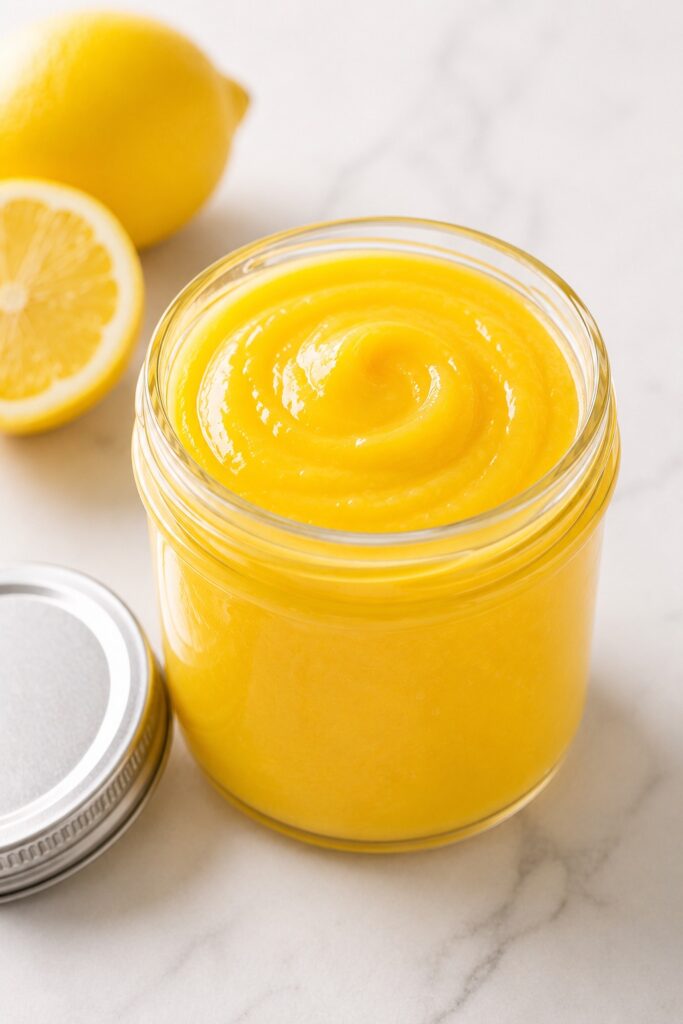
Let the lemon curd cool completely before refrigerating. Store it in clean, airtight glass jars or containers for up to 1 week.
For the smoothest surface, press a piece of plastic wrap directly against the curd before sealing the container. This helps prevent a skin from forming as it chills.
Freezer
Lemon curd freezes surprisingly well for up to 3 months. Leave a little space at the top of the container because the curd expands slightly as it freezes.
Thaw it overnight in the refrigerator, then stir well before serving. The texture should return to its original silky consistency.
Make Ahead
This is an excellent make-ahead recipe for cakes, tarts, and dessert fillings. In fact, many people prefer the flavor after it has chilled overnight because the lemon and butter have more time to meld together.
How to Tell if Lemon Curd Has Gone Bad
- Discard it if you notice mold, an off smell, or any signs of fermentation.
- If the color darkens slightly over time, that’s usually normal and doesn’t necessarily mean it has spoiled.
- Always use a clean spoon when serving to help maximize freshness.
Easy Lemon Curd Variations
Once you’ve mastered classic lemon curd, you can customize it with small flavor adjustments while keeping the same silky texture. For best results, keep the eggs, egg yolks, and butter the same so the curd still thickens properly.
Berry Lemon Curd
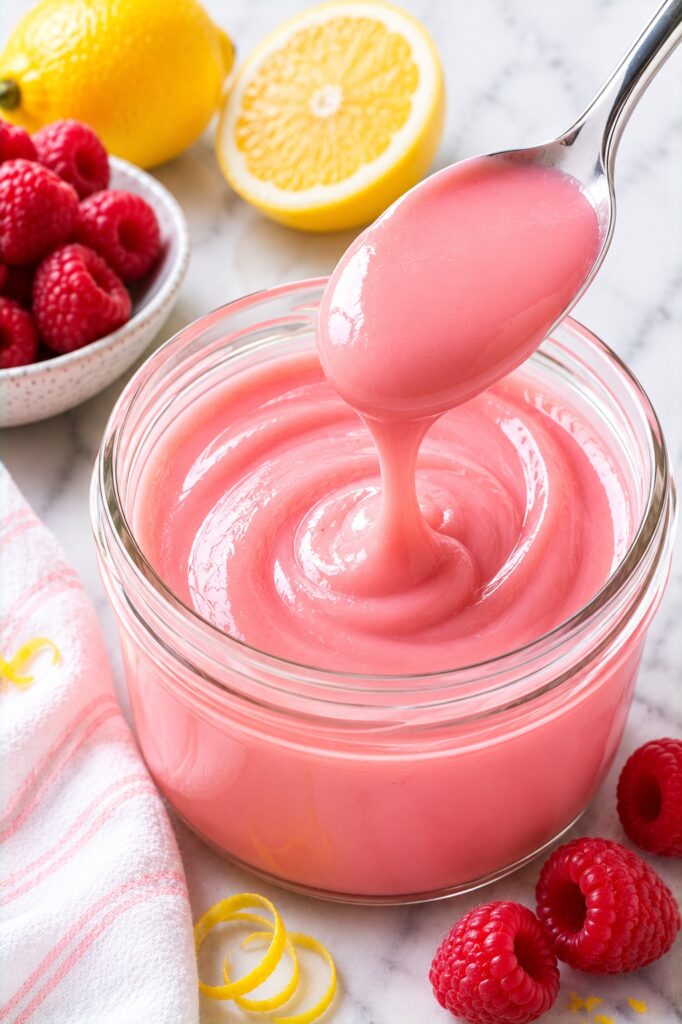
Cook the lemon curd as written, then whisk in 3 tablespoons strained raspberry puree or strawberry puree after removing the curd from the heat and before adding the butter.
For the smoothest texture, press the berry puree through a fine mesh strainer first to remove seeds. This variation creates a naturally pink curd with a fresh berry-citrus flavor that’s beautiful for macarons, cake fillings, tartlets, and spring desserts.
Vanilla Lemon Curd
Make the recipe as written, then stir in 1 teaspoon pure vanilla extract after removing the curd from the heat and before straining.
This softens the sharp lemon flavor slightly and gives the curd a warmer, more dessert-like finish that pairs beautifully with cakes, cheesecakes, and cream fillings.
Meyer Lemon Curd
Replace the regular lemon juice with 1 cup fresh Meyer lemon juice and use 2 tablespoons Meyer lemon zest. Keep the sugar, eggs, yolks, butter, and salt the same.
Meyer lemons create a sweeter, softer, slightly floral curd with less sharp acidity than classic lemon curd.
Extra-Tart Lemon Curd
For a brighter citrus flavor, reduce the sugar from 1 cup to 3/4 cup and add 1 extra tablespoon fresh lemon zest. Keep the lemon juice at 1 cup.
This creates a sharper, more intense lemon curd that works especially well with sweet desserts like pavlova, vanilla cake, buttercream, and cheesecake.
Orange-Lemon Curd
Use 2/3 cup fresh lemon juice and 1/3 cup fresh orange juice instead of 1 full cup of lemon juice. Add 1 tablespoon lemon zest and 1 tablespoon orange zest.
This creates a milder citrus curd with a sweeter orange note. It is especially good with crepes, pancakes, waffles, pound cake, vanilla cake, and breakfast pastries.
Variation tip: Avoid changing the amount of eggs, egg yolks, or butter unless you are testing a new formula. Those ingredients control the set, richness, and silky texture of the curd.
Frequently Asked Questions About Lemon Curd
Why didn’t my lemon curd thicken?
Lemon curd usually needs a little patience. Keep cooking it gently over medium-low heat while whisking continuously until it coats the back of a spoon. Remember that it will continue to thicken as it cools.
Can I make lemon curd with whole eggs instead of extra yolks?
Yes. Using only whole eggs works well, but adding extra egg yolks creates a richer flavor, deeper color, and silkier texture.
Do I need a double boiler?
No. A saucepan over medium-low heat works perfectly as long as you whisk constantly and avoid letting the mixture boil.
Can I use bottled lemon juice?
Freshly squeezed lemon juice is highly recommended. It has a brighter flavor and, together with fresh zest, produces the fresh citrus aroma that makes homemade lemon curd so special.
Can I use lemon curd as a cake filling?
Absolutely. Lemon curd is one of the best fillings for layer cakes, cupcakes, tart shells, macarons, thumbprint cookies, cheesecakes, and pavlovas. For tall cakes, pair it with buttercream or cream cheese frosting to help keep the layers stable.
Can I use lemon curd while it’s still warm?
Yes, but it depends on how you’re using it. Warm lemon curd is delicious spooned over pancakes, waffles, French toast, ice cream, or fresh berries. For cakes, cupcakes, macarons, tart shells, and other desserts that require clean layers, let the curd chill completely first. Chilled lemon curd is much thicker, making it easier to spread, pipe, and layer without running.
Can I freeze homemade lemon curd?
Yes. Freeze it in an airtight container for up to 3 months. Thaw it overnight in the refrigerator and stir well before serving if needed.
How long does homemade lemon curd last?
Stored in a clean airtight container in the refrigerator, homemade lemon curd will keep for about 1 week. Always use a clean spoon when serving to help maintain freshness.
More Sweet Recipes You’ll Love
If you love the bright, silky flavor of this lemon curd, these recipes are natural next stops. Some use lemon beautifully, some pair well with a spoonful of lemon curd, and others give you more creamy, fruity, bakery-style dessert inspiration.
Bright Lemon Desserts
- Lemon Bars — buttery, tangy, and perfect when you want a classic lemon dessert with a soft citrus filling.
- Lemon Cake Recipe — a soft, sunny cake that pairs beautifully with lemon curd between the layers.
- Lemon Meringue Pie — sweet, tart, fluffy, and perfect for anyone who loves classic lemon desserts.
Creamy Desserts That Pair Beautifully with Lemon Curd
- Cheesecake Cups Recipe — creamy little desserts that would be beautiful with a glossy spoonful of lemon curd on top.
- No Bake Cheesecake — cool, creamy, and ideal for layering with lemon curd for a fresh citrus finish.
- Vanilla Pudding — simple, soft, and cozy, especially with a swirl of lemon curd folded through each cup.
Fresh Fruit Desserts
- Fruit Pizza Bites Recipe — colorful, creamy, and perfect for parties, brunches, and spring dessert tables.
- Strawberry Shortcake Recipe — soft, fruity, and lovely with a little lemon curd tucked between the layers.
- Blueberry Cream Cheese Bars Recipe — creamy, fruity bars that bring the same sweet-tart balance lemon lovers usually enjoy.
Soft Cakes and Bakes for Filling
- Vanilla Cake — a soft, classic cake that becomes extra special with lemon curd as a filling.
- Angel Food Cake Recipe — light, fluffy, and perfect with lemon curd, whipped cream, and fresh berries.
- Scones Recipe — tender, buttery, and one of the best ways to serve homemade lemon curd.
Lemon Curd Recipe Summary
This homemade Lemon Curd recipe combines fresh lemon juice, fragrant zest, eggs, sugar, and butter to create a smooth, glossy spread with the perfect balance of sweet and tart flavor.
Whether you’re filling cakes, topping cheesecakes, spreading it onto warm scones, or swirling it into yogurt, this versatile lemon curd delivers bright citrus flavor and a luxuriously silky texture every time.
With simple ingredients, an easy stovetop method, and reliable results, it’s a recipe you’ll find yourself making again and again throughout the year.
Final Thoughts
There is something especially satisfying about making lemon curd from scratch. Watching a handful of simple ingredients transform into a silky, golden spread feels almost magical, and the fresh citrus aroma filling the kitchen is part of the experience.
Once you taste homemade lemon curd, it’s easy to understand why it has remained a classic for generations. The flavor is brighter, the texture is smoother, and its versatility makes it just as welcome on a slice of toast as it is inside an elegant layer cake.
Keep a jar of homemade lemon curd in your refrigerator and you’ll always have an effortless way to elevate breakfast, brighten desserts, or add a burst of fresh citrus to your favorite bakes. Once you discover how silky, vibrant, and versatile homemade lemon curd can be, it’s hard to go back to store-bought. It’s one of those timeless recipes you’ll reach for again and again, whether you’re baking for a holiday, brunch, or simply treating yourself to something special.

Lemon Curd
Silky homemade lemon curd made with fresh lemon juice, zest, eggs, sugar, and butter. Bright, creamy, sweet-tart, and perfect for cakes, tarts, scones, pastries, and desserts.
Ingredients
- 1 cup fresh lemon juice
- 2 tablespoons finely grated lemon zest
- 1 cup granulated sugar
- 4 large eggs
- 4 large egg yolks
- 1/2 cup unsalted butter, cut into small cubes
- Pinch of salt
Instructions
- In a medium saucepan, whisk together the sugar, eggs, egg yolks, lemon juice, lemon zest, and salt until smooth.
- Place the saucepan over medium-low heat and cook, whisking constantly, until the mixture thickens enough to coat the back of a spoon, about 8–10 minutes. Do not let it boil.
- Remove the saucepan from the heat and whisk in the butter a few cubes at a time until completely melted and the curd is smooth and glossy.
- Strain the lemon curd through a fine-mesh sieve into a clean bowl or measuring jug to remove the zest and any small bits of cooked egg.
- Transfer the curd to clean jars or airtight containers. Press plastic wrap directly onto the surface to prevent a skin from forming.
- Let cool to room temperature, then refrigerate for at least 2 hours, or until fully chilled and thickened.
- Serve as a spread or use as a filling for cakes, tarts, cheesecakes, cupcakes, scones, pastries, pancakes, waffles, yogurt, or other desserts.
Notes
- Freshly squeezed lemon juice and fresh lemon zest produce the brightest, most vibrant flavor.
- Zest the lemons before juicing for the easiest preparation.
- Cook over medium-low heat and whisk constantly to prevent the eggs from curdling.
- Do not let the mixture boil. Remove it from the heat as soon as it coats the back of a spoon.
- The curd will seem slightly loose while hot but thickens considerably as it cools and chills.
- Straining the finished curd through a fine-mesh sieve creates an extra-silky, bakery-quality texture.
- Store in an airtight container in the refrigerator for up to 1 week.
- Freeze for up to 3 months. Thaw overnight in the refrigerator and stir before serving if needed.
- Meyer lemons create a naturally sweeter, milder lemon curd, while regular lemons produce a brighter, more tangy flavor.
- Lemon curd is perfect for filling cakes, cupcakes, tarts, macarons, thumbprint cookies, and cheesecakes, or for serving with scones, biscuits, croissants, pancakes, waffles, yogurt, and fresh berries.
Nutrition Information:
Yield: 32 tablespoons Serving Size: 1 tablespoonAmount Per Serving: Calories: 62Total Fat: 4gSaturated Fat: 2gCholesterol: 40mgSodium: 10mgCarbohydrates: 7gSugar: 7gProtein: 1g
Nutrition information is provided as an estimate only and may vary based on specific ingredients, brands, and portion sizes used. This information should not be considered medical or nutritional advice.
12 Sweet Favorites — Yours, Free 🍰
Tiramisù, no-bake cheesecake, the perfect chocolate chip cookie & 9 more reader-loved desserts — gathered into one beautiful free recipe book. From my kitchen to yours.
No spam, just sweet things. Unsubscribe anytime.